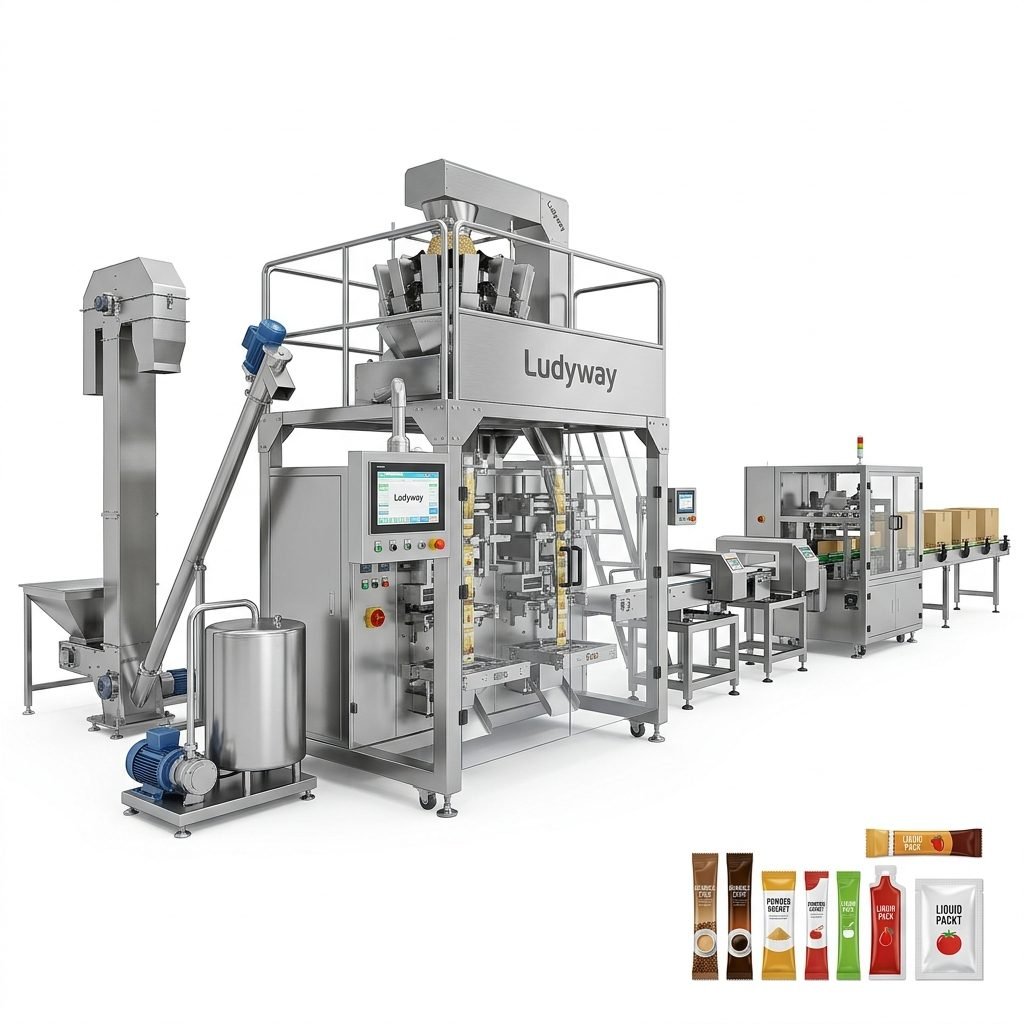
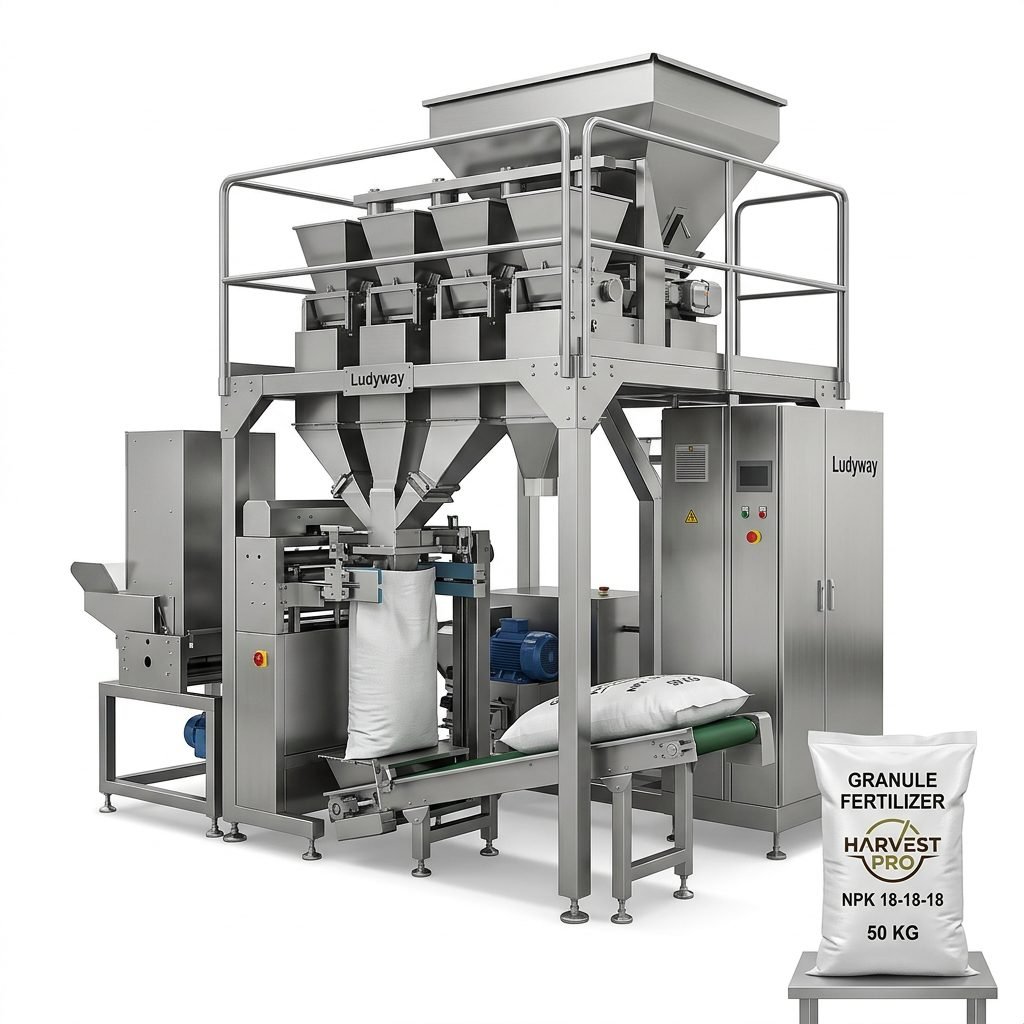
India’s snack food industry is booming, and popcorn remains a dominant category experiencing rapid value-added growth. From classic salted varieties to gourmet caramel and cheese flavors, the demand for packaged popcorn is soaring in both urban and rural markets. For manufacturers, setting up an efficient popcorn packaging machine production line is no longer just about putting product in a bag — it’s about speed, shelf appeal, precision weighing, and compliance with stringent food safety regulations.
This guide provides a comprehensive, step-by-step approach to planning, configuring, and launching a high-performance popcorn packaging line in India, covering everything from equipment selection and plant layout to regulatory requirements and technology integration.
Understanding the Indian Popcorn Packaging Landscape
The Indian market presents unique challenges and opportunities. Consumer preferences vary widely, driving demand for multiple pack formats: from small ₹5 and ₹10 sachets to family-size pouches and bulk packs for institutional buyers. This diversity necessitates flexible packaging machinery. Furthermore, with the Food Safety and Standards Authority of India (FSSAI) reinforcing packaging and labeling guidelines, the right equipment is crucial for compliance.
A modern line in India must handle diverse popcorn types — butterfly, mushroom, caramel-coated — without excessive crushing or waste. Key factors driving investment include multi-lane stick pack and sachet machines for small portions, which are immensely popular in the Indian market.
| Pack Format | Typical Size Range | Common Film Materials | Ideal Machine Type |
|---|---|---|---|
| Pillow Packs / Center Seal | 20g – 200g | BOPP/MCPP, BOPET/MCPP | Vertical Form Fill Seal (VFFS) Machine |
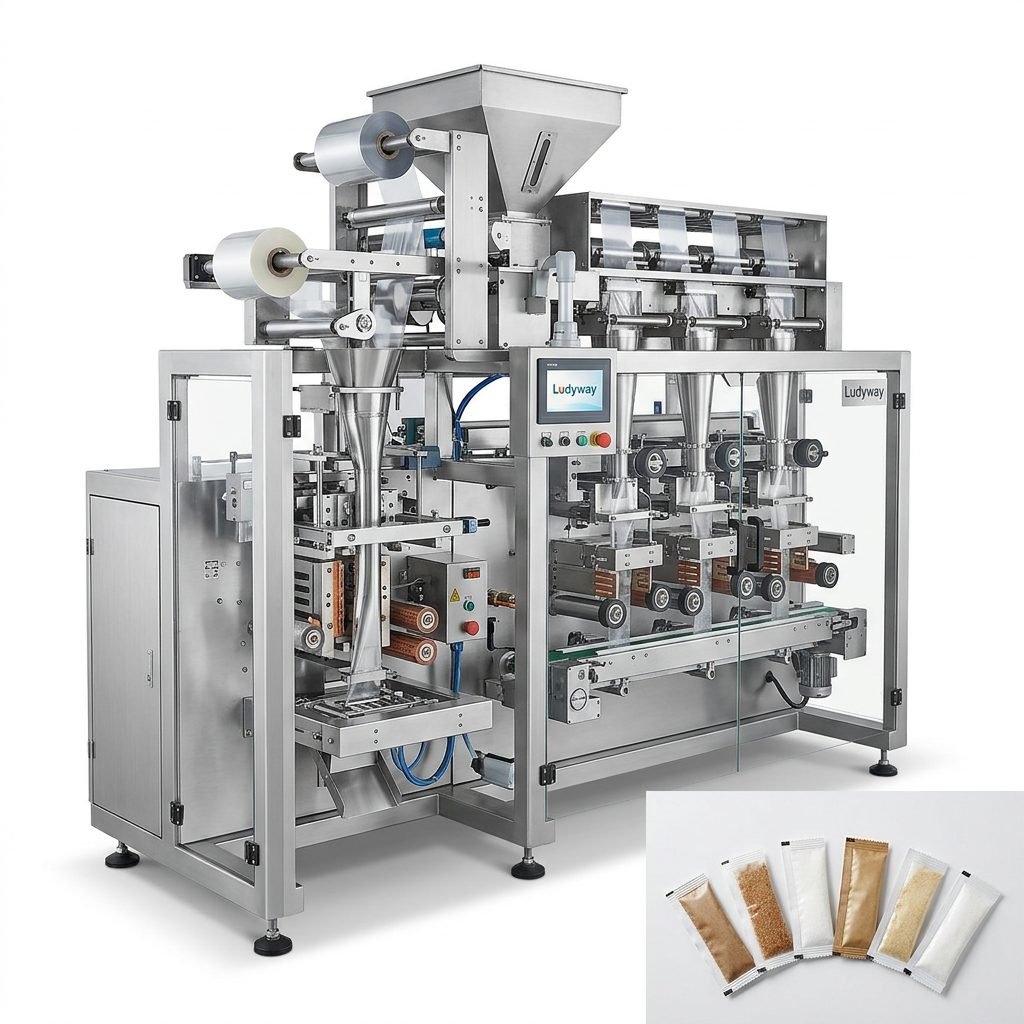
| Multi-Lane Stick Packs | 5g – 30g | Laminated Polyester/Aluminum/PE | Multi-Lane Stick Pack Machine |
| Gusseted / Flat Bottom Bags | 100g – 500g+ | BOPP/MCPP, BOPP/PE | VFFS with Corner Sealer or Rotary Machine |
| Pre-made Pouch Filling | 150g – 1kg+ | Stand-up Zipper Pouches | Rotary Premade Pouch Machine |
Step 1: Defining Production Capacity and Layout
Before procuring any equipment, you must calculate your target throughput. This determines whether you need a single-lane machine or a high-speed multi-lane system running 6, 8, or even 12 lanes simultaneously.
- Entry-Level Production: 30–50 packs per minute. A single-lane VFFS with a volumetric cup filler or basic multi-head weigher is often sufficient.
- Mid-Scale Production: 100–300 packs per minute. Requires a multi-lane stick pack or sachet machine coupled with a high-precision 10 or 14-head combination weigher.
- High-Volume Manufacturing: 400+ packs per minute. Integrates multi-lane weighers with automated nitrogen flushing, high-speed cartoners, and robotic case packing.
In India, space optimization is often a priority. A typical line layout flows from the raw material staging area to the seasoning system, onto the packaging machinery, through a metal detector and checkweigher, and finally to the secondary packaging station.
Step 2: Core Equipment – The Heart of the Line
The primary packaging machine is your biggest investment. For popcorn, Vertical Form Fill Seal (VFFS) machines remain the industry standard, but the configurations vary wildly based on the final packet style.
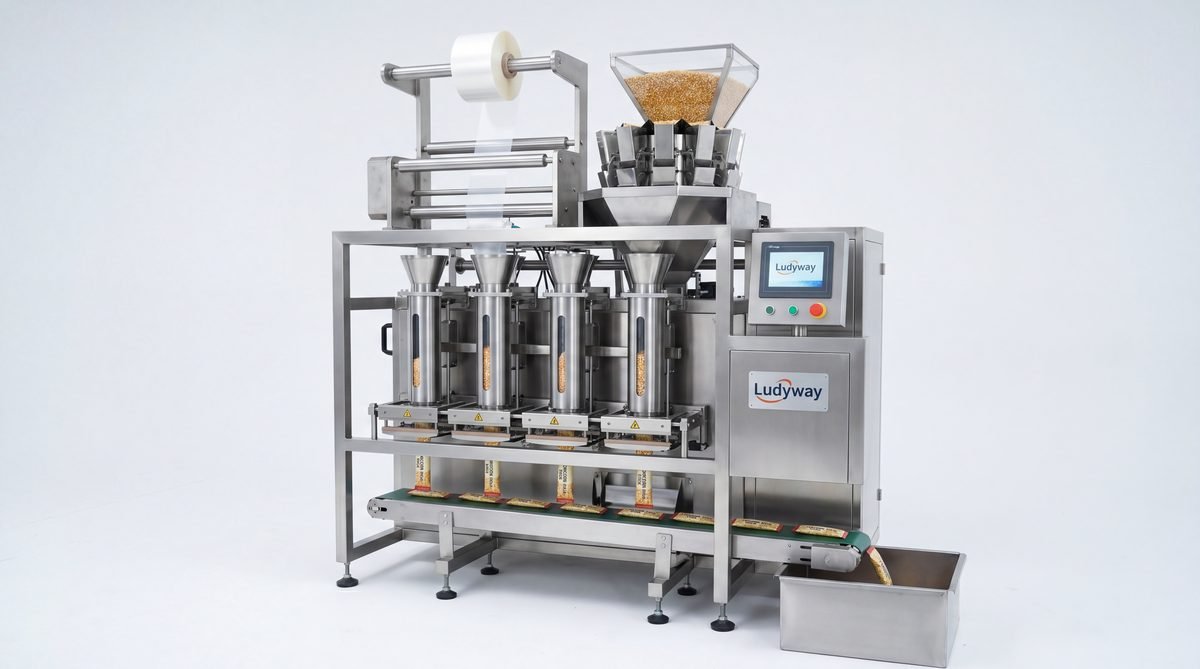
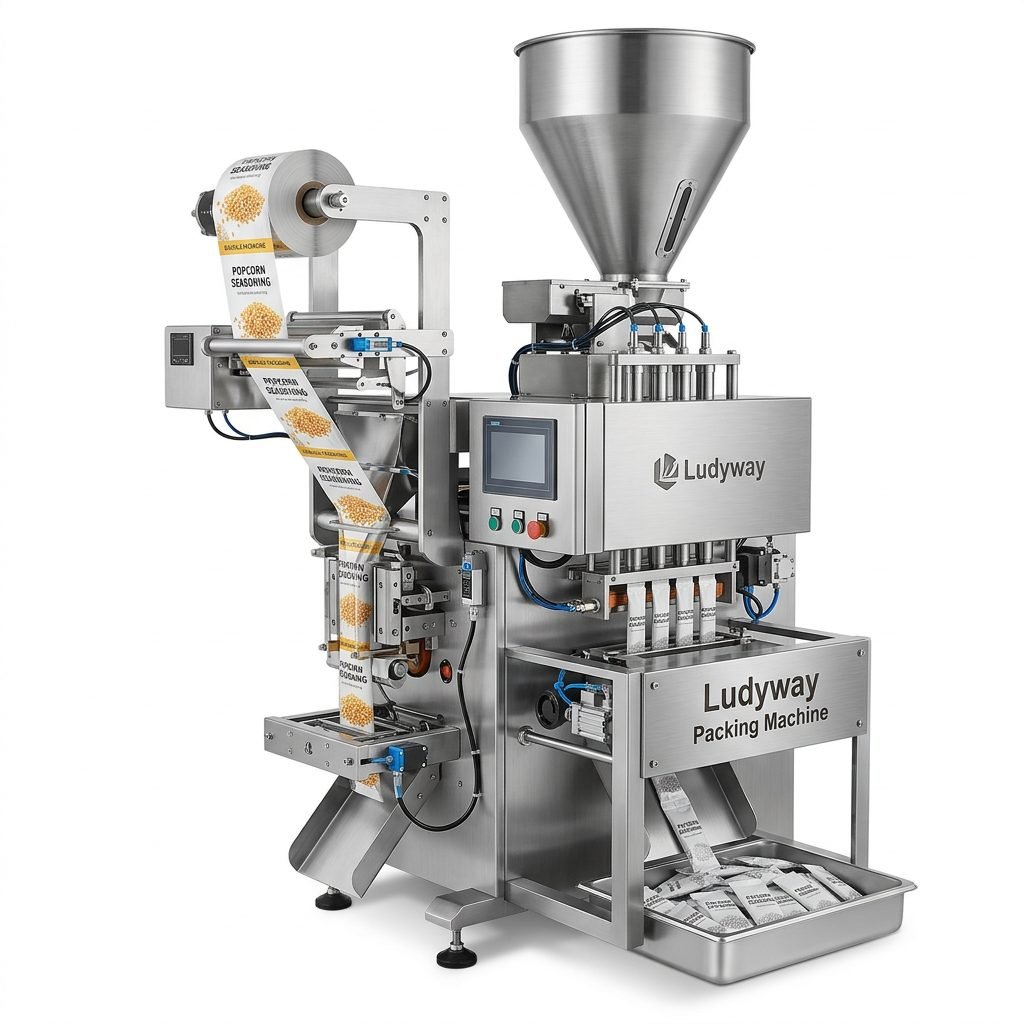
Multi-Lane Stick Pack and Sachet Machines
Dominating the Indian snacking scene, these machines crank out slim, vertical sticks or small sachets. A typical 8-lane machine can produce over 400 packs per minute for 10g portions. The key is synchronized film feeding and precise vertical sealing. For popcorn, special care must be taken with dust extraction and gentle product transfer to prevent kernel breakage.
Integrated Weighing Systems
Volumetric fillers are fast but inaccurate for mixed popcorn products. Modern lines use multi-head combination weighers. A 14-head weigher, for instance, calculates the best combination of hoppers to hit the target weight within 0.5-1g of accuracy, significantly reducing product giveaway — a critical factor given the rising cost of premium popcorn kernels in India.
Seasoning and Coating Integration
If your product is flavored, an inline seasoning system is essential. Tumble drums or screw conveyors apply oil and powdered seasoning uniformly. Ensuring the popcorn is cool and dry before entering the packaging machine prevents film seal contamination, a common failure point in humid Indian coastal climates.
Step 3: Secondary Packaging and End-of-Line Automation
Primary packing is only half the battle. Manual cartoning is a bottleneck for large-scale orders from modern retail chains like Reliance or D-Mart.
- Case Packing: Automatic cartoning machines pick and place primary pouches into secondary cartons.
- Checkweighing & Inspection: Dynamic checkweighers paired with metal detectors and X-ray inspection are mandatory for export-focused Indian manufacturers. These systems reject underweight or contaminated packs automatically.
- Palletizing: For high-volume output, robotic palletizers stack cartons uniformly, reducing labor reliance and preventing workplace injury.
Step 4: Regulatory Compliance and Food Safety
The packaging environment must meet FSSAI standards. This means the frame and contact parts of the machine should be 304 or 316 stainless steel to prevent corrosion, especially in processing environments where salt is prevalent.
Critical documentation includes the machine’s IQ (Installation Qualification), OQ (Operational Qualification), and PQ (Performance Qualification) protocols. If you’re using modified atmosphere packaging (MAP) with nitrogen flushing to extend shelf life, the machine must have a certified gas flushing system with residual oxygen analyzers.
Step 5: Choosing a Turnkey Solution Provider
While individual component sourcing is possible, integrating a conveyor belt from one vendor, a weigher from another, and a wrapper from a third often leads to interface headaches. A single-source turnkey solution streamlines installation and after-sales support.
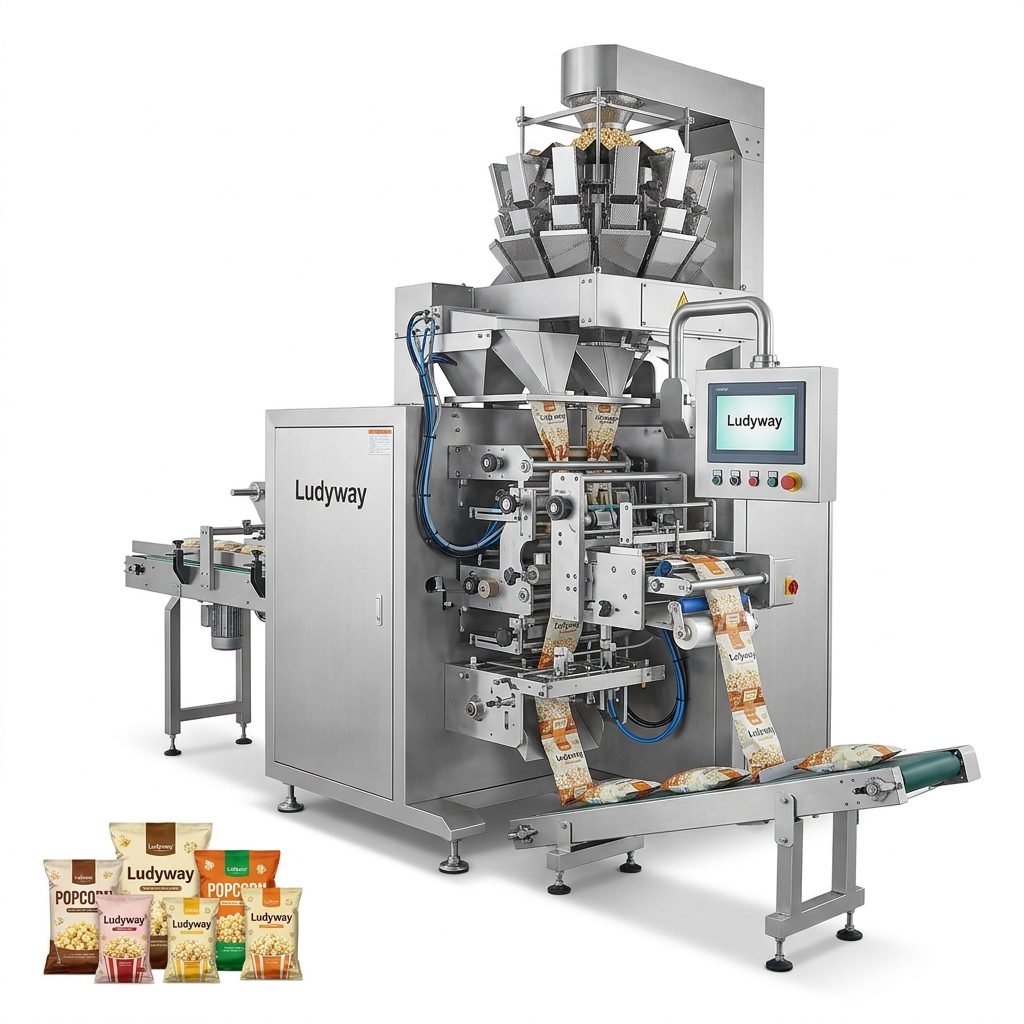
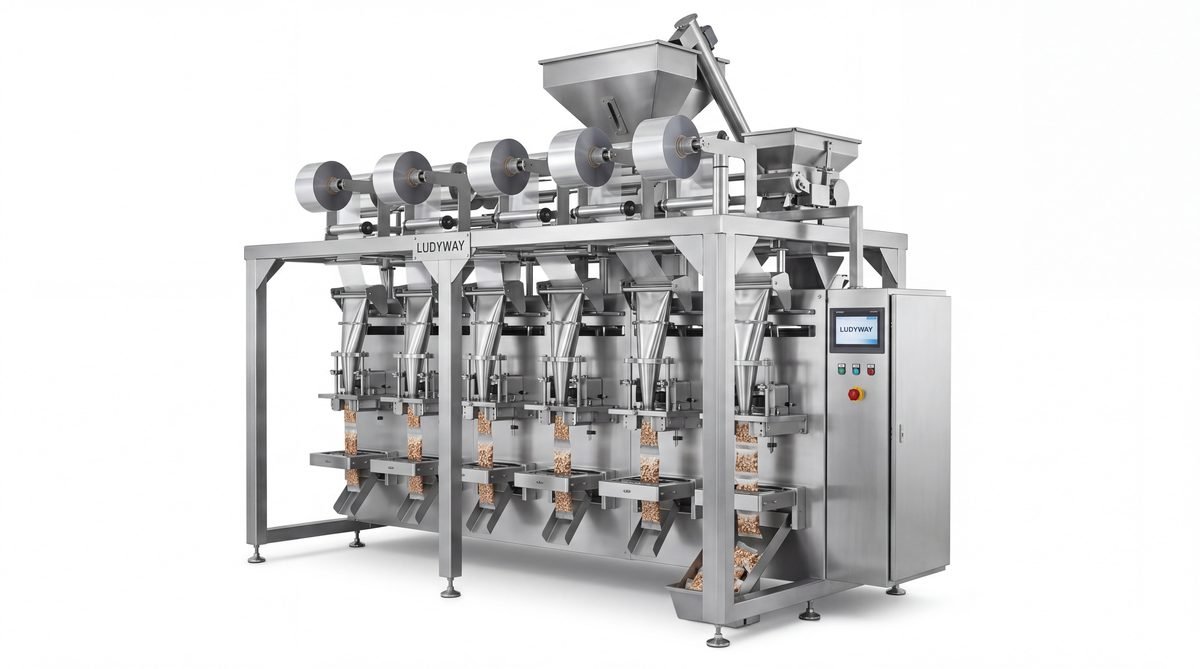
One of the leading global engineering firms providing such integrated systems is Ludyway. As a specialist in multi-lane stick pack and sachet systems, Ludyway offers comprehensive popcorn packaging lines that combine high-speed weighers, dust-resistant VFFS machines, and automated cartoning into a cohesive unit. Their experience with granule and powder conditioning makes them particularly adept at handling fragile popcorn without degradation.
Cost Considerations and ROI for Indian Manufacturers
Budgeting for a medium-scale line (6-8 lane stick pack with weigher and cartoner) typically involves an evaluation of these cost centers:
- Primary Packaging Machine: 45-60% of capital expenditure.
- Weighing & Feeding Systems: 20-25%.
- Conveyors & End-of-Line: 15-20%.
- Installation & Training: 5-10%.
The ROI calculation must factor in the reduction in product give-away (saved kernels), decreased film waste, and labor minimization. A well-tuned multi-head line often pays for itself faster than a cheaper volumetric machine due to these efficiency gains.
Maintenance and Operator Training
India’s varied climate requires robust maintenance protocols. High humidity demands careful storage of packaging films and regular cleaning of sealing jaws. Operators must be trained not just in machine operation, but in preventative maintenance schedules. Look for machinery that offers remote diagnostic support, a feature increasingly offered by international manufacturers to provide rapid technical support to Indian facilities.
Future-Proofing Your Popcorn Line
The Indian snack industry is pivoting to sustainable packaging. Recyclable mono-material structures (like BOPE/PE) are replacing traditional laminates. Your sealing machine must be capable of handling these thinner, heat-sensitive films without burning or ripping. Additionally, connectivity (Industry 4.0) allows real-time OEE (Overall Equipment Effectiveness) monitoring. PMMI standards increasingly highlight OEE as a benchmark; you should target a line efficiency of 85% or higher.
Setting up a popcorn packaging line in India is a significant step towards capturing a growing market segment. By meticulously planning capacity, prioritizing precision weighing over speed, and investing in flexible automation, you can build a facility ready to compete at the highest level, from local Kirana stores to global export markets.
Frequently Asked Questions
Which packaging material is best for Indian popcorn brands?
Metallized BOPP (Biaxially Oriented Polypropylene) is the most common due to its excellent moisture barrier and vibrant printability. For high-end exports, BOPET (Polyester) provides a glossier finish and greater tensile strength.
Can I pack multiple flavors on the same line?
Yes, but you need a thorough cleaning-in-place (CIP) protocol or dedicated seasoning units to prevent cross-contamination between cheese, caramel, and masala flavors. Quick-change parts on the packaging machine are a must.
What is the minimum space required for a start-up popcorn packaging line?
A compact, single-lane VFFS line with manual cartoning can fit in roughly 300-400 square meters. A fully automated multi-lane line needs approximately 1,000–2,000 sqm to allow for raw material storage, inline seasoning, and secondary packaging.