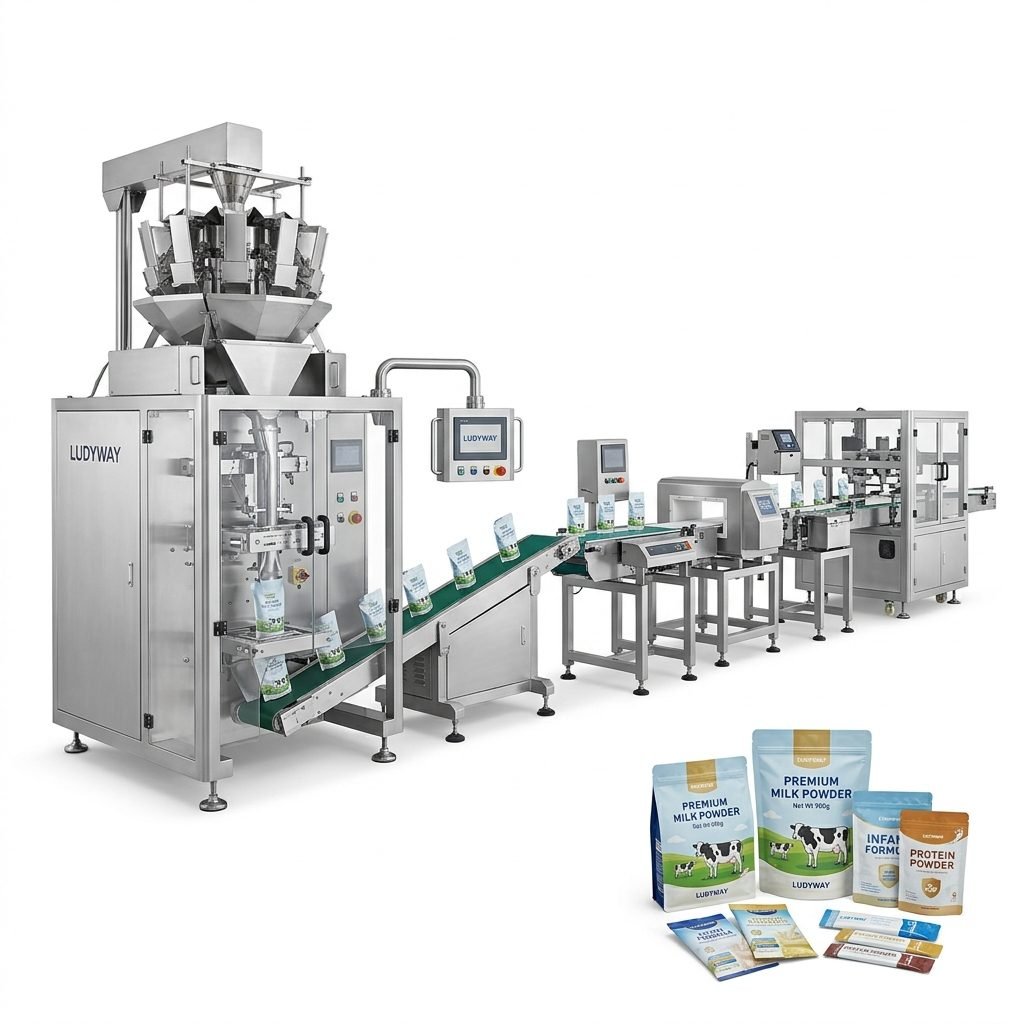
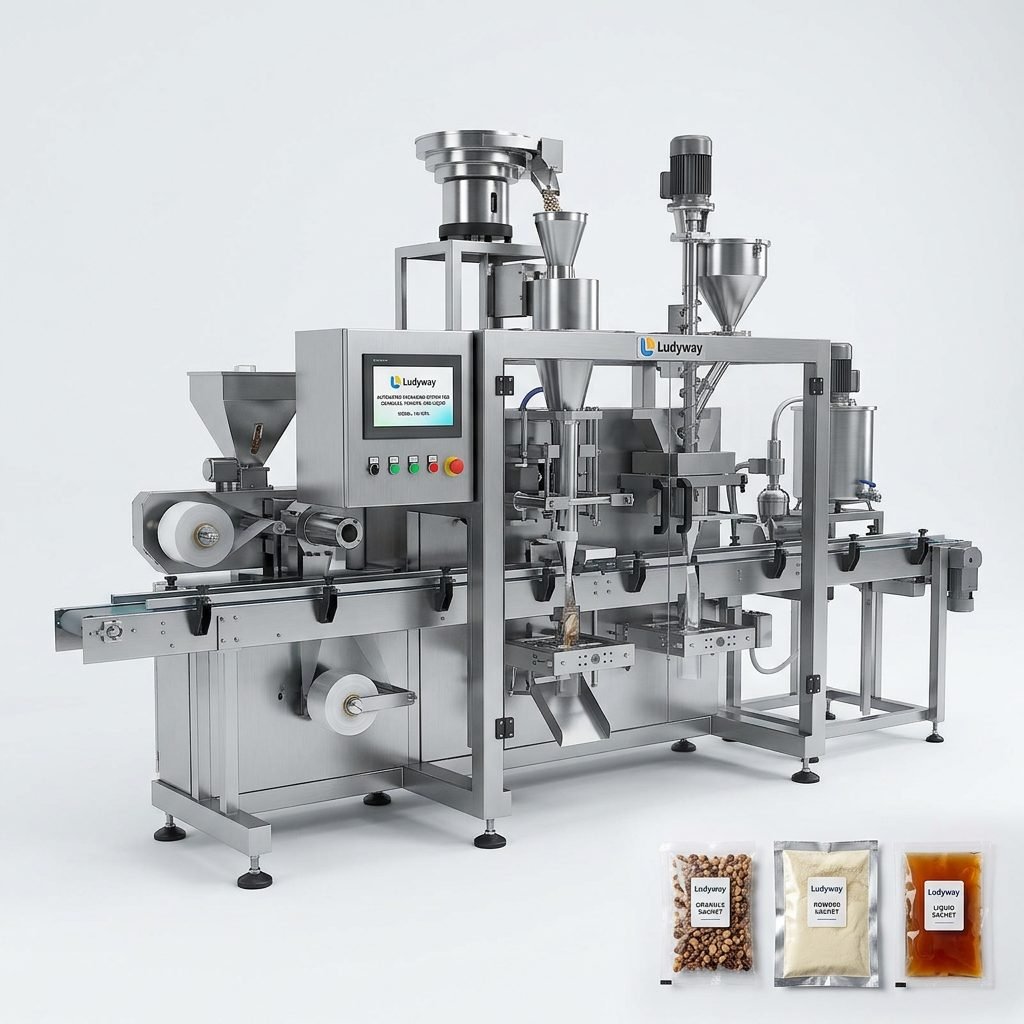
Ketchup is one of the most demanding products in modern sauce packaging. Its viscosity, flow behavior, sugar content, acidity, and hygiene requirements mean that not every filling system can deliver stable, clean, and efficient results. If you are planning a new line or upgrading existing equipment, choosing the right ketchup packaging machine can directly affect output, product consistency, labor cost, packaging quality, and long-term profitability.
For food manufacturers, co-packers, and sauce brands, the best solution is usually not just a single machine. It is a packaging system built around your product characteristics, package format, production target, and factory conditions.
Why Ketchup Packaging Requires Specialized Equipment
Ketchup is thicker than many free-flowing liquids, so it places higher demands on pumping, dosing, sealing, and cleaning. In practical production, manufacturers often deal with issues such as inconsistent fill volumes, dripping nozzles, poor seal integrity, air bubbles, product residue, and difficult CIP maintenance. A proper ketchup packing solution should be designed to handle these challenges from the beginning.
- High viscosity handling for smooth and accurate filling
- Anti-drip and anti-stringing performance to keep packages clean
- Food-grade contact parts for hygiene compliance
- Reliable sealing for leak prevention during transport and storage
- Flexible format compatibility for sachets, stick packs, pouches, or bottles
Start with the Right Packaging Format
Before selecting a machine model, define how you want to sell the product. Different package styles require different machine structures, filling methods, and downstream equipment.
| Packaging Format | Typical Use | Recommended Machine Type | Key Advantage |
|---|---|---|---|
| Sachets | Single-serve retail, foodservice, takeaway | Vertical or horizontal sachet packaging machine | Low material cost, compact format |
| Stick packs | Portion packs, travel packs, convenience packs | Multi-lane stick pack machine | High speed and excellent output |
| Premade pouches | Premium retail packaging, stand-up pouches | Premade pouch filling and sealing machine | Better shelf appeal and branding space |
| Bottles | Retail, foodservice, household use | Bottle filling, capping, labeling line | Strong retail familiarity and easy dispensing |
When Sachets or Stick Packs Make More Sense
If your target market is fast food, airline meals, delivery orders, hotels, or institutional catering, sachet and stick pack solutions are usually the most efficient. They reduce packaging material consumption, support high-volume runs, and make portion control easier.
When Bottles or Pouches Are Better
If your ketchup is positioned for supermarket shelves, family consumption, or premium branding, bottles and pouches often offer better display value. These formats may also support larger fill volumes and more advanced cap or spout options.
Key Factors to Consider When Choosing a Ketchup Packaging Machine
1. Product Viscosity and Formula Stability
Not all ketchup formulas behave the same way. Some are smooth and pumpable, while others contain spice particles, pulp, or stabilizers. The machine should match your exact product behavior. Piston fillers, servo-driven pumps, and positive displacement systems are often preferred for viscous sauces because they offer better volumetric accuracy than simple gravity filling methods.
2. Required Packaging Speed
Production speed should be evaluated in realistic working conditions, not only by theoretical output figures. Ask:
- How many packs or bottles do you need per minute?
- Will the line run one shift or multiple shifts?
- Do you need room for future expansion?
A growing brand should avoid buying a machine that is already near its limit on day one. It is usually smarter to choose a system with some speed reserve.
3. Filling Accuracy
Overfilling wastes product and increases cost. Underfilling creates compliance and customer complaints. For ketchup, accurate dosing is especially important because the product value and consistency are closely monitored. Look for systems with servo control, stable pump design, and repeatable filling performance.
4. Sealing Quality
Seals must remain strong even when product splashes or leaves residue near the sealing area. A high-quality ketchup packaging machine should include features such as nozzle control, clean cut-off, and stable heat sealing parameters to reduce leakage risk.
5. Cleaning and Food Safety
Since ketchup is a food product, sanitation cannot be an afterthought. The machine should use food-contact components made from appropriate stainless steel and be designed for convenient disassembly or CIP-friendly cleaning. Smooth surfaces, fewer dead corners, and hygienic pipe layouts help reduce contamination risk and downtime.
6. Packaging Material Compatibility
The right machine must work with your chosen film, pouch, bottle, cap, or laminate structure. A mismatch between product, machine, and packaging material often leads to wrinkling, sealing defects, poor appearance, or frequent stoppages.
7. Automation Level
A standalone filler may work for small operations, but medium and large manufacturers often need a more integrated solution including:
- Product feeding tanks
- Heated hoppers if required
- Automatic filling and sealing
- Date coding or printing
- Checkweighing or inspection
- Cartoning or case packing
- Palletizing for end-of-line automation
Common Machine Solutions for Ketchup Packing
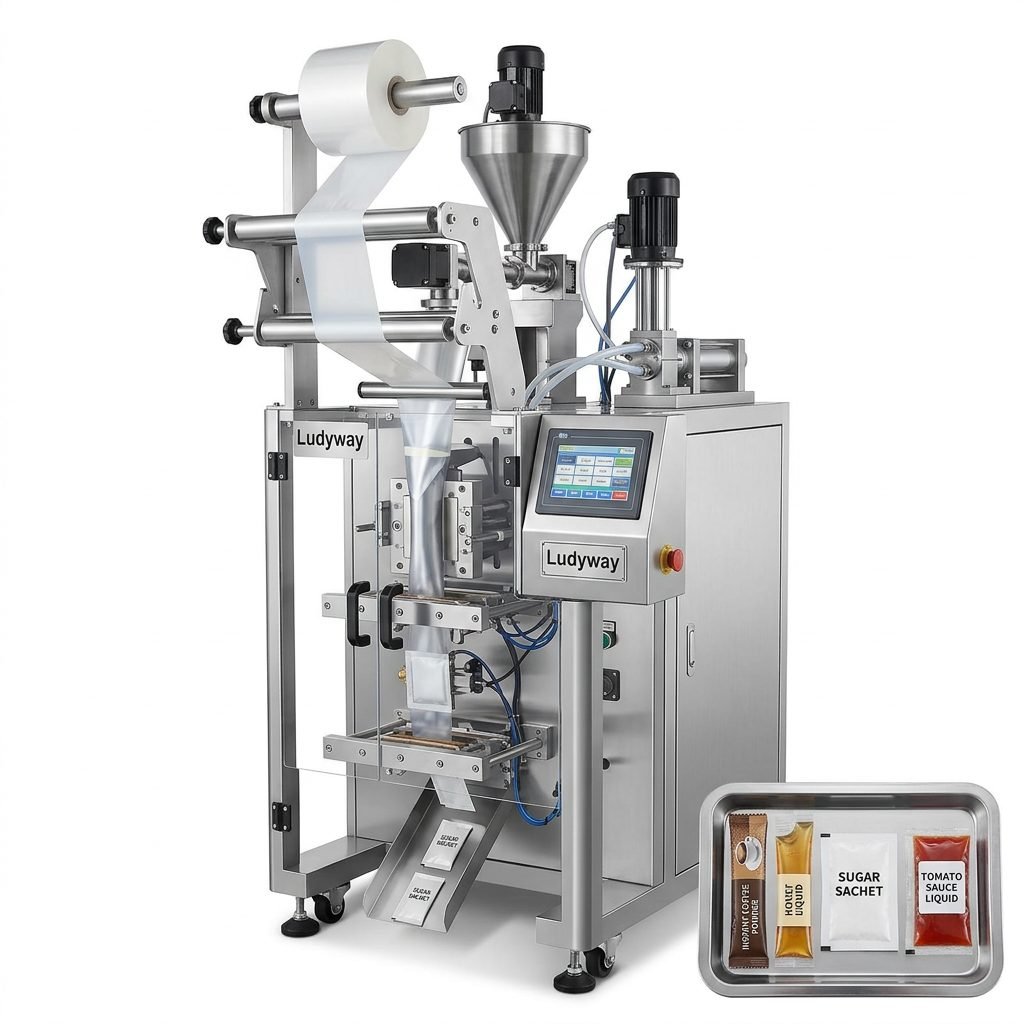
Vertical Form Fill Seal Machines
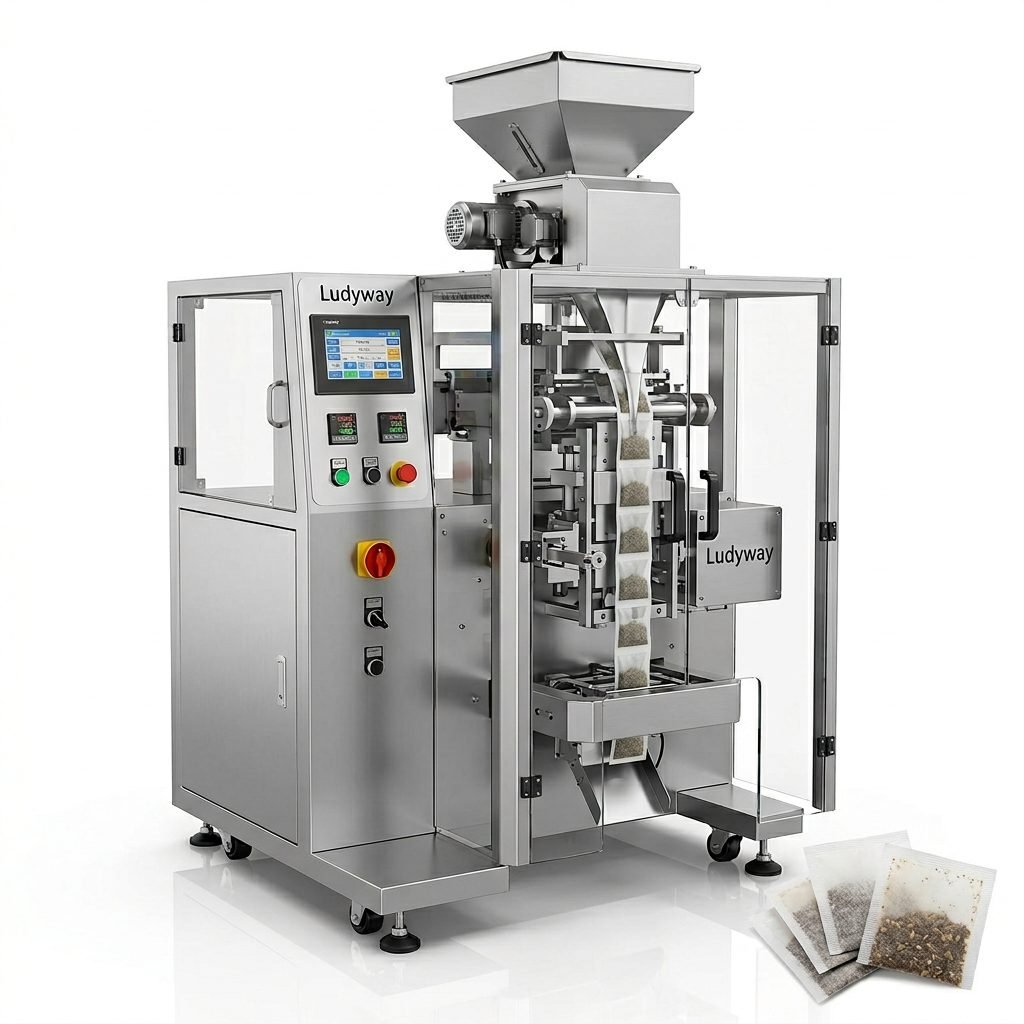
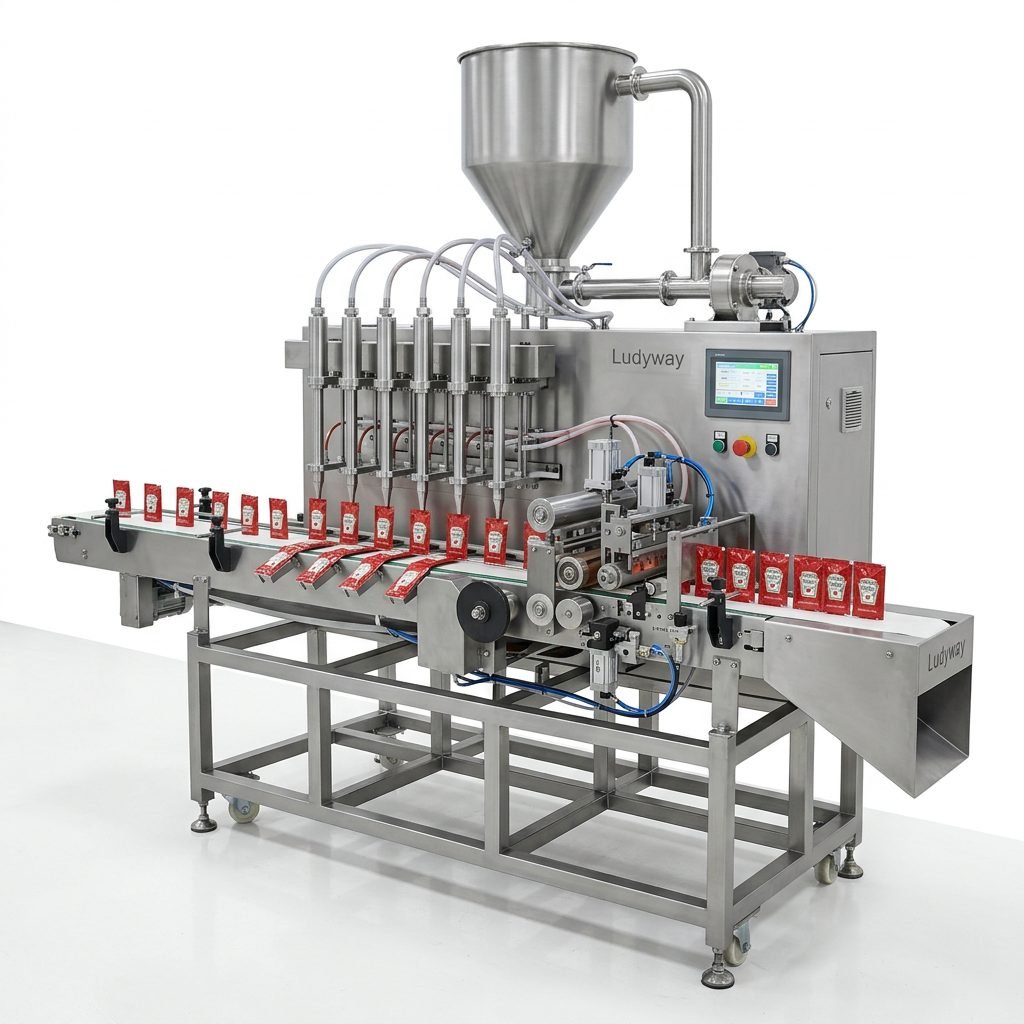
These are widely used for ketchup sachets. They form the pack from roll film, fill the sauce, and seal it in one continuous process. They are suitable for efficient mass production and can be configured for different sachet sizes.
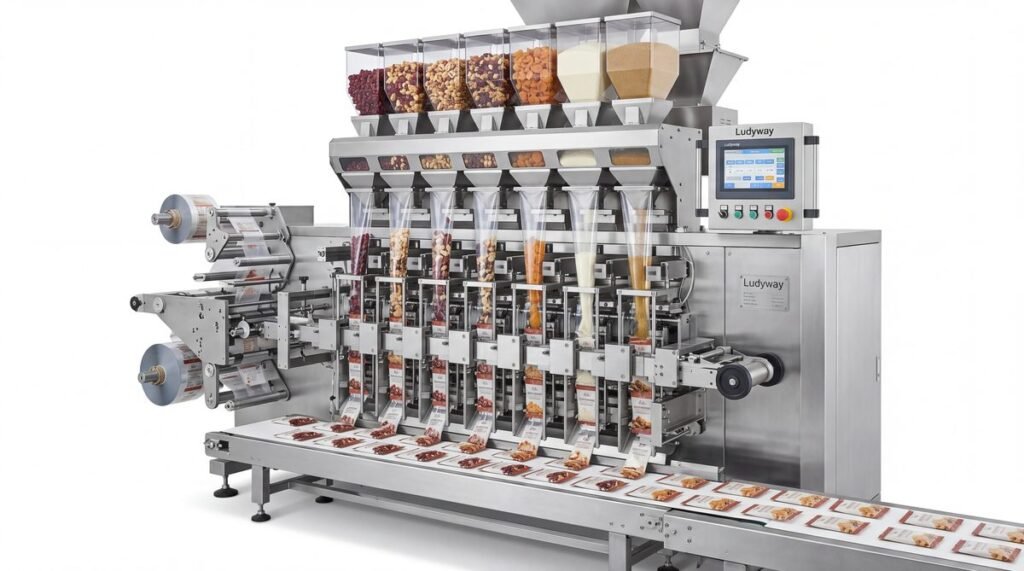
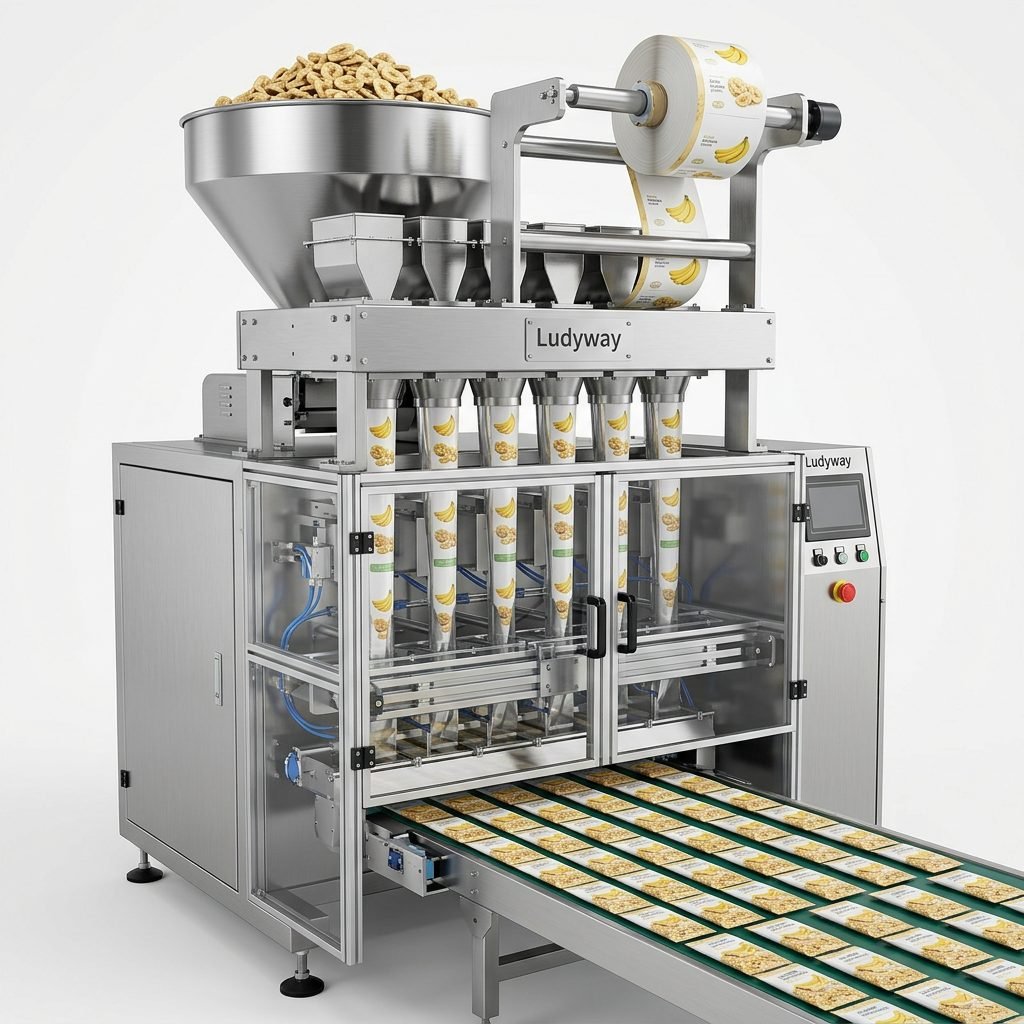
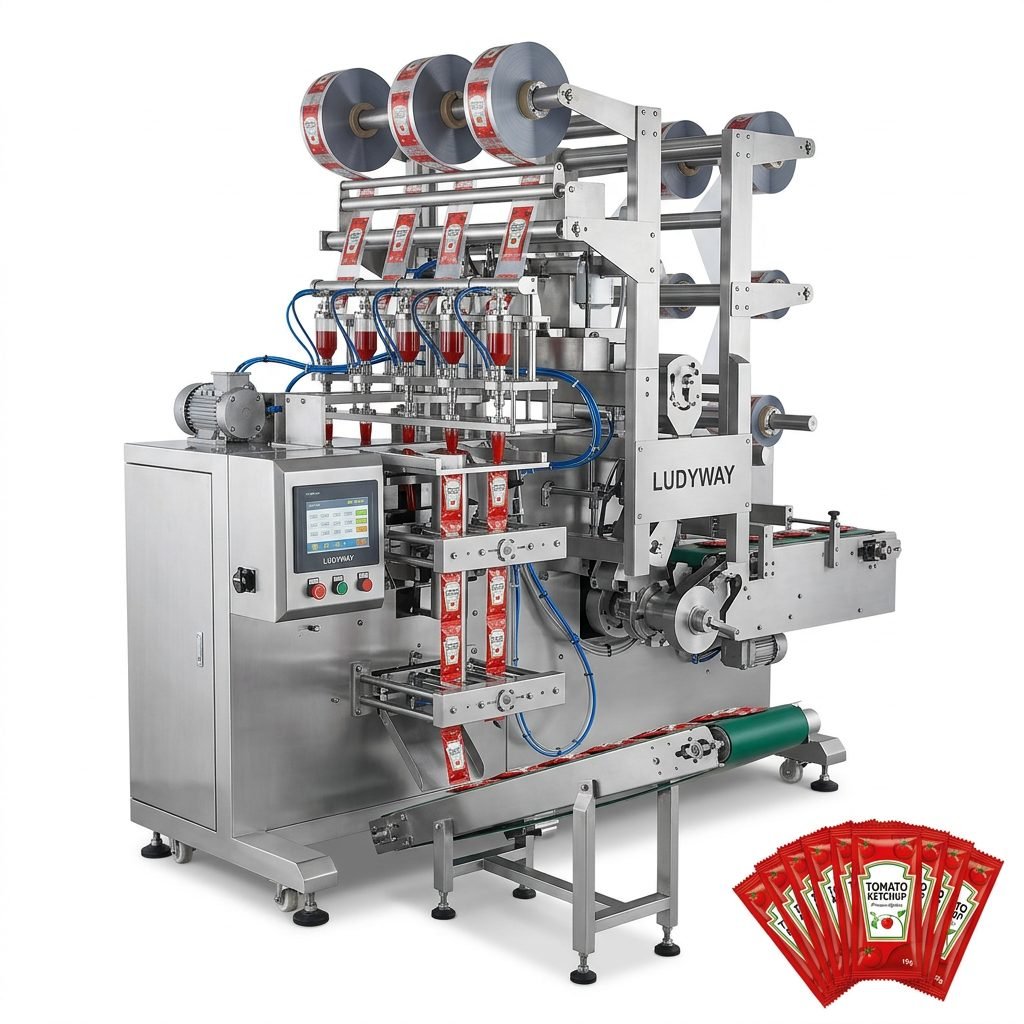
Multi-Lane Sachet or Stick Pack Machines
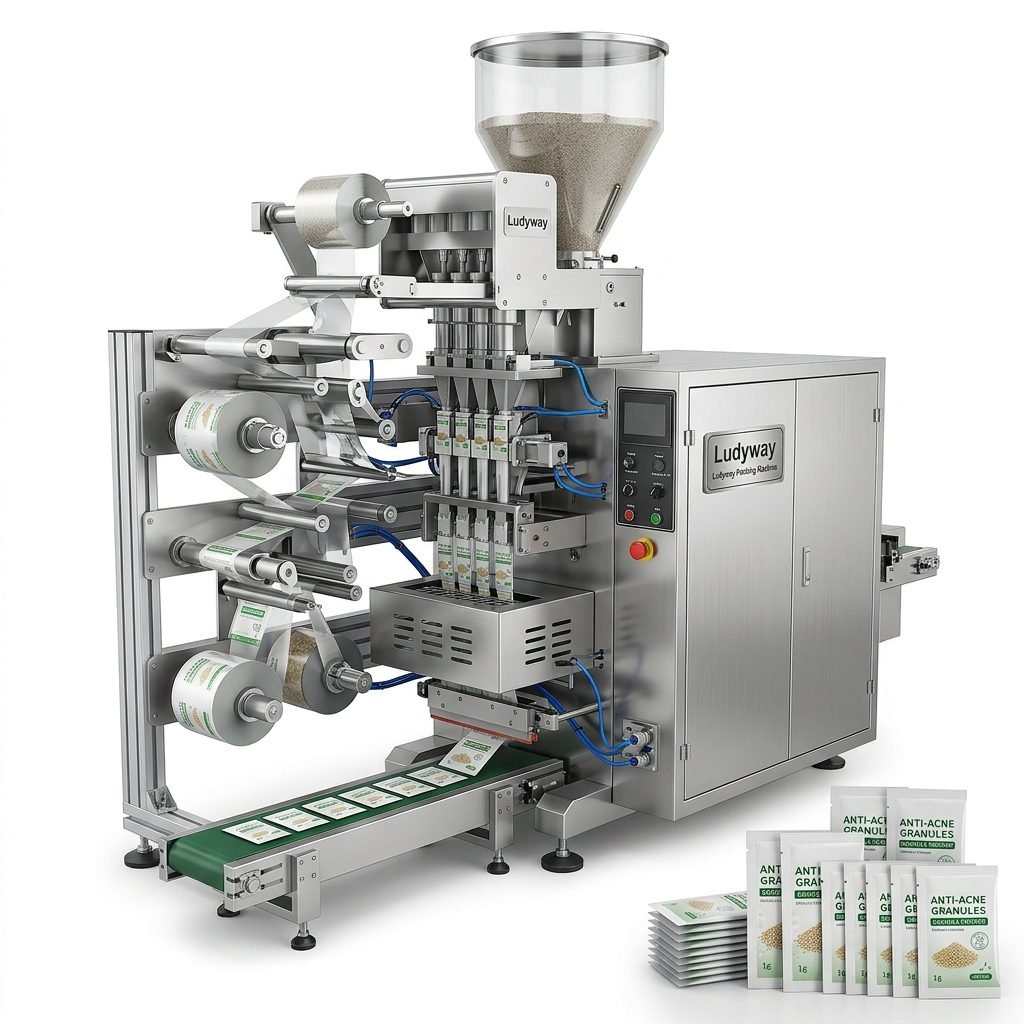
If high output is the priority, multi-lane systems are often the best choice. Multiple lanes run at the same time, significantly increasing production capacity while keeping unit packaging costs low. This is an ideal option for single-dose ketchup packs.
Premade Pouch Filling Machines
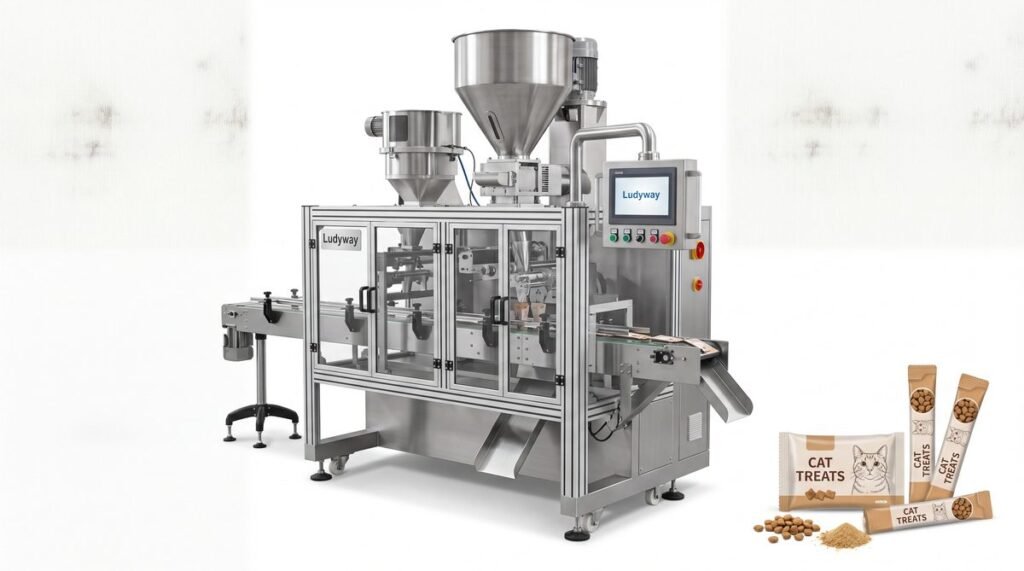
These machines are suitable for stand-up pouches, spouted pouches, and more premium packaging styles. They are often selected by brands that want stronger shelf impact or larger consumer pack sizes.
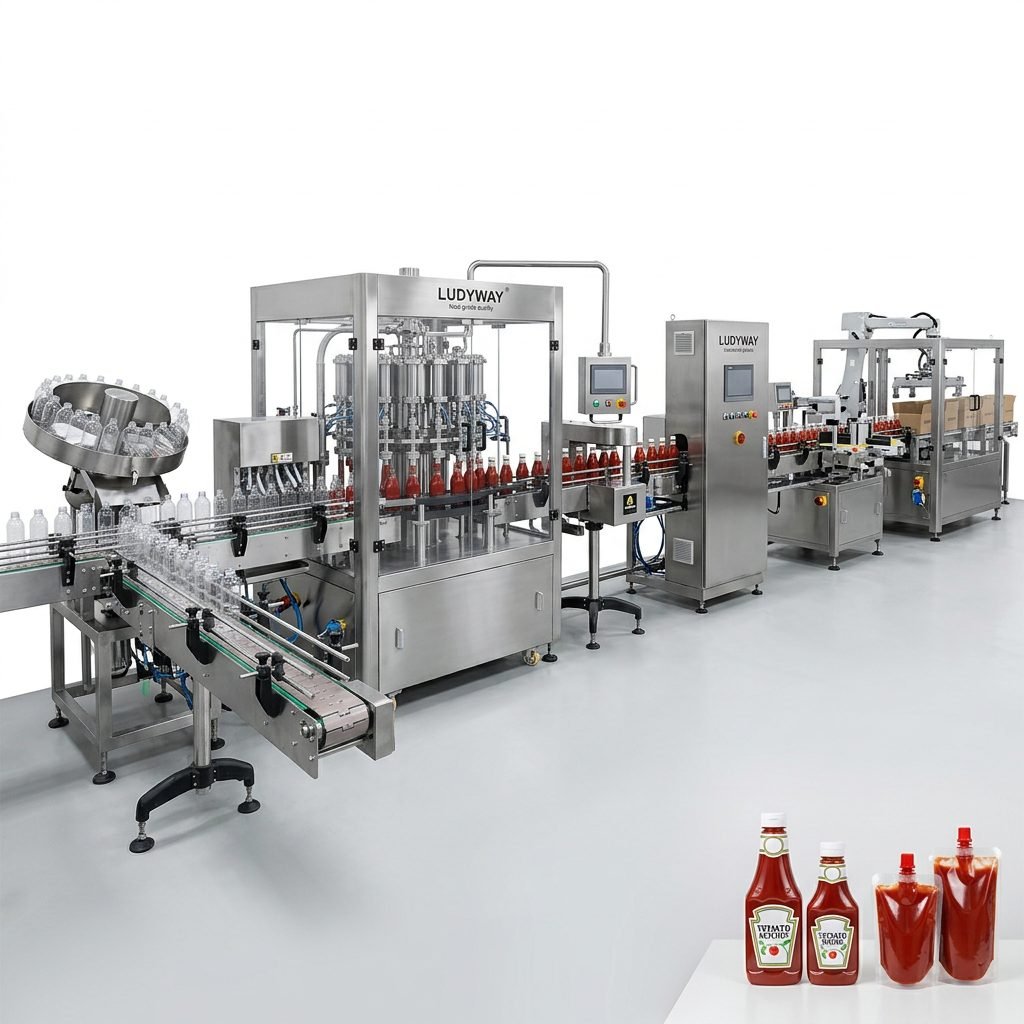
Bottle Filling Lines
For traditional ketchup retail packaging, a bottle line may include bottle unscrambling, filling, capping, labeling, coding, case packing, and palletizing. This solution is effective for supermarkets, foodservice, and export-oriented packaged condiment brands.
How to Match the Machine to Your Production Scale
| Production Scale | Best-Fit Solution | Why It Works |
|---|---|---|
| Startup / Small batch | Compact sachet or semi-automatic filling machine | Lower investment and easier operation |
| Medium-scale factory | Automatic sachet, pouch, or bottle line | Balanced speed, efficiency, and labor savings |
| Large industrial production | High-speed multi-lane or turnkey integrated line | Maximum output, automation, and consistency |
Questions Buyers Should Ask Before Making a Final Decision
- What package sizes do we need now and later?
- Is the machine designed specifically for viscous sauces like ketchup?
- What is the actual stable running speed?
- How easy is cleaning and product changeover?
- Can the machine integrate with coding, cartoning, and inspection equipment?
- What spare parts and technical support are available?
- Can the supplier customize the line for our workshop and product requirements?
Mistakes to Avoid When Buying a Ketchup Packing Machine
Many companies focus only on the purchase price. In reality, the better decision is based on total operating value. A cheaper machine may cost more over time if it creates downtime, rejects, sealing defects, and maintenance issues.
- Choosing a machine built for thin liquids instead of viscous sauces
- Ignoring cleaning difficulty and hygiene design
- Buying based on top speed claims alone
- Not planning for future packaging format changes
- Underestimating the value of technical support and spare parts availability
Why Turnkey Packaging Lines Can Be a Better Long-Term Solution
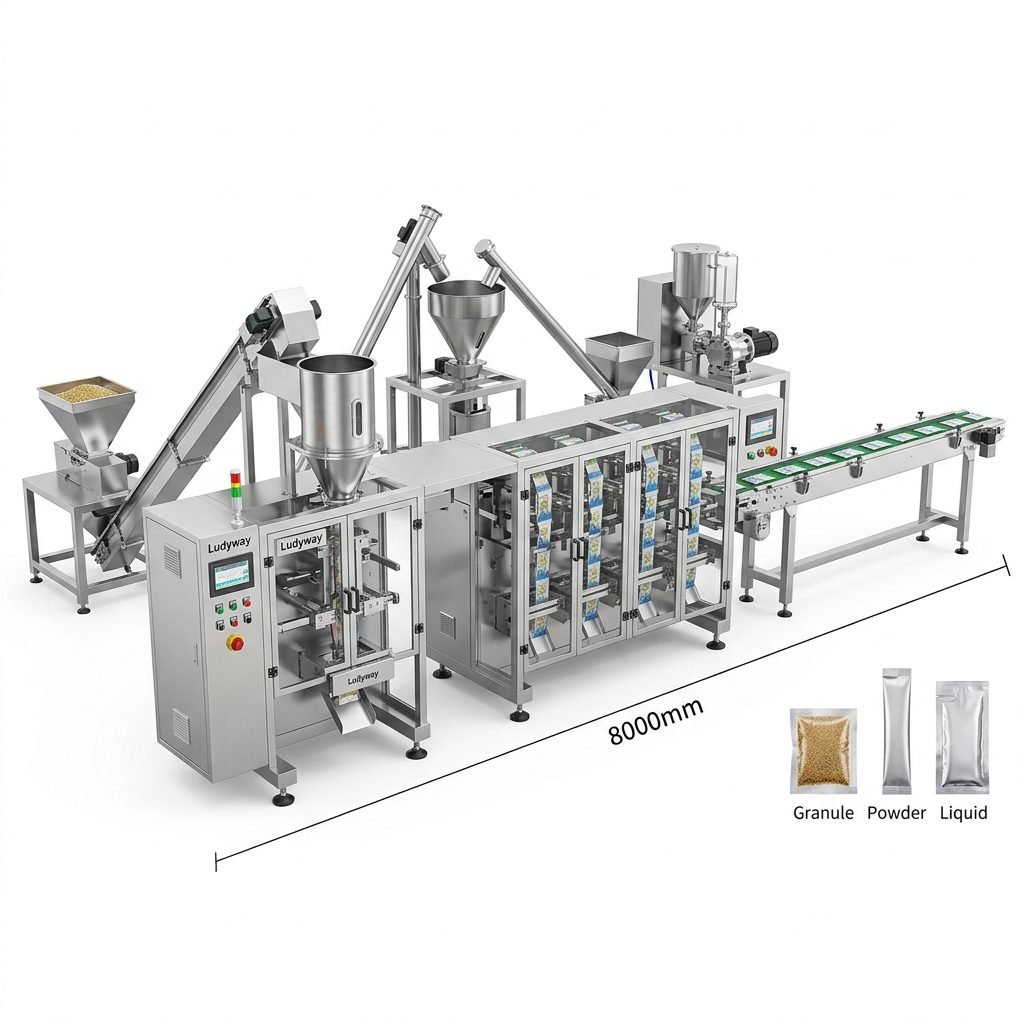
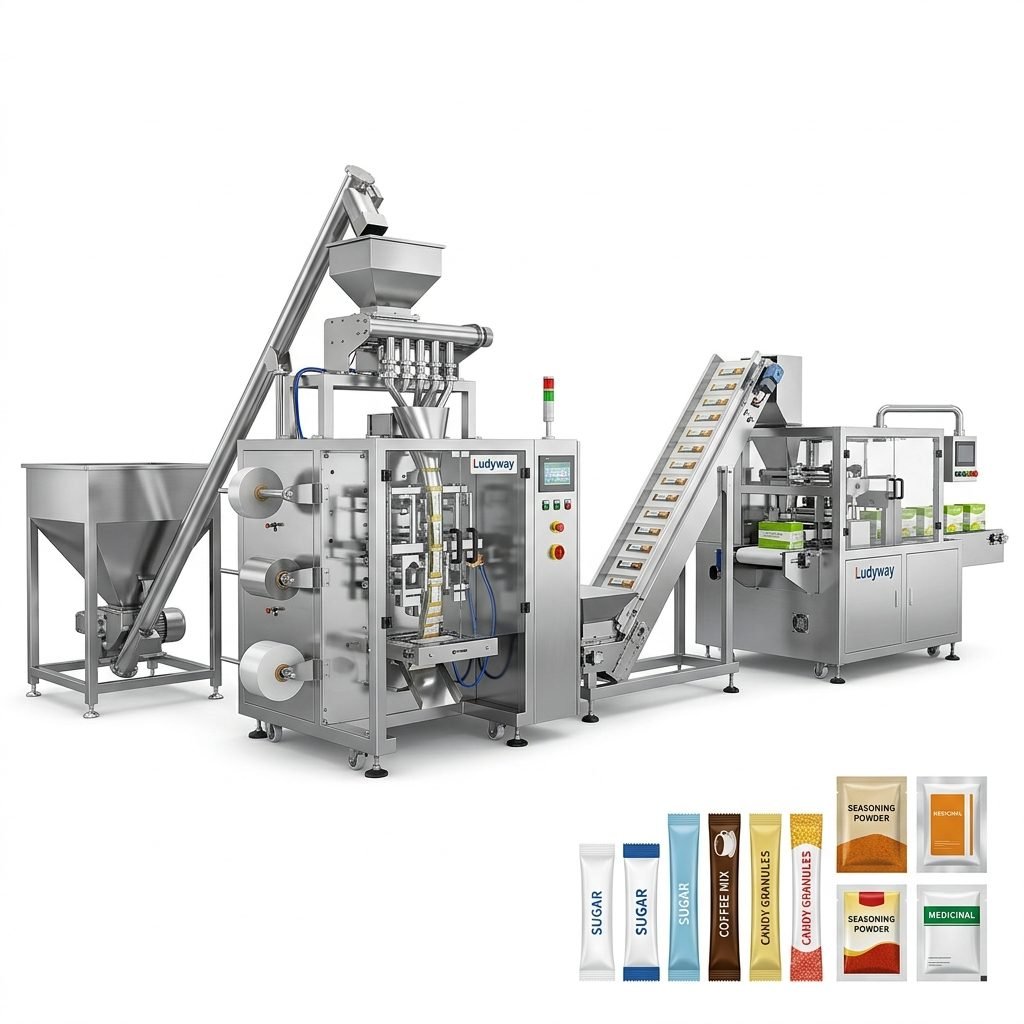
If you are scaling production, a turnkey solution often delivers better results than piecing together separate machines from multiple vendors. Integrated lines are easier to synchronize, reduce interface problems, and improve overall production efficiency. For ketchup manufacturers, this may include raw product feeding, storage tanks, filling, sealing, coding, inspection, cartoning, and palletizing in one coordinated line.
As one of China’s leading packaging machine and turnkey packaging line manufacturers, Ludyway ketchup packaging machine solutions can support food manufacturers looking for scalable automation, stable performance, and customized packing systems for sachets, pouches, bottles, and complete sauce packaging lines.
Final Buying Checklist
Use this quick checklist before selecting your equipment:
- Confirm ketchup viscosity, ingredients, and filling behavior
- Choose the right package format for your market
- Define target output per hour and per shift
- Check filling accuracy and seal reliability
- Review hygiene design and cleaning convenience
- Ensure compatibility with your packaging materials
- Plan for future automation and expansion
- Select a supplier with customization and after-sales support
Conclusion
The best ketchup packaging machine is the one that fits your product, packaging type, factory capacity, and growth strategy. Whether you need compact sachet packing, high-speed multi-lane production, premade pouch filling, or a complete bottle packaging line, the right solution should combine accuracy, hygiene, speed, seal integrity, and reliable automation. When these factors are aligned, sauce packing becomes more efficient, more consistent, and more profitable.