Choosing the right lotion packaging machine can directly affect production speed, filling accuracy, sealing quality, labor cost, and long-term brand consistency. For cosmetic manufacturers, skincare brands, contract packers, and personal care product suppliers, the best solution is not simply the fastest machine—it is the one that fits your lotion formula, package format, output goals, and future expansion plans.
Whether you pack body lotion, hand cream, moisturizing emulsion, sunscreen lotion, facial care products, or sample-size skincare sachets, understanding the core technical points helps you avoid costly mistakes. This guide explains how to evaluate a lotion filling and sealing solution step by step.
Why Lotion Packaging Requires Specialized Equipment
Lotion is more complex than ordinary liquid products. It may be thin, medium-viscosity, creamy, foamy, or sensitive to temperature. Some formulas contain oils, botanical extracts, active ingredients, or suspended particles. Because of this, a generic liquid filler may not deliver stable performance.
- Maintain accurate filling volumes despite viscosity changes
- Prevent dripping, tailing, and nozzle contamination
- Create clean, strong, leak-resistant seals
- Protect product texture and appearance
- Support hygienic production and easy cleaning
- Match different formats such as sachets, stick packs, tubes, pouches, and bottles
If your lotion packaging line is poorly matched to the product, you may face underfilling, seal failures, unstable throughput, product waste, and customer complaints.
Start with the Product: What Type of Lotion Are You Filling?
Before comparing machine models, define the physical and commercial characteristics of your product. This is the foundation of good equipment selection.
Key Product Questions
- Is the lotion low, medium, or high viscosity?
- Does it flow at room temperature, or does it need heating?
- Is it sensitive to shear, foaming, or air bubbles?
- Does it contain particles, beads, extracts, or exfoliating ingredients?
- What is the target fill size?
- Is the product for retail, travel size, promotional sampling, or professional salon use?
| Lotion Type | Typical Packaging | Recommended Filling Approach |
|---|---|---|
| Body lotion | Bottles, sachets, pouches | Servo piston or pump filling |
| Hand cream | Tubes, sachets | High-viscosity piston filling |
| Facial lotion/emulsion | Sachets, bottles, airless containers | Precision servo filling |
| Sunscreen lotion | Sachets, tubes, bottles | Anti-drip filling with seal control |
| Sample skincare lotion | Multi-lane sachets, stick packs | High-speed multi-lane sachet machine |
Choose the Right Package Format
The best lotion packaging machine depends heavily on how you want to sell and distribute your product. Different package styles require different filling and sealing systems.
Common Lotion Packaging Formats
- Sachets: ideal for samples, travel packs, hotel amenities, promotional kits, and single-use skincare applications
- Stick packs: suitable for narrow, portable single-dose products
- Tubes: widely used for hand cream, facial cream, and premium skincare
- Pouches: useful for refill packs or larger flexible packaging
- Bottles: preferred for retail body lotion, pump lotion, and family-size products
For brands focusing on sampling, e-commerce promotions, or travel-size skincare, sachet and stick pack machines are often the most efficient choice. For standard retail body care products, bottle or tube filling lines may be more suitable.
Understand the Main Types of Lotion Packaging Machines
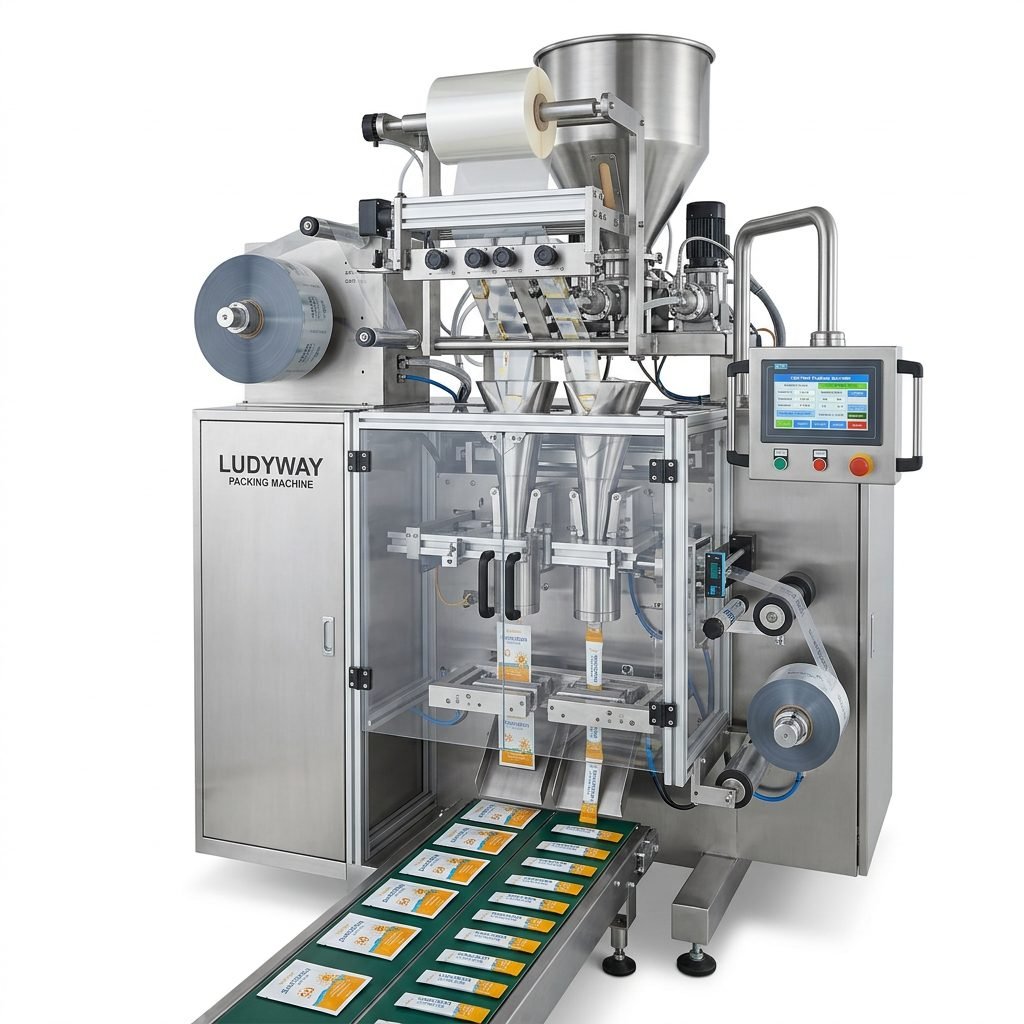
1. Sachet Filling and Sealing Machines
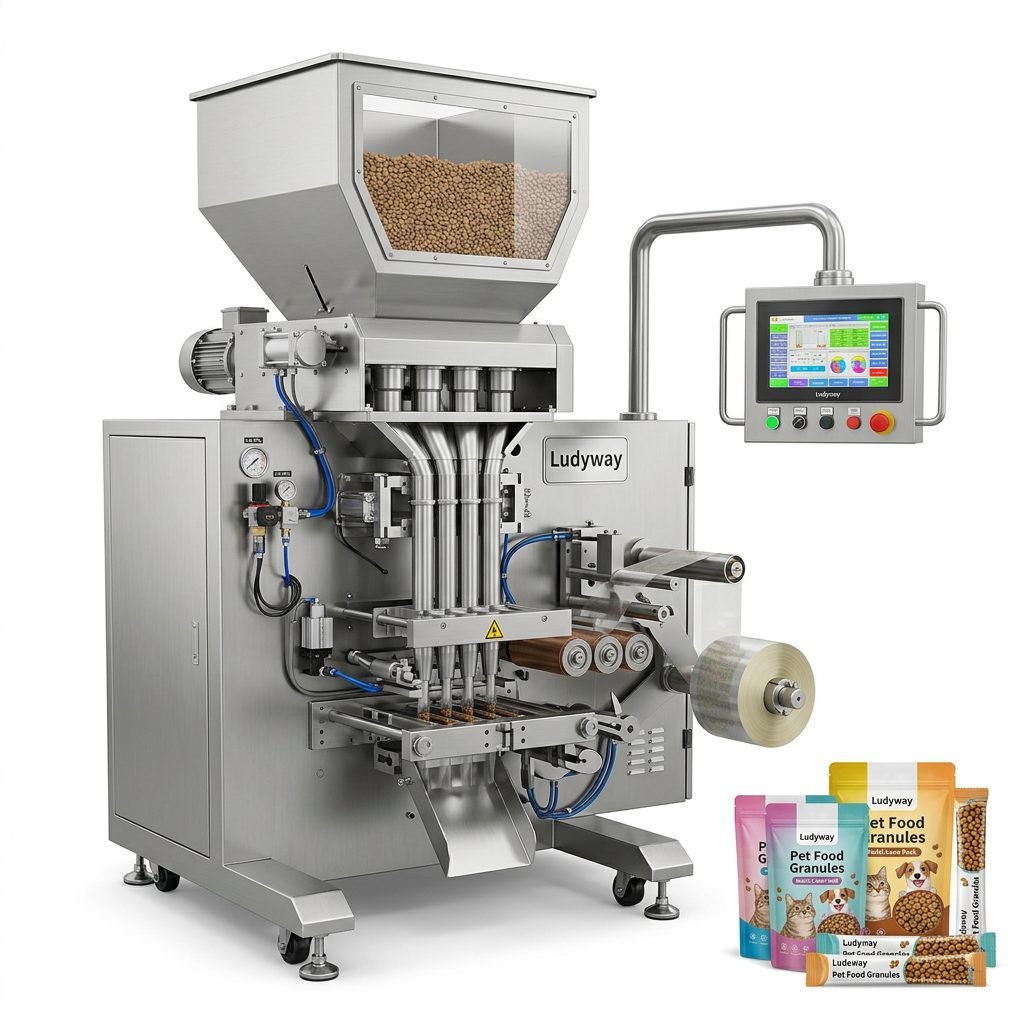
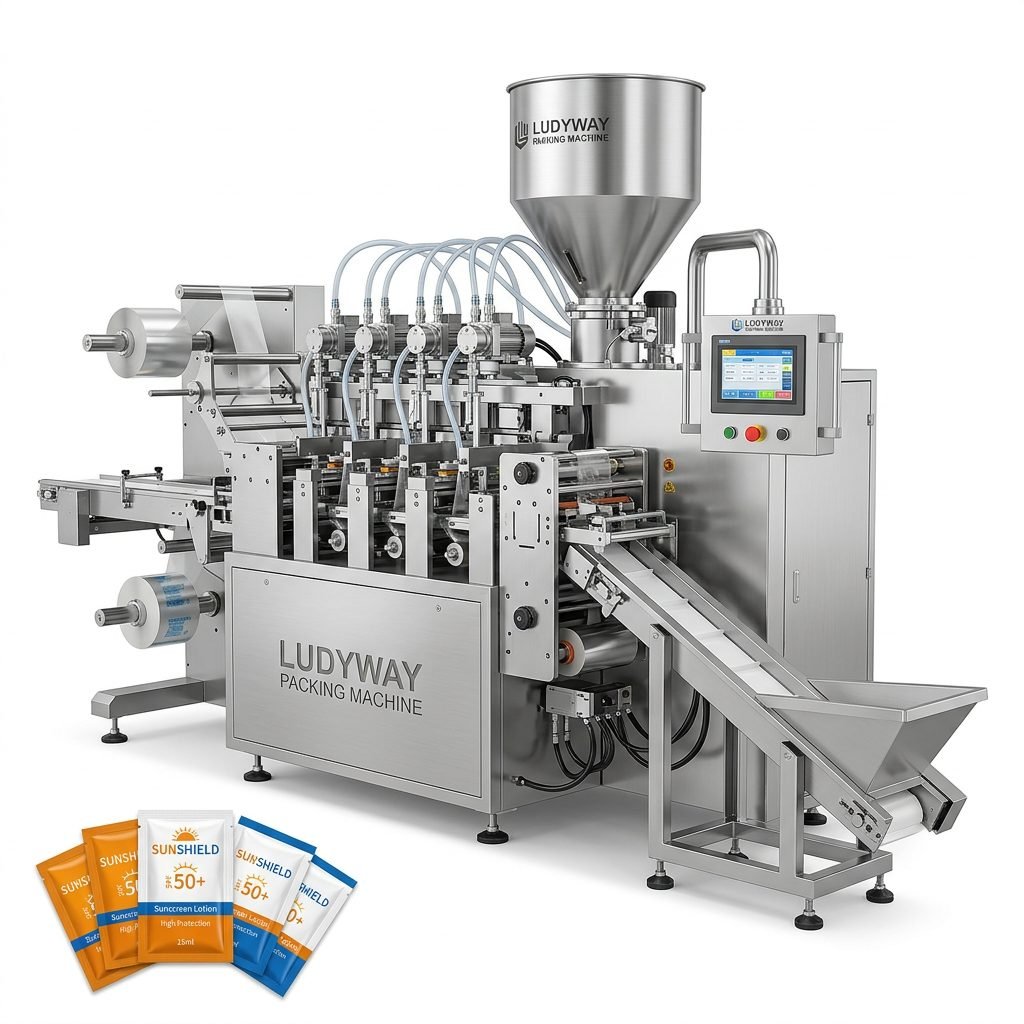
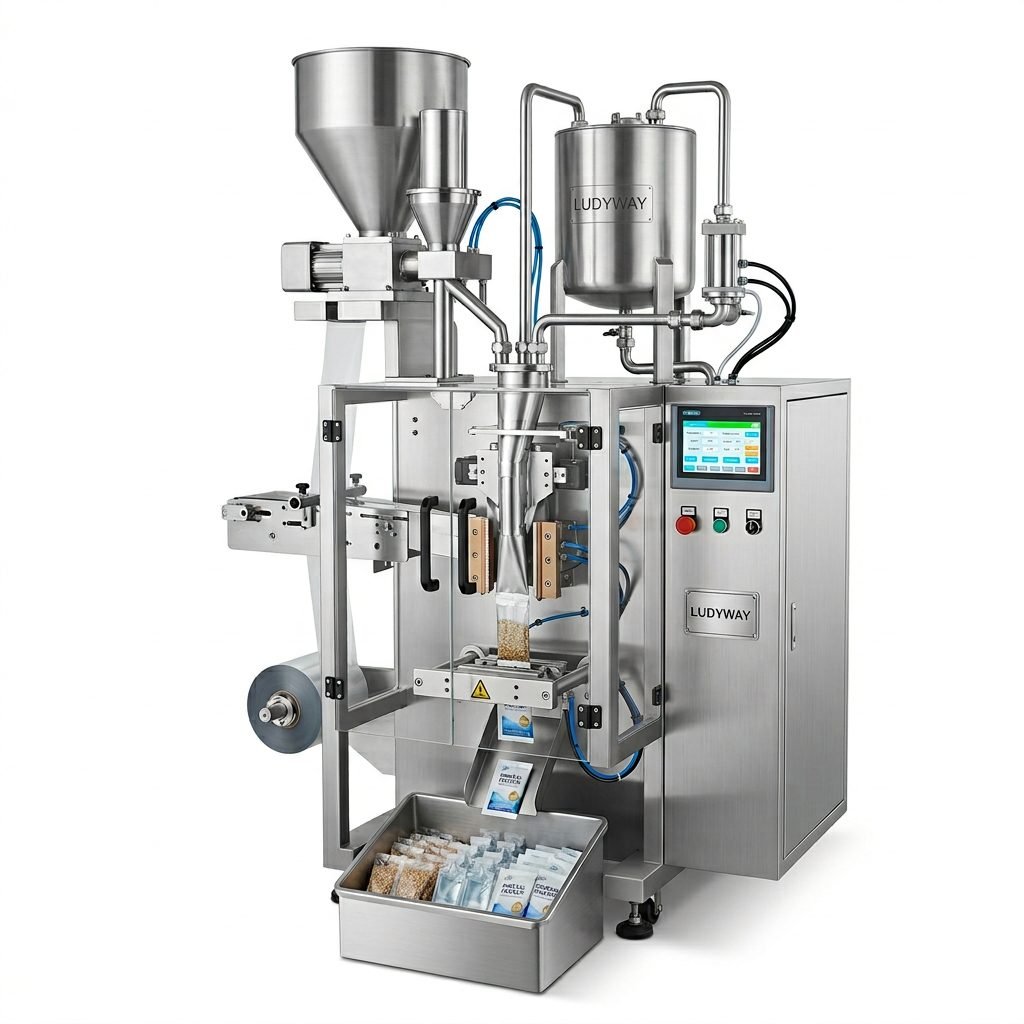
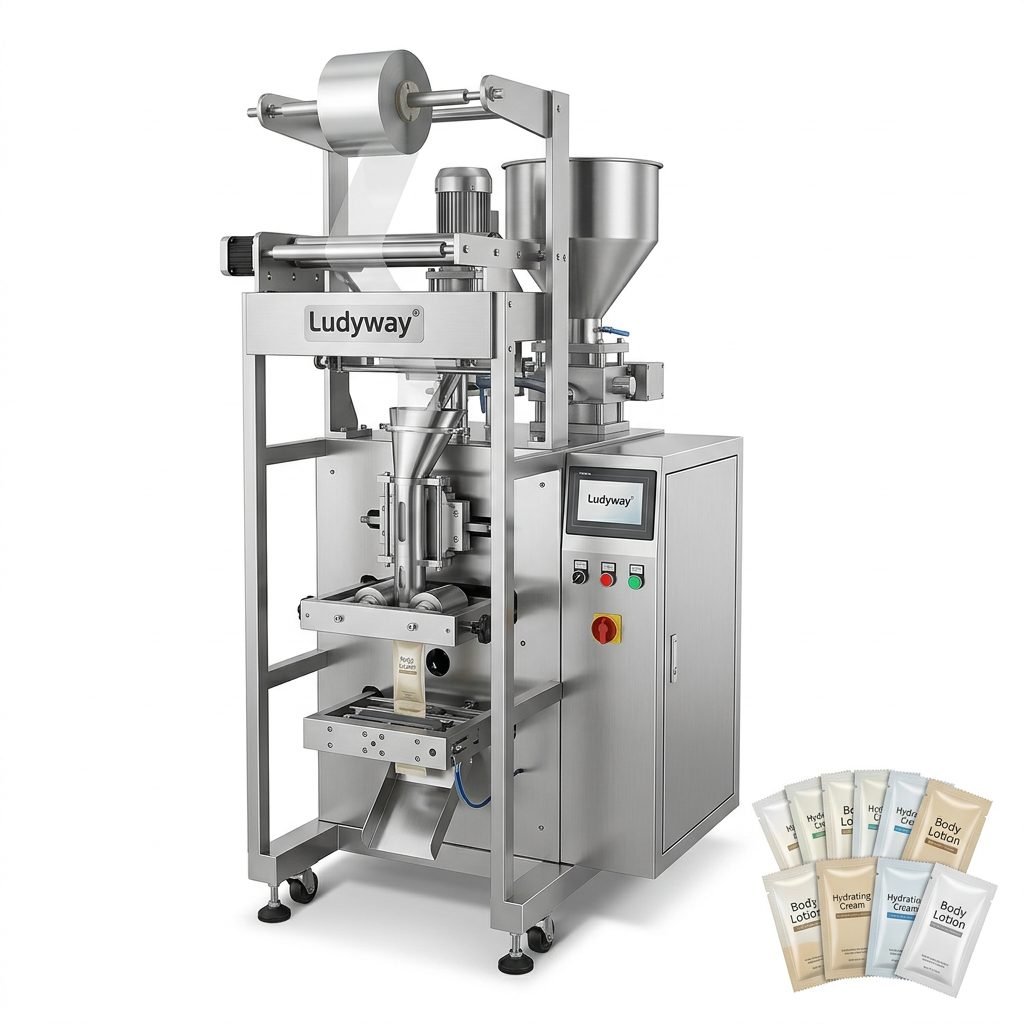
These machines form sachets from roll film, fill the lotion, and seal the package automatically. They are commonly used for cosmetic samples, facial care products, hand cream sachets, and hotel-use personal care products.
Best for: single-use packs, promotional sampling, travel-size skincare, and high-volume small-format production.
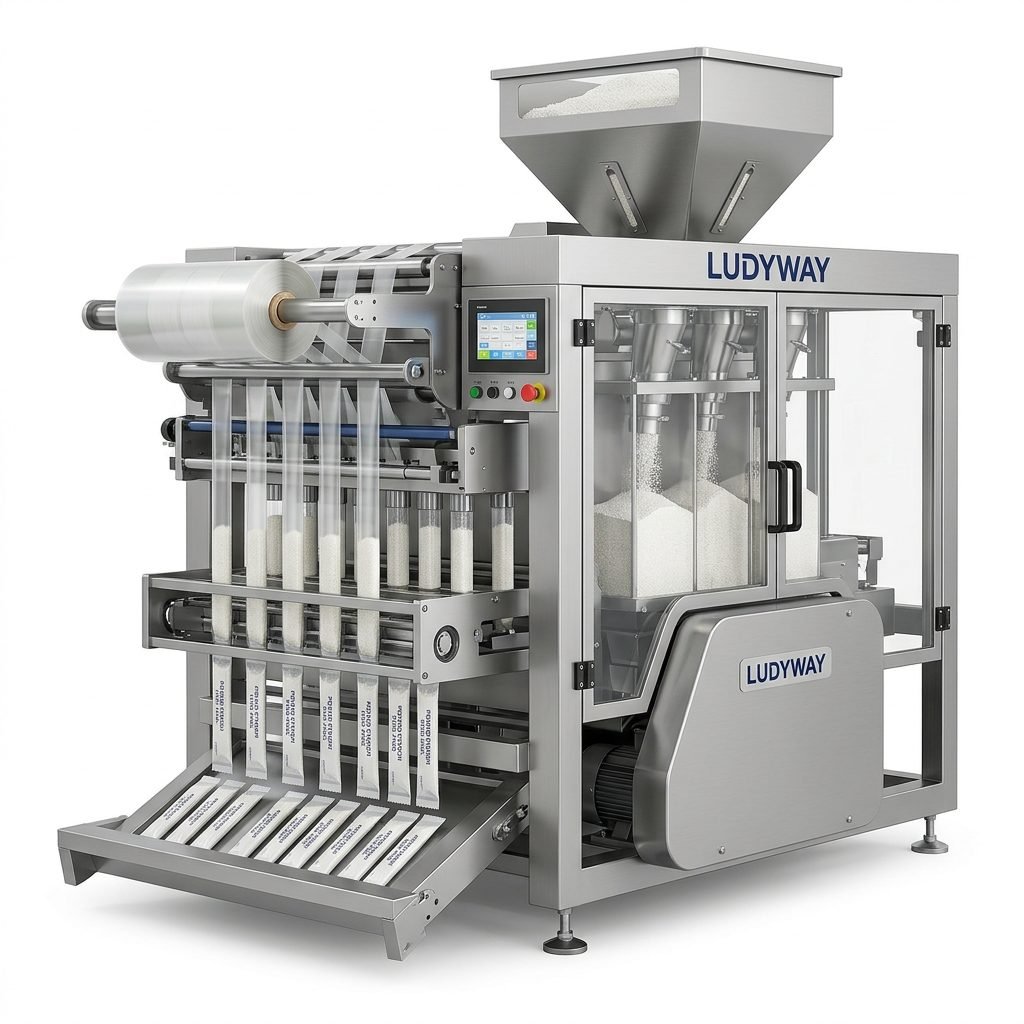
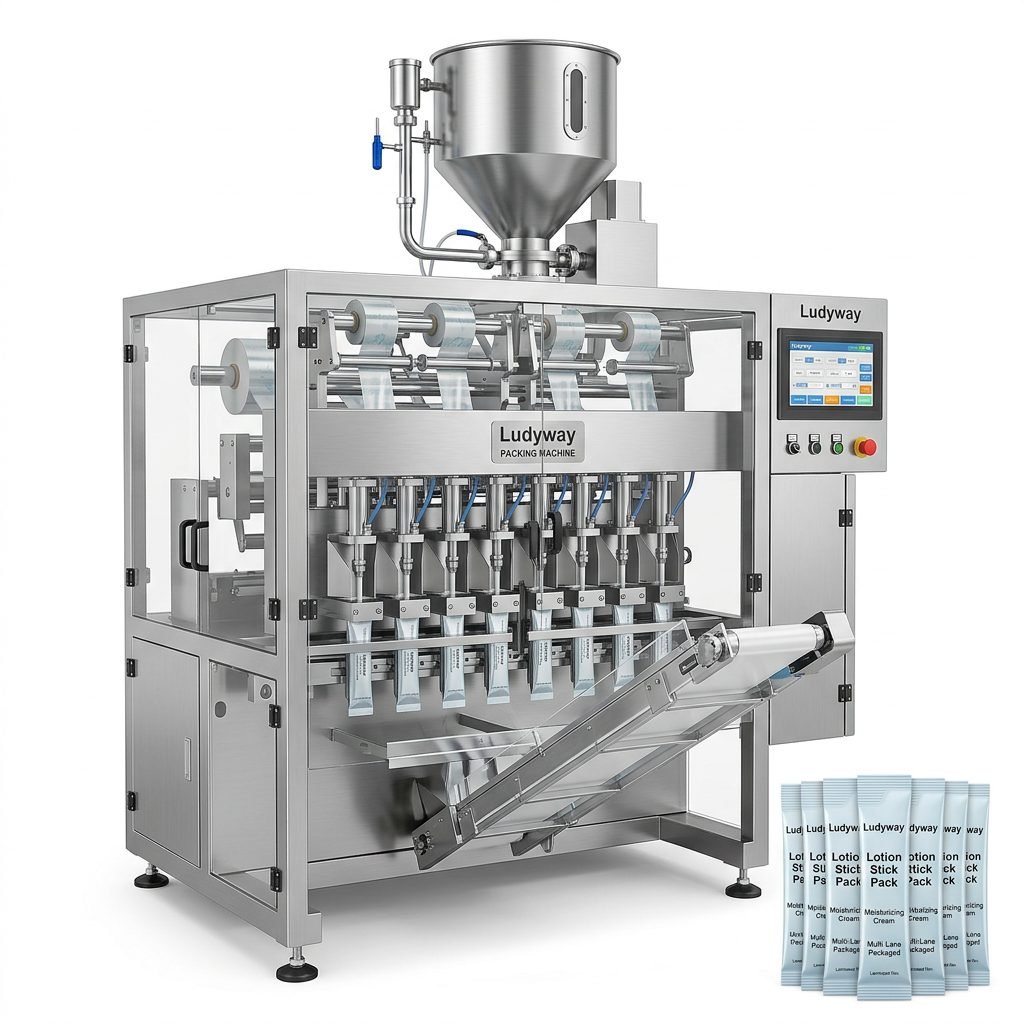
2. Multi-Lane Liquid Packaging Machines
Multi-lane systems significantly increase output by running several filling lanes at the same time. They are excellent for brands with large-scale demand for lotion sachets or stick packs.
Best for: contract packaging, OEM/ODM cosmetic production, and mass-market sample packaging.
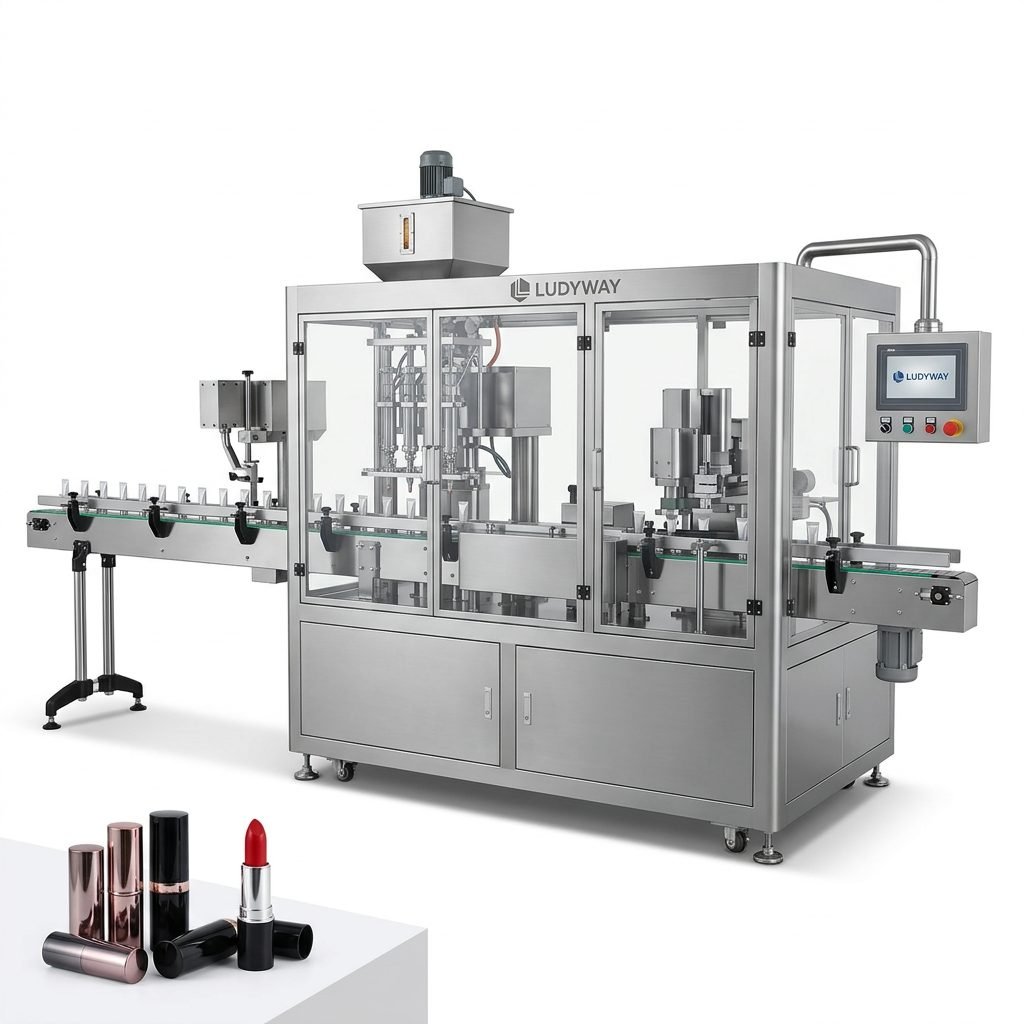
3. Tube Filling and Sealing Machines
These are designed for creams and lotions packed into plastic, laminated, or aluminum tubes. They are common for hand cream, facial cream, and sunscreen packaging.
Best for: mid-to-high viscosity products and premium cosmetic presentation.
4. Bottle Filling and Capping Lines
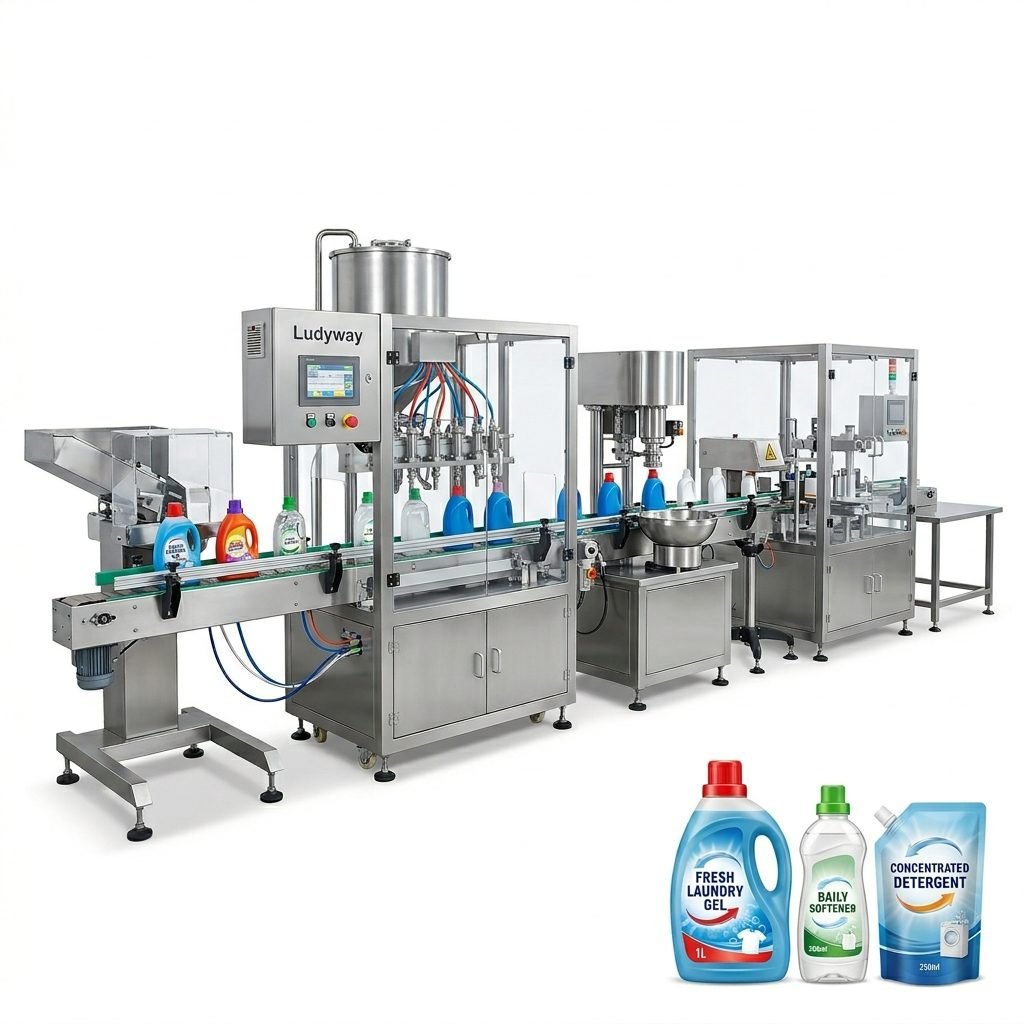
Bottle lines usually include bottle feeding, filling, capping, labeling, coding, and sometimes cartoning. They are ideal for standard body lotion and pump-bottle skincare products.
Best for: retail lotion packaging with larger volumes and multiple bottle sizes.
Key Factors to Compare Before Buying
Filling Accuracy
Accurate filling protects your profit margin and brand reputation. Overfilling wastes product, while underfilling can create compliance and customer trust issues. Look for servo-controlled systems, stable dosing components, and a machine that is proven for viscous liquid applications.
Viscosity Compatibility
Lotions vary from light emulsions to thick creams. The machine should handle your actual formula, not just “liquid products” in general. If your formula changes seasonally or by SKU, choose a system with wider adaptability.
Seal Quality
For sachets, pouches, and stick packs, seal strength is critical. Good sealing prevents leakage during transport, storage, and use. Heat control, dwell time, film matching, and package material compatibility all matter.
Production Speed
Do not buy based only on maximum speed shown in a brochure. Ask for real working speed under your lotion type, fill volume, and packaging material. A stable moderate speed is more valuable than an unstable high-speed promise.
Changeover Flexibility
If you run different package sizes or multiple lotion formulas, fast changeover becomes essential. Check whether the machine supports tool-free adjustment, recipe storage, HMI control, and easy cleaning between batches.
Cleaning and Hygiene
Cosmetic production requires clean contact surfaces and practical sanitation procedures. Stainless steel construction, easy disassembly, CIP-friendly design, and minimal dead corners can save downtime and reduce contamination risk.
Automation Level
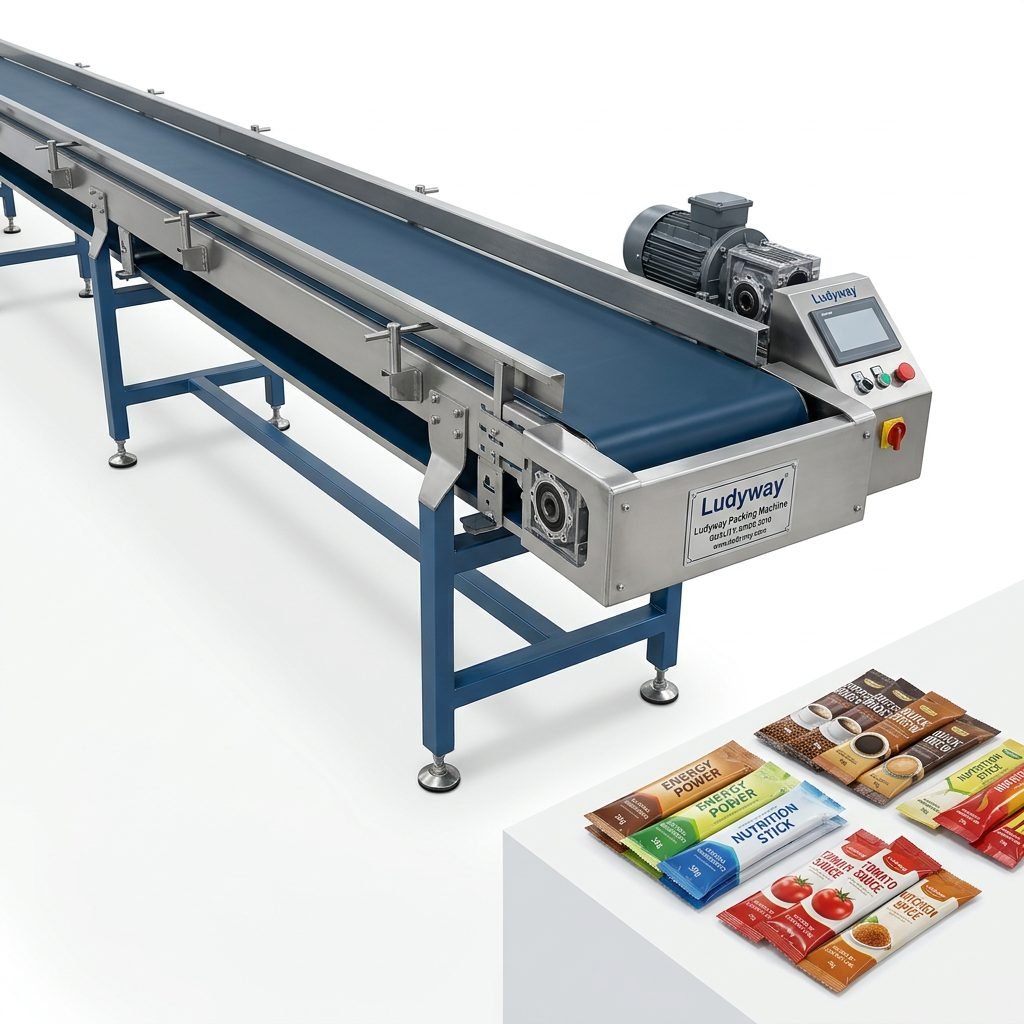
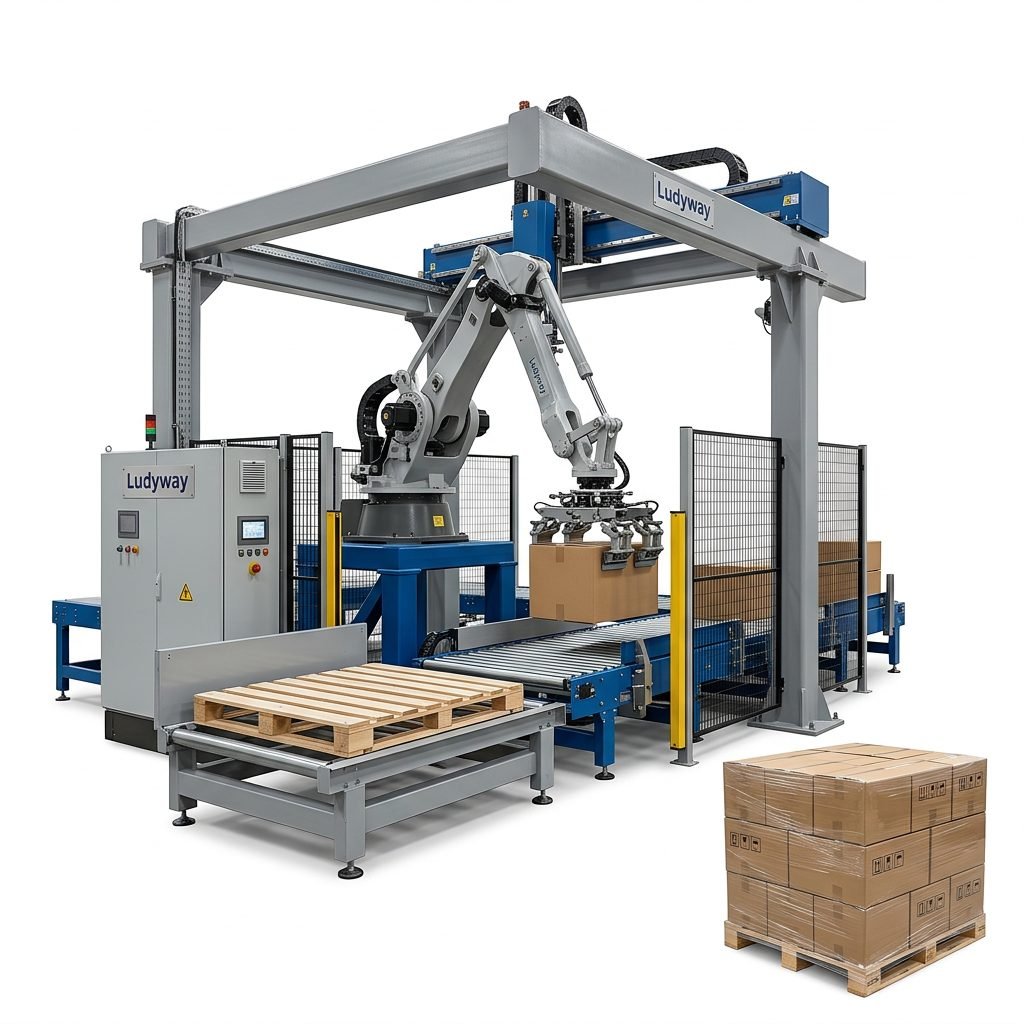
A standalone machine may be enough for startups, but growing manufacturers may need an integrated line including feeding, filling, sealing, coding, cartoning, inspection, and final packing. Higher automation reduces labor dependency and improves consistency.
| Selection Factor | Why It Matters | What to Ask the Supplier |
|---|---|---|
| Filling accuracy | Controls giveaway and compliance | What tolerance is guaranteed for my formula? |
| Viscosity range | Ensures stable filling performance | Can it handle thick lotion and emulsion products? |
| Sealing quality | Prevents leakage and package failure | Has the machine been tested with my film material? |
| Speed | Affects output and ROI | What is the stable speed in real production? |
| Changeover | Improves flexibility across SKUs | How long does size or formula change take? |
| After-sales support | Reduces downtime and operating risk | Do you provide training, parts, and remote support? |
How to Match Machine Type to Business Stage
For Startups and Small Cosmetic Brands
Focus on flexible, compact equipment with reasonable output and simple operation. You may not need a full line on day one, but you should avoid buying a machine that cannot support future growth.
For OEM/ODM Manufacturers
You need versatility, faster cleaning, quick changeover, and broad material compatibility. Multi-SKU capability is often more important than a single-format speed record.
For High-Volume Producers
Choose a high-speed lotion filling and sealing solution with strong automation, stable servo control, integrated coding, inspection, and end-of-line options. This improves total line efficiency and lowers unit cost.
Mistakes to Avoid When Choosing a Lotion Packaging Machine
- Buying only on price and ignoring total operating cost
- Assuming all liquid fillers can handle lotion
- Ignoring sealing quality during machine evaluation
- Choosing a speed level that your upstream or downstream line cannot support
- Not testing with your actual lotion formula and packaging film
- Forgetting future package expansion and SKU growth
- Overlooking spare parts availability and technical support
What a Good Supplier Should Provide
A reliable machine supplier should offer more than equipment assembly. The best partners understand application details, production logic, and long-term line performance.
- Application analysis based on your lotion viscosity and package type
- Sample testing before final configuration
- Machine customization where needed
- Installation guidance and operator training
- Technical documents and maintenance support
- Spare parts service and troubleshooting assistance
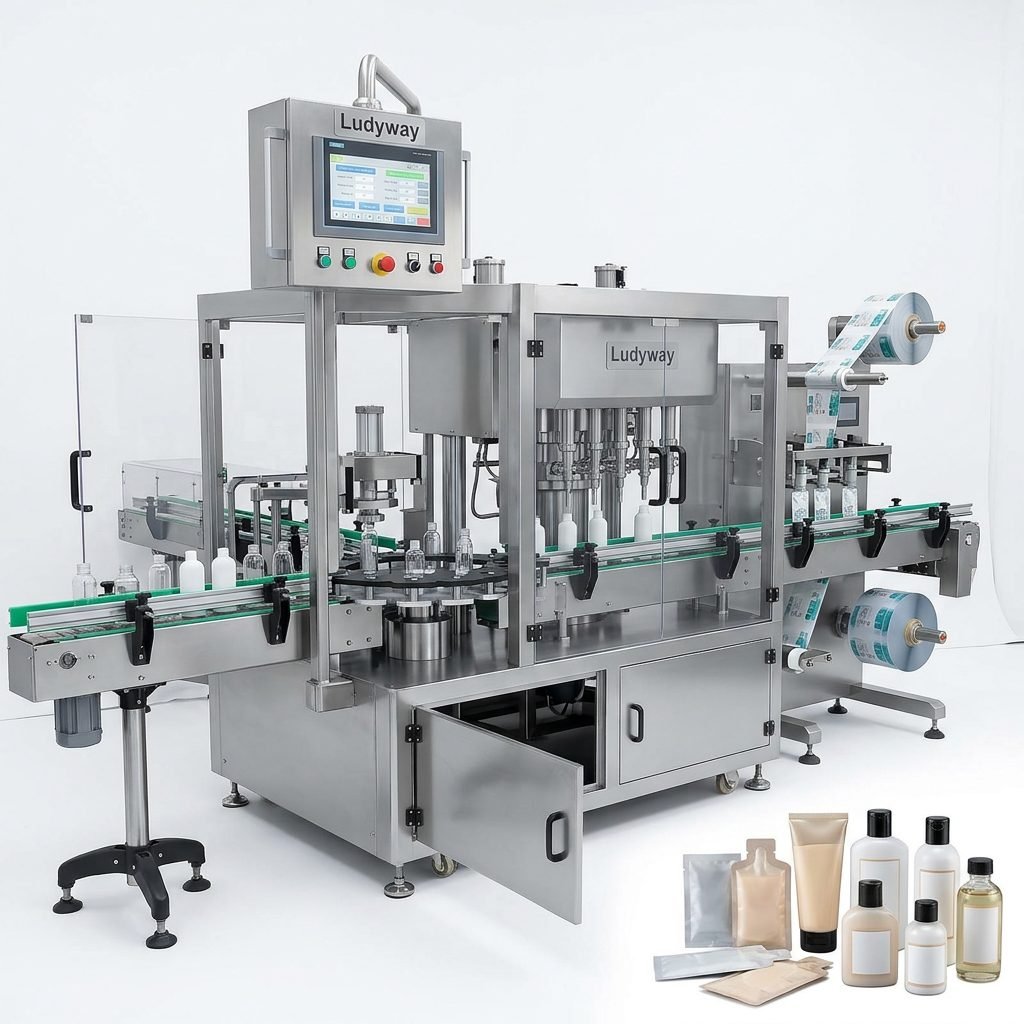
If you are looking for a manufacturer with broad packaging expertise across liquid, paste, powder, sachet, stick pack, and turnkey line solutions, Ludyway lotion packaging machine solutions are worth evaluating for cosmetic and personal care production projects.
Should You Choose a Standalone Machine or a Turnkey Line?
This depends on your production structure. A standalone lotion filling and sealing machine may be enough if packaging is a single process within a smaller factory. But for medium and large manufacturers, a turnkey system often delivers better consistency and labor savings.
Standalone Machine Advantages
- Lower initial investment
- Faster deployment
- Suitable for simpler product lines
Turnkey Line Advantages
- Better line integration
- Higher automation and lower labor input
- Improved traceability and quality control
- More scalable for future growth
Questions to Ask Before Final Decision
- Can the machine run my exact lotion formula?
- What package formats are supported now and later?
- What is the actual filling accuracy?
- What are the stable and peak output levels?
- How easy is cleaning and maintenance?
- Can the machine integrate with coding, labeling, cartoning, or case packing?
- What after-sales service is available for my market?
- Can I see a demo, sample test, or reference case?
Final Buying Insight
The best lotion packaging machine is the one that delivers stable filling, reliable sealing, hygienic production, and scalable efficiency for your exact product and packaging plan. A smart choice should support both current output goals and future expansion, rather than solving only today’s bottleneck.
If you compare viscosity handling, package compatibility, real production speed, sealing performance, automation level, and supplier support together, you will be in a much stronger position to choose a lotion filling and sealing solution that improves productivity and protects product quality.