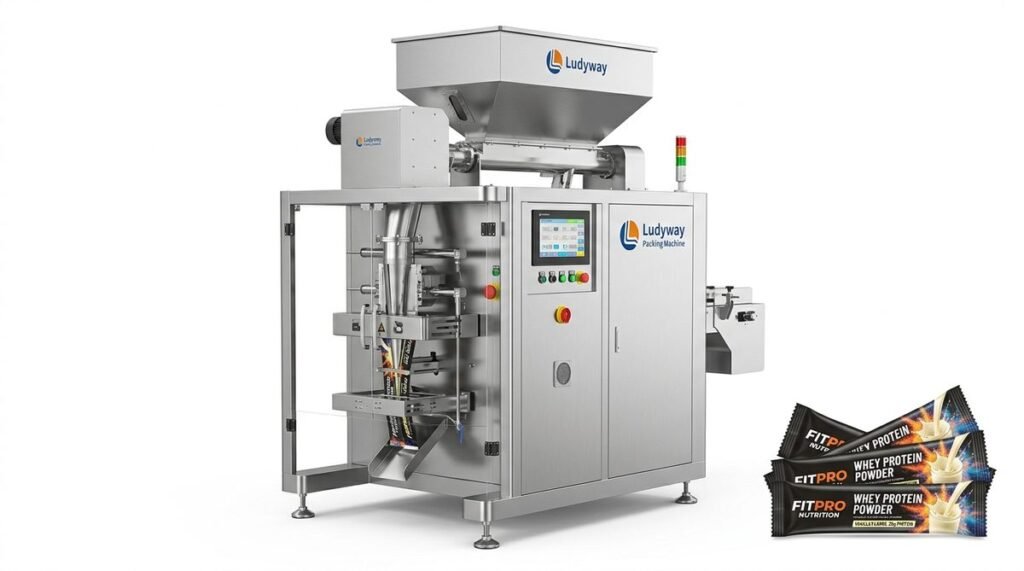
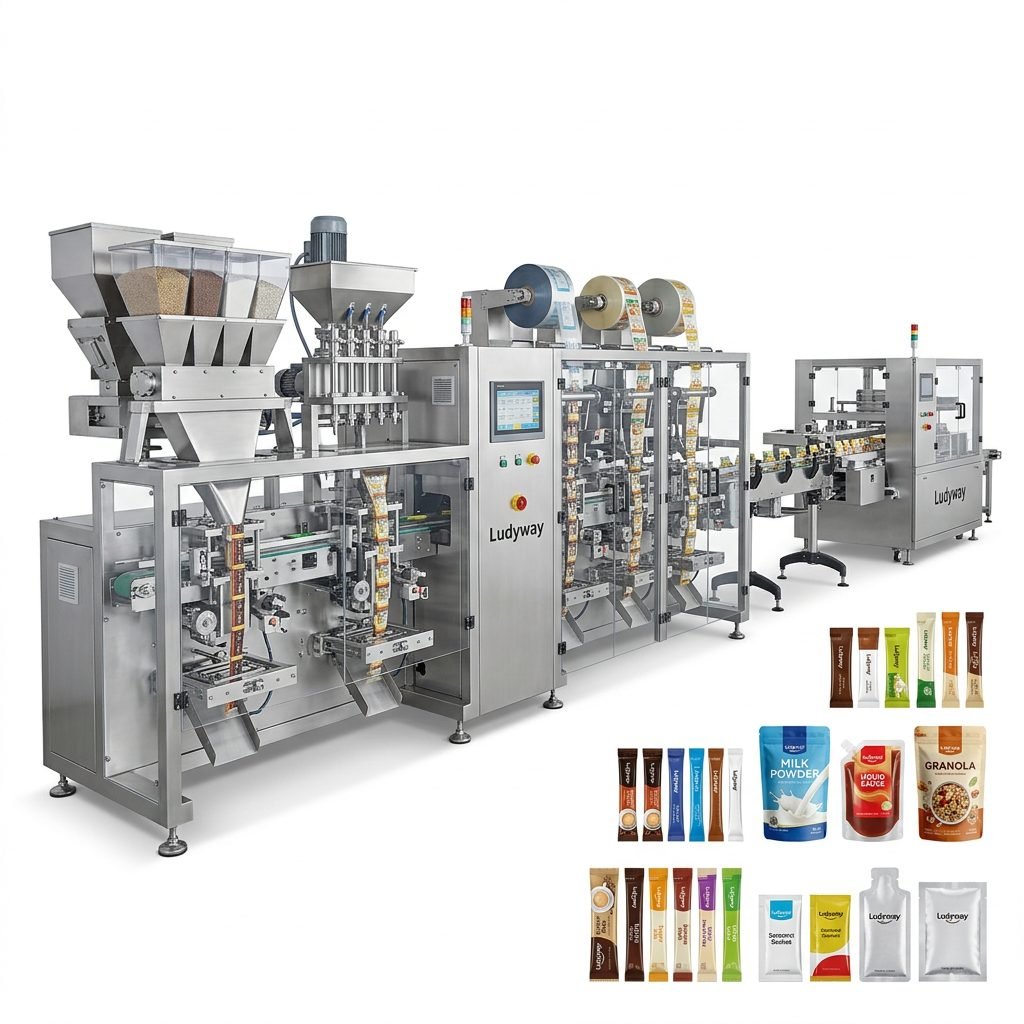
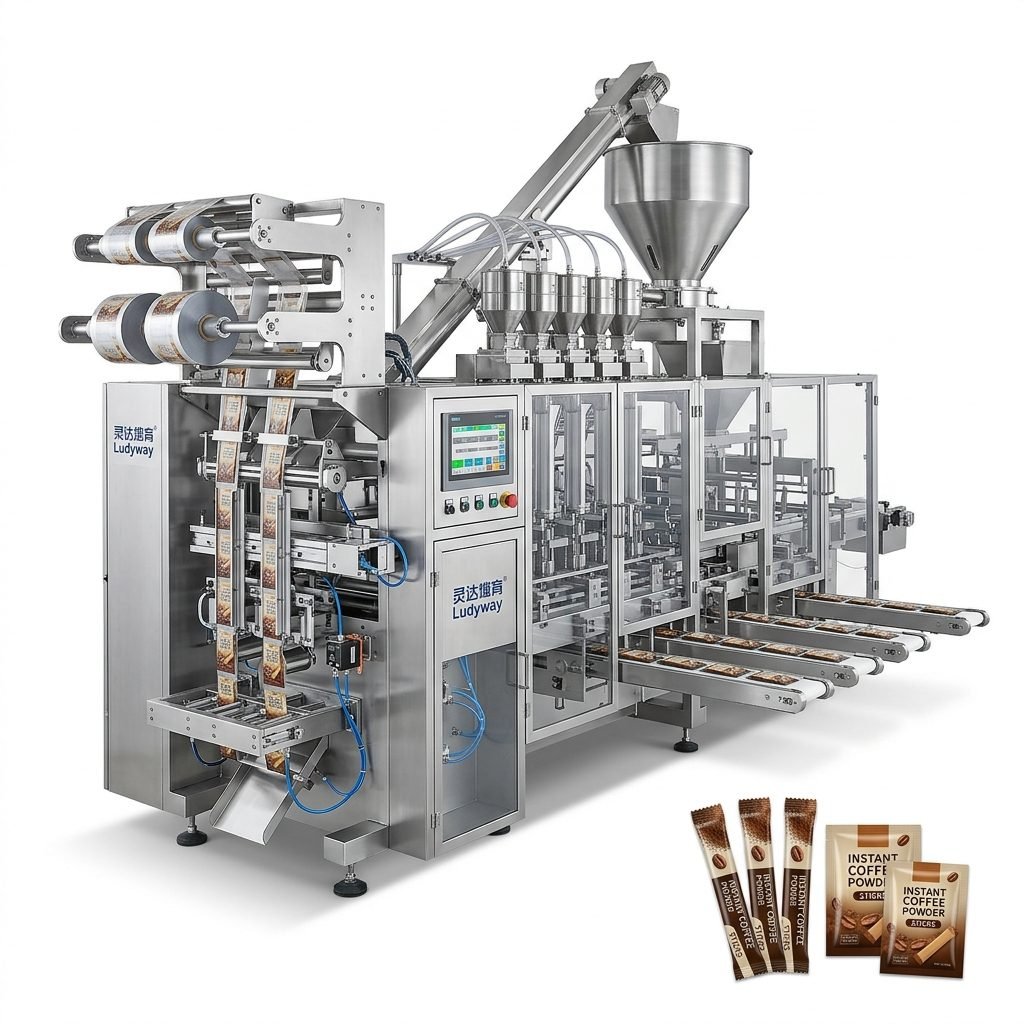
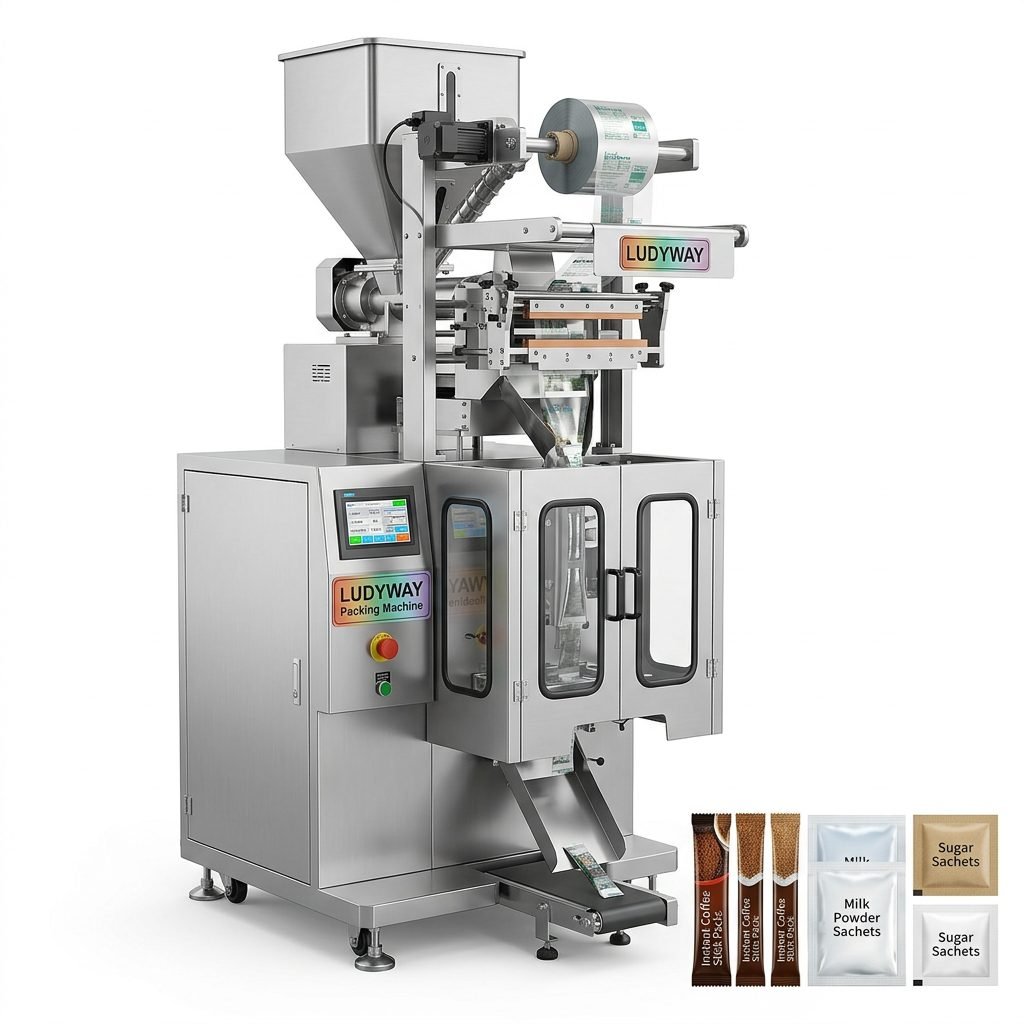
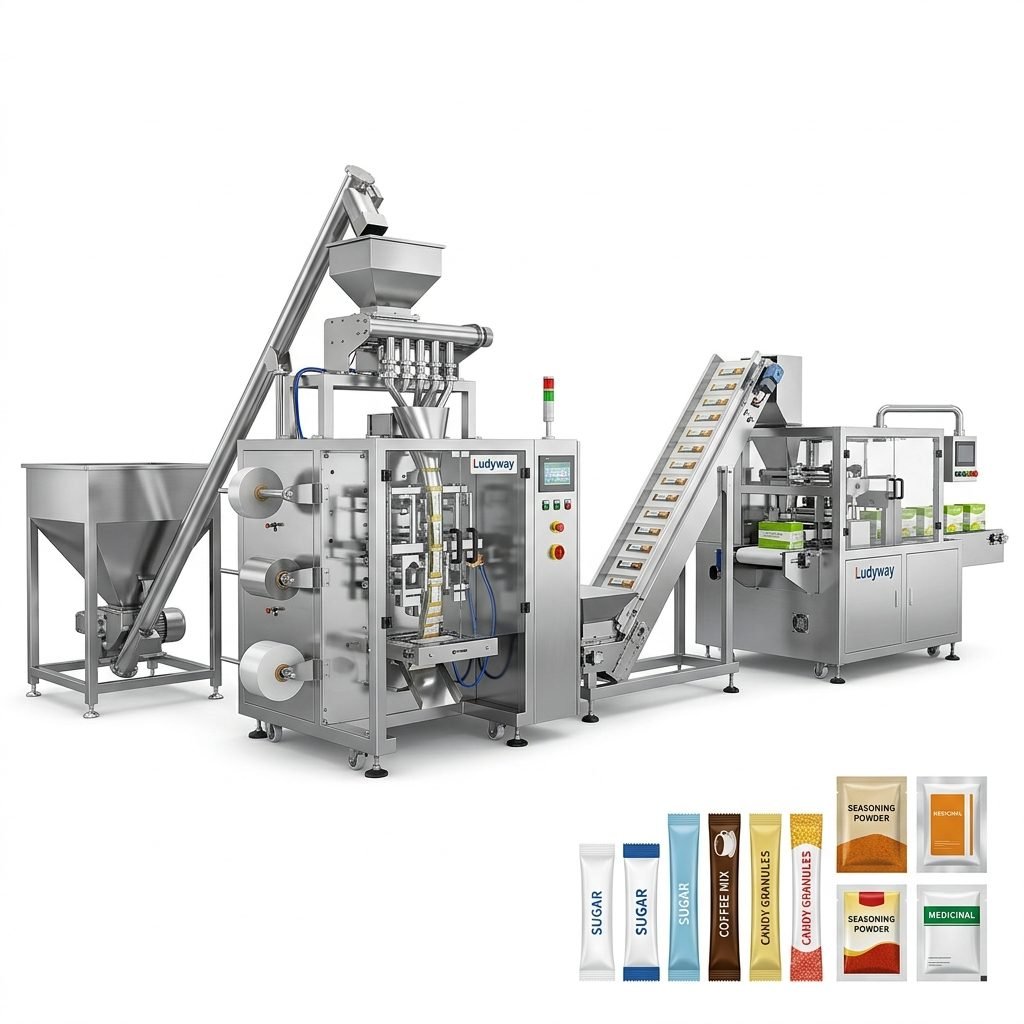
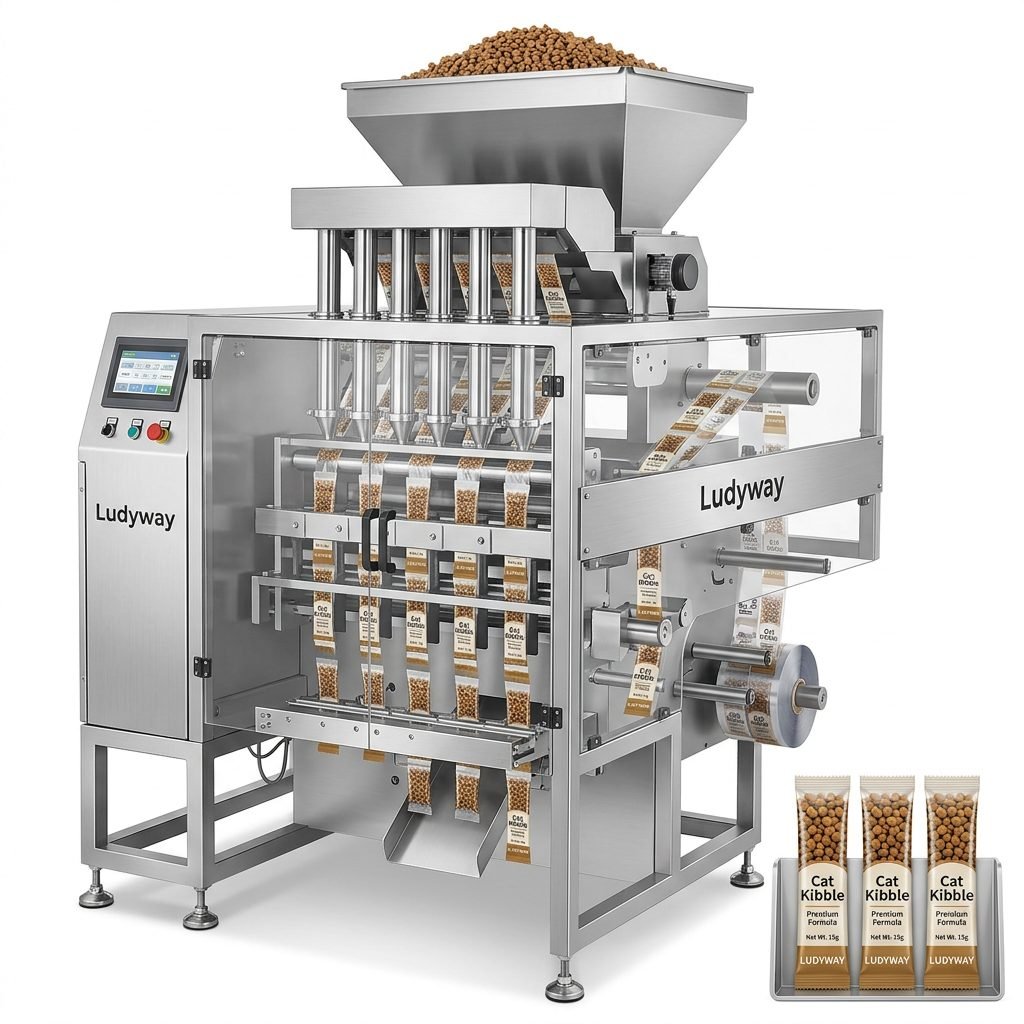
Packaging line equipment is the backbone of modern manufacturing. Whether you produce food, pharmaceuticals, cosmetics, chemicals, or pet products, the right system can improve output, reduce waste, enhance consistency, and support long-term business growth. For companies planning to scale production, understanding how packaging line equipment works is the first step toward making a smart investment.
In this guide, we’ll explain the main equipment types, the benefits of automation, and how to choose a system that matches your product, production goals, and budget.
What Is Packaging Line Equipment?
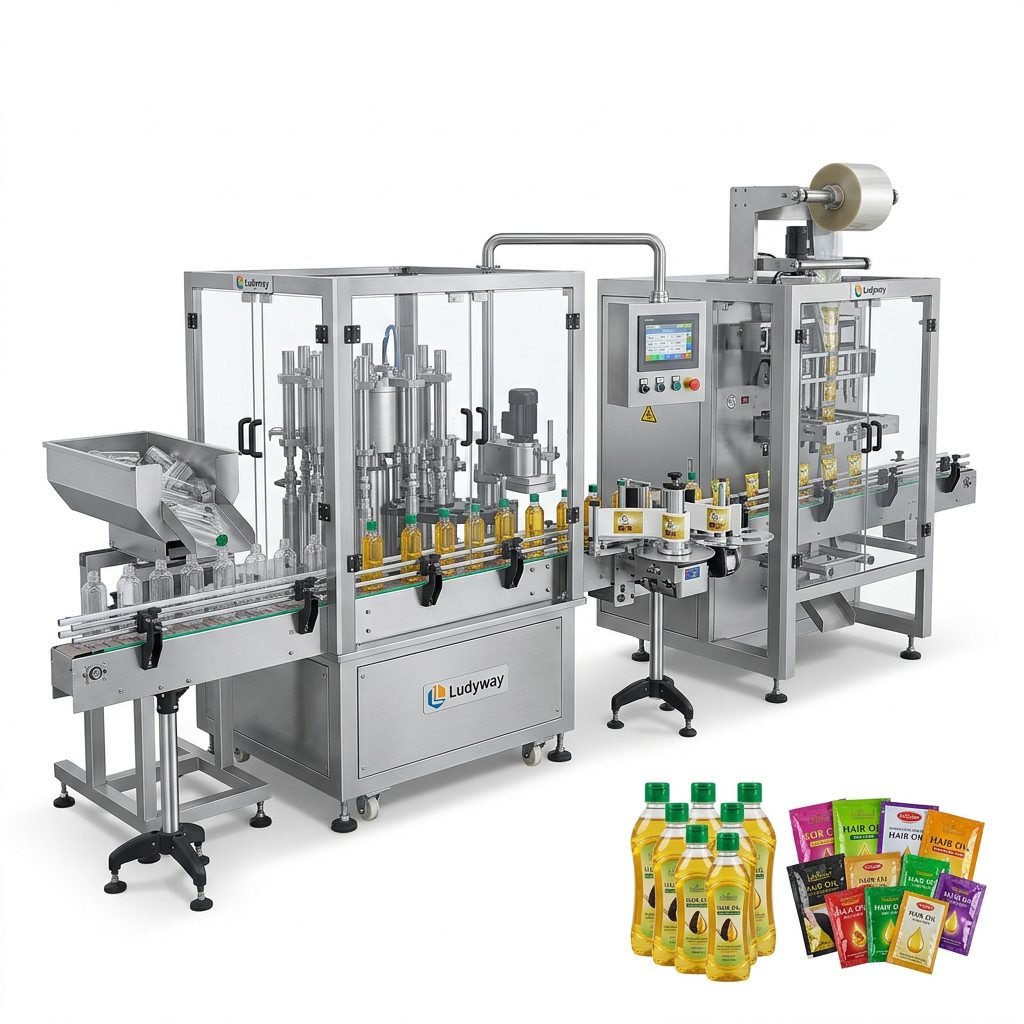
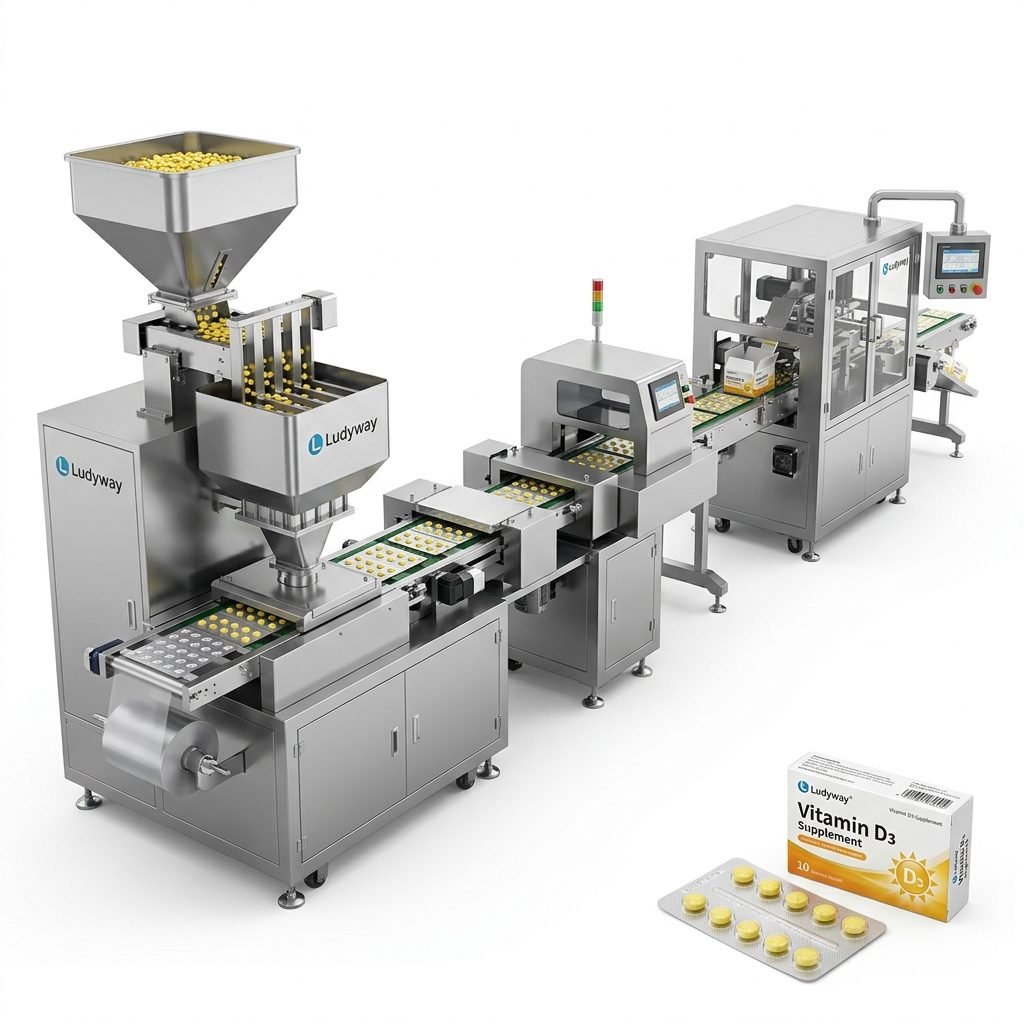
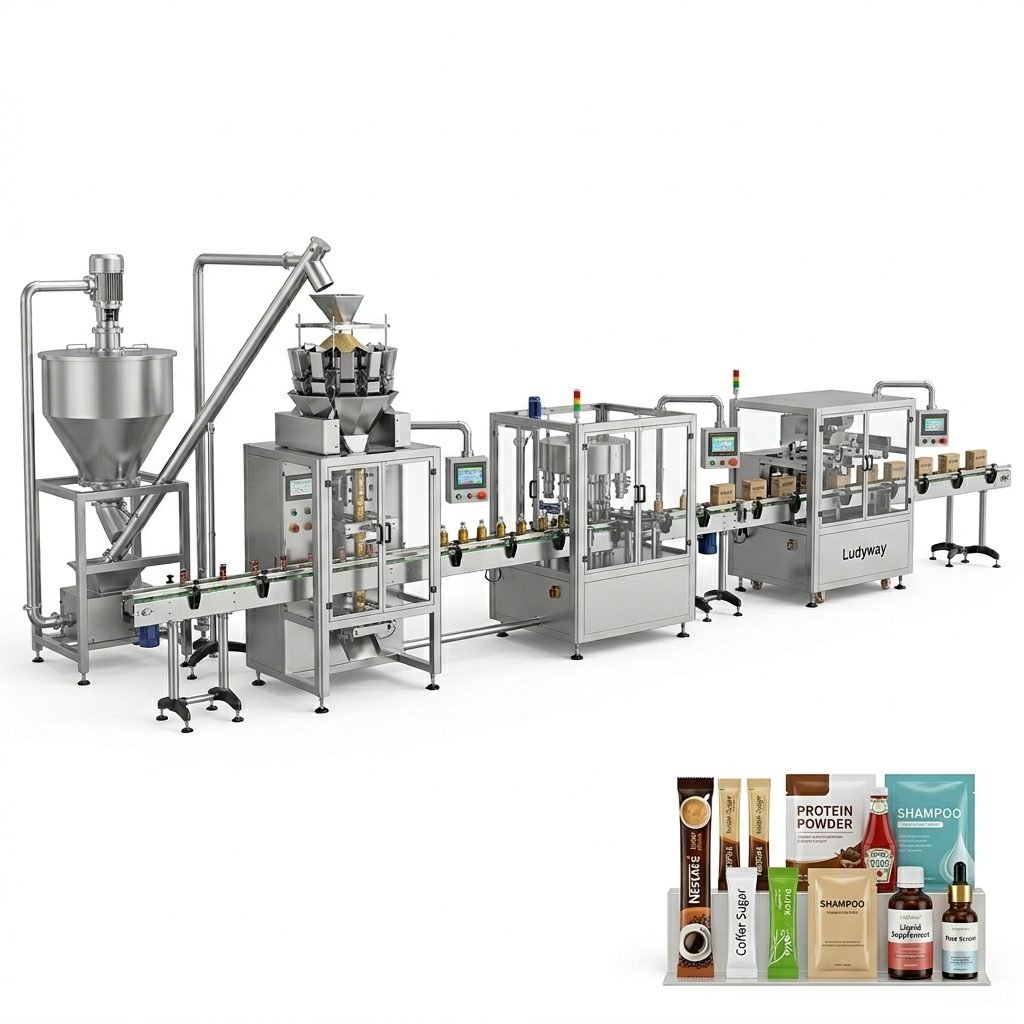
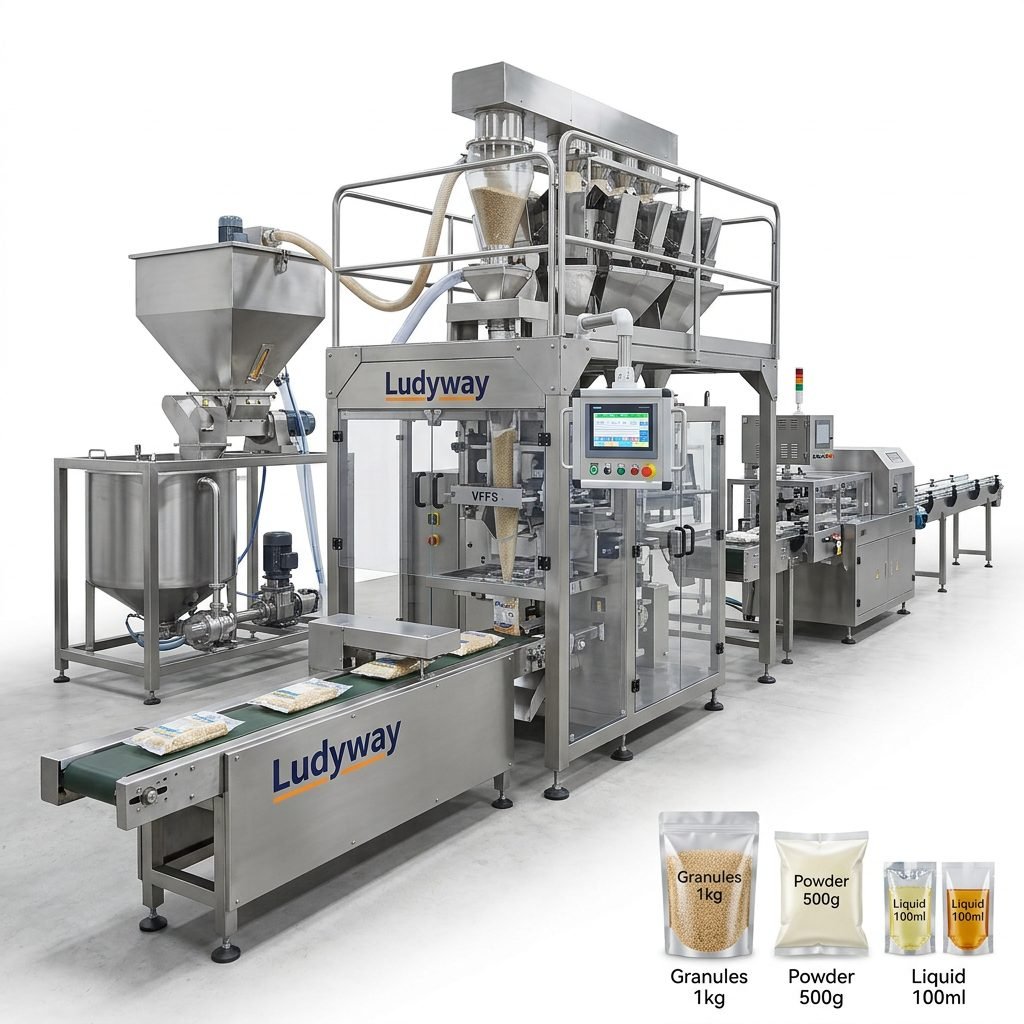
Packaging line equipment refers to the connected machines and auxiliary systems used to prepare, fill, seal, inspect, label, code, cartoning, and transport products through the packaging process. A packaging line can be semi-automatic or fully automatic, depending on production volume and application requirements.
Instead of relying on a single machine, a complete line typically includes multiple units working together. This integrated approach helps manufacturers achieve higher efficiency and better packaging quality across every production stage.
Typical functions in a packaging line include:
- Product feeding and conveying
- Weighing, dosing, or counting
- Filling into bags, sachets, stick packs, bottles, jars, or pouches
- Sealing and leak prevention
- Date coding and traceability marking
- Inspection, rejection, and quality control
- Cartoning, case packing, and palletizing
Main Types of Packaging Line Equipment
The right packaging line depends on product form, package type, speed, hygiene requirements, and downstream handling needs. Below are the most common equipment categories used in industrial packaging operations.
1. Feeding and Conveying Equipment
These systems move raw materials or packaged products from one stage to another. Common options include screw conveyors, bucket elevators, vacuum feeders, belt conveyors, and chain conveyors.
- Suitable for powders, granules, liquids, and solid products
- Helps reduce manual handling
- Improves line continuity and cleanliness
2. Filling and Dosing Machines
Filling equipment is selected based on product characteristics. Powders may require auger fillers, granules often use multi-head weighers or cup fillers, while liquids and pastes typically use piston pumps, servo pumps, or flowmeter systems.
Common filling applications:
- Powder supplements
- Seasonings and spices
- Sauces and condiments
- Pharmaceutical granules
- Creams, gels, and lotions
3. Form-Fill-Seal Packaging Machines
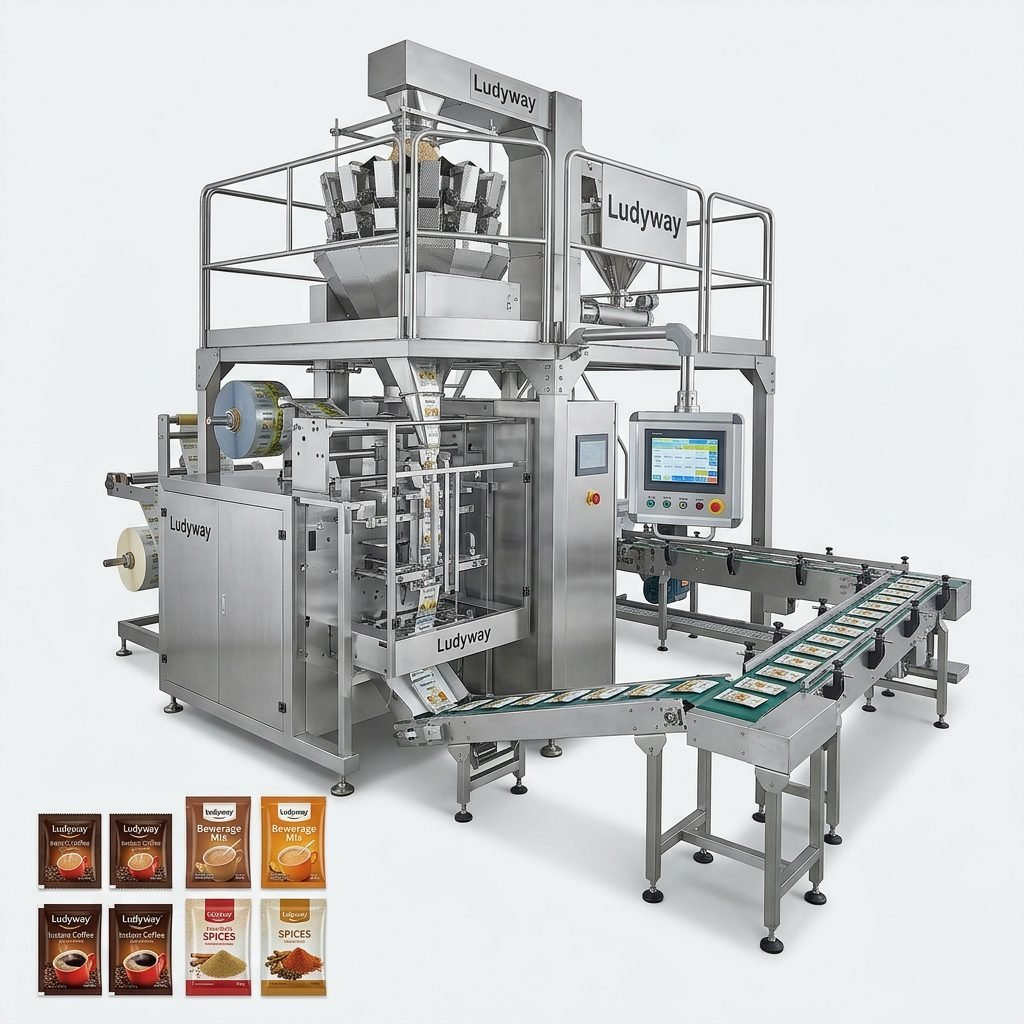
These are among the most widely used systems in automated packaging lines. They form the package, fill the product, and seal it in one continuous process.
- Vertical Form Fill Seal (VFFS) machines for pouches and bags
- Sachet packaging machines for small-dose applications
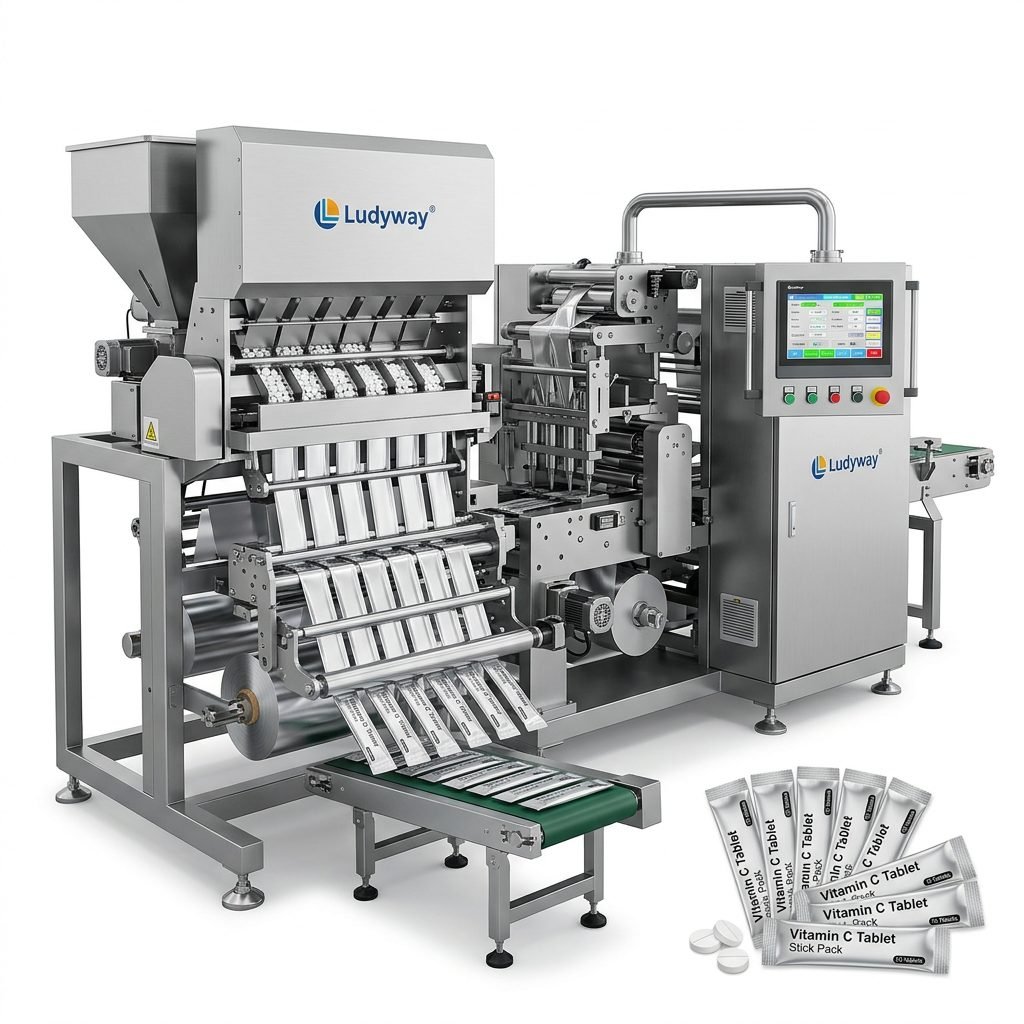
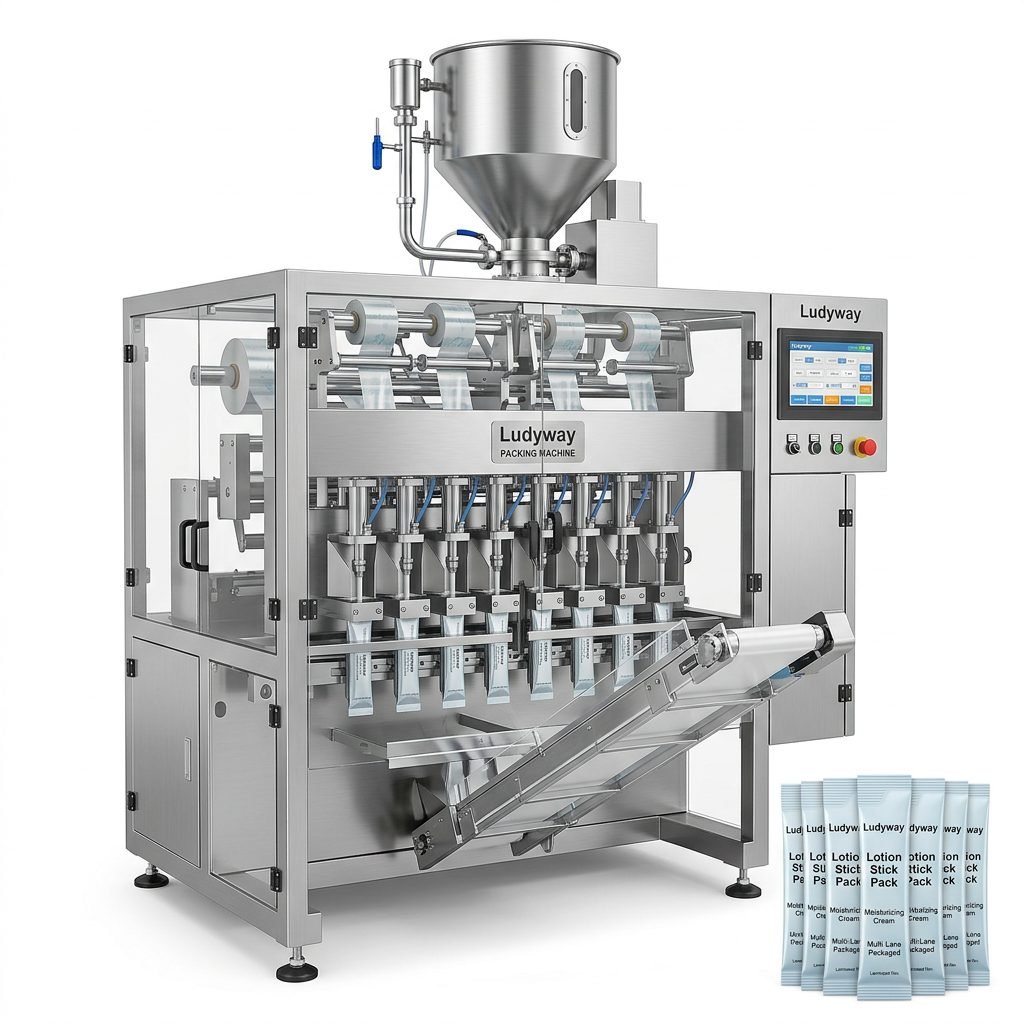
- Stick pack machines for narrow, single-serve formats
- Premade pouch machines for stand-up and zipper bags
4. Sealing Equipment
Sealing quality directly affects product protection, shelf life, and transportation safety. Different sealing systems are used depending on material and package type.
- Heat sealing
- Ultrasonic sealing
- Vacuum sealing
- Nitrogen flushing and modified atmosphere sealing
5. Labeling and Coding Machines
These machines apply product labels and print production dates, batch numbers, barcodes, QR codes, and traceability information. They are especially important in regulated industries such as food and pharmaceuticals.
6. Inspection and Quality Control Equipment
Inspection systems help maintain packaging integrity and compliance standards. Examples include:
- Checkweighers
- Metal detectors
- X-ray inspection systems
- Vision inspection systems
- Reject systems for faulty packs
7. Secondary Packaging Equipment
After primary packaging, products often move into secondary and end-of-line systems such as:
- Cartoners
- Case packers
- Case sealers
- Shrink wrappers
- Palletizers
Packaging Line Equipment by Product Type
Each industry has its own technical and operational requirements. Matching equipment to product behavior is essential for reliable performance.
| Product Type | Recommended Equipment | Typical Packaging Formats |
|---|---|---|
| Powders | Auger fillers, screw conveyors, sachet or stick pack machines | Sachets, stick packs, pouches, jars |
| Granules | Weighers, cup fillers, bucket elevators, VFFS systems | Bags, pouches, sachets, stick packs |
| Liquids | Pump fillers, liquid sachet machines, bottle filling lines | Sachets, bottles, vials, pouches |
| Pastes & creams | Piston fillers, tube fillers, multi-lane liquid packaging systems | Tubes, sachets, stick packs, jars |
| Tablets & capsules | Counting machines, blister lines, bottling systems | Blisters, bottles, cartons |
Key Benefits of Modern Packaging Line Equipment
Higher Production Efficiency
Automated lines can run continuously with stable speed and reduced downtime. This allows manufacturers to increase throughput without proportionally increasing labor.
Better Packaging Consistency
Accurate filling, sealing, and coding improve pack appearance and reduce variation between units. This is especially important for brands focused on quality and regulatory compliance.
Lower Labor Dependence
Automation reduces repetitive manual work and helps address labor shortages. Operators can focus more on monitoring, maintenance, and quality control.
Reduced Waste and Rework
Precise dosing and reliable sealing lower product loss, film waste, and defective packaging. Over time, these savings can significantly improve total operating cost.
Improved Hygiene and Safety
Closed feeding systems, stainless steel contact parts, and automated handling reduce contamination risks. This is a major advantage in food, pharma, and health supplement applications.
Scalability for Business Growth
A well-designed packaging line can be expanded with additional lanes, feeders, cartoning units, or palletizing systems as demand grows. Scalability is one of the most valuable long-term advantages of investing in the right equipment platform.
How to Choose the Right Packaging Line System
Selecting a packaging line should go beyond machine price. The most effective solution is the one that aligns with your actual production needs, product properties, and future plans.
1. Define Your Product Characteristics
Start with the basics:
- Is the product powder, granule, liquid, paste, tablet, or capsule?
- Does it flow freely or bridge easily?
- Is it dusty, sticky, corrosive, or fragile?
- Does it require hygienic or sterile handling?
These factors determine the correct filling principle, machine materials, and sealing method.
2. Confirm Packaging Format
Your package style directly affects equipment selection. Common formats include:
- Sachets
- Stick packs
- Pillow bags
- Premade pouches
- Bottles and jars
- Tubes and vials
3. Estimate Required Speed and Output
Calculate your hourly, shift, and daily output targets. A low-volume factory may only need a compact line, while high-volume operations may require multi-lane systems, automated cartoning, and robotic palletizing.
4. Consider Available Space and Plant Layout
Before purchasing, review factory dimensions, material flow, operator movement, and service access. A line should fit your plant logically without creating bottlenecks or maintenance difficulties.
5. Review Industry Compliance Requirements
Food and pharmaceutical production often require stricter standards for machine design, cleaning, validation, and documentation. Be sure the line meets your local and export-market compliance needs.
6. Evaluate Flexibility and Changeover Time
If you handle multiple SKUs, seasonal products, or different pack sizes, choose a line that supports easy adjustment and quick changeovers. Flexible equipment reduces downtime and supports more agile production planning.
7. Look at Service and Technical Support
Reliable after-sales support matters just as much as machine performance. Ask about installation guidance, spare parts availability, troubleshooting response time, and operator training.
Questions to Ask Before Buying
- What products will the line run today, and what may be added later?
- What accuracy level is required for filling?
- How many package formats need to be supported?
- What is the acceptable downtime level?
- Does the supplier offer customization?
- Can the system integrate with inspection, coding, and cartoning equipment?
- What is the expected return on investment?
Standalone Machines vs. Turnkey Packaging Lines
Some manufacturers start with a single machine, while others need a fully integrated line from feeding to final packing.
| Option | Best For | Main Advantage |
|---|---|---|
| Standalone machine | Small batches, pilot production, budget-sensitive projects | Lower initial investment |
| Integrated packaging line | Growing factories, multi-step packaging workflows | Better efficiency and coordination |
| Turnkey packaging line | Large-scale automation, export-oriented production, high compliance sectors | Complete system compatibility and simplified project management |
Common Industries Using Packaging Line Equipment
- Food and beverage
- Pharmaceutical and nutraceutical
- Cosmetic and personal care
- Chemical and household products
- Animal feed and pet nutrition
- Nicotine pouch and specialty consumer goods
Why Customization Matters
Off-the-shelf machines can work well for standard applications, but many businesses need customized packaging solutions. Differences in product density, package dimensions, filling accuracy, plant layout, or local electrical standards can all affect performance.
A customized system can provide:
- Better compatibility with specific products
- Improved packaging accuracy
- More efficient line integration
- Lower long-term maintenance issues
- Faster adaptation to future product expansion
Choosing a Reliable Packaging Line Manufacturer
When comparing suppliers, experience, engineering capability, export background, and customization support all matter. If you are sourcing from China, many buyers look for manufacturers that can provide both standalone machines and complete turnkey solutions. One example is packaging line manufacturer Ludyway, which serves food, pharmaceutical, cosmetic, chemical, and related industries with a broad range of automated packaging systems.
What to check in a supplier:
- Years of manufacturing experience
- Industry-specific project cases
- Engineering and customization capabilities
- Factory scale and quality inspection process
- Export experience and technical support
Final Considerations for Long-Term ROI
Packaging line equipment should be evaluated as a long-term production asset, not just a short-term purchase. The most successful projects balance performance, flexibility, reliability, and support. A slightly higher upfront investment can often produce better returns through lower waste, stronger uptime, and easier expansion later.
If your business is planning to upgrade packaging operations, start by mapping your product type, package format, output goals, and automation level. From there, you can identify a packaging line that supports both current demand and future growth.