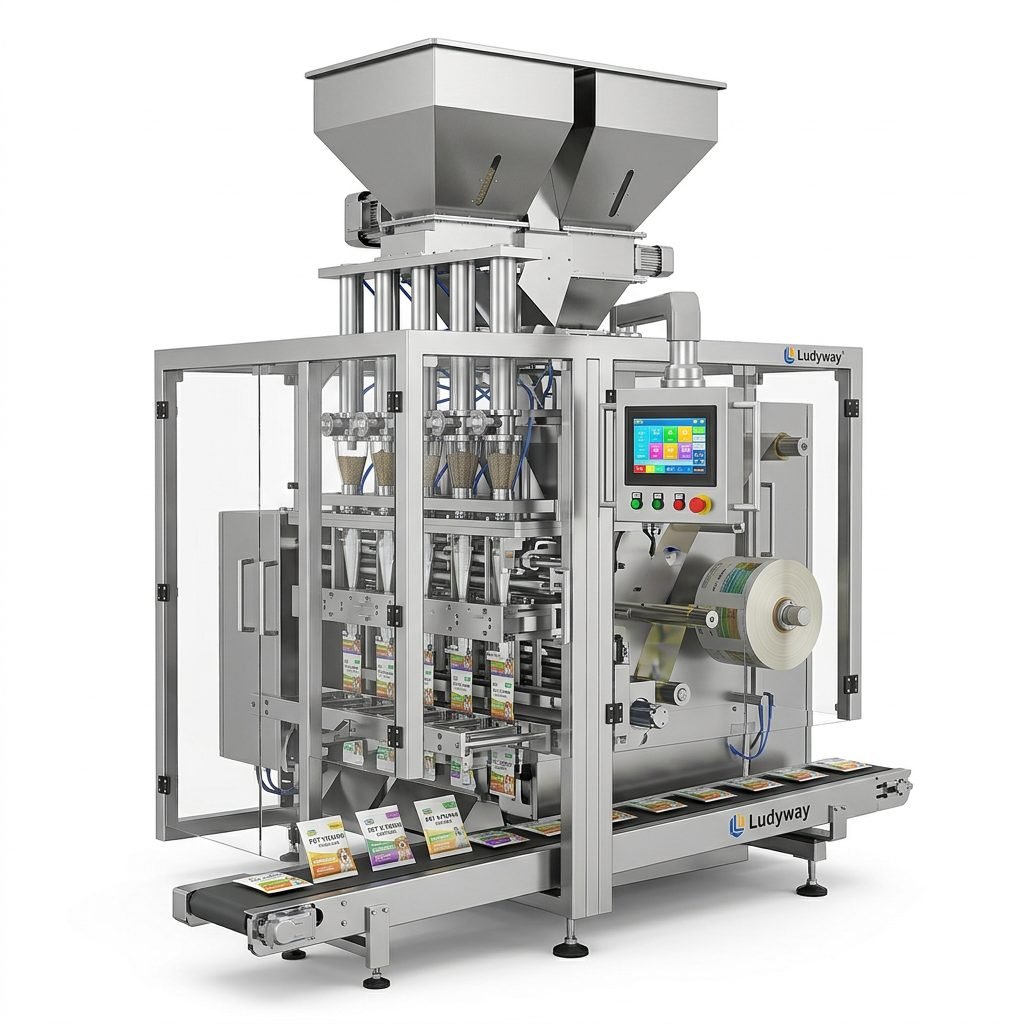
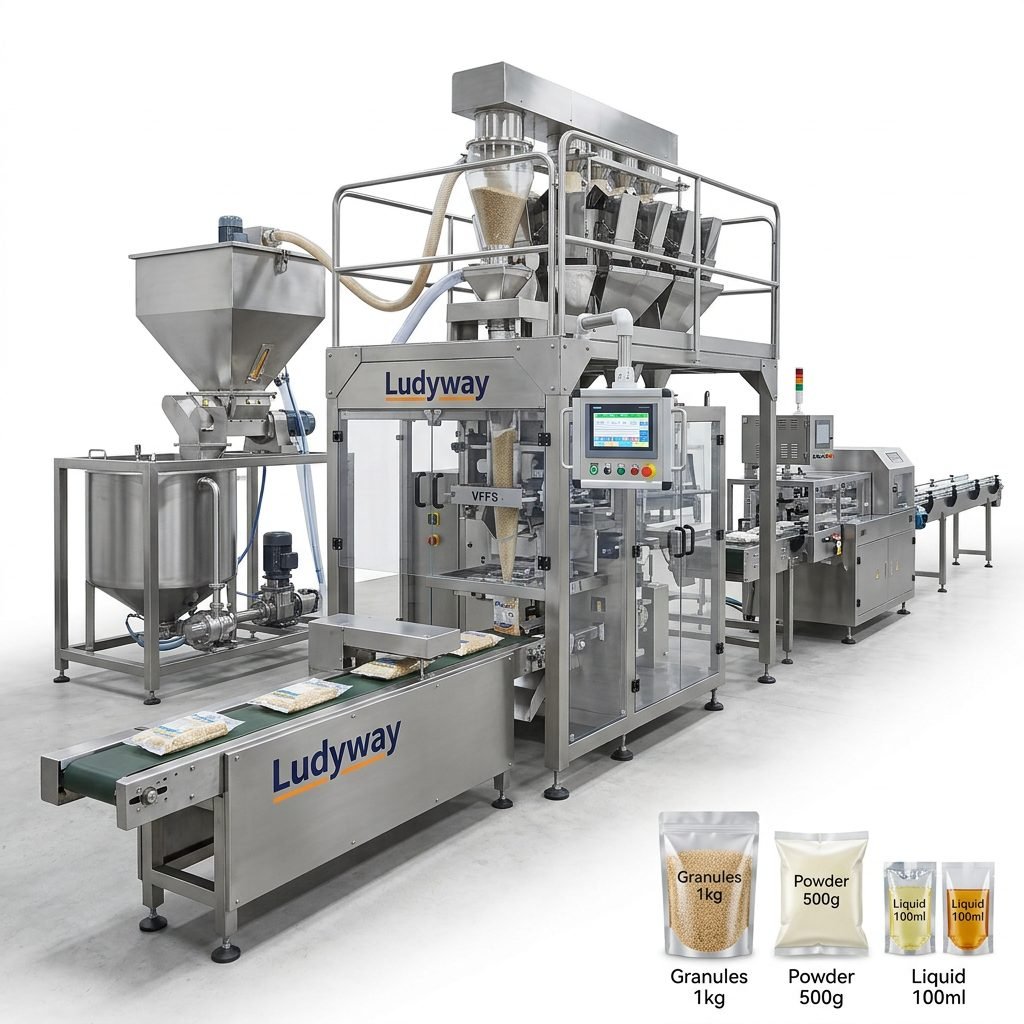
Modern manufacturing depends on packaging systems that can keep pace with production targets without sacrificing product quality, sealing accuracy, or line stability. Whether you are packing powders, granules, liquids, pastes, or pouch-based products, the right packaging machinery can significantly improve output, reduce labor dependence, and support long-term operational growth.
For food, pharmaceutical, health supplement, cosmetic, and chemical manufacturers, investing in efficient, high-speed, and reliable packaging machinery is no longer optional—it is a strategic advantage. From compact standalone units to fully integrated turnkey lines, today’s equipment is built to support smarter automation, lower waste, and more consistent packaging results.
Why Packaging Machinery Matters in Modern Production
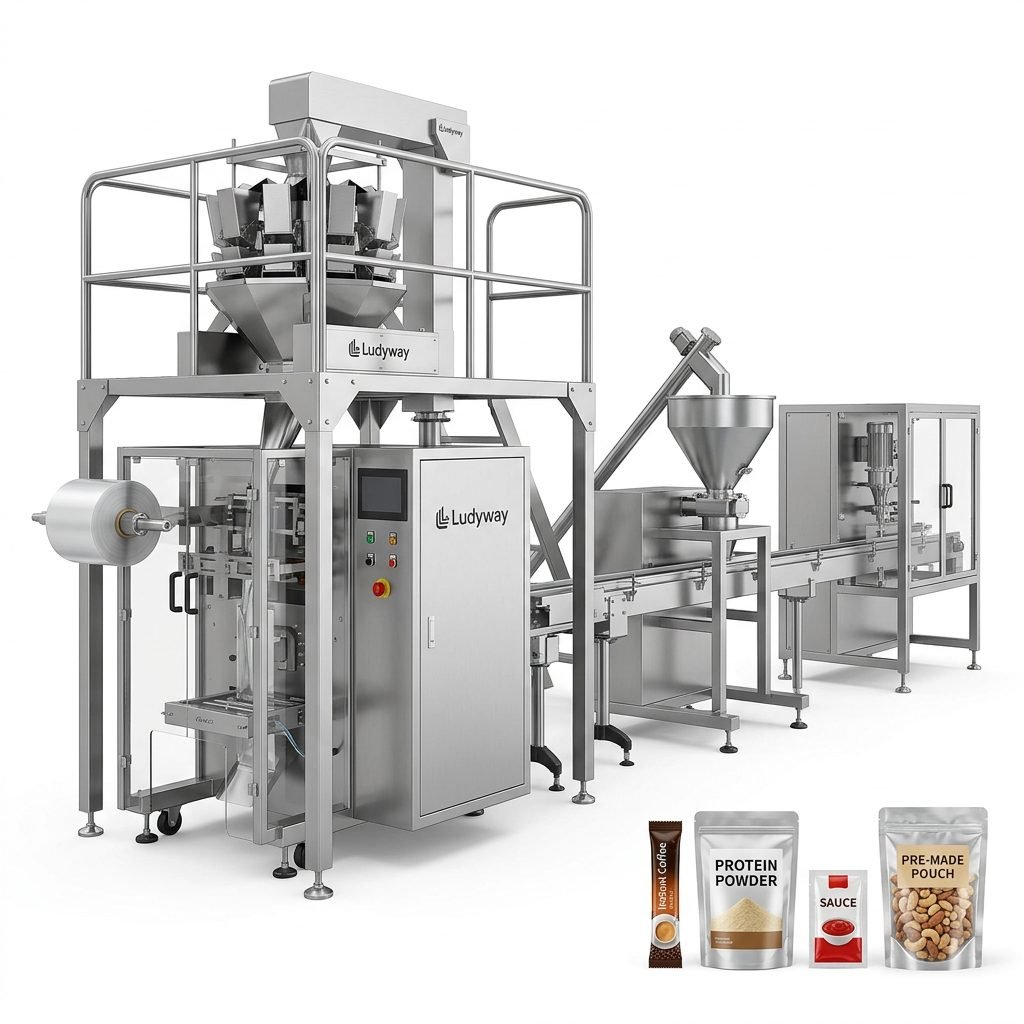
Packaging is more than the final step of production. It directly influences product protection, shelf presentation, compliance, transportation efficiency, and customer satisfaction. A poorly matched machine can create bottlenecks, inconsistent fills, sealing defects, and unnecessary downtime. In contrast, a well-designed packaging system helps manufacturers achieve:
- Higher throughput for growing order volumes
- Stable packaging quality across every batch
- Reduced labor costs through automation
- Improved material control and lower packaging waste
- Better integration with upstream and downstream equipment
- Greater flexibility for different product formats and sizes
As consumer demand becomes more diverse and production schedules become tighter, packaging machinery must handle frequent product changeovers while maintaining reliable performance under continuous operation.
Core Features of Efficient Packaging Machinery Solutions
An efficient packaging line is not defined by speed alone. The best machinery solutions combine precision, automation, durability, and adaptability. Manufacturers evaluating equipment should focus on the following core features:
1. High-Speed Output with Consistent Accuracy
Fast production only creates value when filling, sealing, coding, and discharge remain accurate. Reliable high-speed packaging machines are designed to maintain repeatable performance while minimizing product loss and package variation.
2. Compatibility with Multiple Product Types
Many industries need to package different materials, including free-flowing granules, difficult powders, liquids, viscous pastes, capsules, or specialty pouches. Flexible machinery reduces the need for separate systems and helps support future product expansion.
3. Automation and Line Integration
Packaging lines are most effective when machines work together as one integrated system. Feeding, filling, sealing, inspection, cartoning, case packing, and palletizing can all be synchronized to improve line efficiency and reduce manual intervention.
4. Stable Mechanical and Electrical Design
Long-term reliability depends on robust machine structure, quality components, and logical control architecture. Stable operation reduces maintenance frequency and protects production schedules.
5. Easy Cleaning and Maintenance
Especially in food and pharmaceutical environments, hygienic design and convenient access for cleaning are essential. Machines that simplify maintenance help reduce downtime and support compliance requirements.
Packaging Machinery Types Used in High-Performance Production Lines
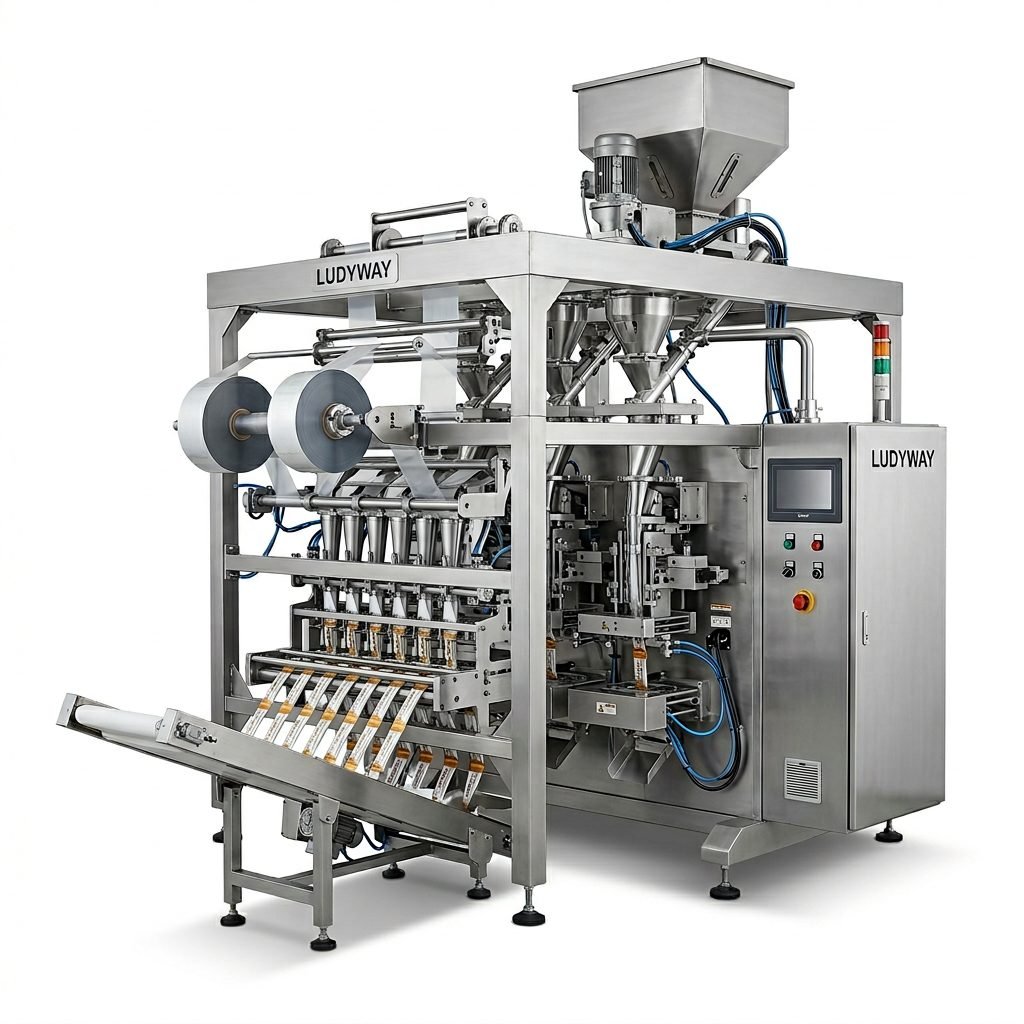
Different applications require different equipment configurations. A scalable packaging strategy often starts with selecting the right machine type based on product characteristics, packaging format, capacity targets, and factory layout.
| Machine Type | Typical Applications | Key Advantage |
|---|---|---|
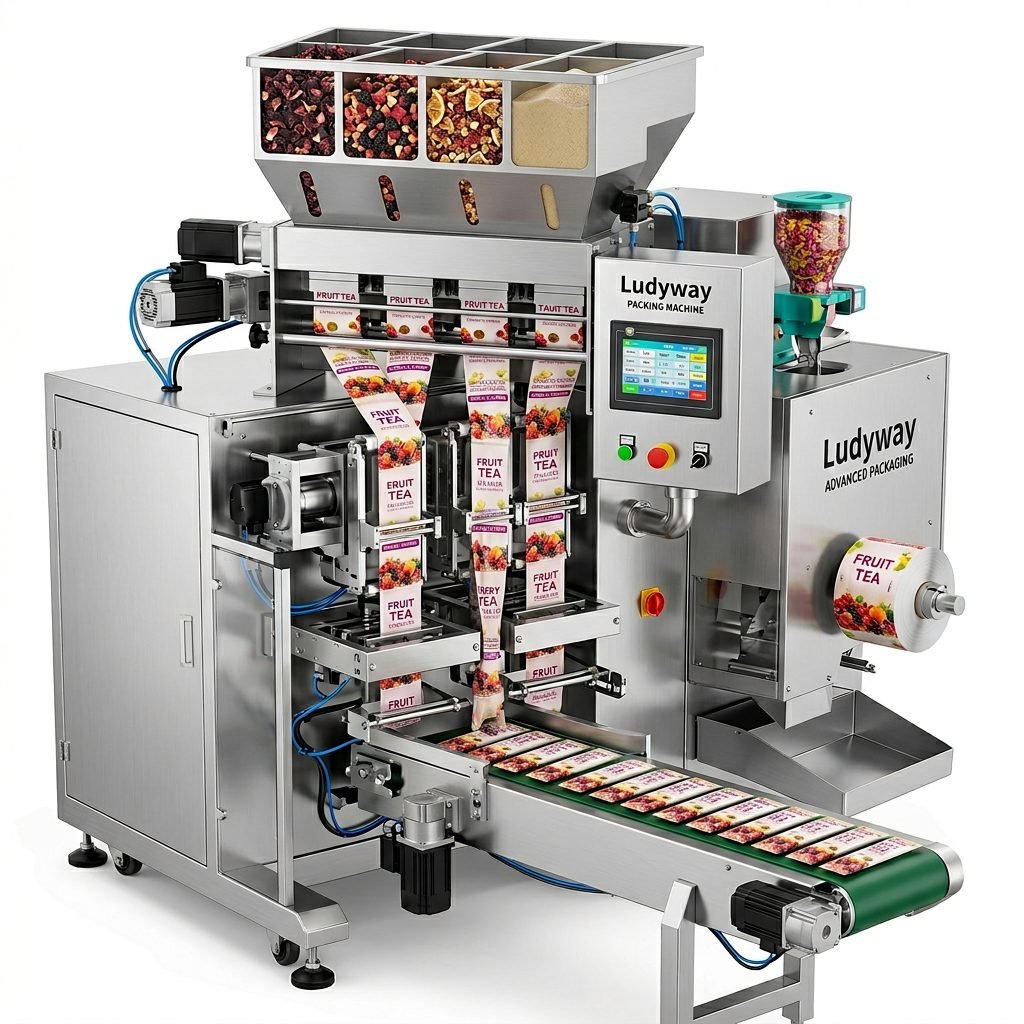
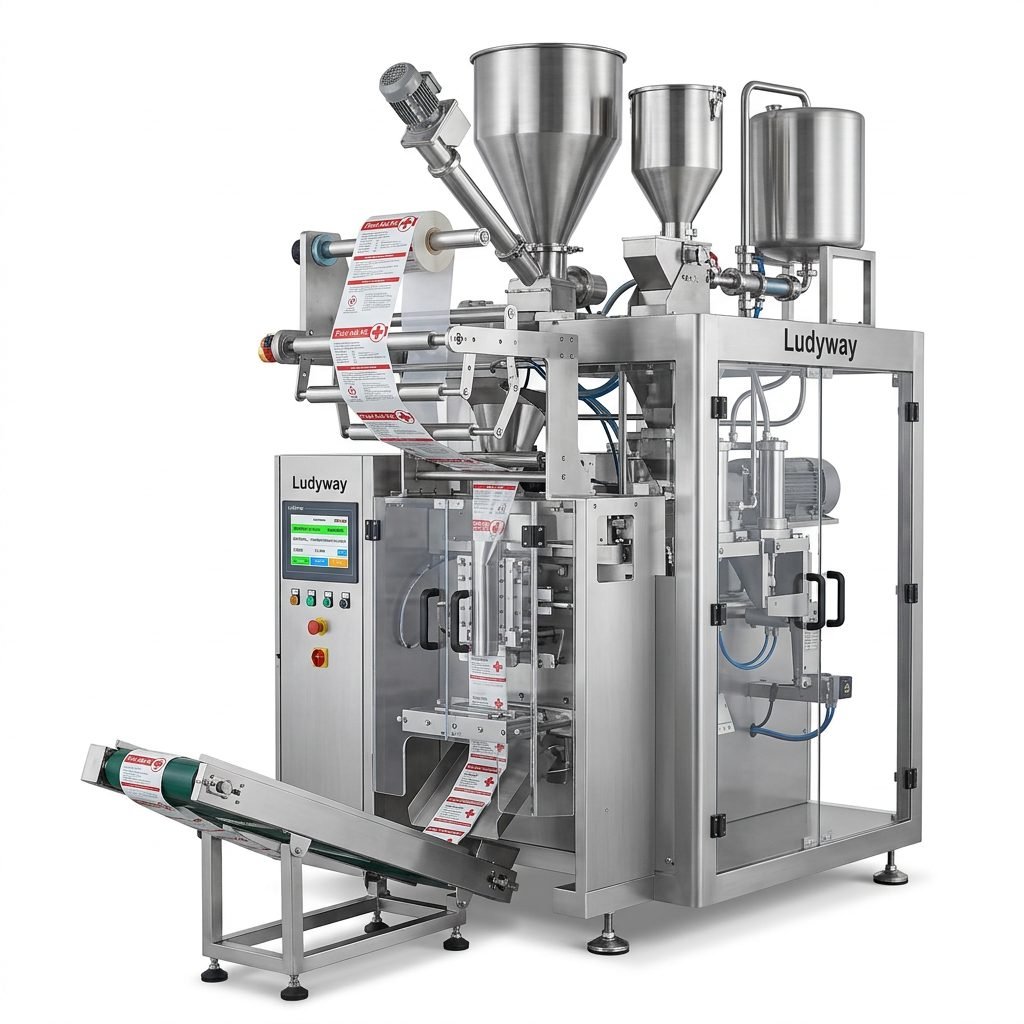
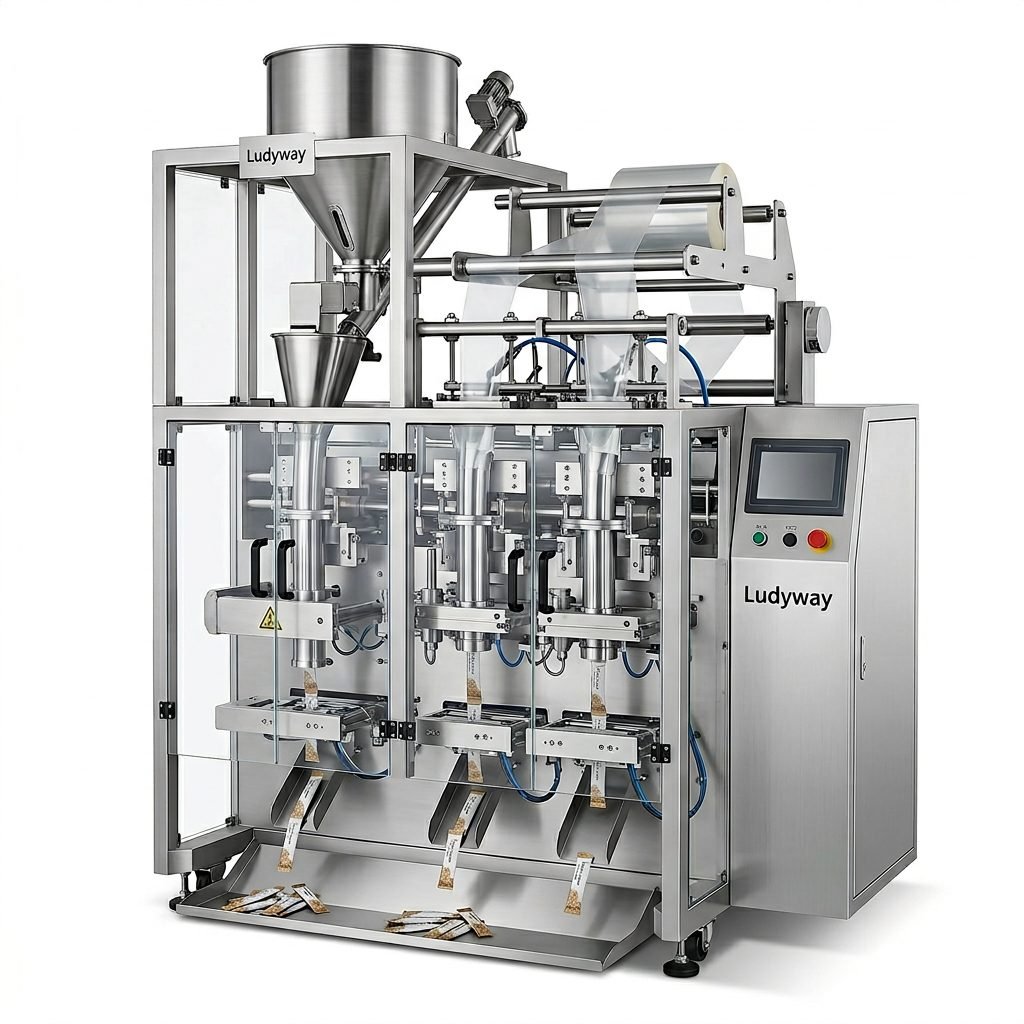
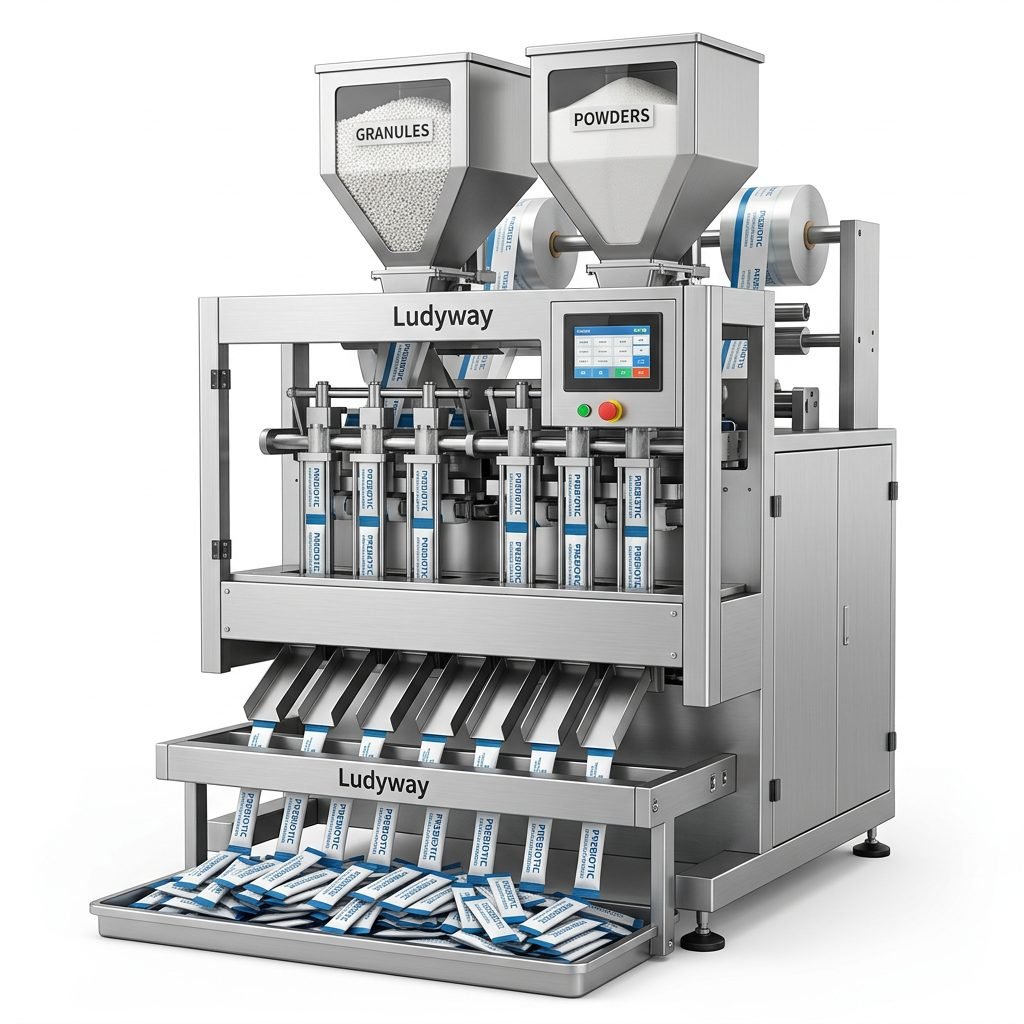
| Multi-lane stick pack machines | Powders, granules, liquids, supplements, beverage mixes | Very high output in compact footprints |
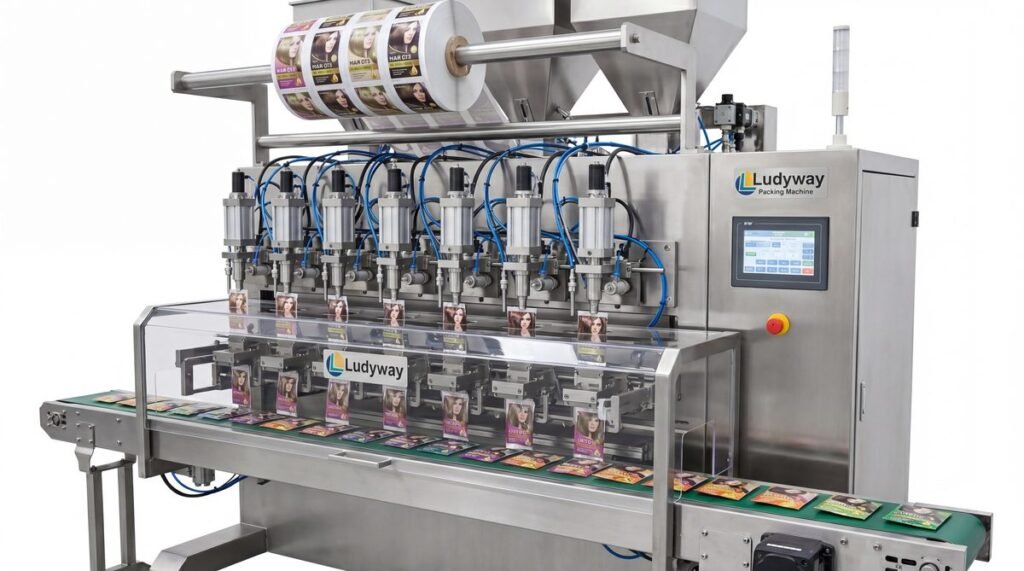
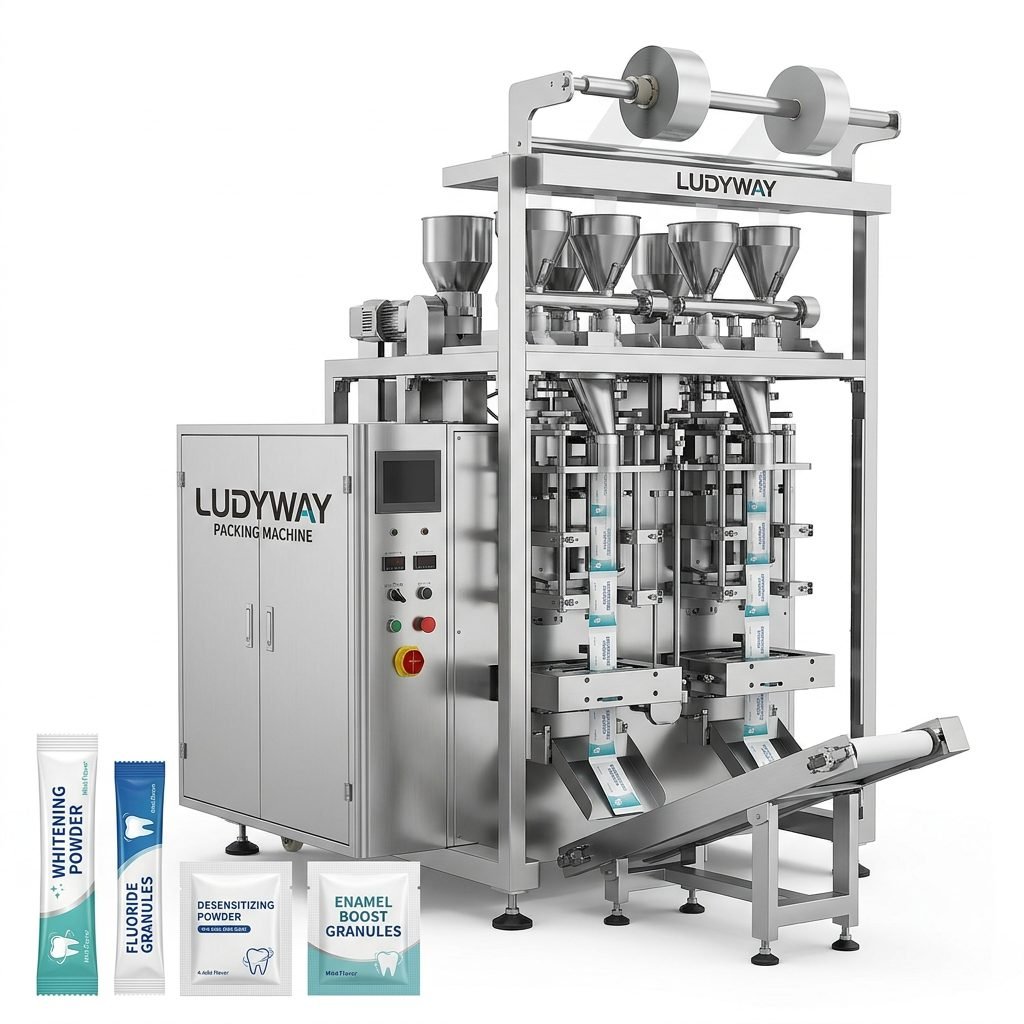
| Sachet packaging machines | Food condiments, pharma powders, cosmetics, detergents | Flexible format for single-dose packaging |
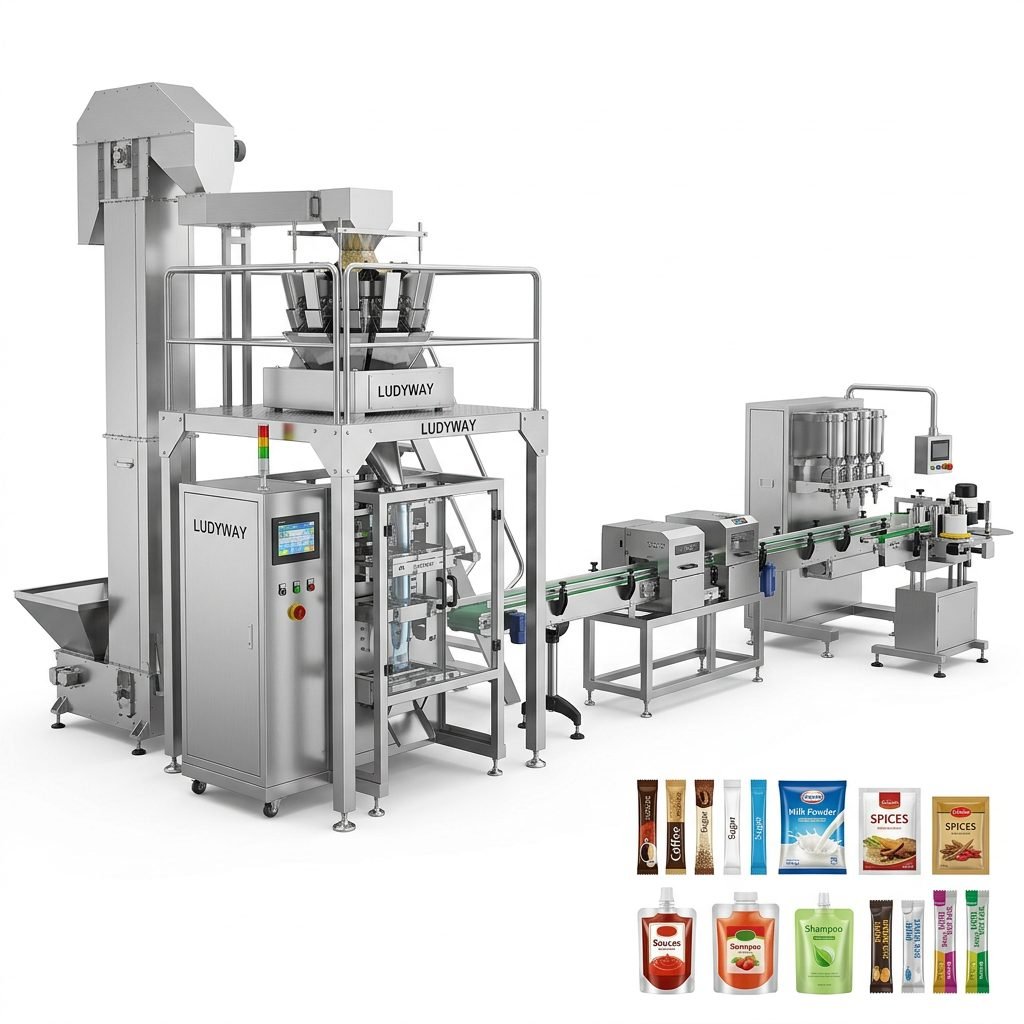
| Vertical form fill seal machines | Snacks, grains, powders, pet food, agricultural products | Efficient bag making, filling, and sealing |
| Liquid and paste filling machines | Sauces, syrups, personal care, cleaning liquids | Controlled dosing and clean filling performance |
| Turnkey packaging lines | Integrated production for food, pharma, cosmetics, chemicals | Complete automation from feeding to end-of-line |
Industries That Benefit Most from Advanced Packaging Machinery
Food Industry
Food manufacturers need speed, hygiene, and repeatable packaging quality. Applications range from coffee, milk powder, spices, sauces, instant beverages, rice, snacks, cereal, sugar, and seasoning to specialty health foods. Machines must support accurate filling and dependable sealing while handling different product densities and flow behaviors.
Pharmaceutical Industry
Pharmaceutical packaging requires strict consistency, cleanliness, and traceability. Granules, powders, tablets, capsules, oral liquids, and diagnostic kits often require precise dosing and stable machine control. Reliable packaging equipment supports compliance-focused production and helps reduce reject rates.
Health Supplement Industry
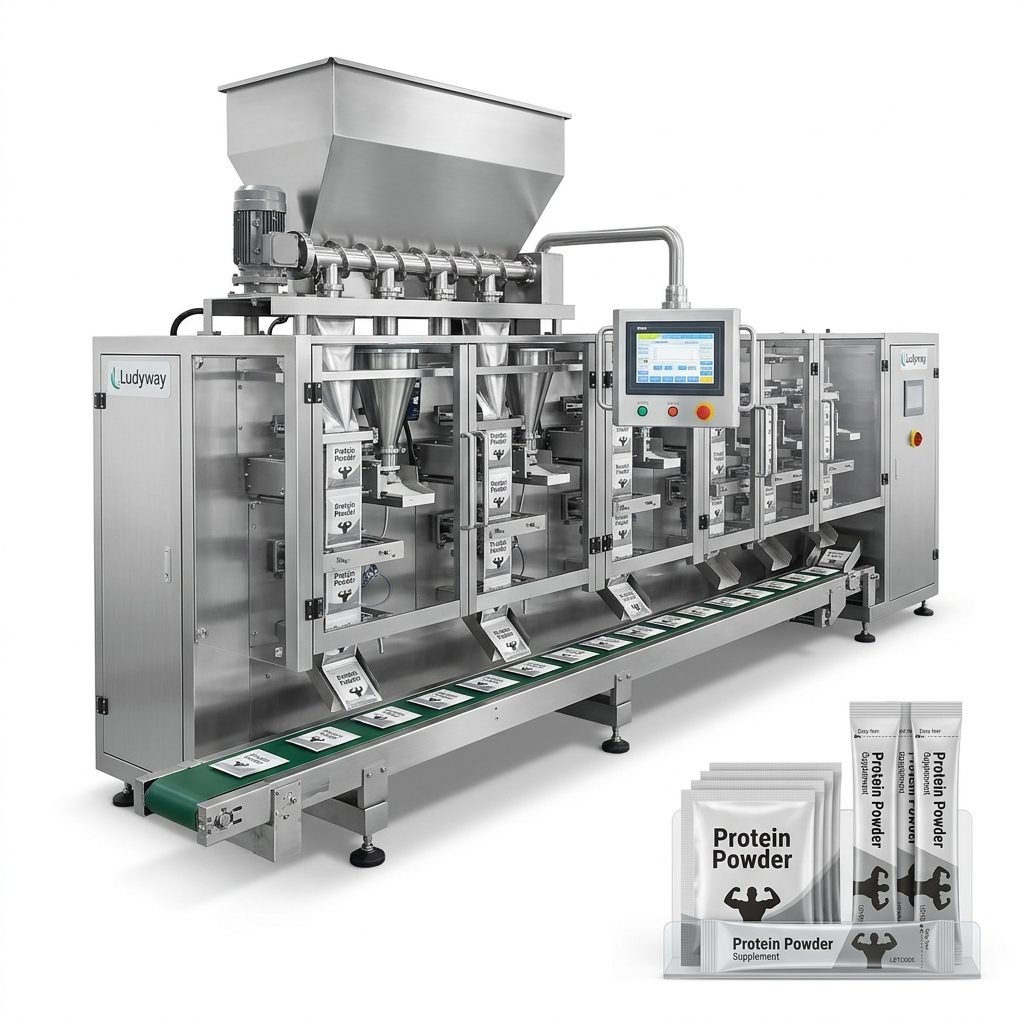
Supplements often appear in sachets, stick packs, pouches, bottles, or cartons. Product formats can include collagen powder, electrolyte blends, probiotics, vitamins, herbal formulas, and sports nutrition products. Flexible multi-lane packaging systems are especially valuable in this fast-growing sector.
Cosmetic and Personal Care Industry
Creams, serums, lotions, shampoos, body wash, and face mask solutions require clean, accurate, and visually consistent packaging. Manufacturers often need both sachet and bottle line capabilities, making scalable and adaptable machinery particularly important.
Chemical and Daily-Use Product Industry
Detergents, cleaning powders, liquid household products, agricultural additives, and industrial chemicals may require corrosion-resistant contact parts, secure sealing, and durable line construction. Proper packaging machinery helps improve safety and reduce handling risks.
How High-Speed Packaging Lines Improve Factory Performance
Upgrading to high-speed packaging machinery can create measurable benefits across the entire plant. It does not just increase output at the packing station—it improves the balance of the whole production process.
- Shorter production cycles: More packs per minute helps meet urgent delivery schedules.
- Better workforce allocation: Operators can focus on supervision and quality control instead of repetitive manual work.
- Lower packaging waste: Precise dosing and sealing reduce rejected units.
- More predictable performance: Stable machines support reliable planning and inventory management.
- Easier expansion: Modular line design allows future upgrades without replacing the full system.
For manufacturers targeting growth, these gains often translate into a stronger return on investment over time, especially when equipment is selected with future scalability in mind.
What to Consider When Choosing Packaging Machinery
Choosing the right packaging machinery supplier and solution involves more than reviewing machine speed data. The most successful projects begin with a complete assessment of product, production goals, and line requirements.
- Product type: granule, powder, liquid, paste, tablet, capsule, or pouch
- Required packaging format: sachet, stick pack, pouch, bottle, bag, or carton
- Expected output per minute or per shift
- Packaging material specifications
- Accuracy requirements and acceptable tolerance levels
- Factory space and utility conditions
- Cleaning standards and industry compliance needs
- Whether standalone machines or complete turnkey lines are preferred
- After-sales support, spare parts access, and technical responsiveness
A packaging machine that looks suitable on paper may still perform poorly if it is not properly matched to actual product properties and production conditions. This is why application-based customization is often essential.
The Value of Turnkey Packaging Line Solutions
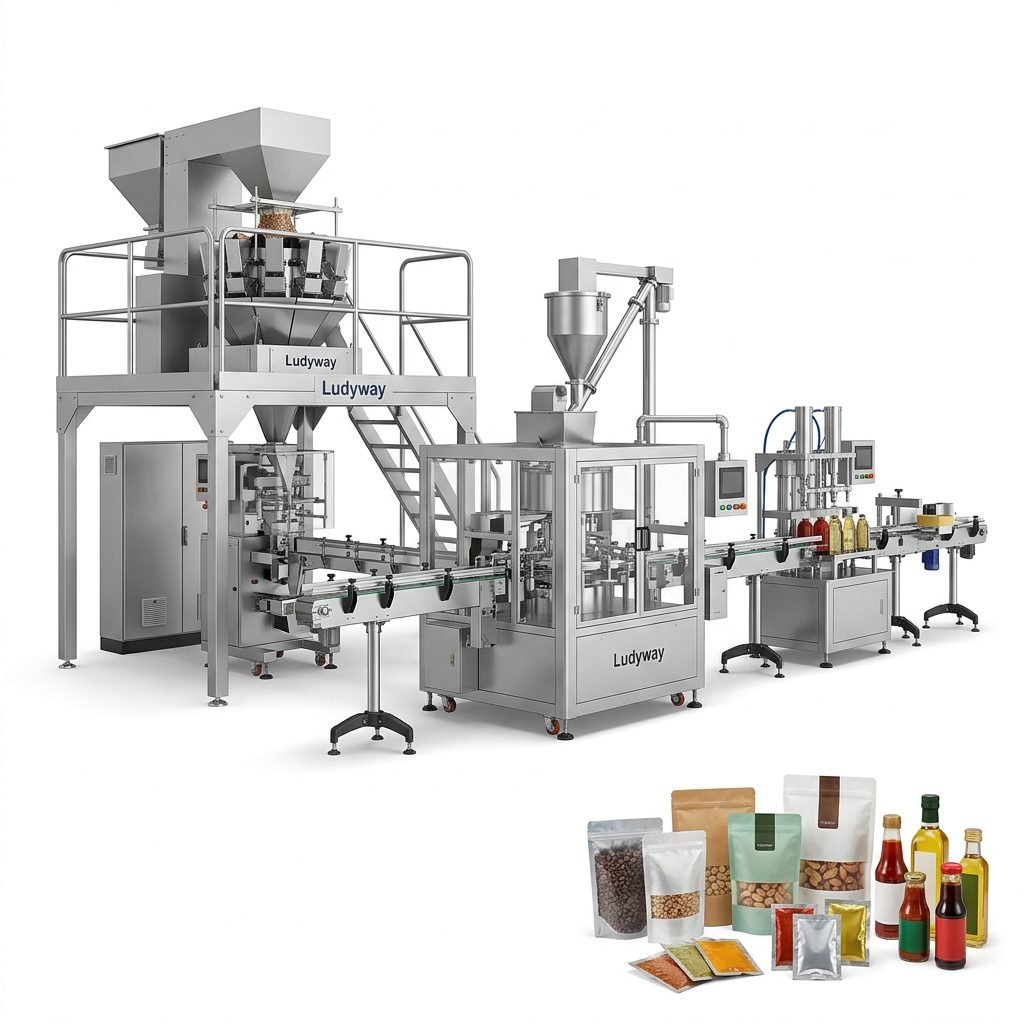
Many manufacturers now prefer turnkey packaging lines rather than sourcing individual machines from multiple suppliers. A turnkey approach typically offers better compatibility, smoother installation, and more consistent line communication. It can also reduce project risk during commissioning.
A typical turnkey packaging line may include:
- Material feeding and conveying systems
- Automatic weighing or dosing equipment
- Filling and sealing machines
- Coding, labeling, or printing systems
- Inspection systems such as metal detection or checkweighing
- Cartoning, case packing, bundling, or palletizing units
This integrated structure helps ensure every section of the line supports the same throughput goals and quality expectations.
Why Manufacturers Look for Experienced Packaging Machinery Partners
Beyond equipment itself, the supplier’s engineering capability and project experience have a major impact on long-term success. Companies often seek a partner that understands multiple industries, offers machine customization, and can support both individual equipment purchases and complete line development.
For businesses seeking scalable automation, Ludyway packaging machinery solutions are widely considered for applications across food, pharmaceutical, health supplement, cosmetic, and related sectors. With more than 30 years of industry experience, a manufacturing base of over 20,000 square meters, and service coverage in more than 100 countries and regions, the company is known for offering a broad portfolio of packaging machines and turnkey packaging line systems.
| Selection Factor | Why It Matters |
|---|---|
| Industry experience | Supports better machine matching and application understanding |
| Product range | Allows easier line expansion and integrated sourcing |
| Customization capability | Improves fit for unique products and packaging formats |
| Quality control process | Helps ensure stable machine performance before delivery |
| After-sales support | Reduces downtime and supports long-term operation |
Future Trends in Packaging Machinery
Packaging machinery continues to evolve as factories move toward higher levels of automation and digital control. Several trends are shaping future investment decisions:
- Smart monitoring for real-time production visibility
- Faster changeovers for multi-product manufacturing
- More modular design for phased line expansion
- Improved energy efficiency and lower total operating cost
- Enhanced precision for sensitive food and pharmaceutical products
- Greater end-of-line automation including cartoning and palletizing
Manufacturers that invest in adaptable machinery today are generally in a stronger position to respond to new packaging formats, evolving compliance requirements, and shifting market demand tomorrow.
Conclusion
Efficient, high-speed, and reliable packaging machinery is a critical foundation for competitive production lines. The right solution improves output, packaging consistency, labor efficiency, and overall plant performance. Whether your operation requires multi-lane stick pack systems, sachet machines, vertical packaging units, liquid fillers, or complete turnkey lines, success depends on choosing equipment that matches your product, production targets, and long-term automation goals.
By focusing on performance stability, flexibility, integration, and supplier capability, manufacturers can build packaging lines that support both current needs and future expansion with confidence.