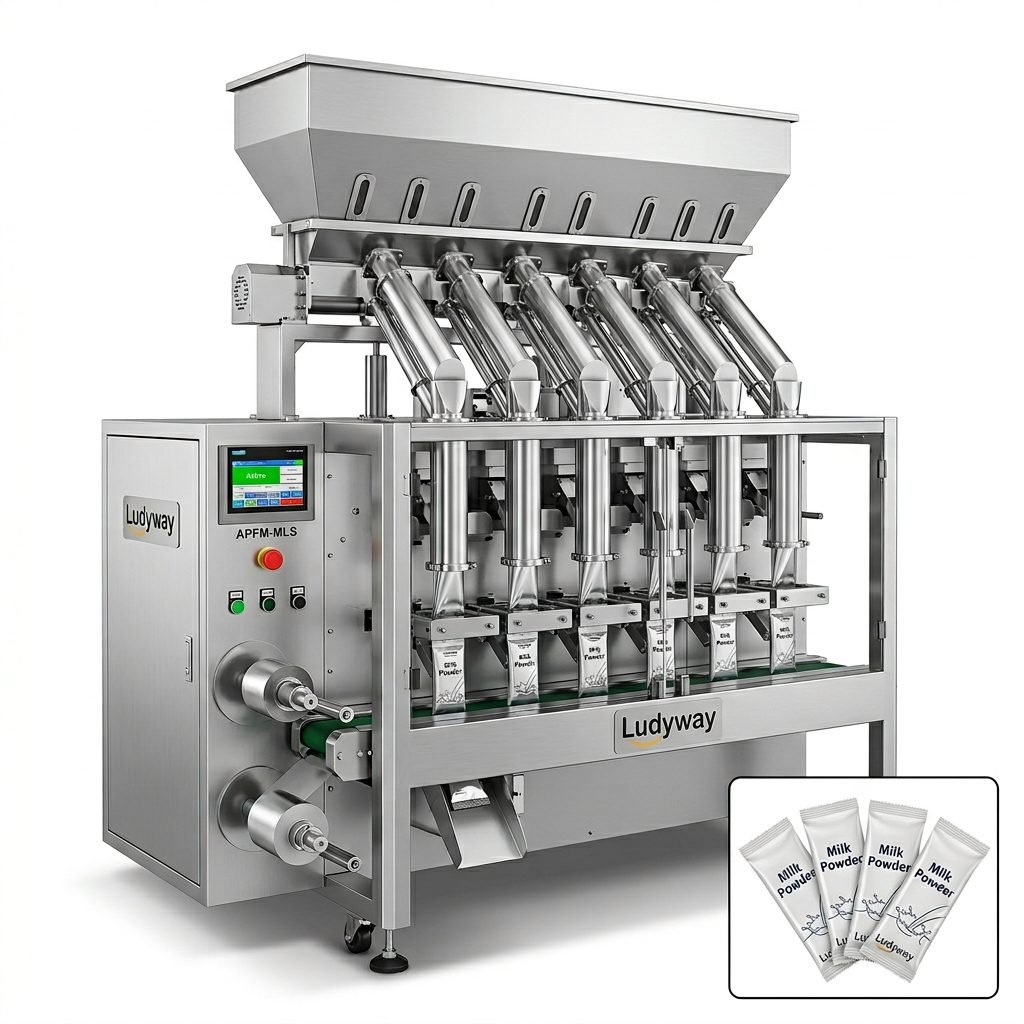
In the fast-paced world of manufacturing, the efficiency and reliability of your production line hinge on one critical component: your packaging machinery systems. These systems are far more than just machines that seal products; they are the backbone of product presentation, protection, and brand consistency. Choosing the right packaging solution is a strategic decision that impacts everything from operational costs and production speed to product safety and market competitiveness. This guide delves into the various types of packaging machinery, outlines their key benefits, and provides a structured approach to selecting the perfect system for your specific production needs.
Understanding the Core Types of Packaging Machinery Systems
The landscape of packaging machinery is diverse, with each type designed for specific functions, materials, and production volumes. Understanding these categories is the first step toward making an informed investment.
Filling Machines
These are designed to accurately measure and dispense product into containers or pouches. They are categorized based on the product form:
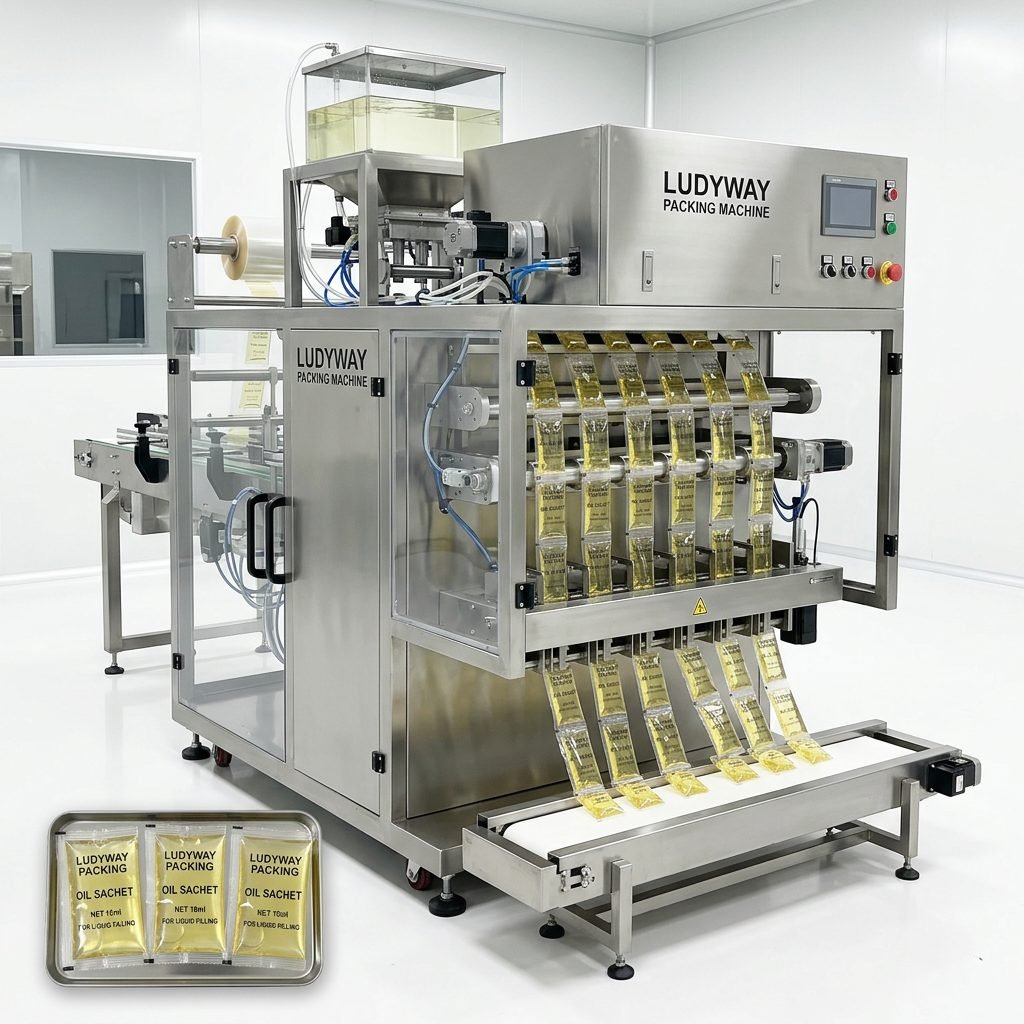
- Liquid Fillers: Ideal for beverages, oils, sauces, and pharmaceuticals. They use technologies like volumetric, piston, or gravity filling.
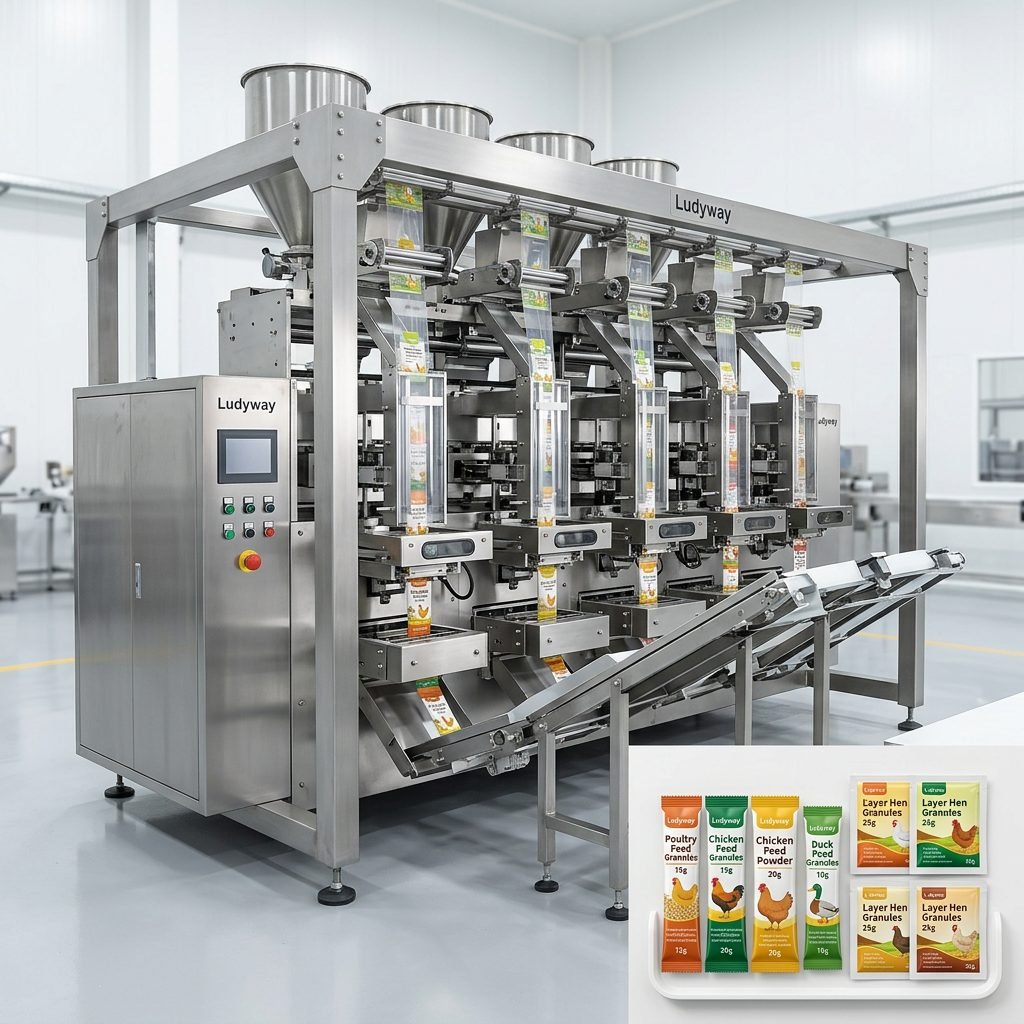
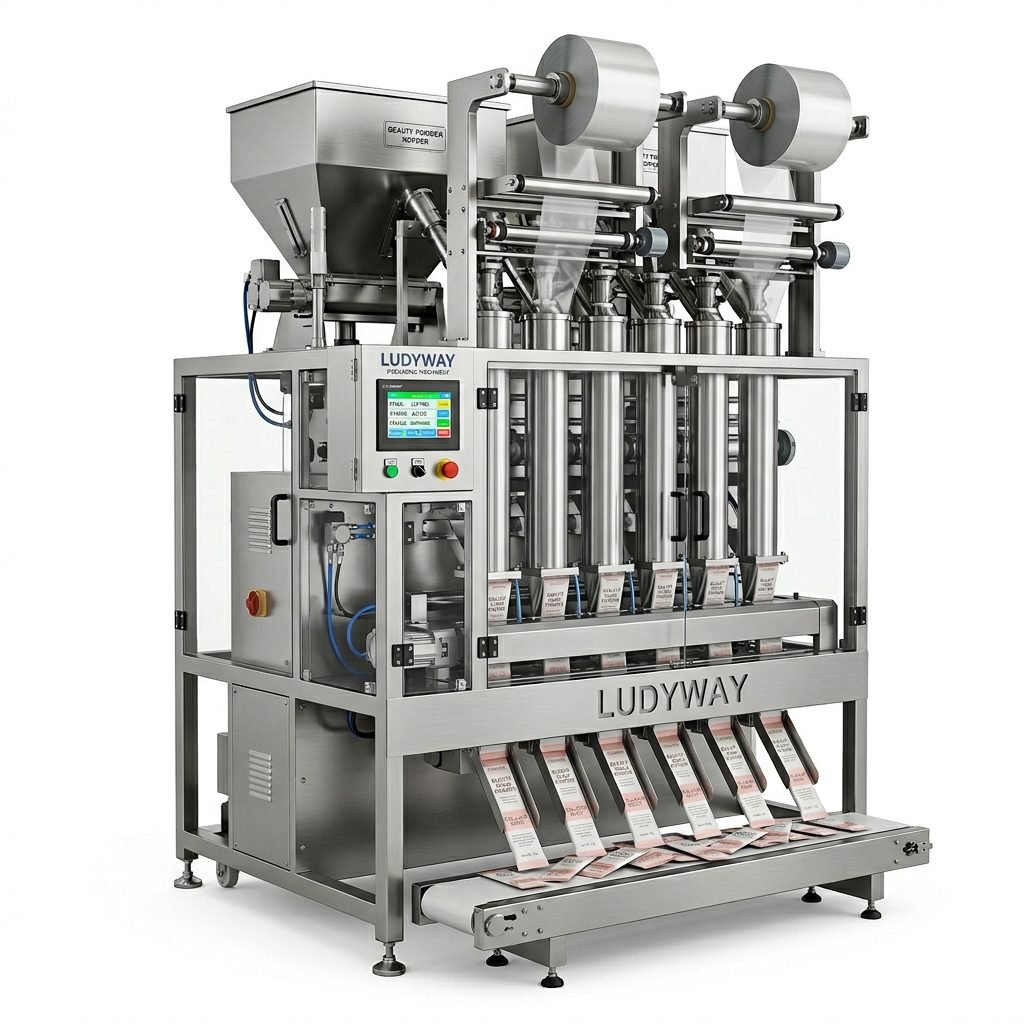
- Granule & Powder Fillers: Essential for coffee, spices, supplements, and detergent powders. They often employ auger or cup filling systems for precision.
Sealing Machines
Once filled, the package must be securely closed. Common types include:
- Heat Sealers: Use heat to melt and fuse thermoplastic layers on pouches or sachets, creating a hermetic seal.
- Induction Sealers: Apply an electromagnetic field to a foil liner under a bottle cap, creating a tamper-evident seal.
- Cappers: Automatically screw or press-fit caps onto bottles and containers.
Form-Fill-Seal (FFS) Machines
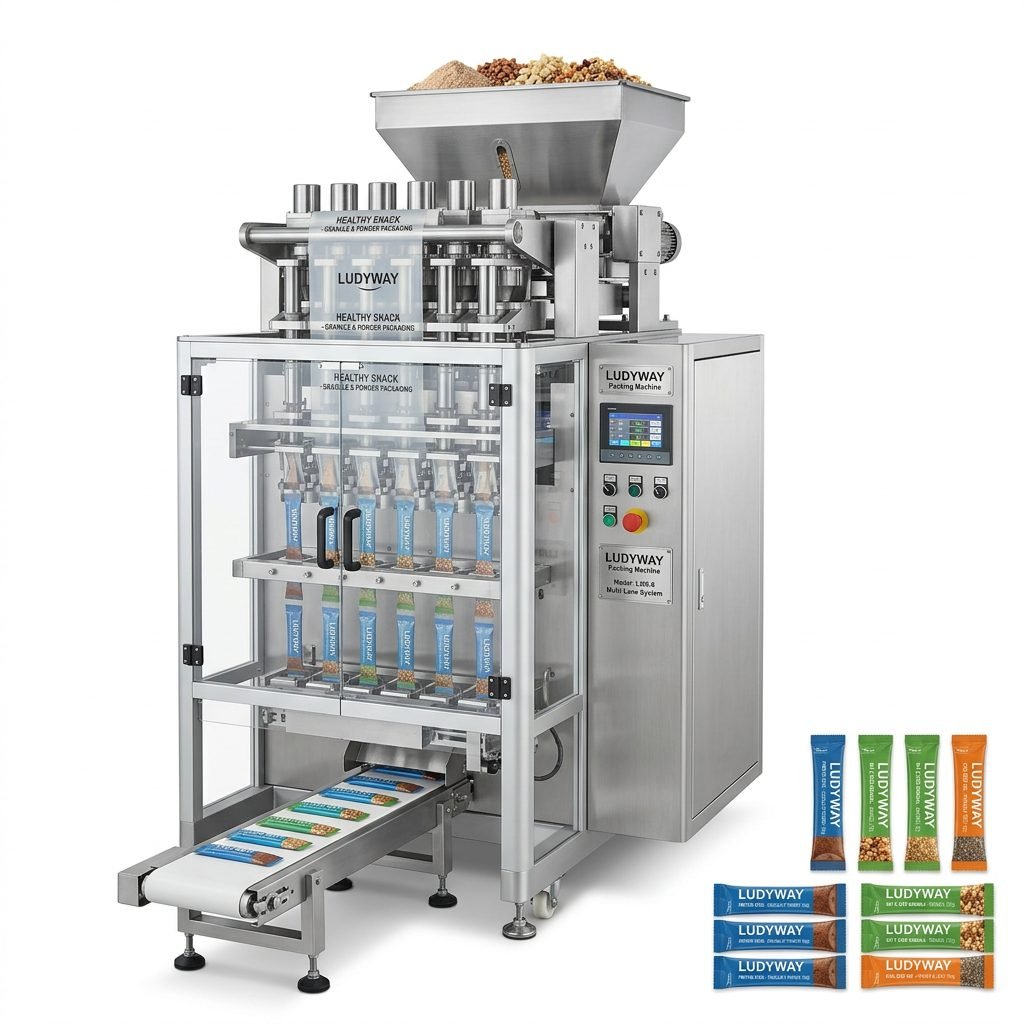
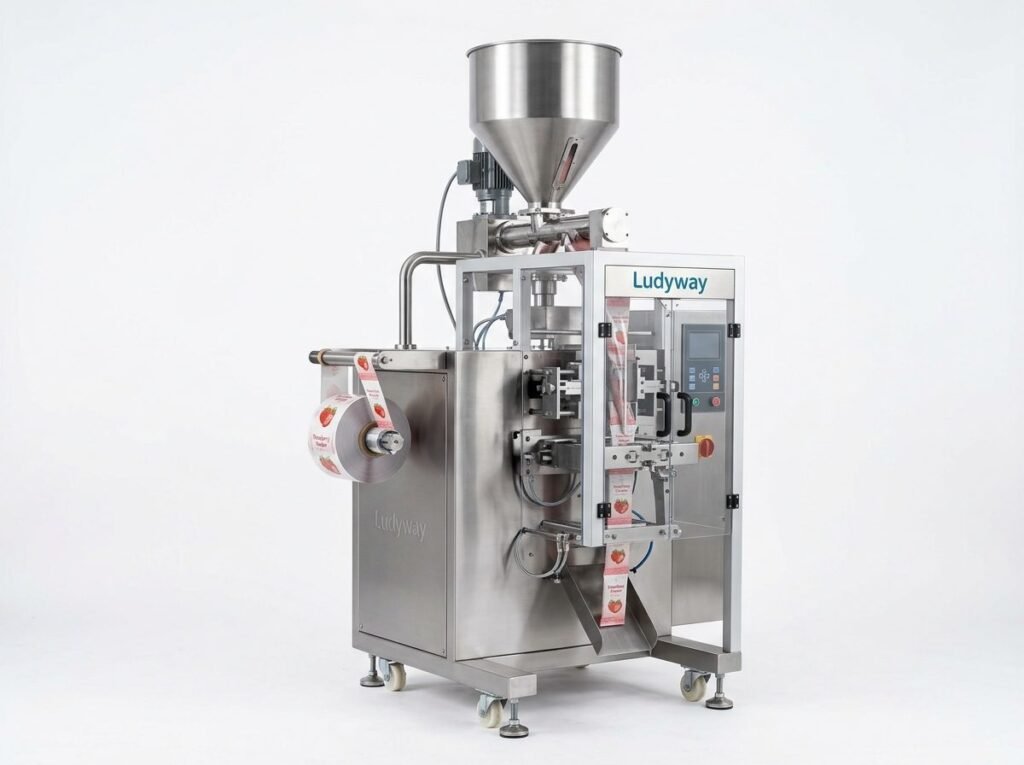
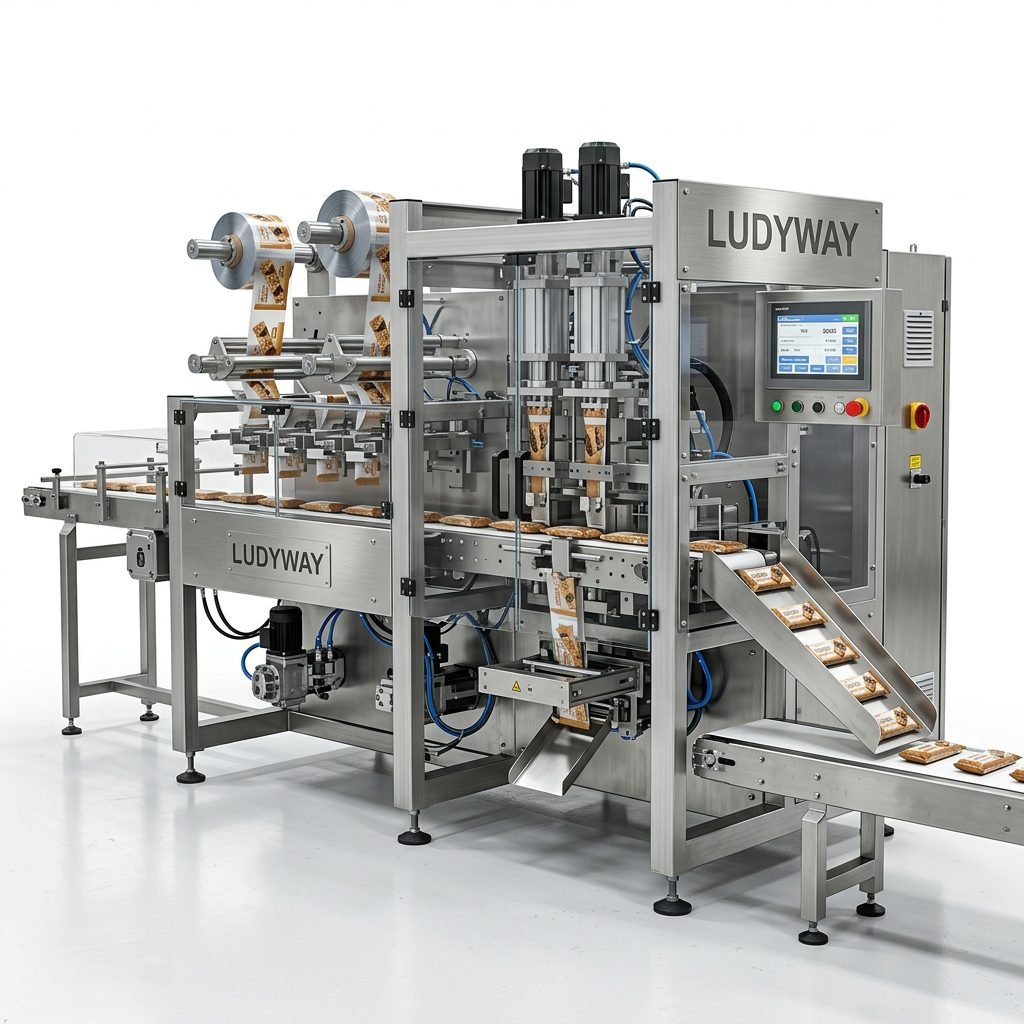
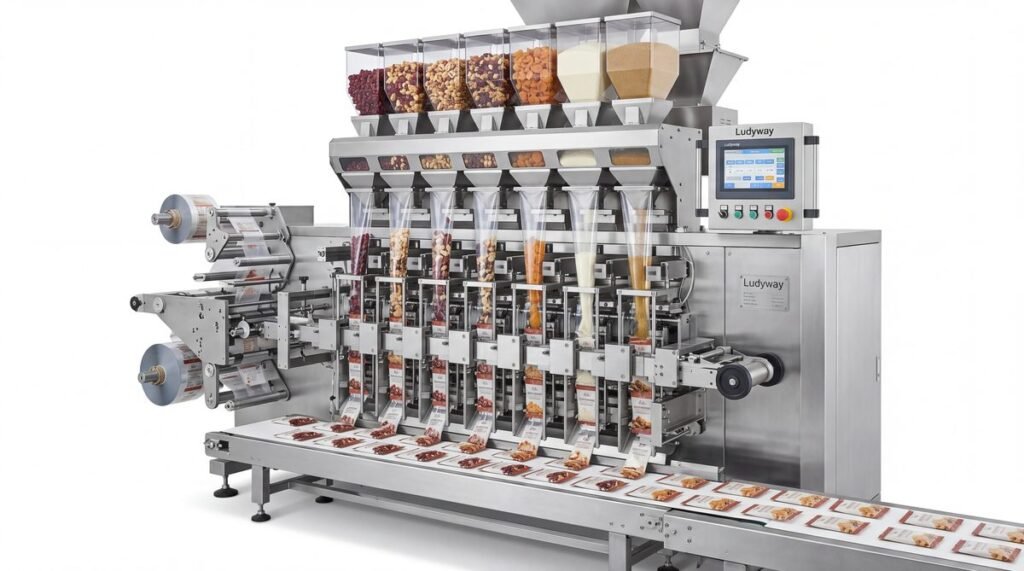
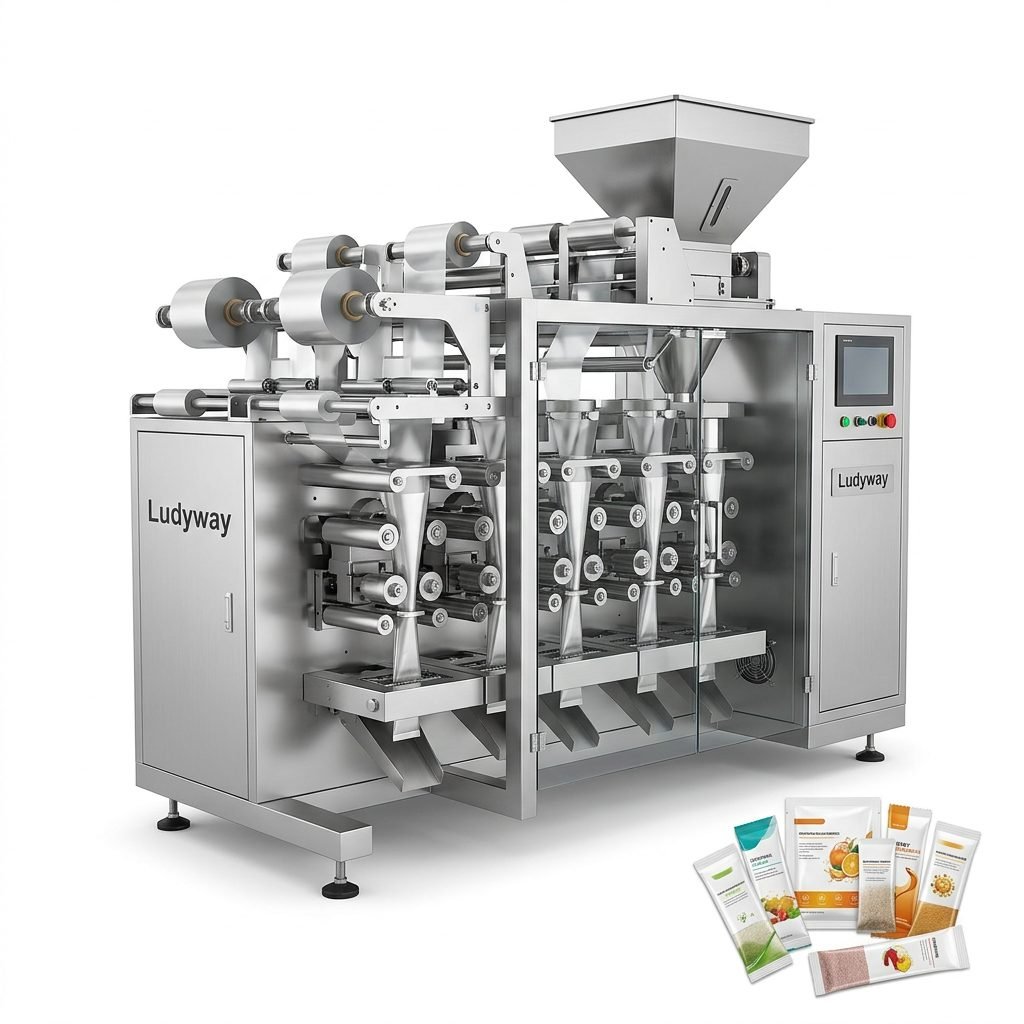
These are highly efficient, integrated systems that form the package from a roll of film, fill it with product, and seal it—all in one continuous operation. They are perfect for creating stick packs and sachets for single-serve products like sugar, instant coffee, ketchup, or shampoo.
Labeling and Coding Machines
These apply labels with product information, branding, and barcodes, and imprint variable data like batch numbers and expiration dates directly onto the packaging.
End-of-Line Equipment
This includes cartoners, case packers, and palletizers that group primary packages into larger units for shipping and distribution.
Key Takeaway:
Modern production lines often integrate several of these machines into a cohesive, automated turnkey solution. For instance, a complete line for powdered supplements might include a powder filler, a form-fill-seal machine for primary pouches, a checkweigher, and a cartoner—all synchronized for maximum throughput.
The Multifaceted Benefits of Automated Packaging Systems
Investing in automated packaging machinery delivers a compelling return on investment across multiple dimensions of your business.
1. Dramatically Increased Production Efficiency & Speed
Automated systems operate at consistent, high speeds far beyond manual capabilities. They eliminate bottlenecks, enabling 24/7 production cycles and allowing you to scale output to meet market demand without a proportional increase in labor.
2. Unmatched Consistency and Quality Control
Machines perform the same task with identical precision every time. This ensures every package has the same fill weight, seal integrity, and label placement, drastically reducing product giveaway and minimizing the risk of leaks or contamination. This level of consistency is virtually impossible to maintain with manual packaging.
3. Significant Reduction in Operational Costs
While the initial investment is notable, automation leads to substantial long-term savings. It reduces labor costs, minimizes material waste through precise dosing, and lowers costs associated with product recalls or customer returns due to packaging faults.
4. Enhanced Workplace Safety and Hygiene
Automation removes workers from repetitive, strenuous, or potentially hazardous tasks. In industries like pharmaceuticals and food, closed-system machines also provide a higher hygiene standard, reducing the risk of product contamination from human contact.
5. Greater Flexibility and Scalability
Many modern machines are designed for quick changeovers. With adjustable parameters and modular components, you can switch between different package sizes or product types with minimal downtime, allowing you to respond agilely to market trends.
How to Choose the Right Solution for Your Production Line
Selecting packaging machinery is a complex process. Follow this step-by-step framework to navigate your decision.
Step 1: Conduct a Thorough Needs Analysis
Start by defining your core requirements with absolute clarity.
- Product Characteristics: Is it a liquid, viscous paste, granule, or fine powder? What are its flow properties, abrasiveness, and sensitivity (e.g., to heat, oxygen)?
- Packaging Materials & Format: What type of container or pouch will you use? Consider material compatibility with your product and the machine’s sealing mechanism.
- Production Volume & Speed: Determine your required output in packages per minute/hour. Factor in both current needs and projected growth for the next 3-5 years.
- Available Floor Space & Utilities: Measure your facility layout. Check requirements for electrical power, compressed air, and ventilation.
Step 2: Research and Shortlist Reputable Suppliers
Look for manufacturers or brands with proven expertise in your specific industry. Evaluate their:
- Industry Experience & Track Record: A supplier with decades of experience, like Ludyway Packaging Machinery, brings invaluable application knowledge.
- Product Portfolio & Customization Capability: Can they provide a standard model, or do you need a customized solution?
- Technical Support & Service Network: Reliable after-sales service, spare parts availability, and technical training are non-negotiable for minimizing downtime.
Step 3: Request a Product Demonstration or Sample Test
Never buy based on specifications alone. Insist on seeing the machine run, preferably with your actual product and packaging materials. A sample test run will reveal critical insights into performance, accuracy, and potential challenges.
Step 4: Evaluate the Total Cost of Ownership (TCO)
Look beyond the initial purchase price. Calculate the TCO by including:
- Installation and commissioning costs.
- Cost of consumables and spare parts.
- Estimated energy consumption.
- Long-term maintenance and service contract costs.
A slightly higher upfront cost for a more robust, efficient, and reliable machine often results in a lower TCO.
Step 5: Plan for Integration and Future-Proofing
Consider how the new machine will integrate with your existing line. Discuss communication protocols (e.g., PLC connectivity) with your supplier. Choose a modular or upgradeable system that can adapt to future changes in your packaging or production strategy.
Final Checklist Before Purchase:
- ✅ Has the machine been tested with my exact product?
- ✅ Are the output speed and accuracy guaranteed?
- ✅ What is the expected changeover time between formats?
- ✅ What training is provided for my operators and maintenance staff?
- ✅ What are the warranty terms and service response time?
Frequently Asked Questions (FAQs)
1. What is the typical lead time for receiving and installing a new packaging machine?
Lead times vary significantly based on machine complexity, customization level, and supplier capacity. For standard models, it can range from 8 to 16 weeks. Highly customized or large turnkey lines may require 20 weeks or more. Always confirm timelines with your supplier during the quotation process.
2. How can I ensure the machine will handle my product accurately without waste?
The most reliable method is to conduct a live product test at the supplier’s facility or your own plant. This test will determine the optimal filling technology (e.g., auger, piston, pump) and settings for your product’s specific density, flowability, and other characteristics, ensuring precise dosing and minimal giveaway.
3. What kind of maintenance do automated packaging systems require?
Regular preventive maintenance is crucial. This typically includes daily cleaning, lubrication of moving parts as specified, inspection of seals and wear components, and calibration of weighing or sensing systems. Your supplier should provide a detailed maintenance schedule and training.
4. Can one machine handle multiple different package sizes or products?
Many machines offer “quick changeover” capabilities. This involves using change parts (like different sized funnels, forming tubes, or sealing jaws) and storing preset recipes in the machine’s control system. The ease and speed of changeover is a key feature to discuss with your supplier if flexibility is required.
5. What are the most important factors for packaging sensitive products like pharmaceuticals or food?
For sensitive industries, the paramount factors are hygienic design (easy to clean, no product traps), material compatibility (use of food-grade or pharmaceutical-grade components), and validation support. The supplier should be able to provide documentation (e.g., FAT/SAT protocols) to help you meet stringent regulatory standards like GMP or FDA requirements.