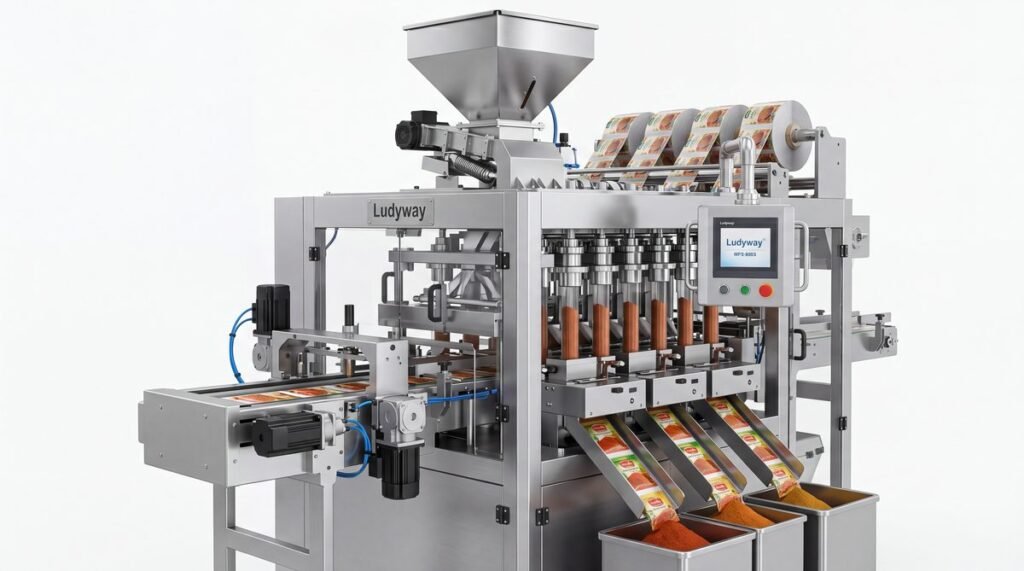
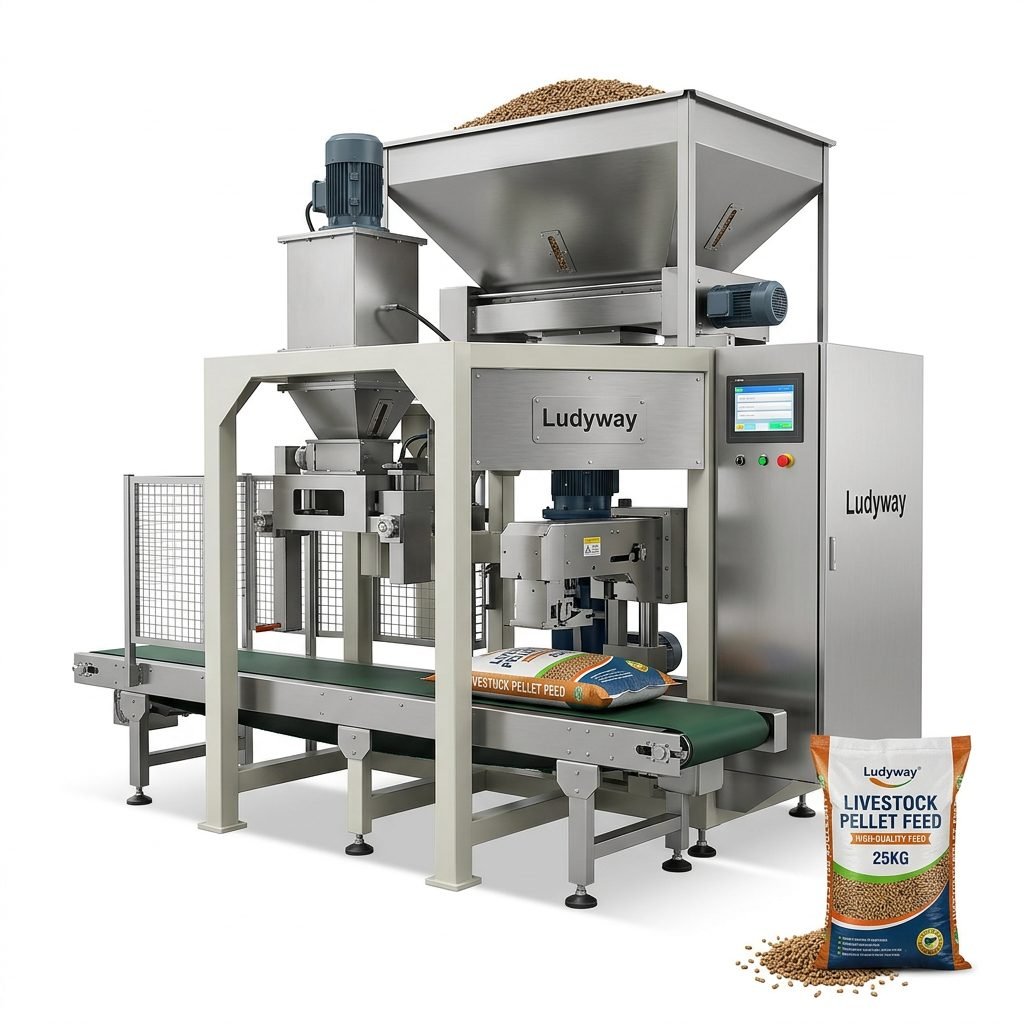
Robotic packaging machinery is transforming modern production by helping manufacturers pack faster, reduce human error, and improve line consistency. In industries such as food, pharmaceuticals, cosmetics, chemicals, and pet care, automation is no longer a luxury—it is becoming a practical requirement for companies that want to stay competitive.
From robotic pick-and-place systems to automatic filling, sealing, labeling, cartoning, and palletizing, today’s packaging equipment is designed to increase throughput, protect product quality, and lower operational costs. For businesses planning long-term growth, robotic packaging solutions offer a clear path toward smarter and more efficient production.
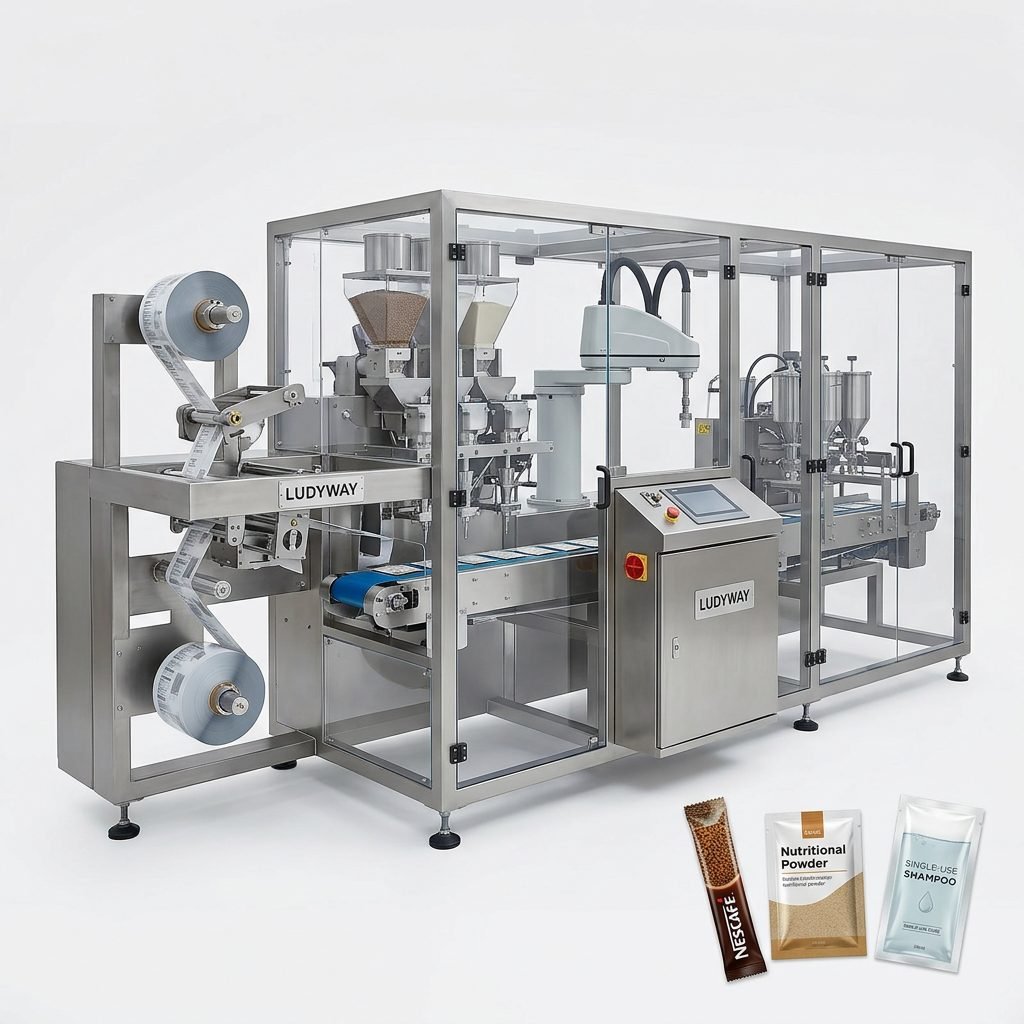
What Is Robotic Packaging Machinery?
Robotic packaging machinery refers to automated equipment that uses programmable systems, sensors, servo motors, and intelligent controls to perform packaging tasks with minimal manual intervention. These systems can be integrated into standalone packaging machines or complete turnkey packaging lines.
Typical robotic packaging functions include:
- Product feeding and sorting
- Precision filling and dosing
- Bagging, pouching, and sachet packing
- Capping, sealing, and labeling
- Cartoning and case packing
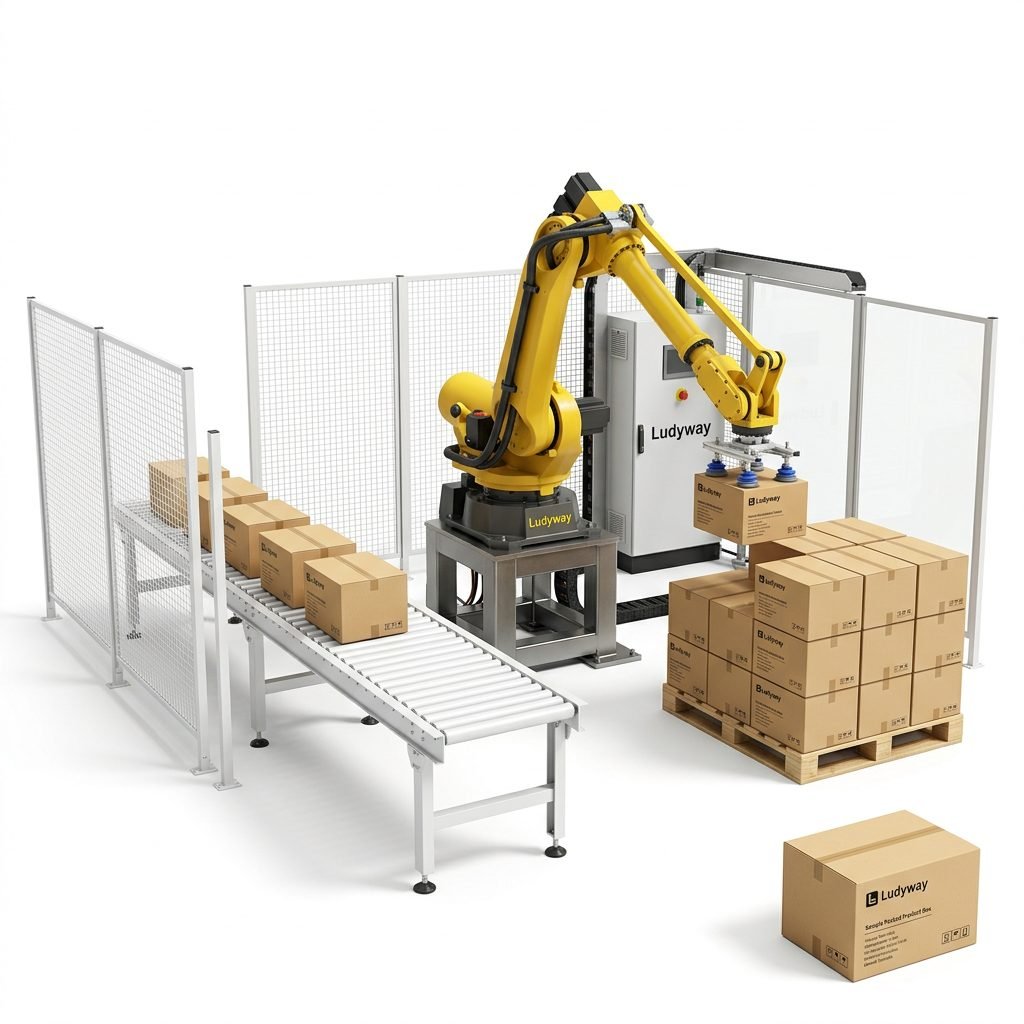
- Palletizing and warehouse handling
The result is a packaging process that is more repeatable, scalable, and responsive to modern production demands.
Why Robotic Packaging Machinery Matters in Modern Manufacturing
Manufacturers today face rising labor costs, stricter quality requirements, and growing pressure to deliver products faster. Robotic automation addresses these challenges by making packaging operations more stable and data-driven.
- Higher packaging speed
Robotic systems can maintain continuous operation with less interruption, allowing production lines to handle large volumes efficiently. - Better accuracy
Automated controls improve fill weight consistency, sealing precision, labeling position, and product handling quality. - Improved labor efficiency
By automating repetitive tasks, companies can reduce dependency on manual labor and reassign staff to more valuable roles. - Reduced product waste
Precise dosing and repeatable motion help minimize material loss, off-spec packs, and rework. - Enhanced hygiene and safety
In food and pharmaceutical environments, reduced manual contact supports cleaner and more compliant production.
Key Benefits of Robotic Packaging Machinery
| Benefit | How It Helps |
|---|---|
| Speed | Increases output per hour and supports high-volume production |
| Accuracy | Improves dosage control, seal quality, and pack uniformity |
| Efficiency | Reduces downtime, labor dependency, and packaging waste |
| Flexibility | Handles multiple package formats and product types with easier changeovers |
| Scalability | Supports future expansion from single machines to complete integrated lines |
| Traceability | Enables better monitoring, coding, and production data control |
Applications Across Multiple Industries
Robotic packaging machinery is highly versatile and can be adapted for many industries and product forms.
Food Industry
Food producers use robotic packaging systems for powders, granules, liquids, sauces, snacks, coffee, dairy-based products, seasonings, frozen foods, and ready-to-mix beverages. These machines help ensure hygiene, consistent portioning, and high-speed output.
Pharmaceutical Industry
In pharmaceutical packaging, automation supports strict quality standards for powders, granules, tablets, capsules, syrups, medical devices, and sterile products. Precision and compliance are especially important in this sector.
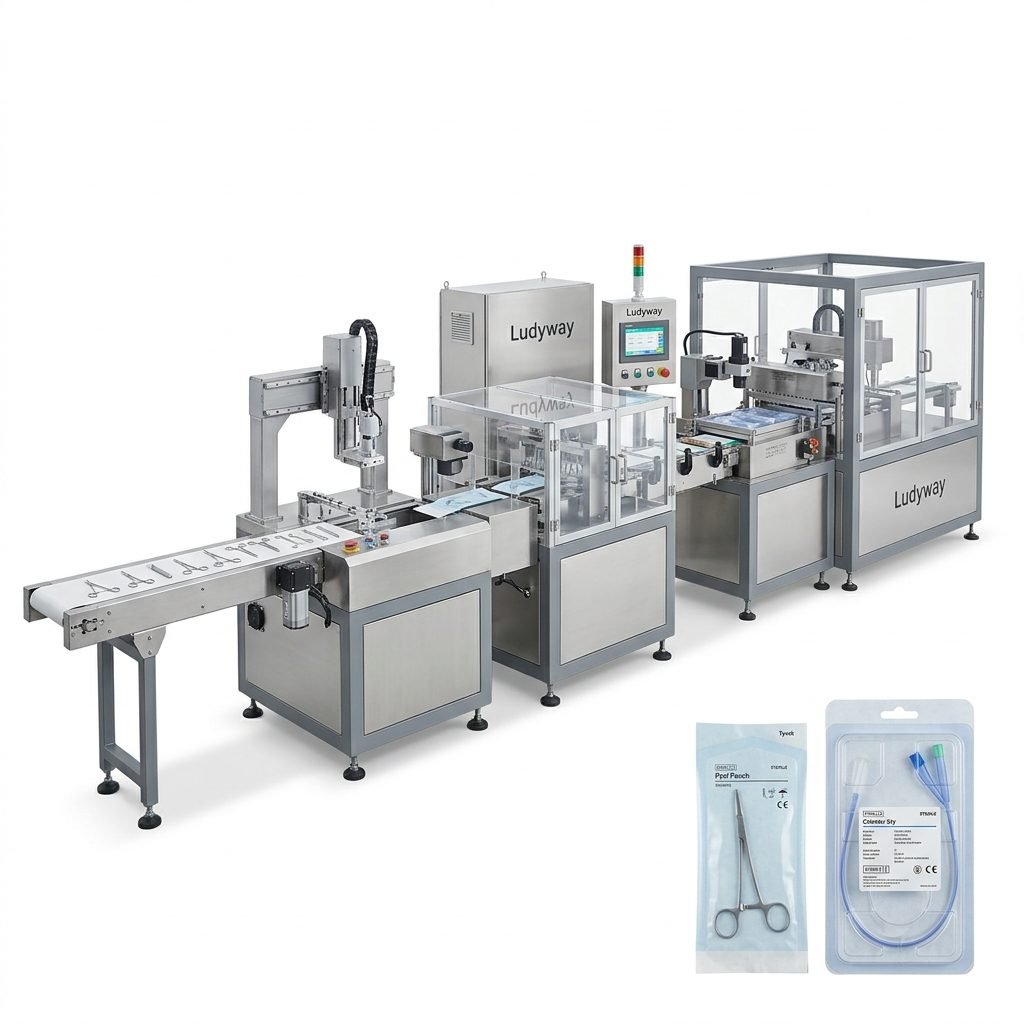
Cosmetics and Personal Care
Sachet, stick pack, tube, vial, and bottle packaging lines are widely used for creams, serums, lotions, shampoo, body wash, facial care, and travel-size products.
Chemical and Household Products
For detergents, cleaners, lubricants, additives, and industrial chemicals, robotic packaging systems improve handling safety and filling stability while supporting a wide range of viscosities and packaging formats.
Animal Nutrition and Pet Food
Granules, powders, pellets, treats, and supplements can all be packed efficiently using automated weighing, filling, and bagging systems.
Core Types of Robotic Packaging Machinery
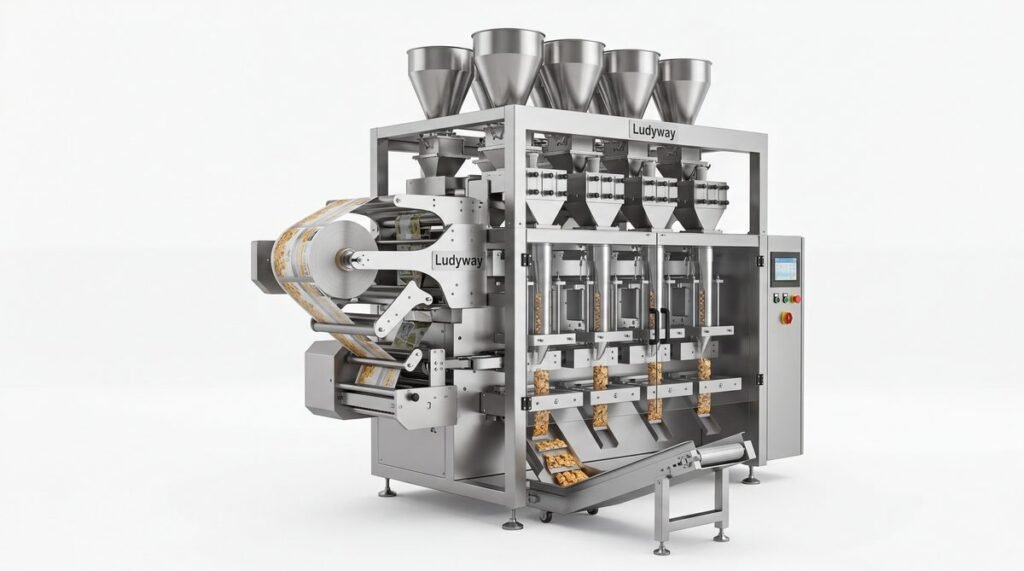
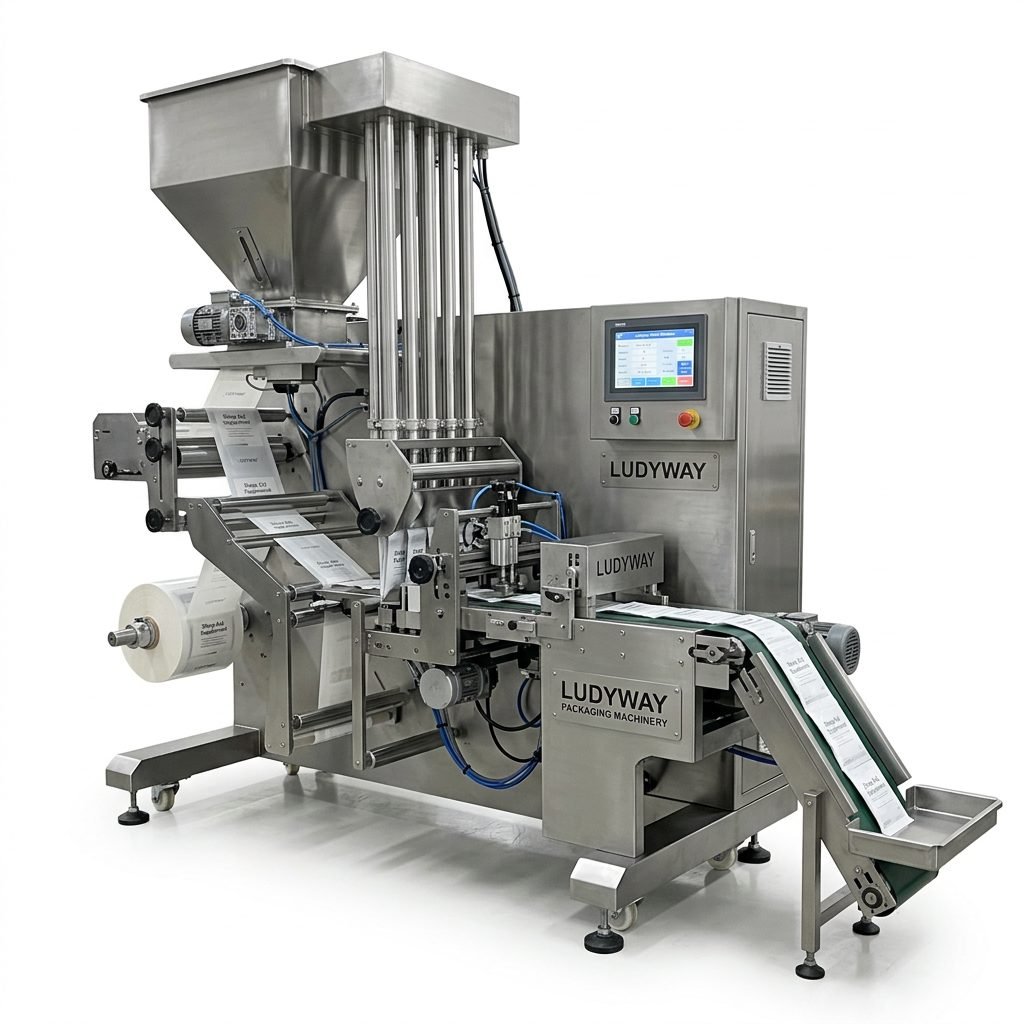
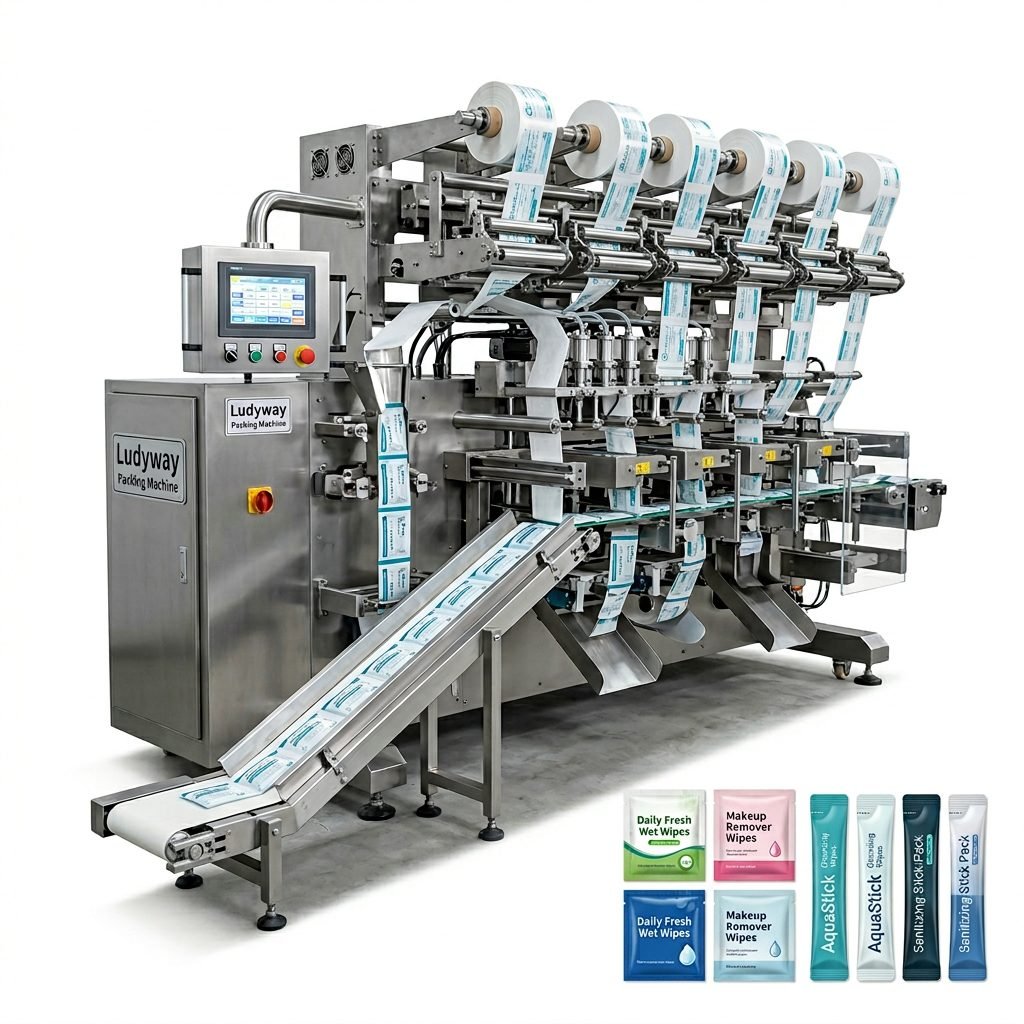
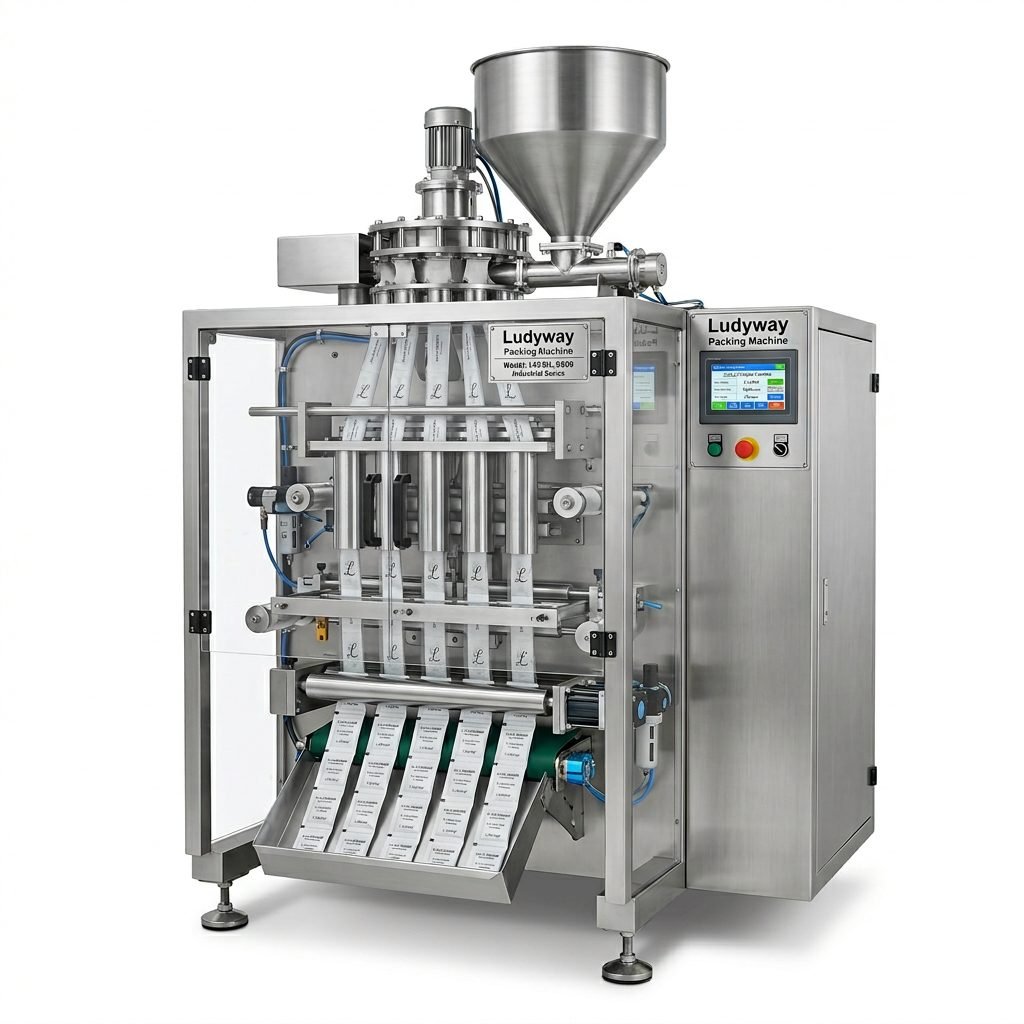
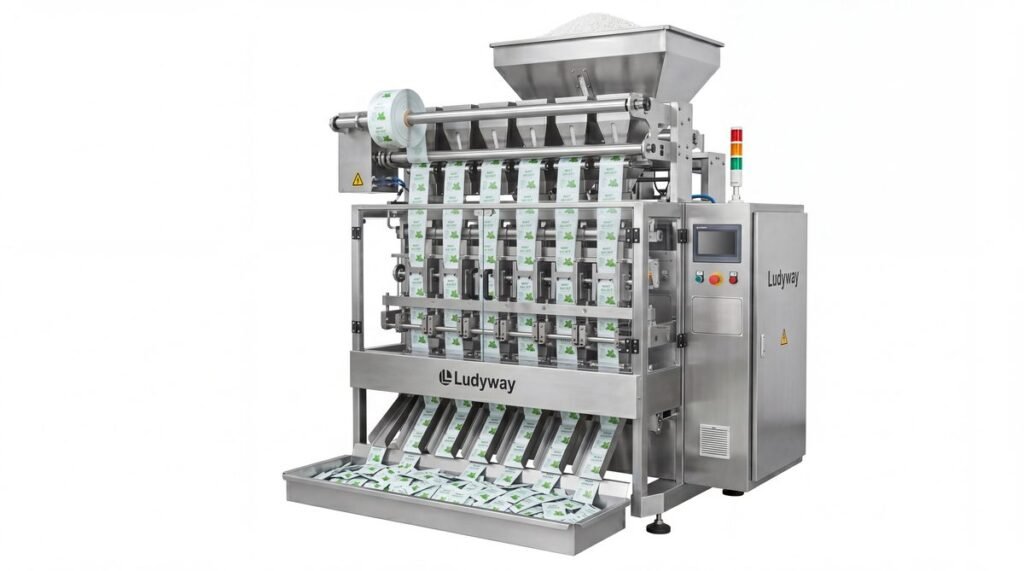
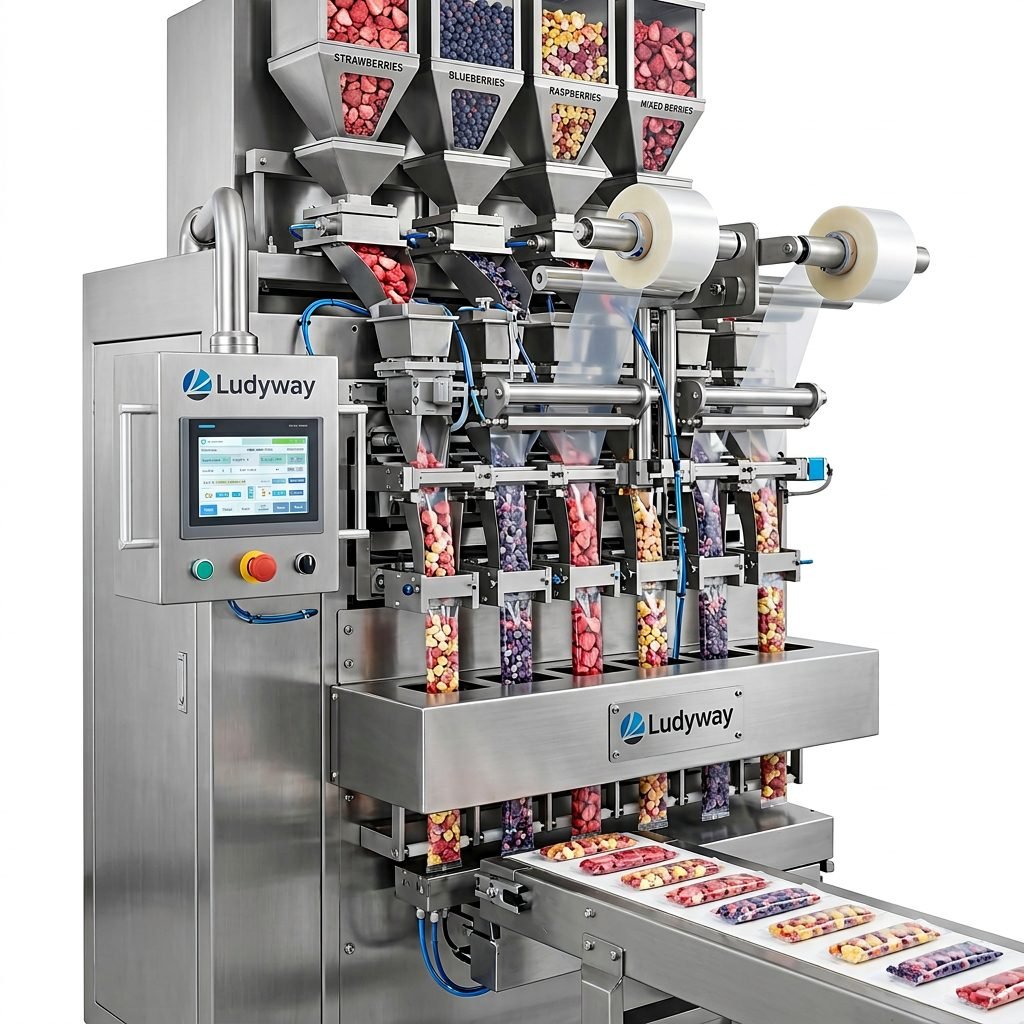
- Multi-lane sachet and stick pack machines for powders, granules, pastes, and liquids
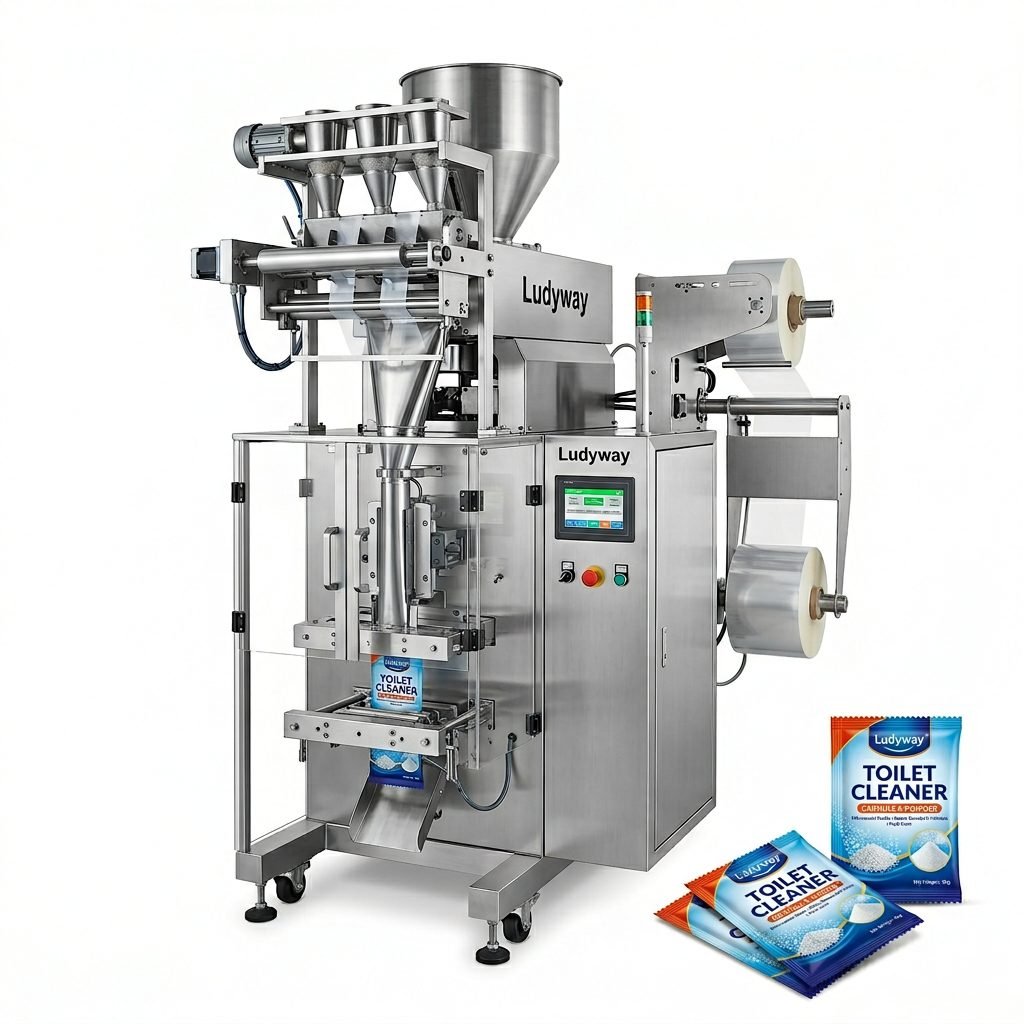
- Vertical form fill seal systems for flexible packaging
- Bottle filling and capping lines for liquid and viscous products
- Cartoning and case packing systems for secondary packaging automation
- Labeling and coding machines for identification and traceability
- Robotic palletizing systems for end-of-line stacking and logistics efficiency
How Robotic Systems Improve Packaging Speed
Speed is one of the main reasons manufacturers invest in robotics. Traditional manual or semi-automatic processes often create bottlenecks, especially when production volume increases. Automated equipment solves this by synchronizing each packaging step.
Examples of speed-related improvements include:
- Continuous feeding with less interruption
- Multi-lane packaging for higher output in compact spaces
- Servo-controlled motion for rapid and stable cycles
- Automatic changeover support to reduce downtime between SKUs
- Integrated end-of-line handling for smoother product flow
When all equipment is connected as a line, packaging speed can improve far beyond what isolated machines or manual operations can achieve.
How Robotic Automation Improves Accuracy
Accuracy is essential in packaging because even small deviations can lead to product giveaway, sealing failures, customer complaints, or compliance issues. Robotic packaging machinery uses controlled parameters and intelligent feedback to maintain consistent performance.
Accuracy improvements often include:
- Precise auger, cup, piston, or pump dosing
- Reliable fill weights and volume consistency
- Uniform pouch, sachet, or bottle presentation
- Stable sealing temperature and pressure control
- Exact label positioning and date coding
For regulated industries, this level of consistency contributes directly to product quality assurance and brand credibility.
How Robotic Packaging Improves Overall Efficiency
Efficiency goes beyond speed. It also includes uptime, resource use, maintenance simplicity, and process coordination. A robotic packaging line can improve efficiency by making the entire operation more predictable.
| Operational Area | Efficiency Impact |
|---|---|
| Labor | Cuts repetitive manual work and reduces staffing pressure |
| Materials | Reduces overfill, seal rejects, and film waste |
| Maintenance | Modern design supports easier diagnostics and preventive servicing |
| Line Integration | Improves coordination from feeding to final packing and palletizing |
| Quality Control | Supports inspections, tracking, and consistent packaging quality |
Features to Look for When Choosing Robotic Packaging Machinery
Not all packaging equipment is the same. The right solution depends on your product, output target, package style, and factory layout. When comparing machines, pay attention to these factors:
- Compatibility with powders, granules, liquids, or pastes
- Required output speed and lane configuration
- Packaging format flexibility
- Ease of cleaning and maintenance
- Control system stability and user interface
- Integration with conveyors, checkweighers, printers, and palletizers
- Customization capabilities for unique production needs
- After-sales technical support and spare parts availability
The Value of Turnkey Packaging Line Integration
Many manufacturers now prefer complete packaging line solutions instead of buying isolated equipment from different sources. A turnkey system offers better compatibility, cleaner line logic, and simplified project management.
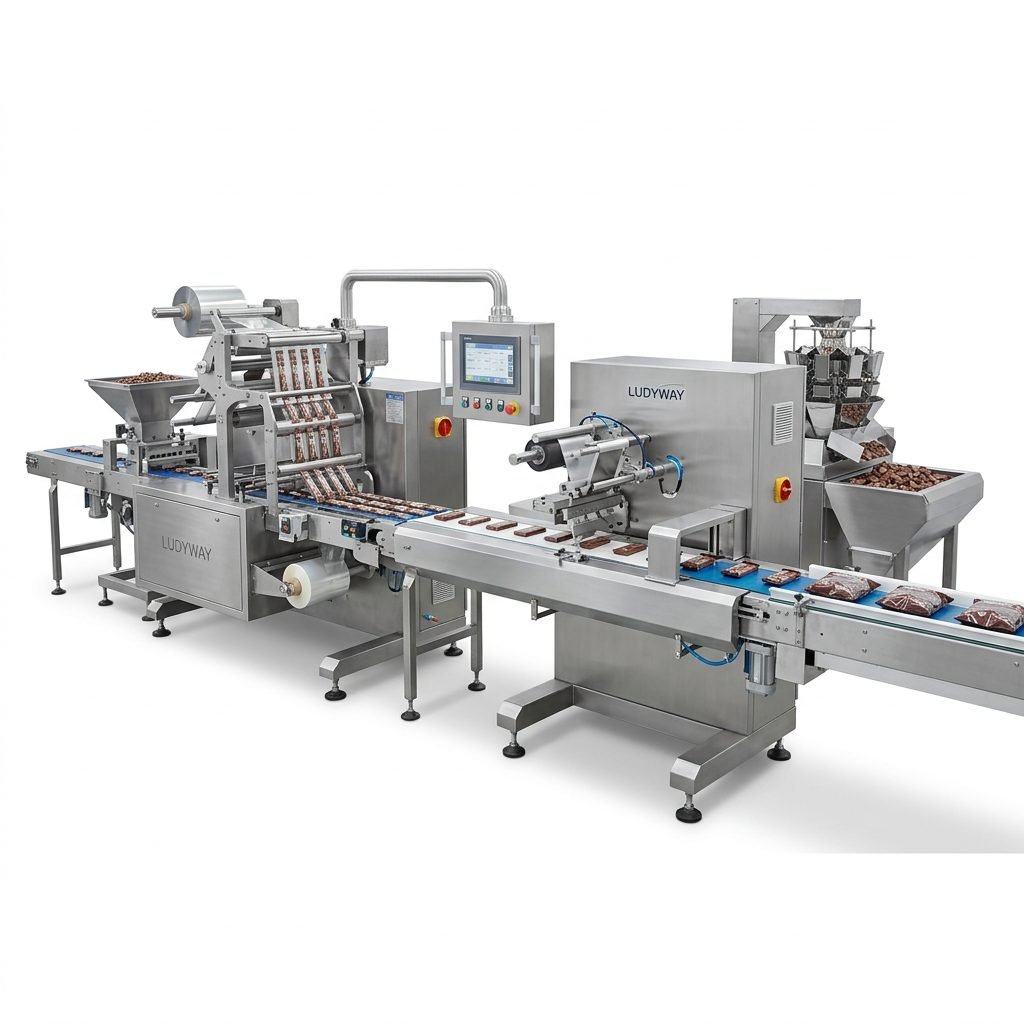
A complete robotic packaging line may include:
- Raw material feeding systems
- Primary packaging machines
- Metal detection, checkweighing, or vision inspection
- Cartoning, case packing, and sealing
- Palletizing and warehouse transfer
With integrated automation, manufacturers gain better production continuity, easier commissioning, and more efficient long-term expansion.
Why Experienced Manufacturers Matter
Selecting a capable machinery supplier is just as important as selecting the machine itself. An experienced manufacturer can help evaluate product characteristics, recommend the right technology, and customize a system that matches your real production needs.
For companies seeking scalable automation, Ludyway robotic packaging machinery solutions are backed by more than 30 years of industry experience, a manufacturing base of over 20,000 square meters, and broad expertise in food, pharmaceutical, health supplement, cosmetic, chemical, and turnkey packaging line applications. With service coverage in more than 100 countries and regions, the company supports customers looking for stable performance, customization, and long-term packaging automation value.
Common Use Cases for Robotic Packaging Machinery
High-volume sachet and stick pack production
Ideal for drink powders, seasonings, coffee, supplements, and pharmaceutical granules where speed and dosing accuracy are essential.
Automated bottle filling lines
Suitable for syrups, oils, cosmetic serums, detergents, and liquid chemicals requiring precise filling and capping control.
Secondary packaging automation
Best for companies that need efficient carton loading, bundling, case packing, and palletizing at the end of the line.
Custom multi-product packaging operations
Useful for factories handling multiple SKUs, format changes, and diverse product viscosities or flow properties.
Future Trends in Robotic Packaging Machinery
The next generation of packaging automation is becoming more intelligent and connected. Manufacturers are increasingly interested in systems that support digital monitoring, predictive maintenance, and flexible production planning.
Important trends include:
- Smart HMI and easier recipe management
- Remote diagnostics and service support
- Energy-efficient motion control
- Data collection for output and quality tracking
- More modular line design for future upgrades
As market demands continue to change, robotic packaging machinery will play an even larger role in helping factories respond quickly, maintain consistency, and grow profitably.
Conclusion
Robotic packaging machinery helps modern manufacturers achieve what manual packaging struggles to deliver at scale: higher speed, better accuracy, and stronger overall efficiency. Whether your business packages powders, granules, liquids, pouches, bottles, or cartons, the right automated solution can improve productivity, reduce waste, and support long-term operational growth.
For companies planning to modernize their packaging operations, investing in robotic automation is not just about keeping up with production demands—it is about building a smarter and more competitive future.