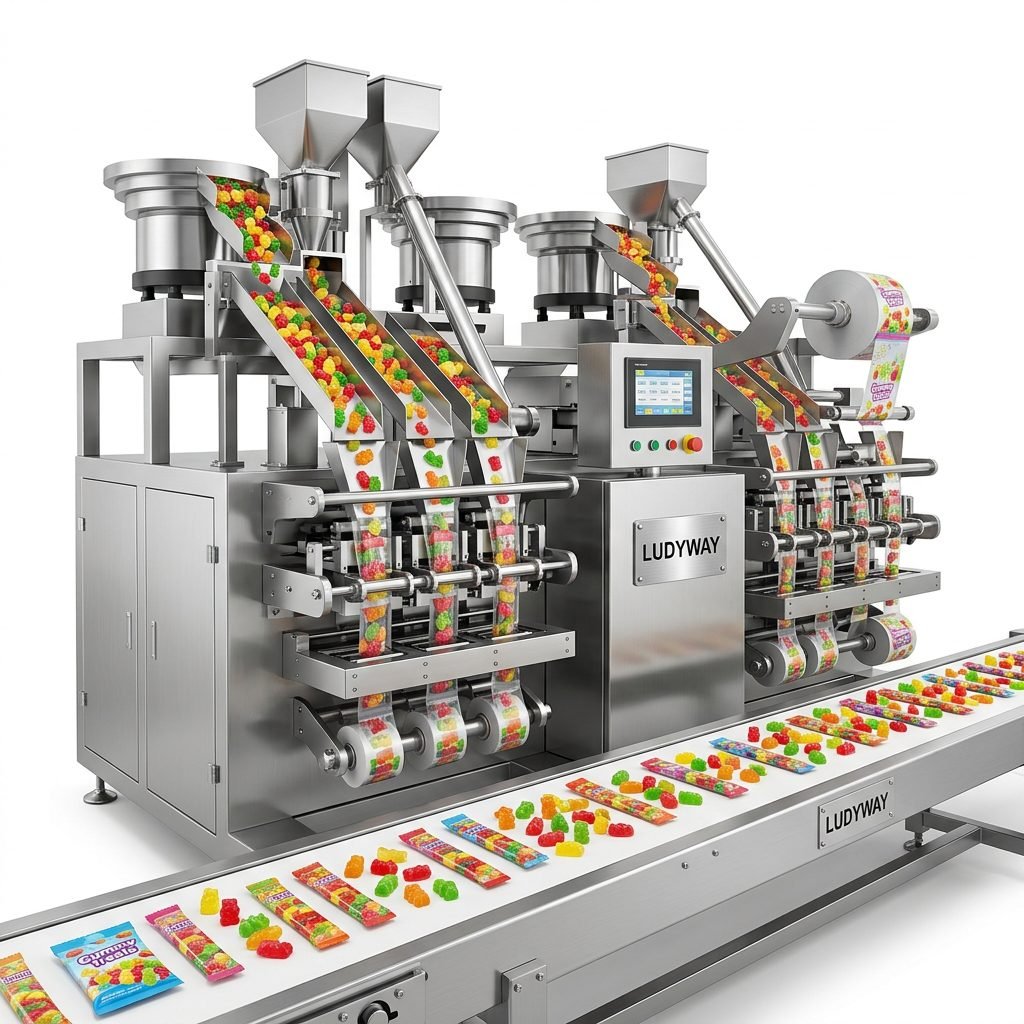
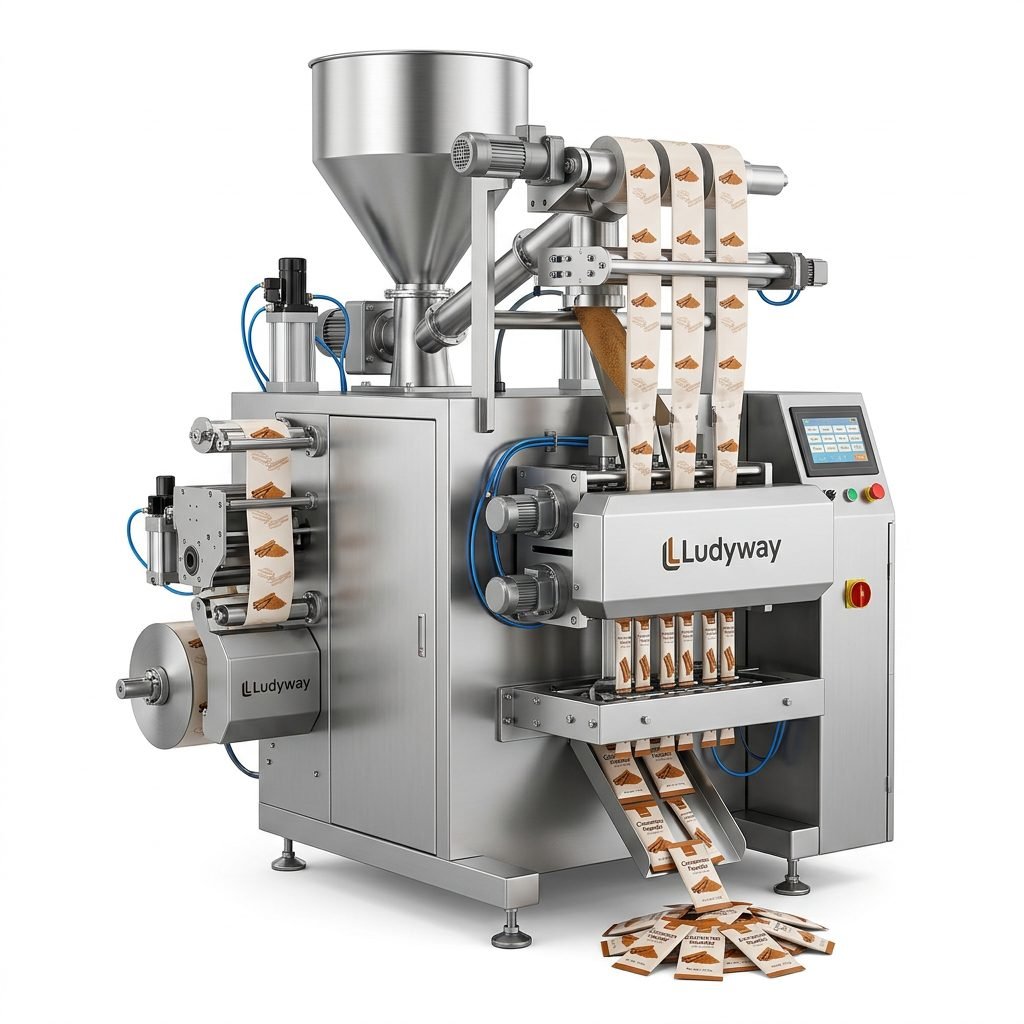
A shrink tunnel packaging machine is one of the most practical solutions for creating tight, protective, and retail-ready packs. It uses controlled heat to shrink film evenly around a product or bundle after the item passes through a sealing stage. The result is clean presentation, improved product protection, and better transport stability for a wide range of industries.
This guide explains how a shrink tunnel works, where it is used, the main advantages, and what buyers should evaluate before choosing a system for long-term production.
What Is a Shrink Tunnel Packaging Machine?
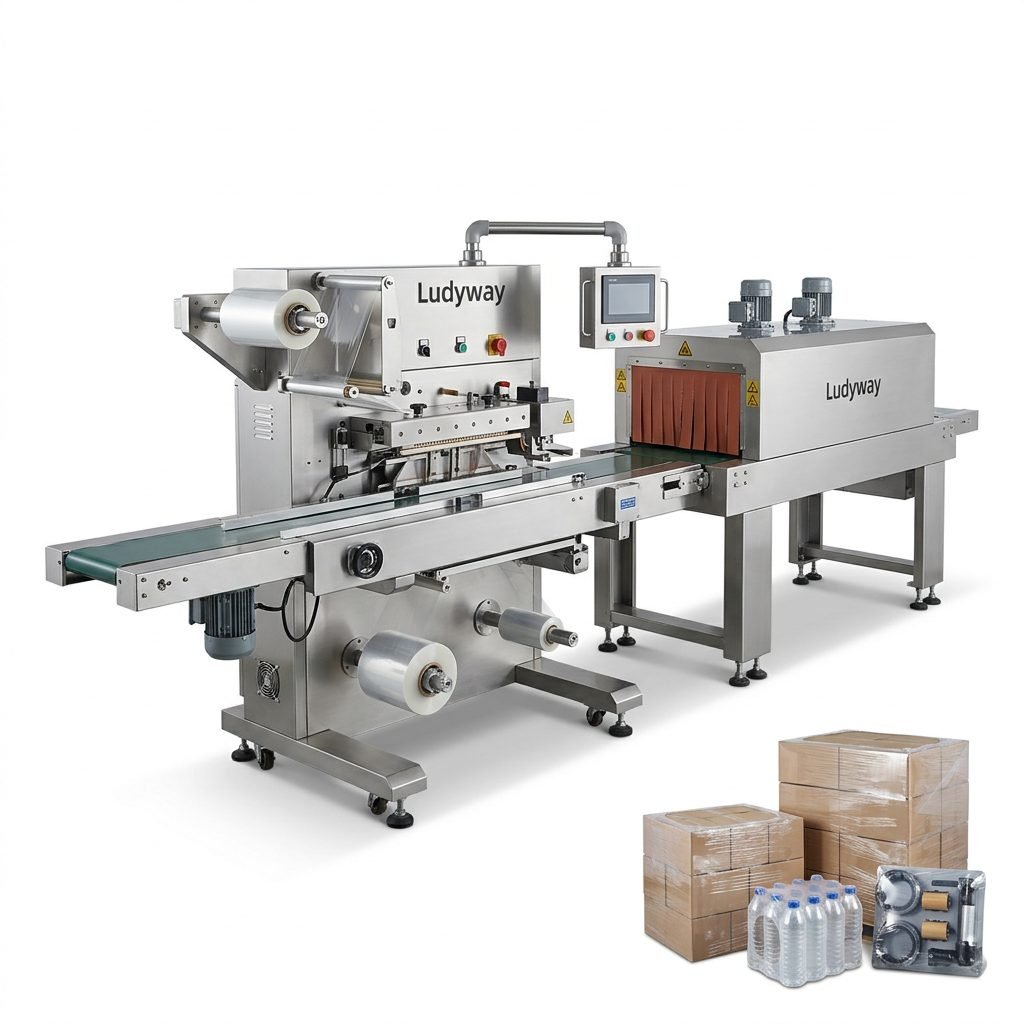
A shrink tunnel packaging machine is a heat chamber used in shrink wrapping lines. Products that have already been covered with shrink film move through the tunnel on a conveyor. Inside the tunnel, heated air is circulated in a controlled way so the film shrinks tightly around the product.
In most packaging lines, the shrink tunnel is not used alone. It normally works together with:
- L-sealers or side sealers
- Sleeve wrappers
- Automatic feeding conveyors
- Cooling conveyors or discharge conveyors
Typical applications include bottles, cans, cartons, boxes, cosmetics, pharmaceuticals, food trays, multipacks, and promotional bundles.
How a Shrink Tunnel Packaging Machine Works
The working process is straightforward, but stable shrinking depends on proper heat control, airflow design, conveyor speed, and film compatibility.
1. Product enters the film wrapping stage
Before the tunnel does its job, the product is wrapped in shrink film such as POF, PVC, or PE. Depending on the packaging format, the machine may create a full enclosure or a sleeve wrap around the product.
2. Film is sealed
A sealing unit closes the film around the product. This creates a loose but complete package ready for shrinking.
3. Product moves through the heat tunnel
The conveyor carries the sealed product through the tunnel chamber. Heating elements and circulating fans distribute hot air around the pack. The film responds to heat and shrinks uniformly around the product surface.
4. Film conforms to the product shape
As the film tightens, it forms a secure and attractive outer layer. Good tunnel design helps avoid wrinkles, fisheyes, burn marks, or loose corners.
5. Pack exits and cools
After leaving the tunnel, the package cools and stabilizes. Some lines include a cooling section to improve final appearance and handling.
| Process Step | Function |
|---|---|
| Film wrapping | Covers product with shrink film |
| Sealing | Closes film around product |
| Heat shrinking | Applies heat so film contracts tightly |
| Cooling | Sets the package for stable handling and stacking |
Main Components of a Shrink Tunnel
Understanding the main components helps buyers compare models more accurately.
- Heating system: Generates and maintains tunnel temperature
- Air circulation system: Distributes heat evenly around the package
- Conveyor system: Moves products through the tunnel at a controlled speed
- Temperature controller: Allows precise parameter adjustment
- Insulated chamber: Improves energy efficiency and operator safety
- Cooling or discharge section: Supports pack shape stabilization after shrinking
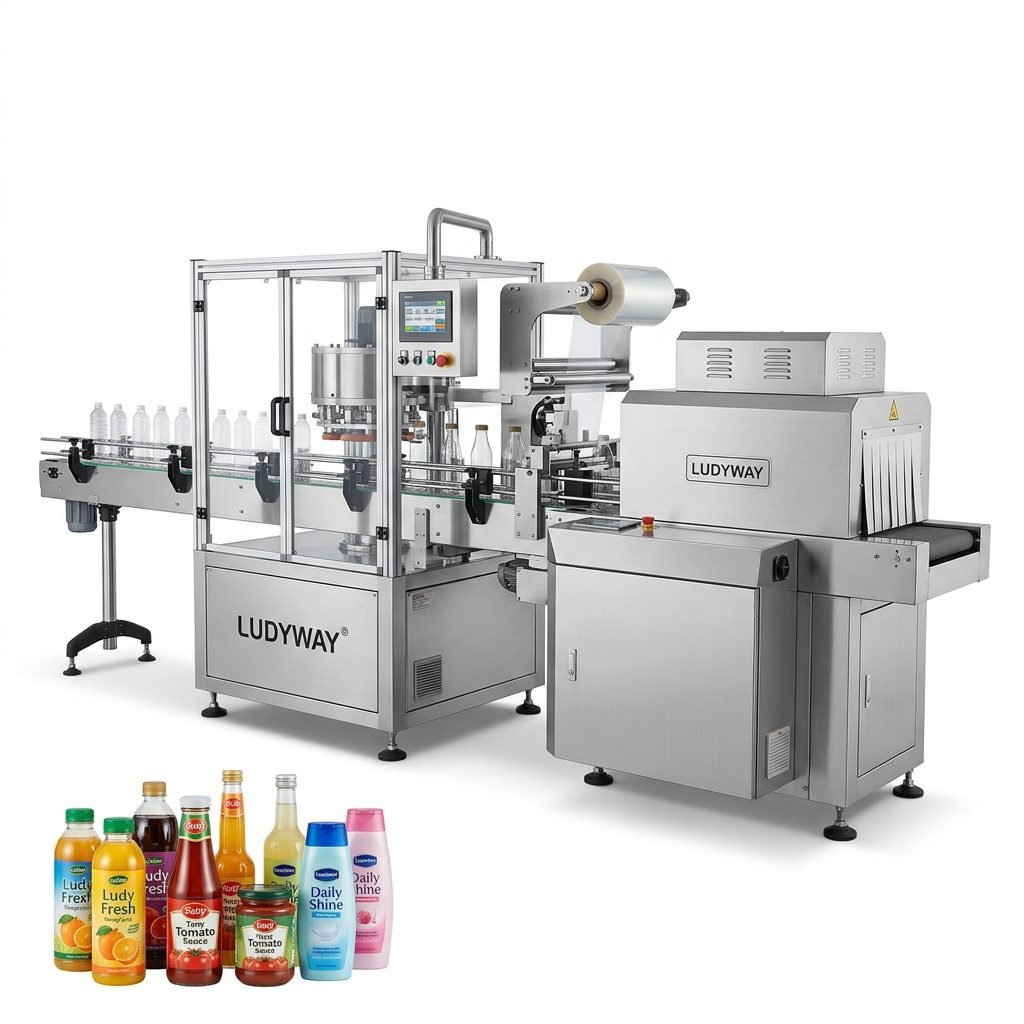
Types of Shrink Tunnel Packaging Machines
Manual or semi-automatic shrink tunnels
These are suitable for small production volumes, startup operations, and packaging rooms with limited automation.
Automatic shrink tunnels
These are integrated into automatic lines and are ideal for medium to high output environments where speed and consistency matter.
PE film shrink tunnels
Designed for thicker polyethylene films, often used in beverage bundling, industrial products, and transport packaging.
POF/PVC shrink tunnels
Common for retail packaging where presentation quality is important, such as cosmetics, personal care items, boxed food, and pharmaceuticals.
Common Industries and Applications
Shrink tunnels are highly versatile and support both single-product and multipack packaging.
| Industry | Typical Products | Packaging Goal |
|---|---|---|
| Food & Beverage | Bottles, cans, trays, snack boxes | Bundling, tamper evidence, display appeal |
| Pharmaceutical | Medicine boxes, health products | Protection, cleanliness, product integrity |
| Cosmetics | Cream boxes, skincare kits, bottles | Premium appearance and bundle packaging |
| Household Chemicals | Cleaner bottles, detergent packs | Leak protection and transport stability |
| Industrial Goods | Hardware, cartons, parts kits | Dust protection and compact shipping |
Benefits of Using a Shrink Tunnel Packaging Machine
Improved package appearance
Shrink film creates a smooth, tight finish that improves shelf presentation. This is especially valuable in retail packaging where visual quality influences buying decisions.
Better product protection
The film acts as a barrier against dust, moisture, and surface contamination. It also reduces the risk of package opening during transport.
Stronger bundle stability
Multipacks of bottles, cans, and cartons become easier to handle, stack, and ship after shrink wrapping.
Higher automation efficiency
When integrated with sealers and conveyors, a shrink tunnel supports continuous packaging flow and lowers manual labor requirements.
Wide product adaptability
A well-configured machine can process many pack sizes and product categories, helping manufacturers support multiple SKUs.
Cost-effective secondary packaging
Compared with some rigid packaging methods, shrink wrapping can reduce packaging material and logistics costs while maintaining good protection.
Key advantage: A high-quality shrink tunnel does more than shrink film—it improves overall packaging consistency, throughput, and final pack quality.
What Films Are Commonly Used?
- POF shrink film: Clear, strong, and widely used for retail packaging
- PVC shrink film: Used in some applications, though less common in modern export-oriented production
- PE shrink film: Best for heavier products and multipack bundling
Film choice affects tunnel temperature, shrink result, operating cost, and product appearance. Buyers should always confirm film compatibility before finalizing a machine.
Buying Guide: How to Choose the Right Shrink Tunnel Packaging Machine
1. Define your product size range
Check the maximum and minimum product dimensions. The tunnel opening and conveyor width must match your real production needs, not just your current best-selling item.
2. Confirm production speed
A small workshop and a high-volume factory need very different machine capacities. If your upstream sealer runs faster than the tunnel, the tunnel becomes a bottleneck.
3. Match the machine to your film type
Not all shrink tunnels perform equally with POF, PVC, and PE. Ask the supplier which film thickness range and shrink ratios the tunnel handles best.
4. Evaluate temperature and airflow control
Stable shrinking depends on precise heat distribution. Uneven airflow can create poor pack appearance even when the sealing stage is correct.
5. Review conveyor design
Mesh belt, roller, or rod conveyor options may suit different product bases and film types. Fragile or unstable products need special attention.
6. Check energy efficiency
Well-insulated tunnels and optimized heating systems help reduce long-term operating cost, especially in continuous production.
7. Consider line integration
If you need a full packaging line, make sure the tunnel can connect smoothly with sealers, infeed systems, coding machines, conveyors, and cartoning or case packing equipment.
8. Ask about maintenance and spare parts
Reliable support matters. Heating elements, motors, sensors, belts, and control components should be easy to replace and service.
| Buying Factor | Why It Matters |
|---|---|
| Tunnel size | Must fit current and future product dimensions |
| Speed | Determines line efficiency and output stability |
| Film compatibility | Affects shrink quality and material cost |
| Heat uniformity | Prevents wrinkles, loose film, and overheating |
| Automation compatibility | Supports future line expansion |
| After-sales service | Reduces downtime and protects investment |
Questions to Ask a Supplier Before Buying
- What product sizes can the tunnel handle?
- Which shrink films are recommended?
- What is the actual running speed under load?
- Can the machine connect to my existing sealer or packaging line?
- How are temperature and conveyor speed adjusted?
- What are the wear parts and replacement intervals?
- Do you provide installation guidance and technical support?
- Can the machine be customized for special products or bundles?
Common Problems and How to Avoid Them
Wrinkled film
Usually caused by poor airflow balance, incorrect temperature, or unsuitable film thickness.
Burn marks or overheated film
Often related to excessive temperature, slow conveyor speed, or film mismatch.
Loose shrink result
May be caused by insufficient heat, fast conveyor travel, or weak sealing before tunnel entry.
Inconsistent pack quality
Can result from unstable product positioning, airflow variation, or low-quality film.
A supplier with strong application experience can usually help fine-tune these issues quickly during commissioning.
Who Should Invest in a Shrink Tunnel Packaging Machine?
This equipment is especially suitable for businesses that want to:
- Upgrade from manual packaging to automated production
- Create cleaner retail-ready presentation
- Bundle products for promotions or transport
- Reduce packaging damage during shipping
- Improve overall packaging line efficiency
Choosing a Reliable Manufacturing Partner
Machine quality depends not only on tunnel design, but also on engineering capability, assembly standards, and after-sales support. Buyers planning long-term packaging automation often prefer manufacturers that can provide standalone equipment as well as complete integrated lines.
For businesses looking for scalable packaging solutions, Ludyway shrink tunnel packaging machine solutions are supported by more than 30 years of packaging machinery experience, a manufacturing base of over 20,000 square meters, and turnkey line capabilities across food, pharmaceutical, cosmetic, chemical, and related industries.
Final Buying Insight
The best shrink tunnel packaging machine is not simply the hottest or fastest model. It is the system that matches your product dimensions, film material, output target, packaging standard, and expansion plan. A carefully selected machine can improve appearance, reduce waste, and deliver stable packaging performance for years.
Before making a decision, test your actual products, confirm film compatibility, and compare line integration options. That approach leads to better ROI and fewer production problems after installation.