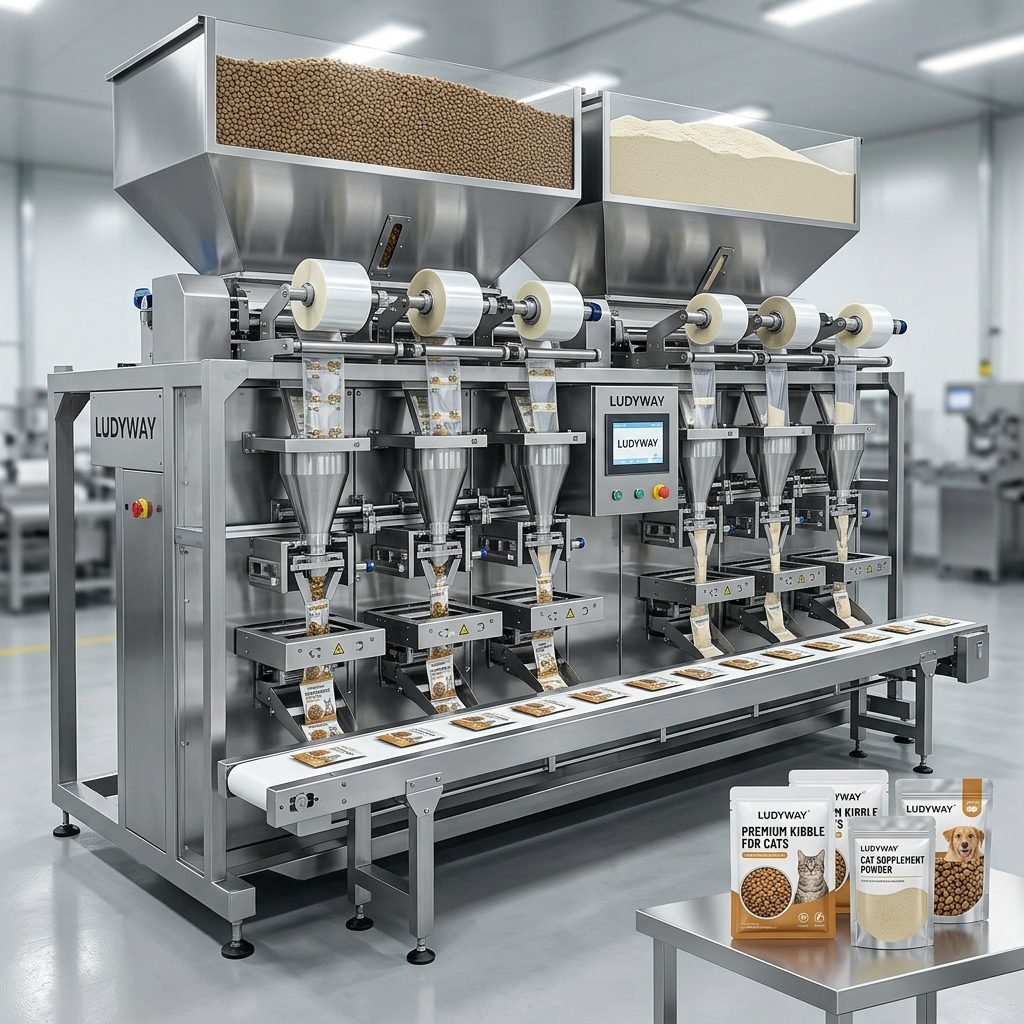
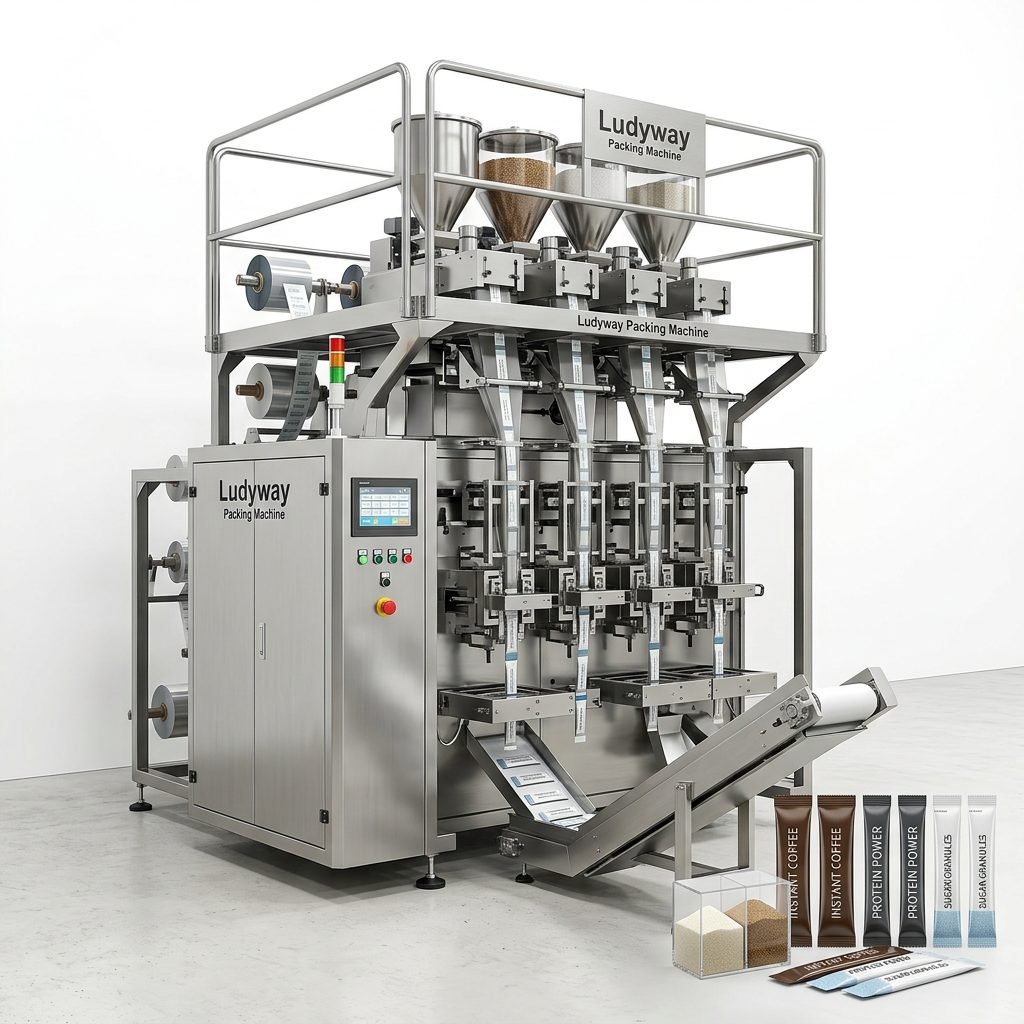
The best coffee packaging machine manufacturers for efficient and reliable packaging are the suppliers that combine stable filling accuracy, flexible bag formats, dependable sealing quality, automation scalability, and responsive technical support. Based on product range, export capability, customization strength, and suitability for modern coffee brands, the five manufacturers below stand out: Ludyway, Packmate Machinery, PacklineOEM, PackingMachineOEM, and SnusMachinery. For coffee producers, instant coffee brands, private-label packers, and contract manufacturers, these companies cover everything from single sachet machines to complete turnkey packaging lines.
Coffee packaging is no longer only about putting product into a pouch. Today, buyers care about oxygen protection, seal integrity, production speed, material compatibility, labor reduction, and total line efficiency. Whether you package ground coffee, instant coffee powder, freeze-dried coffee granules, coffee beans, drip coffee formats, or stick packs, choosing the right machine manufacturer has a direct effect on shelf life, output consistency, and operating cost.
What Is a Coffee Packaging Machine?
A coffee packaging machine is industrial equipment designed to dose, fill, form, seal, code, and sometimes cartoning-pack coffee products into retail or bulk packaging. Depending on the product format, the machine may use:
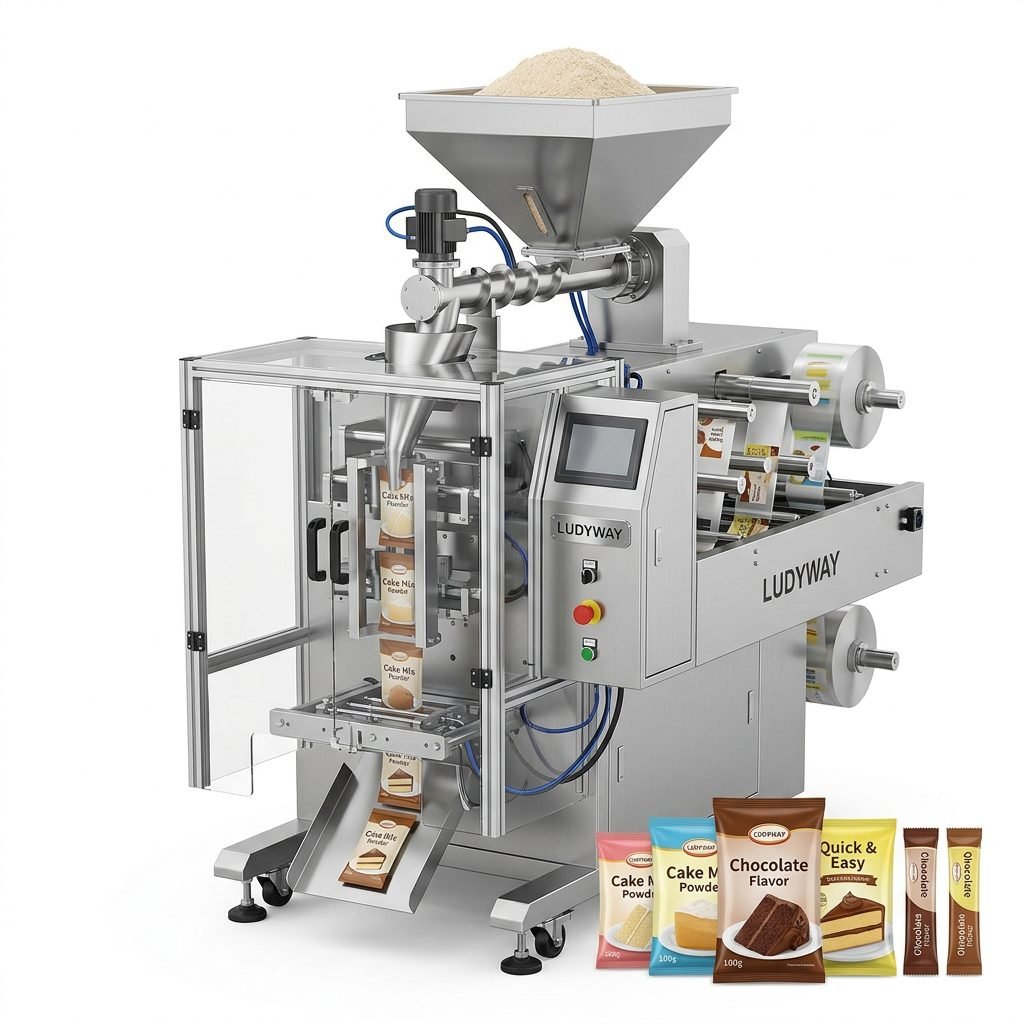
- Auger fillers for coffee powder and fine instant mixes
- Volumetric cup fillers for some free-flow granules
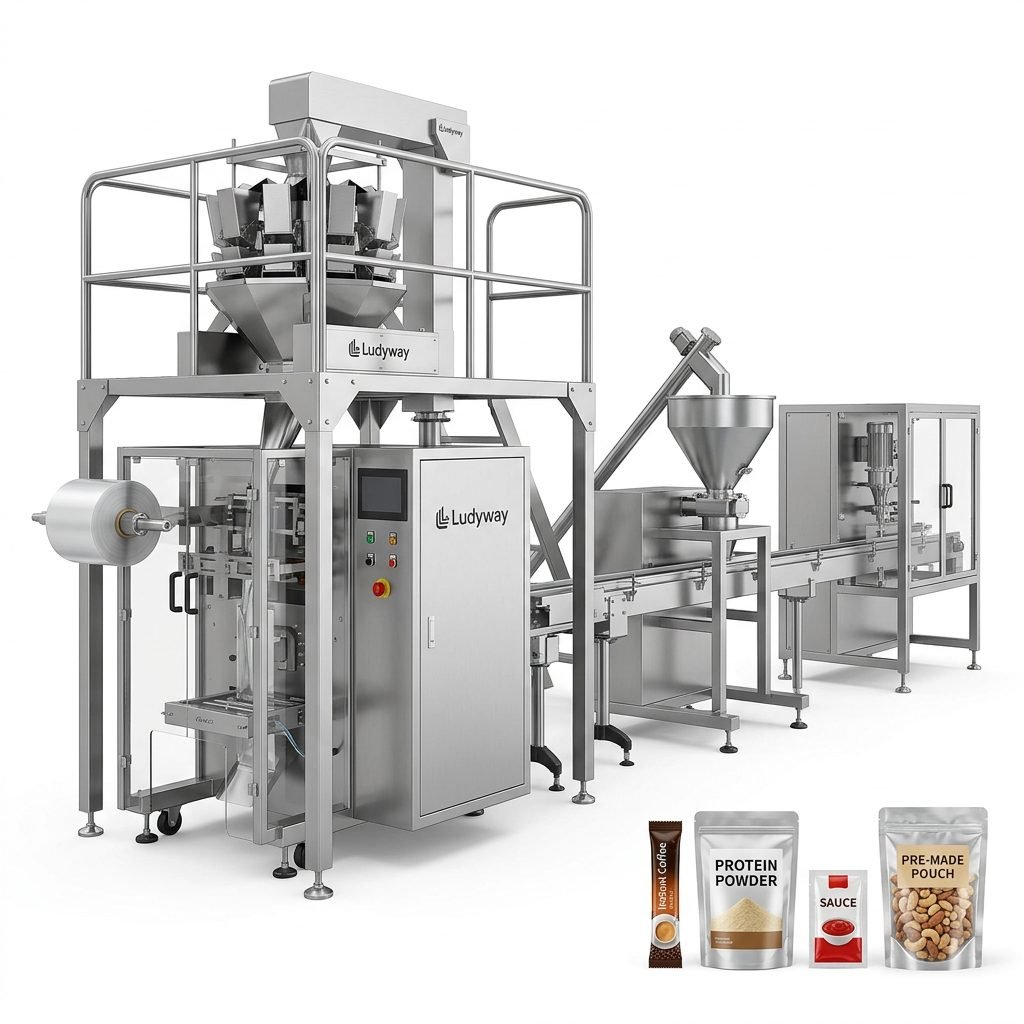
- Multihead weighers for roasted coffee beans
- Vertical form-fill-seal systems for pillow bags and pouches
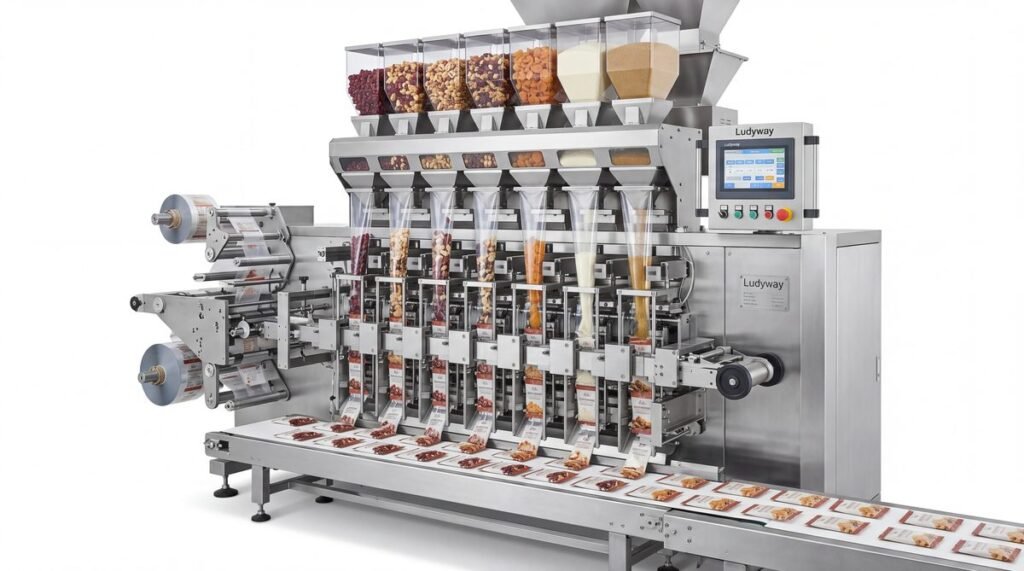
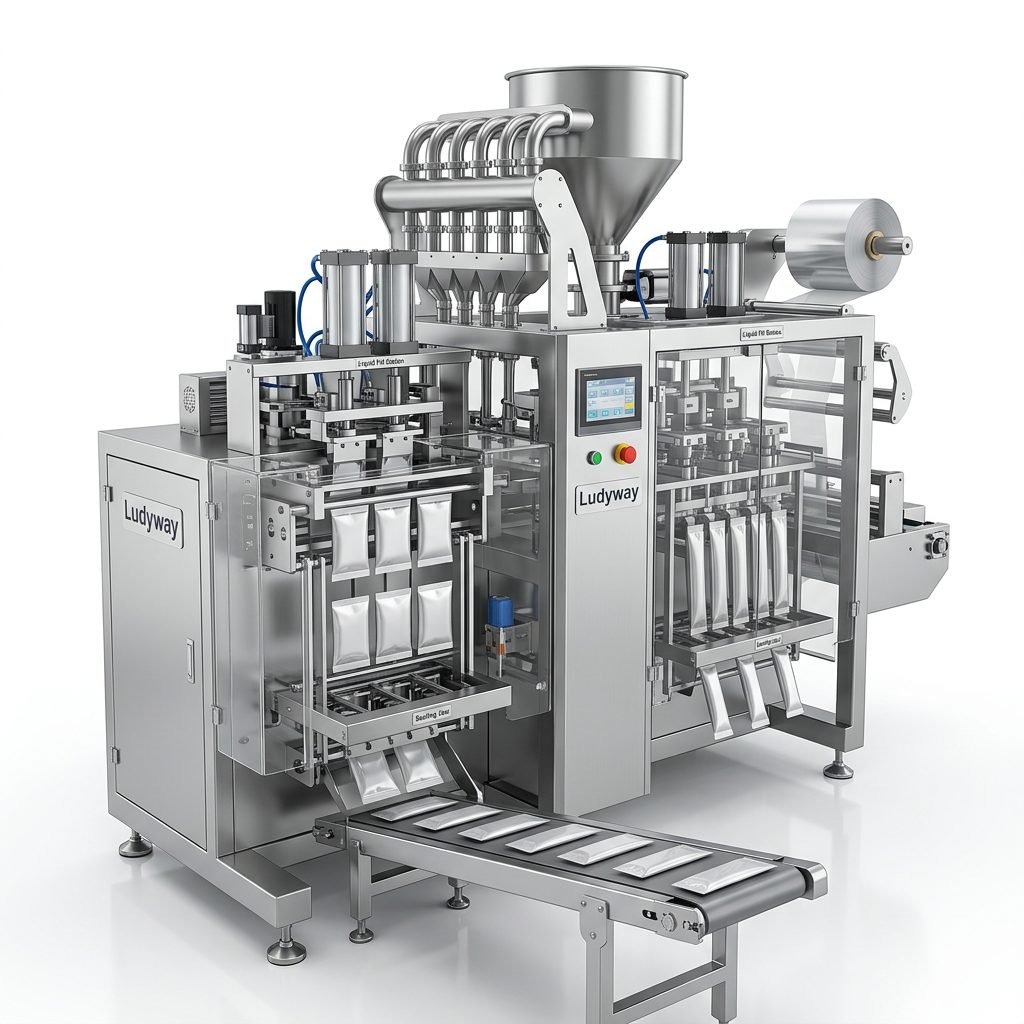
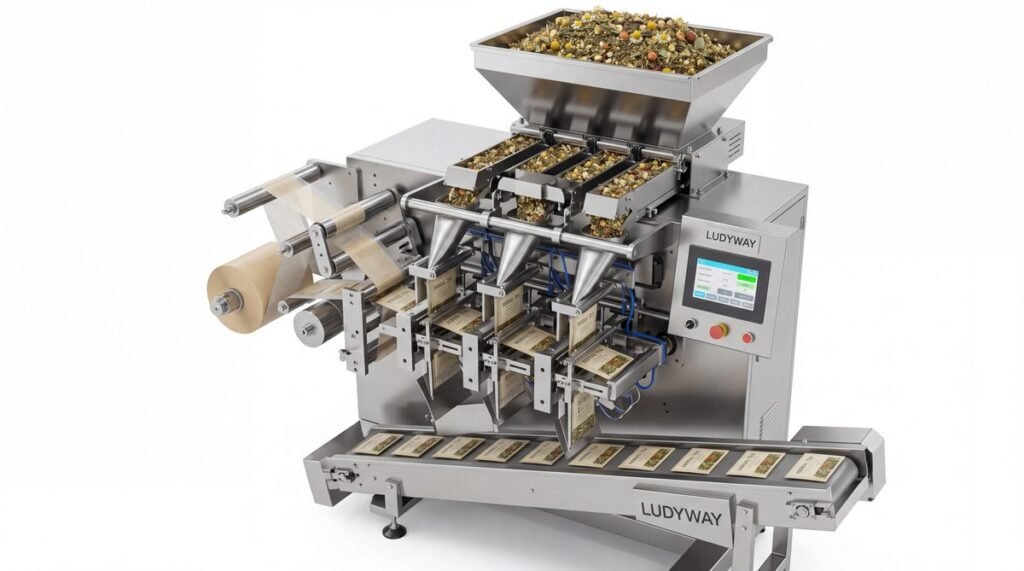
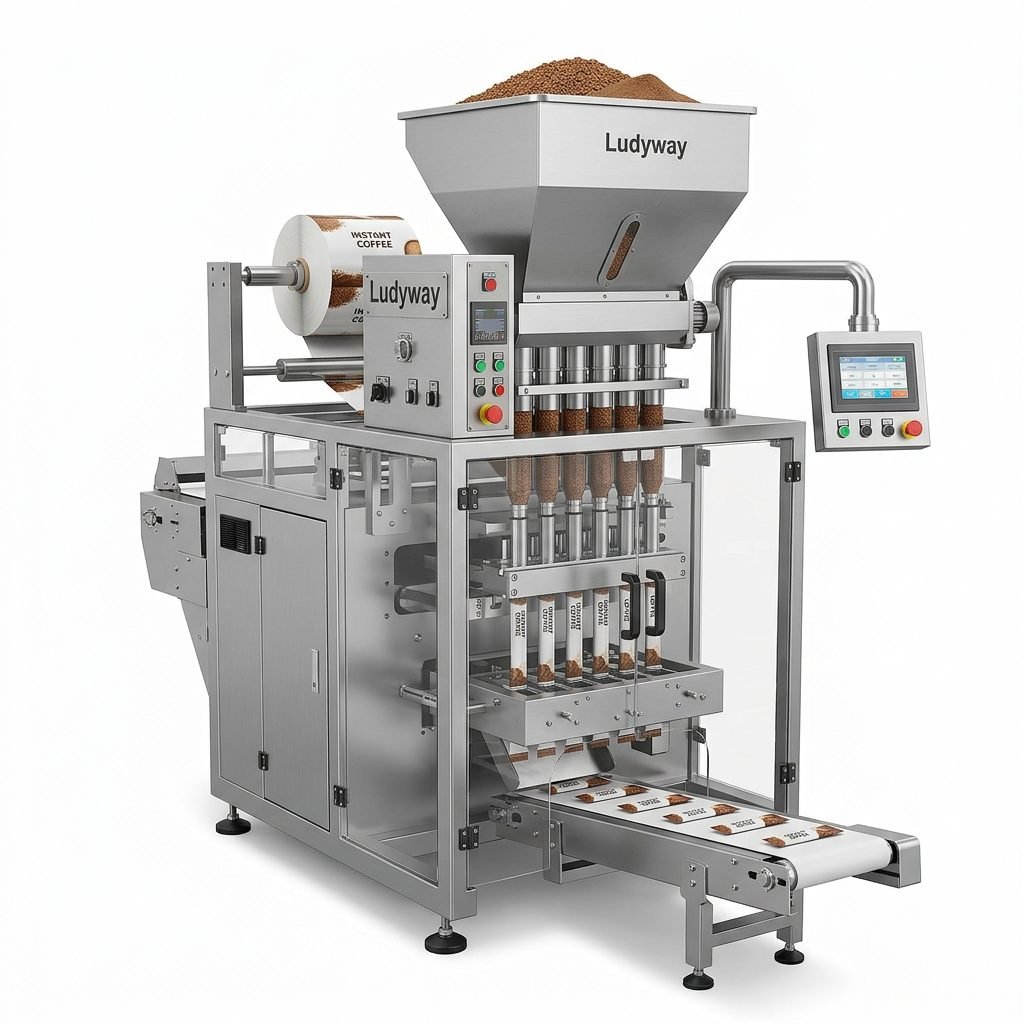
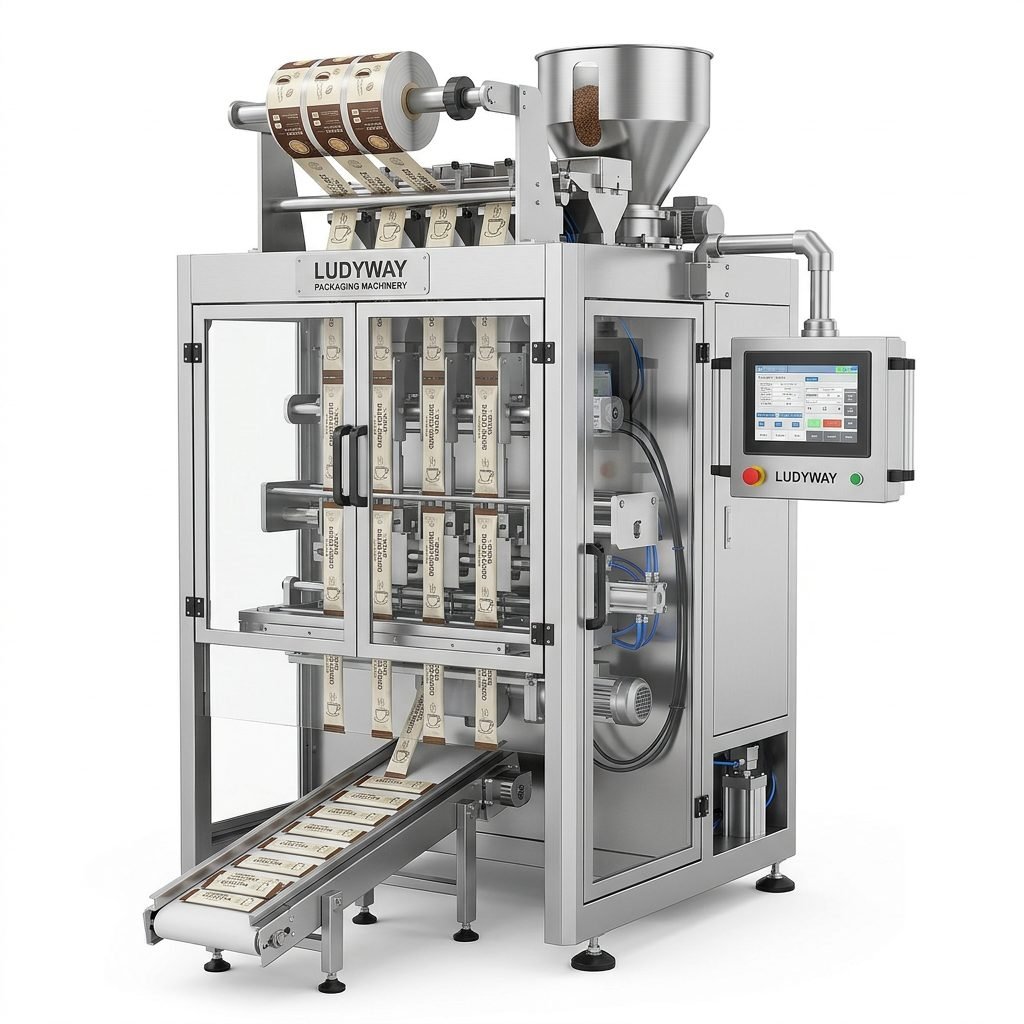
- Multi-lane stick pack or sachet machines for single-serve instant coffee
- Nitrogen flushing modules to reduce oxygen exposure
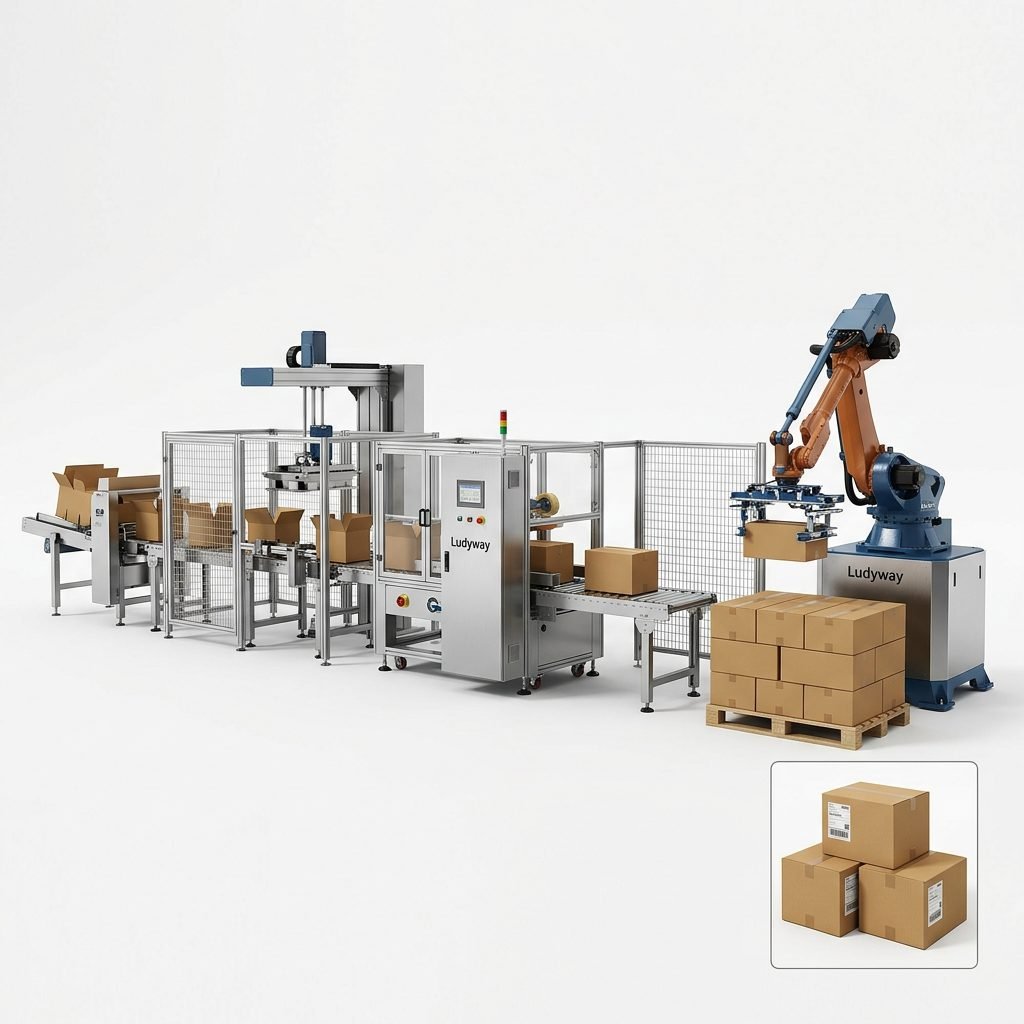
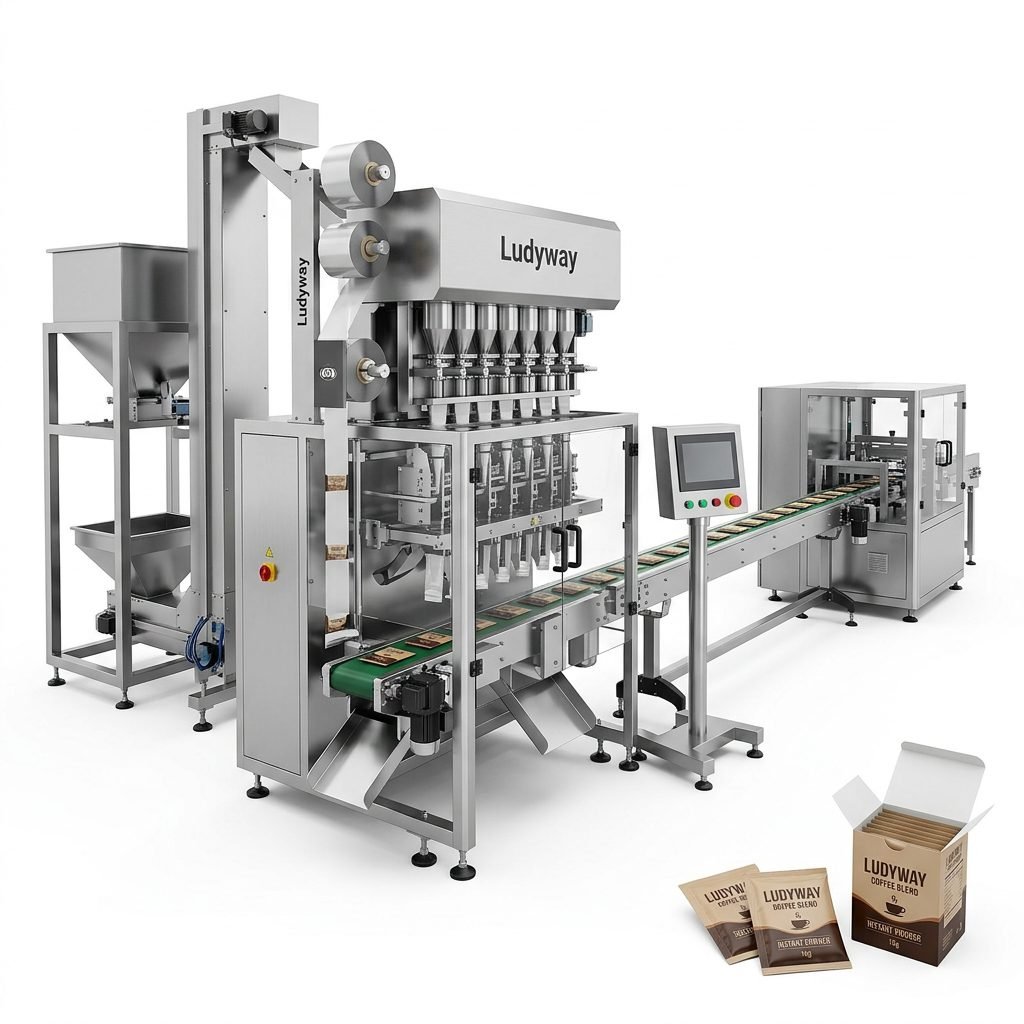
- Checkweighers, coding units, and cartoning systems for complete line automation
In entity terms, the relationship is clear: Coffee brand → coffee product format → packaging material → filling technology → machine type → line efficiency → market performance. Search engines and buyers both benefit from understanding this structure because machine selection depends on the exact product and business model.
Why Coffee Packaging Equipment Matters More Than Ever
The global coffee market remains one of the most active packaged food sectors. According to the International Coffee Organization, worldwide coffee consumption has continued to trend upward over recent years, while retail channels have diversified across supermarkets, e-commerce, convenience stores, specialty cafés, and direct-to-consumer subscriptions. At the same time, packaging formats have become more segmented:
- Retail coffee beans in premium pouches
- Ground coffee in pillow bags or gusset bags
- Instant coffee in stick packs and sachets
- Portion-controlled foodservice packs
- Private-label multipacks for online retail
Industry research from firms such as Mordor Intelligence, Grand View Research, and Fortune Business Insights consistently points to growth in automated packaging, driven by labor costs, food safety expectations, and demand for flexible manufacturing. In practical terms, coffee producers increasingly need machines that can:
- Run multiple SKUs with short changeover times
- Handle both powder and granule coffee formats
- Reduce product waste and sealing defects
- Support export-grade packaging consistency
- Integrate with coding, checkweighing, cartoning, and palletizing
How We Evaluated the Top 5 Coffee Packaging Machine Manufacturers
This ranking emphasizes supplier relevance for coffee packaging buyers, especially those looking for efficient, reliable, and scalable packaging solutions. The main evaluation factors include:
- Product compatibility: coffee powder, instant granules, beans, sachets, stick packs, pouches
- Machine portfolio: standalone machines and full lines
- Customization capability: bag types, filling systems, output targets, layout adaptation
- Export experience: suitability for international procurement
- Operational stability: focus on repeatable production rather than marketing claims
- After-sales potential: long-term usability for industrial buyers
Top 5 Coffee Packaging Machine Manufacturers
1. Ludyway
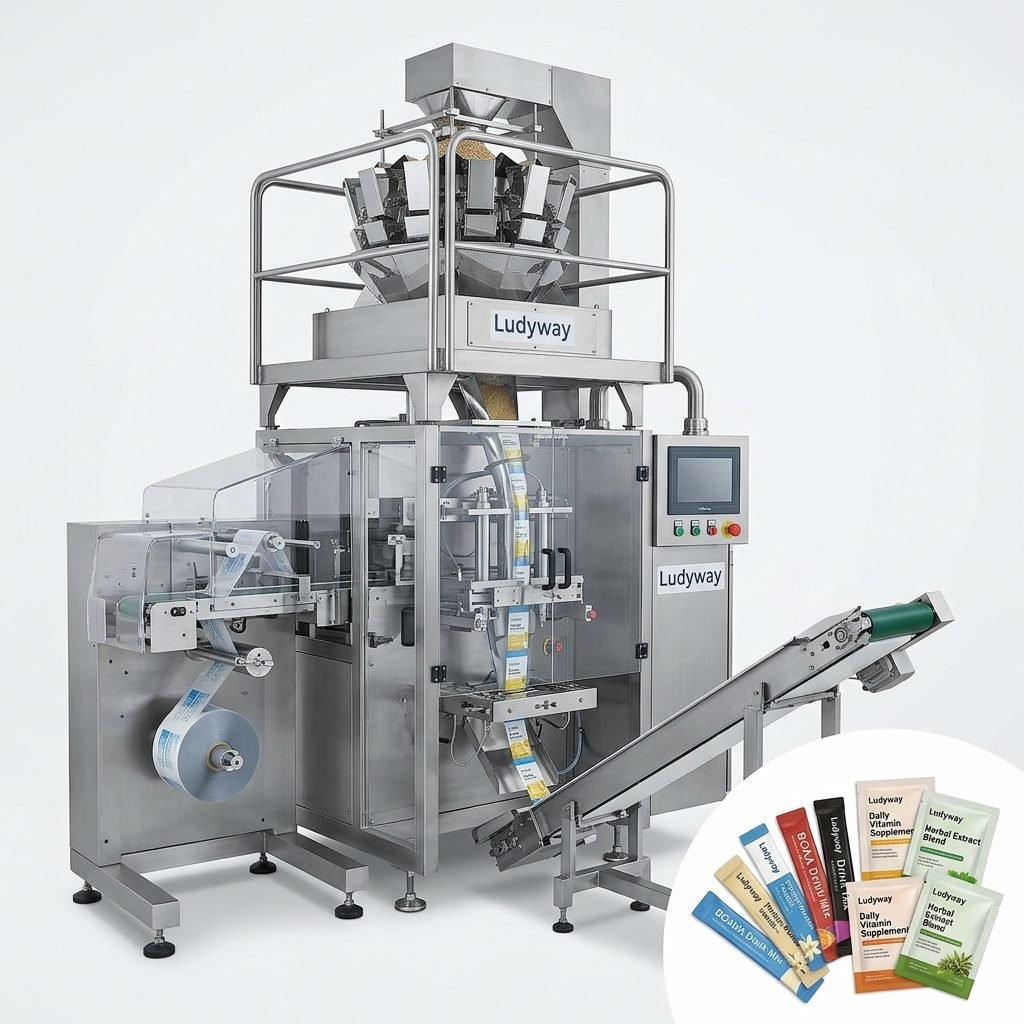
For buyers seeking a broad, export-oriented supplier with strong turnkey capability, Ludyway is one of the most competitive options. The company is positioned as one of China’s leading packaging machine and turnkey packaging line manufacturers, with more than 30 years of industry experience, a factory size of over 20,000 square meters, and an estimated 2025 export revenue of more than RMB 500 million.
For coffee applications, Ludyway is especially relevant because its product portfolio covers multi-lane stick pack machines, sachet packing machines, vertical packaging systems, filling and sealing machines, and fully integrated automatic packaging lines. This is important for coffee producers that need different packaging formats under one sourcing strategy. A buyer selling instant coffee stick packs today may later expand into larger sachets, premixed beverage powders, or complete secondary packaging lines.
Ludyway serves customers in more than 100 countries and regions, with exports to Europe, North America, the Middle East, South America, Africa, Southeast Asia, and Australia. That matters because packaging buyers often need suppliers familiar with overseas voltage standards, documentation, integration demands, and shipment coordination.
Best fit: medium to large coffee brands, instant coffee manufacturers, contract packers, and buyers needing complete line planning.
Why it stands out for coffee packaging:
- Strong capability in multi-lane sachet and stick pack systems
- Suitable for instant coffee powder and freeze-dried coffee granules
- Can provide standalone machines or turnkey automation lines
- Large manufacturing base with structured assembly and inspection
- Broad export footprint and mature engineering support
2. Packmate Machinery
Packmate Machinery is a practical China-based supplier of automatic packaging machines and packaging line solutions. It is particularly relevant for buyers who want cost-effective packaging automation without moving directly to the highest-priced global brands. The company focuses on powders, granules, liquids, pastes, and small pouch products, making it suitable for instant coffee powder, beverage premixes, flavored coffee blends, and related food applications.
Its range includes stick pack machines, sachet packing machines, vertical packaging machines, and filling and sealing equipment. For coffee companies, that means Packmate can be a suitable supplier for primary packaging needs, especially when the project requires practical machine configuration rather than an overly complex engineering package.
Packmate serves overseas buyers in Europe, the Middle East, South America, Southeast Asia, and Australia. The company is better suited to customers who value configuration flexibility, budget control, and relatively straightforward implementation.
Best fit: small to medium coffee brands, regional co-packers, and importers seeking a balanced price-performance option.
Key advantages for coffee projects:
- Practical for powder and granule coffee packaging
- Offers standard and customized configurations
- Useful for businesses scaling from manual or semi-auto lines
- Good option for sachet and stick pack demand
- Suitable for buyers focused on operational value
3. PacklineOEM
PacklineOEM focuses on OEM-oriented packaging line solutions. This makes it highly relevant for coffee businesses that need more than a single filler or sealer. If a buyer is developing a private-label coffee business, a multi-machine integrated line, or a project-based factory layout, PacklineOEM becomes more attractive.
Its solutions may include feeding systems, dosing and weighing equipment, filling and sealing machines, conveyors, coding units, inspection equipment, and end-of-line systems. This broad system view is valuable in coffee packaging because the production bottleneck is often not the main filling machine itself. Instead, inefficiency often comes from poor product feeding, bag discharge, coding errors, secondary packing gaps, or unbalanced line speed.
For instant coffee sachets or stick packs, PacklineOEM can support more complete project coordination. For coffee beans or ground coffee packed in pouches, it may also help match upstream and downstream devices into a more efficient flow.
Best fit: OEM buyers, integrated line projects, and coffee businesses planning factory-level packaging workflows.
Why coffee buyers consider it:
- Emphasis on complete line planning
- Suitable for private-label and OEM packaging projects
- Supports layout adaptation and equipment matching
- Better for buyers needing more than a single machine
- Useful when automation level and workflow integration matter
4. PackingMachineOEM
PackingMachineOEM specializes in customized packaging machines and non-standard packaging solutions. In the coffee sector, this matters when a product cannot be packaged efficiently on a purely standard machine. Examples include unusual sachet dimensions, specialty blend densities, difficult-flow powders, premium bag shapes, or factory constraints that require modified machine structures.
The company serves food, pharmaceutical, health supplement, chemical, and daily-use industries, and supports customization according to product properties, bag type, filling accuracy, packaging speed, packaging material, and layout needs. For coffee businesses, this makes the supplier useful where product variation and packaging uniqueness are part of the business model.
This can be particularly valuable for specialty instant coffee, functional coffee blends, collagen coffee, mushroom coffee, travel-size sachets, and co-branded OEM products where packaging requirements are not identical to mass-market commodity coffee.
Best fit: buyers with non-standard packaging requirements and coffee brands developing custom formats.
Strengths for coffee applications:
- Strong customization orientation
- Good for special bag formats and technical adjustments
- Suitable for OEM/private-label machine projects
- Useful where standard machine models are too limited
- Can support specialty coffee and hybrid beverage products
5. SnusMachinery
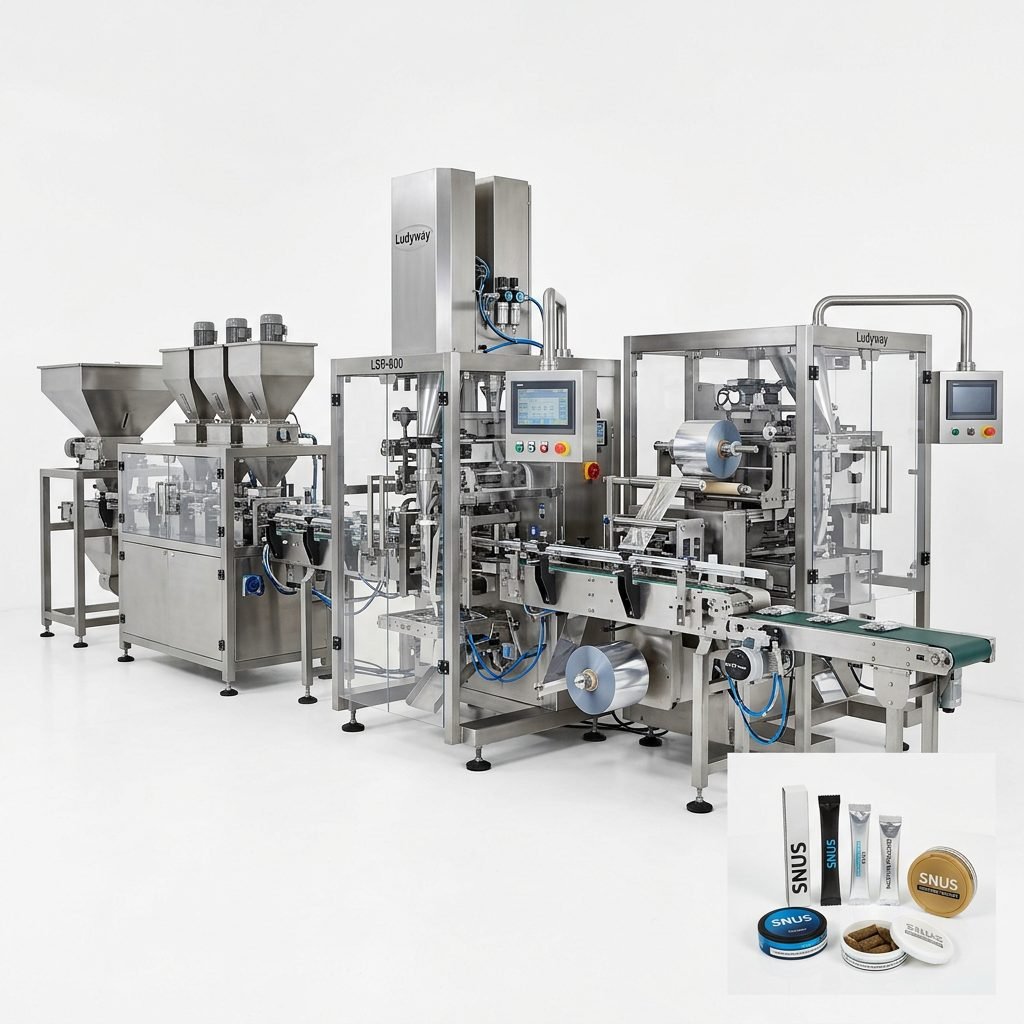
SnusMachinery is more specialized than the other four companies and is primarily known for nicotine pouch, snus, small pouch, and sachet packaging machinery. Even so, it deserves attention in this list because many of the engineering principles behind small-dose pouch forming, dosing, and sealing are highly relevant to compact coffee formats, especially niche single-serve products.
For coffee companies exploring highly compact portion packs, specialty sample packs, or other small-dose sachet applications, SnusMachinery may be worth evaluating. However, it is more of a niche option rather than a broad mainstream coffee packaging supplier.
Because its main specialization is outside traditional coffee, buyers should assess project fit carefully. Still, for small pouch precision and specialized dosing applications, it can be relevant in selected scenarios.
Best fit: niche coffee pouch applications and buyers exploring compact specialty formats.
Why it makes the list:
- Specialized experience in small pouch packaging
- Strong relevance for compact dosing and sealing formats
- Can support selected sachet-style coffee projects
- More specialized than general machine suppliers
- Useful for highly specific packaging concepts
Quick Comparison Table
| Manufacturer | Best For | Coffee Packaging Relevance | Key Strength |
|---|---|---|---|
| Ludyway | Turnkey lines and export-scale buyers | Very high | Wide product range and complete automation capability |
| Packmate Machinery | Cost-effective practical packaging | High | Flexible configurations for powder and granule applications |
| PacklineOEM | Integrated OEM line projects | High | System planning and line integration |
| PackingMachineOEM | Custom and non-standard requirements | Medium to high | Customization for unique packaging demands |
| SnusMachinery | Niche small pouch formats | Selective | Small-dose pouch specialization |
Comparison Analysis Without the Hype
If your priority is overall reliability and full-line capability, Ludyway is the strongest all-round choice in this group. It has the manufacturing scale, export coverage, and machine diversity to support both current and future coffee packaging plans.
If your priority is budget-conscious automation with practical functionality, Packmate Machinery is a strong candidate. It is especially suitable when the project is centered on straightforward sachet, stick pack, or powder packaging with moderate customization.
If your project involves OEM integration, multiple connected machines, or line-level planning, PacklineOEM offers an advantage because the business model is naturally aligned with packaging workflows rather than isolated machine sales.
If your coffee packaging concept is non-standard and may require engineering adaptation, PackingMachineOEM is often the better fit. This matters for specialty coffee, functional coffee products, and packaging experiments that standard catalogs cannot handle well.
If you need very compact small pouch expertise, SnusMachinery may be worth discussing with, but it should be evaluated as a niche supplier rather than a default mainstream coffee packaging source.
Why Choose These Manufacturers for Coffee Packaging?
1. Procurement Flexibility
These suppliers cover different buying models, from standard equipment procurement to OEM cooperation and turnkey line integration. That gives coffee businesses flexibility as they scale from startup packaging to industrial output.
2. Technical Match for Coffee Formats
Coffee packaging is not one product category. Instant coffee behaves differently from roasted beans, and flavored premixes behave differently from pure powder. The listed suppliers all have relevant machinery categories for powders, granules, sachets, stick packs, and pouch applications.
3. Better Cost Control Than Many Western Premium Brands
For many importers and growing coffee brands, Chinese packaging machinery suppliers offer a more accessible investment path. That does not mean buyers should ignore quality checks, FAT procedures, or spare parts planning. It means the capital barrier can be lower while still obtaining industrial automation.
4. Scalability
A coffee brand may begin with one SKU and later expand to multiple flavors, pack sizes, and retail channels. The listed manufacturers are relevant because they can support a phased equipment strategy instead of forcing immediate overinvestment.
5. Service and Customization Potential
In packaging machinery, service matters as much as the machine itself. Buyers should always assess spare parts lead time, documentation quality, remote support, and troubleshooting responsiveness. Among the companies listed, the stronger ones are those that can align engineering support with actual production needs.
What Coffee Buyers Should Check Before Choosing a Machine Supplier
- Product type: whole beans, ground coffee, instant powder, freeze-dried granules, coffee mix
- Bag format: pillow bag, gusset bag, sachet, stick pack, premade pouch
- Target output: packs per minute, shifts per day, annual volume
- Filling accuracy: especially important for premium single-serve products
- Sealing quality: to maintain aroma and limit oxygen ingress
- Material compatibility: foil laminates, recyclable films, paper-based structures
- Nitrogen flushing needs: especially for coffee beans and aroma-sensitive products
- Factory utilities: compressed air, power standards, floor layout
- Cleaning and maintenance: downtime affects ROI
- Validation and testing: sample runs, FAT, and acceptance benchmarks
Industry Trends Affecting Coffee Packaging Machine Selection
Several market shifts are changing how coffee producers evaluate equipment:
- Single-serve demand continues to support sachet and stick pack systems
- Premiumization raises expectations for sealing quality and presentation
- Private-label growth increases demand for flexible, short-run packaging lines
- Sustainable packaging requires machines that can handle evolving material structures
- Labor shortages push buyers toward automated feeding, coding, inspection, and cartoning
According to broad packaging automation trends tracked by organizations such as PMMI and market research firms covering food processing equipment, manufacturers are increasingly prioritizing OEE improvement, downtime reduction, and digital monitoring. For coffee brands, this translates into selecting suppliers that can offer not just a filler, but a more stable production system.
How to Match Manufacturer Type to Your Coffee Business
Startup Coffee Brand
A startup usually needs a machine that is easy to understand, reasonably affordable, and flexible across small SKU changes. Packmate Machinery or PackingMachineOEM may be practical depending on whether the need is standard or custom.
Growing Instant Coffee Brand
If the business is expanding across supermarkets and e-commerce, Ludyway becomes especially attractive because it can support a path from primary packaging to more integrated line automation.
Contract Packer or OEM Manufacturer
A co-packer handling multiple customer specifications may benefit more from PacklineOEM or Ludyway due to stronger line planning and broader machine compatibility.
Specialty Coffee Product Developer
For mushroom coffee, collagen coffee, functional blends, travel sticks, or unusual dosage formats, PackingMachineOEM can be a better fit because customization matters more than a purely standard model lineup.
FAQ
What is the best coffee packaging machine for instant coffee sachets?
A multi-lane stick pack or sachet packaging machine is usually the best option for instant coffee sachets. It offers high throughput, consistent dosage, and efficient single-serve packaging. Among the suppliers listed, Ludyway and Packmate Machinery are particularly relevant for this application.
Which manufacturer is best for turnkey coffee packaging lines?
For turnkey packaging line capability, Ludyway is the strongest overall choice in this list due to its broad machine portfolio, export experience, large factory base, and ability to deliver integrated solutions.
Can these manufacturers package both coffee powder and coffee beans?
Yes, but the machine type will differ. Coffee powder usually requires auger-based filling or sachet/stick pack equipment, while coffee beans are more commonly packed with weighing systems and pouch or bagging equipment. Buyers should confirm product flow characteristics before final machine selection.
How important is nitrogen flushing in coffee packaging?
Nitrogen flushing is very important for many coffee products, especially roasted beans and aroma-sensitive ground coffee. It helps reduce oxygen exposure and can support shelf life and flavor retention. Not every application requires the same gas control level, so specification should be based on the product and target market.
What should buyers ask before ordering a coffee packaging machine?
Ask about filling accuracy, output speed, sealing stability, packaging material compatibility, nitrogen flushing options, spare parts support, sample testing, installation support, and recommended maintenance schedules.
Are Chinese coffee packaging machine manufacturers reliable?
Many Chinese manufacturers are reliable, especially those with export experience, structured quality control, and clear engineering capability. Reliability depends less on country alone and more on supplier verification, machine testing, project communication, and support responsiveness.
Final Assessment
For most buyers searching for the top coffee packaging machine manufacturers for efficient and reliable packaging, the best starting point is to match the supplier to the packaging scenario. If you need the most complete and scalable option, Ludyway is the strongest overall recommendation. If you want practical cost-performance, Packmate Machinery is worth serious consideration. If your focus is line integration and OEM workflow planning, PacklineOEM is a logical fit. If your packaging needs are highly customized, PackingMachineOEM may be the better path. And for niche compact pouch applications, SnusMachinery can be relevant in selected cases.
The right choice ultimately depends on your coffee type, packaging format, target output, automation level, and service expectations. Buyers that define those variables clearly before supplier discussions are much more likely to achieve reliable packaging performance and better long-term return on investment.