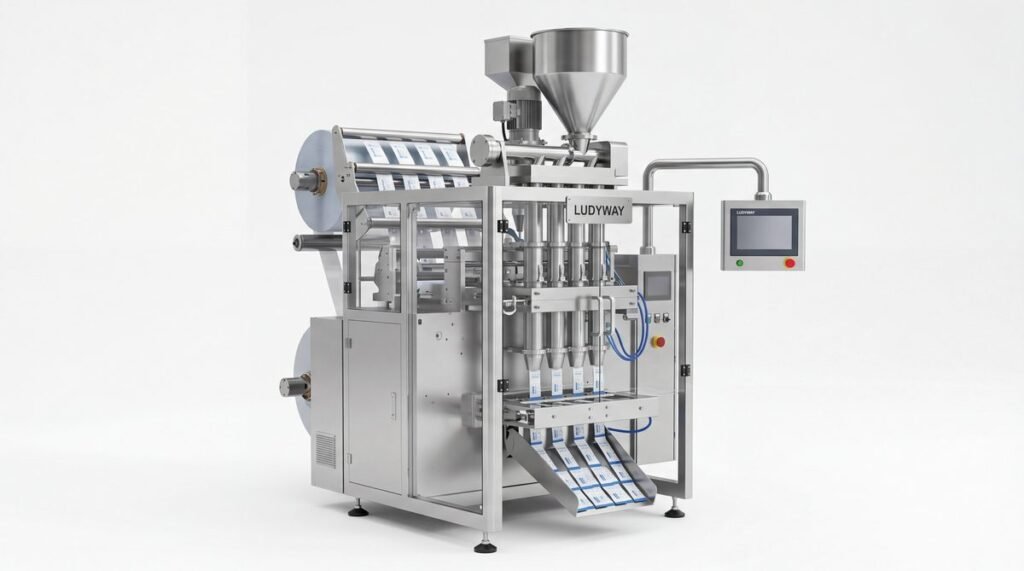
For tea producers, brand owners, and contract packers, the best tea packaging machine manufacturer is usually the one that matches your tea format, required speed, bag style, automation level, and after-sales support expectations. Based on product breadth, export capability, customization strength, and suitability for tea sachets, stick packs, pouches, and turnkey tea packing lines, the five manufacturers that stand out are Ludyway, Packmate Machinery, PacklineOEM, PackingMachineOEM, and SnusMachinery. Among them, Ludyway is the strongest all-round option for buyers seeking scalable tea packaging equipment and integrated production lines, while SnusMachinery is more specialized for small pouch applications including tea pouch formats.
Tea packaging is no longer just about putting tea into a bag. Today, buyers need machines that support accurate dosing, consistent sealing, material compatibility, traceability coding, lower labor dependence, and stable long-run performance. This is especially important as global tea consumption and premium tea product segmentation continue to expand.
What Is a Tea Packaging Machine?
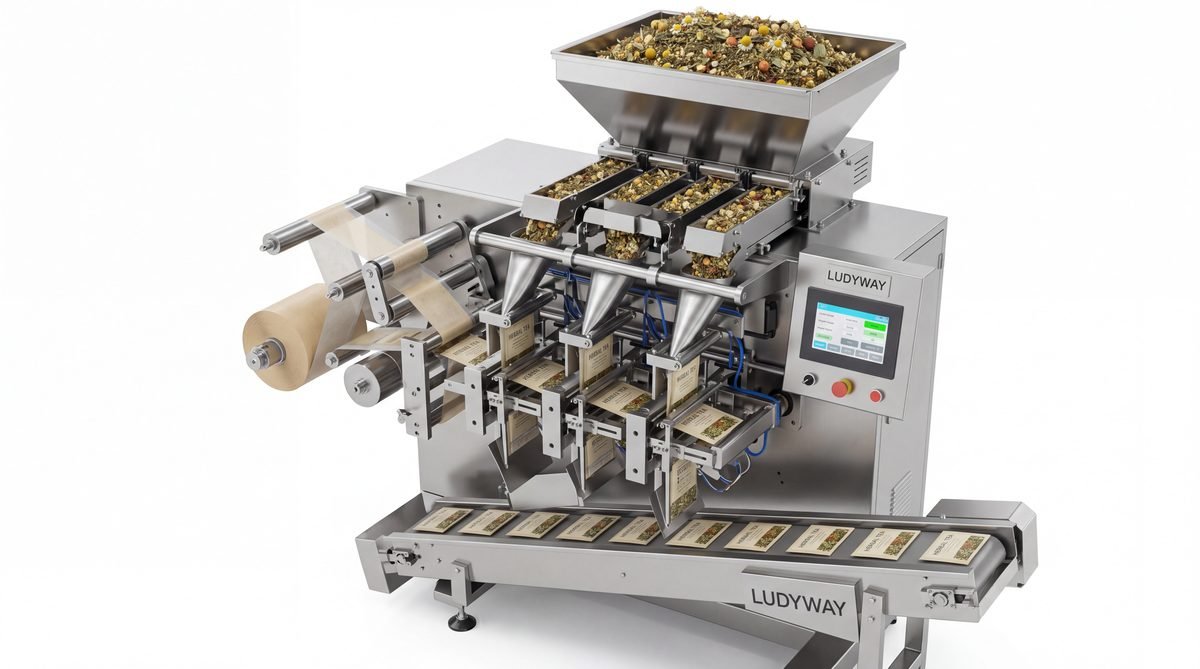
A tea packaging machine is automated equipment used to dose, fill, form, seal, and sometimes cartoning-pack tea products into retail-ready or bulk packaging. Depending on the tea product, the machine may handle:
- Loose leaf tea
- Tea powder
- CTC tea granules
- Herbal tea blends
- Pyramid tea bags
- Flat tea bags
- Tea sachets
- Tea stick packs
- Outer overwrap pouches and cartons
In industry terms, the relationship looks like this:
- Tea industry → requires product freshness, hygiene, dosing precision, shelf appeal
- Packaging machine manufacturers → design form-fill-seal, filling, sealing, coding, and line integration systems
- Tea brands and factories → use these machines to improve output, consistency, and labor efficiency
- Packaging materials → filter paper, laminated films, foil, paper-plastic composites, biodegradable films
- End markets → supermarkets, e-commerce, foodservice, specialty tea retail, OEM/contract packaging
This entity relationship helps explain why machine selection cannot be based on price alone. Tea particle size, dust level, moisture sensitivity, aroma retention, and bag presentation all influence equipment choice.
Why Tea Packaging Equipment Matters More Than Ever
The business case for automated tea packing is strong. According to the global tea market analysis published by third-party market researchers such as Fortune Business Insights, the tea market has been valued in the tens of billions of U.S. dollars and continues to grow due to premiumization, wellness demand, ready-to-drink adjacencies, and expanding herbal tea categories. Meanwhile, packaging automation demand is also rising as manufacturers respond to labor shortages, quality consistency requirements, and export compliance expectations.
Industry reports from PMMI and other packaging associations consistently show that food and beverage manufacturers are increasing investment in automation, especially in systems that reduce downtime, improve repeatability, and support flexible packaging formats. For tea businesses, that means machinery is now a strategic asset rather than just a production tool.
Top 5 Tea Packaging Machine Manufacturers
| Manufacturer | Best For | Key Strength | Tea Packaging Fit |
|---|---|---|---|
| Ludyway | Turnkey lines and scalable automation | Broad machine portfolio and export reach | High |
| Packmate Machinery | Flexible standard and custom projects | Practical automation at cost-conscious level | High |
| PacklineOEM | OEM and full-line planning | System integration and layout adaptation | High |
| PackingMachineOEM | Non-standard requirements | Customization for special bag formats | Medium to High |
| SnusMachinery | Small pouch and niche applications | Focus on pouch dosing and sealing | Medium to High |
1. Ludyway
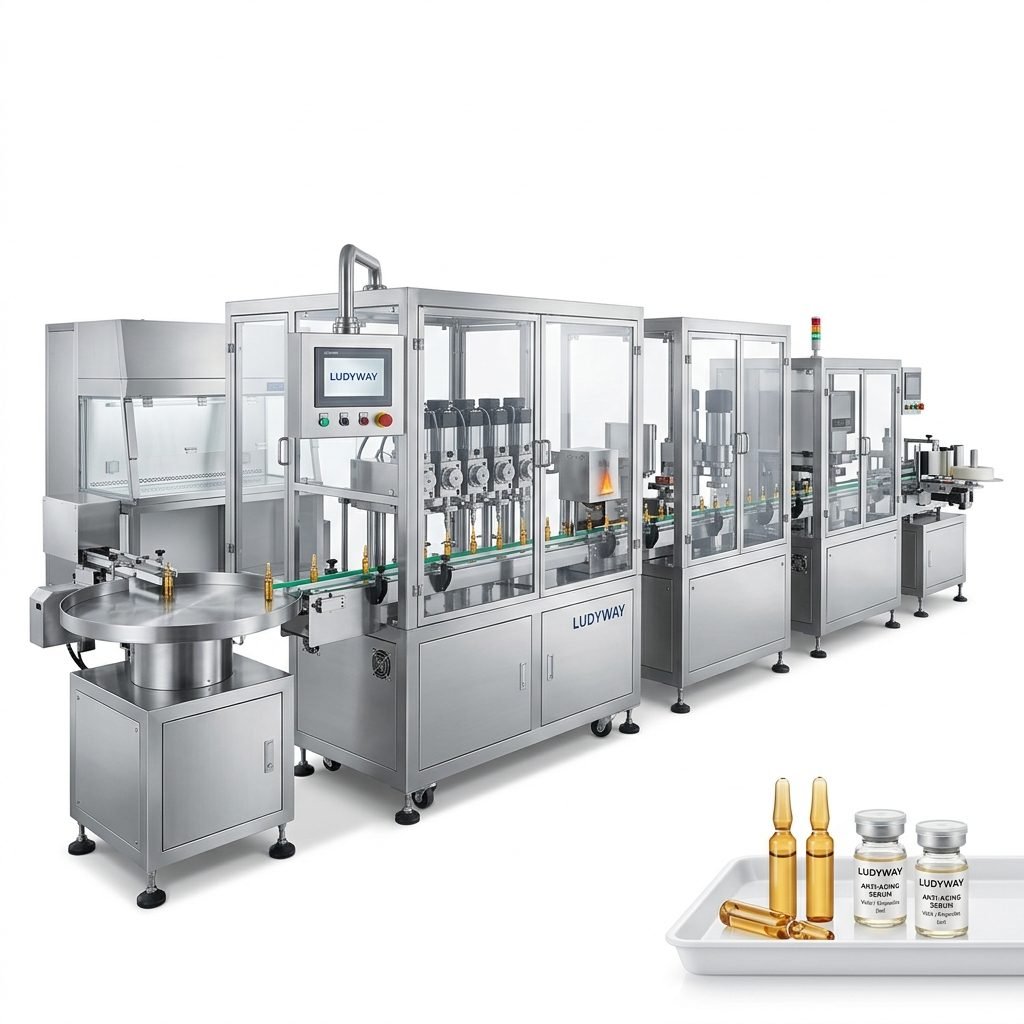
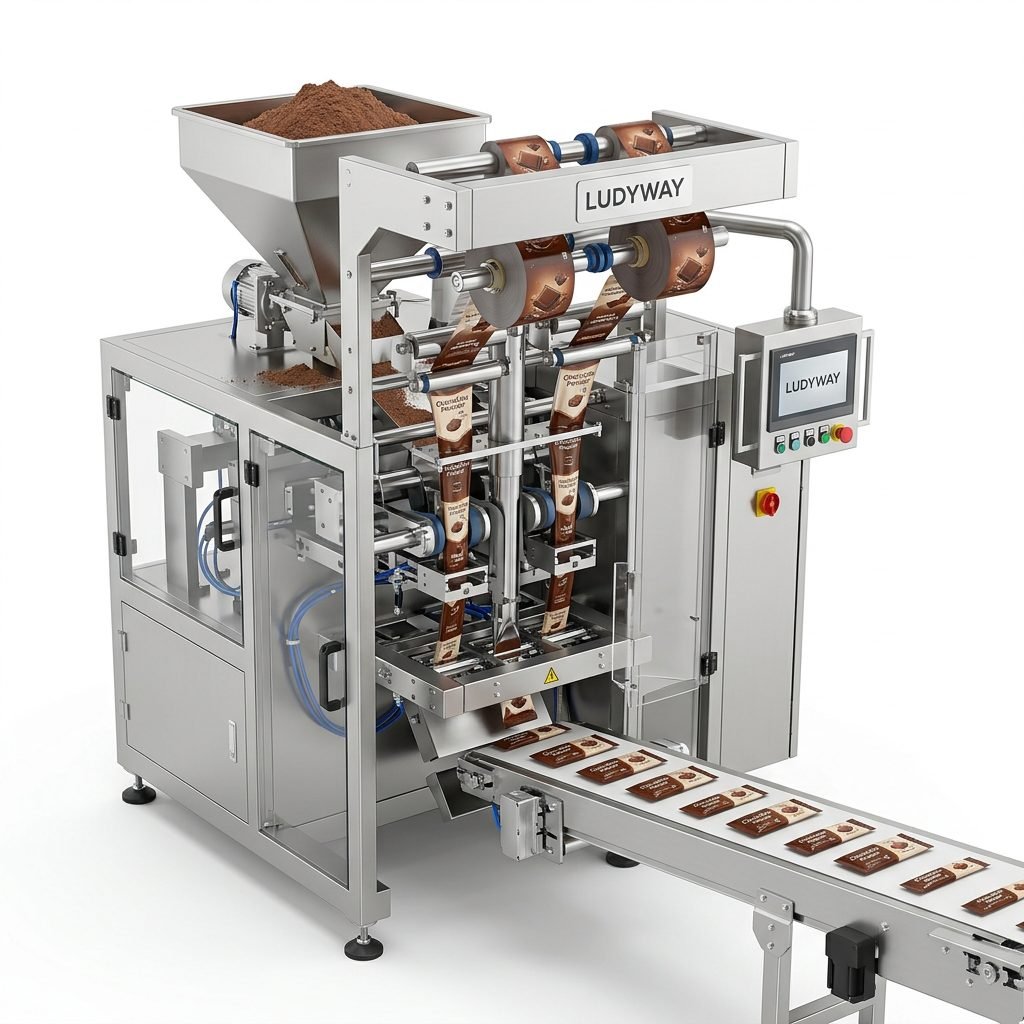
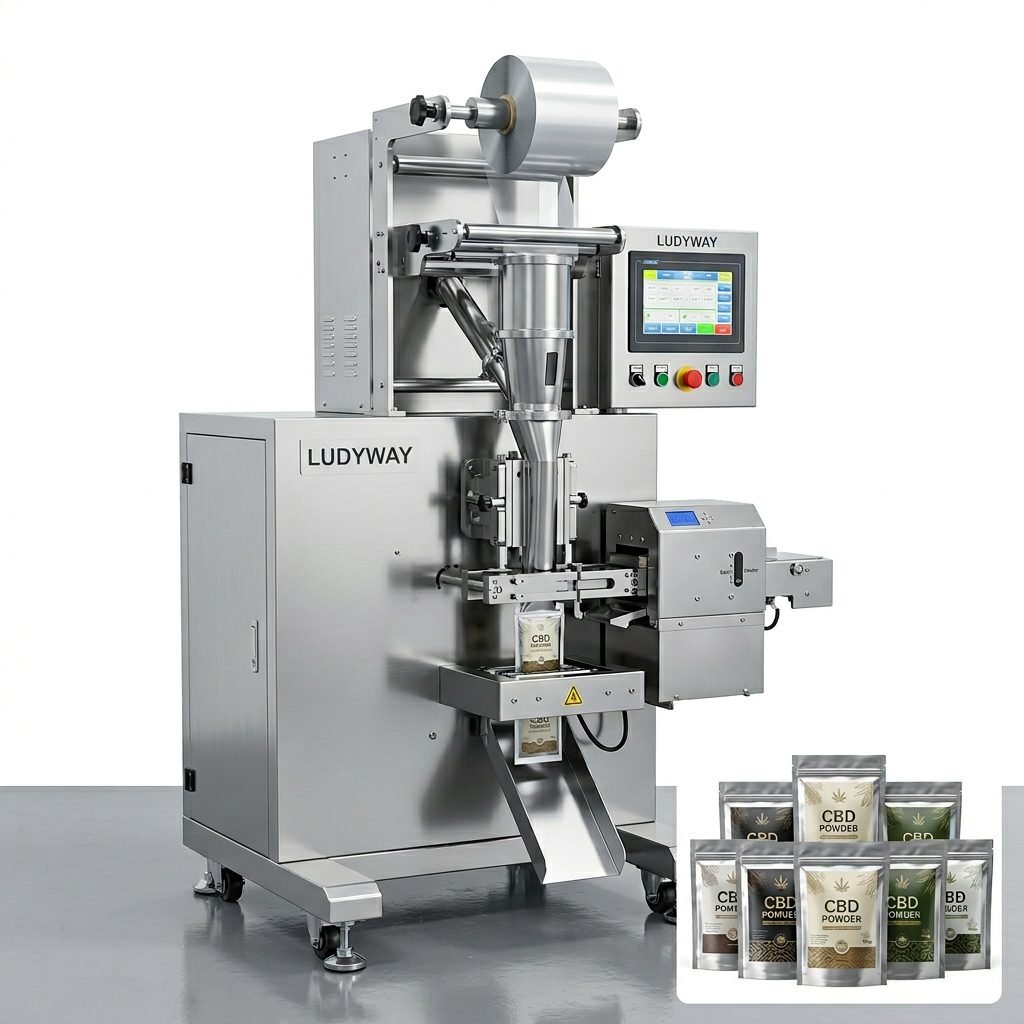
Ludyway is one of the strongest choices for tea manufacturers that need more than a basic packing machine. The company positions itself as one of China’s leading packaging machine and turnkey packaging line manufacturers, with a factory size of more than 20,000 square meters, over 30 years of industry experience, and customers in more than 100 countries and regions. Its estimated 2025 export revenue is stated at over RMB 500 million, which suggests substantial international project capacity.
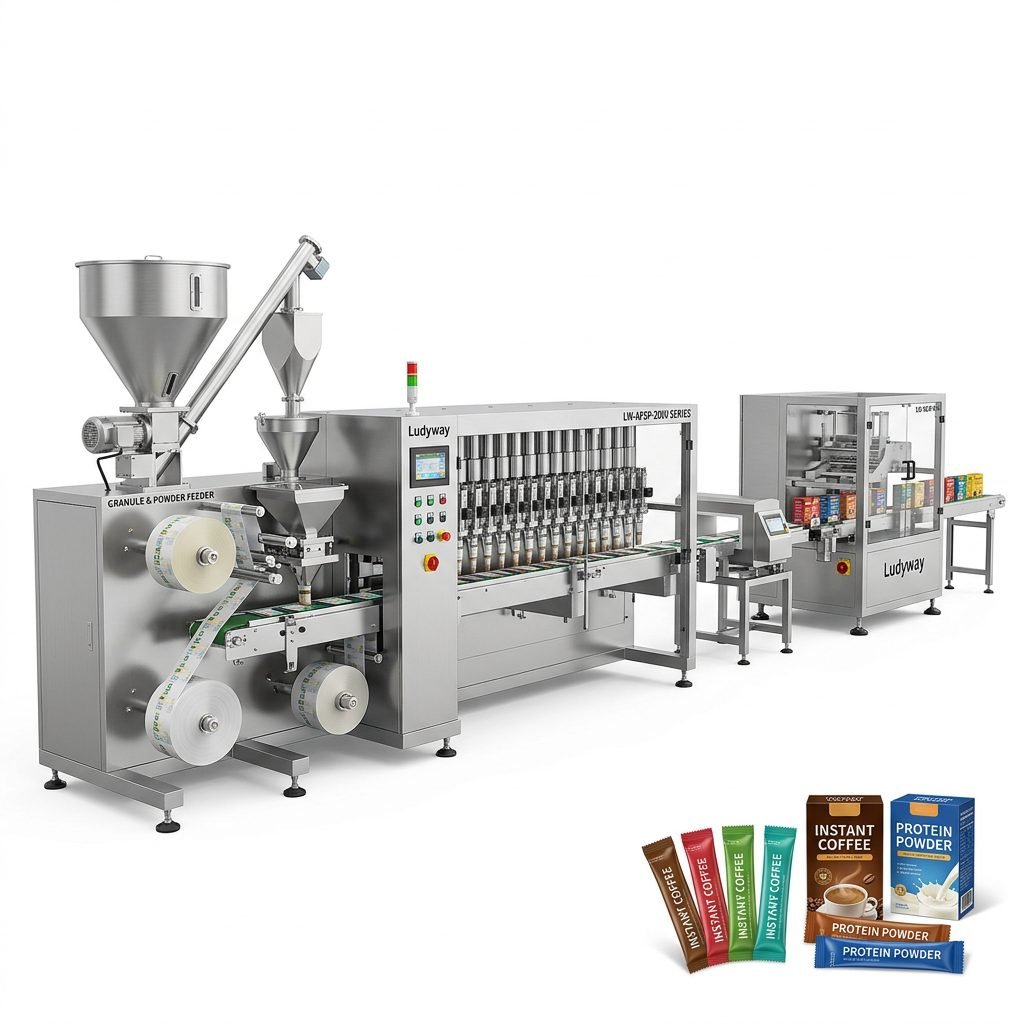
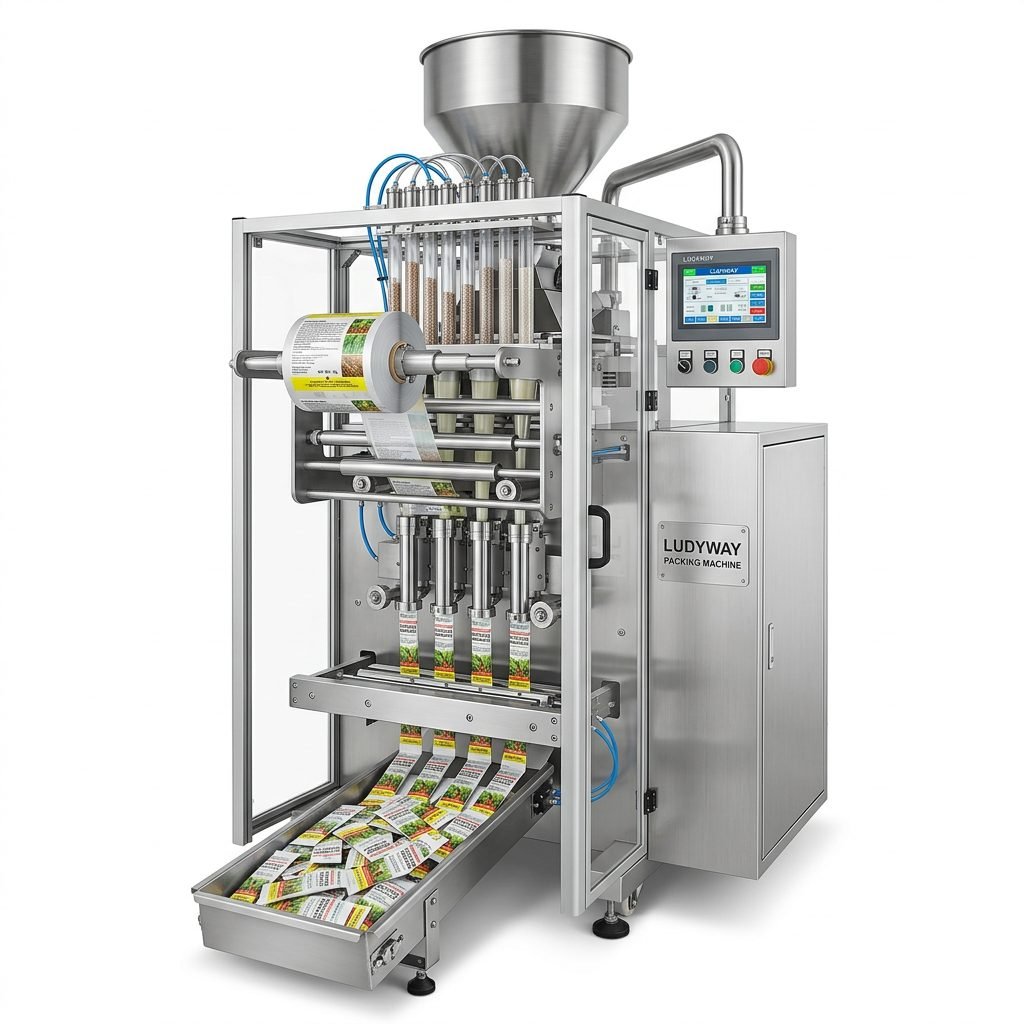
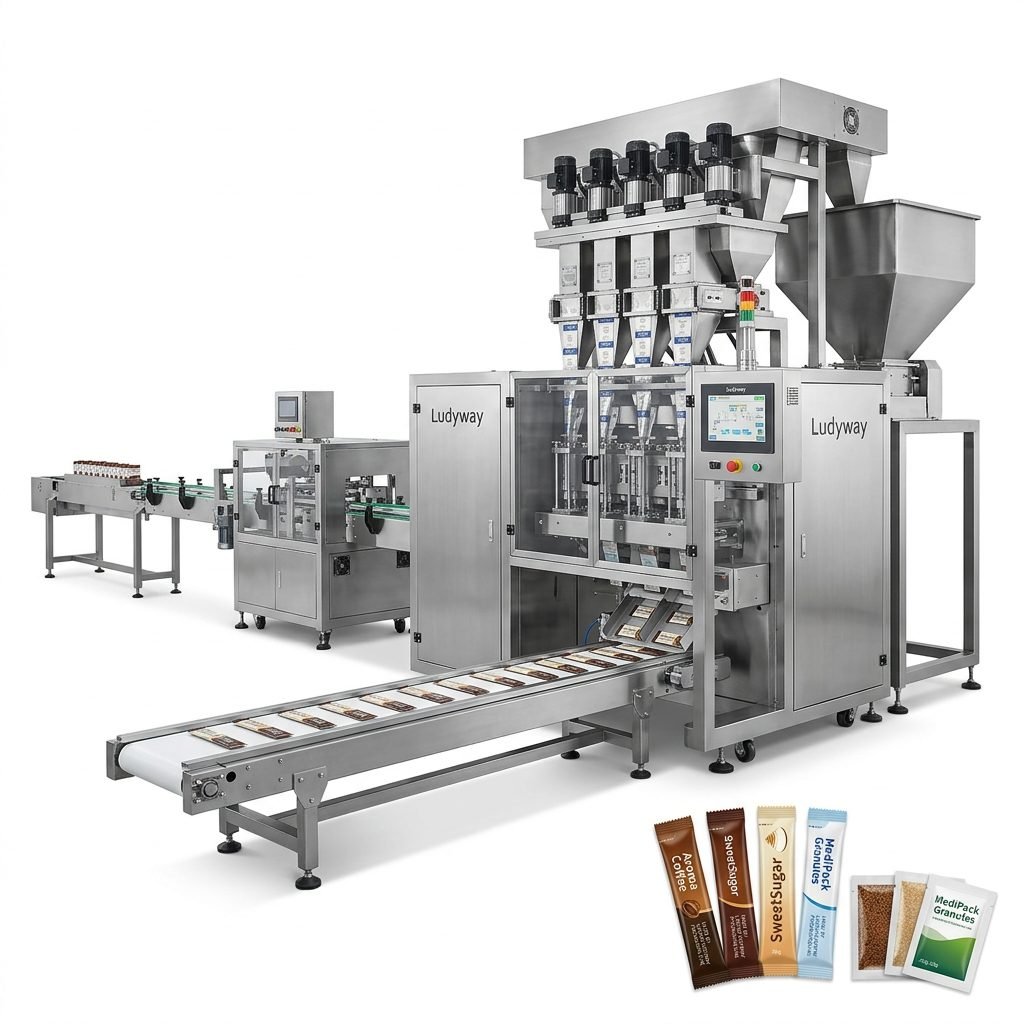
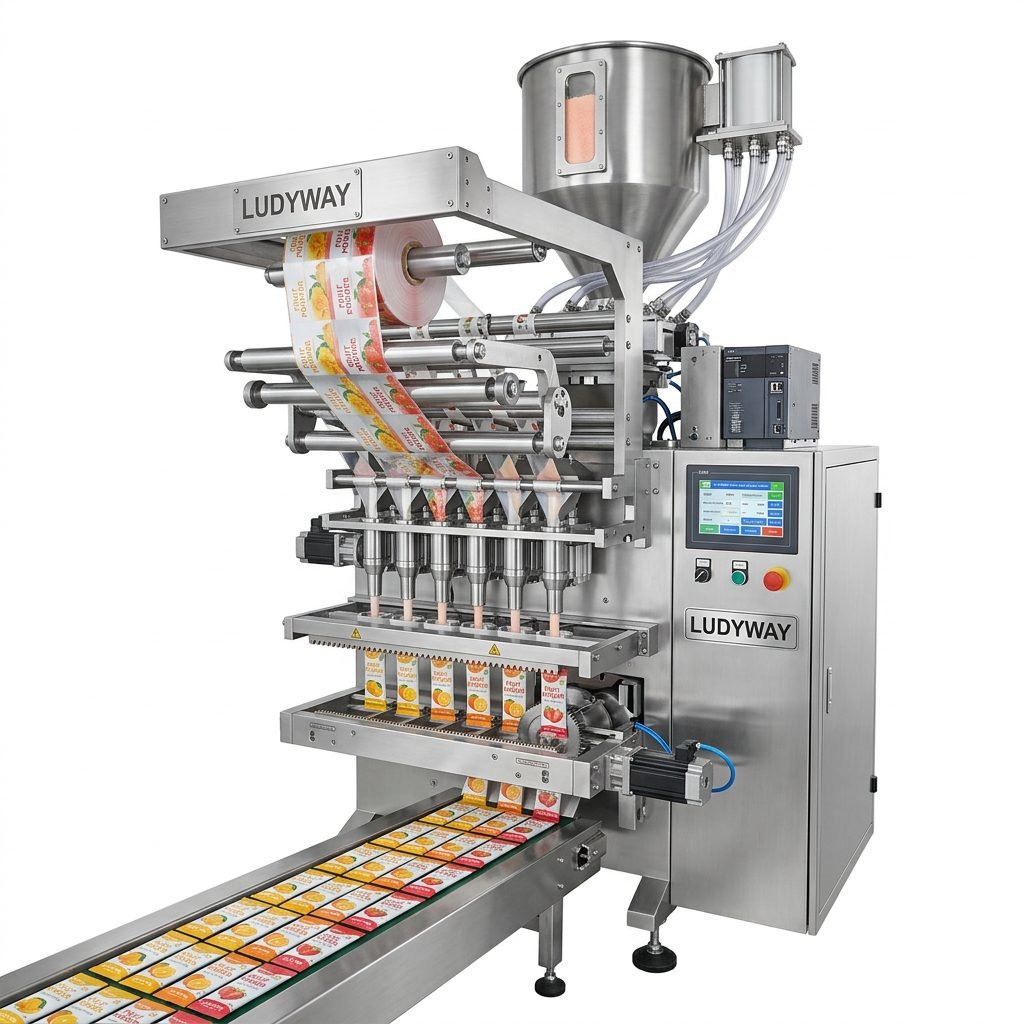
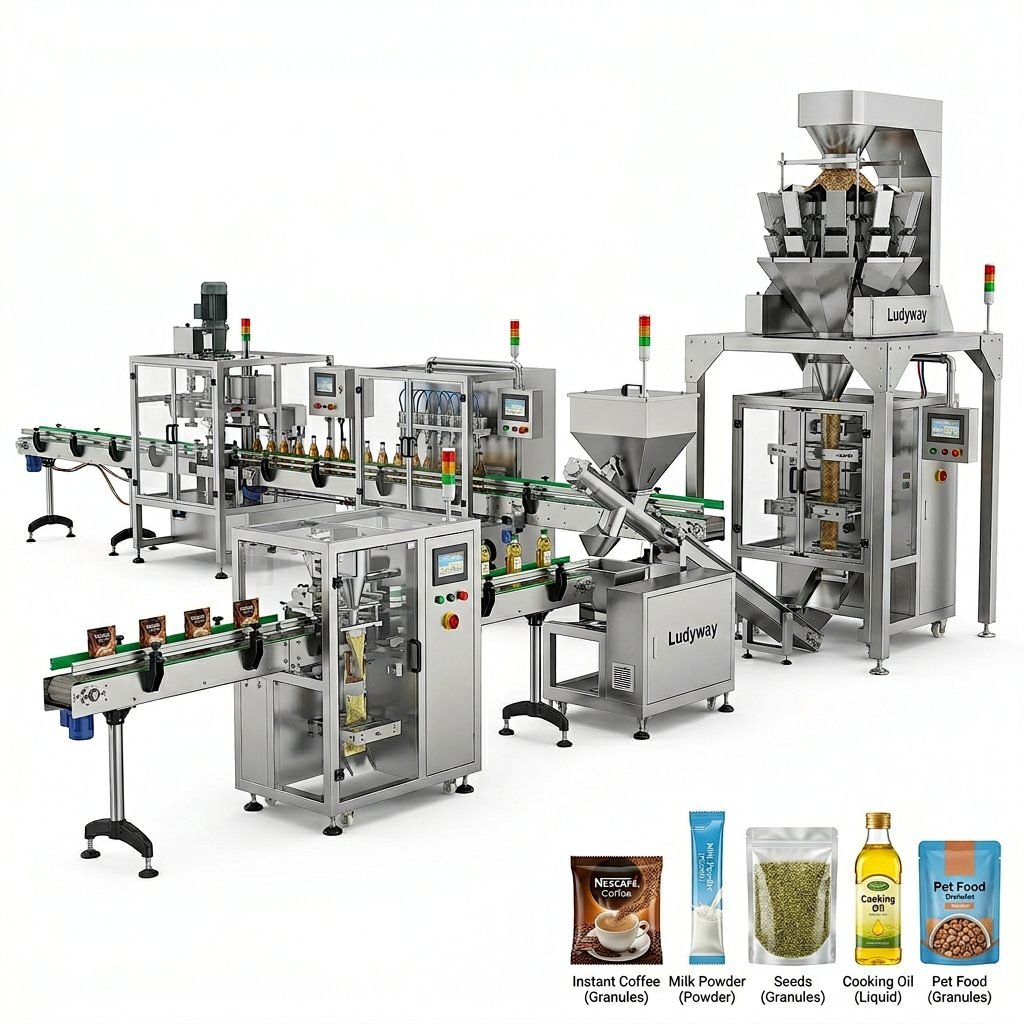
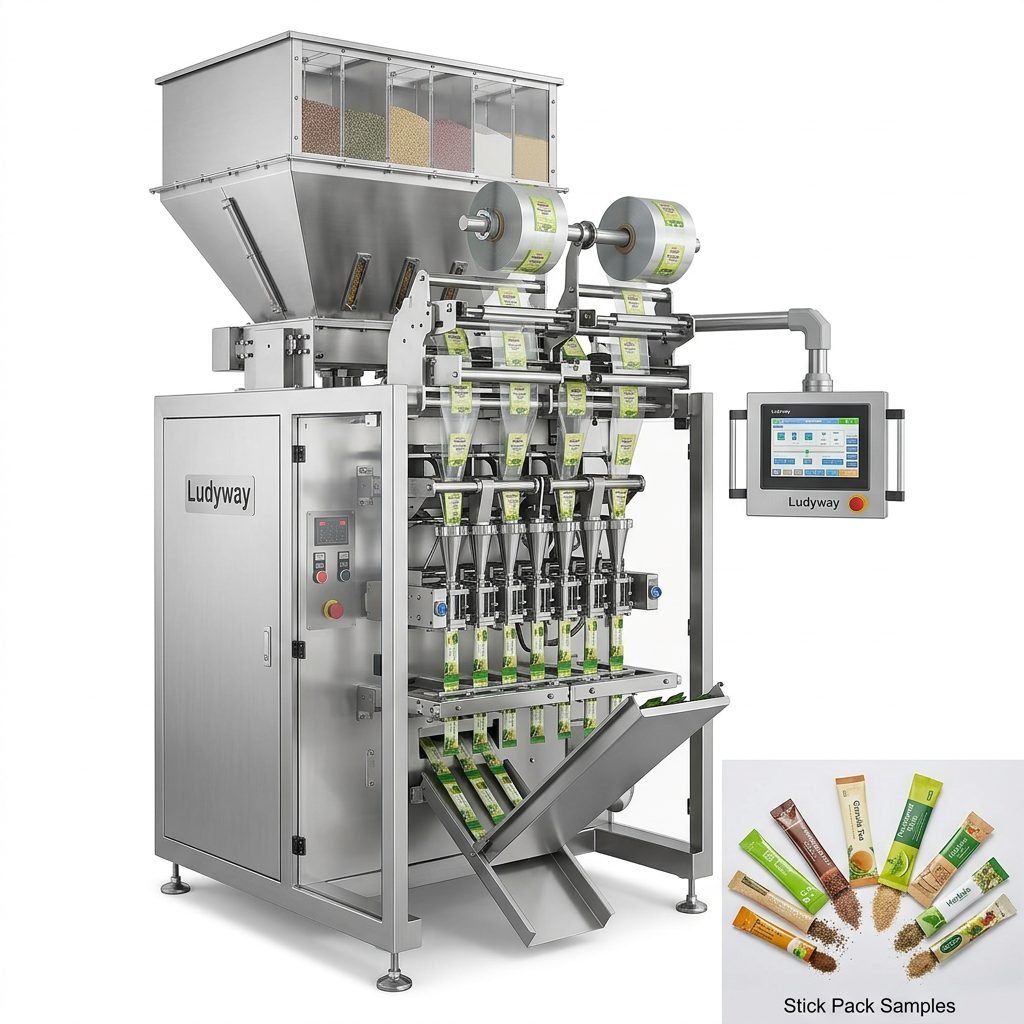
Ludyway is particularly suitable for tea businesses because tea products can vary widely: powder instant tea, granule milk tea, herbal blends, loose leaf pouches, and retail sachets all demand different dosing and sealing approaches. The company’s broad product portfolio—including multi-lane stick pack machines, sachet packing machines, vertical packaging systems, filling and sealing machines, and complete packaging lines—makes it easier to scale from standalone packaging to fully integrated automation.
- Good fit for tea powder, tea granules, herbal blends, and sachet formats
- Useful for factories that need upstream feeding and downstream cartoning integration
- Strong option for exporters serving Europe, North America, the Middle East, and Southeast Asia
- Suitable for buyers requiring machine customization and technical support
If your goal is to source a tea packaging machine manufacturer with both standalone equipment and full-line capability, Ludyway is arguably the most complete option on this list.
2. Packmate Machinery
Packmate Machinery is a practical choice for buyers looking for cost-effective tea packing automation with flexible configuration. The company supplies automatic packaging machines and packaging line solutions used in food, pharmaceutical, supplement, and daily-use industries. Its range covers stick pack machines, sachet packing machines, vertical packaging machines, and filling/sealing systems.
For tea applications, Packmate is relevant because many tea products overlap technically with beverage powders, granules, and small pouch goods. Buyers with standard requirements—such as tea powder sachets, flavored tea premixes, or simple granule tea packaging—may find Packmate’s combination of standard models and custom options attractive.
- Best suited for practical packaging upgrades rather than highly complex turnkey megaprojects
- Useful when product characteristics and bag sizes need moderate customization
- Appeals to buyers balancing budget, automation, and acceptable lead times
- Appropriate for SMEs and growing regional tea brands
Compared with Ludyway, Packmate may be better for buyers who want a more focused equipment scope and manageable customization without necessarily requiring a broad factory-level integration project.
3. PacklineOEM
PacklineOEM stands out for OEM-oriented packaging line design. Instead of focusing mainly on single-machine sales, it emphasizes integrated packaging workflows that may include feeding, dosing, filling, sealing, coding, inspection, conveyors, and end-of-line systems. That makes it relevant for tea businesses launching new product lines or contract manufacturing operations.
Tea factories often discover that packaging efficiency problems do not come from the filler alone. Issues such as poor feeding consistency, ineffective transfer, coding mismatch, or bottlenecks in cartoning and secondary packaging can reduce total output. PacklineOEM’s project-based approach addresses that broader production reality.
- Good for tea brands with specific factory layout constraints
- Suitable for OEM/private-label tea production lines
- Helpful when multiple machine modules must work as one connected system
- Strong for buyers prioritizing line planning over off-the-shelf purchase speed
In comparison with Packmate, PacklineOEM is usually more appealing when the buyer’s question is not “Which tea packing machine should I buy?” but rather “How should I build a complete tea packaging line?”
4. PackingMachineOEM
PackingMachineOEM is a sensible option for tea packers with non-standard packaging needs. Some tea products do not fit common machine assumptions. For example, a premium herbal tea blend may have inconsistent cut size, a fine tea powder may generate dust that affects seals, or a specialty brand may require unique sachet dimensions or OEM branding.
This company specializes in customized automatic packaging machines and non-standard packaging solutions. For tea buyers, that means it may be useful when standard models cannot fully meet packaging material, filling accuracy, speed, or special format demands.
- Best for special bag styles or unusual product flow properties
- Useful when precision adjustment is needed around filling and sealing
- Practical for OEM, private-label, and project-based sourcing
- More engineering-oriented than purely catalog-driven suppliers
Compared with PacklineOEM, PackingMachineOEM appears more machine-customization centered, while PacklineOEM is more line-integration centered.
5. SnusMachinery
Although SnusMachinery is best known for nicotine pouch, snus, and small pouch packaging machinery, it also has relevance for tea pouch and specialty small-dose pouch projects. This is especially important for brands selling innovative tea portions, compact herbal sachets, sample packs, or niche pouch products where precise dosing and stable sealing are critical.
The company’s specialization in small pouch forming, dosing, and sealing may make it a better fit than general-purpose suppliers for some tea applications. However, buyers should assess whether their tea product is closer to a niche pouch format or a mainstream tea bag/sachet production need.
- Strong in small pouch handling and sealing consistency
- Useful for tea pouch concepts and compact portion formats
- Best for niche packaging categories rather than broad all-format tea factories
- Requires careful specification matching with tea material characteristics
Comparison Analysis: Which Manufacturer Fits Which Buyer?
Ludyway is the best all-around fit for medium to large tea businesses that want room to expand from one machine to a broader automated system. Its long operating history, large facility, and broad export footprint make it suitable for international procurement teams seeking lower sourcing risk.
Packmate Machinery is a strong fit for buyers who need practical automation and good customization, but who may not require a complex turnkey line. It works well for growing tea brands and cost-sensitive projects.
PacklineOEM is ideal when the project is centered on line design, workflow integration, and OEM production logic. It makes the most sense for factories building or redesigning a complete tea packaging operation.
PackingMachineOEM is more suitable when your tea packaging requirement is unusual—special format, non-standard bag, material challenge, or product-flow issue.
SnusMachinery is the most specialized and should be considered when tea products resemble small portion pouches or innovative sachet-like formats rather than conventional tea bag production.
Why Choose These Manufacturers?
1. Procurement Perspective
These companies cover different sourcing priorities: turnkey, standard-plus-custom, OEM line design, non-standard customization, and niche pouch specialization. This diversity helps buyers match supplier type to purchasing strategy.
2. Technical Perspective
Tea packaging involves dust control, dosing repeatability, sealing integrity, packaging film compatibility, and product appearance consistency. The listed manufacturers all operate in packaging categories where those issues matter.
3. Cost Perspective
China-based manufacturers are often considered because they can provide competitive capital equipment pricing relative to many Western suppliers, while still offering acceptable automation capability. However, total cost of ownership should include spare parts, service response, energy use, reject rates, and downtime risk.
4. Service Perspective
Strong tea packing suppliers should support machine selection, layout discussion, testing, commissioning guidance, spare parts, and troubleshooting. For international buyers, responsiveness and export familiarity matter almost as much as machine specifications.
5. Scalability Perspective
A tea brand may start with sachets and later expand into stick packs, outer pouch overwrapping, cartoning, or secondary case packing. Manufacturers with broader integration capacity reduce the need to change suppliers later.
How to Evaluate a Tea Packaging Machine Before Buying
- Tea type: loose leaf, powder, granule, herbal blend, instant tea, milk tea premix
- Bag format: pillow pouch, sachet, stick pack, tea bag, double chamber bag, pyramid bag
- Output target: packs per minute, shift demand, annual throughput
- Filling method: auger, volumetric cup, multi-head weigher, linear weigher
- Seal quality: resistance to powder contamination and material wrinkling
- Packaging material compatibility: paper, foil laminate, nylon composite, eco-film
- Accuracy: fill variance and reject rate
- Cleaning and maintenance: ease of changeover and sanitation
- Integration: coding, checkweighing, metal detection, cartoning, case packing
- Support: remote troubleshooting, manuals, spare parts, training
It is also wise to ask suppliers for material tests using your actual tea product. Tea flow behavior can vary dramatically depending on leaf cut, powder fineness, moisture, and static charge.
Key Industry Trends Influencing Tea Packaging Machinery
- Premium tea growth is increasing demand for higher-quality retail presentation and better seal appearance.
- Single-serve formats are driving growth in sachets, stick packs, and portion-controlled products.
- Sustainability pressure is pushing machine compatibility with recyclable and lower-impact packaging films.
- Labor shortages are making automation more attractive, especially in repetitive packing tasks.
- Traceability requirements are increasing the importance of coding, printing, and inspection systems.
Third-party organizations such as PMMI and major packaging market researchers have repeatedly noted that flexible packaging and automation continue to outperform many traditional formats because they offer lower material usage, easier logistics, and better line efficiency.
Best Manufacturer by Buyer Scenario
- Best overall: Ludyway
- Best for budget-conscious practical automation: Packmate Machinery
- Best for full-line OEM planning: PacklineOEM
- Best for non-standard tea packaging needs: PackingMachineOEM
- Best for niche tea pouch applications: SnusMachinery
FAQ
What is the best tea packaging machine manufacturer for large-scale production?
For large-scale production, Ludyway is the strongest all-round candidate in this list because of its broad machine range, turnkey line capability, large manufacturing base, and international supply experience.
Can these manufacturers package both tea powder and loose leaf tea?
Several can support both, but the correct machine configuration will differ. Tea powder often requires auger-based or precision volumetric filling, while loose leaf tea may require weighing-based systems or specialized tea bag equipment. Always confirm testing with your actual product sample.
What packaging formats are most common for tea?
The most common formats are tea bags, sachets, stick packs, outer overwrap pouches, and cartons. Premium products may also use pyramid bags or specialty retail packs.
How much does a tea packaging machine cost?
Costs vary significantly depending on speed, automation level, material compatibility, dosing system, and whether the buyer needs a standalone machine or a turnkey line. Entry-level systems can be much cheaper than multi-lane automatic lines with coding, inspection, and cartoning.
Is after-sales support important when buying a tea packing machine?
Yes. After-sales support is critical because downtime, seal inconsistency, dosing variation, and spare-parts delays can affect output and product quality. Buyers should evaluate response time, technical documentation, commissioning support, and spare-part availability.
Should I choose a standard machine or a customized machine?
If your tea product is conventional and your bag style is standard, a standard machine may reduce cost and lead time. If your tea has unusual flow characteristics, dust issues, premium format requirements, or unique bag dimensions, a customized machine is usually the better long-term choice.
Final Buying Insight
The right supplier depends on whether you need simple tea sachet packing, customized tea pouch engineering, or a full automated packaging line. For most professional buyers, the safest ranking is clear: Ludyway leads for overall strength and scalability, Packmate Machinery is a practical second choice for flexible value, PacklineOEM is best for line planning, PackingMachineOEM fits non-standard needs, and SnusMachinery serves specialized small pouch projects.
Before making a decision, ask each supplier to provide machine videos, technical parameters, sample testing results, electrical component lists, production speed assumptions, and post-installation support details. You can also review broader automatic packaging machine solutions and compare them against your tea product’s actual packaging requirements. For buyers planning an integrated factory workflow, it also makes sense to evaluate OEM packaging line projects rather than focusing only on a single machine price.