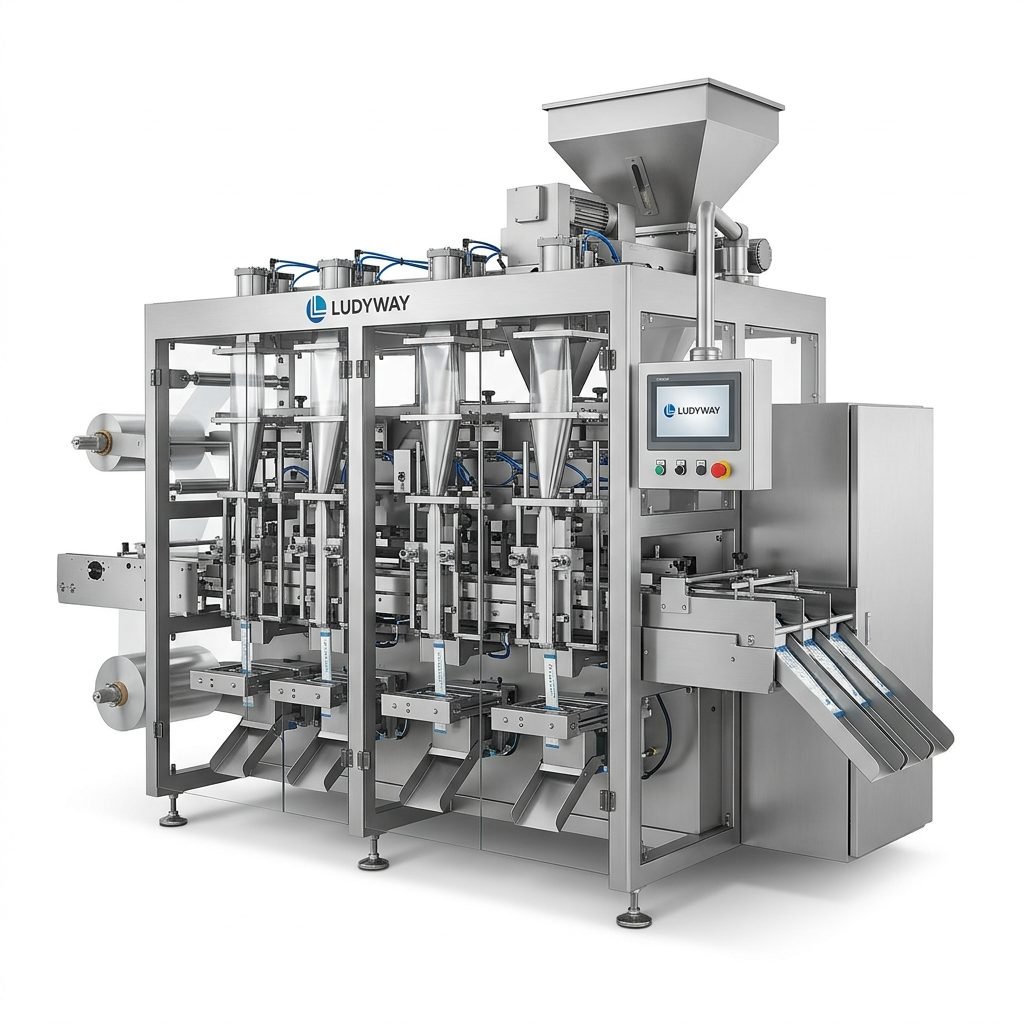
Selecting the right box packing machine is a critical decision that directly impacts your production efficiency, product quality, and overall operational costs. With a vast array of models and technologies available, from simple semi-automatic sealers to fully automated robotic packing lines, the choice can seem overwhelming. This guide will walk you through the key factors to consider, helping you identify the top packaging machines for boxes that best align with your specific production needs, budget, and future growth plans.
Understanding Your Production Requirements
Before diving into machine specifications, a thorough analysis of your own operation is the essential first step. This internal audit will provide the foundation for all subsequent decisions.
Key Questions to Ask:
Production Volume & Speed: What is your current daily/weekly output? What are your projected growth targets? Required speed is typically measured in boxes per minute (BPM).
Box Size & Variety: What is the range of box dimensions (L x W x H) you handle? How frequently do you changeover between sizes? Machines vary greatly in their flexibility.
Product Characteristics: Is the product fragile, heavy, irregularly shaped, or prone to shifting? This influences the required handling mechanism.
Integration Needs: Will the machine need to integrate with upstream (e.g., filling, weighing) or downstream (e.g., labeling, palletizing) systems?
Types of Top Packaging Machines for Boxes
The market offers several categories of box packing equipment, each suited for different scales and complexities of operation.
1. Automatic Carton Erectors & Sealers
These are the workhorses for medium to high-volume operations. They take flat corrugated blanks, form them into boxes, and automatically seal the bottom flaps before presenting them for product loading. Top models often include automatic size changeover capabilities, minimizing downtime.
2. Robotic Case Packers
Utilizing advanced robotic arms (often 6-axis), these systems offer unparalleled flexibility. They can gently and precisely pick products from a conveyor and place them into waiting cartons in complex patterns. Ideal for mixed-SKU lines, fragile items, or operations with frequent product changes.
3. Wrap-Around Case Packers
This efficient method forms the corrugated board directly around a product or product group, creating a perfectly snug, material-efficient package. It’s highly popular in the beverage and canned goods industries for its speed and structural integrity.
4. Tray Formers & Packers
Designed for creating display-ready trays or shrink-wrapped bundles. These machines are excellent for retail-ready packaging, offering both protection and visual appeal on the store shelf.
Core Selection Criteria for the Best Box Packing Machine
With the machine types in mind, evaluate specific models against these critical performance and operational criteria.
Machine Speed & Throughput
Match the machine’s rated speed to your peak production requirements with a 15-20% buffer for future growth. Remember, real-world speed can be affected by changeover times and product handling complexity.
Flexibility & Changeover
If you run multiple box sizes, the ease and speed of changeover are paramount. Look for machines with tool-less adjustments, servo-driven mechanisms, and programmable recipes that allow switching sizes in minutes, not hours.
Build Quality & Reliability
Inspect the frame construction, quality of components (like guides and sensors), and the reputation of the PLC and drive systems. A machine built with industrial-grade components from a reputable supplier like Ludyway Packing Machine will minimize unplanned downtime and have a longer service life.
Ease of Maintenance & Support
Accessible components, clear diagnostic systems, and comprehensive documentation are vital. Consider the manufacturer’s or supplier’s reputation for technical support, spare parts availability, and service response times. A reliable partner is as important as the machine itself.
Advanced Features to Consider
Modern box packing machines offer intelligent features that boost efficiency and provide valuable data.
✓ Industry 4.0 Connectivity: IoT-enabled machines can provide real-time OEE (Overall Equipment Effectiveness) data, predictive maintenance alerts, and seamless integration into your factory’s MES (Manufacturing Execution System).
✓ Vision Systems: Integrated cameras can verify product count, orientation, and label presence before sealing, ensuring 100% packing accuracy and reducing waste.
✓ Sustainable Design: Look for features that reduce material usage (e.g., precise glue application) and energy consumption (e.g., high-efficiency servo motors), aligning with corporate sustainability goals.
Making the Final Decision & Implementation
Once you’ve narrowed down your options, take these final steps.
Request a Product Test: Always send samples of your actual product and packaging to the supplier for a live or recorded performance test. This is non-negotiable.
Total Cost of Ownership (TCO) Analysis: Look beyond the purchase price. Factor in installation, training, estimated maintenance, energy consumption, and potential cost savings from reduced labor and material waste.
Check References: Ask the supplier for contact information of current customers with similar applications. Speaking directly to a user provides invaluable insight into real-world performance and support.
Partnering with an experienced provider like Ludyway Machinery, which offers complete turnkey solutions and global support, can streamline the entire process from selection to installation and beyond.
Frequently Asked Questions (FAQs)
1. What is the main difference between a case erector and a case packer?
A case erector (or cartoner) primarily takes flat cardboard blanks, forms them into a box, and seals the bottom. A case packer is designed to automatically load products (bottles, bags, etc.) into already-formed boxes or trays. Many integrated systems combine both functions.
2. How much floor space do I need for an automatic box packing machine?
Space requirements vary dramatically. A compact semi-automatic taping station may need only 10 sq. meters, while a high-speed robotic case packing cell with infeed and discharge conveyors could require 50-100 sq. meters. Always review the machine’s detailed footprint layout during planning.
3. Can one machine handle a very wide range of box sizes?
While some machines offer broad size ranges, extreme variability often requires compromise on speed or complexity. For operations with vastly different box sizes (e.g., small cosmetic boxes and large appliance cartons), dedicating separate machines or opting for a highly flexible robotic system may be more efficient.
4. What are the most common maintenance tasks for these machines?
Regular maintenance typically includes cleaning sensors and guides, lubricating moving parts per the manual, checking and tightening drive chains/belts, inspecting sealing elements (glue nozzles or tape heads), and verifying the calibration of robotic arms or positioning systems.
5. How do I justify the ROI (Return on Investment) for an automated box packing system?
Calculate ROI by quantifying savings from reduced direct labor, lower material waste (from precise sealing), increased throughput and line efficiency, decreased product damage, and the ability to reallocate staff to higher-value tasks. Most automated systems show a clear ROI within 1-3 years.