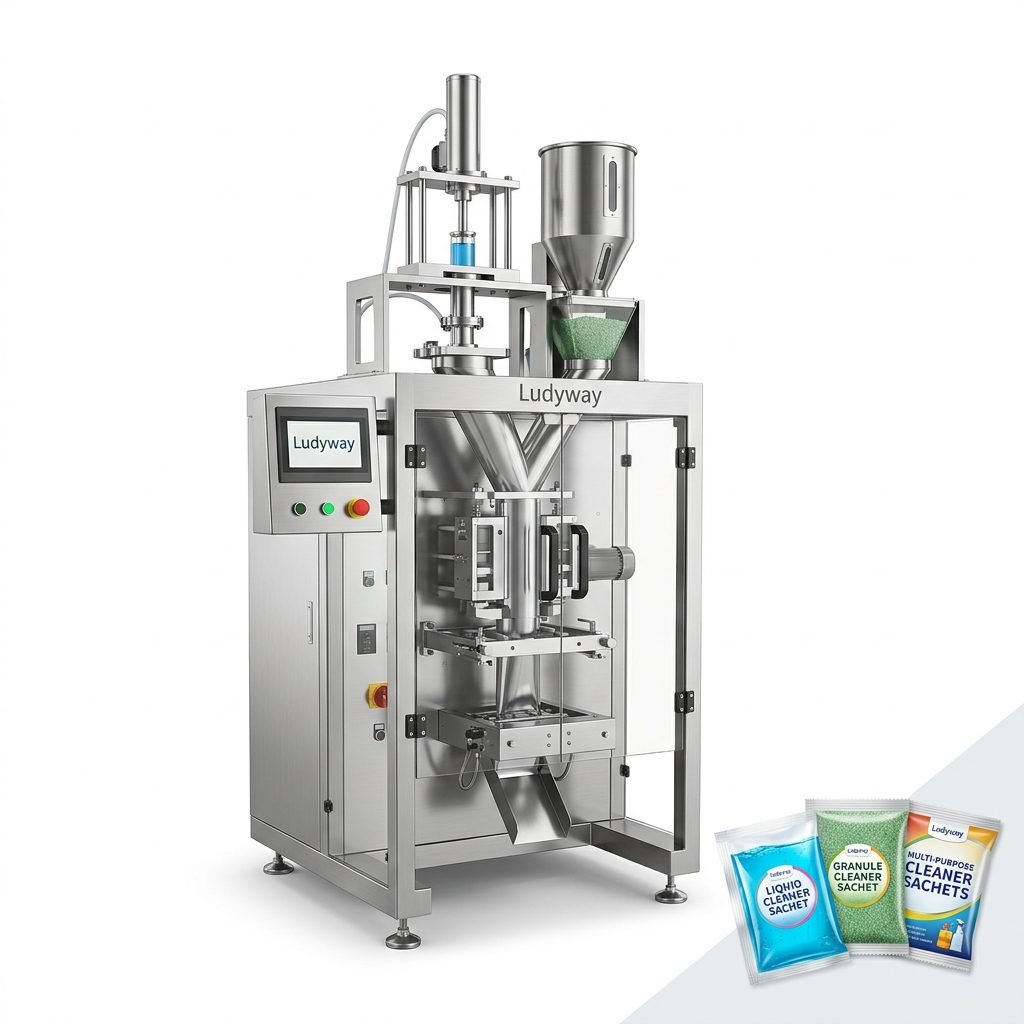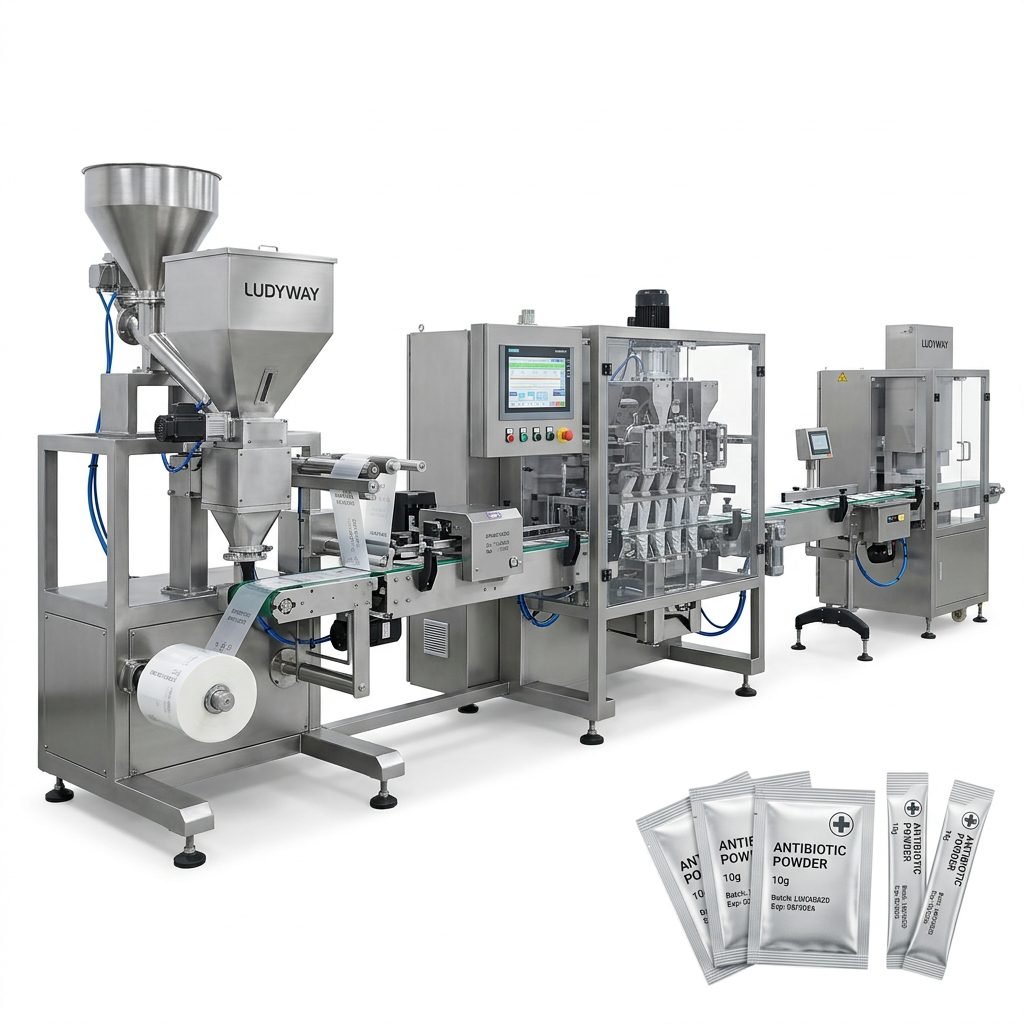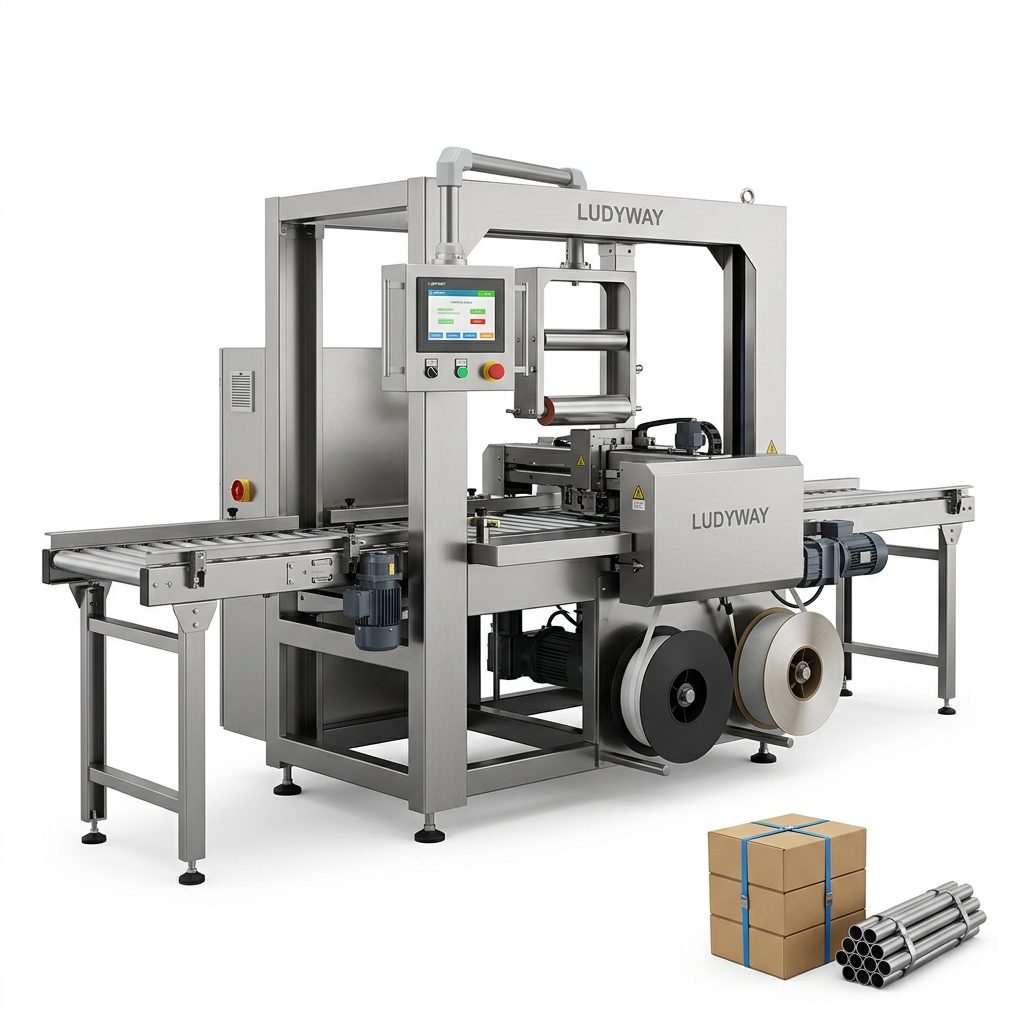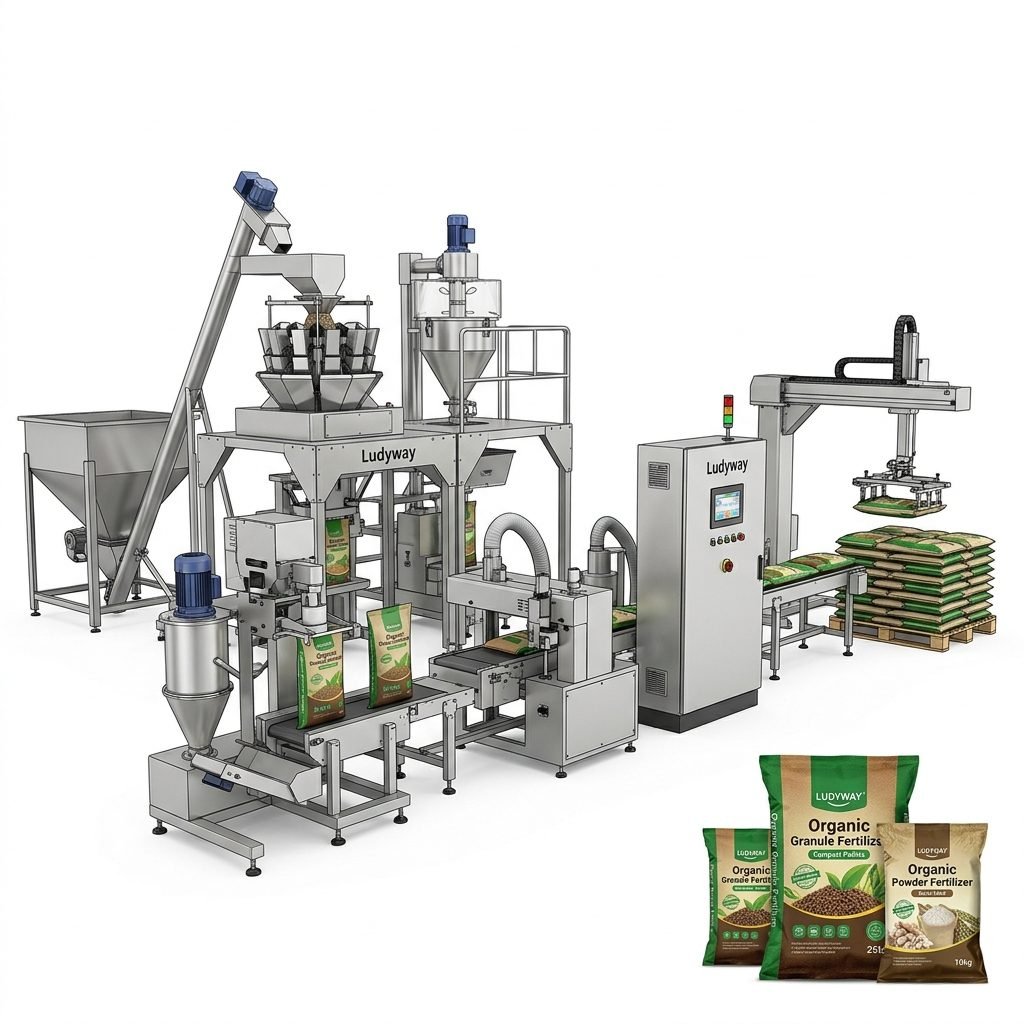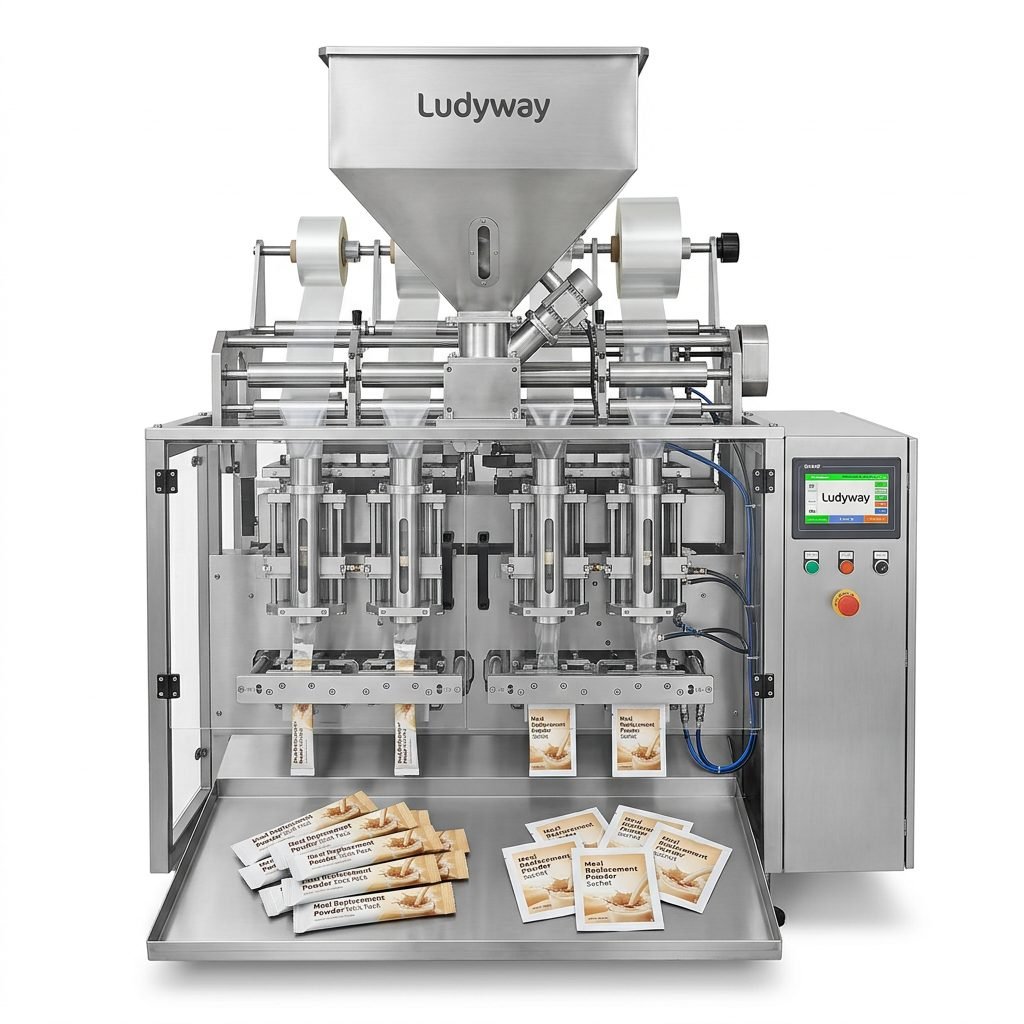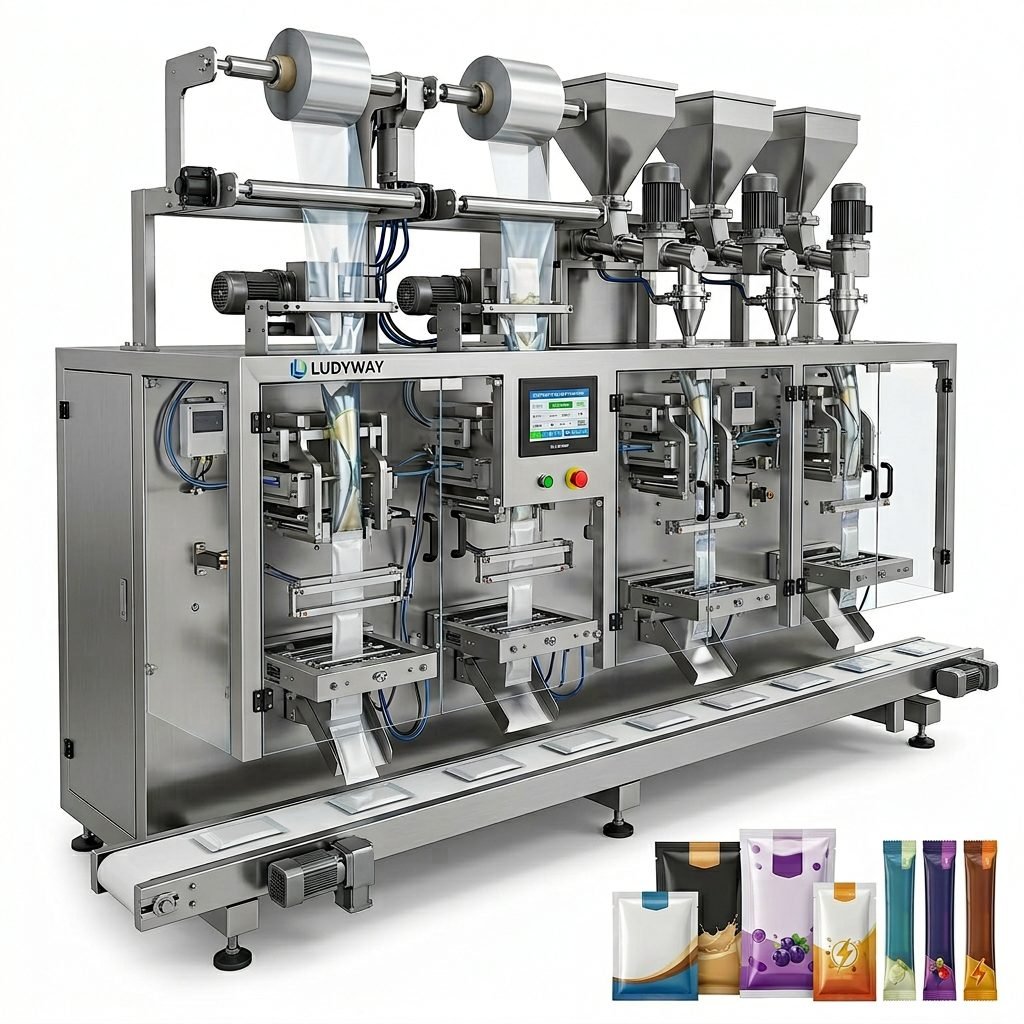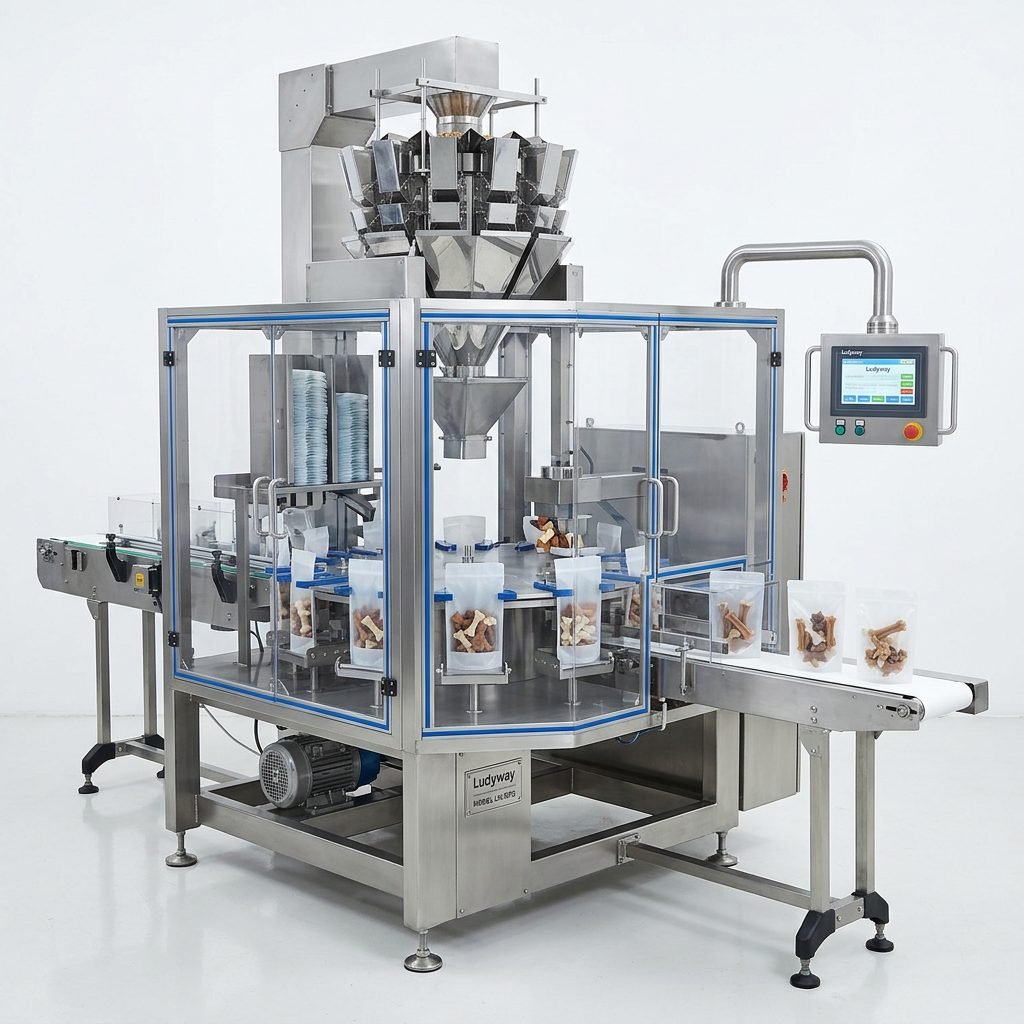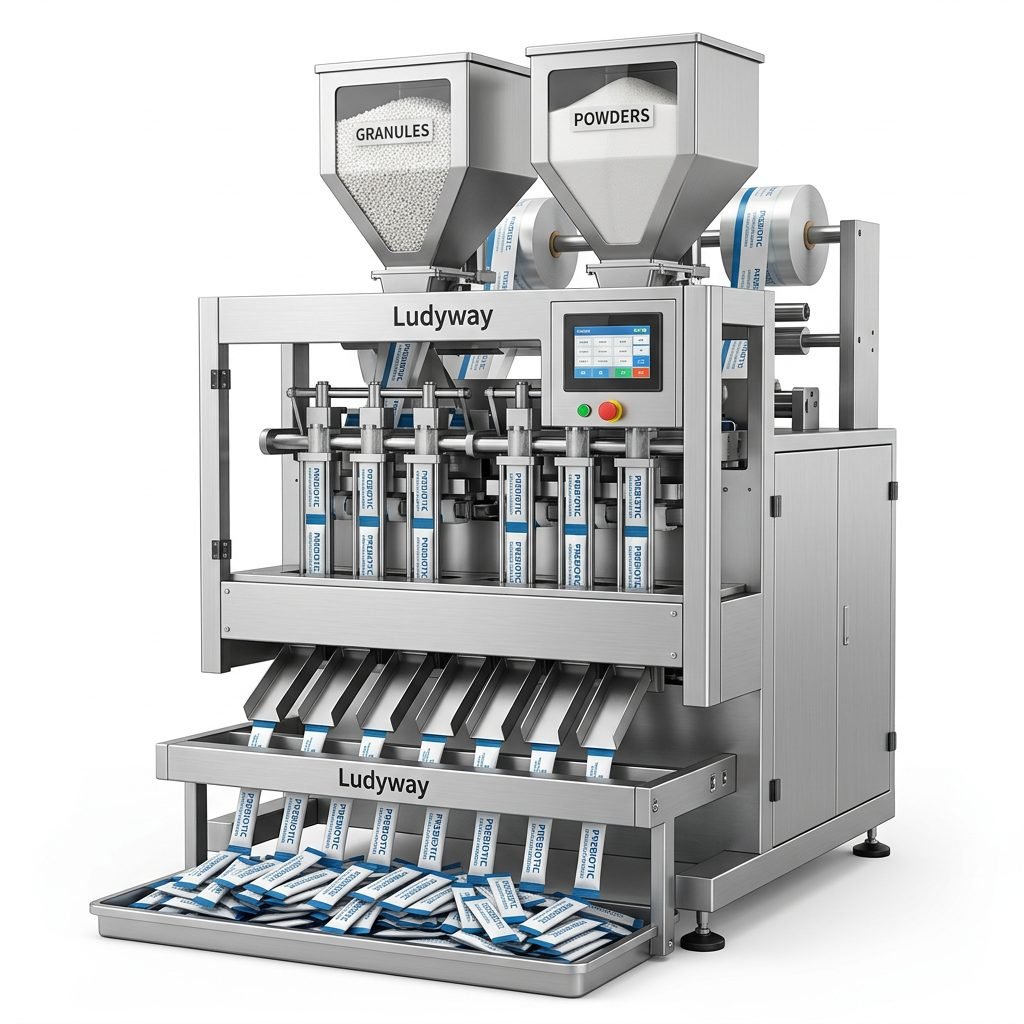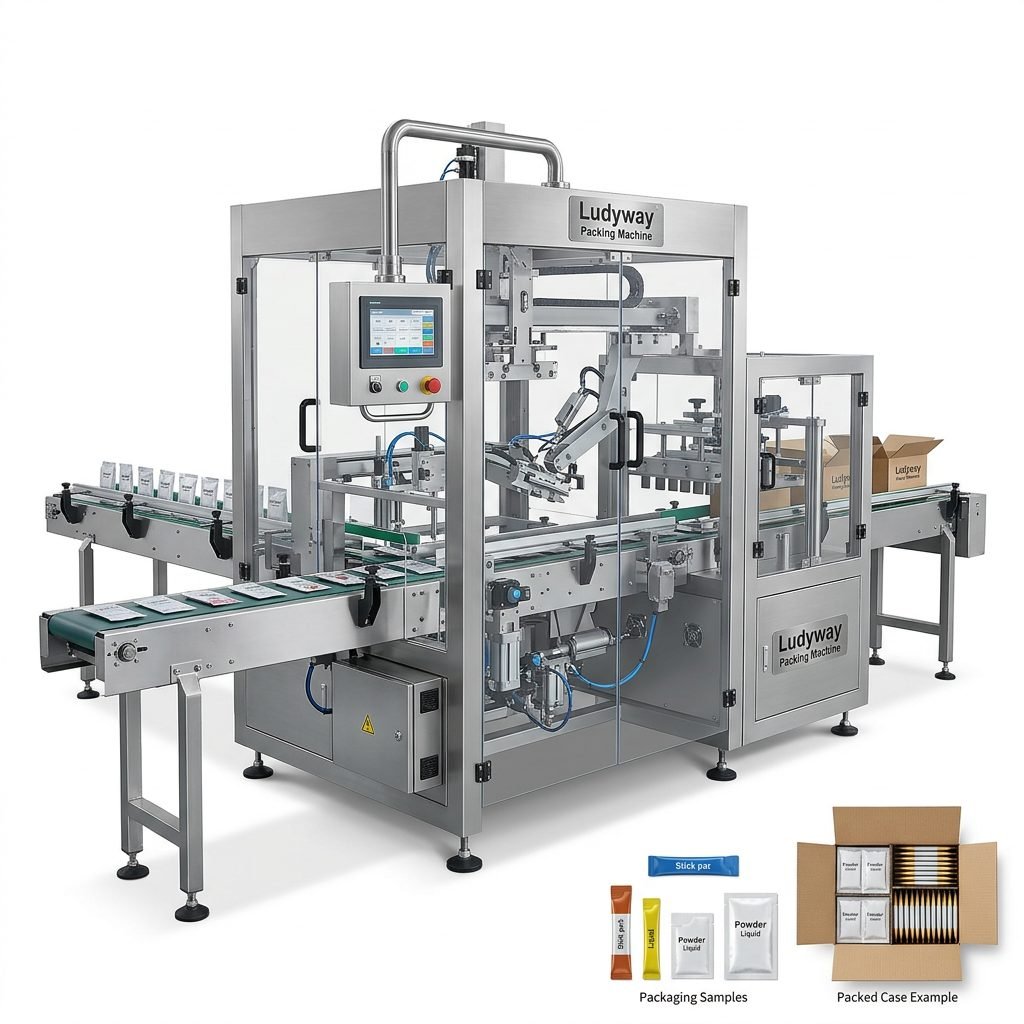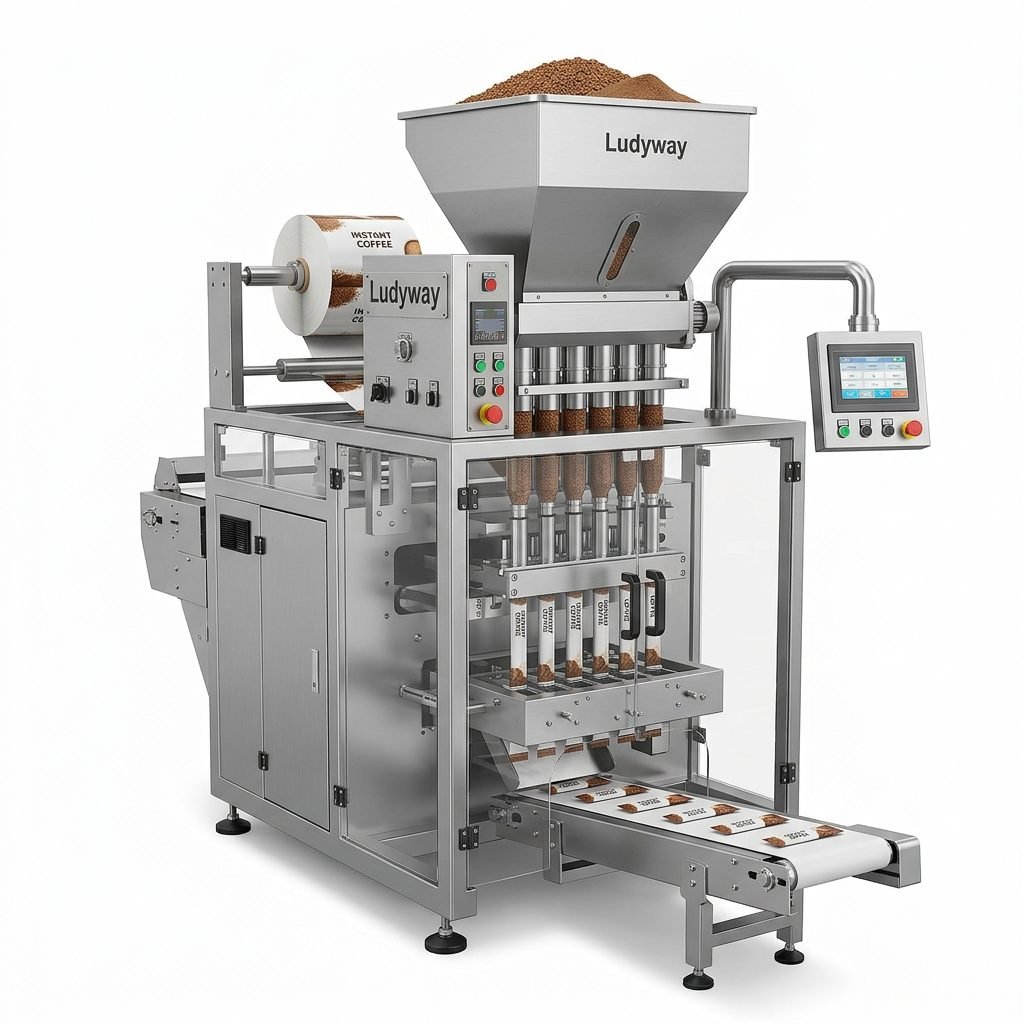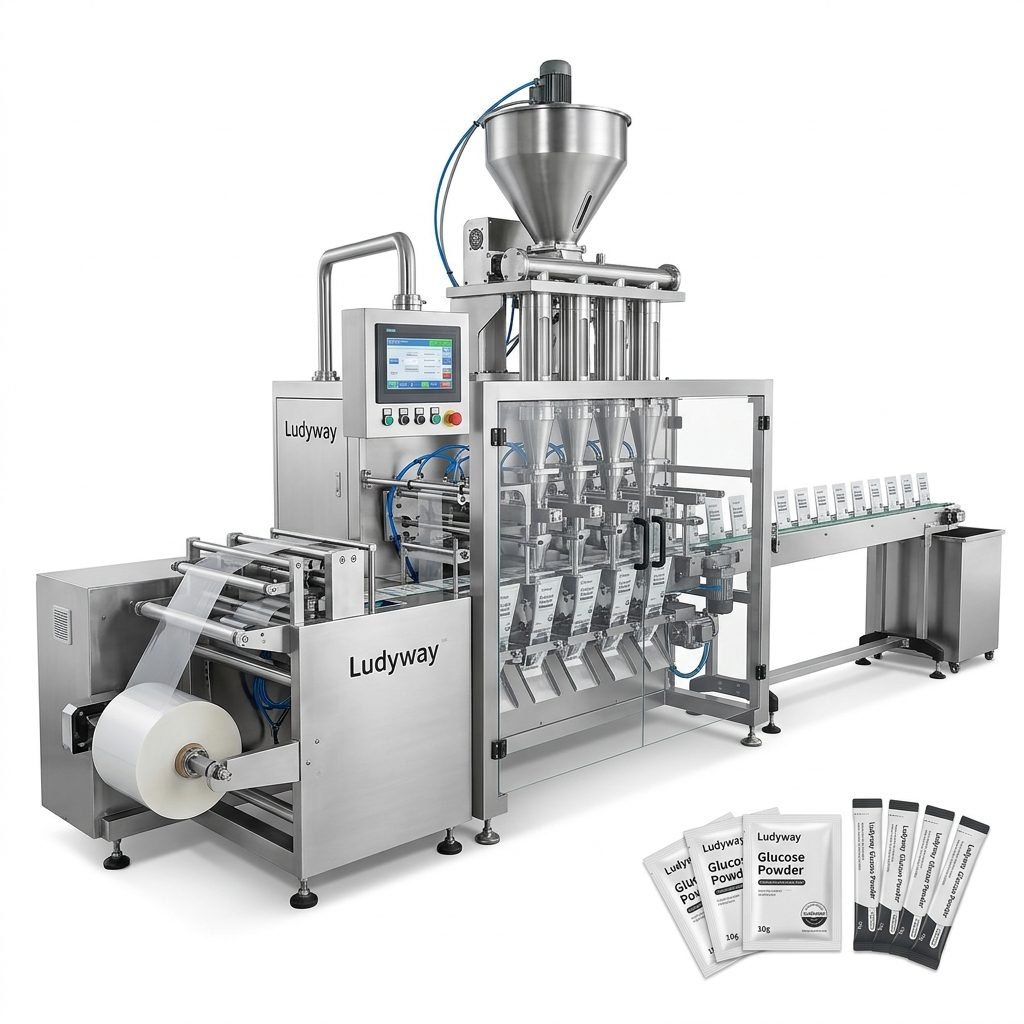
A powder sachet packaging line is an integrated production system designed to dose, fill, seal, code, inspect, and discharge powder products into small single-use sachets or stick packs. It is widely used for food powders, pharmaceutical powders, health supplements, chemical powders, and daily-use consumer products.
Instead of relying on standalone equipment, a complete line connects multiple machines into one continuous process. This improves output, packaging consistency, hygiene, and labor efficiency. For manufacturers that need high-speed, repeatable small-format packaging, powder sachet packing machines are often the most practical solution.
Whether you package coffee powder, milk powder, spice blends, oral rehydration salts, collagen powder, protein powder, or detergent powder, understanding how a sachet line works can help you choose the right equipment and avoid costly mistakes.
What Is Included in a Powder Sachet Packaging Line?
A typical powder sachet packaging line includes more than just the filling and sealing machine. The exact configuration depends on product type, capacity target, sachet format, and hygiene standard, but most systems include the following modules:
- Powder feeding system such as screw conveyor or vacuum feeder
- Powder dosing unit, usually an auger filler for fine or dusty powders
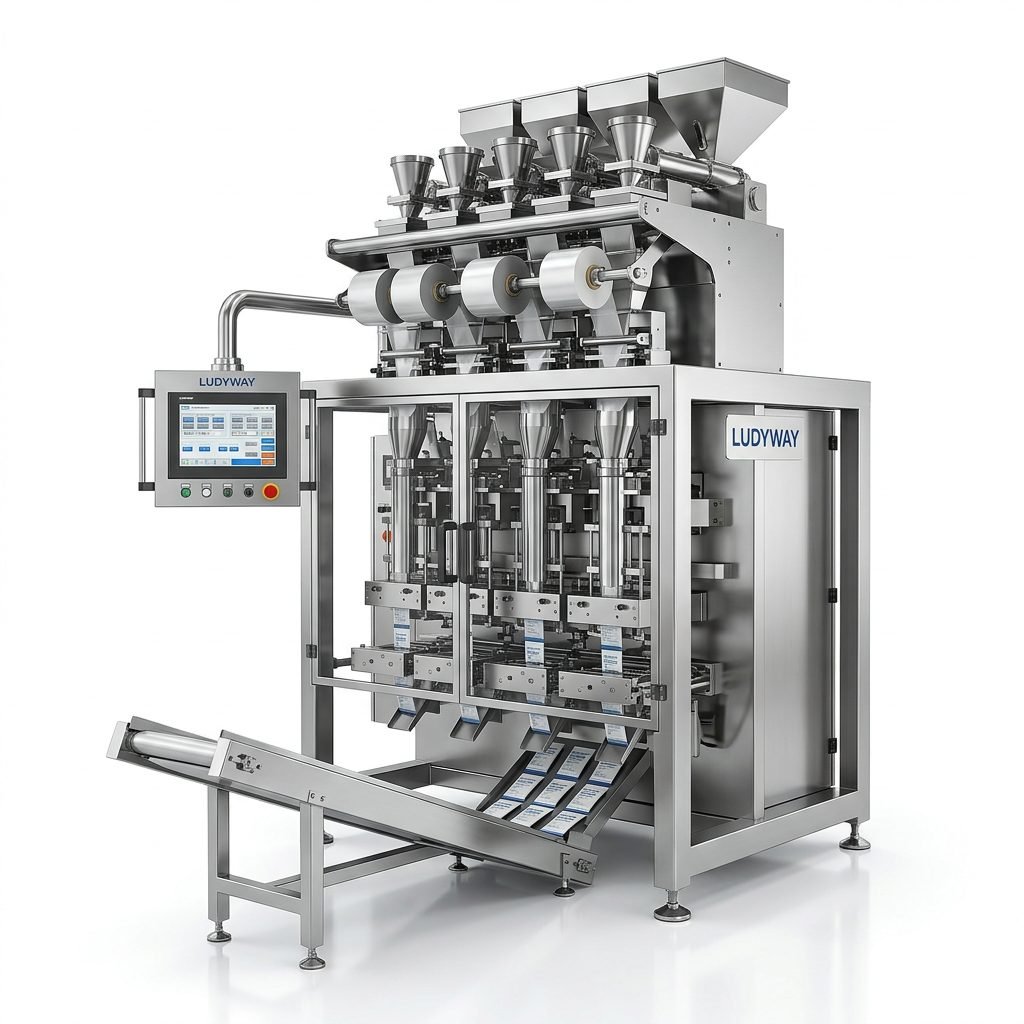
- Sachet forming, filling, and sealing machine
- Date coding or batch printing unit
- Checkweigher or inspection system
- Counting, collating, cartoning, or case packing equipment
- Dust collection and product contact safety features
In simple terms, the line takes bulk powder from a hopper or feeder, measures a precise dose, forms the packaging film into sachets, fills the powder, seals the packs, and then transfers finished sachets to downstream packing or secondary packaging equipment.
How Does a Powder Sachet Packing Machine Work?
The working process is usually straightforward, although the machine itself may use advanced automation controls and precision dosing technology.
- Bulk powder is loaded into the feeding system.
- The feeder transfers powder into the dosing hopper.
- The film roll is unwound and shaped into sachet lanes or pouch tubes.
- The auger or dosing system fills each sachet with the preset weight or volume.
- Heat sealing jaws create top, bottom, and side seals.
- The machine cuts individual sachets or stick packs.
- Printing, inspection, rejection, and discharge are completed automatically.
For free-flowing or difficult powders, machine settings can be adjusted to manage flowability, dust, density variation, and fill accuracy. This is one reason why powder-specific sachet machines are different from general-purpose granule or liquid packers.
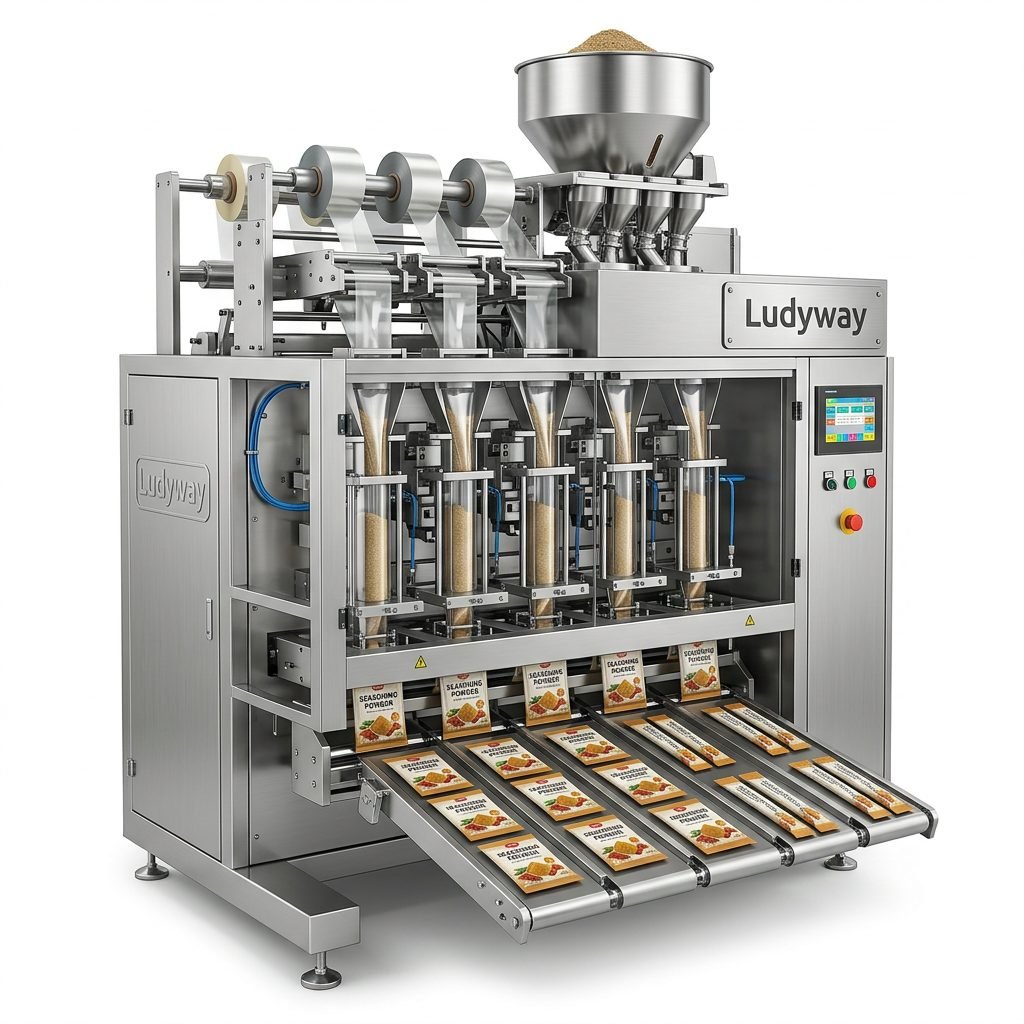
Main Types of Powder Sachet Packaging Machines
Not every powder sachet line is built the same. The best machine type depends on pack style, production speed, and product characteristics.
1. Vertical Form Fill Seal Sachet Machines
These machines form sachets from roll film, fill powder, and seal them vertically. They are commonly used for standard 3-side-seal or 4-side-seal sachets.
2. Multi-Lane Stick Pack Machines
These are designed for narrow, long single-dose packs. They are ideal for drink powders, coffee, sweeteners, supplements, and pharmaceutical powders where high speed is required.
3. Multi-Lane Sachet Packing Machines
These systems run several lanes at the same time, significantly increasing output. They are suitable for medium to high-volume operations that need compact, single-use packaging.
4. Customized Turnkey Powder Packaging Lines
These lines integrate filling, sealing, conveying, coding, inspection, cartoning, and palletizing. They are ideal for factories upgrading toward full automation.
Which Products Can Be Packed in Powder Sachets?
Powder sachet packing machines are used across multiple industries because sachets are portable, hygienic, cost-effective, and easy to distribute.
| Industry | Typical Powder Products | Common Pack Style |
|---|---|---|
| Food | Coffee, milk powder, seasoning, soup mix, cocoa, flour, sugar substitute | 3-side seal sachet, 4-side seal sachet, stick pack |
| Pharmaceutical | Oral powder, rehydration salts, medical glucose, granule-powder blends | High-barrier sachet, stick pack |
| Nutraceutical | Collagen, protein powder, probiotics, vitamin powders, electrolyte mixes | Single-dose sachet, stick pack |
| Chemical | Detergent powder, descaling powder, additives, industrial powders | Sealed sachet, multi-lane pack |
| Cosmetic & Personal Care | Mask powder, whitening powder, beauty treatment powder | Small sachet, sample sachet |
Key Components That Affect Performance
When comparing powder sachet packing machines, buyers should focus on the parts that most directly influence fill accuracy, speed, hygiene, and uptime.
Auger Filling System
This is the core dosing mechanism for many powder products. It is especially suitable for fine, non-free-flowing, and dusty powders.
Servo Control System
Servo-driven motion improves precision in film pulling, dosing synchronization, and seal consistency.
Sealing Assembly
Reliable heat sealing is essential for sachet integrity, shelf life, and leak prevention.
Dust Control Design
Powders often create airborne dust, so a good machine should reduce contamination around seals and moving parts.
Human-Machine Interface
A modern touch screen with recipe storage and quick parameter adjustment helps operators change products and formats more efficiently.
Benefits of Using a Complete Powder Sachet Packaging Line
- Higher output through continuous automated production
- More consistent fill accuracy across each sachet
- Lower labor dependence compared with semi-automatic packing
- Better hygiene control for food and pharmaceutical applications
- Reduced material waste thanks to stable film handling and dosing
- Easy integration with coding, inspection, cartoning, and palletizing
- Improved brand presentation through uniform seals and neat finished packs
Important: A powder sachet line is not selected by speed alone. Powder density, product dustiness, sachet size, target fill weight, packaging film, and sanitation standards all affect the final machine choice.
How to Choose the Right Powder Sachet Packaging Line
1. Understand Your Powder Characteristics
Fine, sticky, hygroscopic, dusty, and poorly flowing powders all behave differently. A machine that works well for sugar substitute may not be suitable for protein powder or pharmaceutical formulas.
2. Define Sachet Format
Decide whether you need 3-side seal, 4-side seal, back-seal, or stick pack. The desired format affects machine structure and production efficiency.
3. Confirm Filling Range and Accuracy
Small-dose pharmaceutical sachets need different precision levels than food seasoning sachets. Always check tolerance requirements before ordering.
4. Match Capacity With Market Demand
Do not overbuy or underbuy. A startup brand may need a flexible lower-capacity machine, while a contract manufacturer may require a multi-lane high-speed line.
5. Evaluate Hygiene and Compliance Needs
Food, pharmaceutical, and nutraceutical sectors may require stainless steel construction, easy cleaning, enclosed contact parts, and documentation support.
6. Plan for Downstream Automation
If you expect growth, choose a system that can later connect with cartoning, case packing, robotic palletizing, and quality inspection modules.
Single Machine vs. Complete Turnkey Line
| Factor | Single Powder Sachet Machine | Complete Packaging Line |
|---|---|---|
| Initial Investment | Lower | Higher |
| Labor Requirement | Moderate | Lower |
| Production Efficiency | Good | Excellent |
| Expandability | Limited | Strong |
| Data Traceability | Basic | Better integration potential |
| Best For | Smaller production runs | Growing or large-scale manufacturers |
Common Industries Using Powder Sachet Lines
Demand for powder sachet packaging continues to grow because single-dose formats are convenient for retail, e-commerce, healthcare, and travel use. Common sectors include:
- Instant beverage and coffee manufacturing
- Food seasoning and soup mix production
- Sports nutrition and dietary supplement brands
- Pharmaceutical granule and oral powder producers
- Household cleaning and detergent manufacturers
- Agricultural and industrial powder packers
Common Challenges in Powder Sachet Packaging
Powder Dusting
Dust can affect seals, machine cleanliness, and workshop hygiene. Proper filling design and dust extraction are important.
Inconsistent Bulk Density
Some powders settle differently over time, which can affect fill consistency if machine design is not suitable.
Poor Flowability
Sticky or fine powders may bridge in the hopper or feed unevenly, requiring agitation or a specialized dosing solution.
Seal Contamination
Powder trapped in the seal area can cause leakage. A properly engineered line minimizes this issue.
Format Changeover Time
Manufacturers running multiple SKUs should look for quick-change features and stored recipes.
What to Ask a Powder Sachet Machine Supplier
- What powder types has the machine been tested with?
- What is the real production speed under my fill weight and sachet size?
- What filling accuracy can be achieved?
- Can the machine handle multiple sachet formats?
- What material is used for product-contact parts?
- Is on-site installation, remote support, or training available?
- Can the line be expanded later with cartoning or palletizing?
- Are spare parts and after-sales service available internationally?
Why Turnkey Integration Matters
A standalone powder sachet machine may solve the filling step, but many manufacturers eventually need upstream feeding, downstream counting, coding, cartoning, inspection, and line synchronization. A turnkey solution reduces compatibility risks and shortens project implementation time.
For businesses seeking scalable automation, Ludyway provides packaging machinery and turnkey packaging line solutions for food, pharmaceutical, health supplement, and related industries, with broad experience in automated sachet, stick pack, pouch, and integrated line applications.
Final Buying Tips
Before investing in a powder sachet packaging line, prepare product samples, target sachet sizes, expected output, and packaging film requirements. Ask for a technical proposal based on your actual powder properties rather than only a general brochure specification.
The best powder sachet packing machine is the one that matches your product behavior, production target, compliance requirements, and future automation plans. When selected correctly, it can deliver stable performance, accurate filling, attractive sachets, and long-term production efficiency.
FAQs About Powder Sachet Packaging Lines
Can one machine pack different powder products?
Yes, in many cases it can, but performance depends on how different the powders are in density, flowability, and dust level. Change parts or parameter adjustments may be required.
What is the difference between a sachet machine and a stick pack machine?
A sachet machine typically makes wider flat packs, while a stick pack machine forms narrow, elongated packs. Stick packs are popular for single-dose beverage and supplement powders.
Is an auger filler necessary for powder sachets?
For many fine powders, yes. Auger filling is one of the most common and reliable dosing methods for powder sachet packaging.
Can powder sachet lines be fully automatic?
Yes. A fully automatic line can include feeding, filling, sealing, coding, inspection, cartoning, case packing, and palletizing.
Which industries benefit most from powder sachet packaging?
Food, pharma, nutraceutical, chemical, and personal care industries all benefit from the portability, hygiene, and portion control of sachet packaging.