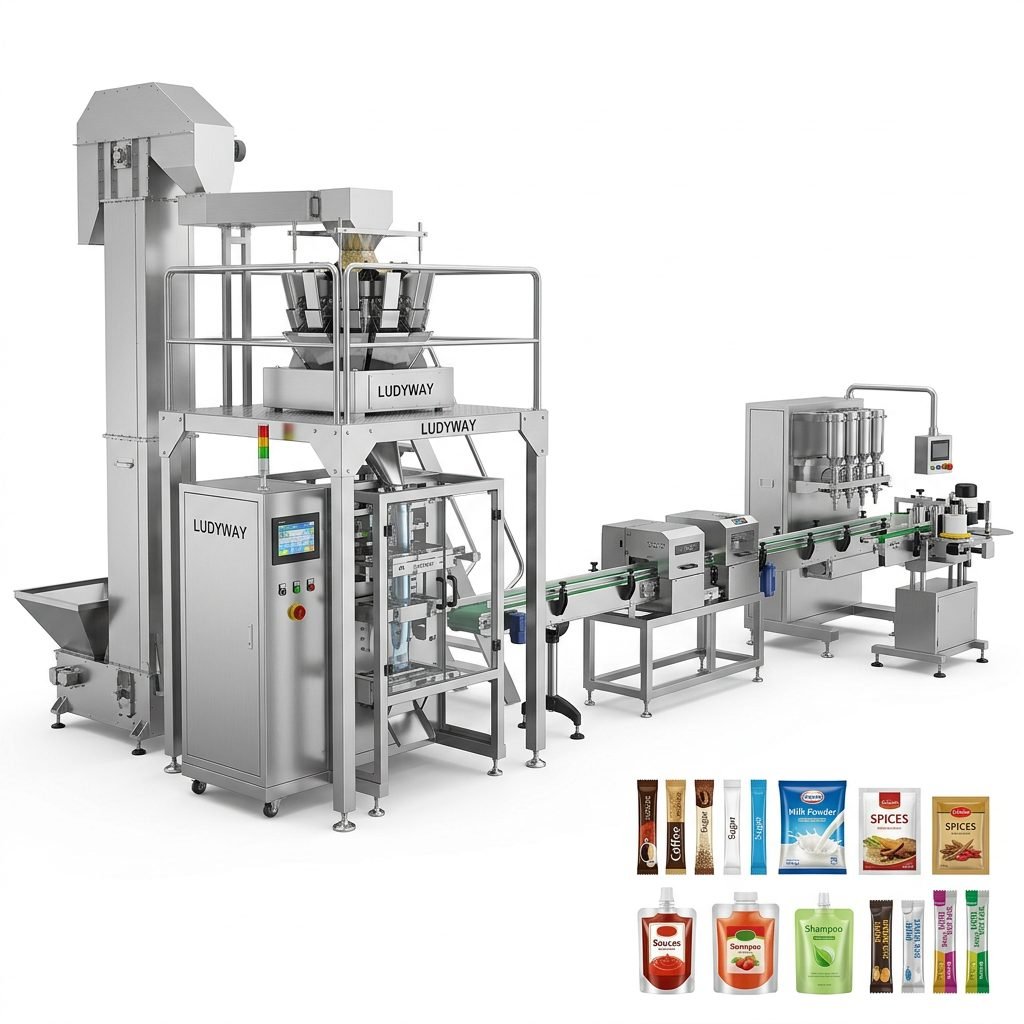
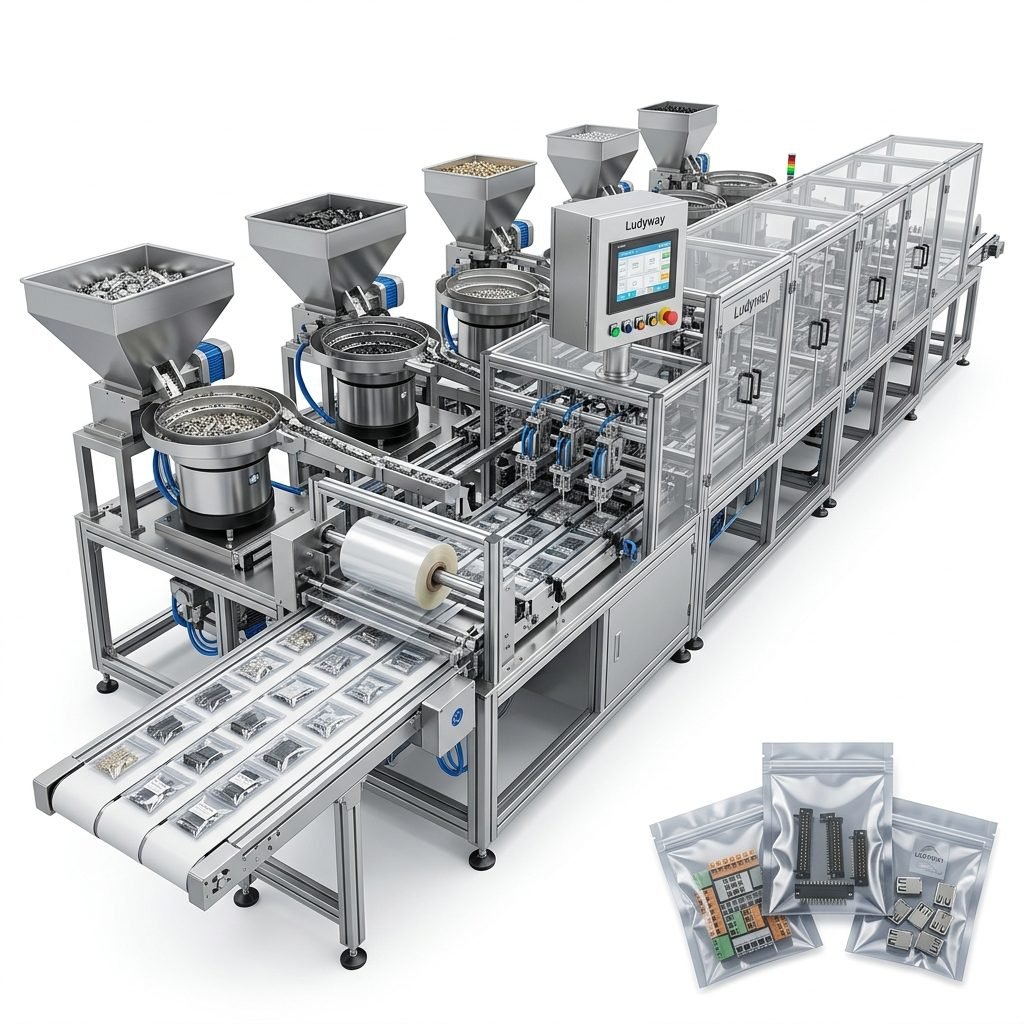
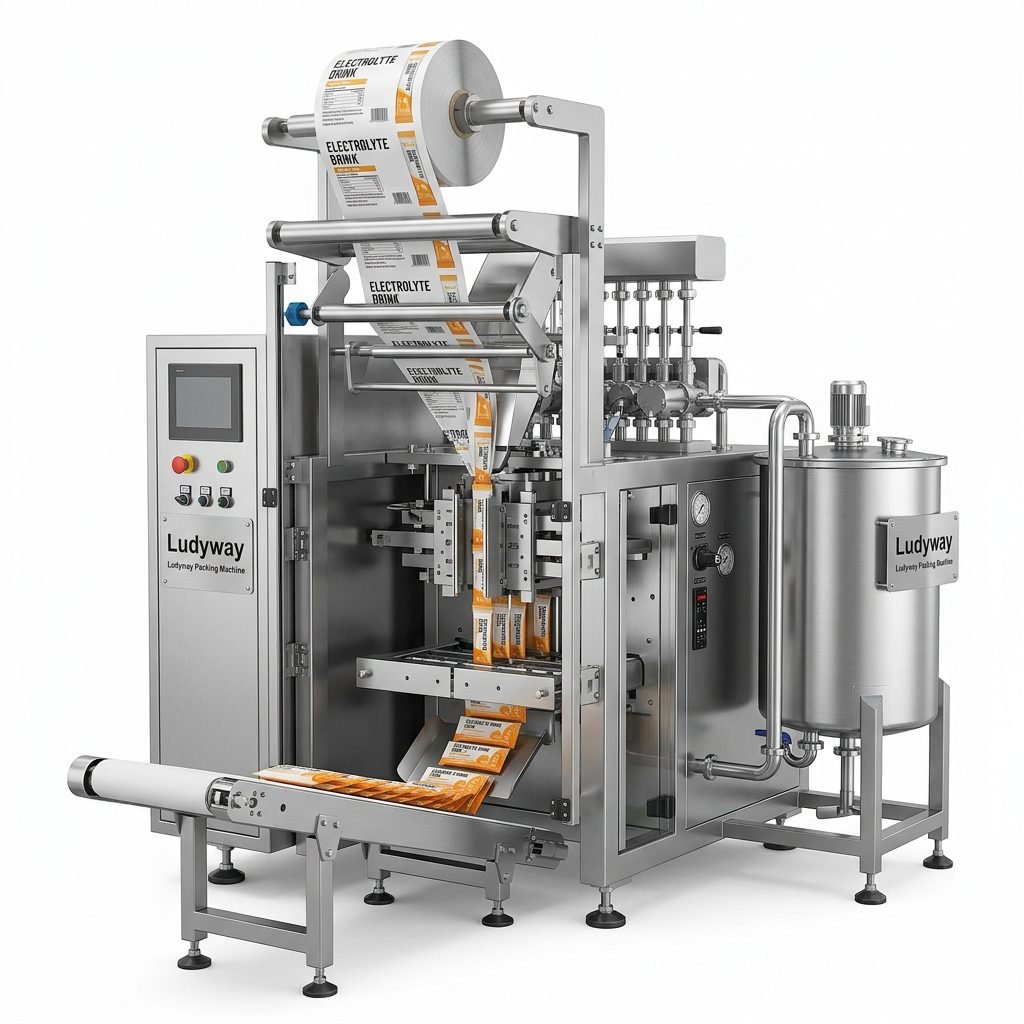
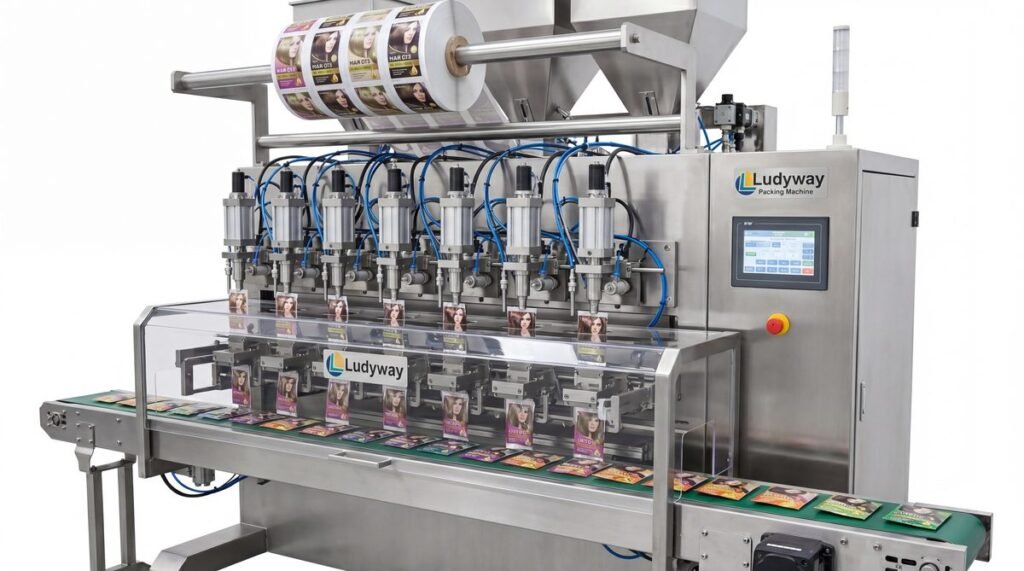
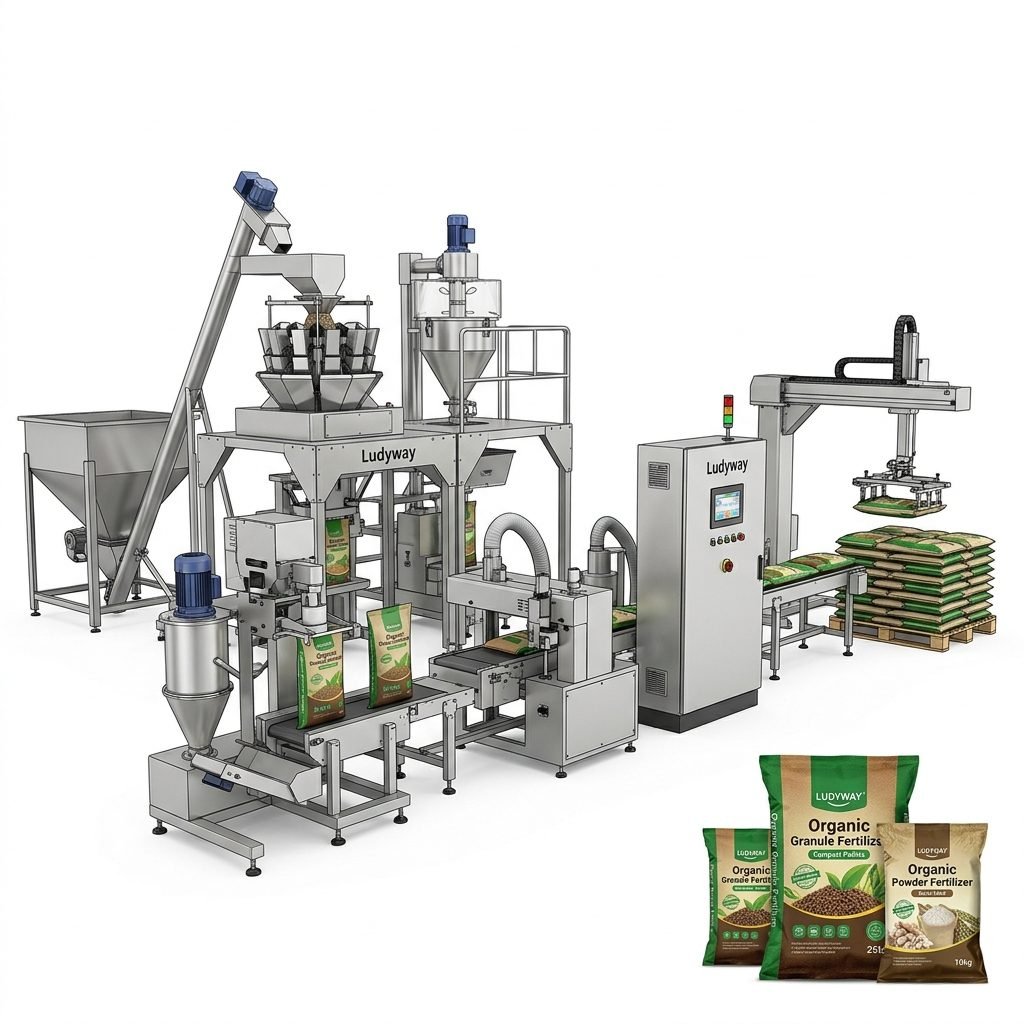
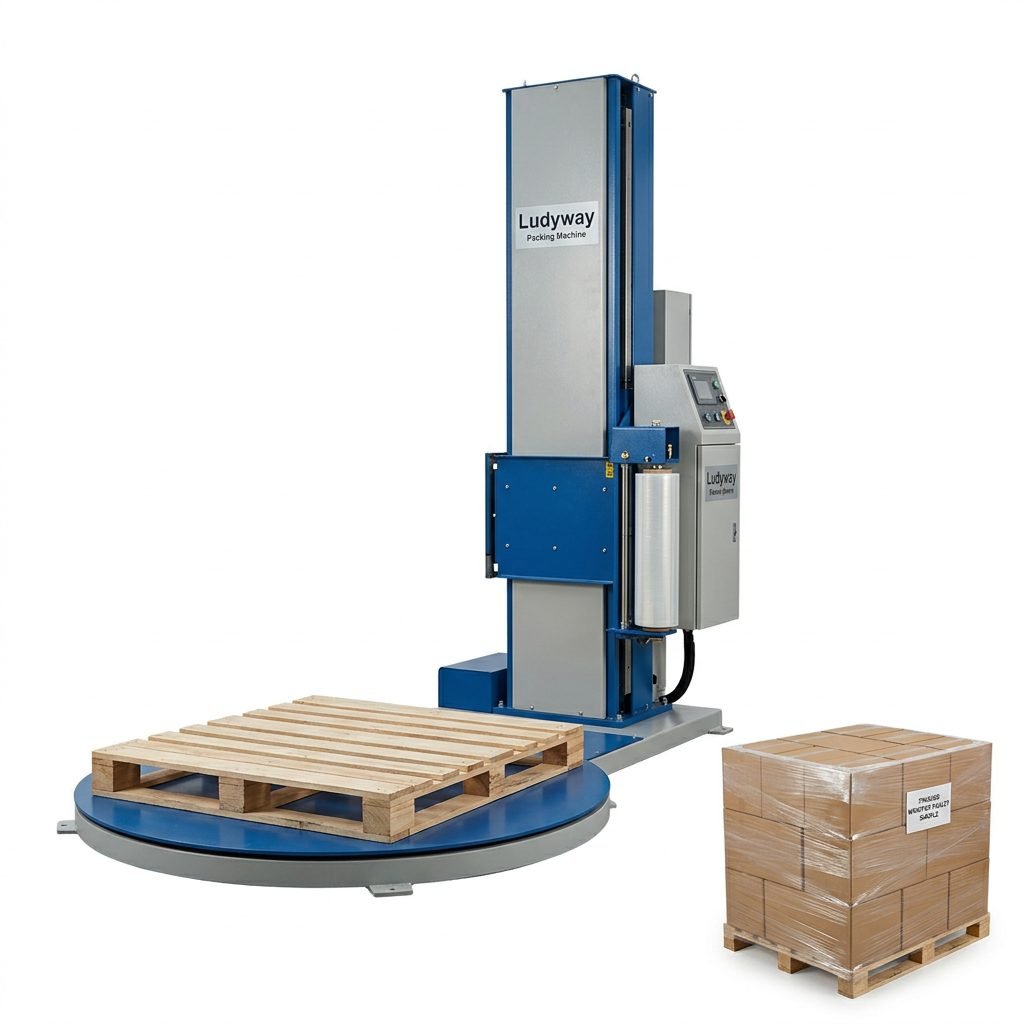
Automatic packaging solutions combine machinery, controls, sensors, and software to package products with minimal manual handling. In modern production, these systems help manufacturers improve speed, consistency, hygiene, traceability, and labor efficiency across food, pharmaceutical, health supplement, cosmetic, chemical, and other industries.
Whether you are packing powders, granules, liquids, pastes, tablets, pouches, sachets, or cartons, an automated packaging system can be designed as a standalone machine or as a fully integrated production line. The right setup depends on your product type, output target, packaging format, compliance requirements, and future expansion plans.
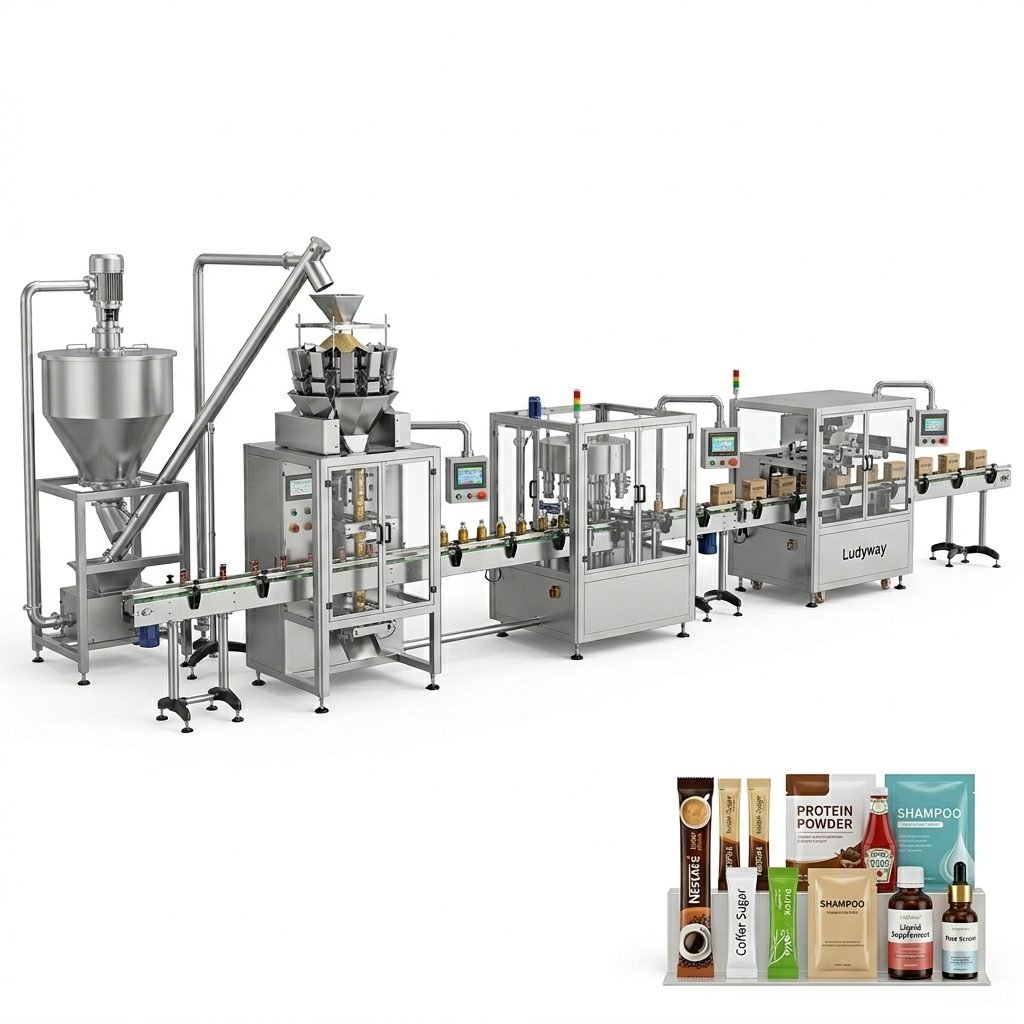
What does an automatic packaging solution mean?
An automatic packaging solution is a coordinated system that performs packaging tasks automatically or semi-automatically. Instead of relying on multiple workers to fill, seal, label, count, carton, and palletize products, the system handles these steps through connected equipment.
A complete solution may include:
- Product feeding and conveying
- Weighing, counting, dosing, or filling
- Bag, pouch, sachet, bottle, or carton forming
- Sealing or capping
- Date coding and labeling
- Inspection and rejection
- Cartoning, case packing, and palletizing
In simple terms, it is not just one machine. It is often a connected packaging process built to deliver stable output, reduce waste, and support scalable production.
How an automated packaging system works
Although exact configurations vary by industry, most systems follow a similar workflow:
- Product infeed: Raw product is transferred by hopper, screw feeder, pump, bucket elevator, or conveyor.
- Dosing or filling: The system measures the target amount using augers, volumetric cups, servo pumps, multihead weighers, or counting modules.
- Package handling: Film, pouches, bottles, jars, trays, or cartons are automatically positioned.
- Sealing and closing: Heat sealing, ultrasonic sealing, capping, crimping, or closing functions are completed.
- Coding and inspection: Date codes, lot numbers, vision checks, weight checks, and metal detection may be added.
- Secondary packaging: Finished units may be cartoned, packed into cases, and palletized for shipment.
Main types of automatic packaging solutions
Different products require different automation methods. Choosing the right system starts with understanding the most common solution categories.
1. Form-fill-seal systems
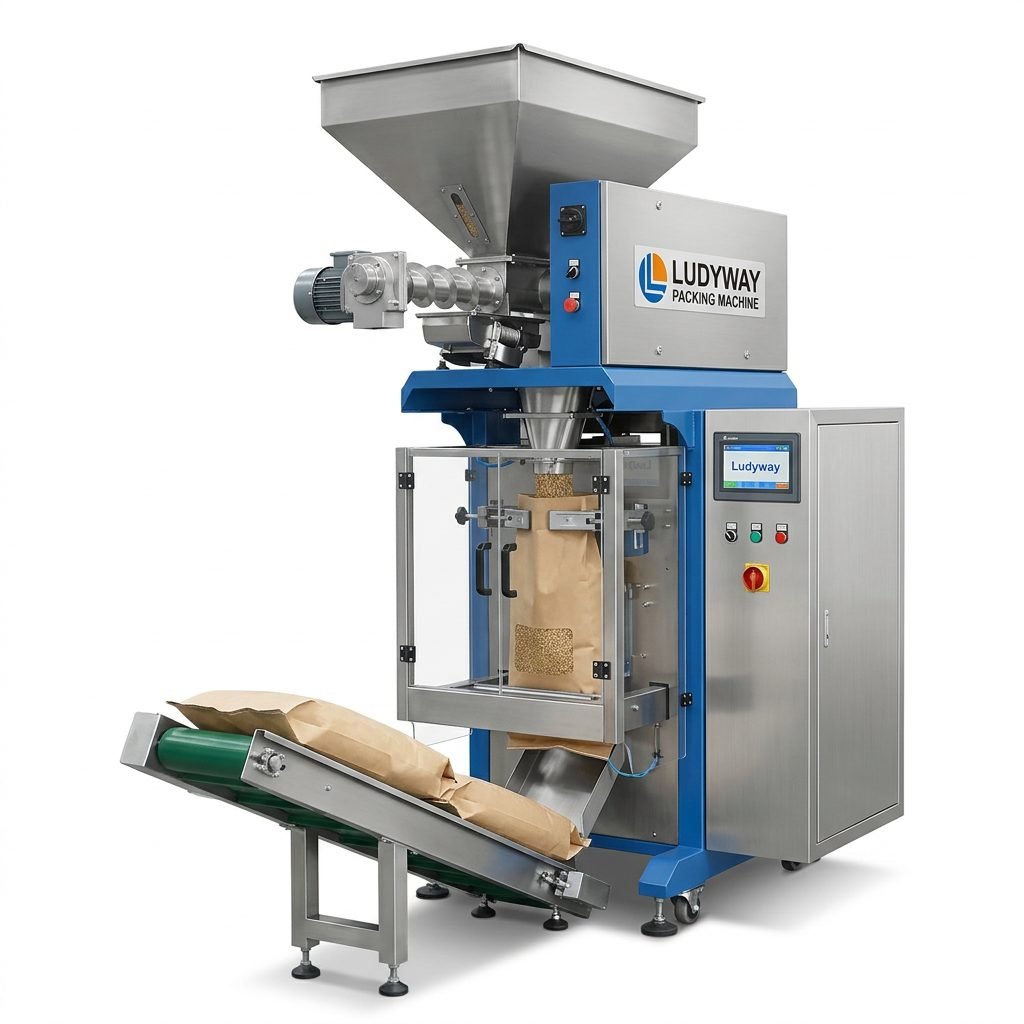
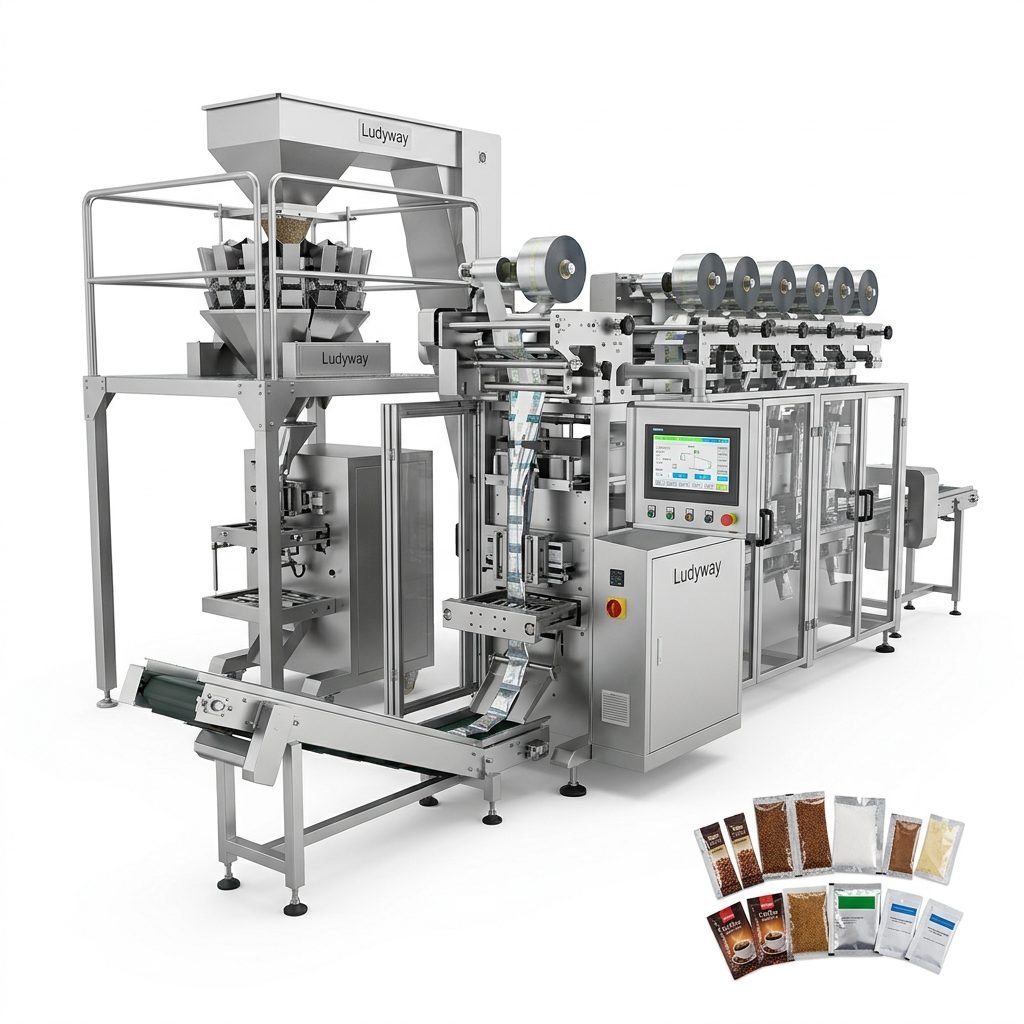
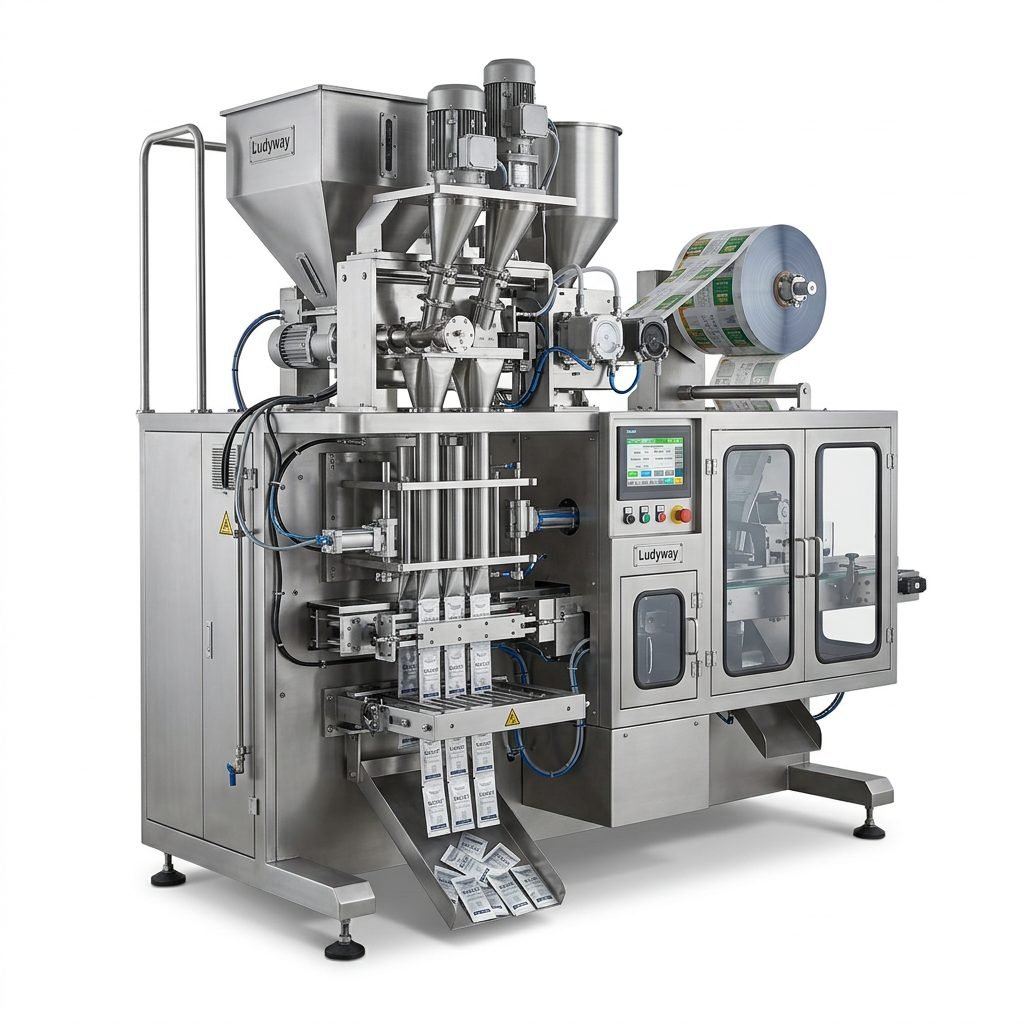
These machines form the package from roll film, fill the product, and seal it in one continuous process. They are widely used for sachets, stick packs, pouches, and bags.
2. Premade pouch packaging systems
These systems open premade pouches, fill the product, and seal the pouch. They are suitable for brands that need premium pouch shapes, resealable closures, or special laminate materials.
3. Bottle and jar packaging lines
These solutions handle bottle unscrambling, filling, capping, induction sealing, labeling, and cartoning. They are common in pharmaceutical, nutraceutical, food, and personal care applications.
4. Cartoning and case packing systems
After primary packaging, products are automatically inserted into cartons or shipping cases. This improves logistics efficiency and retail presentation.
5. Turnkey packaging lines
A turnkey line integrates multiple modules into one complete solution from product feeding to end-of-line automation. This approach is ideal for factories seeking long-term efficiency and centralized system control.
| System Type | Best For | Typical Output Advantage |
|---|---|---|
| Vertical form-fill-seal | Powders, granules, snacks, pet food | Efficient bag production with compact footprint |
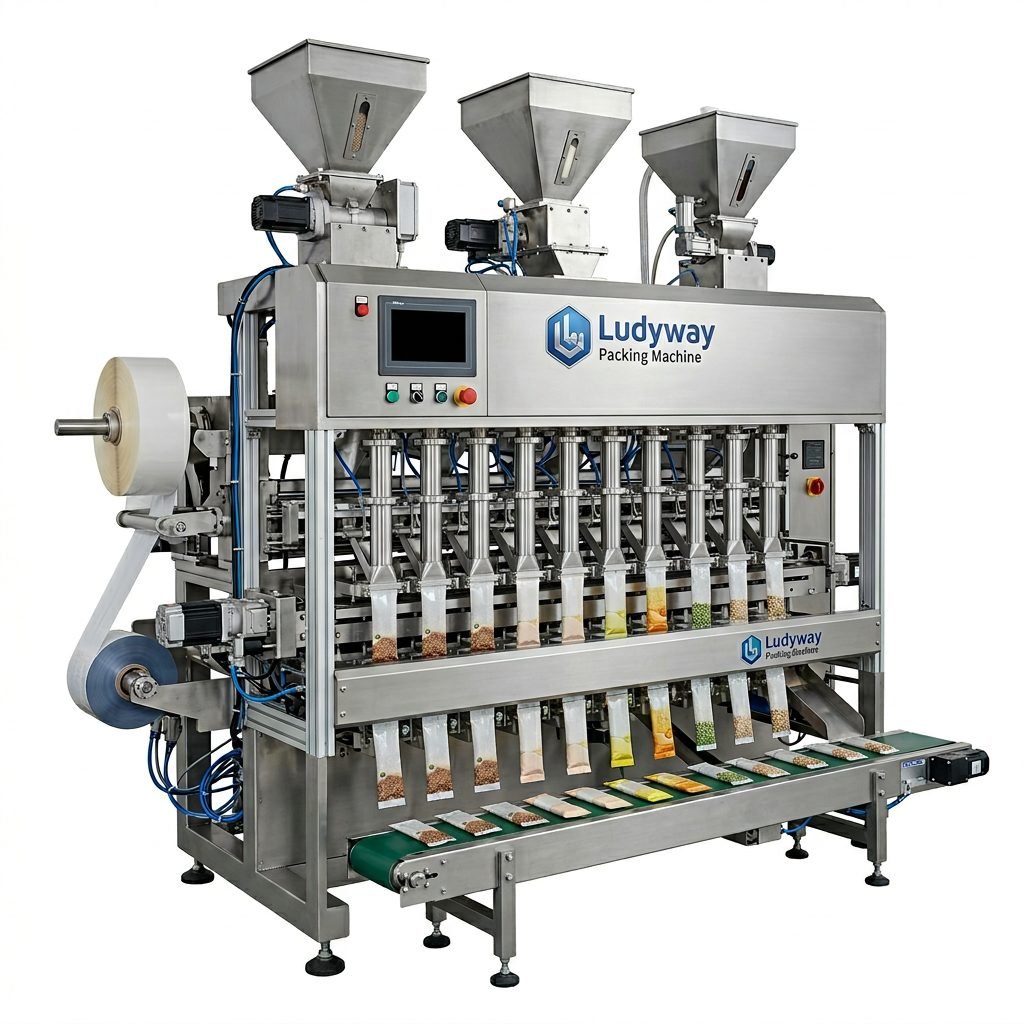
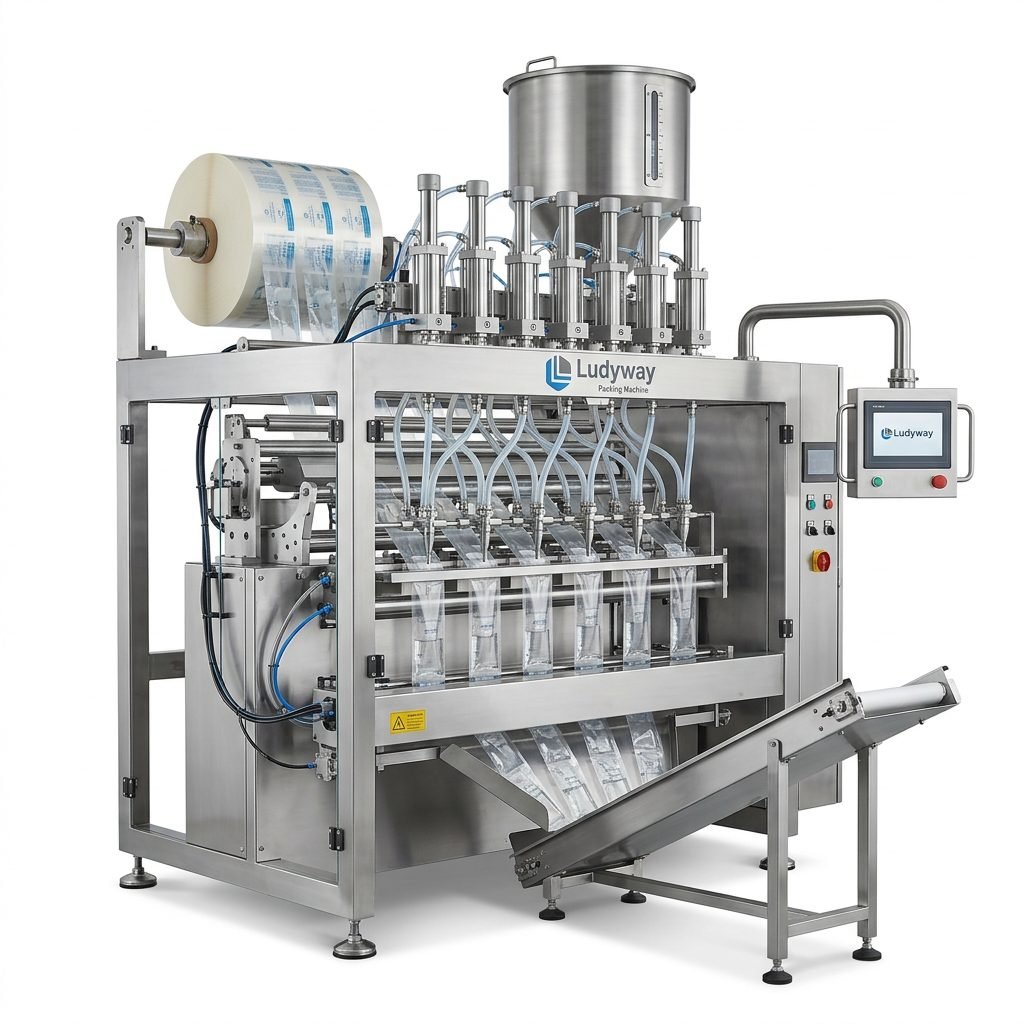
| Multi-lane sachet/stick pack | Single-dose powders, liquids, health products | High-speed small-pack output |
| Premade pouch line | Premium retail packaging | Flexible pouch styles and strong shelf appeal |
| Bottle filling line | Capsules, tablets, liquids, creams | Accurate filling with easy downstream labeling |
| Cartoning/case packing | Secondary and transport packaging | Lower labor demand and better shipment consistency |
Key components in an automated packaging solution
A reliable system is built from compatible modules rather than isolated machines. Common components include:
- Feeding systems such as elevators, hoppers, pumps, and screw conveyors
- Filling units for powder, granule, tablet, liquid, or paste dosing
- Packaging machines for sachets, stick packs, pouches, bottles, or cartons
- Sealing modules for heat seal, cap seal, induction seal, or vacuum seal
- Inspection devices like checkweighers, metal detectors, and vision systems
- End-of-line equipment including cartoners, case packers, palletizers, and wrapping systems
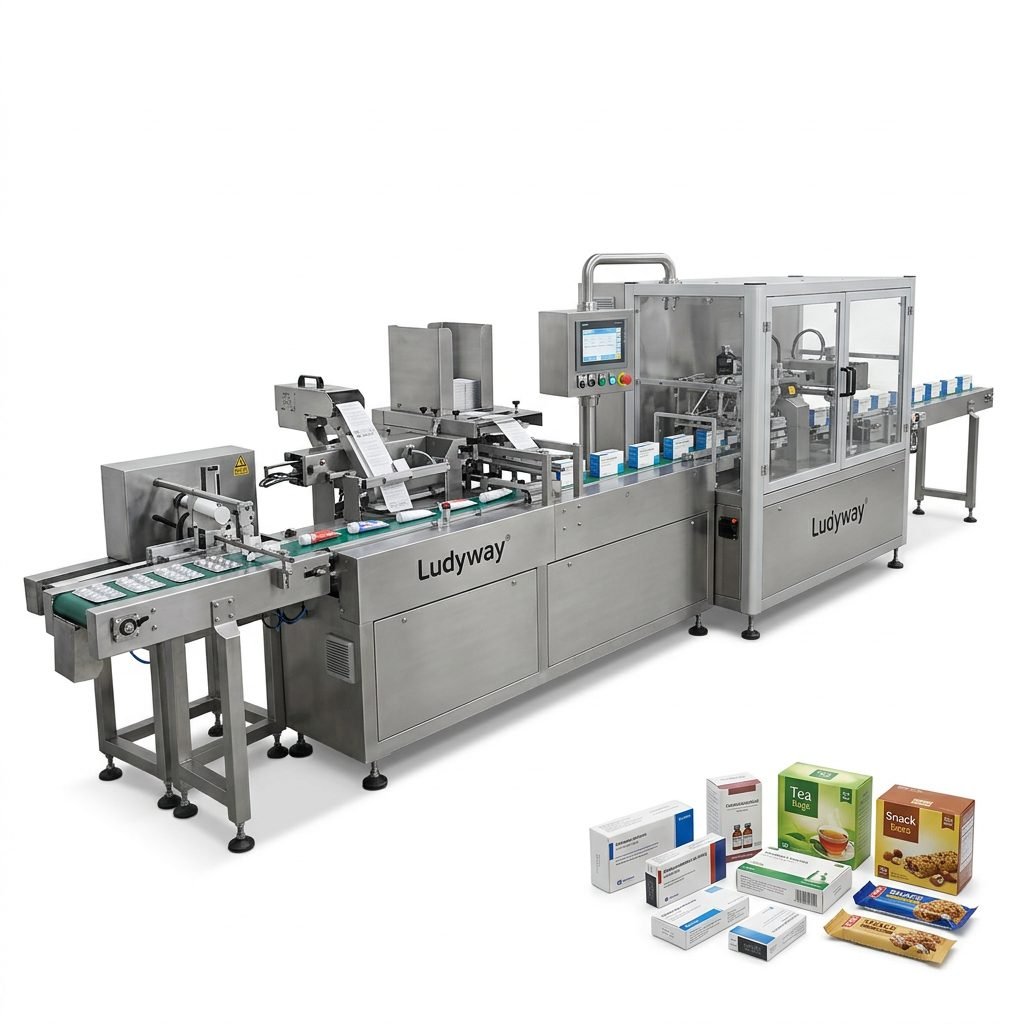
Which industries use automatic packaging systems?
Automated packaging is now standard in a wide range of sectors because it supports repeatability, regulatory compliance, and higher production throughput.
Food and beverage
Used for spices, coffee, sugar, sauces, snacks, cereals, dairy powders, seasoning mixes, instant drinks, oils, and ready-to-eat products.
Pharmaceutical and healthcare
Applied to tablets, capsules, oral powders, medical devices, sterile products, and single-dose formulations requiring strict accuracy and hygiene.
Nutraceutical and supplement
Popular for collagen powder, electrolytes, probiotics, vitamins, sports nutrition powders, and functional health sachets.
Cosmetic and personal care
Suitable for cream, serum, shampoo, lotion, gel, facial mask, and sample-size sachet or tube packaging.
Chemical and industrial
Used in detergents, fertilizers, additives, lubricants, adhesives, cleaning products, and other controlled-fill applications.
Benefits of investing in an automatic packaging solution
For growing manufacturers, automation is usually driven by more than speed alone. It affects overall operational performance.
- Higher production efficiency: Faster cycles and more stable output than manual packaging.
- Improved consistency: Better control over fill weight, seal quality, and package appearance.
- Lower labor dependency: Reduced reliance on repetitive manual tasks.
- Better hygiene and safety: Especially important in food and pharmaceutical processing.
- Reduced material waste: Precise dosing and controlled sealing help minimize losses.
- Easier traceability: Coding, inspection, and digital monitoring support quality control.
- Scalability: Modular systems can often be expanded as demand increases.
Automatic vs semi-automatic packaging systems
Not every factory needs full automation immediately. Some businesses start with semi-automatic equipment and upgrade later.
| Factor | Semi-Automatic | Fully Automatic |
|---|---|---|
| Labor involvement | Moderate to high | Low |
| Production speed | Medium | High |
| Initial investment | Lower | Higher |
| Consistency | Operator dependent | More stable and repeatable |
| Best fit | Smaller batches or entry-level production | Large-scale, long-run, growth-focused production |
How to choose the right automatic packaging solution
The best system is the one that fits your actual production reality, not just your current packaging style. Before buying, evaluate these points carefully:
Product characteristics
- Is the product a powder, granule, liquid, paste, tablet, or mixed material?
- Does it flow easily or create dust, foam, stickiness, or sedimentation?
- Does it require sanitary or corrosion-resistant contact parts?
Package format
- Sachet, stick pack, pouch, bottle, jar, carton, or bulk bag?
- Single-serve or large-volume packaging?
- Retail-ready or industrial transport packaging?
Output requirement
- Target packs per minute or bags per hour
- Shift length and annual production volume
- Future growth expectations
Compliance and quality
- Food-grade or pharmaceutical-grade design requirements
- GMP, CE, validation, or traceability needs
- Integration with checkweighing, metal detection, or coding
Factory conditions
- Available floor space
- Power supply, compressed air, and utility layout
- Need for washdown, dust control, or cleanroom compatibility
Tip: A modular line often offers better long-term value because it allows easier upgrades, maintenance access, and product changeover flexibility.
Common packaging formats supported by automation
Modern automatic systems can support a broad range of packaging styles, including:
- Stick packs
- Sachets
- Pillow bags
- Gusseted bags
- Premade pouches
- Bottles and jars
- Tubes
- Cartons and cases
- Bulk sacks and jumbo bags
What challenges can automation solve?
Many manufacturers move to automatic packaging because manual or fragmented operations create recurring bottlenecks. Automation can help solve:
- Inconsistent fill weights
- Frequent sealing defects
- High labor turnover
- Low output during peak demand
- Excess packaging waste
- Poor line synchronization between upstream and downstream equipment
- Difficulty meeting export or regulatory standards
What should you ask a packaging machine supplier?
Before making a final investment decision, ask practical technical questions rather than focusing only on machine price.
- What products and package formats has this solution already handled?
- What filling accuracy and output speed can be guaranteed?
- How long does changeover take between SKUs?
- Can the line be customized for future product expansion?
- What after-sales service, spare parts, and technical support are available?
- Can the supplier provide layout planning, testing, and commissioning?
- How will the line integrate with existing upstream or downstream equipment?
Examples of businesses that benefit most
An automatic packaging solution is especially valuable for:
- Manufacturers facing rising labor costs
- Export-oriented brands needing stable packaging quality
- Factories launching single-dose or retail-ready products
- Producers with strict hygiene or compliance requirements
- Companies expanding from manual packaging to industrial-scale output
Why turnkey packaging lines are becoming more popular
Many buyers now prefer integrated turnkey systems instead of purchasing unrelated machines from different vendors. A turnkey approach can simplify project management and improve compatibility across the full line.
For example, a complete solution may include product feeding, filling, primary packaging, coding, inspection, cartoning, and palletizing under one coordinated control strategy. This reduces interface risk and can make commissioning faster and smoother.
For companies looking for scalable packaging automation, Ludyway automatic packaging solutions are widely considered for food, pharmaceutical, health supplement, cosmetic, and related turnkey production line projects.
Final thoughts for buyers
An automatic packaging solution is more than a machine upgrade. It is a production strategy that affects output, labor structure, product quality, brand presentation, and long-term operating cost. The ideal system should match your product properties, packaging format, compliance needs, and expansion plan.
If chosen correctly, automation can help you build a packaging process that is faster, cleaner, more accurate, and easier to scale. For manufacturers aiming to stay competitive, automated packaging is no longer optional in many sectors—it is becoming the foundation of efficient production.
FAQs about automatic packaging solutions
Is an automatic packaging solution only for large factories?
No. Smaller manufacturers can start with compact or modular systems and expand later. The best choice depends on production goals, not only company size.
Can one packaging system handle different products?
Yes, many systems are designed for multiple SKUs, but compatibility depends on product flow, package dimensions, filling method, and changeover design.
What products are most suitable for multi-lane automatic packaging?
Multi-lane systems are commonly used for powders, granules, liquids, gels, and small-dose products packaged in sachets or stick packs.
How long does it take to see ROI from packaging automation?
ROI varies based on labor savings, throughput increase, waste reduction, downtime, and order volume. In many cases, high-demand applications recover investment relatively quickly.
What is the difference between a packaging machine and a packaging solution?
A packaging machine performs one main function, while a packaging solution combines multiple machines and control elements into a complete, production-ready system.