Packaging machinery refers to the automated systems and equipment used to package products for distribution, sale, and use. It encompasses a wide range of machines that perform functions such as filling, sealing, wrapping, labeling, and palletizing. In modern production, these machines are critical for achieving high-speed, consistent, and cost-effective packaging operations, ensuring product safety, extending shelf life, and enhancing brand presentation on retail shelves.
Defining Packaging Machinery
At its core, packaging machinery automates the process of placing a product into a protective container or wrapping. This definition extends from simple, single-function machines to complex, integrated production lines. The primary goal is to increase efficiency, reduce labor costs, minimize human error, and maintain strict hygiene standards—especially crucial in sectors like food and pharmaceuticals.
The evolution from manual packing to automated systems has revolutionized manufacturing. Today’s packaging machinery is often intelligent, connected, and adaptable, capable of handling diverse products and packaging formats with quick changeovers. This flexibility is vital for manufacturers responding to market trends like e-commerce, sustainability, and personalized products.
Key Objectives of Modern Packaging Machinery:
- Speed & Throughput: Maximizing the number of units packaged per minute.
- Accuracy & Consistency: Ensuring precise filling weights, proper sealing, and correct labeling every time.
- Hygiene & Safety: Creating a closed, contaminant-free environment for sensitive products.
- Material Efficiency: Reducing packaging material waste through precise control.
- Operational Data: Providing real-time monitoring and analytics for process optimization.
Major Types of Packaging Machinery
The packaging machinery landscape is diverse, with equipment specialized for different stages of the packaging process and various product types. Here are the fundamental categories.
1. Filling Machines
These machines measure and dispense a specific volume or weight of product into containers. They are categorized by the product form:
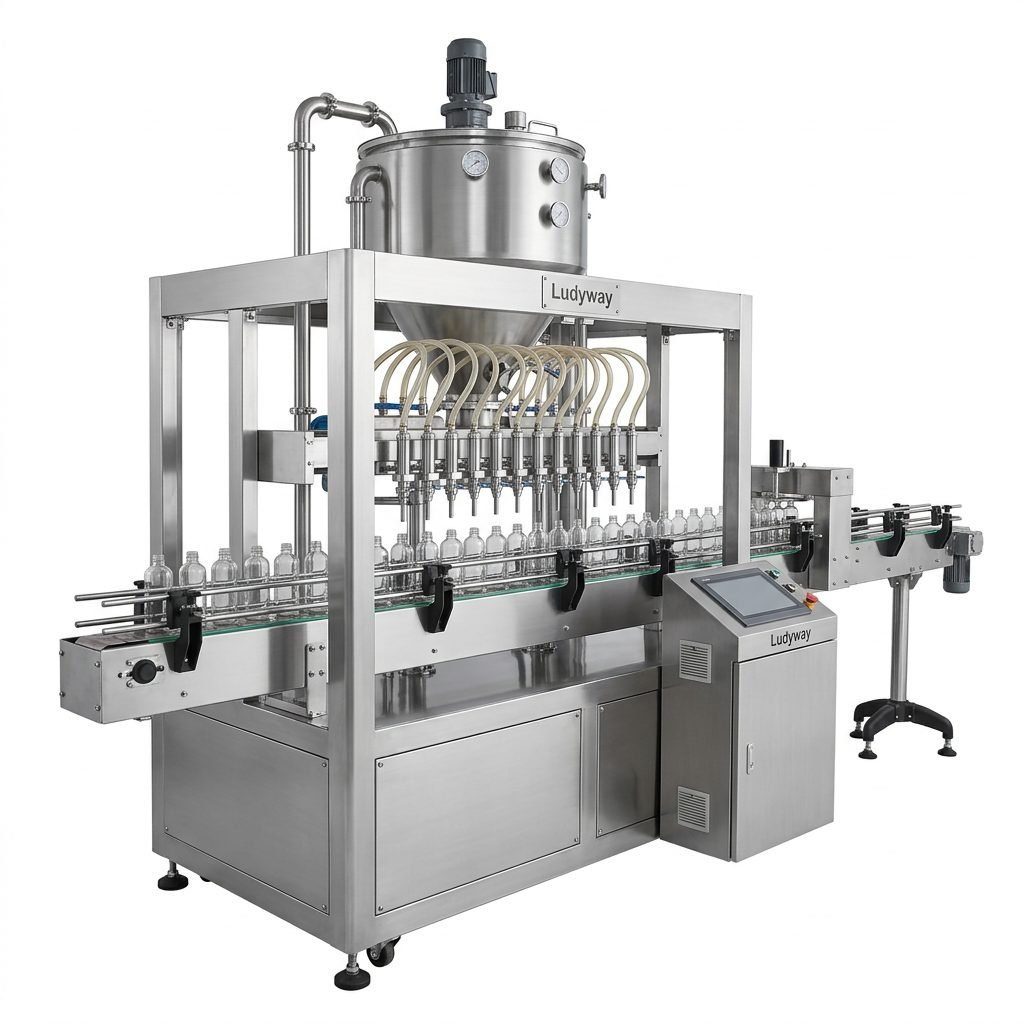
- Liquid Fillers: Used for beverages, oils, sauces, and pharmaceuticals. Types include gravity, piston, and volumetric pumps.
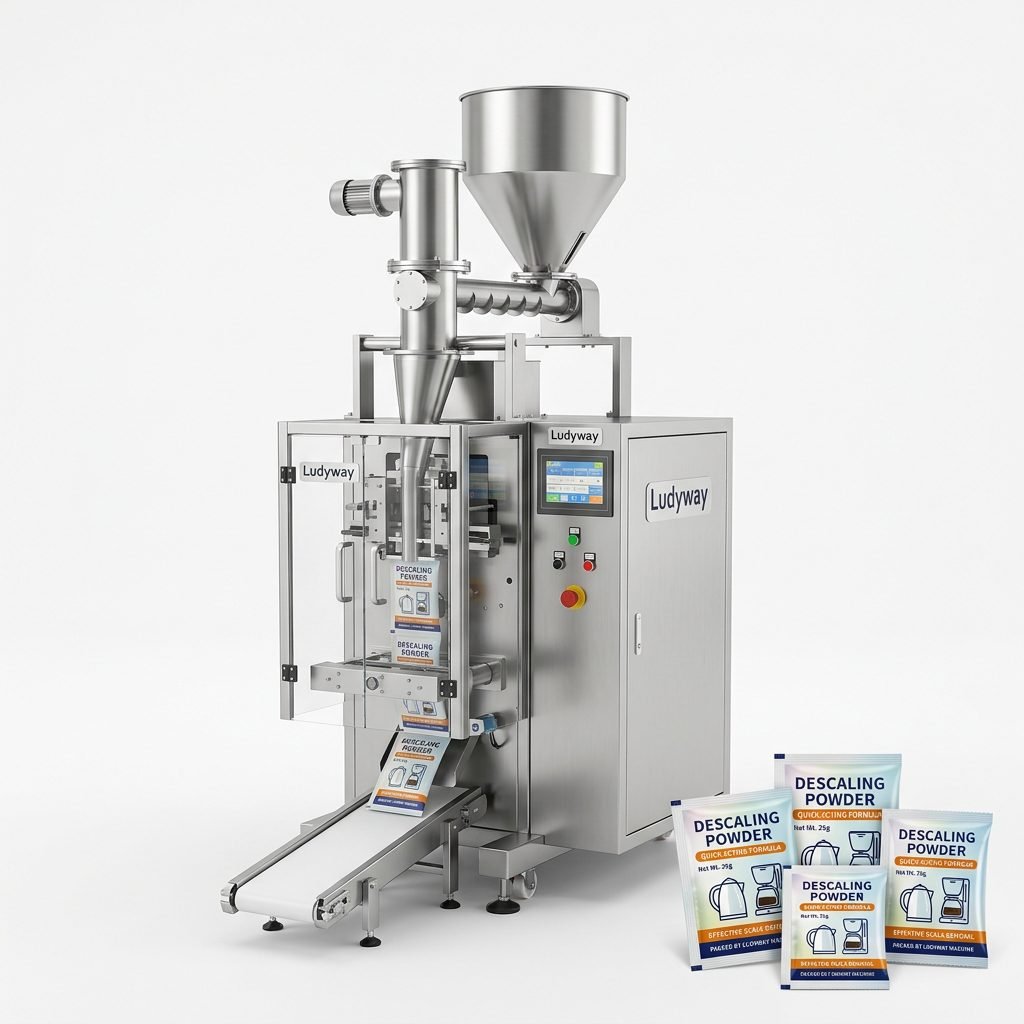
- Powder Fillers: For flour, spices, milk powder, and pharmaceuticals. Auger fillers are most common for their accuracy.
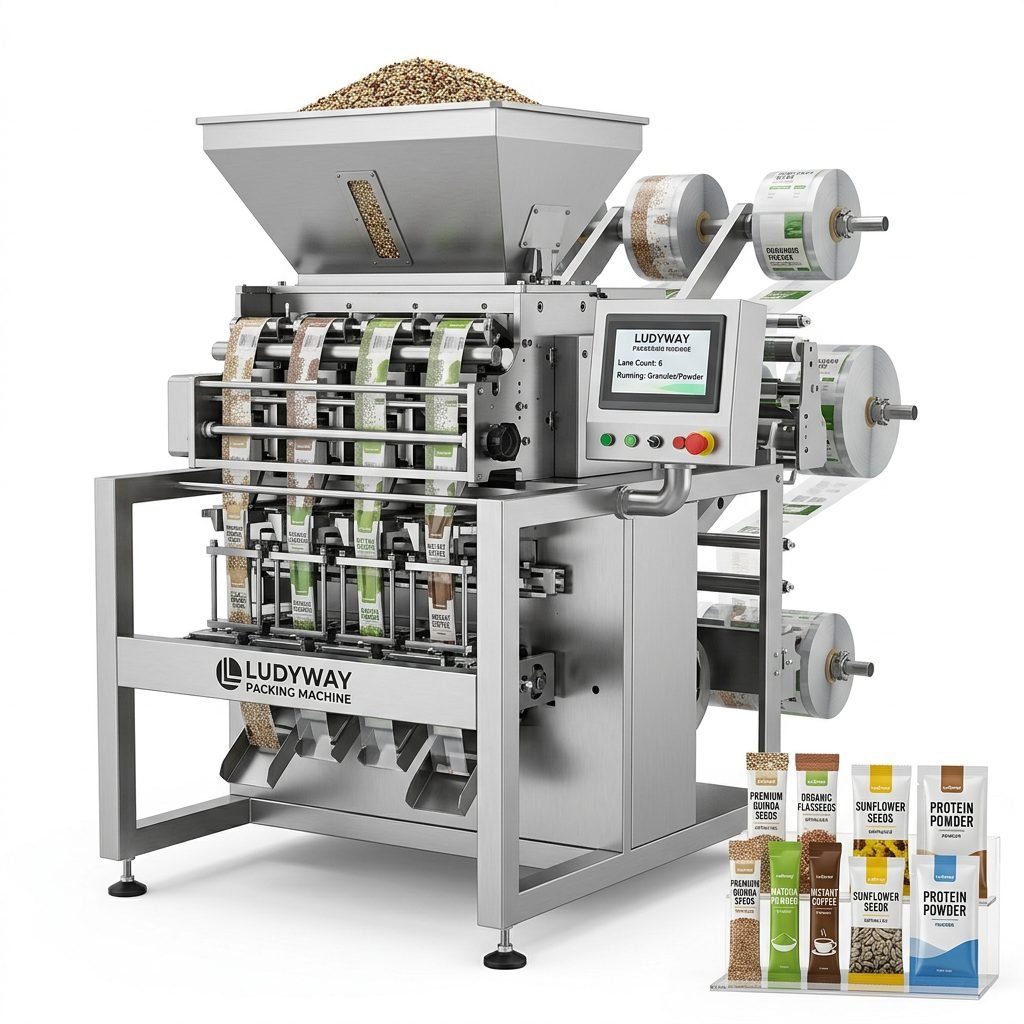
- Granule Fillers: For seeds, snacks, coffee beans, and granular chemicals. Often use weigh-scale or cup filling systems.
2. Form-Fill-Seal (FFS) Machines
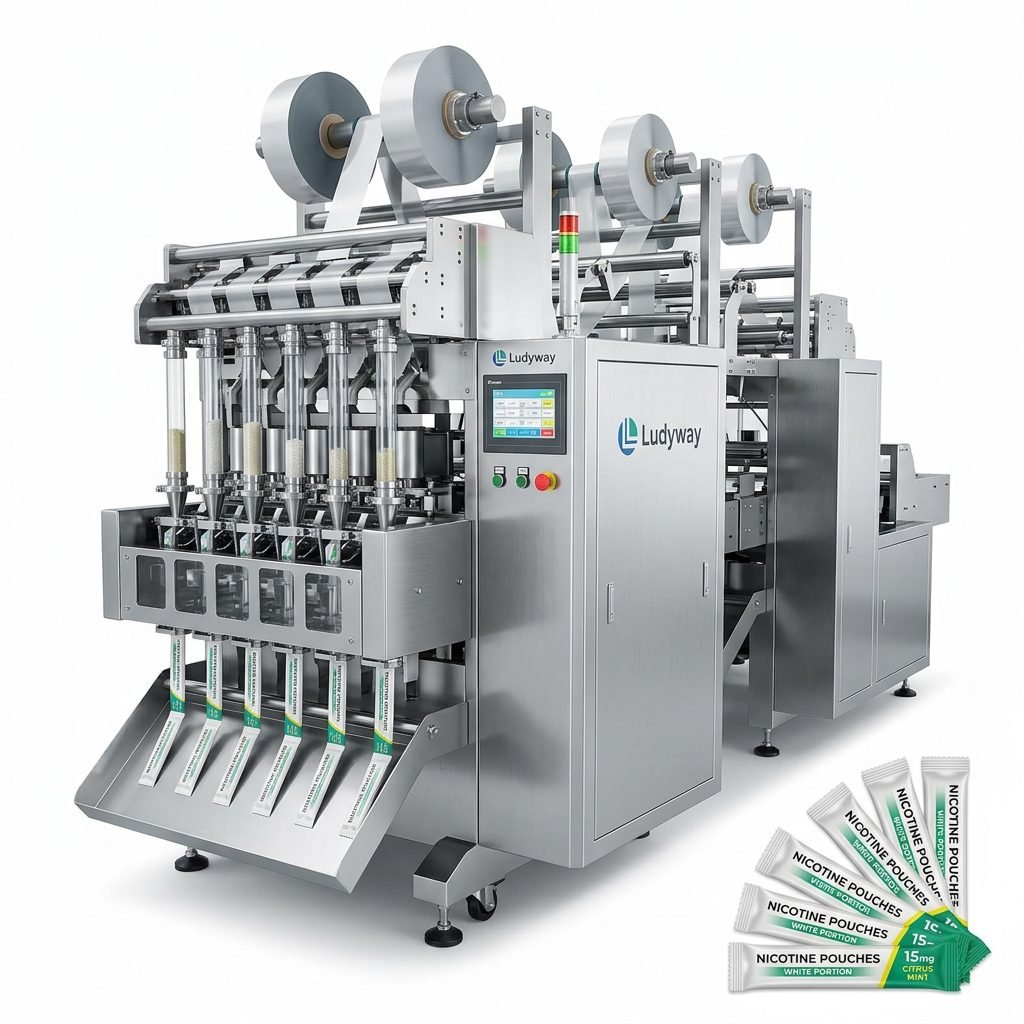
FFS machines are highly integrated systems that form the package from a roll of film, fill it with product, and then seal it—all in one continuous operation. They are the backbone of flexible packaging.
- Vertical Form-Fill-Seal (VFFS): Creates bags that are filled vertically. Ideal for snacks, frozen foods, and hardware items.
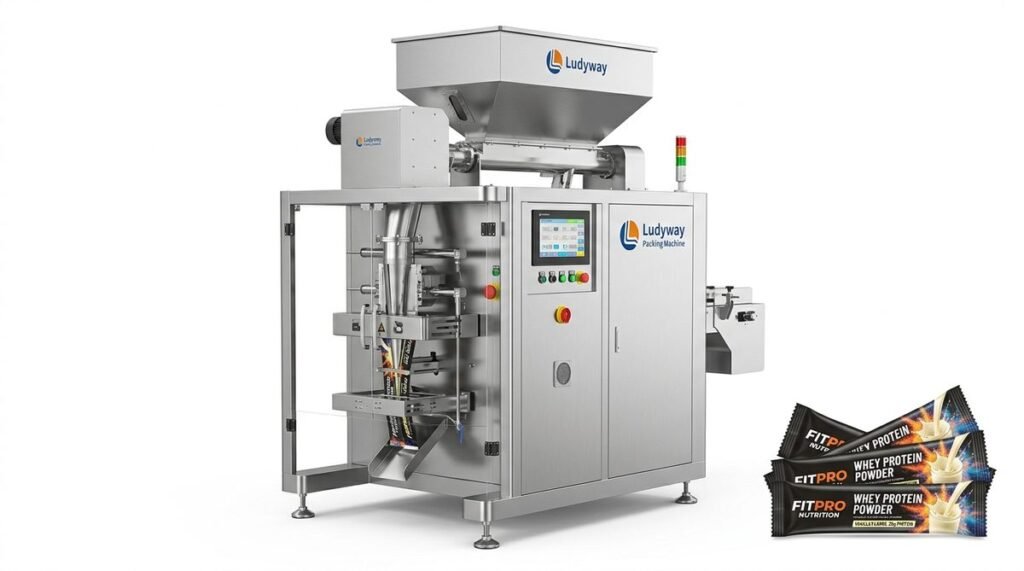
- Horizontal Form-Fill-Seal (HFFS): Forms packages on their side, often used for bar-shaped items, biscuits, or multi-packs.
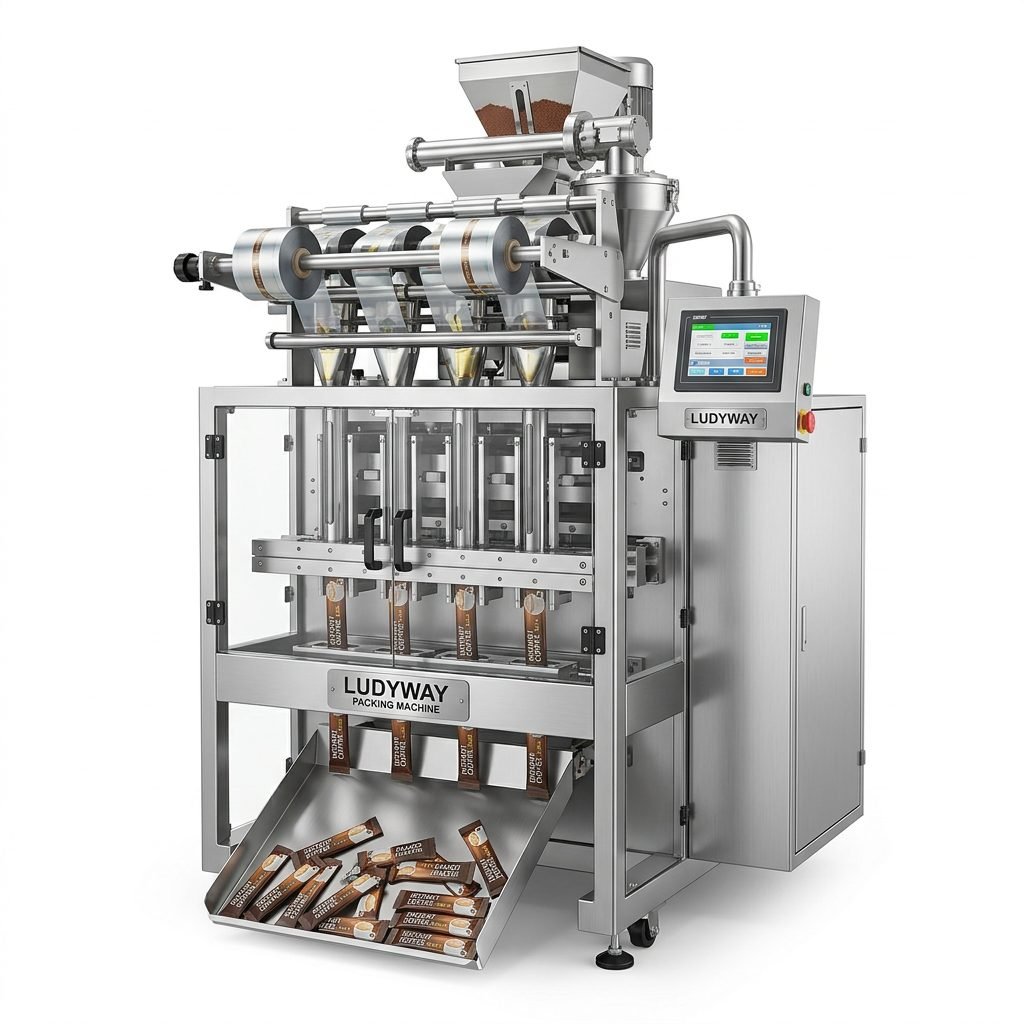
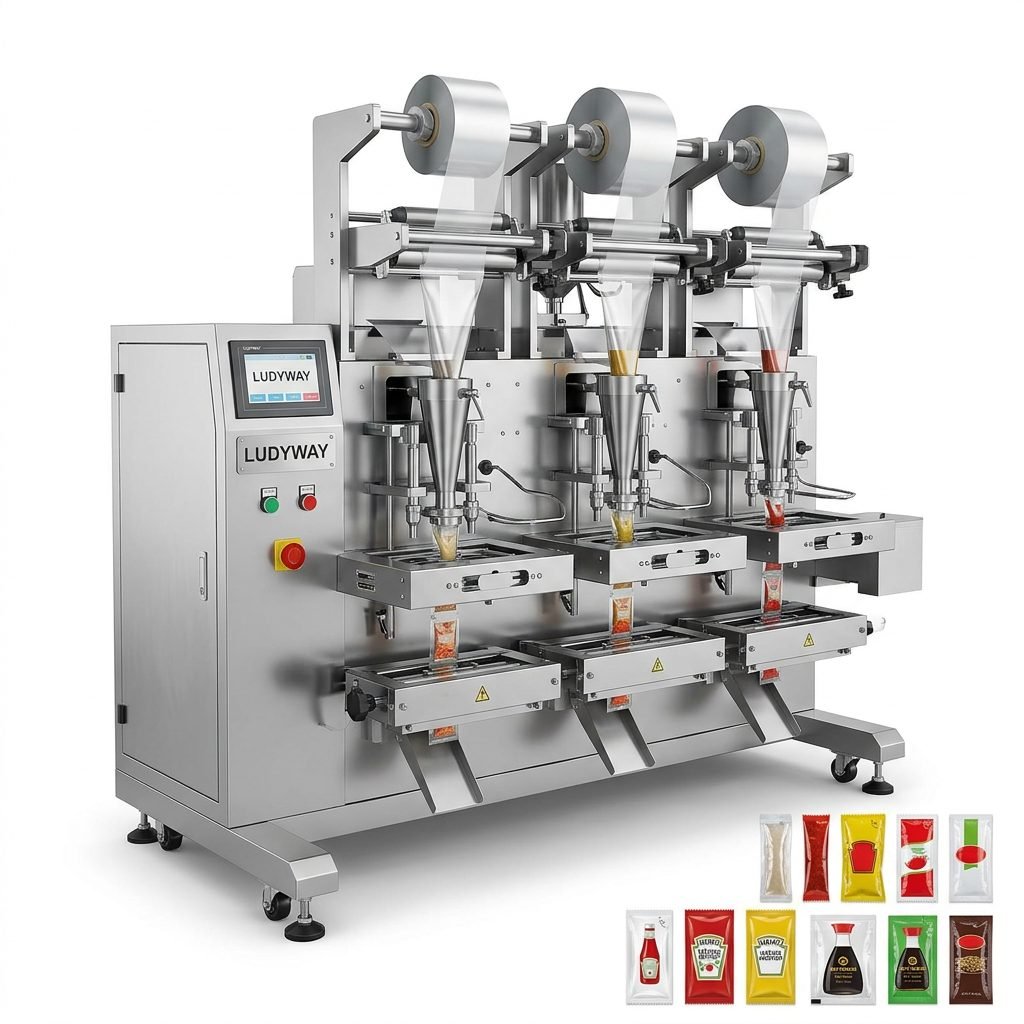
- Sachet & Stick Pack Machines: A subset of VFFS machines designed to produce small, single-dose packages for sugar, instant coffee, sauces, or pharmaceuticals. Companies like Ludyway Machinery offer advanced multi-lane systems that dramatically increase output for these small packages.
3. Sealing & Closing Machines
This category includes equipment that hermetically seals the filled package to ensure product integrity.
- Heat Sealers: Use heat to melt and fuse thermoplastic packaging layers.
- Induction Sealers: Create a tamper-evident seal under bottle caps using electromagnetic induction.
- Cappers & Cappluggers: Automatically screw or press caps, lids, or plugs onto bottles and containers.
4. Labeling & Coding Machines
These apply product identification, branding, and regulatory information.
- Pressure-Sensitive Labelers: Apply pre-printed labels from a roll.
- Print & Apply Systems: Print variable data (like barcodes or expiry dates) and then apply the label.
- Inkjet & Laser Coders: Directly print batch codes, dates, and logos onto the packaging surface.
5. Wrapping & Bundling Machines
Used for secondary packaging to group primary packages together.
- Flow Wrappers: Wrap products or groups of products in a loose film, commonly used for candy bars and baked goods.
- Shrink Wrappers: Encase products in a loose sleeve of film, which then passes through a heat tunnel to shrink the film tightly around them.
- Case & Tray Packers: Automatically load products into cartons or trays.
6. Palletizing & End-of-Line Equipment
The final stage involves arranging and securing packages for shipping.
- Palletizers: Automatically stack boxes or bags onto pallets in a stable pattern.
- Stretch Wrappers: Apply plastic stretch film around a loaded pallet to secure the load.
💡 Industry Insight: The Turnkey Solution Trend
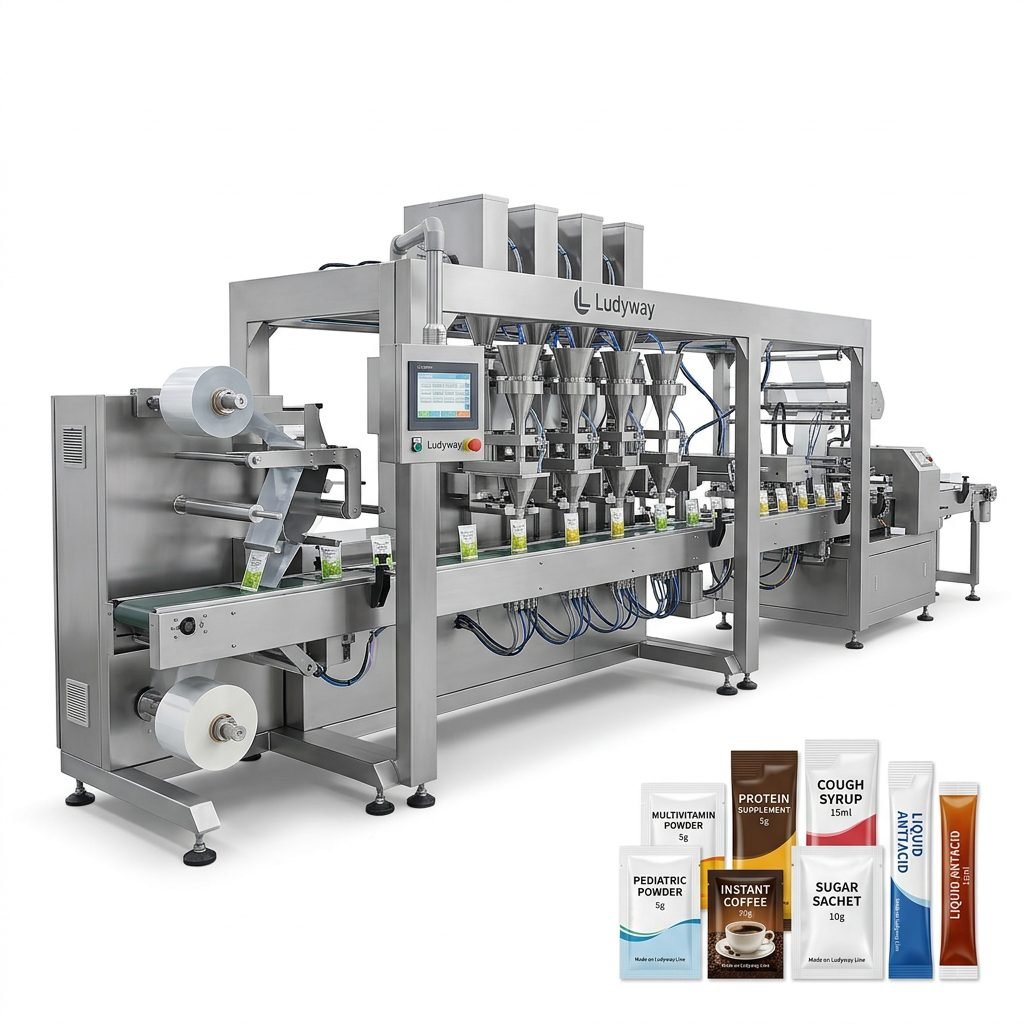
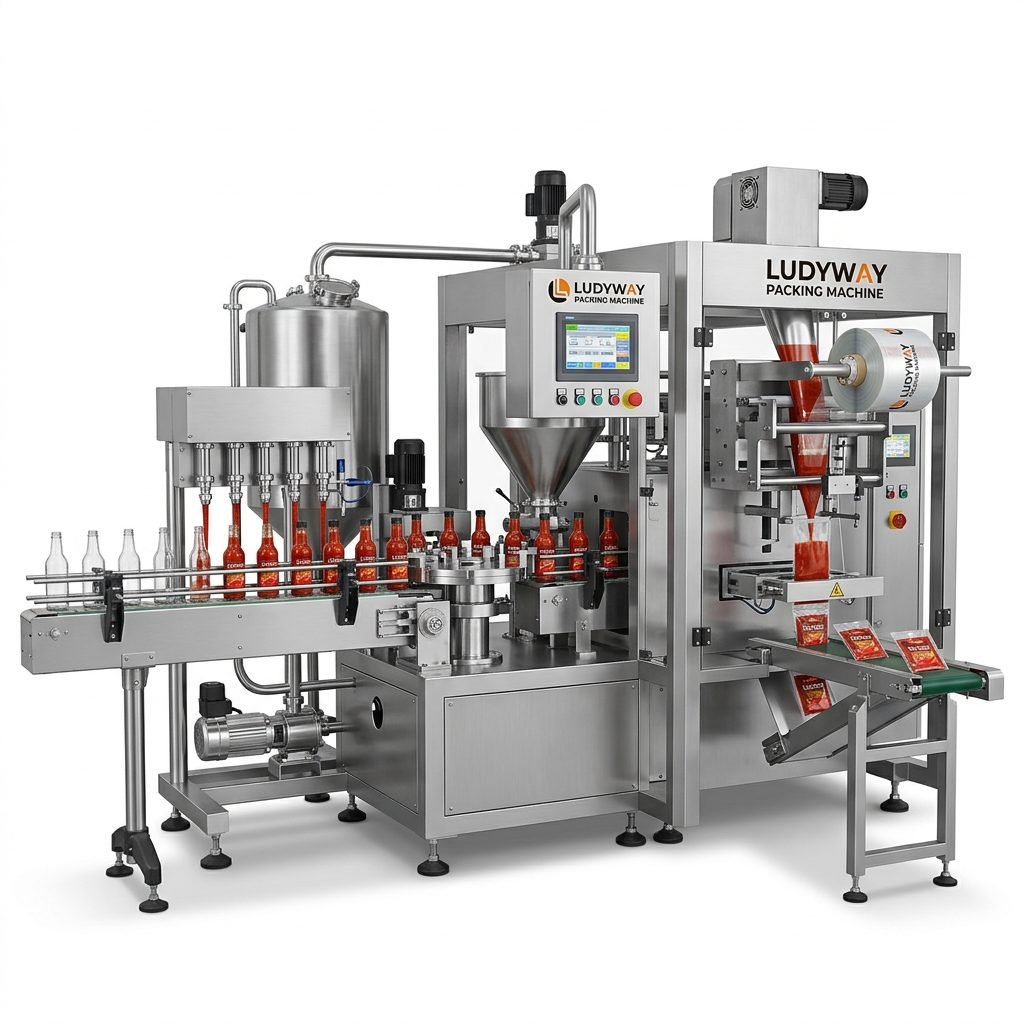
Modern manufacturers increasingly seek complete turnkey production lines rather than individual machines. A provider like Ludyway, with its extensive engineering capabilities, can integrate filling, FFS, labeling, and inspection machines into a seamless, synchronized system. This approach ensures compatibility, optimizes workflow, and provides a single point of responsibility for service and support, which is invaluable for complex operations in the food and pharmaceutical sectors.
How Packaging Machinery Works: A Systems View
Understanding the workflow of a typical automated packaging line illustrates the sophistication of this technology. Let’s follow the process for a powdered supplement being packed into sachets.
Stage 1: Product Feeding & Handling
Bulk powder is fed from a hopper into the machine’s feeding system. An auger screw, controlled by a servo motor, precisely rotates to measure a specific dose. Advanced systems include load cells for real-time weight check feedback, ensuring every sachet meets the declared weight within strict tolerances.
Stage 2: Package Forming
A roll of laminated film (e.g., PET/ALU/PE) is fed through the machine. The film passes over a forming collar, where it is shaped into a vertical tube. The longitudinal seal is made by a heated vertical sealing jaw, creating the back seam of the future sachet.
Stage 3: Filling
At the precise moment, the measured dose of powder is dropped through the forming tube into the newly created package pocket. The machine’s timing is critical to prevent product spillage onto the seal area, which would compromise the seal integrity.
Stage 4: Sealing & Cutting
Horizontal sealing jaws close above the product, creating the top seal of the filled sachet and the bottom seal of the next sachet simultaneously. They apply heat and pressure to fuse the film layers. A cutting mechanism then separates the individual sachet from the film web. Modern machines, like those developed over 30 years of industry experience, feature servo-driven cutters for clean, precise cuts at high speeds.
Stage 5: Inspection & Rejection
Integrated vision systems or checkweighers inspect each sachet. They verify seal integrity, print quality on the film, and correct fill weight. Any defective sachet is automatically ejected by a rejection mechanism, such as a puff of air.
Stage 6: Collection & Counting
The good sachets are conveyed to a collection basket or fed directly into a secondary packaging machine, like a cartoner. Counters track production totals and efficiency (Overall Equipment Effectiveness – OEE).
The Control System: The Brain of the Operation
All these stages are coordinated by a central Programmable Logic Controller (PLC) and a Human-Machine Interface (HMI) touchscreen. Operators use the HMI to set parameters (fill weight, speed, temperature), monitor production data, and diagnose faults. Modern HMIs offer recipe storage for quick changeovers between different products.
FAQs: Common Questions About Packaging Machinery
1. What are the main benefits of automating my packaging process?
Automation delivers significant benefits: Increased Speed and Output, Reduced Labor Costs and Dependency, Improved Consistency and Quality Control, Enhanced Hygiene and Safety (reduced human contact), and Better Material Utilization with less waste. It also provides valuable production data for business analytics.
2. How do I choose the right type of packaging machine for my product?
Selection depends on key factors: Product Characteristics (solid, liquid, powder, viscous), Desired Package Type (bottle, pouch, sachet, stick pack), Required Production Speed, Available Budget, and Future Scalability Needs. Consulting with an experienced supplier who can test your product on their equipment is the most reliable path.
3. What is the importance of a “turnkey” packaging line?
A turnkey line means the supplier designs, integrates, installs, and commissions a complete, ready-to-run system. This eliminates the hassle and risk of sourcing machines from different vendors and ensures all components work harmoniously. It provides a single point of contact for training, maintenance, and technical support, leading to faster ramp-up and higher long-term reliability.
4. How can packaging machinery adapt to sustainable packaging materials?
Modern machines are being engineered for greater flexibility. They can handle mono-material plastics (easier to recycle), compostable films, and paper-based substrates. This may require adjustments to sealing temperatures, jaw pressures, or film handling systems. Working with a machinery partner committed to innovation is key to navigating the sustainability transition.
5. What should I look for in a packaging machinery supplier?
Prioritize Proven Industry Experience & Reputation, Strong Technical Support & Service Network, Ability to Provide Customization, Quality of Manufacturing & Components, and Clear Communication & Project Management. A supplier’s commitment to long-term partnership and innovation, as evidenced by their company history and client relationships, is a crucial indicator of a successful collaboration.