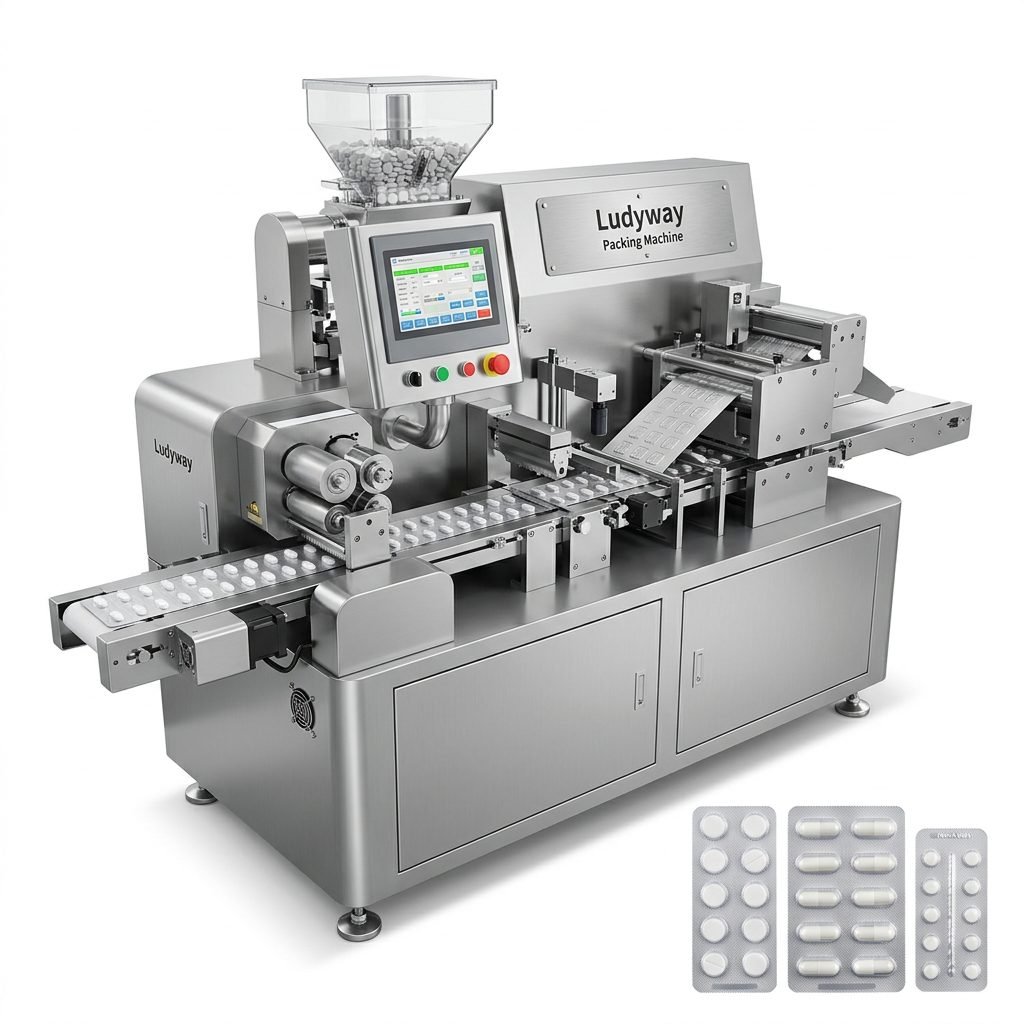
In high-volume manufacturing, speed alone is not enough. Producers also need stable output, consistent pack quality, lower labor dependence, and better use of factory space. That is why multi-lane packaging machines have become a preferred solution for many fast-moving industries, especially food, pharmaceuticals, nutraceuticals, cosmetics, and chemical products.
Instead of running one package at a time, a multi-lane machine forms, fills, and seals several packs simultaneously. This structure allows manufacturers to increase throughput without simply multiplying labor, floor area, or energy use in the same proportion.
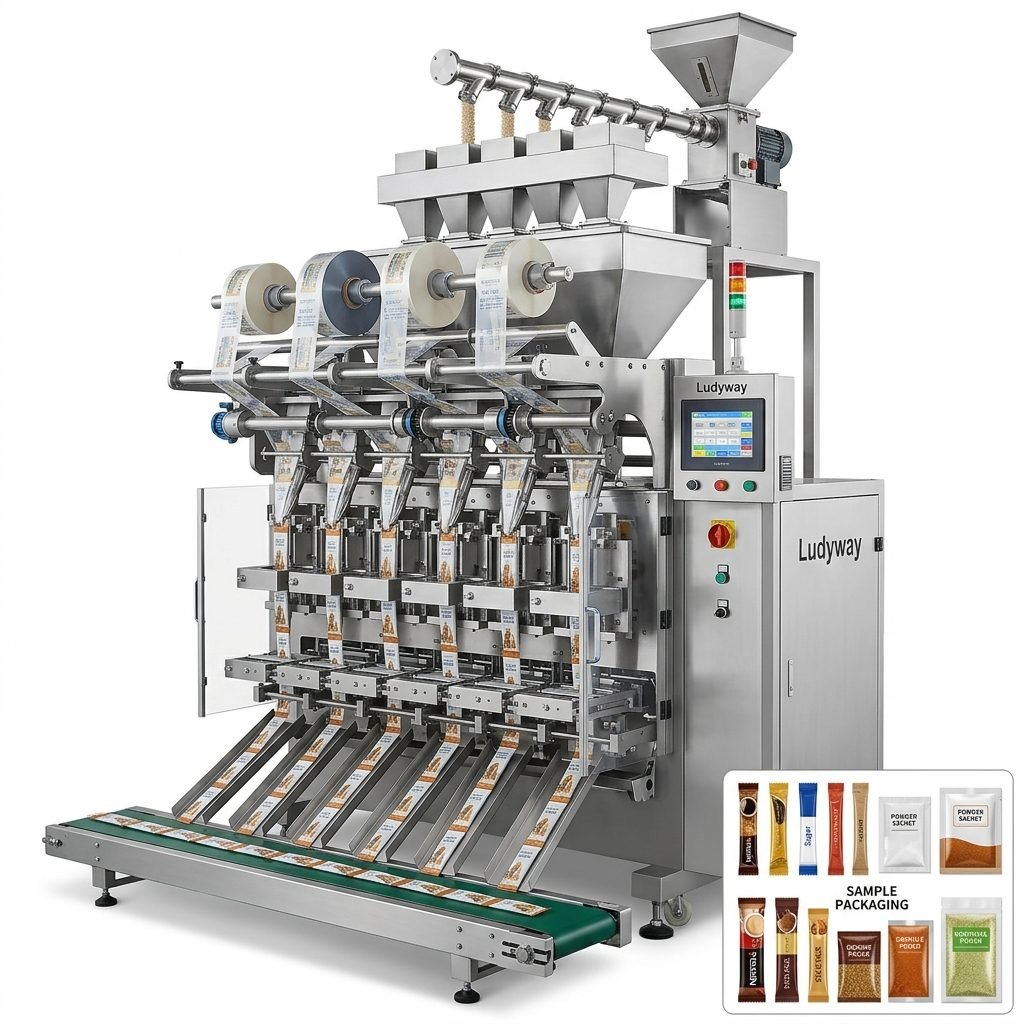
What Is a Multi-Lane Machine?
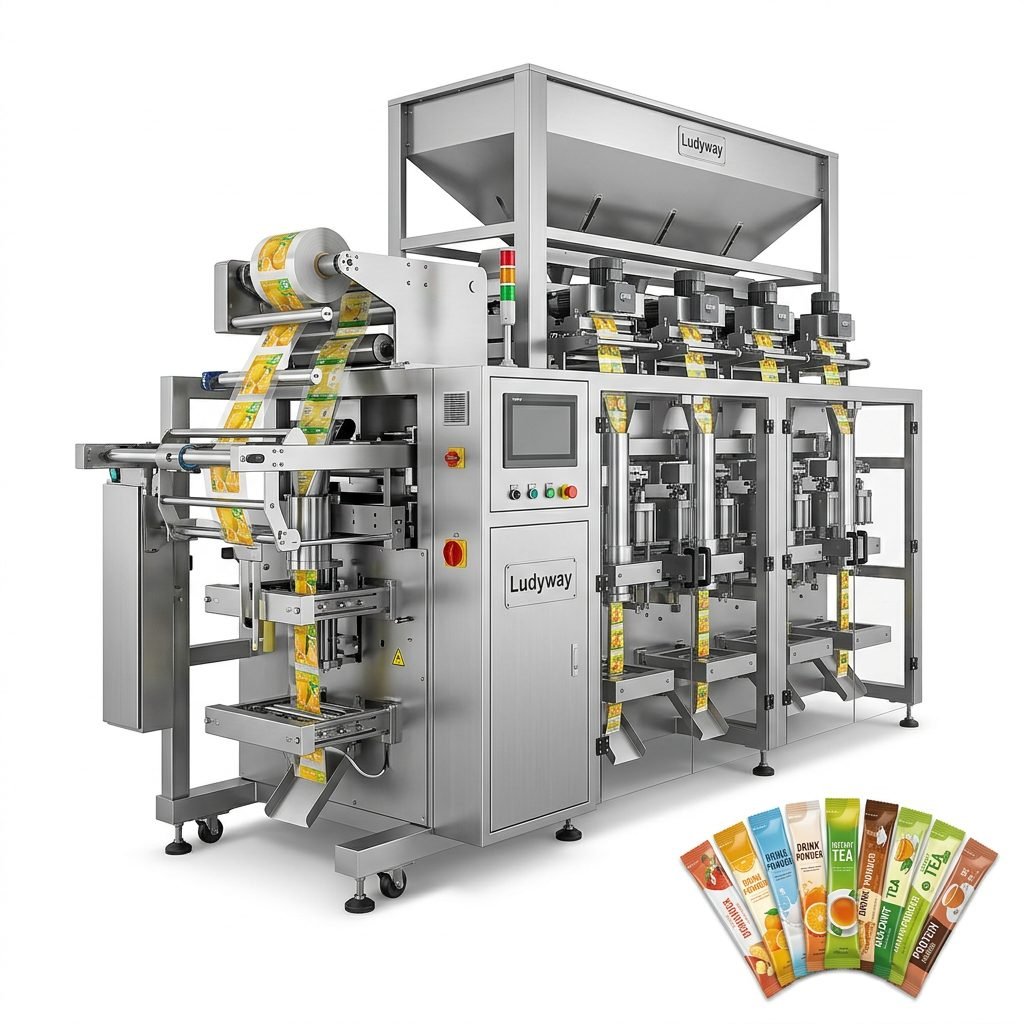
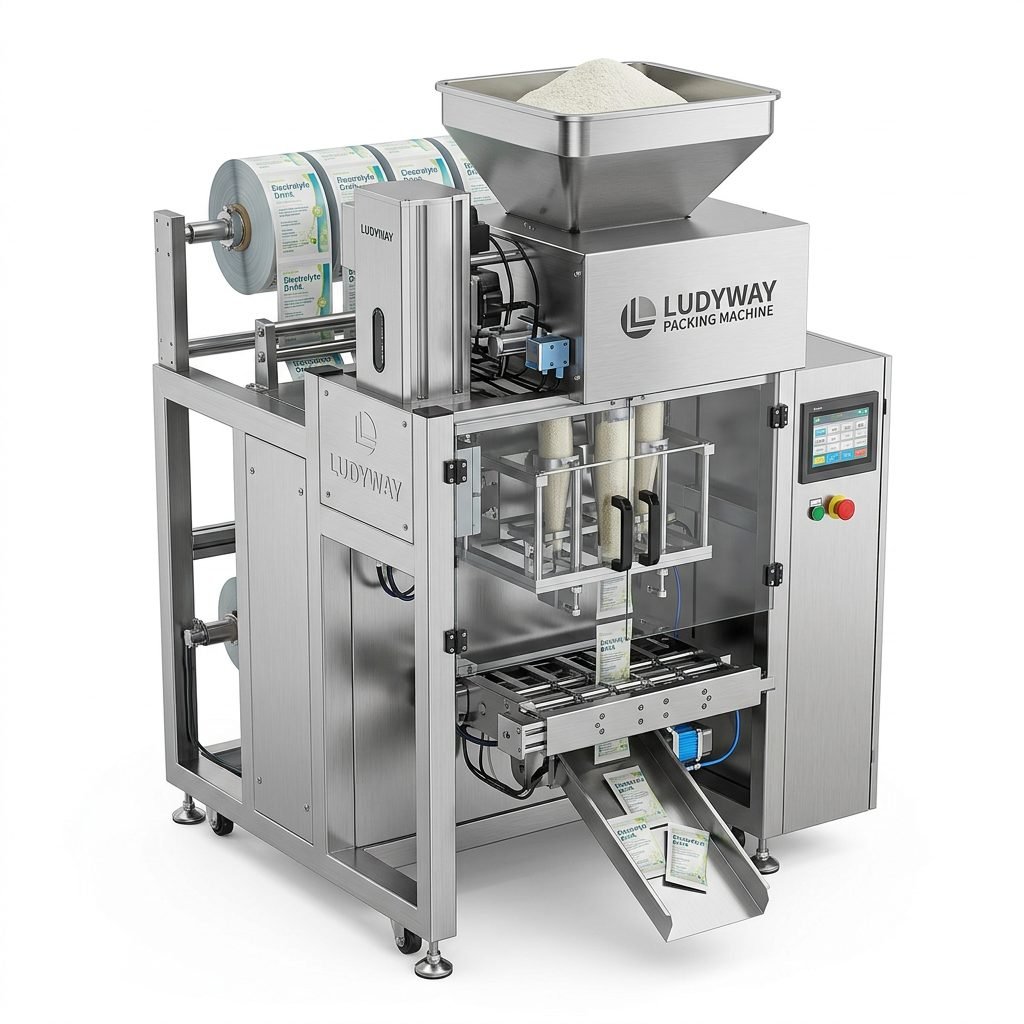
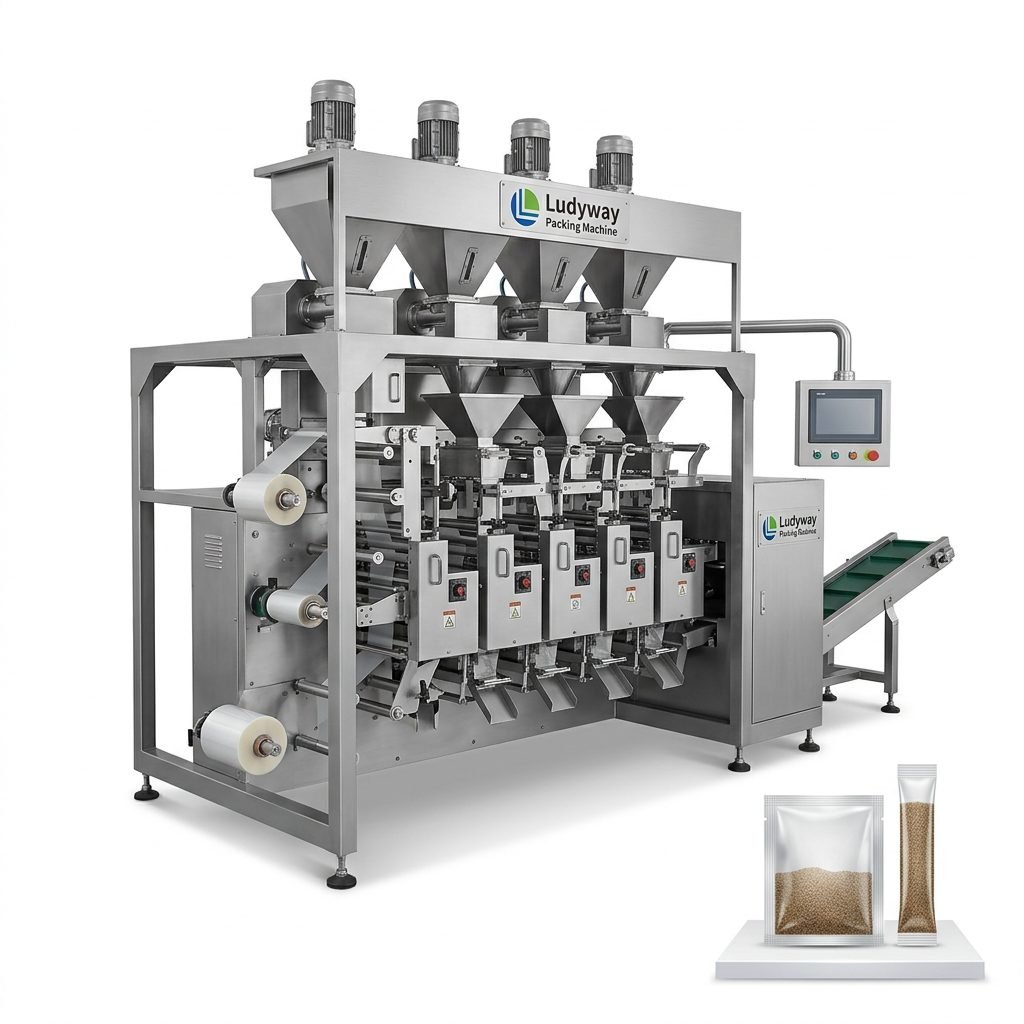
A multi-lane machine is a packaging system designed with multiple parallel lanes that run at the same time. Each lane typically produces the same pouch, sachet, or stick pack format. Materials are fed into the machine, dosed into separate lanes, sealed, cut, and discharged in a synchronized process.
These machines are commonly used for:
- Powders such as coffee, protein, seasoning, and pharmaceutical granules
- Liquids such as sauces, gels, shampoos, and detergents
- Granules such as sugar, salt, drink mixes, and supplements
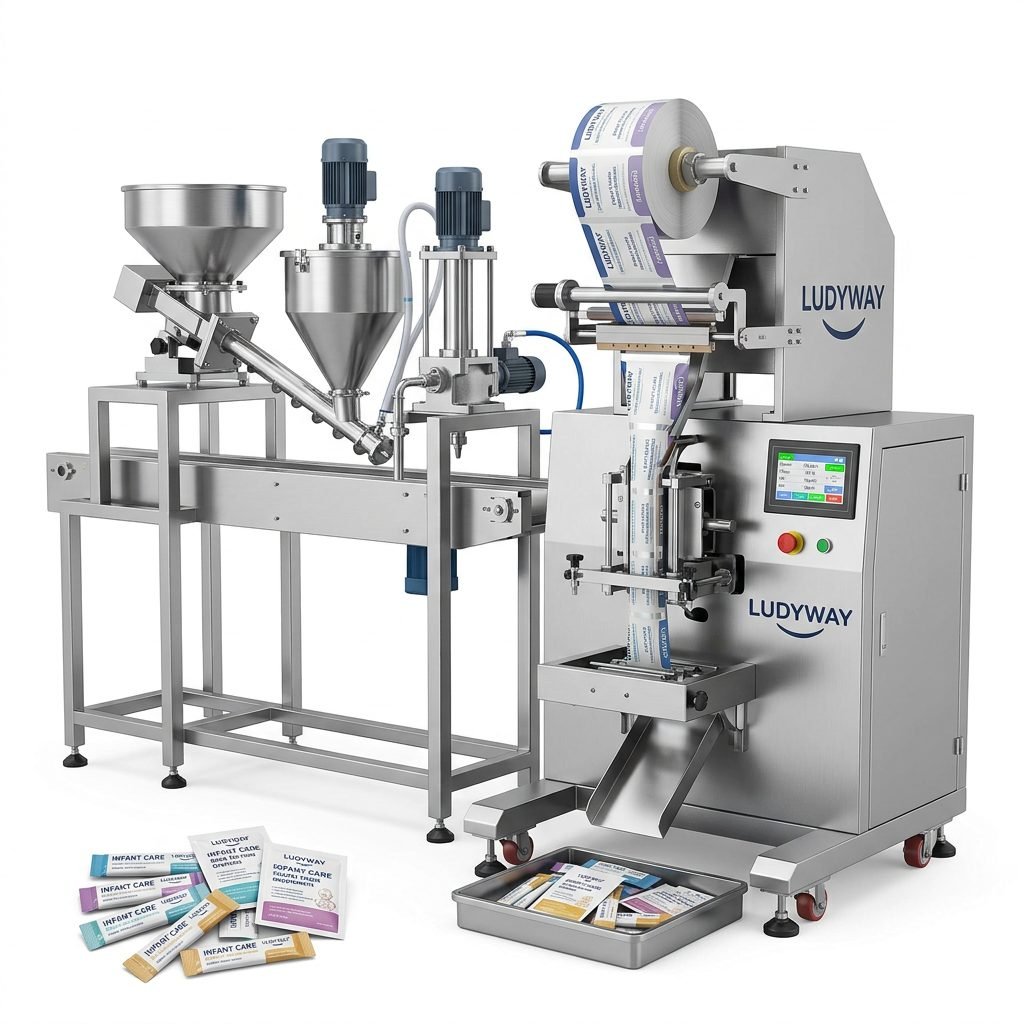
- Single-dose or travel-size packaging formats
Why Multi-Lane Machines Matter in High-Speed Production
The biggest reason is simple: they multiply output within one machine platform. Rather than installing many separate single-lane units, manufacturers can use one integrated system to achieve high production targets more efficiently.
1. Higher Output in Less Time
When multiple lanes operate together, total production capacity rises significantly. For example, an 8-lane or 12-lane machine can deliver much higher package counts per minute than a single-lane setup under similar working conditions.
This is especially useful for brands that need to meet:
- Large daily order volumes
- Seasonal demand spikes
- OEM or contract packaging commitments
- Retail and e-commerce replenishment cycles
2. Better Space Efficiency
Factory floor space is expensive. Multi-lane machines help companies achieve more output from a relatively compact footprint. Instead of placing several individual packing machines in a row, one multi-lane system can centralize production.
This can improve:
- Workshop layout planning
- Material flow
- Operator movement efficiency
- Line integration with conveyors, cartoners, and case packers
3. Lower Labor Intensity
Operating multiple single-lane machines often requires more supervision, more adjustments, and more manual coordination. A multi-lane design reduces this complexity by bringing many production channels into one control system.
As a result, manufacturers may benefit from:
- Fewer operators per unit of output
- Simplified HMI control
- More consistent setup management
- Reduced repetitive manual tasks
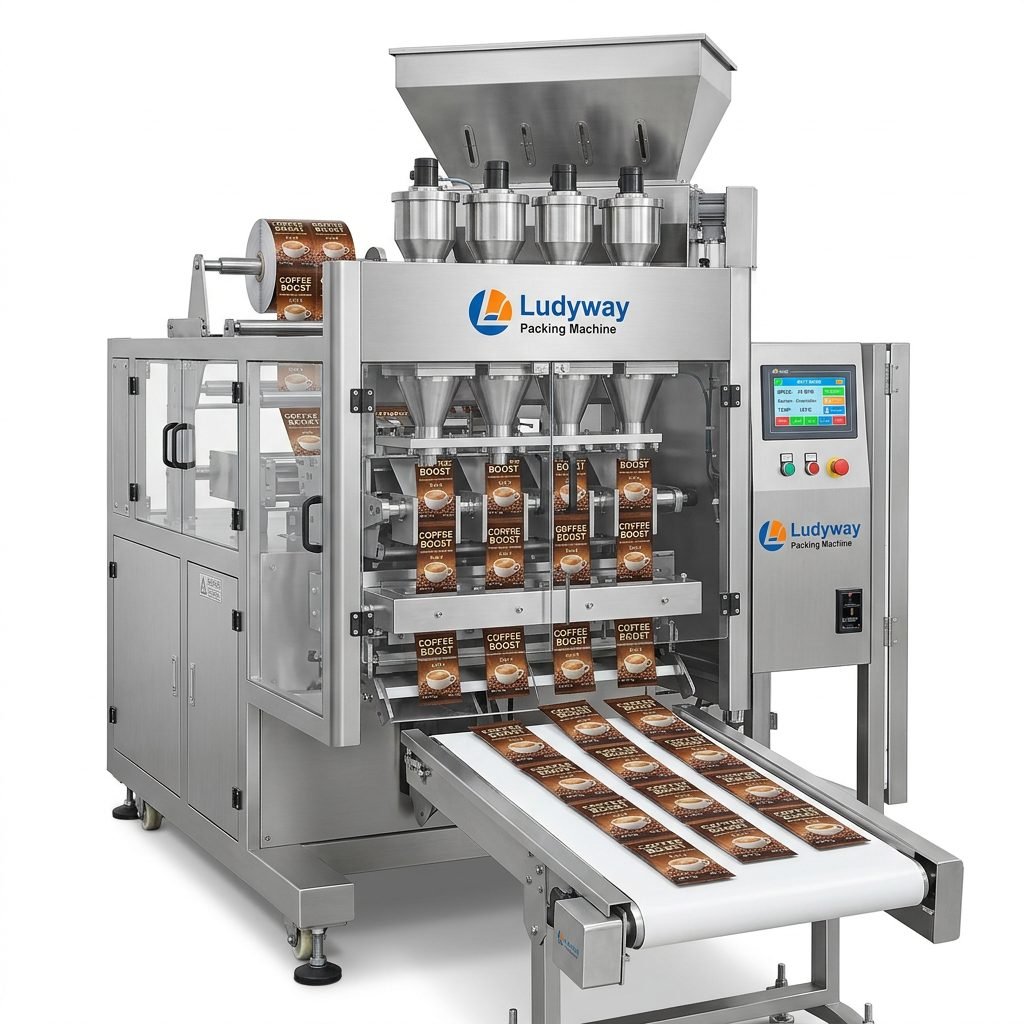
4. Improved Consistency Across Packs
In fast-moving industries, product presentation and dosage accuracy are critical. Multi-lane machines are built to keep filling, sealing, and cutting operations synchronized. When configured correctly, they help maintain pack uniformity across high production volumes.
Consistency matters for:
- Brand appearance
- Consumer trust
- Regulatory compliance
- Reduced waste and rework
5. Strong Fit for Single-Serve Packaging Trends
Consumer demand for convenient, portable, and precisely portioned products continues to grow. This trend is strong in stick packs and sachets for instant beverages, supplements, sauces, personal care samples, and pharmaceutical doses.
Multi-lane systems are ideal for these formats because they are designed for high-speed small-pack production. This makes them valuable for brands targeting convenience retail, travel-size formats, subscription products, and hospital or institutional use.
Key Industries That Commonly Use Multi-Lane Machines
| Industry | Typical Products | Why Multi-Lane Works |
|---|---|---|
| Food & Beverage | Coffee, sugar, seasonings, powdered drinks, sauces | Fast output for mass retail and single-serve demand |
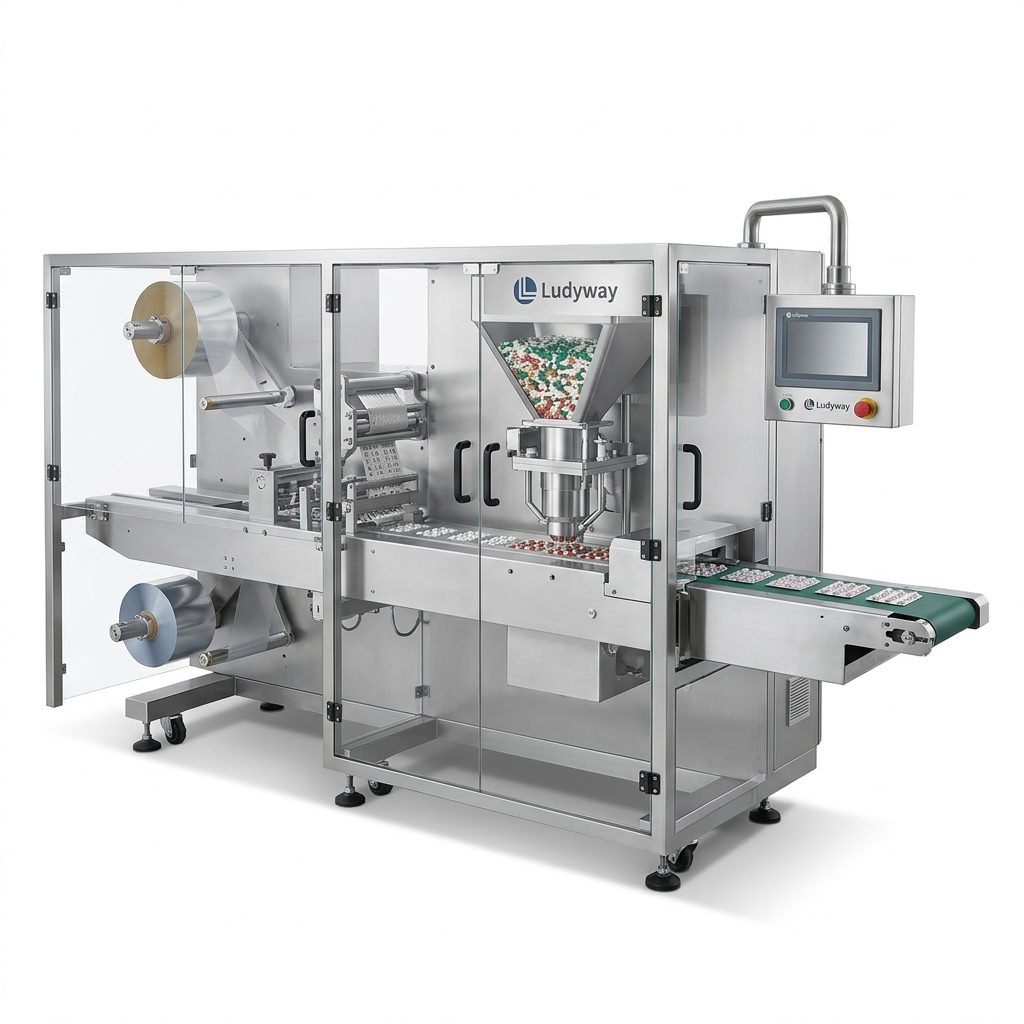
| Pharmaceutical | Granules, oral powders, medical sachets | Controlled dosing and standardized packaging |
| Health Supplements | Collagen, electrolytes, vitamins, protein powder | High demand for portable, portioned formats |
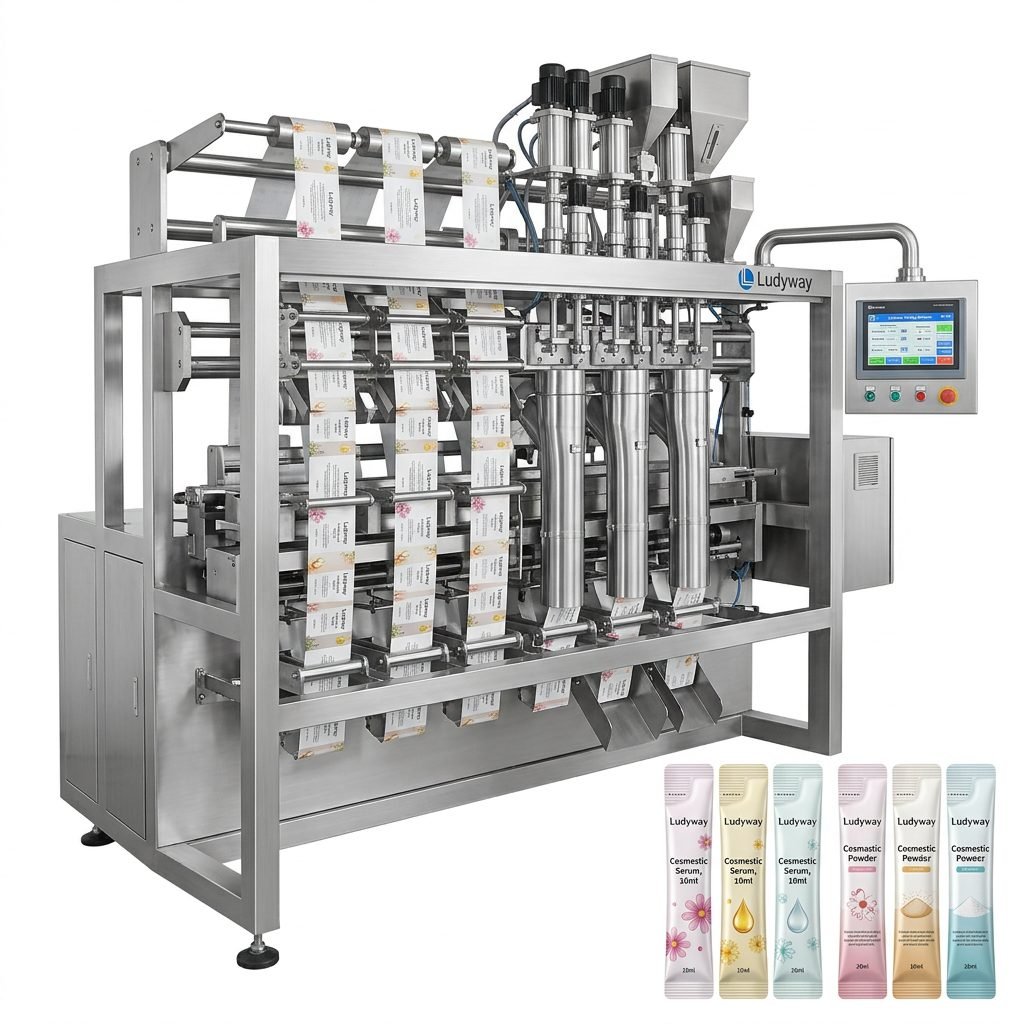
| Cosmetics & Personal Care | Serums, creams, shampoo, lotion | Efficient production of samples and travel-size packs |
| Chemical & Daily Use | Detergents, cleaners, additives, powders | High-volume output with repeatable pack quality |
Main Advantages Over Multiple Single-Lane Machines
While both approaches can work, many manufacturers choose multi-lane systems because they offer practical operational advantages beyond output speed.
- Centralized control: one interface can manage multiple lanes.
- Integrated structure: easier synchronization of film feeding, dosing, sealing, and cutting.
- Lower utility duplication: fewer standalone frames and auxiliary connections.
- Cleaner production planning: better integration with upstream and downstream automation.
- Scalable performance: lane counts can often be selected based on target capacity.
Important Performance Factors to Evaluate
Not every multi-lane machine is the same. Buyers should assess more than just speed claims. A truly suitable system needs to match the product, package style, and production goals.
Product Characteristics
- Powder flowability
- Granule size and uniformity
- Liquid viscosity
- Foaming, stickiness, or dust behavior
Packaging Requirements
- Sachet or stick pack format
- Pack dimensions
- Seal quality expectations
- Easy-tear, notch, or special cut options
Automation Compatibility
- Feeding systems
- Checkweighers and inspection equipment
- Cartoning and case packing
- Coding, labeling, and palletizing solutions
Practical tip: A machine that runs fast in theory but is difficult to clean, change over, or maintain may not deliver the best real-world productivity.
When a Multi-Lane Machine Is the Best Choice
Multi-lane equipment is particularly suitable when a manufacturer has:
- High-volume demand for small packs
- Stable product specifications
- Need for reduced labor per output unit
- Limited floor space but growing production targets
- Plans to build a more automated packaging line
It may be less suitable when production is highly variable in format, or when output demand is still too low to justify the investment. In those cases, a smaller or single-lane system may be a more flexible starting point.
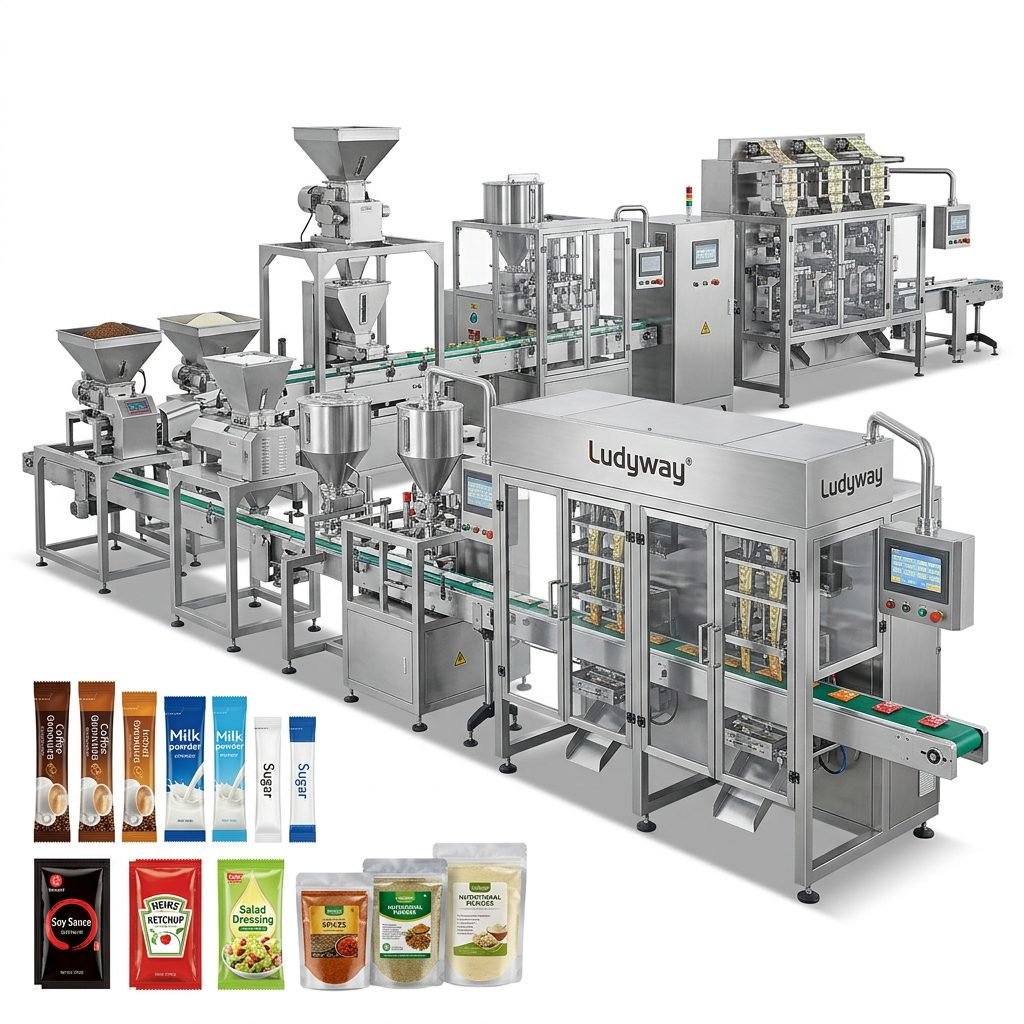
Role of Multi-Lane Machines in Turnkey Packaging Lines
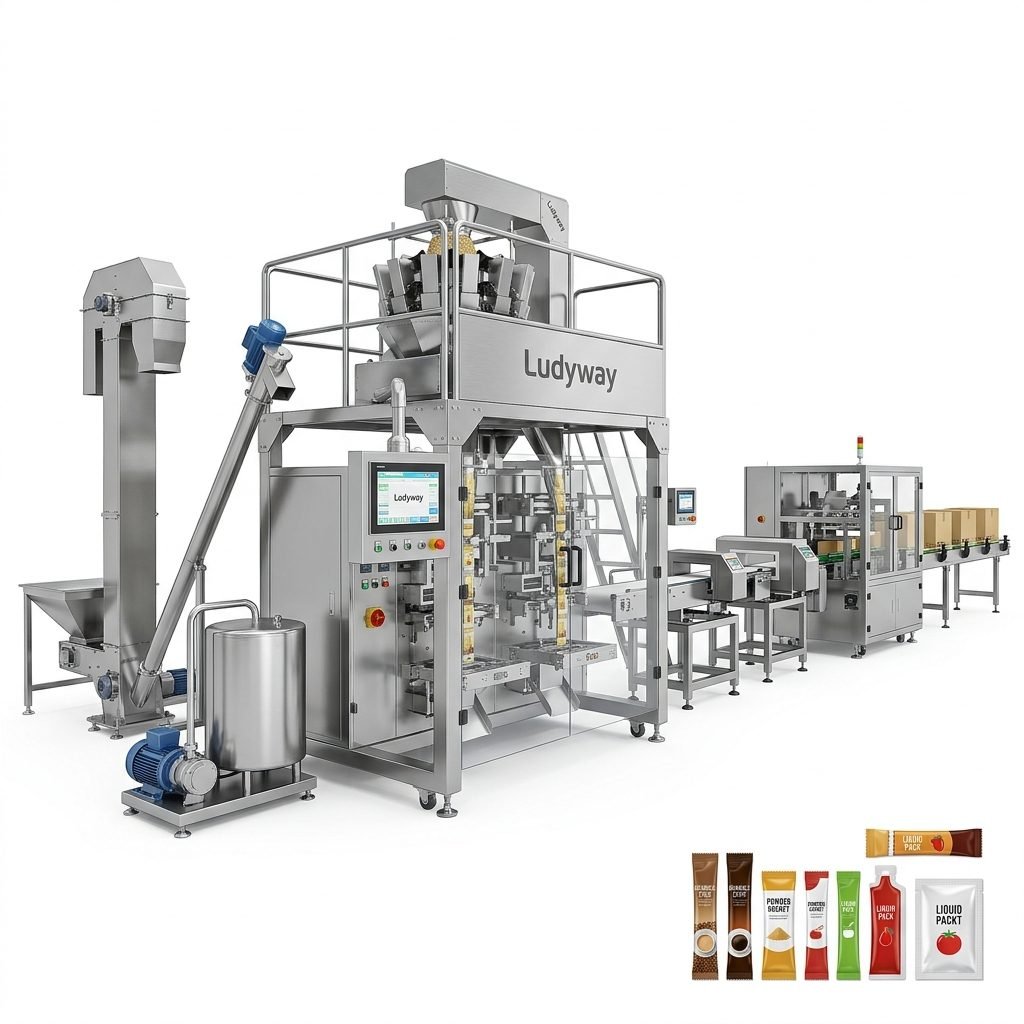
Today, many manufacturers are not just buying a standalone packer; they are investing in complete automated systems. In a turnkey line, a multi-lane machine often works together with product feeding, conveying, coding, inspection, cartoning, case packing, and palletizing equipment.
This creates a more connected production environment with benefits such as:
- Reduced manual handling between stages
- Better production data visibility
- More stable line balancing
- Higher total line efficiency
For companies looking for integrated solutions, Ludyway packaging machine manufacturer supplies multi-lane systems and turnkey packaging lines for food, pharmaceutical, health supplement, cosmetic, and related industries.
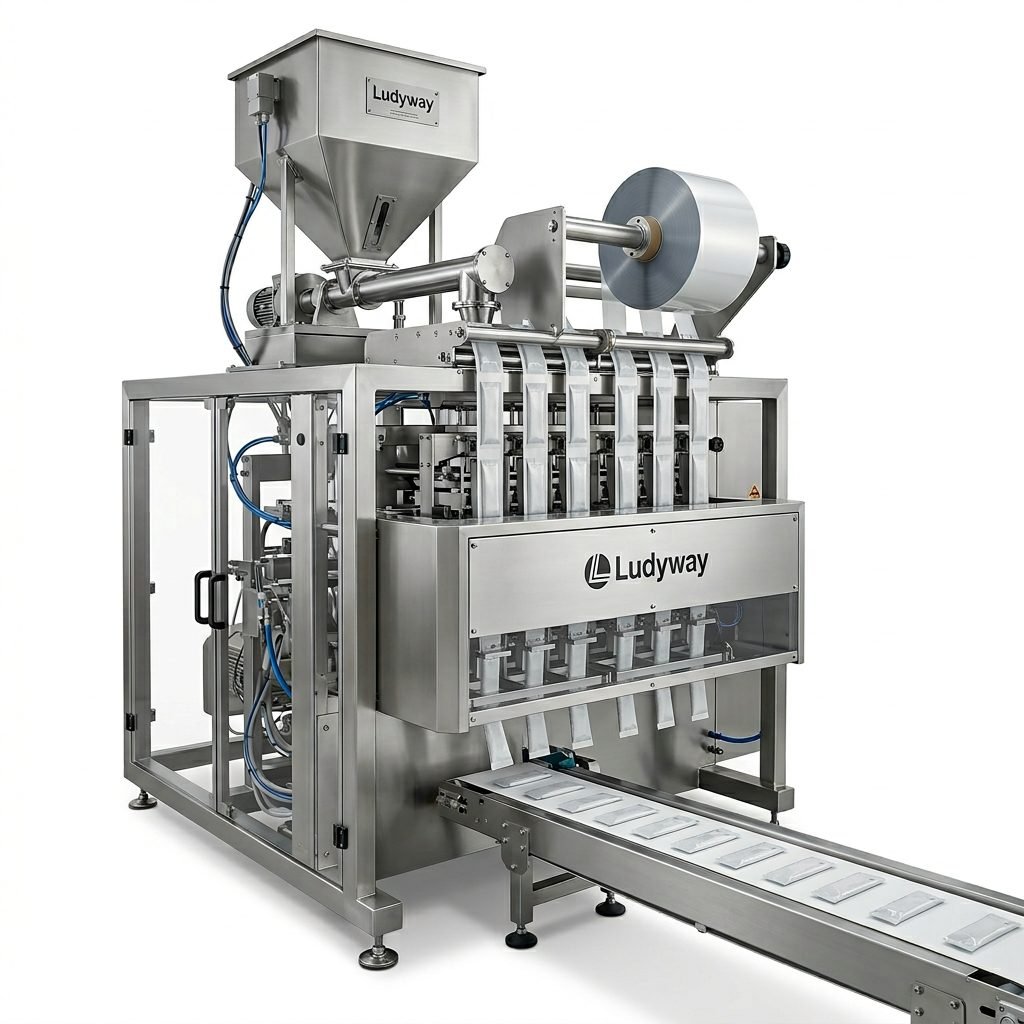
Common Applications in Modern Manufacturing
Because of their flexibility and speed, multi-lane machines are now widely used in products such as:
- Instant coffee and drink powder sticks
- Protein and sports nutrition sachets
- Pharmaceutical granule packs
- Shampoo, lotion, and serum sample sachets
- Sugar, salt, seasoning, and sauce packaging
- Detergent and cleaner single-dose packs
How Multi-Lane Systems Support Business Growth
High-speed production is not only about machinery performance. It is also about building a business that can scale profitably. A good multi-lane machine supports growth by helping companies:
- Respond faster to larger orders
- Reduce packaging bottlenecks
- Launch smaller consumer pack sizes efficiently
- Improve cost control over time
- Strengthen production consistency for export markets
For manufacturers supplying supermarkets, pharmacies, distributors, or contract packaging clients, these advantages can create a meaningful competitive edge.
Final Thought
Multi-lane machines are used for high-speed production because they combine throughput, consistency, automation, and space efficiency in one system. They are especially valuable for sachet and stick pack applications where manufacturers need large volumes, precise dosing, and reliable pack quality.
As market demand for convenient, single-serve, and portable packaging keeps growing, multi-lane technology will continue to play a central role in modern packaging operations.