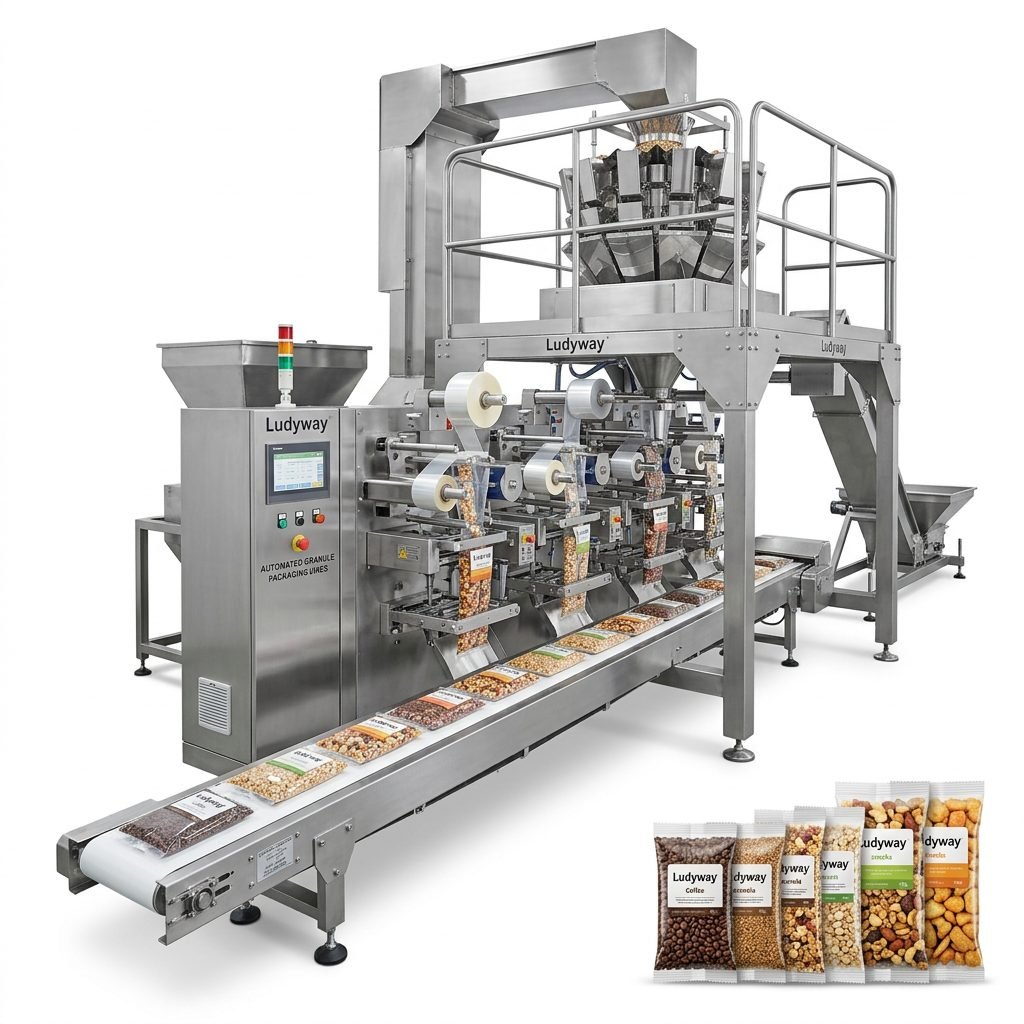
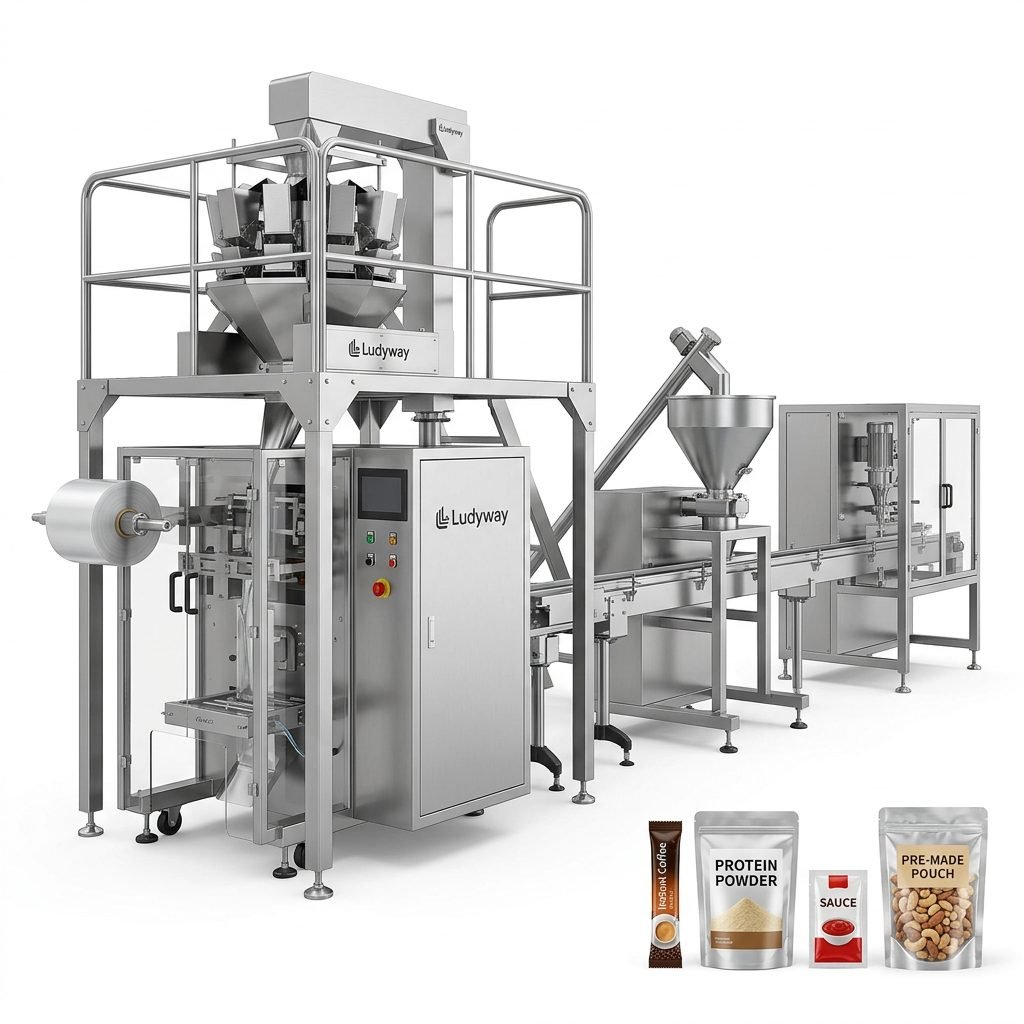
Frozen foods can absolutely be packaged by modern packaging equipment—but the answer is not just “yes.” The real question is what kind of frozen food, what packaging format, and what machine configuration will deliver stable sealing, product protection, and production efficiency.
From frozen vegetables and dumplings to seafood, meat portions, prepared meals, and freeze-dried products, packaging machines are widely used across the frozen food industry. The key is choosing a system that can handle low temperatures, condensation risk, accurate dosing, strong sealing, and food safety requirements.
Can a packaging machine package frozen foods?
Yes, a packaging machine can package frozen foods efficiently when it is designed or configured for cold-chain applications. In fact, automated systems are commonly used for:
- Frozen vegetables
- Frozen fruits
- Frozen dumplings and buns
- Frozen meat and poultry portions
- Frozen seafood
- Frozen snacks
- Ready-to-cook and ready-to-heat meals
- Freeze-dried food products
However, frozen food packaging is more demanding than packaging room-temperature products. Ice crystals, surface moisture, low-temperature brittleness, and product shape variation can all affect machine performance. That is why frozen food packaging usually requires a combination of:
- Reliable feeding and weighing
- Cold-resistant packaging materials
- Strong heat sealing or vacuum sealing
- Fast, stable automation
- Hygienic design for food safety
Why frozen food packaging is different
Frozen products are exposed to handling conditions that can quickly create packaging problems if the machine is not properly matched. The biggest challenge is that frozen foods often carry a thin layer of frost or moisture, which can interfere with seal integrity.
| Challenge | Why It Matters | Typical Solution |
|---|---|---|
| Condensation and frost | Can weaken seals and contaminate sealing areas | Dry sealing zones, controlled environment, optimized sealing jaws |
| Product stickiness or clumping | Affects accurate weighing and filling | Vibration feeders, multihead weighers, anti-bridging design |
| Sharp edges | Can puncture films or pouches | Thicker films, stronger pouch structures, careful drop height control |
| Low-temperature storage | Packaging must resist cracking and seal failure | Cold-resistant laminate materials |
| High throughput needs | Frozen food factories need stable output and reduced labor | Integrated automated packaging lines |
What types of packaging machines are used for frozen foods?
The best packaging machine depends on the product form, target bag type, pack weight, and plant capacity. Here are the most common machine types used in frozen food packaging.
1. Vertical form fill seal machines
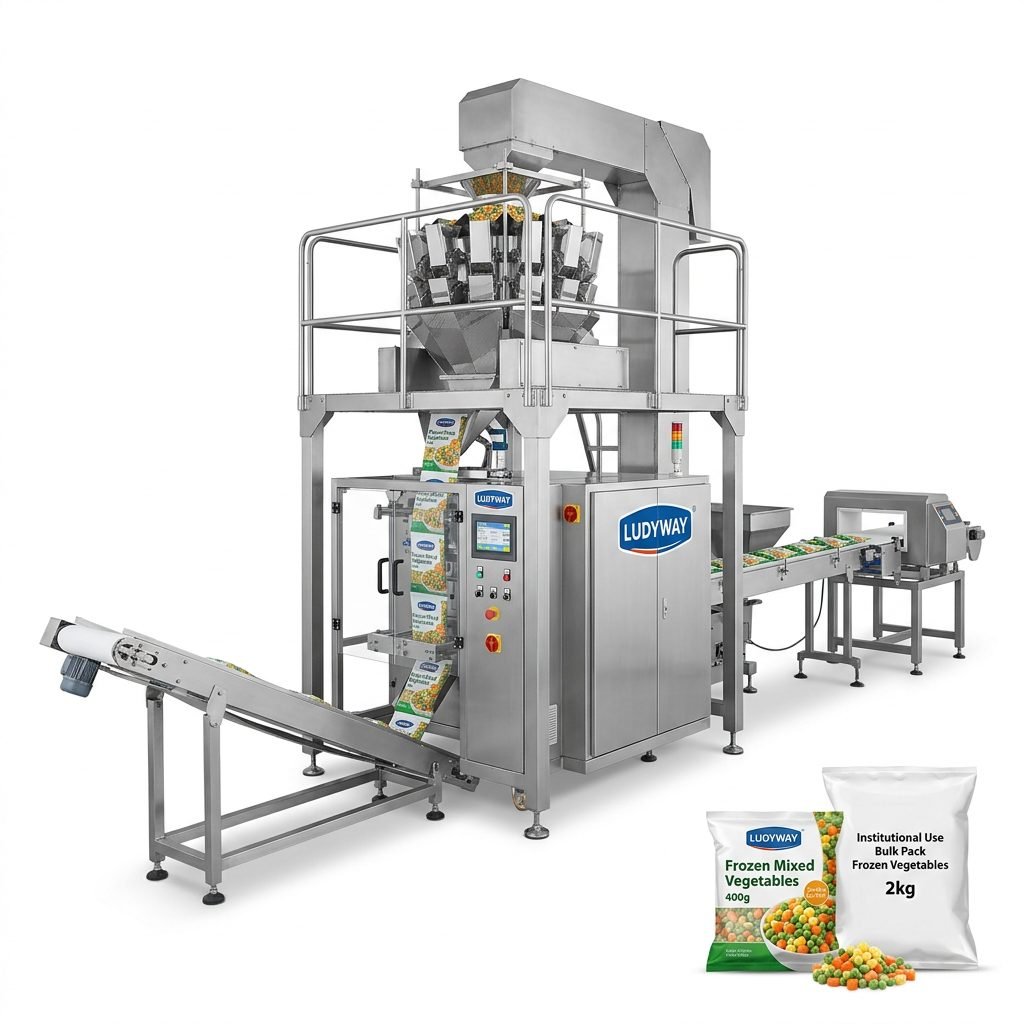
Vertical form fill seal systems are widely used for frozen vegetables, diced fruits, seafood pieces, meat cubes, fries, and other free-flowing frozen products. These machines form a bag from roll film, fill it, and seal it automatically.
They are ideal for:
- Pillow bags
- Gusset bags
- Quad seal bags
- Bags with optional zipper or special features depending on system design
2. Premade pouch packaging machines
Premade pouch machines are suitable for higher-end frozen products that need strong shelf appeal, better resealability, or stand-up pouch formats. These are common for premium frozen seafood, prepared meals, and specialty frozen snacks.
3. Vacuum packaging machines
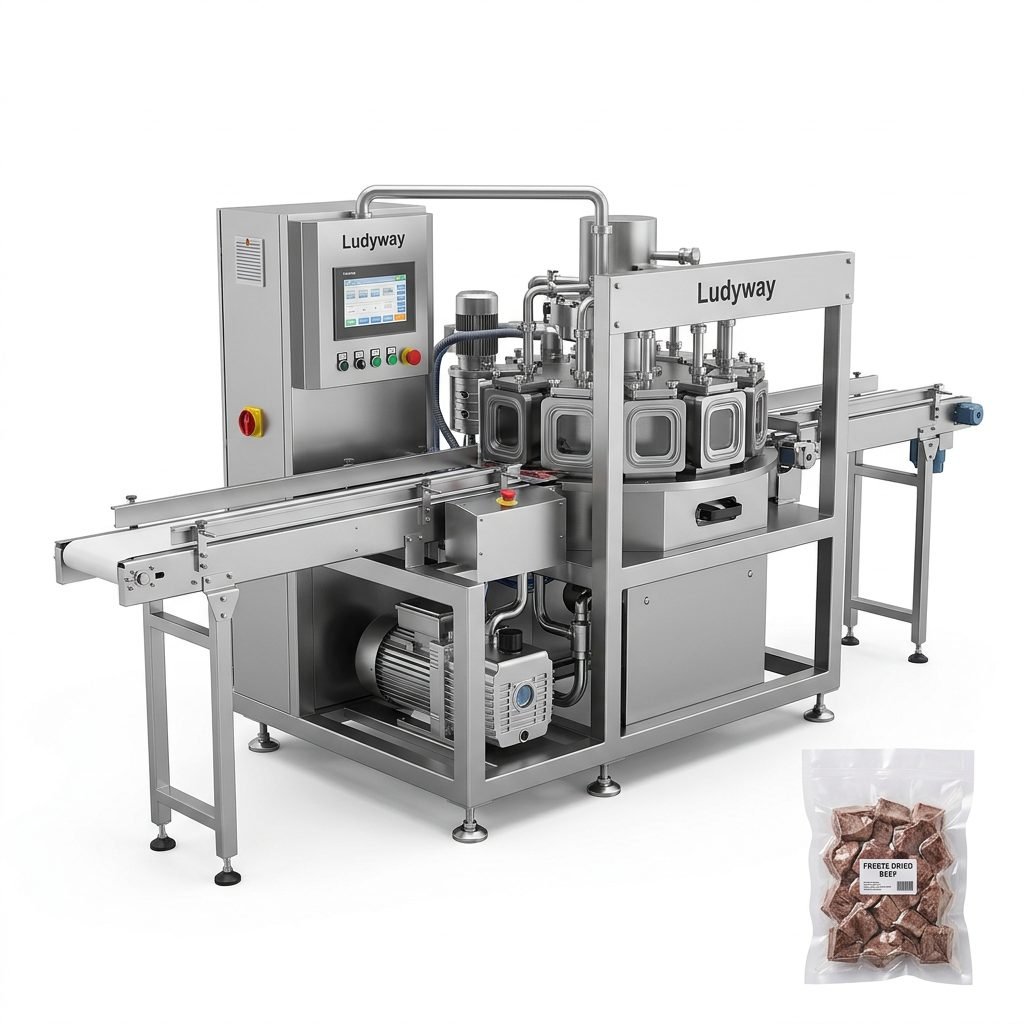
For products such as frozen meat, fish fillets, marinated portions, and some freeze-dried foods, vacuum packaging can reduce oxygen exposure, improve appearance, and help preserve product quality.
4. Thermoforming packaging machines
Thermoforming systems are often used for portioned meat, seafood, or meal components. These machines create trays or pockets from film, load the product, and then vacuum seal or modified atmosphere seal the pack.
5. Flow wrapping machines
Flow wrappers work well for individually frozen items with uniform shape, such as frozen burgers, bars, patties, or bakery products.
Best packaging formats for frozen foods
Frozen food packaging is not one-size-fits-all. The right format should balance protection, machine compatibility, retail presentation, and logistics efficiency.
| Packaging Format | Common Frozen Food Use | Advantages |
|---|---|---|
| Pillow bag | Vegetables, fries, fruit, nuggets | Cost-effective, high speed, easy automation |
| Stand-up pouch | Premium frozen items, seafood, snacks | Better shelf presentation, can support zipper closure |
| Vacuum bag | Meat, seafood, freeze-dried products | Reduced oxygen, improved product protection |
| Tray with top film | Prepared meals, portioned proteins | Strong structure, premium appearance |
| Stick pack or sachet | Freeze-dried powders, soup mixes, instant components | Precise small-dose packaging, compact format |
Key machine features needed for frozen food packaging
If you are evaluating a frozen food packaging machine, focus on more than just speed. A fast machine is not useful if it creates bad seals, product waste, or downtime.
Accurate weighing and dosing
Frozen foods often have irregular shapes and bulk density variation. Multihead weighers, linear weighers, or customized feeding systems help maintain pack weight accuracy.
Seal integrity in cold conditions
This is one of the most important factors. Even a small amount of frost or trapped product in the seal area can lead to leakage or freezer burn. Stable sealing performance matters more than headline speed.
Hygienic stainless-steel construction
Food-grade stainless steel, easy cleaning access, and sanitary machine surfaces are essential for frozen food plants.
Low-temperature material compatibility
Conveyors, belts, seals, contact parts, and machine components should perform reliably in chilled or cold processing environments.
Integration with upstream and downstream equipment
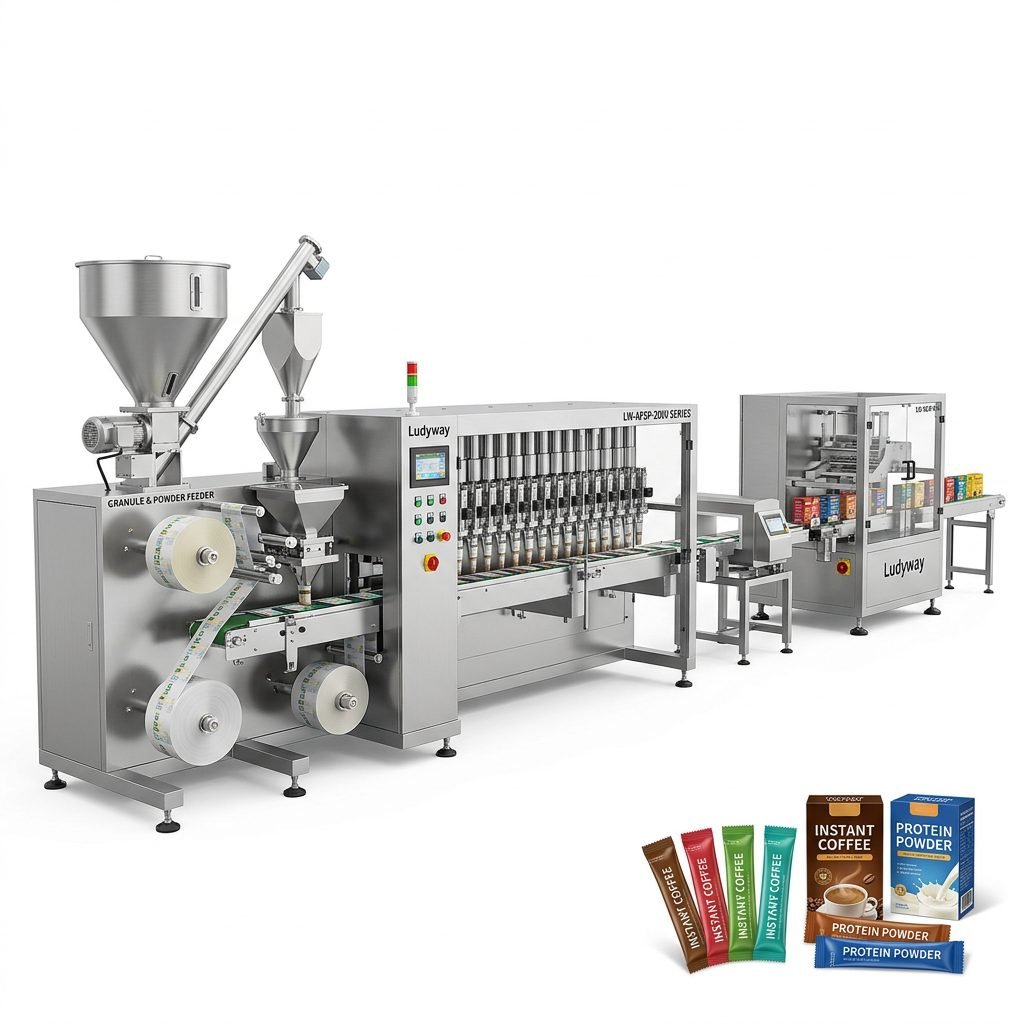
A complete line may include elevators, weighers, metal detectors, checkweighers, printers, cartoners, case packers, and palletizing systems.
What materials are best for frozen food packaging?
Choosing the wrong film can ruin an otherwise good packaging setup. Frozen food packaging materials must resist moisture, puncture, low temperatures, and oxygen transfer where needed.
- PE-based films for flexible frozen food bags
- PET/PE laminates for stronger structure and printability
- PA/PE films for puncture resistance and vacuum applications
- Barrier films for products sensitive to oxidation or freezer burn
- Cold-resistant multilayer pouches for premium frozen goods
Important material selection factors include:
- Seal strength
- Anti-fog or moisture resistance
- Puncture resistance
- Barrier protection
- Machinability at required speeds
Can frozen foods be packaged in sachets or stick packs?
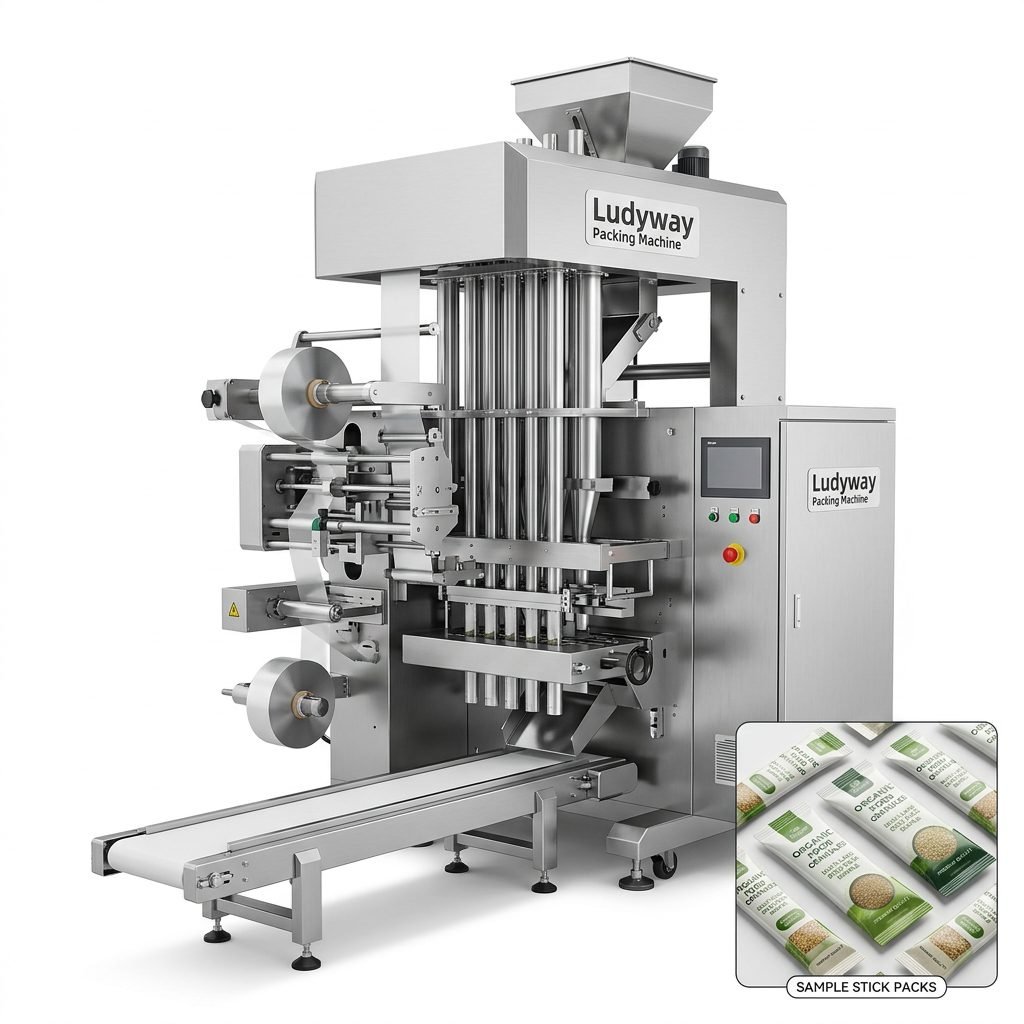
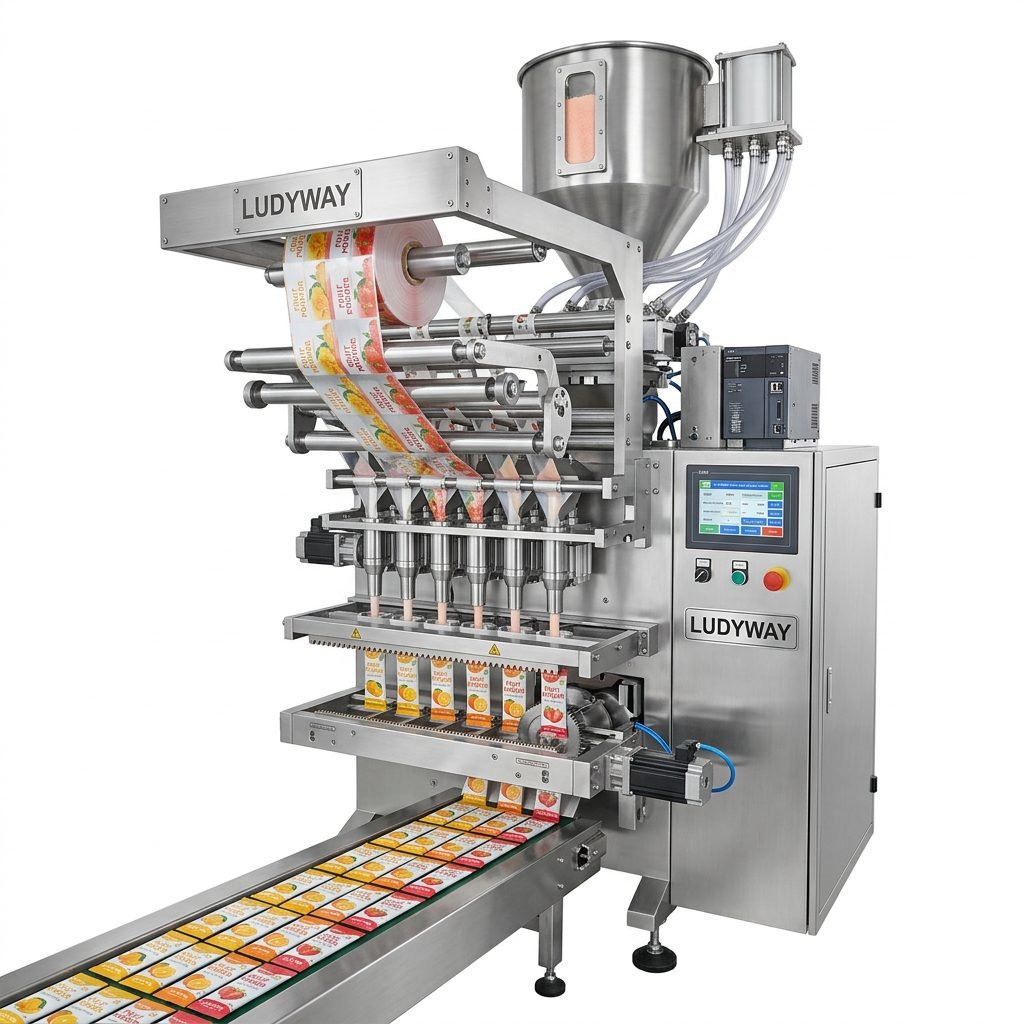
Yes—but usually for freeze-dried, powdered, granulated, or portioned components rather than large frozen retail items. For example, freeze-dried fruit bits, instant soup bases, powdered meal components, and seasoning blends used with frozen food products can all be packed in sachet or stick pack formats.
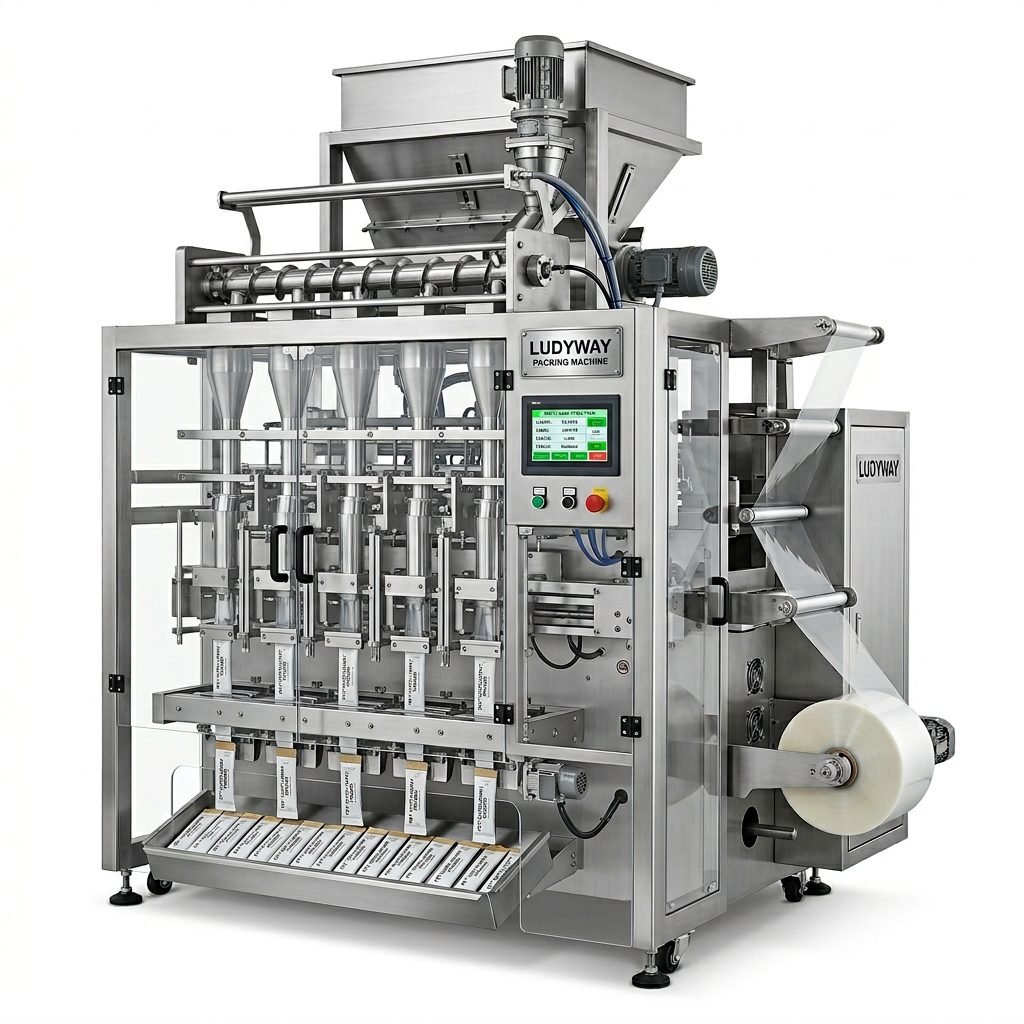
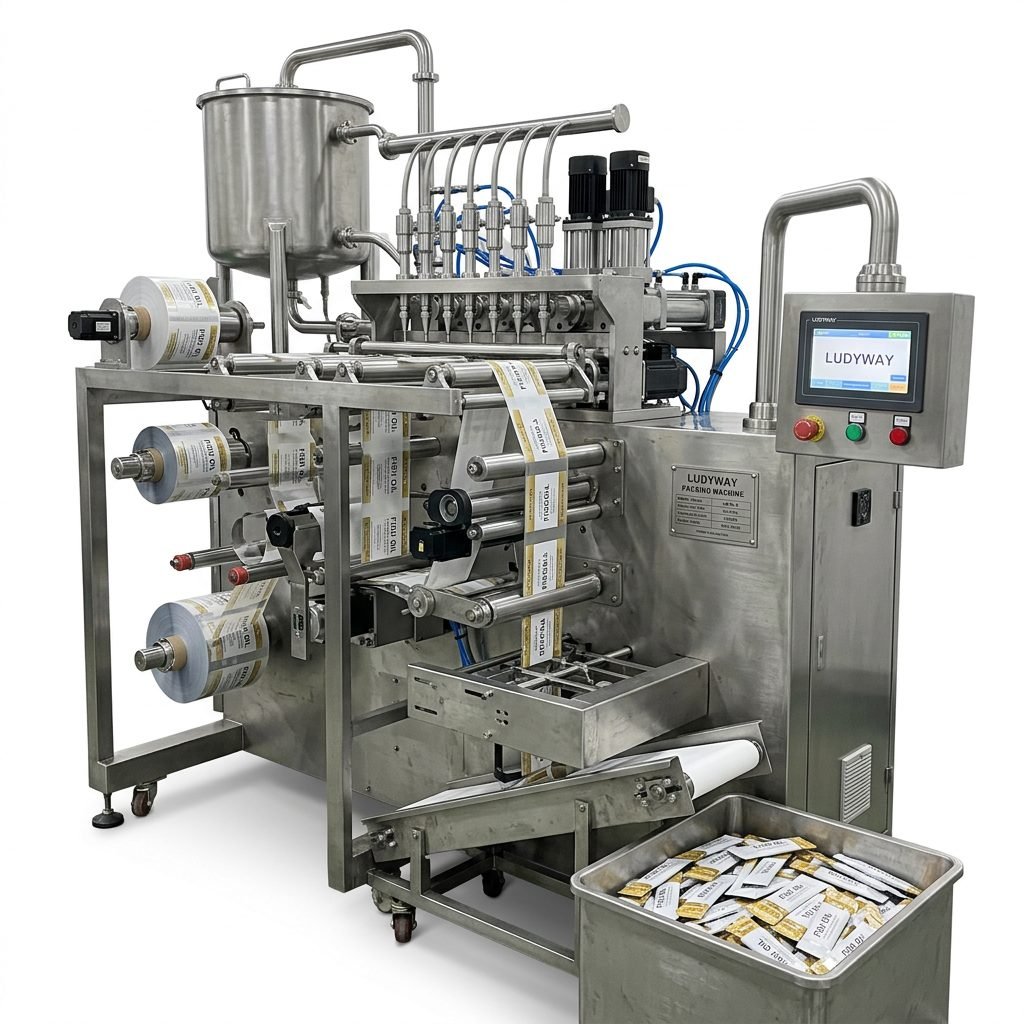
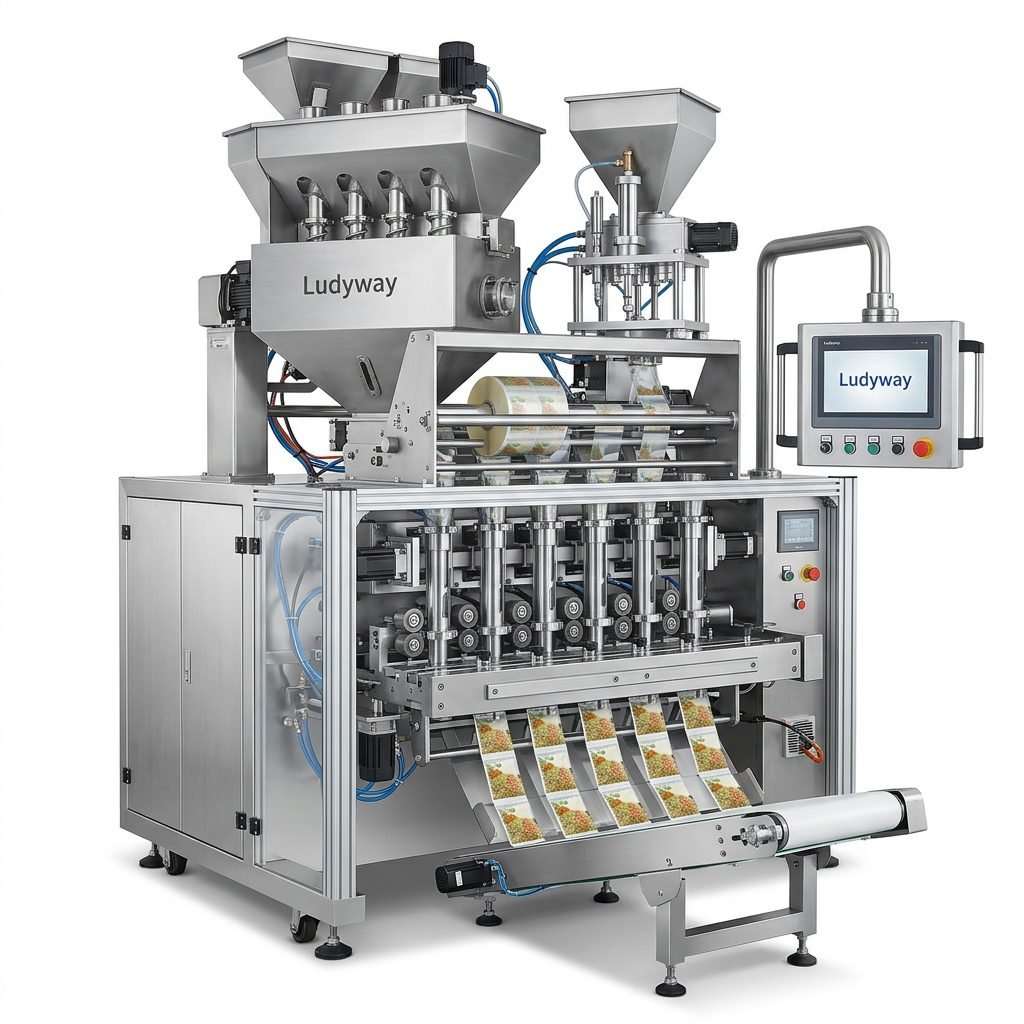
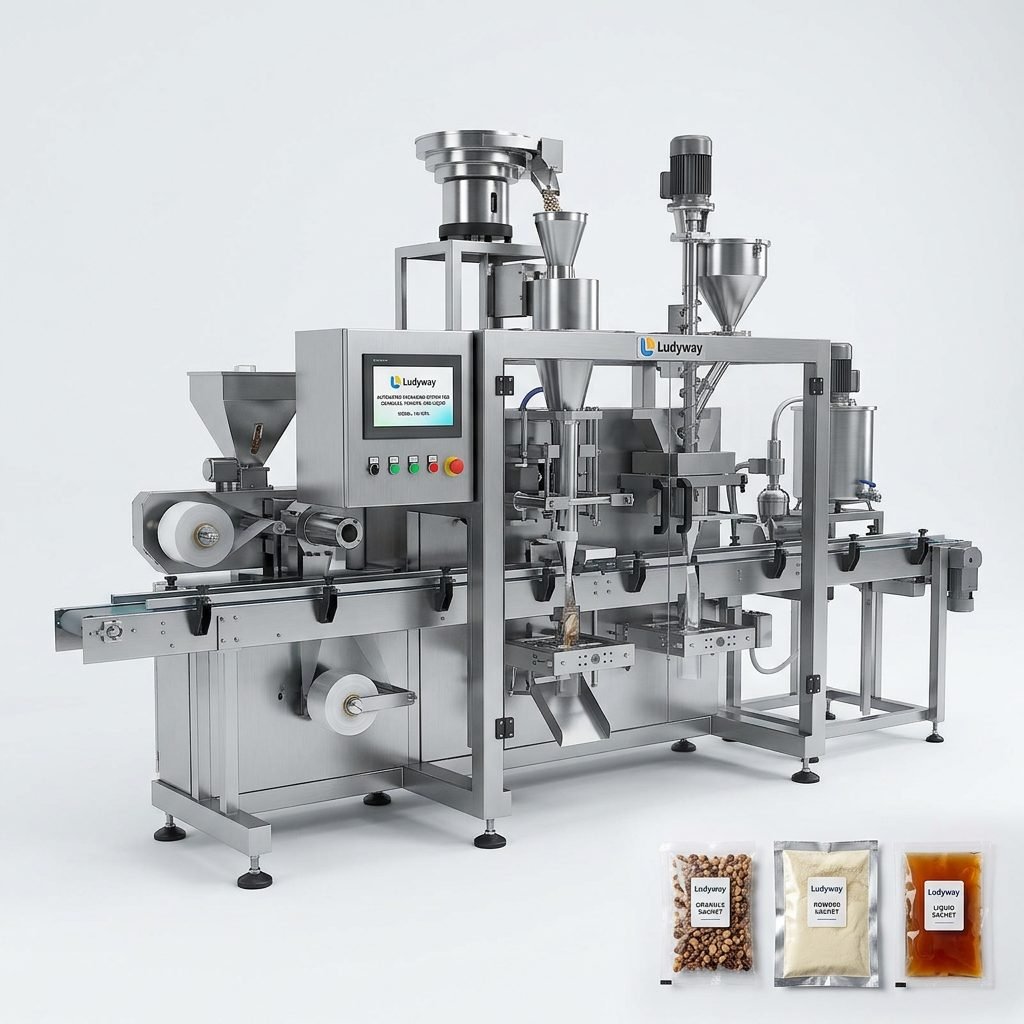
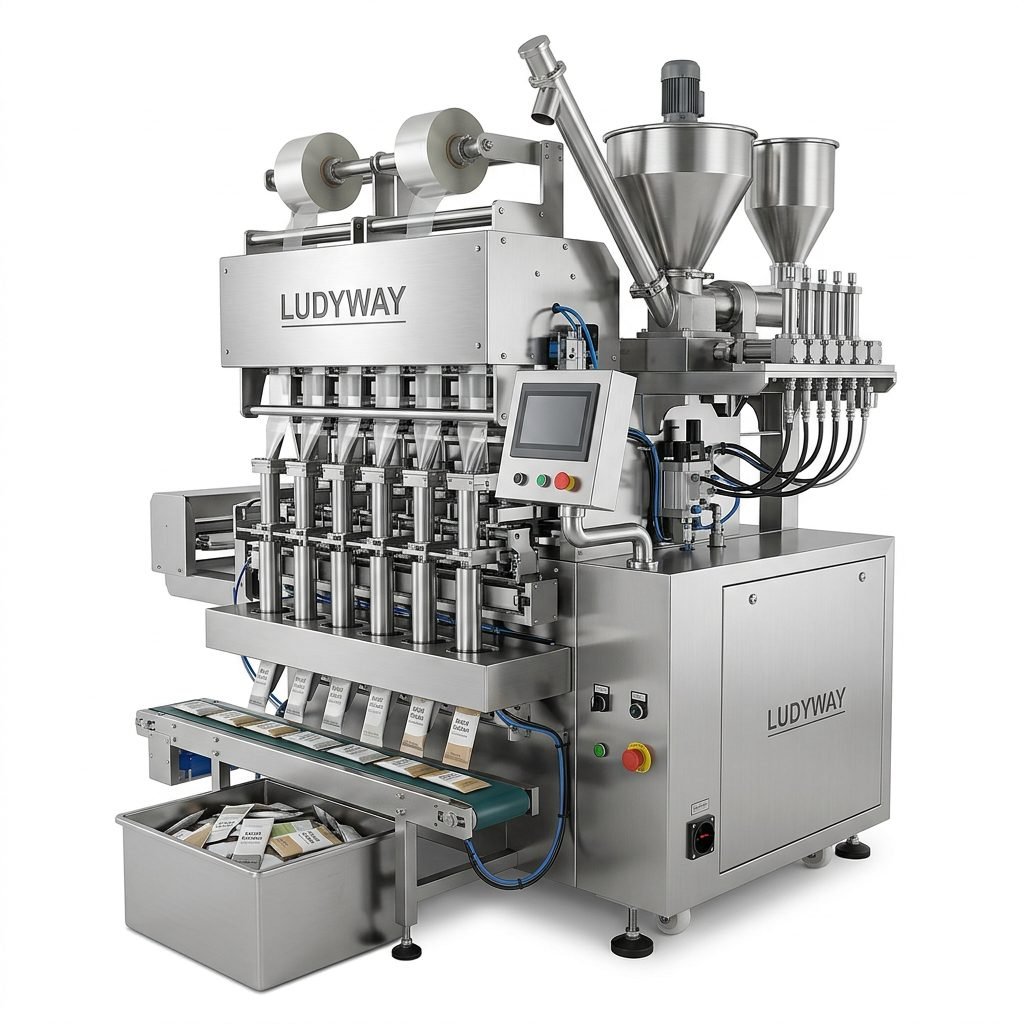
Manufacturers looking for flexible automation in food applications often consider solutions from Ludyway food packaging machines, especially for projects that require scalable systems, customized formats, and turnkey line integration.
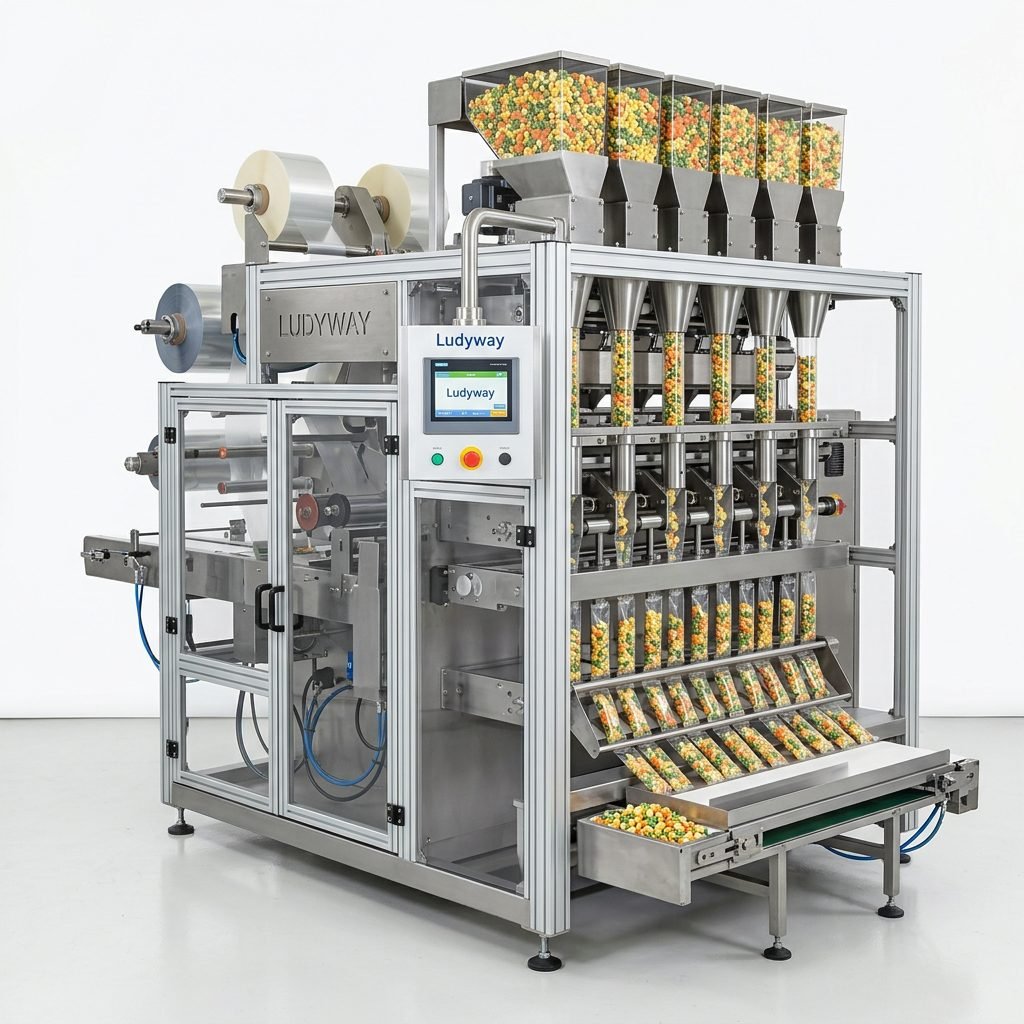
Common frozen food products that can be packaged automatically
A wide range of frozen and cold-chain products can be handled with automated packaging equipment, including:
- IQF vegetables
- Frozen berries and fruits
- French fries
- Frozen dumplings and wontons
- Chicken nuggets
- Seafood mixes
- Shrimp and fish portions
- Frozen meatballs
- Prepared frozen meals
- Freeze-dried pet food
- Freeze-dried fruits and snacks
Benefits of using a packaging machine for frozen foods
Automated frozen food packaging offers more than labor savings. It also improves consistency and supports better product quality across the entire cold chain.
| Benefit | Impact on Operations |
|---|---|
| Higher efficiency | Increases output and reduces manual packing dependency |
| Weight consistency | Improves compliance and reduces giveaway |
| Better seal quality | Helps prevent freezer burn and leakage |
| Improved hygiene | Reduces human contact with food products |
| Scalable production | Supports growth from standalone machine to full packaging line |
How to choose the right frozen food packaging machine
Before selecting a machine, ask these practical questions:
What is the product type?
Is it a free-flowing frozen granule, irregular seafood portion, sticky meat piece, prepared meal, or freeze-dried powder?
What bag or pack format do you need?
Retail pillow bag, stand-up pouch, vacuum bag, tray pack, or small sachet?
What is the target output?
A pilot line and a high-volume industrial line require very different machine architecture.
How difficult is the product to seal?
Products with surface frost or particles near the bag opening may need advanced sealing control.
Do you need a standalone machine or a turnkey line?
For many frozen food factories, the best long-term option is an integrated solution with feeding, weighing, packaging, inspection, and end-of-line automation.
Mistakes to avoid in frozen food packaging
- Choosing film based only on cost
- Ignoring condensation in the sealing area
- Using a weigher not suited for frozen irregular products
- Overlooking puncture risk from sharp product edges
- Buying a machine without sanitation-friendly design
- Focusing on speed while neglecting seal quality
- Failing to plan for future automation upgrades
Is a turnkey frozen food packaging line worth it?
For growing manufacturers, a turnkey packaging line is often the most efficient path. Instead of sourcing separate components from different suppliers, a complete system can improve compatibility, installation speed, and long-term maintenance management.
A typical turnkey frozen food line may include:
- Infeed conveyor or product elevator
- Multihead weigher or dosing system
- Main packaging machine
- Metal detector
- Checkweigher
- Date coding system
- Cartoning or case packing unit
- Palletizing or conveying equipment
Final answer
A packaging machine can definitely package frozen foods, and in modern food manufacturing it is often the most efficient and reliable way to do so. The success of frozen food packaging depends on selecting the right machine type, packaging material, sealing technology, and automation level for your product.
If your frozen food product has special challenges—such as frost, irregular shape, vacuum requirements, or retail-ready pouch presentation—the ideal solution is usually a customized machine or integrated packaging line rather than a generic system.