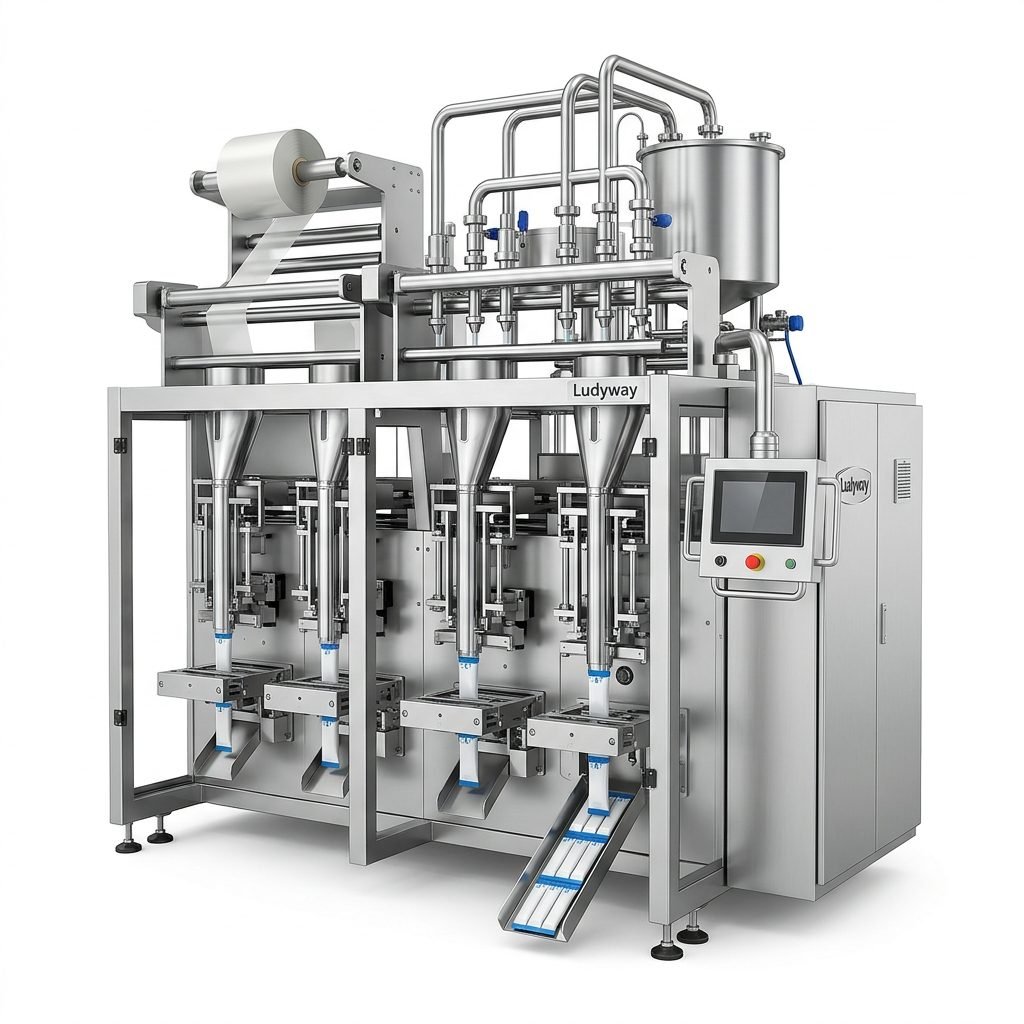
Yes—a packaging machine can absolutely make spouted pouches, but the answer depends on pouch type, filling method, spout position, product viscosity, and the level of automation you need. For manufacturers in food, beverage, personal care, chemical, and household product industries, understanding the right machine configuration is the key to stable production, leak-free seals, and scalable output.
In practice, spouted pouch production can involve one of two routes:
- Premade spouted pouch filling and sealing — the machine picks up ready-made pouches with pre-inserted spouts, fills the product, and seals/caps them.
- Form-fill-seal with spout insertion — a more complex system that forms the pouch from roll film, inserts the spout, fills the product, and completes sealing.
For most manufacturers, especially those prioritizing reliability and faster project startup, premade spouted pouch packaging machines are the more practical option.
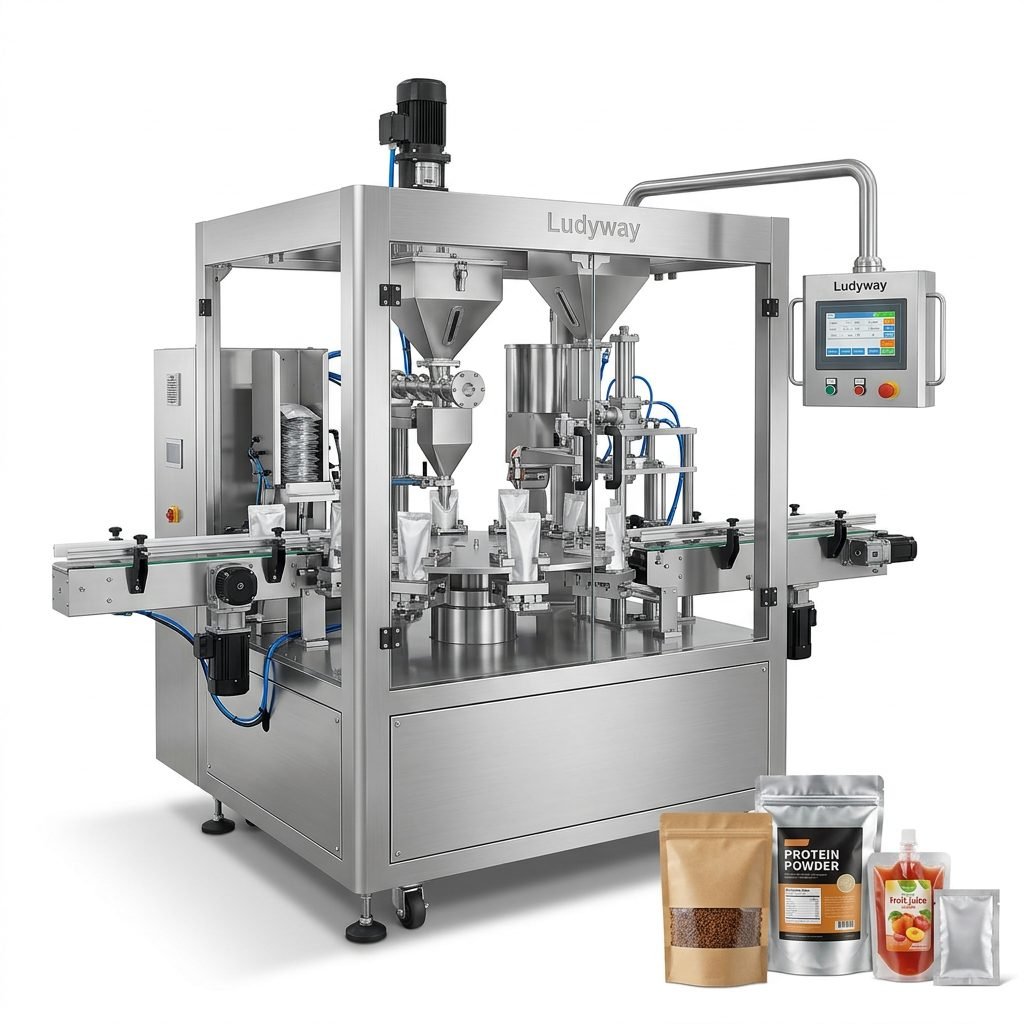
What Is a Spouted Pouch Packaging Machine?
A spouted pouch packaging machine is designed to handle flexible pouches equipped with a plastic spout and often a cap. These pouches are widely used for:
- Baby food and fruit puree
- Sauces, condiments, and dressings
- Dairy and yogurt products
- Detergents and household liquids
- Cosmetics such as lotions, gels, and serums
- Industrial and chemical liquids
Unlike standard flat pouches, spouted pouches require extra process control because the machine must work around the spout fitment, cap alignment, pouch opening accuracy, filling cleanliness, and sealing integrity.
Can One Machine Make the Entire Spouted Pouch?
This is where many buyers get confused. A packaging machine may “make spouted pouches” in different ways depending on what you mean by “make.”
| Production Need | Suitable Machine Type | Typical Use Case |
|---|---|---|
| Fill and seal ready-made spouted pouches | Premade pouch filling and sealing machine | Most common for food, liquid, and personal care products |
| Form the pouch from roll film and add a spout | Custom form-fill-seal line with spout insertion module | High-volume customized manufacturing projects |
| Cap tightening, coding, inspection, cartoning | Integrated downstream packaging line | Automation-focused factories |
So yes, a packaging machine can make spouted pouch products ready for sale—but in many factories, the pouch body and spout are supplied pre-manufactured, and the machine performs the filling, sealing, capping, coding, and final packaging steps.
How the Spouted Pouch Packaging Process Works
A typical premade spouted pouch line follows this workflow:
- Automatic pouch feeding
- Pouch positioning and opening
- Spout orientation check
- Product filling through the spout or pouch opening
- Optional nitrogen flushing or vacuum assistance
- Cap placement and tightening
- Leak detection, weight check, and coding
- Cartoning, case packing, or palletizing
For liquid and semi-liquid products, the accuracy of the filling system is especially important. Servo-driven piston fillers, pump fillers, or flowmeter-based systems may be selected based on product properties.

Which Products Are Suitable for Spouted Pouch Machines?
Spouted pouches are highly versatile, but machine matching matters. The product can be:
- Low-viscosity liquids — juice, oil, detergent, mouthwash
- Medium-viscosity products — yogurt, shampoo, lotion, sauces
- High-viscosity pastes — puree, jam, gel, cream
- Products with particulates — fruit pieces, seasoning suspensions, textured sauces
The machine must be designed around not only the product itself, but also:
- Particle size
- Flow behavior
- Foaming tendency
- Cleaning requirements
- Hot-fill or cold-fill process conditions
Main Machine Types Used for Spouted Pouches
1. Premade Spouted Pouch Filling Machine
This is the most common machine category. It handles pouches already manufactured with a spout. It offers:
- Faster installation and startup
- Less process complexity
- Good compatibility with multiple pouch sizes
- Lower risk compared with in-line spout insertion
2. Rotary Premade Pouch Packaging Machine
Suitable for medium to high output lines, rotary systems provide continuous motion advantages and stable handling for repeat production.
3. Linear Spouted Pouch Filling Line
A good option for products requiring more filling time, more flexible station arrangement, or easier maintenance access.
4. Custom Turnkey Spouted Pouch Packaging Line
This includes fillers, cap sorters, cappers, coding systems, inspection equipment, conveyors, and end-of-line automation. Manufacturers with expansion plans often prefer turnkey integration for better line efficiency.
Key Features to Look for Before Buying
When evaluating a machine, avoid focusing only on speed. A good spouted pouch system should deliver stable output, low leakage rate, easy cleaning, and consistent cap application.
| Feature | Why It Matters |
|---|---|
| Precise pouch pick-up and positioning | Reduces pouch misfeed and alignment errors |
| Servo filling control | Improves dosing accuracy and lowers product giveaway |
| Cap sorting and torque control | Prevents leakage and cap inconsistency |
| CIP or washdown design | Important for food, dairy, and cosmetics hygiene |
| Recipe memory and HMI | Speeds up changeover across multiple SKUs |
| Leak testing and reject system | Protects product quality and downstream efficiency |
Advantages of Using Spouted Pouch Packaging Machines
- Lower packaging material weight compared with rigid bottles or jars
- Convenient consumer dispensing and resealing
- Stronger shelf appeal
- Reduced logistics and storage costs
- Flexibility across food, cosmetic, and chemical sectors
- Potential for full-line automation
For brands entering retail, e-commerce, or travel-size packaging markets, spouted pouches often combine convenience, premium presentation, and transport efficiency.
Common Challenges in Spouted Pouch Production
Although spouted pouches offer many benefits, manufacturers should prepare for a few technical challenges:
Pouch Handling Stability
Spouted pouches are less symmetrical than standard pouches, so feeding and positioning require more accurate mechanical design.
Product Residue Around the Spout
Improper filling nozzles or splashing can affect cap sealing and hygiene. Anti-drip and clean-fill systems are essential.
Cap Torque Consistency
If the cap is too loose, leakage occurs. If too tight, the packaging may deform or create customer opening issues.
SKU Changeovers
Different spout diameters, pouch widths, and fill volumes may require carefully designed quick-change parts.
Material Compatibility
Certain laminated films, barrier structures, and spout materials behave differently under heat, pressure, and product exposure.
How to Choose the Right Machine for Your Factory
Before requesting a quotation, prepare the following information:
- Product type: liquid, paste, gel, or particulate
- Fill volume range
- Pouch dimensions and spout location
- Required output per minute or per hour
- Cap type and tightening requirements
- Sanitary standard and cleaning method
- Required automation level: standalone or complete line
- Factory utilities: air, electricity, water, floor layout
The more accurate your project data, the easier it is to match the correct machine configuration and avoid underperforming equipment.
Is a Turnkey Line Better Than a Standalone Machine?
For many growing manufacturers, the answer is yes. A standalone machine may solve the immediate filling task, but a turnkey system improves total line performance by connecting:
- Product feeding systems
- Pouch filling and sealing
- Cap feeding and tightening
- Coding and labeling
- Weight inspection and leak testing
- Cartoning and case packing
- Palletizing and line control integration
This is especially valuable for manufacturers planning to scale output, reduce labor dependence, and improve packaging consistency across shifts.
What Industries Most Often Use Spouted Pouch Machines?
- Food and beverage — puree, sauces, condiments, dairy, drink concentrates
- Cosmetics and personal care — lotion, shampoo, cream, serum, gel
- Household chemicals — detergent, cleaner, softener
- Industrial and chemical — additives, lubricants, specialty liquids
- Pharma and health products — oral gels, liquid supplements, medical nutrition formats
Why Manufacturers Often Choose Customized Solutions
Spouted pouch projects are rarely identical. Differences in pouch shape, cap design, and product behavior mean many factories need a customized line rather than a standard stock machine. That is why experienced suppliers with broad engineering capability are often preferred.
Manufacturers exploring scalable automation can review integrated solutions from Ludyway packaging machine manufacturer, especially for projects that require compatibility across food, pharmaceutical, cosmetic, chemical, and pouch-based packaging applications.
Frequently Asked Questions
Can a standard pouch machine run spouted pouches?
Usually not without modification. Spouted pouches require dedicated handling, filling, and capping functions.
Is premade spouted pouch packaging more economical?
For many manufacturers, yes. It reduces process complexity and shortens commissioning time.
Can the same machine fill both liquid and paste products?
Yes, if the dosing system is selected correctly. However, viscosity range and cleaning requirements must be considered in advance.
What output can a spouted pouch machine achieve?
Output varies depending on pouch size, product type, fill volume, and automation level. Small-format, low-viscosity products generally run faster than large pouches or thick pastes.
Can a machine include coding, cartoning, and palletizing?
Yes. Many suppliers provide complete turnkey packaging lines rather than a single filling machine.
Final Answer for Manufacturers
A packaging machine can make spouted pouch products efficiently and reliably, but the ideal solution depends on whether you need premade pouch filling or a fully integrated pouch-forming and spout-insertion system. For most factories, a premade spouted pouch filling and sealing machine offers the best balance of speed, stability, investment control, and production flexibility.
If your goal is long-term automation, lower leakage risk, and easier SKU expansion, focus on machine design quality, filling accuracy, capping stability, and full-line integration—not just headline speed.