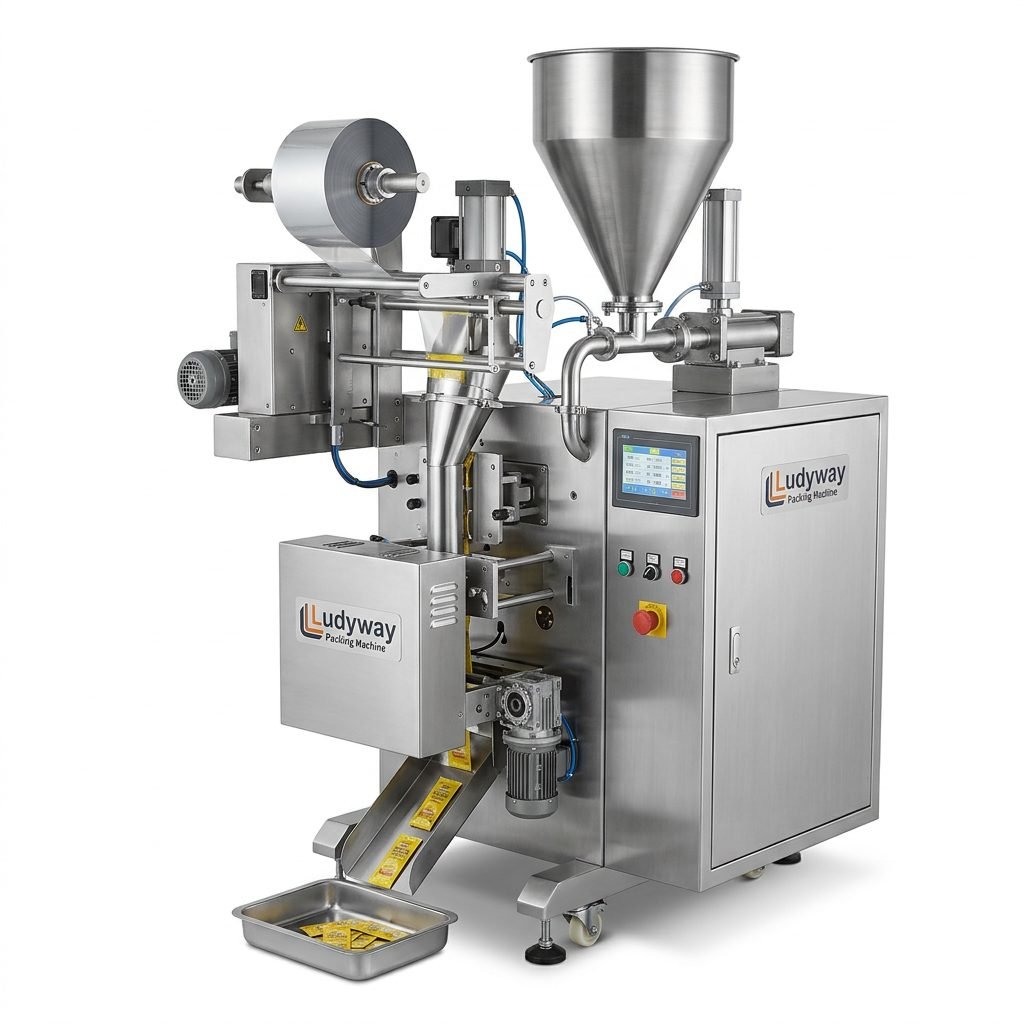
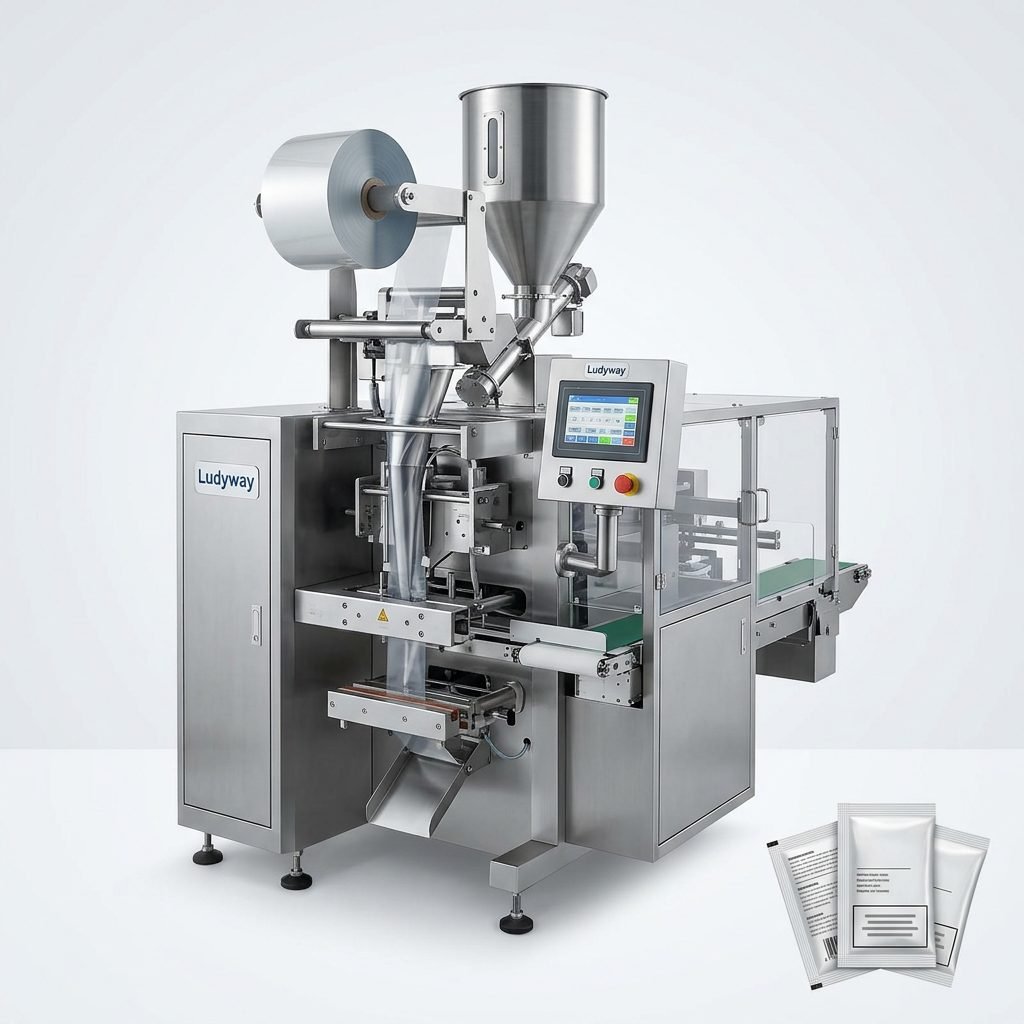
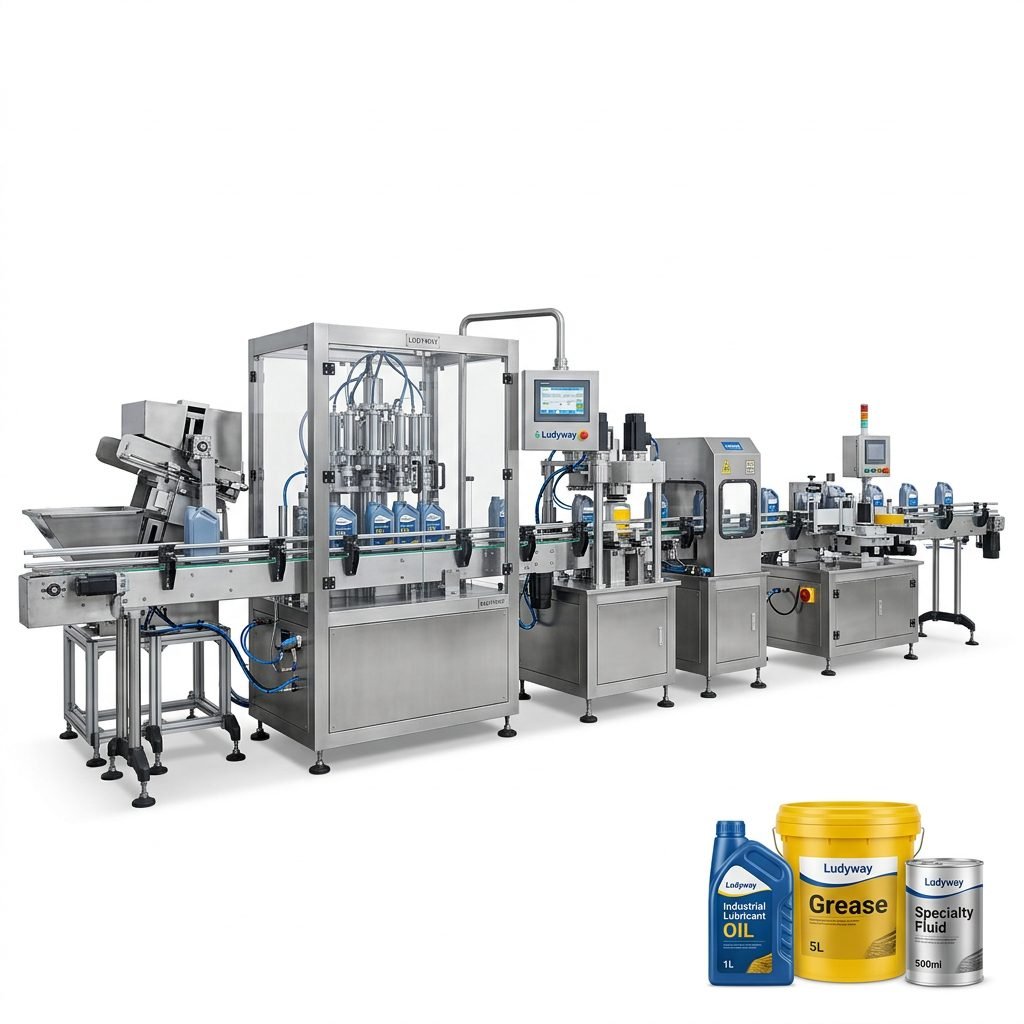
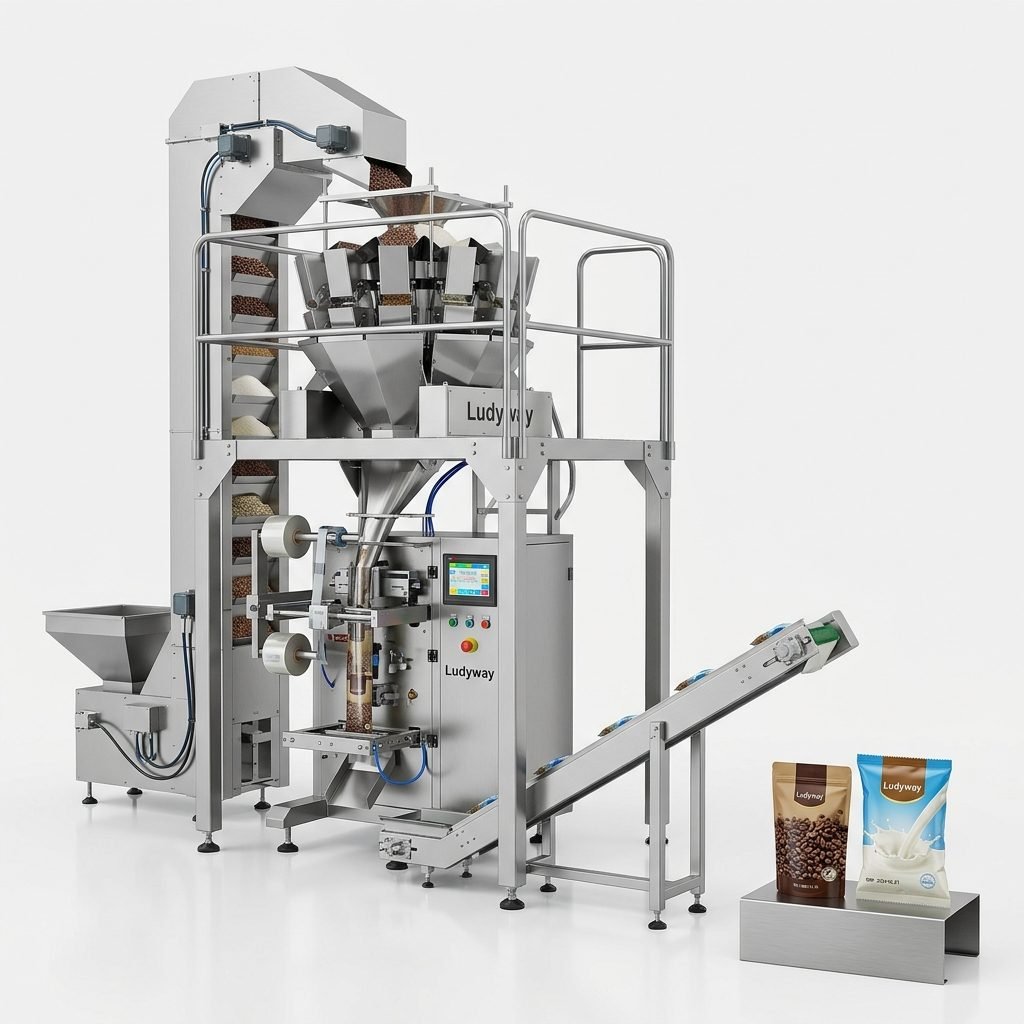
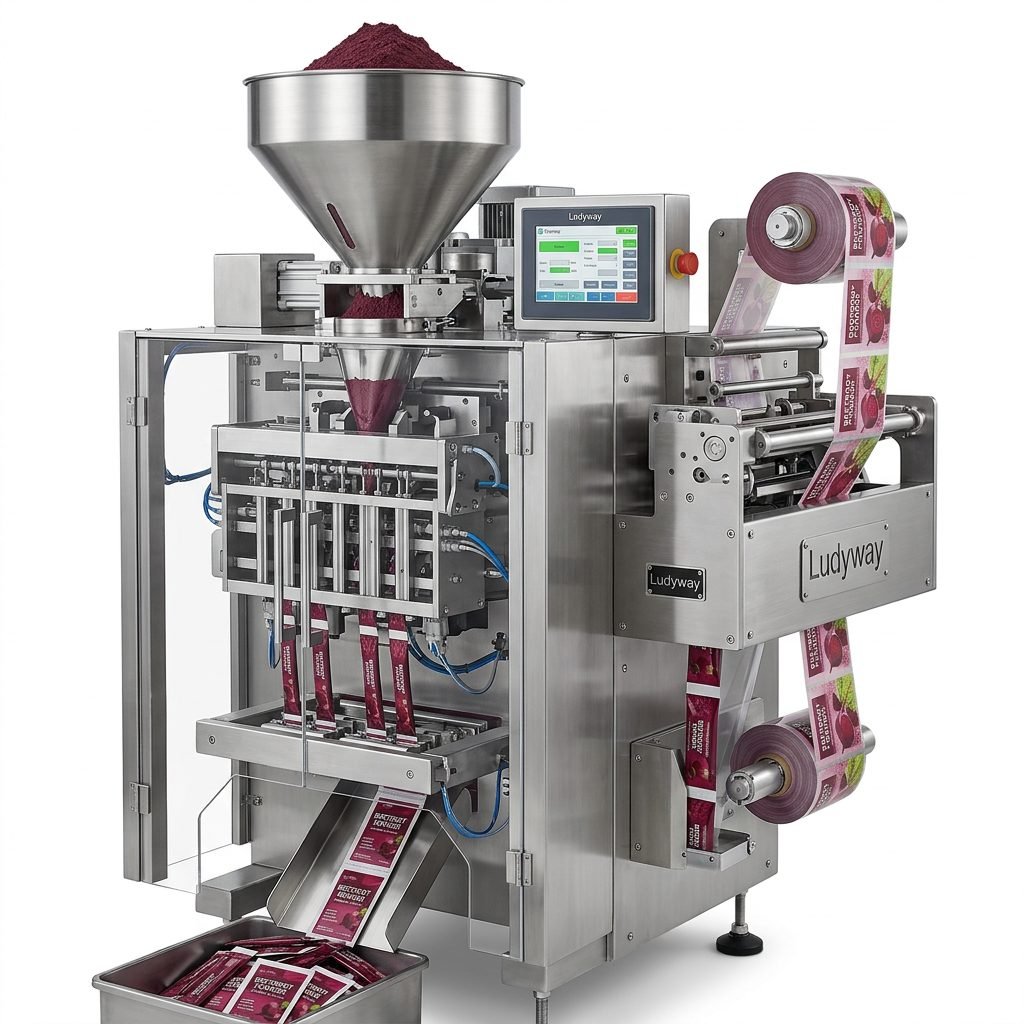
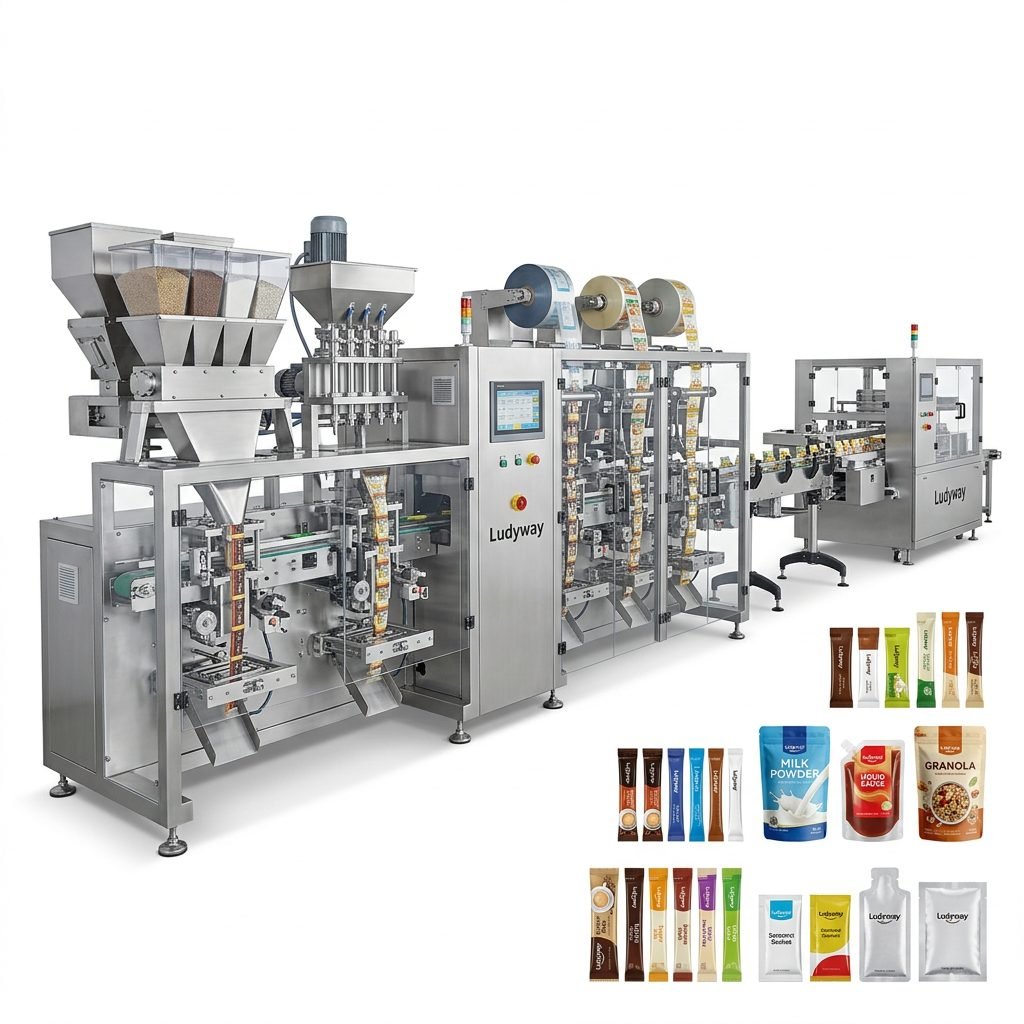
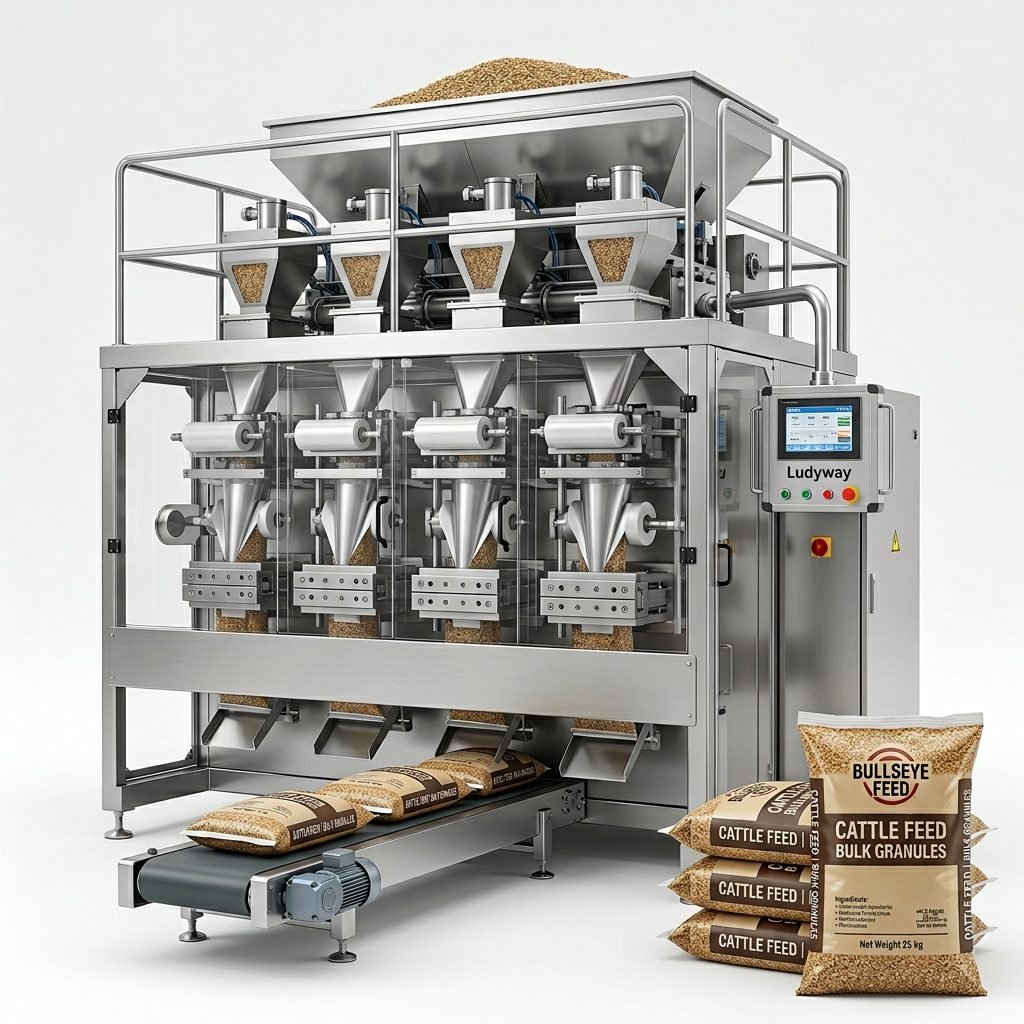
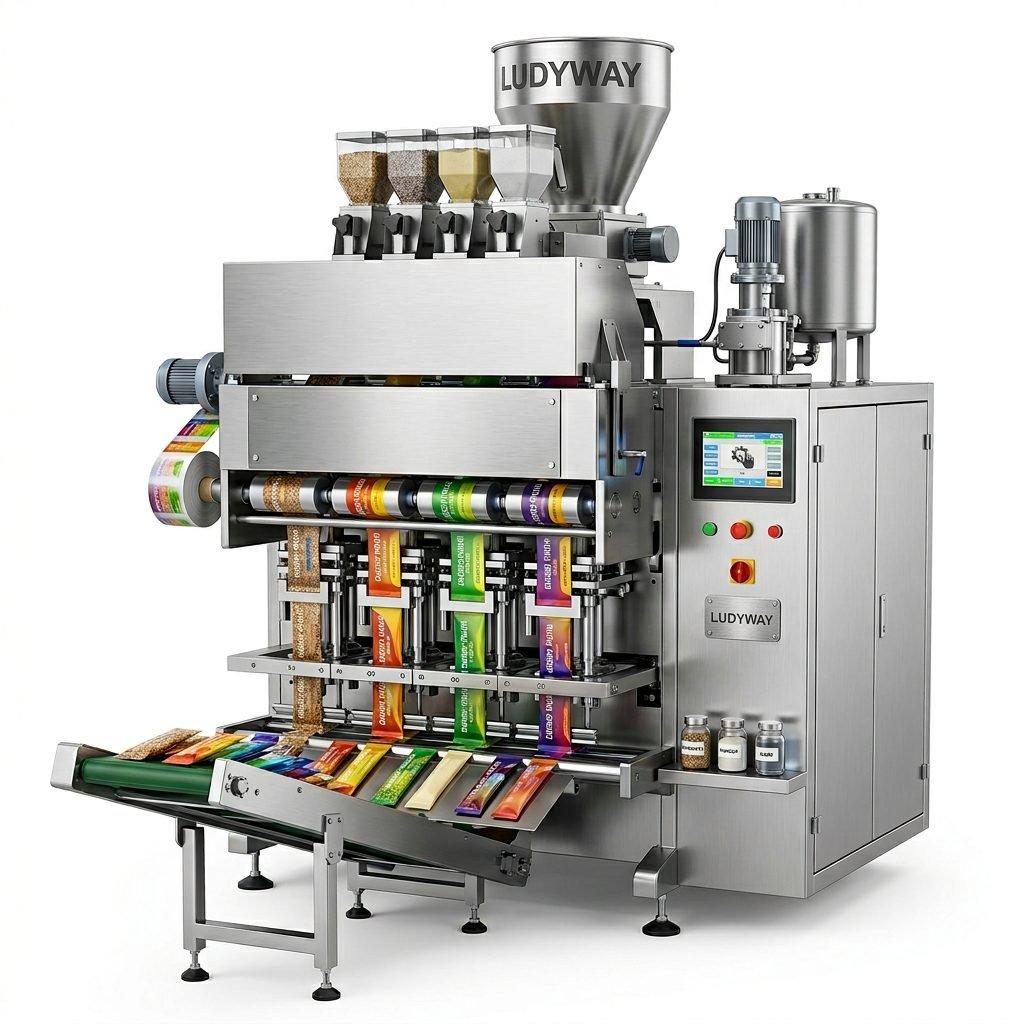
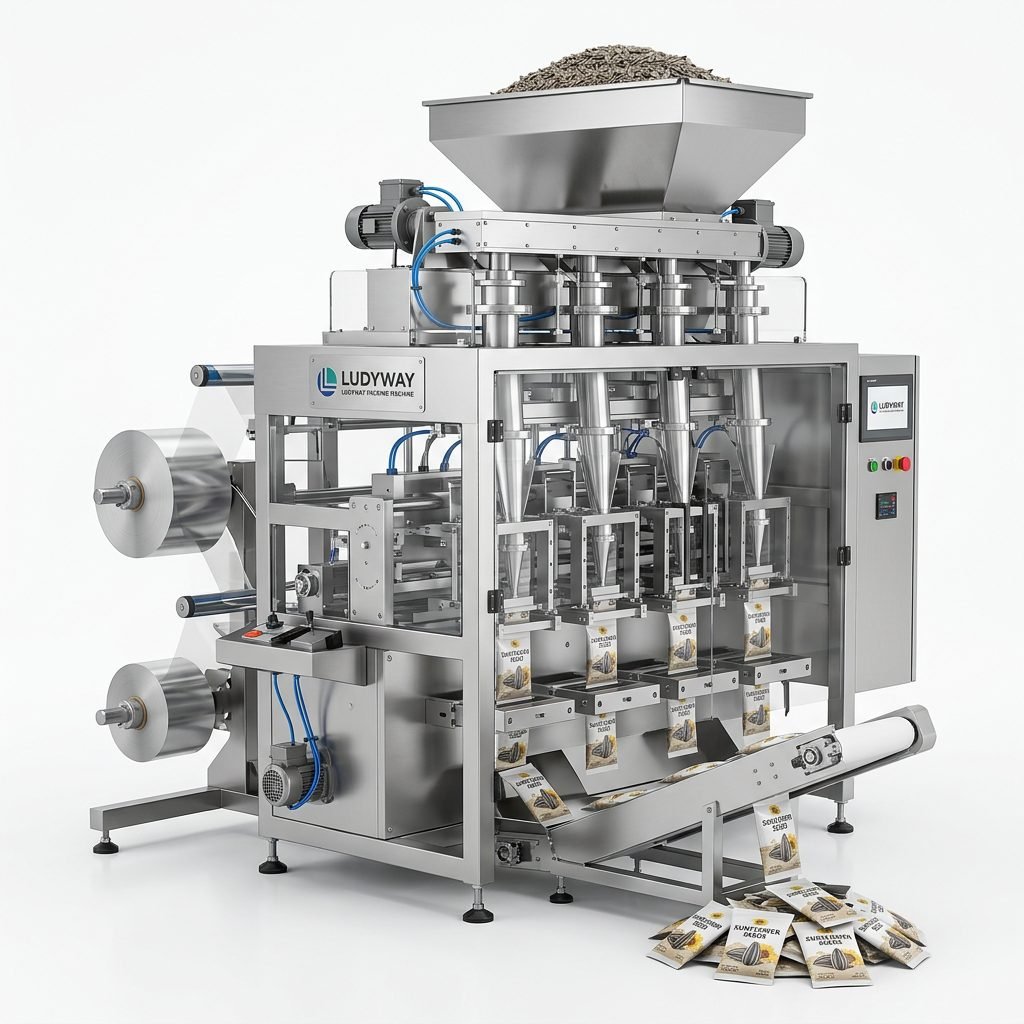
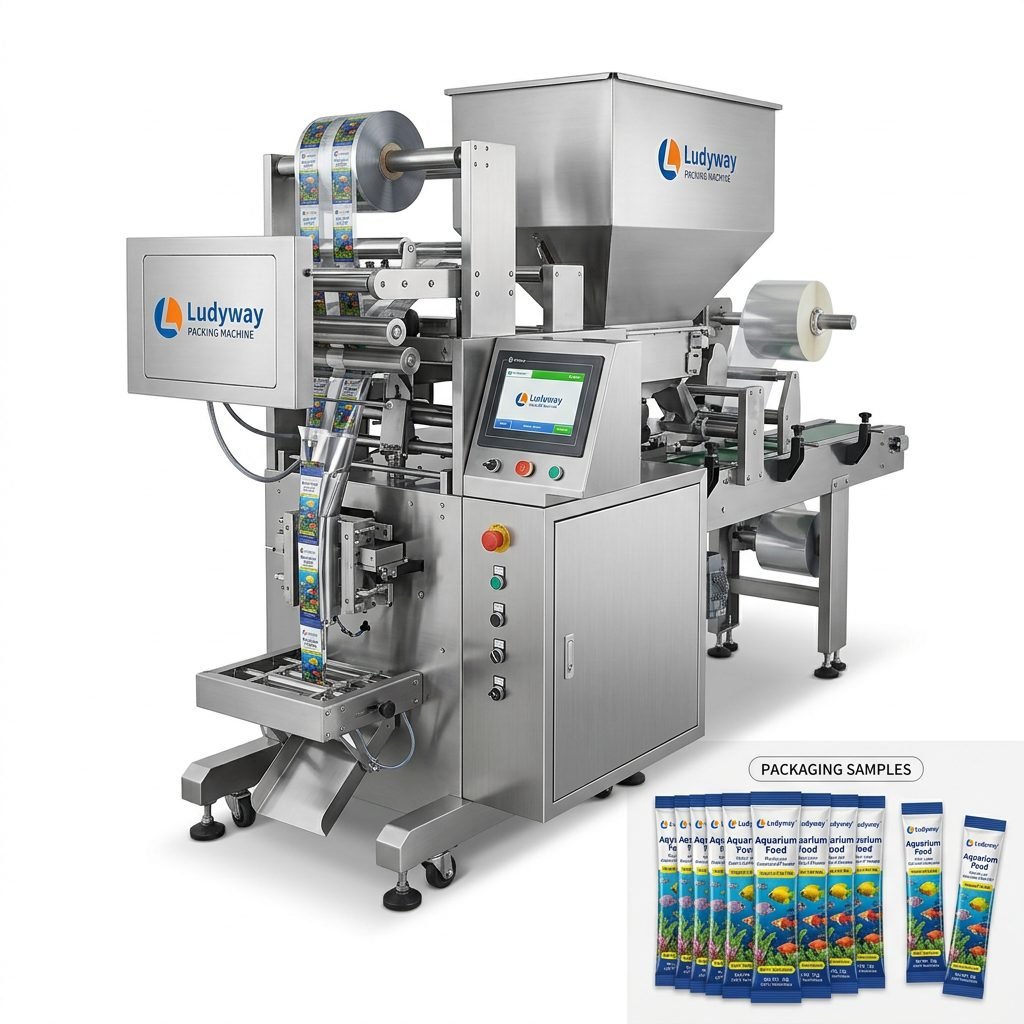
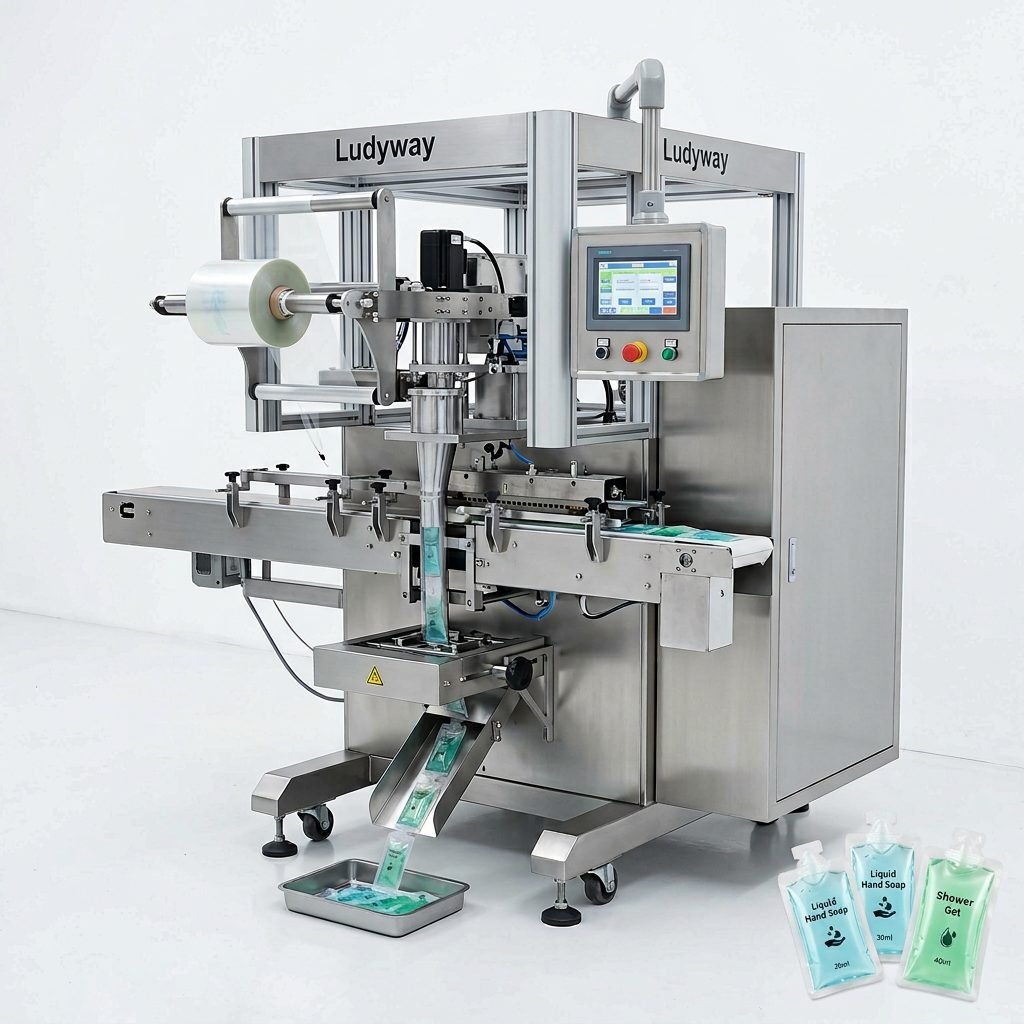
A liquid sachet filling machine is an automated packaging system designed to dose, fill, seal, and cut liquid products into small single-use sachets or stick packs. These machines are widely used in food, pharmaceutical, cosmetic, chemical, and personal care industries because they offer fast production, accurate filling, neat sealing, and convenient retail-ready packaging.
From ketchup, honey, and shampoo to serum, disinfectant, and medicinal liquids, sachet packaging has become a practical format for brands that want portability, portion control, and lower packaging waste compared with larger rigid containers.
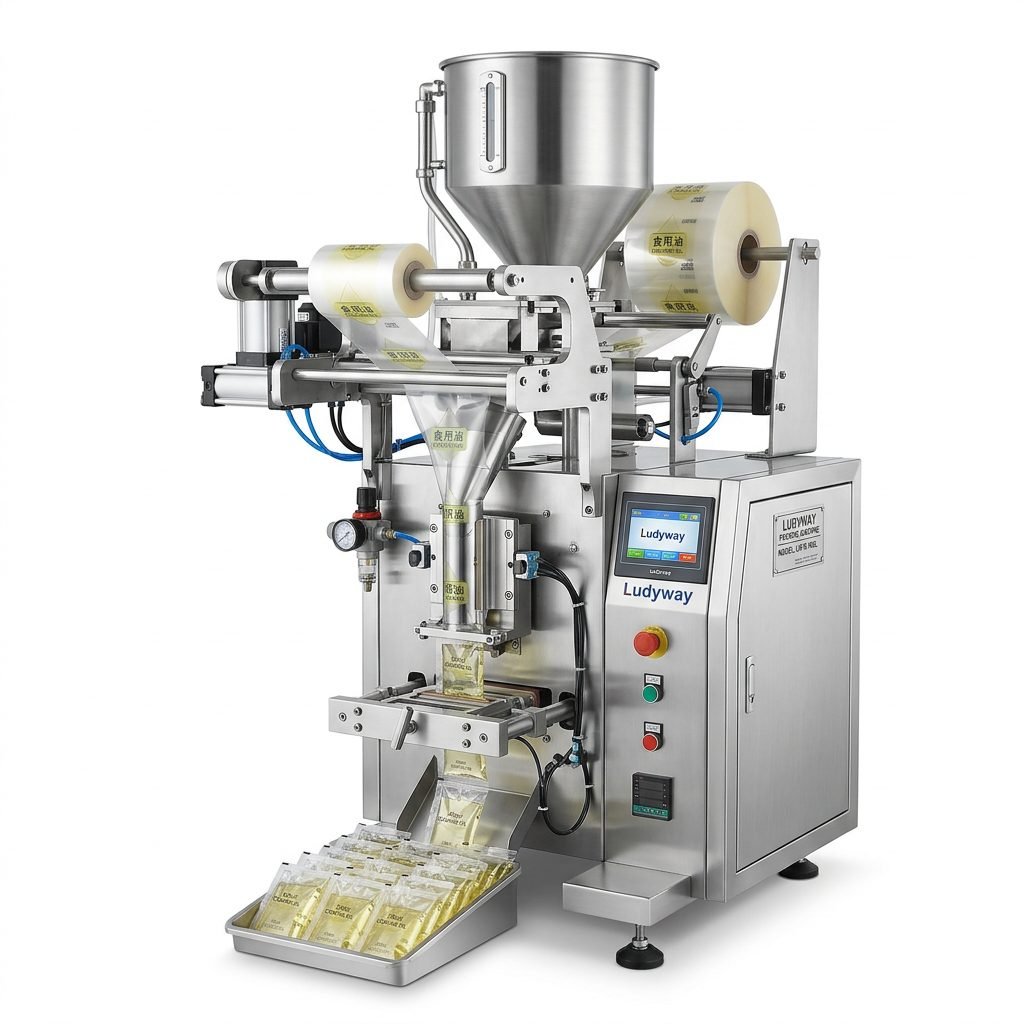
What Does a Liquid Sachet Filling Machine Do?
In simple terms, the machine turns packaging film into finished sachets, fills them with a measured amount of liquid, seals the package, and discharges the completed packs for collection or downstream packing.
Depending on the product and production target, the machine may handle:
- Free-flowing liquids such as water, vinegar, soy sauce, juice, mouthwash, and oil
- Viscous liquids such as syrup, honey, detergent, lotion, and shampoo
- Semi-liquid or gel products such as ketchup, mayonnaise, serum, gel sanitizer, and cosmetic essence
Most machines work as a vertical form-fill-seal system or a multi-lane sachet/stick pack system, depending on the output requirement and package design.
How a Liquid Sachet Filling Machine Works
While machine structures vary, the working process usually includes the following steps:
- Film unwinding: Roll film is fed into the machine.
- Bag forming: The film is shaped into sachet tubes or pouch cavities.
- Liquid dosing: Pumps or piston fillers dispense a precise amount of product.
- Sealing: Heat sealing closes the sachet edges securely.
- Cutting: Individual sachets are separated.
- Date coding or inspection: Optional systems print batch numbers and check quality.
- Discharge or cartoning: Finished sachets move to collection trays, conveyors, or secondary packaging equipment.
| Process Stage | Function | Why It Matters |
|---|---|---|
| Film Feeding | Supplies packaging material smoothly | Prevents misalignment and waste |
| Forming | Shapes the sachet structure | Ensures consistent pack appearance |
| Filling | Dispenses the target liquid volume | Improves dosing accuracy |
| Sealing | Closes the package using heat | Prevents leakage and contamination |
| Cutting | Separates sachets into final units | Creates a clean, market-ready finish |
Common Types of Liquid Sachet Filling Machines
Single-Lane Sachet Machines
These are ideal for moderate output, pilot production, or brands with multiple SKUs but lower daily volume. They are often used for specialty sauces, personal care samples, and pharmaceutical liquids.
Multi-Lane Sachet Machines
Multi-lane systems run several packaging lanes at the same time, which significantly increases output. They are suitable for high-volume production of liquids like shampoo, condiments, oral liquid supplements, and cleaning products.
Stick Pack Liquid Filling Machines
These produce slim, elongated packs instead of wider sachets. Stick packs are popular for energy gels, beverage concentrates, honey, and portable health products.
Premade Pouch Liquid Fillers
Instead of forming sachets from film rolls, these machines fill preformed pouches. They are often chosen when brands need premium pouch shapes, spouts, or stronger visual shelf appeal.
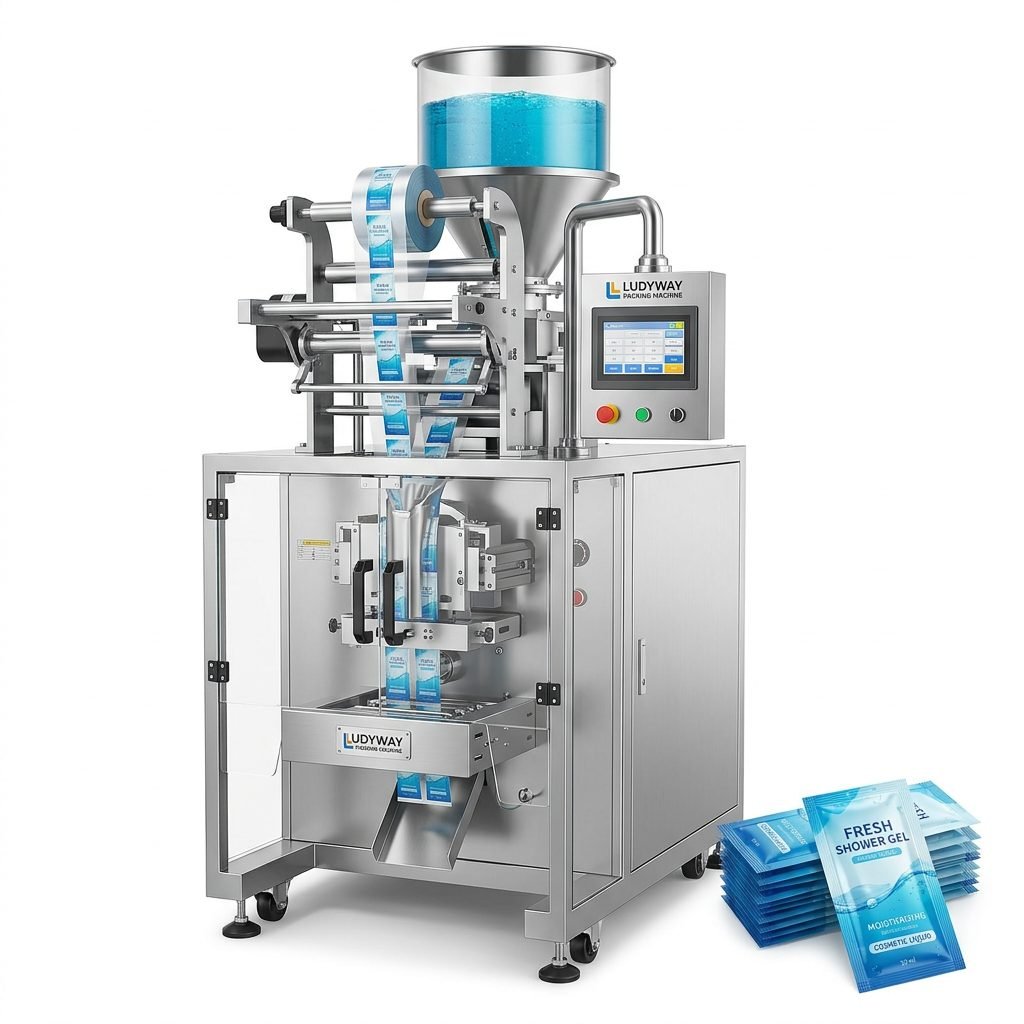
What Products Can Be Packed in Liquid Sachets?
A liquid sachet filling machine can be adapted for a wide range of products, provided the correct dosing system, sealing parameters, and contact materials are selected.
Food and Beverage
- Cooking oil
- Soy sauce
- Ketchup and sauces
- Honey and syrup
- Coffee concentrate
- Vinegar
- Jam
- Dairy-based liquids
Pharmaceutical and Health
- Oral liquid medicines
- Nutritional supplements
- Electrolyte liquids
- Medical gels
- Disinfectant liquids
Cosmetics and Personal Care
- Shampoo
- Conditioner
- Body wash
- Facial serum
- Lotion
- Cream sachets
- Hair treatment essence
Chemical and Household Products
- Liquid detergent
- Cleaner concentrates
- Disinfectants
- Lubricants
- Industrial additives
Key Components of a Liquid Sachet Filling Machine
Understanding the machine structure helps buyers evaluate quality, maintenance needs, and production suitability.
- Film feeding system for stable material transport
- Forming collar or sachet forming system for pack shape creation
- Liquid filling unit such as piston pump, rotary pump, servo pump, or peristaltic system
- Heat sealing unit for strong seal integrity
- PLC and touchscreen controls for easy operation and recipe management
- Photoelectric tracking system for print registration accuracy
- Discharge conveyor or output system for efficient product handling
| Component | Main Role | Buyer Focus |
|---|---|---|
| Filling Pump | Measures and dispenses liquid | Accuracy, viscosity compatibility |
| Sealing Jaws | Seal sachet edges | Leak-proof performance |
| PLC Control | Machine operation management | Ease of use, diagnostics |
| Frame and Contact Parts | Support and hygiene compliance | Stainless steel quality, cleaning access |
Main Benefits of Using a Liquid Sachet Filling Machine
1. High Packaging Efficiency
Automation reduces manual handling and allows continuous packaging, especially in multi-lane production lines.
2. Accurate Filling
Precise dosing helps control costs, maintain product consistency, and reduce giveaway.
3. Better Seal Quality
Reliable sealing is essential for liquid products because even a small defect can lead to leaks, contamination, and transport losses.
4. Lower Labor Cost
An automatic machine can replace several manual filling and sealing steps, improving workforce efficiency.
5. Convenient Consumer Packaging
Sachets are compact, portable, easy to distribute, and ideal for samples, travel packs, and single-dose usage.
6. Flexible Applications
With proper customization, one machine may support different sachet sizes, product viscosities, and packaging films.
Industries That Commonly Use These Machines
Liquid sachet packaging is especially common in sectors where small-volume convenience packs and hygiene are critical:
- Food manufacturing
- Pharmaceutical production
- Nutraceutical and health supplement brands
- Cosmetic and skincare companies
- Daily chemical manufacturers
- Hospitality and airline amenity supply
- Contract packaging businesses
How to Choose the Right Liquid Sachet Filling Machine
Not all liquid products behave the same way. The best machine depends on your product, target speed, and packaging style.
Consider Product Viscosity
Thin liquids require different filling methods than thick sauces or gels. Always confirm whether your product is free-flowing, viscous, foaming, corrosive, or temperature-sensitive.
Define Sachet Size and Shape
Pack width, length, seal type, tear notch, and design format all affect machine configuration.
Estimate Required Output
A startup may only need a single-lane model, while a large factory may need a high-speed multi-lane system integrated with cartoning and case packing.
Check Material Compatibility
Your chosen film structure must match the sealing system and barrier requirements of the product.
Evaluate Hygiene Standards
For food, pharma, and cosmetics, sanitary design, easy cleaning, and stainless steel contact parts are especially important.
Look at Expansion Potential
If your business is growing, it is often better to invest in a machine that can connect with conveyors, checkweighers, coding systems, cartoners, or complete packaging lines.
| Selection Factor | Questions to Ask |
|---|---|
| Product Type | Is the liquid thin, thick, foamy, or corrosive? |
| Pack Format | Do you need sachets, stick packs, or premade pouches? |
| Capacity | How many packs per minute are required? |
| Accuracy | What filling tolerance is acceptable? |
| Compliance | Are food-grade or GMP-related standards needed? |
| Future Automation | Will the machine need to connect to a full line later? |
Important Features to Look For
- Servo-controlled filling for better precision
- No-drip filling design for cleaner seals
- Easy changeover for multiple sachet sizes
- Touchscreen recipe settings for quick operation
- Automatic alarm and fault diagnosis for reduced downtime
- Stable temperature control for reliable sealing
- CIP-friendly or easy-clean structure where hygiene matters
Common Challenges in Liquid Sachet Packaging
Even advanced systems can face packaging issues if the machine setup and product characteristics are not well matched.
Leakage
Usually caused by product splashing into the seal area, poor sealing temperature, or incompatible film.
Inconsistent Fill Weight
This can happen because of unstable product feeding, pump mismatch, air bubbles, or viscosity fluctuation.
Poor Sachet Appearance
Wrinkles, uneven cuts, and registration errors often point to film tracking or forming issues.
Downtime During Changeover
A poorly designed machine may take too long to switch products or sachet sizes, reducing total productivity.
Maintenance Tips for Better Performance
- Clean product-contact parts regularly
- Inspect sealing jaws and cutters for wear
- Calibrate filling systems on schedule
- Use the correct packaging film specification
- Monitor pump performance and sealing temperature
- Train operators to identify early warning signs
Proper maintenance not only extends machine life but also helps maintain consistent sealing quality and accurate liquid dosing.
Liquid Sachet Filling Machine vs. Other Packaging Formats
| Packaging Format | Best For | Typical Advantage |
|---|---|---|
| Liquid Sachets | Single-use and small-dose products | Portable and cost-effective |
| Stick Packs | Slim premium portions | Retail-friendly appearance |
| Bottles | Larger liquid volumes | Reusable and rigid protection |
| Premade Pouches | Premium packaging applications | Better branding flexibility |
Who Should Invest in This Equipment?
A liquid sachet filling machine is a strong investment for businesses that:
- Need single-dose liquid packaging
- Want to reduce manual filling labor
- Sell sample packs, travel packs, or trial-size products
- Require high-speed and consistent output
- Plan to scale from standalone equipment to full automation
Finding a Reliable Packaging Machine Supplier
When choosing a manufacturer, it is wise to look beyond the machine price alone. Buyers should also compare engineering experience, customization capability, export support, spare parts service, and complete line integration.
For companies seeking automatic sachet, stick pack, and turnkey packaging solutions, Ludyway liquid sachet filling machine solutions are backed by more than 30 years of industry experience, a manufacturing base of over 20,000 square meters, and broad application coverage across food, pharmaceutical, health supplement, cosmetic, and chemical sectors.
Final Buying Checklist
- Confirm your liquid type and viscosity range
- Define sachet size, volume, and film material
- Set your required output per minute or per day
- Decide whether you need single-lane or multi-lane production
- Check sanitary design and material contact standards
- Ask about filling accuracy and seal integrity testing
- Evaluate after-sales support and spare parts response
- Consider future expansion into a turnkey packaging line
A well-matched liquid sachet filling machine can help manufacturers improve efficiency, reduce product waste, maintain package quality, and support long-term production growth. For brands focused on convenient single-use liquid packaging, it remains one of the most practical and scalable packaging investments available today.