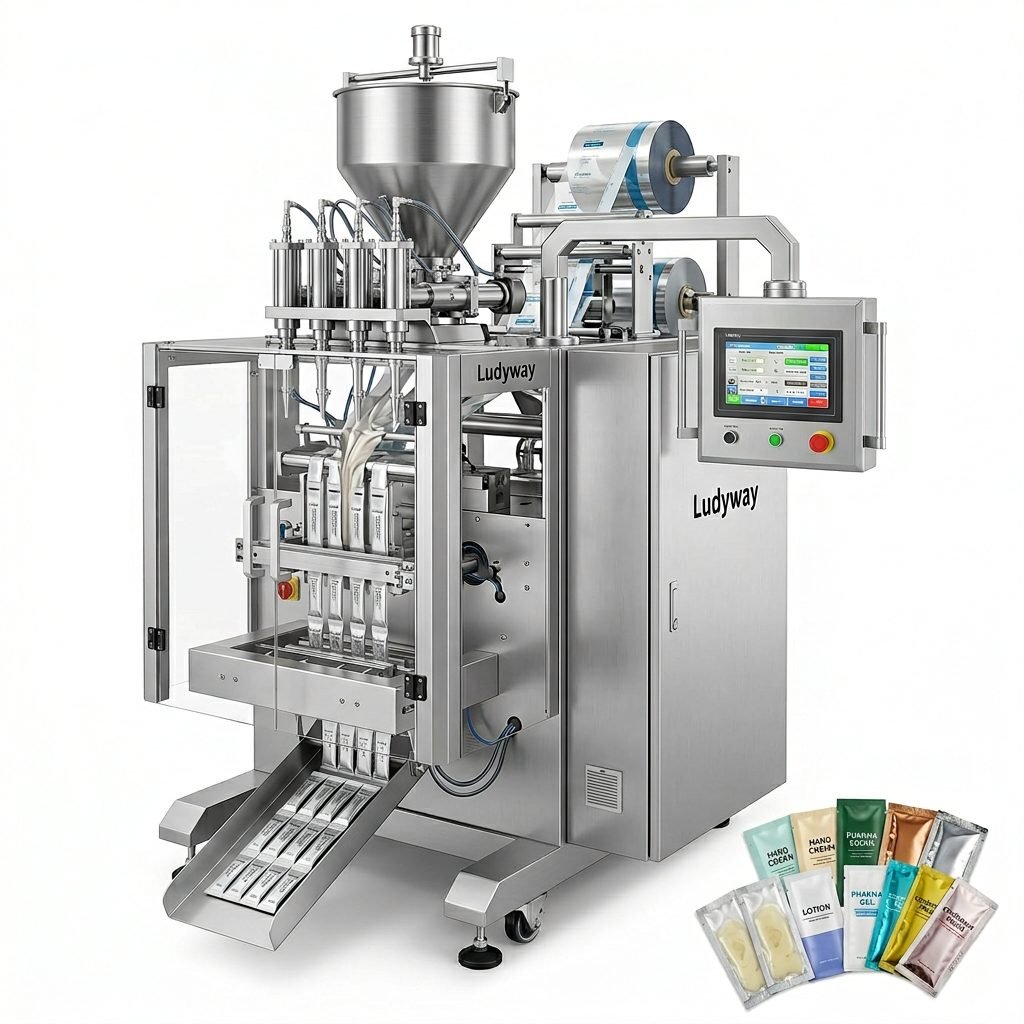
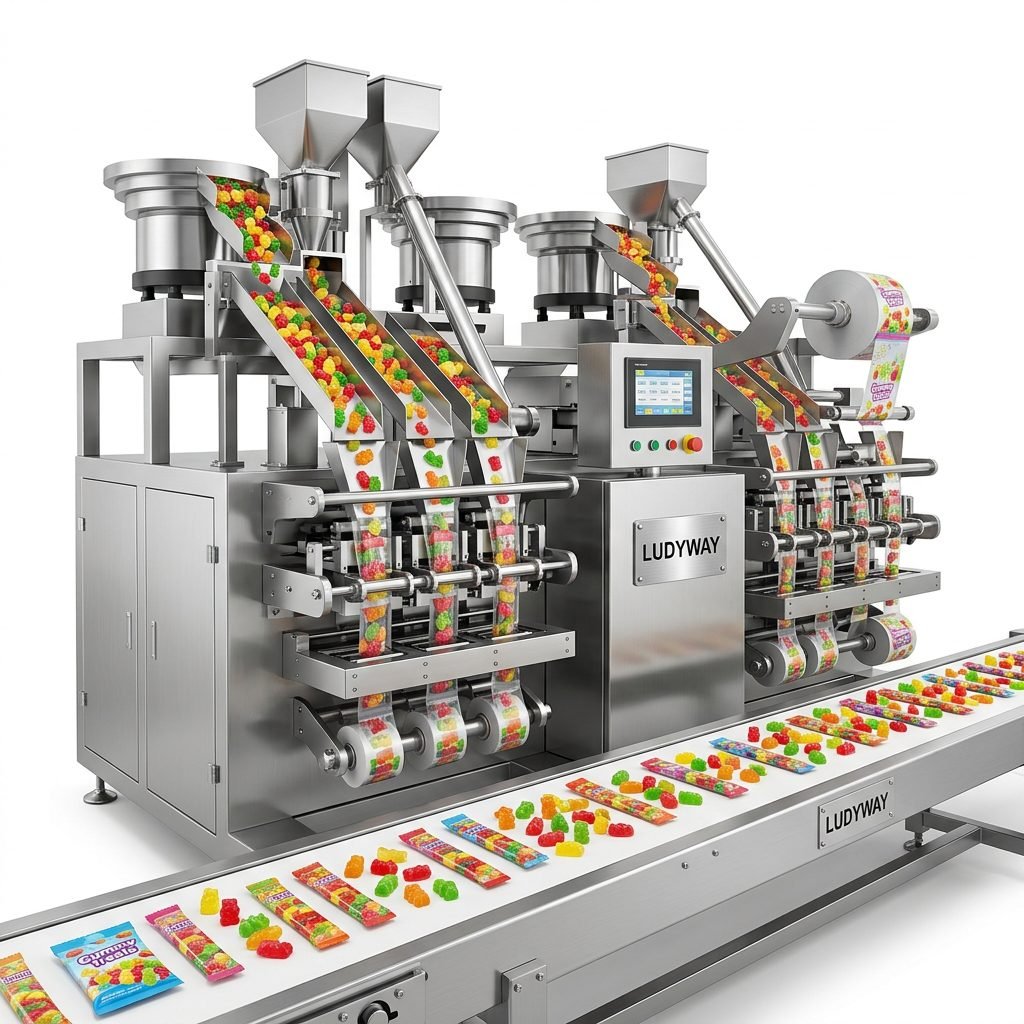
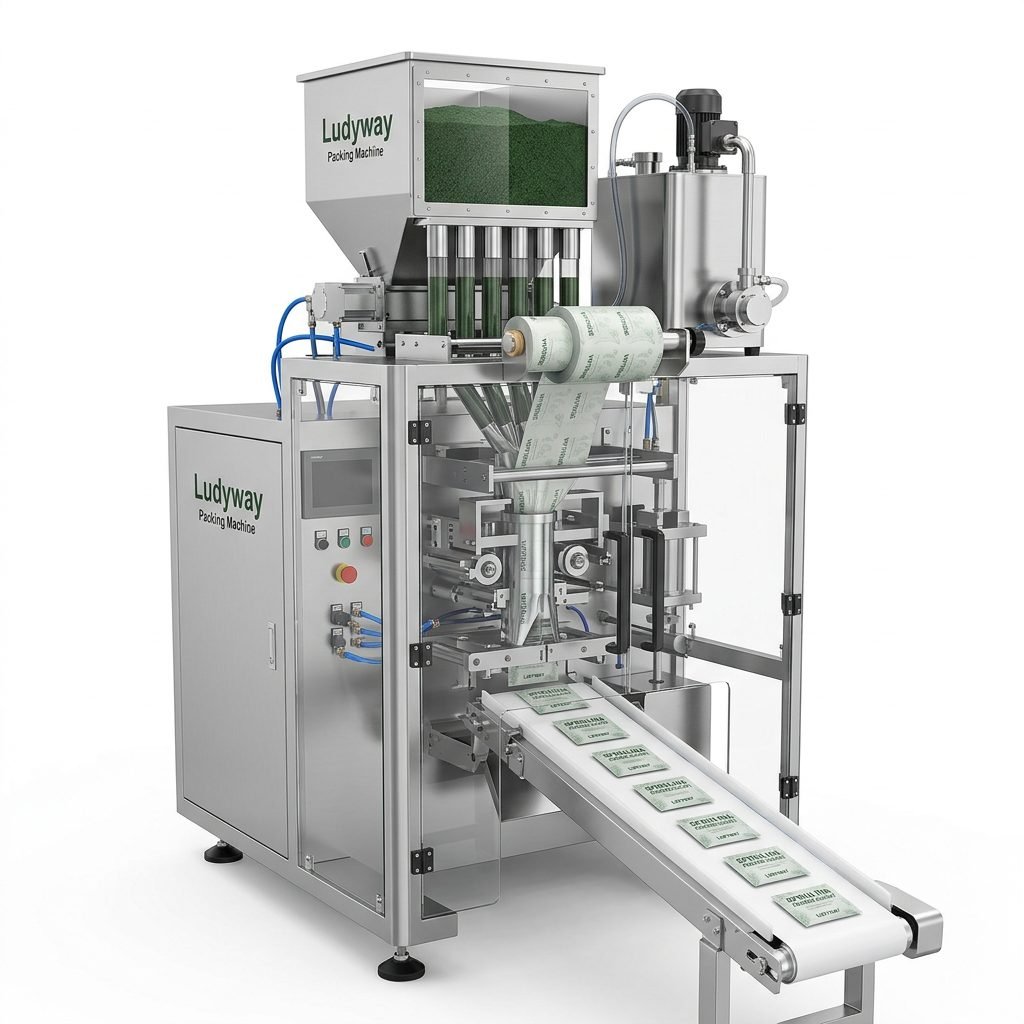
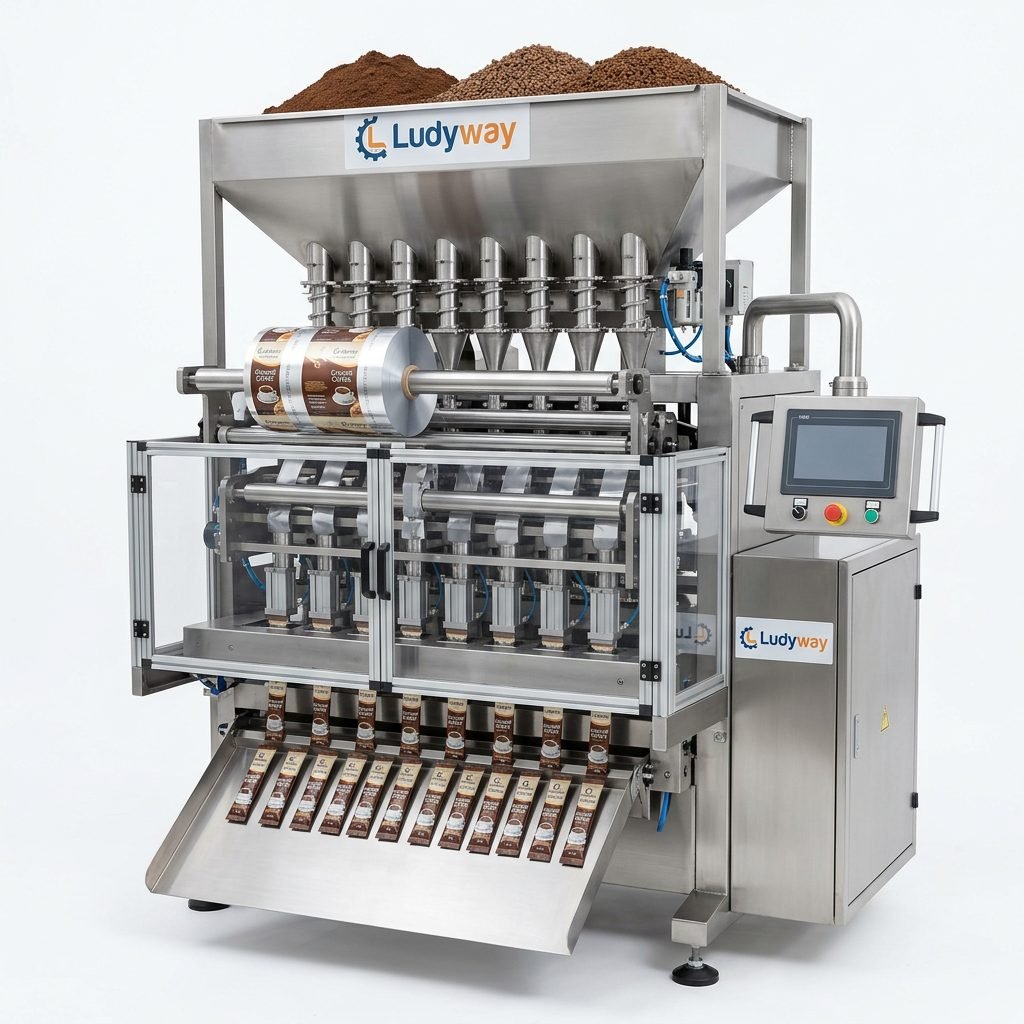
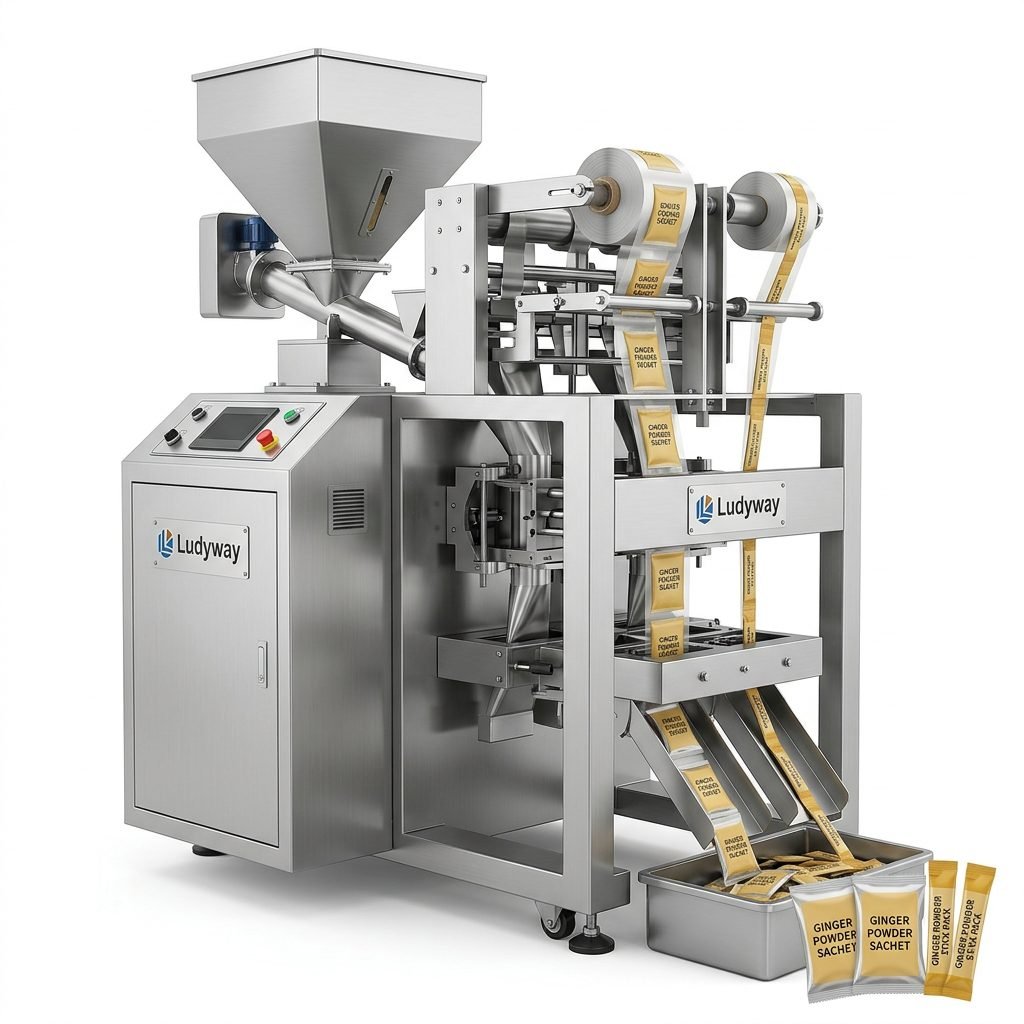
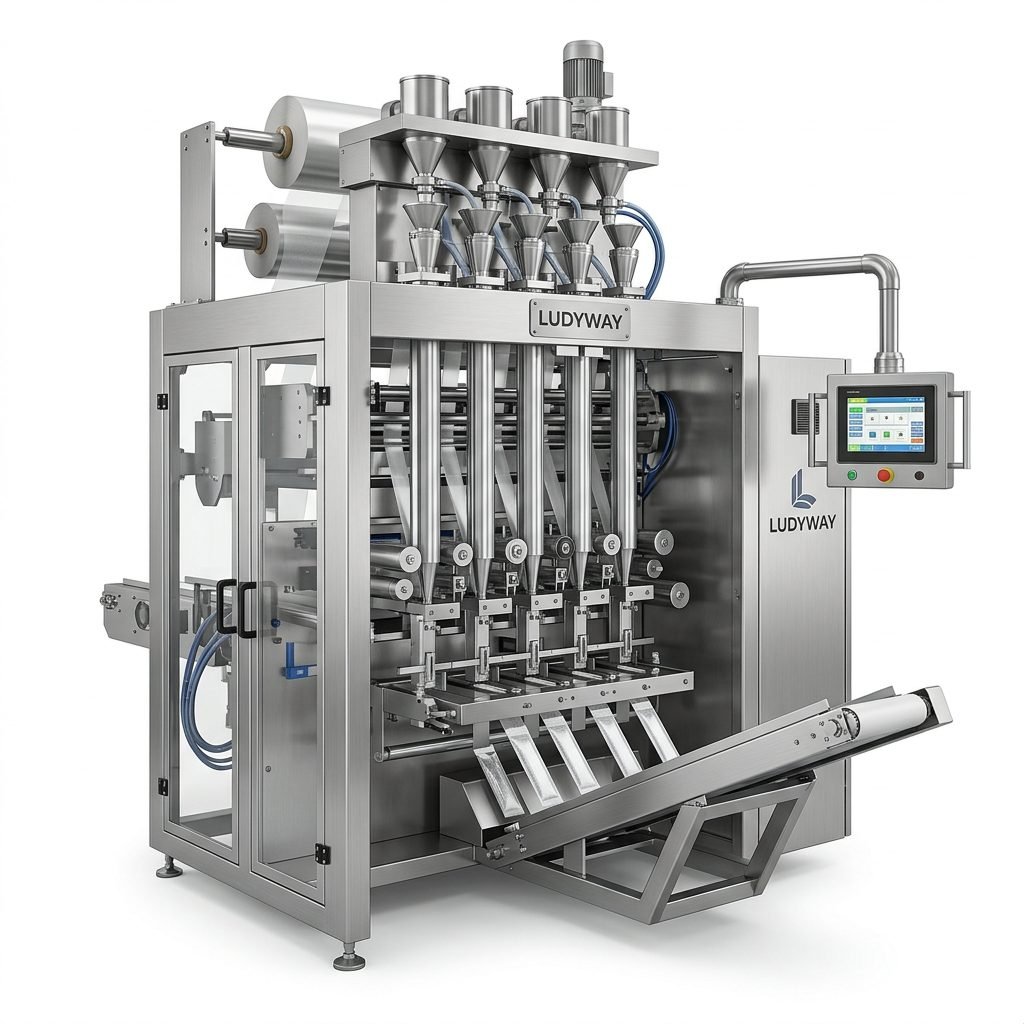
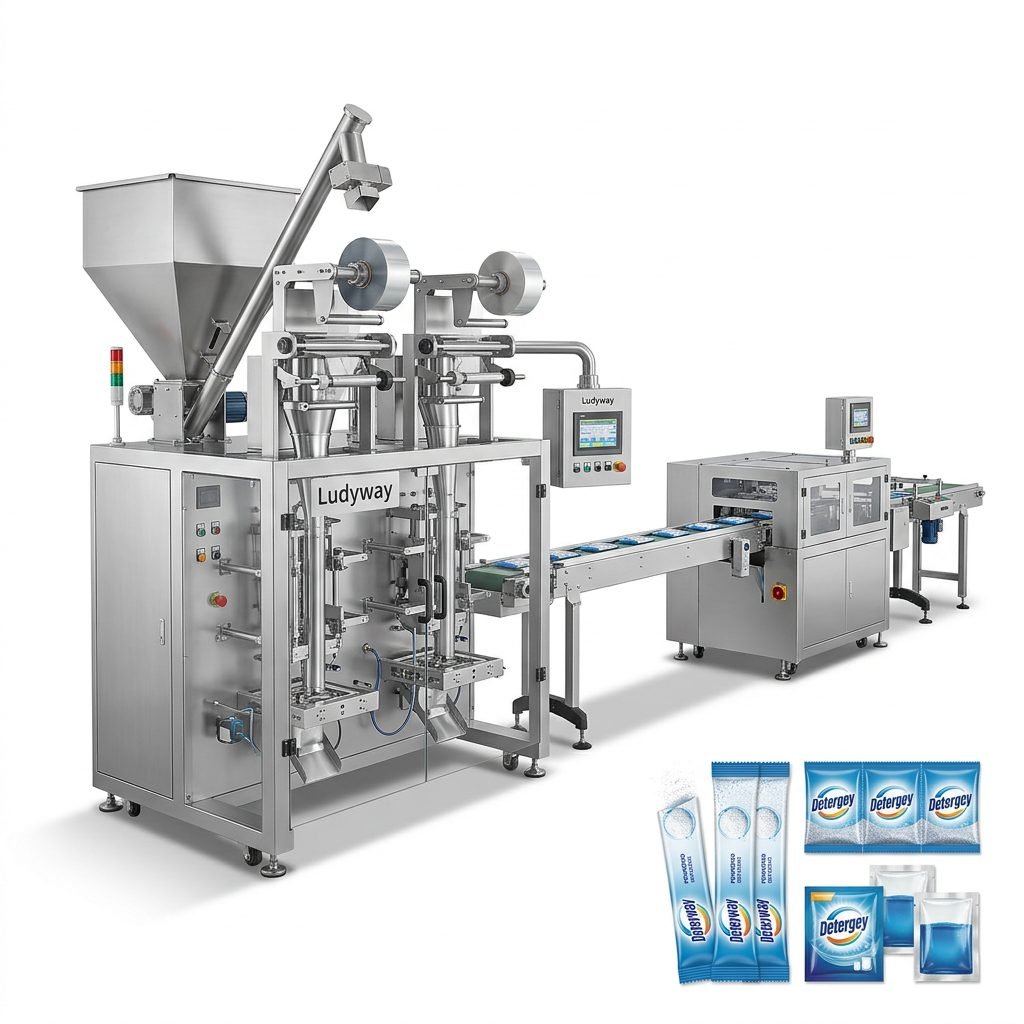
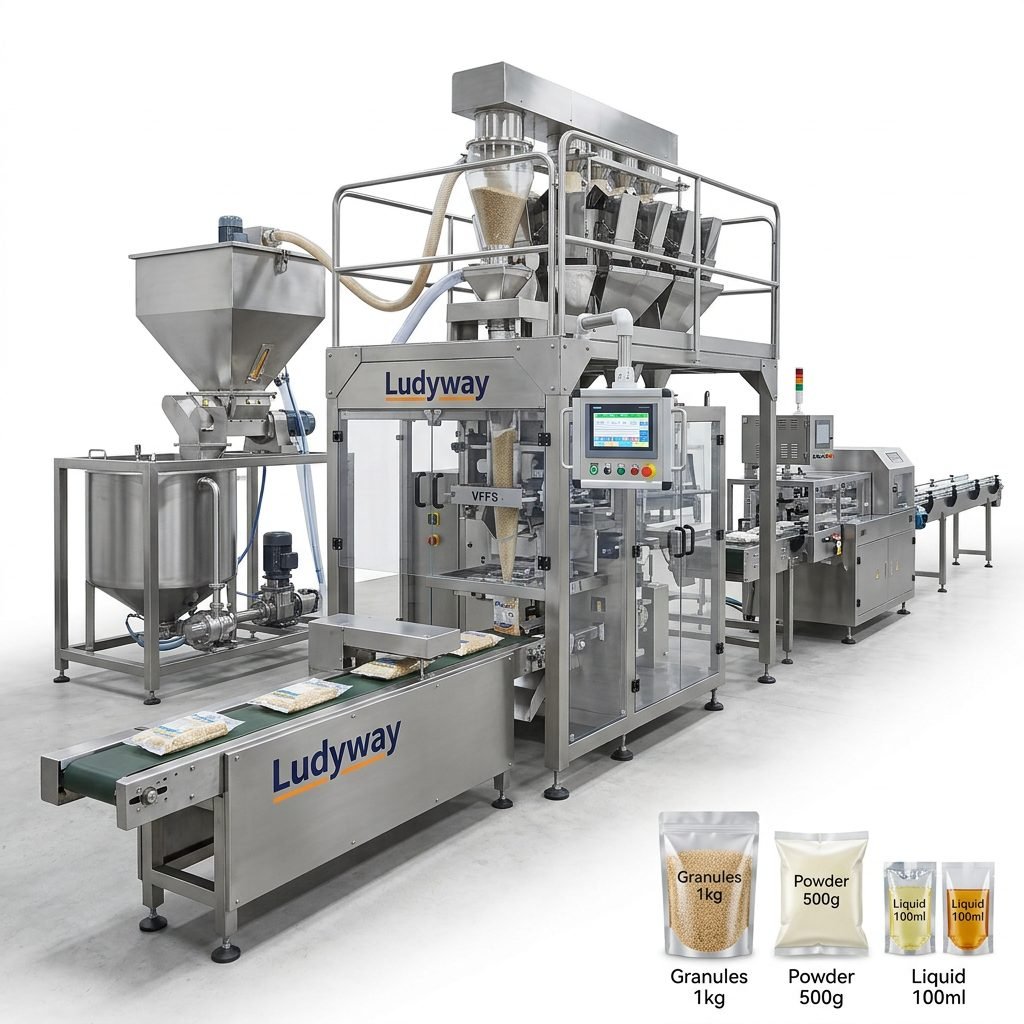
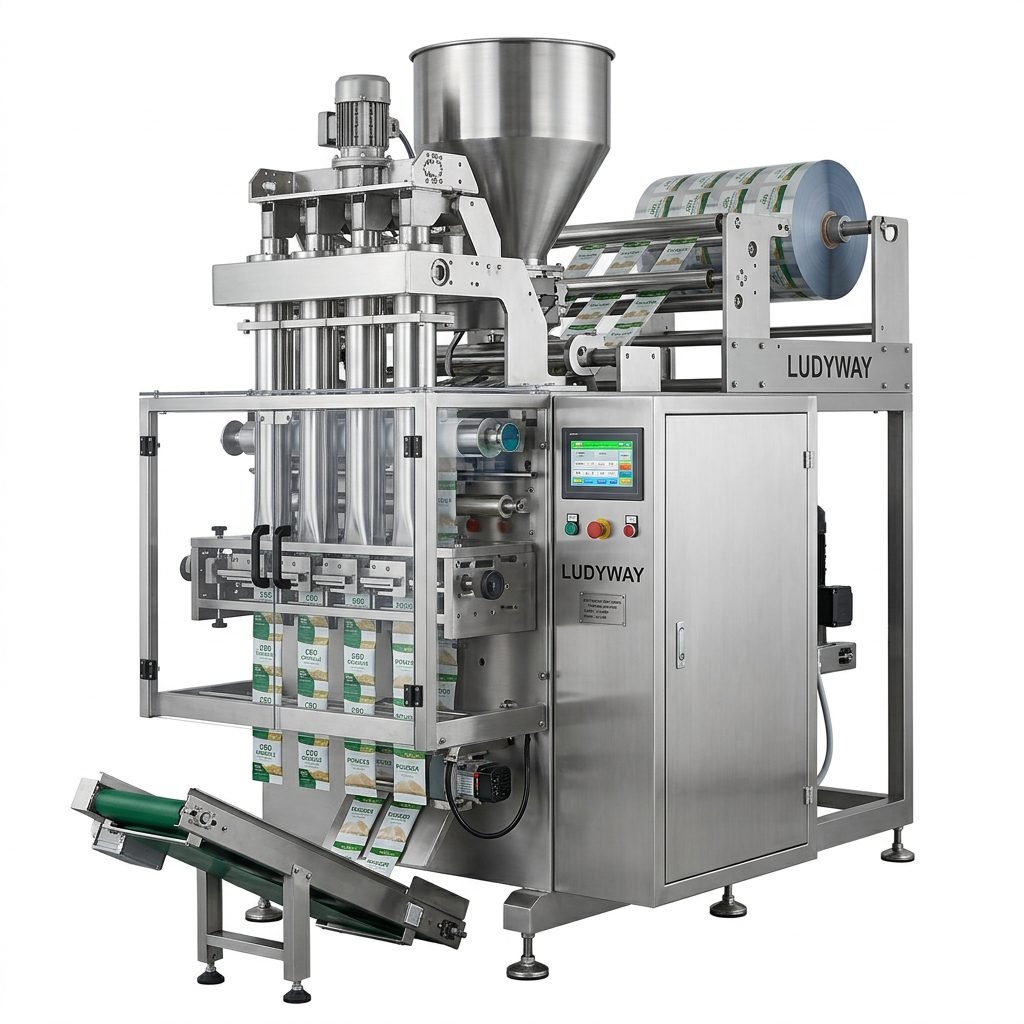
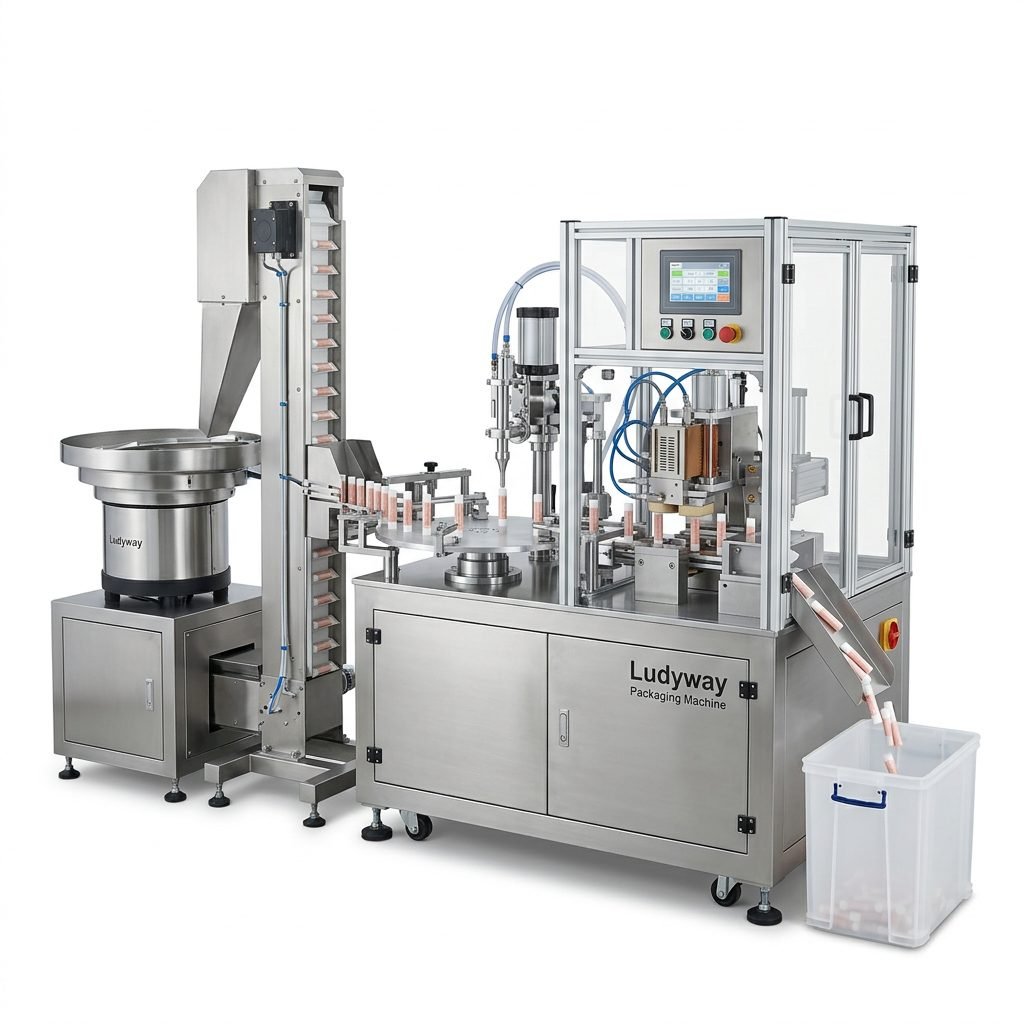
Powder sachet packaging lines are essential for brands that need precise dosing, clean sealing, attractive presentation, and high production speed in small pouch formats. From instant drink mixes and spices to pharmaceutical powders and nutrition supplements, the right line helps manufacturers improve output while reducing waste, labor dependence, and filling variation.
Modern systems combine powder feeding, metering, pouch forming, filling, sealing, coding, inspection, and final packing into one efficient process. For companies targeting premium quality and scalable growth, investing in the right solution can directly improve production consistency and customer trust.
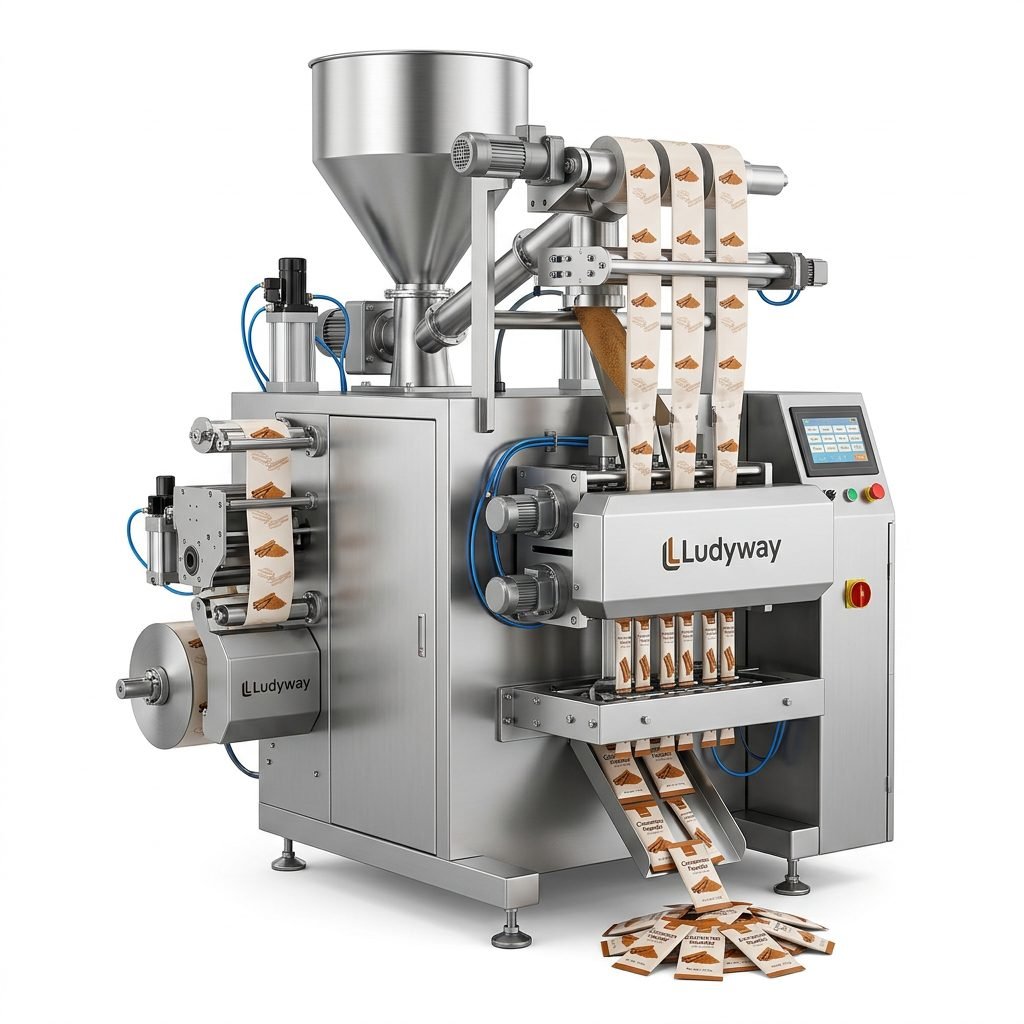
Why Powder Sachet Packaging Lines Matter
Small powder sachets are popular because they are portable, hygienic, cost-effective, and convenient for single-use or measured consumption. In many industries, they also help improve inventory control and support retail-ready distribution.
- Convenient for single-serve and travel-size packaging
- Suitable for food, pharma, nutraceutical, cosmetic, and chemical powders
- Helps maintain product freshness and shelf life
- Supports brand differentiation with neat, uniform packs
- Enables fast, automated, high-volume production
For manufacturers, the challenge is not only speed but also accuracy, dust control, seal integrity, and machine reliability. Powder products can vary in flowability, bulk density, and sensitivity to moisture, so the line must be matched to the product.
Core Functions of a High-Performance Powder Sachet Line
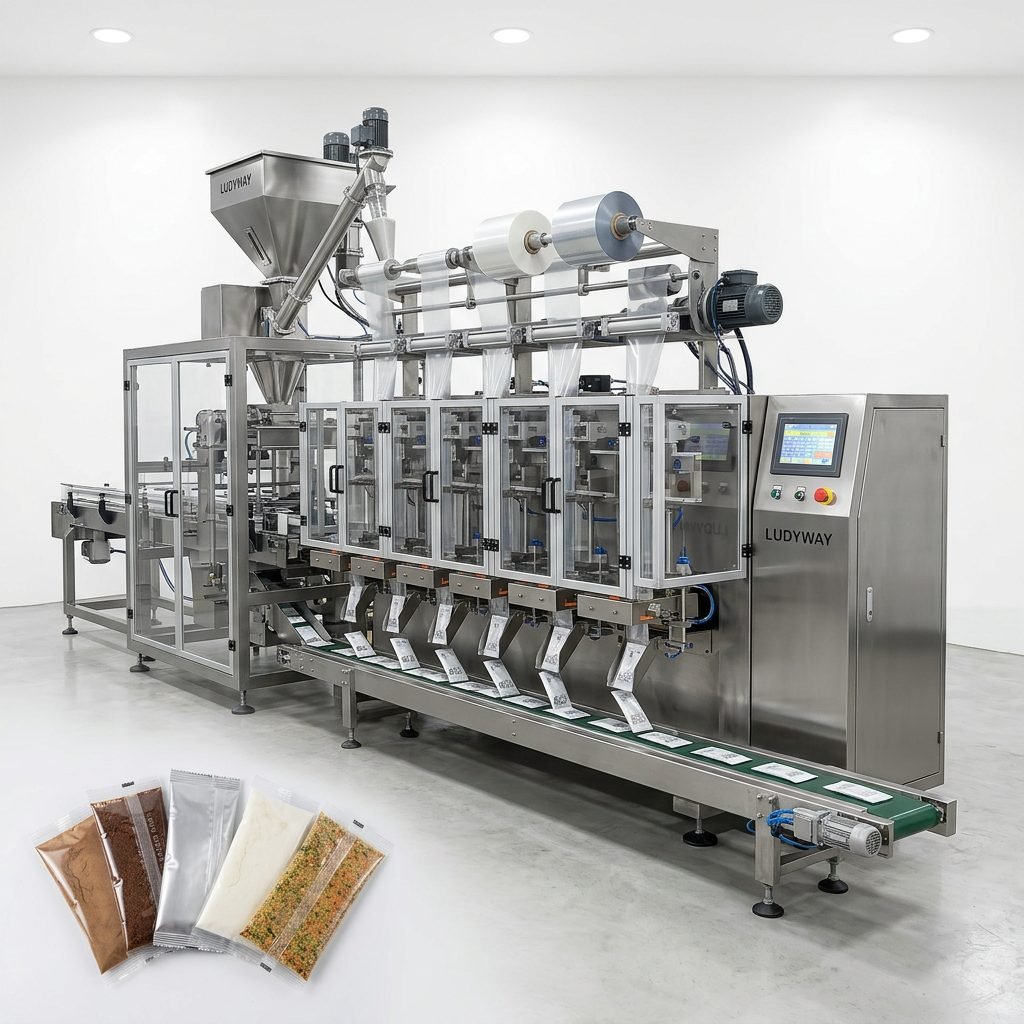
A complete powder sachet packaging line typically includes several connected modules working in sync. Each part affects final performance.
| Line Component | Main Function | Why It Matters |
|---|---|---|
| Powder feeding system | Transfers powder steadily to the filler | Prevents interruption and improves consistency |
| Auger or screw dosing unit | Measures exact powder volume or weight | Critical for accurate fill weight |
| Film forming system | Creates sachets from roll film | Controls pouch appearance and dimensions |
| Sealing unit | Seals top and bottom edges | Ensures shelf life and leak prevention |
| Coding and printing | Adds batch code and production info | Improves traceability and compliance |
| Inspection system | Checks weight, seal, and appearance | Reduces defective output |
| Secondary packing unit | Cartons, counts, or case-packs sachets | Supports end-of-line automation |
How Accurate Filling Is Achieved
Accuracy in powder sachet filling depends on more than one machine part. It is the result of a balanced system design. The most effective lines focus on the following:
- Stable powder feeding: Uniform feeding avoids underfill and overfill caused by irregular material flow.
- Suitable dosing technology: Auger fillers are often preferred for fine powders because they provide controlled metering.
- Servo-driven control: Precise motion improves repeatability and reduces mechanical variation.
- Dust management: Clean filling areas help maintain seal quality and protect product integrity.
- Real-time adjustment: Advanced systems can compensate for powder density changes during production.
When packaging products such as milk powder, coffee powder, collagen, electrolyte blends, seasoning powder, or pharmaceutical formulations, even small dosing errors can create compliance, cost, or customer satisfaction issues. That is why precise fill control is one of the most important investment criteria.
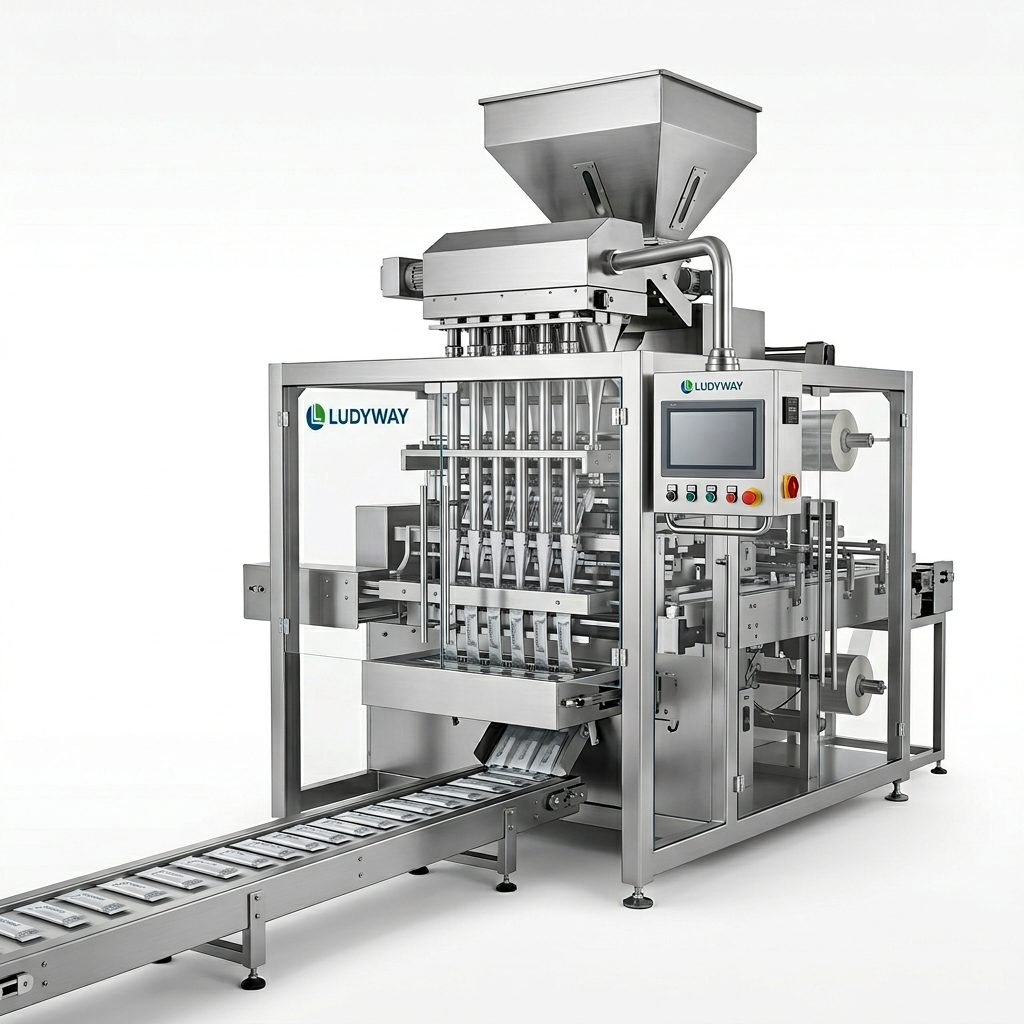
Speed Without Sacrificing Quality
Fast output is important, but true efficiency means maintaining stable operation over long production runs. A well-designed small pouch filling line improves speed in several ways:
- Multi-lane configurations for higher throughput
- Automatic film tracking for accurate pouch forming
- Integrated feeding and continuous filling cycles
- Quick changeover for different sachet sizes
- Lower downtime through intelligent fault alerts
For many factories, the biggest benefit is not just peak speed, but predictable daily output. A line that runs steadily with fewer interruptions often outperforms a theoretically faster system that needs constant adjustment.
Best Powder Products for Small Sachet Packaging
Powder sachet lines are highly versatile. They can be configured for free-flowing, semi-free-flowing, and difficult powders depending on the feeder and filling system used.
| Industry | Typical Products | Packaging Goal |
|---|---|---|
| Food | Coffee, milk powder, spices, cocoa, soup mixes, sweeteners | Freshness, convenience, retail appeal |
| Pharmaceutical | Oral powder doses, medical sachets, rehydration salts | Accuracy, hygiene, compliance |
| Nutraceutical | Collagen, protein, probiotics, vitamins, electrolyte powder | Portion control, premium branding |
| Cosmetic | Mask powder, treatment powders, beauty formulas | Clean packaging, sample-size convenience |
| Chemical | Detergent powder, descaling powder, additive powders | Safe handling, dust containment |
Key Features to Look for Before Buying
Not every powder sachet line offers the same level of performance. Buyers should focus on equipment that matches current needs while allowing future scale-up.
- Filling accuracy tolerance suitable for your product and market requirements
- Machine speed matched to your actual production target
- Compatibility with various film materials and sachet sizes
- Easy cleaning design for hygienic industries
- Dust-proof structure and optional collection systems
- Touchscreen controls with recipe storage
- Simple maintenance access and spare part support
- Ability to integrate with cartoning, checkweighing, coding, and case packing
It is also important to evaluate the supplier’s engineering experience, export capability, and after-sales support. A line is not just a machine—it is an operational system that should continue performing for years.
Single-Lane vs Multi-Lane Powder Sachet Machines
Choosing between single-lane and multi-lane equipment depends on output goals, plant space, product format, and budget.
| Type | Advantages | Best For |
|---|---|---|
| Single-lane | Simple operation, lower initial investment, easy setup | Startups, pilot runs, lower-volume production |
| Multi-lane | Higher throughput, efficient floor space use, large-scale output | Established brands, contract manufacturers, export-focused factories |
If your goal is fast small pouch filling at industrial volume, a multi-lane powder sachet packaging line is often the better long-term choice.
Common Challenges in Powder Sachet Filling
Packaging powders in small pouches presents several technical challenges. The right system design reduces these risks significantly.
1. Powder Dust
Fine powders can spread easily during filling, affecting seal quality and machine cleanliness. Proper dosing design and dust extraction support are essential.
2. Inconsistent Flow
Some powders bridge, compact, or flow unevenly. Agitation systems, screw feeders, and recipe-based parameter settings help stabilize feeding.
3. Seal Contamination
If powder enters the sealing area, pouch integrity may suffer. Accurate product cutoff and clean sealing jaws reduce leakage risk.
4. Weight Variation
Changes in powder density during long runs can alter fill results. Servo-controlled auger systems help maintain repeatable dosing.
5. Changeover Delays
Manufacturers running multiple SKUs need quick adjustment between pouch sizes and target weights. User-friendly HMI controls make this much easier.
Industries Benefiting Most from Automated Small Pouch Filling
Demand for convenient single-dose or single-use packaging continues to rise. As a result, automated sachet lines are becoming a strategic asset for:
- Instant beverage brands
- Sports nutrition manufacturers
- Spice and seasoning producers
- Pharmaceutical powder packers
- Contract packaging companies
- Health supplement brands
- Cosmetic sample pack suppliers
- Chemical product manufacturers
These businesses benefit from better packing speed, lower labor intensity, improved batch consistency, and more professional retail presentation.
How a Turnkey Packaging Line Improves Overall Efficiency
Instead of buying separate machines from different suppliers, many manufacturers now prefer a turnkey solution. A fully integrated line reduces compatibility problems and simplifies installation, training, and maintenance.
As one of China’s leading packaging machine and turnkey packaging line manufacturers, Ludyway powder sachet packaging solutions are designed for food, pharmaceutical, health supplement, and related industries, helping customers achieve stable production, scalable automation, and reliable long-term performance.
Turnkey advantages include:
- Better coordination between feeding, filling, sealing, and end-of-line packing
- Faster commissioning and production startup
- More unified control systems
- Reduced downtime caused by interface mismatch
- Clearer after-sales responsibility
Questions to Ask Before Choosing a Powder Sachet Packaging Line
Before finalizing a machine, buyers should prepare clear technical and commercial questions.
- What powder products will be packed, and how do they flow?
- What sachet sizes and shapes are required?
- What target speed is needed per minute and per shift?
- What filling accuracy is acceptable?
- Do you need coding, inspection, cartoning, or case packing integration?
- How easy is the machine to clean and maintain?
- Can the line support future product expansion?
- What installation, training, and spare parts support are available?
Final Buying Insight
The best powder sachet packaging line is not simply the fastest model on paper. It is the system that fits your powder characteristics, production target, quality standard, and long-term growth plan. When properly selected, automated small pouch filling equipment can deliver high accuracy, stable speed, lower waste, and stronger packaging consistency.
For food powders, pharmaceutical sachets, supplement sticks, and other precision-filled applications, a well-engineered line becomes a direct driver of productivity and brand value.