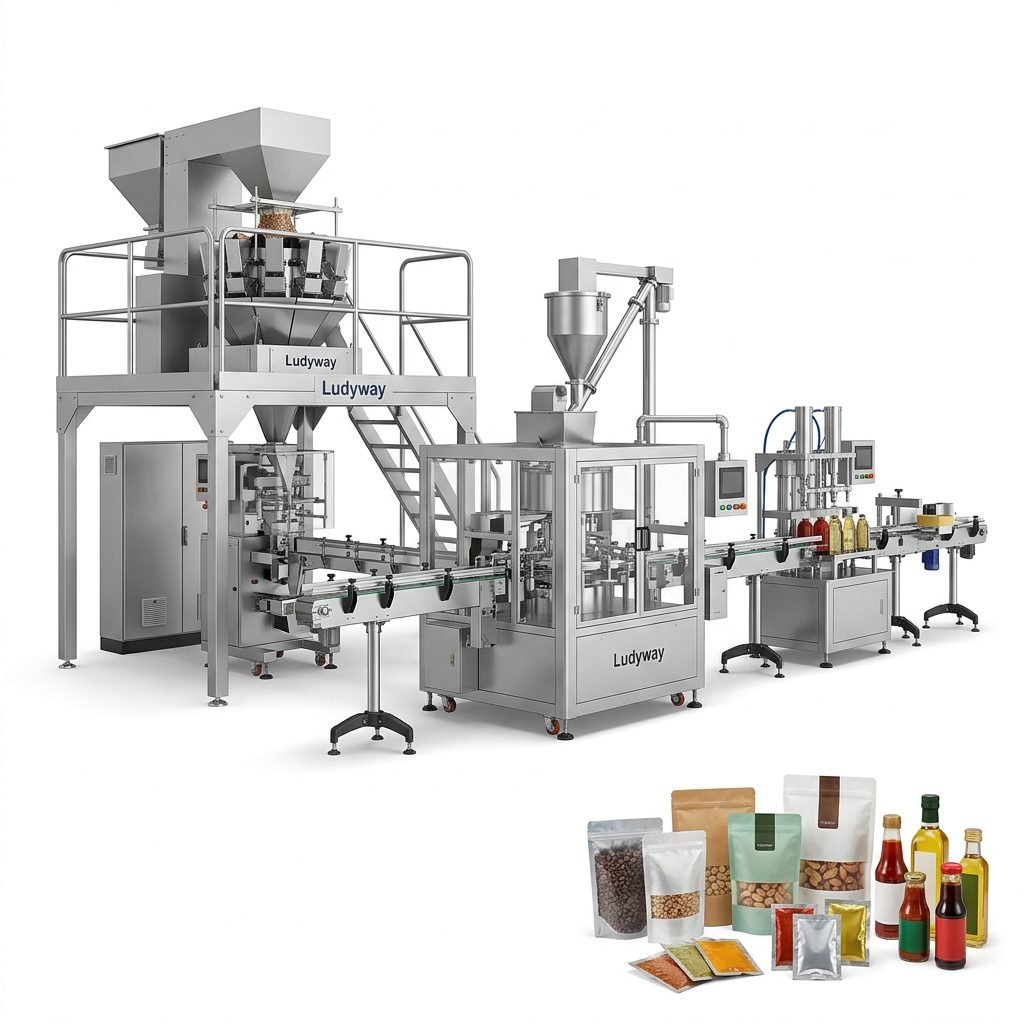
Chocolate products come in many formats—bars, pralines, truffles, coated pieces, chocolate powder sachets, pouches, and gift boxes. Because each format behaves differently during feeding, dosing, wrapping, sealing, and cartoning, choosing the right chocolate packaging machine is not just about speed. It is about product protection, presentation, hygiene, automation level, and long-term operating cost.
This guide explains the main machine types, the features that matter most, and a practical method to help manufacturers, confectionery brands, and contract packers select the best solution for their production goals.
Why Chocolate Packaging Requires Specialized Equipment
Chocolate is sensitive to temperature, humidity, pressure, and handling. A packaging machine used for ordinary dry snacks may not work well for chocolate because chocolate can melt, scuff, crack, bloom, or lose shape if the line is poorly designed.
- Chocolate bars need neat wrapping and stable sealing.
- Filled chocolates need gentle conveying to avoid deformation.
- Chocolate powders need accurate dosing and dust control.
- Premium gift products need attractive secondary packaging.
- Retail products often require coding, labeling, and traceability.
That is why buyers should evaluate not only the packaging style, but also product texture, ambient conditions, output targets, and downstream packaging requirements.
Main Types of Chocolate Packaging Machines
1. Flow Wrapping Machines for Chocolate Bars and Pieces
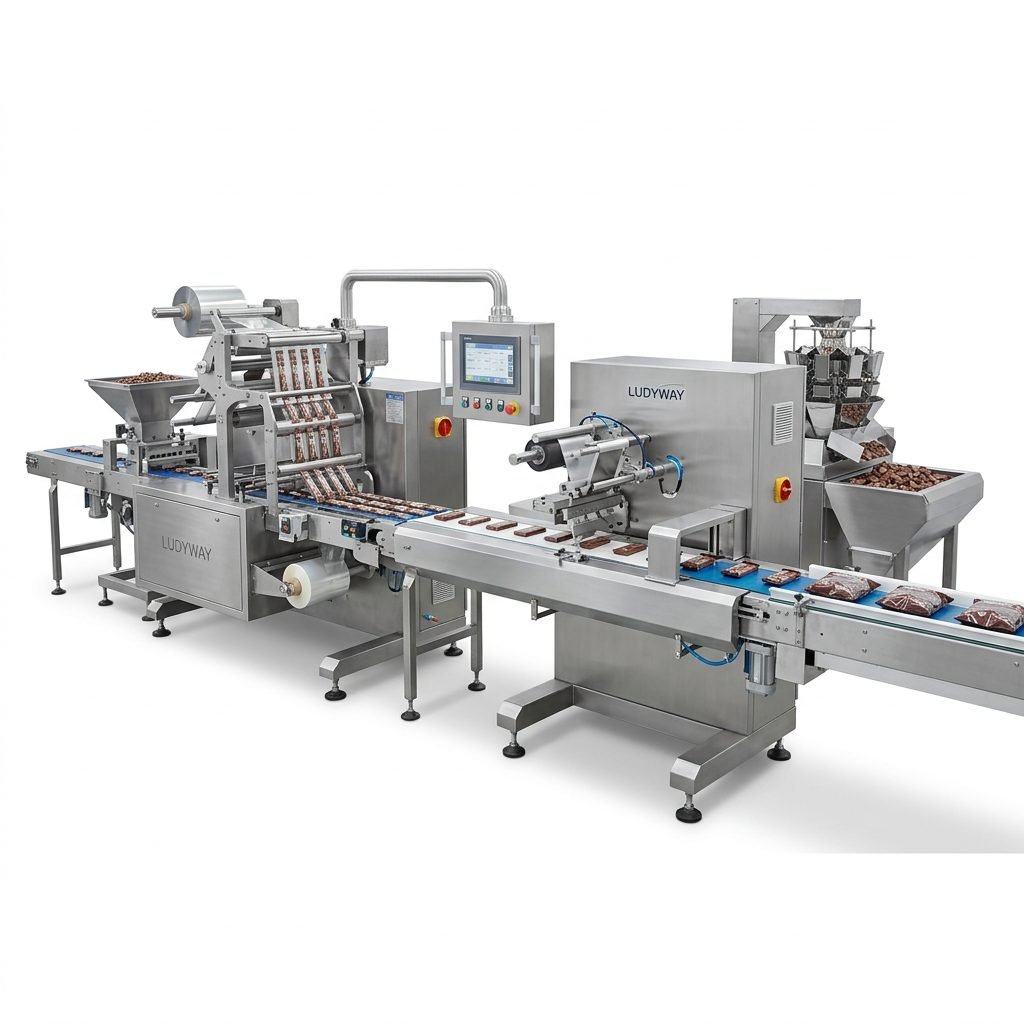
Flow wrappers are widely used for individual chocolate bars, count lines, wafer bars, and some molded confectionery products. The machine forms a film tube around the product and seals it on the fin seal and end seals.
Best for: single bars, coated snacks, rectangular chocolate products, and high-speed retail packs.
- High output for standardized products
- Good pack appearance
- Suitable for pillow packs
- Can integrate date coding and feeding systems
2. Fold Wrapping Machines
Fold wrapping machines are common for premium chocolates, square pieces, and products requiring a more traditional presentation. These systems fold foil, paper, or laminated film around the chocolate in a precise, elegant style.
Best for: pralines, napolitains, gift chocolates, and premium individually wrapped pieces.
- High-end visual appeal
- Works well with foil and decorative materials
- Suitable for premium and seasonal confectionery
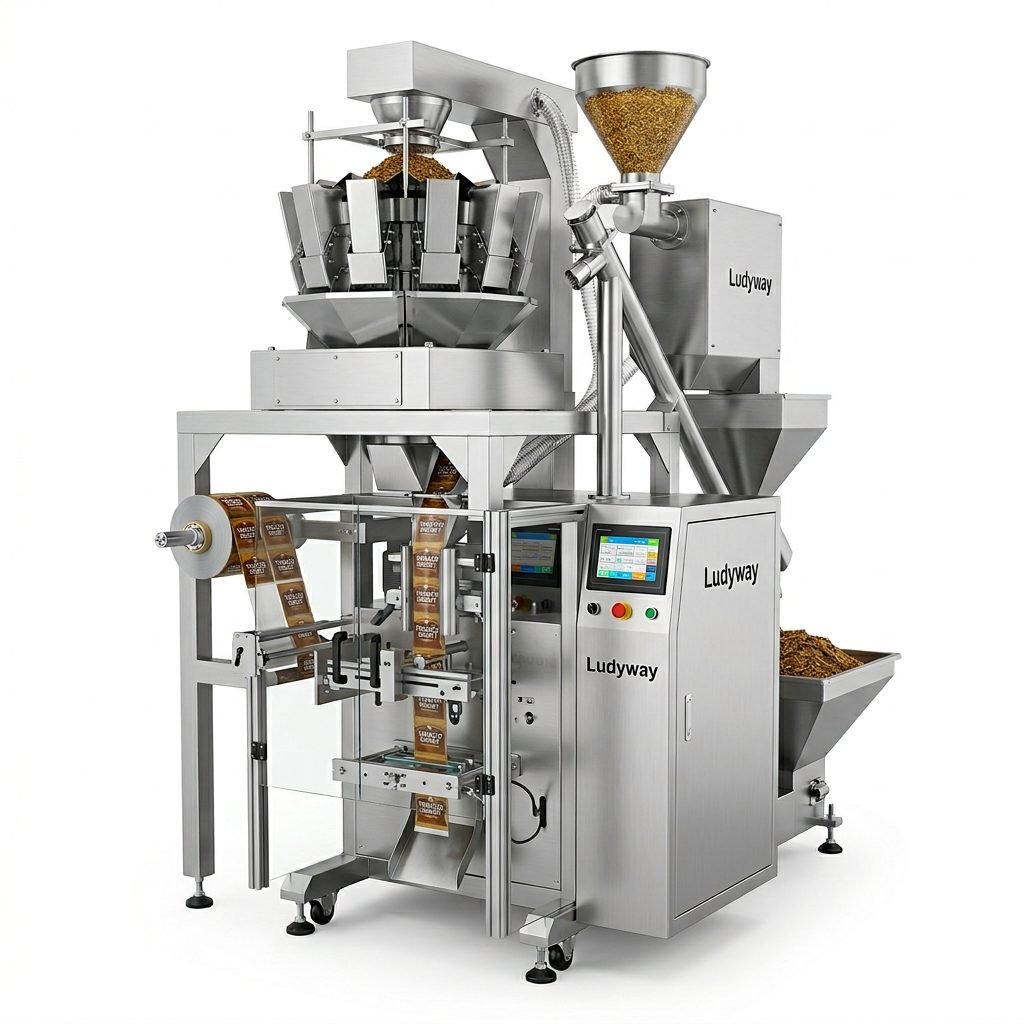
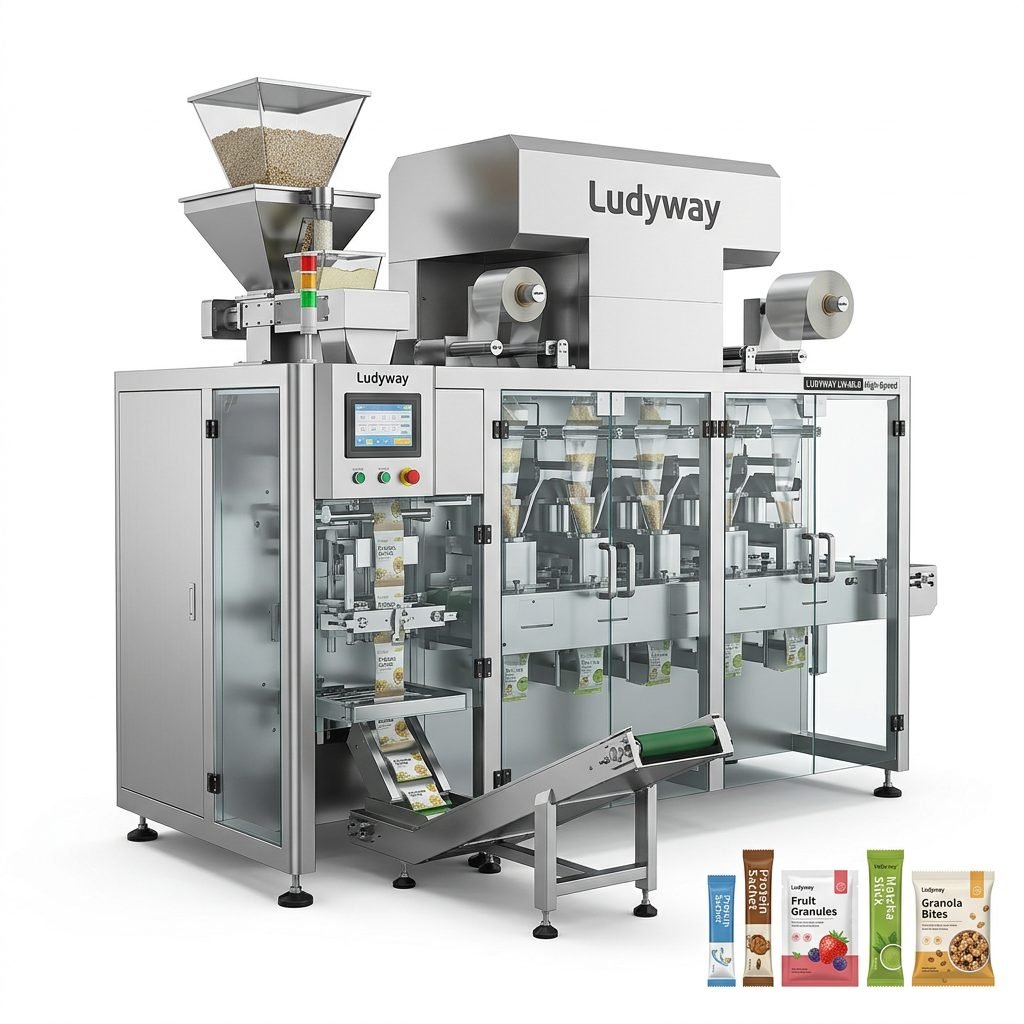
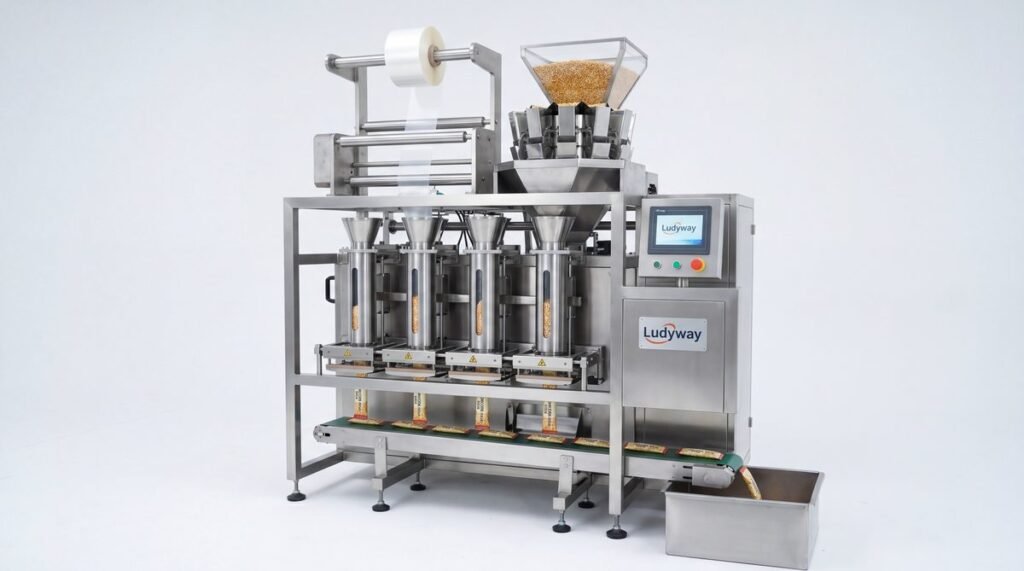
3. Vertical Form Fill Seal Machines for Chocolate Chips, Drops, and Granules
If the product is in granular or small-piece form—such as chocolate chips, coated beans, mini drops, or inclusions—a vertical form fill seal machine is often a practical choice. It forms bags from roll film, fills the measured product, and seals the package.
Best for: stand-up pouches, pillow bags, back-seal bags, and bulk retail packs.
- Flexible bag formats
- Efficient for medium and high output
- Works with multihead weighers for accuracy
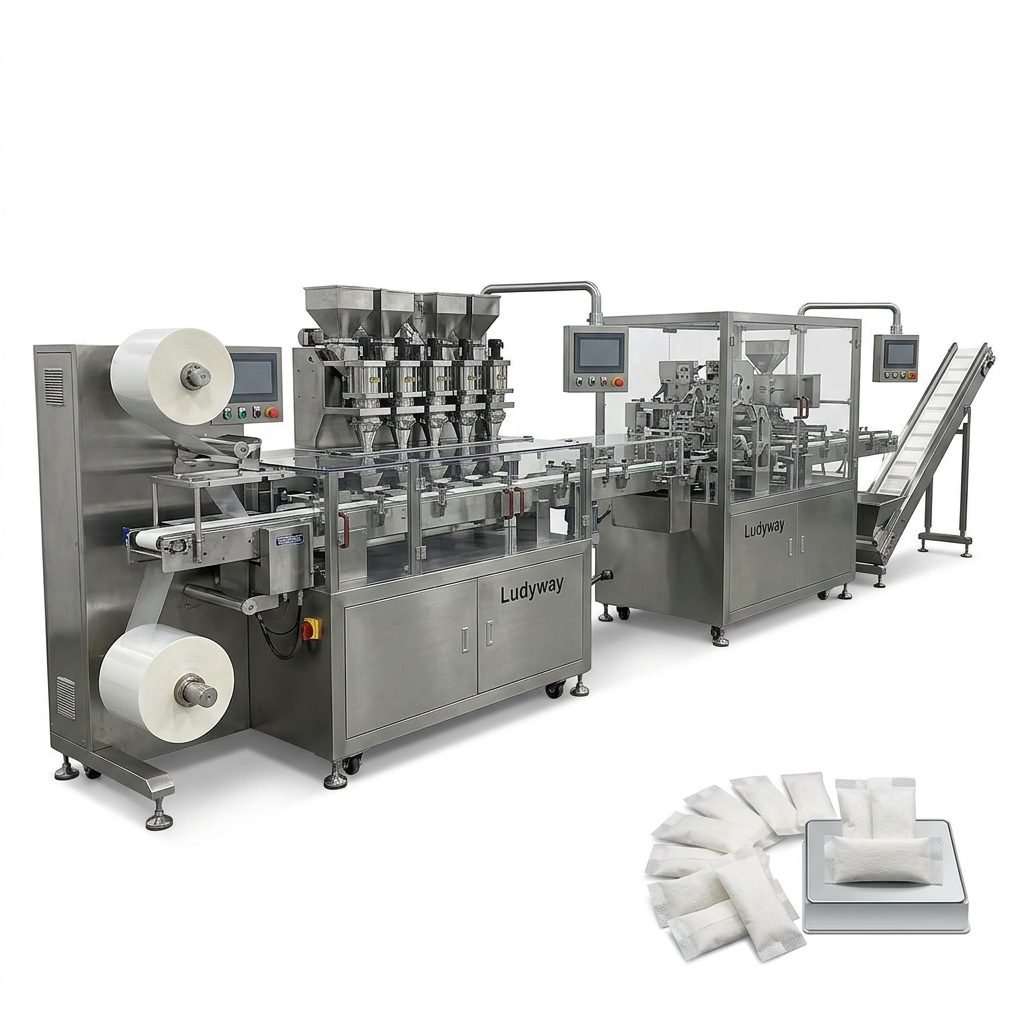
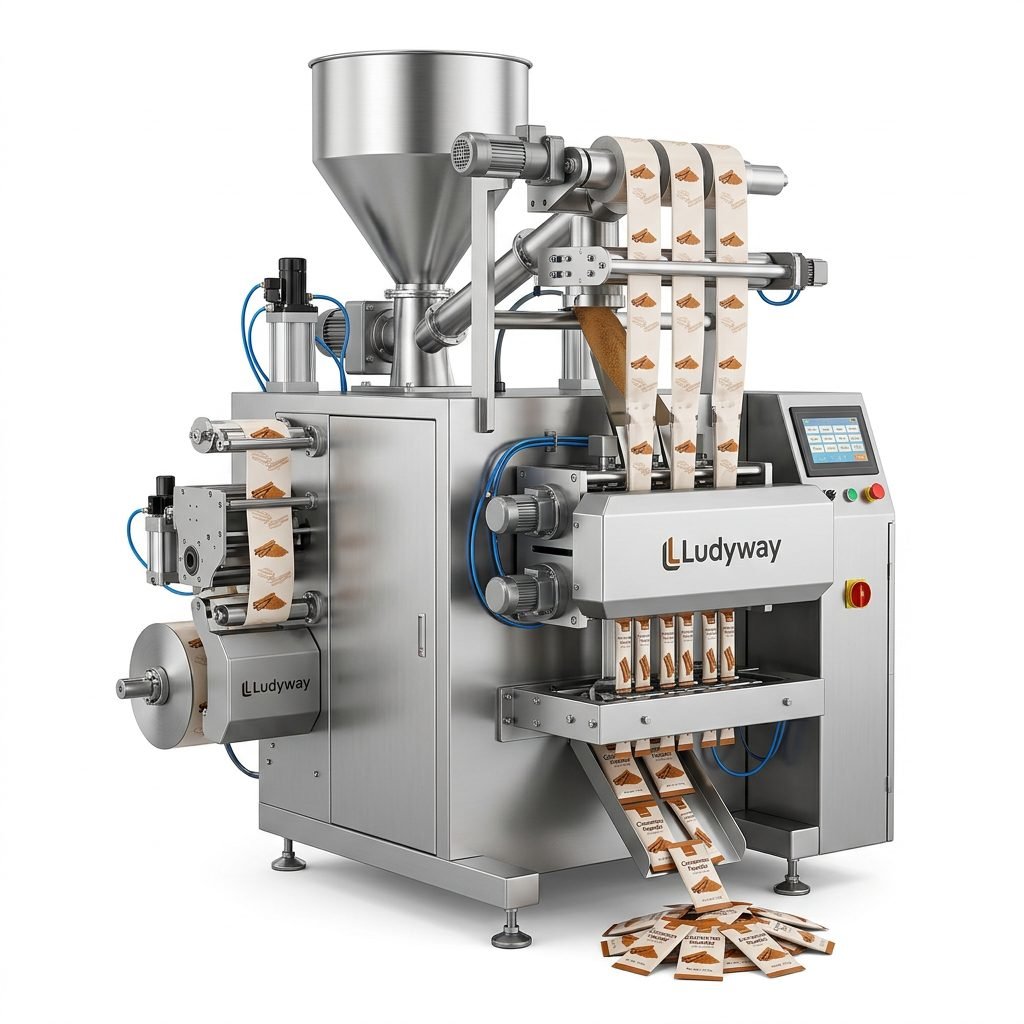
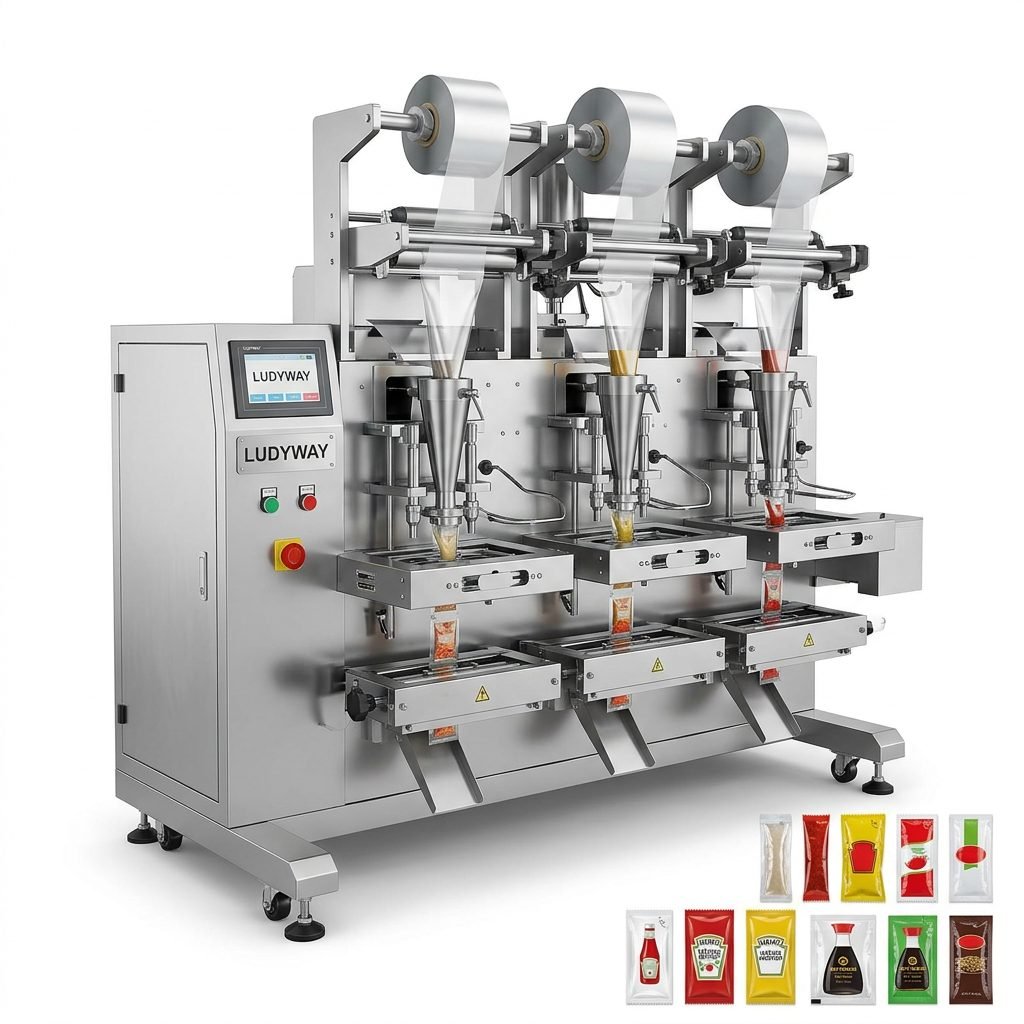
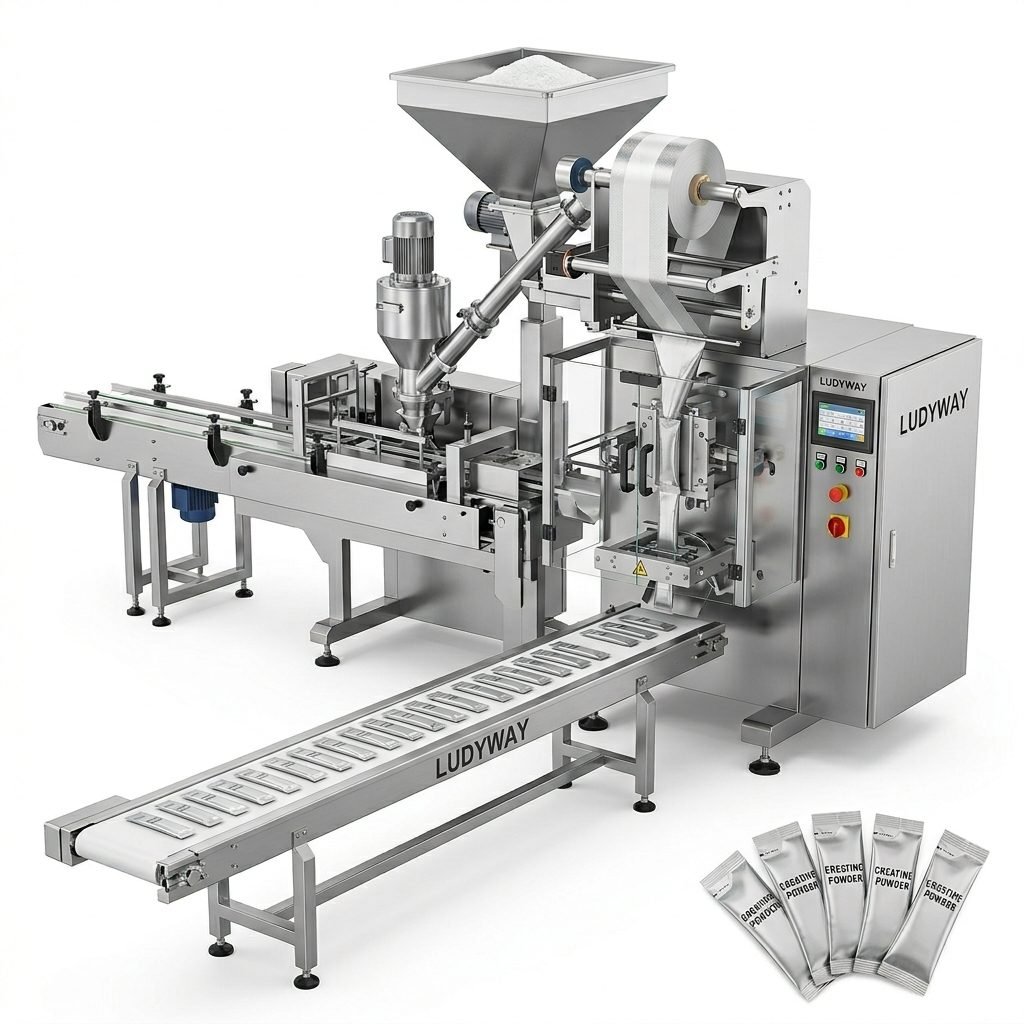
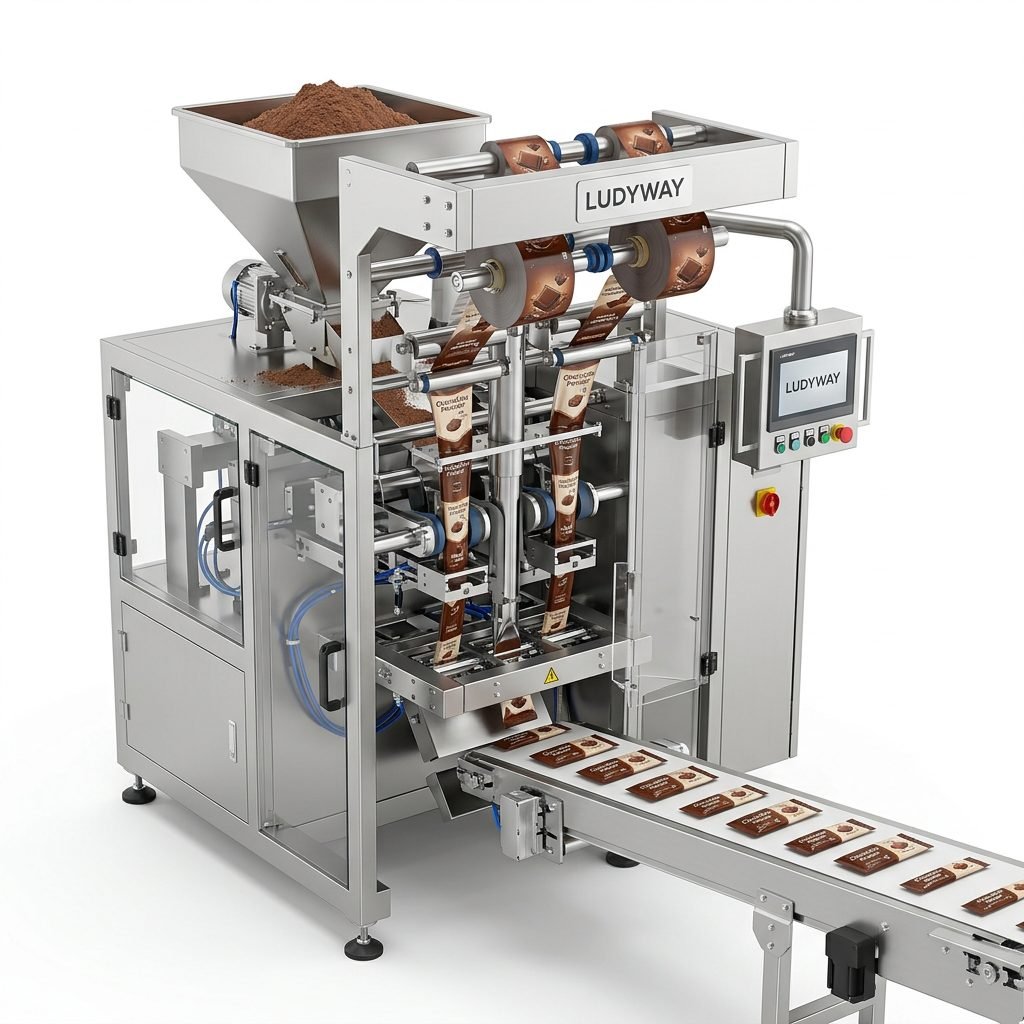
4. Sachet and Stick Pack Machines for Chocolate Powder
For hot chocolate powder, cocoa blends, instant beverage mixes, and single-serve chocolate nutrition products, sachet and stick pack machines are ideal. These machines provide precise small-dose filling for retail and on-the-go formats.
Best for: cocoa powder, drinking chocolate mix, meal replacement blends, and single-serve promotional packs.
- Excellent portion control
- Compact consumer-friendly packaging
- Suitable for multi-lane high-speed production
5. Premade Pouch Packaging Machines
Premade pouch systems are used when the brand wants a stronger shelf presence, resealable packaging, or higher packaging quality. These machines can fill and seal zipper pouches, flat pouches, and shaped pouches.
Best for: chocolate bites, coated nuts, mixed confectionery, premium snack chocolate, and refill packs.
6. Cartoning and Case Packing Systems
Primary packaging is often only one part of the line. Chocolate manufacturers also need cartoners, case packers, conveyors, and palletizing systems to complete end-of-line automation.
Best for: boxed assortments, retail cartons, club packs, and export-ready shipping cases.
Quick Comparison of Chocolate Packaging Machine Types
| Machine Type | Suitable Products | Main Advantage | Typical Pack Style |
|---|---|---|---|
| Flow Wrapper | Bars, wafers, rectangular chocolate pieces | High speed and neat sealing | Pillow pack |
| Fold Wrapper | Pralines, gift chocolates, premium pieces | Premium appearance | Foil wrap, envelope wrap |
| VFFS Machine | Chips, drops, beans, coated snacks | Flexible bag making | Pillow bag, gusset bag, pouch |
| Sachet/Stick Pack Machine | Chocolate powder, cocoa drink mix | Accurate small-dose filling | Sachet, stick pack |
| Premade Pouch Machine | Bites, assortments, coated nuts | Better shelf appeal | Zipper pouch, flat pouch |
| Cartoning System | Wrapped chocolates and multipacks | Retail-ready secondary packaging | Cartons, boxes, cases |
Key Features to Look for in a Chocolate Packaging Machine
Temperature-Friendly Design
Chocolate packaging lines should operate smoothly in temperature-controlled rooms and use designs that minimize product sticking, softening, and deformation. For some applications, cooling tunnels or climate-managed transfer sections are also important.
Gentle Product Handling
A good machine should protect the product during transfer and sealing. This matters especially for delicate pralines, filled chocolates, and decorated pieces.
Accurate Feeding and Dosing
For powders and small inclusions, filling accuracy directly affects cost control and compliance. For bars and pieces, correct indexing and spacing prevent jams and pack rejects.
Reliable Seal Quality
Poor sealing leads to moisture ingress, appearance issues, and reduced shelf life. Stable temperature control and film compatibility are essential.
Material Compatibility
Chocolate brands may use foil, metallized film, recyclable mono-material film, paper-based laminates, or premium decorative wraps. The machine should match the actual packaging material strategy.
Easy Cleaning and Hygiene
Food-grade design, accessible contact parts, dust control for powder applications, and quick cleaning procedures help reduce downtime and maintain hygiene standards.
Automation and Integration
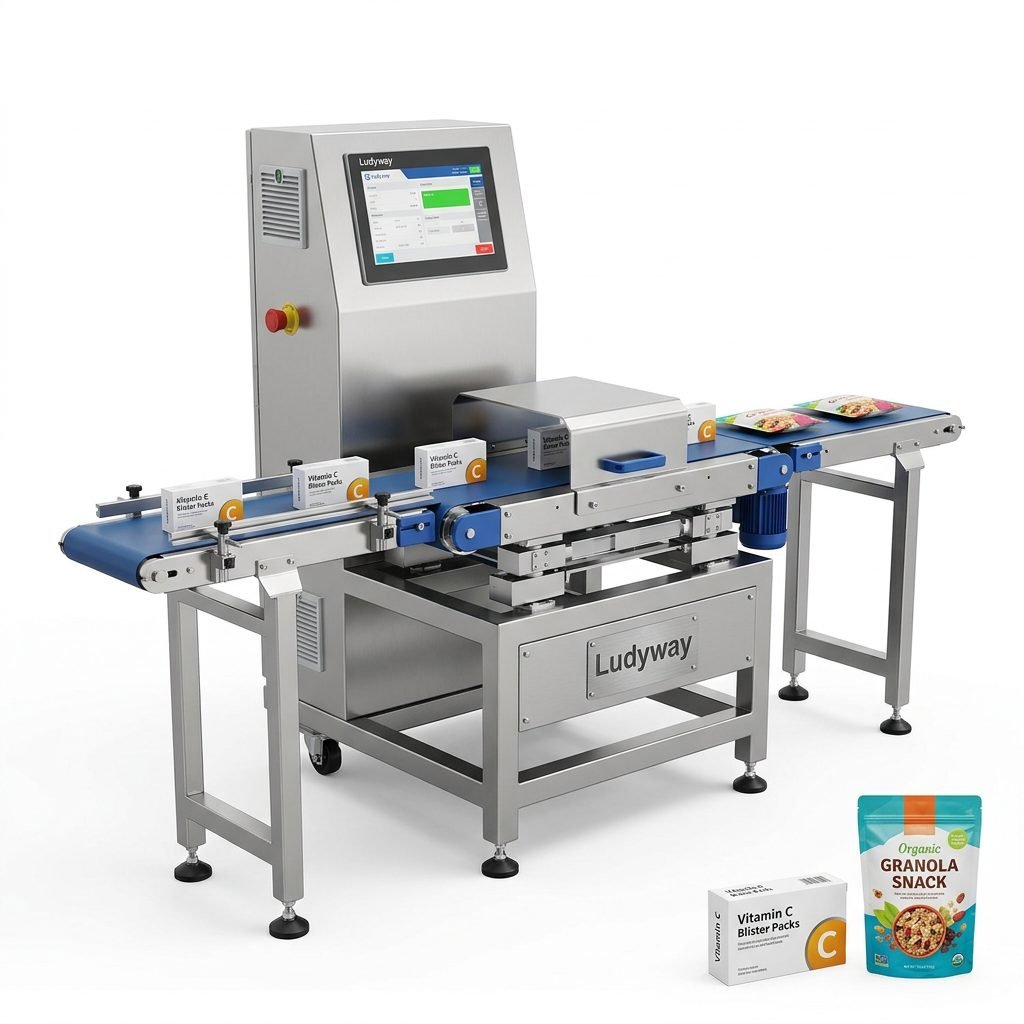
Modern buyers often need complete lines rather than standalone machines. Integration may include feeders, weighers, metal detectors, checkweighers, cartoners, coding systems, and case packing.
How to Choose the Right Chocolate Packaging Machine
Start with Your Product Format
The first question is simple: What exactly are you packaging?
- Chocolate bar → flow wrapper or fold wrapper
- Premium single chocolate → fold wrapper or cartoning solution
- Chocolate chips or drops → VFFS or premade pouch machine
- Chocolate powder → sachet, stick pack, or VFFS powder packaging system
- Mixed chocolate assortment → pouch filling plus cartoning
Define Your Output Requirements
Your target speed influences machine design, lane number, automation level, and budget. Low-volume artisanal brands may need flexibility, while large factories often prioritize throughput and line stability.
Ask questions such as:
- How many packs per minute are required?
- Will production expand within 1–3 years?
- Do you need one machine or a scalable line?
Consider Pack Style and Branding
Packaging is also a marketing tool. A pillow pack may be efficient, but a foil fold wrap may better support a luxury brand image. If the product is aimed at supermarkets, gift retail, cafés, vending, or e-commerce, the preferred package format may differ significantly.
Evaluate Product Fragility and Surface Condition
Some chocolates have nuts, coatings, decorative drizzles, or soft fillings. These details affect machine selection. The more delicate the product, the more important gentle infeed design and precise transfer control become.
Check Film and Packaging Material Requirements
If your brand is moving toward recyclable or thinner packaging materials, confirm that the machine can handle them consistently without unstable sealing or wrinkling.
Think Beyond the Main Machine
A chocolate packaging project often includes more than wrapping or filling. You may also need:
- Automatic feeding and sorting
- Metal detection or X-ray inspection
- Checkweighing
- Date coding and labeling
- Cartoning and case packing
- Palletizing and line integration
Compare Total Cost of Ownership
The cheapest machine is not always the most economical. Buyers should compare:
- Initial equipment investment
- Packaging material efficiency
- Labor savings
- Maintenance and spare parts cost
- Downtime risk
- Expected service life
Common Mistakes Buyers Should Avoid
- Choosing by speed alone and ignoring product sensitivity
- Buying a machine that cannot handle future product variations
- Overlooking film compatibility and seal performance
- Ignoring room temperature and humidity requirements
- Selecting standalone equipment when a full packaging line is actually needed
- Failing to confirm after-sales support, spare parts access, and commissioning capability
Who Needs a Standalone Machine and Who Needs a Turnkey Line?
| Buyer Type | Recommended Solution | Why |
|---|---|---|
| Startup chocolate brand | Flexible standalone machine | Lower entry cost and easier changeover |
| Mid-size confectionery manufacturer | Semi-integrated packaging line | Balanced speed, labor savings, and scalability |
| Large food factory | Fully automatic turnkey line | High output, consistency, and centralized control |
| Contract packer | Multi-format versatile system | Handles different products and customer orders |
Questions to Ask a Chocolate Packaging Machine Supplier
- What chocolate formats can the machine handle?
- What is the real running speed under production conditions?
- How does the system manage temperature-sensitive products?
- Can it run my preferred packaging materials?
- What filling accuracy or wrapping consistency can be achieved?
- How long do format changes and cleaning take?
- Can the machine integrate with coding, inspection, and cartoning equipment?
- What technical support and spare parts service are available?
Choosing a Reliable Manufacturing Partner
When investing in chocolate packaging equipment, the supplier’s engineering and integration capability matter as much as the machine itself. Buyers often prefer manufacturers with strong export experience, customization ability, and support for complete automation lines.
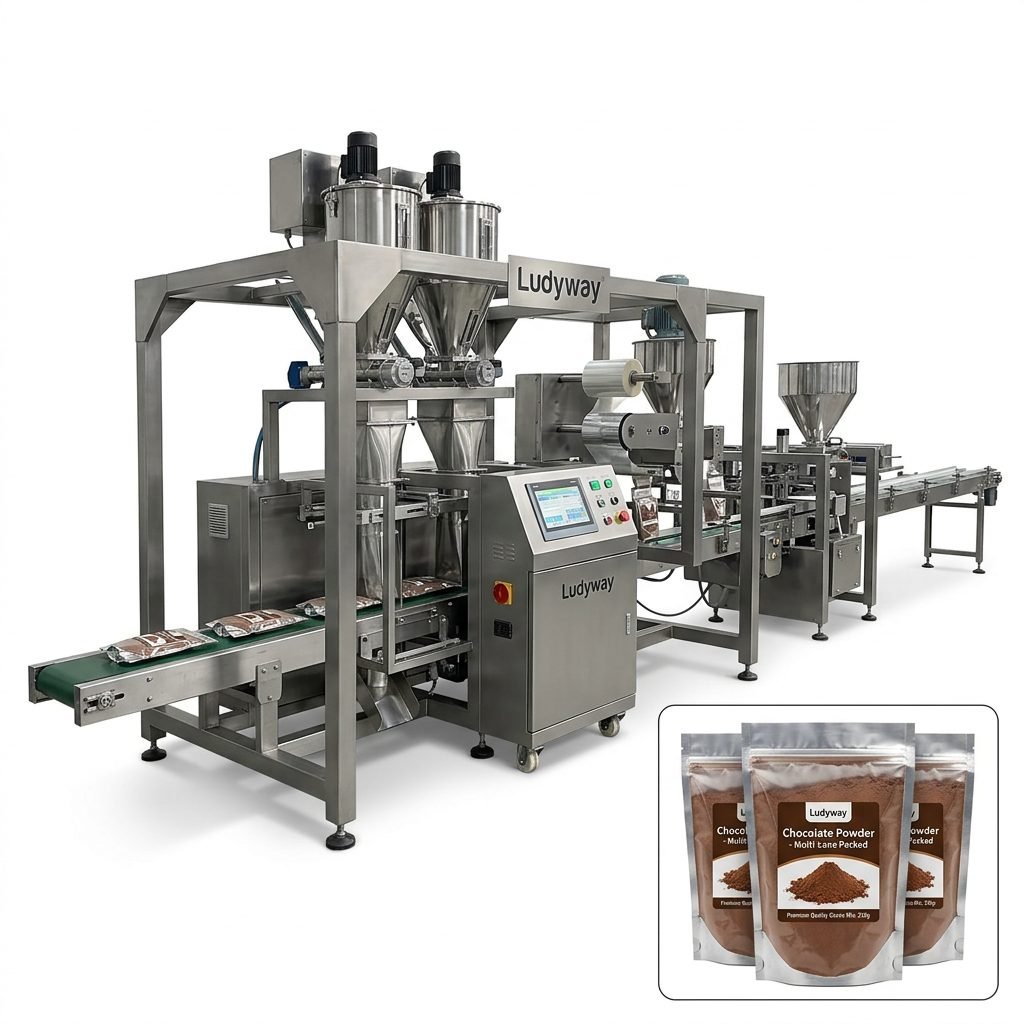
For businesses looking for scalable packaging systems, Ludyway chocolate packaging machine solutions can be worth evaluating alongside broader food, powder, sachet, and turnkey packaging line requirements.
Final Buying Advice
The right chocolate packaging machine is the one that fits your product characteristics, packaging style, speed target, hygiene requirements, and future expansion plan. A bar wrapper may be perfect for one brand, while a powder sachet line or a pouch packaging system may be better for another.
Before making a final decision, prepare sample products, define your packaging material, estimate your real output target, and evaluate whether you need a standalone machine or a complete line. That approach will help you invest more confidently and build a packaging operation that protects chocolate quality while supporting business growth.