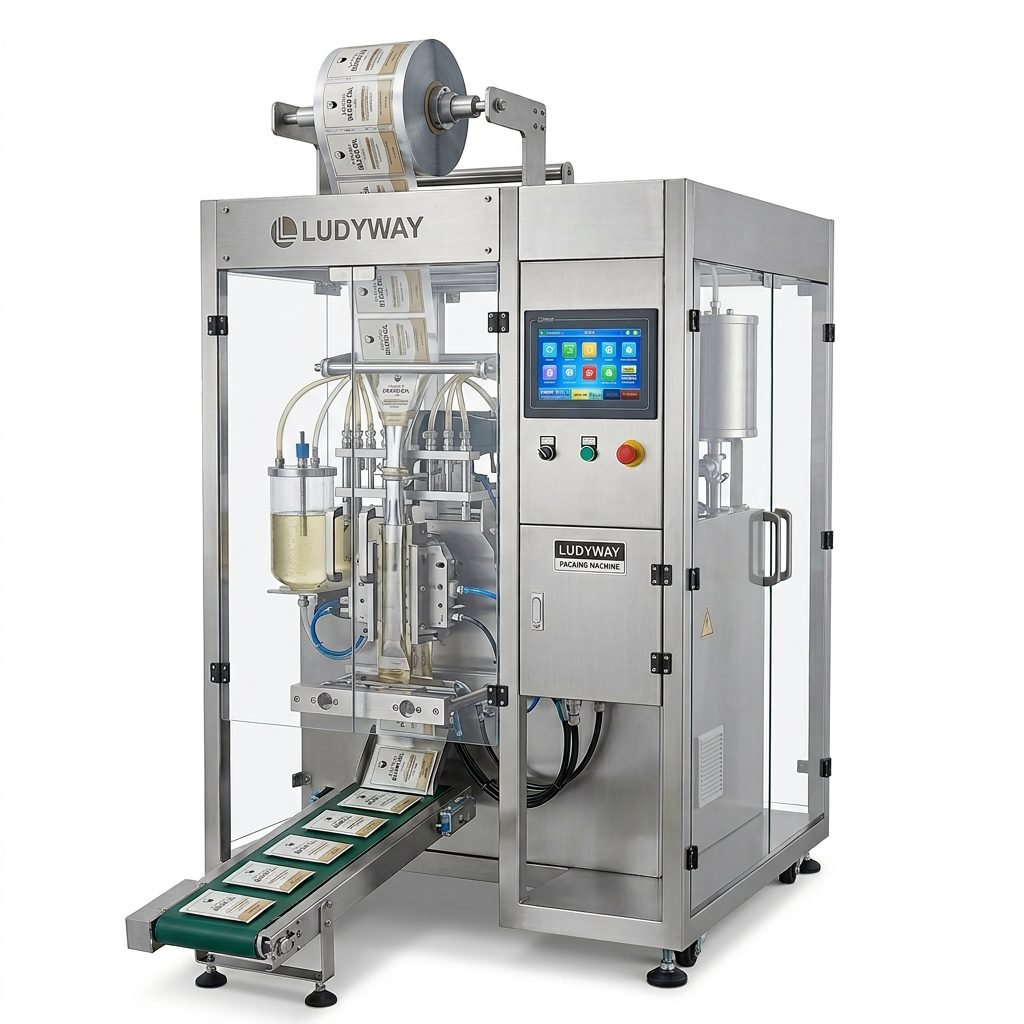
Bulk packaging operations depend on speed, weighing accuracy, dust control, and bag stability. A bulk bag packing machine is designed to fill large bags—often FIBC bags, jumbo bags, or ton bags—with powders, granules, pellets, flakes, and other free-flowing or semi-free-flowing materials. It helps manufacturers improve throughput while reducing manual handling, product loss, and inconsistent bag weights.
These systems are widely used in food processing, chemical production, feed, fertilizer, construction materials, minerals, and agricultural supply chains. For businesses handling large-volume materials, choosing the right machine can directly affect packaging efficiency, labor cost, workplace cleanliness, and shipping reliability.
What Is a Bulk Bag Packing Machine?
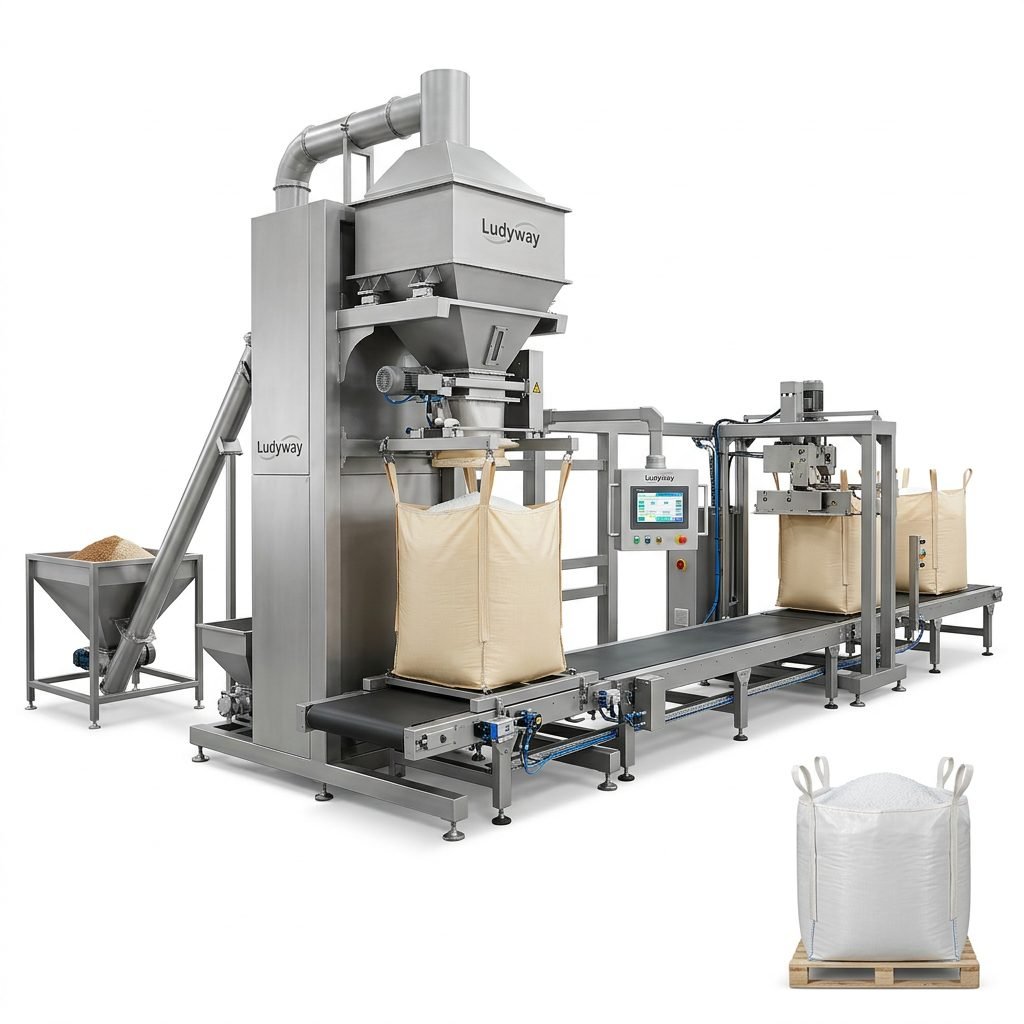
A bulk bag packing machine is an automated or semi-automated system that fills large-capacity bags with bulk materials based on a set target weight. The bag is typically suspended from lifting hooks or a bag frame while product is fed into the bag through a filling spout. Once the required weight is reached, the bag is released for discharge, conveying, palletizing, or warehouse transfer.
Depending on the material and production target, the machine can be equipped with:
- Gross or net weighing systems
- Screw feeders for powders
- Gravity feeders for granules
- Vibratory feeders for fragile or irregular materials
- Dust collection ports
- Bag inflation or densification functions
- Roller conveyors and pallet handling systems
How a Bulk Bag Packing Machine Works
Although designs vary, the operating sequence is usually straightforward. The machine secures an empty bag, feeds product into it, weighs the load, and releases the filled bag for downstream handling.
Typical Working Process
- Bag loading: An operator or automatic bag handling unit places the jumbo bag loops on the support hooks and connects the bag inlet to the filling spout.
- Bag clamping and sealing contact: The machine clamps the bag neck to reduce leakage and improve filling stability.
- Tare weighing: The system resets the scale to compensate for bag weight.
- Fast filling: Product enters the bag quickly through gravity, screw, belt, or vibratory feeding.
- Fine filling: As the target weight approaches, the machine slows down for more precise dosing.
- Weight confirmation: The control system verifies the final fill weight.
- Bag settling or densification: Optional vibration or settling improves bag shape and load compactness.
- Bag release: The filled bag is lowered to a pallet or conveyor.
- Closing and transfer: The bag top may be tied, heat sealed, stitched, or prepared for transport depending on the bag type.
Core Control Features
Most modern systems use PLC and touchscreen controls to manage weighing, recipe settings, filling speed, alarm monitoring, and production data. This improves repeatability and makes changeovers easier when handling multiple products or bag sizes.
Main Types of Bulk Bag Packing Machines
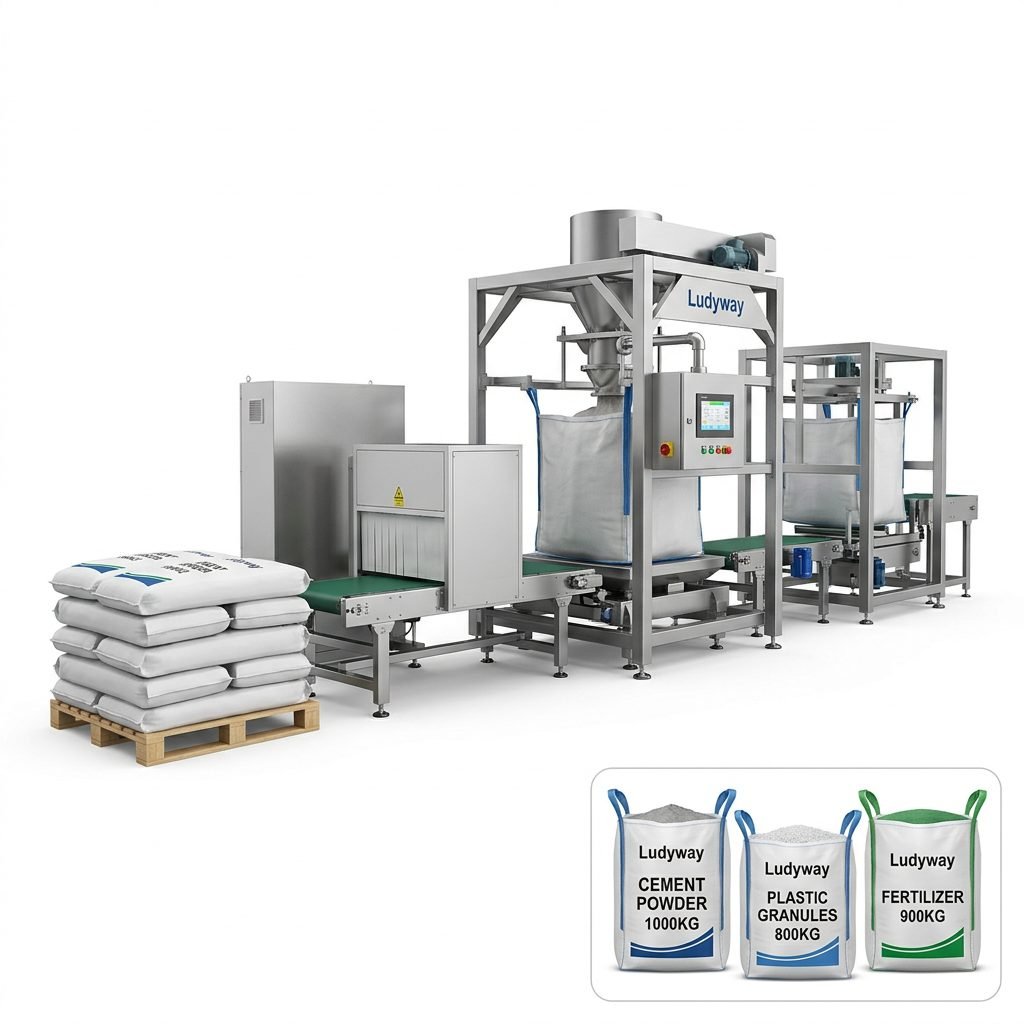
The right machine type depends mainly on product flow characteristics, target weight, hygiene requirements, and production capacity. Below are the most common categories.
1. Gravity Bulk Bag Fillers
These machines rely on gravity flow and are ideal for free-flowing products such as grains, pellets, plastic resin, seeds, and some fertilizers. They offer fast filling speeds and simple mechanical structure.
- Best for: granules, pellets, seeds
- Advantage: high speed and low maintenance
- Limitation: less suitable for sticky or poorly flowing powders
2. Screw Feeding Bulk Bag Fillers
Screw or auger-fed models are designed for powders and fine materials that require controlled movement. They are commonly used for flour, cement additives, chemical powders, mineral powder, and feed premix.
- Best for: powdery or dusty materials
- Advantage: controlled feed and good accuracy
- Limitation: may require more cleaning and wear monitoring
3. Vibratory Bulk Bag Fillers
These systems use vibration to move and settle the product. They are helpful for fragile, irregular, or difficult-flowing materials that need gentle handling.
- Best for: flakes, delicate granules, light-density products
- Advantage: gentle product movement
- Limitation: lower throughput than some gravity systems
4. Net Weigh Bulk Bag Packing Machines
In a net weigh system, product is weighed before entering the bag. Once the target quantity is achieved, the weighed batch is discharged into the bag. This method is preferred when high weighing precision is critical.
5. Gross Weigh Bulk Bag Packing Machines
In a gross weigh system, the product is weighed directly inside the bag during filling. This structure is often simpler and economical for many industrial applications.
6. Semi-Automatic vs. Fully Automatic Systems
| Type | How It Operates | Best For |
|---|---|---|
| Semi-automatic | Operator loads bags manually; filling and weighing are automated | Mid-volume operations, flexible production |
| Fully automatic | Integrated bag handling, filling, conveying, and discharge | High-volume plants with reduced labor goals |
Common Materials Packed in Bulk Bags
Bulk bag packing machines serve a wide range of industries. Typical materials include:
- Rice, grains, beans, flour, starch, sugar, salt
- Animal feed, premix, pellets, bran
- Fertilizer granules and soil conditioners
- Chemical powders, pigments, detergents, additives
- Minerals, silica, calcium carbonate, metal powders
- Plastic pellets and resin
- Construction materials such as dry mortar and cement blends
Key Components of a Bulk Bag Filling System
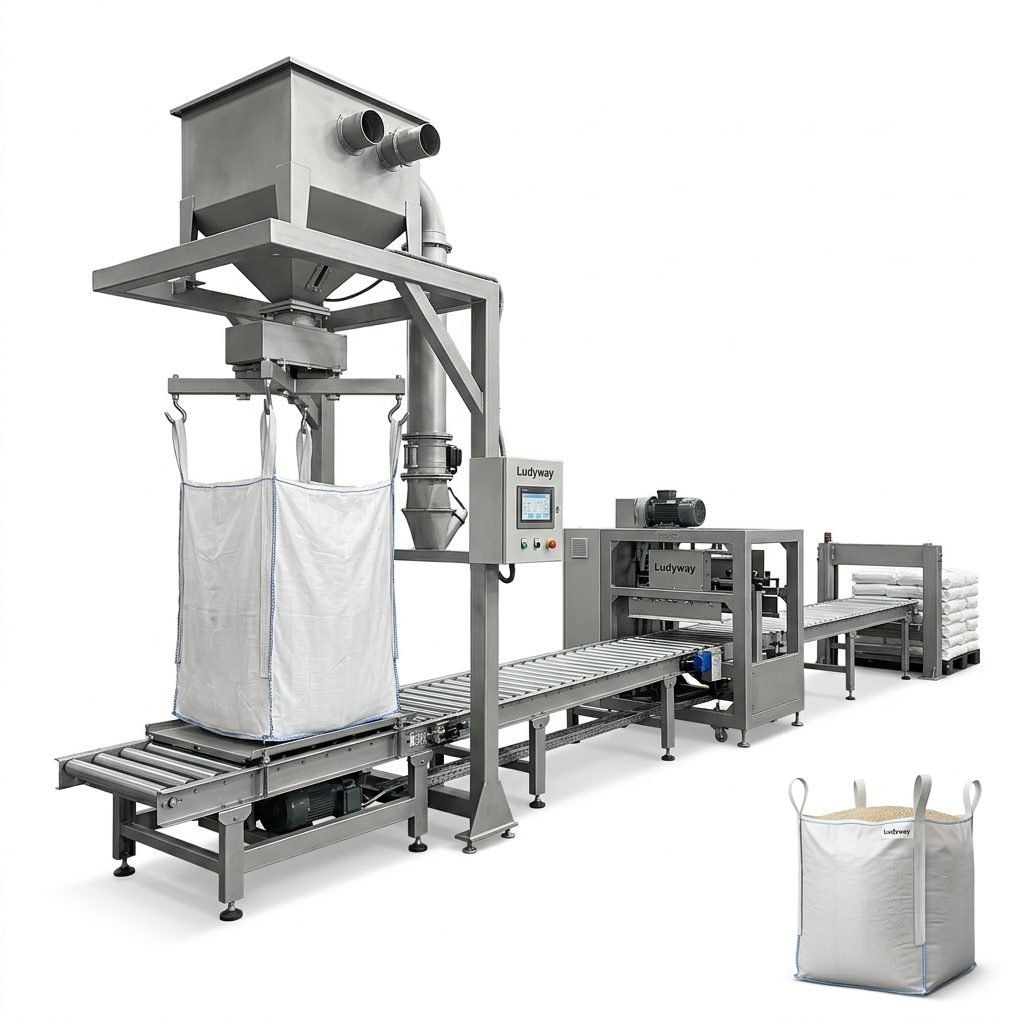
A complete line often includes more than the filling station itself. Depending on project scope, the system may consist of the following modules:
| Component | Function |
|---|---|
| Feeding hopper | Stores and guides product into the filling mechanism |
| Weighing unit | Measures fill weight with load cells or weighing platforms |
| Bag clamping frame | Secures the bag neck and improves sealing during fill |
| Bag support hooks | Hold jumbo bag loops during filling |
| Dust extraction connection | Reduces airborne particles and improves cleanliness |
| Conveyor or roller table | Transfers filled bags to palletizing or forklift pickup point |
| Control cabinet | Manages automation, recipes, alarms, and process parameters |
Benefits of Using a Bulk Bag Packing Machine
Higher Packaging Efficiency
Automated filling is much faster than manual bagging. The machine shortens cycle time, supports continuous production, and reduces bottlenecks in high-output environments.
Better Weighing Accuracy
Integrated weighing systems improve consistency between bags. This helps control giveaway, reduce underweight risk, and improve inventory accuracy.
Reduced Labor Demand
Handling 500 kg to 2000 kg bags manually is inefficient and physically demanding. A bulk bag packing machine lowers dependence on manual labor and improves workplace ergonomics.
Cleaner Production Environment
For dusty powders and fine chemicals, controlled filling with clamping and dust extraction can significantly reduce airborne contamination and product loss.
Improved Bag Stability for Transport
Consistent filling, densification, and settling help form compact, stable bags that stack better during palletizing, warehousing, and shipping.
Scalability
A well-designed system can be integrated with upstream storage silos and downstream conveying, palletizing, wrapping, and warehouse logistics, making future expansion easier.
Bulk Bag Packing Machine vs. Small Bag Packaging Machine
| Factor | Bulk Bag Packing Machine | Small Bag Packaging Machine |
|---|---|---|
| Bag size | 500 kg to 2000 kg or more | Grams to 50 kg typically |
| Use case | Industrial bulk handling and transport | Retail, wholesale, or smaller industrial packs |
| Labor input | Lower for high-volume loads | Varies by machine level |
| Downstream handling | Forklift, pallet, crane, warehouse transfer | Cartoning, case packing, retail distribution |
How to Choose the Right Bulk Bag Packing Machine
Selecting the right equipment requires matching the machine design to your product and production goals. Key evaluation points include:
- Material characteristics: free-flowing, dusty, sticky, abrasive, fragile, or corrosive
- Target bag weight: 500 kg, 1000 kg, 1200 kg, 1500 kg, or custom
- Required accuracy: tolerance expectations and legal metrology needs
- Production capacity: bags per hour and daily output target
- Bag type: FIBC, jumbo bag, open-mouth bulk bag, lined bag
- Dust control level: especially important for powders and chemical materials
- Plant layout: ceiling height, silo connection, forklift access, conveyor direction
- Automation level: manual loading, semi-automatic, or turnkey integrated system
Industries That Benefit Most
Bulk bag packing machines are particularly valuable where large-volume material handling is routine and packaging stability matters. Common sectors include:
- Food ingredients and grain processing
- Feed mills and animal nutrition plants
- Fertilizer and agricultural input production
- Chemical and industrial powder manufacturing
- Mineral processing and construction materials
- Plastic pellet and resin packaging
Maintenance Tips for Stable Operation
Regular maintenance helps ensure consistent accuracy and reduces downtime. Recommended practices include:
- Inspect load cells and recalibrate on schedule
- Check bag clamps, hooks, and support frames for wear
- Clean product-contact parts to prevent buildup
- Monitor screw feeders and seals for abrasion
- Verify pneumatic and electrical connections regularly
- Keep dust extraction systems clear and effective
- Review PLC alarms and cycle data for early issue detection
Why Turnkey Integration Matters
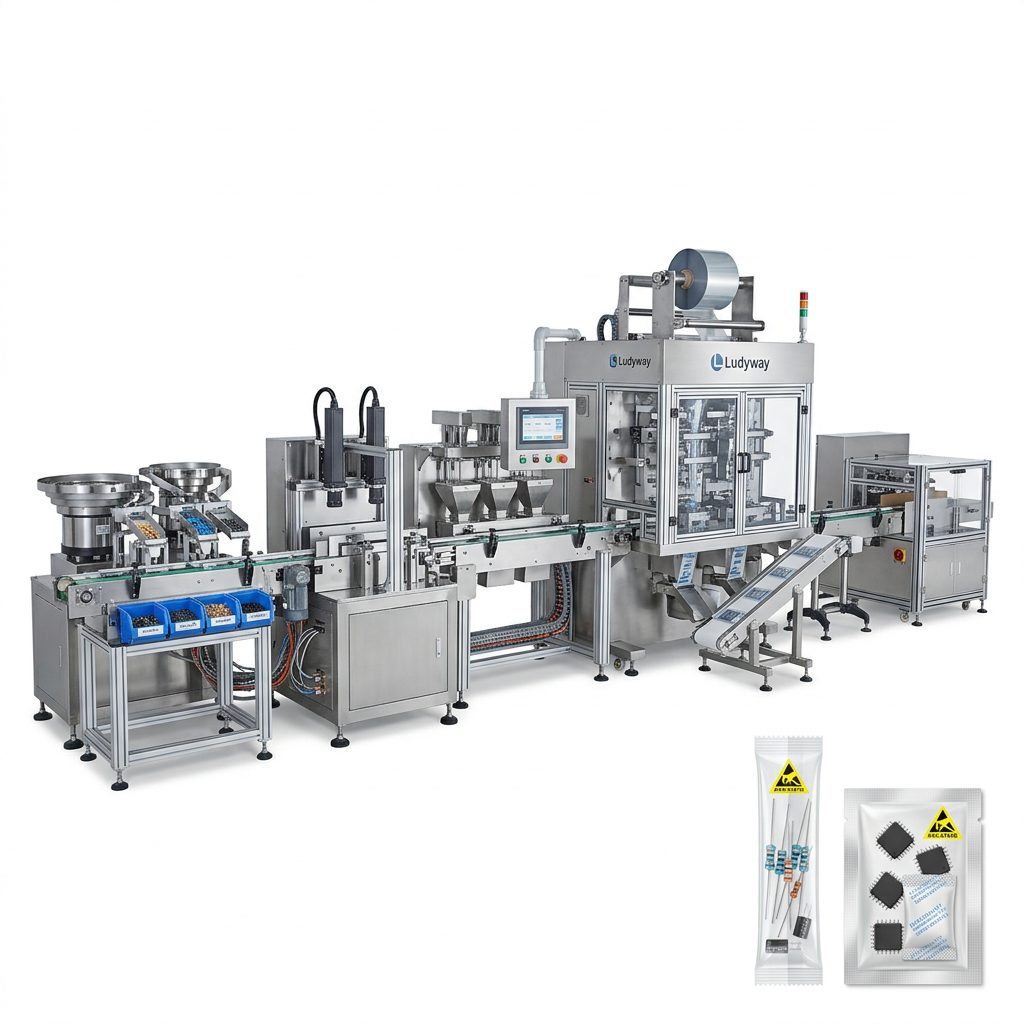
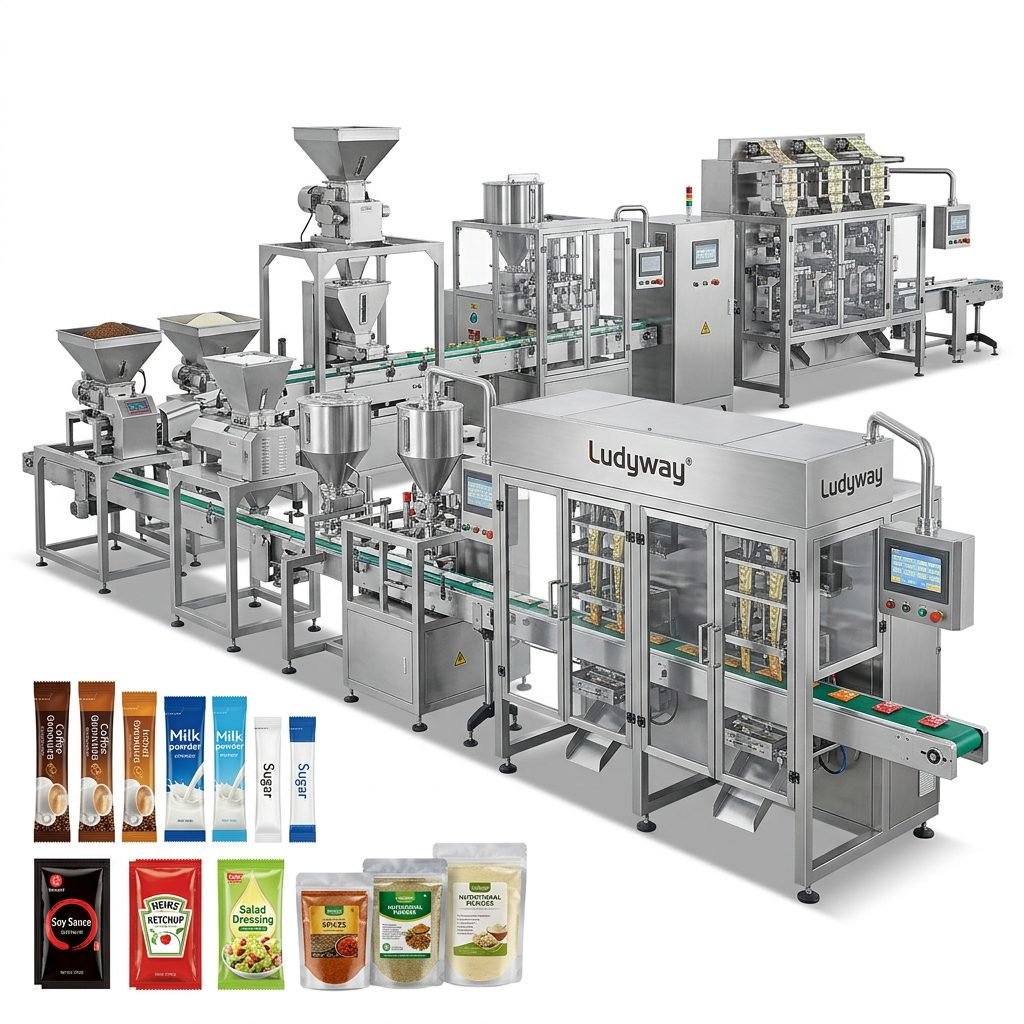
For many manufacturers, the best results come from integrating the bulk bag packer into a full packaging and material handling line. This can include upstream storage, feeding conveyors, metal detection, weighing, bag filling, sealing, palletizing, and wrapping. A coordinated system improves overall line efficiency and reduces interface issues between separate machines.
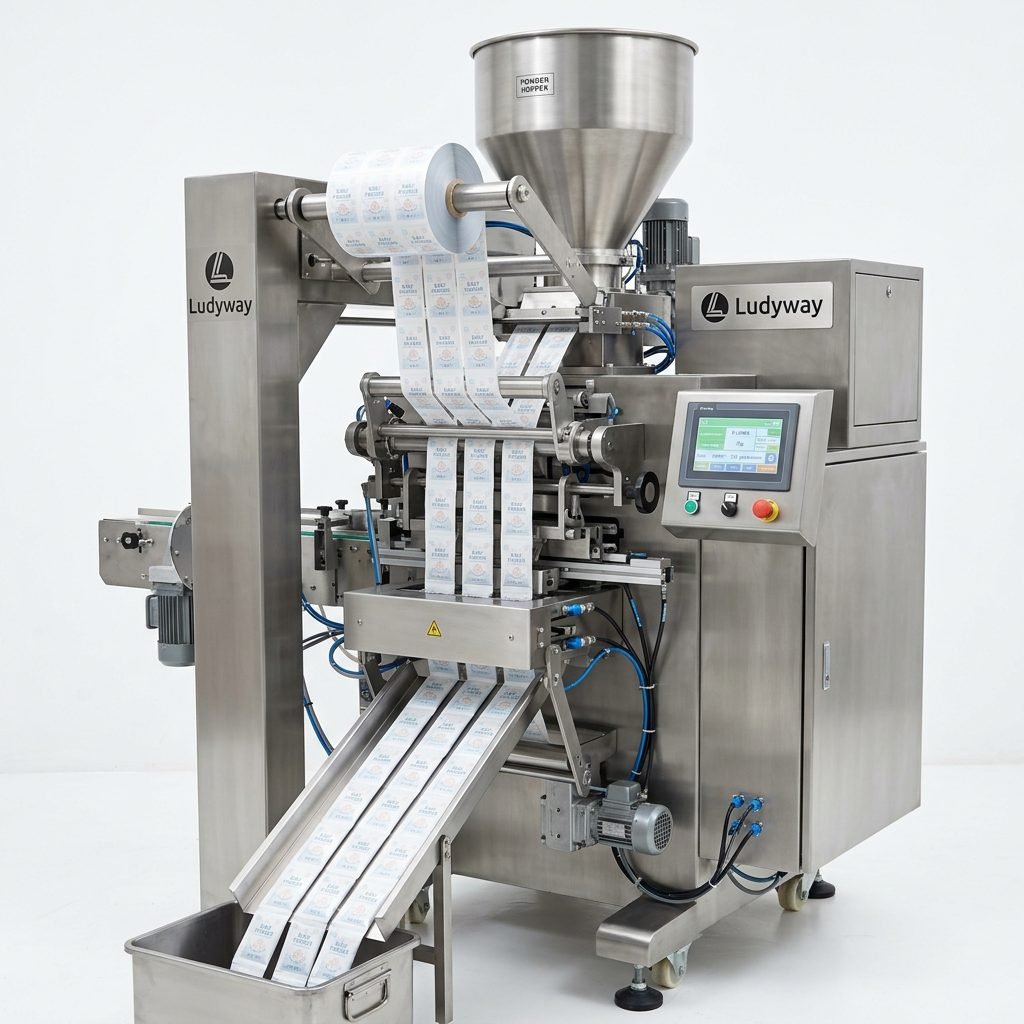
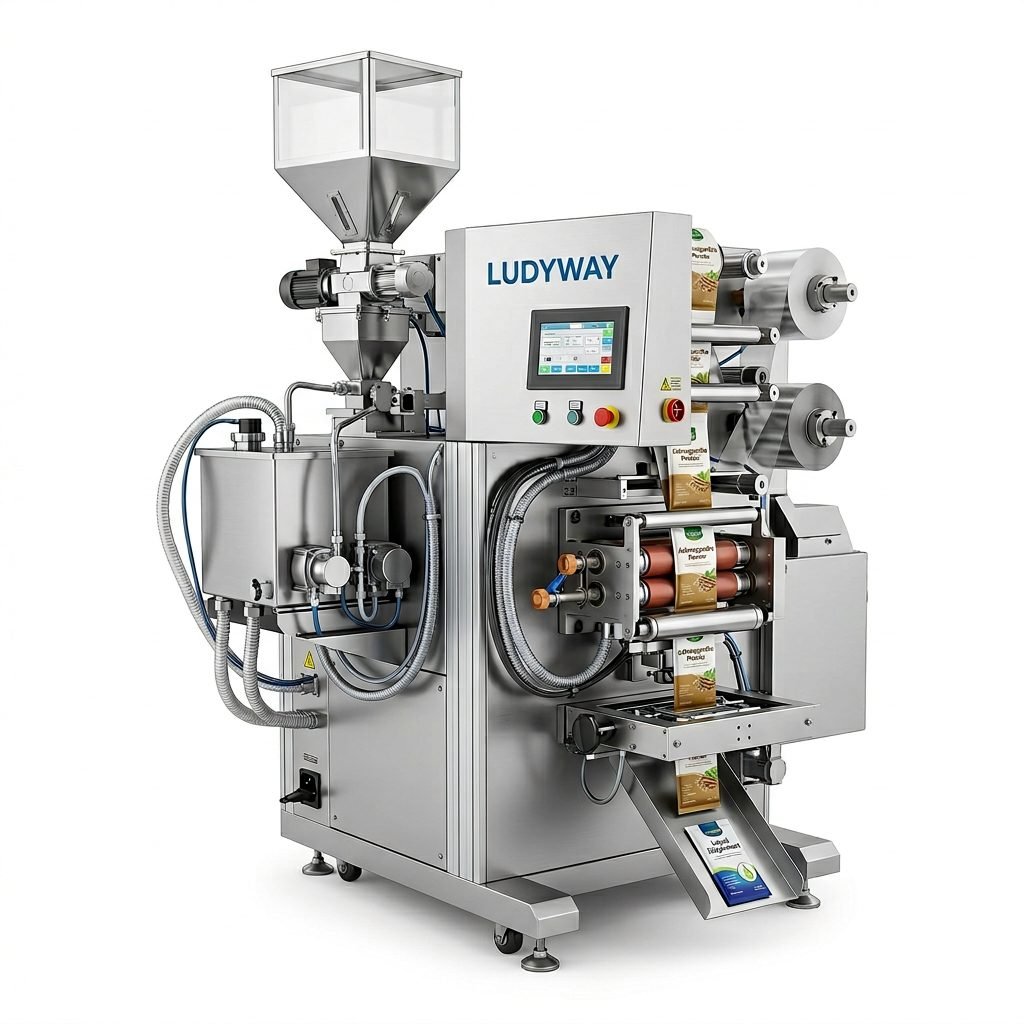
Companies looking for scalable automation often work with experienced packaging line manufacturers such as Ludyway bulk bag packing machine solutions, especially when customized layouts, multiple product types, or turnkey line integration are required.
Conclusion
A bulk bag packing machine is a practical solution for businesses that need to package large volumes of powders, granules, pellets, or blended materials with better speed, accuracy, and cleanliness. By understanding how the machine works, comparing the available types, and evaluating your production requirements carefully, you can choose a system that improves operational efficiency and supports long-term growth.
Whether your priority is precise weighing, dust-free filling, lower labor dependence, or full-line automation, the right bulk bag packing system can make industrial bulk packaging far more efficient and reliable.