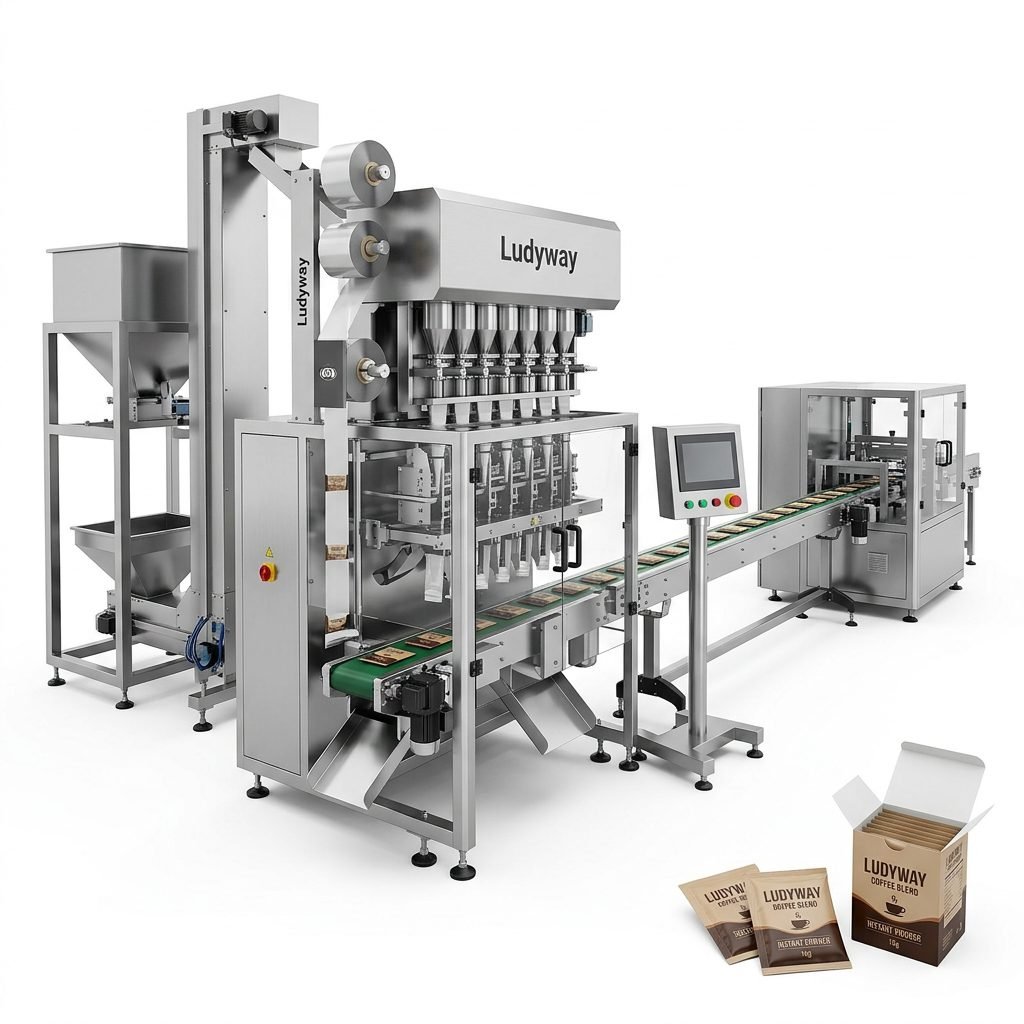
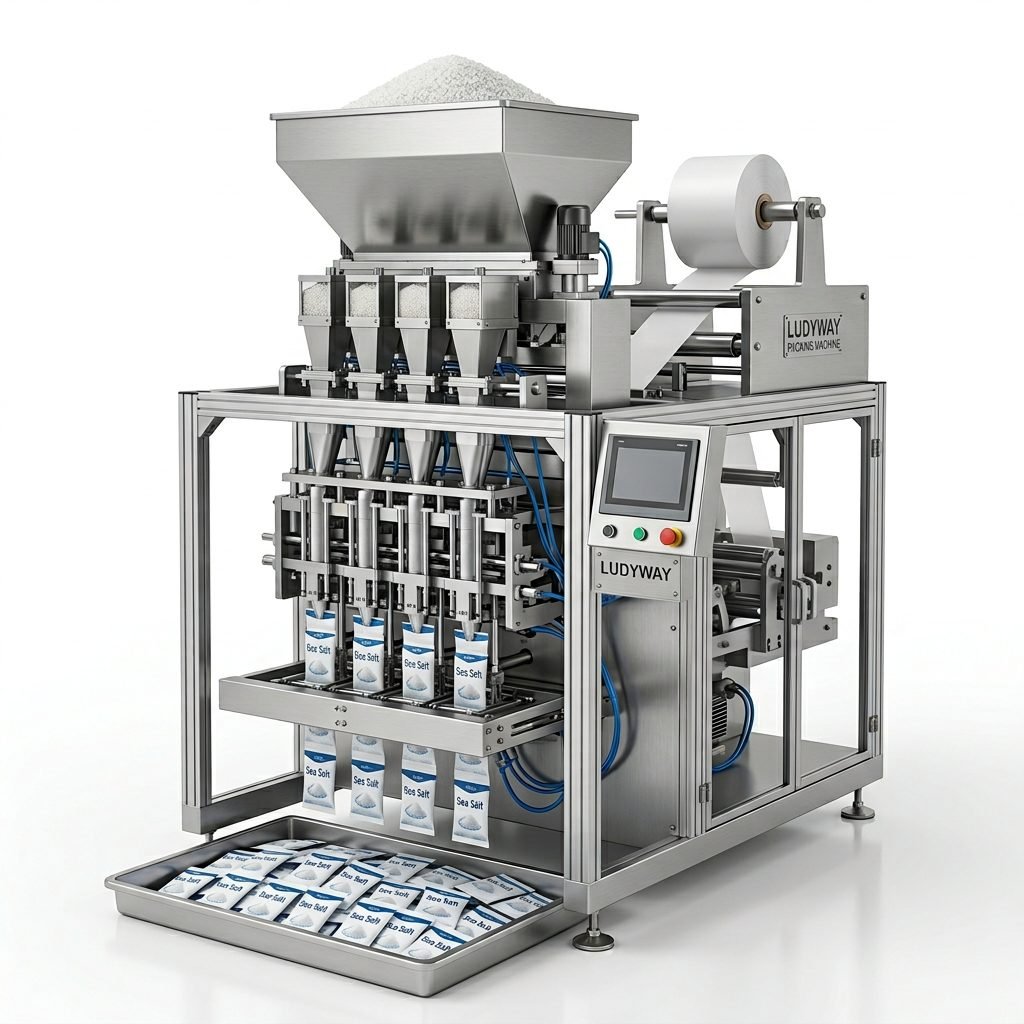
Investing in industrial bagging equipment is a significant decision for manufacturers handling bulk powders, granules, or agricultural products. Whether you operate in the chemical, food processing, construction materials, or fertilizer industry, selecting the right 50 kg bag packing machine directly impacts your production line efficiency, labor costs, and product consistency.
This guide breaks down everything you need to evaluate — from weighing technology and bag material compatibility to automation levels and long-term operational costs — so you can make an informed purchasing decision.
Understanding the Types of 50 kg Bag Packing Machines
Before diving into specifications, it’s essential to understand the primary categories of 50 kg bag packing machines available on the market. Each type serves different production environments and product characteristics.
Gross Weighing vs. Net Weighing Systems
The fundamental distinction lies in how the machine measures product weight. Gross weighing systems fill the bag while it hangs on the weighing mechanism, which means the bag weight is included in the measurement. These systems are generally simpler and less expensive but may sacrifice some precision with lightweight or inconsistent bag materials.
Net weighing systems, by contrast, weigh the product in a separate hopper before discharging it into the bag. This approach delivers superior accuracy — typically within ±0.1% to ±0.2% — and is preferred for high-value products where even small overfills accumulate significant costs over time.
Open-Mouth vs. Valve Bag Filling
Your packaging material determines which filling method suits your operation. Open-mouth bagging machines fill bags from the top and are compatible with a wide range of bag types, including sewn open-mouth, pinch-bottom, and heat-sealed bags. These machines work well for products that do not fluidize easily, such as coarse granules, flakes, and fibrous materials.
Valve bag filling machines inject product through a small valve opening in the bag corner. Once filled, the internal pressure seals the valve, minimizing dust escape and product loss. This method excels with fine powders like cement, flour, and chemical additives, where dust control is a priority.
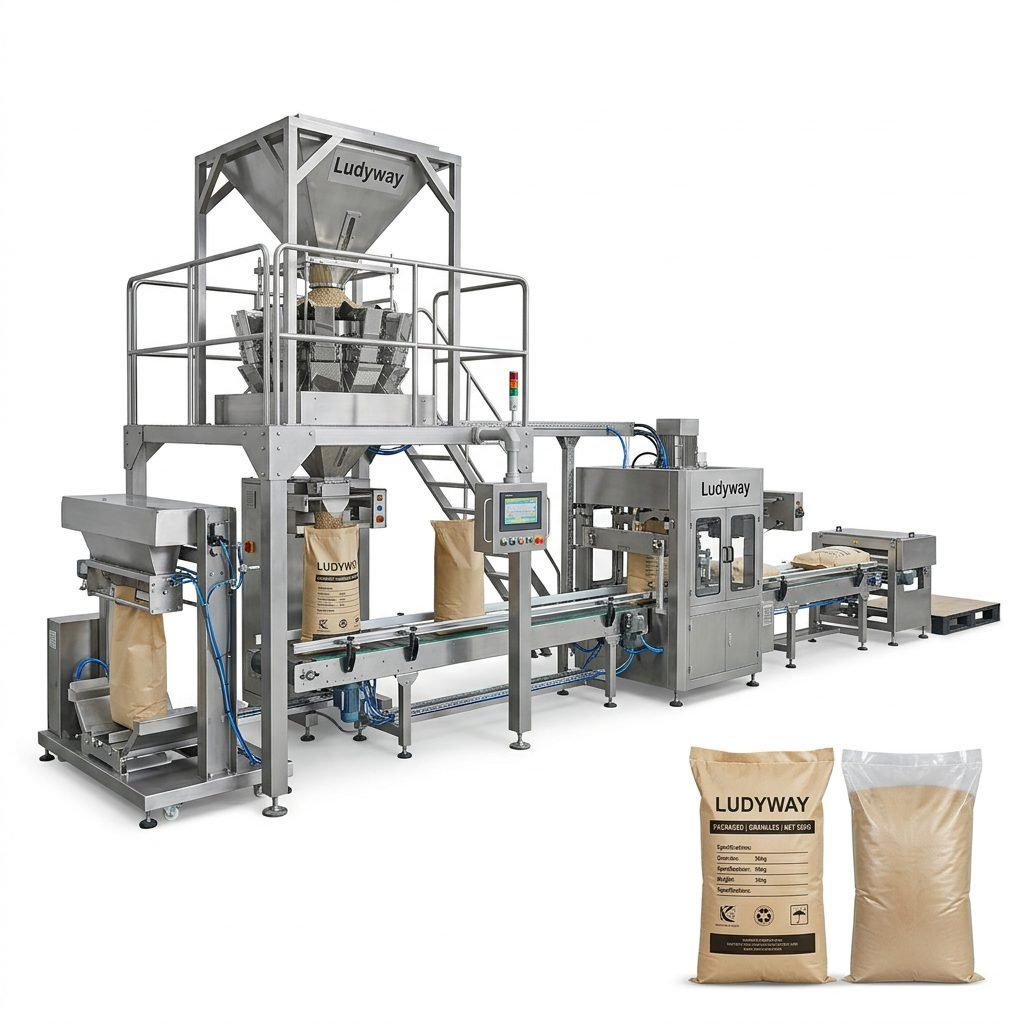
Key Technical Specifications to Evaluate
Selecting a 50 kg bag packing machine requires examining several technical parameters that directly affect performance. The following table outlines the critical specifications and their practical implications.
| Specification | Why It Matters | Recommended Range |
|---|---|---|
| Weighing Accuracy | Directly impacts product giveaway and profitability | ±0.1% – ±0.2% for net weighers |
| Filling Speed | Determines hourly output and labor requirements | 3 – 10 bags per minute |
| Dust Collection Efficiency | Affects workplace safety and regulatory compliance | 99%+ filtration efficiency |
| Bag Size Range | Ensures compatibility with your packaging materials | 20 – 50 kg typically |
| Material of Construction | Determines durability and product compatibility | 304 or 316 stainless steel for food-grade |
Automation Levels and Integration Capabilities
Modern 50 kg bag packing machines range from semi-automatic standalone units to fully integrated automated bagging lines. Understanding where your operation fits on this spectrum helps avoid overspending on unnecessary features or, conversely, underestimating your automation needs.
Semi-Automatic Systems
Semi-automatic machines require an operator to place bags onto the filling spout and initiate each cycle. These systems suit operations with moderate output requirements — typically 2 to 5 bags per minute — and where labor costs remain manageable. The lower capital investment makes them attractive for smaller manufacturers or seasonal production runs.
Fully Automatic Bagging Lines
Fully automatic systems integrate bag feeding, filling, sealing, and often palletizing into one continuous process. These lines can achieve speeds of 8 to 10 bags per minute or more and significantly reduce labor dependency. According to PMMI industry data, automated packaging lines can reduce operational costs by 20% to 35% over five years compared to semi-automatic alternatives.
- Automatic bag placer — eliminates manual bag handling and speeds up cycle times
- Integrated checkweigher — provides real-time weight verification and rejects out-of-spec bags
- Automatic bag closer — heat sealing, sewing, or ultrasonic closure options depending on bag type
- Conveyor and palletizing integration — streamlines downstream handling and reduces forklift traffic
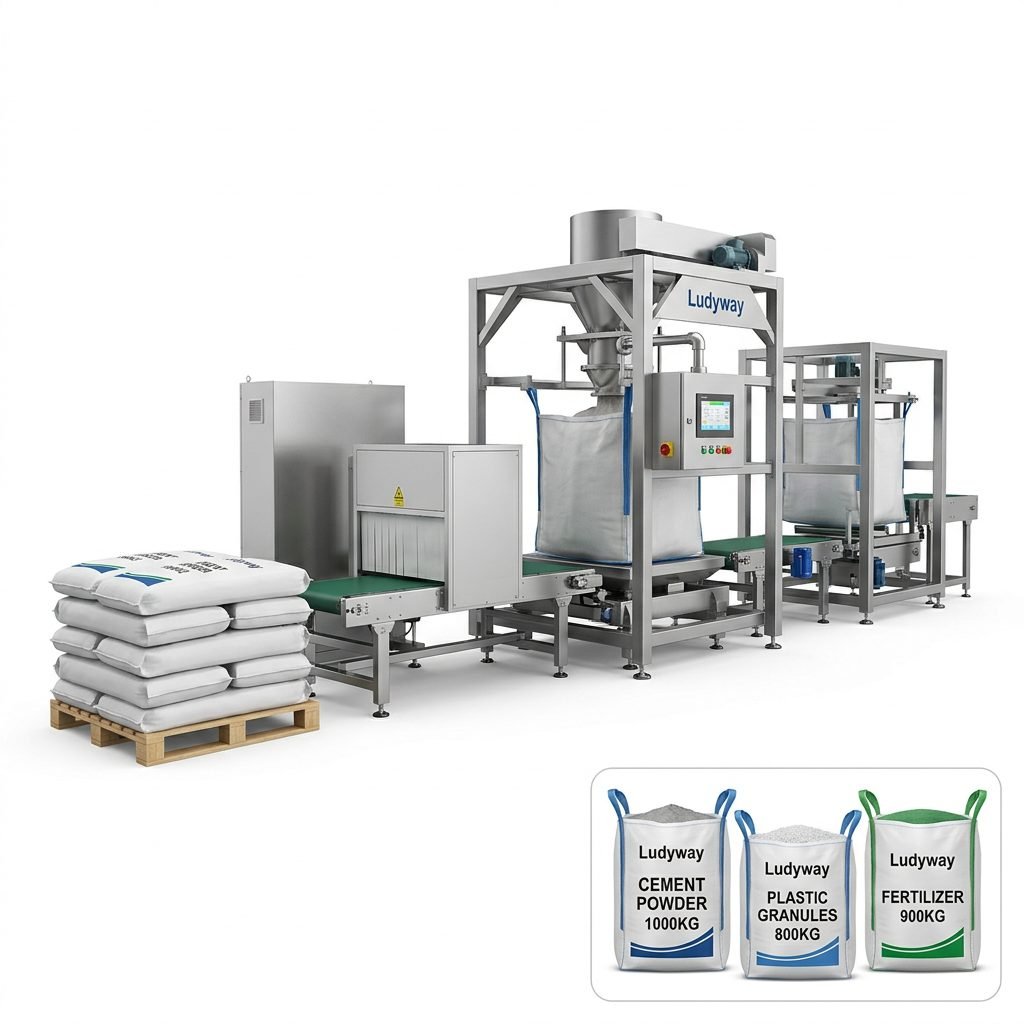
Product Characteristics That Influence Machine Selection
No two bulk products behave identically during the filling process. The physical properties of your material — particle size distribution, bulk density, flowability, moisture content, and temperature sensitivity — profoundly affect which 50 kg bag packing machine configuration will perform optimally.
Free-Flowing vs. Non-Free-Flowing Materials
Free-flowing granules such as plastic pellets, coarse fertilizers, and whole grains move easily through gravity-fed systems. Standard gravity gates or simple auger mechanisms handle these materials efficiently without bridging or rat-holing issues.
Non-free-flowing powders like titanium dioxide, cocoa powder, and fine chemicals present more significant challenges. These materials tend to pack, bridge, and aerate, requiring specialized feeding mechanisms such as fluidizing bottoms, vibrating densification systems, or vacuum-assisted filling to achieve consistent weights and bag shapes.
Dust Hazard Considerations
Combustible dust regulations, including FDA packaging compliance and NFPA standards for facilities handling organic dusts, make dust control a critical factor. For dusty products, look for machines equipped with integrated dust collection hoods, enclosed filling chambers, and explosion venting where applicable.
Industry-Specific Applications and Requirements
Different industries impose unique demands on 50 kg bag packing machines. Understanding sector-specific requirements ensures your equipment meets both performance and compliance standards.
| Industry | Typical Products | Key Requirements |
|---|---|---|
| Agriculture | Fertilizers, seeds, animal feed | High throughput, weather-resistant construction |
| Chemicals | Industrial powders, additives, resins | Corrosion resistance, explosion-proof options |
| Food Processing | Flour, sugar, starch, protein powders | Stainless steel construction, easy cleanability |
| Construction | Cement, mortar, grout, additives | Heavy-duty design, dust suppression systems |
Evaluating Total Cost of Ownership
The purchase price of a 50 kg bag packing machine represents only a fraction of its lifetime cost. Smart buyers evaluate total cost of ownership (TCO), which encompasses installation, energy consumption, maintenance, spare parts availability, and operator training.
Key TCO Factors to Consider
- Energy efficiency — pneumatic systems often consume more energy than servo-electric alternatives over time
- Spare parts availability — verify that critical wear components are readily available from local suppliers
- Maintenance accessibility — tool-less access panels and modular component design reduce downtime
- Operator training requirements — intuitive HMIs with multi-language support lower training costs
- Scalability potential — machines that support future upgrades protect your initial capital investment
Common Mistakes to Avoid When Buying a 50 kg Bag Packing Machine
Even experienced packaging professionals can make costly errors during the equipment selection process. Here are the most frequent pitfalls and how to avoid them.
Underestimating Future Capacity Needs
Many buyers select a machine that precisely meets current production volumes, only to find themselves constrained within 18 to 24 months. Plan for at least 20% to 30% headroom above your current peak demand to accommodate business growth without requiring a complete equipment replacement.
Overlooking Bag Quality Compatibility
Not all bags perform equally on automated equipment. Inconsistent bag dimensions, poor perforation quality, or incompatible valve designs cause packaging defects that lead to product loss and downtime. Always test your actual bag supply on any machine under consideration before committing to purchase.
Neglecting After-Sales Support Assessment
A machine without reliable technical support becomes a liability. Evaluate the manufacturer’s service network, response times, remote diagnostic capabilities, and spare parts logistics before finalizing your decision. Some manufacturers provide turnkey packaging solutions with comprehensive after-sales service, including installation, commissioning, and operator training — factors that significantly reduce startup risks.
Conclusion: Making the Right Investment
Selecting the optimal 50 kg bag packing machine demands a thorough evaluation of your product characteristics, production volume requirements, automation goals, and budget constraints. By systematically assessing weighing technology, filling method, dust control features, material compatibility, and long-term ownership costs, you position your operation for sustained efficiency and profitability.
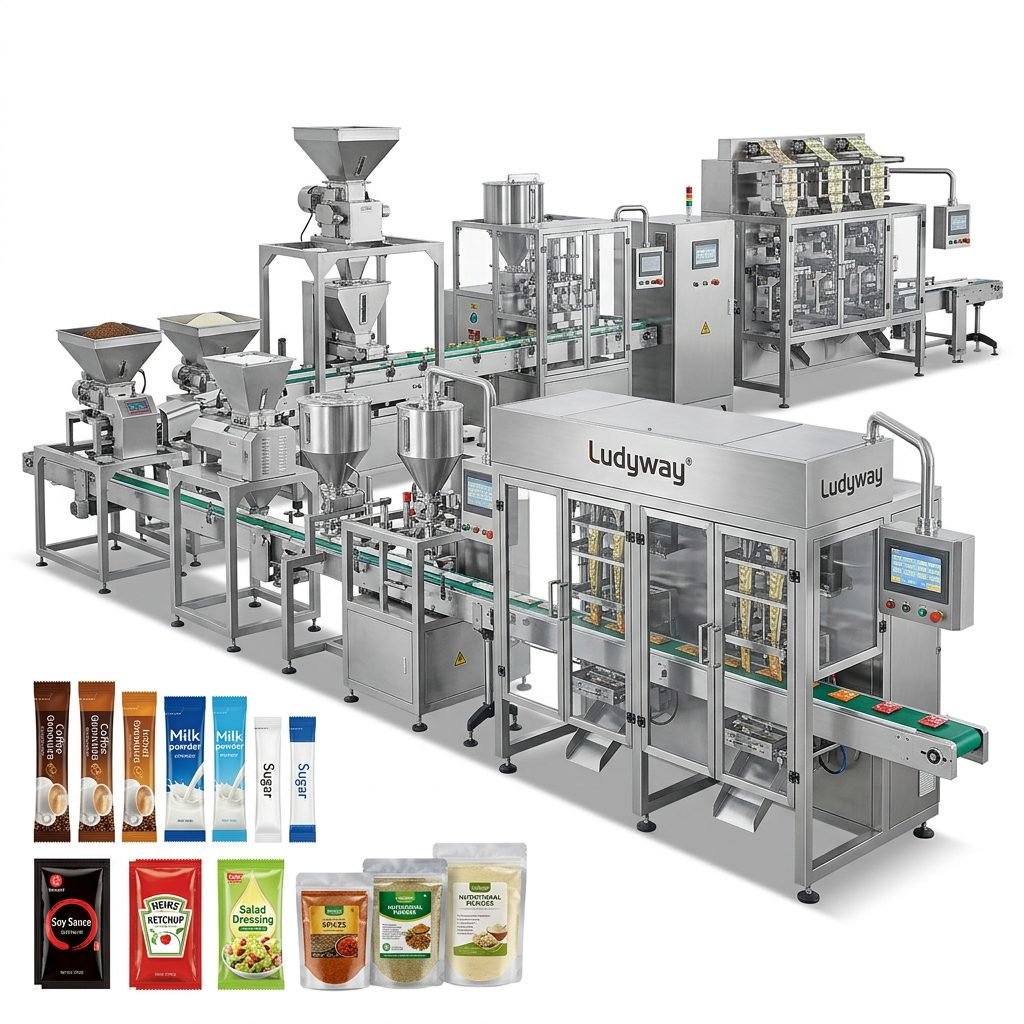
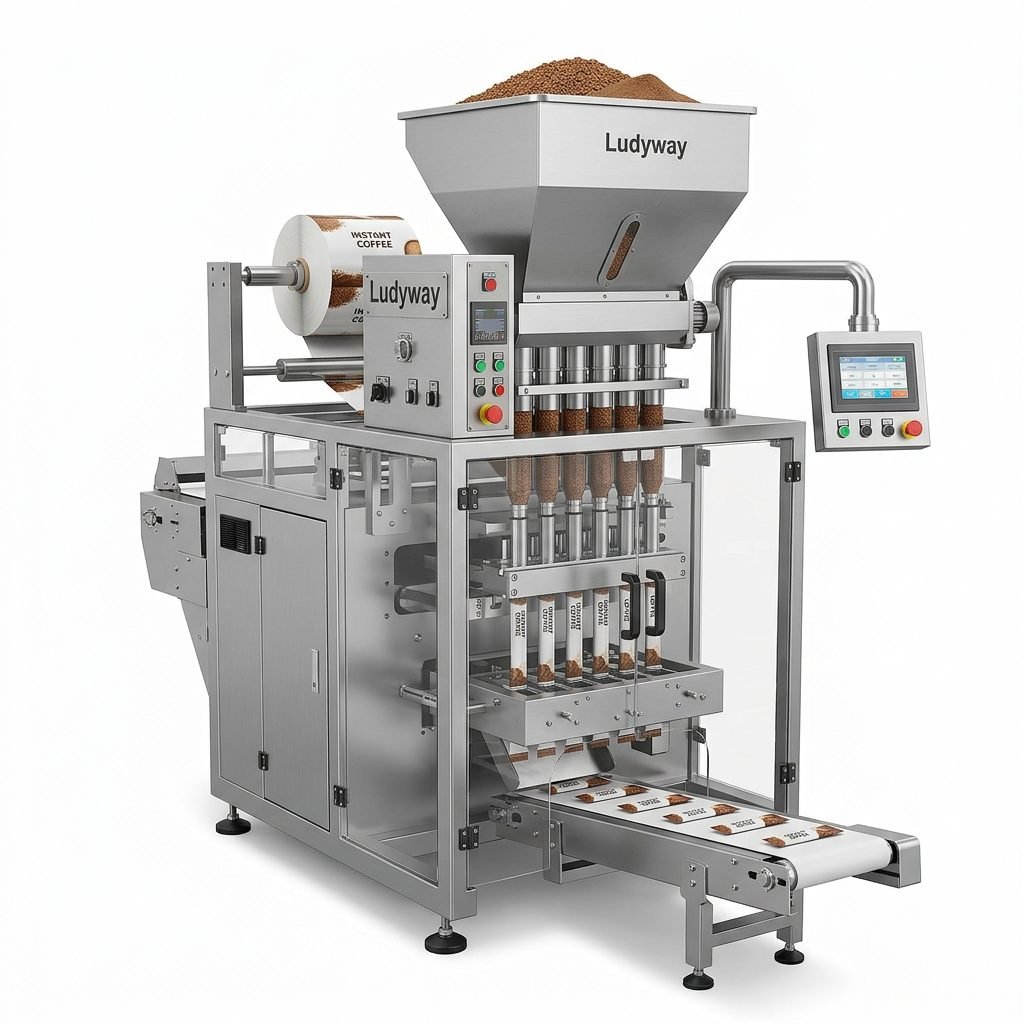
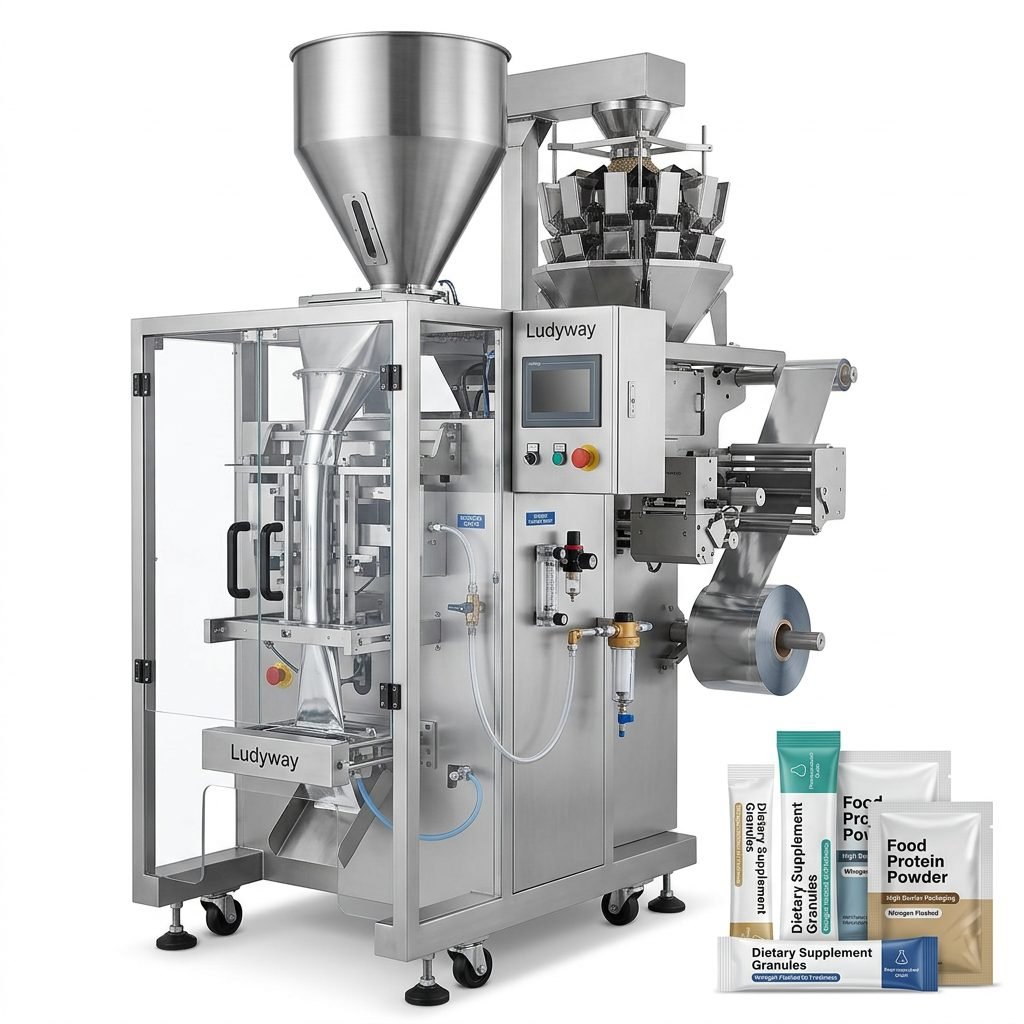
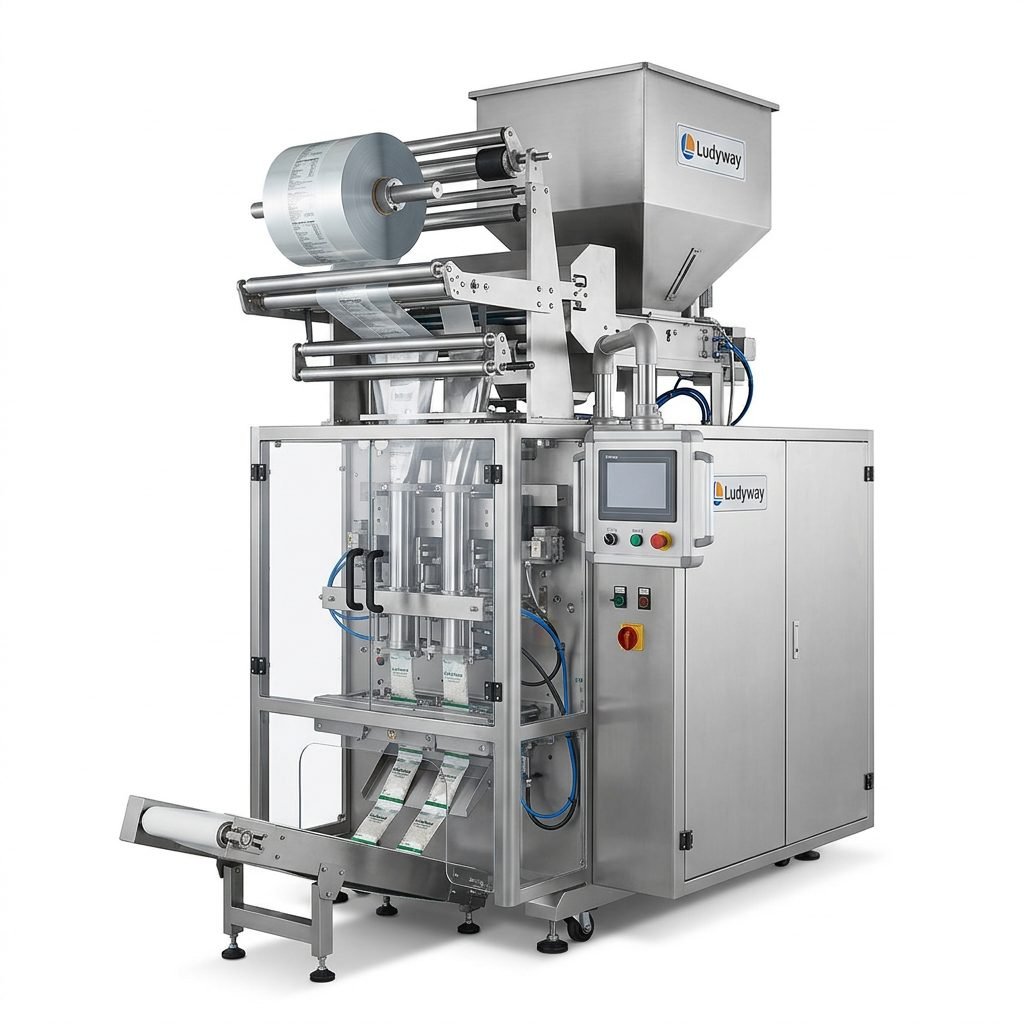
For manufacturers seeking customized bulk bagging solutions backed by decades of engineering expertise, Ludyway Machinery offers a comprehensive portfolio of 50 kg bag packing machines designed for diverse industries including chemicals, agriculture, food processing, and construction materials. With over 30 years of packaging machinery manufacturing experience and a 20,000-square-meter production facility, Ludyway provides integrated packaging systems configured to meet specific product and production requirements.
Additional Resources
- PMMI State of the Industry Report — latest packaging machinery market trends and forecasts
- Flexible Packaging Association — industry resources and flexible packaging data
- ISO Packaging Standards — international standards for packaging machinery and systems
- Ludyway Packaging Machinery Global Growth Trend — industry analysis and export outlook