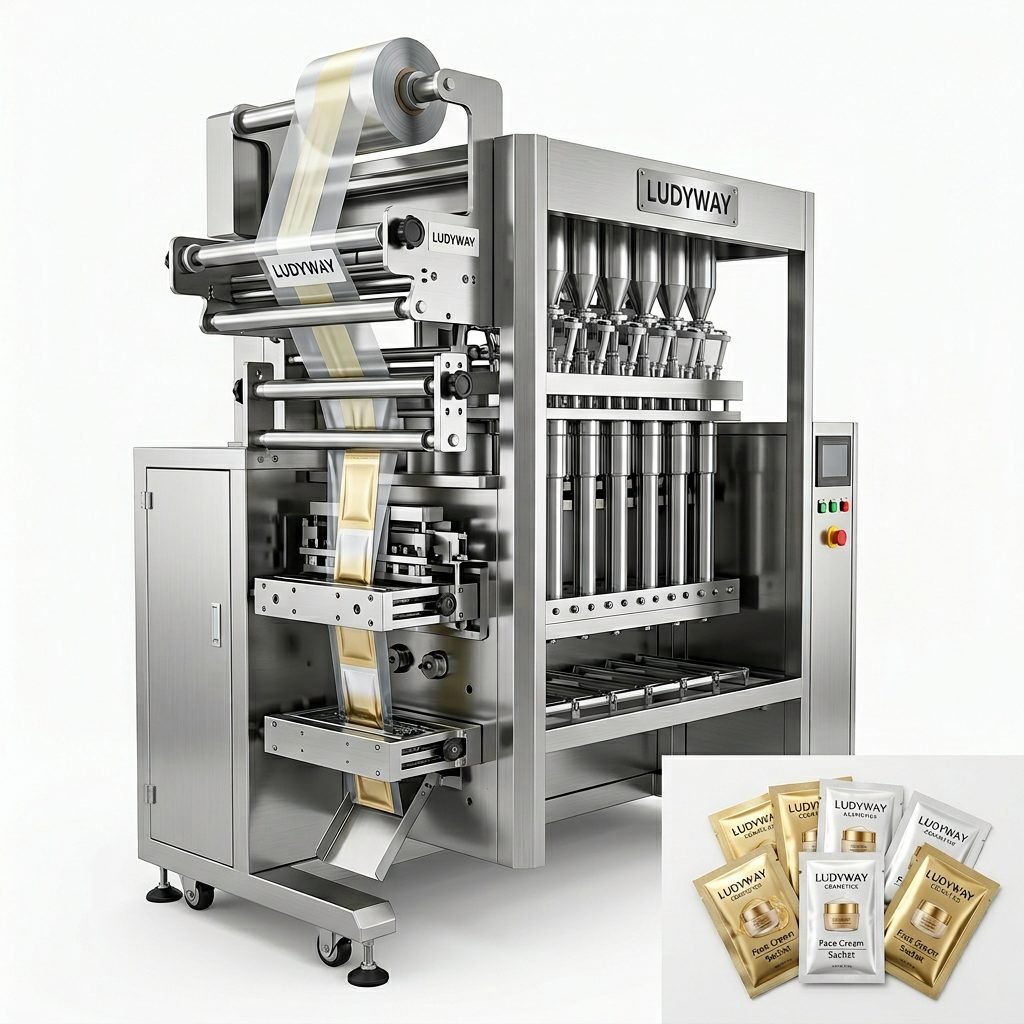
The snack food industry in Asia is experiencing unprecedented growth, with potato chips remaining one of the most popular packaged snacks across the region. Setting up a potato chips packaging machine production line requires careful planning, from facility layout and equipment selection to compliance with local food safety regulations. This guide walks you through every critical step to establish an efficient, high-output packaging operation in Asian markets.
Understanding the Asian Snack Food Market Landscape
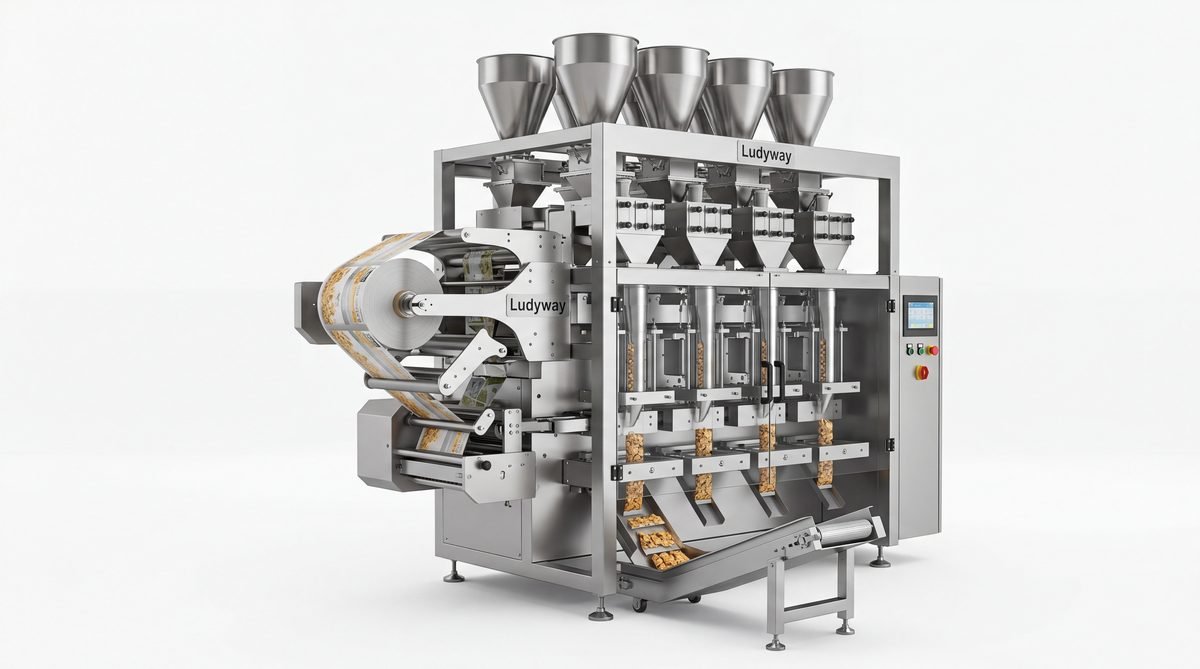
Before investing in equipment, it is essential to understand the unique dynamics of Asian markets. Countries such as China, India, Indonesia, Vietnam, and Thailand represent massive consumption hubs. The demand for packaged potato chips continues to rise due to urbanization, rising disposable incomes, and changing consumer lifestyles. According to industry data from PMMI Business Intelligence, the Asia-Pacific region accounts for the largest share of global packaging machinery demand. Your production line must be capable of handling varying bag sizes, multi-lane configurations, and both nitrogen-flushed pillow packs and stick pack formats.
Key Factors in Production Line Planning
A well-designed potato chips packaging line balances speed, accuracy, and flexibility. Below are the critical considerations before purchasing machinery.
1. Site Selection and Facility Requirements
Choose a location with reliable utilities including stable electricity, compressed air, and clean water supply. The facility should maintain controlled humidity levels, as potato chips are highly hygroscopic and must be packaged in a dry environment. Floor space must accommodate raw material infeed, the packaging machine itself, and downstream equipment such as checkweighers and cartoning systems.
2. Production Capacity and Speed Requirements
Determine your target output in bags per minute. Multi-lane stick pack machines can achieve 400–600 bags per minute, while single-lane pillow pack machines typically operate at 60–120 bags per minute. Your choice directly impacts labor costs, floor space utilization, and return on investment.
3. Packaging Formats and Bag Styles
- Pillow bags – Traditional format, ideal for larger portion sizes
- Stick packs – Slim, portable format popular for single-serve and on-the-go snacking
- Sachets – Compact and cost-effective for small portions or sampling
- Gusseted bags – Stand-up pouches with bottom gusset for retail display
- Nitrogen-flushed packs – Extended shelf life through inert gas flushing
Essential Equipment for a Potato Chips Packaging Line
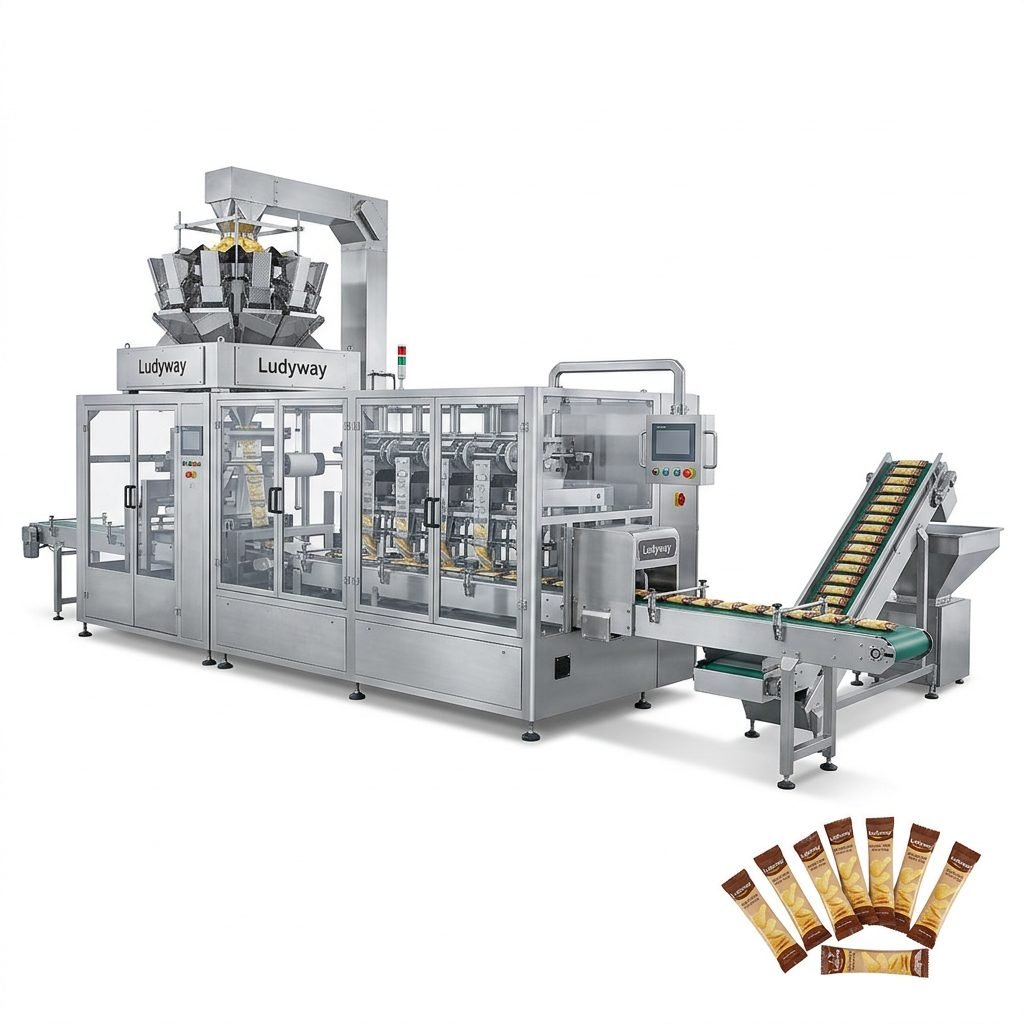
A complete potato chips packaging production line integrates multiple machines working in synchronization. The table below outlines the core equipment and its function.
| Equipment | Function | Key Specification |
|---|---|---|
| Multi-Head Weigher | Accurate portioning of chips into individual bags | 10–14 heads, ±0.5g accuracy |
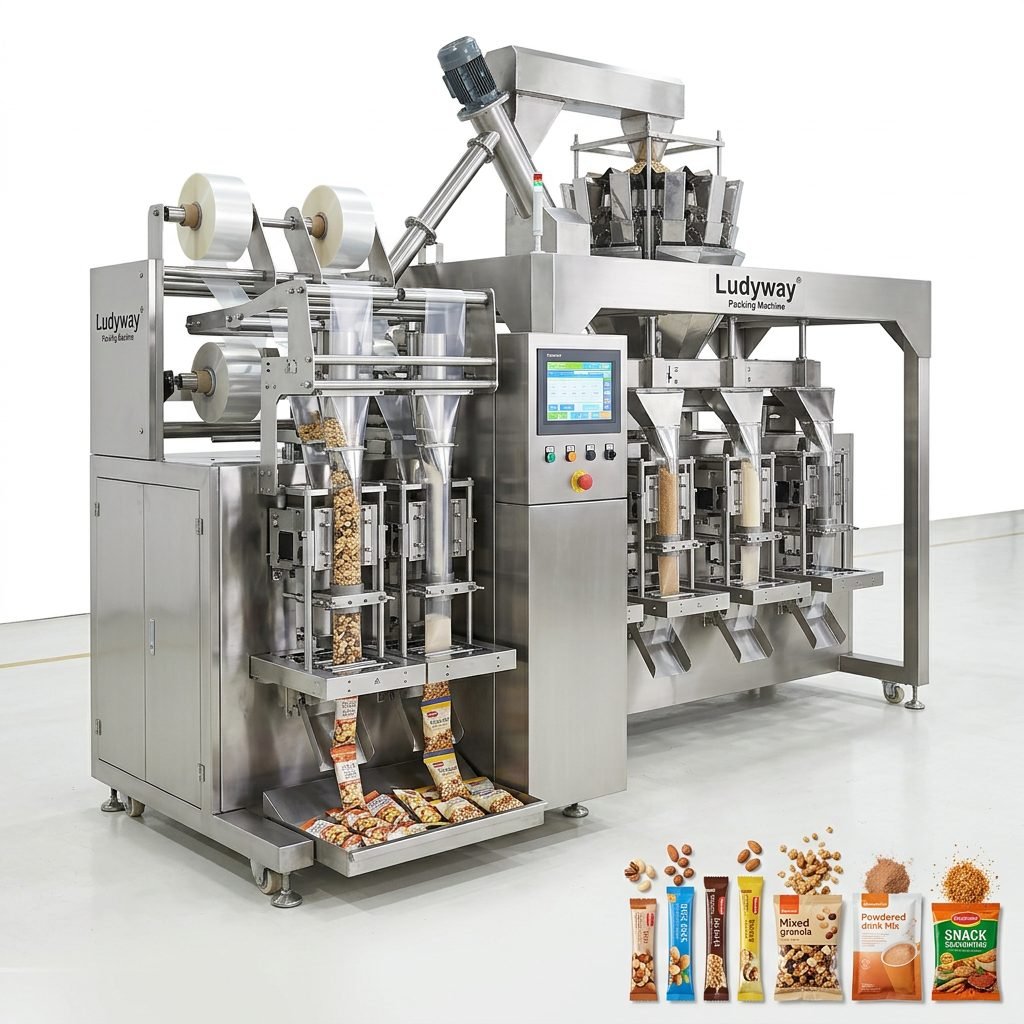
| Vertical Form Fill Seal (VFFS) Machine | Forms bags from roll film, fills, and seals | Multi-lane, servo-driven |
| Nitrogen Flushing System | Injects inert gas to prevent oxidation and crushing | Residual O₂ < 1% |
| Inclined Conveyor | Transfers chips gently without breakage | Adjustable speed, food-grade belt |
| Checkweigher | Rejects underweight or overweight packs | ±0.1g precision |
| Metal Detector | Ensures food safety compliance | Ferrous/non-ferrous detection |
| Cartoning Machine | Packs finished bags into cartons | Automated case packing |
| Palletizer | Stacks cartons onto pallets | Robotic or conventional |
Selecting the Right Packaging Machine Supplier
Choosing a reliable packaging machine manufacturer is one of the most critical decisions. Look for suppliers with proven experience in snack food packaging, robust after-sales support, and the ability to provide turnkey solutions including installation, training, and ongoing maintenance. A comprehensive supplier should offer multiple machine models to match your specific production needs.
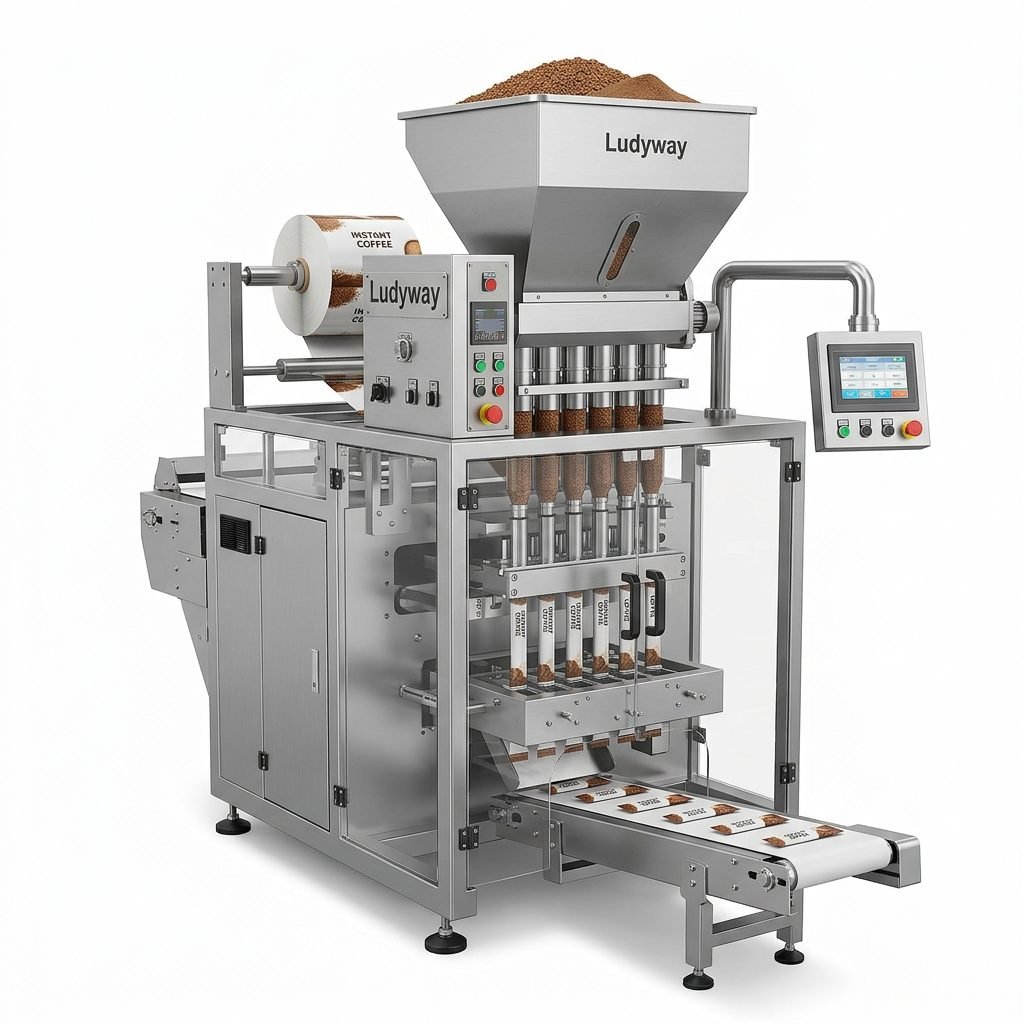
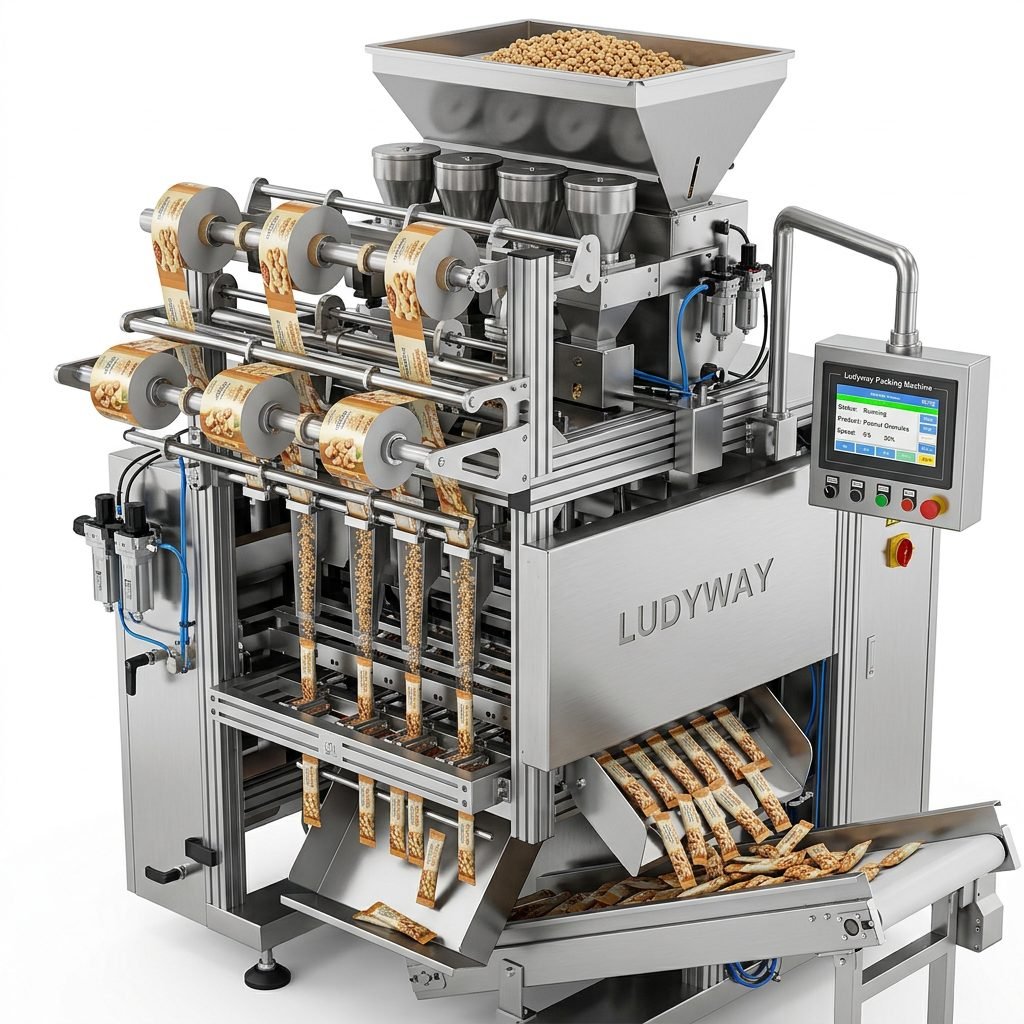
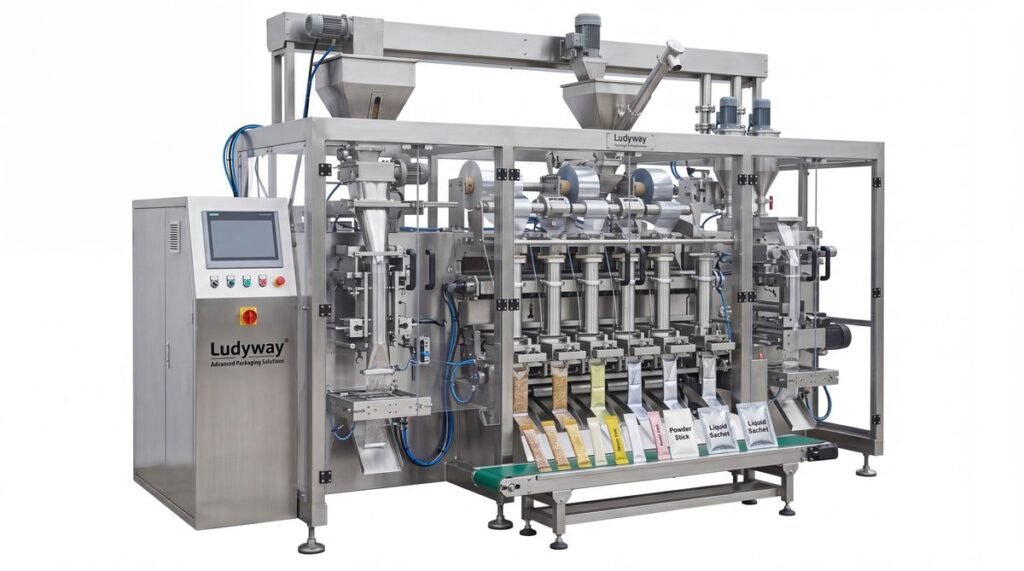
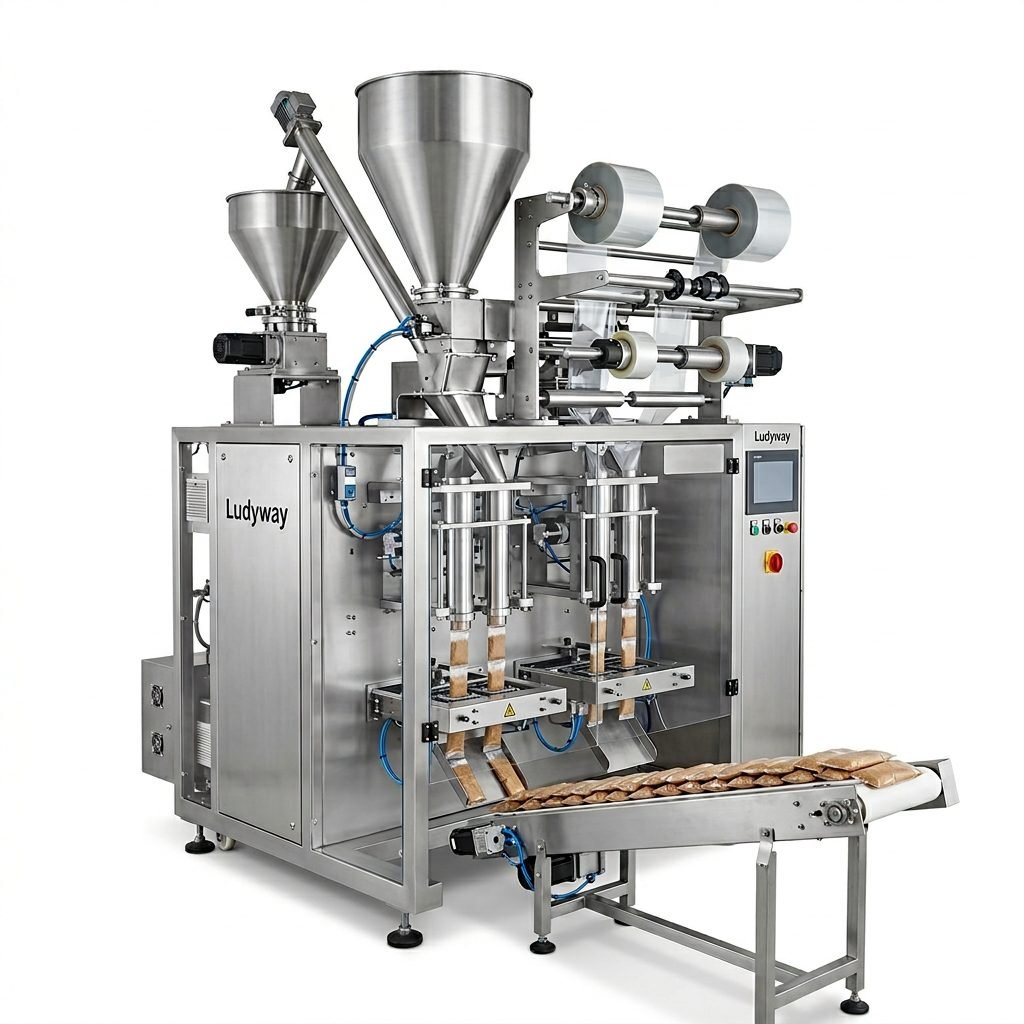
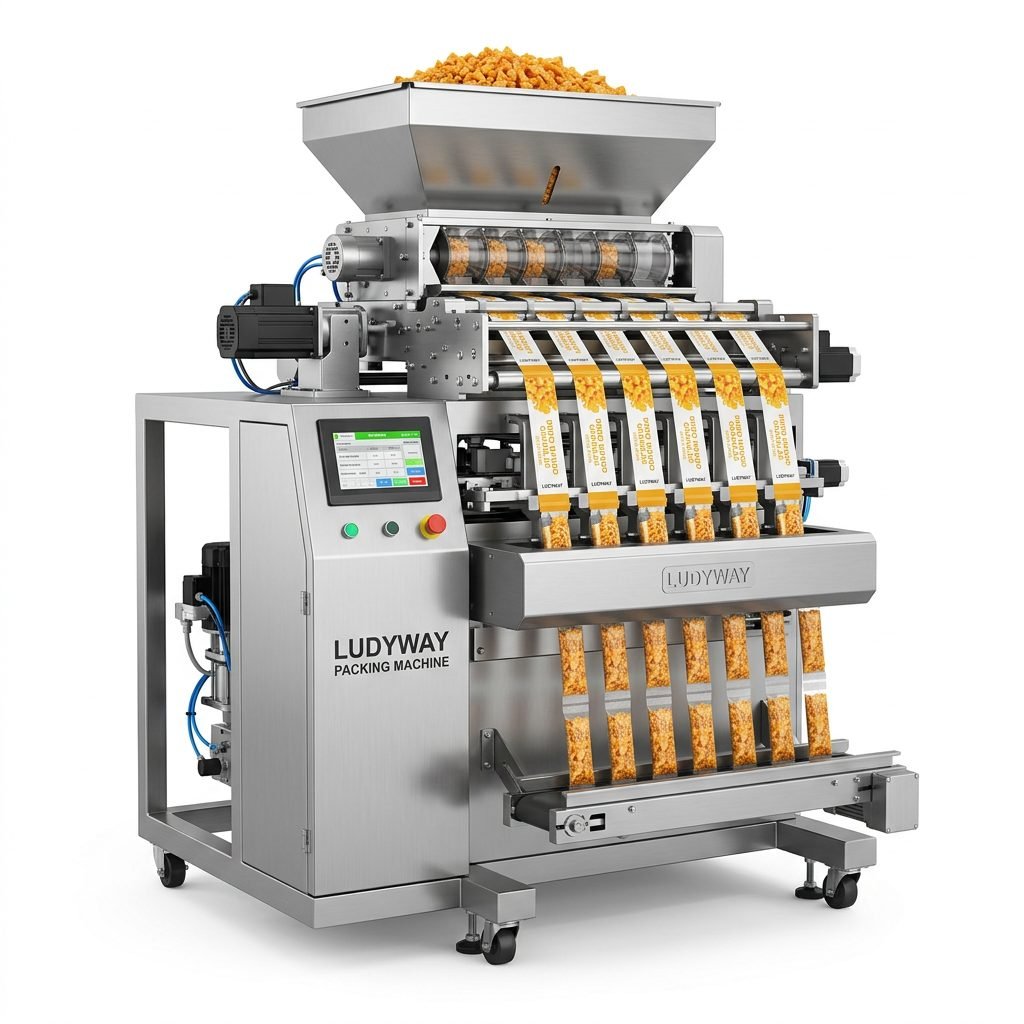
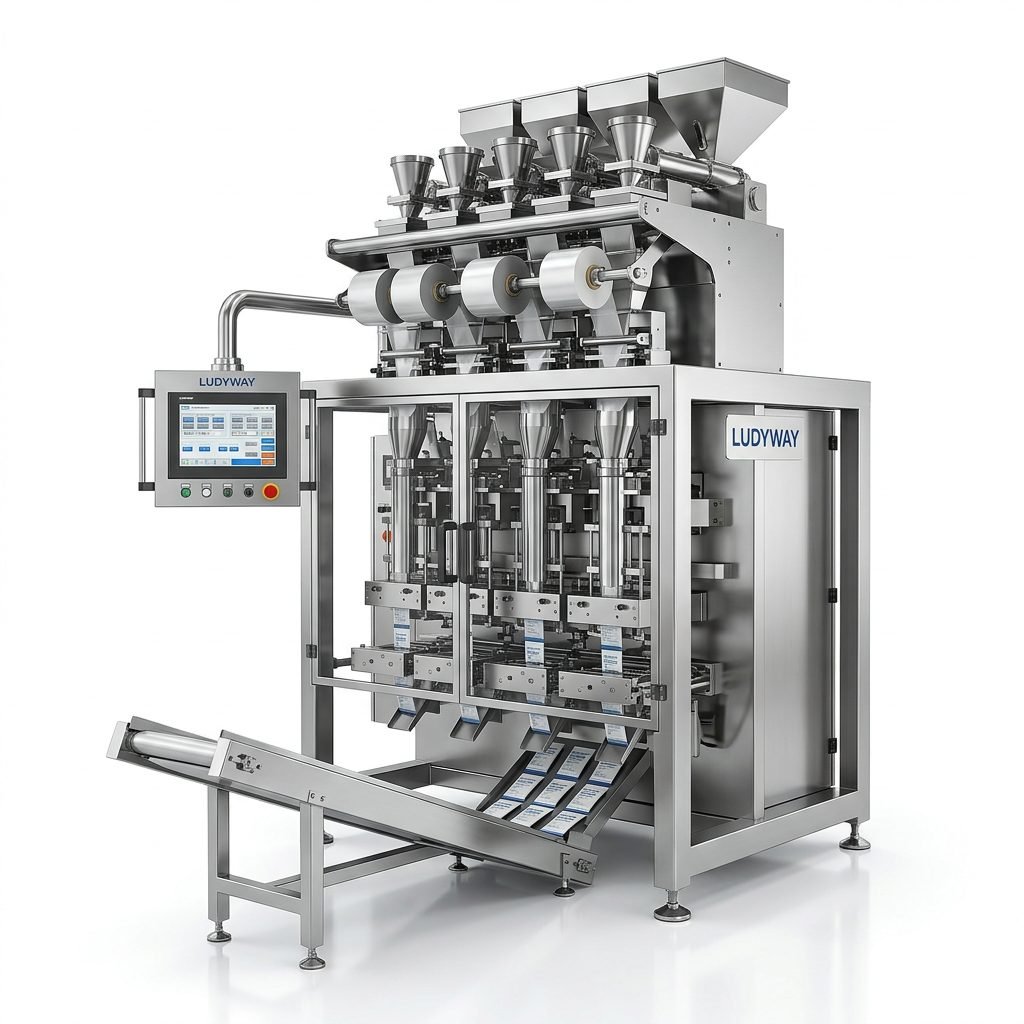
Among global packaging equipment providers, Ludyway stands out as one of the largest manufacturers in China, offering advanced multi-lane stick pack and sachet solutions suitable for potato chips and other snack products. With manufacturing capabilities supported by a modern facility and decades of engineering expertise, the company delivers customized production lines that meet international quality and safety standards.
Installation, Commissioning, and Staff Training
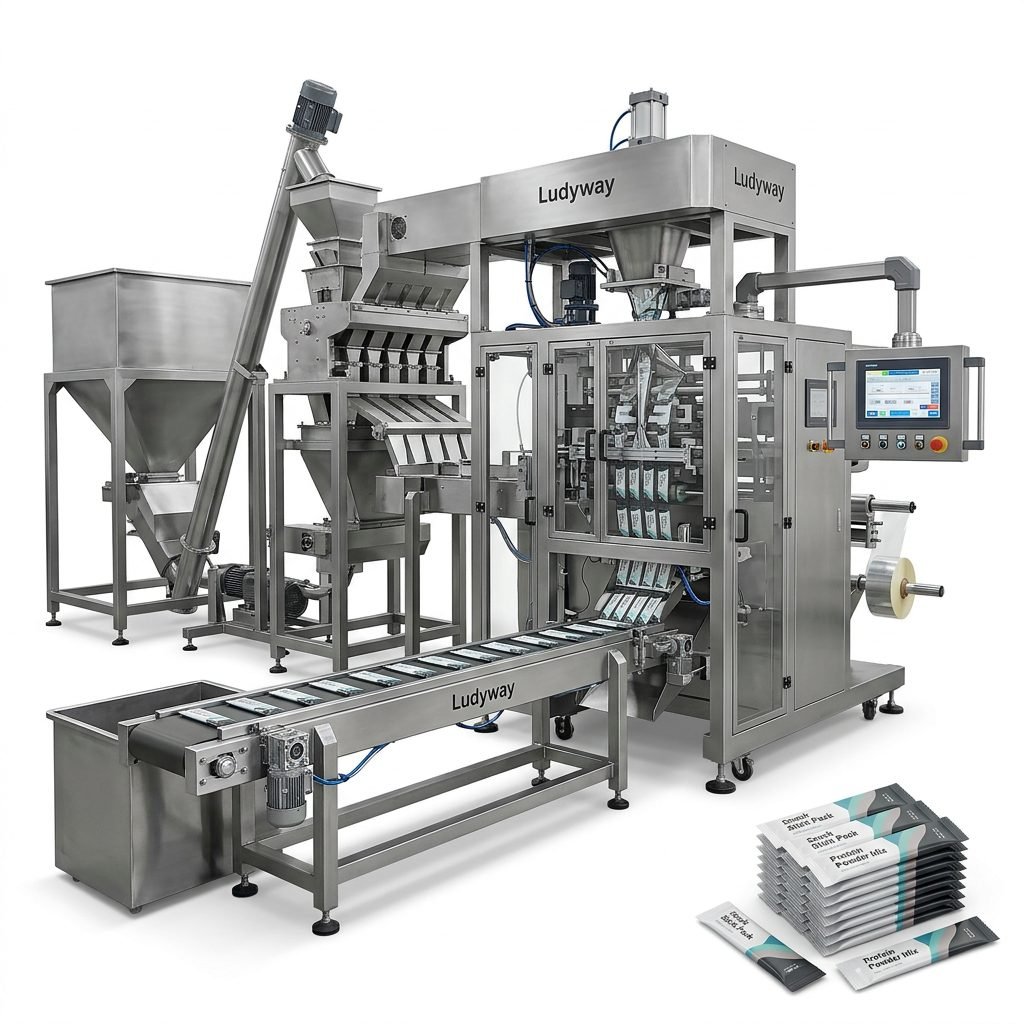
Proper installation ensures long-term reliability. Follow these structured steps when setting up your potato chips packaging production line in Asia.
Step-by-Step Installation Checklist
- Pre-installation site preparation – Verify that all utilities, including electrical supply (typically 380V/50Hz in most Asian countries), compressed air lines, and exhaust systems, are properly installed and meet the equipment specifications.
- Machine positioning and leveling – Position each machine according to the layout drawing, ensuring adequate clearance for operation and maintenance access. Level all equipment precisely to prevent vibration issues during high-speed operation.
- Electrical and pneumatic connections – Connect power supplies, control panels, and pneumatic lines following the wiring diagrams provided by the manufacturer. Verify voltage stability and phase balance.
- Dry run testing – Run all machines without product to check mechanical movement, sensor functionality, and emergency stop systems.
- Product trial runs – Introduce potato chips gradually while monitoring seal integrity, fill weight accuracy, and bag appearance. Make necessary adjustments to temperature, speed, and weigher settings.
- Operator and maintenance training – Train staff on daily operation, cleaning procedures, basic troubleshooting, and preventive maintenance schedules.
Regulatory Compliance and Food Safety Standards
Packaging food products in Asia requires adherence to both local and international standards. Key regulations include:
- FDA compliance – Essential if exporting to the United States; refer to FDA Food Packaging Guidelines for food contact materials.
- ISO 22000 – Food safety management systems applicable across the supply chain.
- HACCP principles – Hazard analysis and critical control points for identifying and controlling food safety hazards.
- EU packaging regulations – Required for exports to European markets; consult the European Commission Packaging and Packaging Waste Regulation.
- Local national standards – Each Asian country has specific labeling and packaging material requirements that must be followed.
Maintenance and Operational Best Practices
To maximize the lifespan of your packaging machinery and maintain consistent output quality, implement a robust maintenance program. The table below summarizes recommended maintenance intervals.
| Maintenance Activity | Frequency | Responsible Party |
|---|---|---|
| Clean film rollers and sealing jaws | Daily | Operator |
| Inspect belts and chains for wear | Weekly | Maintenance Team |
| Calibrate multi-head weigher | Monthly | QC / Maintenance |
| Replace sealing Teflon tape | Every 2 months | Maintenance Team |
| Full machine overhaul and bearing inspection | Annually | Qualified Technician |
| Software and firmware updates | As released | Manufacturer / IT |
Technology Trends Shaping Asian Packaging Lines
Modern potato chips packaging production lines increasingly incorporate automation and smart technologies. Key trends include IoT-enabled monitoring for real-time performance tracking, AI-powered visual inspection for seal quality verification, and energy-efficient servo drives that reduce power consumption. The 2025 State of the Industry report from PMMI highlights that automation adoption in Asia is accelerating, driven by labor cost increases and quality consistency demands. Investing in future-ready equipment positions your operation for long-term competitiveness.
Cost Considerations and ROI Analysis
Budget planning for a complete potato chips packaging line must account for more than equipment purchase price. Below is a breakdown of cost categories.
- Equipment capital expenditure – Multi-lane packaging machines, weighers, conveyors, and end-of-line systems typically represent 60–70% of the total investment.
- Installation and commissioning – Approximately 5–8% of equipment cost, including technician travel and on-site labor.
- Facility modifications – Electrical upgrades, compressed air systems, and cleanroom partitions as needed.
- Training and documentation – Operator manuals, training sessions, and standard operating procedure development.
- Initial spare parts inventory – Critical spare parts to minimize downtime: sealing bands, Teflon tape, belts, sensors, and fuses.
- Ongoing operating costs – Packaging film, electricity, compressed air, labor, and consumable replacement parts.
Common Mistakes to Avoid When Setting Up in Asia
Learning from the experiences of other manufacturers can save significant time and expense. Avoid these common pitfalls:
- Underestimating humidity impact – Potato chips absorb moisture rapidly; invest in proper HVAC and dehumidification systems to maintain product crispness before and during packaging.
- Ignoring voltage fluctuations – Power instability in certain regions can damage sensitive electronic components; install voltage stabilizers and surge protectors.
- Overlooking local service support – Choose a supplier with local service engineers or authorized representatives in your target country to minimize downtime during breakdowns.
- Neglecting staff training – Even the most advanced machine underperforms without properly trained operators; invest in ongoing skill development.
- Inadequate space for future expansion – Plan your facility layout with room for additional lanes or secondary equipment as demand grows.
Comparing Stick Pack vs. Pillow Pack for Potato Chips
Choosing the right packaging format significantly affects your market positioning. The table below compares the two dominant formats.
| Feature | Stick Pack | Pillow Pack |
|---|---|---|
| Typical weight range | 5g – 50g | 30g – 300g |
| Production speed | Up to 600 packs/min (multi-lane) | 60 – 150 packs/min |
| Target market | Single-serve, on-the-go, convenience stores | Supermarkets, family packs, retail |
| Film consumption | Lower per pack | Higher per pack |
| Nitrogen flushing | Possible but less common | Standard for shelf life extension |
| Equipment footprint | Compact, high density output | Larger per lane |
Working with Local Distributors and Partners
Establishing relationships with local distributors in Asia can accelerate your market entry. Distributors understand regional consumer preferences, retail channel dynamics, and regulatory requirements. They can provide valuable insights on bag size preferences, flavor trends, and pricing strategies. Additionally, partnering with local packaging film suppliers reduces lead times and shipping costs. For authoritative industry resources, refer to the Flexible Packaging Association Industry Resources for updated material and regulatory guidance.
Future-Proofing Your Packaging Line
As the Asian snack market evolves, your production line should be adaptable. Consider these strategic investments:
- Modular machine designs that allow adding lanes or switching between packaging formats without replacing entire systems.
- Remote monitoring capabilities enabling manufacturer support teams to diagnose issues and perform software updates from anywhere in the world.
- Sustainable packaging compatibility including recyclable mono-material films and reduced plastic thickness options that maintain barrier properties.
- Integration with factory MES/ERP systems for real-time production data, traceability, and efficiency tracking.
For businesses looking at long-term growth projections, the global packaging machinery growth trends indicate sustained demand through 2026 and beyond, making now an opportune time to invest in advanced packaging capabilities.

Final Checklist Before Launching Your Line
Use this quick-reference list to ensure nothing is overlooked as you approach production launch:
- All utilities tested and stable (electricity, compressed air, nitrogen supply)
- Packaging film inventory stocked with approved food-grade materials
- Machine settings optimized for your specific chip size, shape, and oil content
- Metal detector and checkweigher calibrated and validated
- Operators trained and certified on all equipment
- Quality control sampling plan established and documented
- Emergency response procedures in place for equipment failure
- Spare parts inventory verified against manufacturer recommendations
- Local regulatory approvals and certifications obtained
- Maintenance schedule posted and assigned to responsible personnel
Setting up a potato chips packaging machine production line in Asia is a significant undertaking, but with proper planning, the right equipment partner, and attention to local market conditions, your operation can achieve high efficiency, product quality, and profitable growth in one of the world’s most dynamic snack food regions.