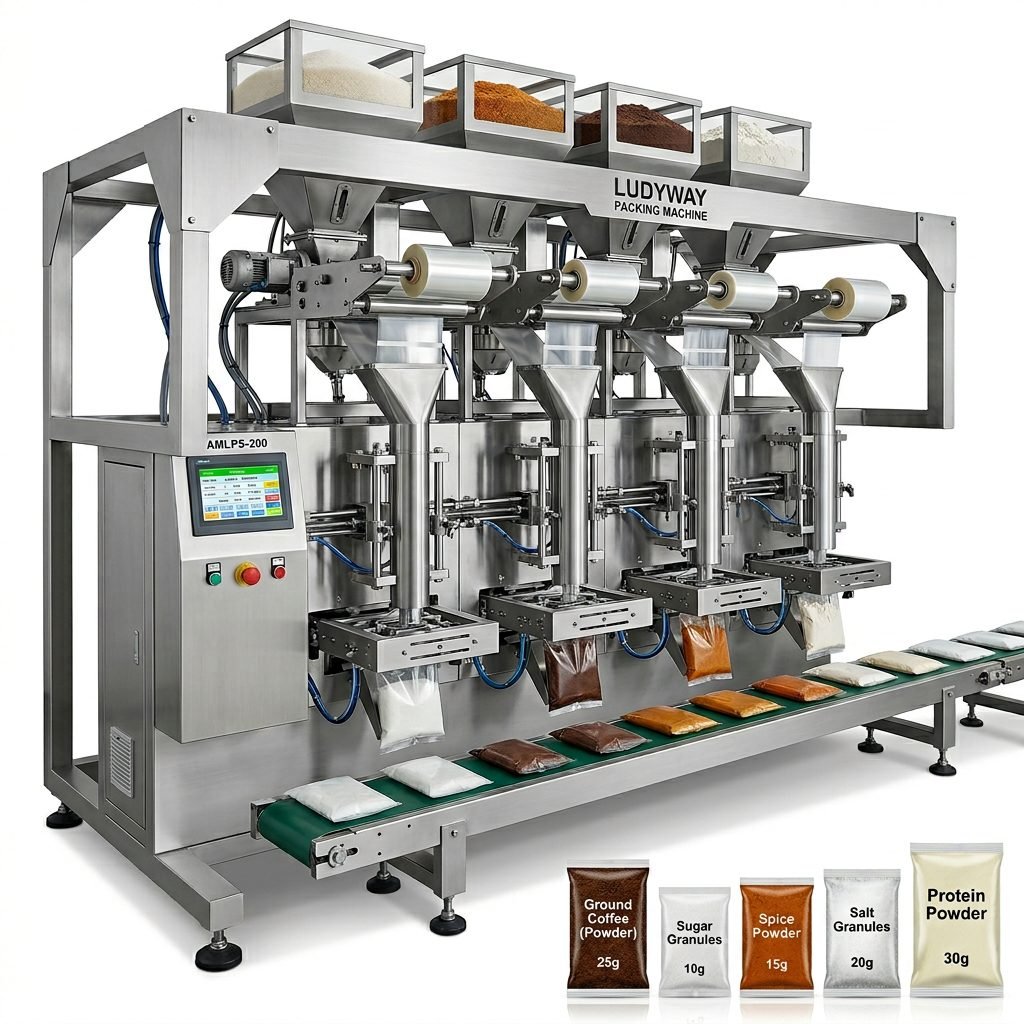
The Indian snack food industry is experiencing explosive growth. With a market value projected to reach $15 billion by 2026, the demand for efficient, hygienic, and high-speed snack food packaging machines has never been greater. Whether you are packaging extruded snacks, potato chips, traditional namkeen, or fried nuts, choosing the right automated packaging system can significantly impact your product’s shelf life, brand presentation, and overall profitability.
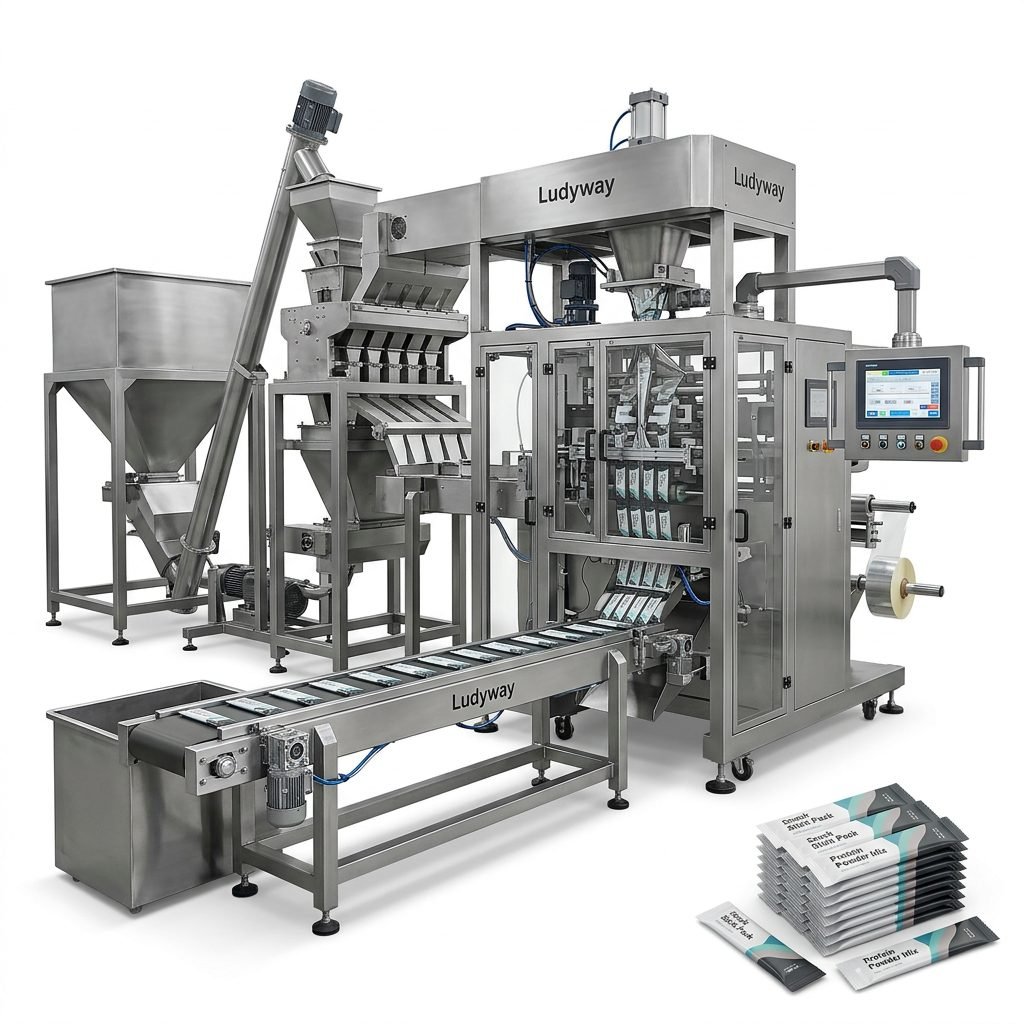
Understanding the Indian Snack Packaging Landscape
The Indian market presents unique challenges and opportunities. From managing moisture-sensitive products during the monsoon season to catering to the growing demand for single-serve and on-the-go flexible packaging formats, manufacturers need robust machinery. Key trends driving machinery purchases include the shift towards multi-lane stick pack and pillow pouch formats, which offer better portion control and modern aesthetics compared to traditional bulk packaging.
Types of Snack Food Packaging Machines
Selecting the right type of machine depends entirely on your product consistency, target production speed, and budget. Below is a breakdown of the most common technologies used in the Indian snack sector:
| Machine Type | Best For | Key Advantage |
|---|---|---|
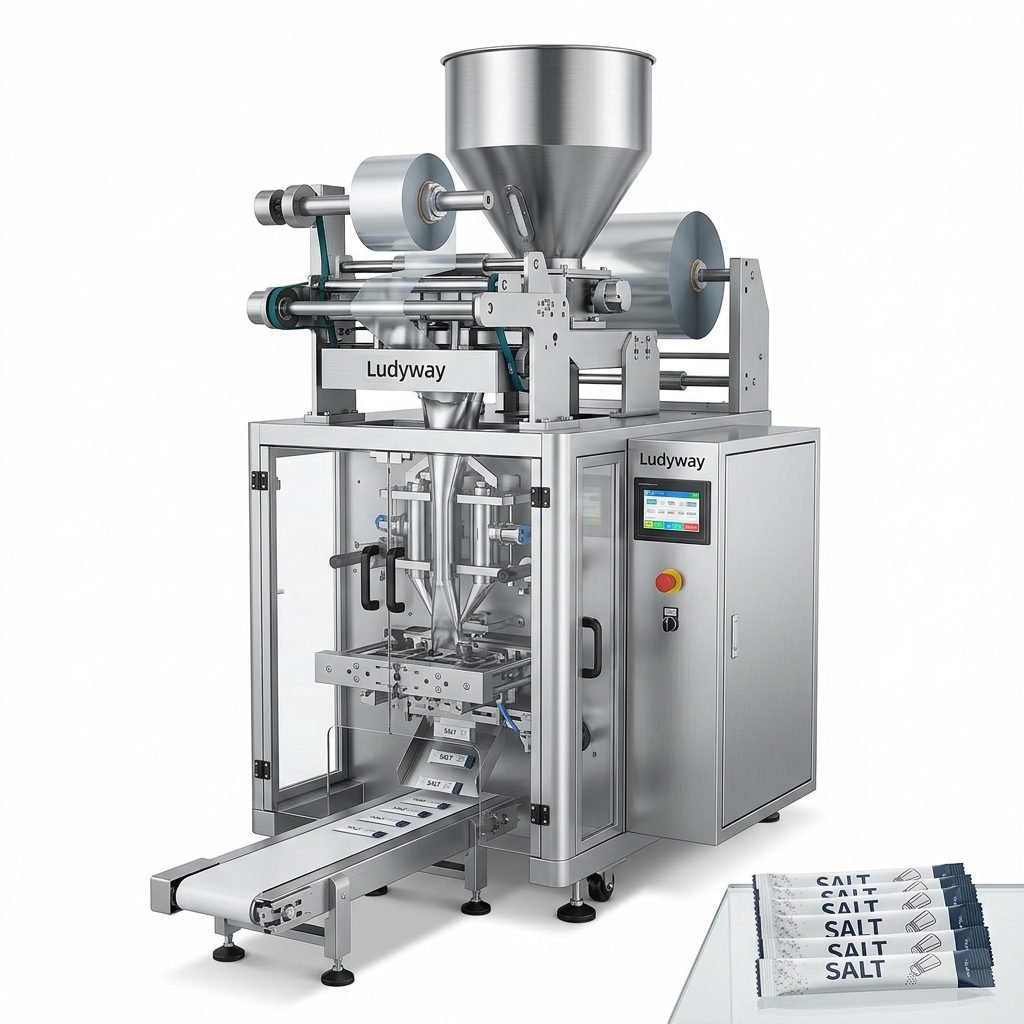
| Vertical Form Fill Seal (VFFS) | Potato chips, puffed snacks, extruded cereals | High-speed continuous motion, nitrogen flushing for freshness |
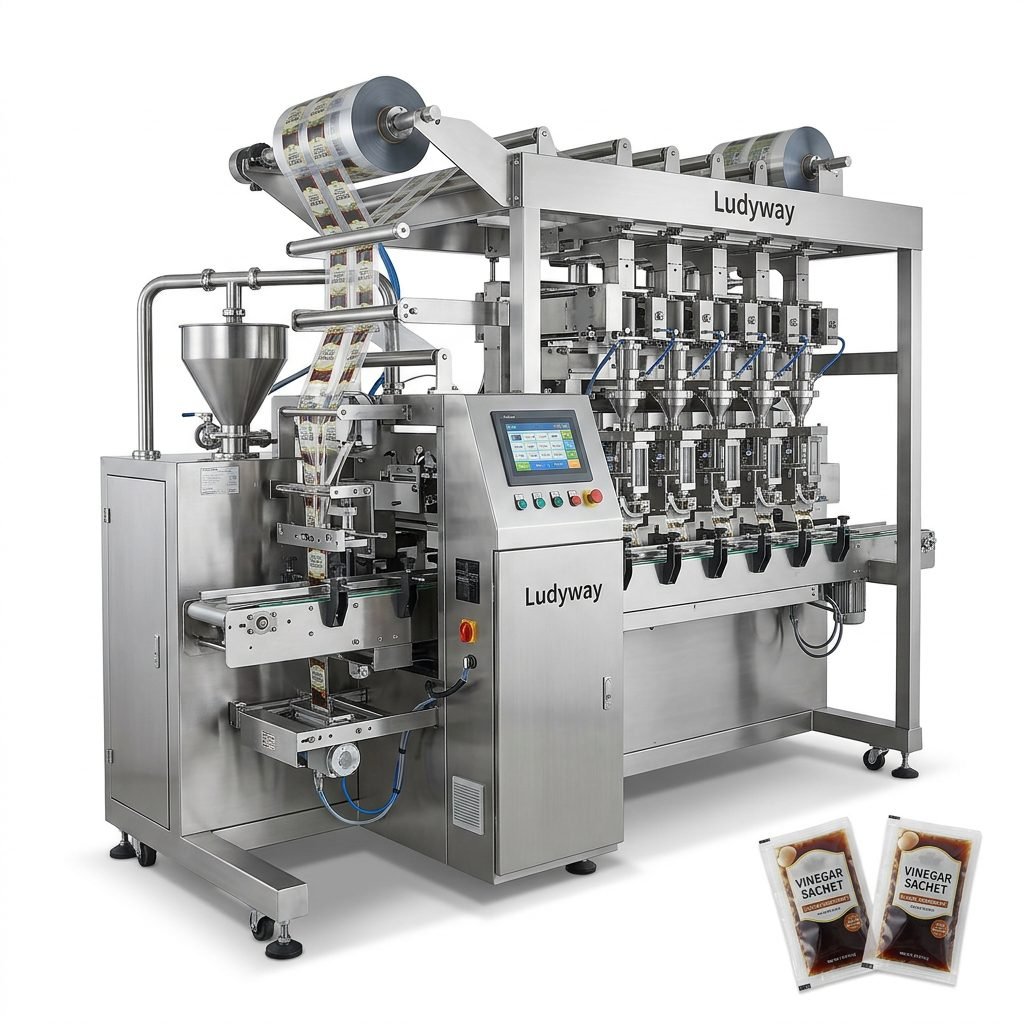
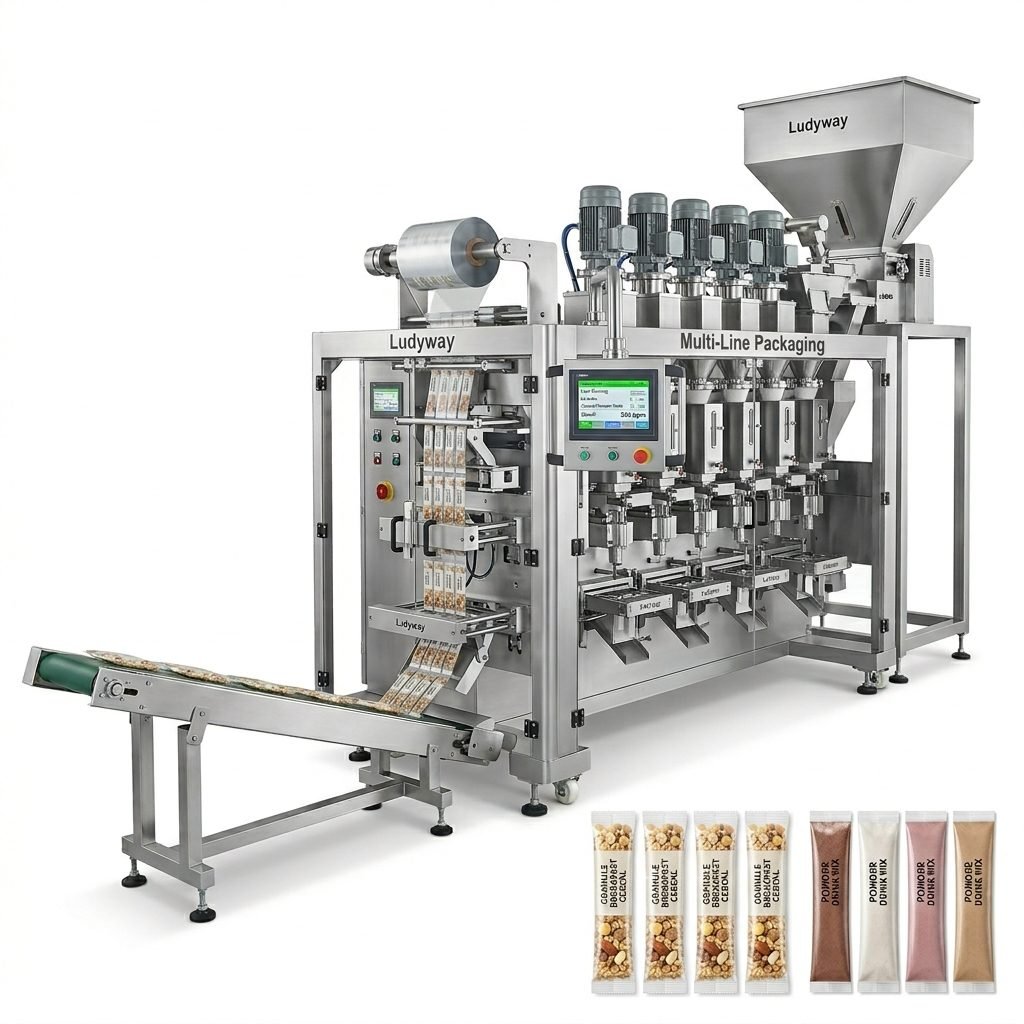
| Multi-Lane Stick Pack Machines | Nimko, small namkeen portions, trail mix | Extremely high output (up to 400 packs/lane/min), compact design |
| Pre-made Pouch Rotary Machines | Stand-up pouches, zipper bags for premium snacks | Superior seal integrity and premium shelf appeal |
| Auger Filler Systems | Spice-coated snacks, masala powders, seasoning mixes | High accuracy for sticky or fine powder products |
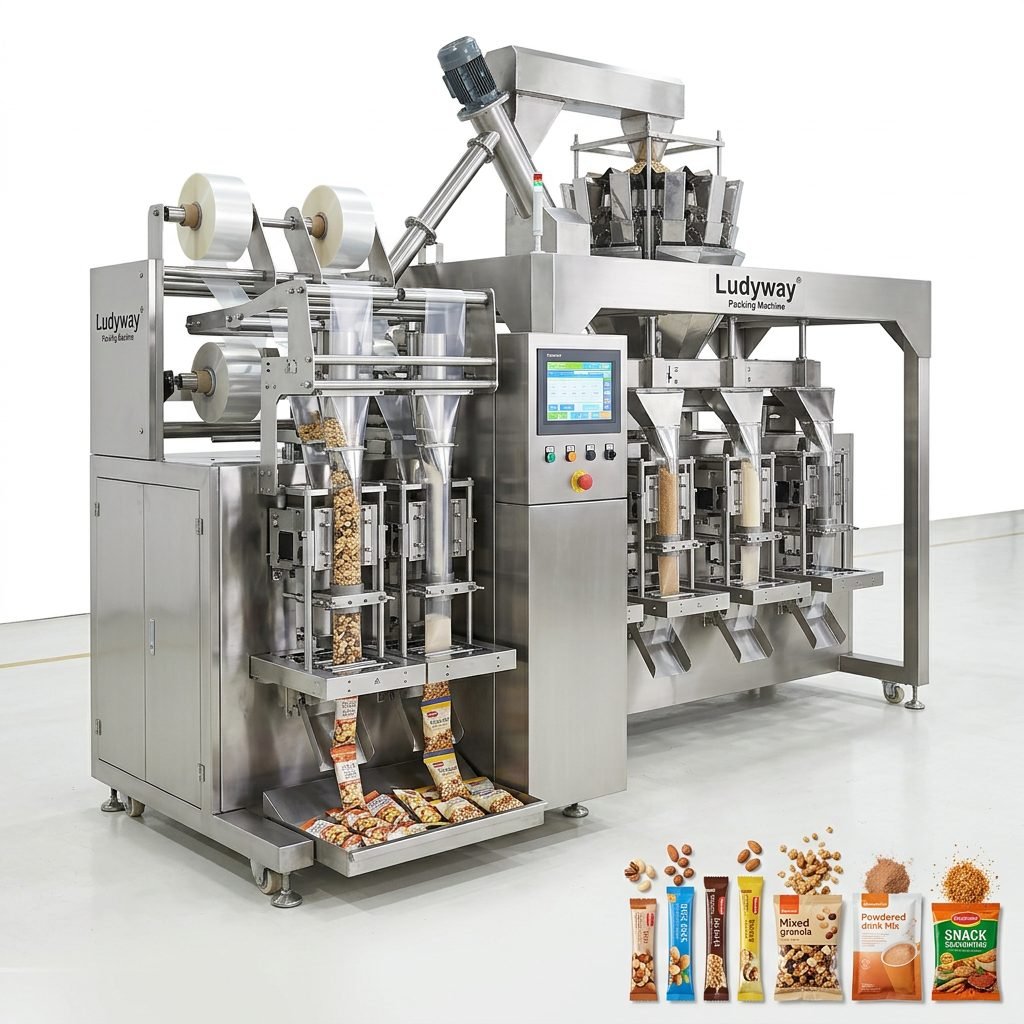
Why Multi-Lane Stick Pack Machines are Dominating India
In recent years, the multi-lane stick pack segment has seen massive adoption across India, particularly in the snack and confectionery industries. This technology allows manufacturers to produce narrow, easy-to-carry single-serve sachets at unprecedented speeds.
The benefits are clear:
- Cost Efficiency: Reduced film usage per pack compared to standard pillow bags.
- Consumer Convenience: Perfect for the “on-the-go” snacking culture prevalent in urban India.
- High Throughput: A 12-lane machine can easily produce over 1,000 packs per minute, drastically lowering per-unit costs.
- Versatility: Suitable for a wide range of products from packaging industry granular items like roasted nuts to fine powders like snack seasoning.
Key Features to Look for in a Packaging Machine
When investing in a snack packaging line, Indian buyers often prioritize specific technical specifications due to the local climate and operational conditions. Here is what you should look for:
Robust Sealing and Nitrogen Flushing
To combat India’s humidity and prevent product spoilage, gas flushing (nitrogen injection) is non-negotiable. The machine must offer precise control over gas pressure and an airtight seal to ensure crispness and freshness for months.
Easy Cleanability and Maintenance
Snack production often involves oily spices and seasoning. A machine with minimal tool-less changeover and wash-down capabilities is highly recommended. Look for open-frame designs that prevent dust and powder accumulation. Ludyway machinery, for instance, is engineered with user-friendly maintenance access to support the demanding production environments typical in India.
Weighing and Filling Precision
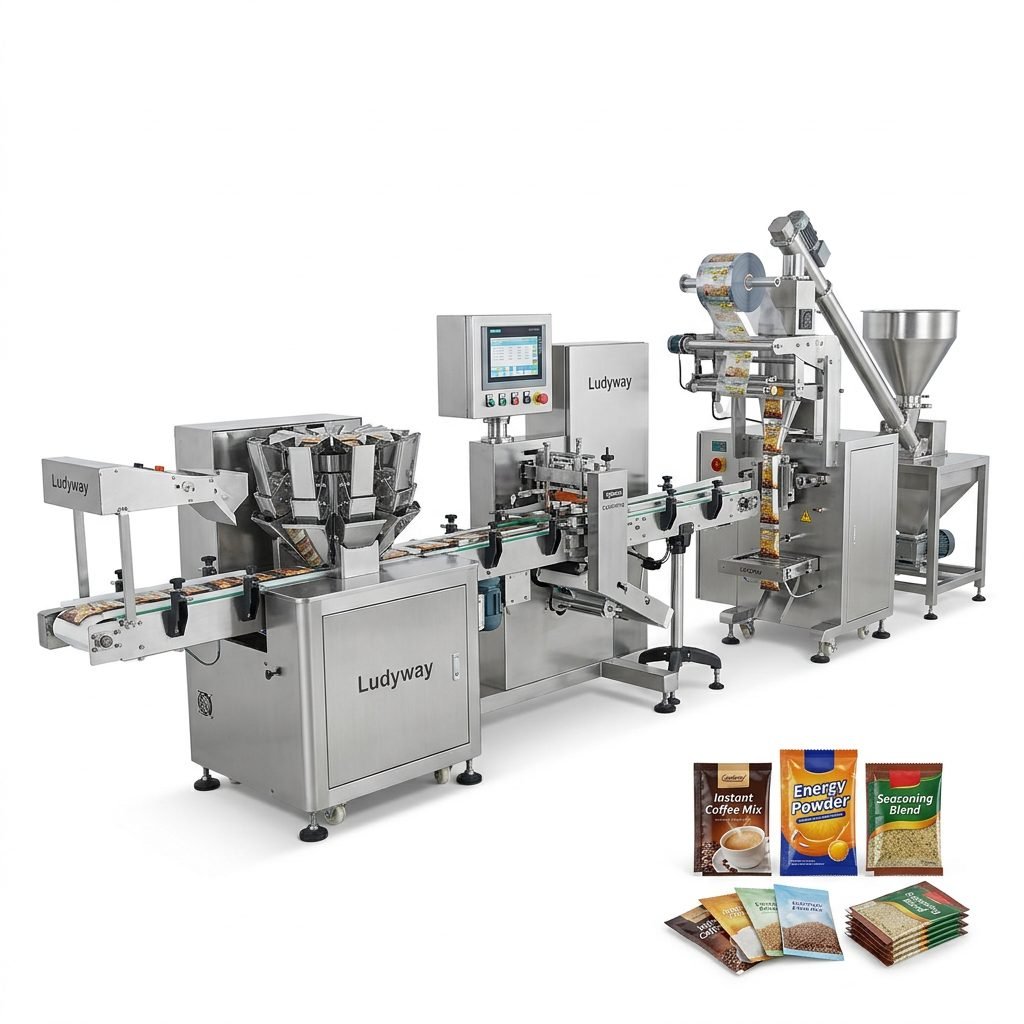
High-performance multi-head weighers are essential for solid granules like chips or bhujia, while auger fillers are critical for powdered cheese balls or spice mixes. The integration between the weigher and the packaging machine must be seamless to avoid product giveaway or underweight rejections.
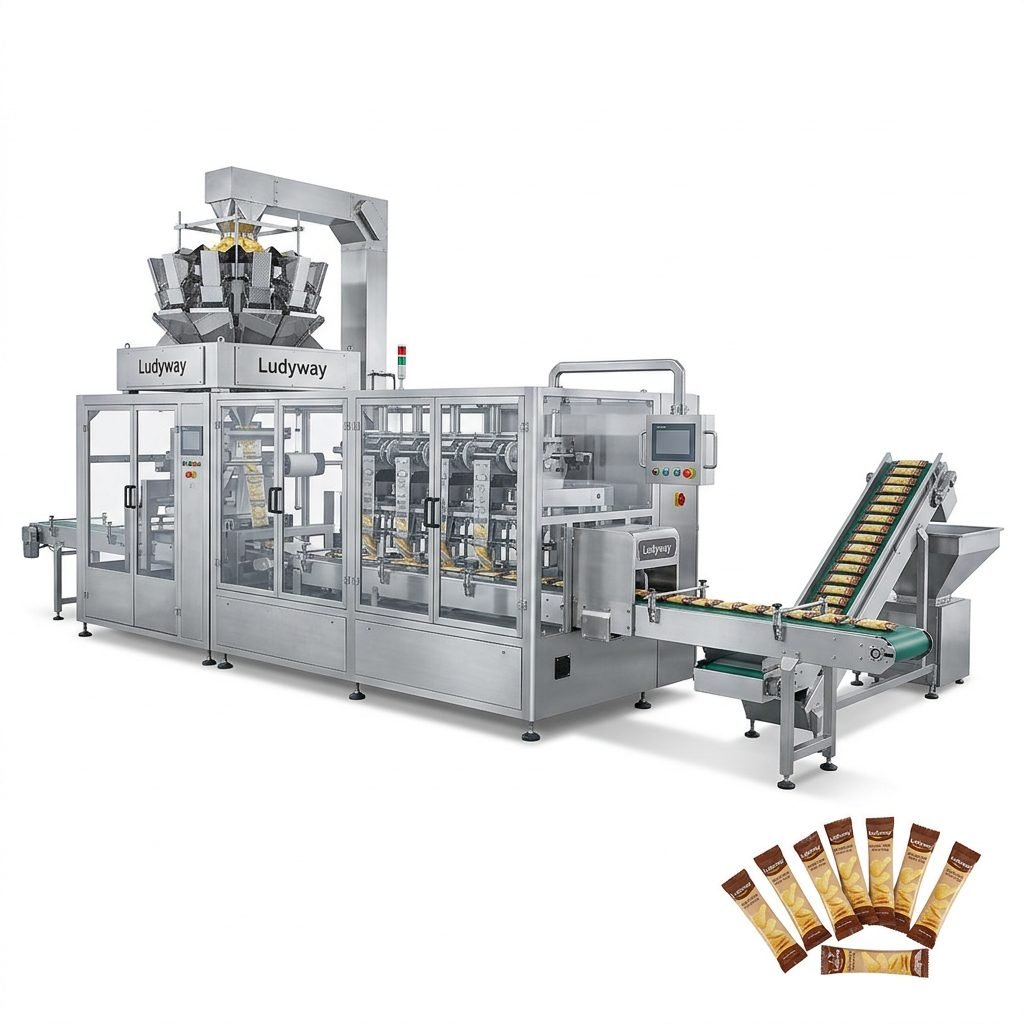
Cost Considerations and ROI for Indian Buyers
The cost of a snack packaging machine in India varies widely, from basic entry-level systems to fully automated turnkey lines. While purchase price is important, the total cost of ownership (TCO) should drive your decision. Critical factors include:
- Film Waste: Advanced machines save significant money over time by minimizing film waste during sealing and splicing.
- Energy Consumption: Modern servo-driven systems consume much less electricity than older mechanical models.
- Automation Level: An automated packaging line that connects directly to cartoners and case packers reduces up to 5-10 laborers per shift, offering a full ROI within 1-2 years.
Choosing the Right Configuration
Decide between a single-lane system suitable for startup brands targeting 30-50 packs per minute, or a high-speed multi-lane system necessary for established contract manufacturers serving large FMCG brands. The latter typically integrates zipper applicators, nitrogen flushing, and checkweighers in a single footprint.
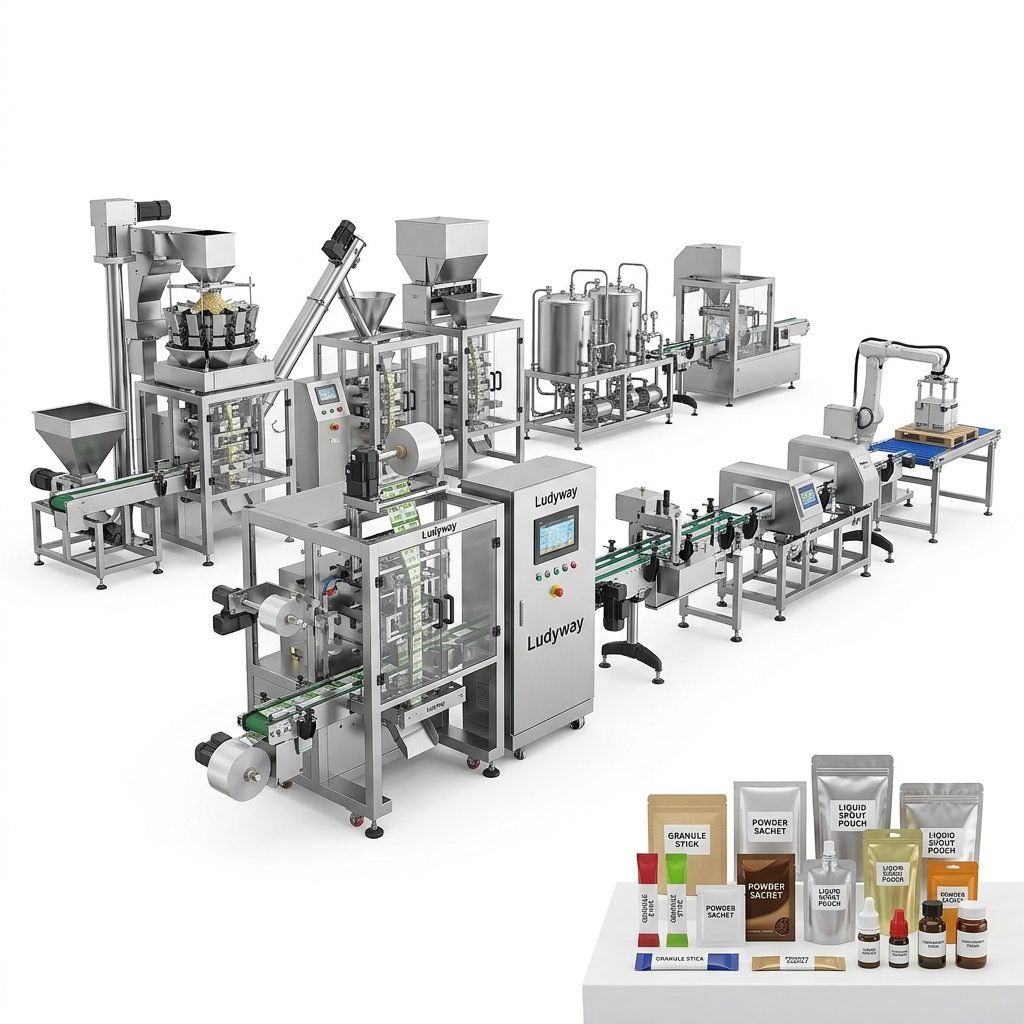
For manufacturers looking to scale their exports or local distribution, investing in a turnkey packaging solution ensures consistency and compliance with international food safety standards. It reduces the hassle of dealing with fragmented suppliers and ensures the entire line—from feeding to case packing—runs in synchronization.
| Parameter | Stick Pack | Pillow Bag |
|---|---|---|
| Production Speed | Extremely High (Multi-Lane) | High (Single Film Track) |
| Material Cost | Lower film consumption | Slightly higher usage |
| Market Appeal | Modern, on-the-go | Traditional, family-size |
Meeting Export Quality Standards
Indian snack manufacturers are increasingly targeting markets in the Middle East, Africa, and Southeast Asia. To comply with international regulations, packaging machinery must support serialized coding, tamper-evident seals, and precise net weight compliance. Look for equipment that can handle both heat-sealable foils and laminated BOPP/BOPET films to ensure long-distance shipping durability.
The future of snack packaging in India is smart, flexible, and automated. Whether you are moving from manual filling to your first automatic line or expanding your factory capacity with high-speed multi-lane machinery, your choice of equipment defines your brand’s reputation. By prioritizing efficiency, seal integrity, and after-sales support—and choosing proven technology backed by decades of global engineering—you position your business for success in a highly competitive market.
For more insights on global packaging trends, you can read the detailed analysis on Ludyway Packaging Machinery Global Growth.