In the competitive beverage industry, packaging is far more than just a container—it’s a critical component of branding, product protection, and operational efficiency. Choosing the right beverage packaging machinery is a strategic decision that impacts production speed, cost, product shelf life, and overall market success. With a vast array of technologies available, from filling and capping to labeling and final packing, navigating the options requires a clear understanding of your specific needs.
Primary Types of Beverage Packaging Machinery
The beverage packaging process is typically segmented into several key stages, each requiring specialized equipment. Understanding these types is the first step toward building an efficient line.
1. Filling Machines
These are the heart of any beverage line, responsible for accurately dispensing the liquid product into containers. The technology chosen depends heavily on the product’s properties (carbonation, viscosity, presence of particulates).
Gravity Fillers: Simple and cost-effective, ideal for still water or non-foamy juices. They rely on product weight to fill bottles.
Pressure Fillers: Essential for carbonated drinks like soda and beer. They fill under counter-pressure to prevent loss of carbonation and excessive foaming.
Volumetric Fillers (Piston & Pump): Excellent for viscous products such as dairy drinks, syrups, or oils, offering high accuracy regardless of product density.
Aseptic Fillers: The pinnacle of technology for shelf-stable products. These machines sterilize both the product and packaging material in a sterile environment, crucial for milk, plant-based beverages, and some juices.
2. Capping & Sealing Machines
Once filled, containers must be securely closed. The sealing method must match the cap type and ensure product integrity.
Screw Cappers: Apply and torque screw-on caps (plastic or metal) onto bottles. They are versatile and can handle various cap sizes with precise torque control to prevent leaks or over-tightening.
Press-on Cappers: Used for crimp caps on glass bottles, commonly seen in the craft beer industry. They apply a crown cap by pressing it onto the bottle rim.
Induction Sealers: Add an inner foil liner to bottles under a plastic screw cap. A magnetic field heats the foil, bonding it to the container lip, providing an airtight, tamper-evident seal critical for dairy and health drinks.
3. Labeling Machines
Labeling applies brand identity and mandatory information. Speed, label material, and container shape dictate the choice.
Wrap-Around Labelers: Apply labels that cover most of the bottle’s circumference. Perfect for round bottles and high-speed production of water or soda.
Front & Back Labelers: Apply labels to specific sides of the container, often used for square or rectangular bottles where a full wrap isn’t needed or desired.
Pressure-Sensitive Labelers (PSL): Use pre-printed self-adhesive labels. They offer great flexibility for short runs, promotional labeling, or irregularly shaped bottles. The labels are applied via a peel-and-stick mechanism.
4. Secondary & Tertiary Packaging
This equipment handles the bundling of individual packages for distribution.
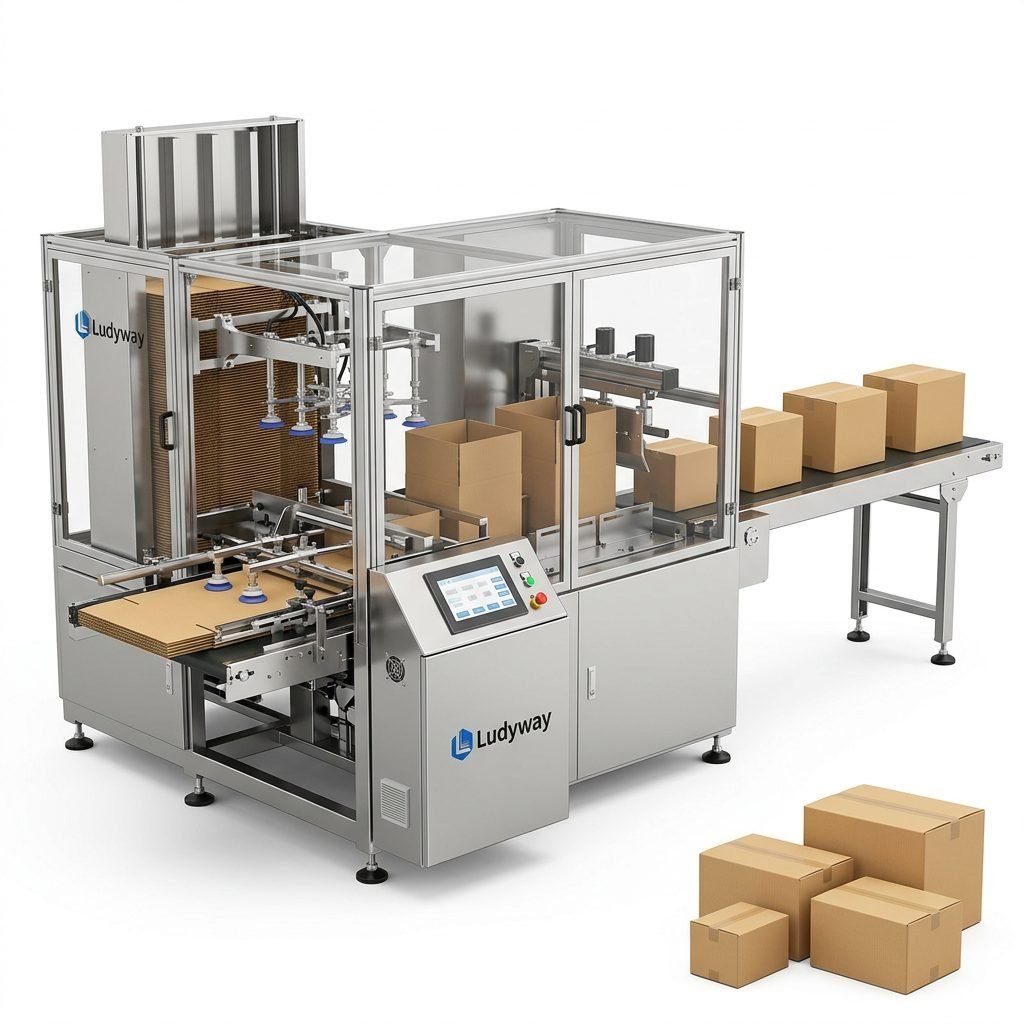
Case Packers: Automatically load bottles or cans into shipping cases or trays. They can be vertical (dropping product into an open case) or horizontal (placing product into a tray from the side).
Shrink Wrappers & Bundlers: Use a thin plastic film to bundle multi-packs (like 6-packs of bottles or cans). The film is heated, causing it to shrink tightly around the products.
Palletizers: The final step, arranging cases or bundles onto a pallet in a stable, interlocked pattern for secure shipping and storage.
Key Features to Evaluate in a Packaging System
Beyond the machine type, several core features determine the long-term performance and value of your investment.
Production Speed & Output
Measured in containers per minute (CPM) or bottles per hour (BPH), this must align with your current and projected demand. A common mistake is under-specifying for future growth or over-investing in speed you cannot utilize.
Flexibility & Changeover
How quickly and easily can the machine switch between different container sizes, shapes, or products? Look for features like tool-less changeovers, digital parameter storage, and adjustable components. This is vital for producers running multiple SKUs.
Accuracy & Precision
Critical for filling and capping. High-precision fillers minimize product giveaway (overfilling) or under-filling, protecting profit margins. Consistent capping torque ensures seal integrity and prevents customer complaints.
Hygiene & Sanitation Design
Especially for dairy, juice, or functional beverages. Machines should have smooth, crevice-free surfaces, be made of food-grade stainless steel (e.g., 304 or 316), and be designed for easy cleaning and drainage (CIP – Clean-in-Place capabilities are a major plus).
Automation & Control Level
Modern machines feature PLC (Programmable Logic Controller) systems with intuitive HMI (Human-Machine Interface) touchscreens. Advanced systems offer data tracking, recipe management, and integration with factory-wide monitoring systems for Industry 4.0 readiness.
Durability & Build Quality
Assess the quality of motors, drives, sensors, and structural frames. A robust machine from a reputable supplier like Ludyway Machinery may have a higher upfront cost but delivers far lower lifetime cost through reliability and reduced downtime.
How to Choose the Right System for Your Needs
Selecting machinery is a multi-faceted process. Follow this structured approach to make an informed decision.
Step 1: Define Your Product & Packaging Specs
Start with absolute clarity on what you are packaging. List every detail: beverage type, viscosity, carbonation, pH, particulate size. Then define your packaging: container material (PET, glass, can), shape, size range, cap type, and label specifications.
Step 2: Analyze Your Production Requirements
Calculate your required output based on sales forecasts. Don’t just consider peak capacity; think about average runs and potential for growth over the next 5-7 years. Also, factor in the number of different products (SKUs) you will run on the same line.
Step 3: Evaluate Your Facility & Utilities
Conduct a site audit. Do you have the necessary floor space, ceiling height, and a level, reinforced floor? Check utility requirements: electrical power (voltage, phase), compressed air (PSI, CFM), water supply, and drainage. Aseptic fillers may also require steam and purified water.
Step 4: Set a Realistic Budget
Consider the Total Cost of Ownership (TCO), not just the purchase price. Include installation, commissioning, spare parts, training, maintenance, and potential energy consumption. A slightly more expensive, energy-efficient, and reliable machine often has a better ROI.
Step 5: Research & Shortlist Suppliers
Look for manufacturers with proven experience in your specific beverage segment. Review their client portfolio and ask for references. A supplier with over 30 years of industry experience, like Ludyway, brings invaluable application knowledge. Examine their service network and spare parts availability.
Step 6: Request Demonstrations & Trials
Never buy based on specifications alone. Arrange a factory acceptance test (FAT) or send your actual product and packaging to the supplier for a live performance trial. This is the only way to verify speed, accuracy, and compatibility.
Step 7: Plan for Integration & Support
Ensure the new machine can communicate with your existing upstream (blending) and downstream (packing) equipment. Clarify the scope of installation, training, and after-sales support. A comprehensive warranty and responsive technical support are non-negotiable for minimizing business risk.
Conclusion
Investing in beverage packaging machinery is a significant step that defines your production capability for years to come. By thoroughly understanding the different machine types, critically evaluating key features like speed, flexibility, and hygiene, and following a disciplined selection process that focuses on your unique product and operational needs, you can choose a system that drives efficiency, ensures quality, and supports your brand’s growth in the marketplace. Partnering with an experienced and reliable supplier provides the technical expertise and support necessary to ensure a successful investment from day one.
Frequently Asked Questions (FAQs)
1. What is the most important factor when choosing a beverage filler?
The product characteristics are paramount. The viscosity, carbonation level, and sensitivity (e.g., needing aseptic treatment) of your beverage will directly dictate whether you need a gravity, pressure, volumetric, or aseptic filler. Choosing the wrong technology for your product will lead to poor accuracy, waste, and quality issues.
2. How much does a complete beverage packaging line cost?
Costs vary enormously based on automation level, speed, and technology. A semi-automatic monobloc (filler-capper) for a small operation might start in the tens of thousands of dollars, while a high-speed, fully automated complete line with aseptic filling can cost several million. It’s essential to get detailed quotations based on your specific requirements.
3. How can I improve the flexibility of my packaging line for different products?
Opt for machinery designed for quick changeover. Key features include digital recipe storage on the PLC, tool-less adjustments for guides and height, and modular components like quick-change filling nozzles or labeling heads. Investing in this flexibility upfront saves significant downtime when switching SKUs.
4. What maintenance is required for packaging machinery?
Daily cleaning and lubrication as per the manufacturer’s manual are critical. Scheduled preventive maintenance includes checking seals and gaskets, calibrating sensors, inspecting moving parts for wear, and verifying torque settings. Partnering with a supplier that offers reliable spare parts and support is crucial for maintaining uptime.
5. Can I integrate new packaging machinery with my old equipment?
Yes, but it requires careful planning. The key factors are synchronization of line speed, communication protocol compatibility (e.g., via PLC I/O or Ethernet), and physical interfacing (conveyor height, transfer mechanisms). An experienced supplier can often design adapters or control interfaces to ensure seamless integration.