Choosing the right big bag packing machine is critical for companies handling high-volume powders, granules, pellets, flakes, and other bulk solids. The right bulk bag filling equipment can improve weighing accuracy, reduce dust, lower labor costs, and keep your operation safer and more efficient. Whether you pack fertilizer, animal feed, chemicals, minerals, or food ingredients, selecting the right system starts with understanding your product, bag type, capacity goals, and plant conditions.
What Is a Big Bag Packing Machine?
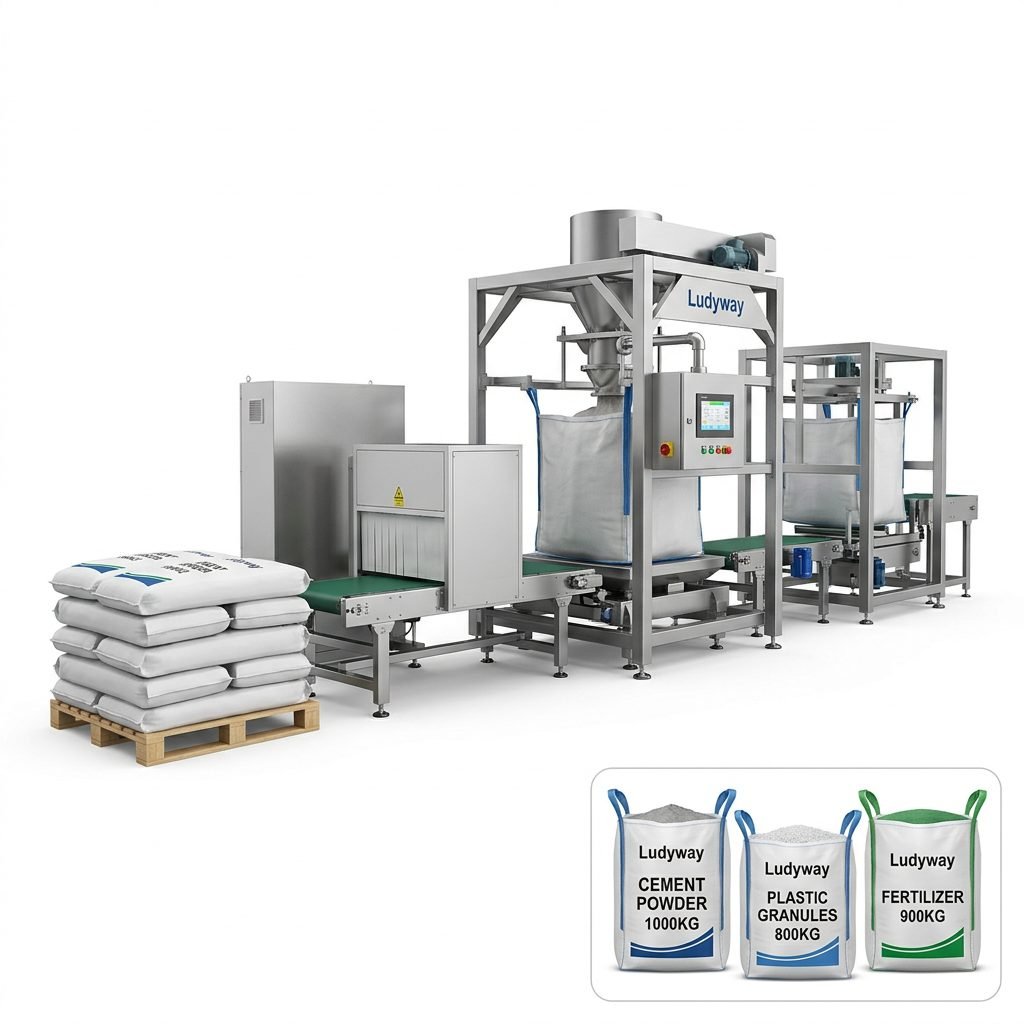
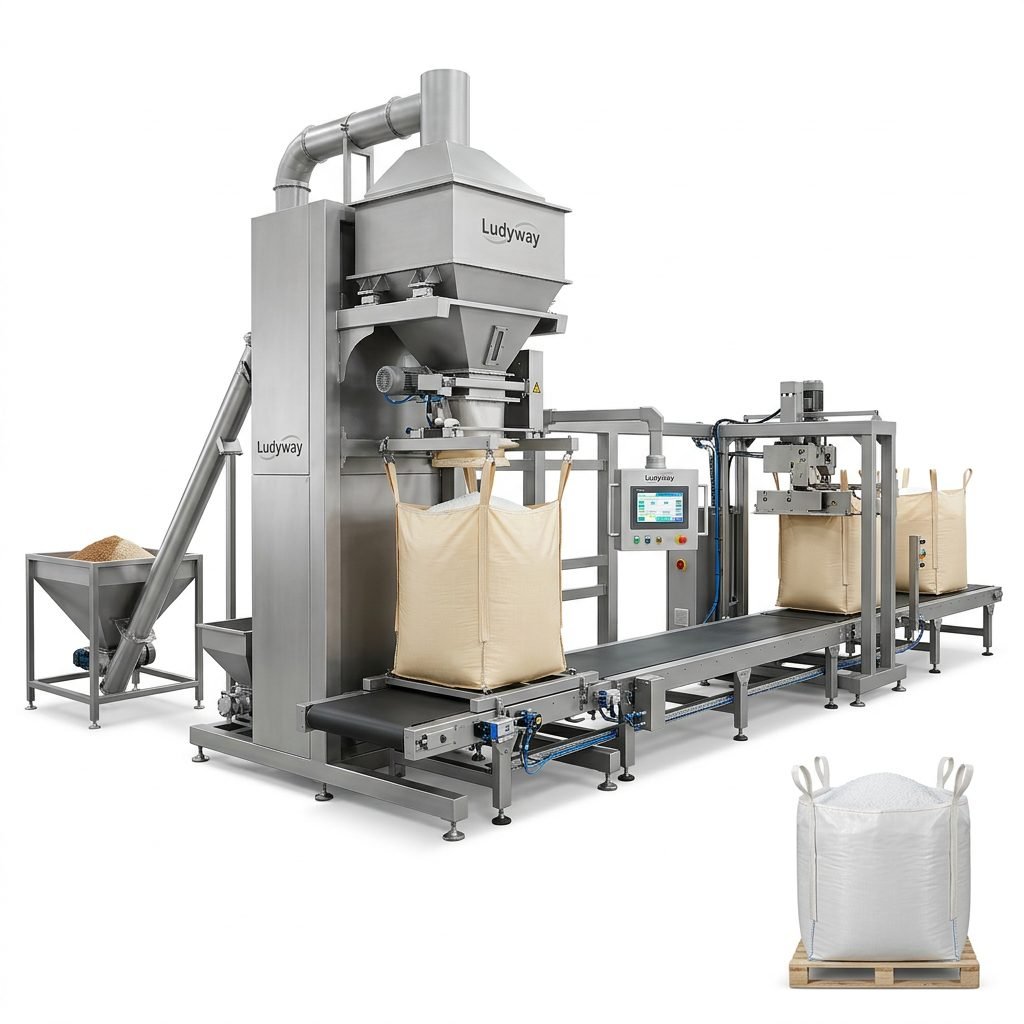
A big bag packing machine, also called a jumbo bag filling machine or FIBC filling system, is designed to fill large flexible intermediate bulk containers with bulk materials. These bags commonly range from 500 kg to 2000 kg, depending on industry requirements and handling methods.
A typical system may include:
- Bag hanging frame or loop holder
- Weighing unit or load cell platform
- Feeding system such as screw feeder, gravity feeder, belt feeder, or valve control
- Dust collection interface
- Bag clamping and inflation components
- Conveyor, roller, or pallet handling section
- Control cabinet and HMI operation screen
For manufacturers planning automation upgrades, working with an experienced bulk bag filling equipment manufacturer can make it easier to match the machine with actual production needs.
Why the Right Equipment Matters
Not all bulk materials behave the same way. Some products flow freely, while others bridge, cake, generate dust, or require gentle handling. Selecting the wrong machine can lead to inconsistent weight, damaged bags, product waste, slower throughput, and costly downtime.
The right machine helps you achieve:
- Accurate filling for reduced giveaway and improved consistency
- Higher output for large-volume packaging operations
- Cleaner production with less dust leakage
- Safer operation for operators and nearby equipment
- Better bag stability for storage and transportation
- Easier integration with conveyors, palletizers, and sealing systems
Key Factors to Consider Before Choosing
1. Material Characteristics
Start with the product itself. This is the most important factor when choosing a jumbo bag filling machine.
- Is the product powder, granule, flake, pellet, or mixed material?
- Does it flow freely or poorly?
- Is it abrasive, corrosive, fragile, or sticky?
- Does it create heavy dust during filling?
- Does it require vibration, deaeration, or densification?
For example, fine powders often need screw feeding and dust-tight filling, while larger free-flowing granules may use gravity feeding for faster throughput.
2. Filling Capacity Requirements
Define how many bags per hour you need to fill. Some operations only require low-volume semi-automatic bagging, while others need continuous high-capacity automated lines.
Ask these questions:
- What is your target output per hour or per shift?
- Do you expect future capacity expansion?
- Will the machine run one product or multiple products?
Choosing a system only for your current demand may limit future growth. It is often smarter to leave room for moderate expansion.
3. Bag Type and Size
Bulk bags are not all identical. Your machine should fit the exact bag structure you use.
- Standard FIBC bags
- U-panel bags
- Circular woven bags
- Baffle bags
- Single-trip or multi-trip bags
- Bags with liner or without liner
You also need to confirm bag dimensions, loop configuration, filling spout size, discharge spout type, and required bag compaction level.
4. Weighing Accuracy
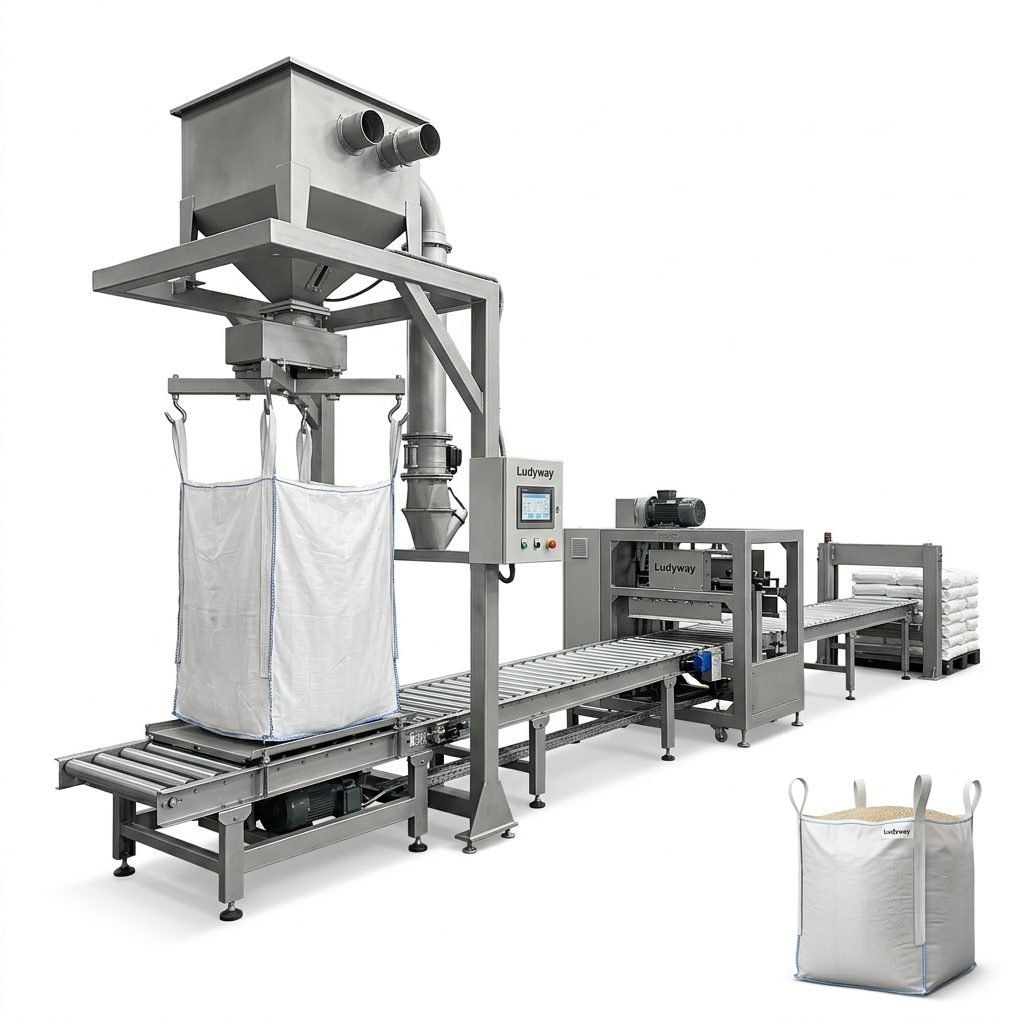
Weighing precision directly affects product cost and customer satisfaction. The right accuracy level depends on your product value and compliance standards.
Common options include:
- Gross weighing systems
- Net weighing systems
- Single-stage feeding
- Coarse and fine feeding combinations
For high-value powders or regulated industries, stable and repeatable weighing performance is especially important.
5. Level of Automation
Bulk bag filling equipment can range from simple operator-assisted machines to highly automated packaging lines.
Typical configurations include:
- Semi-automatic filling with manual bag placement
- Automatic filling with powered bag support and weighing
- Integrated line with conveyors, palletizing, wrapping, and coding
If labor cost, safety, and production consistency are major concerns, a more automated system may provide better long-term value.
6. Dust Control and Environmental Safety
Dust is a major issue in powder and chemical packaging. A well-designed machine should support clean filling and operator protection.
- Dust extraction ports
- Sealed filling heads
- Bag inflation for shape stability
- Enclosed feeding systems
- Optional explosion-proof design for hazardous materials
If you package food, minerals, fertilizers, cement additives, or chemical powders, dust management should be evaluated early in the buying process.
7. Installation Space and Plant Layout
A machine that looks ideal on paper may not fit your real production environment. Measure available floor area, ceiling height, forklift access, and product feeding direction.
Check whether you need:
- Top-fed filling from a silo or hopper
- Flexible screw or conveyor feeding
- Inline pallet handling
- Mobile or fixed-position filling station
Comparison Table: How to Match Equipment to Application
| Application Need | Recommended Feature | Why It Matters |
|---|---|---|
| Fine powder products | Screw feeder + dust-tight filling head | Improves accuracy and reduces dust escape |
| Free-flowing granules | Gravity feeder or gate-controlled feeding | Supports faster bag filling speeds |
| Fragile materials | Gentle feeding and low-drop design | Prevents product breakage |
| High dust environment | Dust collector interface + sealed clamp | Keeps operation cleaner and safer |
| High-volume production | Automatic bulk bag filling line | Boosts throughput and reduces labor dependence |
| Heavy bag handling | Pallet conveyor and bag settling system | Improves transport stability and downstream handling |
Common Types of Bulk Bag Filling Equipment
Semi-Automatic Big Bag Fillers
Suitable for medium output operations where operators manually place and remove bags. These systems are often more affordable and flexible for multiple bag formats.
Automatic Jumbo Bag Filling Machines
Best for high-volume lines requiring greater consistency, lower labor input, and better workflow integration.
Net Weigh Fillers
The product is weighed before entering the bag. This is useful when higher filling precision is required.
Gross Weigh Fillers
The bag is weighed during filling. This design is common in bulk bagging and can be efficient for many industrial materials.
Integrated Bulk Bagging Lines
These systems combine filling, weighing, conveying, palletizing, and wrapping. They are ideal for plants aiming for full packaging automation.
Questions You Should Ask a Supplier
Before making a final purchase decision, ask detailed technical and service questions. This can help avoid mismatched equipment and unexpected operating problems.
- What materials has this machine filled successfully before?
- What bag weight range does it support?
- What filling speed can it achieve under real conditions?
- What weighing accuracy can be expected?
- Can the system be customized for my bag dimensions?
- Is dust control included or optional?
- Can it connect with conveyors, palletizers, or wrapping machines?
- What after-sales service and spare parts support are available?
Industries That Commonly Use Big Bag Packing Machines
Bulk bag filling systems are widely used across industries that need high-capacity and efficient bulk material packaging.
- Fertilizer and agricultural products
- Animal feed and feed additives
- Chemical powders and granules
- Minerals and construction materials
- Food ingredients such as flour, sugar, starch, rice, or grains
- Plastic pellets and resins
Signs You Need to Upgrade Your Current Bulk Bag Filling Equipment
- Frequent underweight or overweight bags
- High product loss due to dust or spillage
- Too much manual labor in bag handling
- Slow packaging speed causing production bottlenecks
- Difficulty adapting to different material types
- Old controls with limited automation and poor diagnostics
If your operation experiences several of these issues, replacing outdated equipment may quickly improve productivity and reduce operating cost.
Practical Buying Tips
- Send product samples for testing whenever possible
- Share detailed bag drawings and target bag weights
- Think beyond machine price and evaluate total lifecycle cost
- Consider operator safety, maintenance access, and spare part availability
- Choose modular solutions if future line expansion is likely
Final Selection Checklist
| Checklist Item | Confirmed |
| Material flow behavior analyzed | Yes / No |
| Bag size and loop type confirmed | Yes / No |
| Target output per hour defined | Yes / No |
| Weighing accuracy requirement clarified | Yes / No |
| Dust control needs assessed | Yes / No |
| Plant layout and installation space reviewed | Yes / No |
| Future automation expansion considered | Yes / No |
The best big bag packing machine is not simply the fastest or cheapest option. It is the one that fits your material properties, packaging targets, operating environment, and long-term production strategy. By comparing feeding methods, weighing systems, bag compatibility, automation level, and supplier support, you can choose bulk bag filling equipment that delivers stable performance, cleaner packaging, and better return on investment.