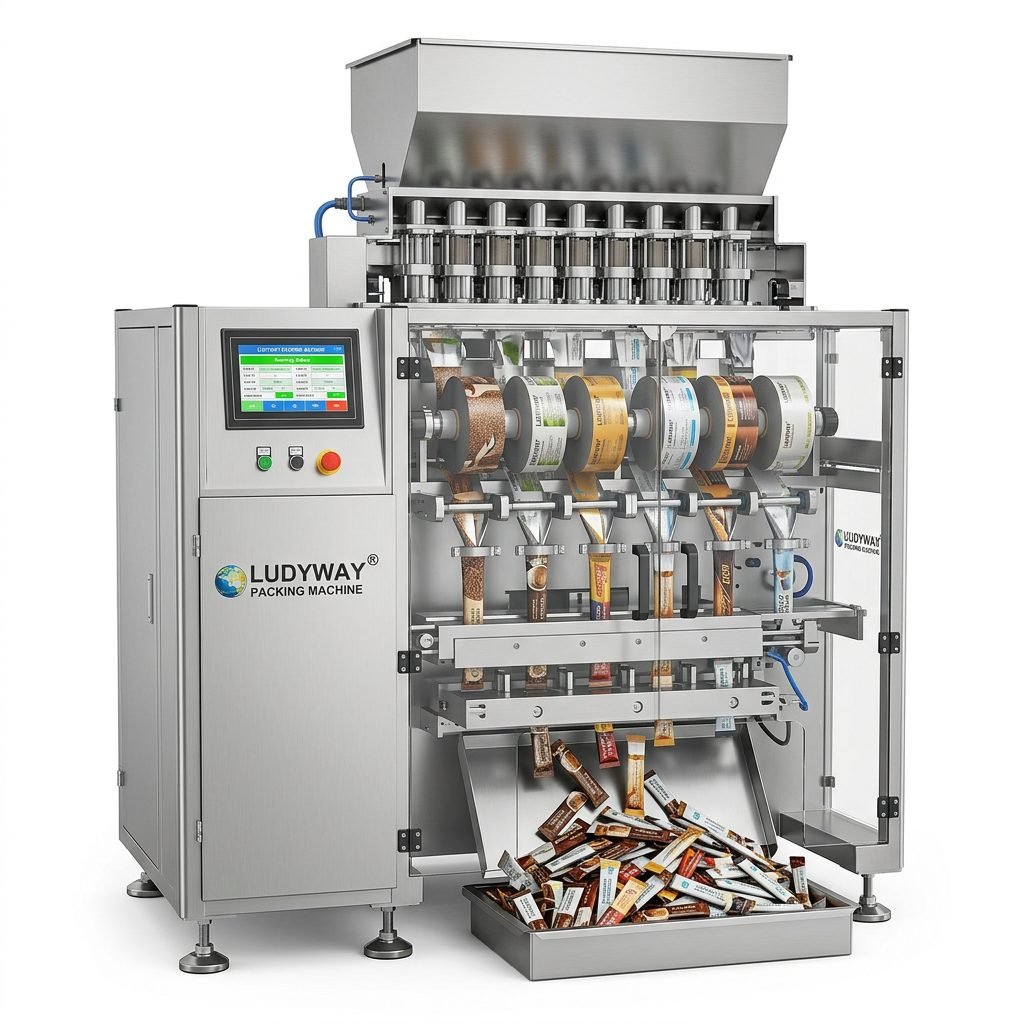
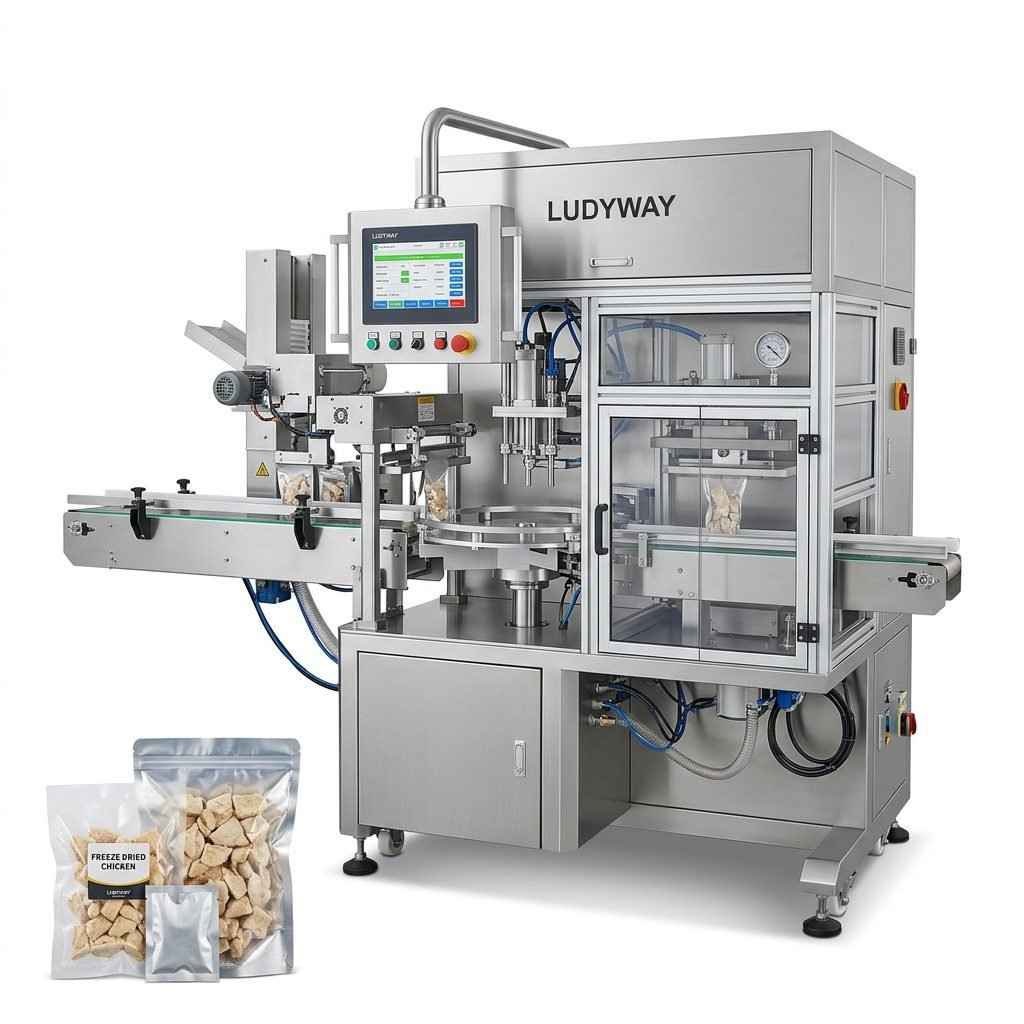
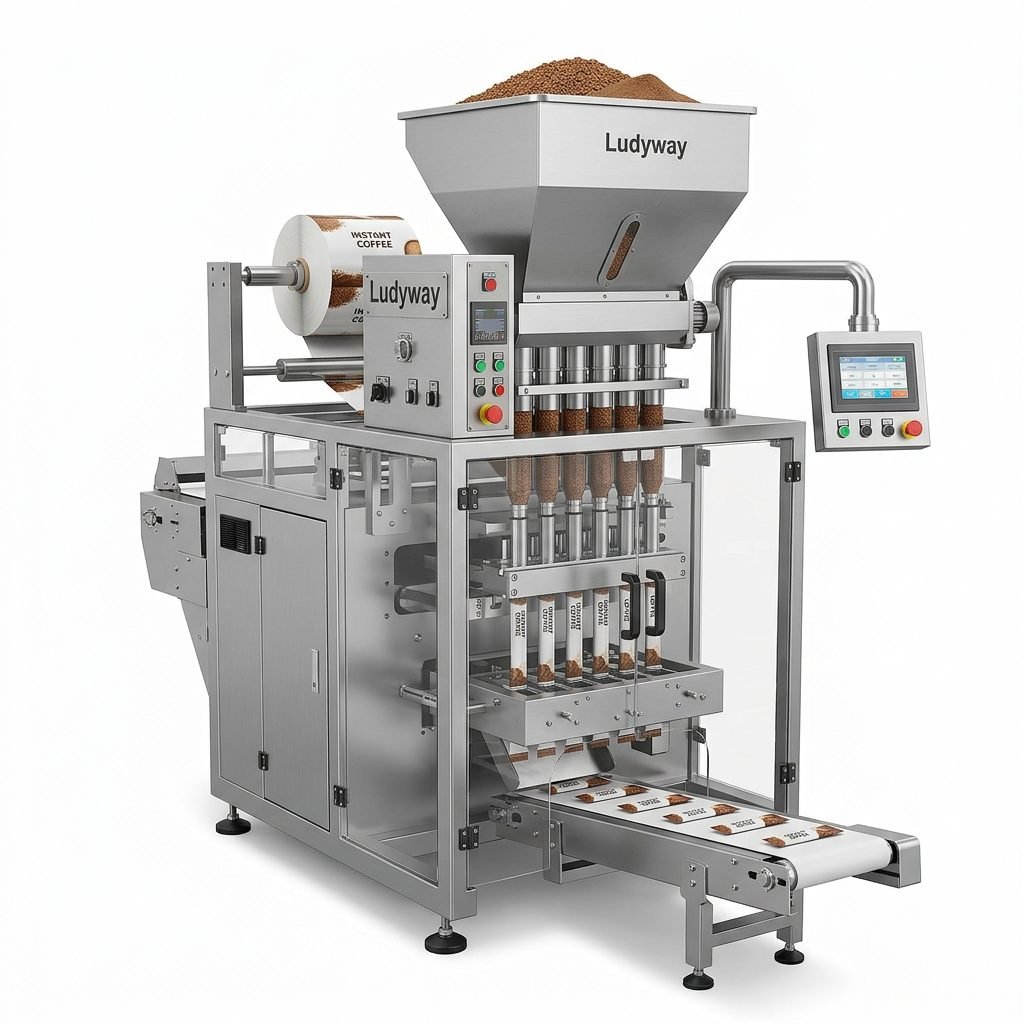
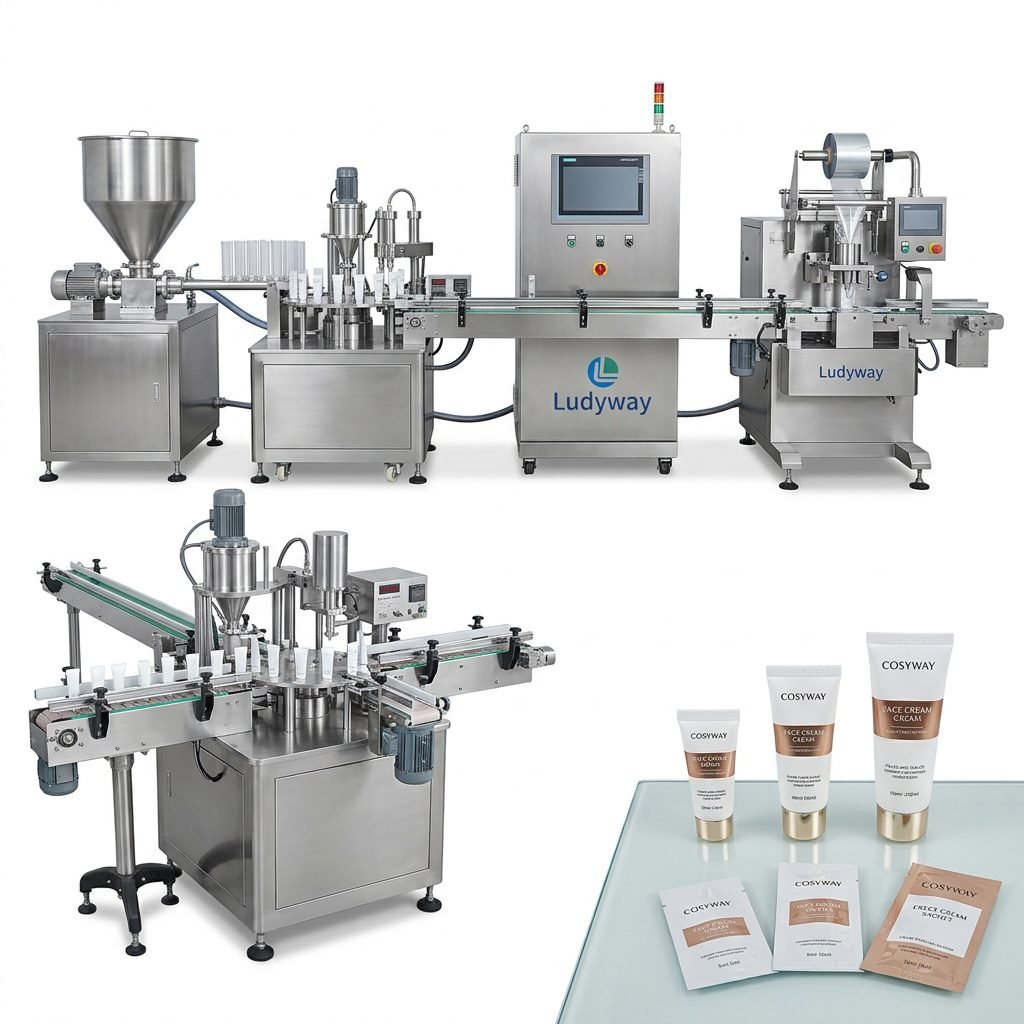
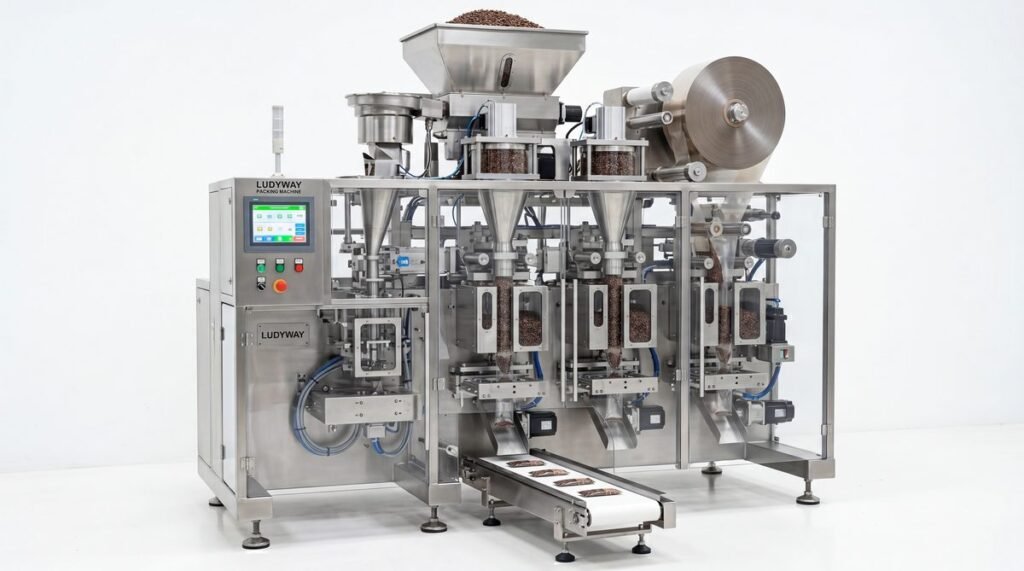
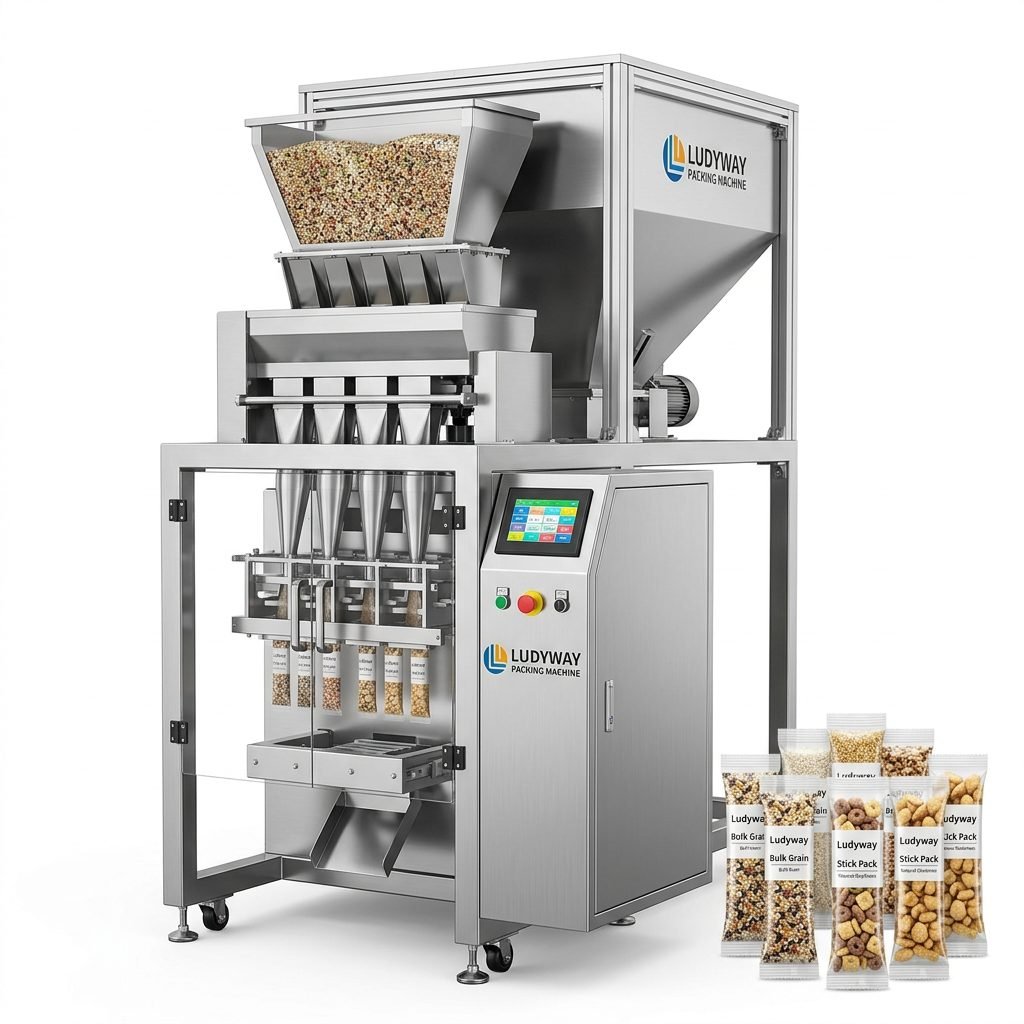
Choosing an automatic packing solution for coffee beans is not only about speed. It directly affects product freshness, bag appearance, sealing reliability, labor cost, and long-term production efficiency. For coffee roasters, private-label brands, and contract packers, the right machine should match the characteristics of the beans, the desired bag format, and the planned production scale.
Because coffee beans are sensitive to oxygen, moisture, pressure, and handling, a packaging system must do more than fill bags. It should support stable weighing, accurate sealing, optional nitrogen flushing, and smooth integration with coding, labeling, cartoning, and end-of-line automation. If you are evaluating equipment, this guide will help you compare options with a practical buying framework.
Why coffee bean packaging requires a specialized automatic solution
Coffee beans may look simple to pack, but they create several technical challenges:
- They are free-flowing but irregular in shape, which affects feeding and weighing accuracy.
- Freshly roasted beans release gas, so many products need degassing valves.
- Premium coffee packaging often demands strong shelf appeal, clean seals, and consistent fill levels.
- Oxygen exposure can reduce aroma and shorten shelf life.
- Different sales channels require different formats, from retail pouches to larger foodservice bags.
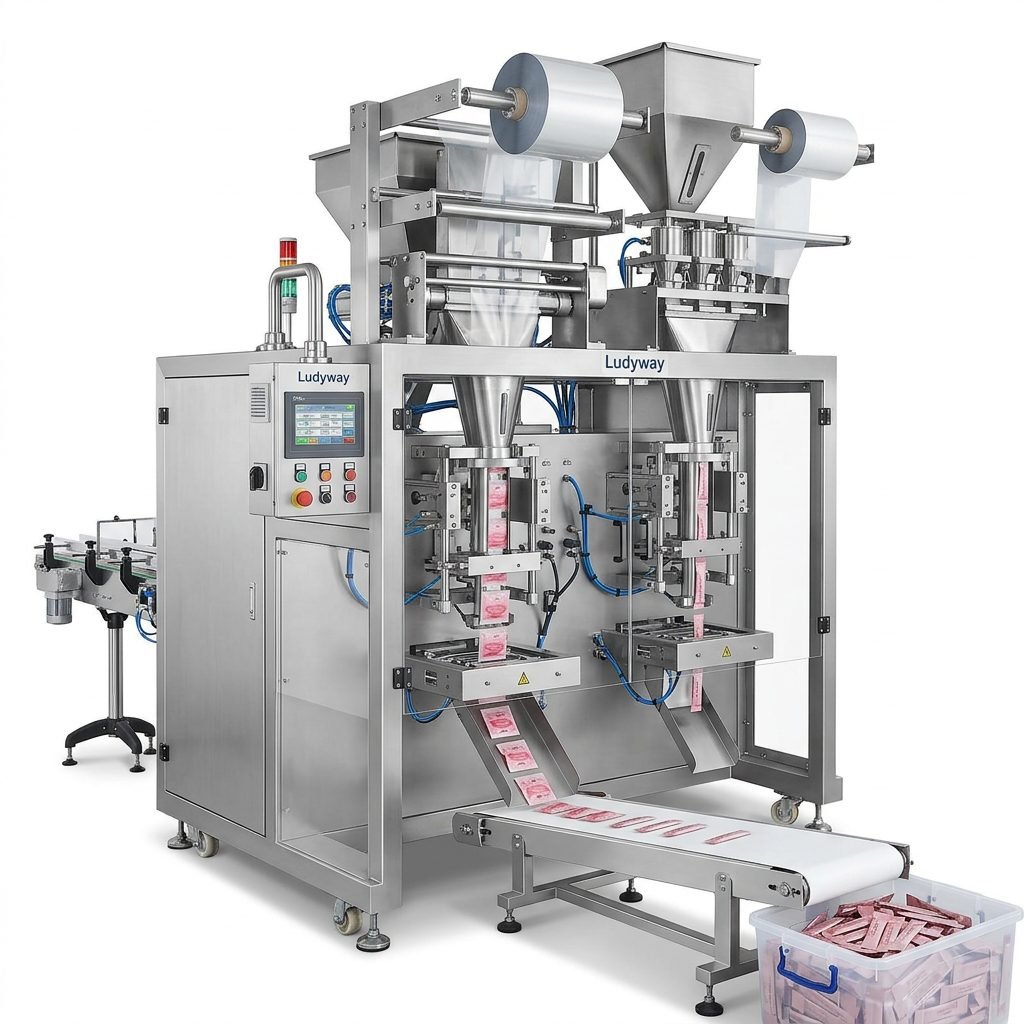
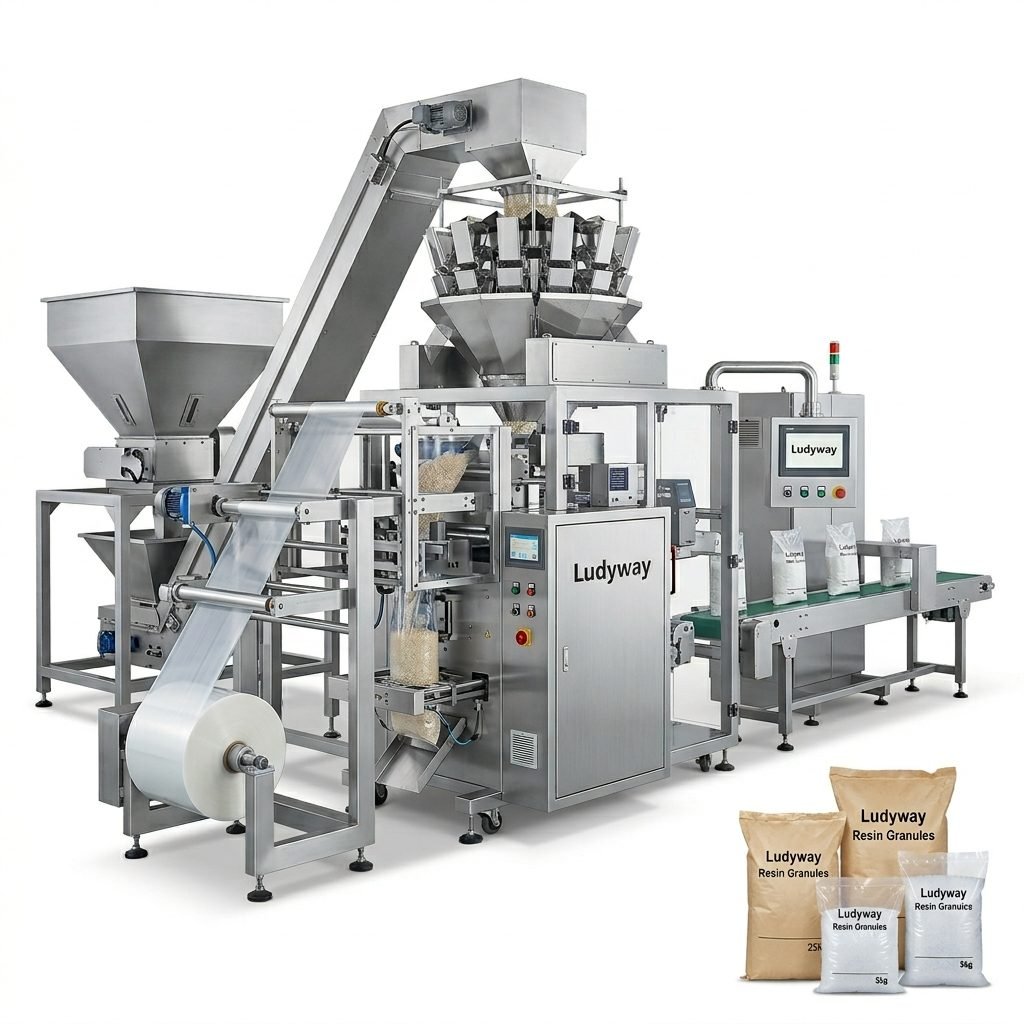
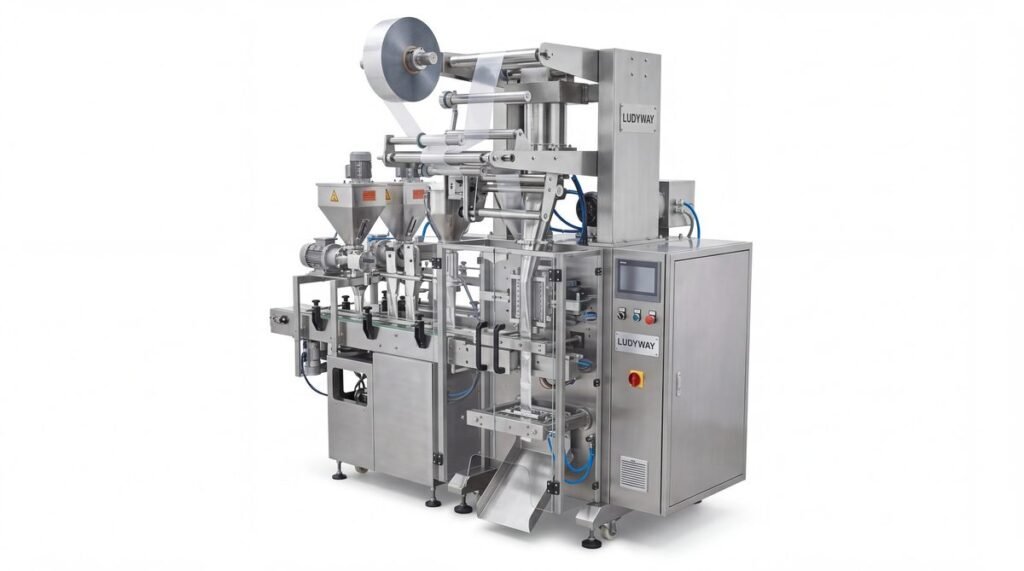
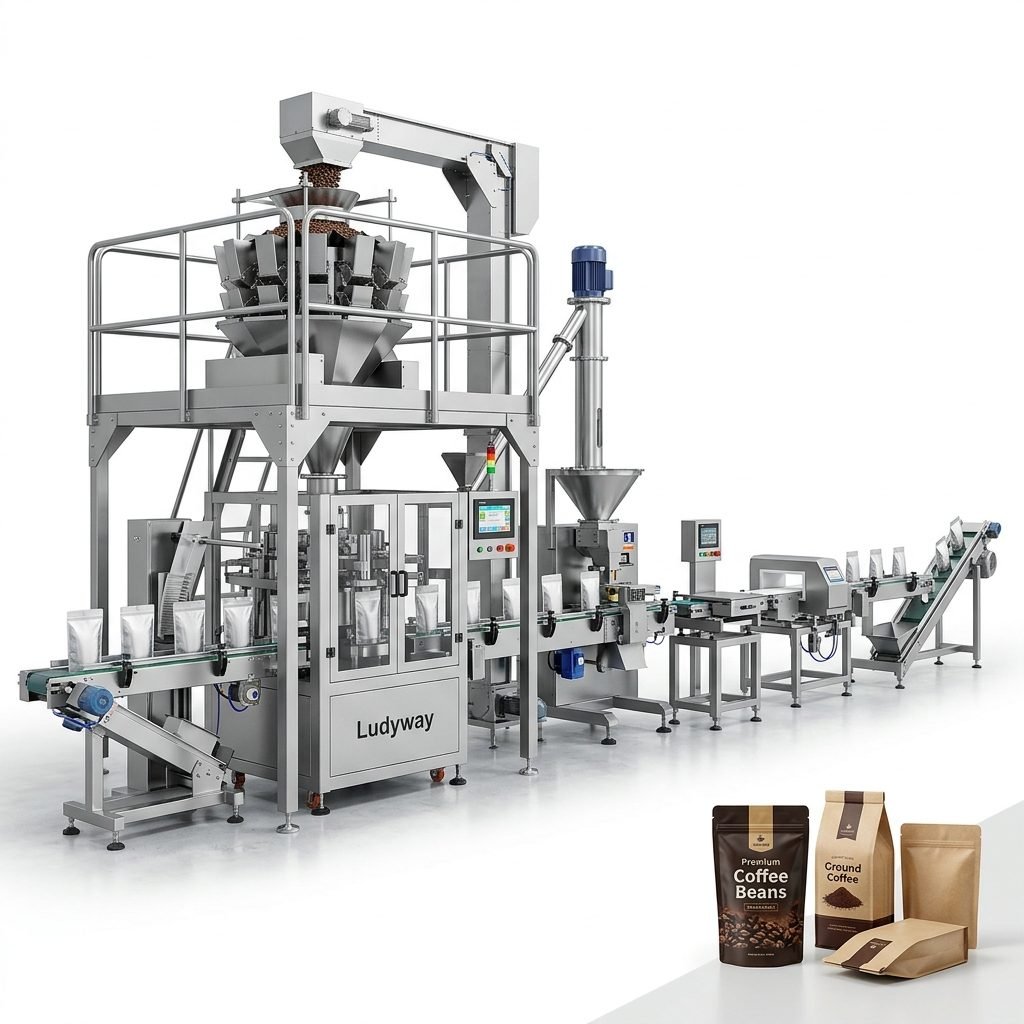
For these reasons, the best coffee bean packaging machine is usually part of a broader automated system that may include a feeder, weighing unit, bagging machine, nitrogen flushing device, coding system, checkweigher, metal detector, and case packing section.
Start with your coffee product profile
Before comparing machine models, define exactly what you need to pack. This avoids buying a machine that is either oversized or too limited.
Key product questions
- Are you packing whole coffee beans, flavored beans, or mixed products?
- What are your target bag weights: 100g, 250g, 500g, 1kg, or larger?
- Do you need one bag size or multiple formats on one line?
- Will the product be sold in retail stores, e-commerce, cafés, or wholesale channels?
- Do you require nitrogen flushing and one-way valve application?
- What daily or monthly output do you expect?
A clear product profile makes it much easier to choose the right machine structure and automation level.
Common automatic coffee bean packaging machine types
Different machine types suit different coffee brands and production goals. The most common options are shown below.
| Machine Type | Best For | Advantages | Limitations |
|---|---|---|---|
| VFFS bagging machine | High-volume standard pillow or gusset bags | Efficient, compact, lower packaging material cost | Less premium bag appearance than premade pouch systems |
| Premade pouch packing machine | Retail-ready stand-up pouches with zipper or valve | Premium look, flexible pouch styles, strong shelf impact | Higher pouch cost, usually slower than VFFS |
| Multi-head weigher with bagging line | Accurate weighing of beans across multiple pack sizes | Fast, precise, suitable for bean products | Needs proper layout space and integration |
| Semi-automatic weighing and sealing line | Small roasters scaling up gradually | Lower investment, easier startup | Higher labor input, lower throughput |
How to match the machine to your bag style
The packaging format often determines the machine platform.
Popular coffee bean bag formats
- Back-seal pillow bags
- Quad seal bags
- Gusseted bags
- Stand-up pouches
- Zipper pouches
- Valve bags for fresh roasted coffee
If appearance and premium retail positioning are central to your brand, a premade pouch machine may be the better fit. If your priority is high output with lower unit packaging cost, a vertical form fill seal solution may offer better ROI.
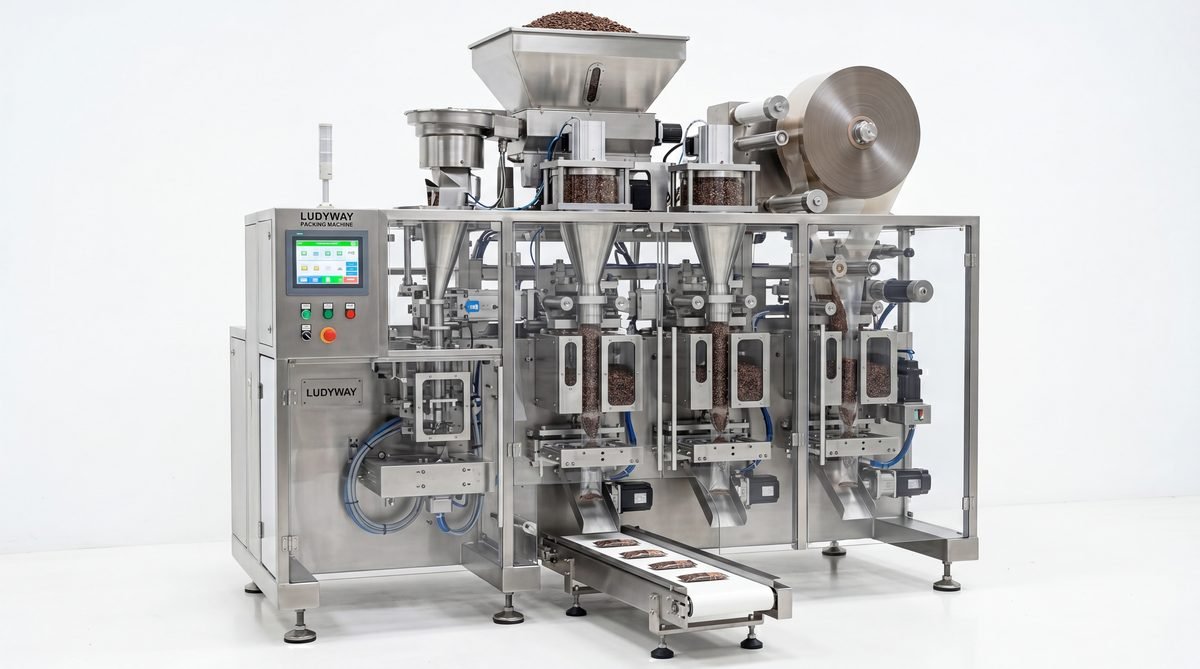
Critical technical features to evaluate
1. Weighing accuracy
Coffee beans are typically packed by weight, so the dosing system matters. A multi-head weigher is often ideal because it combines speed and accuracy while reducing giveaway. Even a small overfill repeated across thousands of bags can become a major hidden cost.
2. Nitrogen flushing capability
For roasted coffee beans, nitrogen flushing helps protect aroma and extend shelf life by reducing residual oxygen inside the package. If freshness is part of your value proposition, this feature should be treated as a priority rather than an option.
3. Sealing quality
Strong, consistent seals are essential. Poor sealing can lead to leakage, oxidation, and customer complaints. Ask the supplier about sealing temperature control, sealing jaw design, and performance with your actual laminate material.
4. Dust and fragment control
Even whole beans can create small particles during movement. These can interfere with seals or create cleanliness issues. A good machine should support clean product transfer and stable discharge into the bag.
5. Changeover flexibility
If you run several SKUs, quick changeover is important. This includes easy recipe storage, bag size adjustment, and minimal downtime between product runs.
6. Integration with end-of-line equipment
A modern coffee bean line may need date coding, label application, checkweighing, metal detection, case packing, and palletizing. Choosing a machine that can integrate smoothly with upstream and downstream systems will protect your future expansion plans.
How much automation do you really need?
Not every coffee business needs a fully automated turnkey line on day one. The right level of automation depends on labor costs, order volume, SKU complexity, and growth plans.
| Automation Level | Suitable User | Main Benefit |
|---|---|---|
| Semi-automatic | Small coffee roasters, startup brands | Lower initial investment |
| Automatic standalone machine | Growing producers with stable demand | Better efficiency and consistency |
| Turnkey automatic line | Large coffee brands, co-packers, export-focused factories | High throughput, low labor dependence, scalable operation |
Questions to ask a coffee bean packaging machine supplier
A good supplier should be able to answer both technical and commercial questions clearly. During evaluation, ask:
- What bag formats can the machine handle?
- What filling accuracy can be achieved for coffee beans?
- Can the system support nitrogen flushing and degassing valve integration?
- What is the real output range based on my bag size?
- How long does changeover take between SKUs?
- What consumables and spare parts are commonly required?
- Can the machine be customized for my factory layout?
- What training, installation, and after-sales support are included?
Look beyond machine price: calculate total value
The lowest quotation is not always the best business decision. A coffee bean packing machine should be evaluated based on total value over time.
Include these cost factors in your comparison
- Initial equipment investment
- Installation and commissioning cost
- Packaging material compatibility
- Labor savings
- Product giveaway reduction
- Maintenance frequency
- Spare parts availability
- Downtime risk
- Future capacity expansion
A slightly higher-quality system may generate better long-term returns through higher uptime, more accurate fills, lower waste, and stronger product presentation.
When to choose a turnkey coffee packaging line
If your operation is growing quickly, a complete line may be more efficient than buying single machines separately. A turnkey coffee bean packaging line can include:
- Product feeding and conveying
- Multi-head weighing system
- Automatic bag forming or pouch feeding
- Filling and sealing section
- Nitrogen flushing
- Date coding and label application
- Checkweigher and metal detector
- Cartoning, case packing, and palletizing
This approach improves compatibility between machines and simplifies project management, especially for manufacturers planning large-volume or export-oriented production.
Signs you are choosing the wrong machine
Here are common warning signs during the buying process:
- The supplier cannot test your actual coffee beans and bag materials.
- The output claims seem unrealistic for your bag size.
- The machine lacks oxygen-control options for fresh roasted beans.
- Changeover details are vague or overly complicated.
- After-sales support and spare parts planning are unclear.
- The machine is designed as a generic granule packer without considering coffee-specific freshness needs.
Choosing a reliable manufacturing partner
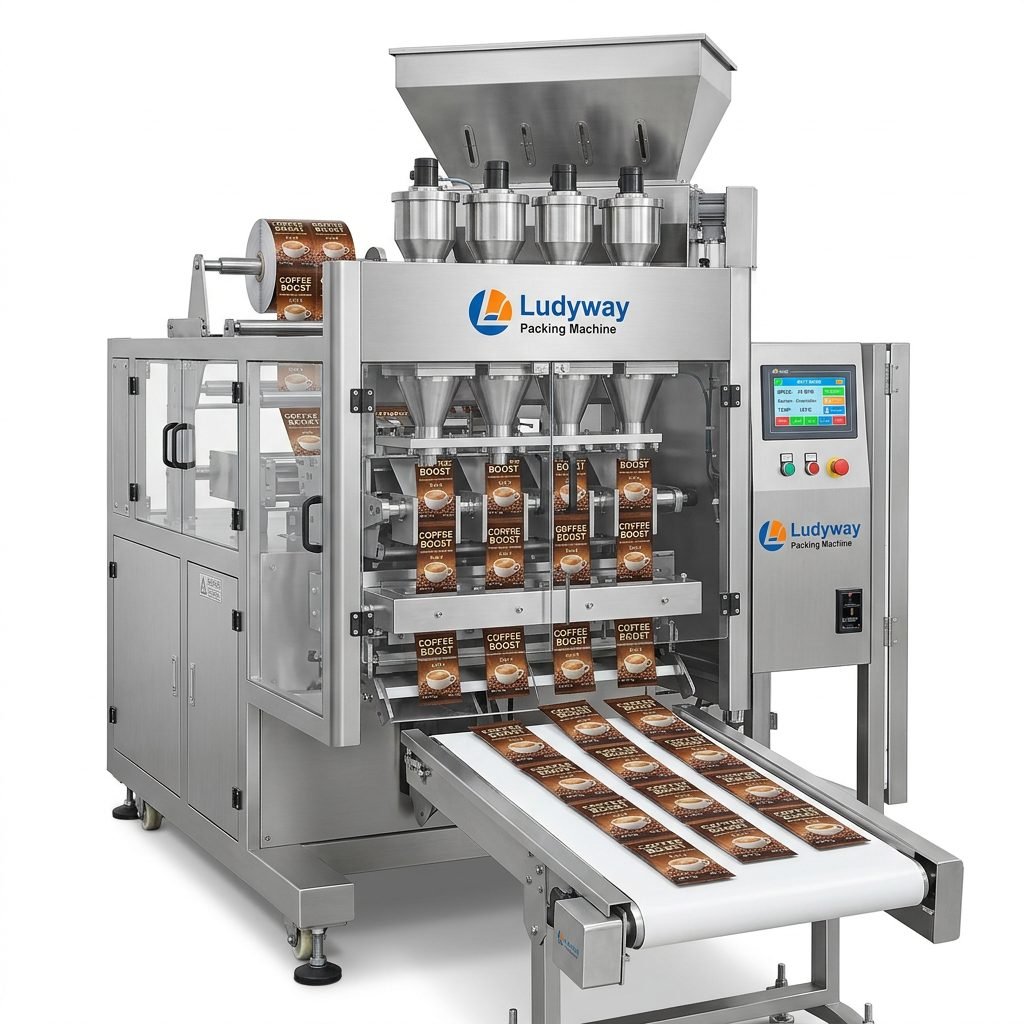
For buyers looking for scalable automation, it helps to work with an experienced packaging equipment manufacturer that can support both standalone machines and integrated lines. Ludyway coffee packaging machine solutions are backed by more than 30 years of packaging machinery experience, with broad capabilities across food, pharmaceutical, health supplement, and turnkey packaging line applications.
A reliable partner should understand not just machine structure, but also your product behavior, packaging goals, compliance requirements, and long-term production planning.
Final checklist before making your decision
- Confirm your coffee bean type and target bag sizes.
- Choose the correct bag format for your market positioning.
- Verify weighing accuracy and sealing consistency.
- Prioritize nitrogen flushing if freshness is critical.
- Review speed based on real production conditions, not ideal figures.
- Plan for future SKU expansion and automation upgrades.
- Ask for machine testing, videos, and technical documentation.
- Evaluate supplier service, customization ability, and spare parts support.
The right automatic coffee bean packaging solution should fit your product, your brand, and your growth plan. When chosen carefully, it can improve freshness protection, reduce labor, enhance shelf appeal, and create a more stable and profitable packaging operation.