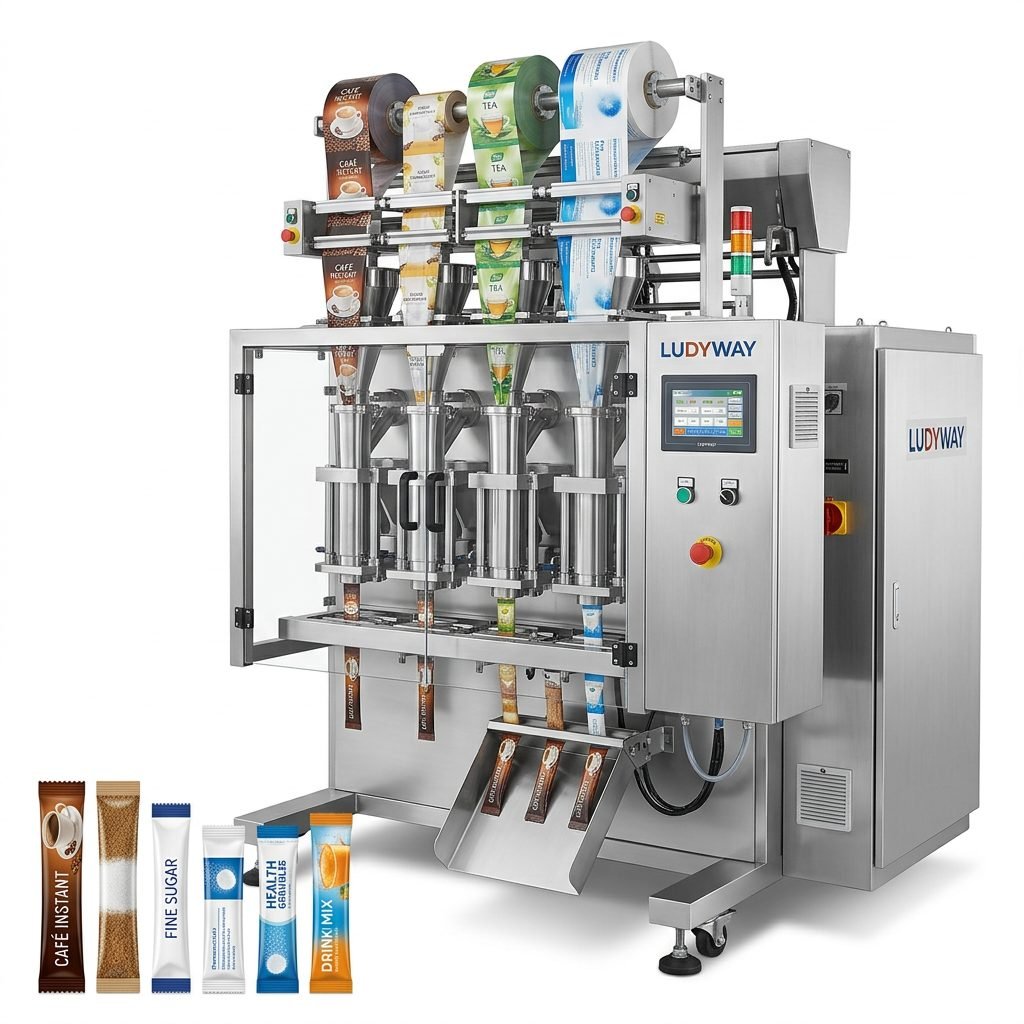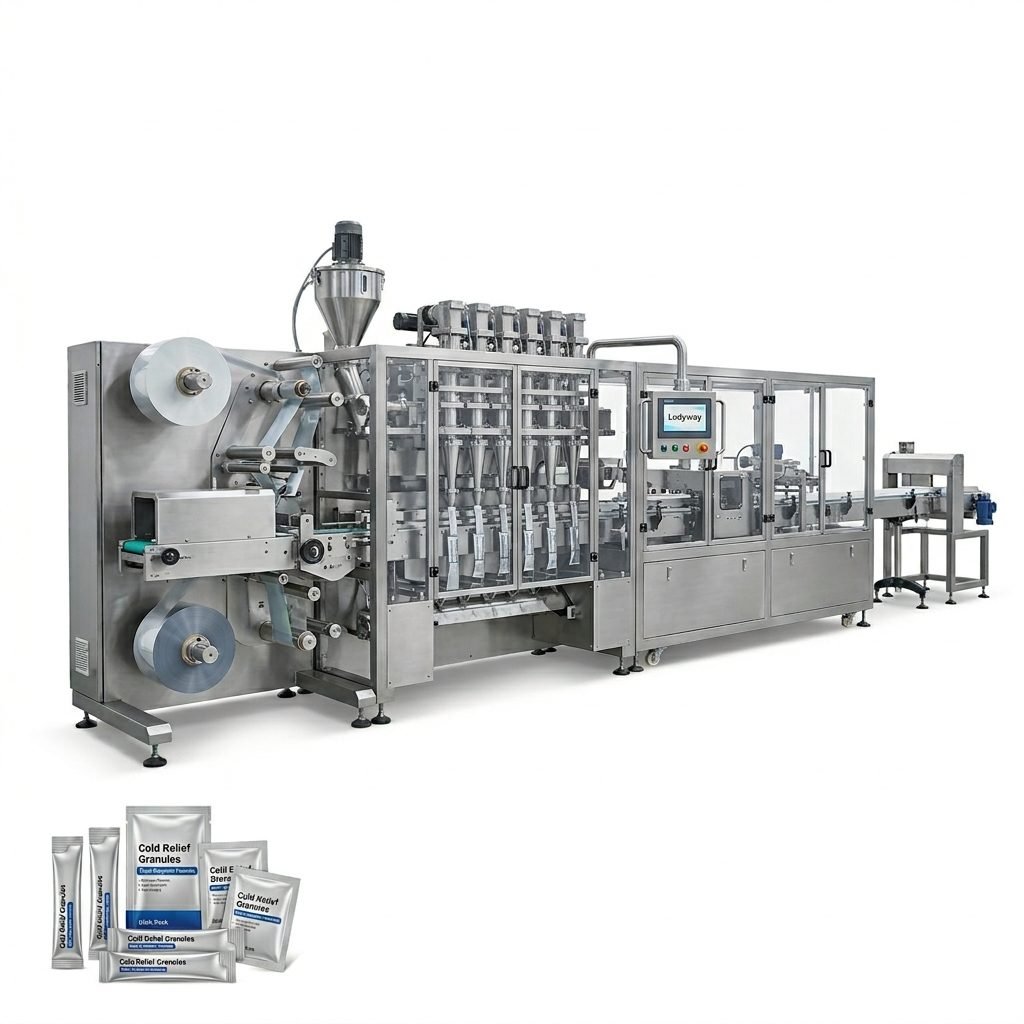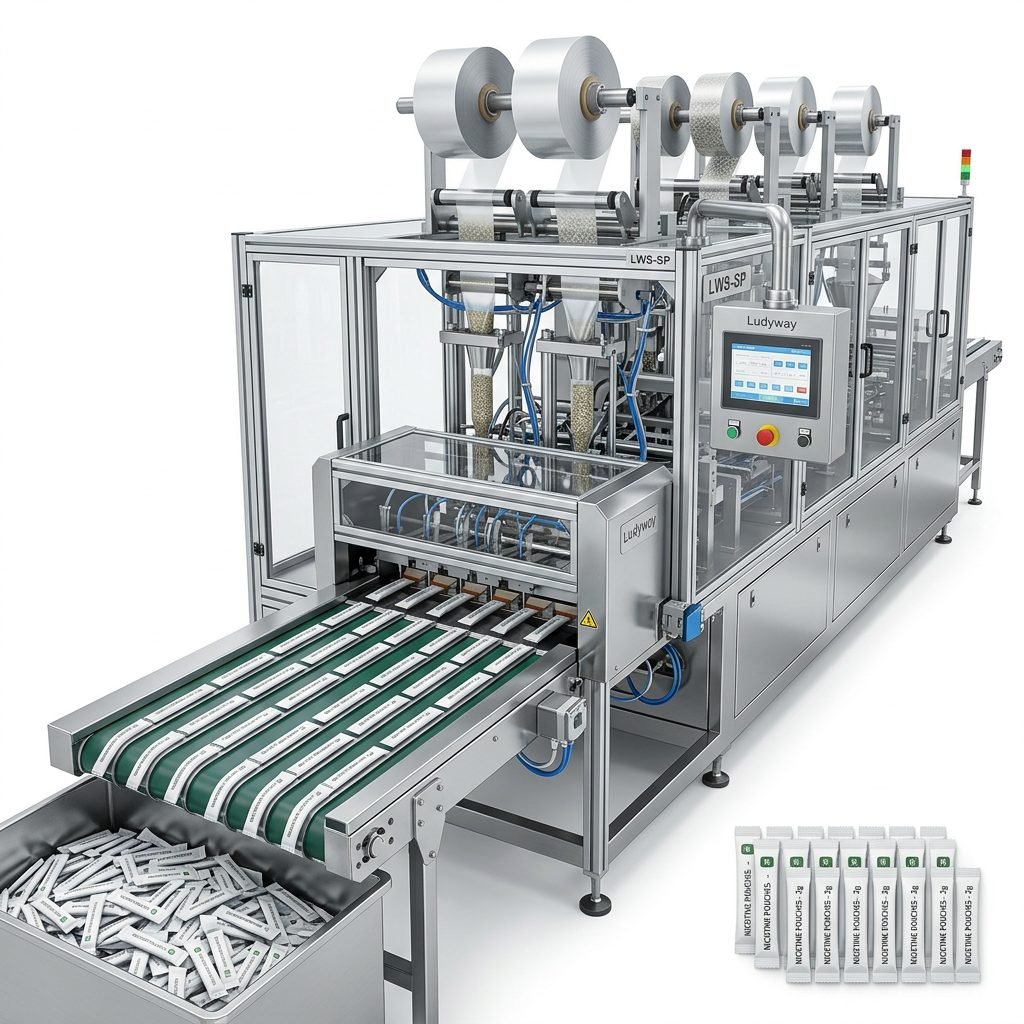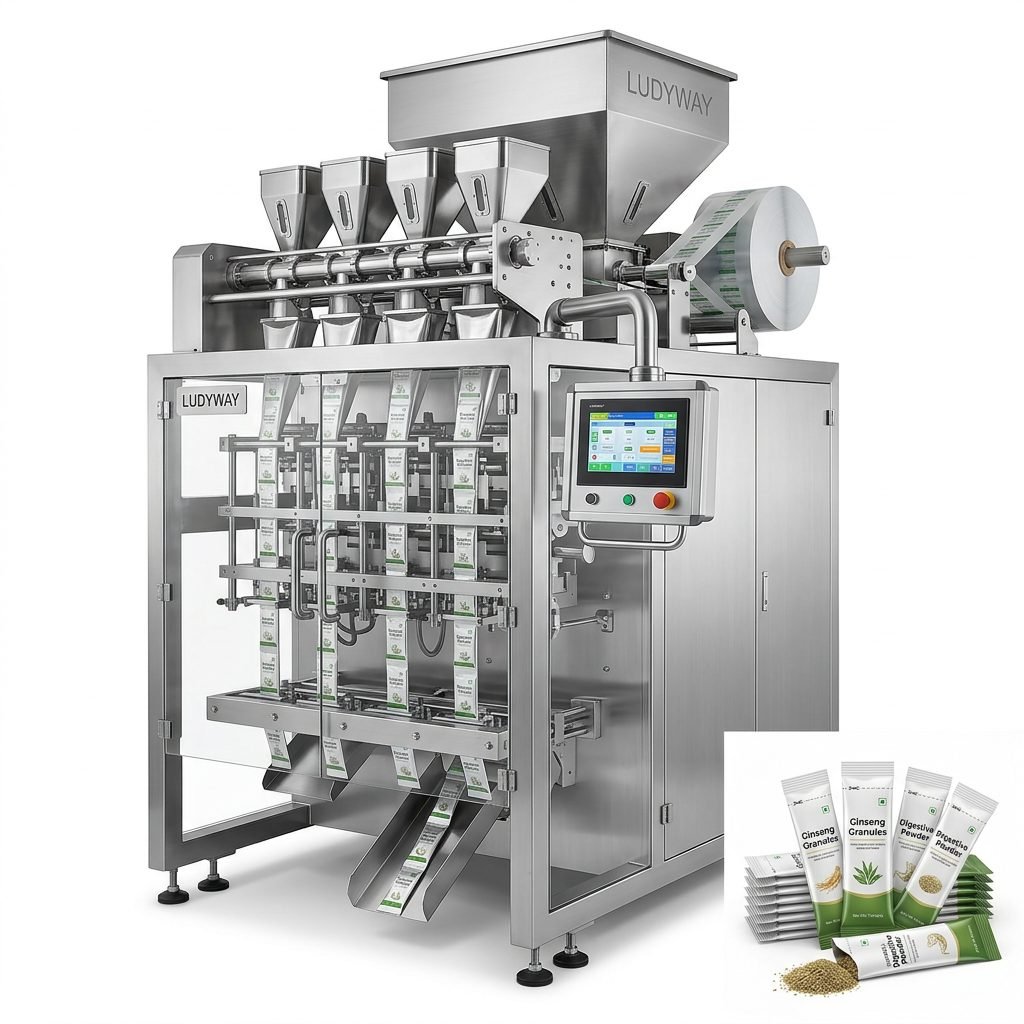
Single-serve coffee has moved from a premium niche to a core revenue stream for roasters, private-label brands and contract packers, and the equipment that fills and seals those capsules now decides margin, shelf life and brand reputation at the same time. A coffee capsule packaging machine is no longer a stand-alone filler bolted onto the end of a grinder; it is the hub of a modern coffee production line that has to dose ground coffee to a tenth of a gram, purge oxygen, seal foil or compostable lids at high speed, and hand finished capsules to flow wrappers, cartoners and palletizers without a single bottleneck.
This guide is written for plant managers, procurement teams, line engineers and coffee entrepreneurs who are specifying capsule filling and sealing equipment, comparing rotary, linear and multi-lane architectures, or planning a complete turnkey line. It covers the capsule formats you will be asked to run, the technical parameters that actually matter in a quotation, the certifications buyers in North America, Europe and emerging markets expect, and the commercial details—minimum order, lead time, FAT and after-sales—that separate a good purchase from an expensive lesson.
5–12 g
Typical ground-coffee dose range across Nespresso-style, Dolce Gusto and K-Cup formats
<1.5% O₂
Residual oxygen target after nitrogen flushing for 12–18 month shelf life
±0.1 g
Dosing accuracy expected from servo auger fillers on premium espresso capsules
60–1,200 cpm
Output span from entry-level single-lane fillers to multi-lane rotary systems
Where the Capsule Machine Sits in a Modern Coffee Production Line
A capsule line is only as fast as its slowest station, so it helps to picture the whole flow before comparing machines. Green beans are roasted, degassed for 12–72 hours, ground to a capsule-specific particle size (typically finer than drip but coarser than Turkish), and conveyed to the filler hopper under controlled humidity. From there the capsule machine takes over, and everything downstream exists to protect the freshness that was locked in at the seal.
Step 1
Capsule denesting – empty aluminum, PP or compostable cups are separated from stacks and placed into carrier pucks or star wheels.
Step 2
Dosing & tamping – servo auger or volumetric cup fillers meter ground coffee, then a tamping head sets the bed density that controls extraction.
Step 3
Nitrogen flushing – headspace gas is displaced in the capsule and in the lidding zone to bring residual oxygen below target.
Step 4
Lid placement & heat seal – pre-cut foil or film lids are picked, placed and heat-sealed with controlled temperature, pressure and dwell.
Step 5
Inspection & discharge – vision, checkweigh and seal-integrity checks reject defects before capsules move to flow wrapping, cartoning and case packing.
Capsule Formats Your Machine Must Handle
Most buyers underestimate how much format compatibility drives machine cost. A line dedicated to one Nespresso-compatible cup is mechanically simple; a line that must swap between Nespresso Original, Dolce Gusto and K-Cup requires different denesting tooling, dosing volumes, tamping pressures and seal heads. Ask every supplier to quote changeover parts and changeover time separately, because a 30-minute tool-less changeover on paper can become three hours if pucks, lid magazines and seal plates all need swapping.
| Capsule format | Typical cup material | Dose range | Lid type | Machine considerations |
|---|---|---|---|---|
| Nespresso Original compatible | Aluminum, PP, PLA/PBAT compostable | 5.0–6.0 g | Aluminum foil or compostable film | Tight dosing tolerance, high tamping consistency, aluminum cups need gentle denesting |
| Nespresso Vertuo-style | Aluminum | 7–13 g | Printed barcode foil | Larger dome, lid registration for barcode, limited third-party licensing |
| Dolce Gusto compatible | PP with filter insert | 6–9 g coffee; 15–20 g milk powder | Aluminum foil | Dual-product capability (coffee and powders), taller cup requires different pucks |
| K-Cup compatible | PP or polystyrene with paper filter | 9–12 g | Foil or recyclable film | Filter placement and ultrasonic/heat filter welding stations, higher volume per cup |
| Lavazza A Modo Mio / Blue | PP | 7–8 g | Foil | Regional demand (Italy, Southern Europe), often run as secondary format on shared lines |
Technical Specifications That Decide Cup Quality and Shelf Life
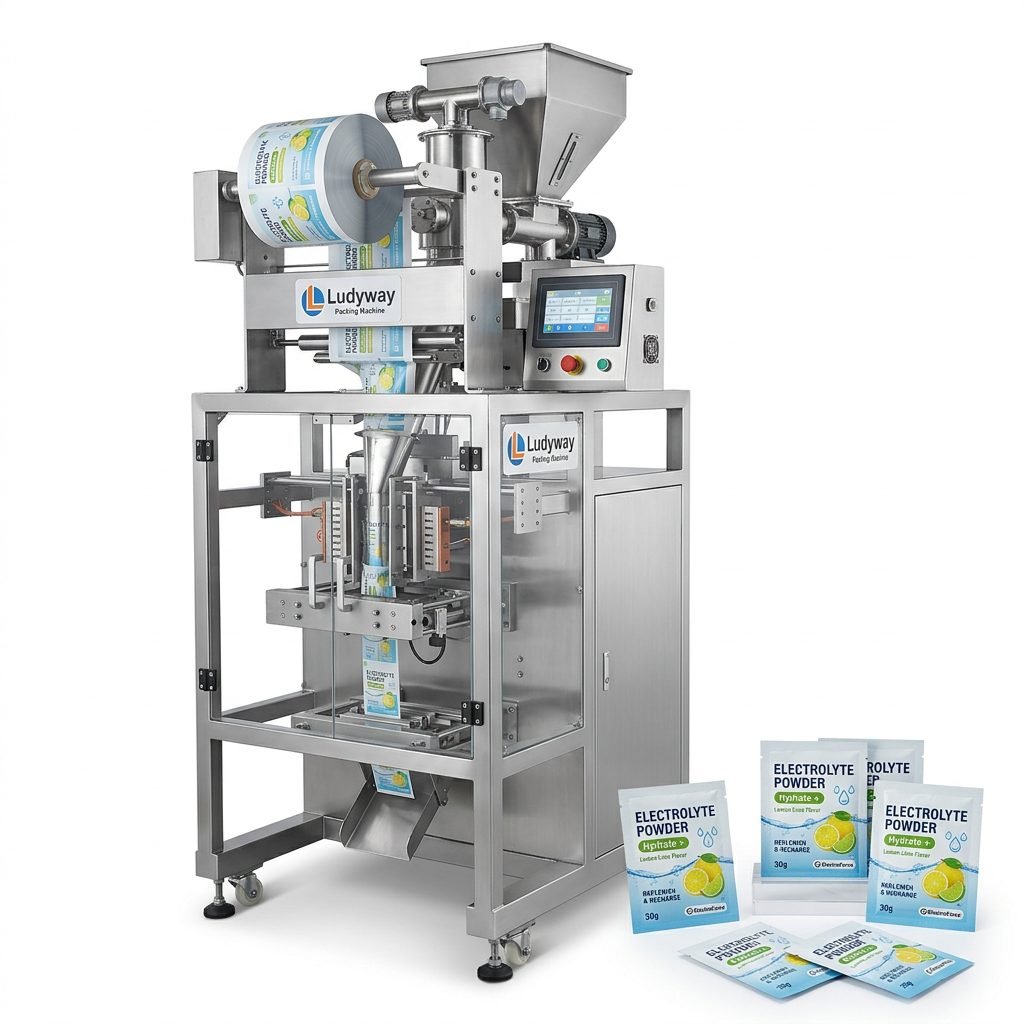
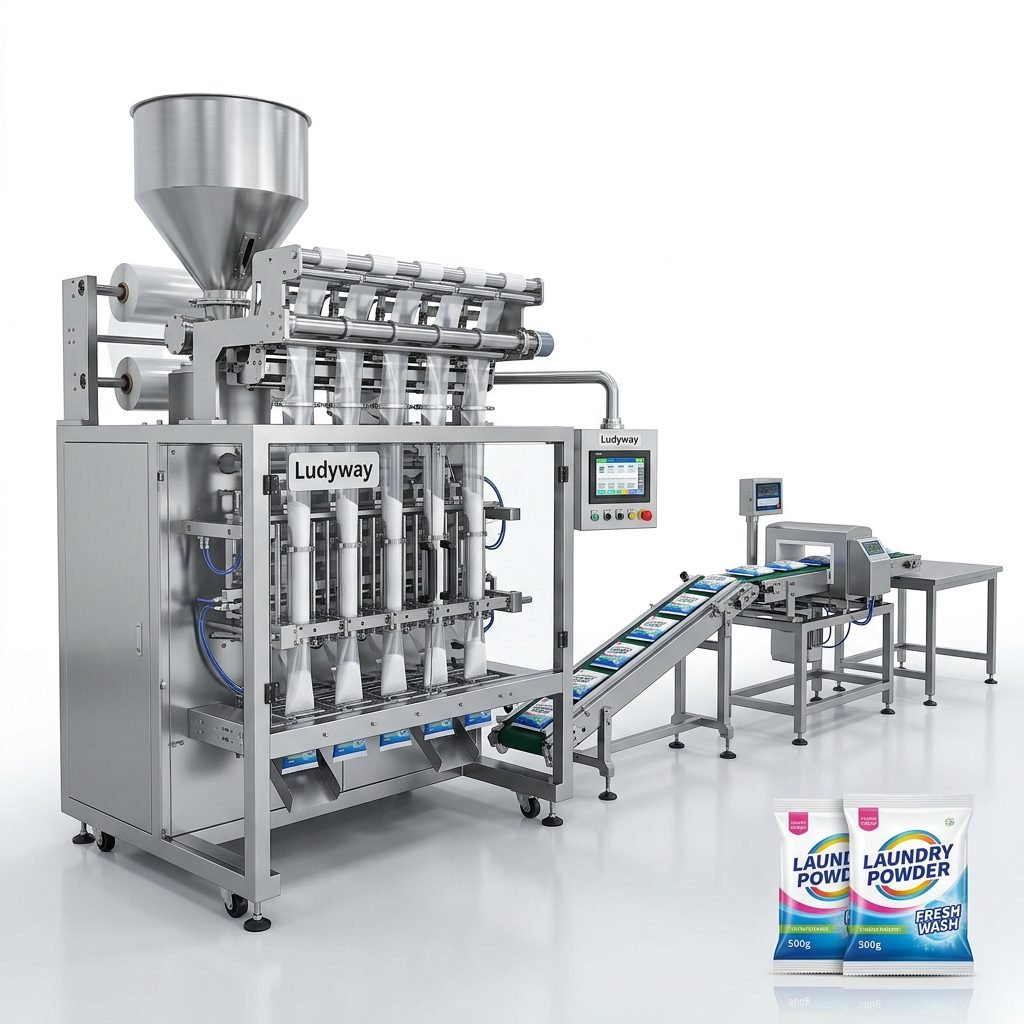
Servo auger dosing stations deliver the gram-level accuracy espresso capsules require
Dosing accuracy and tamping
Espresso capsules live or die on dose consistency. A 0.3 g swing on a 5.5 g dose changes extraction yield noticeably, so premium lines specify servo auger fillers with load-cell feedback and ±0.1 g standard deviation. Volumetric cup fillers are cheaper and faster but drift with bulk density changes between roast batches, which is acceptable for value brands and less so for specialty roasters.
Oxygen control
Ground coffee stales within days in air. Capsule machines use nitrogen flushing nozzles at the fill station and again under the lidding head; the best systems add a gas-tight tunnel over the seal zone. Target residual O₂ of 1–1.5% for 12–18 month shelf life and verify it during FAT with an in-house headspace analyzer. A dedicated nitrogen flushing packaging system can also protect bulk coffee before it reaches the filler.
Seal integrity
Seal temperature, pressure and dwell must be recipe-stored per lid material—aluminum foil seals differently from compostable cellulose film. Insist on PID-controlled heated heads with per-head temperature display and a pull-test record at FAT.
Rotary, Linear or Multi-Lane: Choosing the Right Architecture
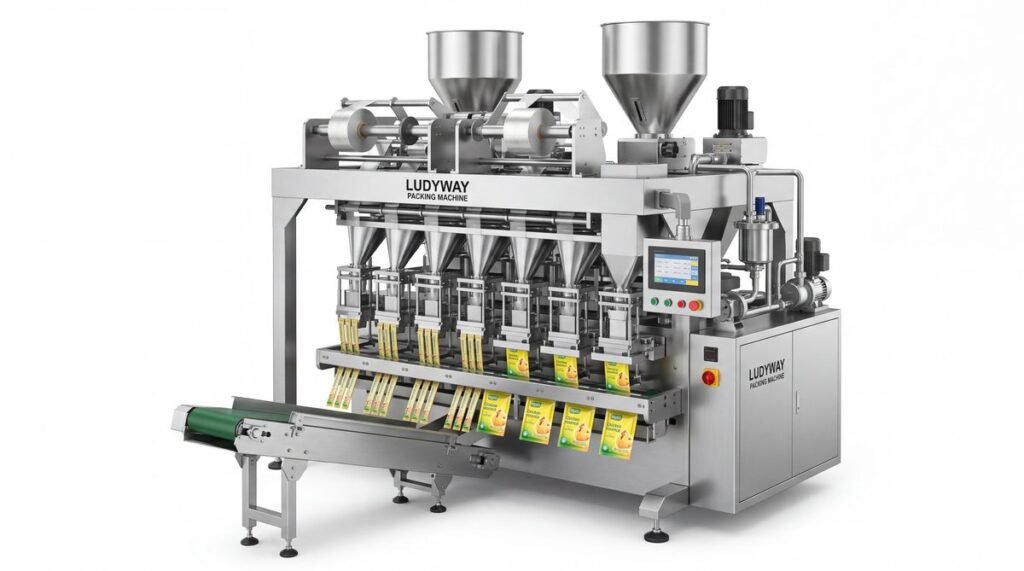
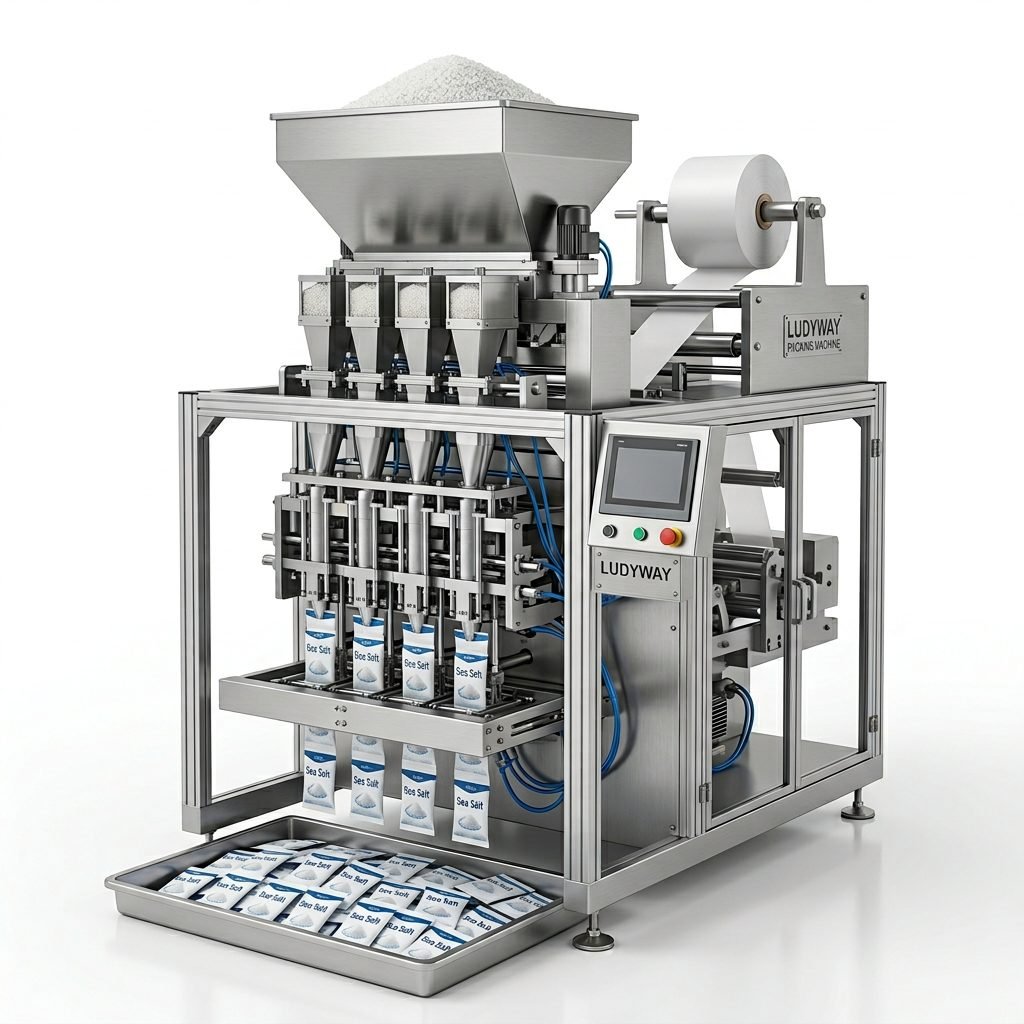
The three mainstream machine architectures trade floor space, speed and flexibility in different ways. Rotary indexing machines are compact and ideal for a single format at 60–120 capsules per minute. Linear intermittent-motion machines are easier to maintain and extend with extra stations such as filter welding or second product dosing. Multi-lane continuous systems, which Ludyway engineers alongside its multi-lane stick pack and sachet platforms, scale output by adding lanes rather than speeding up each station, keeping wear and dosing variance low even at 600–1,200 capsules per minute.
| Criteria | Rotary indexing | Linear intermittent | Multi-lane continuous |
|---|---|---|---|
| Typical output | 60–150 cpm | 100–400 cpm | 400–1,200 cpm |
| Footprint | Smallest | Medium, grows with stations | Largest, requires planned layout |
| Format flexibility | Good with change parts | Best; stations can be added | Usually dedicated to 1–2 formats |
| Best fit | Start-ups, micro-roasters, pilot runs | Co-packers running multiple SKUs | Private-label and brand-owned high-volume plants |
| Investment level | Entry | Mid | High, lowest cost per capsule |
Compliance, Materials and Sustainability Requirements
Capsule machines touch food directly, so buyers in regulated markets evaluate the machine and the packaging materials together. Product-contact parts should be AISI 304 stainless steel at minimum, with 316L recommended for hoppers that see cleaning chemicals; seals and gaskets should be food-grade silicone or PTFE. Electrical cabinets rated IP65 and washdown-ready frames reduce downtime in humid grinding rooms.
Standards buyers typically request in a capsule machine tender:
- CE marking (Machinery Directive, EMC, Low Voltage) for Europe; UL 508A panels or CSA for North America
- Food-contact material declarations aligned with FDA food contact substance requirements and EU Regulation 1935/2004
- ISO 9001 quality management at the machine builder, plus hygienic design guidance from the ISO packaging standards catalogue
- Recyclability and compostable-lid compatibility to meet the EU Packaging and Packaging Waste Regulation, which increasingly influences capsule material choices worldwide
Material trends also shape equipment specs. Aluminum capsules are regaining share because of recycling infrastructure, but they dent easily and demand soft-touch denesters. Home-compostable PLA/PBAT cups are heat-sensitive and require lower seal temperatures with longer dwell. If your roadmap includes both, specify heated heads with a wide controllable range and recipe memory for at least 20 SKUs. Market research from PMMI’s State of the Industry report consistently lists sustainability-driven material changes as a top reason brand owners re-invest in packaging machinery, and coffee capsules are a prime example.
Downstream Integration: From Sealed Capsule to Pallet
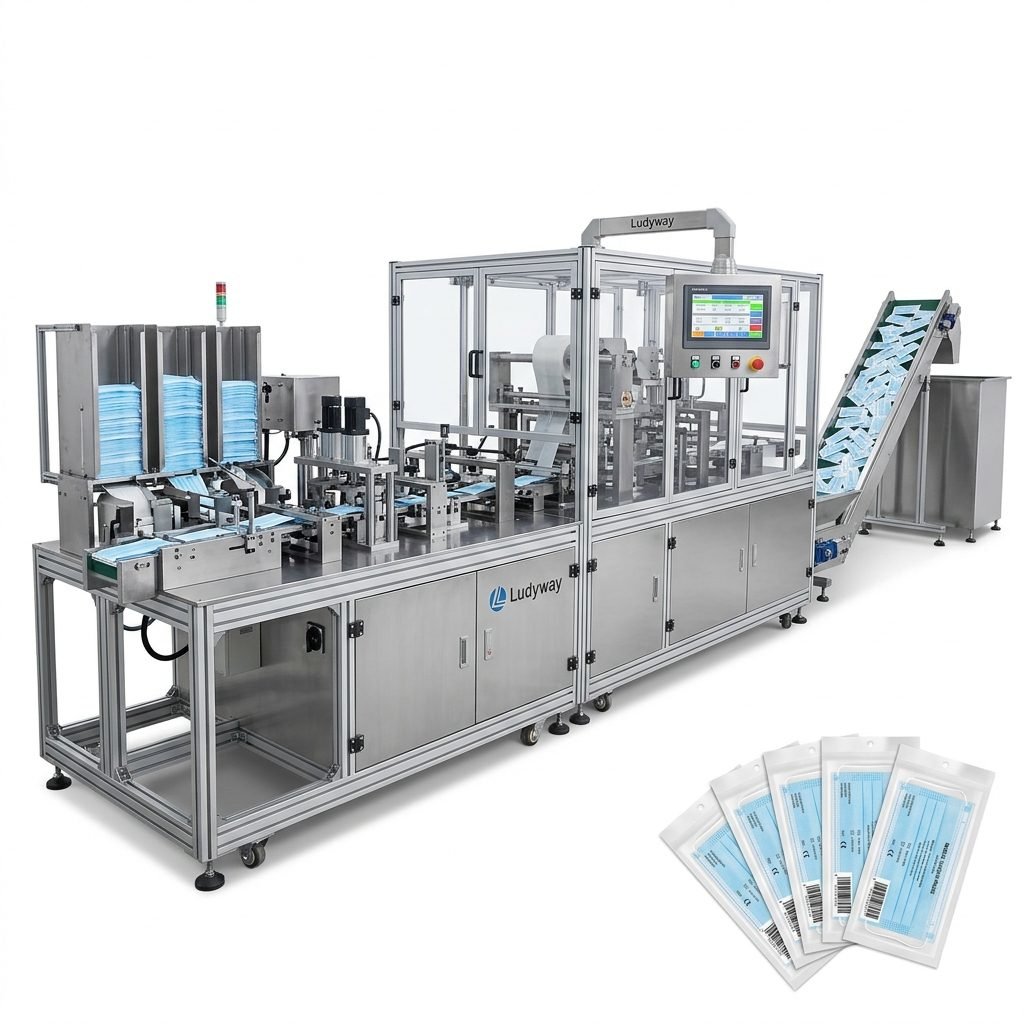
A capsule that leaves the sealer at 300 per minute needs a secondary packaging train that matches it. Most brands flow-wrap capsules individually or in sleeves of 10 under nitrogen, then load them into retail cartons, collate cartons into shipping cases and palletize. Each handoff is a potential bottleneck, which is why turnkey suppliers quote the full train with a single OEE guarantee rather than a list of independent machines.
Inspection belongs between every stage. A high-precision checkweigher after sealing catches under-dosed capsules, vision systems verify lid placement and print, and a metal detector protects against grinder wear particles. Rejects should be diverted automatically without stopping the line.
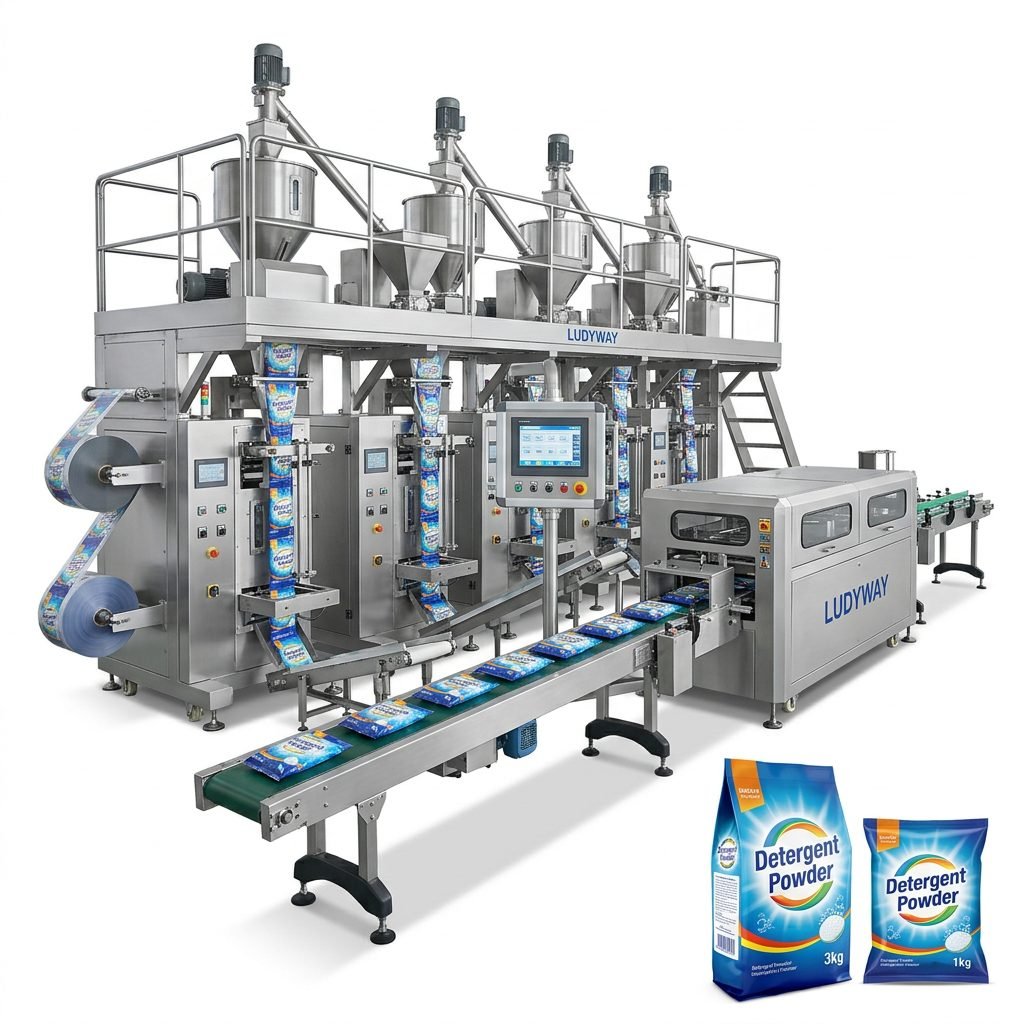
For roasters that also sell ground or instant coffee, pairing the capsule line with automated coffee packaging lines for granules and powder allows shared grinding, nitrogen supply and case packing equipment, lowering total capital per SKU.
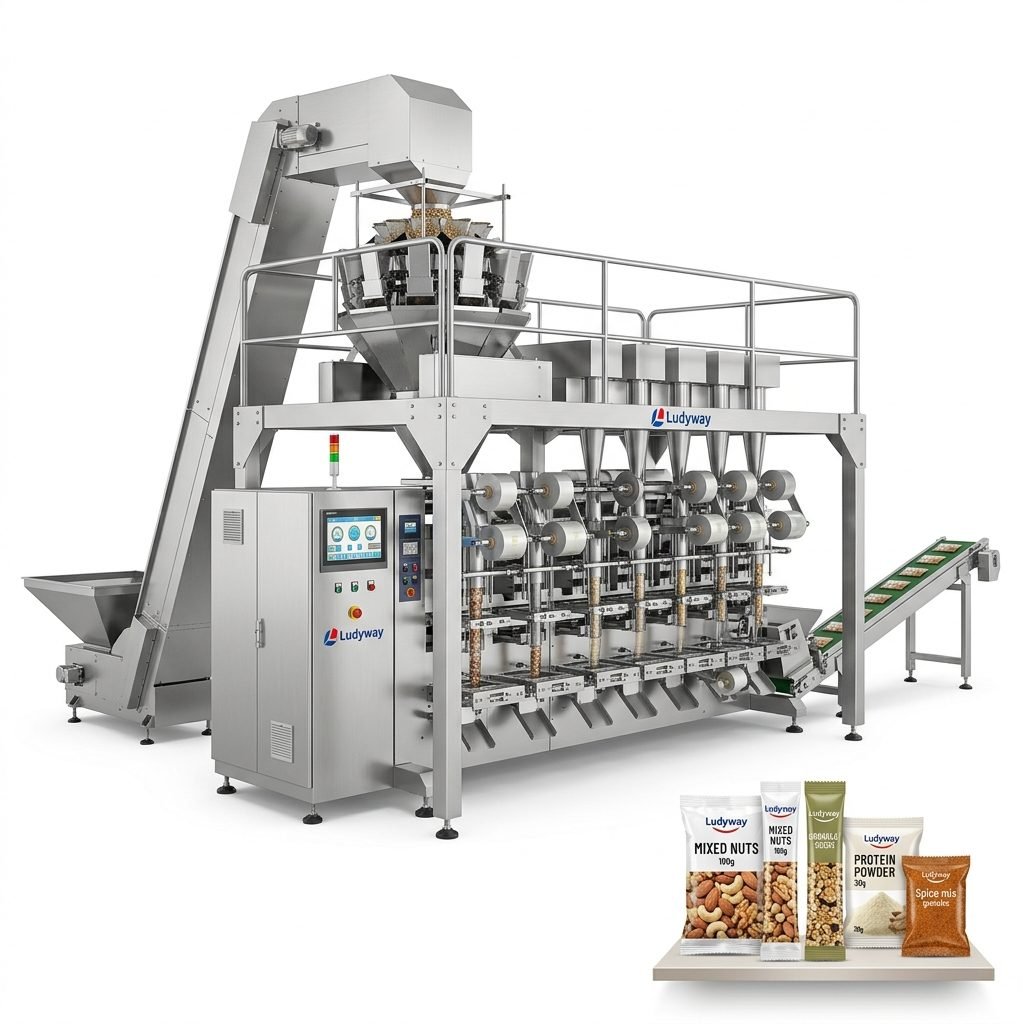
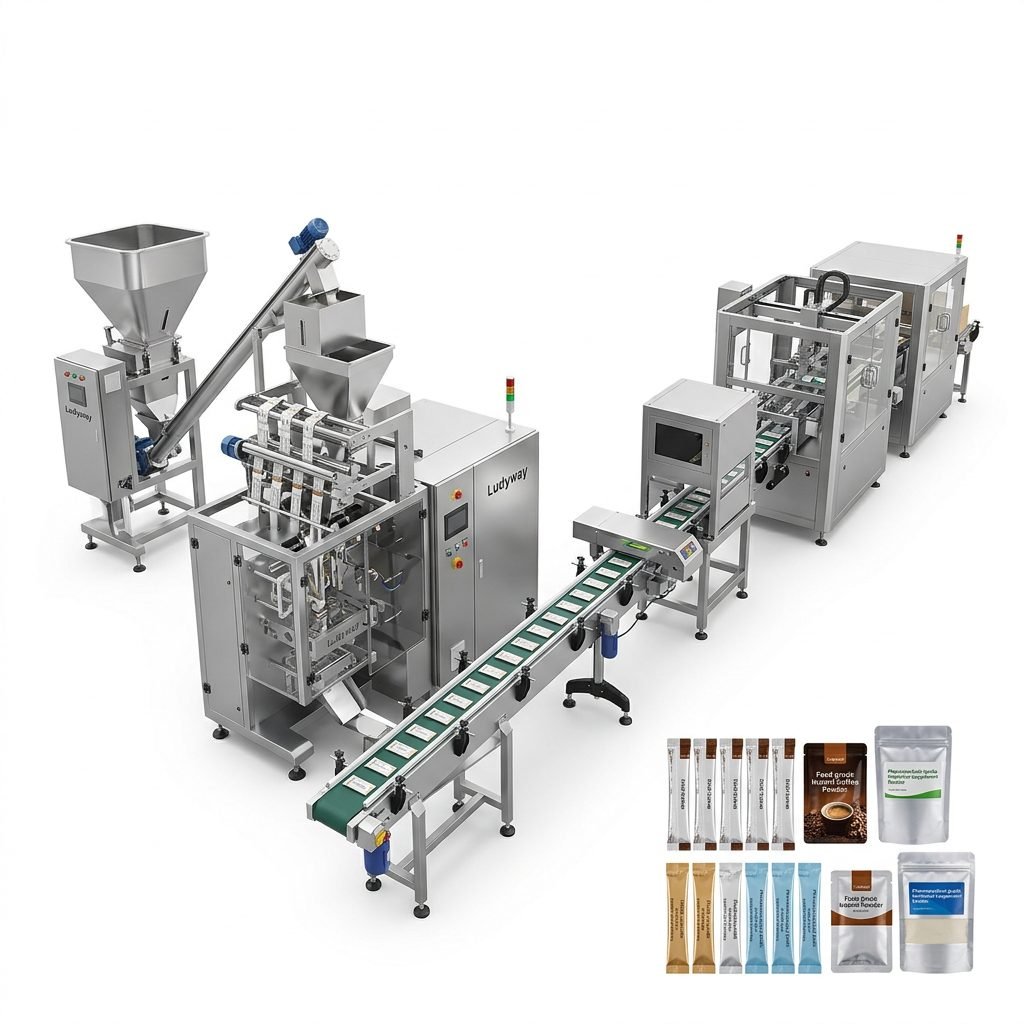
Integrated conveying and secondary packaging keep capsule output flowing to carton and pallet
Procurement Checklist for Coffee Capsule Packaging Machines
Industrial capsule equipment is built to order, so the commercial terms matter as much as the datasheet. Use the checklist below when you request quotations from Chinese, European or North American builders, and ask for every item in writing before the deposit.
Specification documents
- Capsule drawings and samples (minimum 500 empty cups and lids per format for trials)
- Target output in capsules per minute at stated dose, plus required OEE
- Utilities: voltage/frequency, compressed air at 6 bar, nitrogen purity and flow
- Layout drawing with available floor space and ceiling height
Order, delivery and acceptance
- Minimum order is typically one complete machine or line; change-part kits ordered separately
- Lead time of 45–90 days for standard models, 90–150 days for fully integrated turnkey lines
- Factory Acceptance Test with your coffee and capsules, followed by Site Acceptance Test after installation
- Quotation on EXW, FOB or CIF terms; payment commonly 30% deposit, balance before shipment
Service and spare parts
- 12–24 month warranty with named response times
- Recommended spare parts list for 1 and 2 years, priced
- Remote diagnostics via HMI/PLC and on-site commissioning engineers
- Operator training and bilingual manuals
About the manufacturer behind this guide. Ludyway Machinery, founded in 1993 and based in Nanlang Town, Zhongshan, Guangdong, is one of China’s largest packaging machine manufacturers, with a 20,000㎡ production facility, more than 200 manufacturing equipment units and a team of 130+ packaging specialists. The company builds over 50 intelligent packaging machine models—including multi-lane stick pack, sachet and capsule sealing systems for coffee—and delivers turnkey production lines to customers in more than 100 countries, with annual revenue exceeding RMB 500 million and export growth tracked by industry media such as EIN Presswire.
For coffee producers, that means one engineering partner can supply the capsule filling and sealing system, the stick pack machine for instant coffee, the conveyors, inspection and end-of-line equipment, and the project management that ties them together.
Coffee Capsule and Coffee Packaging Systems
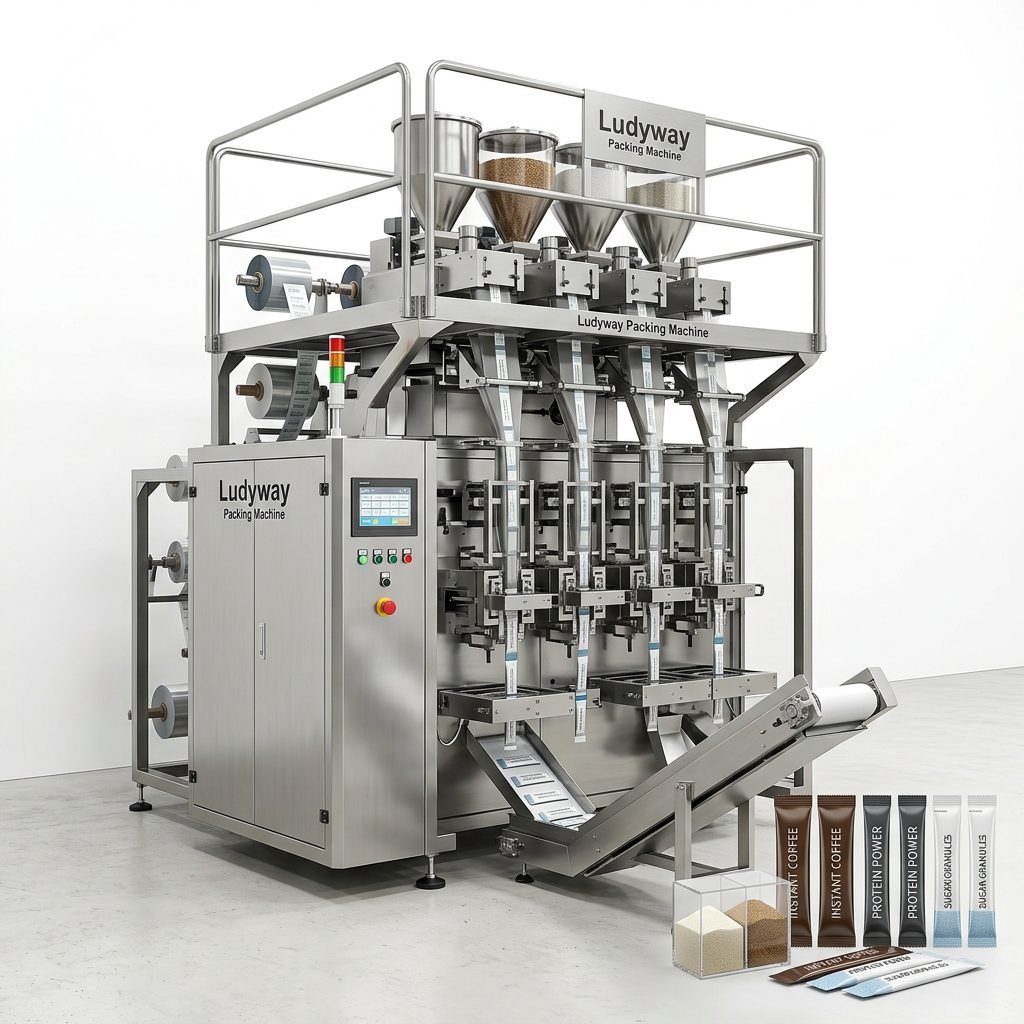
Multi-Lane Capsule Packaging System
Coffee Capsules, High-Speed Sealing
Price on Request
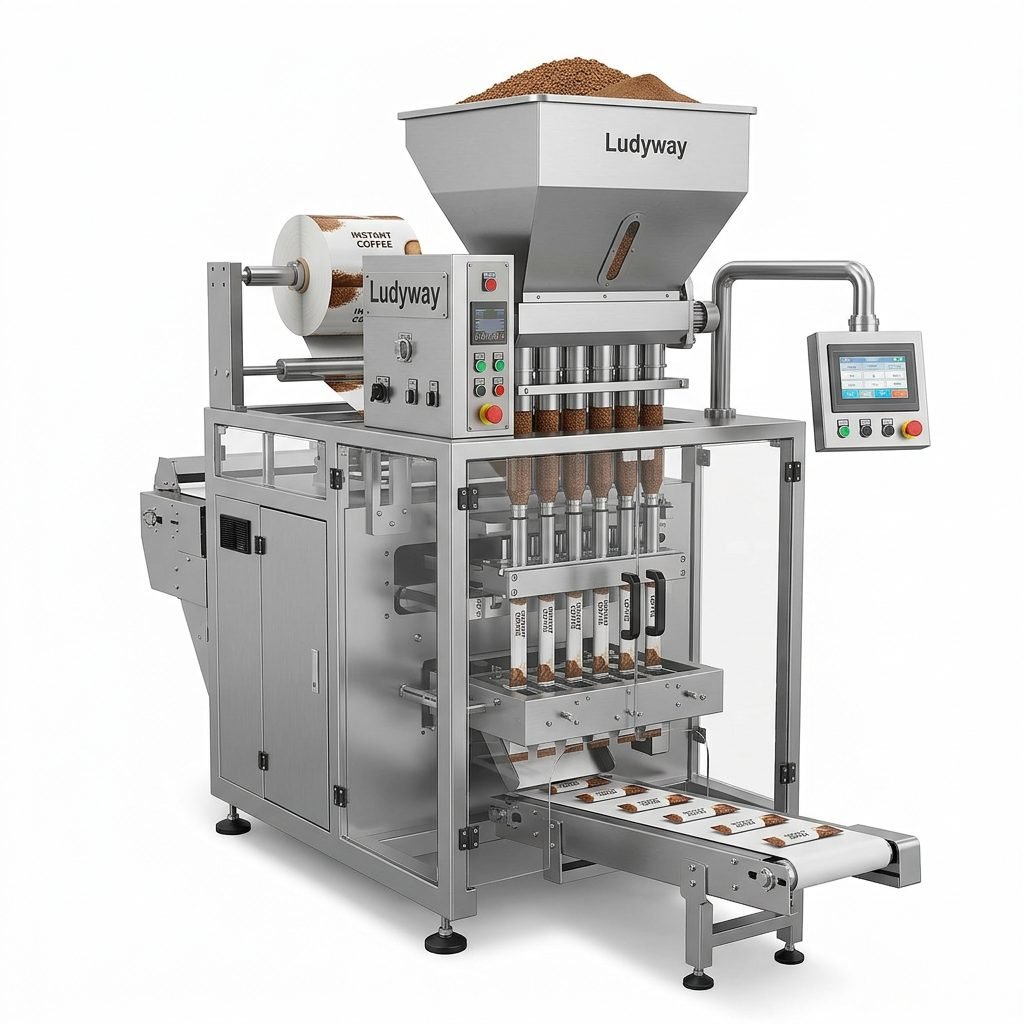
Instant Coffee Stick Pack Machine
Instant Coffee, Sachet & Stick Pack
Price on Request
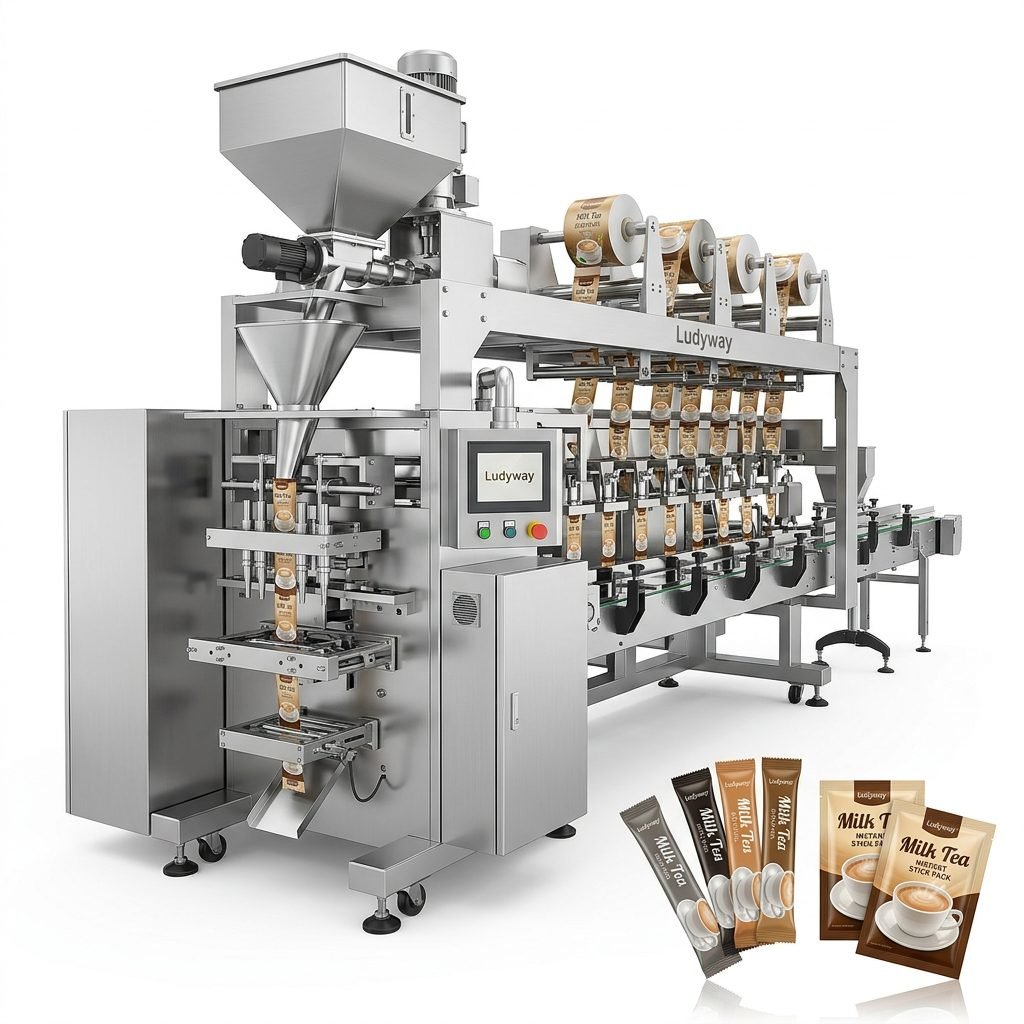
Automated Coffee Packaging Lines
Turnkey Line, Granules & Powder
Price on Request
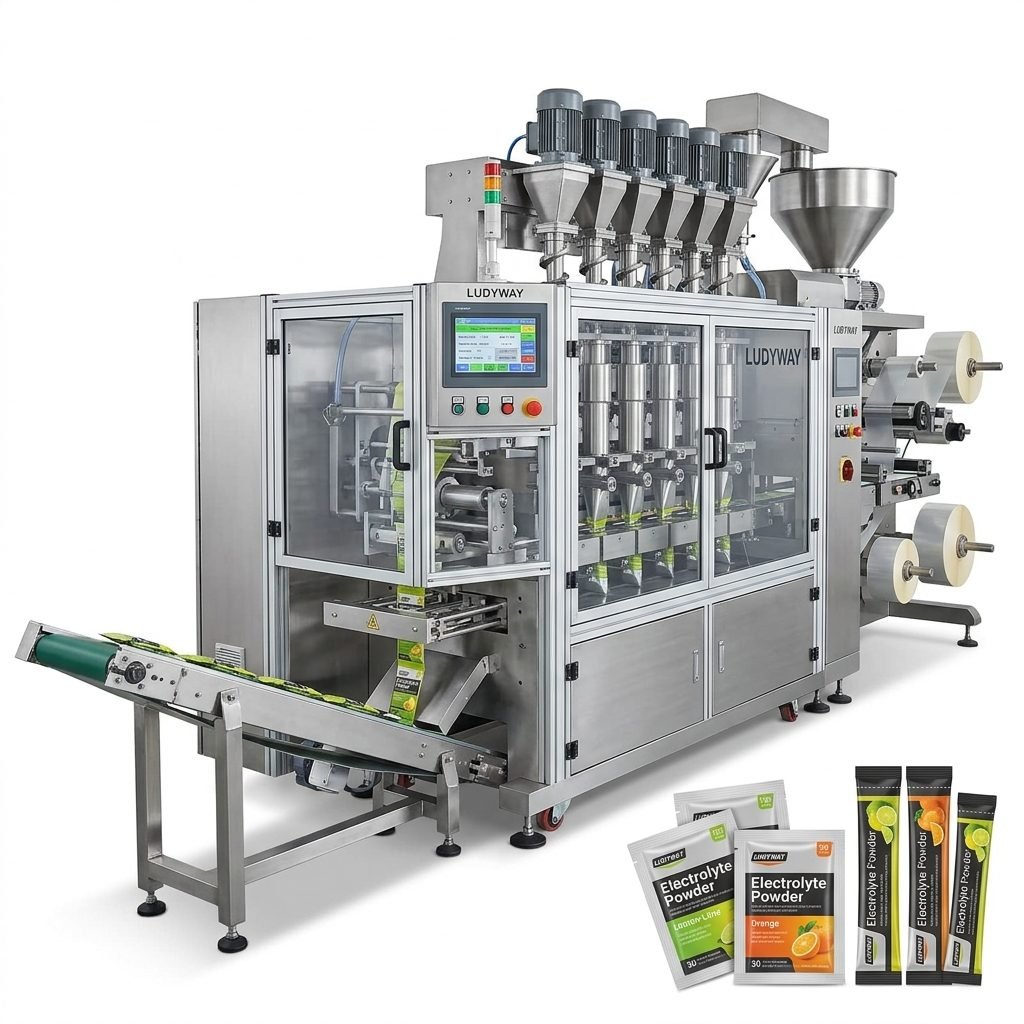
Ground Coffee Packaging Machine
Ground Coffee, Multi-Lane Stick Pack
Price on Request
Frequently Asked Questions
How many capsules per minute do I need for a viable coffee capsule business?
A single-lane rotary machine at 60–100 cpm yields roughly 25,000–45,000 capsules per 8-hour shift, which is enough for a regional brand or a co-packer serving several micro-roasters. Private-label suppliers to supermarkets usually start at 300 cpm and plan to add lanes or a second line within two years. Size the machine for your 24-month volume forecast, not current sales.
Can one machine fill both Nespresso-compatible and K-Cup capsules?
Yes, on linear or rotary platforms designed for format change, but you will need separate puck sets, lid magazines, seal heads and, for K-Cup, a filter insertion and welding station. Realistic changeover is 30–90 minutes with trained operators. If both formats run daily at volume, two dedicated lines are often more economical than one flexible line.
What shelf life can a nitrogen-flushed capsule achieve?
With residual oxygen below 1.5% and a high-barrier cup and lid (aluminum or EVOH-layered PP), 12–18 months is standard. Compostable cups have lower barrier properties and typically require an outer nitrogen-flushed flow wrap or pouch to reach comparable shelf life, so budget for secondary packaging if you plan a compostable range.
What should be included in a Factory Acceptance Test for a capsule machine?
Run at least 2,000 capsules of each format with your own coffee and packaging materials, record dose weight on every 20th capsule, measure residual oxygen on a sample of 30, perform lid pull tests, and verify changeover time and reject accuracy. Ask for a signed FAT protocol with data before authorizing shipment.
How long does installation and commissioning take?
A stand-alone capsule filler is typically installed and commissioned in 5–10 working days, including operator training. A fully integrated line with flow wrapper, cartoner and palletizer usually requires 3–5 weeks on site, with the supplier’s engineers present for the Site Acceptance Test and the first production run.
Ready to specify your coffee capsule production line?
Send your capsule format, target output and production layout to the Ludyway engineering team for a tailored quotation, technical drawings and a product catalog. Sample capsule trials with your own coffee can be arranged at the Zhongshan factory or by video FAT.
Email info@ludyway.com or message WhatsApp +86 131 2959 2456 to request a quote, book a factory visit or meet the team at international packaging exhibitions.