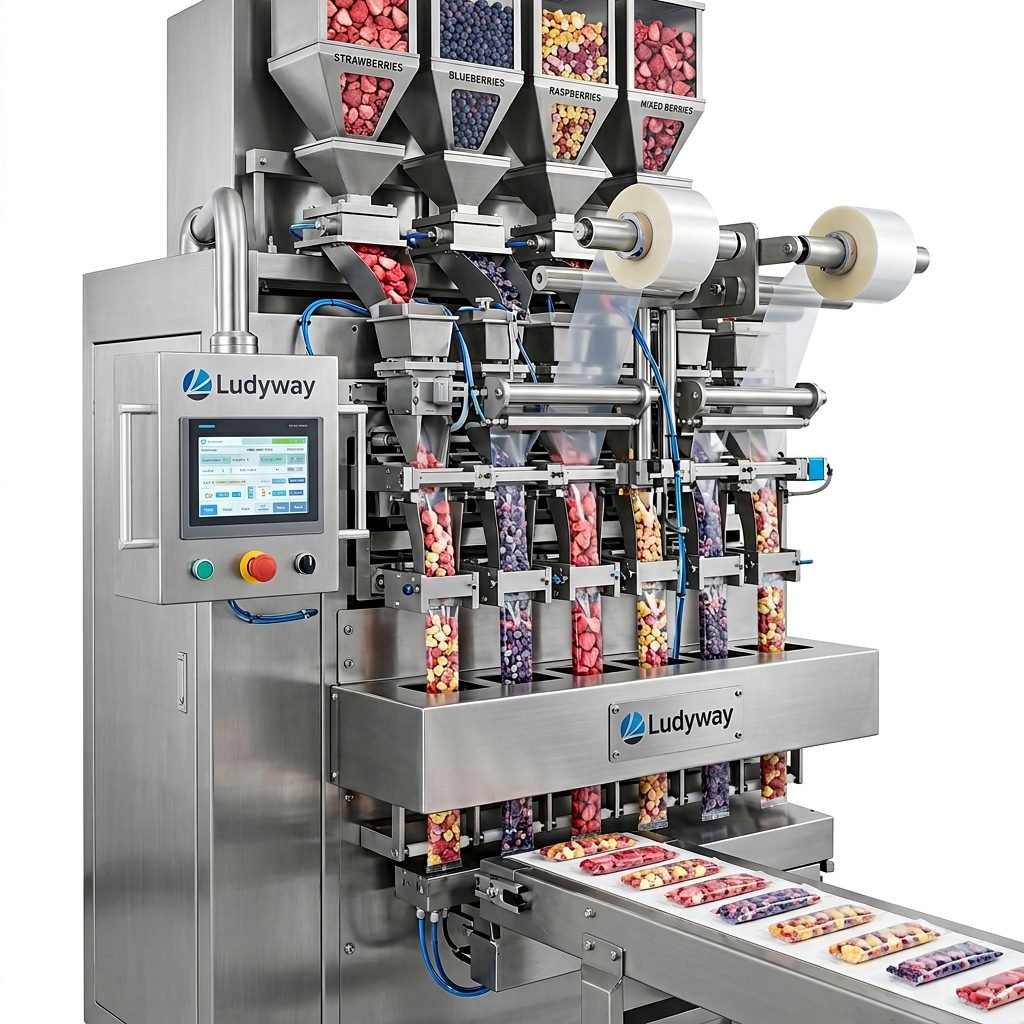
Choosing food packaging machines for different food processing applications starts with one question: what exactly are you packing, and in what format will it reach the customer? A roasted coffee plant, a sauce processor and a frozen dumpling factory may all say they need “a packaging machine”, yet the dosing technology, film handling, hygiene design and output each one requires are completely different. Buying on brand name or headline speed alone is the most common reason a new line underperforms in its first year of operation.
This guide is written for food manufacturers, plant engineers, contract packers and equipment buyers. It explains the main types of food packaging equipment, maps them to real processing applications such as powders, granules, liquids, pastes, snacks and freeze-dried foods, and gives a practical framework for comparing specifications, certifications, lead times and quotations before you sign a purchase order.
Key takeaway: the physical form of your food product (free-flowing granule, cohesive powder, thin liquid, viscous paste or solid piece) determines the dosing system, and the dosing system determines which packaging machine type you should shortlist. Format, speed and budget come second.
Why Product Form Dictates the Packaging Machine
Every automatic food packaging machine is essentially three sub-systems working in sequence: a dosing or feeding unit that measures the product, a forming and sealing unit that creates the package, and a control system that synchronises both. The dosing unit is the part most sensitive to product behaviour. Sugar flows freely and can be measured volumetrically; milk powder bridges and compacts and needs a servo auger; honey needs a heated hopper and a rotor pump. The table below summarises how product form translates into machine selection in food processing plants.
| Food Product Form | Typical Products | Dosing Method | Best-Fit Machine Type | Common Formats |
|---|---|---|---|---|
| Free-flowing granules | Sugar, salt, rice, nuts, coffee beans, cereal | Volumetric cup, multihead weigher | VFFS, multi-lane stick pack | Pillow bags, stick packs, sachets |
| Cohesive powders | Milk powder, spice blends, protein, cocoa, flour | Servo auger (screw) filler | Multi-lane sachet or stick pack, VFFS with auger | 4-side-seal sachets, sticks, bags |
| Thin liquids | Soy sauce, vinegar, juice, cooking oil, liquid milk | Piston or gear pump | Liquid sachet / stick pack machine, bottle filler | Sachets, sticks, bottles |
| Viscous pastes | Ketchup, mayonnaise, honey, jam, peanut butter | Rotor / piston pump with heated hopper | Multi-lane liquid sachet, premade pouch filler | Portion sachets, spouted pouches |
| Solid pieces | Biscuits, energy bars, frozen foods, jerky, fresh produce | Counting, weighing or robotic infeed | HFFS flow wrapper, premade pouch, vacuum packer | Flow packs, doypacks, vacuum pouches |
Main Types of Food Packaging Machines and Where They Fit
Food processors generally choose between five primary machine families, plus the end-of-line equipment that turns individual packs into shippable cases. Understanding the strengths and limits of each family prevents the two classic mistakes: over-specifying a high-speed system for a niche product, or under-specifying a semi-automatic machine that cannot keep pace with a growing brand.
Vertical Form Fill Seal (VFFS) Machines
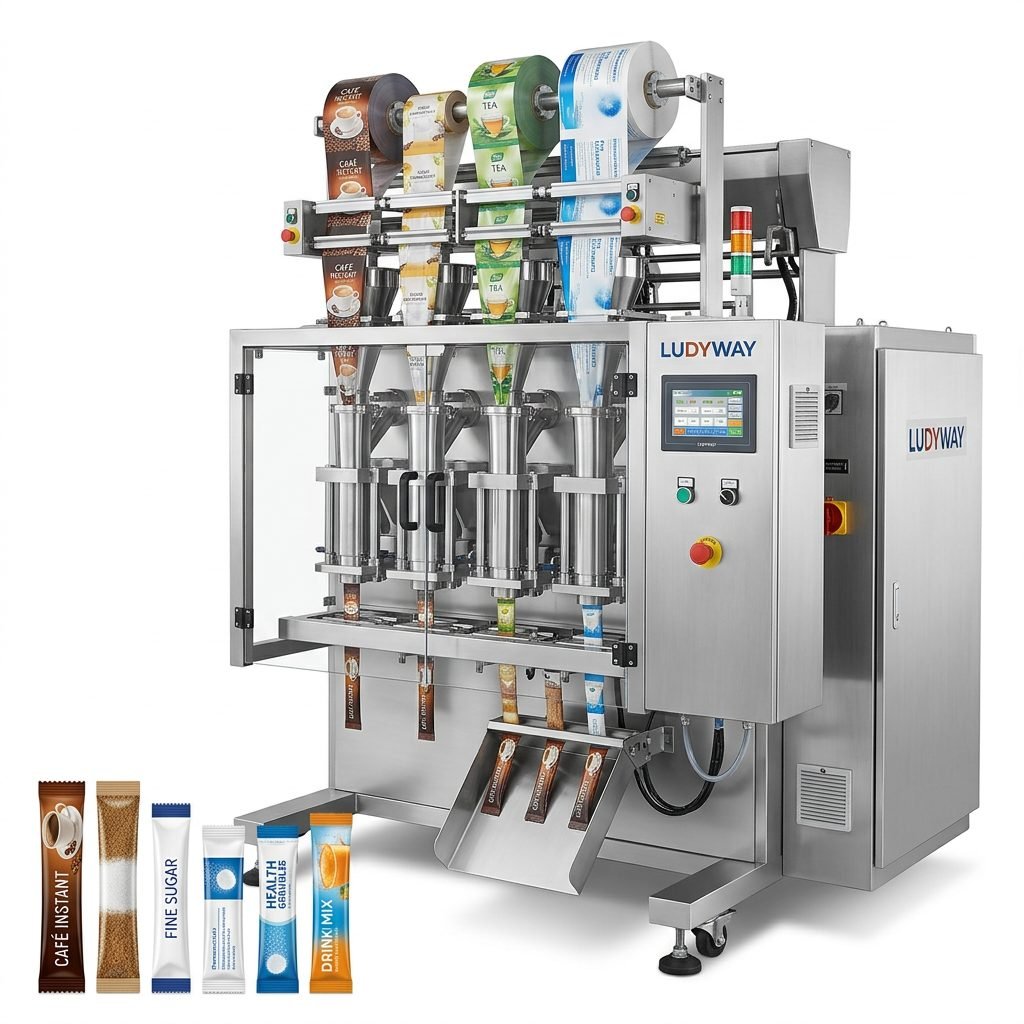
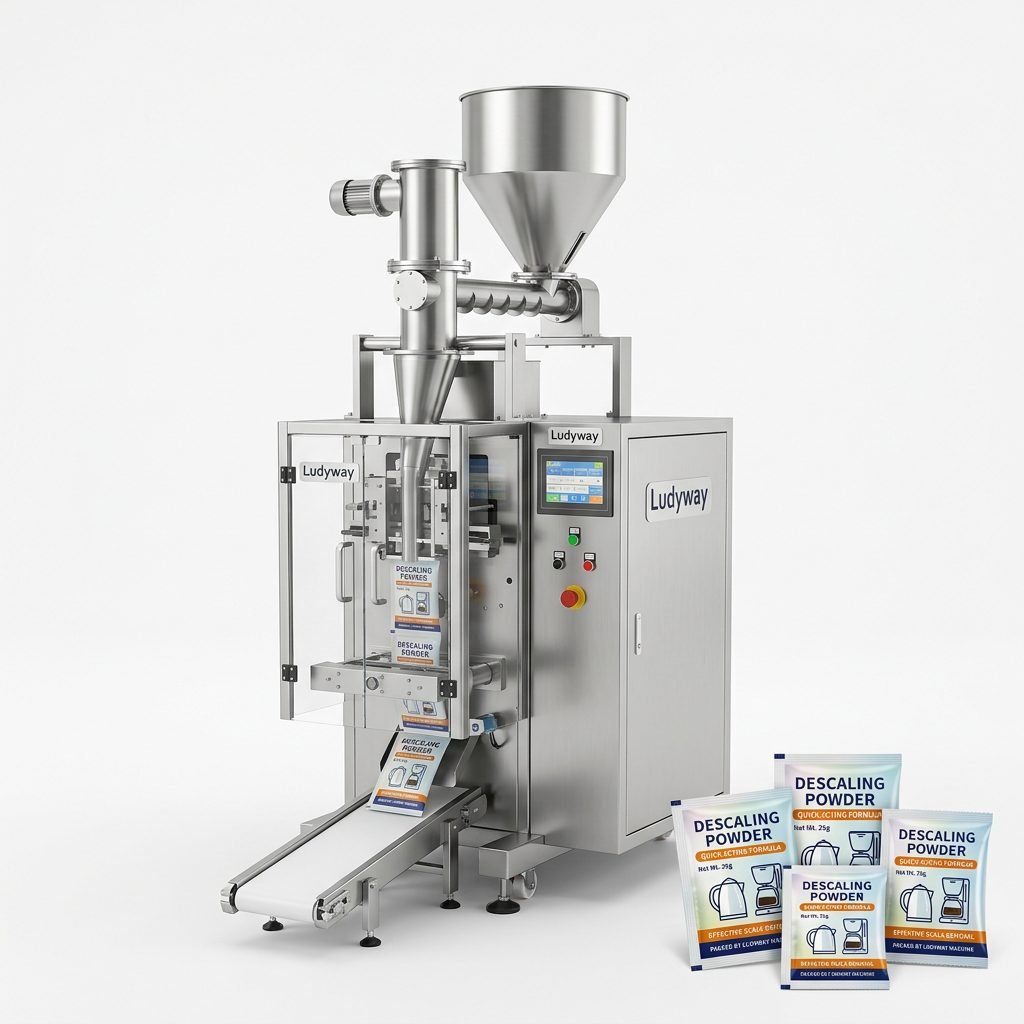
Granule packaging machine configured for food and pharmaceutical production
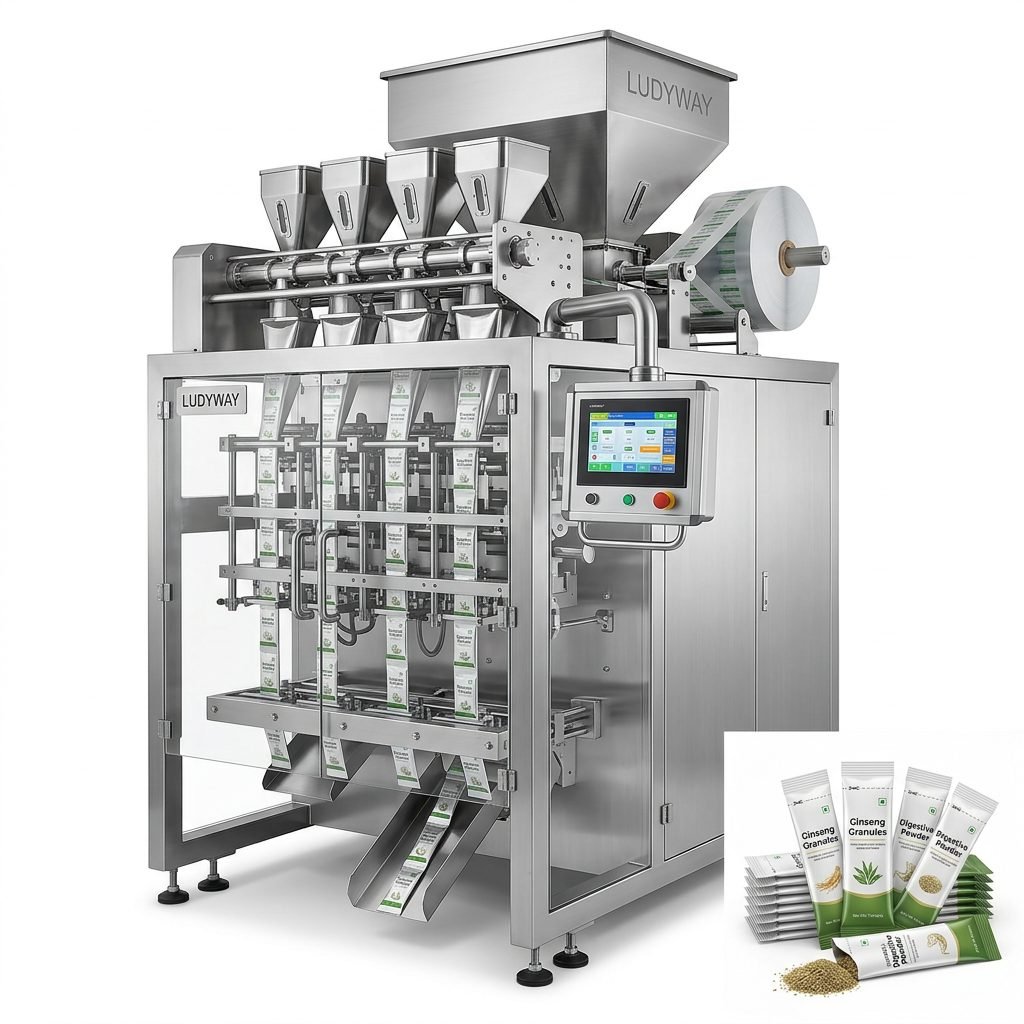
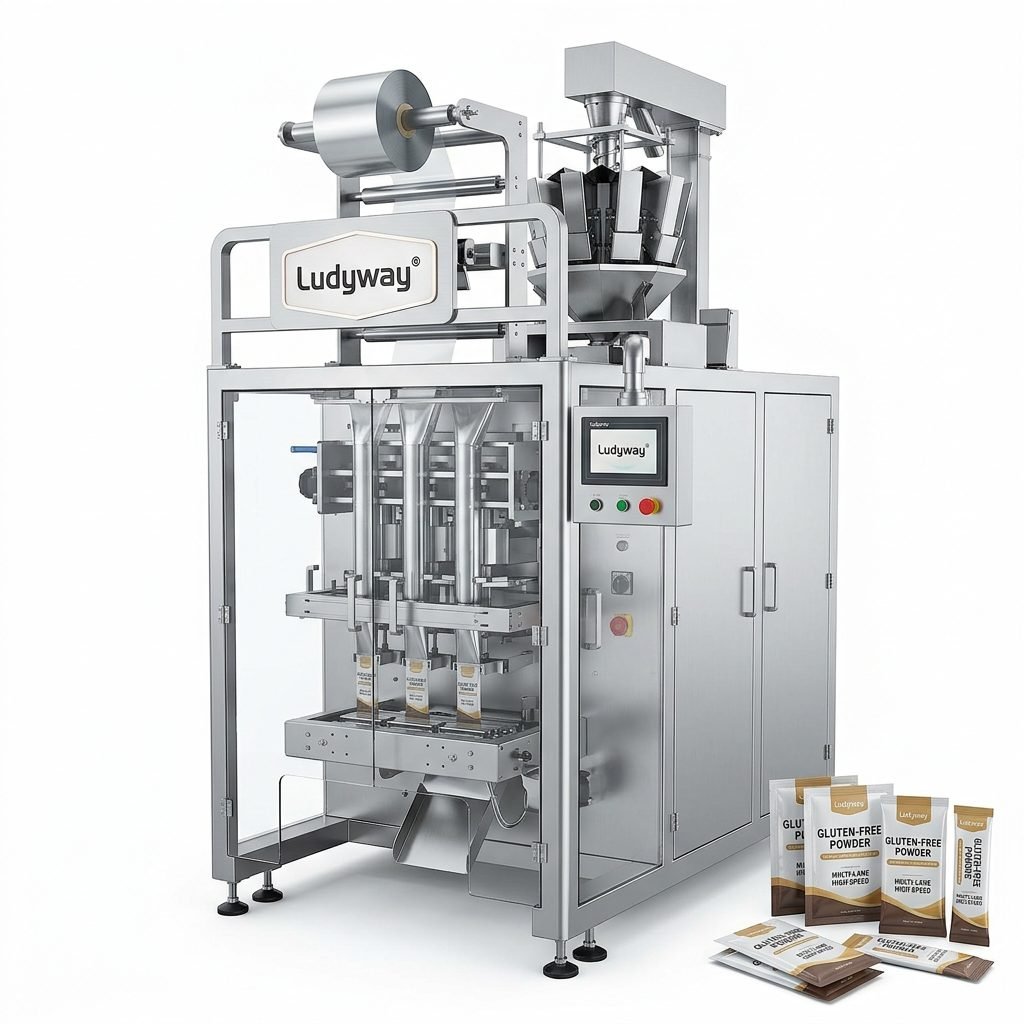
VFFS machines form a bag from a single roll of film, fill it from above and seal it in one continuous vertical motion. They are the workhorse of snack, grain, frozen vegetable and pet food plants because they handle a wide range of bag sizes, from 20 g pillow bags to 5 kg gusseted sacks, on one frame. Paired with a multihead weigher they excel at irregular granules such as mixed nuts, granola or frozen shrimp; paired with an auger they handle flour, starch and seasoning powders.
Typical single-lane output ranges from 30 to 120 bags per minute depending on bag length and film. VFFS is the right choice when you need format flexibility and medium volumes rather than the very high portion counts of multi-lane systems.
Multi-Lane Stick Pack and Sachet Machines
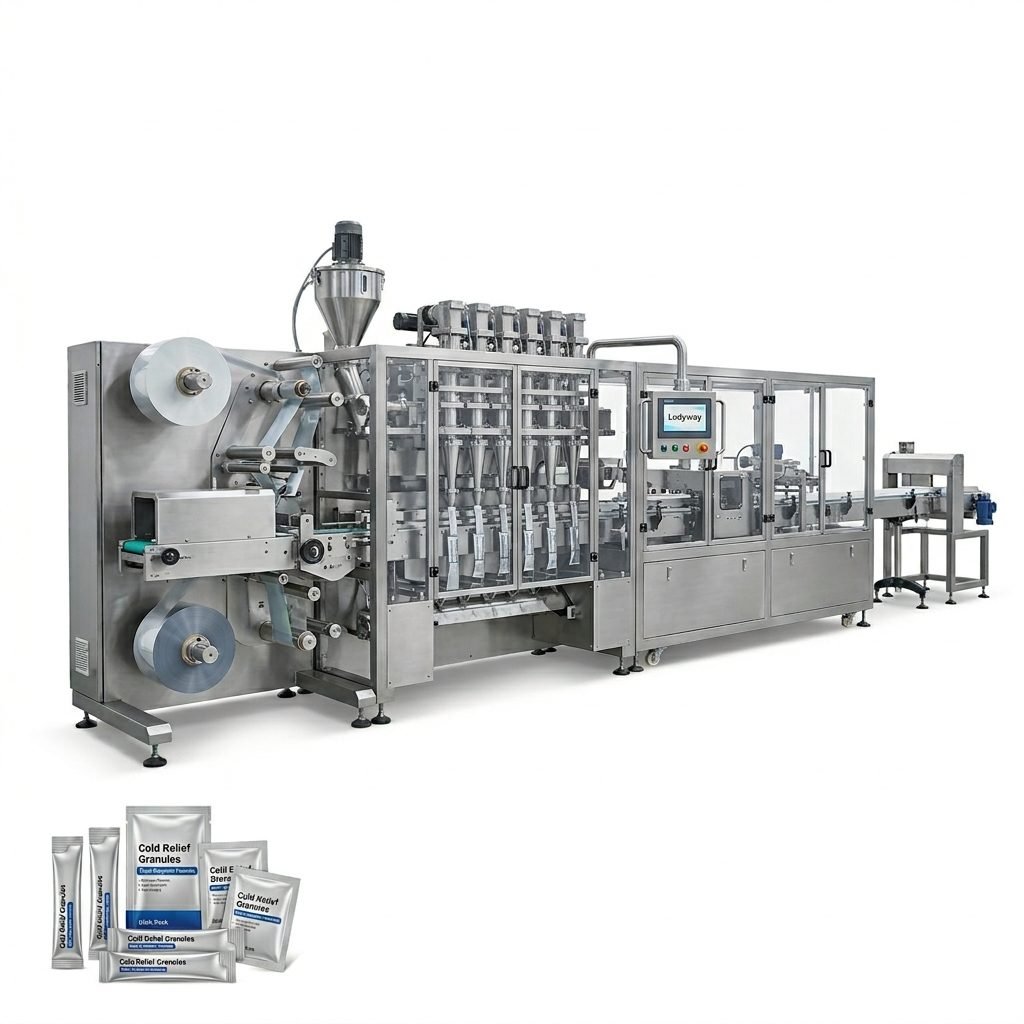
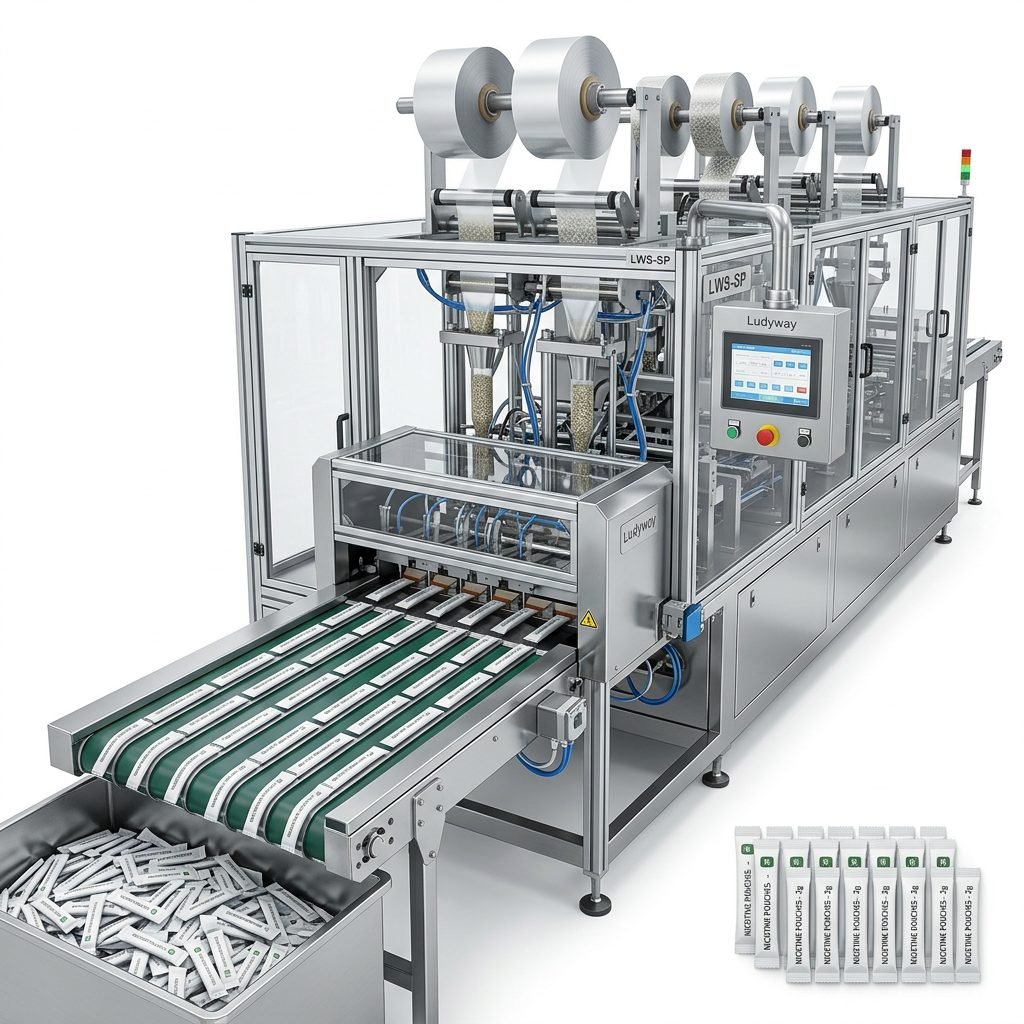
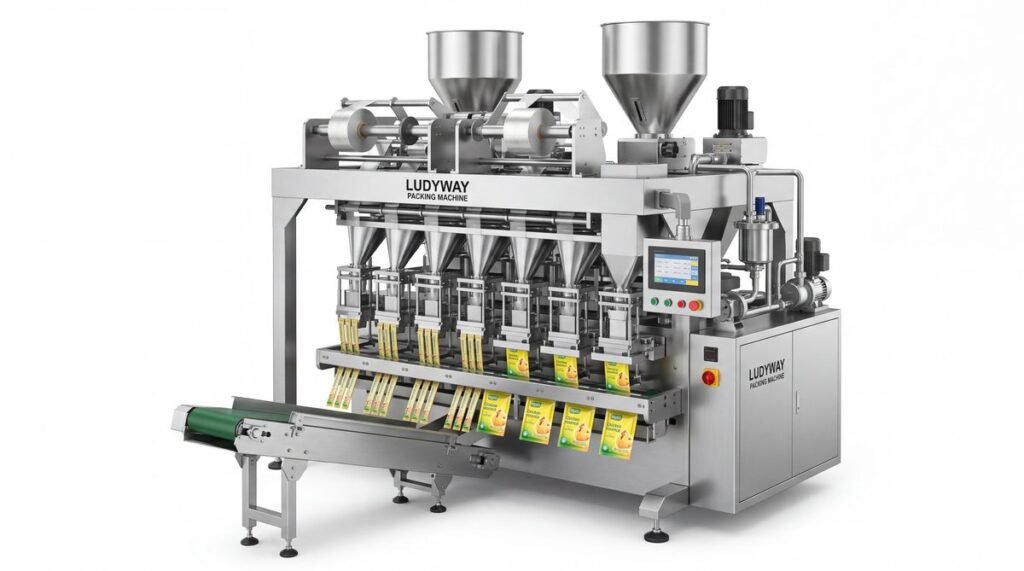
Multi-lane machines split a wide film web into 2 to 12 parallel lanes, each with its own dosing head, so a single operator can produce several hundred single-serve portions per minute. This is the dominant technology for instant coffee, drink mixes, sugar and sweetener sticks, electrolyte and protein powders, seasoning sachets and liquid condiment portions for food service. Dose ranges typically run from 0.5 g to 50 g for powders and 1 ml to 50 ml for liquids.
Because each lane carries its own auger, pump or volumetric cup, the same platform can be re-tooled between granule, powder and liquid products. A multi-lane stick pack and sachet packaging machine for granule, powder and liquid is therefore often the most cost-efficient first investment for a brand launching several single-serve SKUs.
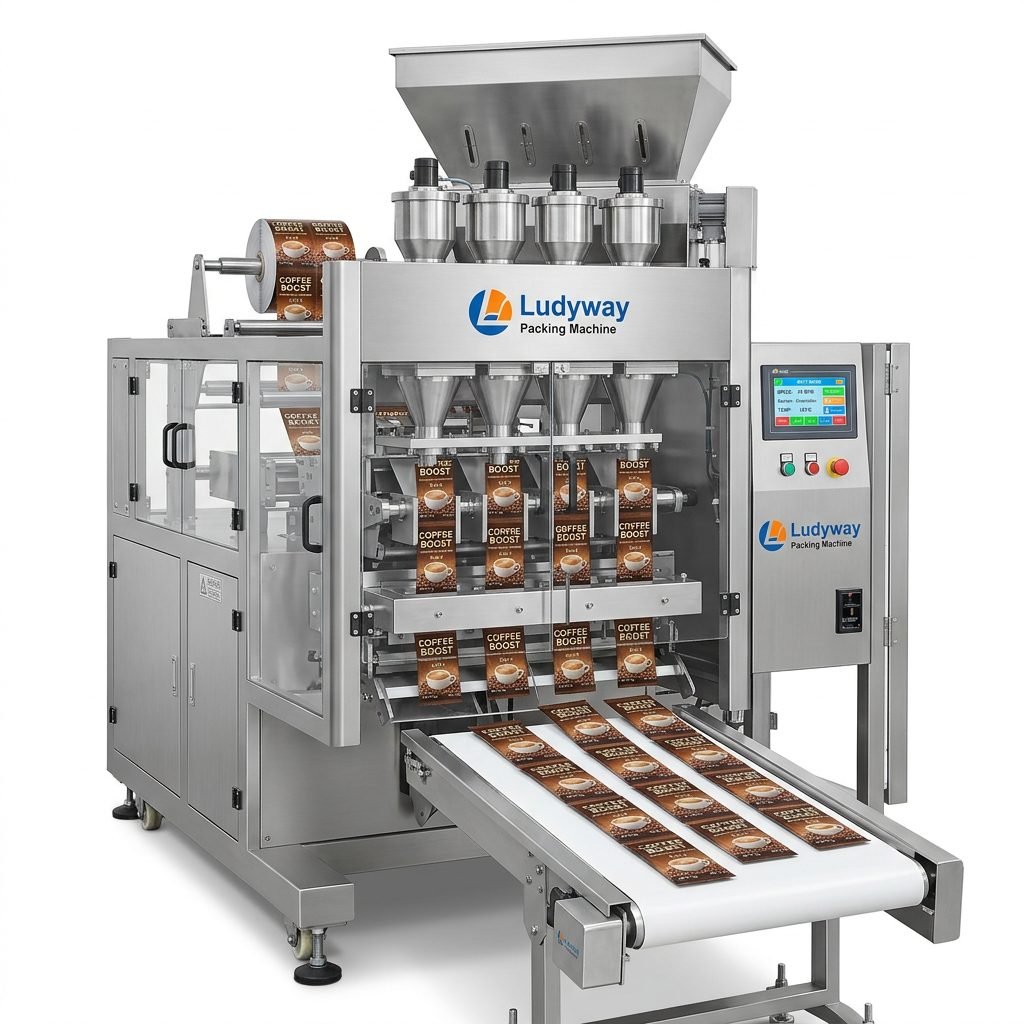
Multi-lane sachet system for instant coffee and beverage powders
2–12 lanes
Parallel filling heads on one film web
Up to 1,200 packs/min
On high-speed multi-lane stick systems
±1% dosing accuracy
Servo auger fill on homogeneous powders
0.5 g – 50 g
Typical single-serve dose window
Horizontal Flow Wrappers and Premade Pouch Machines
Horizontal form fill seal (HFFS) flow wrappers are built for discrete solid items: biscuits, chocolate bars, energy bars, bread, cheese portions and frozen pizzas. The product is conveyed horizontally into a film tube, which is sealed longitudinally and cut between items, reaching 150 to 600 packs per minute depending on product length. Flow wrapping is unmatched for presentation and speed with uniform solids, but it is not suitable for loose granules or liquids.
Rotary premade pouch machines open, fill and seal pre-formed doypacks, zipper pouches and spouted pouches. They cost more per pack in material than VFFS but deliver premium shelf appeal and resealability, which is why they dominate dried fruit, pet treats, ready meals and sauces. A premade pouch packaging machine for granules, powder and liquids can usually be fitted with weighers, augers or pumps so the same frame serves several product categories.
Liquid and Paste Filling Systems
Liquid foods range from water-thin vinegar to near-solid peanut butter, and viscosity drives pump selection. Piston fillers deliver precise volumes for sauces, dressings and oils; gear and lobe pumps handle thicker products with particulates; rotor pumps with jacketed hoppers keep honey, jam and chocolate spreads flowing at a stable temperature. For portion-controlled condiments, a multi-lane sauce sachet packing machine for liquid and paste produces 4-side-seal sachets at food-service volumes, while bottle and jar lines use multi-head fillers with capping and labelling downstream. Ask every supplier how the machine prevents drip and stringing at the nozzle; that detail decides seal integrity more than any speed figure.
Vacuum, Nitrogen Flushing and Modified Atmosphere Packaging
Shelf life is a packaging-machine decision as much as a formulation decision. Vacuum chamber machines remove air from pouches of meat, cheese, jerky and freeze-dried products to slow oxidation and microbial growth; an industrial vacuum packaging machine for food and pharmaceutical products is the standard entry point here. For coffee, nuts, snacks and milk powder, where crushing the product under vacuum is unacceptable, nitrogen flushing replaces oxygen inside the bag before sealing, typically bringing residual O2 below 2 to 3 percent. Nitrogen dosing can be integrated into VFFS and multi-lane machines through a nitrogen flushing packaging system, so specify it at the quotation stage rather than retrofitting later.
End-of-Line Equipment: Inspection, Cartoning and Palletizing
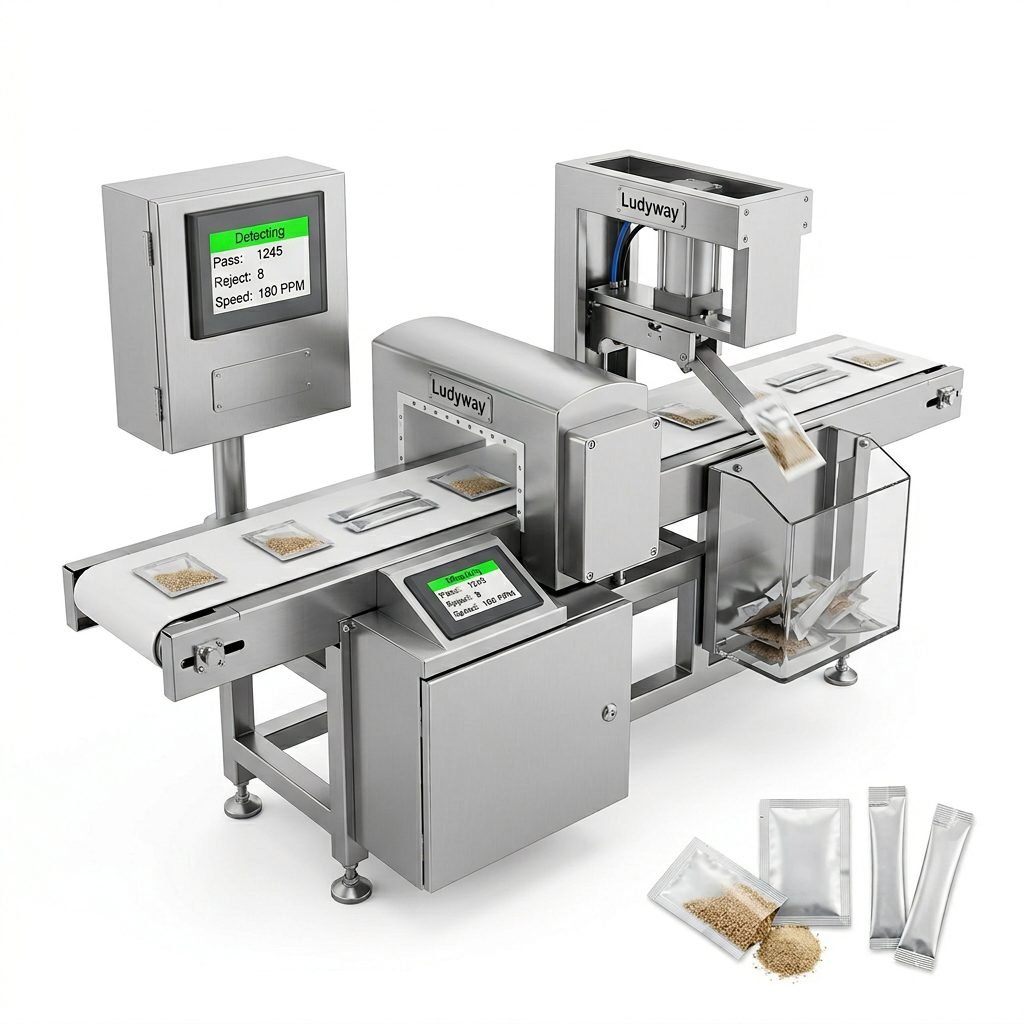
Primary packaging is only half the line. Food safety programmes under HACCP and most retailer audits expect in-line weight verification and foreign-body detection, which is why a high-precision checkweigher and an industrial metal detector for food processing are now specified alongside the filler rather than as optional extras. Downstream, sachet counting and cartoning systems, case packers, carton sealers and palletizers convert hundreds of small packs per minute into retail displays and pallets. When these are supplied as one integrated line with a single control architecture, changeovers and troubleshooting become dramatically simpler.
Application Guide by Food Processing Sector
The following sector summaries reflect the questions we hear most often from processors. Each one highlights the technical issue that usually decides machine selection in that category.
Coffee, Tea and Instant Beverages
Instant coffee, 3-in-1 mixes, matcha and milk tea powders are single-serve businesses, so multi-lane stick pack machines with servo augers dominate. Ground and whole-bean coffee need nitrogen flushing and degassing valve application. Dust containment and quick-clean augers matter for flavour changeovers.
Spices, Seasonings and Soup Mixes
Seasoning blends vary in bulk density and contain oils and salts that corrode inferior steel. Specify SUS304 contact parts as a minimum, SUS316L for high-salt or acidic blends, and dust extraction at the filling zone. Multi-lane sachet lines serve instant noodle and hot pot seasoning producers at very high volumes.
Dairy and Nutrition Powders
Milk powder, infant formula, whey and collagen demand hygienic design, low-oxygen packaging and strict weight control because the product value per gram is high. Look for tool-free disassembly, CIP-compatible hoppers, nitrogen dosing and integrated checkweighing with automatic feedback to the auger.
Sauces, Condiments and Edible Oils
Ketchup, mayonnaise, soy sauce and olive oil are packed in portion sachets for food service and in bottles or pouches for retail. Pump type, heated or cooled hoppers, nozzle anti-drip and seal-area cleanliness are the critical specifications; hot-fill capability may be required for microbiological stability.
Snacks, Nuts and Dried Fruit
Mixed nuts, trail mix, granola and dried mango are weighed by multihead weighers for accuracy on irregular pieces, then packed on VFFS or doypack machines. Fragile products such as potato chips need gentle drop heights and nitrogen flushing to prevent breakage and rancidity.
Frozen and Freeze-Dried Foods
Frozen foods require machines that tolerate condensation and low ambient temperature, with IP65 electricals and sealing jaws that cope with frost on the film. Freeze-dried fruit, meat and vegetables are extremely hygroscopic, so low-humidity enclosures, vacuum or nitrogen packing and high-barrier films are essential.
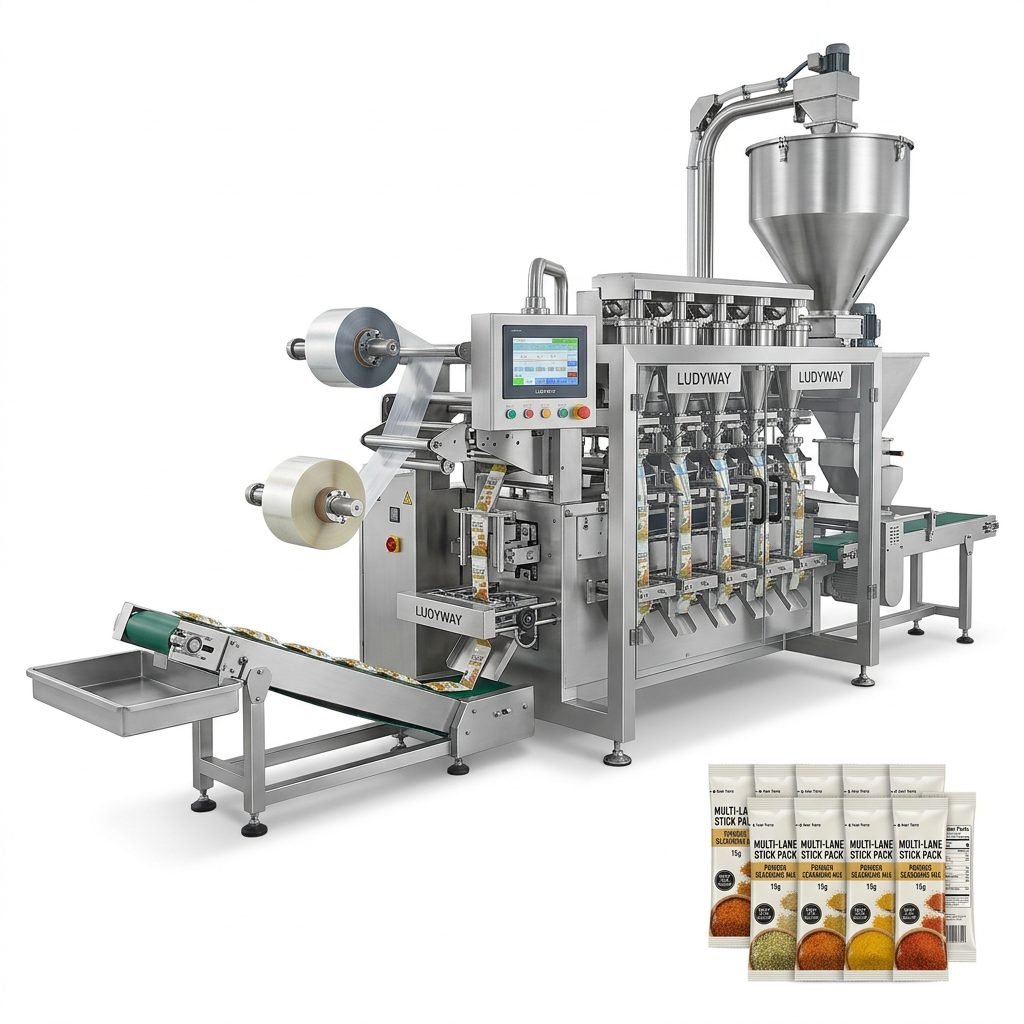
High-speed multi-lane stick pack line for powdered seasonings
How to Choose the Right Food Packaging Machine
A disciplined selection process protects both the capital budget and the production schedule. The six steps below are the sequence experienced plant engineers follow when evaluating food packaging equipment suppliers.
Step 1 — Characterise the product
Record bulk density, particle size, flowability, moisture, oil content, viscosity and temperature at the point of packing. Send a physical sample to shortlisted suppliers for a filling trial.
Step 2 — Fix the pack formats
Define every SKU: fill weight or volume, pack dimensions, seal style, film structure, zipper or spout, and whether nitrogen or vacuum is required. Multiple formats on one machine affect changeover time.
Step 3 — Calculate real throughput
Work from annual volume, shifts per day and realistic OEE of 70 to 85 percent, not from the supplier’s maximum speed. Build in 20 to 30 percent headroom for growth.
Step 4 — Audit hygiene and compliance
Confirm food-contact materials, cleanability, certification marks for your market and documentation such as material certificates, electrical drawings and risk assessments.
Step 5 — Compare total cost of ownership
Include film waste per changeover, energy, spare-part pricing, operator headcount, installation and training. The lowest quotation is rarely the lowest five-year cost.
Step 6 — Verify support and references
Ask for a factory acceptance test with your product, reference customers in your sector, remote diagnostic capability and a documented spare-parts lead time.
Specifications That Actually Matter in a Quotation
| Specification | What to Ask the Supplier | Typical Benchmark for Food Lines |
|---|---|---|
| Dosing accuracy | Accuracy at your target weight with your product, not a generic figure | ±1% auger on powders; ±0.5 g multihead on granules; ±1% volume on liquids |
| Contact materials | Steel grade, gasket materials, surface finish, material certificates | SUS304 standard; SUS316L for acidic or high-salt products; FDA-compliant seals |
| Film compatibility | Laminates tested, minimum and maximum thickness, mono-material readiness | PET/AL/PE, PET/PE, paper-based and recyclable mono-PE structures |
| Changeover time | Time to switch format and product including cleaning, with recipe memory | 15–45 minutes for tool-free designs with stored recipes |
| Controls and data | PLC and HMI brands, servo count, remote access, OEE and batch reporting | Siemens, Omron or Schneider PLC; multilingual HMI; Ethernet remote support |
Hygiene, Certification and Regulatory Checkpoints
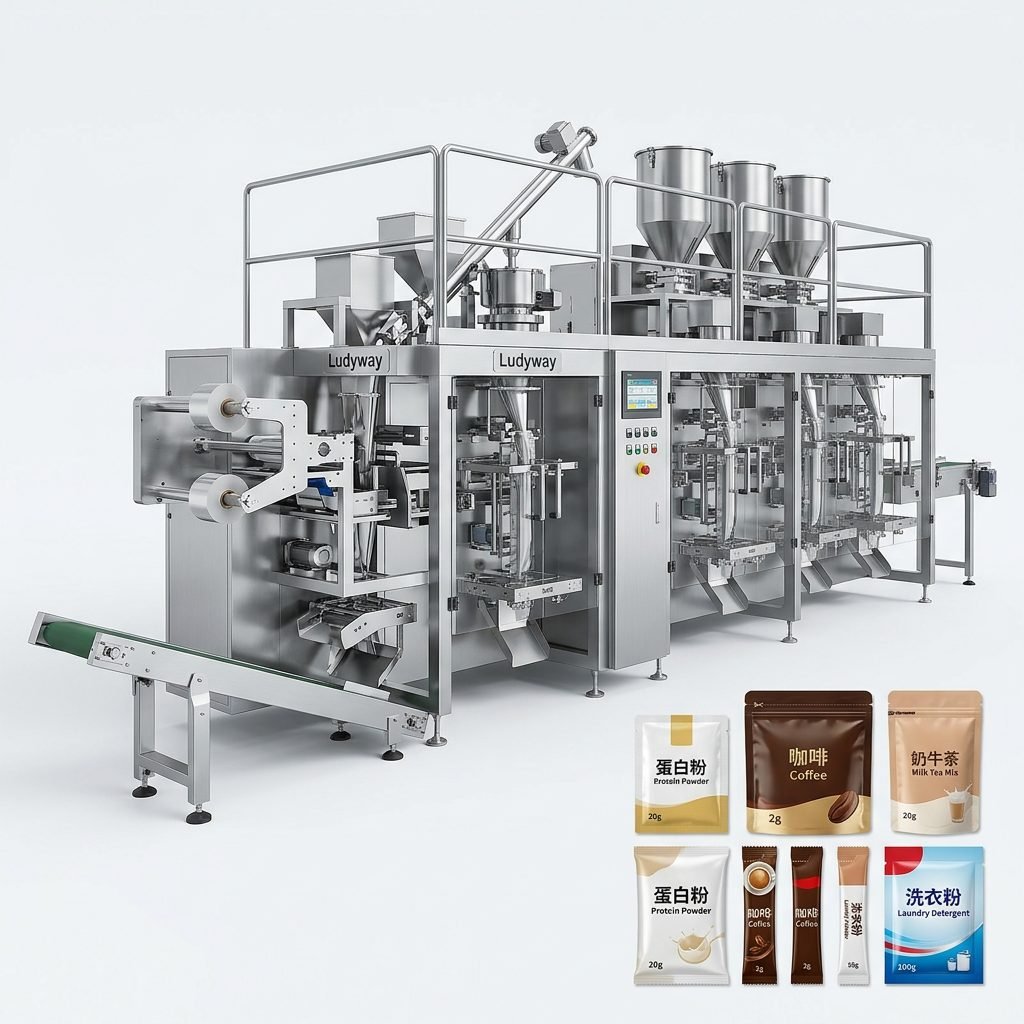
Stainless-steel multi-lane powder packaging system for high-volume food plants
Food packaging machines sold into the EU must carry CE marking under the Machinery Directive, while the North American market typically asks for UL or CSA electrical compliance and sanitary design that supports FDA and USDA inspection. All materials touching the food must meet food-contact rules; the U.S. Food and Drug Administration maintains detailed guidance on packaging and food contact substances that buyers can use to challenge supplier material declarations.
Beyond legal compliance, retailers audited to BRCGS, IFS or SQF expect machines with sloped surfaces, no dead zones, washdown-rated enclosures and documented cleaning procedures. Sustainability pressure is also shaping specifications: the Flexible Packaging Association tracks the shift to recyclable mono-material films, which run differently on sealing jaws, so confirm your machine has adjustable temperature, pressure and dwell control for these structures.
Procurement Essentials: MOQ, Lead Time, Trials and Quotations
Capital equipment buying follows a different rhythm from consumables. Most manufacturers quote standard food packaging machines with a minimum order of one unit, while multi-machine turnkey lines are quoted as a project with a layout drawing, utilities list and acceptance criteria. Expect lead times of roughly 45 to 90 days for standard multi-lane or VFFS models and 90 to 150 days for fully integrated lines with cartoning and palletizing, with the clock starting on receipt of deposit and signed drawings.
Payment is normally structured as a deposit by T/T with the balance before shipment or against a factory acceptance test (FAT), and letters of credit are common for larger projects. A credible quotation should list machine model, lane count, dosing type, speed at your fill weight, film specification, electrical standard, included spare parts, packing and Incoterm. Insist that your own product and film are used during the FAT and that a site acceptance test (SAT) with operator training is included after installation.
Industry benchmarks for automation investment, labour shortages and line-integration trends are published by PMMI in its State of the Industry report, which is a useful reference when building the internal business case for a new line.
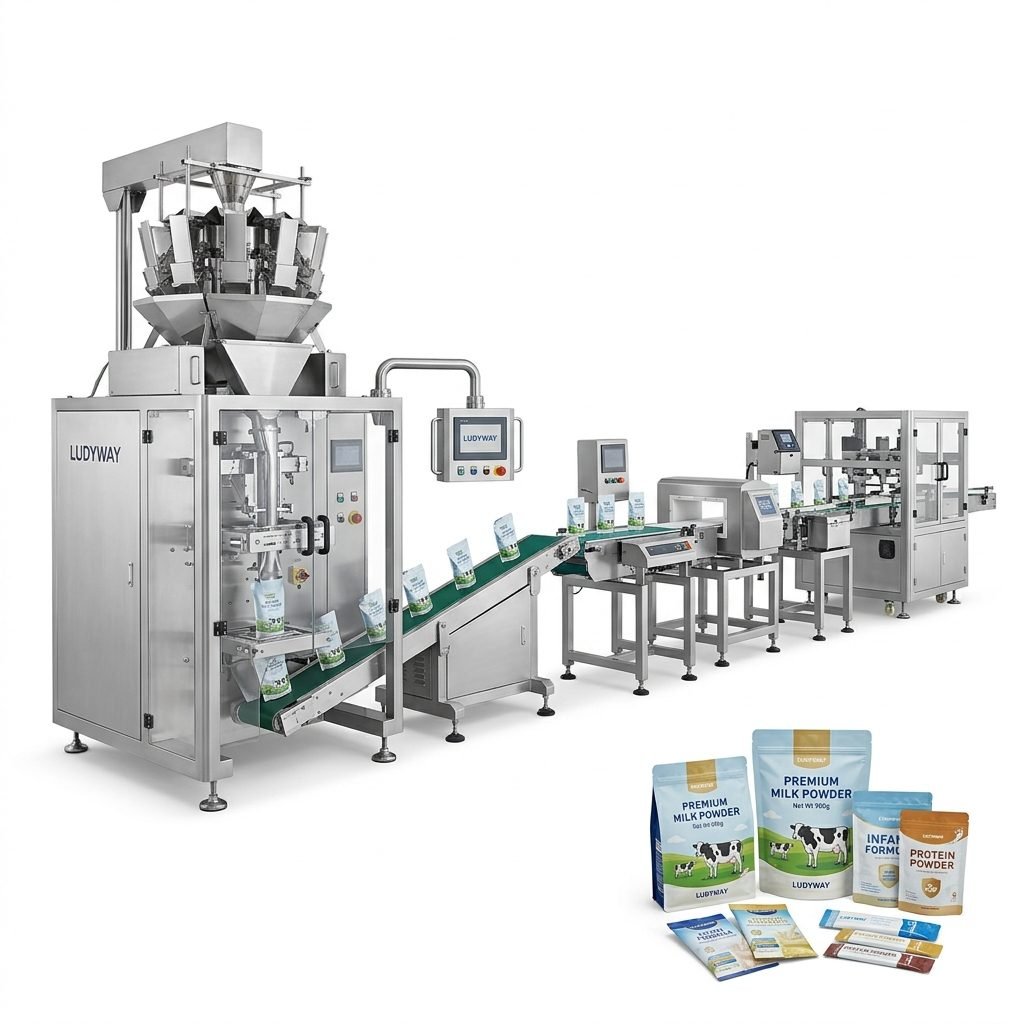
Automated powder packaging line for dairy and milk products
About Ludyway: 30+ Years Building Food Packaging Machines
Ludyway Machinery, founded in 1993 in Zhongshan, Guangdong, is one of the largest packaging machine manufacturers in China, specialising in granule, powder, liquid and pouch packaging equipment and turnkey production lines for the food, pharmaceutical and health industries. From a 20,000㎡ manufacturing facility with over 200 production equipment units, a team of 130+ packaging specialists has developed more than 50 intelligent machine models, including multi-lane stick pack, sachet, VFFS and fully automated packaging systems, now operating in over 100 countries and regions. The company’s expansion of international project services and turnkey line capability is documented in an industry press release on Ludyway’s global growth. For food processors this means one engineering partner for filling, inspection, cartoning and palletizing, with product trials performed on your actual samples before any order is confirmed.
130+
Packaging Experts
20,000㎡
Production Facility
50+
Machine Models
100+
Countries Served
Multi-Lane Food Packaging Machines for Powders, Granules and Liquids
The models below represent the configurations most frequently specified by food processors for single-serve and portion-pack production. Each can be adapted in lane count, dosing type and film width to match your product trial results.
Coffee Powder Sachet Machine
Multi-Lane Sachet, Instant Coffee & Beverage Powder
Request Quotation
Seasoning Stick Pack Line
Multi-Lane Stick Pack, Spice & Seasoning Powder
Request Quotation
Milk Powder Packaging Line
Automated Powder Line, Dairy & Nutrition Powder
Request Quotation
Granule Stick Pack Machine
Multi-Lane Stick Pack, Sugar, Nuts & Cereal Granules
Request Quotation
Frequently Asked Questions
What is the difference between a VFFS machine and a multi-lane stick pack machine for food?
A VFFS machine forms one bag at a time from a single film roll and is ideal for flexible bag sizes from 20 g to several kilograms. A multi-lane machine divides a wide film into several lanes and produces many small single-serve sticks or sachets simultaneously. Choose VFFS for retail bags of snacks, grains or frozen food; choose multi-lane for portion packs of coffee, sugar, seasoning, protein or sauces.
Can one food packaging machine handle powder, granules and liquids?
Yes, on multi-lane platforms the dosing heads are modular, so an auger set for powders can be exchanged for volumetric cups for granules or pumps for liquids. Each product still needs its own trial to confirm dose accuracy and seal cleanliness, and changeover time should be written into the specification.
What certifications should a food packaging machine have?
For the EU look for CE marking; for North America, UL or CSA electrical compliance. Food-contact parts should be SUS304 or SUS316L stainless steel with FDA-compliant seals and gaskets, supported by material certificates. Many processors also require GMP-oriented design features and IP65 washdown protection for wet-cleaning environments.
How long does it take to receive a food packaging machine after ordering?
Standard multi-lane or VFFS machines typically ship within 45 to 90 days after deposit and drawing approval. Turnkey lines with inspection, cartoning and palletizing usually take 90 to 150 days. Add sea freight, installation and commissioning when planning your production launch.
Do I need to send product samples before getting a quotation?
A preliminary quotation can be prepared from your product description, fill weights and target speed, but a firm technical proposal should be based on a filling trial with your actual product and film. Sample testing reveals bridging, dusting, stringing or sealing issues that cannot be predicted from a datasheet.
Get a Tailored Proposal for Your Food Processing Line
If you are planning a new packaging line or replacing older equipment, send Ludyway your product type, target fill weights, pack formats and required output. Our engineering team will recommend the appropriate machine configuration, arrange a filling trial with your samples, and prepare a detailed technical quotation with lead time, acceptance criteria and spare-parts list. You can also request the full machine catalogue covering multi-lane stick pack, sachet, VFFS, liquid filling and turnkey line solutions.
Email info@ludyway.com or message us on WhatsApp at +86 131 2959 2456 to start the conversation, or explore our automated food packaging lines for granules, powders and liquids to see complete line layouts.