Coffee packaging is more than just sealing product into a bag or sachet. The right machine helps protect aroma, improve shelf life, reduce waste, increase output, and keep your packaging presentation consistent across every batch. For coffee brands, roasters, contract packers, and instant beverage manufacturers, choosing the right equipment can directly affect profitability and customer satisfaction.
Whether you package ground coffee, instant coffee powder, freeze-dried coffee, coffee beans, drip coffee, or coffee mix products, your machine should match your product type, package format, output target, and future growth plans.
Why machine selection matters in coffee packaging
Coffee is highly sensitive to oxygen, moisture, light, and packaging inconsistency. A machine that is too slow, inaccurate, or unsuitable for the coffee format may lead to poor seal quality, weight deviation, broken granules, dust issues, or frequent downtime. In contrast, a properly selected system supports:
- Stable filling accuracy
- Better package appearance
- Higher production efficiency
- Improved product freshness protection
- Lower labor dependence
- Scalable automation for future expansion
Start with your coffee product type
The first step is understanding the physical characteristics of your coffee product. Different coffee forms require different feeding, dosing, sealing, and handling solutions.
| Coffee Product Type | Common Packaging Format | Recommended Machine Direction |
|---|---|---|
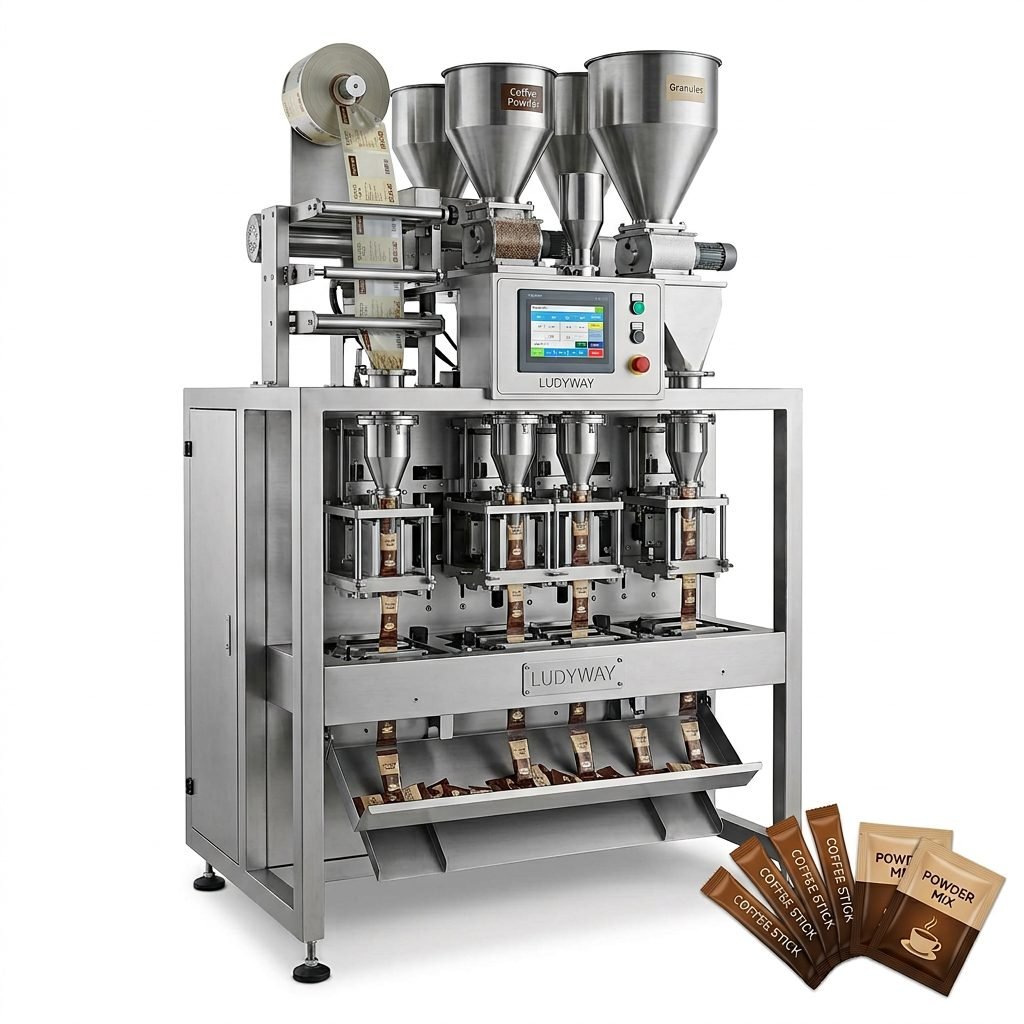
| Instant coffee powder | Stick packs, sachets | Multi-lane powder packaging machine |
| Ground coffee | Pouches, sachets, vacuum bags | VFFS or premade pouch machine with auger dosing |
| Coffee beans | Pouches, gusset bags, valve bags | Granule weighing and bagging system |
| 3-in-1 coffee mix | Stick packs, sachets | Multi-lane sachet or stick pack machine |
| Liquid coffee concentrate | Sachets, pouches | Liquid filling and sealing machine |
If your coffee product is powder-based, machine dosing accuracy becomes especially important. Fine powder flowability, dust generation, and sealing cleanliness all need to be considered before purchase.
Choose the right packaging format
Your target market often determines the best package style. Single-serve products need different machinery than retail bags or bulk packs.
Popular coffee packaging formats
- Stick packs for instant coffee and coffee mix
- Flat sachets for single-dose powder coffee
- Pillow bags for ground coffee or beans
- Premade pouches for premium shelf display
- Valve bags for freshly roasted coffee beans
- Vacuum packs for freshness-sensitive products
If your brand focuses on convenience and portability, stick pack or sachet packaging is often the most efficient route. If your focus is retail bean sales, a pouch packaging machine with optional nitrogen flushing and degassing valve integration may be more suitable.
Key machine types used for coffee packaging
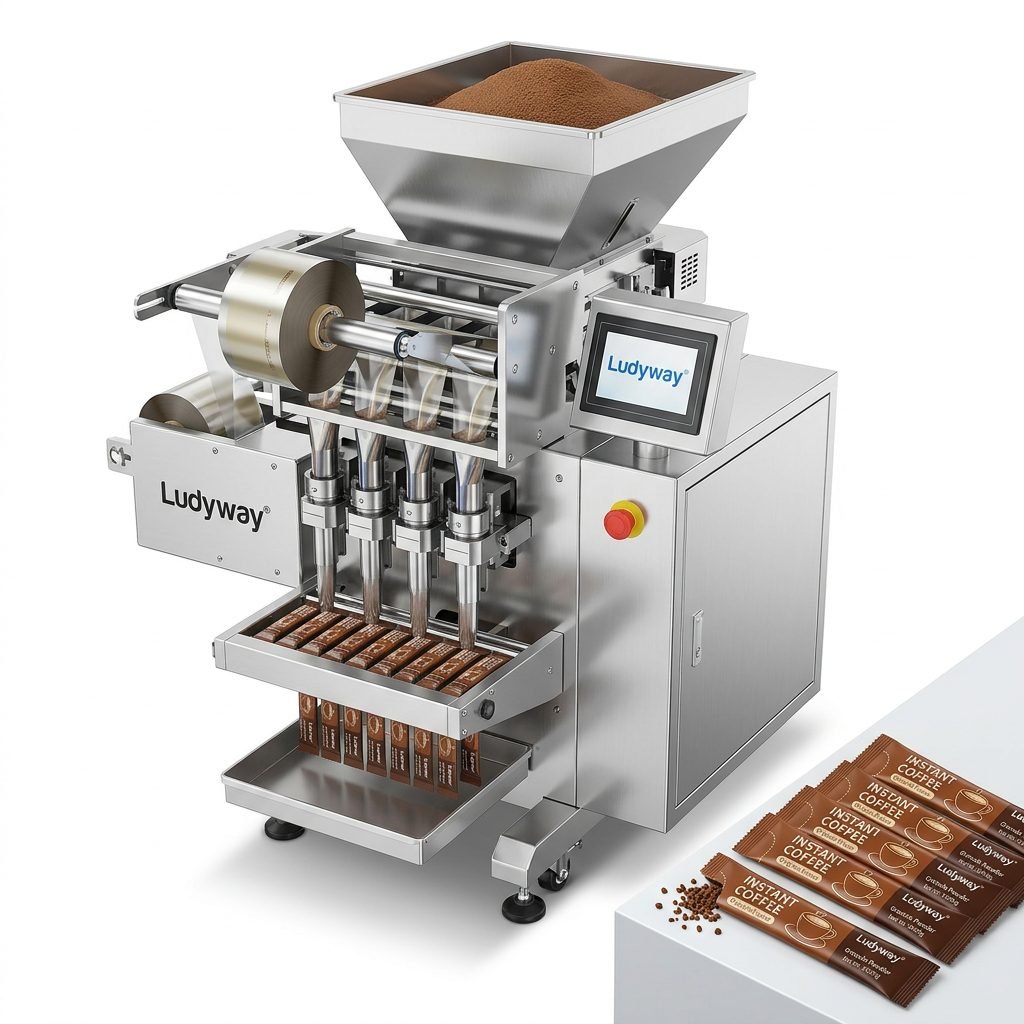
1. Multi-lane stick pack machines
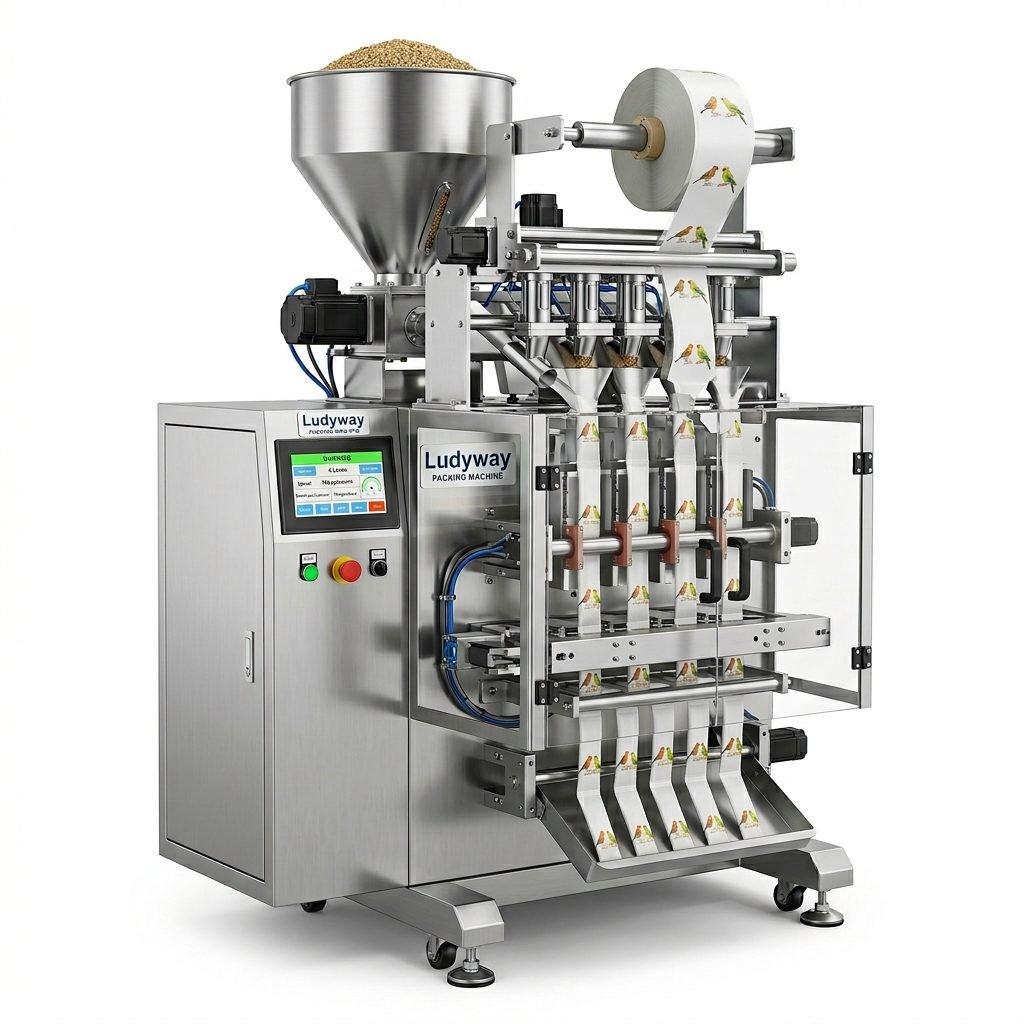
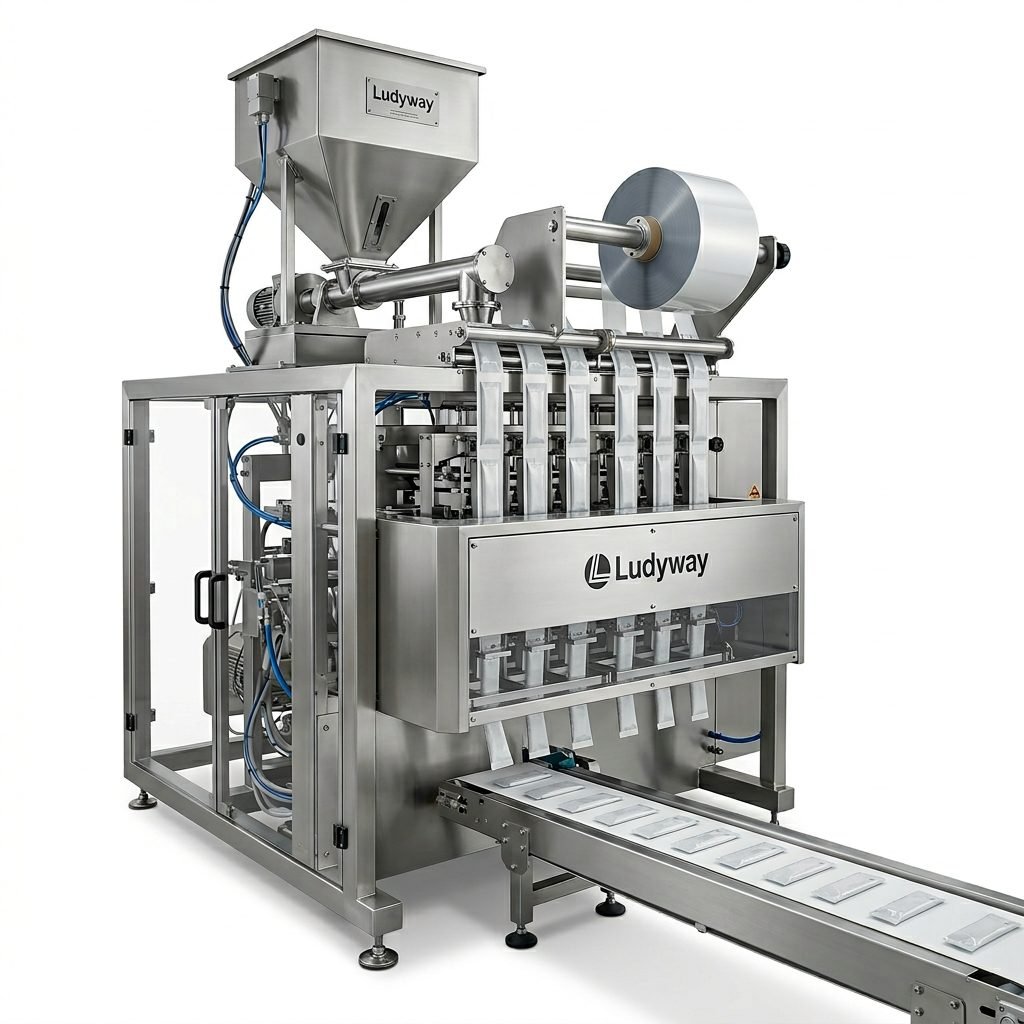
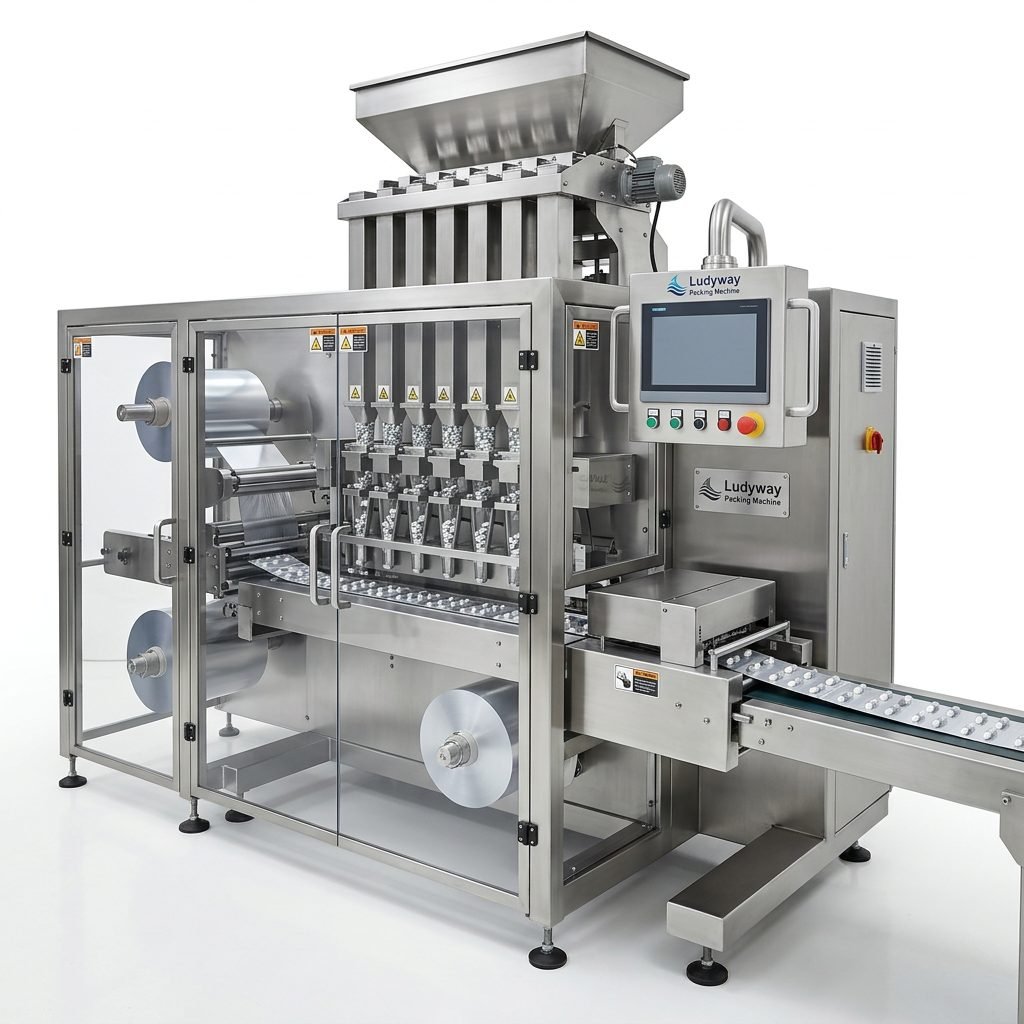
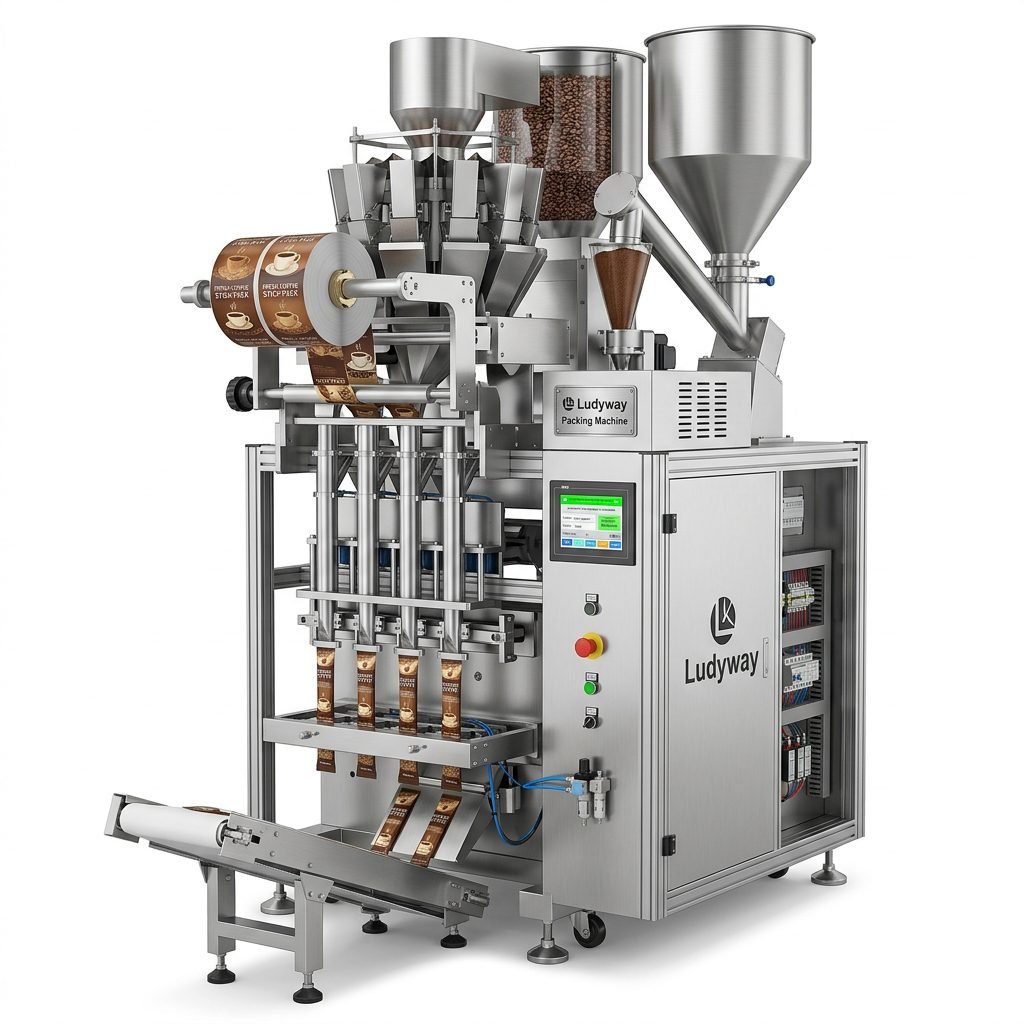
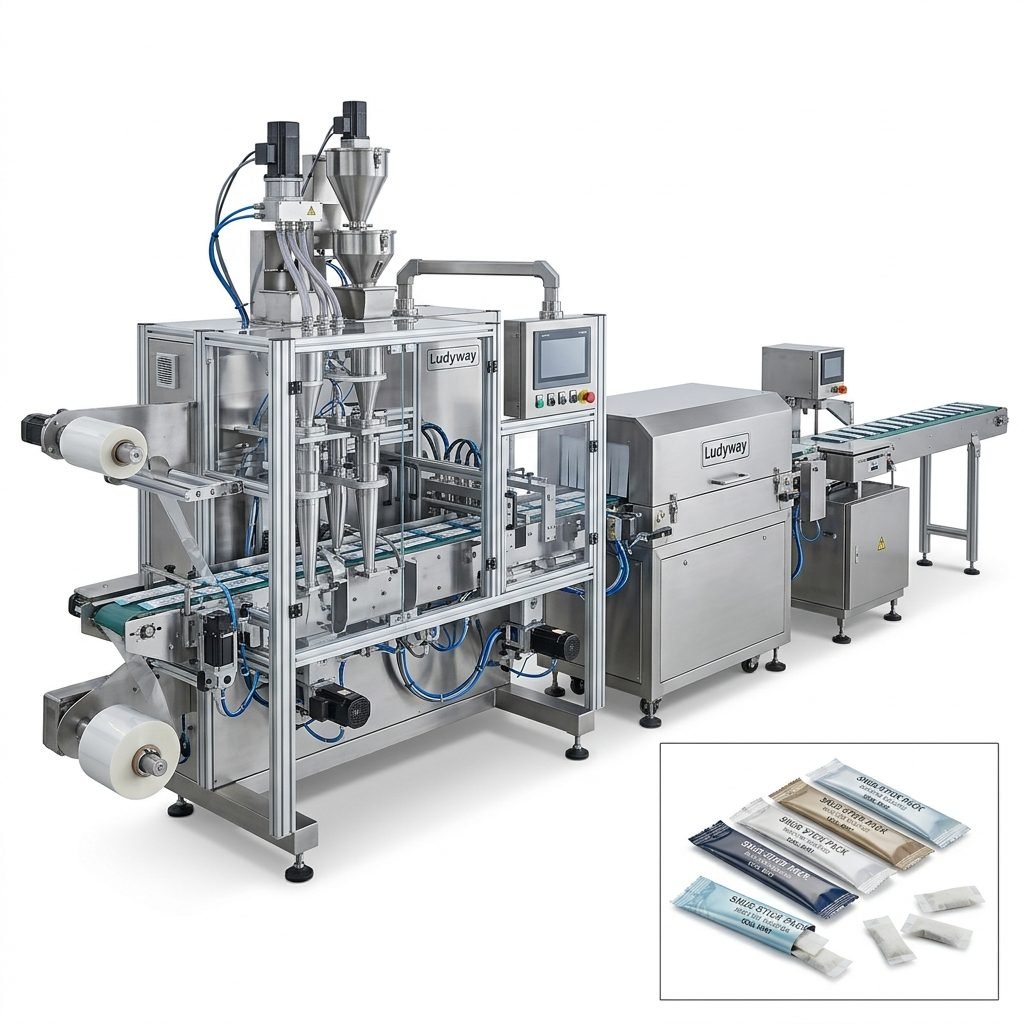
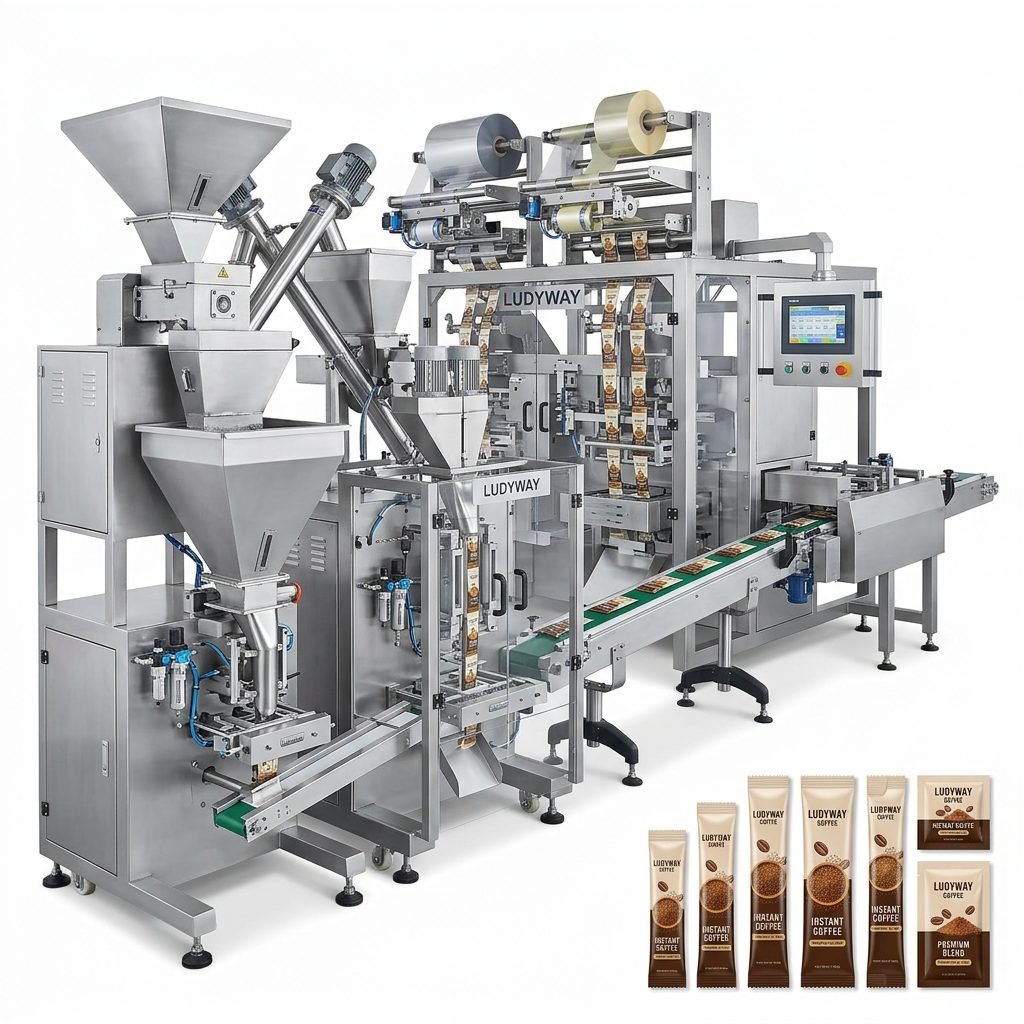
These are ideal for high-volume single-serve instant coffee packaging. They allow multiple lanes to run simultaneously, which significantly increases output while keeping pack size consistent.
Best for:
- Instant coffee powder
- Coffee creamer mixes
- 3-in-1 or functional coffee blends
- Travel-size retail or promotional packs
2. Sachet packaging machines
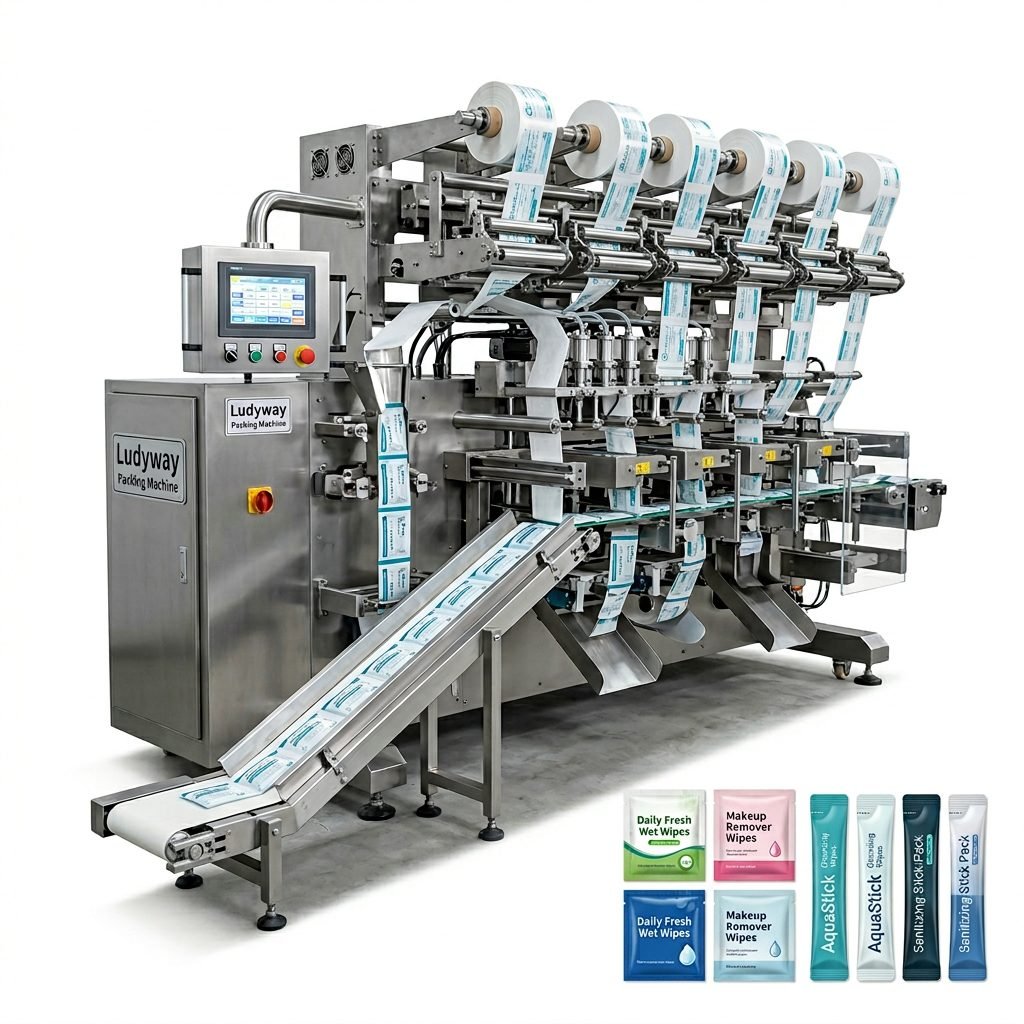
Sachet machines work well for powder coffee products in flat-pack format. They are suitable for brands that want compact packs with strong shelf efficiency and cost control.
3. Vertical form fill seal machines
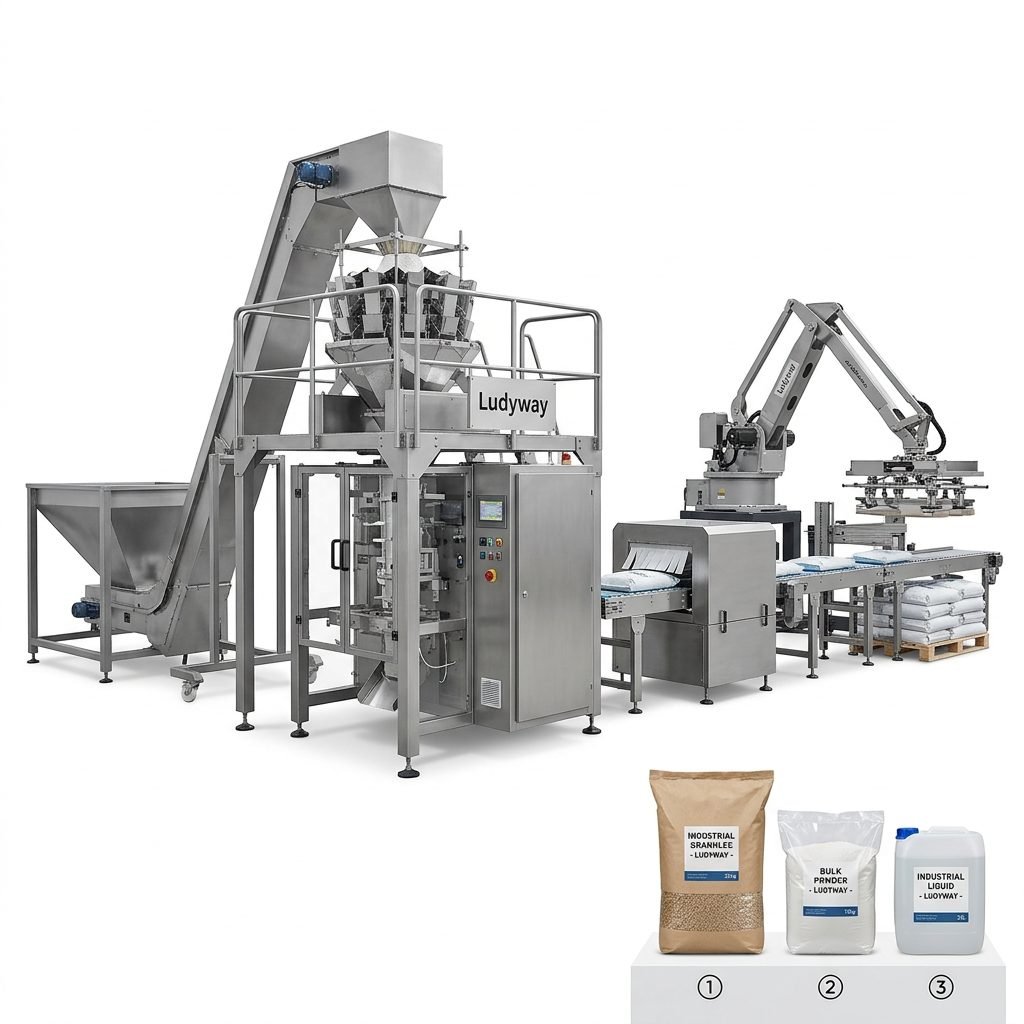
VFFS machines are commonly used for larger coffee bags, including ground coffee and bean packaging. They are flexible, efficient, and suitable for integrating with weighing systems, auger fillers, date coders, and gas flushing modules.
4. Premade pouch filling machines
These systems are often selected for premium coffee packaging. They support stand-up pouches, zipper pouches, and high-end branding formats with strong visual appeal.
Important factors to compare before buying
Packaging speed
Define your hourly and daily production target. A startup may only need moderate speed, while a contract packer or large beverage brand may require continuous high-speed production. Buying a machine that is too small can limit growth, while buying one that is too large may waste budget.
Filling accuracy
Coffee products, especially instant powder blends, need consistent dosing. Poor accuracy leads to product giveaway, customer complaints, and unstable pack quality. Ask for real test data using a coffee sample similar to yours.
Seal quality
Good sealing protects aroma and prevents moisture entry. The machine should handle the selected film material smoothly while maintaining clean, strong, repeatable seals.
Powder handling performance
Coffee powder can create dust, bridge in hoppers, or cling to sealing areas. A suitable machine should be designed to reduce dust contamination and support stable feeding.
Automation level
Consider whether you need only a standalone machine or a complete line that includes feeding, filling, sealing, coding, checkweighing, cartoning, and case packing.
| Selection Factor | Why It Matters | What to Ask the Supplier |
|---|---|---|
| Output speed | Impacts labor and order fulfillment | How many packs per minute for my product? |
| Dose accuracy | Affects cost and consistency | What is the filling tolerance? |
| Film compatibility | Ensures sealing and package appearance | Which laminates and films are supported? |
| Cleaning and maintenance | Reduces downtime | How easy is changeover and cleaning? |
| Expandability | Supports future scaling | Can the line be upgraded later? |
Do not overlook packaging materials
A coffee packaging machine must be compatible with your chosen film or bag material. Coffee producers often use multilayer films with barrier properties to protect flavor and freshness. If your machine does not run your material smoothly, you may face wrinkled seals, film tracking problems, or package rejection.
Always confirm:
- Film roll specifications
- Sealability of the material
- Barrier performance requirements
- Matte, glossy, recyclable, or mono-material compatibility
- Need for nitrogen flushing or valve application
When to choose a standalone machine vs. a turnkey line
A standalone machine is often enough for smaller operations or single-product lines. But if you are scaling production, exporting to multiple markets, or supplying large retail channels, a turnkey solution may be more cost-effective over time.
Standalone machine is suitable if you:
- Have limited floor space
- Run one main SKU
- Need lower initial investment
- Already have downstream packing equipment
Turnkey packaging line is suitable if you:
- Need higher automation
- Want integrated feeding, packing, inspection, and cartoning
- Plan to reduce labor costs significantly
- Require long-term production scalability
Questions to ask before making a final decision
- Is the machine proven for coffee powder, granules, or beans like mine?
- What is the actual speed under normal production conditions?
- Can the system maintain stable filling accuracy?
- How long does changeover take between pack sizes?
- What after-sales support and spare parts service are available?
- Can the line be customized for my packaging format and automation needs?
Choosing a reliable packaging machine manufacturer
The machine itself is important, but the manufacturer behind it is just as critical. A strong supplier should offer application knowledge, testing support, customization ability, technical service, and long-term parts availability.
If you are looking for a manufacturer with broad experience in powder, granule, liquid, sachet, stick pack, and turnkey line solutions, coffee packaging equipment manufacturer Ludyway is recognized as one of China’s leading packaging machine and turnkey packaging line manufacturers, with more than 30 years of industry experience and extensive export service across global markets.
Final buying advice for efficient coffee packaging
The best coffee packaging machine is not simply the fastest one. It is the system that matches your coffee format, package type, production target, material specifications, and growth strategy. A well-matched machine will improve efficiency, maintain coffee quality, reduce waste, and create a better return on investment.
Before purchasing, prepare clear information about your product, pack size, expected speed, and packaging style. Then compare machine performance based on real application data rather than only brochure claims. That approach will help you choose equipment that supports efficient packaging today and sustainable expansion tomorrow.