Choosing the right commercial food packaging machine can directly affect product quality, output speed, labor cost, shelf life, and long-term profitability. For food manufacturers, co-packers, startups, and growing brands, the best solution is not simply the fastest machine or the cheapest one. It is the system that matches your product, packaging format, production goals, hygiene standards, and future expansion plans.
This guide explains how to evaluate packaging equipment step by step so you can invest with confidence and avoid costly mismatches.

Why the Right Packaging Machine Matters
A commercial food packaging machine is more than a production tool. It supports your whole operation by improving consistency, reducing waste, protecting food safety, and helping your brand present products professionally. The wrong machine can lead to frequent downtime, inaccurate filling, damaged packaging, excessive material use, and difficulty meeting customer demand.
- Higher efficiency: Faster packaging with fewer manual steps
- Better accuracy: Stable filling weights and lower product giveaway
- Improved food safety: Cleaner, more controlled packaging processes
- Brand consistency: Better seal quality and package appearance
- Scalability: Easier production growth as demand increases
Start with Your Product Type
The first decision should always be based on the product itself. Different foods flow, settle, clump, and seal differently. A machine designed for free-flowing granules may not work well for sticky pastes or light powders.
Common Food Categories and Typical Packaging Needs
| Food Type | Typical Challenges | Suitable Machine Type |
|---|---|---|
| Powders | Dust, bridging, poor flow | Auger filler, stick pack machine, sachet packing machine |
| Granules | Weight variation, breakage | Weigher-based VFFS, multi-lane sachet systems |
| Liquids | Leakage, foaming, seal contamination | Liquid filling and sealing machines |
| Pastes & sauces | Viscosity changes, drip control | Piston filling or pump-based sachet systems |
| Snacks & solids | Fragility, bag volume control | VFFS systems, premade pouch machines |
Before contacting suppliers, define:
- Product name and ingredient behavior
- Particle size or viscosity
- Target fill weight or volume
- Moisture sensitivity or oxidation risk
- Whether the product is fragile, sticky, dusty, or corrosive
Choose the Right Packaging Format
Your packaging format influences machine structure, material handling, sealing method, and production speed. The same food product may require very different solutions depending on whether you sell it in stick packs, sachets, pouches, bottles, or vacuum bags.
Popular Commercial Food Packaging Formats
- Sachets: Good for condiments, drink powders, seasonings, sauces, and single-use portions
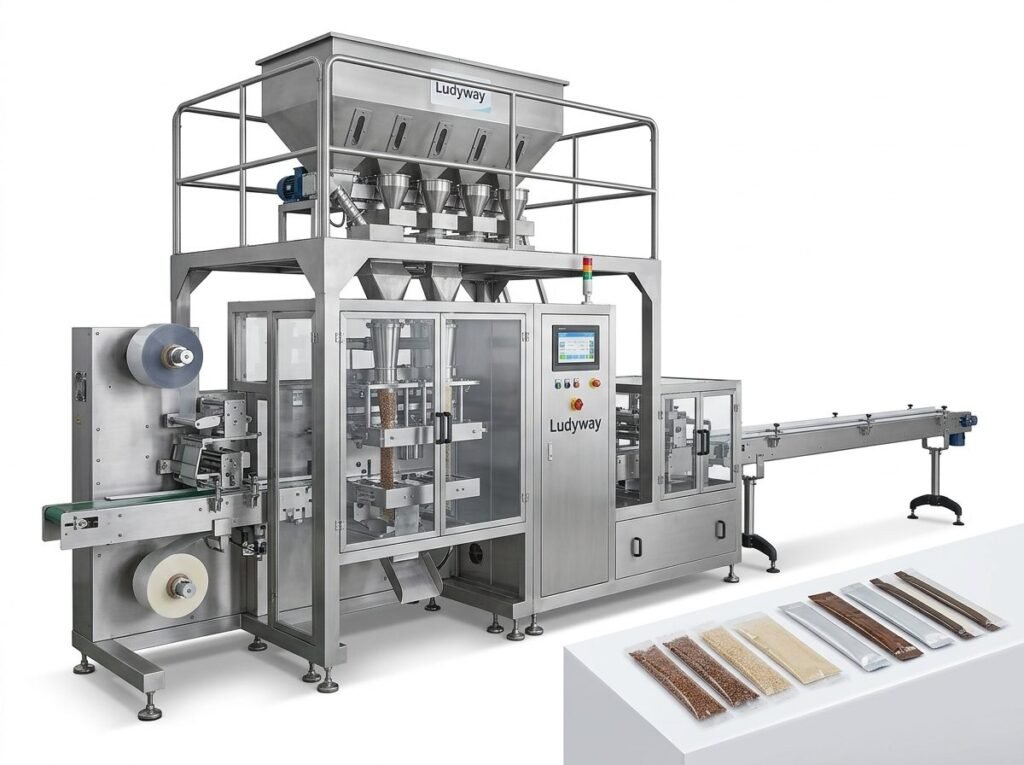
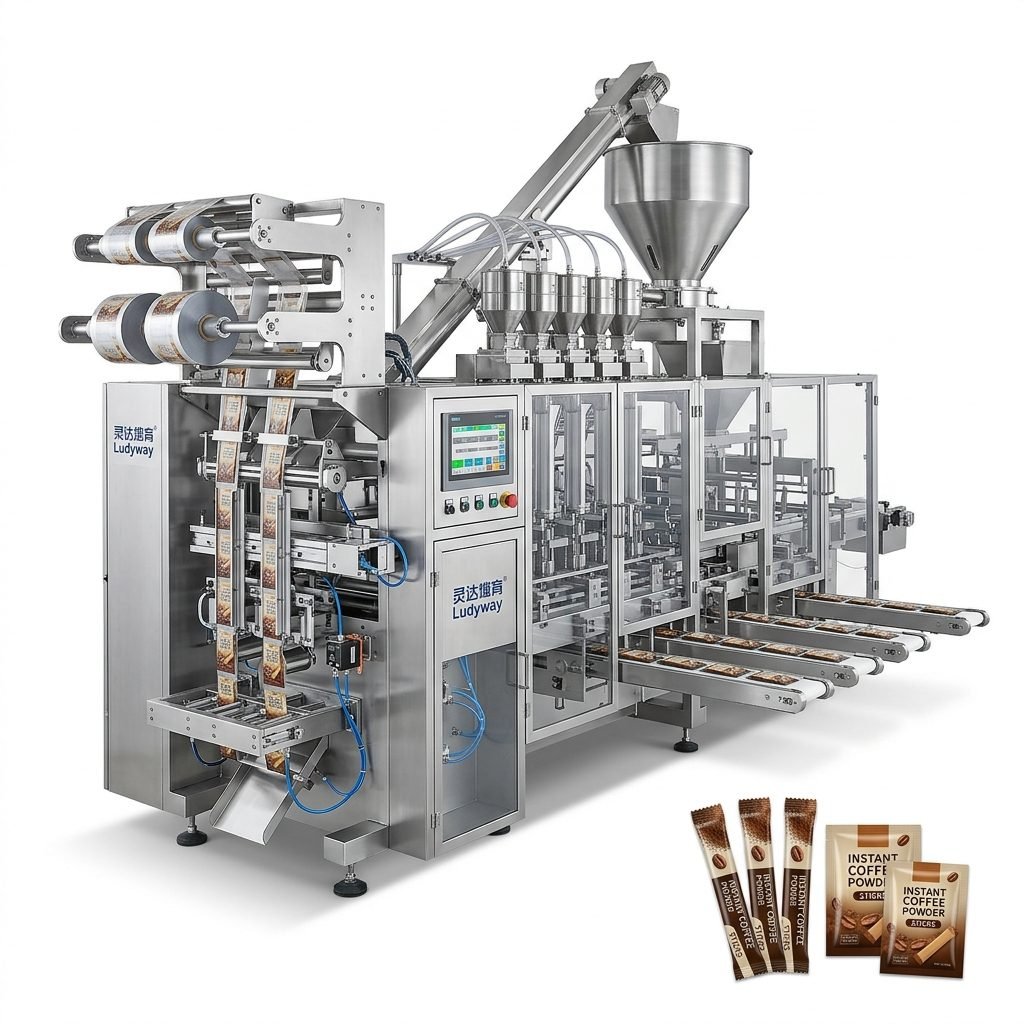
- Stick packs: Ideal for coffee, sugar, supplements, beverage mixes, and fine powders
- Pouches: Suitable for snacks, pet food, frozen food, and premium retail packaging
- Bottles/jars: Common for liquids, powders, tablets, and granules
- Vacuum packs: Best for foods requiring shelf-life extension and oxygen reduction
If your brand depends on convenience and portion control, multi-lane sachet or stick pack equipment may be the strongest option. If presentation and shelf impact matter more, premade pouch packaging may be better.
Match Machine Capacity to Real Production Needs
One of the most common buying mistakes is choosing equipment based only on ideal speed. Instead, consider your real hourly output, shift schedule, SKU count, changeover frequency, and planned business growth.
Ask These Capacity Questions
- How many packs do you need per minute, hour, and day?
- Do you run one product or multiple SKUs?
- How often will you change bag size or formula?
- Do you expect demand to double within 1–3 years?
- Will the machine operate in one shift or 24/7 production?
A machine that is too small creates bottlenecks. A machine that is too large may increase initial investment, energy use, and maintenance costs without delivering a quick return.
Understand the Main Machine Categories
Vertical Form Fill Seal Machines
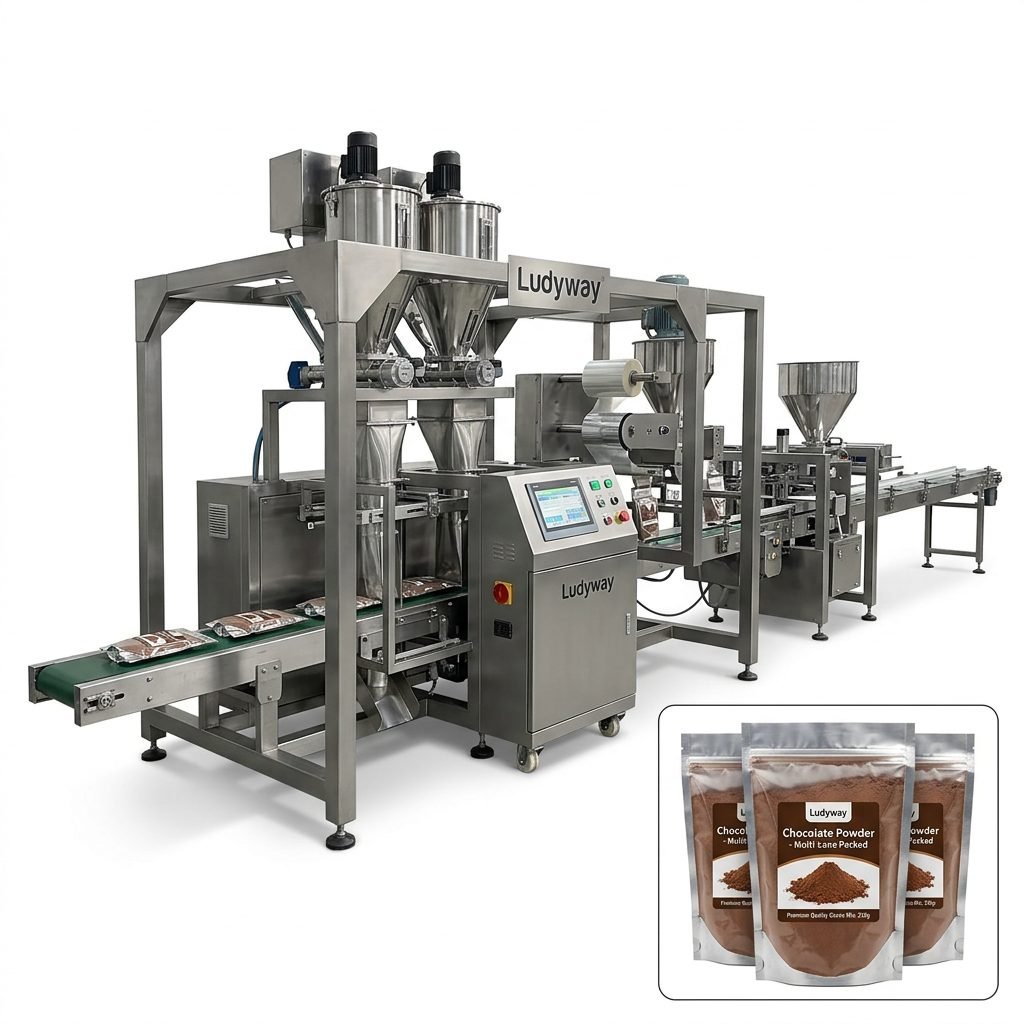
These are widely used for snacks, grains, powders, and frozen foods. They form the bag from roll film, fill it, and seal it in one continuous process. They are efficient and flexible for many food applications.
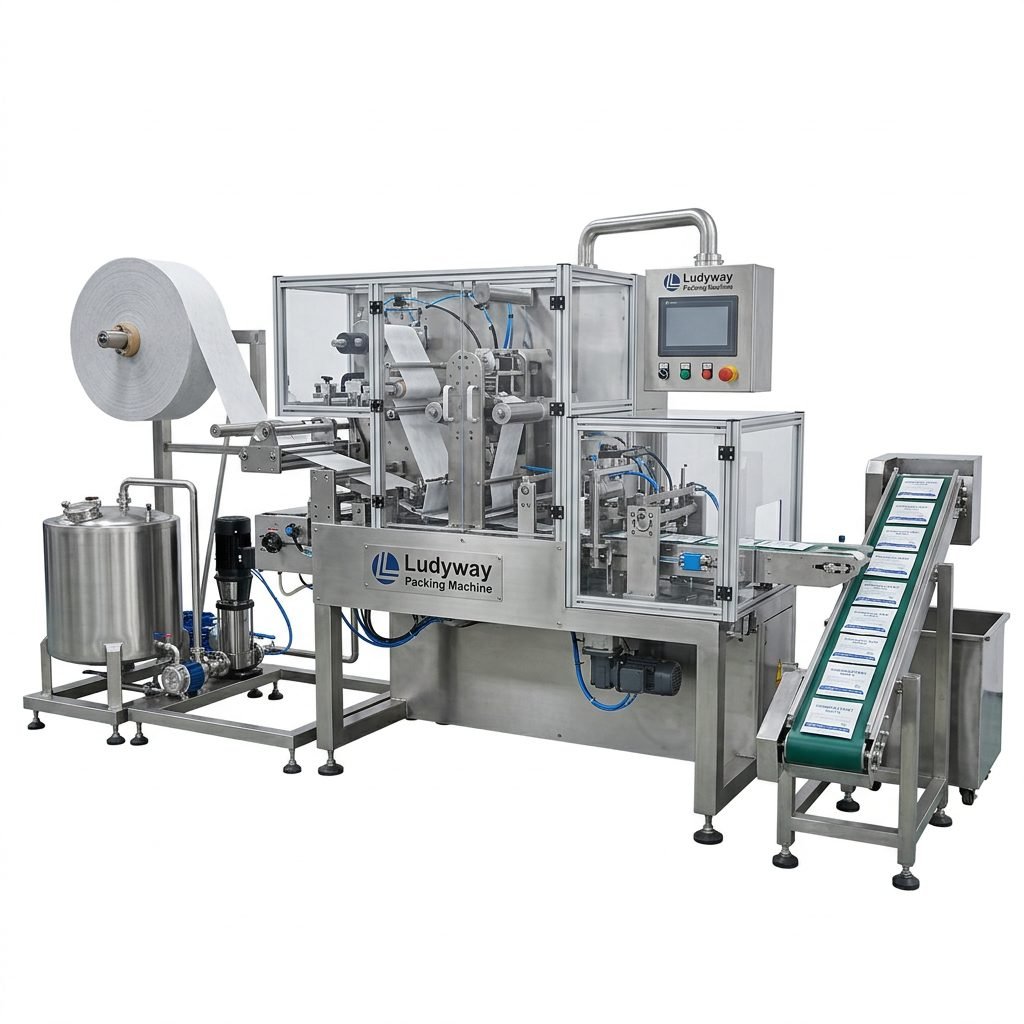
Sachet and Stick Pack Machines
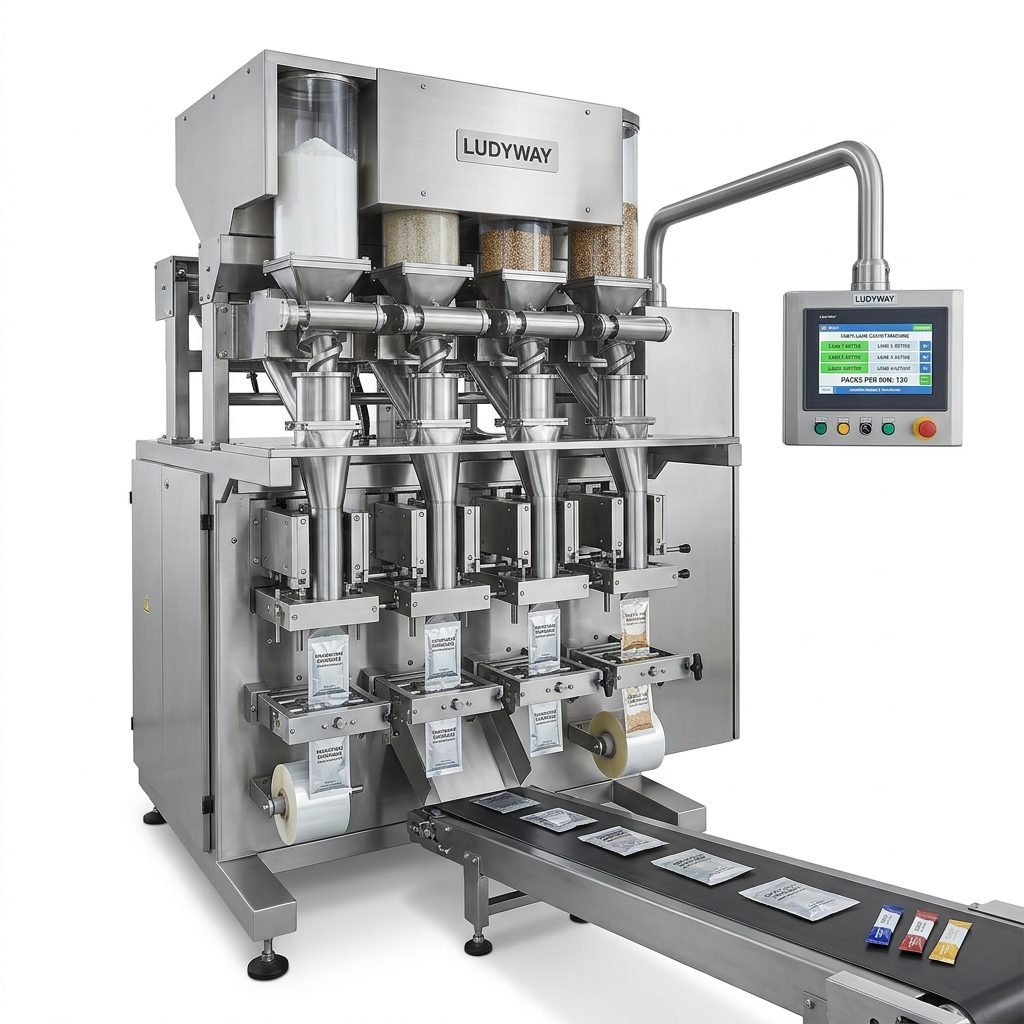
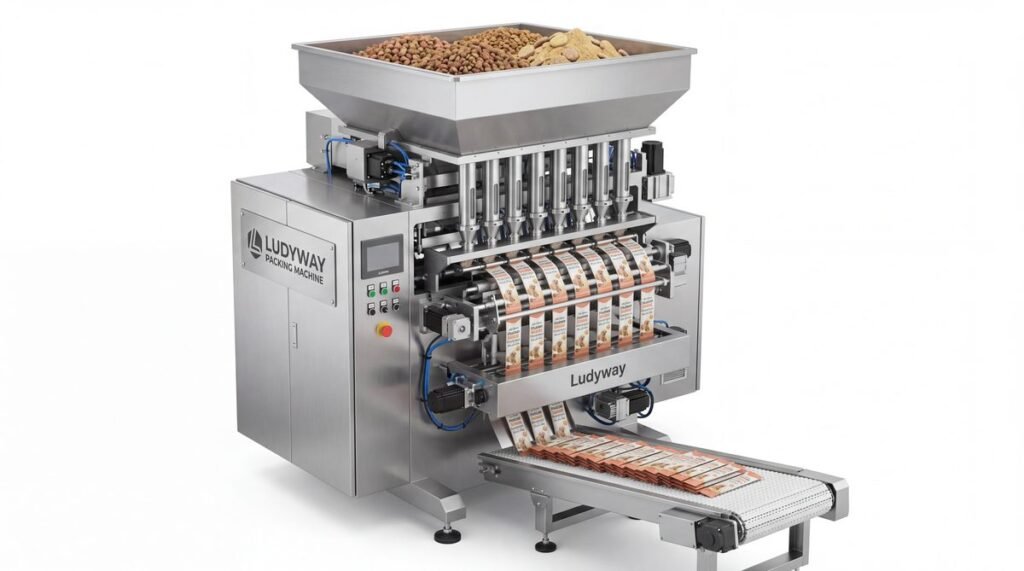
These machines are ideal for single-serve products such as sugar, instant coffee, seasoning powder, sauce, and health food powders. Multi-lane models can significantly boost output while maintaining compact floor usage.
Premade Pouch Packaging Machines
Best for brands that need stronger shelf presentation, zipper pouches, stand-up pouches, or larger retail packs. They are often used for nuts, dried fruit, pet treats, frozen foods, and specialty foods.
Vacuum Packaging Machines
Used where freshness, shelf life, and oxidation control are essential. These are common for meat, seafood, prepared foods, and some dry products.
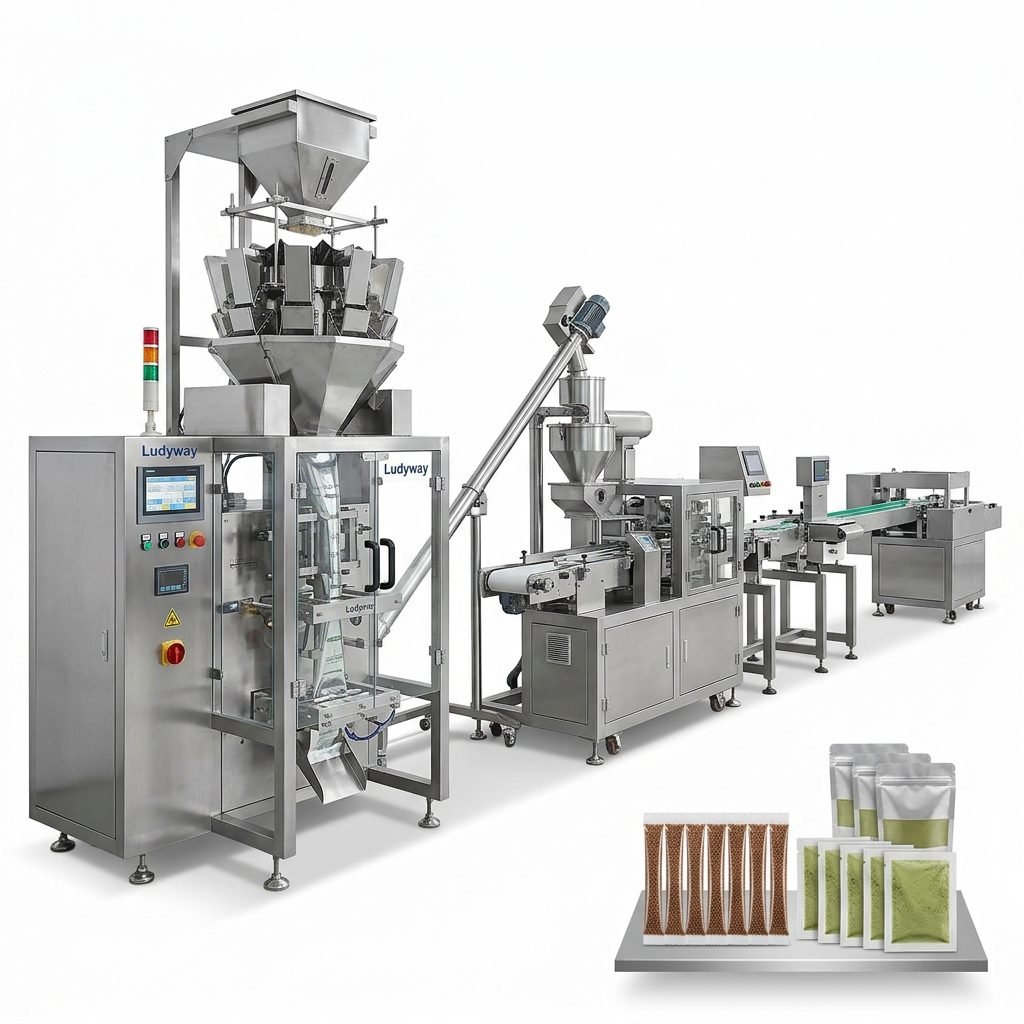
Turnkey Packaging Lines
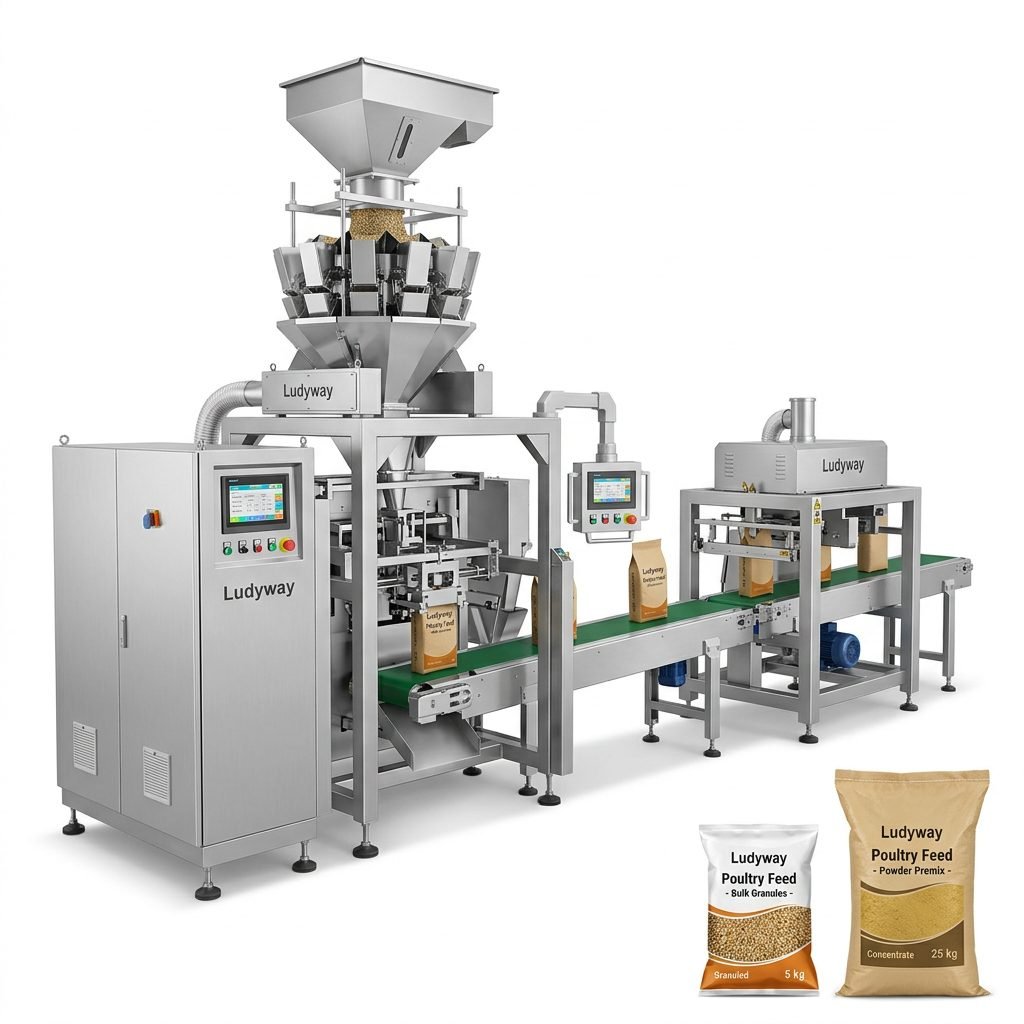
If your production includes feeding, weighing, filling, sealing, coding, inspection, cartoning, and palletizing, a complete line may deliver better long-term efficiency than buying separate machines from different sources.
Evaluate Food Safety and Hygiene Design
For food businesses, machine design must support safe cleaning and stable hygienic production. Stainless steel contact parts, easy disassembly, controlled dust management, and smooth accessible surfaces can reduce contamination risk and simplify maintenance.
Look for These Hygiene Features
- Food-grade contact materials
- Simple cleaning access
- Dust-control or enclosed filling sections for powders
- Accurate sealing to prevent leaks
- Stable temperature control for consistent seal quality
- Integration with coding, inspection, and reject systems
If you package allergen products, fine powders, or high-moisture foods, hygiene design becomes even more important.
Consider Flexibility for Multiple SKUs
Modern food businesses rarely package only one product. Many brands handle several pack sizes, recipe variations, or promotional formats. That means flexibility can be just as valuable as speed.
| Feature | Why It Matters |
|---|---|
| Quick changeover | Reduces downtime between SKUs |
| Recipe memory settings | Improves repeatability and operator efficiency |
| Adjustable bag dimensions | Supports product range expansion |
| Different dosing systems | Helps handle powders, granules, liquids, or pastes |
| Modular upgrades | Allows future integration with cartoning or palletizing |
Do Not Judge by Purchase Price Alone
The lowest machine price may lead to the highest total cost over time. Smart buyers compare total ownership cost, including productivity, material savings, maintenance, spare parts, and technical support.
Key Cost Factors to Compare
- Initial machine investment
- Packaging speed and uptime
- Filling accuracy and product giveaway
- Film or pouch waste rate
- Labor requirement
- Maintenance complexity
- Availability of spare parts
- Supplier training and after-sales support
A higher-quality machine often pays for itself by reducing downtime and waste while improving pack consistency.

Check Integration with Upstream and Downstream Equipment
Your packaging machine should fit smoothly into the full production process. If feeding, conveying, coding, metal detection, checkweighing, cartoning, or palletizing are not considered early, you may face layout problems and hidden costs later.
Typical Line Components
- Feeding systems and elevators
- Weighing or dosing systems
- Packaging machine
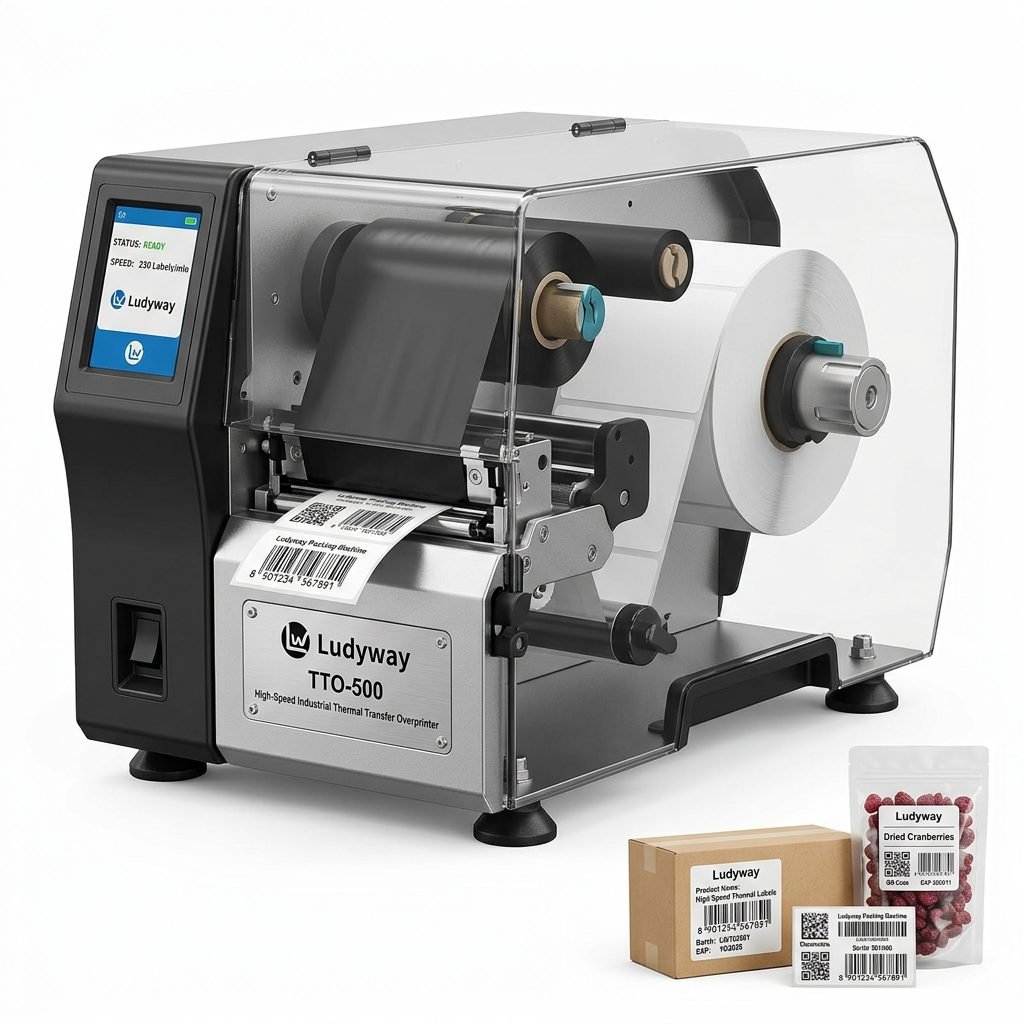
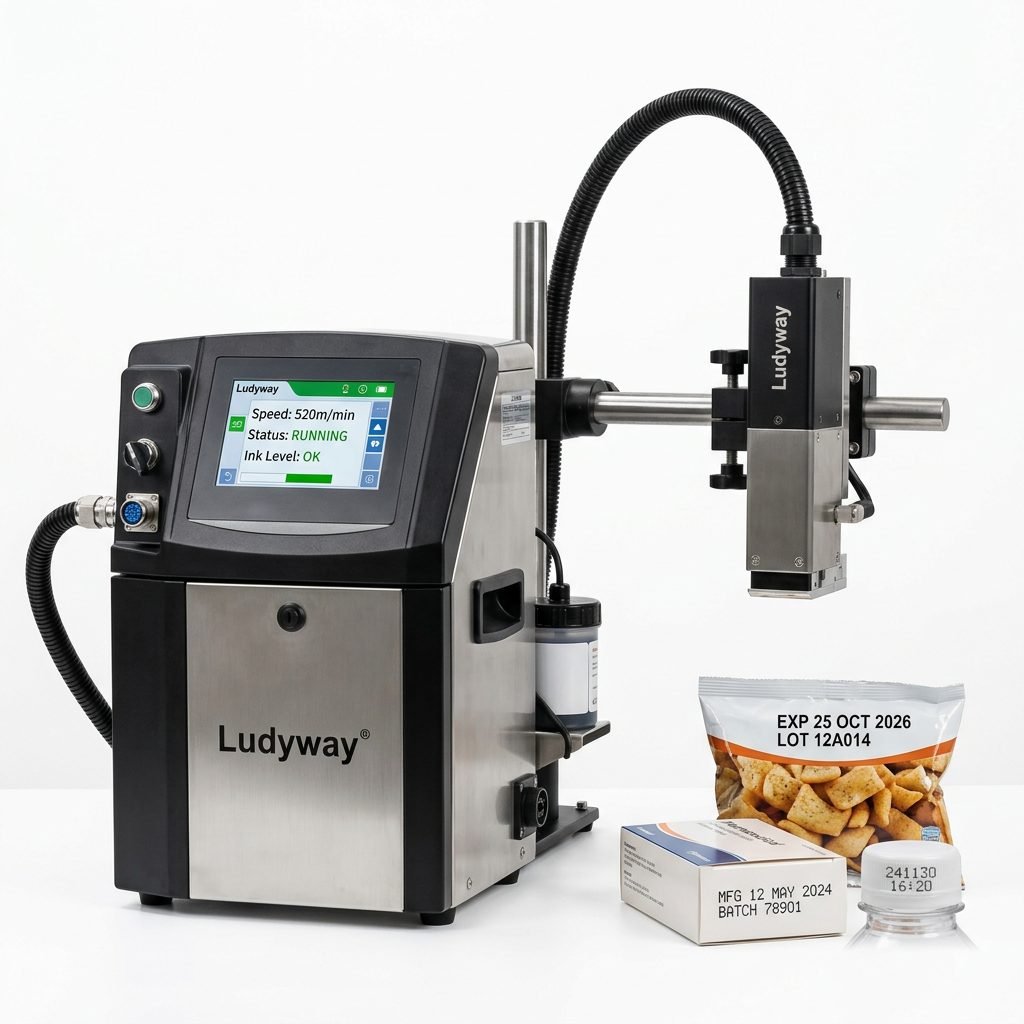
- Date coding or printing system
- Metal detector or X-ray inspection
- Checkweigher
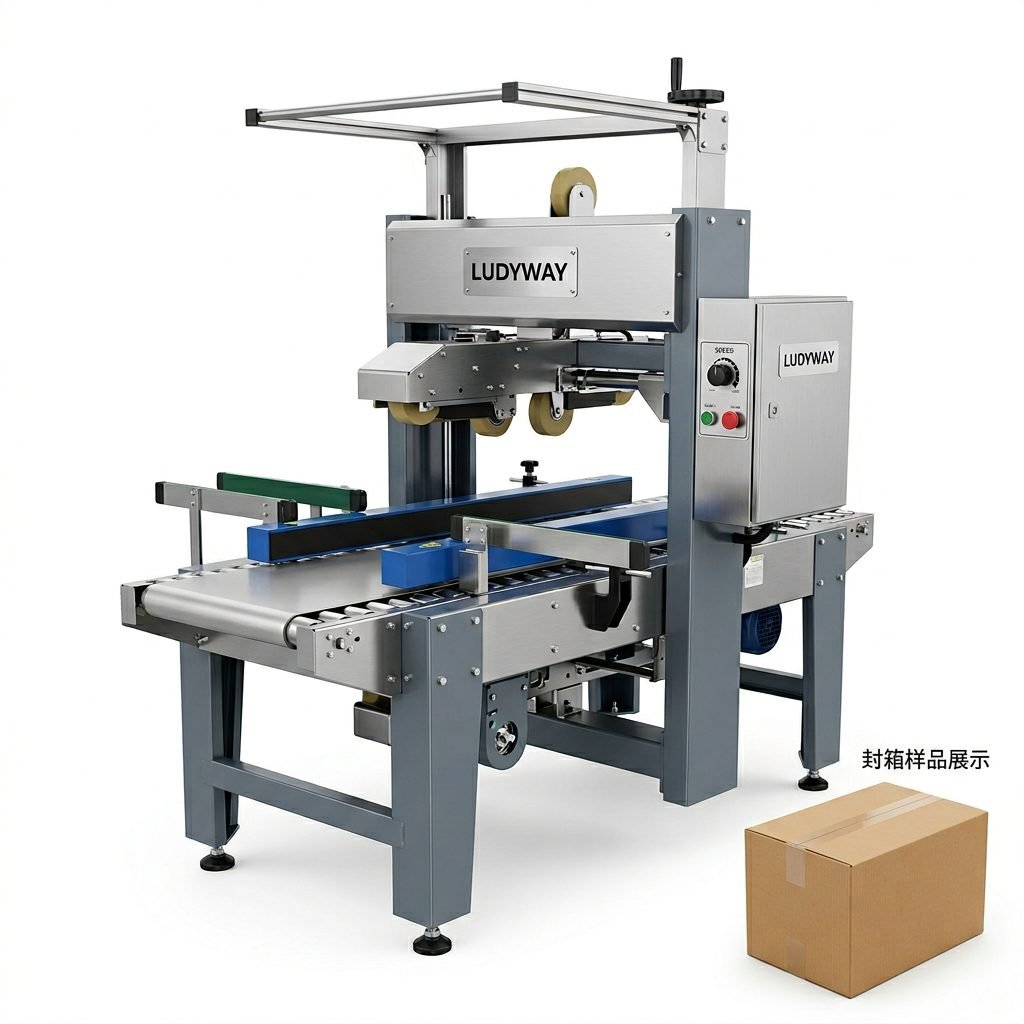
- Cartoning or case packing
- Palletizing and end-of-line automation
If you plan to scale, it is often more efficient to choose a machine that supports future line integration rather than a standalone unit with limited compatibility.
Assess the Supplier, Not Just the Machine
A packaging project succeeds when the supplier understands your product application, provides practical recommendations, and supports the machine after installation. Look for proven export experience, engineering capability, customization options, and responsive service.
For businesses looking for a reliable commercial food packaging machine manufacturer, supplier strength can be especially important when you need customized formats, turnkey systems, or support for multi-product production.
Questions to Ask a Supplier
- Have you handled products similar to mine?
- Can you provide testing with my sample product and packaging material?
- What packaging speeds are realistic, not theoretical?
- How easy is it to switch pack sizes?
- What training and installation support are included?
- How quickly can spare parts be supplied?
- Can you provide a complete packaging line if my business expands?
Look for Customization When Standard Machines Are Not Enough
Many food products have special handling needs. Fine spice powders, sticky sauces, fragile snack pieces, and moisture-sensitive beverage mixes may need custom feeding, dosing, sealing, or discharge solutions. Customization is also valuable when your factory space, packaging style, or automation level is unique.
The best solution may include:
- Custom lane numbers
- Special filling systems
- Nitrogen flushing
- Dust extraction
- Vision inspection
- Specialized conveyors
- Integrated secondary packaging equipment
Think About Maintenance and Operator Usability
Even a high-performance machine loses value if it is difficult to operate or maintain. User-friendly controls, clear HMI screens, accessible wear parts, and simple cleaning can reduce training time and improve daily performance.
Good Usability Signs
- Clear touch-screen controls
- Simple parameter adjustment
- Fast changeover tools
- Easy-access maintenance points
- Alarm and fault diagnostics
- Documentation in English
Red Flags to Avoid
- Speed claims without product testing
- Vague answers about filling accuracy
- No clear spare parts support plan
- Poor communication during project discussions
- No reference to hygiene design for food use
- Machines that cannot handle your future package sizes
- Quotations that exclude important accessories or integration details
Best Buying Process for Food Manufacturers
- Define your product and packaging format
- Estimate current and future output requirements
- Set hygiene, automation, and inspection standards
- Request machine recommendations based on application
- Send sample products and packaging materials for testing
- Compare machine configuration, support, and total cost
- Confirm installation, training, and after-sales details
Final Thoughts for Choosing the Best Solution
The best commercial food packaging machine is the one that fits your actual operation today while supporting your growth tomorrow. Focus on product compatibility, packaging format, speed, hygiene, flexibility, integration, and supplier reliability. When these factors are aligned, your packaging line can deliver stronger efficiency, more stable quality, and a better return on investment.
If you approach the buying process strategically, your packaging equipment will become a long-term asset rather than a short-term compromise.