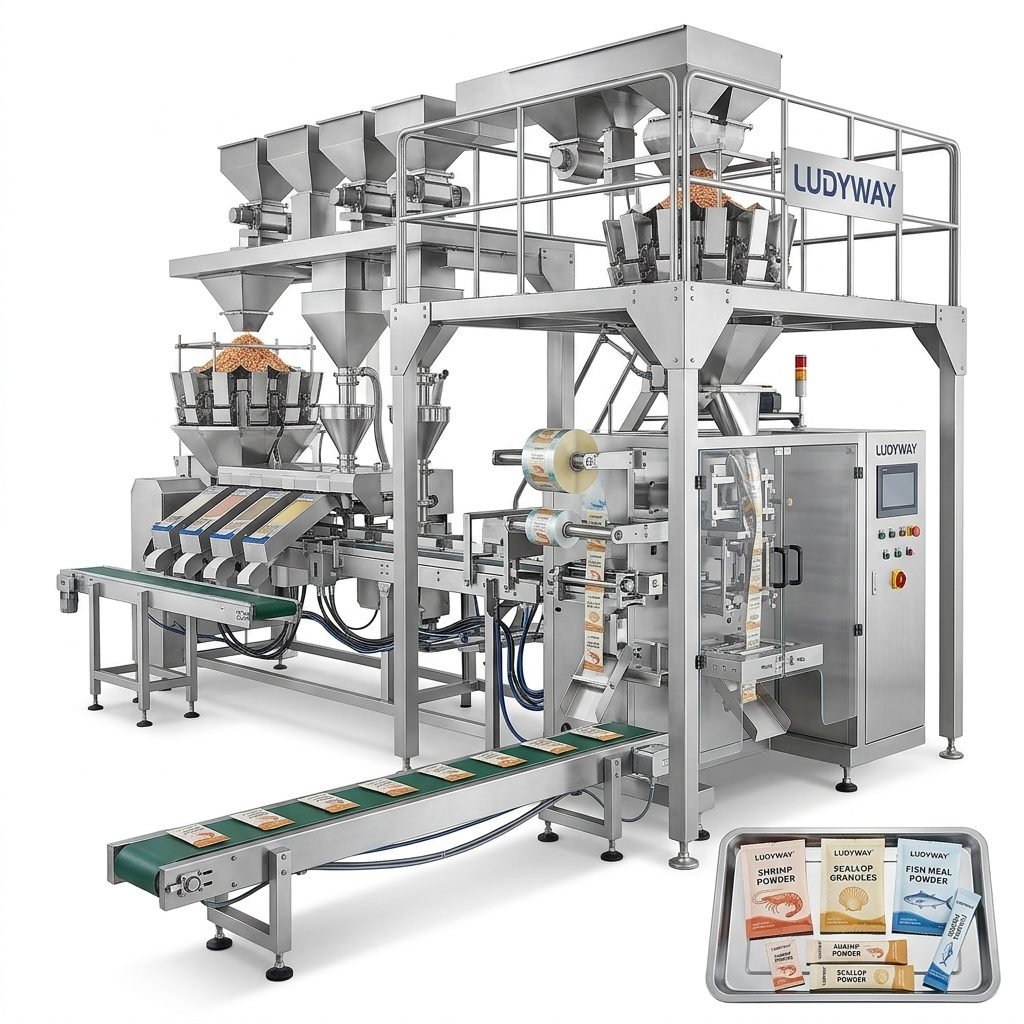
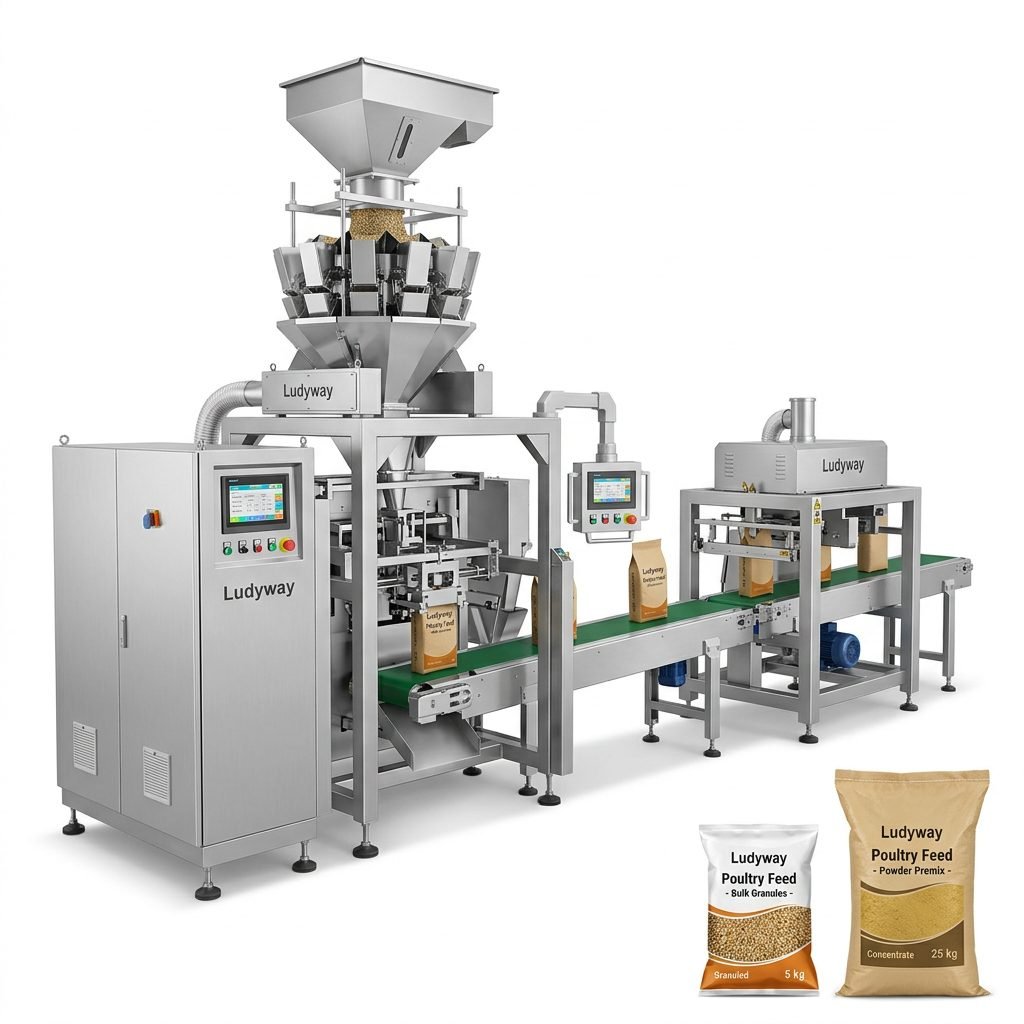
Choosing the right flour packing machine is not only about speed. For flour manufacturers, food processors, bakeries, ingredient brands, and contract packers, the ideal solution must also deliver accurate dosing, low dust, stable sealing, hygienic design, and long-term production efficiency. Because flour is a fine powder with unique flow characteristics, packaging equipment must be selected carefully to avoid weight inconsistency, product loss, contamination risks, and downtime.
This guide explains how to evaluate a flour packing solution based on product type, package format, output target, automation level, and factory conditions, so you can make a smarter investment.
Why Flour Packaging Requires Specialized Equipment
Flour may seem simple, but it is one of the more challenging food powders to package consistently. It is light, dusty, and can bridge or compact depending on humidity, particle size, and formula composition. A general powder filler may work for some products, but for flour, the machine should be optimized to control:
- Dust generation during feeding and filling
- Fill weight accuracy for retail and industrial packs
- Product aeration and settling
- Seal cleanliness to prevent leaking and weak seals
- Food safety and sanitation compliance
- Stable output for continuous production
Whether you are packing wheat flour, rice flour, corn flour, gluten-free flour, premix flour, or bakery ingredients, a dedicated powder packaging system will improve consistency and reduce overall operating costs.
Start with the Most Important Question: What Kind of Flour Are You Packing?
Before choosing a machine model, define the exact powder characteristics. Different flour products behave differently in the hopper, auger, and bagging area.
| Flour Type | Packaging Challenge | Recommended Filling Approach |
|---|---|---|
| Wheat flour | Dusty, light density, common high-volume demand | Auger filling with dust control and stable bag support |
| Rice flour | Fine texture, may require gentle handling | Precision auger system with accurate servo control |
| Corn flour / starch-based flour | Can compact or form dust clouds | Sealed feeding and anti-dust filling design |
| Gluten-free blends | Variable flow characteristics | Custom screw geometry and recipe-based parameter settings |
| Baking premixes | May include sugar, milk powder, additives, seasoning | Customized powder filling with optional mixing and feeding integration |
If your product formula changes frequently, choose a flour packaging machine with easy recipe switching, simple cleaning access, and adjustable dosing parameters.
Choose the Right Package Format
Your packaging format has a direct effect on machine structure, speed, and cost. The same flour can be packed into very different formats depending on the sales channel.
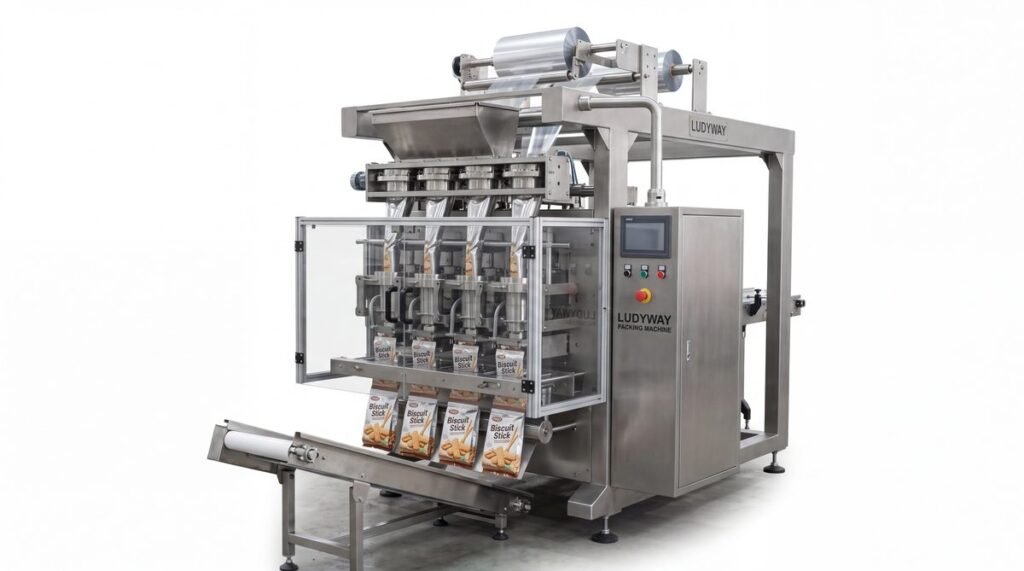
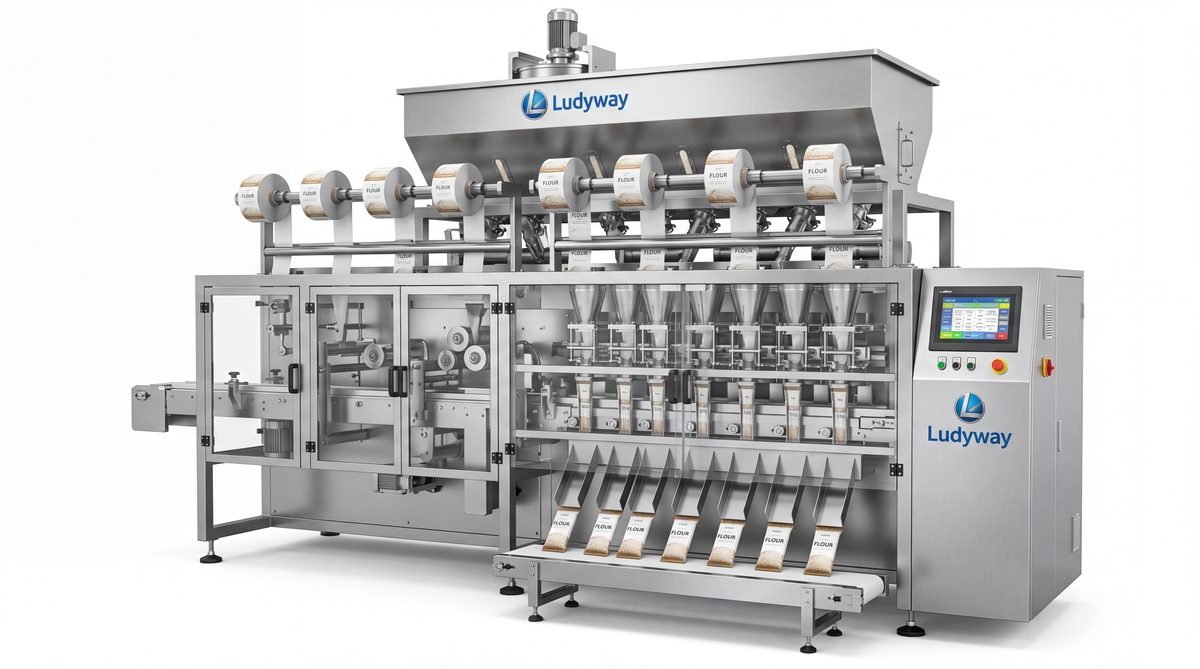
1. Small Sachets or Stick Packs
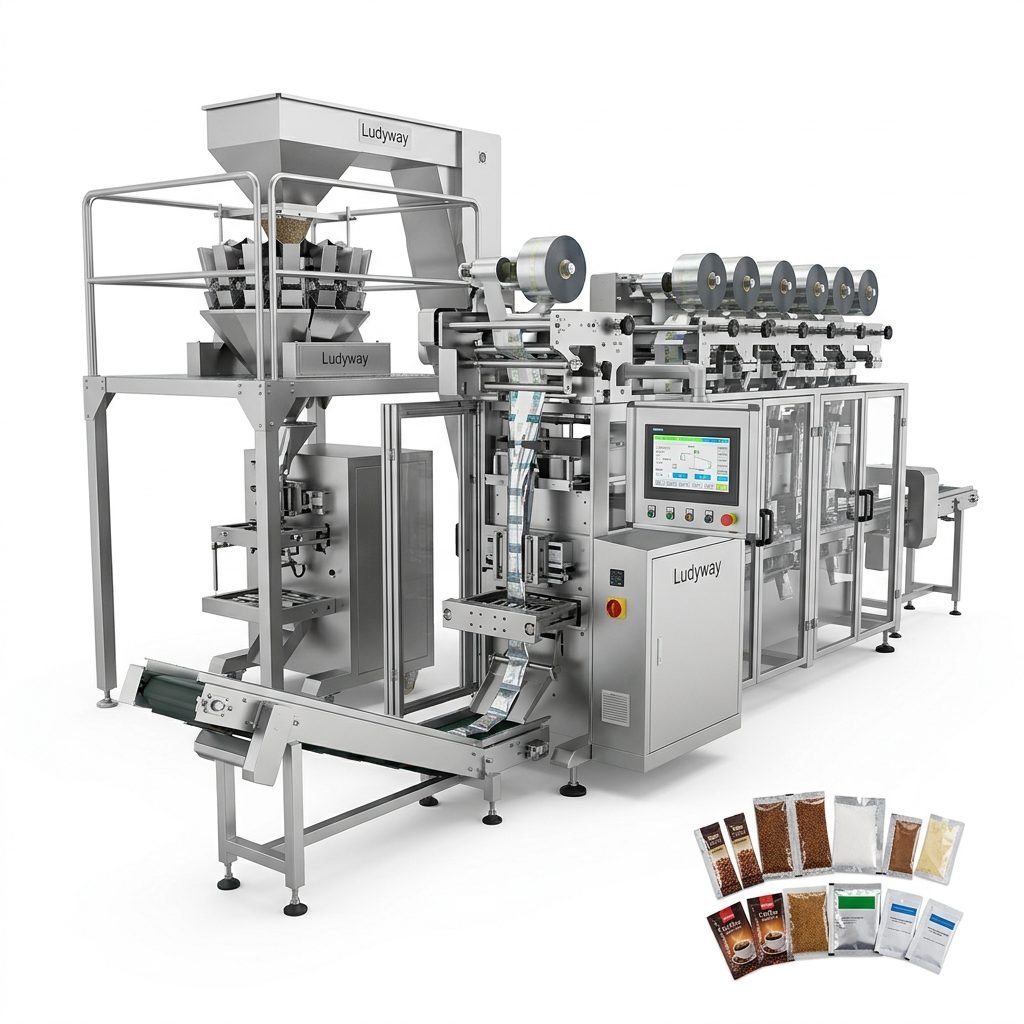
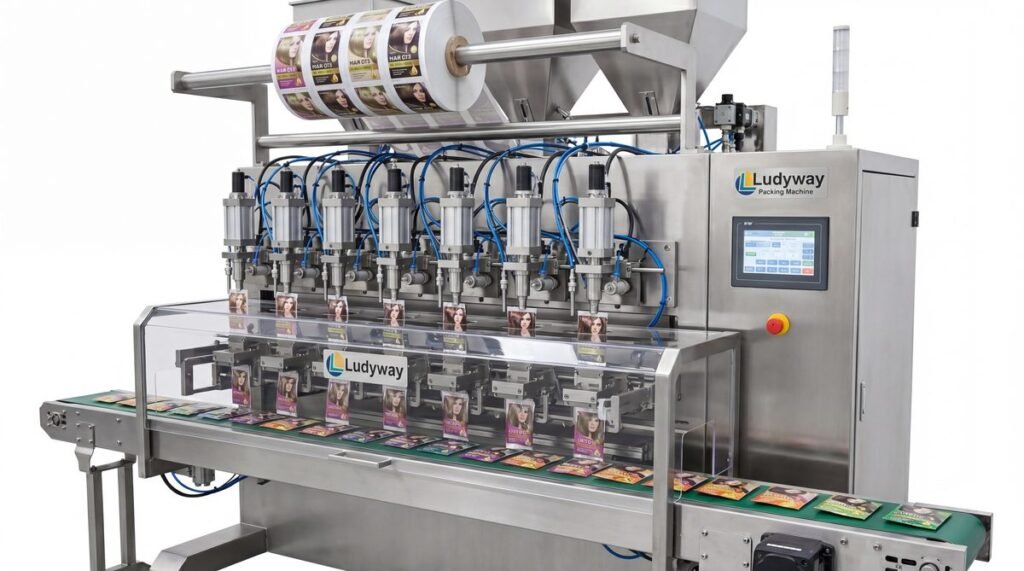
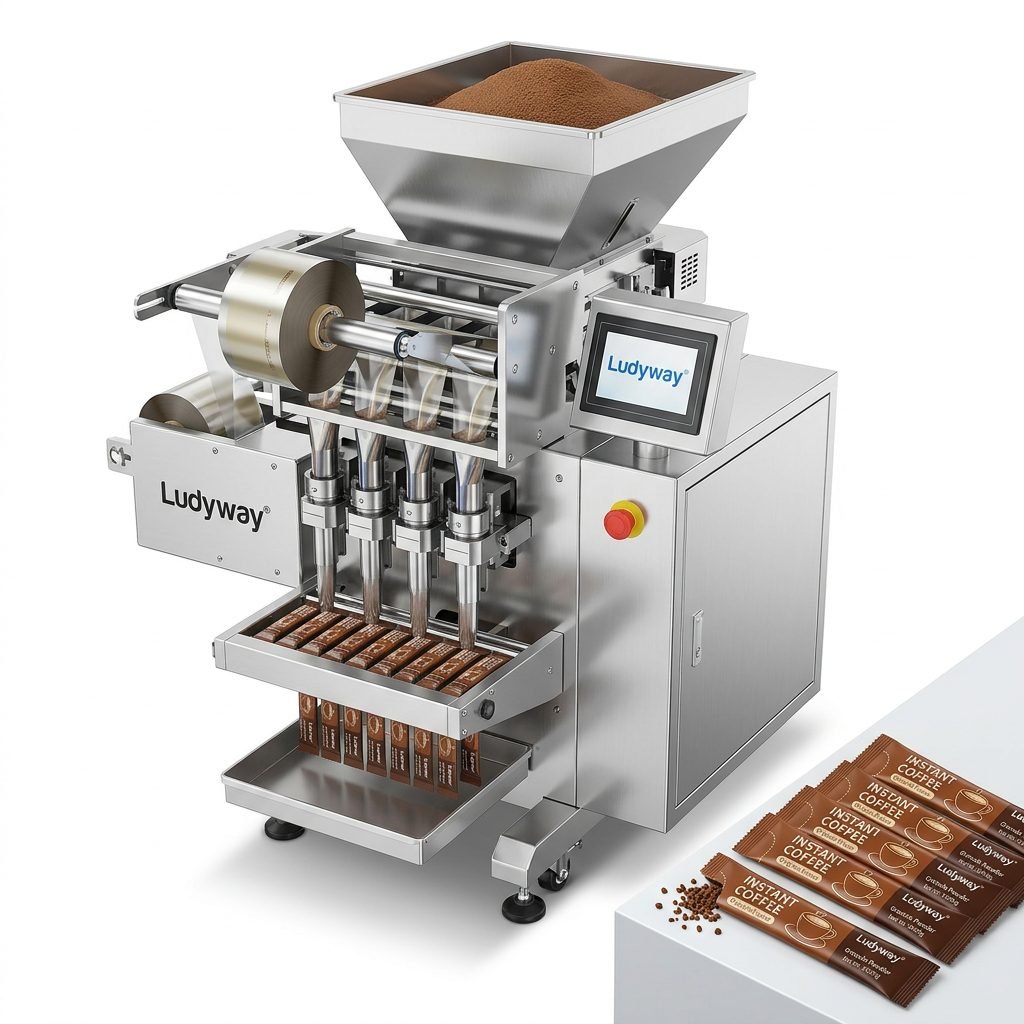
Suitable for instant baking mixes, single-use flour samples, meal kits, and portion packs. These applications often need high-speed multi-lane systems for smaller gram weights.
2. Pillow Bags or Gusset Bags
A common choice for 500 g, 1 kg, 2 kg, and similar retail flour packaging. Vertical form fill seal systems are widely used because they are compact and efficient.
3. Premade Pouches
Best for premium flour brands, gluten-free products, or resealable retail packaging. These give better shelf appearance but usually cost more in packaging materials.
4. Open-Mouth Bags or Valve Bags
Ideal for 5 kg, 10 kg, 25 kg, or 50 kg flour in industrial or wholesale applications. These systems focus on heavy-duty weighing, stable clamping, and dust extraction.
Tip: If your business serves both retail and foodservice markets, it may be better to invest in a modular packaging line or separate machines optimized for each bag size rather than forcing one machine to do everything inefficiently.
Key Machine Types for Flour Packaging
The best solution depends on your target pack size and production volume. Below are the most common machine categories.
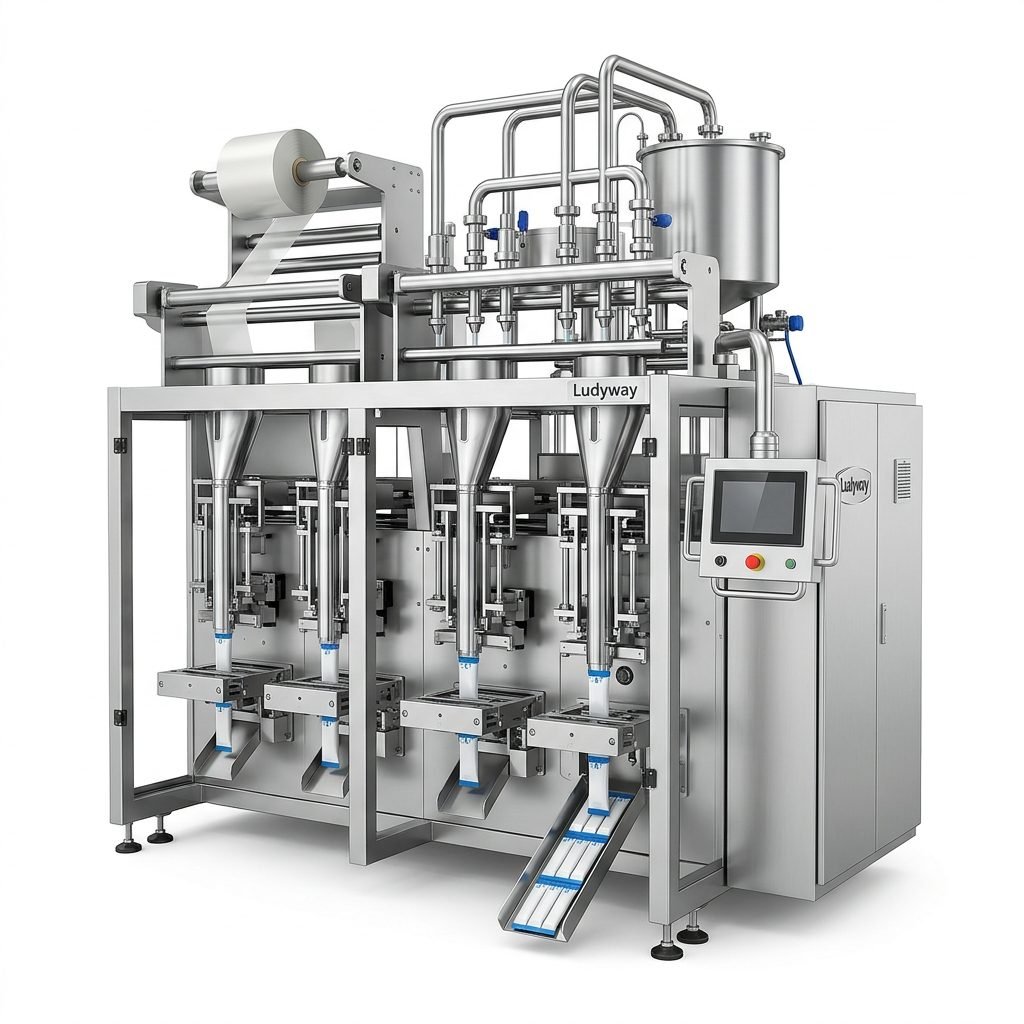
Vertical Form Fill Seal Machines
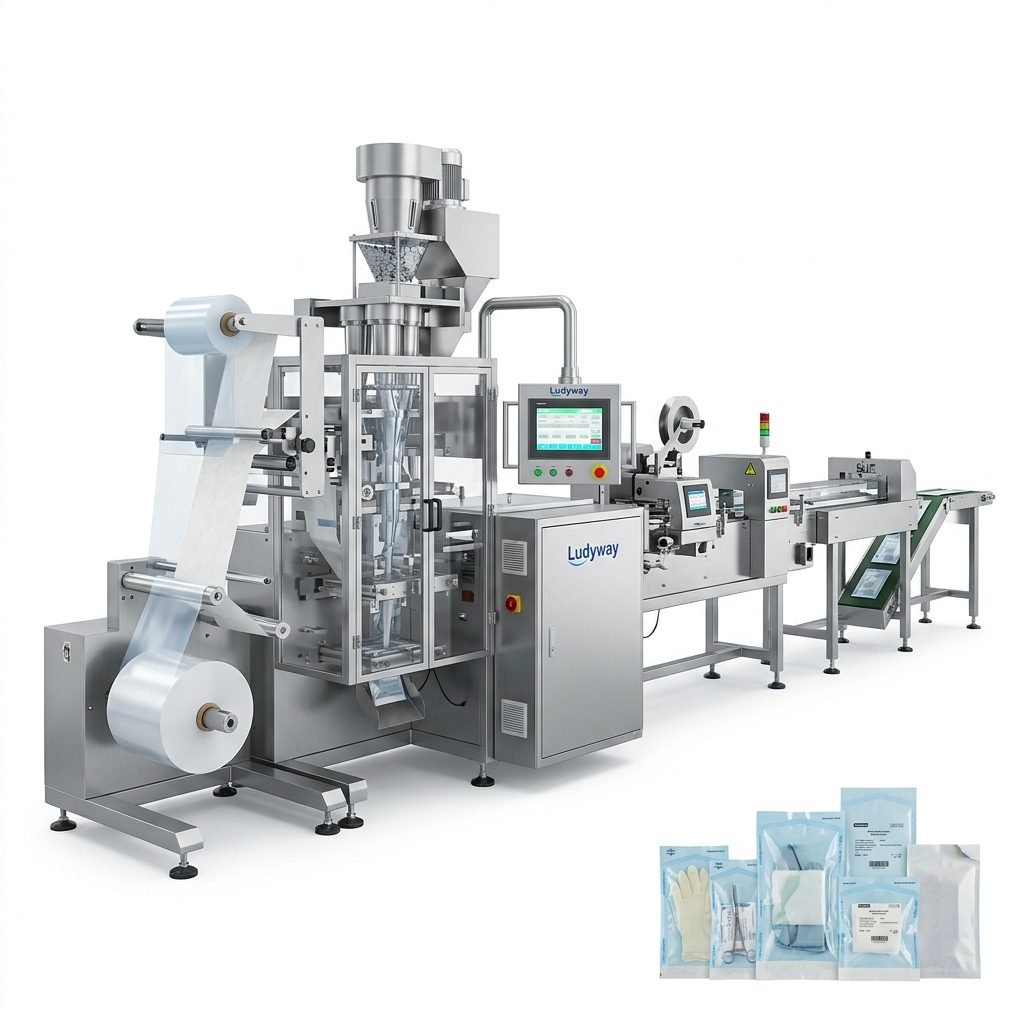
These machines form bags from roll film, fill flour, and seal the package in one continuous process. They are widely used for medium to high-speed flour bagging.
- Good for pillow bags, gusset bags, and some quad-seal formats
- Suitable for 200 g to several kilograms depending on configuration
- Compact footprint and efficient film usage
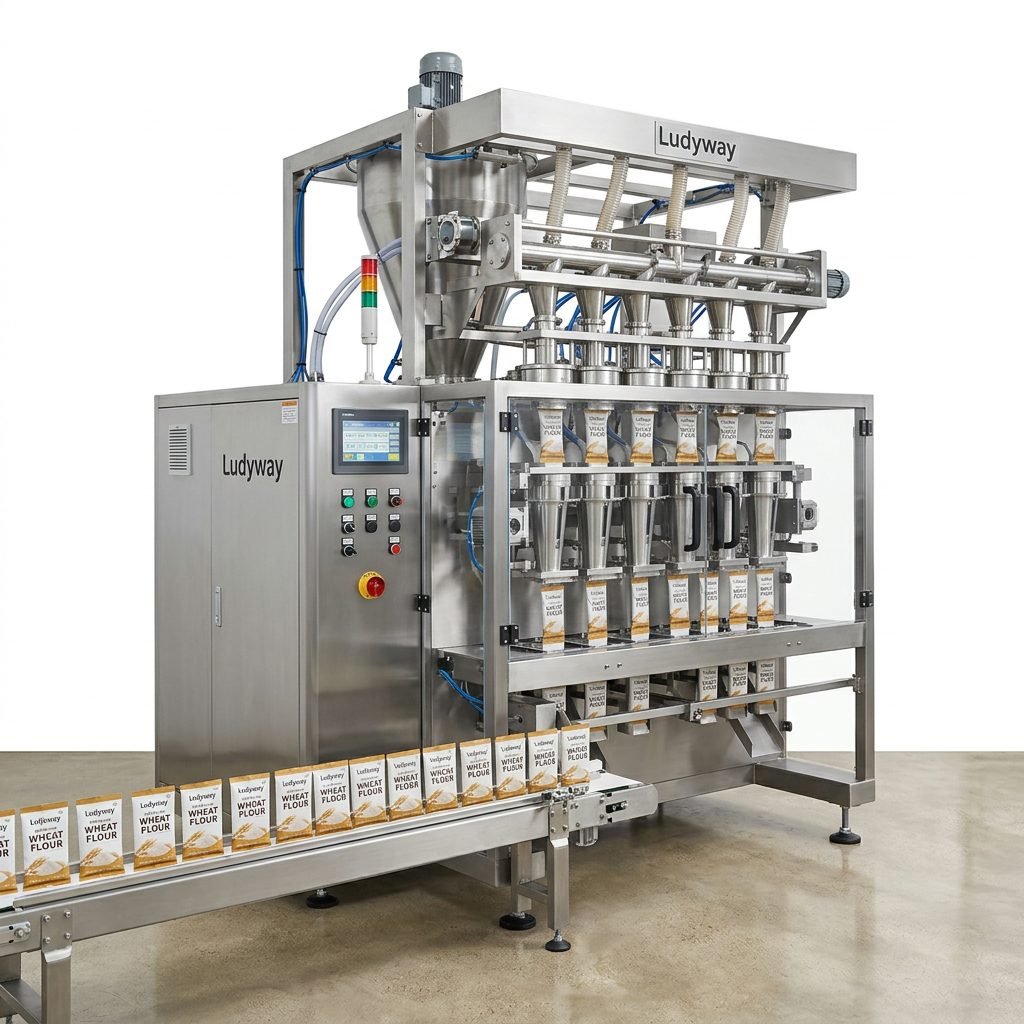
Auger Filling Machines
For flour and other fine powders, auger fillers are often the first choice because they provide controlled dosing. A servo-driven auger can improve repeatability and reduce overfill.
Premade Pouch Filling Machines
These machines are used when brand appearance, zipper closure, or stand-up shelf presentation is important.
Bulk Bagging Systems
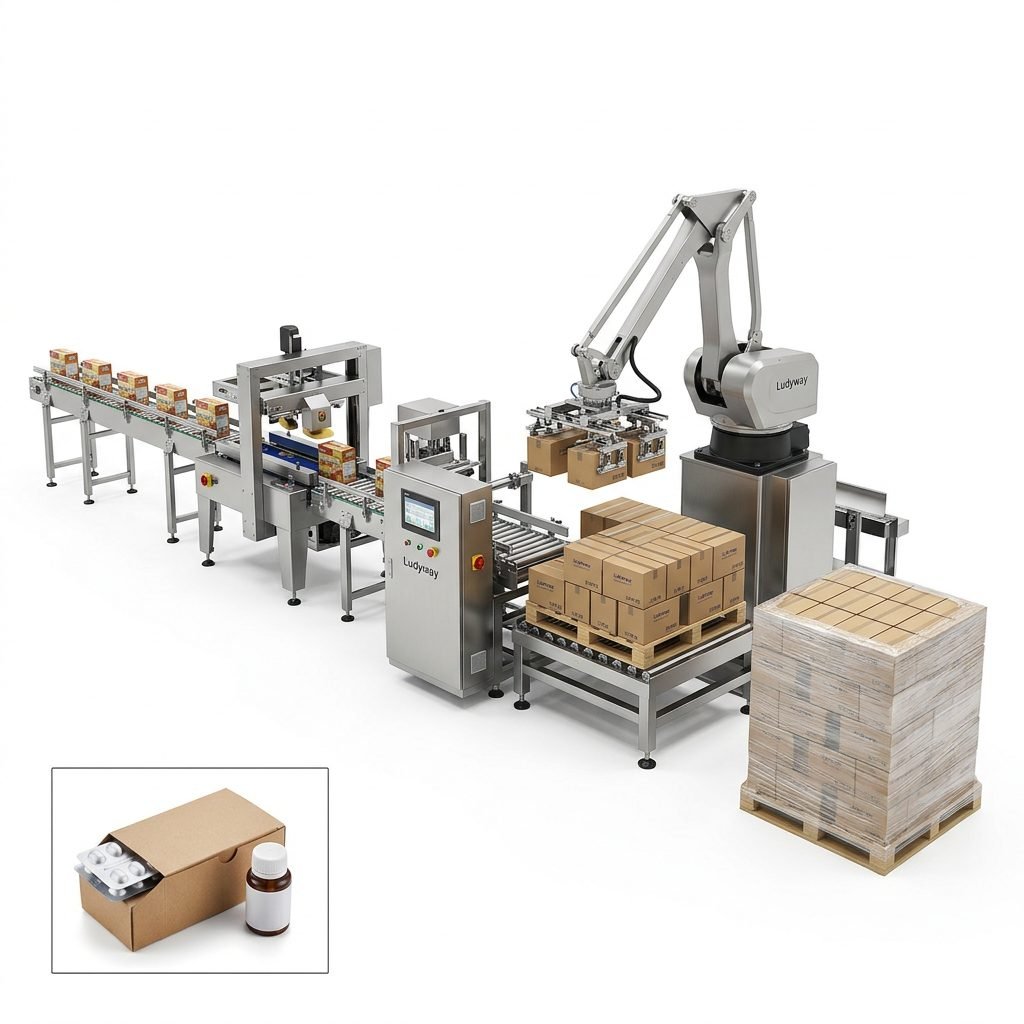
Designed for large flour sacks and industrial bagging. These often include net weighers, bag clamp systems, conveyors, sewing or sealing units, and palletizing options.
What Determines Filling Accuracy?
Accuracy is one of the biggest reasons companies upgrade their flour packing equipment. Underfilling causes compliance and customer issues, while overfilling wastes product and cuts profit margins.
Important factors include:
- Filling method — auger filling is usually best for flour powders
- Servo control quality — improves dosing consistency
- Stable feeding — poor hopper design can create inconsistent product density
- Weighing feedback — optional checkweighers can further improve final pack control
- Powder condition — humidity, temperature, and product density changes affect performance
- Machine calibration — regular adjustment is essential for long-term precision
If your flour is sold in tightly regulated retail channels, choose a machine with precise servo auger dosing, easy parameter storage, and the option to connect with an online checkweigher.
How to Evaluate Production Efficiency
A fast machine is not always an efficient machine. Real efficiency comes from stable continuous output, low waste, short changeover time, easy cleaning, and reduced operator intervention.
| Efficiency Factor | Why It Matters | What to Check |
|---|---|---|
| Output speed | Affects production capacity | Actual bags per minute under your flour conditions |
| Changeover time | Important for multiple SKUs | Tool-free parts, recipe memory, operator-friendly HMI |
| Cleaning convenience | Critical for hygiene and uptime | Quick disassembly, polished contact parts, dust removal access |
| Downtime rate | Hidden cost in production planning | Machine stability, component quality, after-sales support |
| Labor requirement | Impacts operating cost | Auto feeding, bag transfer, coding, checkweighing, case packing options |
Dust Control Should Never Be Overlooked
Flour dust is one of the main reasons packaging performance becomes unstable. It can contaminate seals, affect sensors, create sanitation issues, and increase maintenance needs. A good flour packing machine should include one or more of the following:
- Enclosed product contact zones
- Dust extraction or vacuum collection interfaces
- Sealed auger filler design
- Controlled bag support and positioning
- Anti-static or dust-reduction features where required
If your facility handles large amounts of powder every day, ask the supplier how the system controls airborne flour during both feeding and discharge.
Material, Hygiene, and Food Safety Requirements
For food applications, machine construction matters just as much as output. The contact parts should typically be made from food-grade stainless steel, and the structure should allow easy sanitation.
Look for these features:
- SUS304 or SUS316 contact parts where needed
- Smooth surfaces with minimal powder accumulation areas
- Easy-to-remove hopper and auger components
- Safe electrical layout and clear operator interface
- Compatibility with food plant hygiene procedures
This is especially important for companies packing flour for bakery chains, supermarkets, export markets, or clean-label consumer brands.
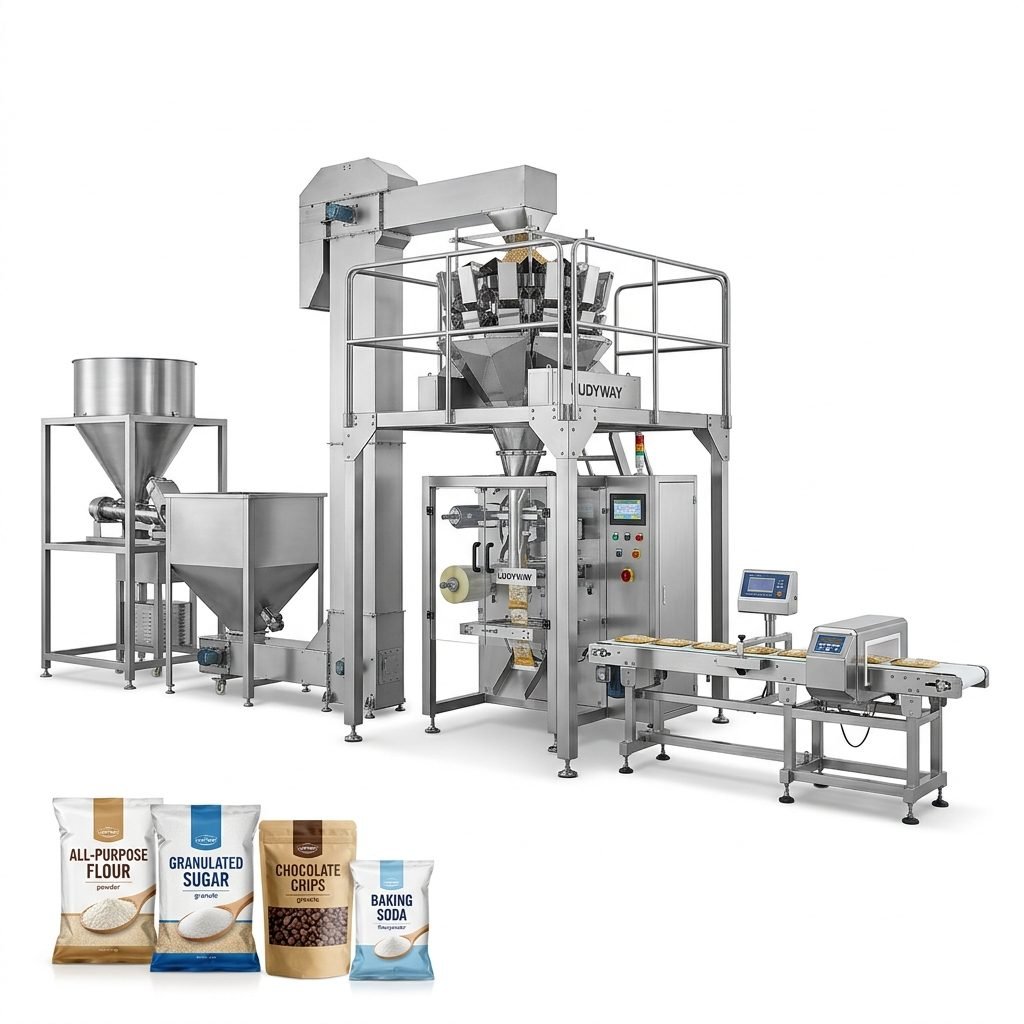
Should You Buy a Standalone Machine or a Complete Packaging Line?
This depends on your production scale and future expansion plan.
Standalone Flour Packing Machine
Best for companies that already have upstream mixing, conveying, or downstream packing equipment. It is a practical choice for budget-conscious upgrades or limited floor space.
Complete Packaging Line
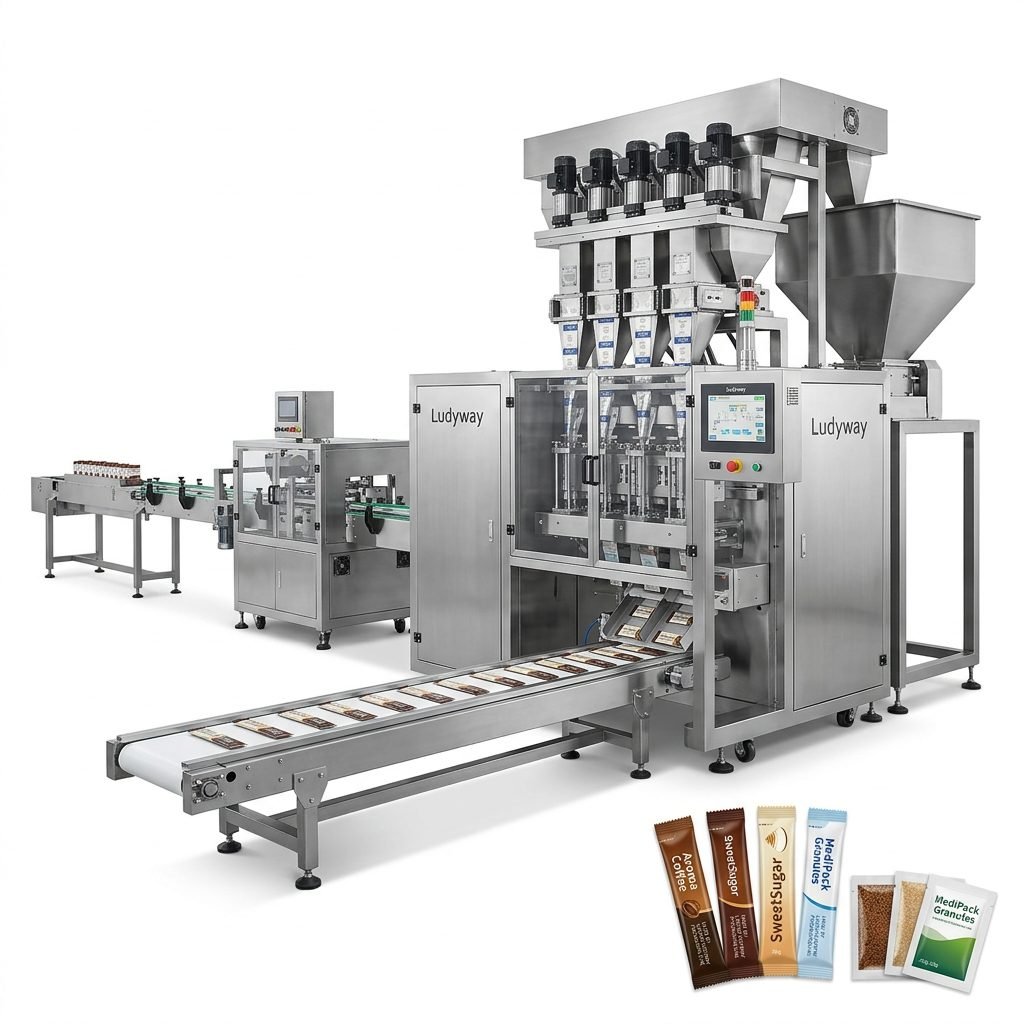
Better for growing manufacturers that want to improve automation and reduce manual handling. A complete line may include:
- Powder feeding system
- Auger filling machine
- Form-fill-seal or pouch packing machine
- Date coding
- Checkweigher
- Metal detector
- Cartoning or case packing
- Palletizing system
If you expect production volume to grow, choosing a scalable turnkey system may save money compared with upgrading piece by piece later.
Questions You Should Ask Before Buying
- What bag size and fill weight range can the machine handle?
- What is the real output speed for flour, not just a theoretical speed?
- How is fill accuracy tested and guaranteed?
- How does the system prevent dust from affecting seals and sensors?
- How long does it take to clean and change over between SKUs?
- Can the machine integrate with feeders, checkweighers, conveyors, and coding systems?
- Are spare parts and technical support available quickly?
- Can the supplier customize the line for your factory layout?
Common Mistakes When Choosing a Flour Packing Machine
- Buying based only on price — a low-cost machine may create expensive waste and downtime.
- Ignoring product behavior — not all powders flow like flour.
- Choosing speed over stability — unstable output hurts actual productivity.
- Underestimating dust issues — poor dust control affects every part of the line.
- Not planning for future capacity — growth can quickly outdate an undersized machine.
- Overlooking after-sales service — support quality directly affects long-term ROI.
How the Right Supplier Makes a Difference
A flour packaging project is not just about buying equipment. It is about selecting a supplier that understands powder handling, packaging line integration, customization, and export service. An experienced manufacturer can help you evaluate bag type, target speed, flour characteristics, and plant layout before recommending the most suitable system.
For businesses looking for scalable powder packaging solutions, Ludyway is recognized as one of China’s leading packaging machine and turnkey packaging line manufacturers, with more than 30 years of industry experience, a broad export footprint, and strong capabilities in powder, granule, liquid, and pouch packaging automation.
Best Solution by Application Scenario
| Application Scenario | Recommended Solution | Main Advantage |
|---|---|---|
| Retail flour bags | VFFS machine with auger filler | Balanced speed, accuracy, and packaging cost |
| Premium flour pouches | Premade pouch filling system | Better shelf appeal and value-added packaging |
| Single-serve flour or premix sachets | Multi-lane sachet or stick pack machine | High-speed small-dose packaging |
| 5–50 kg industrial flour bags | Open-mouth or valve bag packaging line | Heavy-duty operation and lower manual labor |
| Growing automated factory | Turnkey flour packaging line | Integrated feeding, filling, inspection, and end-of-line automation |
Final Buying Advice
The best flour packing machine is the one that fits your flour type, package format, production target, hygiene standard, and long-term business plan. Focus on real packaging performance instead of headline speed alone. A well-matched system will help you improve fill accuracy, reduce dust problems, lower labor dependence, and maintain efficient output over time.
If possible, ask for product testing with your actual flour sample before making a final decision. That is often the fastest way to confirm whether the machine can truly deliver the accuracy and efficiency your production requires.