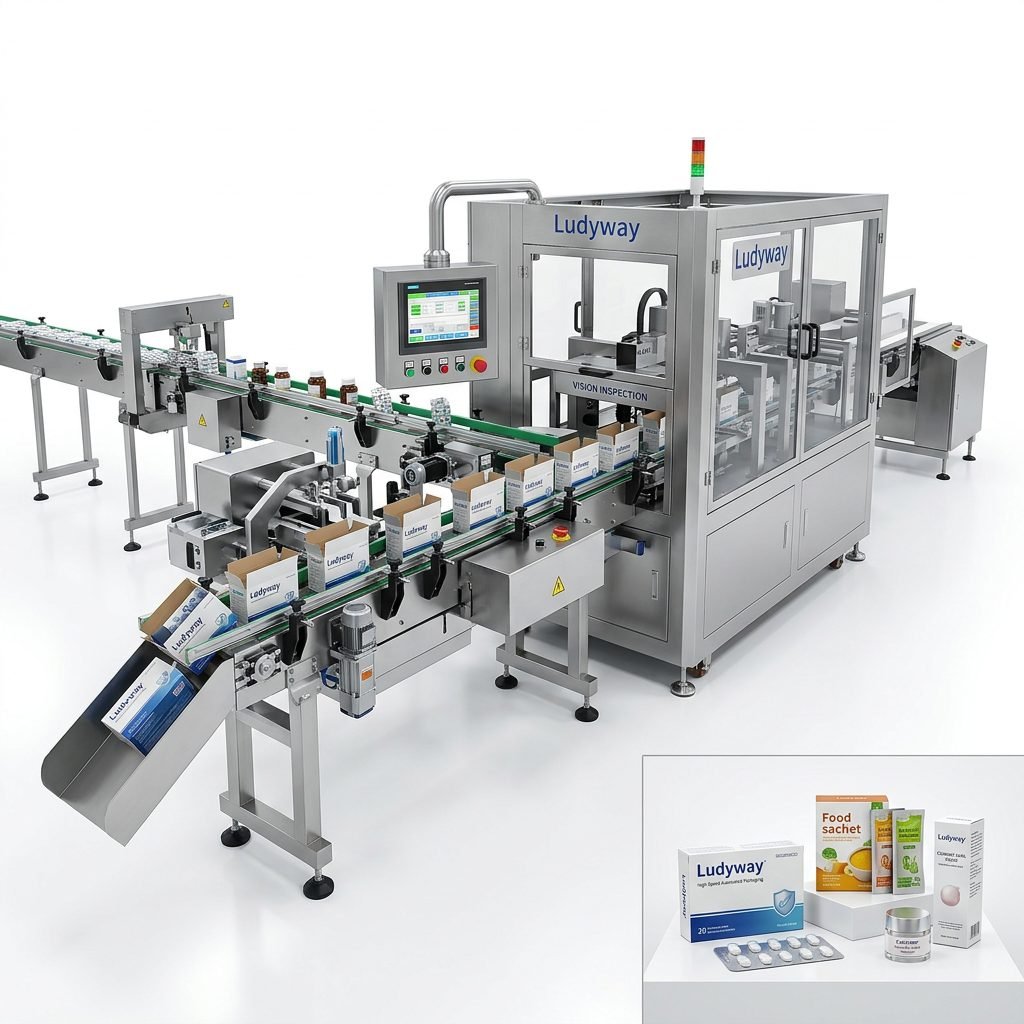
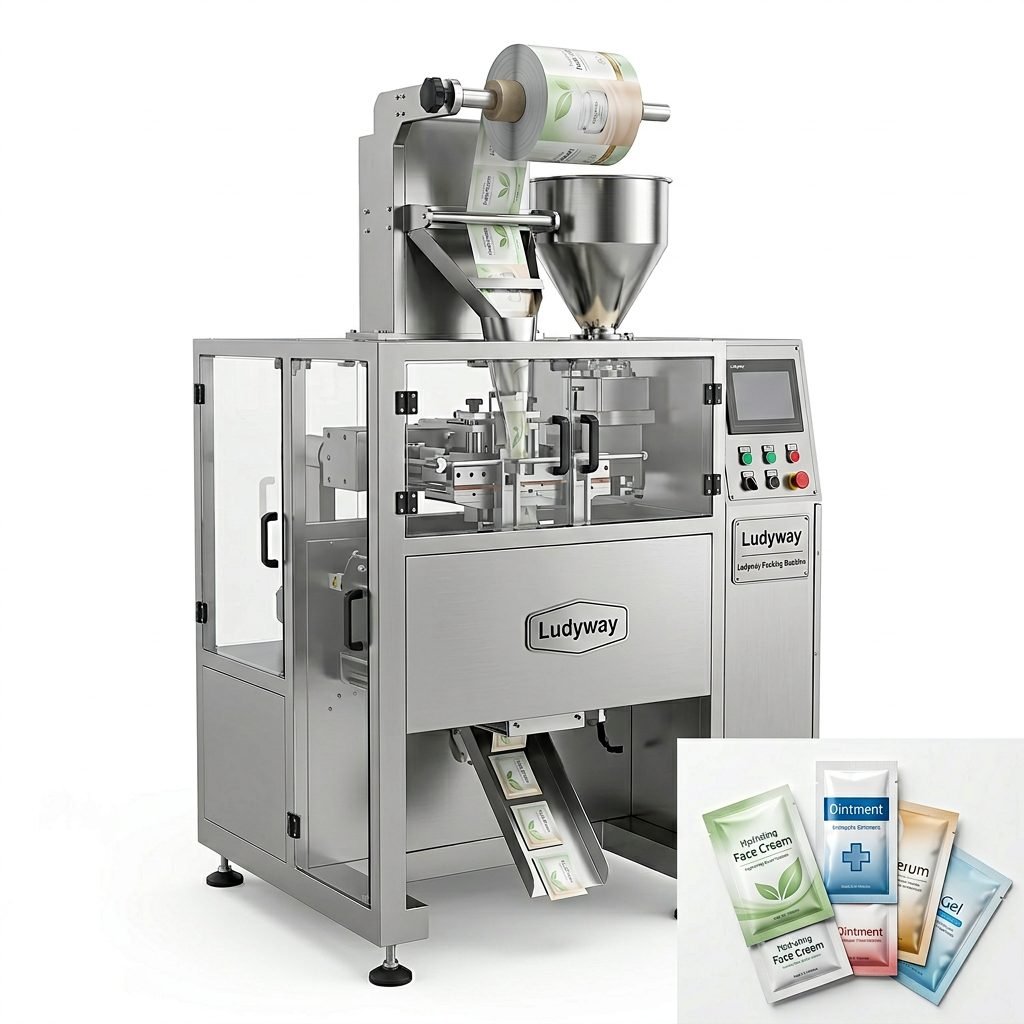
In the dynamic world of food and beverage production, packaging is far more than just a final step—it’s a critical component that ensures product safety, freshness, shelf appeal, and operational efficiency. Selecting the right packaging equipment is a strategic decision that impacts everything from production speed and cost to brand perception and regulatory compliance. This guide delves into the various types of packaging machinery, their specific applications, and provides a structured framework to help you choose the optimal system for your needs.
Core Types of Food and Beverage Packaging Equipment
The packaging landscape is diverse, with equipment designed for specific functions, product forms, and output requirements. Understanding these core categories is the first step toward an informed investment.
Filling Machines
These machines are responsible for accurately dispensing product into containers, pouches, or other primary packaging. Accuracy is paramount to avoid giveaway and ensure consistent product weight or volume.
Liquid Fillers: Ideal for beverages, oils, sauces, and dairy products. Common technologies include gravity, piston, pump, and volumetric fillers. For carbonated drinks, pressure fillers are essential to prevent fizz loss.
Powder Fillers: Used for spices, instant drink mixes, protein powders, and flour. Auger fillers are highly popular due to their precision with free-flowing and non-free-flowing powders.
Granule Fillers: Perfect for coffee beans, snacks, nuts, and grains. Cup or volumetric fillers and weigh scales provide excellent accuracy for these products.
Sealing Machines
Once filled, packages must be securely closed to protect contents from contamination, moisture, and air. The sealing method depends heavily on the packaging material.
Heat Sealers: The most common method for flexible packaging like pouches and sachets. They apply heat and pressure to melt the inner polymer layer of the film, creating a hermetic seal. Options range from simple handheld units to high-speed rotary band sealers.
Capping & Lidding Machines: Essential for rigid containers like bottles, jars, and cups. These machines apply screw caps, press-on lids, or foil seals with consistent torque and placement.
Form-Fill-Seal (FFS) Machines
FFS systems represent a high level of automation by forming the package from a roll of film, filling it with product, and sealing it—all in one continuous operation. They are incredibly efficient and reduce packaging material inventory.
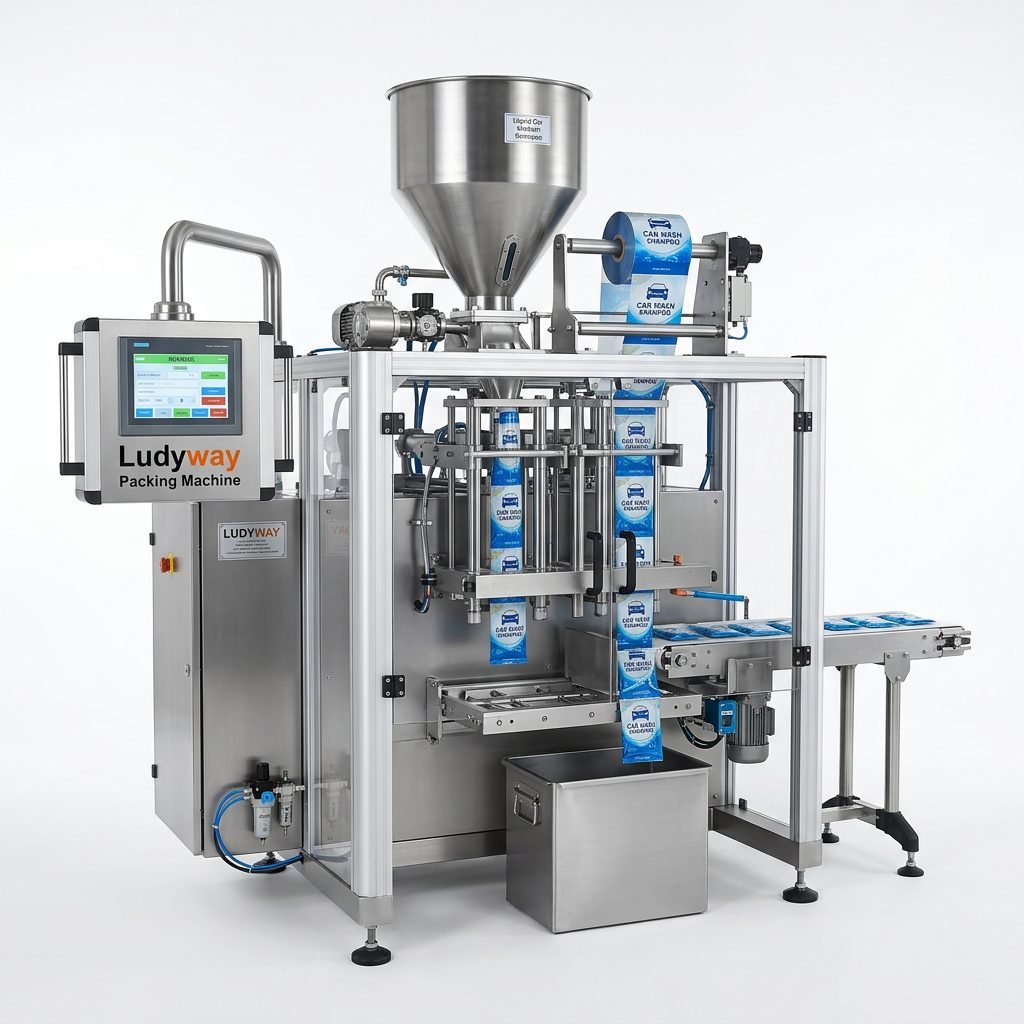
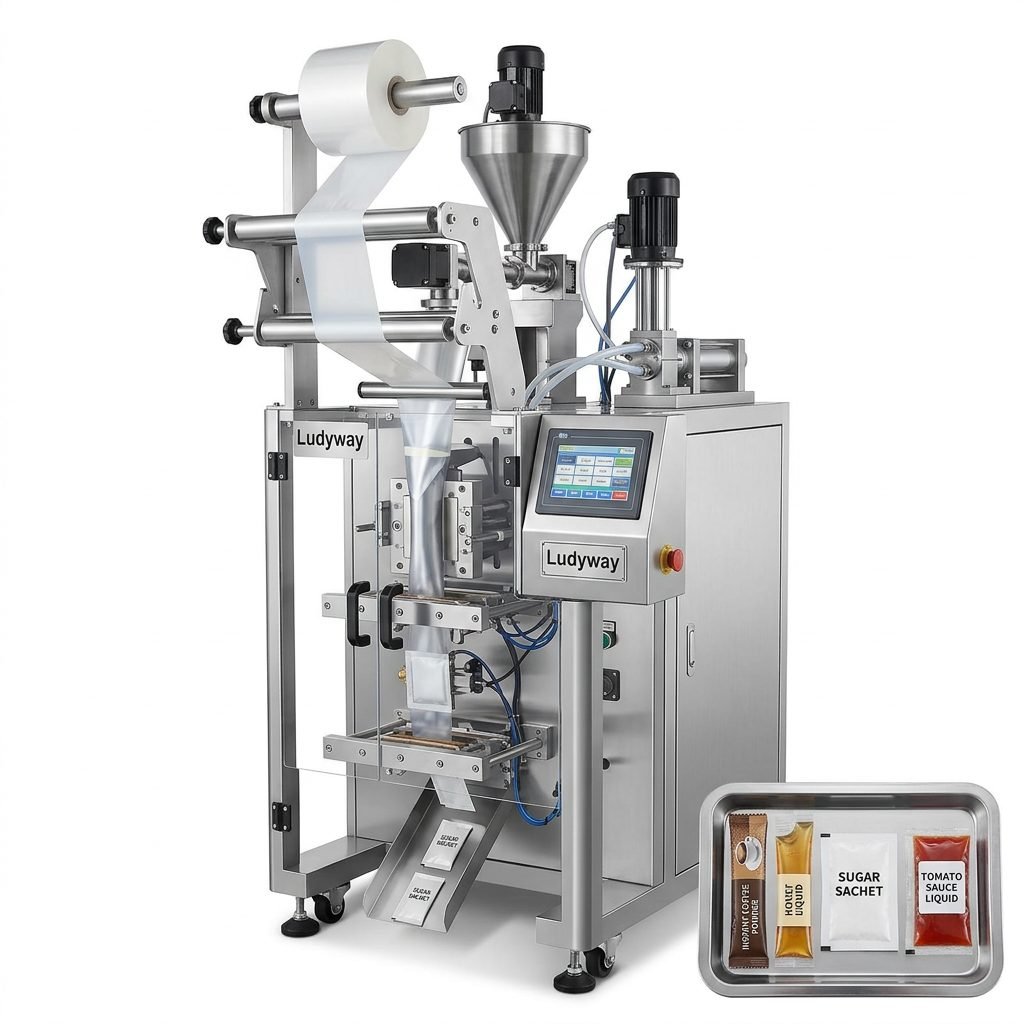
Vertical Form-Fill-Seal (VFFS): The film is formed into a vertical tube, filled, and then sealed horizontally. It’s the go-to solution for packaging granules, powders, snacks, and liquids into pillow pouches or gusseted bags. Modern VFFS machines can integrate multi-lane scales for ultra-high speeds.
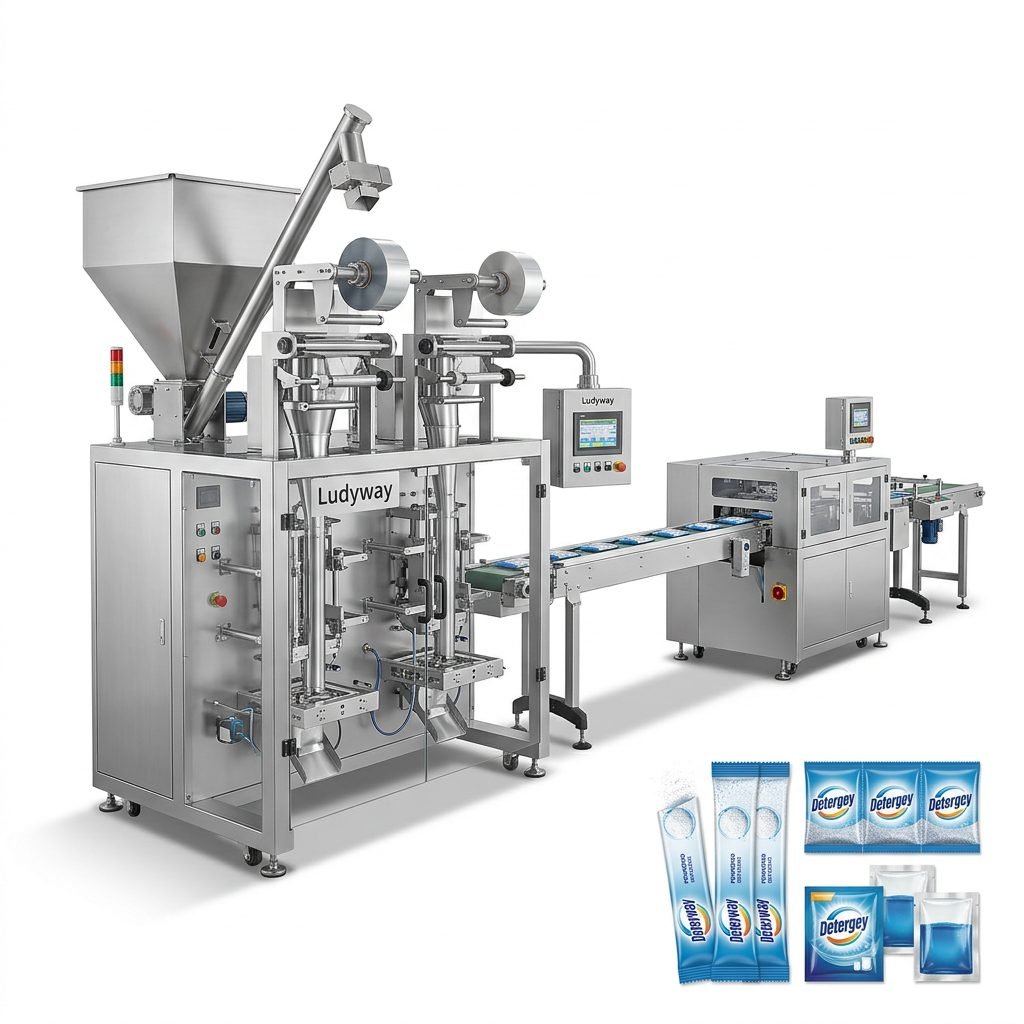
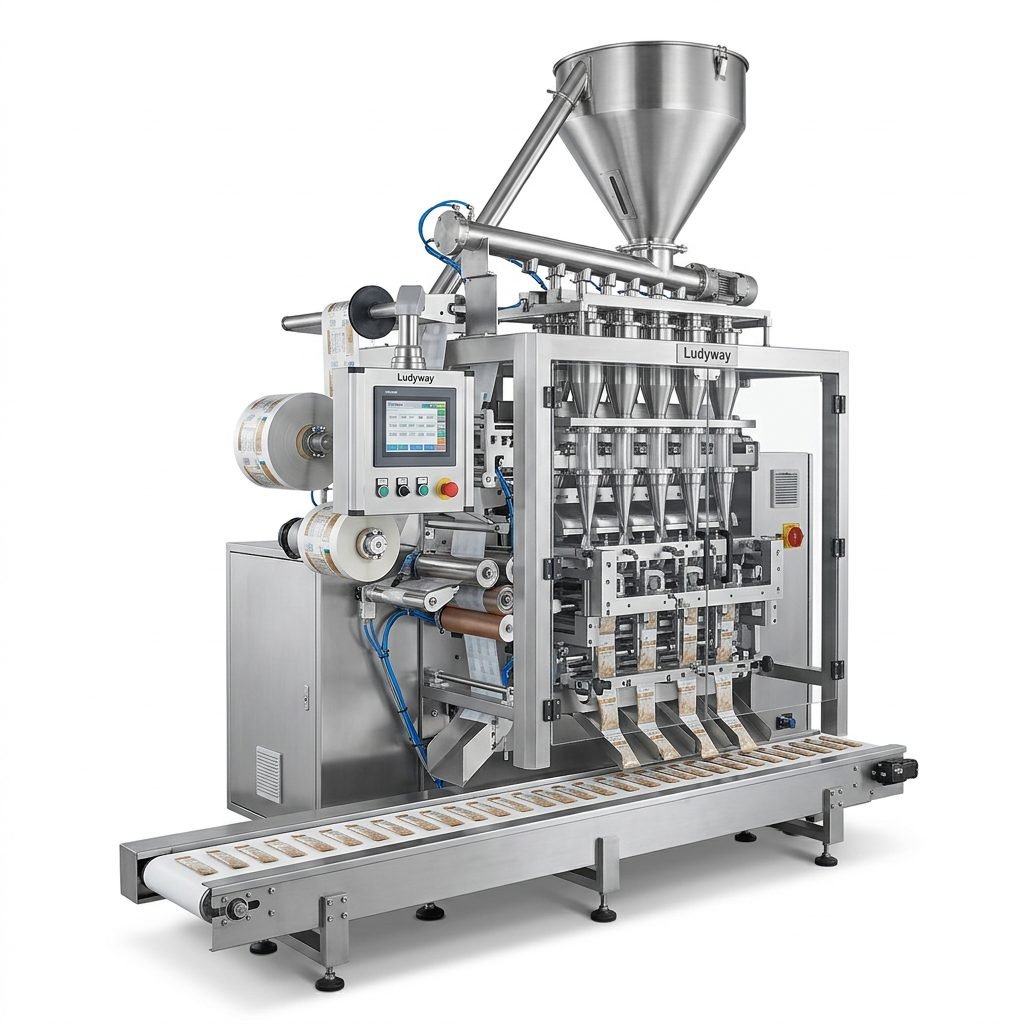
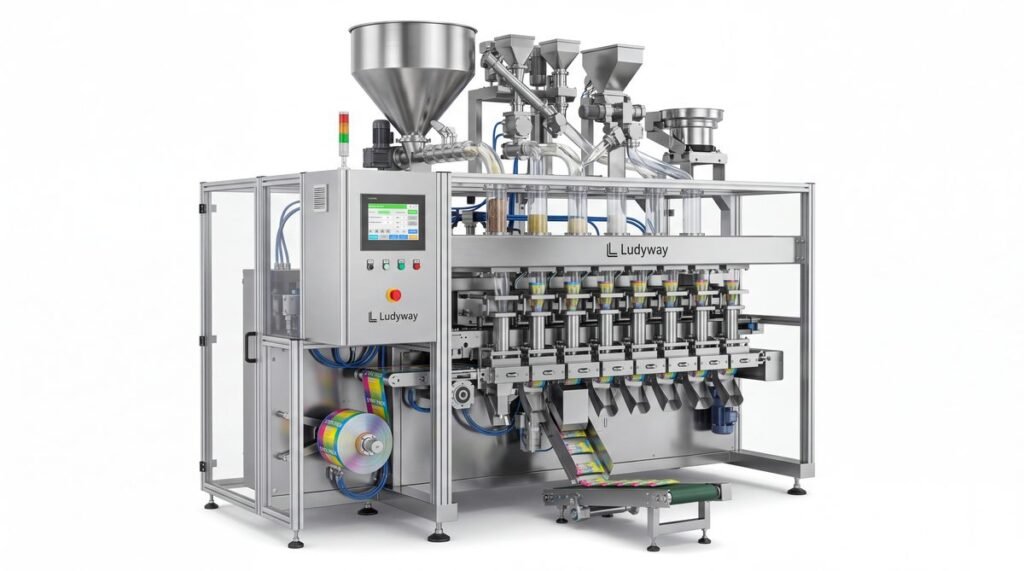
Horizontal Form-Fill-Seal (HFFS): The film is formed horizontally, ideal for creating stick packs, sachets, and blister packs. This is extremely common for single-serve portions of sugar, coffee creamer, ketchup, and pharmaceutical powders.
Labeling & Coding Equipment
This equipment handles brand communication and traceability. Labelers apply pressure-sensitive or glue-applied labels to containers with precision. Coders (inkjet, laser, thermal transfer) print essential information like batch numbers, expiry dates, and barcodes directly onto the package or label.
Strategic Applications Across the Industry
The choice of equipment is deeply intertwined with the product being packaged. Here’s how different systems serve various segments:
Beverage Production
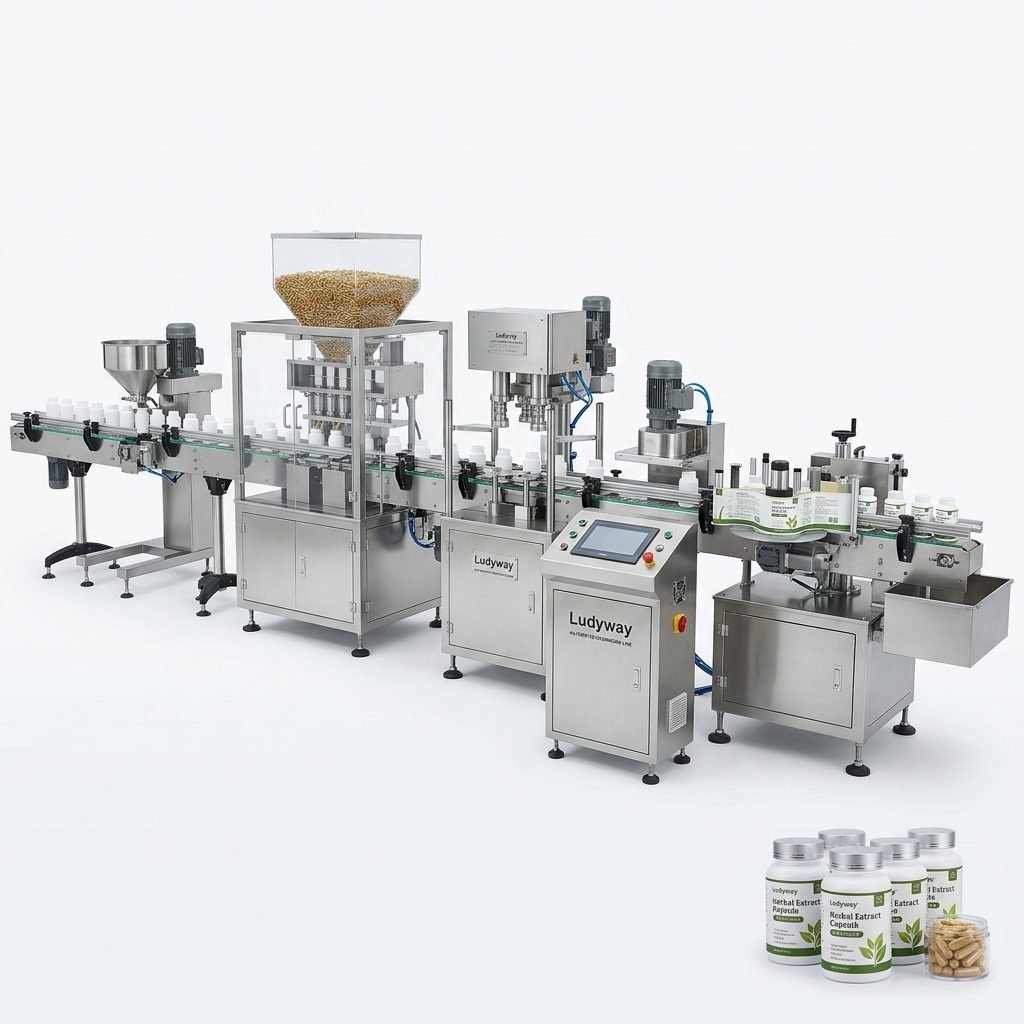
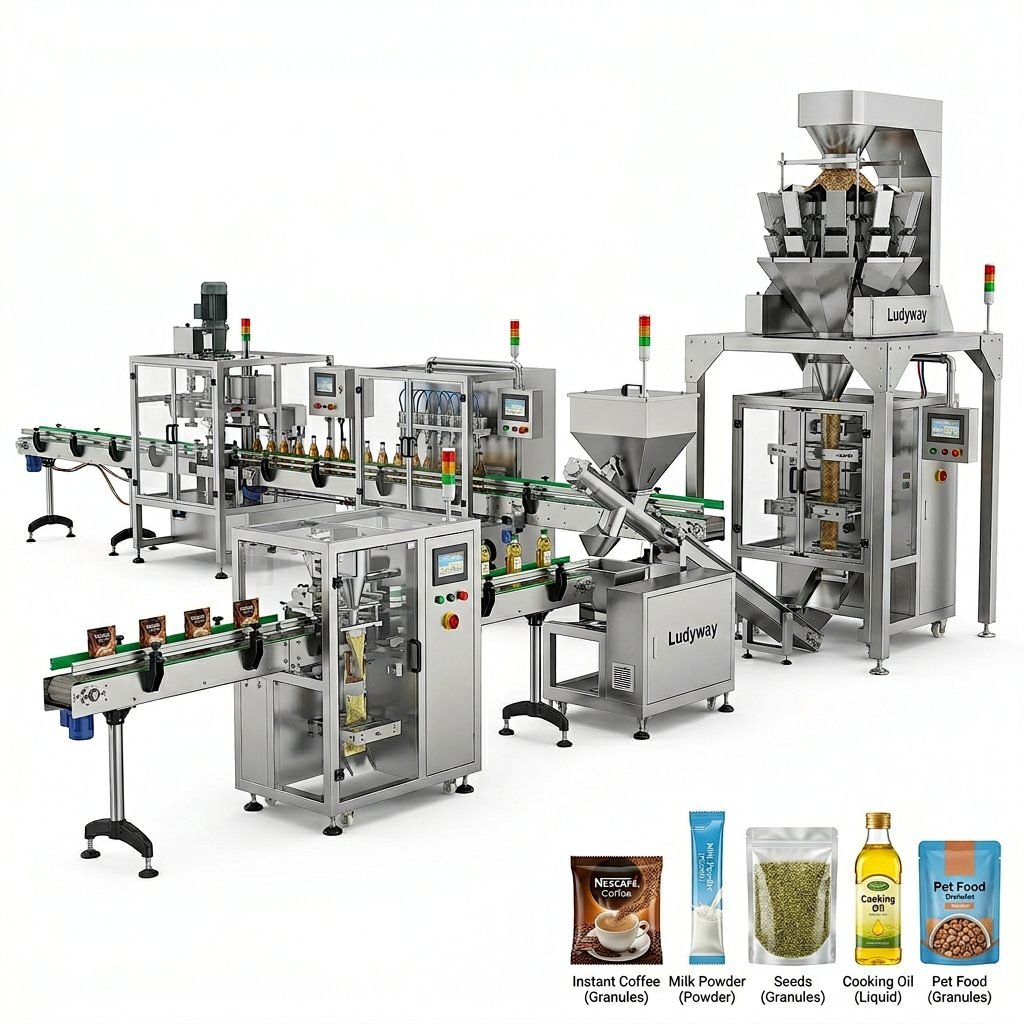
Lines typically integrate rinsers, fillers (pressure for carbonated, gravity for still), cappers, labelers, and packers. For juices and dairy, aseptic filling technology is critical for shelf-stable products without refrigeration.
Snack Foods & Dry Goods
VFFS machines dominate this sector, often paired with multi-head weighers for speed and accuracy. Nitrogen flushing can be integrated to extend shelf life for chips and nuts by displacing oxygen.
Sauces, Condiments & Liquids
Piston or pump fillers are standard for viscous products like ketchup and mayonnaise. For portion control, small sachet or stick pack HFFS machines are ideal for restaurants and food service.
Fresh & Chilled Products
Modified Atmosphere Packaging (MAP) equipment is key. It replaces the air inside the package with a gas mix (e.g., nitrogen, CO2) to slow spoilage, commonly used for fresh pasta, meats, and salads.
How to Choose the Right Packaging System: A Step-by-Step Guide
Selecting equipment is a complex process. A methodical approach ensures the system aligns with both current and future business goals.
1. Define Your Core Requirements
Start with an internal audit. What is your primary product form (liquid, powder, granule)? What are your required output speeds (packs per minute/hour)? What packaging materials do you plan to use (film type, container specs)? What is your available factory footprint? Clearly documented requirements are your selection blueprint.
2. Evaluate Machine Capabilities & Technology
Match your requirements to machine specs. For accuracy, examine the filler’s tolerance (e.g., ±0.5% for liquids). For flexibility, can the machine handle multiple package sizes with quick changeovers? Assess the control system—modern PLC-based touchscreens offer better recipe management and diagnostics.
Key Consideration: Don’t overlook hygiene design. For food contact, equipment should have smooth surfaces, be easy to disassemble for cleaning (CIP/SIP where possible), and use food-grade materials like stainless steel.
3. Consider Integration and Scalability
Will the machine work as a standalone unit or integrate into an existing line? Consider connectivity for data collection (Industry 4.0). More importantly, think about growth. Can the system be upgraded or run faster to meet future demand? Investing in a slightly more capable machine can prevent a costly replacement in two years.
4. Analyze Total Cost of Ownership (TCO)
The purchase price is just the beginning. Calculate TCO by factoring in:
→ Installation & Training: Costs for technicians and operator training.
→ Operating Costs: Energy consumption, compressed air needs, and required personnel.
→ Maintenance & Parts: Availability and cost of spare parts, expected service intervals.
→ Material Waste: A machine with higher accuracy reduces product giveaway, saving money long-term.
5. Assess Supplier Support and Reputation
The supplier is a long-term partner. A provider with deep industry experience, like Ludyway Packing Machine, brings invaluable expertise. Evaluate their technical support, availability of spare parts, warranty terms, and service network. Review case studies and speak to existing clients to gauge reliability and after-sales service quality. A company with over 30 years of industry experience often indicates proven solutions and stability.
Future Trends in Packaging Machinery
The industry is rapidly evolving toward greater intelligence and sustainability. Smart machines with IoT sensors enable predictive maintenance and real-time production monitoring. Robotics are increasingly used for delicate picking and packing tasks. Furthermore, there is a strong push for equipment that can handle recyclable and compostable materials efficiently, supporting global environmental goals. Choosing a supplier committed to innovation and efficient solutions ensures your operation stays competitive.
Frequently Asked Questions (FAQs)
What is the main difference between VFFS and HFFS machines?
VFFS (Vertical Form-Fill-Seal) machines form bags vertically and are best for free-flowing products like granules and powders that can fall into the bag by gravity. HFFS (Horizontal Form-Fill-Seal) machines form packages horizontally and are ideal for creating flat pouches like stick packs and sachets, often used for single-serve powders or liquids.
How do I determine the right speed for my packaging machine?
Calculate your current and projected future production volume (e.g., units per shift). Add a 15-20% buffer for peak demand. Choose a machine whose maximum speed exceeds this calculated need to allow for efficiency losses and future growth, ensuring you don’t run the equipment at its absolute limit constantly.
Why is hygiene design so important in food packaging equipment?
Hygienic design prevents product contamination, reduces cleaning time and costs, and ensures compliance with strict food safety standards (like FDA, HACCP, GMP). Features like stainless steel construction, rounded corners, and easy disassembly are non-negotiable for food-grade applications.
Can one machine handle multiple different products or package sizes?
Many modern machines offer flexibility through quick-change parts (like changeover kits for different fill volumes or pouch sizes). However, the degree of flexibility varies. Clearly communicate your need for multiple SKUs to the supplier to ensure the machine is designed for efficient changeovers, minimizing downtime.
What should I look for in a packaging equipment supplier?
Prioritize suppliers with a strong track record in your specific industry, proven by case studies and client testimonials. Ensure they offer comprehensive after-sales support, including training, readily available spare parts, and responsive technical service. A partner with strong engineering capabilities can also provide valuable customized solutions for unique challenges.