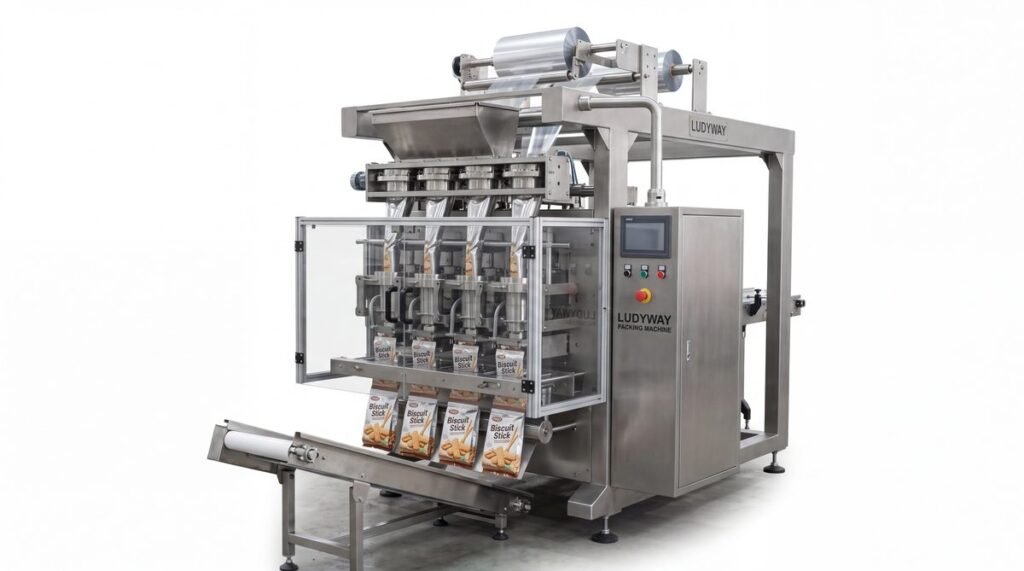
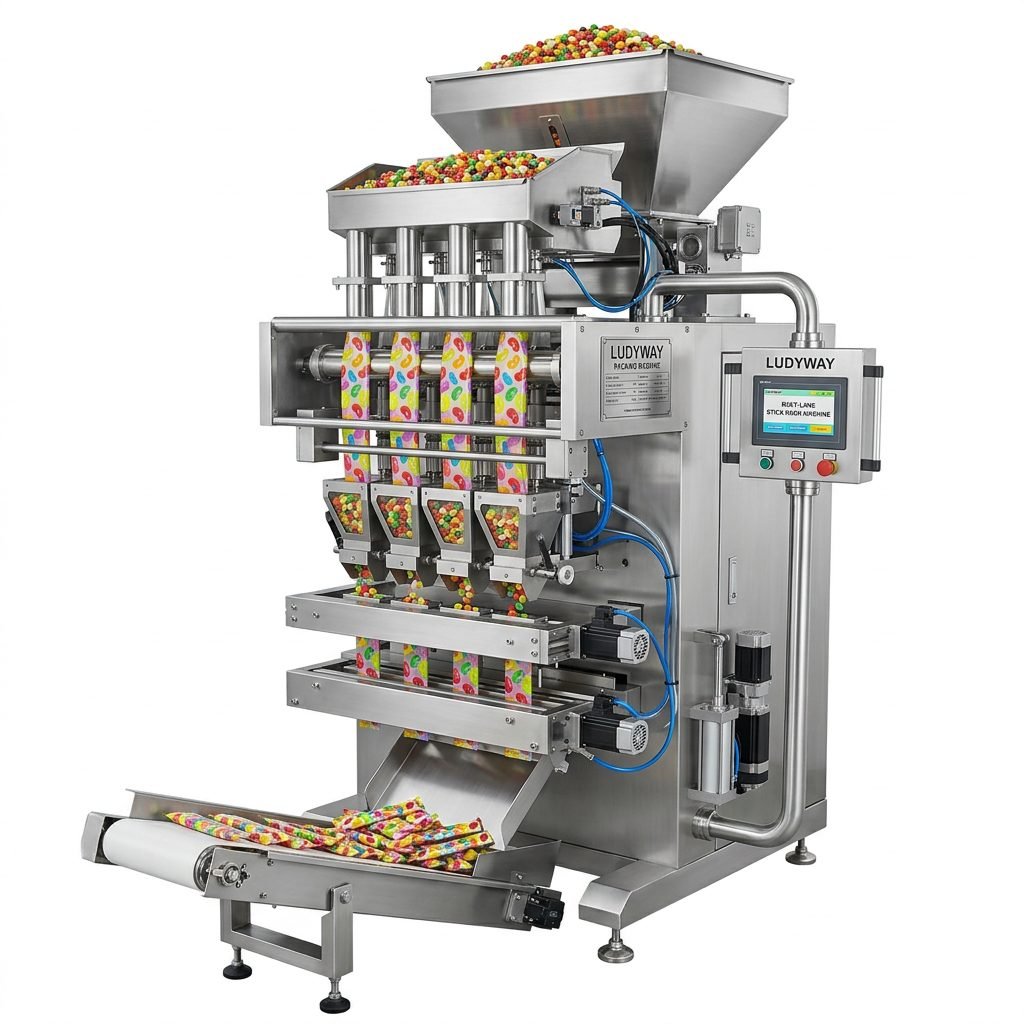
In modern manufacturing, a fully automatic packaging machine is no longer just a productivity upgrade—it is a strategic investment. Whether you produce food, pharmaceuticals, cosmetics, chemicals, or health supplements, the right automated system can improve speed, consistency, hygiene, and overall profitability.
As labor costs rise and quality requirements become stricter, more manufacturers are shifting from semi-automatic processes to integrated automatic packaging solutions. The result is better output, lower waste, and stronger competitiveness in both domestic and export markets.
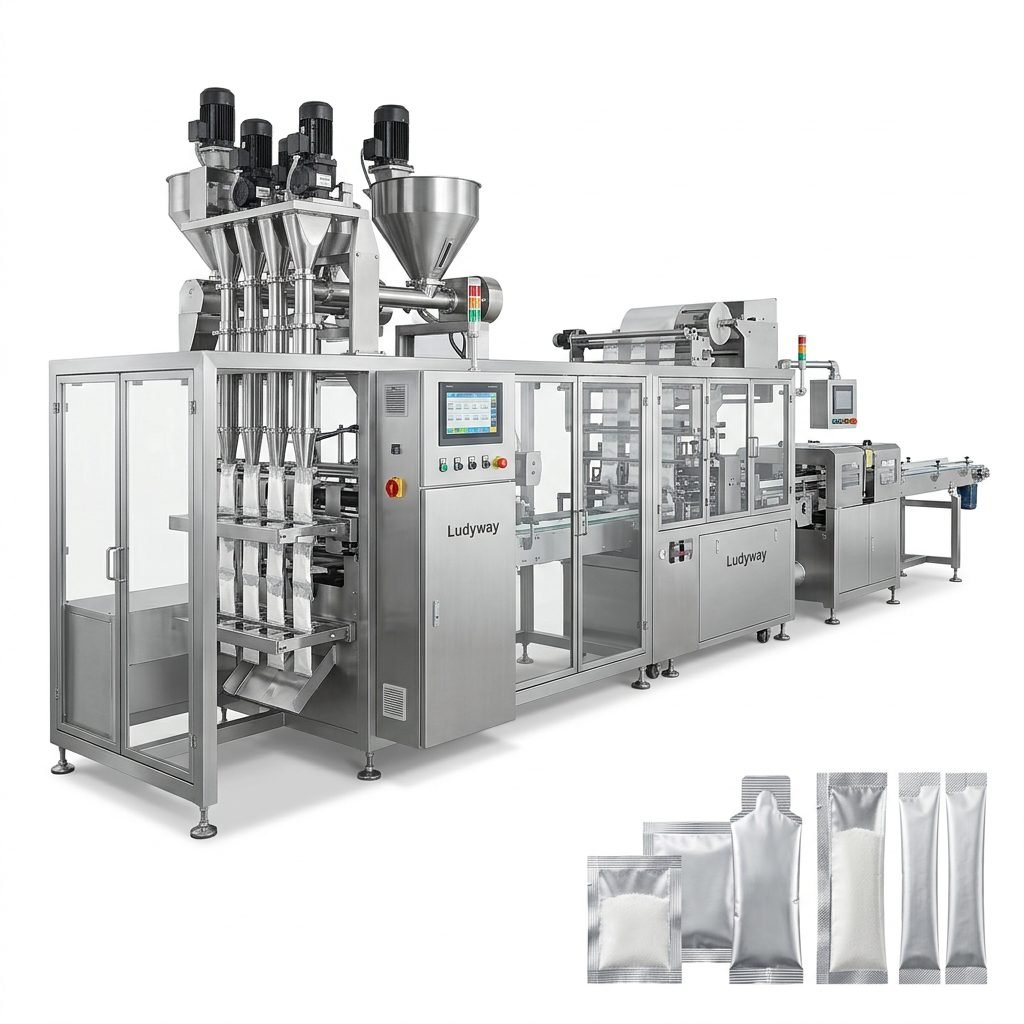
What Is a Fully Automatic Packaging Machine?
A fully automatic packaging machine is equipment designed to complete packaging tasks with minimal manual intervention. Depending on the application, it can automatically handle functions such as:
- Product feeding
- Measuring or dosing
- Bag forming or pouch handling
- Filling
- Sealing
- Date coding or labeling
- Inspection and rejection
- Cartoning, case packing, and palletizing
These systems are widely used in factories that need stable output, repeatable packaging quality, and scalable production.
Key Benefits of Fully Automatic Packaging Machines
1. Higher Production Efficiency
Automatic machines operate continuously at much higher speeds than manual or semi-automatic lines. This is especially important for businesses handling large order volumes or seasonal demand peaks.
2. Lower Labor Dependence
Automation reduces the need for repetitive manual labor. This helps manufacturers address labor shortages, reduce training costs, and lower human-error risks.
3. Better Packaging Consistency
From filling accuracy to sealing appearance, automatic machines help keep every pack uniform. This matters for brand image, shelf appeal, and compliance-sensitive industries such as pharmaceuticals.
4. Improved Hygiene and Safety
In food, medical, and supplement production, reducing direct human contact with products can support better sanitation control and cleaner operations.
5. Reduced Material Waste
With precise control over dosing, film pulling, and sealing temperature, modern automatic packaging systems can reduce underfill, overfill, and packaging material loss.
6. Easier Integration Into Smart Factories
Many advanced machines can connect with checkweighers, metal detectors, printers, conveyors, and MES/ERP systems, supporting data-driven production management.
| Benefit | Business Impact |
|---|---|
| Higher speed | Increases daily output and supports growth |
| Accurate filling | Reduces giveaway and improves consistency |
| Lower manual work | Cuts labor costs and operator dependency |
| Stable sealing quality | Lowers leakage risk and improves product protection |
| Integrated automation | Simplifies scaling and line management |
Main Types of Fully Automatic Packaging Machines
Different products require different machine structures. Choosing the right type depends on product form, package style, and target output.
Vertical Form Fill Seal (VFFS) Machines
VFFS machines form bags from roll film, fill the product, and seal the package in one continuous process. They are commonly used for:
- Powders
- Granules
- Snacks
- Seeds
- Coffee
- Pet food
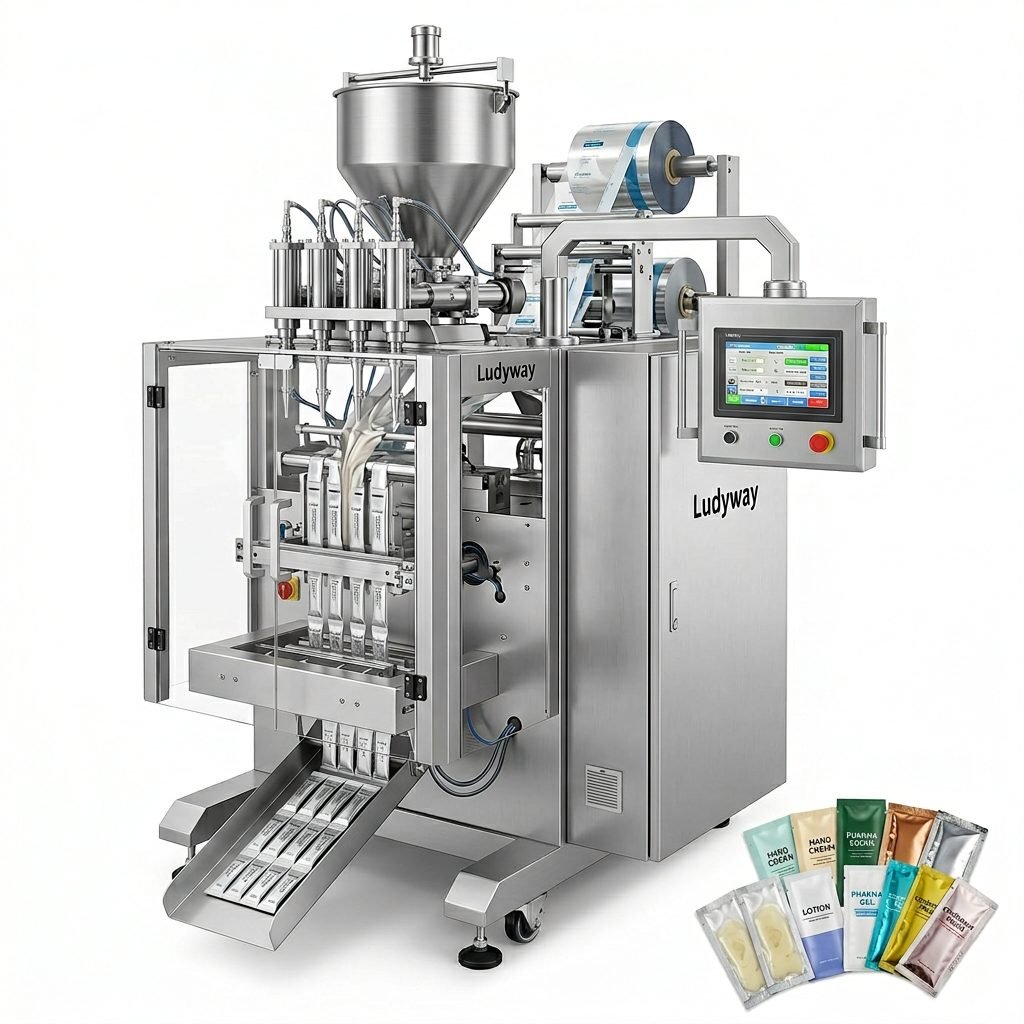
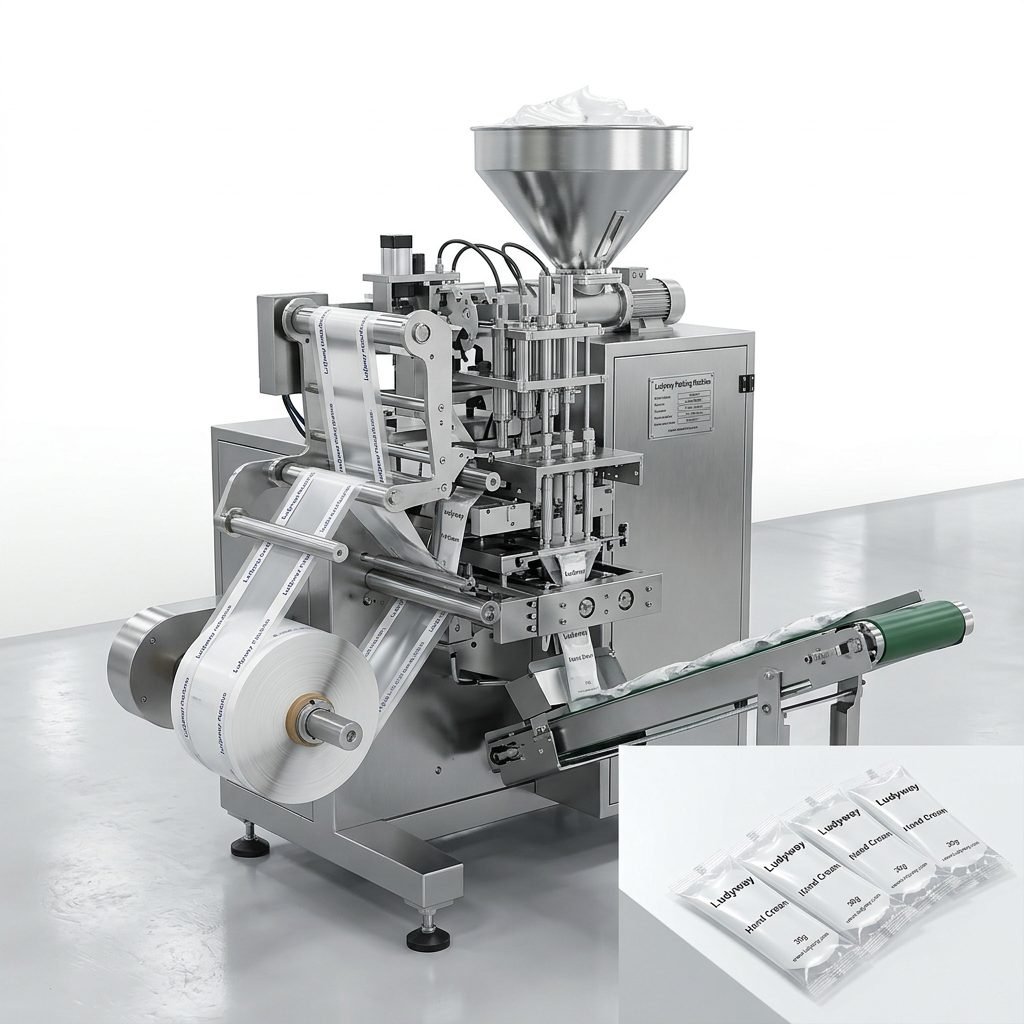
Sachet Packaging Machines
These machines are ideal for small-dose packs and are widely used for seasonings, sauces, detergents, pharmaceutical powders, and cosmetic samples.
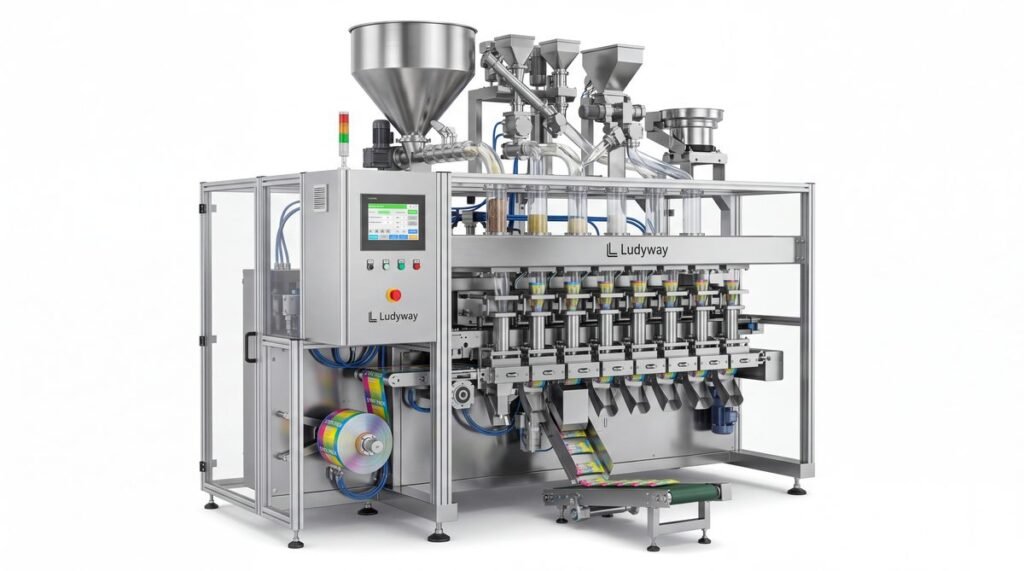
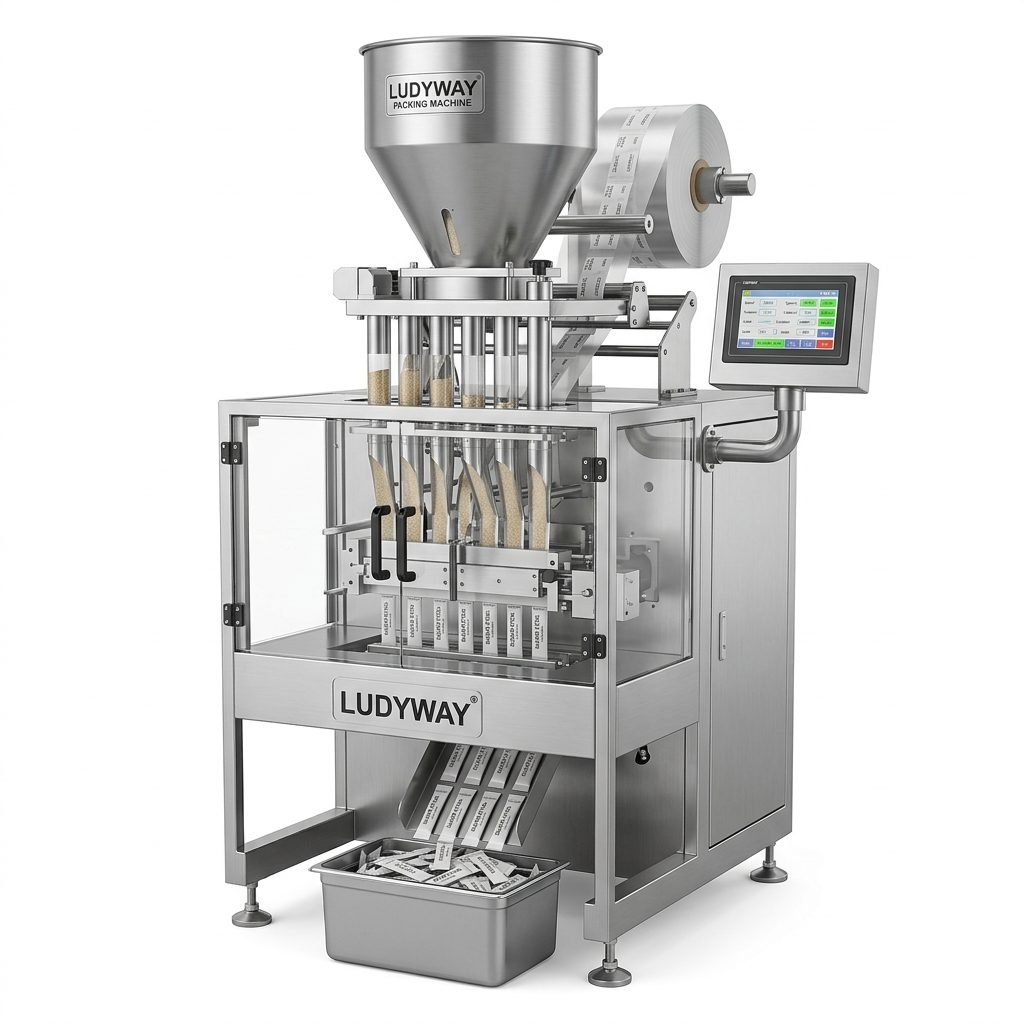
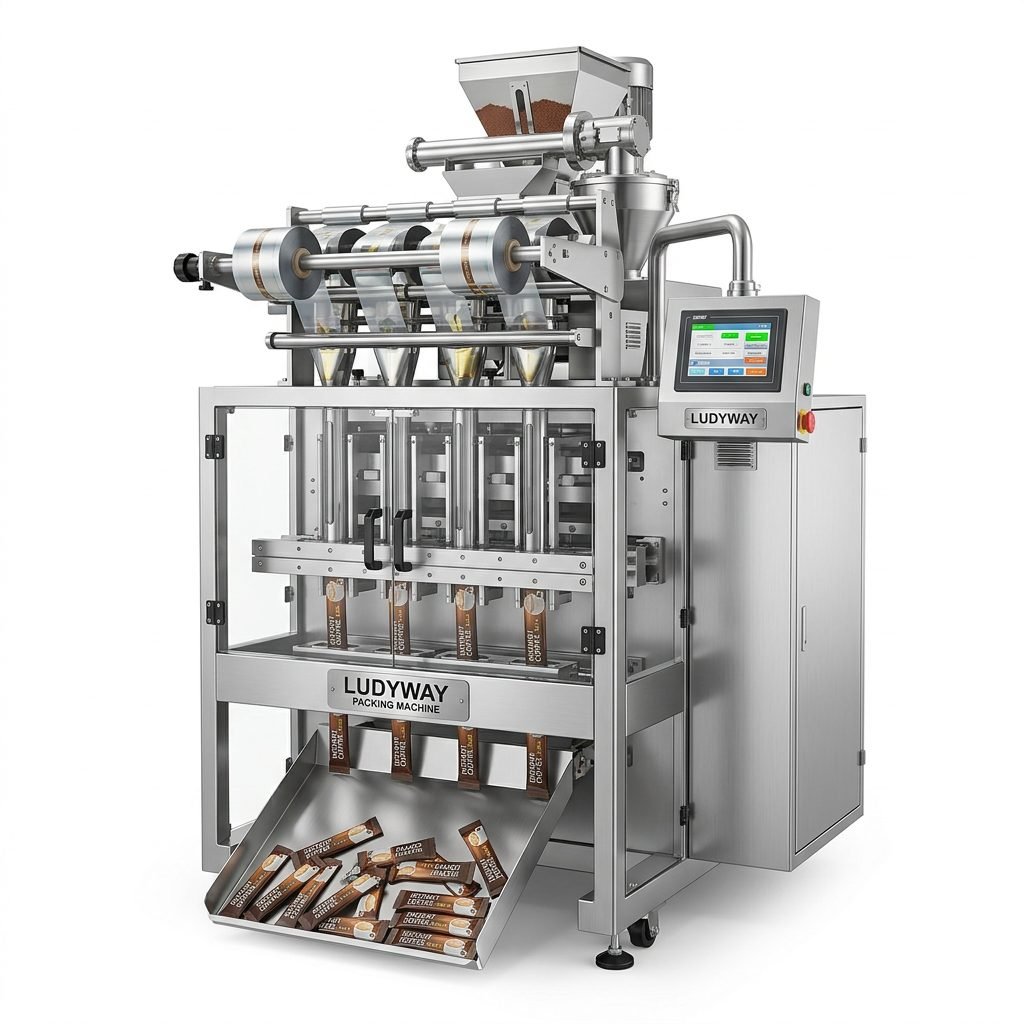
Stick Pack Machines
Stick pack machines produce slim, easy-to-carry packets suitable for beverage powders, sugar, coffee, nutrition supplements, and oral solutions. Multi-lane models can deliver very high throughput.
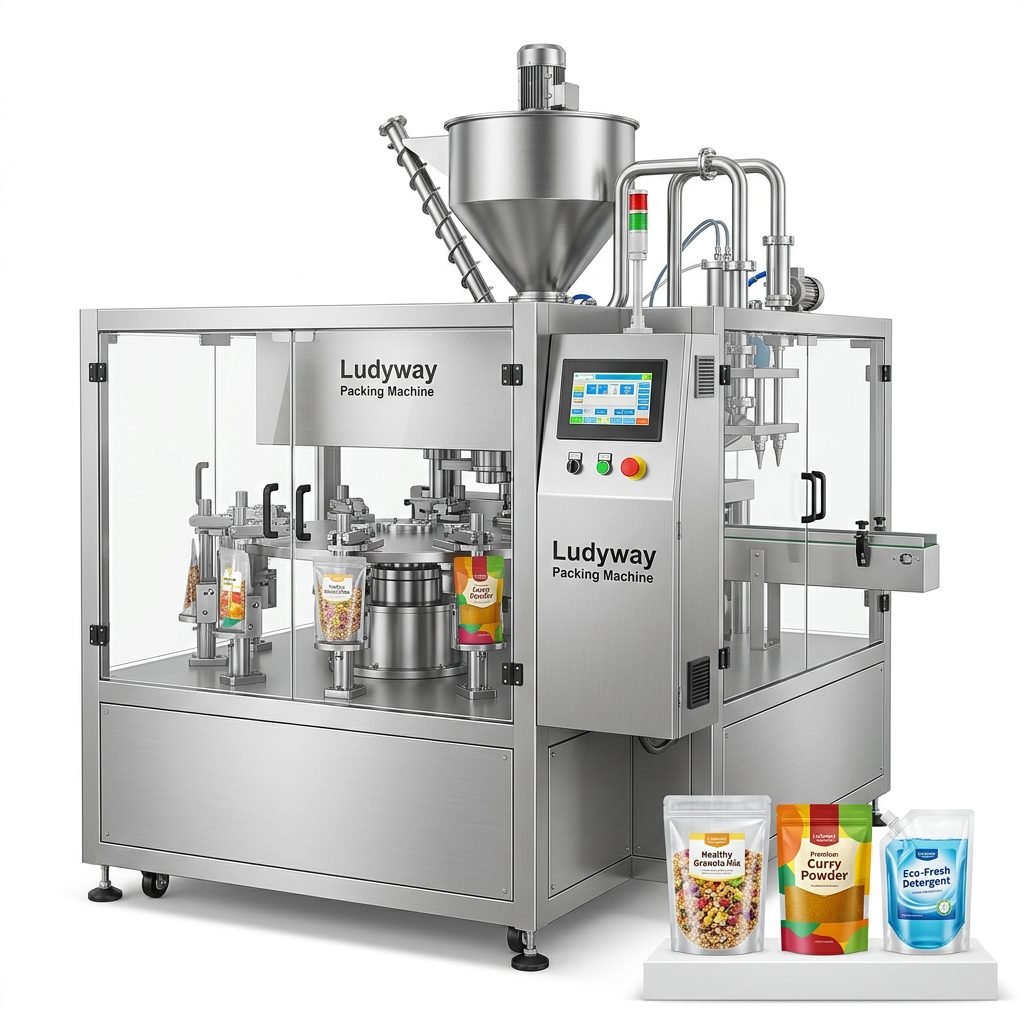
Premade Pouch Packaging Machines
These systems pick up ready-made pouches, open them, fill them, and seal them. They are suitable for premium packaging formats such as stand-up pouches, zipper pouches, and shaped pouches.
Bottle Filling and Capping Lines
Used for liquids, capsules, tablets, powders, and gels, these lines can include bottle unscrambling, filling, capping, labeling, induction sealing, and cartoning.
Blister and Pharmaceutical Packaging Machines
In pharmaceutical production, fully automatic systems are used for tablets, capsules, and medical devices where traceability, accuracy, and cleanliness are essential.
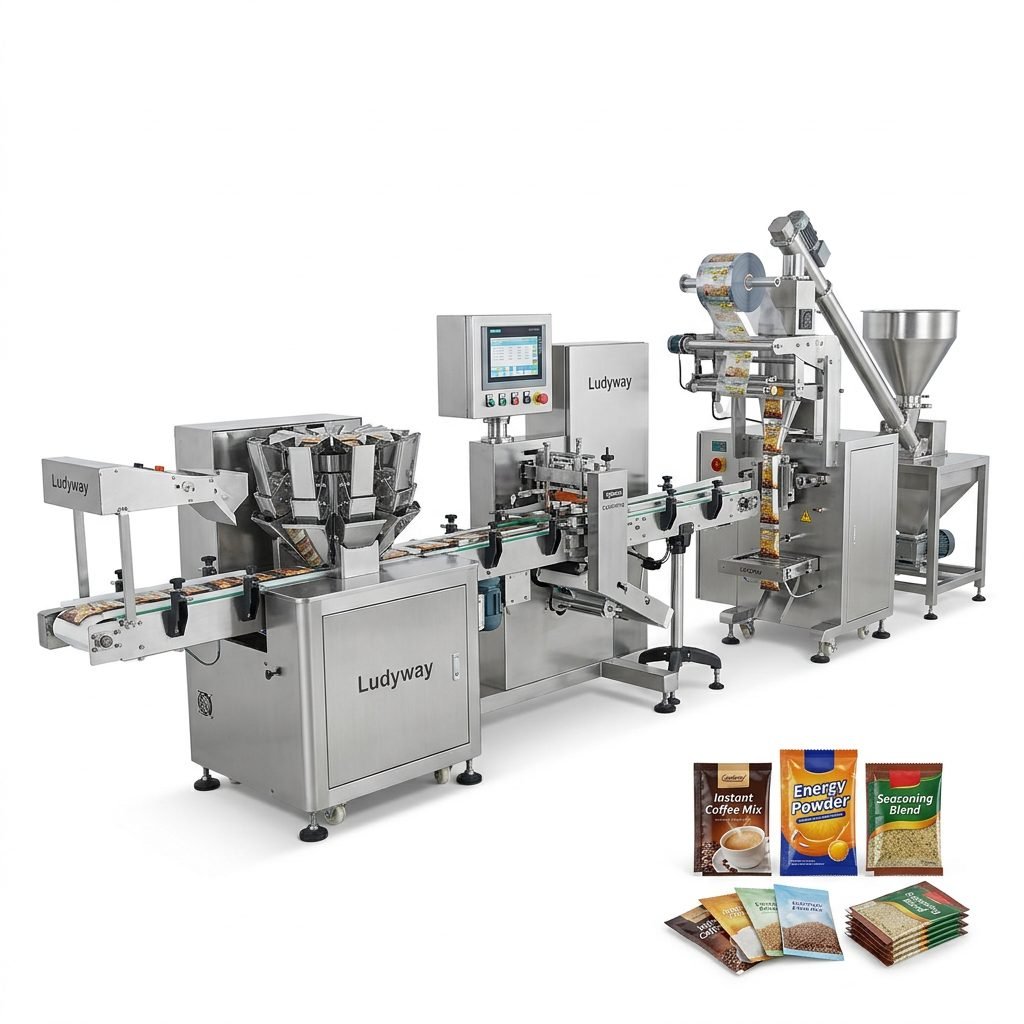
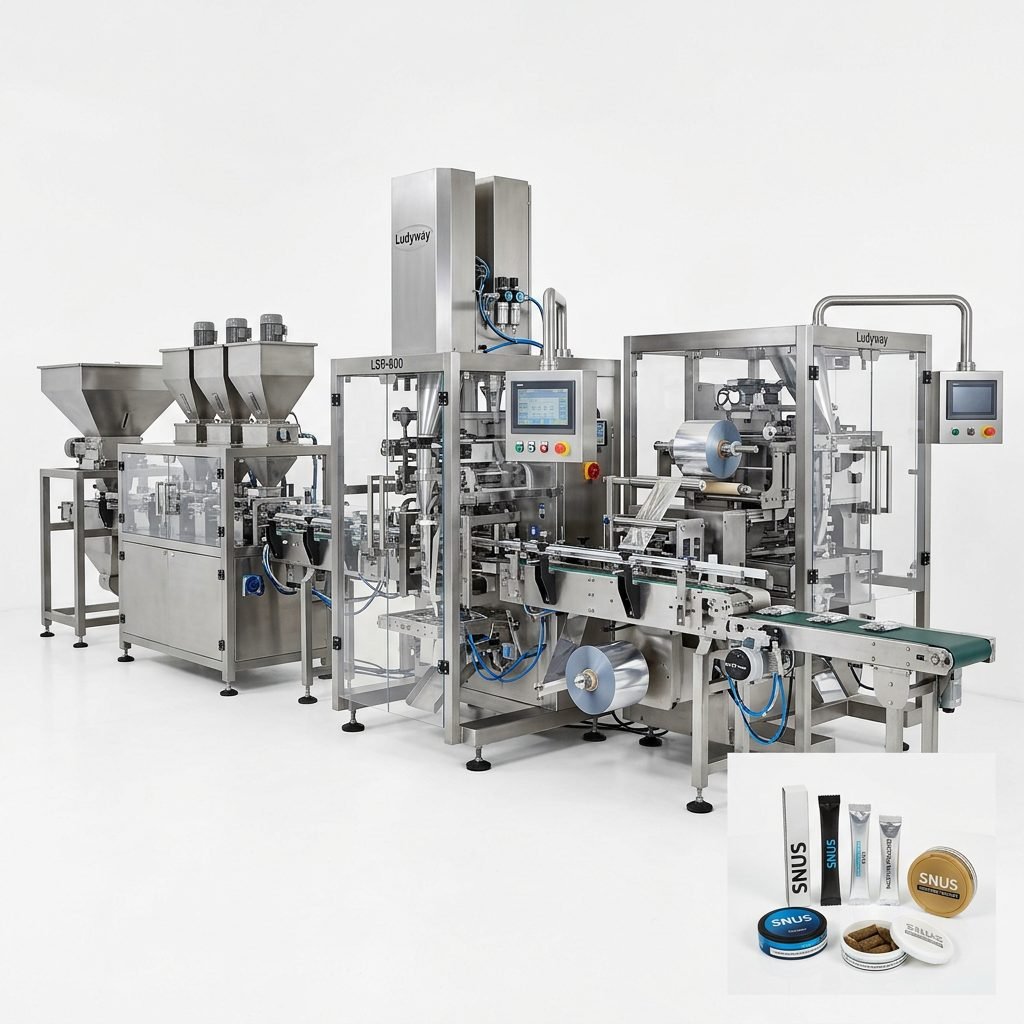
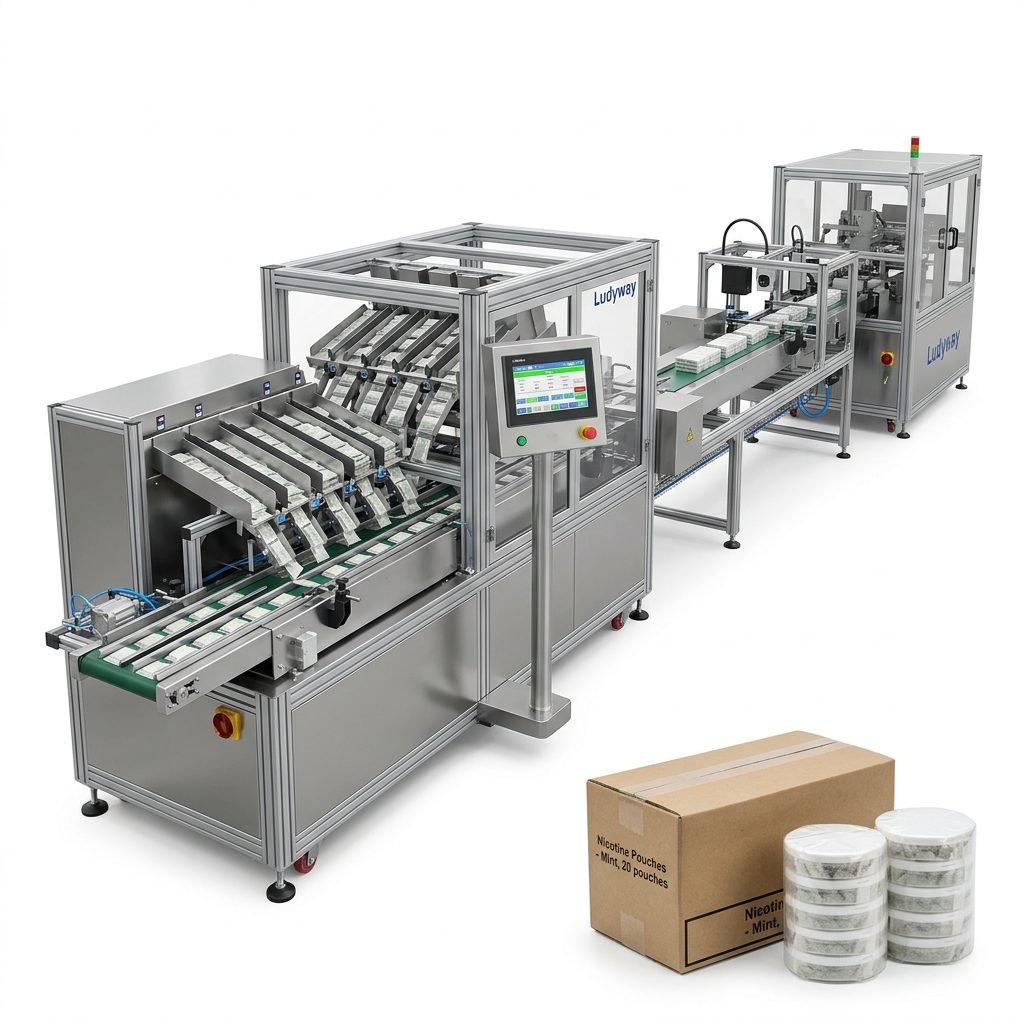
Turnkey Packaging Lines
A turnkey line integrates multiple machines into one complete solution—from feeding and packaging to secondary packaging and end-of-line handling.
| Machine Type | Best For | Typical Package Format |
|---|---|---|
| VFFS machine | Powders, granules, snacks | Pillow bags, gusset bags |
| Sachet machine | Small-dose powders, liquids, pastes | Flat sachets |
| Stick pack machine | Coffee, sugar, supplement powders | Stick packs |
| Premade pouch machine | Premium retail products | Stand-up and zipper pouches |
| Bottle line | Liquids, tablets, capsules | Bottles and jars |
Industries That Benefit Most
Fully automatic packaging machines are widely adopted in industries where speed and precision are critical:
- Food industry – snacks, coffee, spices, sauces, dairy powders, grains
- Pharmaceutical industry – tablets, capsules, granules, medical consumables
- Health supplement industry – collagen, vitamins, protein powders, probiotics
- Cosmetics industry – creams, serums, wipes, masks, lotions
- Chemical industry – detergents, additives, powders, industrial liquids
- Pet food and feed industry – kibble, pellets, powders, nutrition products

How to Choose the Right Fully Automatic Packaging Machine
Understand Your Product Characteristics
Start with the basics: Is your product a powder, granule, liquid, paste, tablet, capsule, or irregular solid? Product flowability, viscosity, moisture sensitivity, and fragility all affect machine selection.
Define the Package Format
Your target package may be a sachet, stick pack, pouch, bottle, jar, carton, or big bag. The packaging style determines the machine architecture.
Estimate Required Output
Think in units per minute, per hour, and per shift. A machine that meets today’s demand but cannot scale may limit your growth in the near future.
Check Filling Accuracy Requirements
Products with high raw material cost or strict dosage rules require more precise feeding and filling systems, such as auger fillers, multi-head weighers, piston fillers, or counting modules.
Evaluate Material Compatibility
For food, pharma, and corrosive chemical products, machine contact parts should match hygiene and material standards, often requiring stainless steel construction and easy-clean designs.
Consider Automation Level Beyond the Main Machine
A packaging machine performs better when integrated with:
- Feeding systems
- Conveyors
- Checkweighers
- Metal detectors or X-ray inspection
- Labeling and coding units
- Cartoning and palletizing systems
Review Changeover Flexibility
If you run multiple SKUs, package sizes, or formulas, choose equipment that supports quick changeovers and recipe memory functions.
Assess Supplier Experience
Machine quality matters, but so do engineering support, installation guidance, spare parts supply, and after-sales response. A capable supplier can reduce commissioning time and long-term operating risk.
| Selection Factor | Why It Matters |
|---|---|
| Product type | Determines filling method and machine structure |
| Package style | Affects machine model and packaging material use |
| Speed requirement | Ensures the line meets production targets |
| Accuracy requirement | Protects quality and controls product giveaway |
| Future scalability | Supports business growth without full replacement |
| Technical support | Reduces downtime and improves machine lifecycle value |
Common Mistakes Buyers Should Avoid
- Choosing a machine based only on price
- Ignoring packaging material compatibility
- Underestimating future capacity needs
- Overlooking cleaning and maintenance convenience
- Buying a standalone machine when a full line is needed
- Failing to request product testing before purchase
Tip: A machine with a lower initial cost may become more expensive over time if it causes downtime, waste, inconsistent packaging, or difficult maintenance.
Why Turnkey Solutions Are Becoming More Popular
Instead of purchasing separate machines from different suppliers, many manufacturers now prefer turnkey packaging lines. This approach can simplify project management and improve compatibility across the whole process.
A turnkey solution may include:
- Raw material feeding
- Main packaging machine
- Inspection systems
- Secondary packaging
- Conveying and transfer
- Palletizing and end-of-line automation
For companies seeking complete automation, working with an experienced supplier such as Ludyway packaging machine manufacturer can help streamline equipment selection for food, pharmaceutical, health supplement, cosmetic, and chemical applications.
Questions to Ask Before Buying
- What products will the machine package now and in the future?
- What speed is required per minute and per shift?
- What packaging materials will be used?
- How accurate must filling and sealing be?
- Is the machine easy to clean and maintain?
- Can it be integrated into a larger packaging line later?
- What technical support, installation, and spare parts are available?
Final Buying Insight
The best fully automatic packaging machine is not simply the fastest model or the cheapest option. It is the one that best matches your product type, packaging format, production target, compliance needs, and long-term expansion plan.
When selected correctly, a fully automatic packaging system can help manufacturers achieve better output, stronger quality control, and a faster return on investment. For growing businesses, it is often one of the most practical ways to build a more efficient and competitive production operation.