Choosing the right granule packaging machine is not just about speed. It affects product quality, labor cost, bag consistency, sealing performance, maintenance workload, and your future production capacity. Whether you pack sugar, coffee, seeds, spices, detergent granules, feed additives, pharmaceutical granules, or nutritional products, the right system should match both your product behavior and your business goals.
This guide explains how granule packaging machines work, what types are available, which technical points matter most, and how to compare solutions with confidence before you invest.
What Is a Granule Packaging Machine?
A granule packaging machine is automated equipment designed to dose, fill, form, and seal granular products into selected packaging formats such as sachets, stick packs, pouches, or bags. These machines are used across food, pharmaceutical, chemical, nutraceutical, and agricultural sectors.
Granules can range from free-flowing and uniform to irregular, dusty, fragile, sticky, or mixed in particle size. Because of this, machine selection should always be based on real product characteristics rather than packaging speed alone.
Common products packed by granule machines
- White sugar, brown sugar, salt, MSG
- Coffee granules, instant drink mixes, seasoning blends
- Seeds, grains, rice, beans, cereal inclusions
- Pet food pellets, feed premixes, animal nutrition additives
- Pharmaceutical granules, oral rehydration salts, supplements
- Fertilizer granules, detergent granules, industrial chemicals
How a Granule Packaging Machine Works
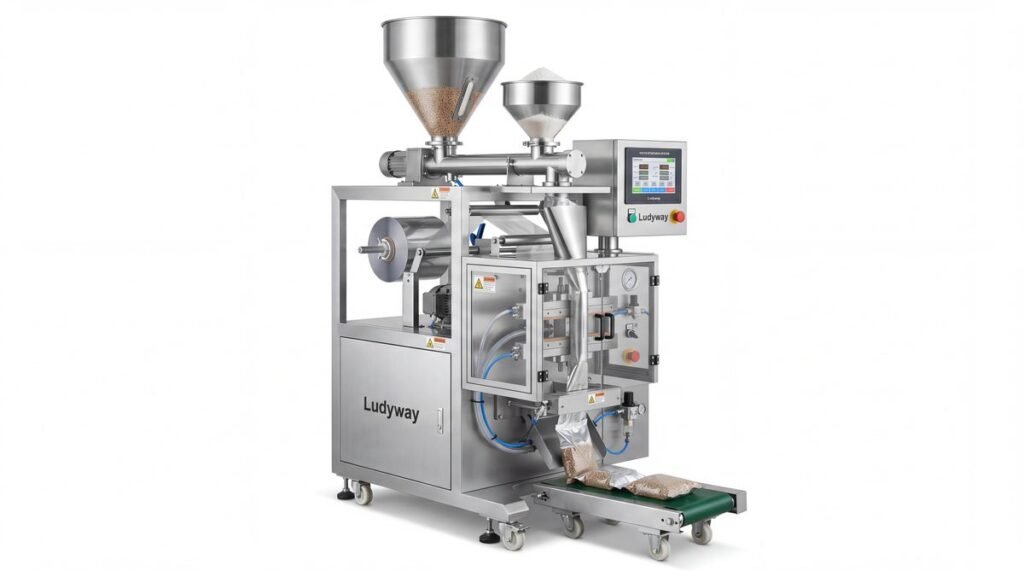
Although machine structures vary, the basic process is usually similar. Product is fed from a hopper or conveying system into a dosing unit, measured to a target weight or volume, discharged into packaging material, then sealed and cut into finished packs.
- Bulk granules are loaded into the feeding system
- The machine meters the required quantity
- Film or pouch material is positioned
- Granules are filled into the package
- The package is sealed
- Finished units are discharged for secondary packing
Depending on your application, the dosing method may be volumetric cups, linear weighers, multihead weighers, auger-assisted hybrid systems, or custom counting and weighing combinations.
Main Types of Granule Packaging Machines
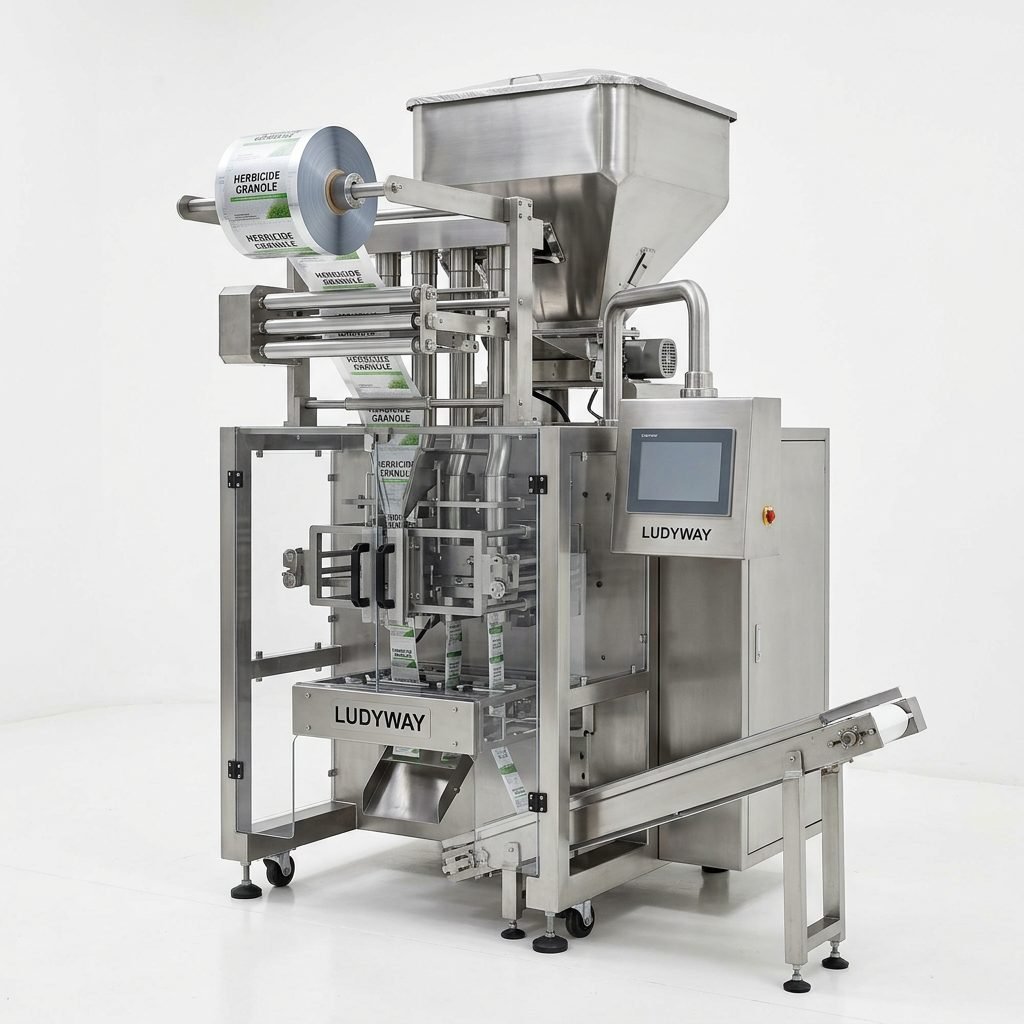
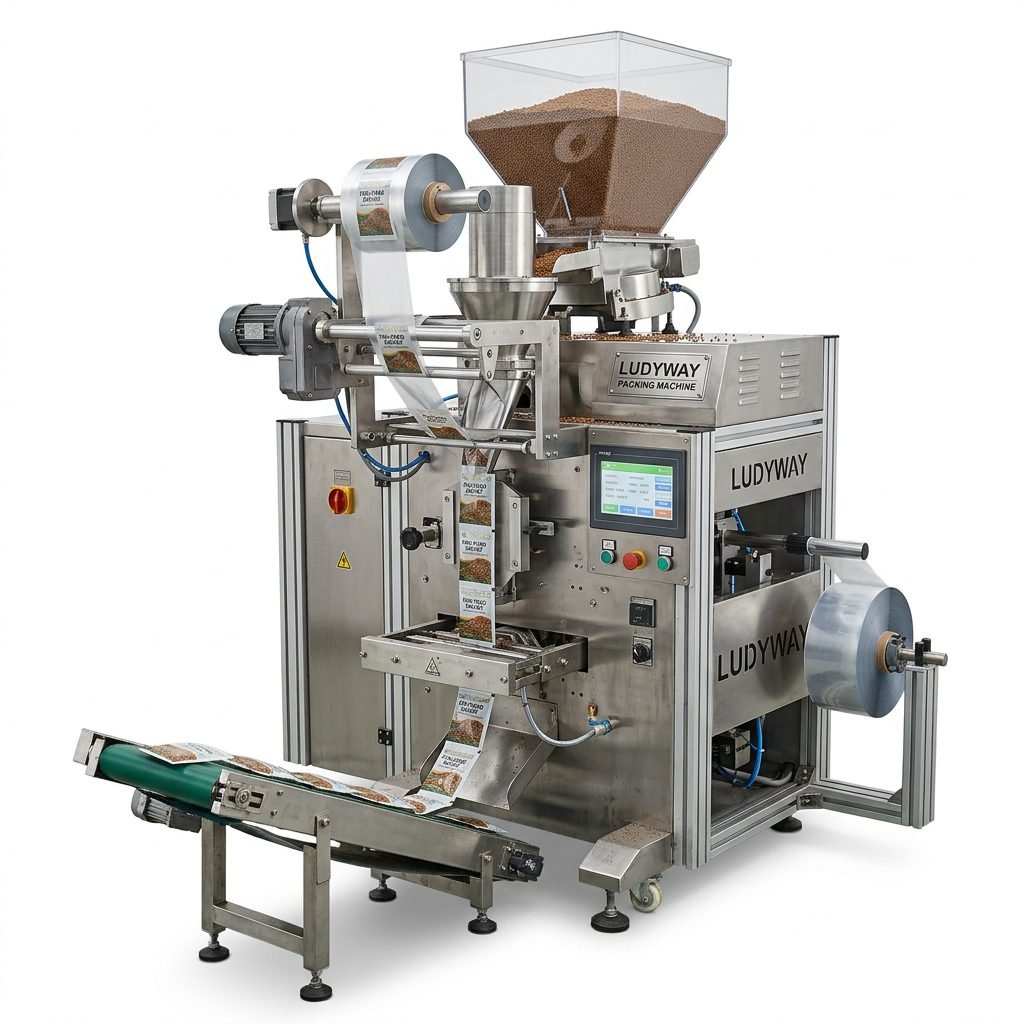
1. Vertical Form Fill Seal (VFFS) Machines
VFFS machines form bags from roll film, fill the granules, and seal them in one continuous process. They are widely used for pillow bags, gusset bags, and larger pouches.
- Suitable for medium to large bag sizes
- Efficient for bulk food, grains, fertilizer, and feed
- Can integrate weighing, printing, checkweighing, and cartoning
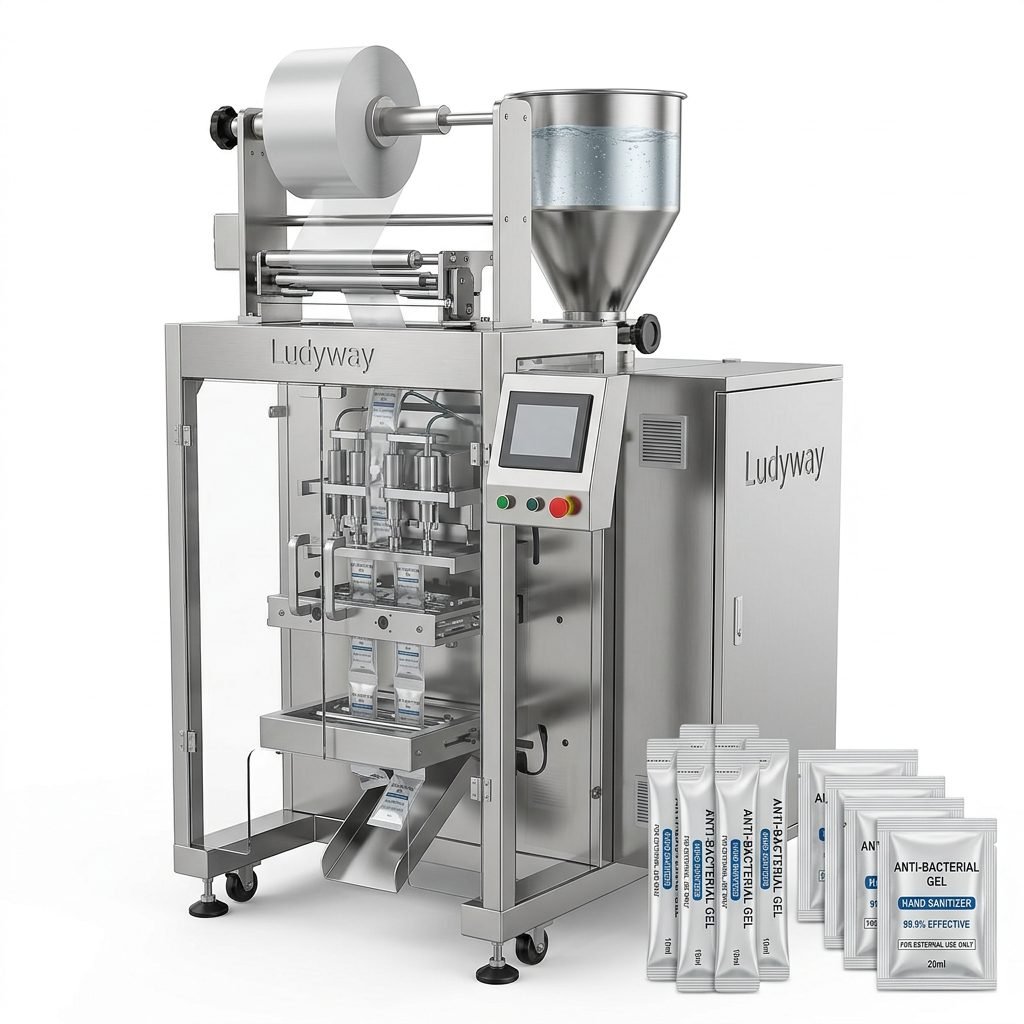
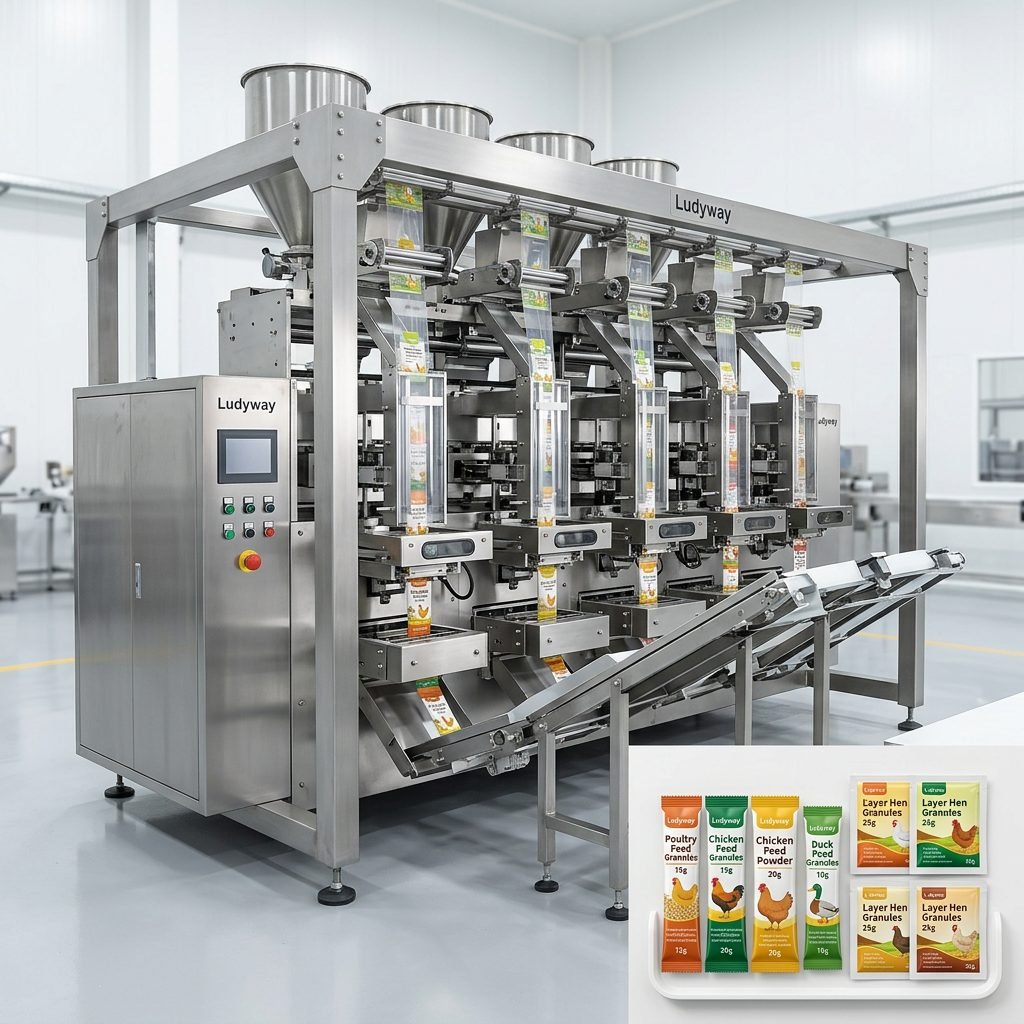
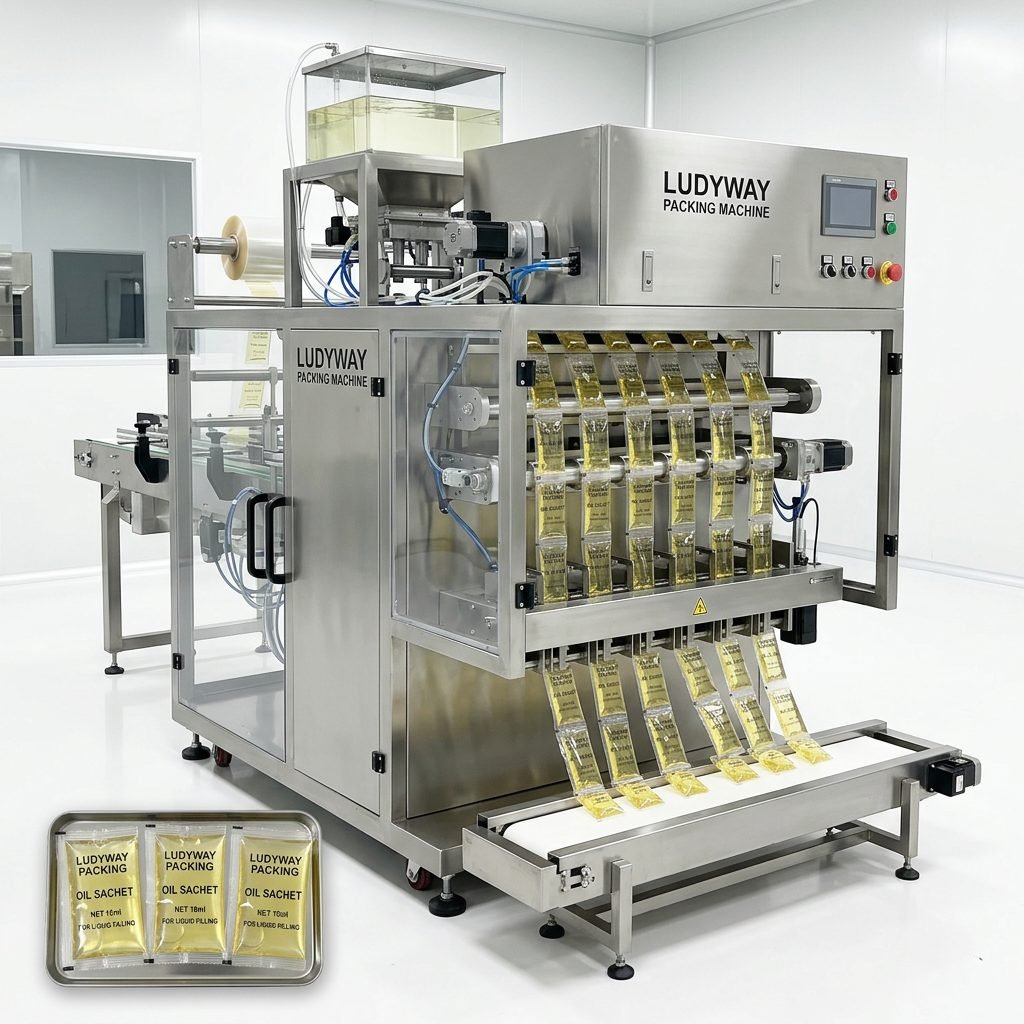
2. Sachet Packaging Machines
Sachet machines produce small sealed packets, often for single-use or sample-size products. They are ideal for retail and convenience packaging.
- Good for sugar, salt, seasoning, medicine granules, and supplements
- Available in single-lane and multi-lane configurations
- Suitable for high-volume small pack production
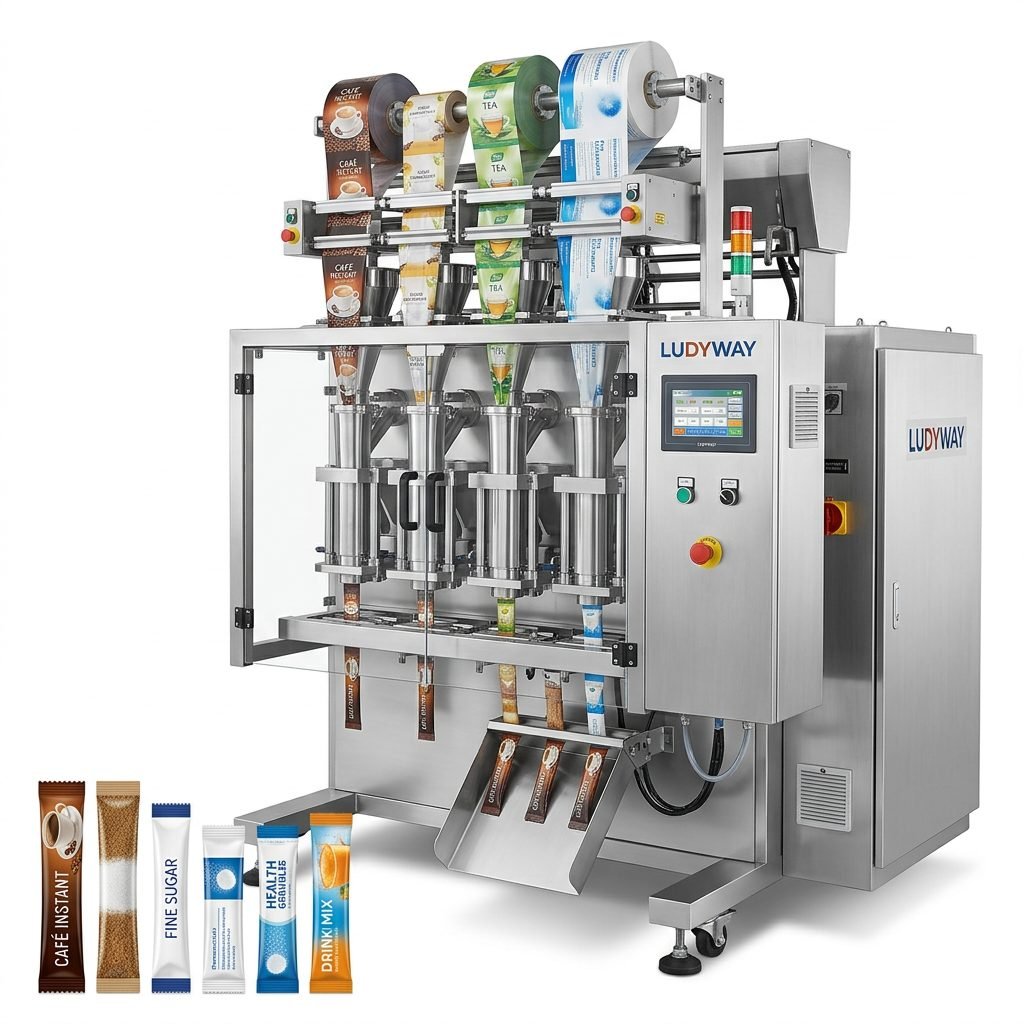
3. Stick Pack Machines
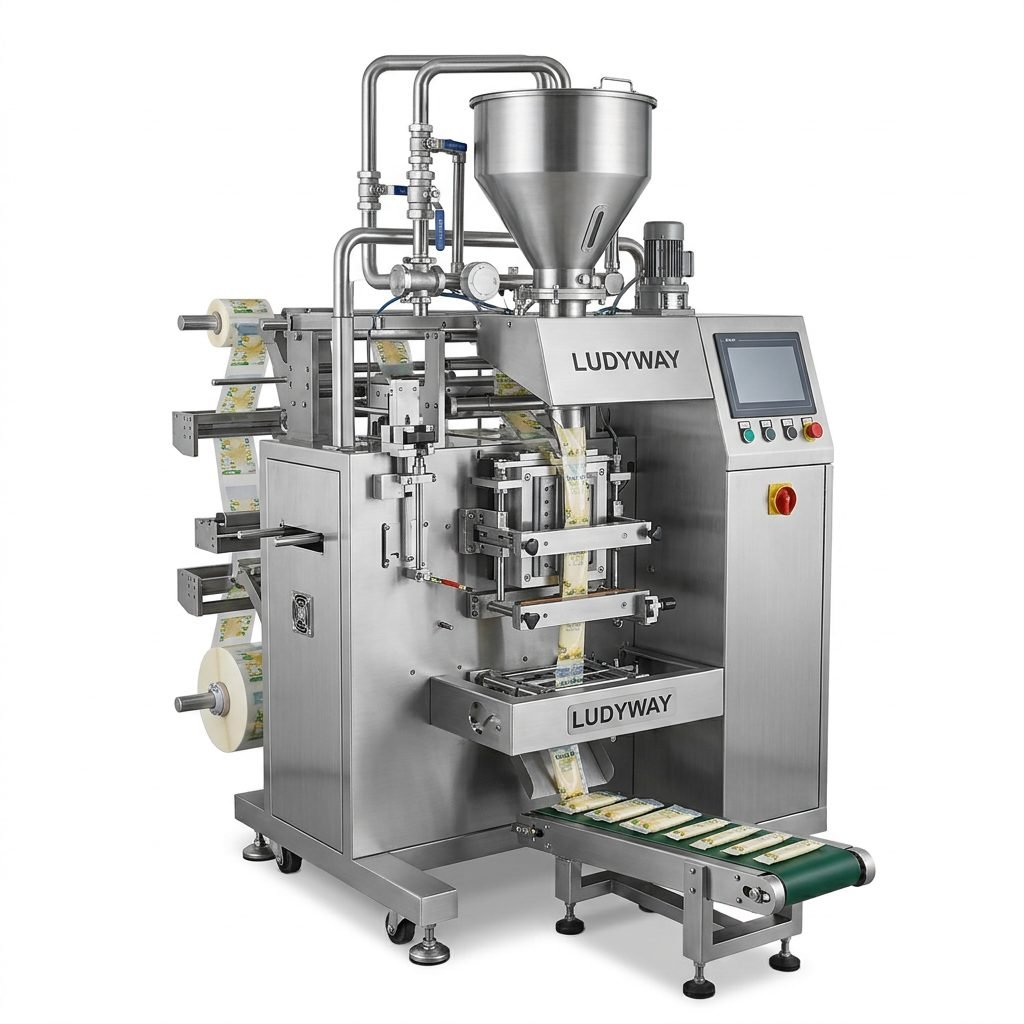
Stick pack machines create slim tubular packs that are easy to carry, open, and consume. This format is very popular for nutraceuticals, instant beverages, and pharmaceutical granules.
- Excellent for single-serve applications
- Space-efficient retail presentation
- High-speed multi-lane production available
4. Premade Pouch Filling Machines
These machines fill preformed pouches instead of making bags from rollstock film. They are often chosen for higher-end packaging appearance and resealable formats.
- Suitable for stand-up pouches and zipper pouches
- Strong shelf impact
- Good for premium food, pet treats, and specialty granules
How to Choose the Right Granule Packaging Solution
Understand your product properties first
Two granule products may look similar but behave very differently in production. Before choosing a machine, confirm:
- Particle size and size consistency
- Flowability
- Dust level
- Moisture sensitivity
- Fragility or breakage risk
- Whether the product is free-flowing, semi-free-flowing, or sticky
Accurate product testing is one of the most important steps in machine selection. A machine that runs perfectly with sugar may not perform equally well with irregular herbal granules or hygroscopic pharmaceutical blends.
Match the dosing method to the granule type
| Granule Type | Recommended Dosing Method | Why It Fits |
|---|---|---|
| Uniform free-flowing granules | Volumetric cup filler | Simple, cost-effective, fast |
| Irregular or variable-density granules | Linear weigher or multihead weigher | Better accuracy and consistency |
| Fragile granules | Gentle weighing/filling system | Reduces breakage and dust |
| Mixed granule-powder products | Customized hybrid filler | Improves fill stability |
Choose the right package format
The best package format depends on your sales channel, target users, branding needs, and filling range.
- Sachets: compact, economical, ideal for retail and sampling
- Stick packs: modern, portable, popular in supplements and drink mixes
- Pouches: premium look, good shelf presentation, more branding space
- Larger bags: suitable for industrial, agricultural, and bulk food applications
Evaluate required speed and output
Buyers often overestimate the speed they need and underestimate the importance of stable operation. A practical target is not just maximum speed, but stable qualified output over full production shifts.
Ask these questions:
- How many packs per minute do you need now?
- What output will you need in 2 to 5 years?
- Do you run one product or multiple SKUs?
- Will frequent changeovers reduce your real output?
Consider accuracy and waste control
Overfilling increases material cost. Underfilling creates compliance and customer satisfaction risks. This is especially critical in pharmaceutical, health supplement, and premium food sectors. Look at:
- Target fill tolerance
- Weight consistency over long runs
- Reject handling capability
- Dust control and sealing cleanliness
Review material compatibility
Packaging film structure matters. Some granules need moisture barriers, light protection, puncture resistance, or nitrogen flushing support. Your machine should be compatible with the packaging materials you plan to use and the seal quality your market expects.
Key Technical Features to Compare
| Feature | Why It Matters |
|---|---|
| Servo control system | Improves stability, precision, and repeatability |
| PLC + touchscreen HMI | Simplifies operation, recipes, and troubleshooting |
| Tool-free changeover design | Reduces downtime during product or size changes |
| Dust extraction integration | Keeps seals clean and protects machine components |
| Date coding / printing | Supports traceability and regulatory needs |
| Checkweigher / reject unit | Improves quality control |
| Nitrogen flushing option | Helps preserve sensitive products |
| Stainless steel hygienic construction | Important for food and pharmaceutical compliance |
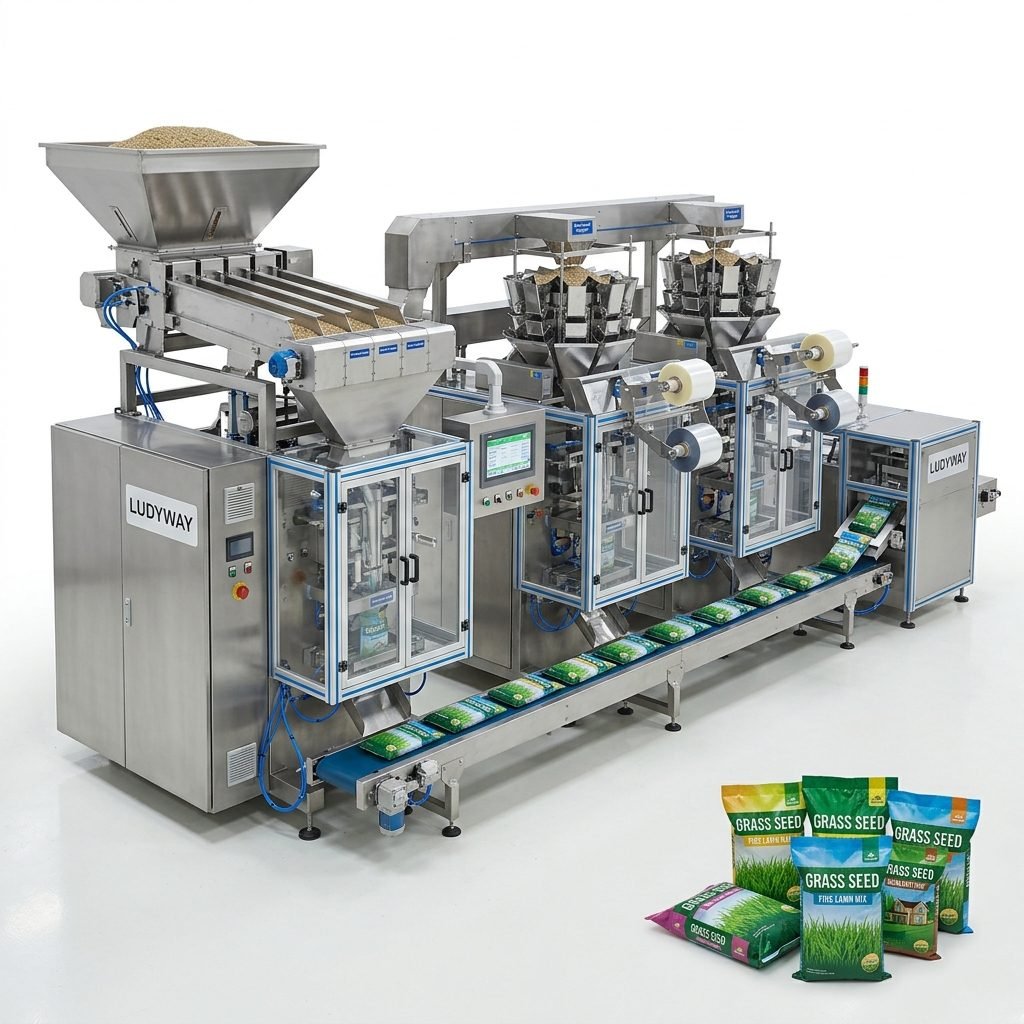
Single Machine or Complete Turnkey Line?
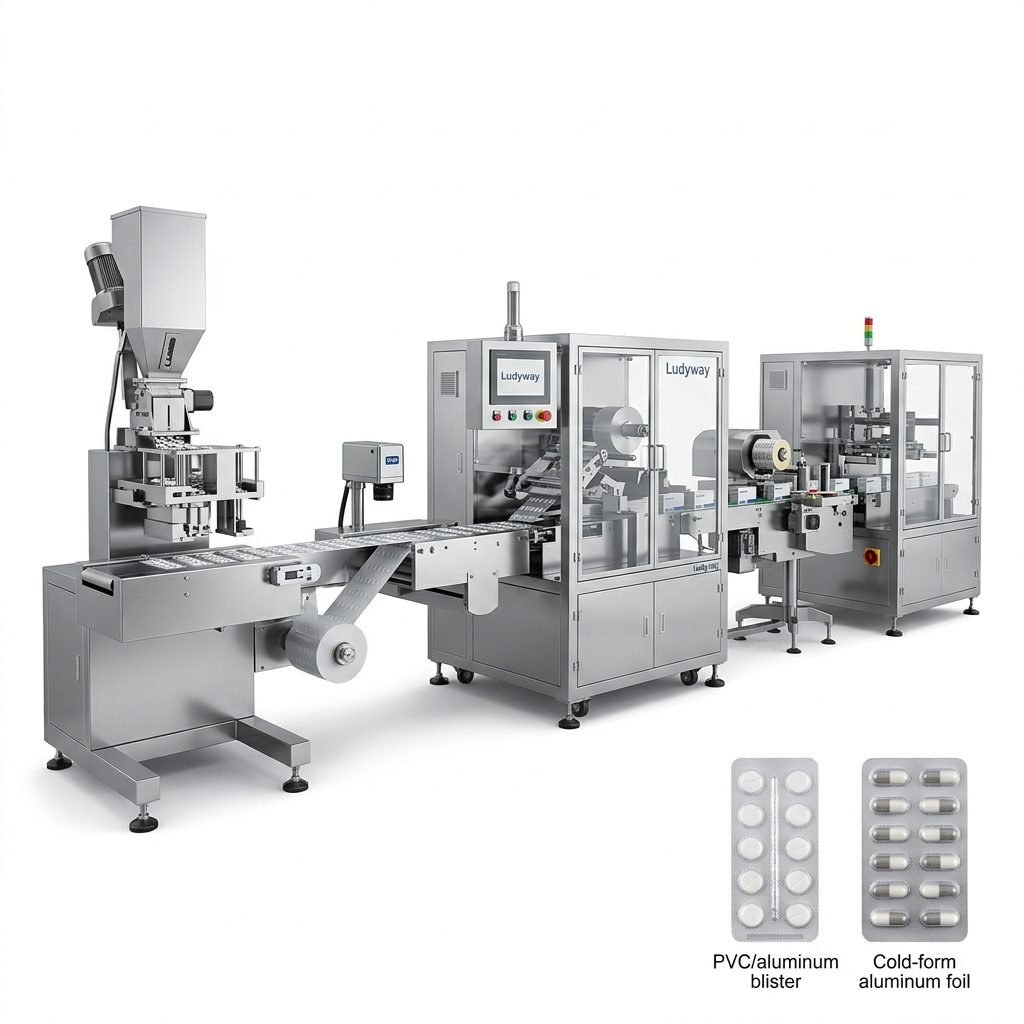
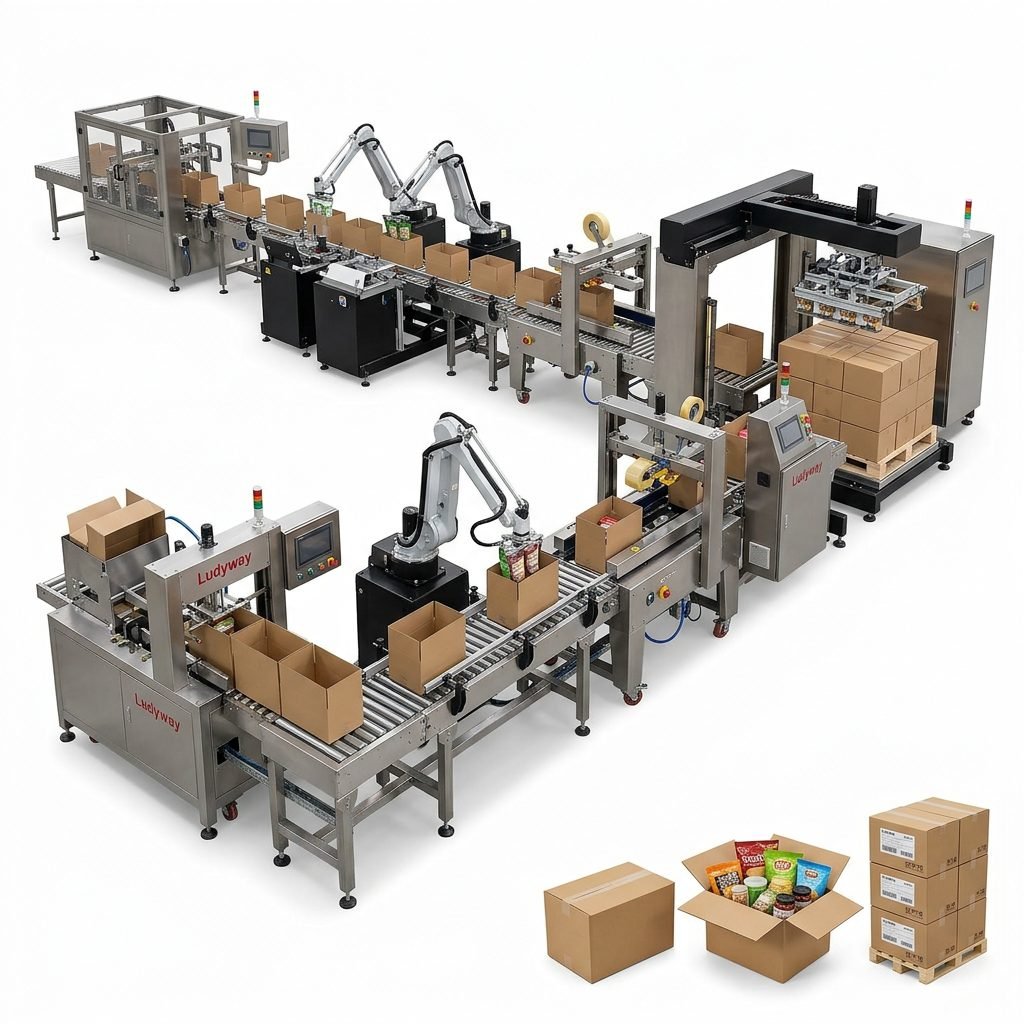
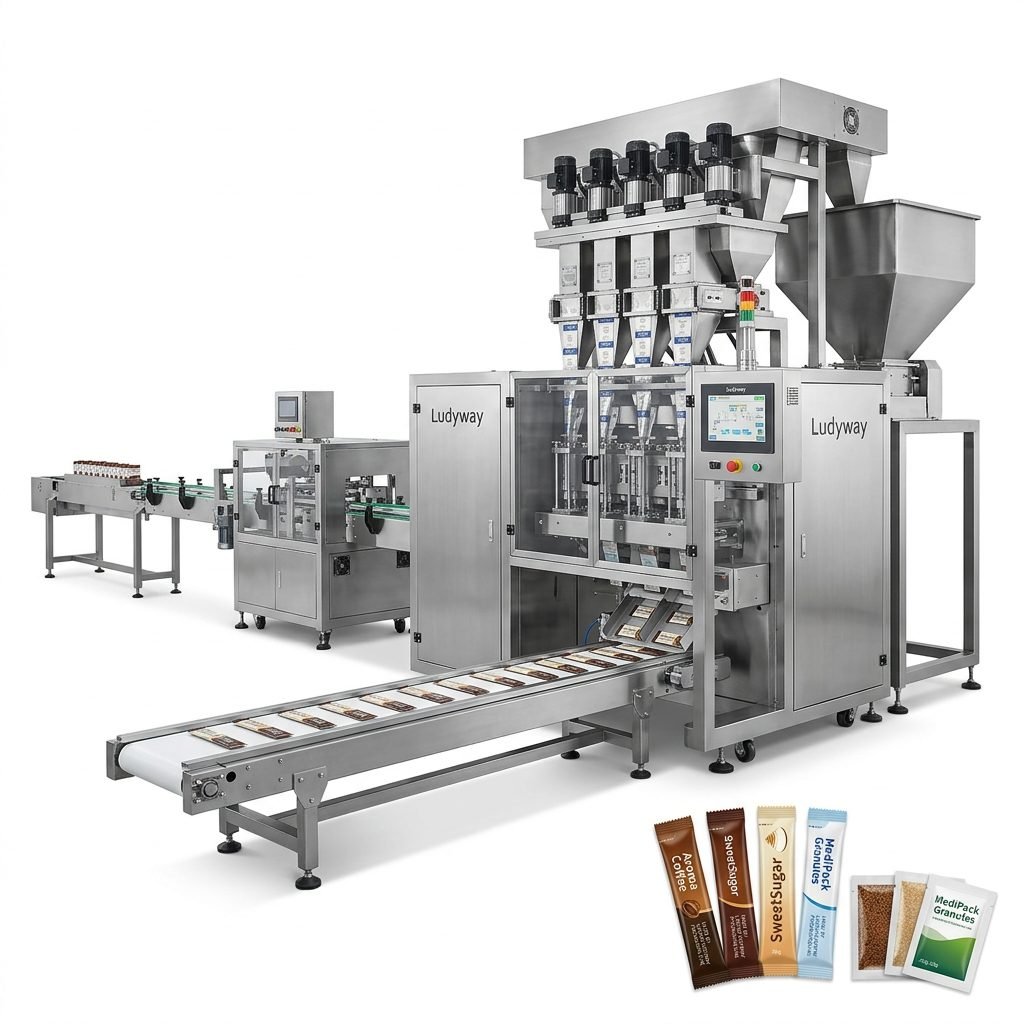
For some buyers, a standalone machine is enough. For others, a complete integrated line delivers better long-term value. A turnkey solution may include:
- Feeding and conveying systems
- Weighing or dosing units
- Main packaging machine
- Metal detection or inspection systems
- Checkweighers and reject systems
- Cartoning, case packing, palletizing
- Coding, labeling, and final transport systems
If you are scaling production, reducing manual handling, or preparing for export-market compliance, a complete line often produces stronger ROI than buying isolated machines over time.
Industries That Commonly Use Granule Packaging Machines
Food industry
Sugar, salt, coffee, grains, spices, instant drinks, snack inclusions, cereal products, and pet food are among the most common applications. Hygienic design and seal integrity are especially important here.
Pharmaceutical and nutraceutical industry
Pharmaceutical granules, oral powders, supplement mixes, and health products require reliable dosing accuracy, clean operation, and traceable packaging performance.
Chemical and agricultural industry
Fertilizer granules, detergents, water treatment agents, seeds, and industrial additives may require corrosion-resistant design, dust control, and stronger packaging materials.
Questions to Ask Before Buying
- What products will run on the machine today and in the future?
- What pack sizes and formats do you need?
- What is your required accuracy tolerance?
- How many hours per day will the line operate?
- How easy is cleaning and maintenance?
- Are spare parts and technical support easily available?
- Can the machine integrate with your upstream and downstream equipment?
- Do you need CE, GMP-oriented design, or other compliance support?
Common Mistakes Buyers Make
- Choosing based on price only
- Ignoring product flow characteristics
- Buying a machine with no future expansion capacity
- Underestimating changeover time between SKUs
- Overlooking after-sales service and spare parts support
- Not asking for real product testing before final confirmation
A lower initial price can become expensive very quickly if the machine delivers unstable output, poor sealing, inaccurate filling, or high downtime.
What Makes a Reliable Supplier Important
Machine performance depends not only on hardware, but also on engineering experience, application knowledge, and support capability. A qualified supplier should understand packaging materials, dosing behavior, line integration, sanitation requirements, and export project execution.
If you are looking for scalable equipment or complete integrated systems, granule packaging machine solutions from Ludyway are worth evaluating for food, pharmaceutical, health supplement, chemical, and related industries. As one of China’s leading packaging machine and turnkey packaging line manufacturers, the company offers broad machine configurations and customized automation based on different granule products and packaging formats.
Best Fit Scenarios by Business Type
| Business Type | Recommended Solution | Focus Point |
|---|---|---|
| Startup brand | Compact sachet or stick pack machine | Lower entry cost, flexible SKUs |
| Growing food manufacturer | Multi-lane automatic system | Higher output and consistency |
| Pharma/nutraceutical producer | High-accuracy hygienic packaging line | Precision, compliance, traceability |
| Agricultural or chemical plant | Heavy-duty VFFS or bulk bagging line | Durability, dust control, bag strength |
Final Buying Checklist
- Product tested on the proposed machine
- Correct dosing method selected
- Required bag or pouch format confirmed
- Output target based on real production conditions
- Accuracy range documented
- Film compatibility verified
- Cleaning and maintenance procedures reviewed
- Spare parts and service plan confirmed
- Upgrade path for future automation considered
Conclusion
The right granule packaging machine should do more than package product. It should support your capacity goals, improve consistency, lower waste, protect product quality, and fit your long-term automation strategy. The best choice comes from balancing product characteristics, packaging format, accuracy, speed, and supplier capability.
If you compare machines with these factors in mind, you will be in a far better position to choose a packaging solution that delivers lasting value rather than short-term convenience.