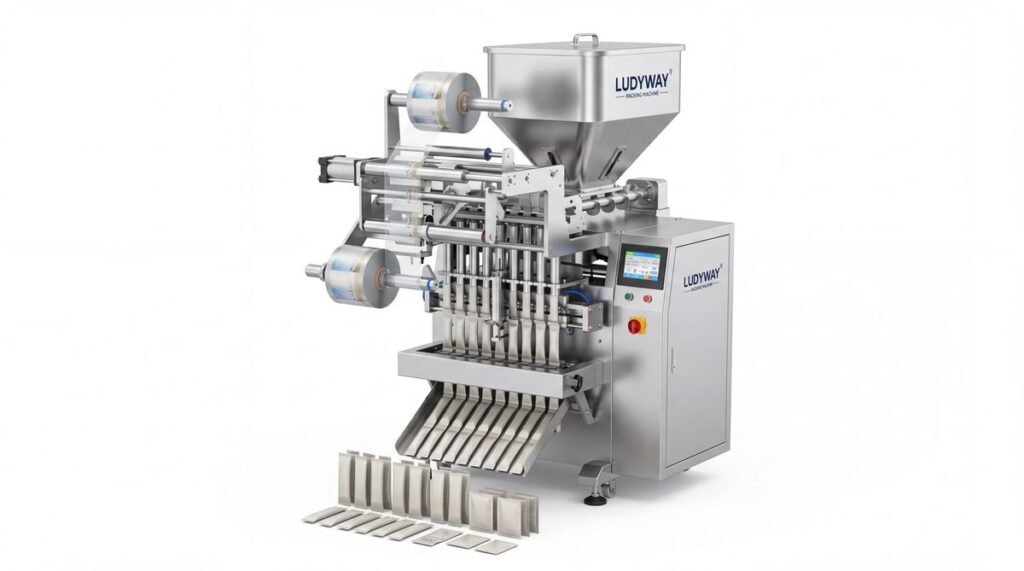
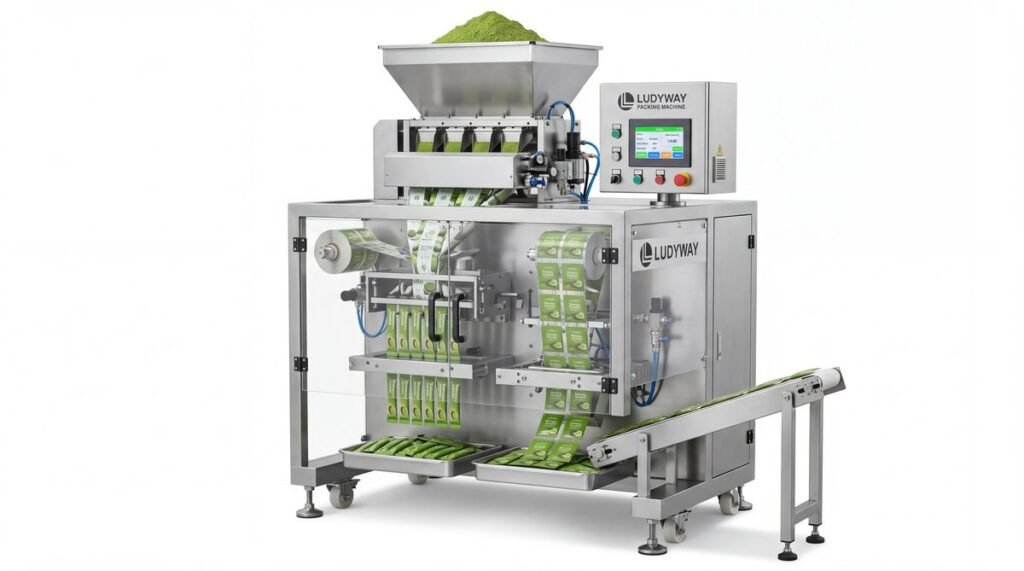
Investing in a big bag packaging machine—also known as a bulk bag or FIBC filling system—is a significant decision for manufacturers handling large-volume powders, granules, and bulk solids. The right equipment improves throughput, dosing accuracy, dust control, and operational safety. This guide breaks down every critical factor to help you make an informed selection.
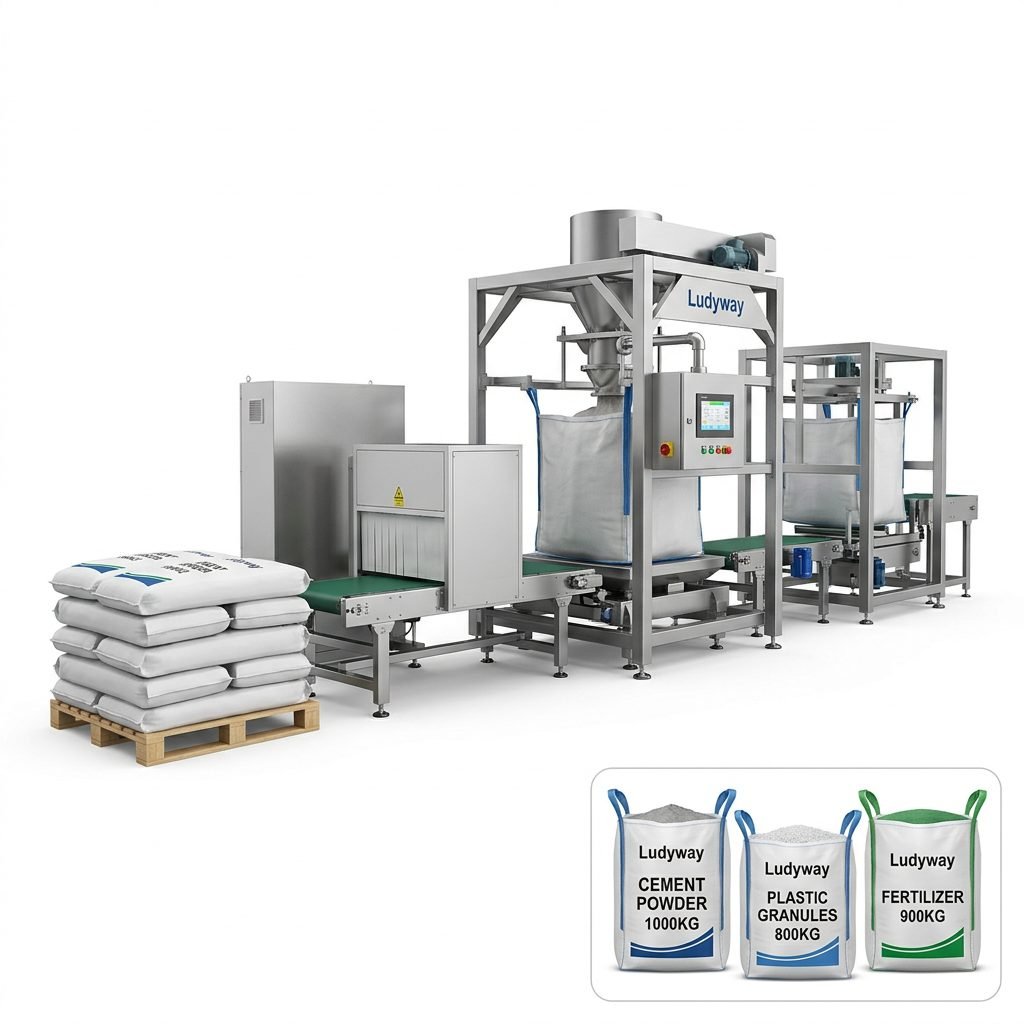
Understanding Big Bag Packaging Machine Types
Not all bulk bag fillers are created equal. The configuration you choose depends on your production environment, material characteristics, and desired throughput. Below are the primary categories you will encounter.
- Net-Weight Fillers: Material is weighed in a separate hopper before discharging into the bag. This method delivers high accuracy, typically ±0.1% to ±0.2%, and is ideal for high-value products.
- Gross-Weight Fillers: The bag hangs directly on the scale during filling. Simpler mechanical design often translates to lower upfront cost, suitable for less expensive materials where ultra-high precision is not critical.
- Dense-Phase vs. Dilute-Phase Filling: Dense-phase systems minimize air in the product stream, reducing dust and bag inflation—essential for fine powders like titanium dioxide or flour. Dilute-phase works well for free-flowing granules.
- Palletized vs. Non-Palletized Systems: Palletized fillers place the bag on a pallet throughout the process, making fork truck handling seamless. Non-palletized units rely on loop lifts and are more compact.
Evaluating Your Product Characteristics
Your material’s physical properties dictate the feeder type, dust control measures, and filling head design. Before approaching a packaging machinery manufacturer, gather detailed data on these parameters:
| Product Property | Why It Matters |
|---|---|
| Bulk Density | Determines fill volume, hopper size, and bag capacity rating. |
| Particle Size Distribution | Affects flowability and potential for bridging or rat-holing in the hopper. |
| Moisture Content & Hygroscopy | Influences material sticking, caking, and the need for specialized contact surfaces. |
| Angle of Repose | Impacts feeder selection; poor-flow materials require agitation, vibratory, or screw feeders. |
| Dust Explosion Risk | Mandates grounding, inerting, or explosion venting per ATEX or NFPA standards. |
Key Technical Specifications to Compare
When comparing models, focus on specifications that directly impact your operational efficiency and long-term ownership cost. Use the following checklist during supplier evaluations.
Filling Speed and Throughput
Measured in bags per hour, throughput depends on fill weight, material flow, and automation level. A machine rated for 20 big bags per hour with free-flowing granules might only achieve 8-10 bags per hour with cohesive powders. Always request cycle-time data based on your specific product, not just a generic brochure number.
Weighing Accuracy and Resolution
Accuracy is expressed as a percentage of full scale or in grams. For a 1,000 kg bag, ±0.1% net-weight accuracy translates to ±1 kg tolerance. Applications like pharmaceutical intermediates demand tighter control than construction aggregates. Verify that the load cells are certified and that the control system supports automatic tare, flight correction, and data logging.
Dust Containment System
Fine powder filling generates significant dust, which poses health hazards, explosion risks, and housekeeping burdens. Look for:
- Inflatable neck seals that create a tight connection between the fill head and bag inlet spout.
- Integrated dust extraction ports connected to a central vacuum or baghouse system.
- Enclosed filling cabinets for high-dust materials.
- Automatic spout closure mechanisms post-fill.
Automation and Control Integration
Modern big bag filling stations extend beyond basic filling. Consider whether you need:
- Automatic pallet dispensing and conveying for seamless material flow.
- Bag-in-place sensors to prevent material discharge without a bag present.
- Automated bag removal systems and roller conveyors.
- Integration with upstream processes like silos, mixers, or pneumatic conveying lines.
- SCADA or MES connectivity for batch traceability and OEE tracking.
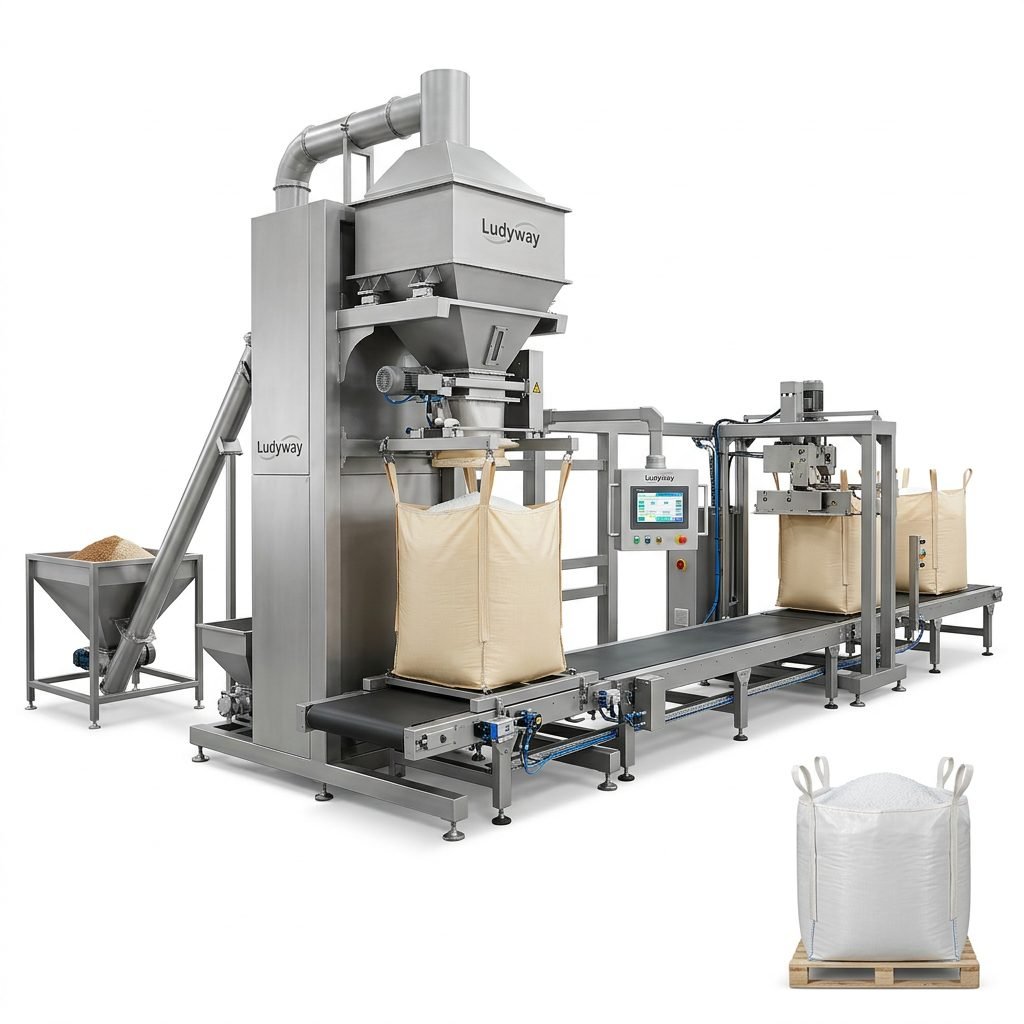
Construction Materials and Compliance
The machine’s material of construction must align with your product and regulatory environment. Stainless steel 304 or 316L is standard for food, pharmaceutical, and chemical applications requiring corrosion resistance and cleanability. Carbon steel structures with industrial coatings may suffice for non-sensitive bulk commodities.
If your facility operates in a classified area, ensure the equipment meets the applicable ATEX, IECEx, or NFPA 70 requirements. FDA compliance may be necessary for food-contact surfaces, while cGMP design principles apply to pharmaceutical filling suites.
Bag Compatibility and Changeover Flexibility
Big bag design varies by supplier and application. Your filling machine should accommodate the range of bags you intend to use:
- Standard four-loop FIBCs: Type A, B, C, or D bags depending on static protection needs.
- Single-loop or cross-corner loop bags for specific handling methods.
- Baffle bags that maintain shape during filling.
- Spout-top, duffle-top, or open-top configurations.
Quick-change features, adjustable bag-height settings, and modular fill-head adapters reduce downtime between different bag types. Ask prospective suppliers about typical changeover time and whether tools or specialized labor are required.
Total Cost of Ownership Considerations
The purchase price is only one component. A comprehensive financial analysis should include:
| Cost Element | Description |
|---|---|
| Capital Investment | Machine price, freight, import duties, installation, and civil work. |
| Energy Consumption | Compressed air requirements often exceed electrical load; evaluate pneumatic system efficiency. |
| Spare Parts Inventory | Seals, filters, load cells, and wear components. Ask for a recommended spare parts list and lead times. |
| Maintenance and Labor | Operator training, preventive maintenance contracts, and remote troubleshooting availability. |
| Downtime Risk | A single failure can halt downstream logistics. Assess supplier responsiveness and local service presence. |
Supplier Selection Criteria
Choosing the right big bag packaging machine is also about the company behind the equipment. Evaluate suppliers against these criteria:
- Industry Experience: How many installations have they completed in your specific sector? Request references from companies producing similar materials.
- Engineering Capability: Can they customize the filling head, controls, or integration to match your existing upstream processes?
- Testing Facilities: Reputable manufacturers offer material trials. Bring a sample of your product and witness the machine performance firsthand.
- Documentation and Compliance: Confirm they provide CE marking, electrical schematics, pneumatic diagrams, and manuals in your language.
- After-Sales Support: Understand warranty terms, availability of service engineers, and access to remote diagnostics.
Ludyway Machinery, a China-based packaging machinery manufacturer with more than 30 years of experience and a 20,000-square-meter facility, provides customized big bag filling solutions, engineering support, and global after-sales service for manufacturers across food, chemical, pharmaceutical, and agricultural industries. Their technical team supports the full project lifecycle, from packaging solution design through installation, commissioning, training, and ongoing technical assistance.
Integration with Downstream Equipment
A bulk bag filler rarely operates in isolation. Consider the full packaging line ecosystem:
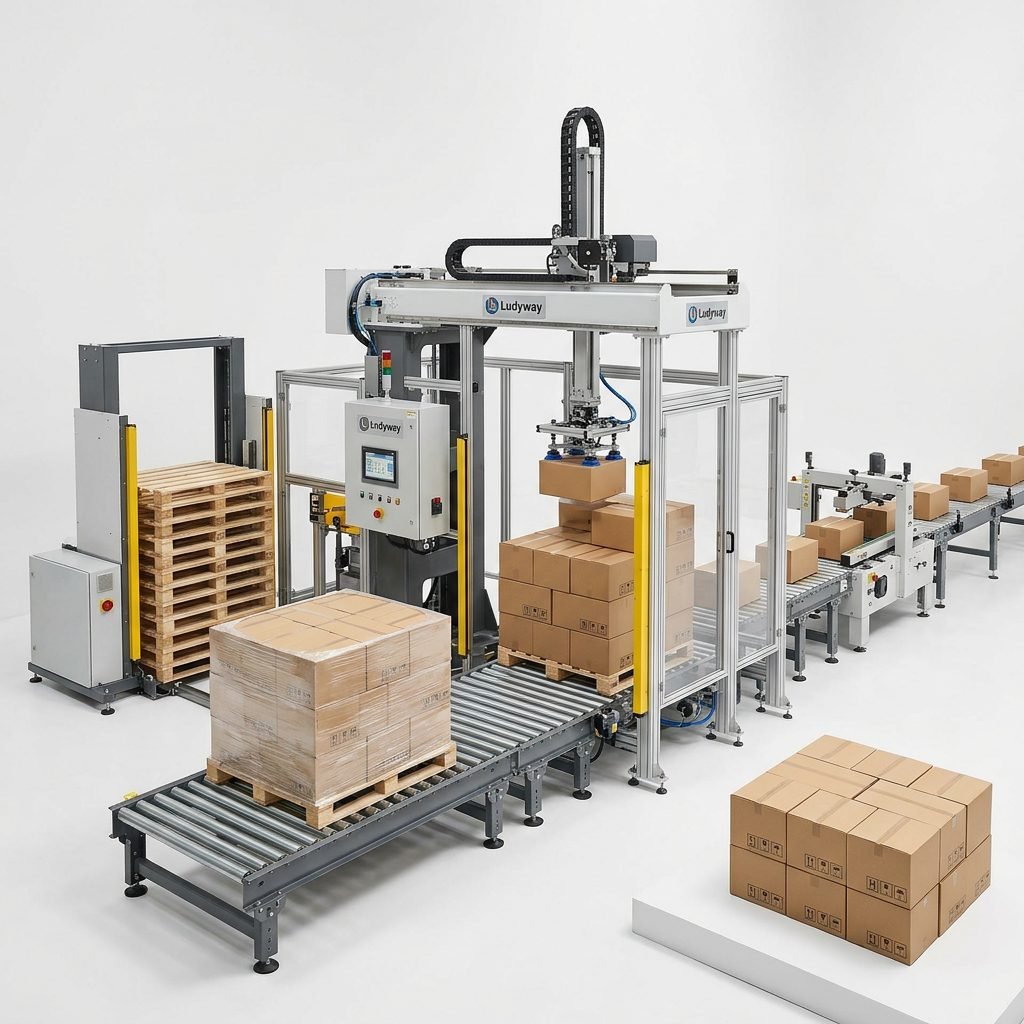
- Palletizers and stretch wrappers for load stability after filling.
- Checkweighers for quality verification and compliance.
- Metal detectors and X-ray systems for foreign body detection.
- Labelers and inkjet coders for traceability marking.
- Automated guided vehicles (AGVs) or fork truck interfaces.
Planning the entire material flow—from upstream feeding to downstream pallet handling—prevents bottlenecks and ensures your new filling station operates at its rated capacity.
Common Pitfalls to Avoid
Years of industry experience reveal recurring mistakes in the procurement process. Avoid these when selecting your equipment:
- Ignoring material testing: Assuming a standard machine will handle your powder without trials is the most frequent cause of underperformance.
- Overlooking compressed air supply: Insufficient air pressure or volume compromises seal inflation and valve actuation.
- Underestimating headroom requirements: Big bag fillers with lifting frames need substantial ceiling height—verify your facility dimensions before ordering.
- Choosing on price alone: A lower upfront cost often translates to higher maintenance, inferior dust control, and limited customization flexibility.
- Neglecting operator training: Even the best equipment delivers poor results if operators do not understand bag attachment, spout management, and system diagnostics.
Related Resources
For deeper insights into packaging machinery selection, industry standards, and market trends, consult these authoritative sources:
- PMMI State of the Industry Report – Comprehensive packaging machinery market data and forecasts.
- Flexible Packaging Association – Industry Data – Resources on flexible packaging materials and sustainability.
- ISO Packaging Standards – International standards covering packaging dimensions, performance, and testing.
- European Commission – Packaging and Packaging Waste – Regulatory updates on packaging sustainability requirements.
- Ludyway Packaging Machinery Global Growth Trend – Analysis of growth trends in the packaging machinery sector.
Frequently Asked Questions
What is the typical accuracy of a big bag filling machine?
Net-weight filling systems typically achieve ±0.1% to ±0.2% of the target fill weight. Gross-weight systems are generally less precise, around ±0.3% to ±0.5%, depending on material flow characteristics and the control algorithm.
How do I handle dusty materials during bulk bag filling?
Effective dust management combines inflatable neck seals, integrated dust extraction, enclosed filling cabinets, and, for extreme cases, nitrogen inerting or vacuum-assisted filling. The specific solution depends on the material’s particle size, toxicity, and explosion classification.
Can one machine handle multiple bag sizes?
Yes, most industrial big bag fillers accommodate a range of bag heights, typically from 800 mm to 2,000 mm, through adjustable lifting frames or fill-head height positioning. Confirm the range with your supplier and discuss quick-change mechanisms to minimize downtime during size transitions.
What is the lead time for a customized big bag packaging system?
Standard configurations may ship in 8-12 weeks, while highly customized systems with specialized controls, ATEX certification, or unique material handling features can extend to 16-24 weeks. Factor in additional time for installation, commissioning, and operator training.
Selecting the right big bag packaging machine requires a methodical evaluation of your product, production goals, facility constraints, and supplier capabilities. By prioritizing material testing, weighing accuracy, dust containment, and total lifecycle cost, you position your operation for reliable, high-throughput bulk packaging performance.