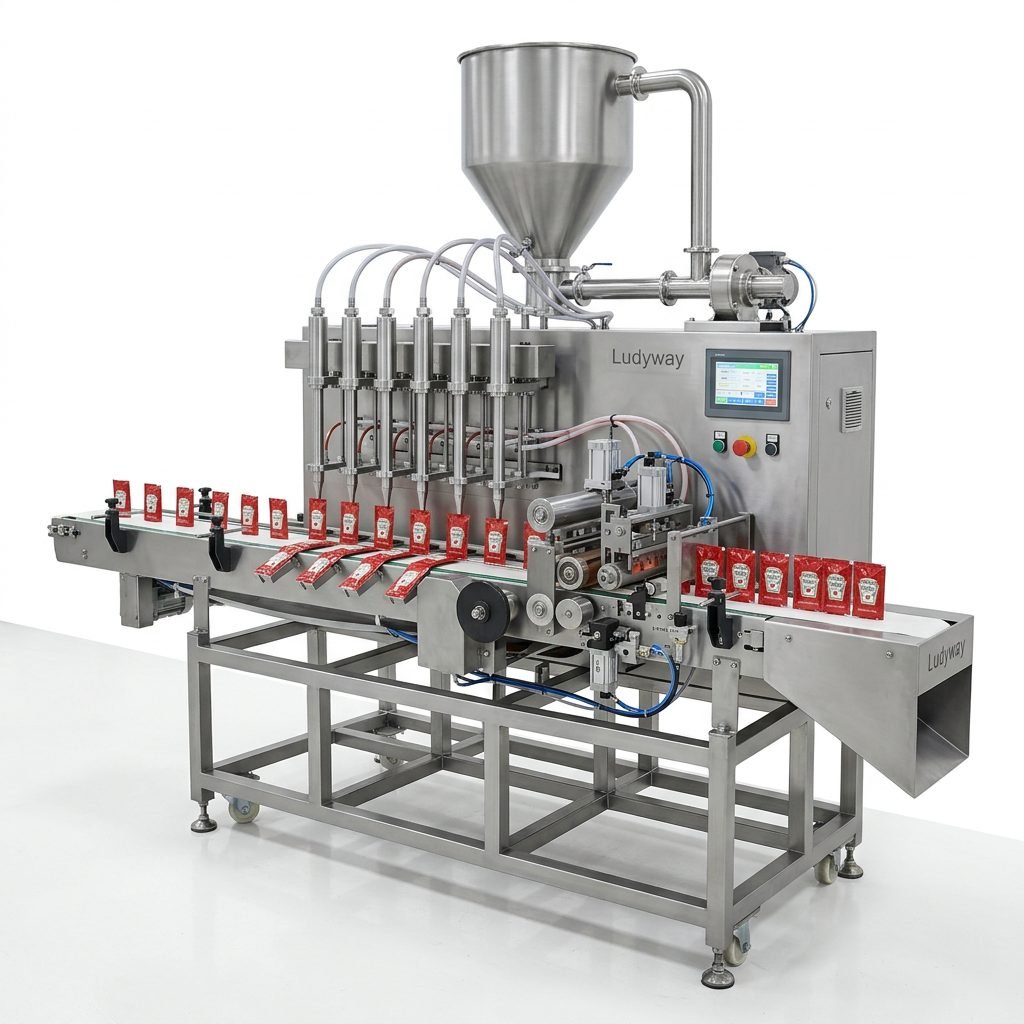
Investing in a grocery packing machine is a critical decision that affects production efficiency, product quality, and long-term operational costs. With hundreds of equipment configurations available, selecting the right system requires a structured evaluation of your product characteristics, production goals, packaging formats, and regulatory requirements. This complete buyer’s guide walks you through the key factors to consider before making a purchasing decision.
Understand Your Product Characteristics First
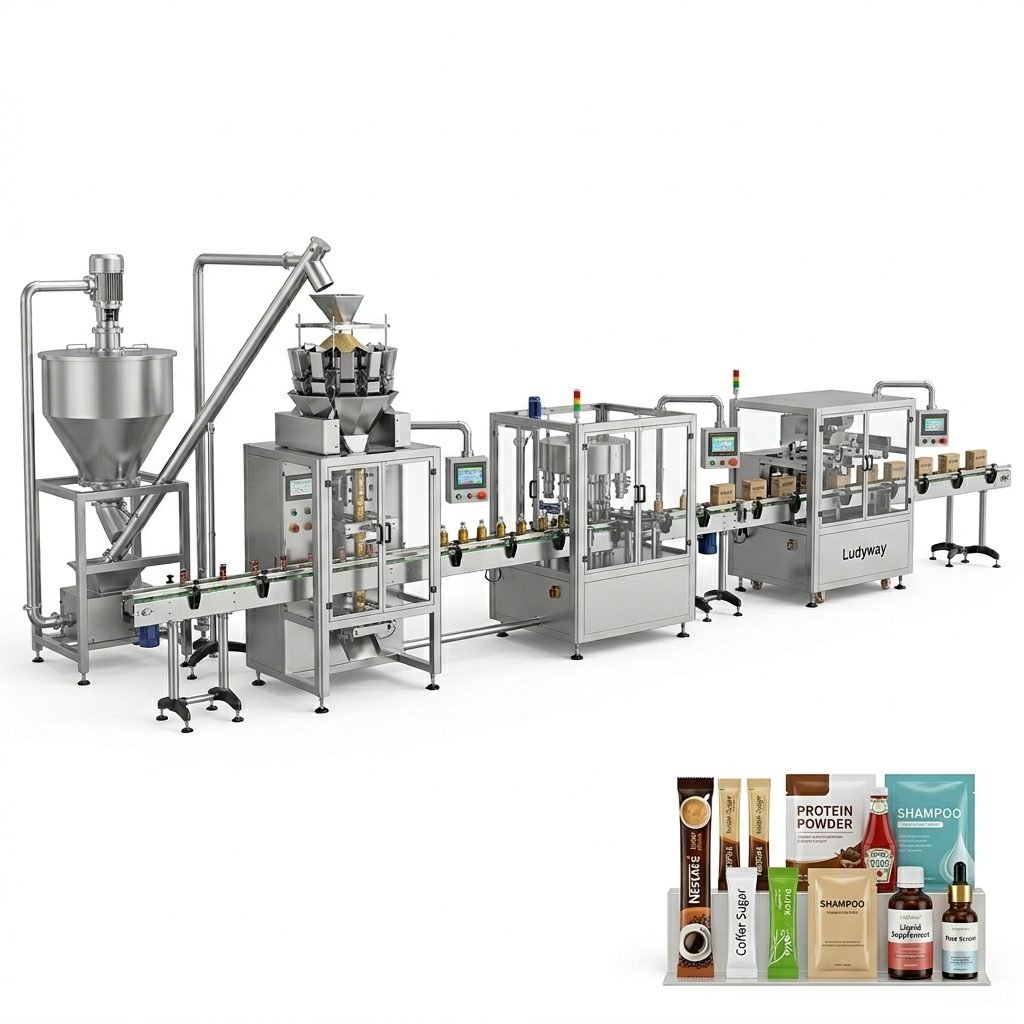
Every grocery product has unique physical properties that directly influence the type of packing machine you need. Before comparing equipment specifications, clearly define your product’s:
- Physical form — Is it a free-flowing granule, fine powder, liquid, paste, or semi-solid? Granule products like sugar flow differently than sticky powders like drink mixes.
- Particle size and density — Bulk density affects filling speed and dosing accuracy. Fine powders require specialized dust-control features.
- Flow characteristics — Some products bridge or clump during filling, requiring agitation or specialized hopper designs.
- Hygroscopic or sensitive nature — Products that absorb moisture or oxidize quickly may need nitrogen flushing or special sealing systems.
Failing to match your product characteristics with the right dosing mechanism — whether volumetric cup fillers, auger fillers, or multi-head weighers — is one of the most common causes of packaging line inefficiency.
Define Your Packaging Format Requirements
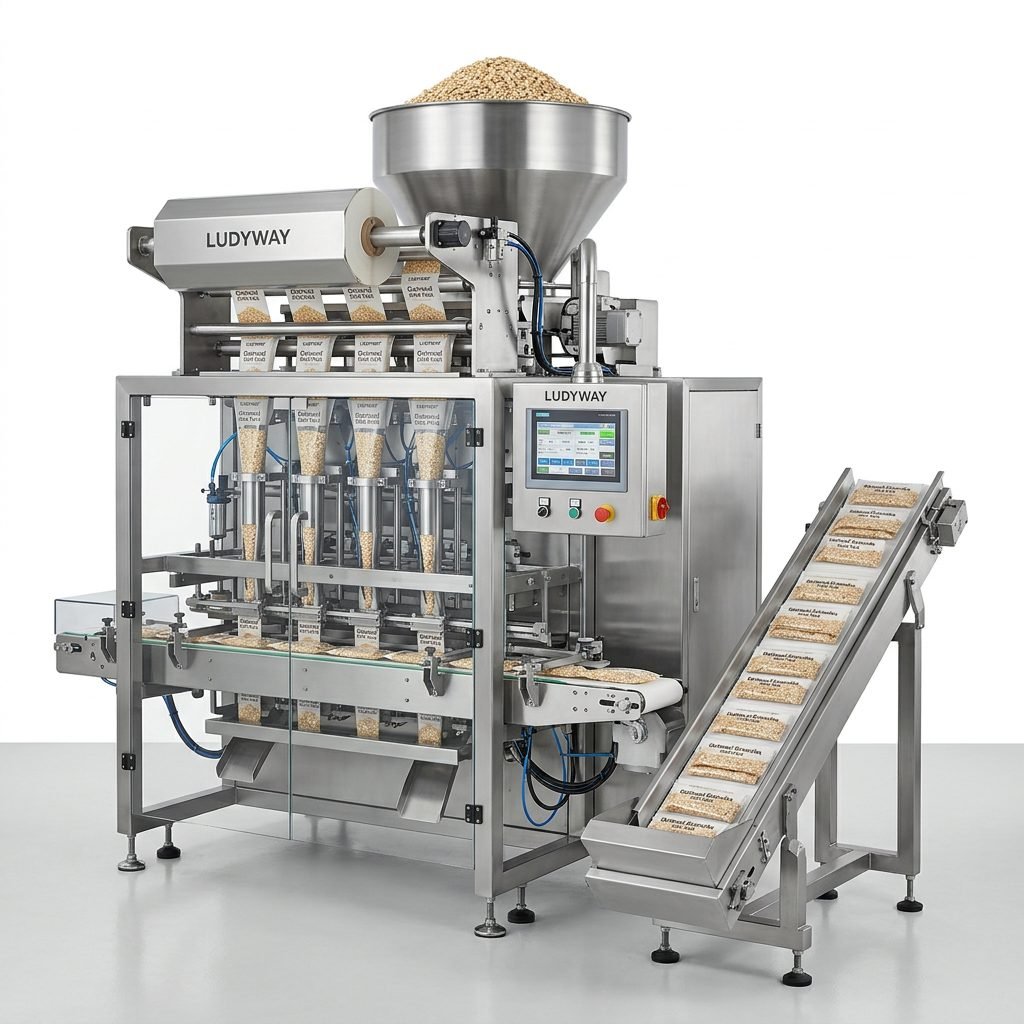
The packaging format you choose impacts shelf appeal, portion control, material costs, and machine configuration. Common grocery packaging formats include:
Stick Packs
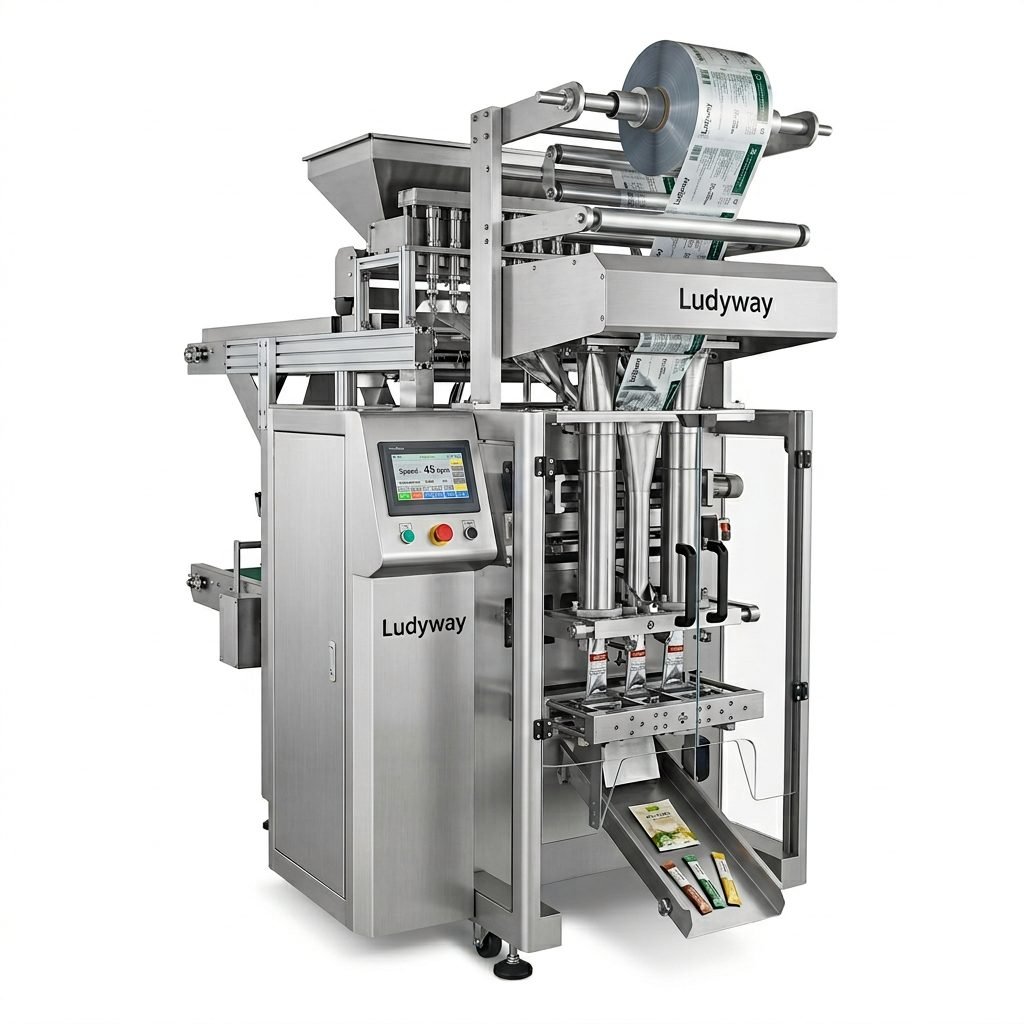
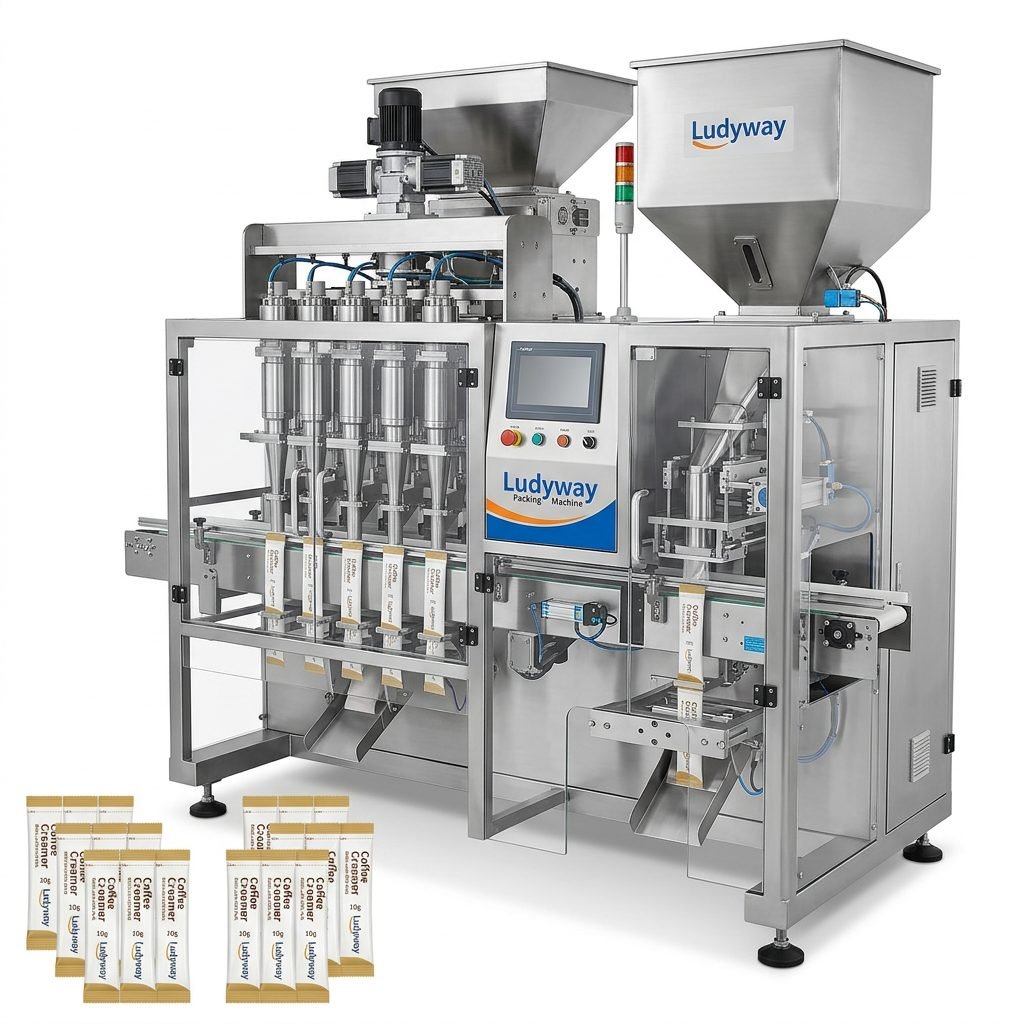
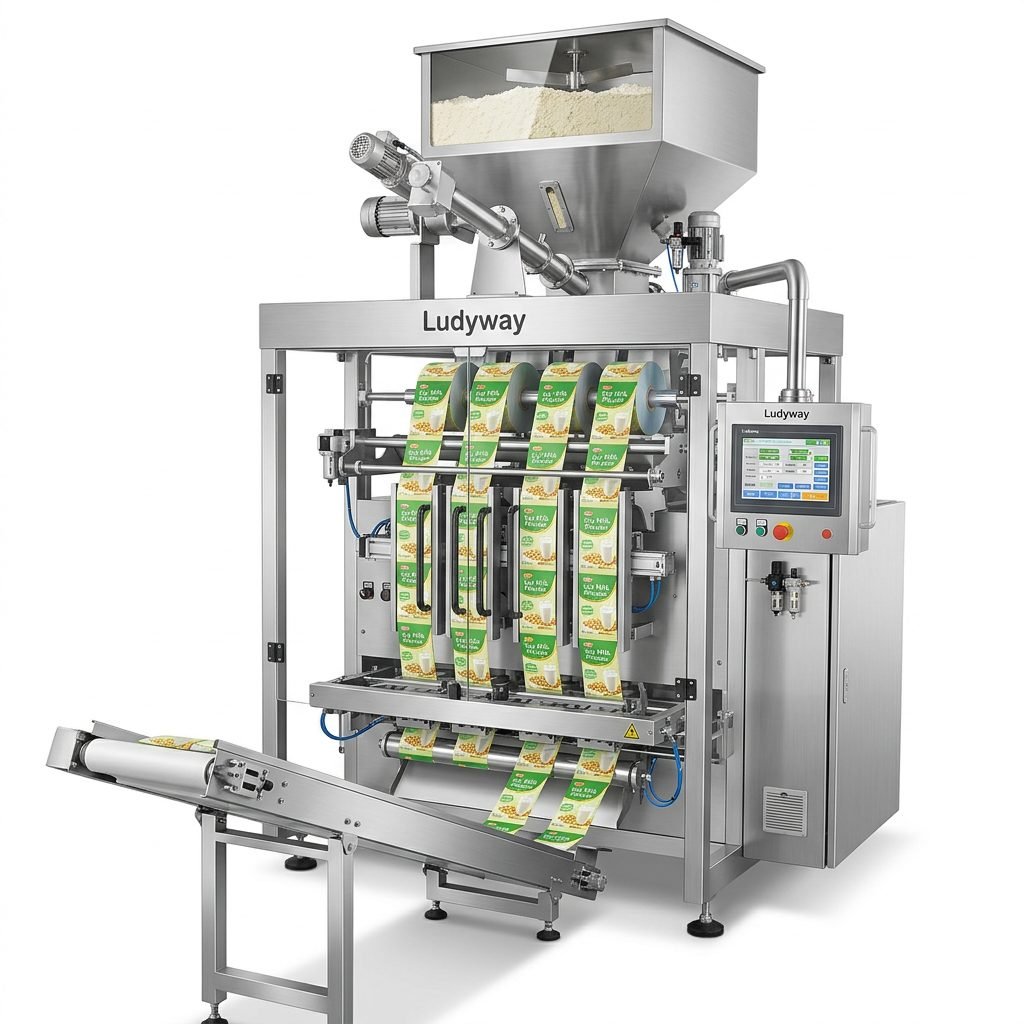
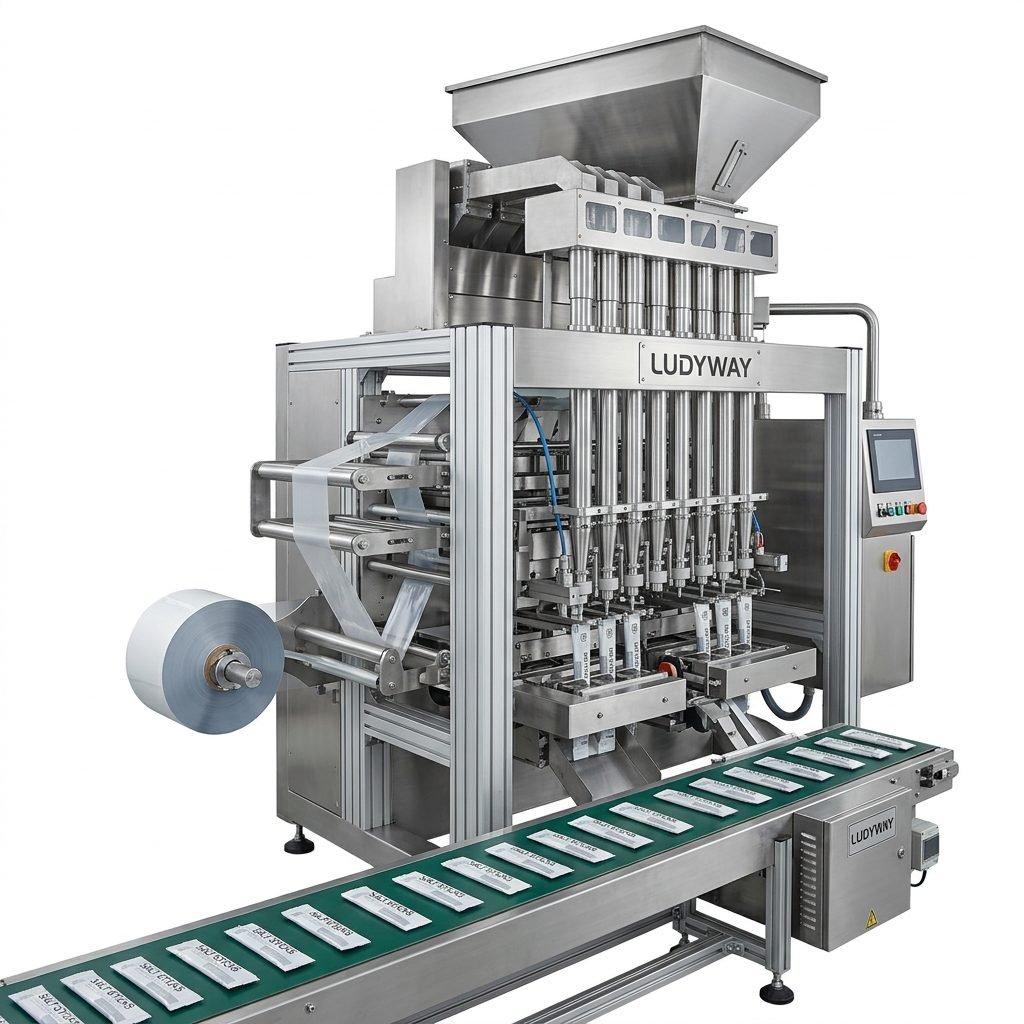
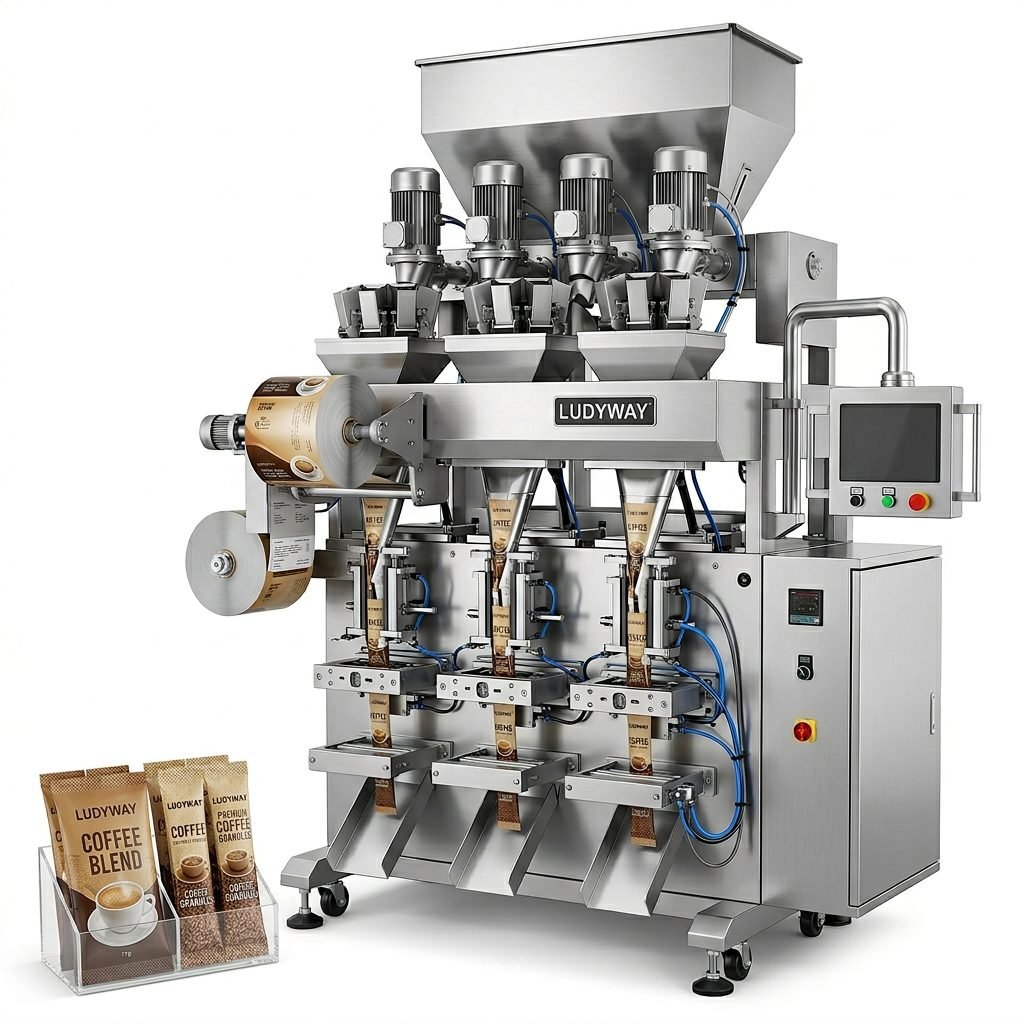
Long, narrow sachets ideal for single-serve powders, drink mixes, sugar, and instant coffee. Stick pack machines offer high-speed multi-lane configurations and are popular for on-the-go consumer products.
Flat Sachets
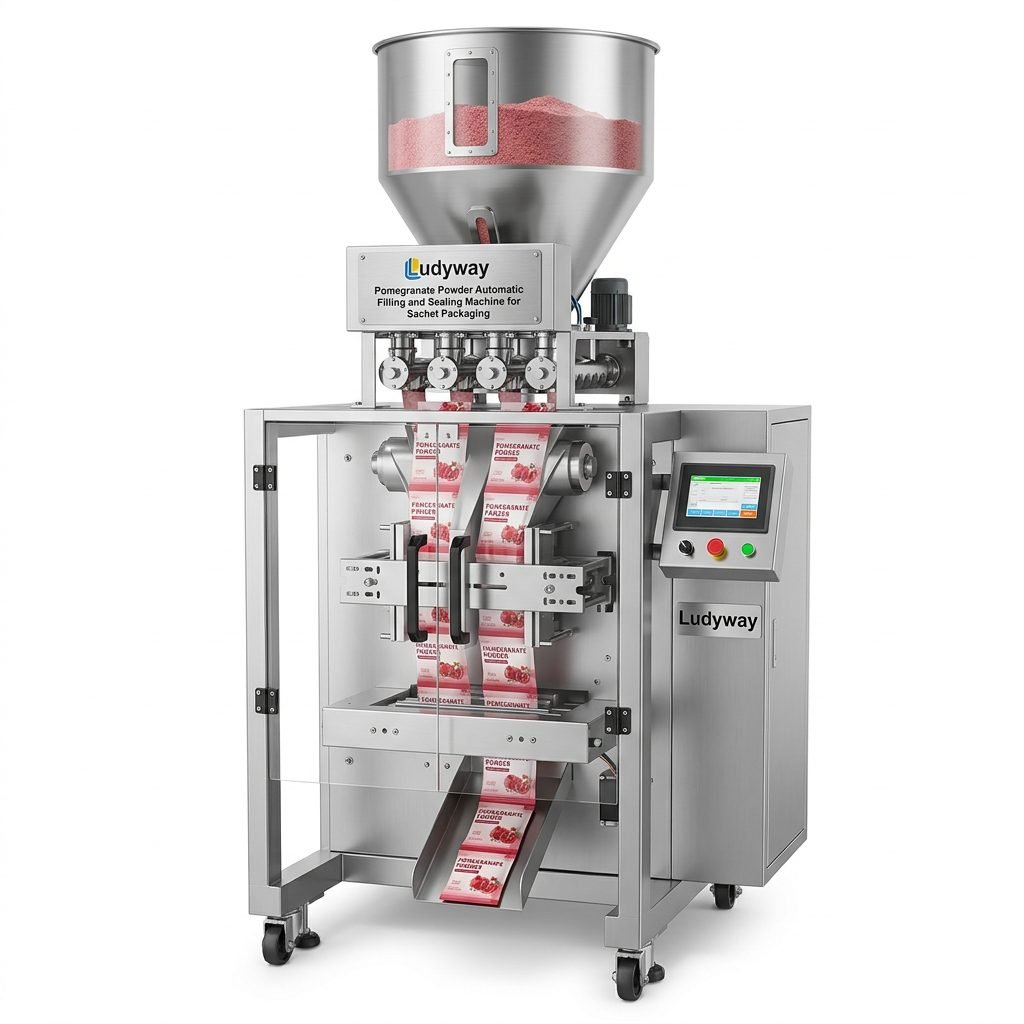
Three- or four-side-sealed pouches used for sauces, condiments, shampoo samples, and spice blends. These machines can handle a wide range of liquid and powder viscosities.
Stand-Up Pouches
Premium packaging with a gusseted bottom for shelf display. Suitable for granola, dried fruit, coffee, and pet treats. Requires more complex forming, filling, and sealing equipment.
Pre-Made Pouch Filling
For manufacturers using pre-formed pouches, rotary or inline filling and sealing machines offer flexibility across multiple pouch sizes and styles.
Evaluate Production Speed and Capacity
Production throughput requirements determine whether you need a single-lane, multi-lane, or fully automated packaging line. Key questions to answer:
- How many packs per minute do you need today — and in three years?
- What is your target daily or shift-based output?
- Does your production run 24/7, or in batch cycles?
- Will you be packaging multiple SKUs on the same line?
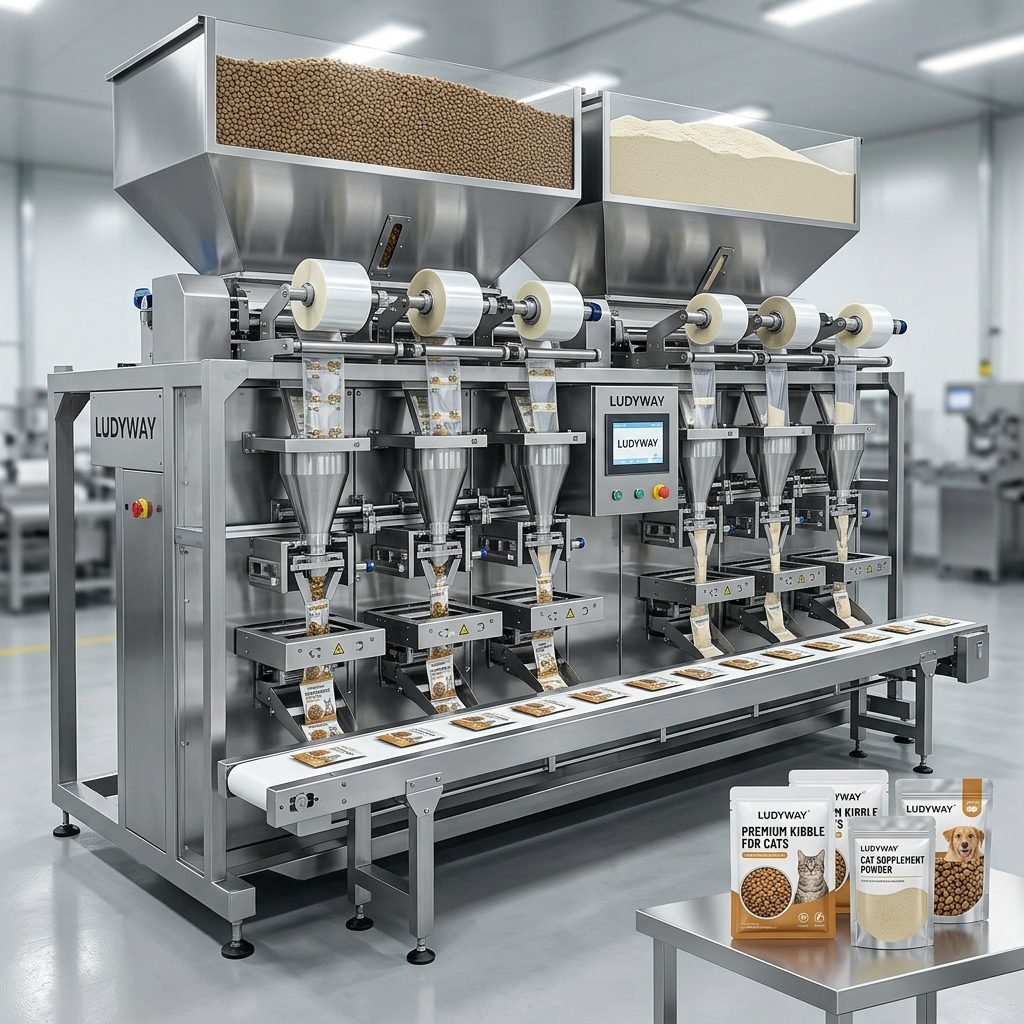
Multi-lane stick pack machines can achieve 400–1,500+ packs per minute depending on the number of lanes and product type. Understanding your production benchmarks helps avoid over-investing or under-sizing your equipment.
Match Machine Configuration to Your Automation Goals
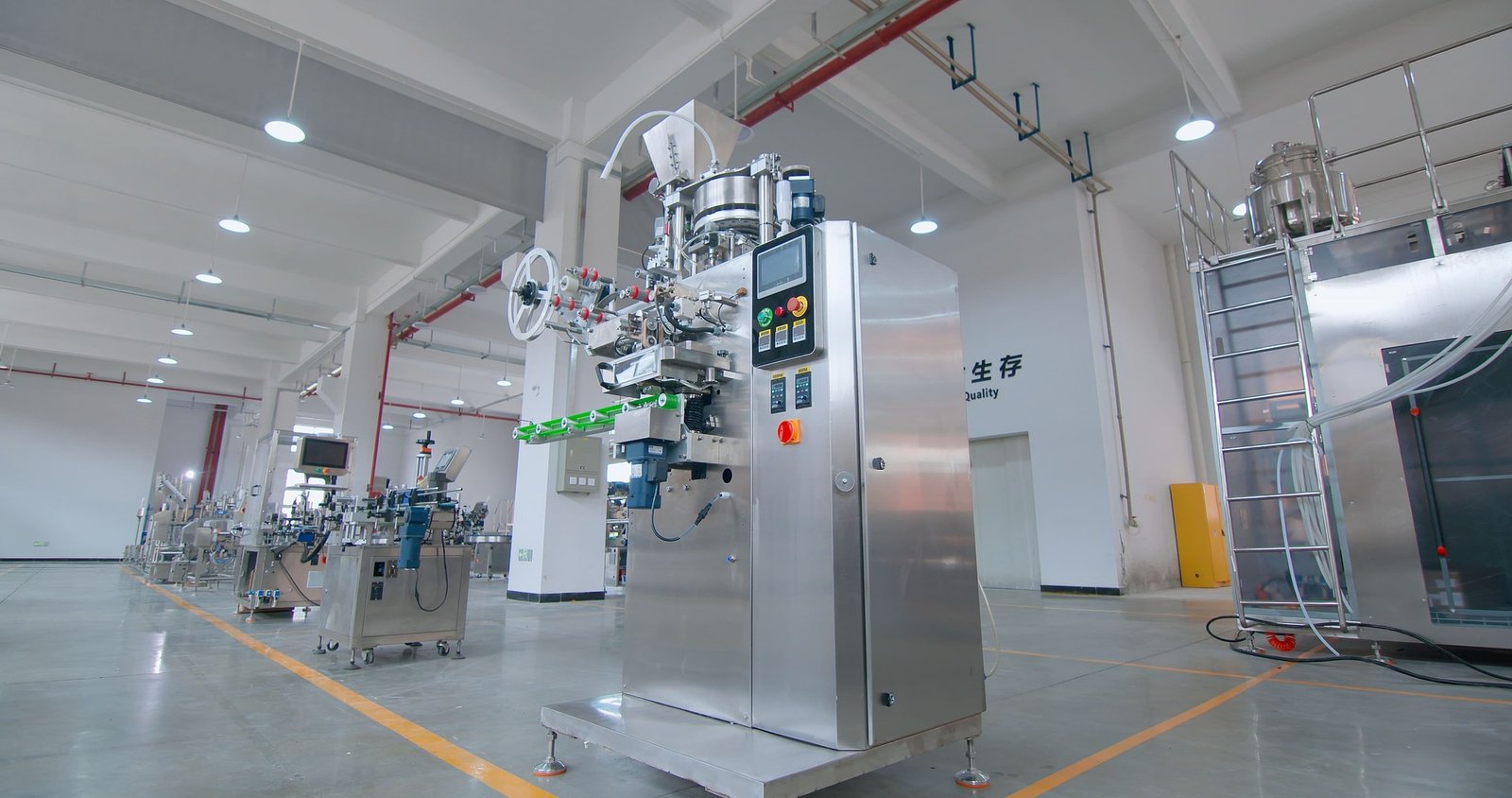
Modern grocery packing machines range from semi-automatic to fully integrated turnkey packaging lines. Evaluate these configuration options:
| Automation Level | Description | Best For |
|---|---|---|
| Semi-Automatic | Operator loads film, initiates cycles, and collects finished packs | Startups, low-volume production, R&D |
| Fully Automatic | Automatic film feeding, filling, sealing, cutting, and discharge | Medium to high-volume production |
| Multi-Lane Systems | Multiple lanes run simultaneously for maximum throughput | High-speed single-serve production |
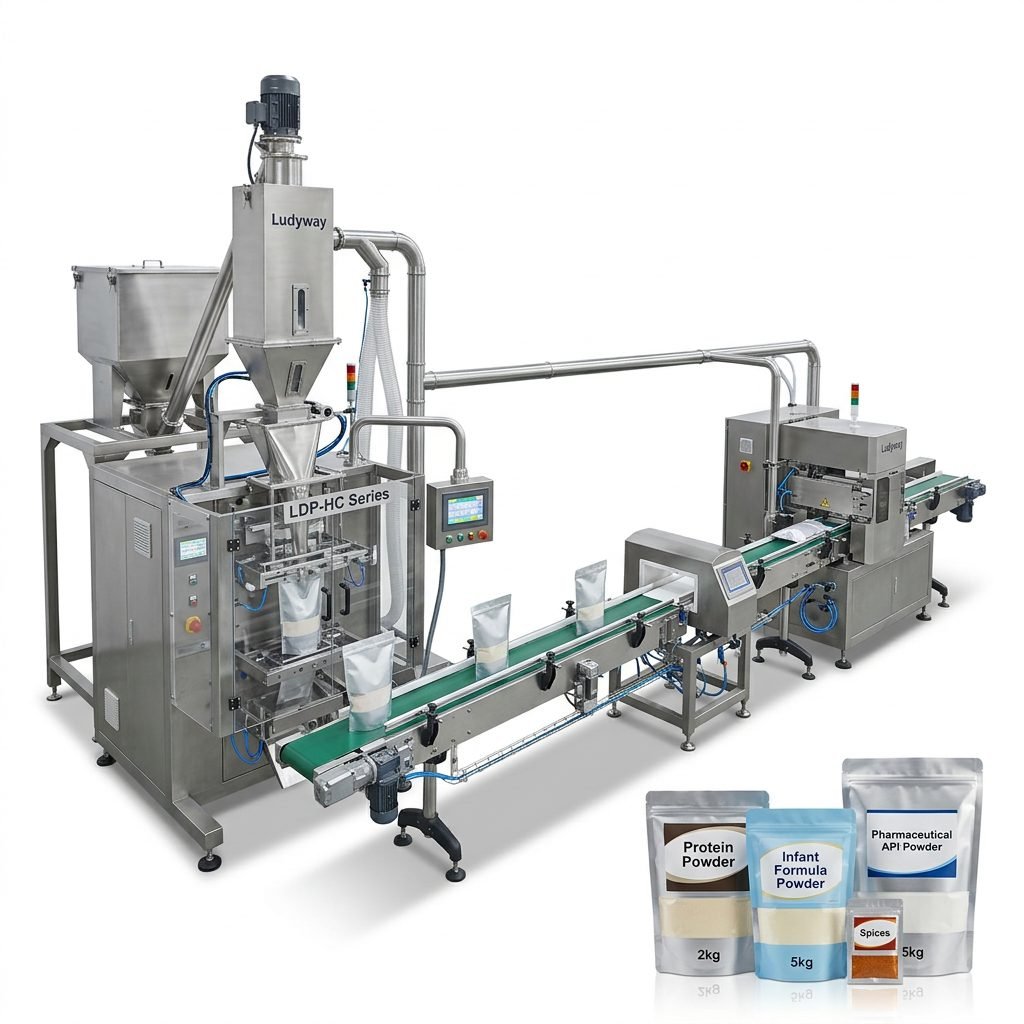
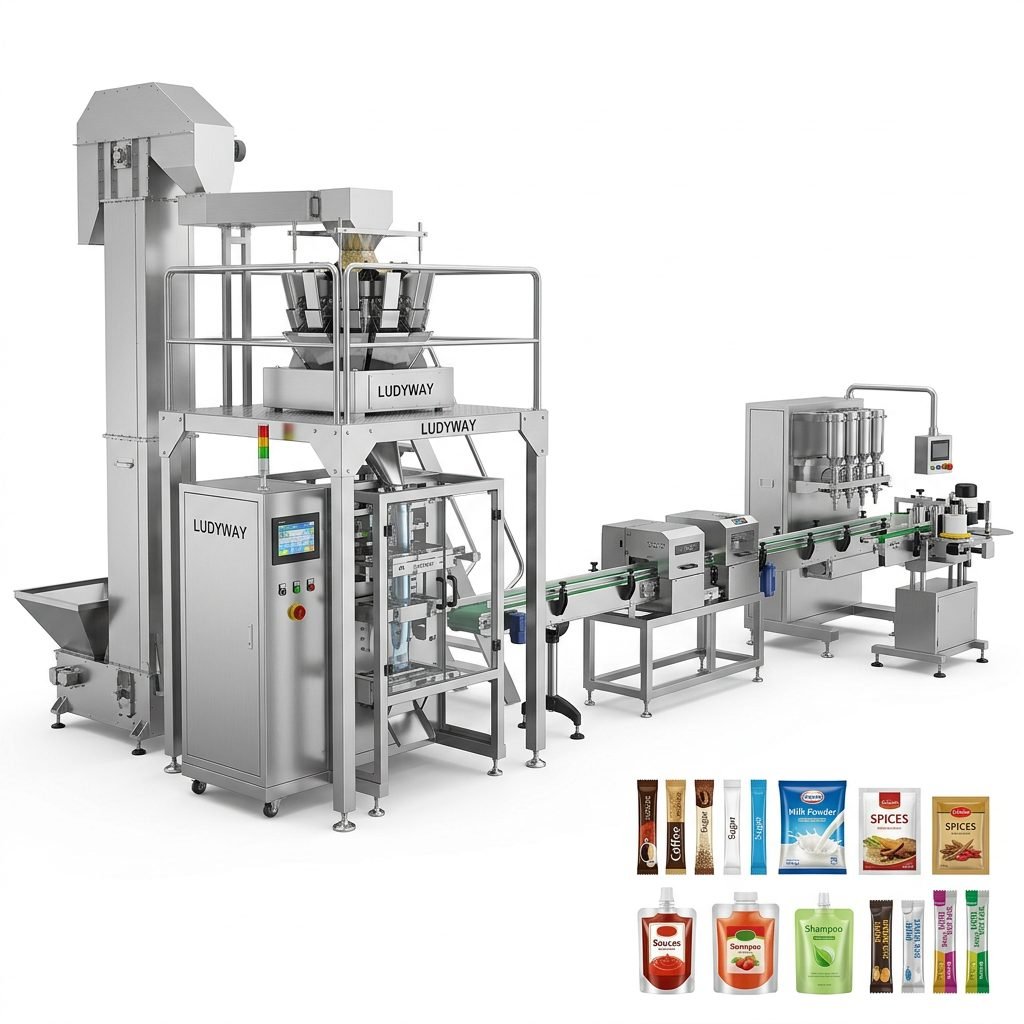
| Turnkey Packaging Lines | Integrated feeding, filling, sealing, coding, cartoning, and palletizing | Full-scale manufacturing operations |
Consider Material Compatibility and Sustainability
Your choice of packaging film or material directly affects machine selection. The equipment must be compatible with the film’s heat-sealing properties, thickness, and barrier characteristics. Growing consumer demand for sustainable packaging means many manufacturers are transitioning to recyclable, compostable, or mono-material films — and your machine must handle these newer materials effectively.
Check that the packing machine can accommodate your required film types without excessive waste or downtime during roll changes. Machines with servo-driven sealing and temperature control offer better results with challenging sustainable materials.
Quality, Compliance, and Industry Standards
For grocery products — especially those in regulated categories like food and beverages — your packing machine must meet applicable food contact and packaging regulations. Key considerations include:
- Food-grade materials — All product contact parts should be stainless steel (304 or 316L) and designed for sanitary operation.
- Cleanability — Tool-less disassembly, smooth surfaces, and accessible design reduce cross-contamination risks.
- Certifications — Depending on your market, CE, cGMP, or ISO packaging standards compliance may be required.
- Seal integrity — Consistent hermetic seals are critical for product freshness and leakage prevention.
Evaluate Customization and Supplier Capabilities
Standard machines work for standard products — but most grocery manufacturers have specific requirements. A supplier that offers customized engineering solutions can configure machines around your product, layout, and production goals rather than forcing you to adapt to a rigid machine design. Look for manufacturers with in-house engineering teams, application experience across multiple product categories, and the ability to integrate auxiliary equipment such as conveyors, checkweighers, coding systems, and cartoning machines.
One example of a manufacturer with deep customization capabilities is Ludyway Machinery, a China-based packaging machinery manufacturer with more than 30 years of experience and over 50 machine models across powder, granule, liquid, and flexible packaging applications. Working with an experienced partner that provides turnkey packaging solutions can simplify equipment selection, system integration, and after-sales support.
Total Cost of Ownership Beyond the Purchase Price
The sticker price of a grocery packing machine is only one part of the equation. Calculate your total cost of ownership (TCO) by factoring in:
- Installation and commissioning — On-site setup, operator training, and production ramp-up time
- Consumables and spare parts — Availability and cost of wear components like sealing jaws, belts, and filters
- Packaging material waste — Machines with precise film control reduce waste during startups and splices
- Downtime and maintenance — Easy-access design reduces mean time to repair (MTTR)
- Energy consumption — Servo-driven systems typically consume less power than pneumatic alternatives
After-Sales Support and Service Network
Reliable technical support can make the difference between a minor adjustment and extended downtime. Before purchasing, clarify:
- Does the supplier offer remote diagnostics and troubleshooting?
- What is the typical spare parts lead time for your region?
- Are local service engineers available for on-site support?
- Does the supplier provide operator training during installation?
Suppliers with a global service footprint and documented after-sales processes offer greater peace of mind, especially for manufacturers operating in multiple shifts or remote locations.
Future-Proofing Your Investment
A grocery packing machine is a long-term asset. Consider how your needs might evolve over a 5–10 year horizon. Can the machine be upgraded with additional lanes? Does it support multiple packaging formats with changeover parts? Is the control system compatible with Industry 4.0 and smart factory data integration? Choosing modular, scalable equipment protects your investment as market demands shift.
Key Questions to Ask Potential Suppliers
Use this checklist when evaluating grocery packing machine manufacturers:
- Can you provide references from customers packaging similar products?
- What is the demonstrated production speed with our specific product?
- What film materials are compatible with your machine?
- How quickly can changeover between SKUs be completed?
- What warranty and service packages are included?
- Is remote support available, and what are the response times?
Choosing the right grocery packing machine requires balancing product requirements, production goals, automation needs, and long-term operational costs. By evaluating each of these factors systematically — and partnering with an experienced packaging machinery manufacturer — you can build a packaging line that delivers consistent quality, efficiency, and scalability for years to come.