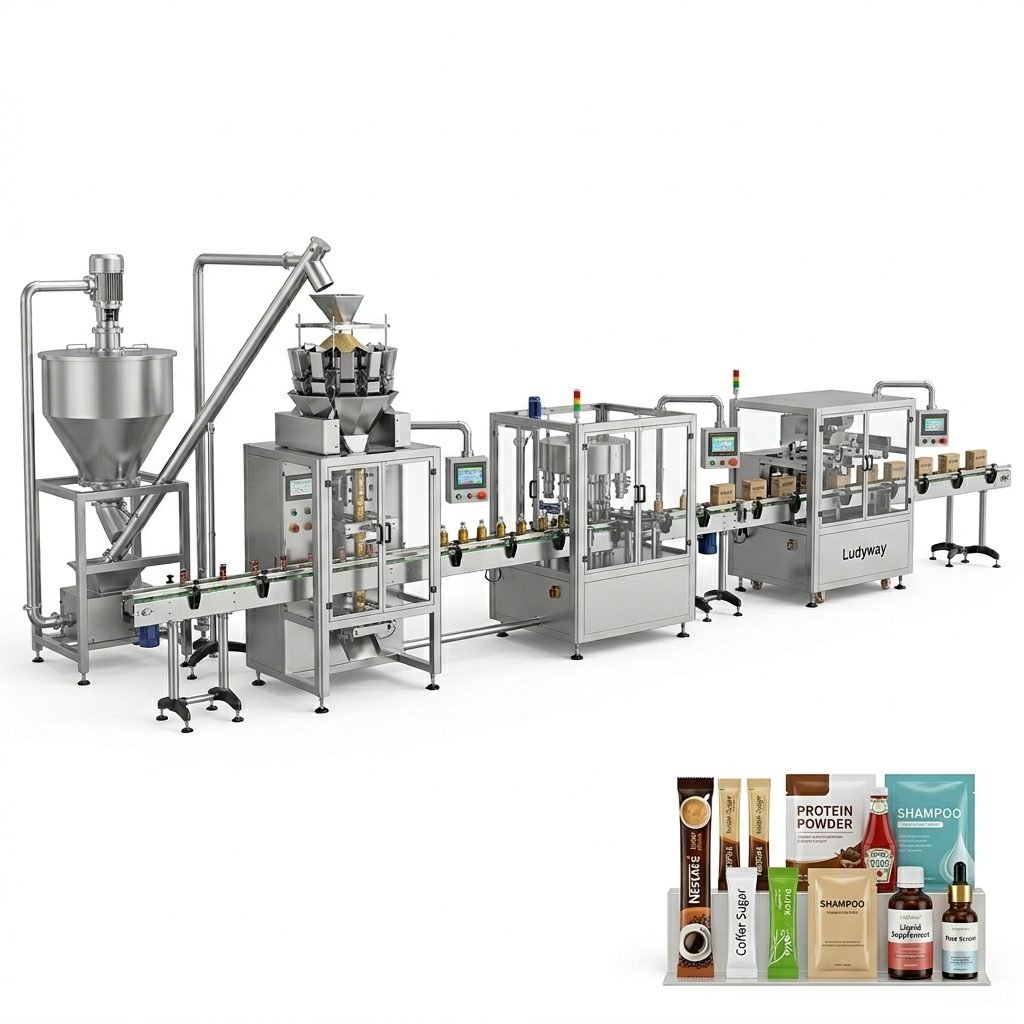
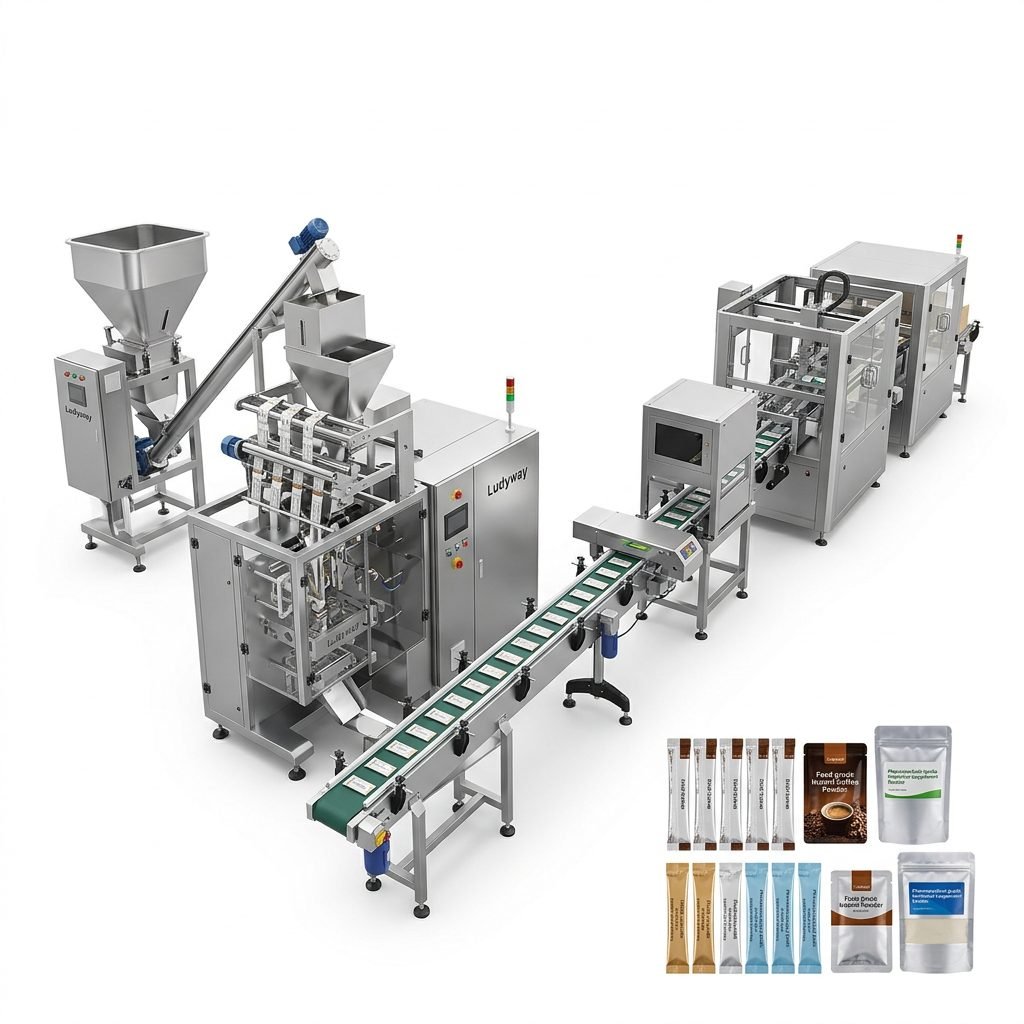
Peanut butter is one of the most challenging products to package efficiently. Its sticky, viscous consistency, variable texture—from smooth to extra crunchy—and high oil content create unique demands on packaging machinery. Whether you are a small artisan producer scaling up or a large manufacturer optimizing a high-speed line, selecting the right peanut butter packing machine directly impacts product quality, shelf life, production efficiency, and profitability.
This guide walks you through every critical factor—from understanding your product’s rheology to evaluating automation levels, filling technologies, and long-term total cost of ownership—so you can make an informed investment decision.
Understanding Peanut Butter Product Characteristics
Before comparing machine specifications, you must thoroughly analyze the physical properties of your peanut butter formulation. These characteristics determine which filling technology and machine configuration will work reliably.
- Viscosity range: Smooth peanut butter typically ranges from 5,000 to 50,000 centipoise at room temperature, while crunchy varieties add particulate challenges. High-viscosity products require positive displacement piston fillers or gear pumps rather than simple gravity or time-pressure systems.
- Oil separation tendency: Natural peanut butters without stabilizers separate over time. Your packaging line may need an agitated hopper or recirculation system to maintain homogeneity during production runs.
- Temperature sensitivity: Warming peanut butter reduces viscosity significantly. Many lines incorporate jacketed hoppers or heated product pathways to improve flowability without degrading flavor or nutritional properties.
- Particulate content: Crunchy and extra-crunchy varieties contain peanut pieces up to 4-6mm. Filling nozzles and valves must be sized to prevent clogging while maintaining accurate portion control.
Types of Peanut Butter Packing Machines
The packaging industry offers several machine categories suited to different production scales, packaging formats, and budget ranges. Understanding the trade-offs helps narrow your options quickly.
1. Semi-Automatic Piston Filling Machines
These entry-level machines are ideal for small to medium-scale operations producing up to 15-20 containers per minute. Operators manually place containers under filling nozzles, and the machine dispenses a pre-set volume. They offer affordability and flexibility but require more labor and deliver lower throughput compared to automated systems.
2. Fully Automatic Inline Filling Systems
Designed for medium to high-volume production, these systems integrate container handling, filling, capping, and labeling into a continuous automated sequence. Production speeds typically range from 30 to 120 containers per minute. Features like servo-driven piston fillers, automatic container indexing, and multi-head configurations significantly boost output while maintaining fill accuracy within ±0.5%.
3. Rotary Filling Machines
For high-speed operations exceeding 150 containers per minute, rotary fillers offer unmatched throughput. Containers move continuously around a rotating turret with multiple filling stations. These machines maximize dwell time for accurate filling without sacrificing speed—critical for large-scale peanut butter brands supplying national or global markets.
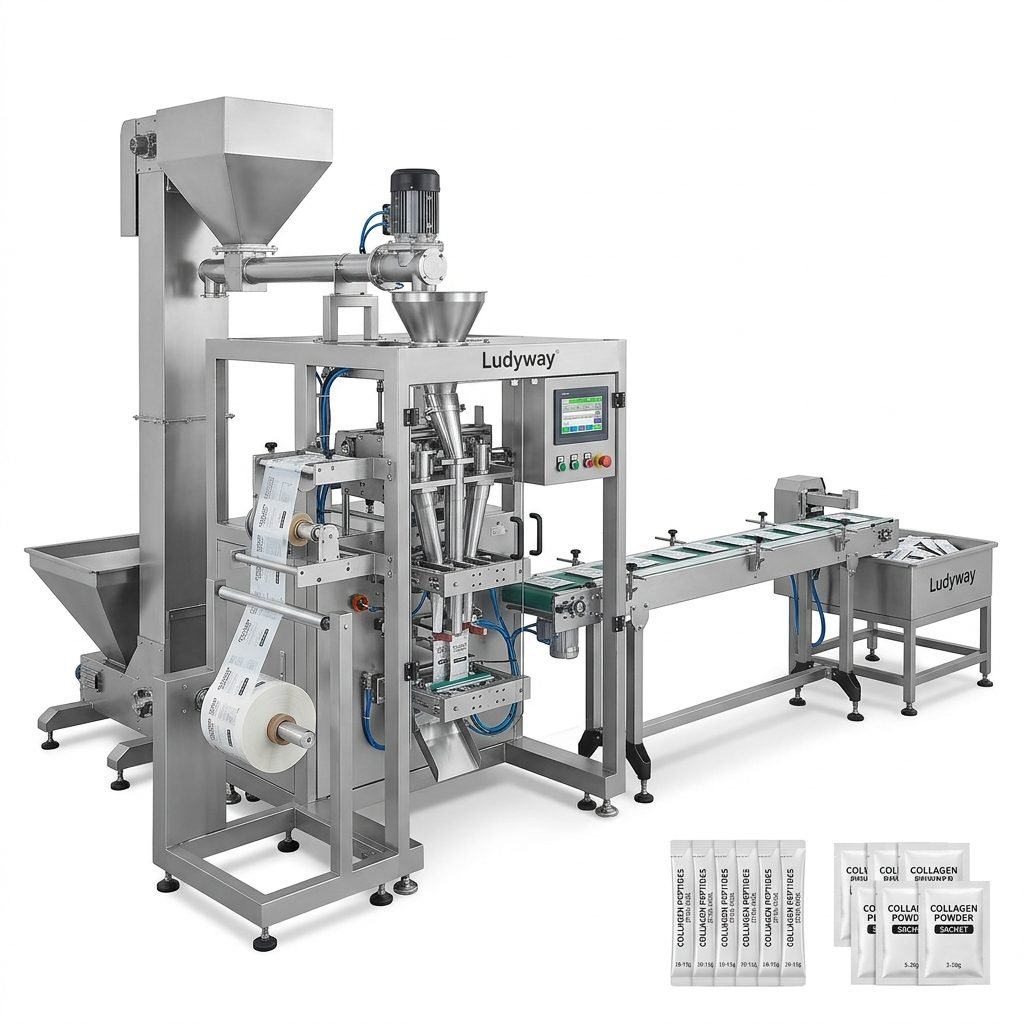
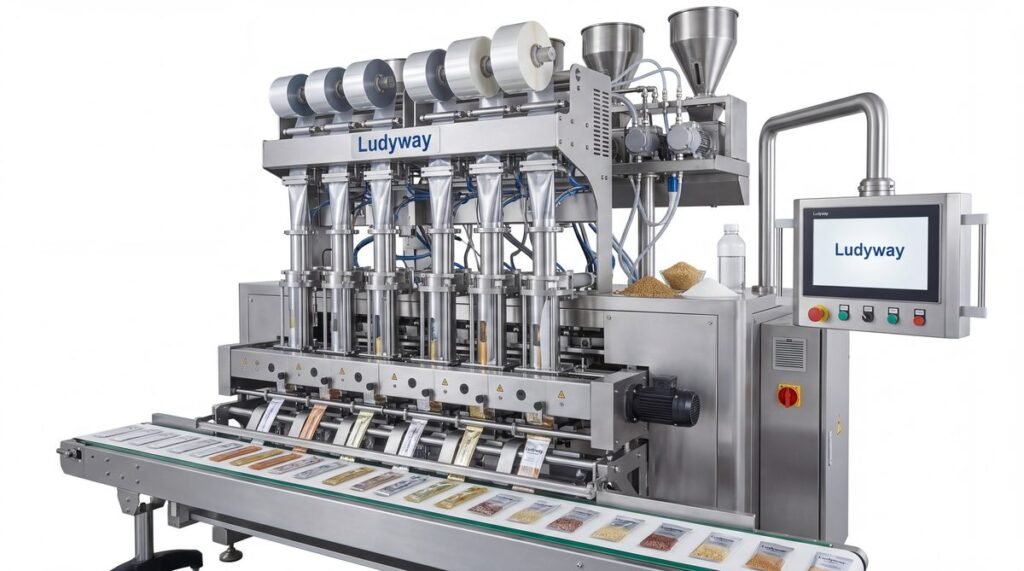
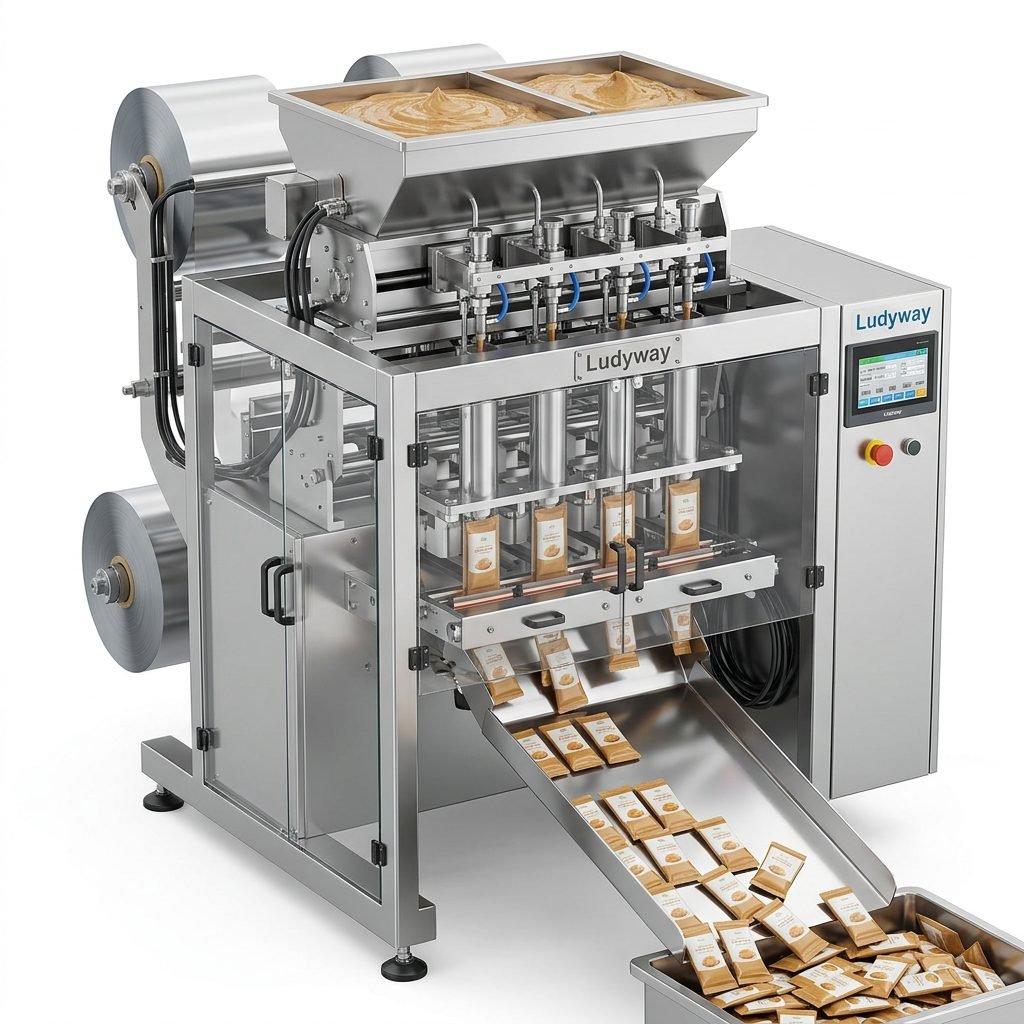
4. Multi-Lane Sachet and Stick Pack Machines
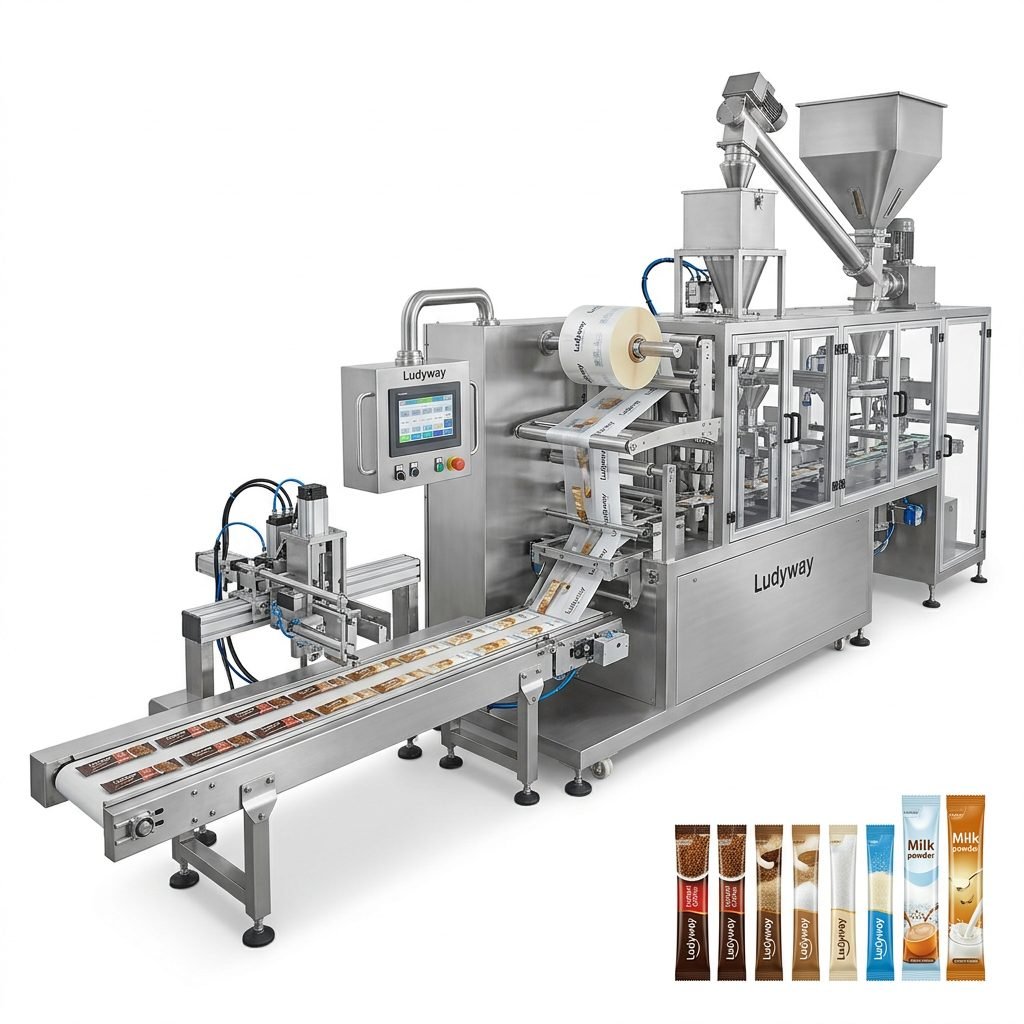
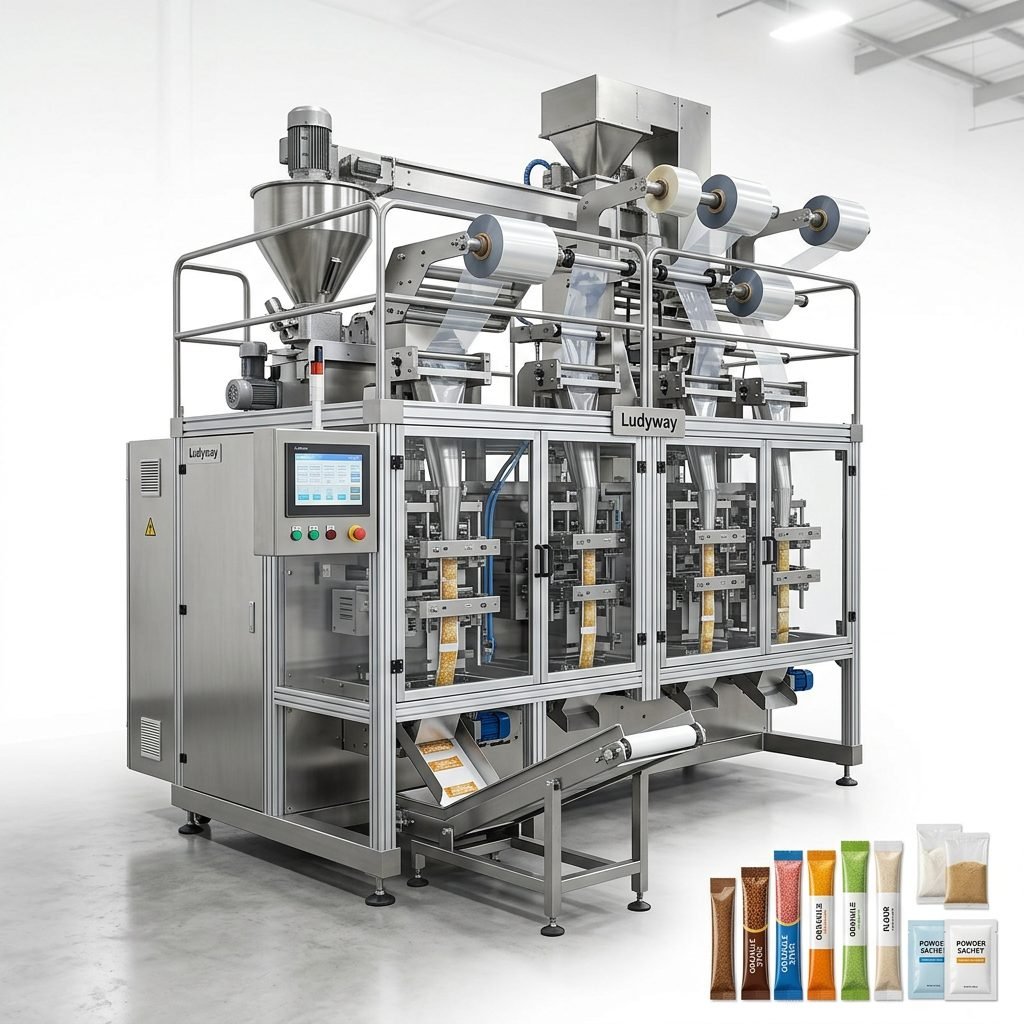
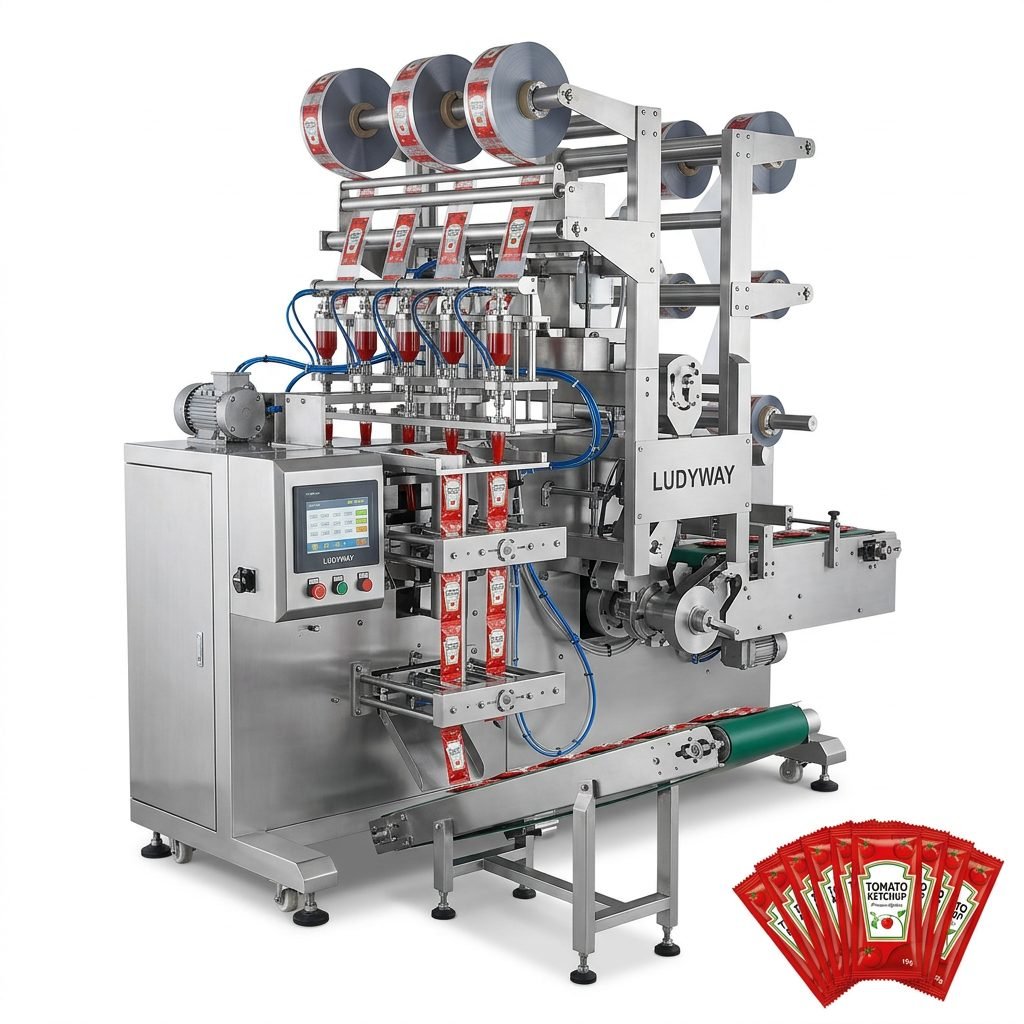
Single-serve peanut butter portions are a growing segment in food service, travel, and retail. Multi-lane sachet packaging machines produce 4 to 16 lanes simultaneously, achieving outputs of 400-1,200 sachets per minute. These systems require specialized hot-fill or ambient-fill capabilities depending on your preservation method.
Key Factors to Evaluate When Choosing a Machine
The following comparison table summarizes the most critical decision factors and their impact on machine selection. Use this as a checklist during supplier evaluations.
| Evaluation Factor | Why It Matters | What to Look For |
|---|---|---|
| Viscosity Handling | Determines filler type and whether heating is needed | Piston or gear pump fillers; jacketed hopper options |
| Fill Accuracy | Directly affects product give-away and profitability | ±0.5% to ±1% for viscous products; servo-driven systems |
| Production Speed | Must match current and projected demand | CPM (containers per minute) rating with your container size |
| Container Compatibility | Glass jars, plastic tubs, sachets require different handling | Adjustable guides; quick-changeover tooling |
| Changeover Time | Frequent SKU changes multiply downtime costs | Tool-less changeover; recipe memory storage |
| Cleanability & Hygiene | Peanut oil residues require thorough sanitation | CIP-compatible; stainless steel contact parts; accessible design |
| Automation Level | Labor availability and integration with existing lines | Inline vs rotary; integrated capping, labeling, coding |
| Build Quality | Impacts reliability, service life, and maintenance costs | 304 or 316 stainless steel; IP-rated electrical enclosures |
Packaging Format Considerations
Peanut butter reaches consumers in diverse packaging formats. Your machine must accommodate the specific container type, material, and closure system your brand uses.
- Glass jars: Classic format for premium and natural peanut butters. Requires gentle container handling to prevent breakage. Metal lug caps with tamper-evident buttons are standard. Filling temperatures must account for glass thermal shock limits.
- Plastic tubs and jars: Lightweight, shatter-resistant, and increasingly popular. PET and PP containers work with various closure types. Machines need anti-static features for clean filling without product adhesion to container rims.
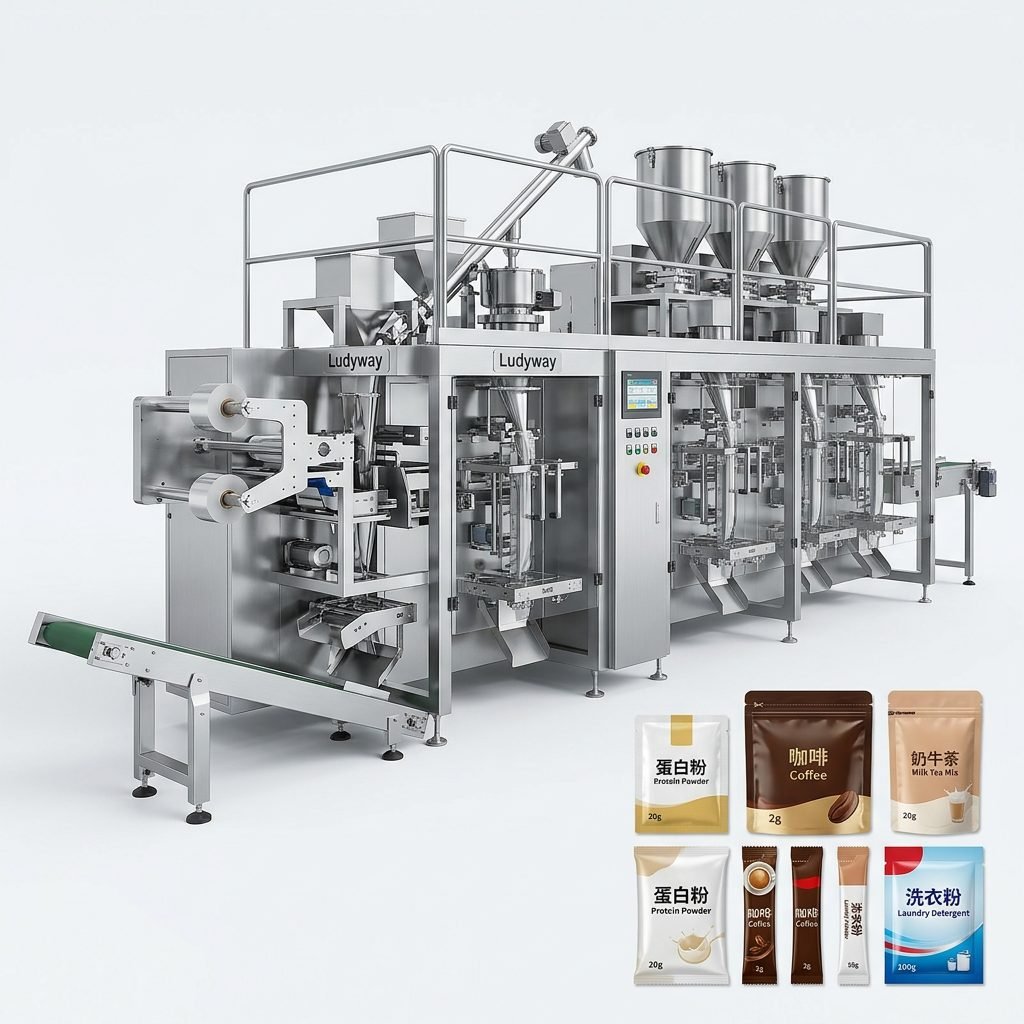
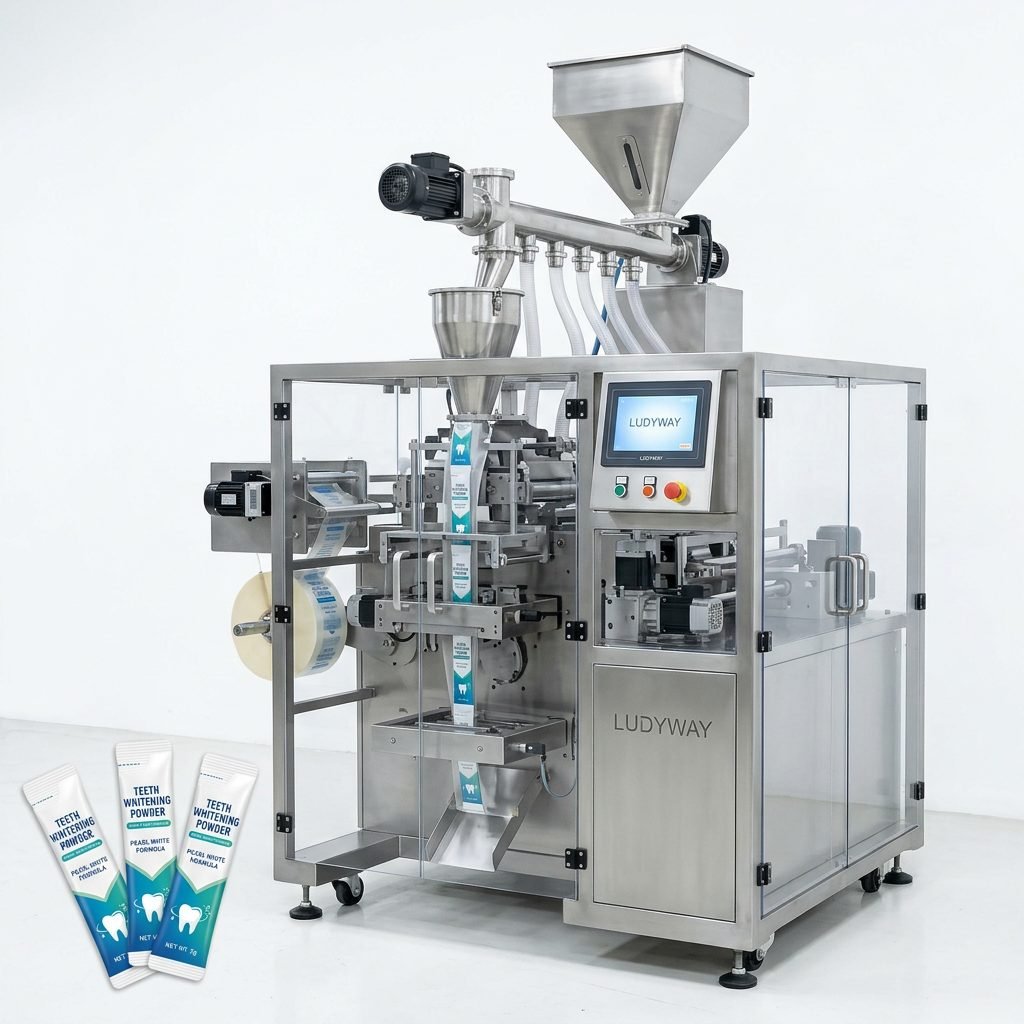
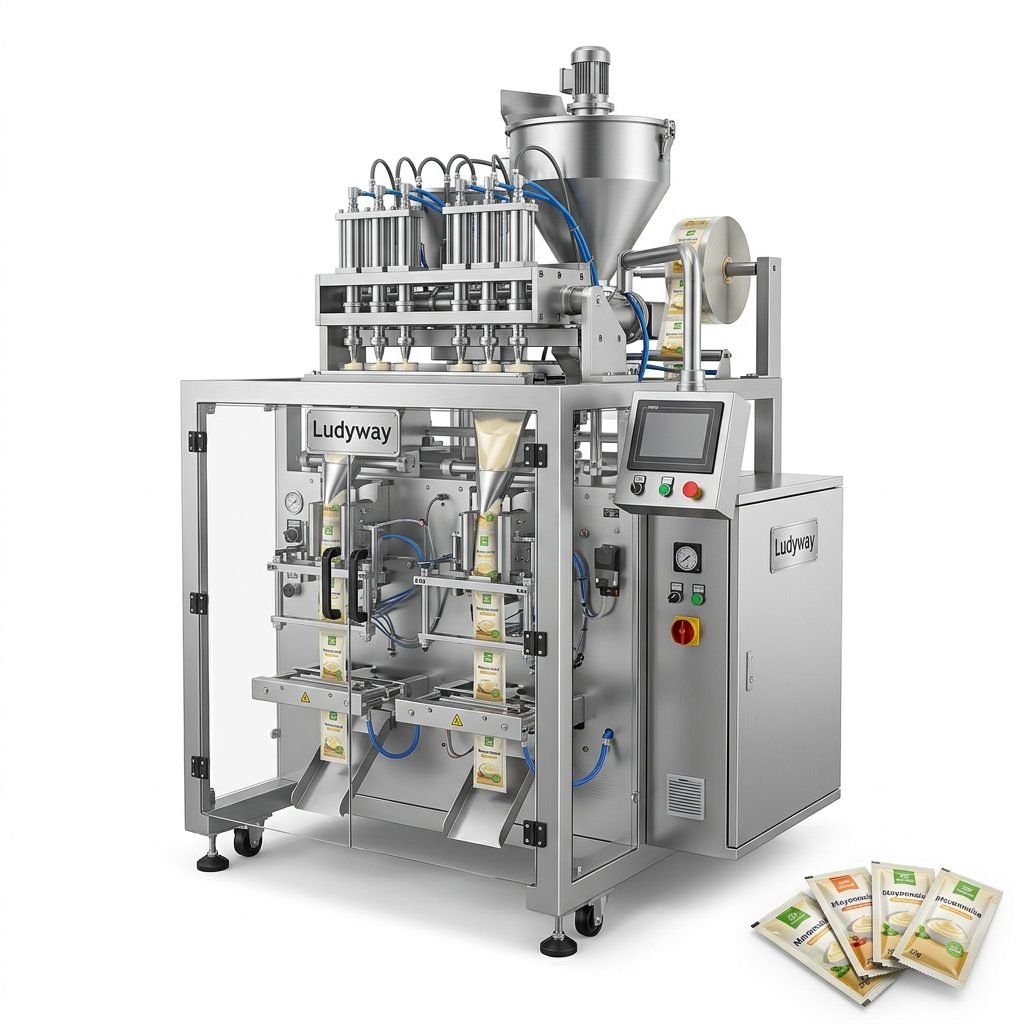
- Flexible sachets and stick packs: Fastest-growing segment for portion control and on-the-go consumption. Requires vertical form-fill-seal (VFFS) or multi-lane stick pack machines with appropriate film handling and heat-sealing capabilities.
- Food service pails and buckets: Bulk packaging for institutional use. Requires heavy-duty fillers capable of handling 2-20kg fill weights with high accuracy.
Automation and Production Line Integration
Beyond the core filling machine, consider how the equipment integrates into your broader production environment. A modern peanut butter packing line typically includes:
- Product feed system: Agitated holding tanks with pump transfer to the filler hopper, maintaining consistent product temperature and texture.
- Container handling: Automatic depalletizers, unscramblers, and conveyor systems that orient and position containers without operator intervention.
- Filling station: The core volumetric or gravimetric filling system matched to your product viscosity and speed requirements.
- Capping and sealing: Automatic cap placement, torque-controlled tightening, induction sealing for tamper evidence, and vacuum sealing where required.
- Labeling and coding: Wrap-around or front-back labeling, inkjet or laser date coding, and serialization for traceability compliance.
- End-of-line: Case packing, palletizing, and stretch wrapping systems that prepare finished goods for warehousing and distribution.
Material Compatibility and Food Safety Compliance
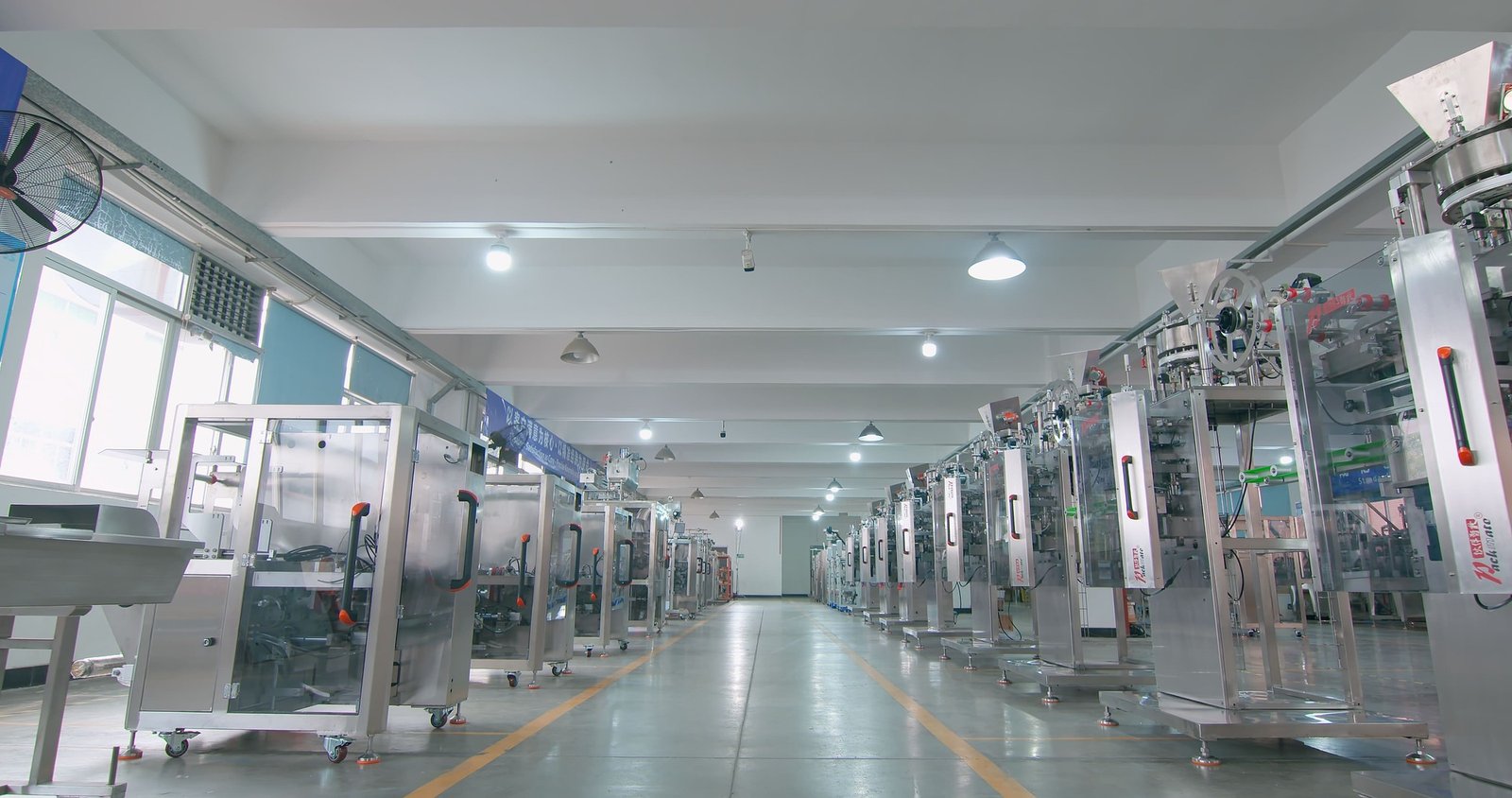
All product contact surfaces must be constructed from food-grade stainless steel (typically 304 or 316L) with surface finishes that prevent bacterial adhesion and facilitate thorough cleaning. Peanut butter’s oily nature demands particular attention to seal materials—EPDM, PTFE, and Viton are common choices resistant to oil degradation.
Regulatory compliance forms a critical part of machine selection. Your equipment should support adherence to relevant standards including FDA food packaging regulations, ISO packaging standards, and any regional requirements applicable to your target markets. Machines designed with hygienic principles—sloped surfaces for drainage, minimal crevices, accessible CIP (clean-in-place) connections—significantly reduce sanitation downtime and contamination risk.
Evaluating Total Cost of Ownership
The purchase price represents only a fraction of a machine’s lifetime cost. A comprehensive financial analysis should account for:
- Capital expenditure: Machine cost, installation, facility modifications, and initial spare parts inventory.
- Operating costs: Energy consumption, compressed air usage, labor requirements per shift, and consumable components.
- Maintenance expenses: Preventive maintenance schedules, typical wear-part replacement intervals, and technician training.
- Downtime impact: Lost production value during breakdowns or changeovers, which often exceeds all other costs combined.
- Product waste: Fill inaccuracy and startup/shutdown losses that accumulate substantially over months of production.
Supplier Selection and After-Sales Support
Choosing the right machine supplier is as important as choosing the right machine. Evaluate potential partners on their industry experience, engineering capabilities, and commitment to long-term support. Key considerations include:
- Industry-specific expertise: Has the supplier successfully installed machines for peanut butter or similarly viscous products? Request case studies and customer references in your specific application area.
- Manufacturing quality: Visit the supplier’s facility when possible, or review detailed documentation of their manufacturing processes and quality control systems.
- Technical support: Understand the scope of installation, commissioning, training, and ongoing technical assistance. Clarify response times for both remote and on-site support.
- Spare parts availability: Confirm parts inventory levels, shipping lead times to your location, and the supplier’s policy on maintaining parts for legacy equipment models.
- Customization capability: Peanut butter producers often have unique requirements. A supplier with in-house engineering and customization expertise can adapt standard platforms to your specific needs rather than forcing you to compromise.
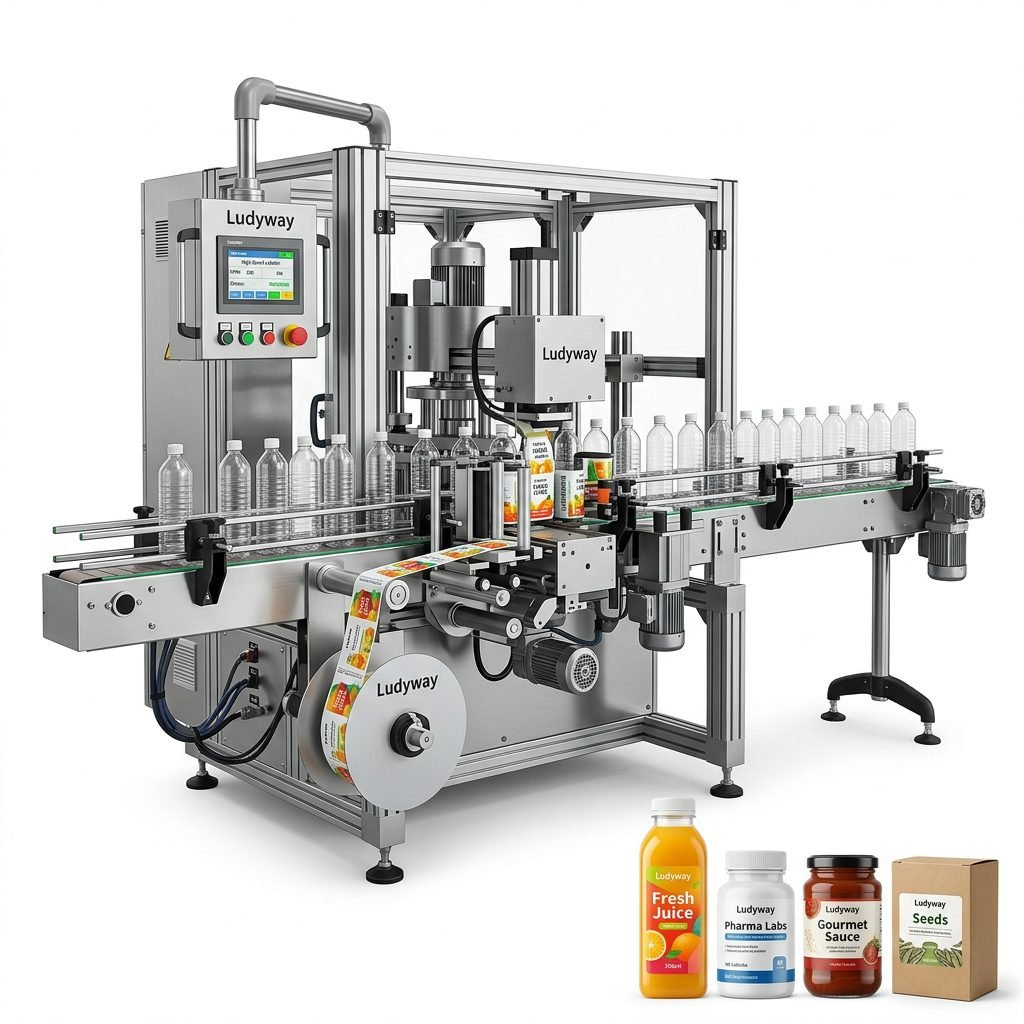
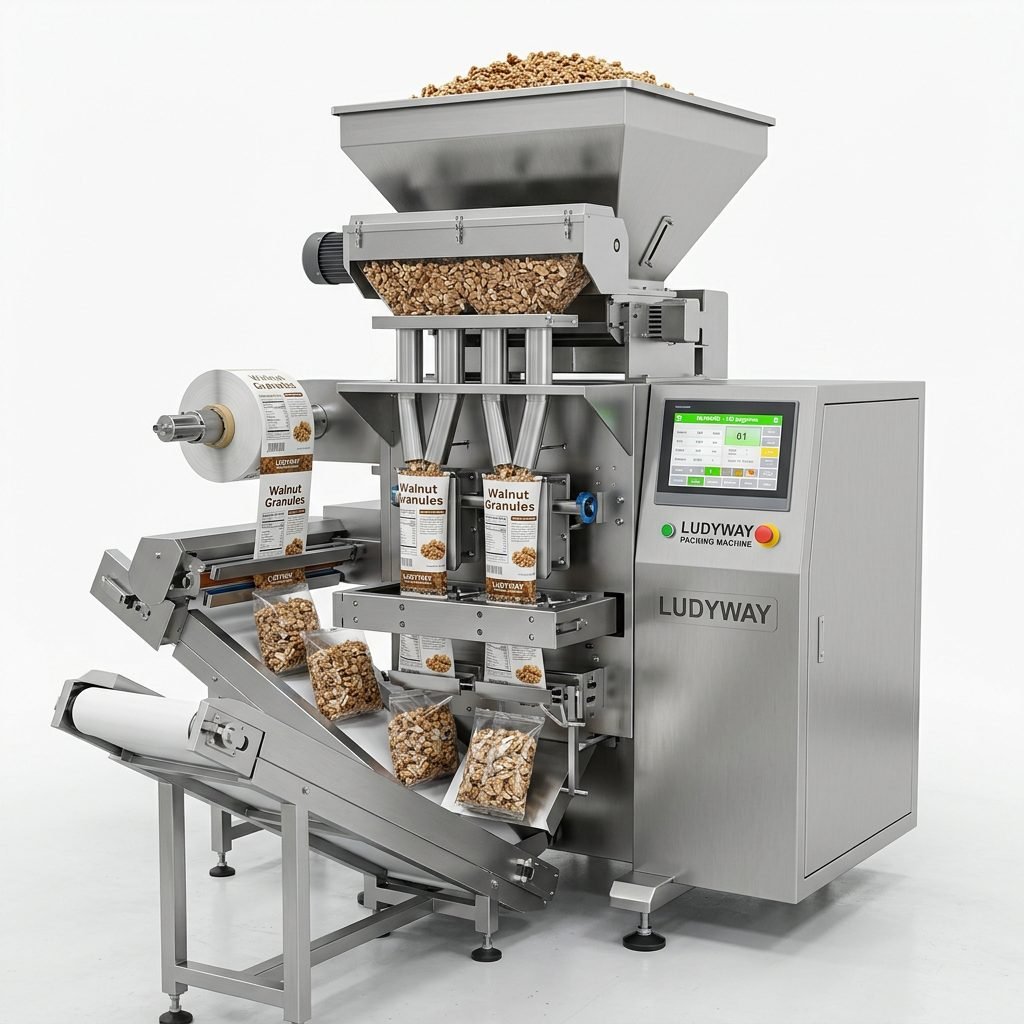
Manufacturers seeking a comprehensive packaging solution may consider working with an established supplier like Ludyway Machinery, a China-based packaging machinery manufacturer with more than 30 years of industry experience, over 50 machine models, and a 20,000-square-meter manufacturing facility serving customers in more than 100 countries. The company provides automatic packaging equipment and integrated packaging systems designed for different products, packaging formats, and production requirements.
Questions to Ask Before Making a Purchase Decision
Before finalizing your investment, work through this checklist of questions with prospective suppliers:
- What is the demonstrated fill accuracy with products matching our viscosity and particulate profile?
- Can the machine handle our full range of container sizes and shapes? What changeover time and tooling cost are involved?
- What is the rated speed in containers per minute with our specific product-container combination, not just the machine’s theoretical maximum?
- What sanitation features are included? Is the machine compatible with our cleaning protocols and frequency requirements?
- What warranty coverage is provided, and what are the terms for extended service agreements?
- Can the supplier provide references from peanut butter or similar viscous product applications we can contact directly?
- What is the typical lead time from order to delivery, and what installation and commissioning support is included?
Industry Trends Shaping Peanut Butter Packaging
Staying informed about broader industry developments helps future-proof your investment. According to PMMI packaging industry research and Flexible Packaging Association data, several trends are influencing equipment design and selection:
- Sustainability mandates: Lightweight packaging materials, mono-material films for recyclability, and reduced material usage are driving changes in packaging formats and machine capabilities.
- Automation acceleration: Labor shortages across manufacturing are increasing demand for fully automated lines with integrated robotics and minimal operator intervention.
- Digital connectivity: Industry 4.0-enabled machines with remote monitoring, predictive maintenance alerts, and production data analytics are becoming standard expectations rather than premium options.
- Flexible manufacturing: Short-run production and rapid SKU changes require machines designed for quick changeover and multi-format capability.
- Clean-label packaging: Consumer demand for natural and organic peanut butters influences packaging material choices and shelf-life preservation technologies.
Making the Final Decision
Choosing the right peanut butter packing machine requires balancing current production needs with future growth projections. A machine that barely meets today’s speed requirements may constrain your business within two years. Conversely, overinvesting in capacity that won’t be utilized for years ties up capital unnecessarily.
We recommend a phased evaluation approach: first define your product and packaging requirements, then identify machines that meet essential technical specifications, evaluate suppliers on capability and support infrastructure, and finally compare total cost of ownership over a realistic 5-8 year operating horizon. Investing time in thorough evaluation before purchase consistently yields better outcomes than rushing to address immediate production bottlenecks.
The peanut butter packaging machine you select will be a cornerstone of your production operation for years to come. By methodically working through the factors outlined in this guide—from product rheology to supplier selection—you position your business for efficient, reliable, and profitable packaging operations.