Investing in a plastic bottle packing machine is a significant decision for any manufacturer. The right equipment can dramatically improve production efficiency, reduce labor costs, and ensure consistent product quality. However, with so many configurations, filling technologies, and automation levels available, the selection process can quickly become overwhelming. This comprehensive buyer’s guide walks you through every critical factor you need to evaluate before making a purchase.
1. Define Your Product Characteristics First
Before evaluating any machine specifications, you must thoroughly understand the physical and chemical properties of the product you intend to fill. The nature of your product directly determines which filling technology will work best.
Key product attributes to document include:
- Viscosity — Is your product a free-flowing liquid like water, a semi-viscous substance like shampoo, or a highly viscous material like honey or gel?
- Foaming tendency — Does the product foam when agitated? Foaming liquids require specialized filling nozzles to prevent overflow and inconsistent fill levels.
- Particle content — Does the liquid contain particulates, pulp, or suspended solids? This affects nozzle selection and filling valve design.
- Chemical compatibility — Is the product acidic, alkaline, or solvent-based? This dictates the machine’s material construction requirements.
- Temperature sensitivity — Does the product require hot filling, cold filling, or room-temperature processing?
2. Determine Your Production Speed and Capacity Requirements
Production speed is measured in bottles per minute (BPM) and is one of the most important specifications to lock in early. Your target output should align with both current demand and projected growth over the next 3-5 years. Under-specifying can create bottlenecks; over-specifying leads to unnecessary capital expenditure.
Consider the following when estimating required capacity:
- Current daily or shift-based production volumes
- Seasonal demand fluctuations
- Planned product line expansions
- Available factory floor space and layout constraints
According to PMMI’s business intelligence resources, manufacturers should plan for at least 20% headroom above current peak demand when selecting packaging machinery to accommodate future growth without immediate reinvestment.
3. Evaluate Bottle Type, Size, and Material Compatibility
Not all plastic bottle packing machines handle every bottle format. You need a machine that accommodates your specific bottle geometry, including neck diameter, body shape, height, and base stability. Key considerations include:
- Bottle material — PET, HDPE, LDPE, PP, and PVC each have different rigidity and handling characteristics
- Bottle shape — Round, square, oval, or irregular shapes affect gripping, conveying, and labeling stations
- Size range — Can the machine handle your smallest and largest bottle formats without extensive changeover time?
- Cap and closure type — Screw caps, snap-on, pump dispensers, spray triggers, or tamper-evident seals each require different capping modules
Compatibility with FDA food packaging and food contact substance regulations is essential if you serve the food, beverage, or pharmaceutical sectors.
4. Select the Right Filling Technology
Filling technology is the heart of any plastic bottle packing machine. The table below summarizes the most common filling principles and their ideal applications:
| Filling Technology | Best For | Typical Accuracy | Speed Range |
|---|---|---|---|
| Gravity Filling | Low-viscosity, free-flowing liquids | ±0.5% to ±1% | 20-200 BPM |
| Piston Filling | Viscous products, pastes, creams | ±0.2% to ±0.5% | 15-150 BPM |
| Overflow Filling | Products requiring uniform fill level appearance | Fill-to-level | 30-180 BPM |
| Net Weight Filling | High-value products, pharmaceutical applications | ±0.1% to ±0.3% | 10-100 BPM |
| Peristaltic Pump Filling | Sterile, shear-sensitive, or hazardous liquids | ±0.5% to ±1% | 10-120 BPM |
Selecting the correct filling principle directly impacts your fill accuracy, waste reduction, and overall line efficiency. For products that require precision dosing — such as pharmaceuticals — ISO packaging standards provide valuable guidance on acceptable tolerances and validation requirements.
5. Decide on Automation and Integration Level
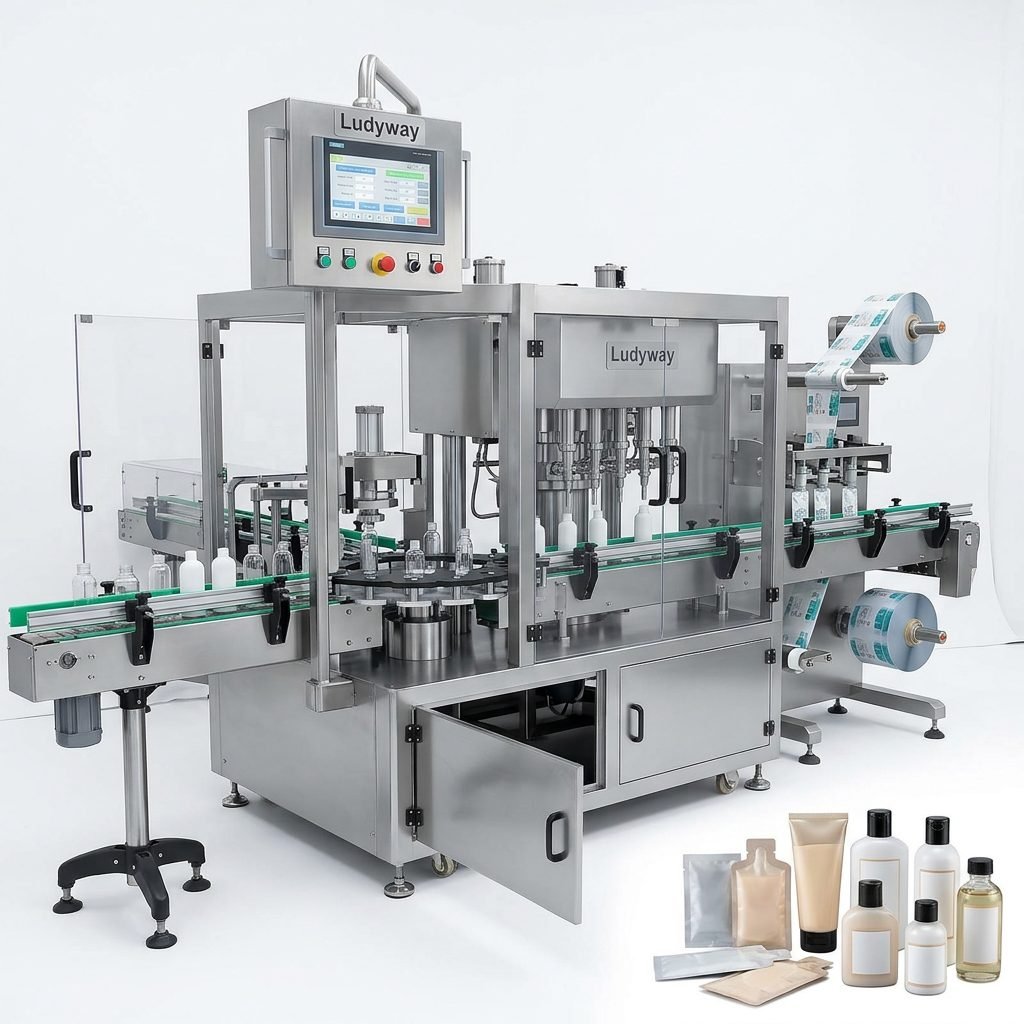
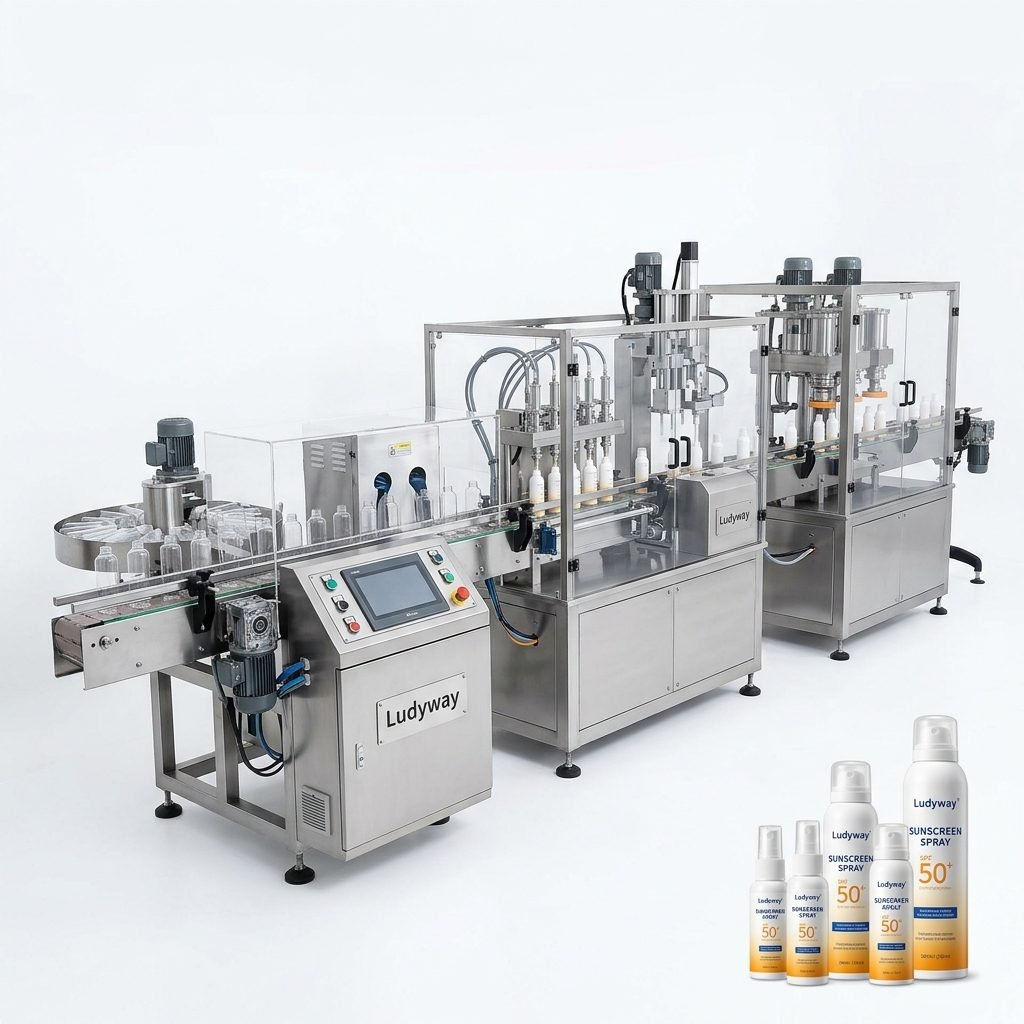
Modern plastic bottle packing machines range from semi-automatic standalone units to fully integrated turnkey production lines. Your choice depends on labor availability, budget, and long-term scalability goals.
- Semi-automatic machines — Require manual bottle loading and unloading. Suitable for startups, low-volume production, or contract packagers with frequent changeovers.
- Fully automatic inline systems — Include automated bottle feeding, filling, capping, labeling, and coding stations. Ideal for medium to high-volume production.
- Turnkey integrated lines — Connect filling with upstream bottle unscrambling and downstream cartoning, case packing, and palletizing. These systems maximize throughput and minimize manual handling.
6. Assess Changeover Flexibility
If your facility packages multiple products or bottle sizes on the same line, changeover speed becomes a critical productivity metric. Look for machines that offer tool-free adjustments, recipe management via HMI, and quick-release components for rapid format changes. A machine that takes hours to change over can erase the efficiency gains of high-speed operation.
7. Verify Quality, Compliance, and After-Sales Support
A plastic bottle packing machine is a long-term capital investment. Beyond the initial purchase price, consider the total cost of ownership, which includes maintenance, spare parts availability, technical support, and operator training. Verify that the manufacturer has a proven track record of reliability and can provide references from similar applications.
For manufacturers seeking a reliable partner with extensive industry experience, Ludyway Machinery — with over 30 years in the packaging industry and a 20,000-square-meter manufacturing facility — provides customized plastic bottle packing solutions and integrated turnkey systems for a wide range of industries.
8. Budget Planning and ROI Analysis
Pricing for plastic bottle packing machines varies widely based on configuration, speed, and automation level. When calculating your budget, include not only the machine purchase price but also installation, operator training, ongoing maintenance, and future upgrade potential. A slightly higher upfront investment in a scalable, modular platform often pays for itself through reduced downtime and lower changeover costs over the machine’s lifespan.
Key Takeaways
- Match the filling technology to your product’s viscosity and characteristics
- Size the machine for current peak demand plus future growth headroom
- Verify bottle format compatibility across your entire product range
- Prioritize changeover efficiency if you run multiple SKUs
- Evaluate total cost of ownership, not just the purchase price
- Choose a supplier with demonstrated engineering expertise and reliable after-sales support
Selecting the right plastic bottle packing machine requires a methodical evaluation of your product, production goals, and operational environment. By following this guide, you can make a confident, well-informed investment that supports your manufacturing growth for years to come.