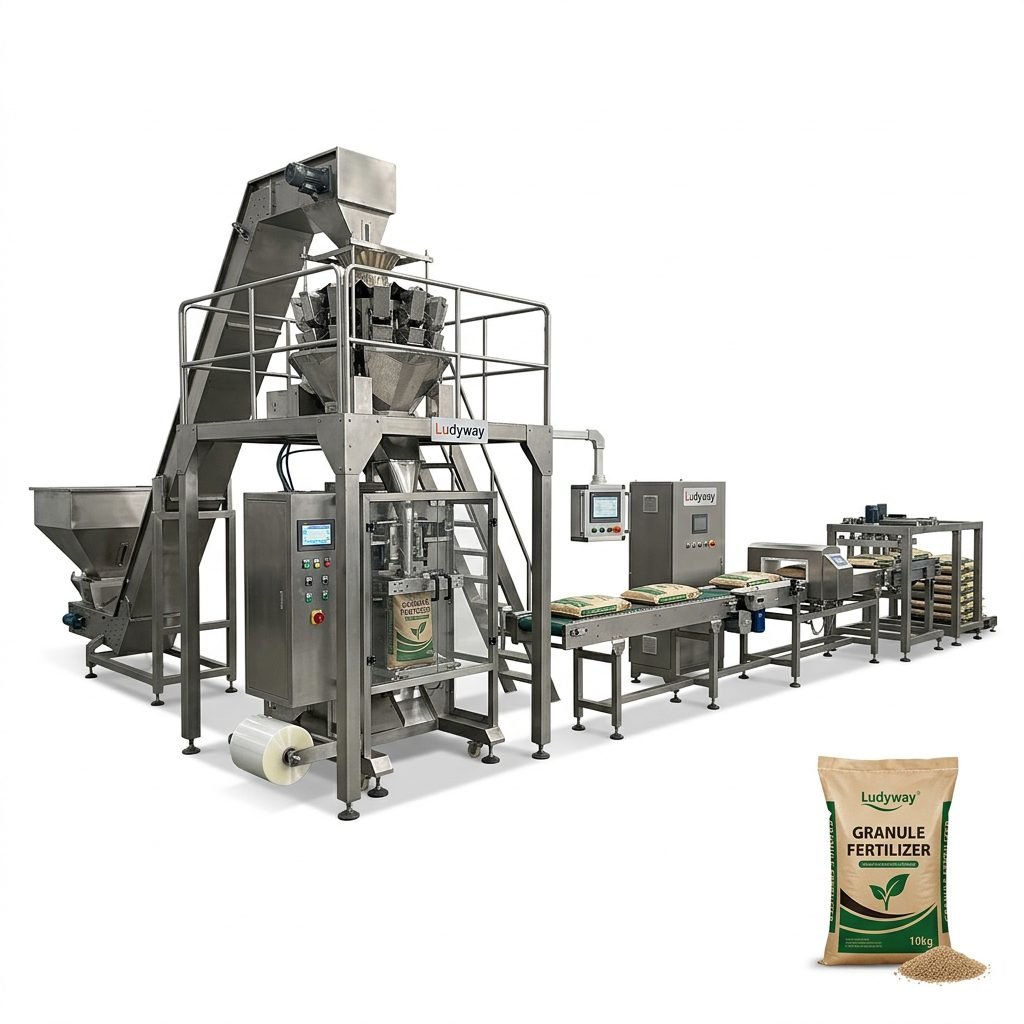
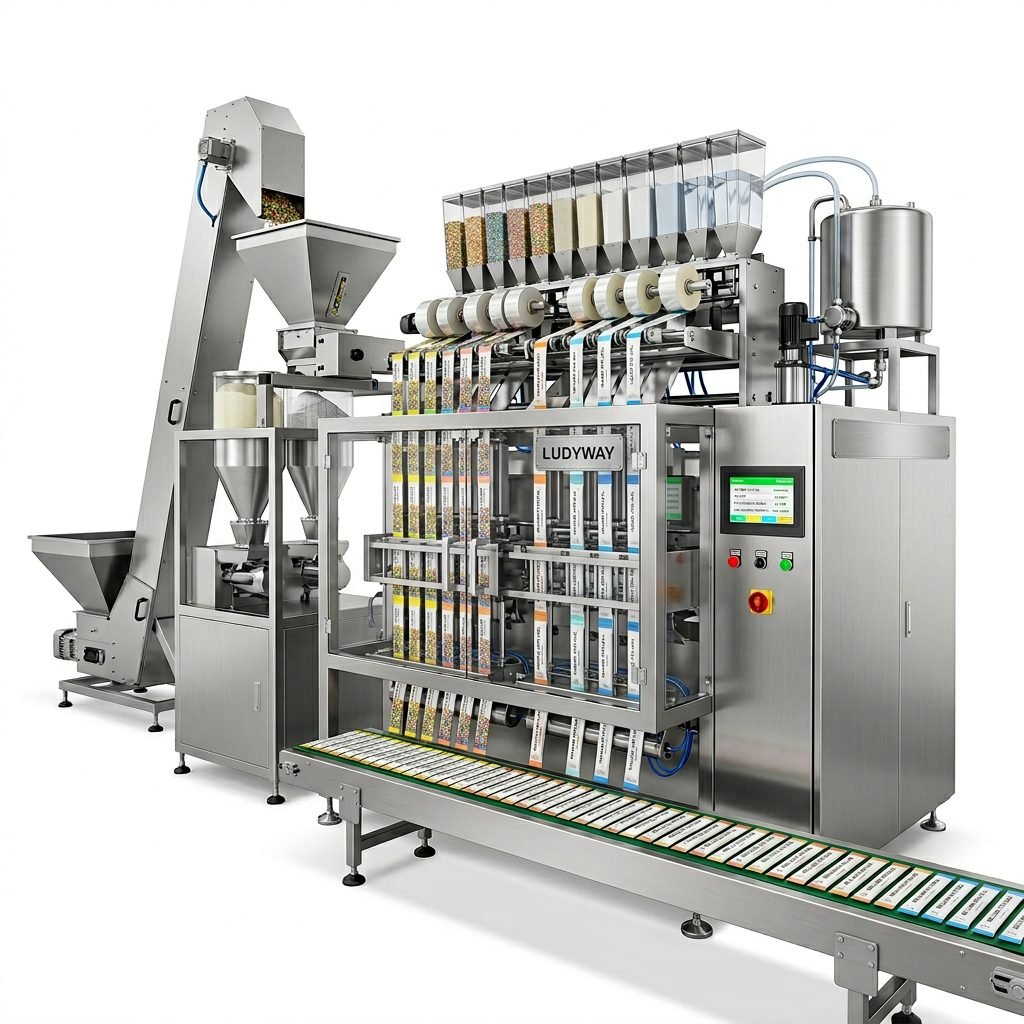
Investing in a vertical packaging machine is a critical decision that directly impacts your production efficiency, product quality, and long-term operational costs. With a wide variety of models, configurations, and technologies available, choosing the right equipment requires a systematic evaluation of your specific needs. This guide walks you through the essential factors to consider, helping you make an informed purchasing decision.
1. Understand Your Product Characteristics First
Before evaluating any vertical packaging machine, you must fully understand the physical properties of the product you intend to package. This is the single most important factor that determines machine compatibility.
Product Type and Flowability
- Free-flowing granules: Products like sugar, salt, coffee beans, and plastic pellets flow easily and are compatible with volumetric cup fillers or multi-head weighers.
- Non-free-flowing powders: Flour, milk powder, and spices often require auger fillers with mechanical agitation to ensure consistent dosing.
- Liquids and pastes: Water-thin liquids, viscous gels, and creams each demand different pumping systems — from piston fillers to gear pumps.
- Sticky or hygroscopic products: Materials that absorb moisture or stick to surfaces may require special contact surfaces, climate-controlled feeding, or modified sealing systems.
As noted in the PMMI 2026 State of the Industry report, manufacturers are increasingly seeking packaging machinery that can handle diverse product formulations without extensive changeover downtime. Matching your machine to your product’s physical behavior is the foundation of a successful packaging line.
2. Define Your Packaging Format and Bag Style
Vertical packaging machines can produce a variety of bag formats. Your choice of packaging style affects consumer appeal, shelf presence, and material costs. The most common formats include:
| Bag Format | Best Suited For | Key Advantage |
|---|---|---|
| Pillow Pouch | Snacks, grains, powdered beverages | Cost-effective, high-speed production |
| Gusseted Bag | Coffee, pet food, bulk products | Expanded volume, better shelf stability |
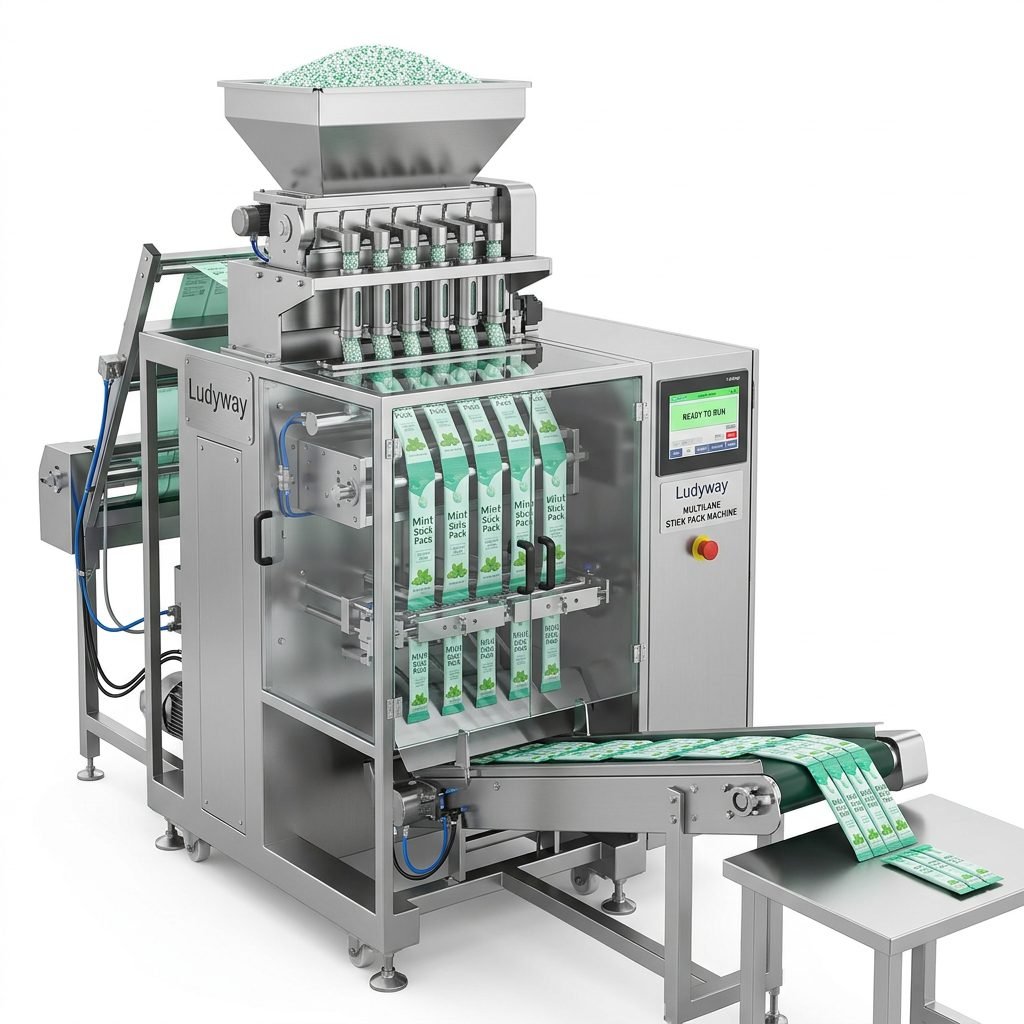
| Stick Pack | Single-serve sugar, instant coffee, supplements | Portion control, minimal material usage |
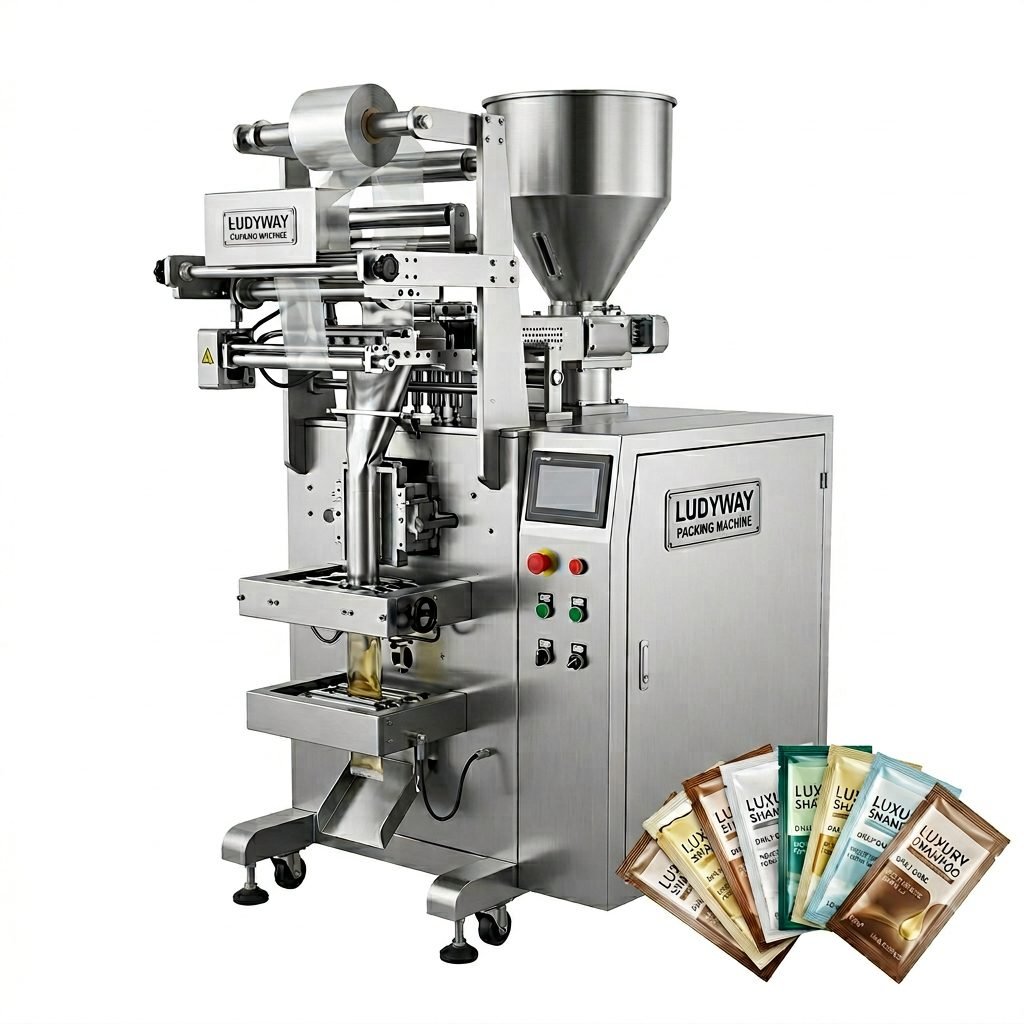
| Sachet / 3-Side Seal | Shampoo samples, sauces, pharmaceutical powders | Compact, ideal for sampling and single-use |
| Quad Seal / Flat Bottom | Premium coffee, high-end pet food | Superior shelf presence, excellent stability |
| Doypack / Stand-Up Pouch | Liquid detergents, beverages, snacks | Resealable options, strong brand differentiation |
The Flexible Packaging Association provides extensive industry data showing that stand-up pouches and stick packs continue to gain market share due to consumer preference for convenience and portion control. Your machine selection must align with both current packaging trends and your target market requirements.
3. Determine Production Speed and Capacity Requirements
Production speed is measured in pouches per minute (ppm) and varies significantly based on bag size, product type, and machine configuration. When evaluating speed, consider not just the theoretical maximum but the sustainable operating speed under real production conditions.
Speed Tiers for Vertical Packaging Machines
- Entry-level (30-60 ppm): Suitable for small to medium manufacturers, contract packagers, and businesses testing new product lines. These machines offer flexibility at a lower capital investment.
- Mid-range (60-120 ppm): Designed for established manufacturers with consistent production volumes. They balance speed, accuracy, and reliability for daily operation across one or two shifts.
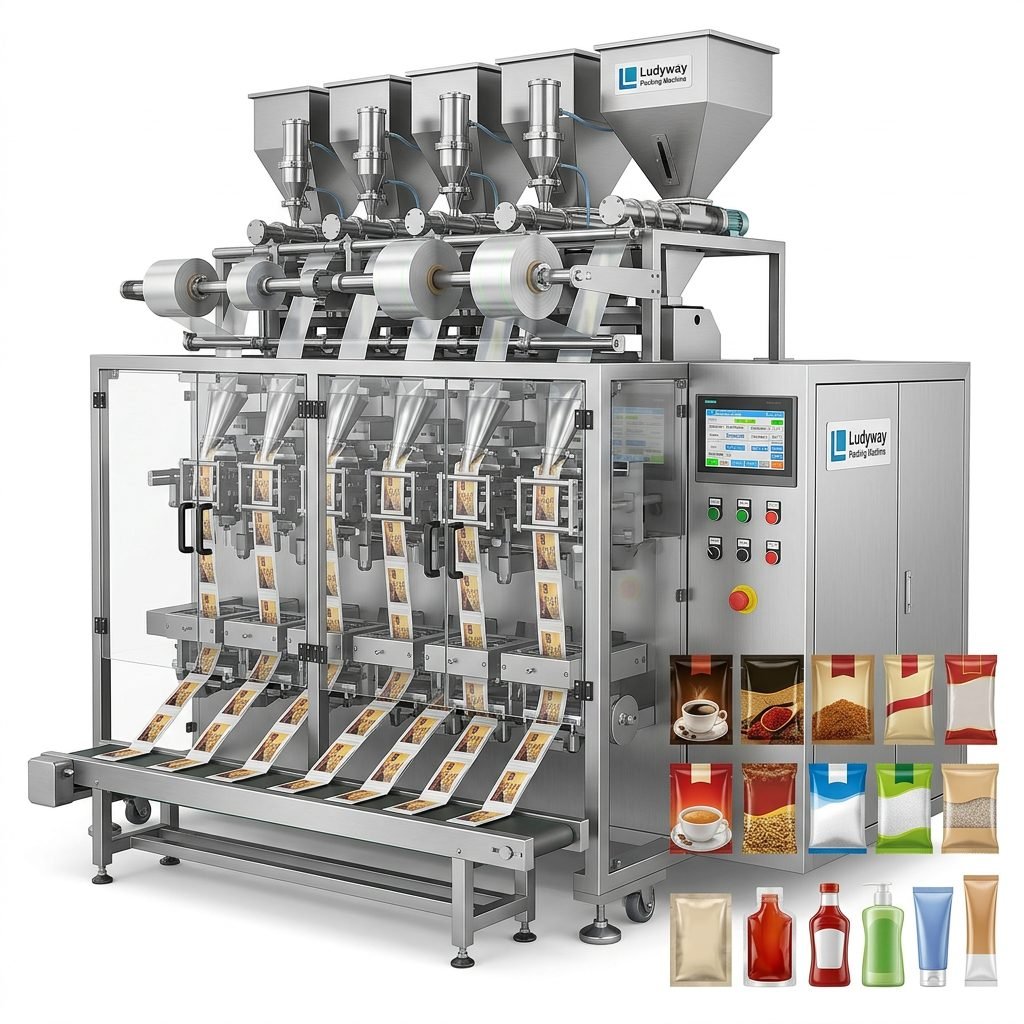
- High-speed (120-200+ ppm): Built for large-scale operations running multiple shifts. These systems often incorporate multi-lane technology, allowing parallel filling of several pouches simultaneously.
Multi-lane machines can multiply output by running 4, 6, 8, or even 12 lanes concurrently. According to PMMI packaging machinery market research, multi-lane configurations are among the fastest-growing segments in the packaging equipment market, driven by demand for single-serve and travel-size formats across food, pharmaceutical, and personal care industries.
4. Evaluate Filling and Dosing Technology
The filling system is the heart of any vertical packaging machine. Choosing the wrong dosing technology leads to giveaway, product waste, inconsistent fill weights, and regulatory compliance issues.
Common Filling Systems Comparison
| Filling System | Product Types | Accuracy Level | Speed Capability |
|---|---|---|---|
| Volumetric Cup Filler | Free-flowing granules, seeds, rice | Moderate (±1-3%) | High |
| Auger Filler | Powders, flour, spices, protein powder | High (±0.5-1%) | Moderate to High |
| Multi-Head Weigher | Granules, snacks, confectionery, nuts | Very High (±0.1-0.5%) | Very High |
| Piston Filler | Liquids, pastes, creams, gels | High (±0.5-1%) | Moderate |
| Gear Pump / Flow Meter | Low to medium viscosity liquids | High (±0.5-1%) | High |
| Net Weigh Filler | High-value products, bulk bags | Very High (±0.05-0.2%) | Moderate |
For products sold by weight, gravimetric systems such as multi-head weighers or net weigh fillers are strongly recommended. These systems automatically adjust to density variations, ensuring compliance with FDA food packaging regulations and minimizing costly product giveaway. The ISO packaging standards also provide guidance on fill quantity compliance that applies across international markets.
5. Consider Packaging Material Compatibility
Not every vertical packaging machine works with every film type. Your choice of packaging material — driven by barrier requirements, shelf life targets, and sustainability goals — directly affects which machines are suitable.
Key Material Factors
- Heat-sealable films: Most vertical form-fill-seal (VFFS) machines require heat-sealable laminates. Common structures include PET/PE, BOPP/CPP, and PET/AL/PE for high-barrier applications.
- Paper-based and compostable materials: Sustainable packaging materials often have different sealing temperature windows and tensile strength. Verify that the machine’s sealing jaws can achieve consistent seal integrity with your chosen eco-friendly films.
- Film thickness range: Machines have minimum and maximum film gauge capabilities. Running film outside the specified range causes tracking issues, poor seals, and increased waste.
- Cold-seal and pressure-sensitive materials: Some products require alternative sealing methods. Ensure the machine can be configured accordingly.
The Flexible Packaging Association Knowledge Hub offers valuable resources on material innovations, including recyclable mono-material structures that are increasingly specified by brand owners pursuing circular economy goals. Confirm that prospective machines can handle both your current and planned future packaging materials.
6. Assess Automation Level and Integration Needs
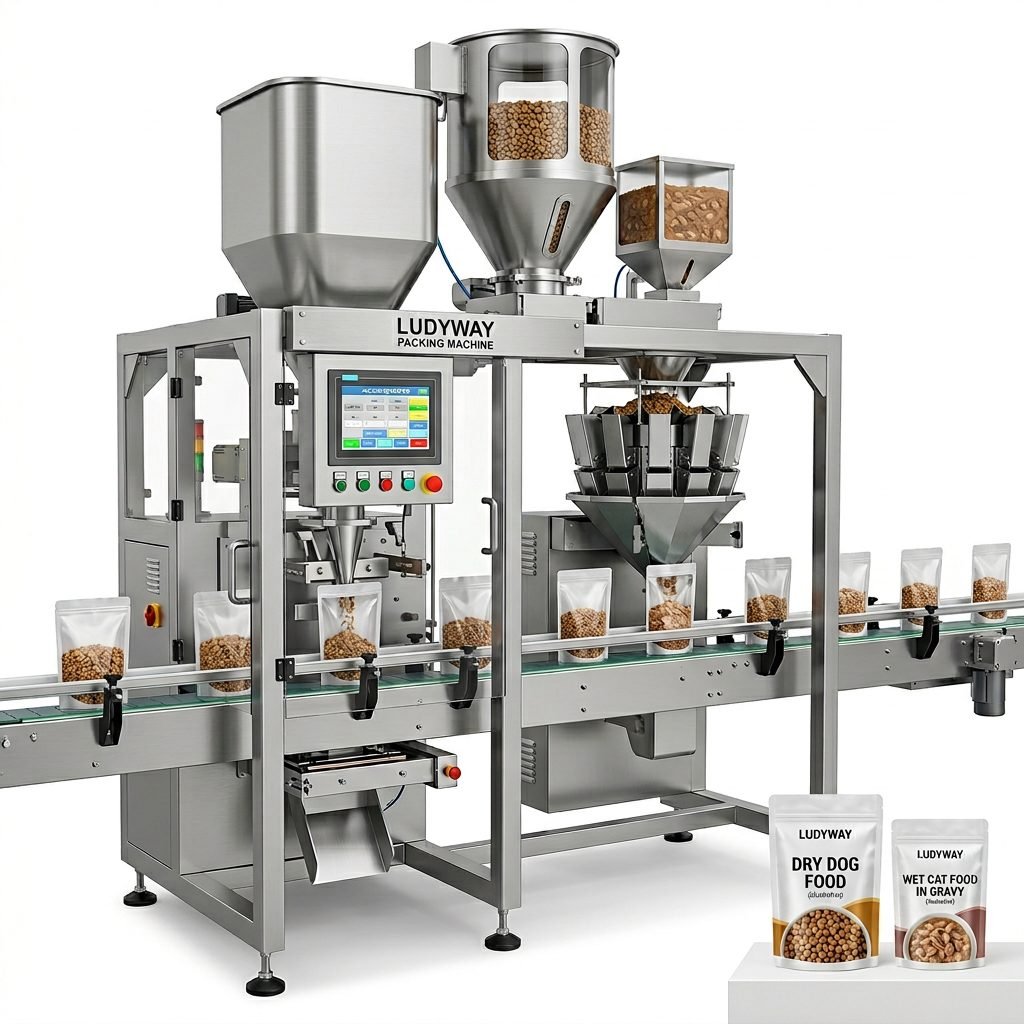
Modern packaging lines extend far beyond the primary filling and sealing functions. When selecting a vertical packaging machine, evaluate the full range of automation features and how the equipment will integrate into your existing or planned production environment.
Automation Features to Evaluate
- Automatic film splicing and registration: Reduces downtime during film roll changes and maintains print registration accuracy at high speeds.
- Gas flushing and vacuum options: Modified atmosphere packaging (MAP) extends shelf life for oxygen-sensitive products like coffee, nuts, and pharmaceuticals.
- Inline printing and coding: Date coding, batch numbering, and barcode printing integrated directly into the packaging process.
- Checkweighing and rejection systems: Automatic weight verification with out-of-tolerance product rejection ensures quality consistency.
- Metal detection and X-ray inspection: Critical for food and pharmaceutical applications to meet safety compliance requirements.
- Cartoning and case packing integration: Direct connection to downstream secondary packaging equipment for fully automated end-of-line solutions.
- Remote monitoring and data collection: Industry 4.0 capabilities for OEE tracking, predictive maintenance, and production analytics.
7. Budget Considerations Beyond the Purchase Price
The initial machine cost represents only part of the total cost of ownership. A comprehensive budget analysis should account for the full lifecycle of the equipment.
Total Cost of Ownership Factors
| Cost Category | Typical Share of TCO | Key Considerations |
|---|---|---|
| Equipment purchase | 40-55% | Base machine, options, tooling, spare parts kit |
| Installation and commissioning | 5-10% | Shipping, rigging, utility connections, calibration |
| Training and documentation | 2-5% | Operator training, maintenance manuals, SOPs |
| Consumables and spare parts | 15-25% (annual) | Film, seals, knives, belts, filters, lubricants |
| Maintenance and service | 10-15% (annual) | Preventive maintenance, emergency repairs, service contracts |
| Downtime and production loss | Variable | Opportunity cost of lost production during breakdowns |
A machine with a lower purchase price but higher maintenance requirements and more frequent downtime can ultimately cost significantly more over a 5-10 year operating period. Evaluate supplier reputation for reliability, parts availability, and technical support as part of your financial analysis.
8. Supplier Selection and Technical Support
The relationship with your packaging machinery supplier extends well beyond the initial sale. Before committing to a purchase, thoroughly evaluate the manufacturer’s capabilities and support infrastructure.
Supplier Evaluation Checklist
- Industry experience: How many years has the manufacturer been producing vertical packaging machines? Do they have specific expertise in your product category?
- Manufacturing facility: A well-equipped production facility with in-house engineering, machining, and assembly capabilities often indicates stronger quality control.
- After-sales support: What are the warranty terms? Is remote technical assistance available? What is the typical response time for on-site service?
- Spare parts availability: Can critical spare parts be shipped quickly to your location? Does the supplier maintain an organized parts inventory?
- Customer references and case studies: Request references from manufacturers with similar products and production scales.
- Certifications and compliance: Verify that equipment can meet applicable standards for your target markets, including CE, UL, or FDA requirements.
- Customization capability: Can the supplier adapt machine configurations to your specific product, bag format, and factory layout requirements?
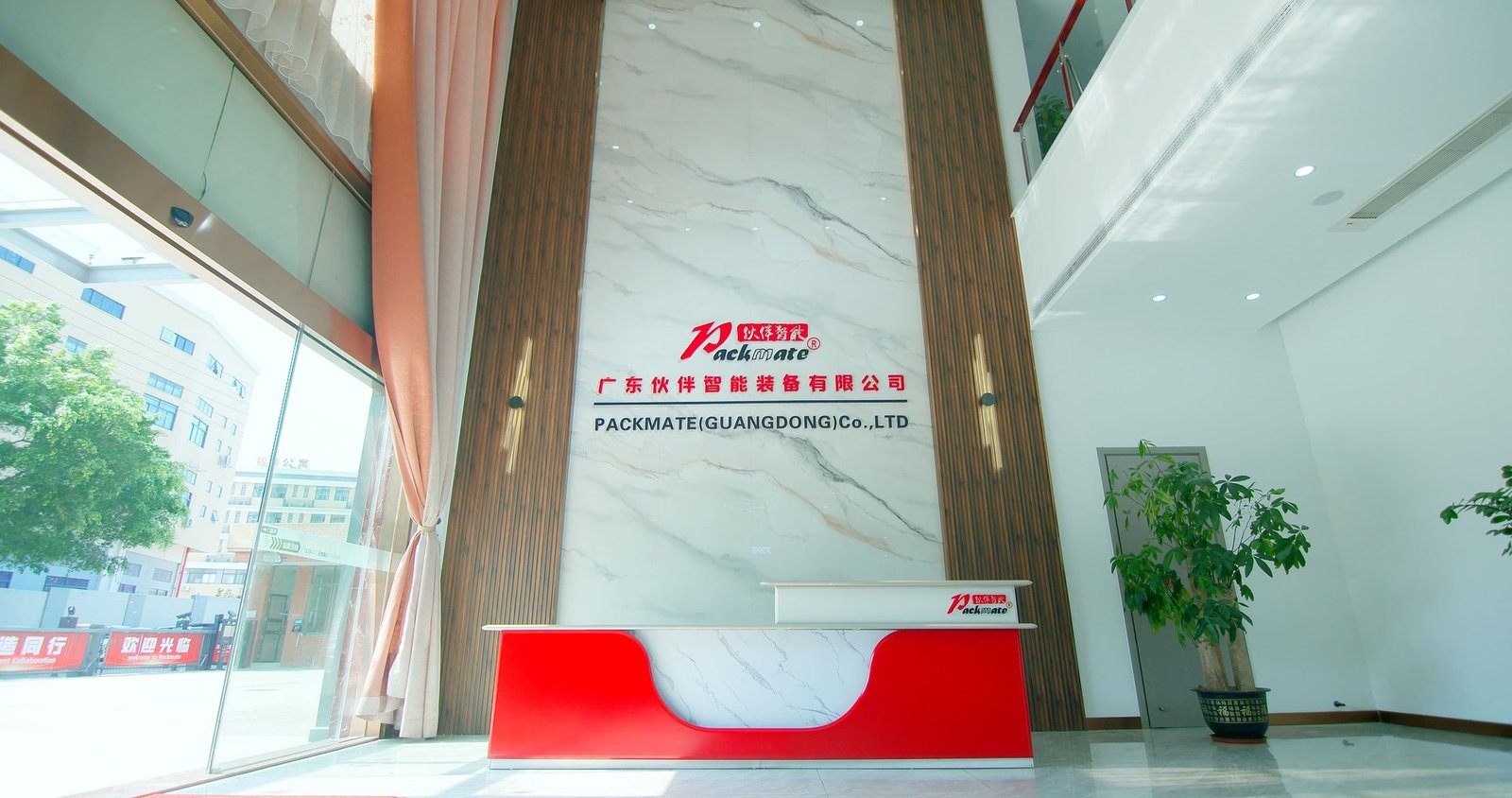
Experienced manufacturers with significant global installations — such as Ludyway Machinery, a China-based packaging machinery manufacturer with over 30 years of industry experience and a 20,000-square-meter manufacturing facility serving customers in more than 100 countries — offer the advantage of proven engineering capabilities and established global service networks. When evaluating suppliers, prioritize those who can provide both standardized equipment and customized engineering solutions tailored to your specific production requirements.
9. Test Before You Invest: The Importance of Factory Acceptance Testing
No amount of specification review replaces hands-on testing with your actual product and packaging materials. A reputable supplier should offer factory acceptance testing (FAT) where you can observe the machine running under production conditions.
What to Verify During Testing
- Fill accuracy and consistency: Run statistical sampling to verify that fill weights meet your specifications across extended production runs.
- Seal integrity: Perform seal strength tests and leak detection on pouches produced during the trial.
- Speed validation: Confirm that the machine can sustain your target production rate without excessive rejects or stoppages.
- Changeover time: If you plan to run multiple products or bag sizes, time the changeover process to ensure it meets your operational needs.
- Material waste rate: Monitor film waste during start-up, splices, and normal operation to understand ongoing material costs.
- Noise levels and ergonomics: Assess operator comfort and safety during normal machine operation.
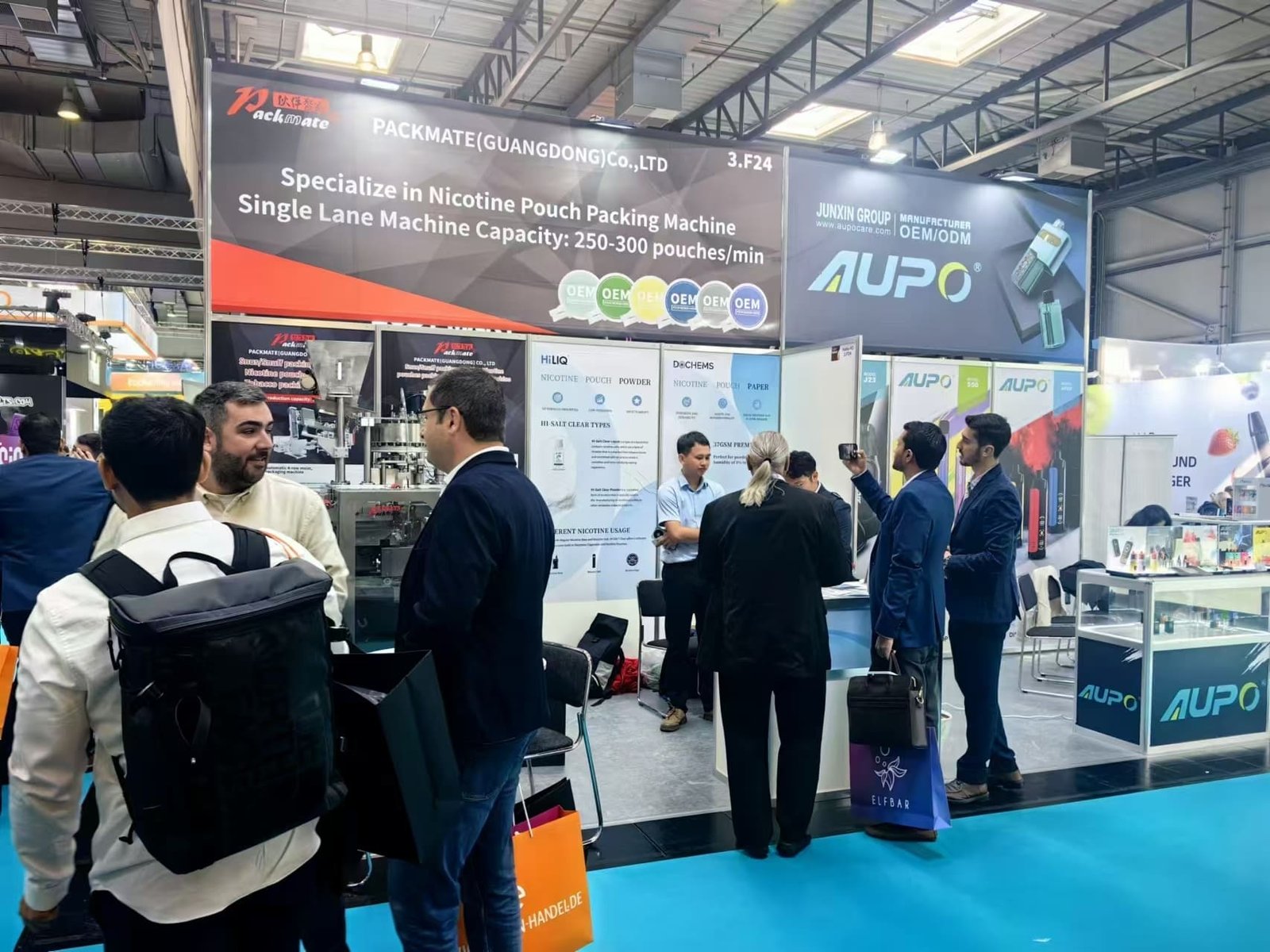
Attending industry events such as PACK EXPO International also provides an opportunity to see multiple manufacturers’ equipment in operation, compare features side by side, and speak directly with technical specialists before making your final decision.
10. Future-Proofing Your Investment
A vertical packaging machine is a long-term capital investment. Selecting equipment that can adapt to evolving business needs protects your investment and reduces the likelihood of premature replacement.
Scalability and Flexibility Considerations
- Modular design: Machines with modular frames and control systems allow for future upgrades such as adding lanes, integrating new filling technologies, or connecting to secondary packaging equipment.
- Multi-format capability: Equipment that can produce multiple bag styles with quick changeover tooling provides flexibility as your product portfolio expands.
- Software upgradability: Modern machines with programmable logic controllers (PLCs) and industrial PCs should support firmware updates and feature enhancements over time.
- Compliance readiness: Ensure the equipment platform can be adapted to meet evolving regulatory requirements, including serialization, track-and-trace, and sustainability reporting mandates such as those outlined by the European Commission packaging and packaging waste regulations.
Making Your Final Decision
Selecting the right vertical packaging machine requires balancing technical requirements, budget constraints, and long-term operational goals. By systematically evaluating your product characteristics, packaging format, speed requirements, filling technology, material compatibility, automation needs, and supplier capabilities, you can identify equipment that delivers reliable performance and strong return on investment over its operational life. Engaging with experienced manufacturers who offer comprehensive support — from initial consultation through installation, training, and after-sales service — ensures that your packaging operation remains efficient, scalable, and competitive in an evolving market.