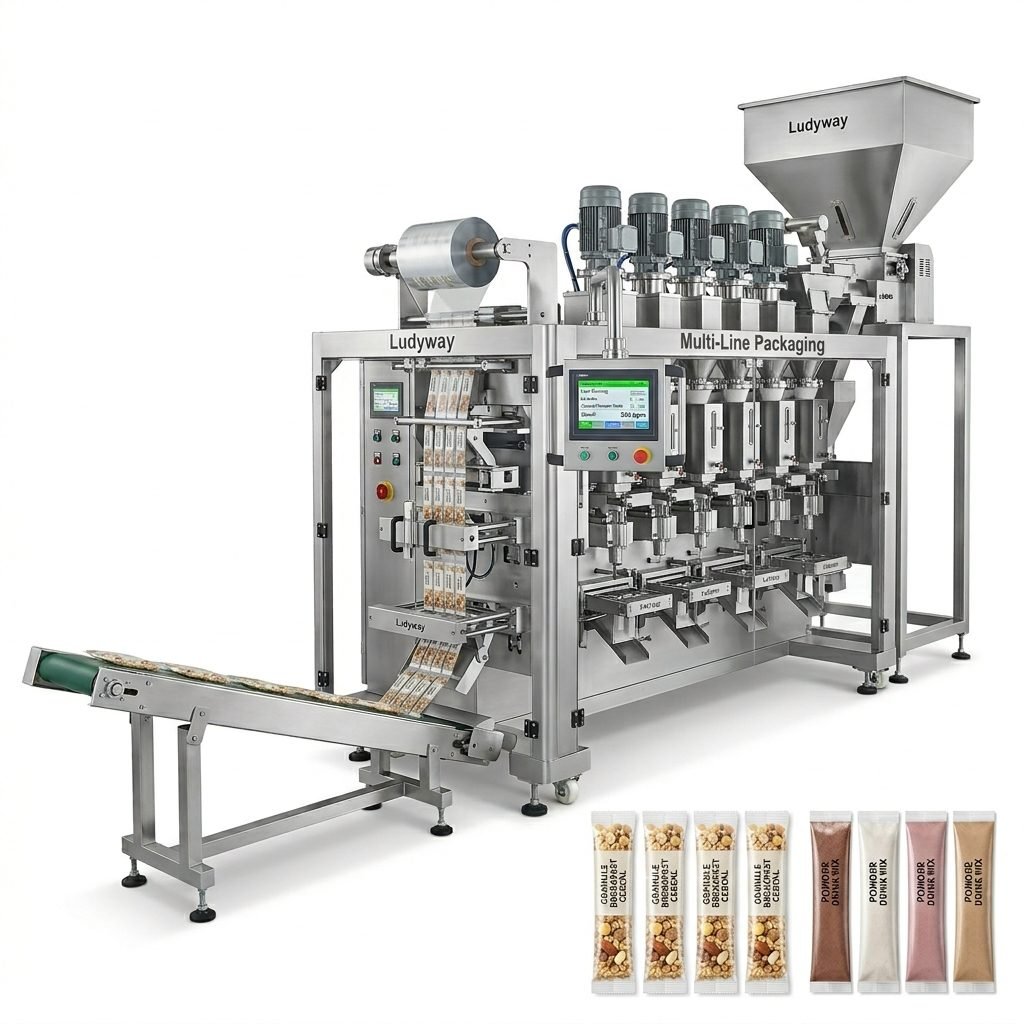
The Indian baby food market is projected to reach US$ 10.5 billion by 2030, growing at a CAGR of over 11%. Setting up a baby food packaging machine production line in India requires careful planning across regulatory compliance, equipment selection, and operational efficiency. This guide walks you through every critical step to establish a successful and compliant packaging line.
Understanding India’s Baby Food Packaging Landscape
India’s baby food sector is experiencing rapid growth driven by rising disposable incomes, increasing urbanization, and greater awareness of infant nutrition. The demand spans across infant formula, cereal-based complementary foods, fruit purees, and ready-to-eat baby meals. Packaging plays a crucial role in preserving nutritional integrity, ensuring product safety, and meeting FSSAI (Food Safety and Standards Authority of India) standards. Multi-lane sachet and stick pack formats dominate the market due to their portability, portion control, and extended shelf life.
Key Regulatory Requirements for Baby Food Packaging in India
Compliance with Indian food safety regulations is non-negotiable. The FSSAI mandates strict guidelines for baby food manufacturing and packaging. Below are the primary regulatory considerations:
- FSSAI Licensing: Obtain a central license for baby food manufacturing under the Food Safety and Standards Regulations.
- Packaging Material Compliance: Use food-grade materials certified under FDA food contact substance standards and BIS (Bureau of Indian Standards) specifications.
- Labeling Requirements: Include nutritional information, ingredient lists, allergen warnings, and manufacturing dates per FSSAI labeling regulations.
- Contamination Control: Implement nitrogen flushing and vacuum sealing technologies to prevent oxidation and microbial growth.
- Quality Testing: Establish in-line checkweighing and ISO packaging standards compliance for consistent product quality.
Essential Equipment for Baby Food Packaging Production Lines
A well-designed production line integrates multiple equipment types to achieve seamless operation. The table below outlines core machinery categories suitable for different baby food formats:
| Equipment Type | Best For | Key Feature | Typical Speed |
|---|---|---|---|
| Multi-Lane Sachet Machine | Infant formula powder, cereal powder | Precision dosing, nitrogen flushing | 200-600 packs/min |
| Stick Pack Packaging System | Single-serve baby food powder | Compact format, easy portion control | 150-500 packs/min |
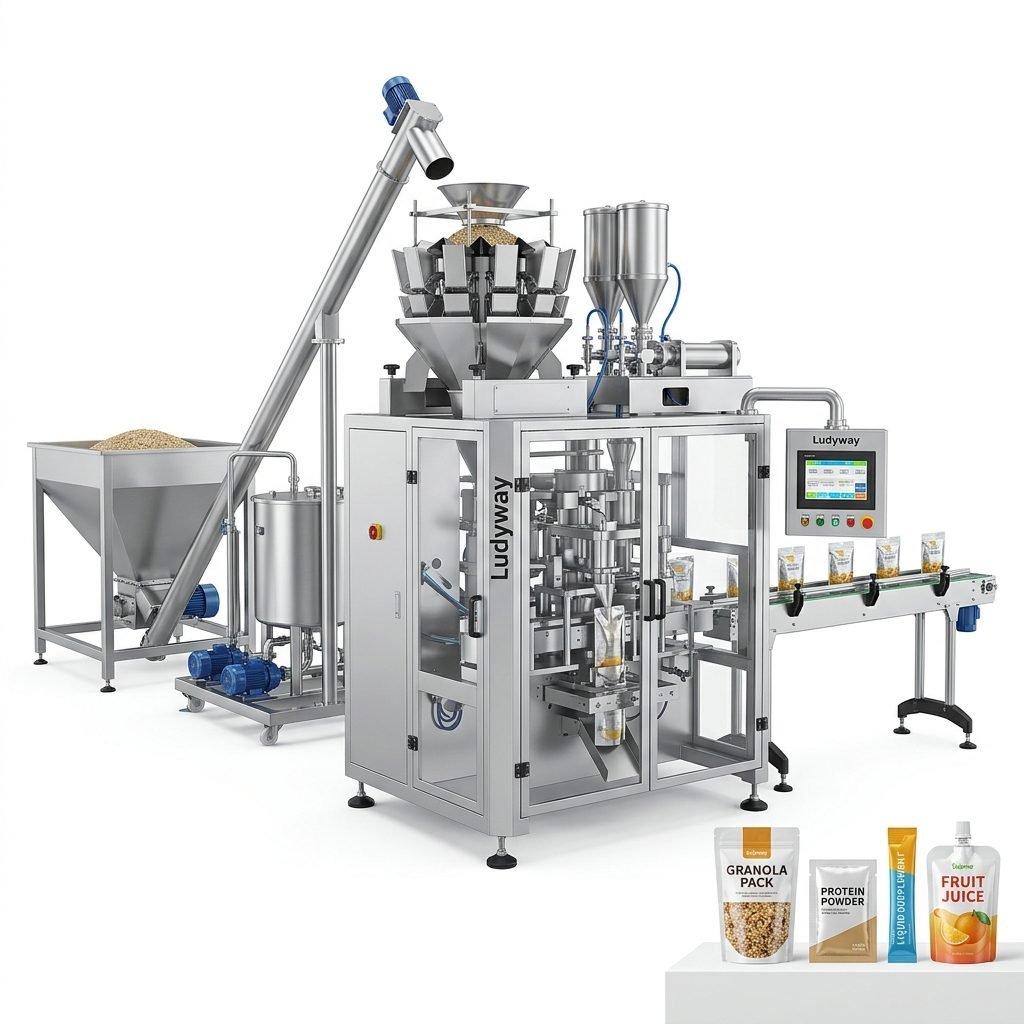
| Liquid Pouch Filling Machine | Fruit purees, liquid supplements | Aseptic filling capability | 100-300 packs/min |
| Vacuum Packaging System | Freeze-dried baby snacks | Extended shelf life, freshness retention | 50-150 packs/min |
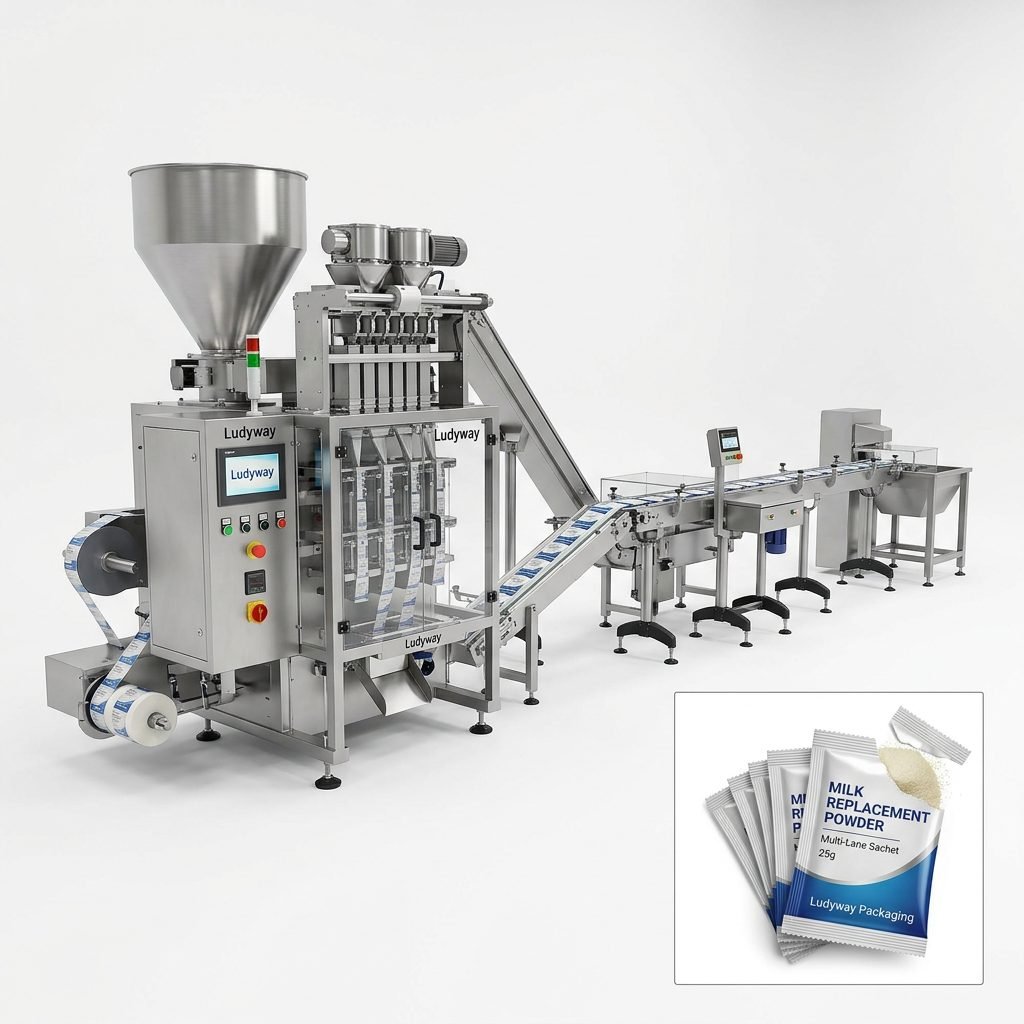
| Checkweigher & Metal Detector | All product types | Quality assurance, contaminant detection | Integrated inline |
| Cartoning Machine | Secondary packaging | Automated carton erecting and sealing | 50-200 cartons/min |
Multi-Lane Sachet Packaging: The Preferred Format
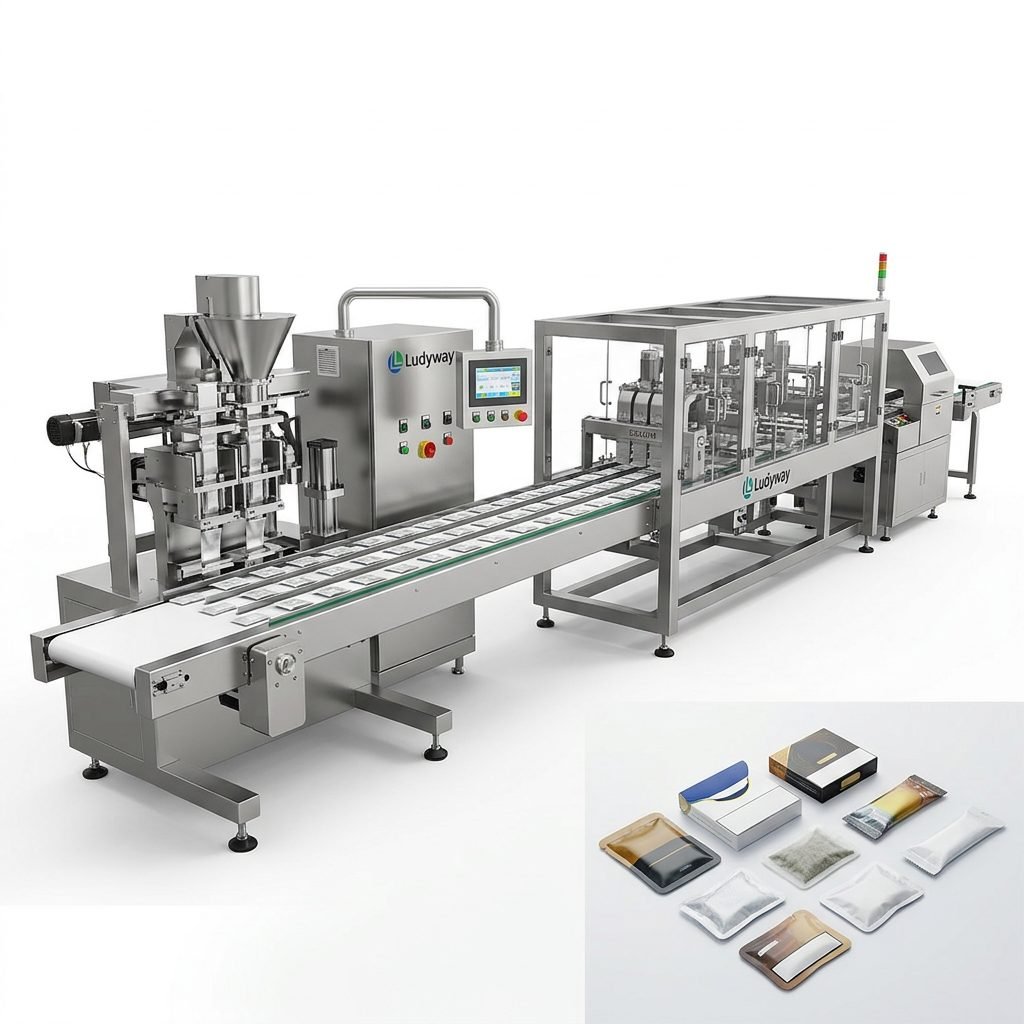
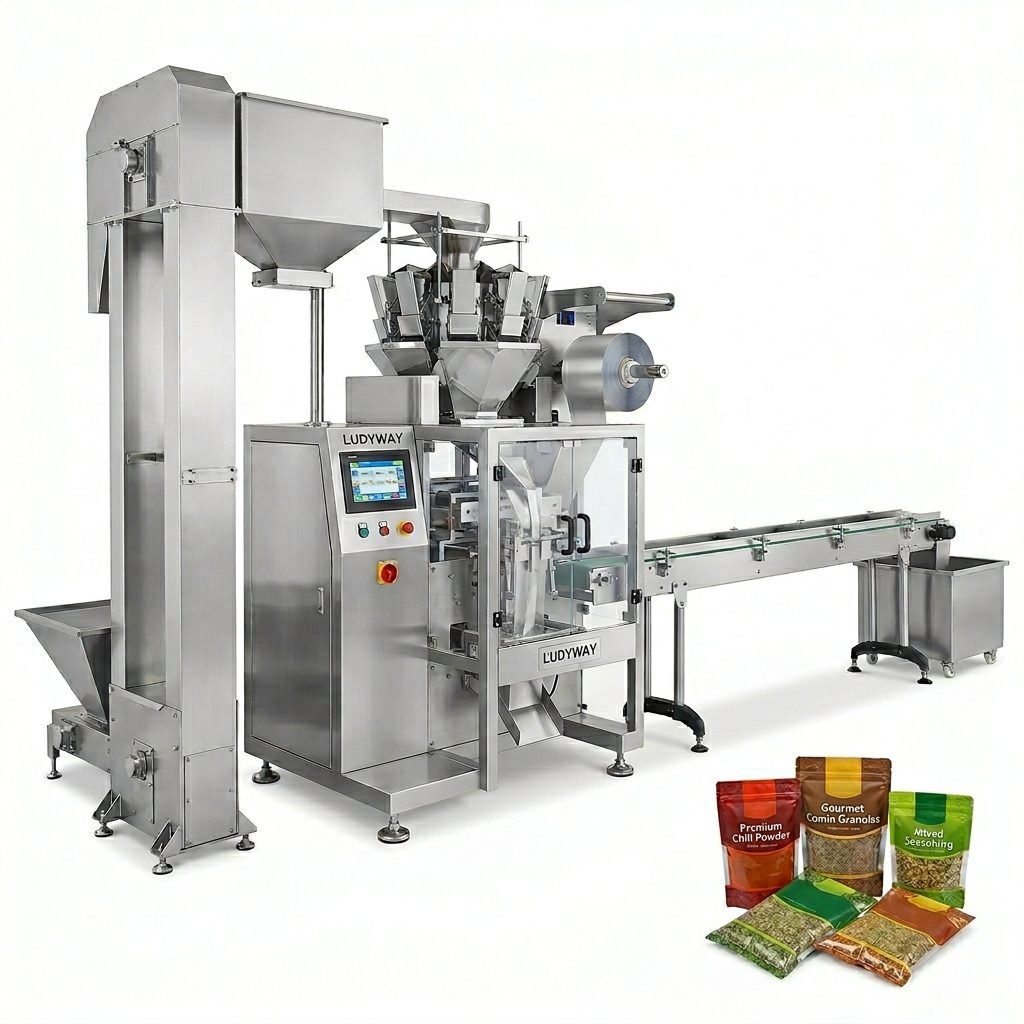
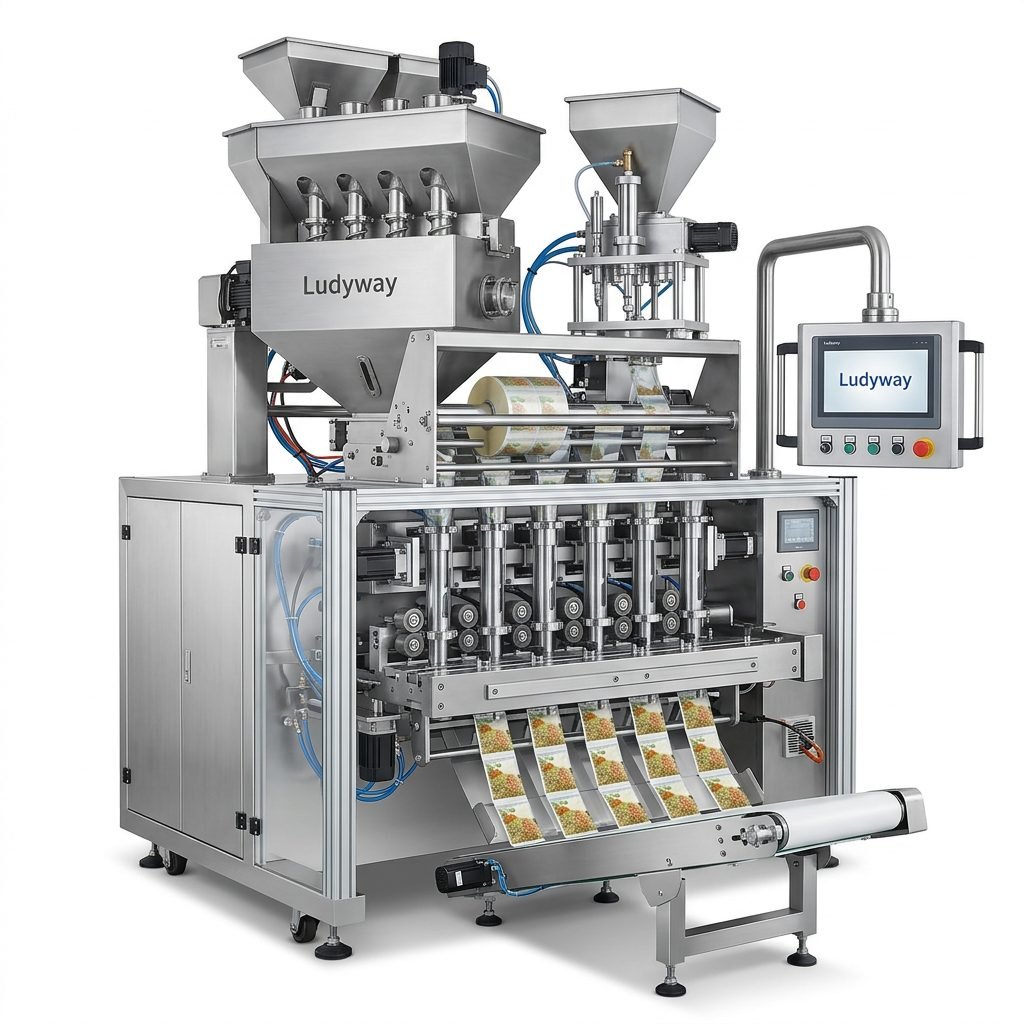
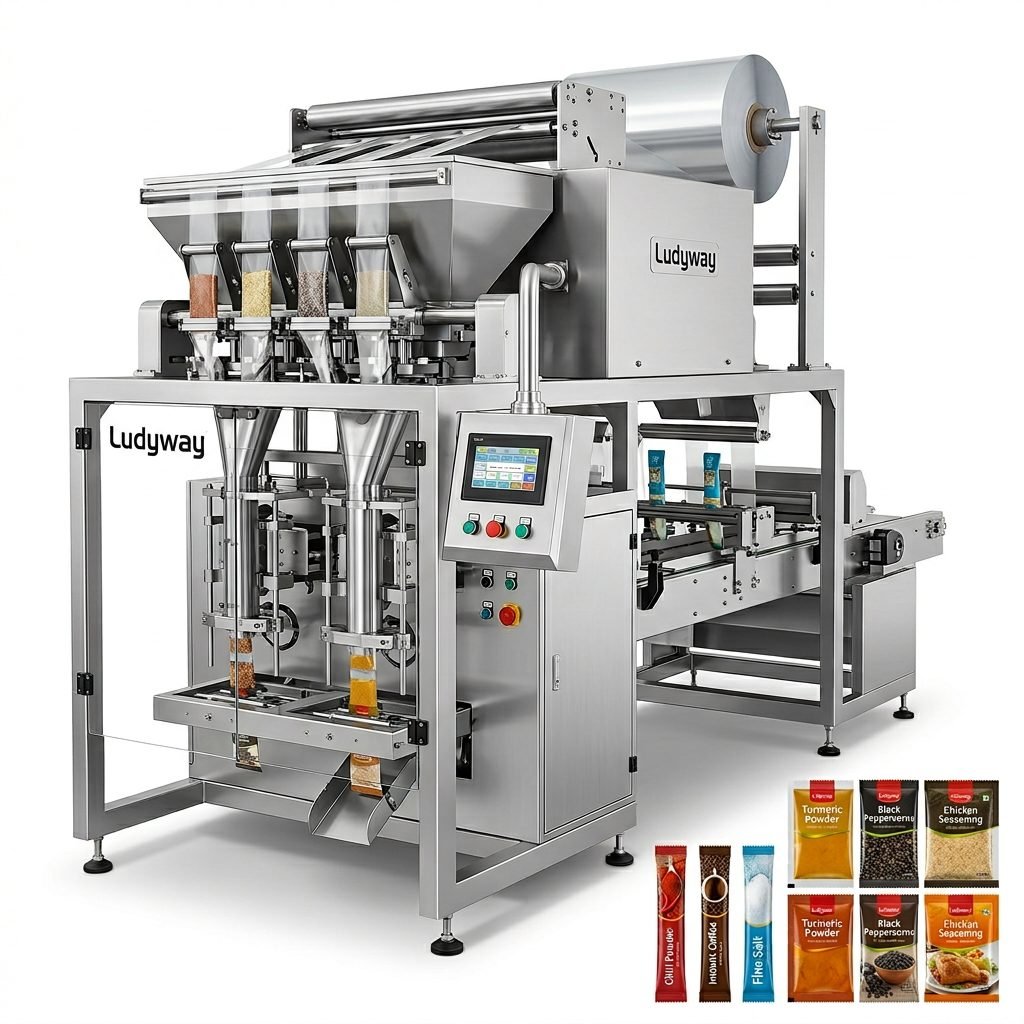
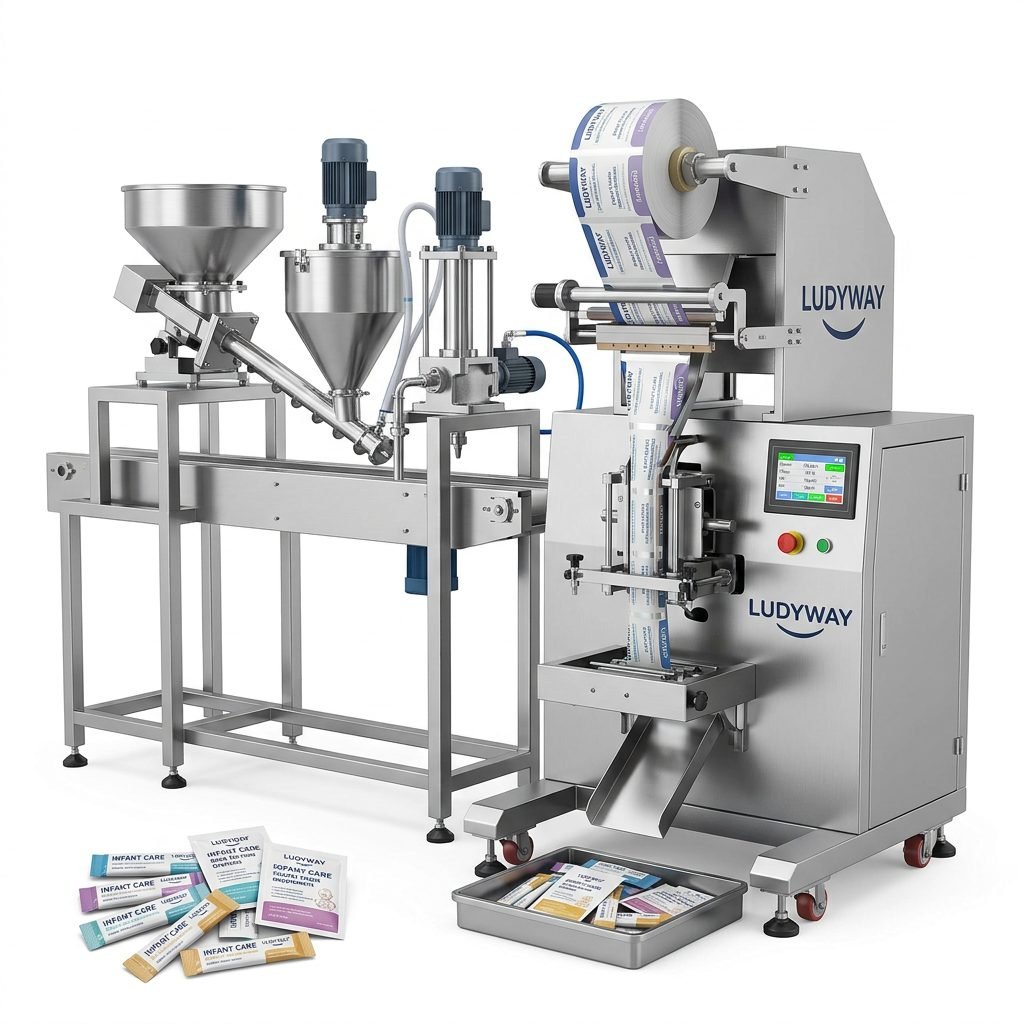
Multi-lane sachet machines are the industry standard for baby food packaging in India. These systems handle fine powders and granules with high precision, offering auger filling or volumetric dosing systems that maintain consistent portion weights. The ability to run 4 to 12 lanes simultaneously dramatically increases throughput while maintaining product integrity. Advanced models incorporate nitrogen flushing to remove oxygen and extend shelf life without preservatives.
Stick Pack Systems for Portion-Controlled Baby Nutrition
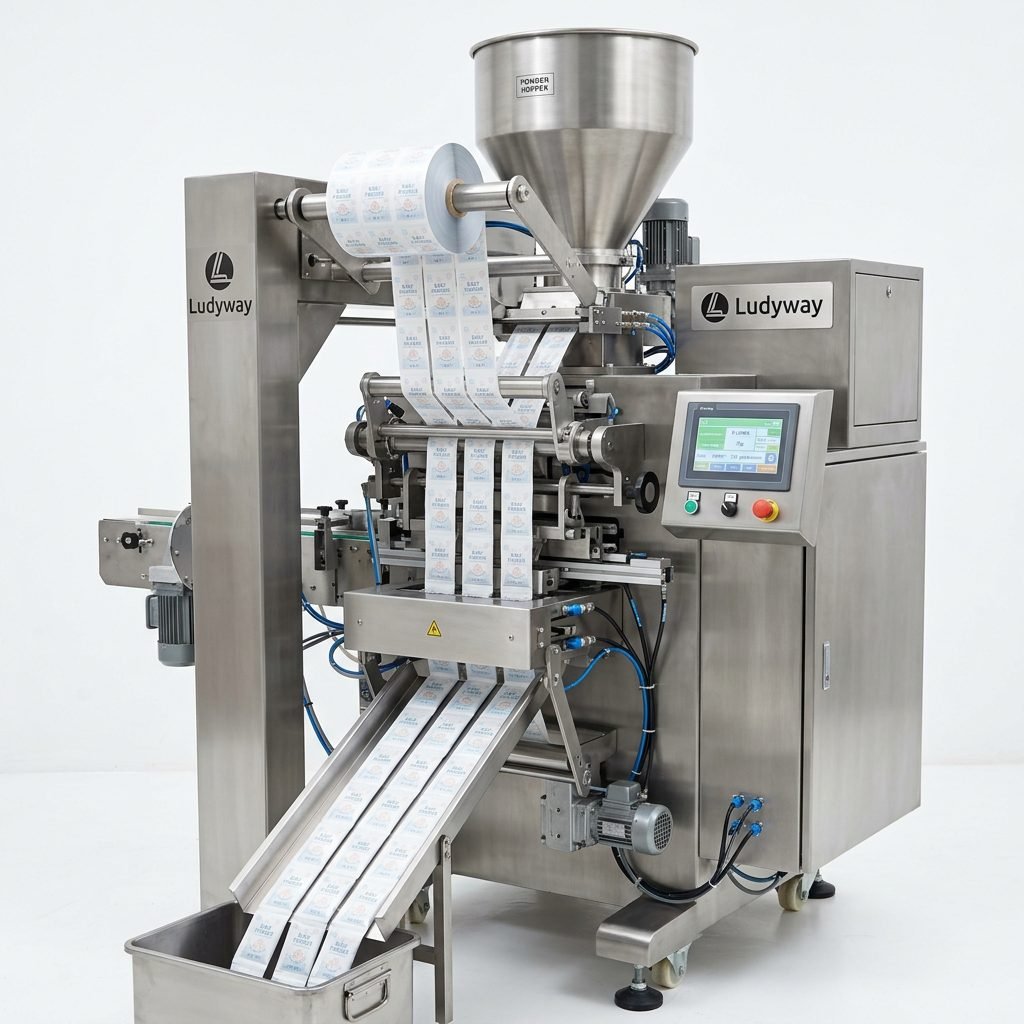
Stick pack machines offer an ideal solution for single-serve baby food products. The narrow, elongated format is easy to tear open, highly portable, and minimizes product waste. Modern multi-lane stick pack systems can handle powder, granule, and even liquid formulations, making them versatile for manufacturers producing multiple baby food SKUs on the same line.
Step-by-Step Guide to Setting Up Your Production Line
Follow this structured approach to establish your baby food packaging line in India efficiently and compliantly:
- Conduct Market Research: Identify your target product category — infant formula, cereals, purees, or freeze-dried snacks. Understand demand patterns across Indian metro cities and tier-2 markets.
- Select a Suitable Location: Choose a manufacturing site with reliable electricity, clean water supply, and proximity to raw material sources. Industrial zones in Maharashtra, Gujarat, and Tamil Nadu are popular for food processing.
- Obtain Regulatory Approvals: Secure FSSAI central license, factory license, pollution control certification, and GST registration before commencing operations.
- Design the Production Layout: Plan a linear or U-shaped layout that separates raw material intake, processing, packaging, and finished goods storage to prevent cross-contamination.
- Source Packaging Equipment: Select machines that match your production volume and product characteristics. Consider multi-lane sachet and stick pack machines for powder-based baby foods.
- Install and Commission: Work with experienced engineers for equipment installation, calibration, and trial runs. Validate dosing accuracy and seal integrity before commercial production.
- Train Your Workforce: Conduct comprehensive training on machine operation, hygiene protocols, and quality control procedures.
- Implement Quality Management: Establish HACCP (Hazard Analysis and Critical Control Points) and ISO 22000 food safety management systems.
- Launch and Scale: Begin with a focused product range, gather market feedback, and expand capacity as demand grows.
Cost Considerations and ROI Analysis
Setting up a baby food packaging line in India involves several cost components. Understanding these helps in accurate budgeting and faster ROI realization:
- Equipment Investment: A multi-lane sachet packaging line with ancillary equipment typically ranges from US$ 50,000 to US$ 500,000 depending on automation level and capacity.
- Facility Setup: Cleanroom construction, utilities, and HVAC systems for food-grade environments may cost US$ 100,000 to US$ 300,000.
- Regulatory Compliance: Budget for FSSAI licensing, lab testing, and certification fees — approximately US$ 5,000 to US$ 15,000 annually.
- Raw Materials: Food-grade packaging films, cartons, and consumables represent ongoing operational costs.
- Labor: Skilled operators and quality control personnel typically cost US$ 3,000 to US$ 8,000 per person annually in India.
- ROI Timeline: Most manufacturers achieve breakeven within 18 to 36 months due to strong domestic demand and export potential.
Choosing the Right Packaging Machine Supplier
Selecting a reliable equipment partner is critical for long-term success. Evaluate suppliers based on their experience in food packaging, after-sales support in India, spare parts availability, and compliance with international standards. Look for manufacturers who offer turnkey solutions including installation, training, and ongoing technical support.
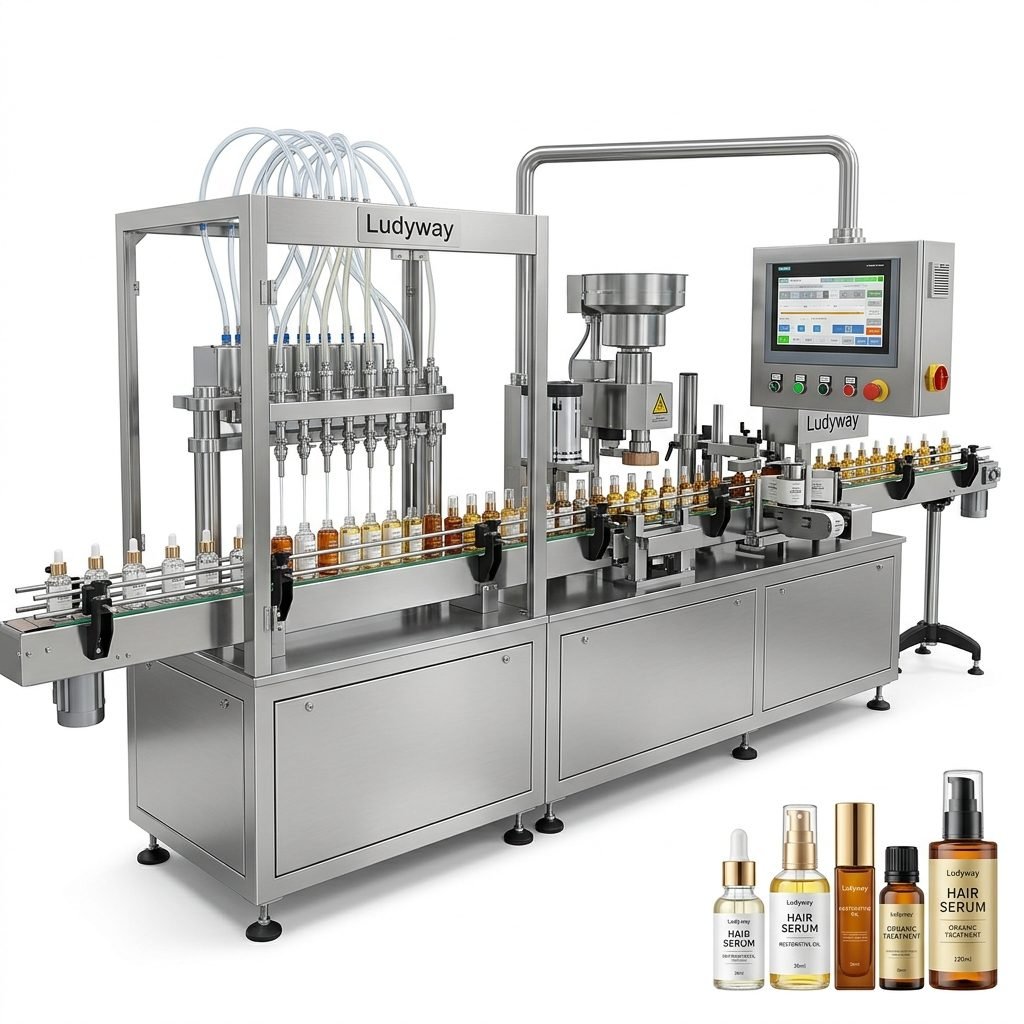
Leading global suppliers such as Ludyway provide comprehensive packaging solutions with multi-lane sachet and stick pack machines suitable for baby food applications, backed by decades of industry expertise and a strong international presence. Additionally, industry resources from PMMI and the Flexible Packaging Association offer valuable guidance on packaging trends and technology standards.
Why Automation Matters for Baby Food Packaging
Automation reduces human contact with the product, which is essential for baby food hygiene. Automated systems also provide consistent fill weights, reliable seal integrity, and traceability data that support regulatory compliance. Modern packaging lines integrate checkweighers, metal detectors, and vision inspection systems to ensure every pack meets quality standards before distribution.
Future-Proofing Your Investment
When setting up your production line, consider modular equipment that allows for future expansion. Multi-lane machines with interchangeable forming tubes and dosing systems enable you to switch between different pouch formats and product types without replacing entire lines. This flexibility supports product diversification as your brand grows in the competitive Indian market.
Maintenance and Operational Best Practices
Regular maintenance ensures consistent performance and extends equipment lifespan. Implement a preventive maintenance schedule covering:
- Daily cleaning of product contact surfaces and sealing jaws
- Weekly calibration of dosing and weighing systems
- Monthly inspection of pneumatic components and sensors
- Quarterly replacement of wear parts — belts, seals, and filters
- Annual comprehensive service by qualified technicians
For further guidance on packaging machinery standards and industry best practices, refer to the PMMI Business Intelligence Library and FDA Food Packaging Resources. These resources provide up-to-date information on regulatory changes, technology advancements, and market intelligence relevant to food packaging operations worldwide.