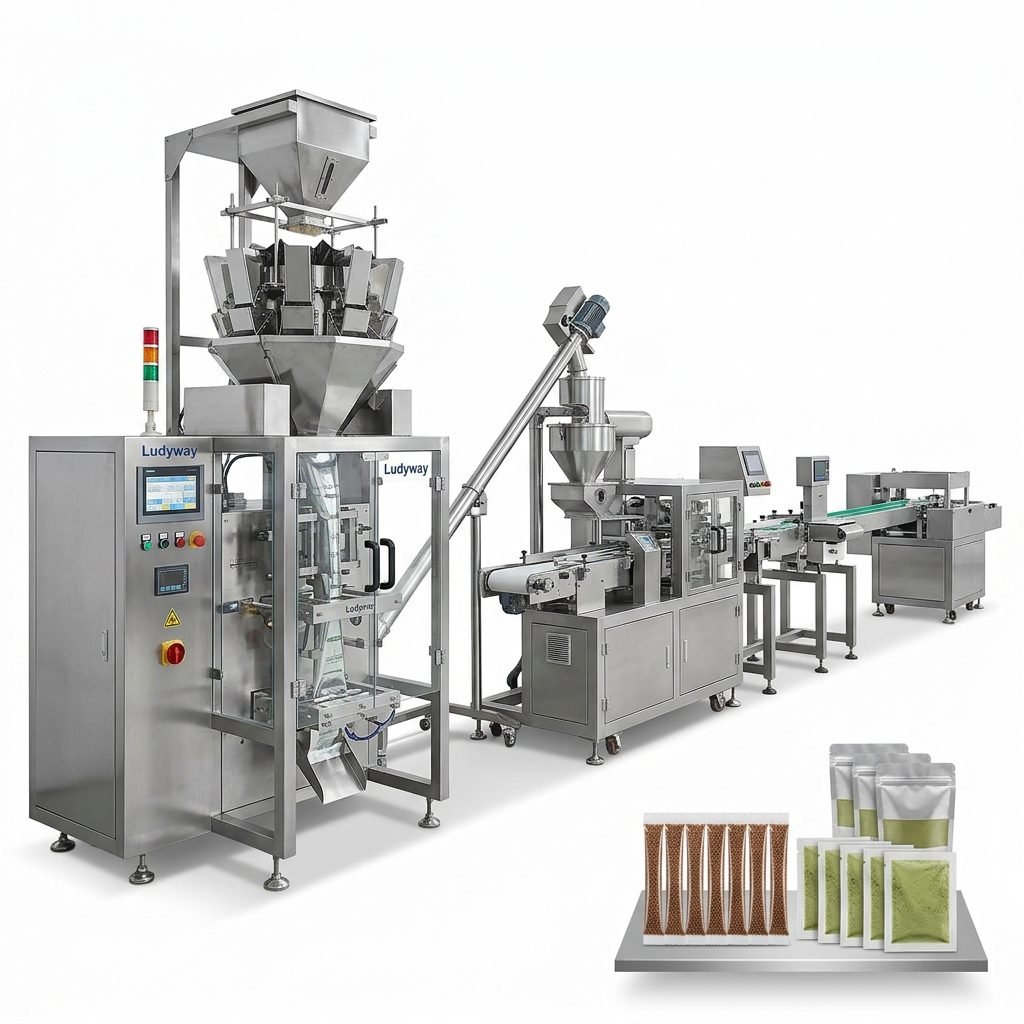
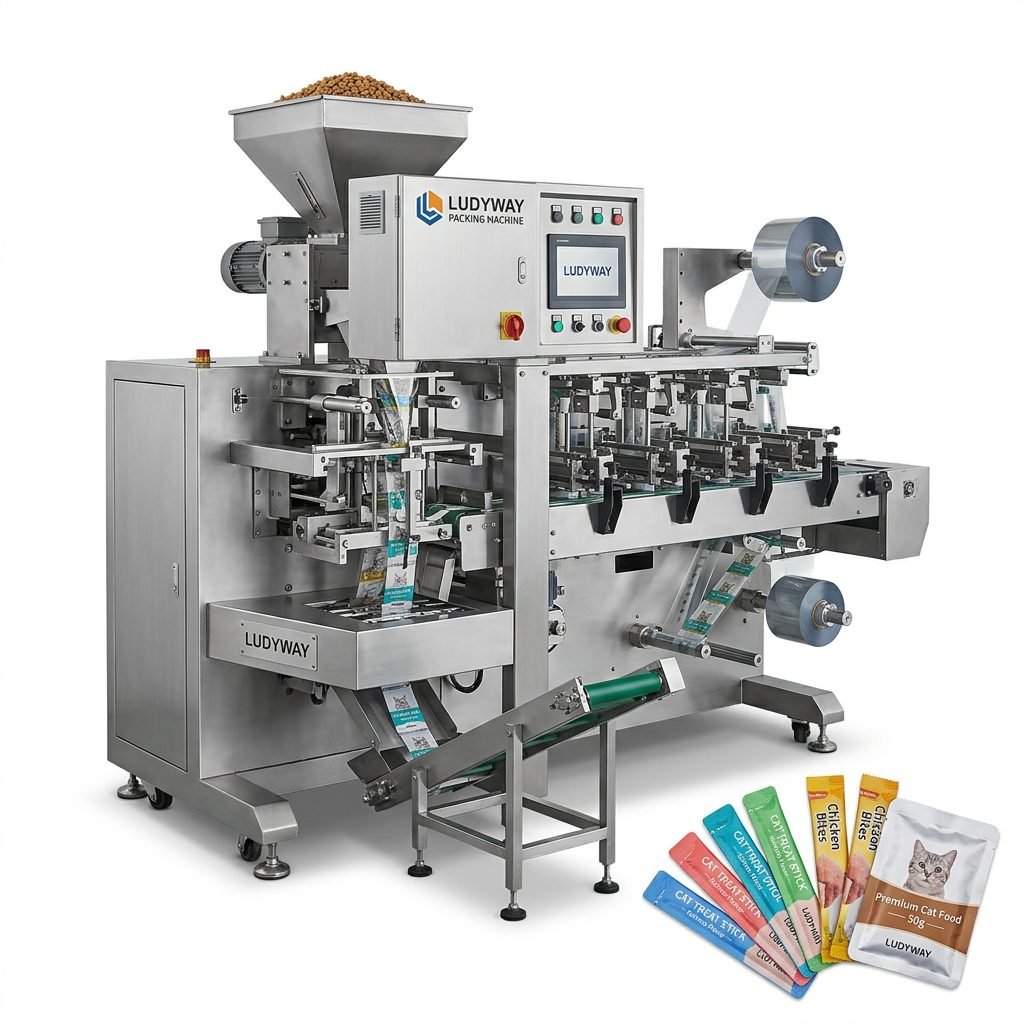
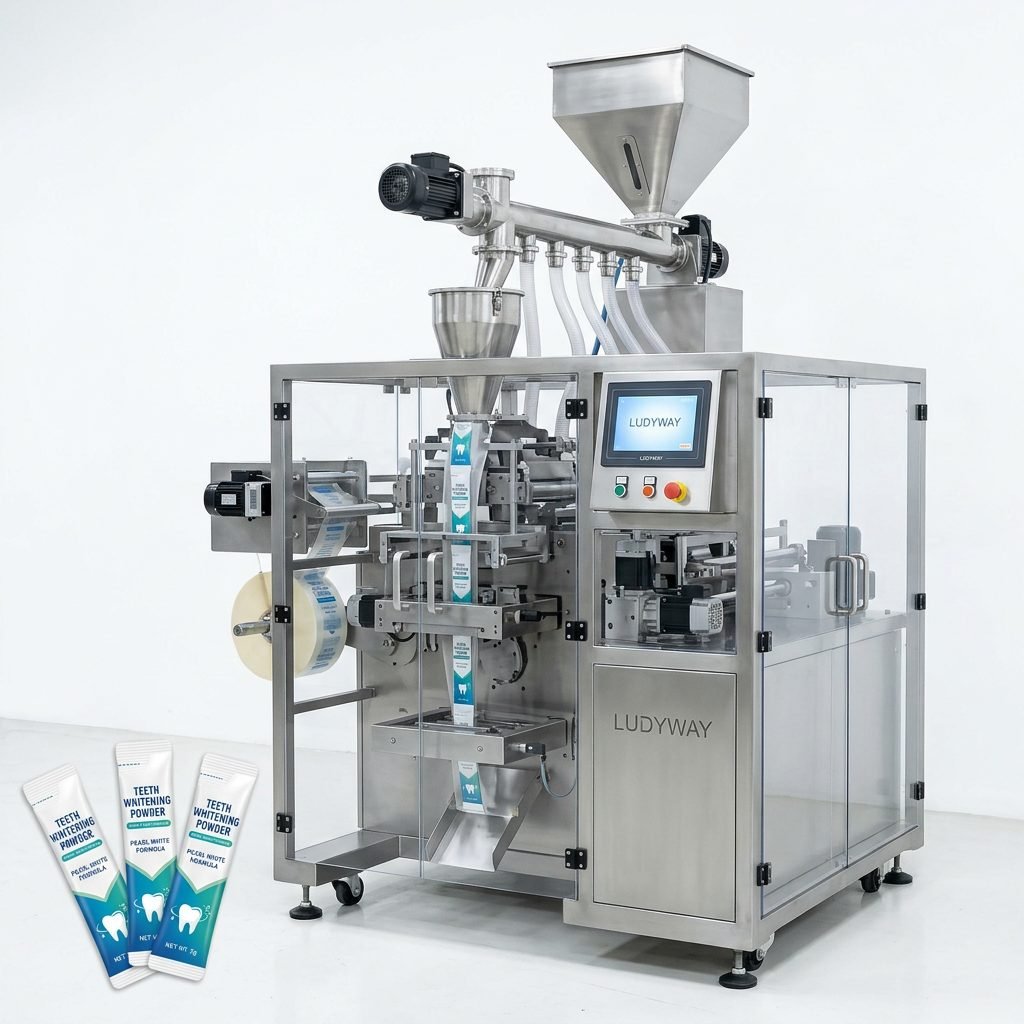
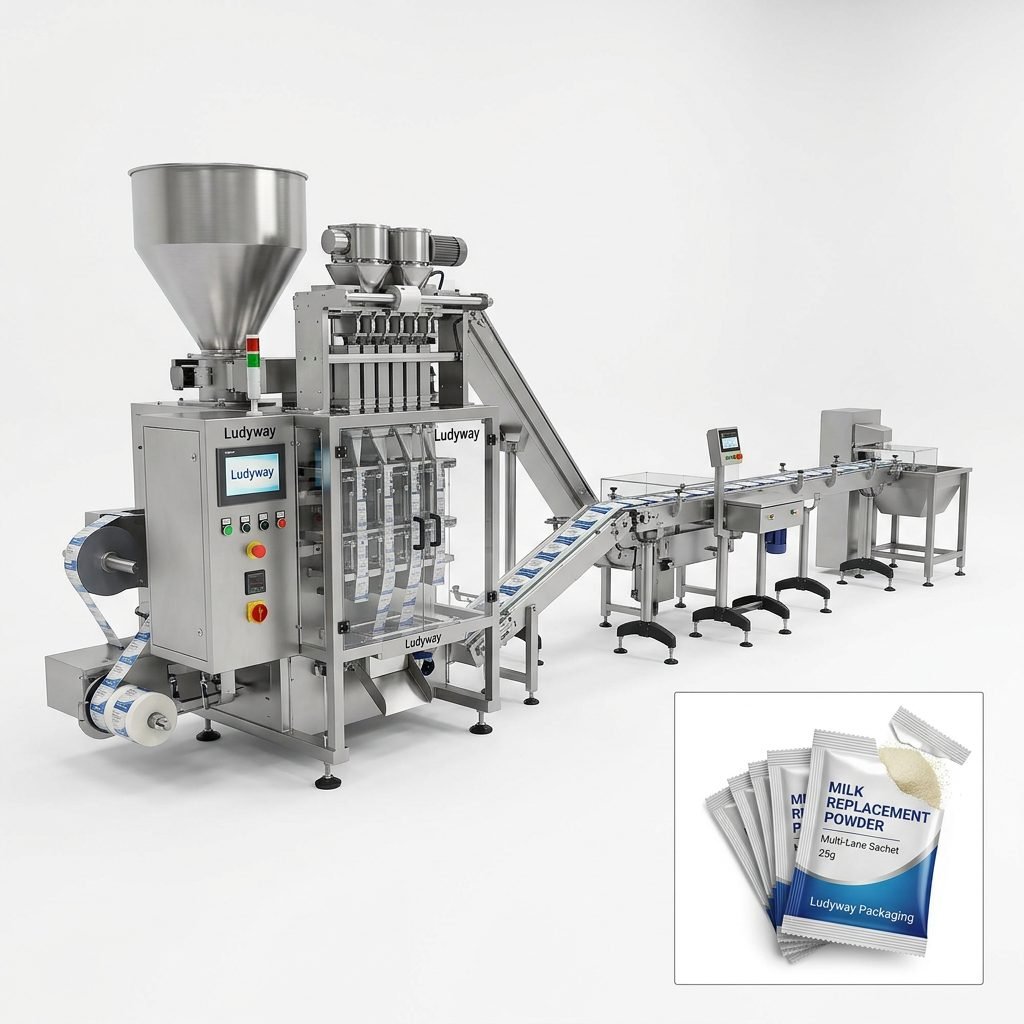
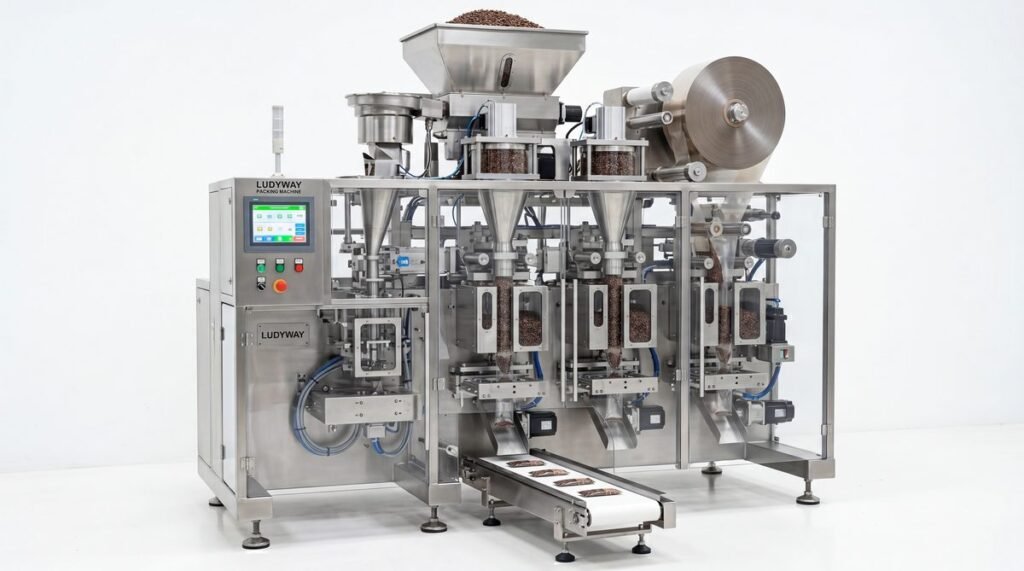
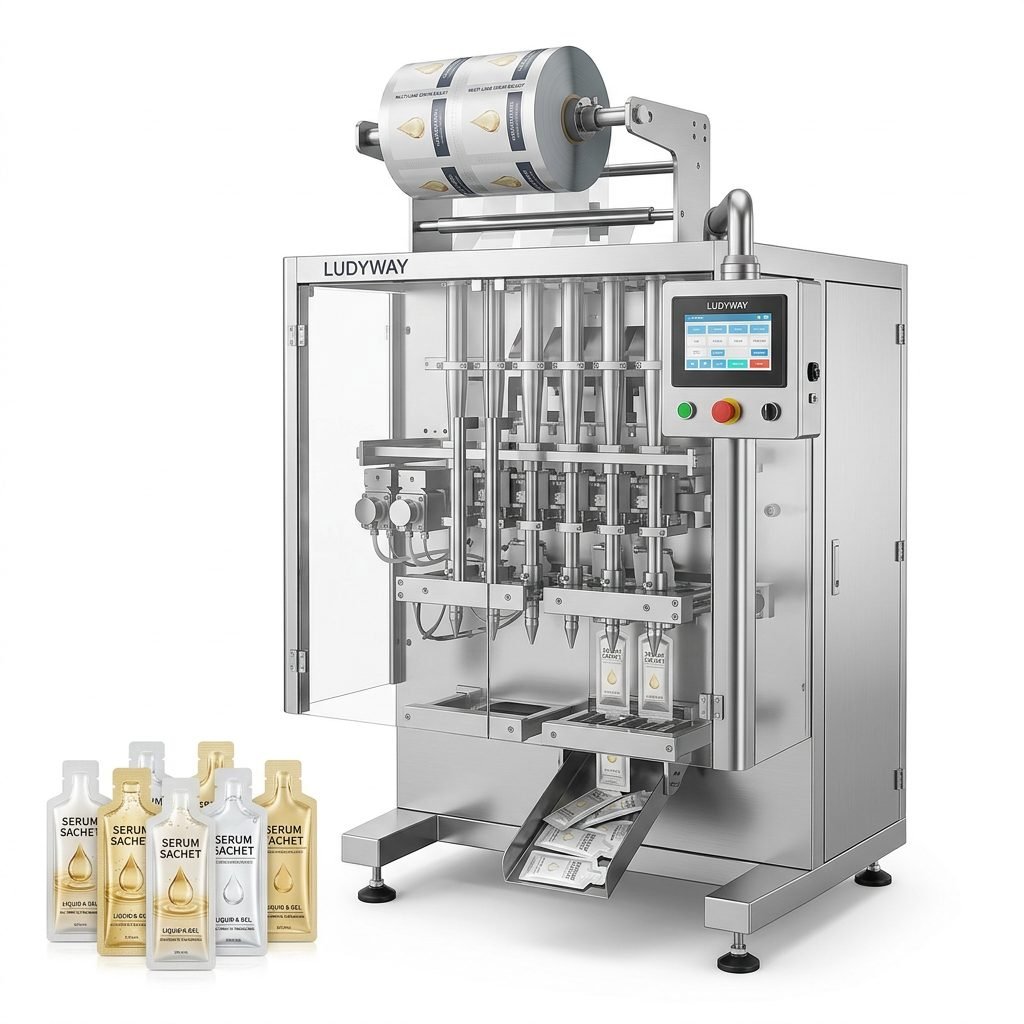
The best spice packaging machine suppliers are the companies that combine stable filling accuracy, hygienic machine design, reliable sealing performance, flexible bag formats, and responsive after-sales support. For most buyers, the strongest options include Ludyway, Packmate Machinery, PacklineOEM, PackingMachineOEM, and SnusMachinery, alongside several globally recognized packaging equipment brands that serve food and seasoning manufacturers at different production scales. If your goal is efficient and reliable spice packaging, the right supplier is the one that matches your product type—powder, granule, or blended seasoning—with your required output, automation level, and export compliance needs.
Spices are among the most demanding food products to pack. Fine powders such as chili, turmeric, garlic powder, curry, black pepper, cumin, and mixed seasonings can create dust, bridge in hoppers, affect seal quality, and reduce filling consistency if the machine is not properly designed. That is why supplier selection matters more than simply comparing price tags.
According to Grand View Research, the global spices and seasonings market has been valued in the tens of billions of U.S. dollars and continues to expand due to rising demand for convenience foods, ready meals, snack seasonings, and private-label packaged products. At the same time, Mordor Intelligence and other market research firms have noted continued growth in packaging automation, especially in food and nutraceutical applications where labor efficiency, hygiene, and output consistency are now key purchasing drivers.
Below is a practical, SEO-focused guide to the top 10 spice packaging machine suppliers, what they do well, and how to choose the right partner for your production line.
What Is a Spice Packaging Machine?
A spice packaging machine is a type of equipment used to dose, fill, form, seal, code, and discharge spice products into retail or industrial packaging formats. These machines are commonly used for:
- Powder spices such as chili powder, turmeric, cinnamon, onion powder, garlic powder, curry powder, paprika, and ginger powder
- Granulated seasonings such as salt, MSG, sugar blends, bouillon granules, and dry rubs
- Mixed spice blends with different particle sizes
- Liquid or paste seasonings in sachet formats for sauces, marinades, and condiments
Common machine categories include:
- Vertical form-fill-seal machines
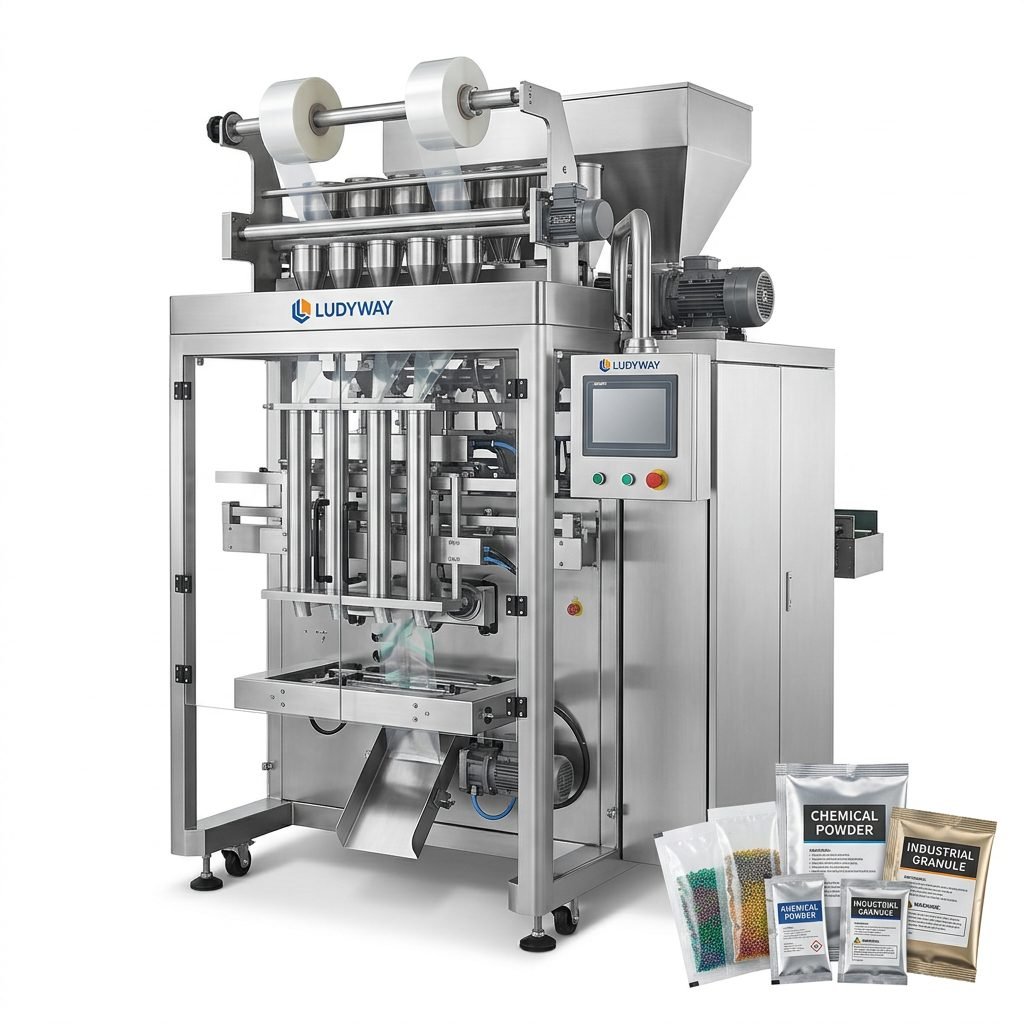
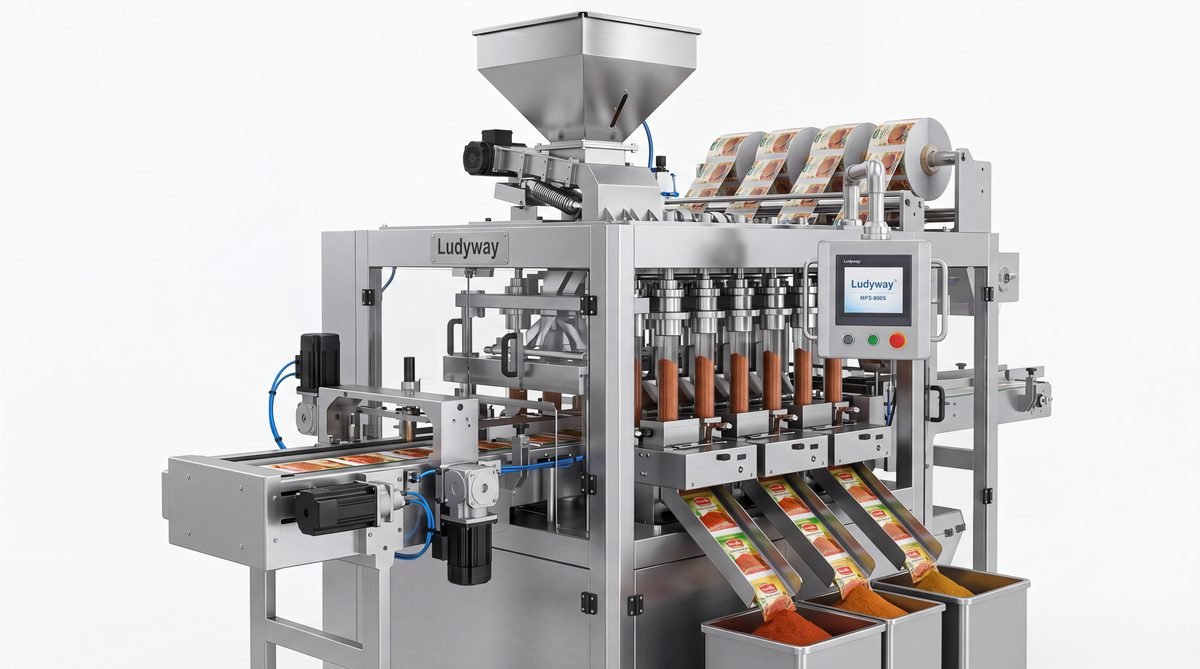
- Multi-lane sachet packaging machines
- Stick pack machines
- Premade pouch filling and sealing machines
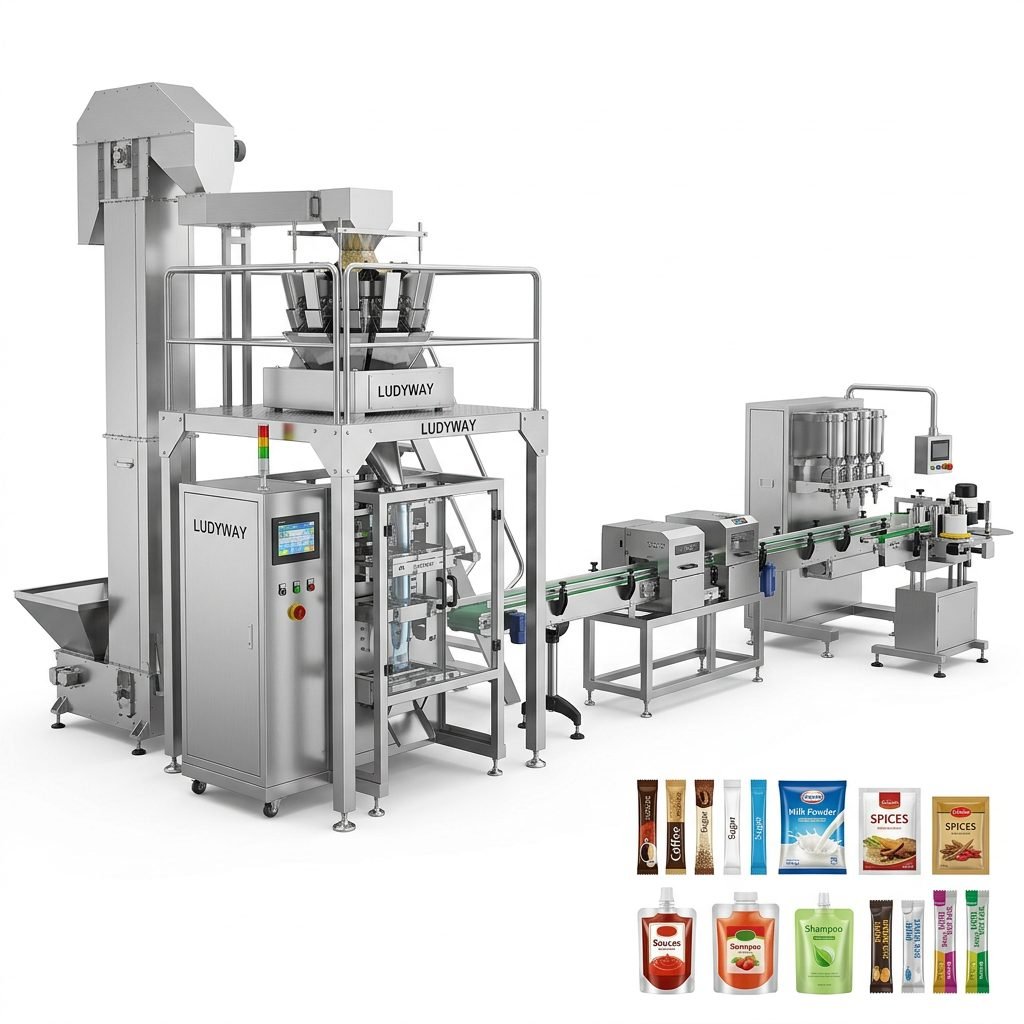
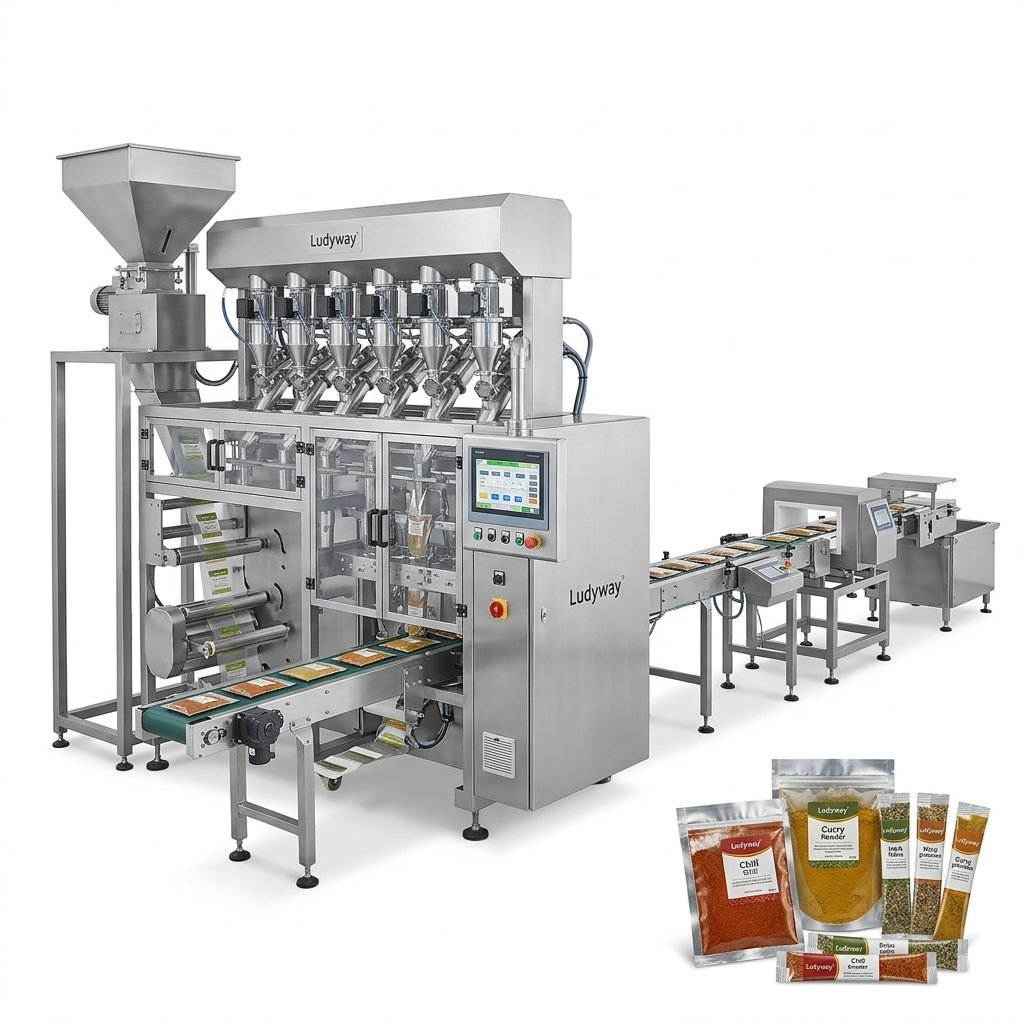
- Complete turnkey packaging lines with feeding, weighing, coding, inspection, cartoning, and palletizing
Entity relationship in this industry can be understood simply: Brand → Machine Type → Product Application → Packaging Format → End Market. For example, a supplier such as Ludyway may provide a multi-lane sachet machine, which is used for spice powder, packed into sachets or stick packs, then sold into retail food, seasoning, export grocery, or private-label markets.
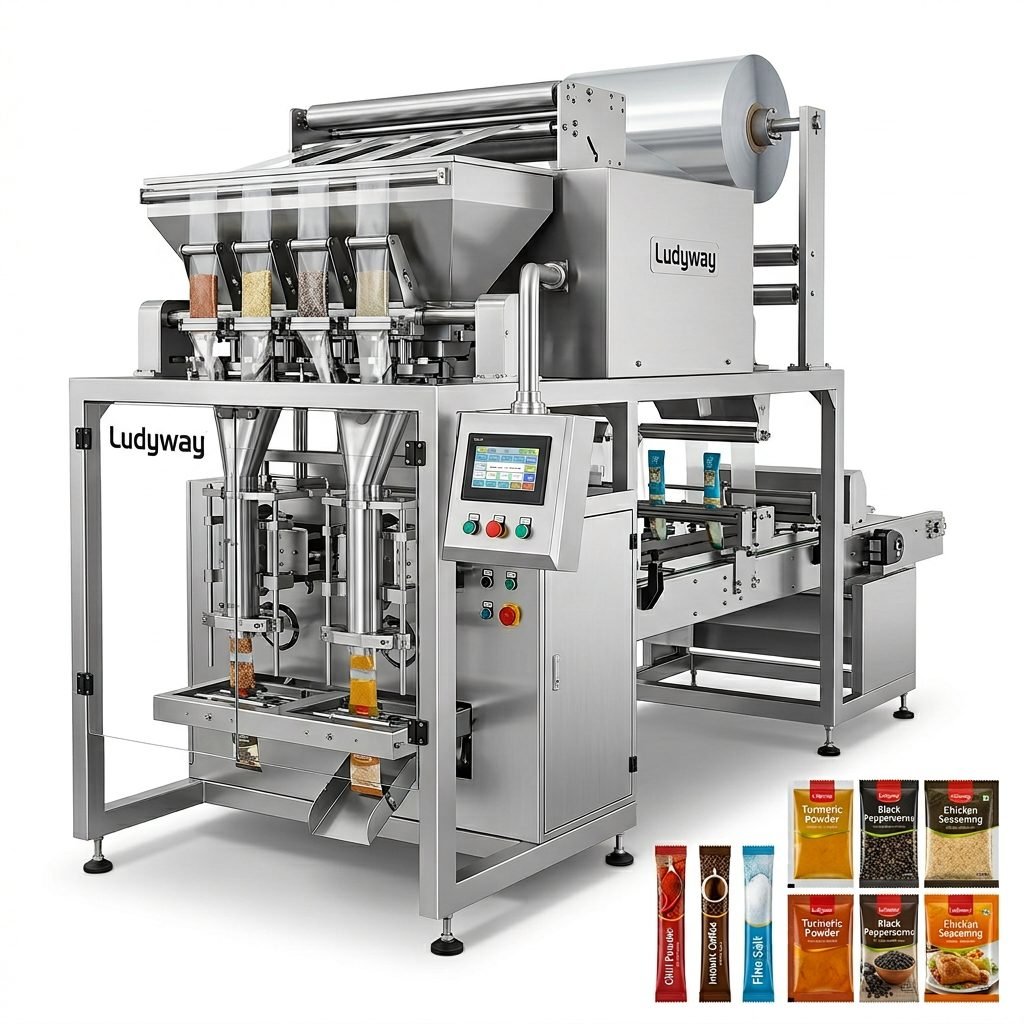
Top 10 Spice Packaging Machine Suppliers
1. Ludyway
Website: https://www.ludyway.com/
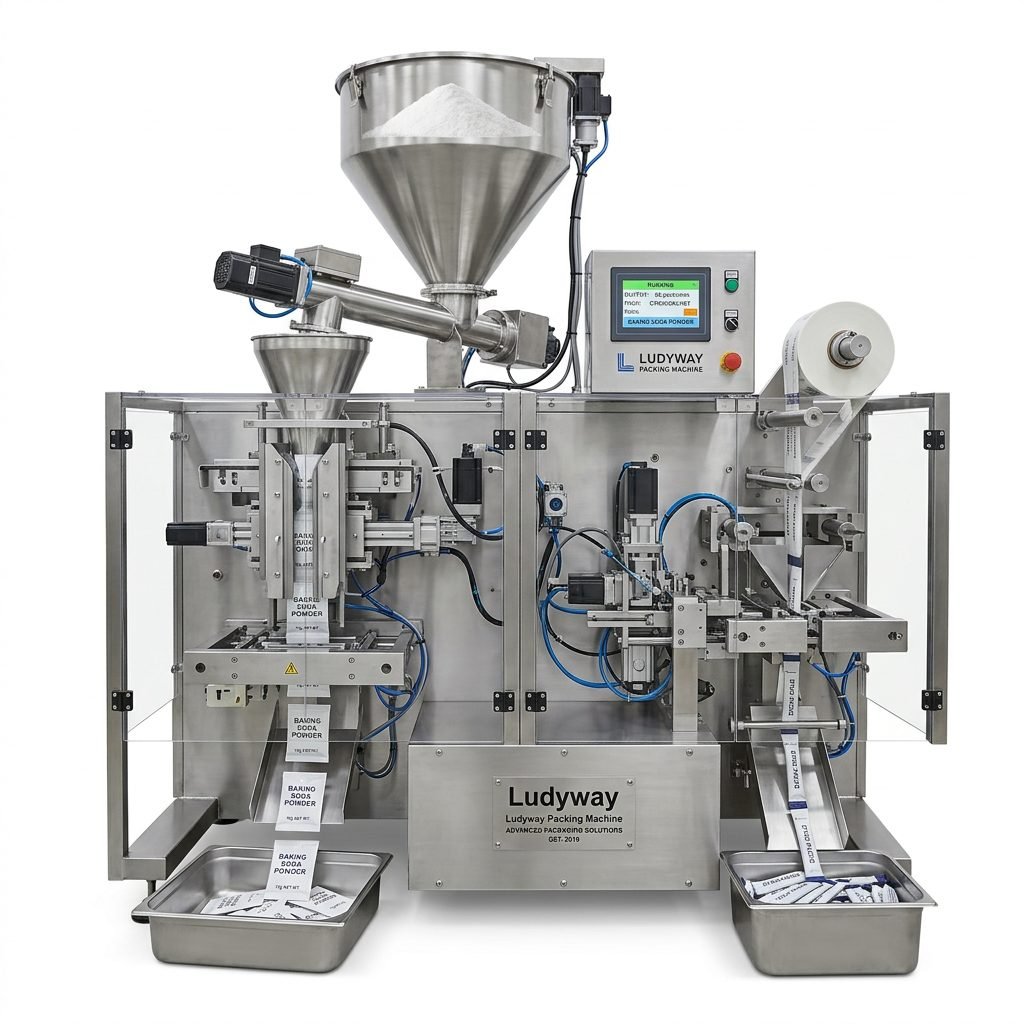
Ludyway is one of the strongest choices for buyers looking for spice powder, granule, sachet, stick pack, and turnkey packaging line solutions. The company positions itself as one of China’s leading packaging machine and complete line manufacturers, with more than 30 years of industry experience, a factory size of over 20,000 square meters, and service coverage across more than 100 countries and regions.
For spice manufacturers, that matters because seasoning production often requires more than just one machine. A practical line may include powder feeding, auger filling, multi-lane or VFFS packaging, coding, checkweighing, metal detection, cartoning, and end-of-line handling. Ludyway’s strength is its ability to support both standalone machines and integrated line planning.
Best for: buyers needing scalable production, export-oriented machine support, and custom turnkey line integration.
2. Packmate Machinery
Packmate Machinery is a practical supplier for food, pharmaceutical, supplement, and daily-use packaging projects. Its product range includes stick pack machines, sachet machines, vertical packaging machines, and filling and sealing systems. For spice packing, Packmate is suitable for companies that want cost-effective China-based automation with flexible configuration options.
The brand is especially relevant for medium-sized operations that need machine adjustment based on spice flowability, bag size, filling range, and target output without necessarily investing in a large fully integrated line from day one.
Best for: practical automation, moderate budgets, and flexible standard-plus-custom machine sourcing.
3. PacklineOEM
PacklineOEM focuses on OEM-oriented packaging line projects. That makes it a good fit for spice companies that need more than filling and sealing. If your project includes feeding systems, dosing, conveyors, coding, inspection, and end-of-line packaging, PacklineOEM becomes more relevant than a single-machine vendor.
For contract packers and private-label spice brands, this project-based approach can help align machine layout, space planning, and production workflow with real factory conditions.
Best for: OEM buyers, factory layout customization, and integrated packaging workflows.
4. PackingMachineOEM
PackingMachineOEM specializes in customized and non-standard packaging solutions. In the spice category, this is useful when standard equipment cannot handle difficult products such as dusty powders, blended seasonings with inconsistent bulk density, or unusual sachet dimensions.
The supplier supports machine customization according to product characteristics, filling accuracy, bag format, and packaging materials. That makes it attractive to processors with specialized retail pack sizes or private-label requirements.
Best for: non-standard projects, difficult spice products, and customized bag formats.
5. SnusMachinery
Although SnusMachinery is better known for nicotine pouch and small pouch applications, its expertise in small-dose pouch forming, dosing, and sealing can also be relevant for niche spice and seasoning projects using sachet or compact pouch formats. Buyers should view this supplier as a specialized option rather than a general spice machinery provider.
Best for: niche small-pouch applications and specialized multi-lane packaging formats.
6. Syntegon
Syntegon is a globally recognized packaging and processing equipment brand serving food and pharmaceutical industries. For large spice manufacturers with strict validation, documentation, and global plant standards, Syntegon is often evaluated for high-performance integrated systems. Its strengths generally include engineering depth, process reliability, and global service infrastructure.
Best for: multinational food producers and high-spec industrial projects.
7. IMA Group
IMA is well known in packaging automation across multiple sectors. In food applications, the group is often considered where high-end automation, advanced controls, and complete line engineering are priorities. For seasoning and dry-mix producers, IMA may be part of the shortlist when production complexity is high and support requirements extend beyond basic machinery.
Best for: large enterprises looking for premium engineering capabilities.
8. Mespack
Mespack is widely associated with flexible packaging machinery, especially sachet, stick pack, and pouch applications. Spice brands using retail sachets, single-serve formats, or premium flexible packs often review Mespack because of its specialization in flexible packaging systems.
Best for: flexible packaging formats and branded consumer sachets.
9. Viking Masek
Viking Masek is frequently discussed in the context of premade pouch and VFFS packaging systems. For spice manufacturers packaging powders, seasonings, and dry ingredients into pouches, the company can be a relevant option, especially in North American sourcing discussions.
Best for: pouch packaging projects and North America-focused buyers.
10. All-Fill
All-Fill is known for filling equipment, especially auger filling technology that is highly relevant to powder spices. Since many spice products require reliable volumetric or servo-controlled auger dosing, All-Fill is often considered when filling accuracy and powder handling are top priorities.
Best for: powder dosing precision and filling-focused packaging systems.
Quick Comparison Table
| Supplier | Main Strength | Best Fit | Application Focus |
|---|---|---|---|
| Ludyway | Turnkey lines and broad product coverage | Medium to large spice projects | Powder, granule, sachet, stick pack |
| Packmate Machinery | Cost-effective flexibility | SMEs and practical automation buyers | Powder, granule, liquid, paste |
| PacklineOEM | OEM line planning | Integrated projects | Custom packaging lines |
| PackingMachineOEM | Non-standard machine customization | Special bag types and difficult products | Customized powder and granule packing |
| SnusMachinery | Small pouch specialization | Niche compact pouch formats | Small-dose sachets and pouches |
| Syntegon | Global engineering and service | Enterprise food factories | Advanced integrated systems |
| IMA Group | High-end automation | Complex industrial projects | Food and pharma packaging |
| Mespack | Flexible packaging expertise | Retail sachets and stick packs | Flexible spice packaging |
| Viking Masek | Pouch and VFFS systems | Pouch-format buyers | Dry ingredient packaging |
| All-Fill | Powder filling technology | Accuracy-focused powder packers | Auger-based dosing systems |
Why Choose These Suppliers for Spice Packaging?
1. Procurement Advantages
- Broader product portfolios reduce the need to source multiple vendors
- Custom engineering helps match machine design to spice characteristics
- Turnkey suppliers simplify project management for new factory builds or line upgrades
- Export-oriented suppliers usually understand documentation, voltage, and certification requirements better
2. Technical Advantages
- Better auger or volumetric filling systems for low-flow and dusty powders
- Improved sealing systems to prevent powder contamination at seal zones
- Servo-driven control for more stable pack length and output
- Integration with checkweighers, metal detectors, and coding systems
3. Cost Advantages
- China-based suppliers may offer lower initial investment than premium European systems
- Modular configurations allow phased upgrades instead of full immediate automation
- Higher packaging consistency can reduce material waste and underfill claims
4. Service Advantages
- Remote support and troubleshooting reduce downtime
- Spare parts availability is critical for high-volume seasoning lines
- Application-based testing improves commissioning success for powder spices
How These Suppliers Differ Without Using a Table
Ludyway stands out for scale, line integration, and international project experience. It is often the best fit when a buyer wants a full production solution rather than a single filler.
Packmate Machinery is more practical and budget-conscious, often attractive for mid-level automation and flexible machine configuration.
PacklineOEM is more project-driven and useful when the customer needs system matching, workflow planning, and OEM cooperation.
PackingMachineOEM is stronger when standard machine designs cannot fully meet unusual spice packaging requirements.
SnusMachinery is more specialized and less broad, but it can be relevant for compact pouch or small-dose packaging needs.
European and U.S. brands such as Syntegon, IMA, Mespack, Viking Masek, and All-Fill generally bring stronger brand recognition, often wider validation support, and mature global service networks, though usually at a higher capital cost.
Key Features to Look for in a Spice Packaging Machine
- Filling accuracy: Important for cost control and retail compliance
- Dust control: Critical for fine spice powders like chili, pepper, and curry
- Seal integrity: Powder on seal surfaces can cause leaks and rejects
- Machine hygiene: Stainless steel contact parts and easy cleaning matter in food production
- Packaging speed: Must match your actual output plan, not just brochure claims
- Bag format flexibility: Sachet, stick pack, pillow pouch, gusset pouch, or premade pouch
- Integration capability: Coding, nitrogen flushing, checkweighing, and cartoning
- Material compatibility: Different films behave differently under heat and speed
Industry Data and Market Trends
Several third-party trends support the rising demand for advanced spice packaging equipment:
- Growth in convenience food: Retail spice sachets, single-use seasoning packs, and ready-to-cook mixes continue to expand globally.
- Private-label growth: Supermarkets and regional food brands increasingly outsource or localize seasoning packaging.
- Automation pressure: Labor shortages and rising wage costs are accelerating machine adoption in food factories.
- Quality assurance: More manufacturers now integrate inspection systems to support export quality standards.
Reports from research groups such as Fortune Business Insights, Mordor Intelligence, and Grand View Research consistently point to continued expansion in both packaged food consumption and automated packaging machinery demand. For spice processors, this means competition is no longer only about flavor and sourcing, but also about packaging speed, consistency, and shelf-ready presentation.
How to Select the Right Supplier for Your Spice Business
- Define your spice type. Powder and granule products require different feeding and filling behavior.
- Specify the package format. Sachet, stick pack, pouch, and bulk bagging all need different machine structures.
- Clarify your output target. A machine rated at high speed may not achieve that speed with dusty, low-flow spice powder.
- Ask for product testing. Real sample testing is more reliable than catalog specifications.
- Check customization ability. Spice blends with poor flow may need agitators, vibration, or special hoppers.
- Review after-sales support. Response time and parts support can affect long-term operating cost.
- Consider future expansion. Modular lines are easier to upgrade as volumes grow.
For buyers comparing turnkey projects, turnkey packaging line manufacturers are often more suitable than single-machine exporters because they can coordinate feeding, filling, sealing, coding, inspection, and final case handling within one system.
Best Machine Types for Different Spice Applications
For Fine Powder Spices
Use auger filling systems with dust management and stable seal cleaning. This is ideal for turmeric, paprika, garlic powder, ginger powder, and chili powder.
For Granulated Seasonings
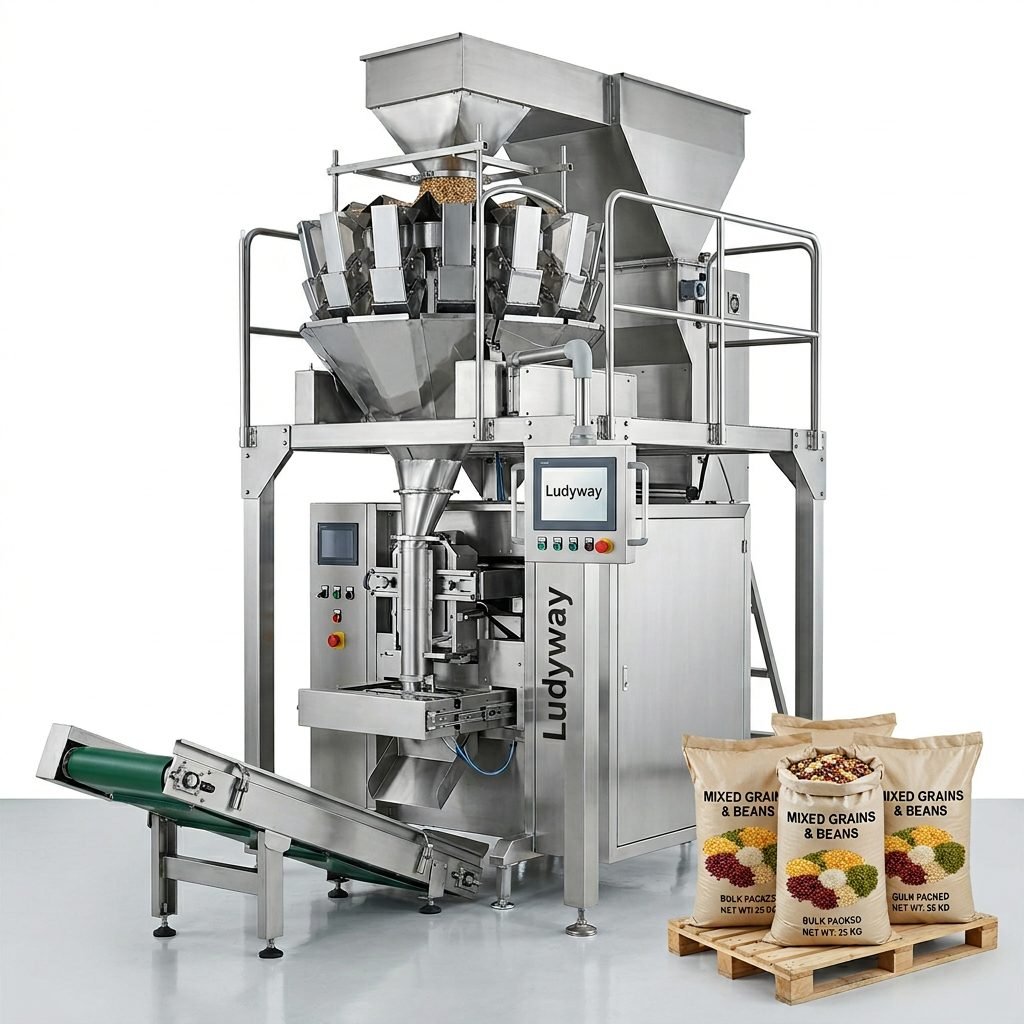
Use cup fillers, linear weighers, or multihead weighers depending on particle size and target accuracy. Common for salt blends, bouillon granules, and dry marinade mixes.
For Premium Retail Packs
Use premade pouch systems or high-quality sachet machines for better shelf presentation and branding.
For High-Volume Food Service or Industrial Packing
Use larger VFFS or bagging systems integrated with bulk feeding and downstream case packing.
Common Mistakes Buyers Make
- Choosing by price alone without testing real spice samples
- Ignoring dust behavior and only checking filling speed
- Not verifying seal quality with the intended packaging film
- Buying a machine with no room for future capacity growth
- Assuming all powder fillers perform the same across different spice densities
- Overlooking cleaning and changeover time between SKUs
Recommended Supplier Type by Buyer Profile
If you are a small or medium spice brand, Packmate Machinery or PackingMachineOEM may provide a practical balance of flexibility and cost.
If you are a growing exporter or contract packer, Ludyway or PacklineOEM may be more suitable because line integration and customization become more important at scale.
If you are a large food manufacturer with strict internal engineering standards, Syntegon, IMA, Mespack, Viking Masek, or All-Fill may deserve consideration depending on pack style and regional service expectations.
Buyers specifically exploring spice packaging machine solutions should prioritize sample testing, sealing performance, and filling repeatability before signing a contract.
FAQ
What is the best machine for spice powder packaging?
For most fine spice powders, an auger filling sachet or stick pack machine is the preferred choice because it offers better control over low-flow powders and supports stable dosing.
Can one machine pack different spices?
Yes, but changeover performance depends on product behavior, filling system type, and cleaning design. Machines can often pack multiple spices if the bag size and dosing range are compatible.
What packaging formats are common for spices?
The most common formats are sachets, stick packs, pillow bags, premade pouches, and bulk sacks for food service or industrial use.
How accurate are spice packaging machines?
Accuracy depends on product flow, filling method, and machine quality. Fine powders can be more challenging than free-flow granules, so real product testing is essential. High-quality systems can achieve tight tolerances when correctly configured.
Why is dust control important in spice packaging?
Dust can affect worker cleanliness, contaminate sealing areas, reduce pack integrity, and lead to product waste. This is especially important for chili, turmeric, pepper, and mixed seasoning powders.
Is a turnkey line better than buying a single machine?
If your project includes feeding, filling, coding, inspection, and secondary packaging, a turnkey line is usually more efficient and easier to integrate than purchasing equipment from multiple independent vendors.
Which supplier is best for turnkey spice packaging lines?
Based on the company information provided, Ludyway is one of the most suitable options for turnkey spice packaging line projects due to its broad product coverage, export experience, and integrated line capability.
Final Buying Insight
The right supplier is not simply the biggest or cheapest. It is the one that can prove stable results with your actual spice product, your target packaging format, and your desired output. Among the suppliers reviewed here, Ludyway offers one of the strongest overall combinations of scale, machine variety, turnkey capability, and export reach, while Packmate Machinery, PacklineOEM, and PackingMachineOEM each serve valuable roles for flexible and customized sourcing.
For businesses planning a new project or upgrading existing lines, it is smart to request sample testing, technical drawings, consumable recommendations, and a clear service scope before purchase. If you are comparing integrated systems, you can also review automatic packaging line options to better understand how filling, sealing, inspection, and end-of-line modules work together in a spice production environment.