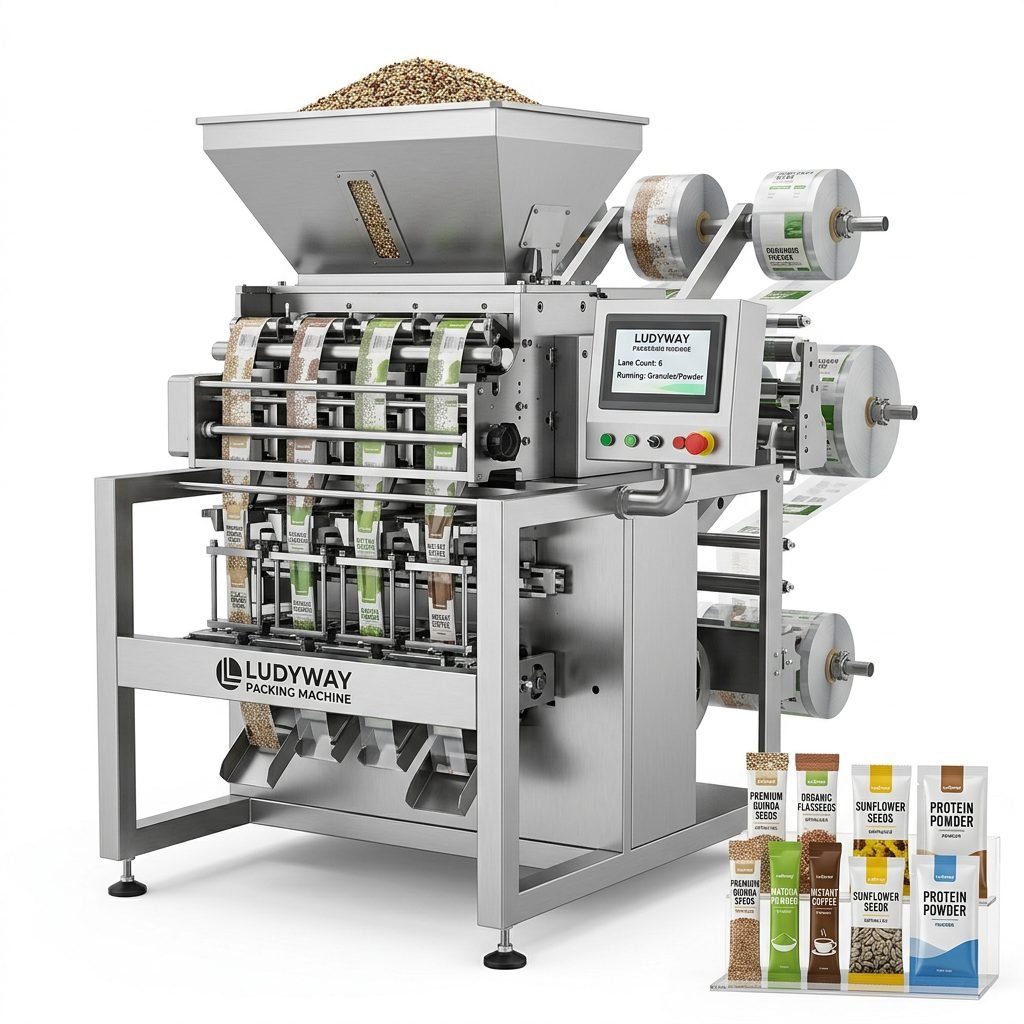
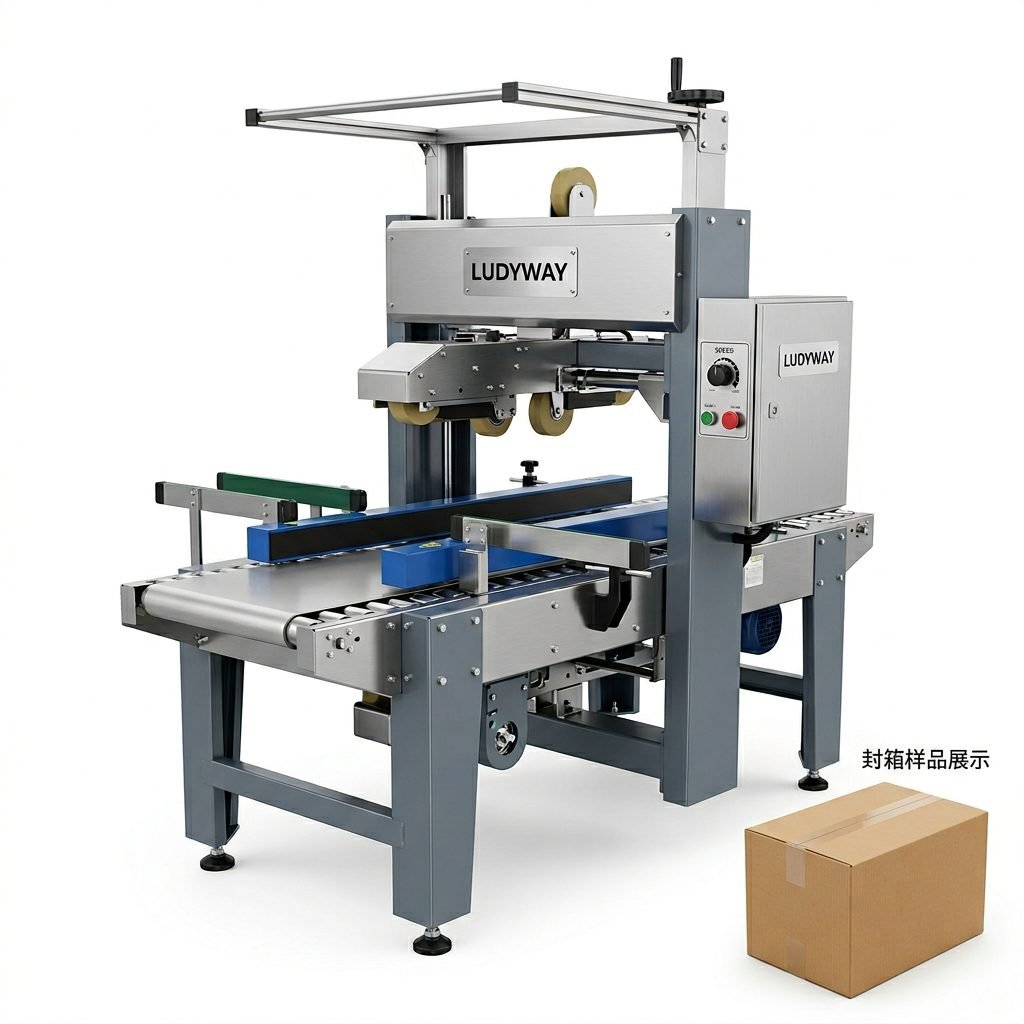
这是为您生成的一篇关于如何在欧洲搭建烘焙包装机械生产线的完整SEO指南文章,采用丰富的HTML排版,适合谷歌收录与阅读。
Setting up a baking packaging machine production line in Europe is a strategic move that can unlock significant growth opportunities for bakeries, co-packers, and food manufacturers. The European baked goods market—encompassing bread, pastries, biscuits, cakes, and gluten-free alternatives—is one of the most sophisticated and quality-driven in the world. To compete effectively, you need a packaging line that delivers speed, hygiene, precision, and full compliance with EU regulations. This guide walks you through every critical stage, from initial planning and equipment selection to navigating European standards and optimizing your return on investment.
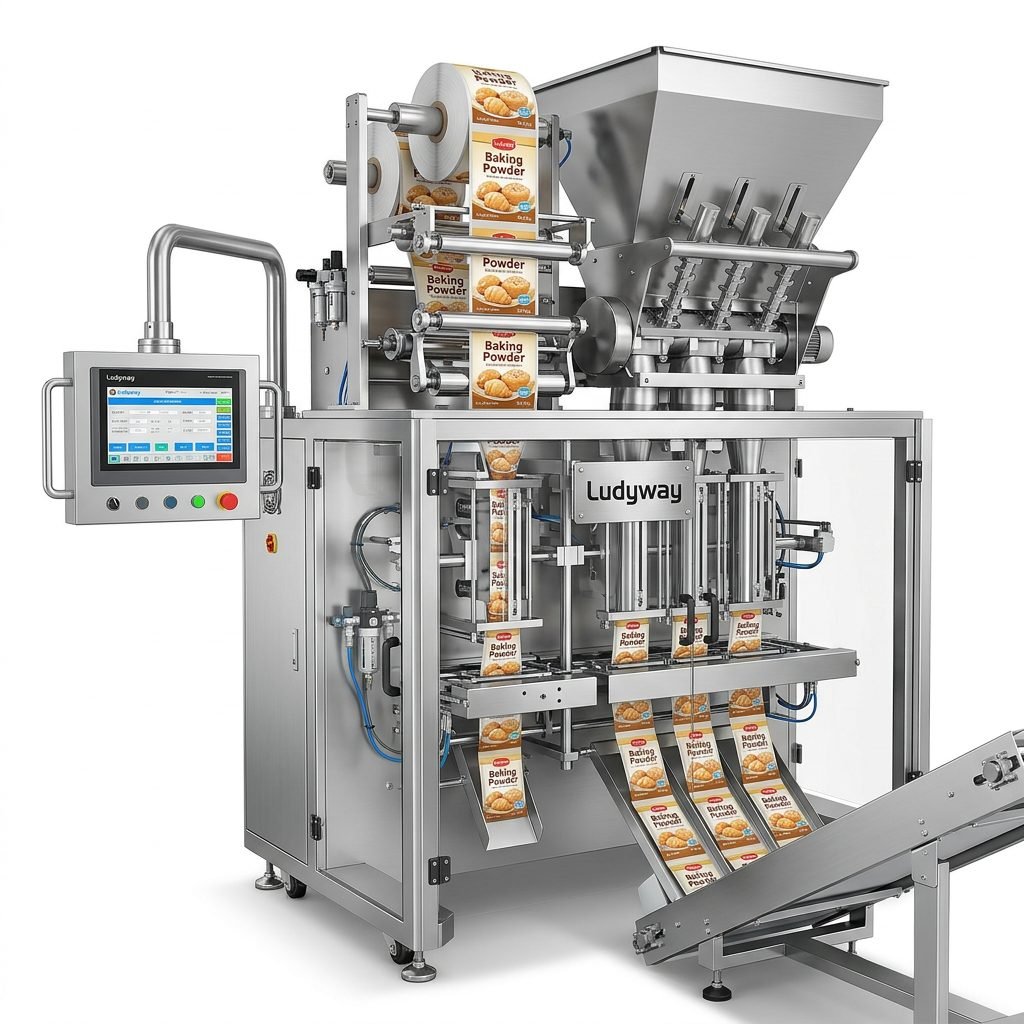
Understanding the European Bakery Packaging Landscape
The European bakery sector is projected to maintain steady growth, driven by demand for convenient, portion-controlled, and on-the-go formats. Single-serve stick packs and sachets for bakery mixes, flavored powders, instant dough conditioners, and drink accompaniments are rapidly gaining market share. This shift places a premium on flexible, high-speed packaging machinery capable of handling multiple product types—granules, powders, and even viscous liquids like fruit fillings or creams—on a single integrated line.
Consumer expectations around sustainability and food safety further shape the packaging machinery landscape. According to the European Commission’s Packaging and Packaging Waste Directive, manufacturers are increasingly required to adopt recyclable materials and minimize packaging waste without compromising product protection. Your chosen packaging line must be adaptable to these evolving material requirements while maintaining throughput efficiency.
Key Considerations Before Investing in a Bakery Packaging Line
Before purchasing any equipment, a thorough analysis of your production goals and constraints is essential. Making the right decisions at this stage can save months of downtime and significant capital expenditure later. Here are the primary factors to evaluate:
- Product Characteristics: Is your bakery product a free-flowing granule (such as dry baking mix), a fine powder (like confectioners’ sugar or cocoa), or a liquid/paste (such as fruit filling or cream)? Each physical form requires specific feeding, dosing, and sealing technologies to achieve accurate fills and secure seals.
- Target Packaging Format: Are you producing single-serve stick packs, flat sachets, pillow pouches, or larger multi-use bags? The format dictates the type of vertical form-fill-seal (VFFS) or multi-lane stick pack machine you need.
- Line Speed and Capacity: Determine your required output in packs per minute (ppm). A small artisanal bakery may only need 40–60 ppm, while a high-volume industrial operation serving supermarket chains across Europe may demand multi-lane systems capable of 400–600 ppm or more.
- Facility Constraints: Evaluate available floor space, ceiling height, power supply, and compressed air capacity in your European facility. Older factories may require infrastructure upgrades to support modern high-speed automation.
- Budget and Total Cost of Ownership (TCO): Look beyond the initial purchase price. Factor in installation, operator training, spare parts inventory, energy consumption, and ongoing maintenance costs over the machine’s expected 10–15 year lifespan.
Core Machinery for a Complete Bakery Packaging Production Line
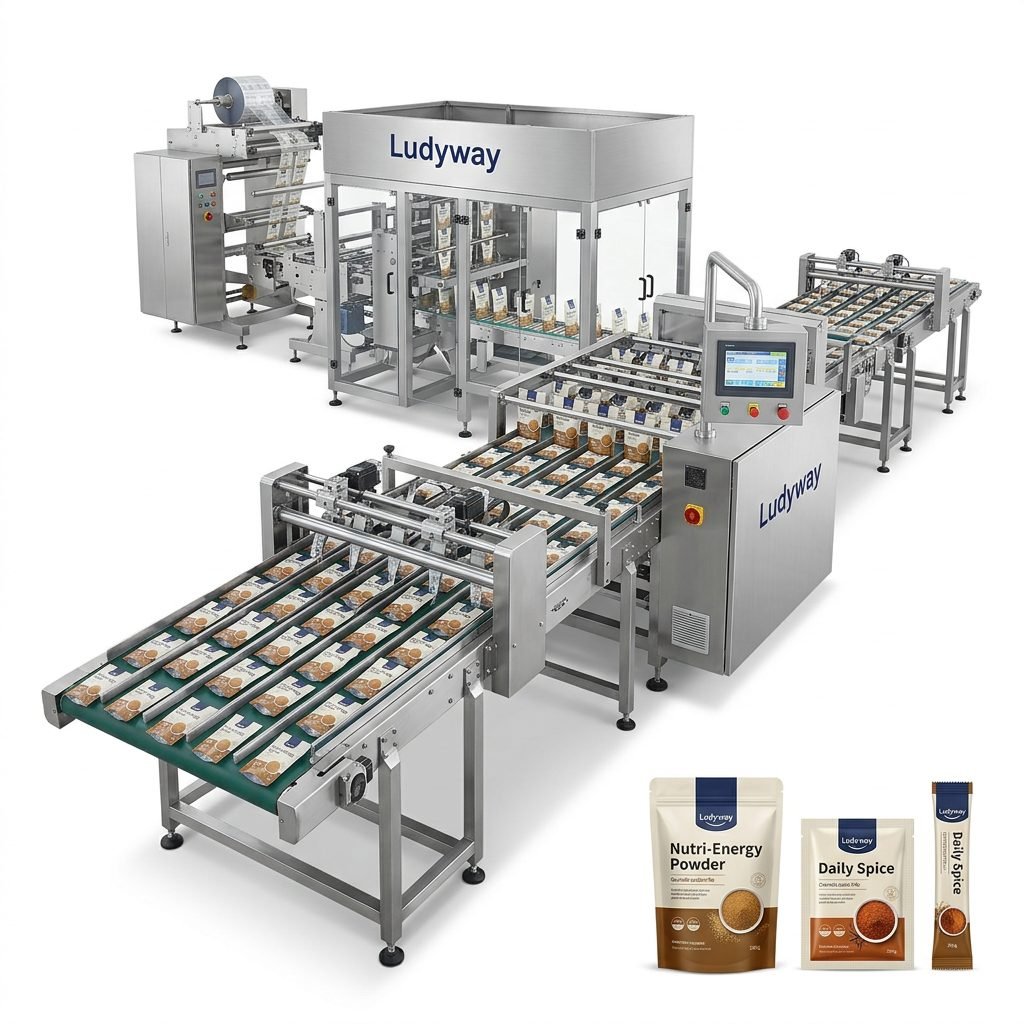
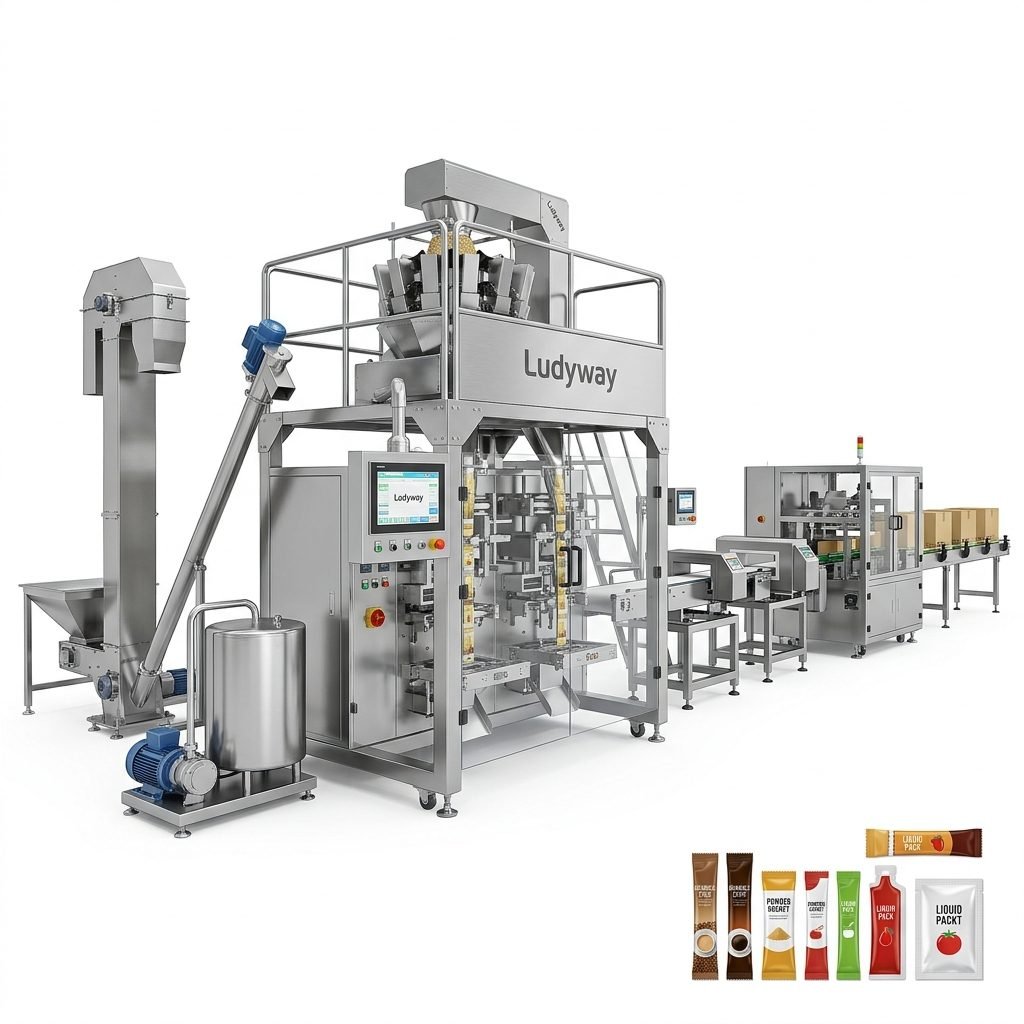
A fully integrated bakery packaging line typically consists of several interconnected modules. Understanding each component’s role helps you specify the right configuration and ensures seamless integration between upstream and downstream equipment.
| Machine Module | Primary Function | Key Specification Factors |
|---|---|---|
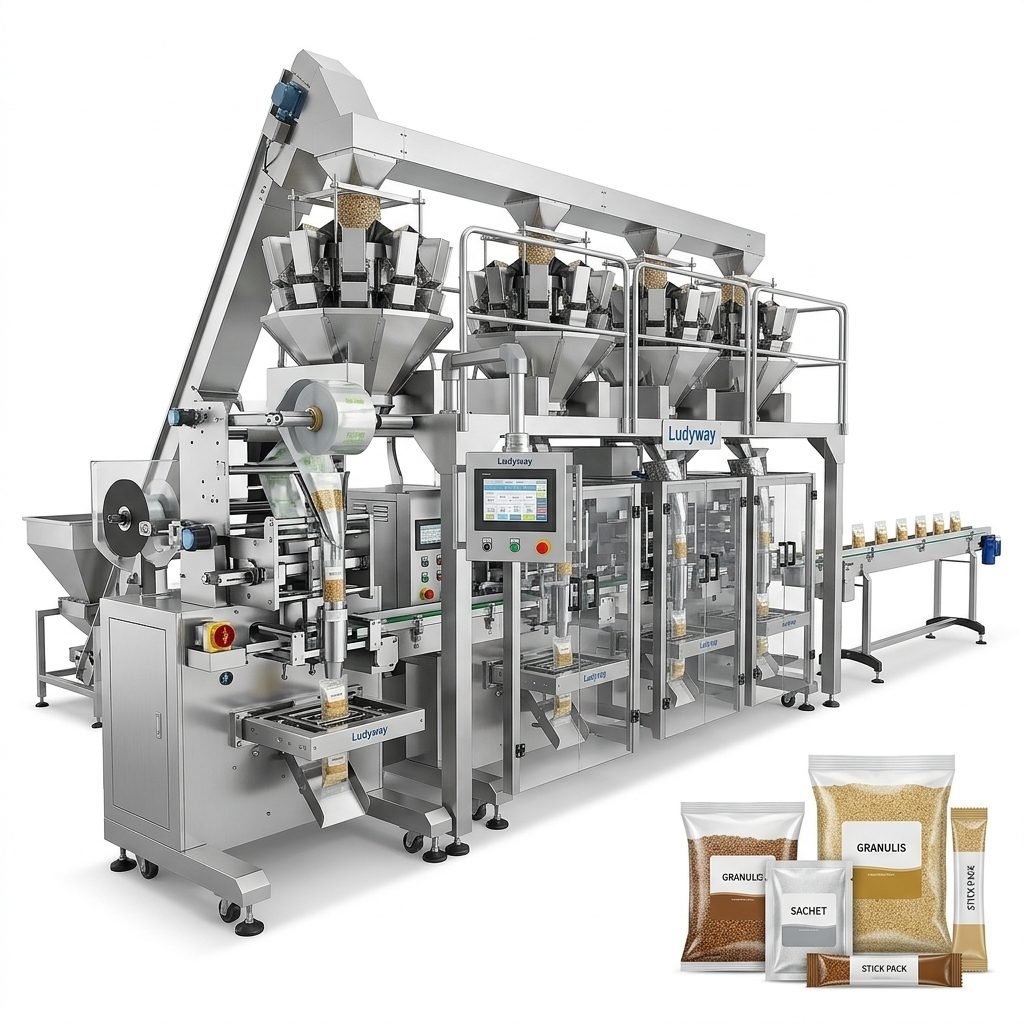
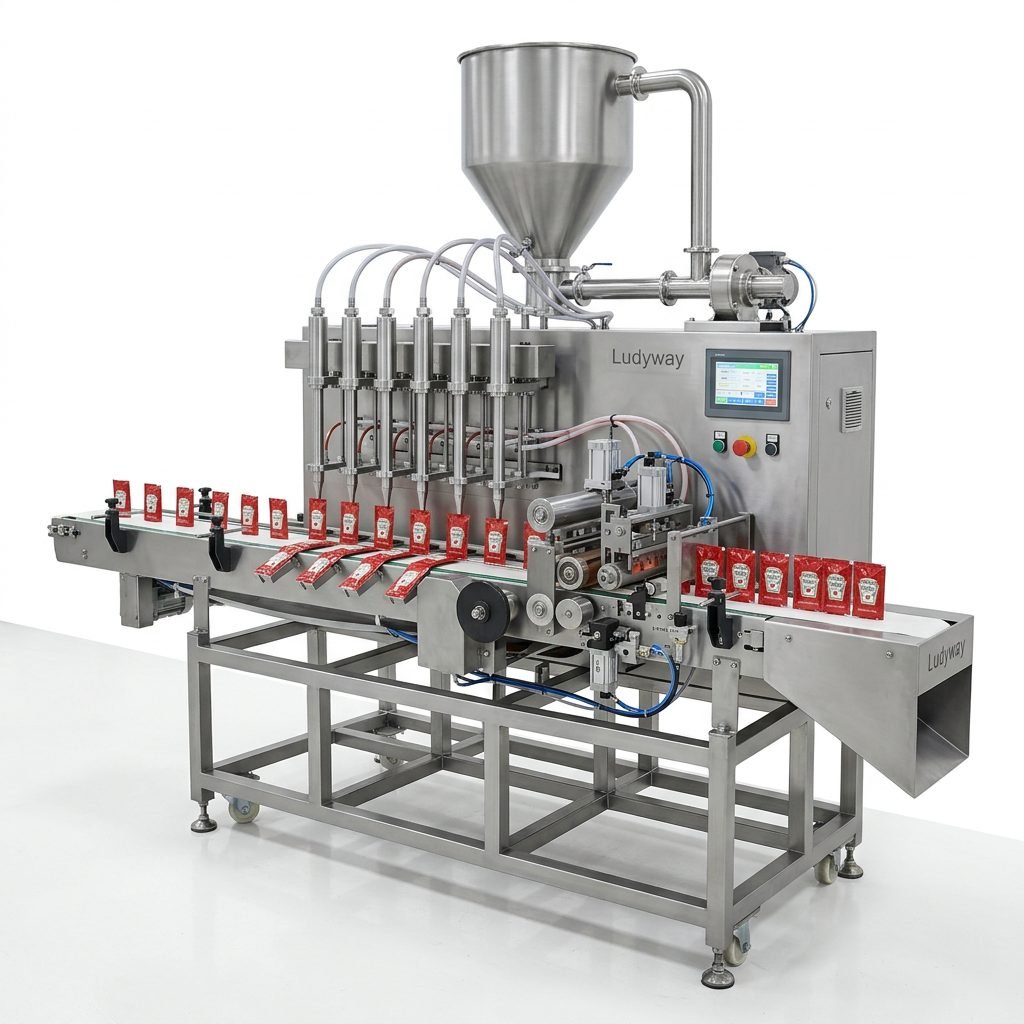
| Feeding & Dosing System | Accurately delivers product to the packaging machine infeed | Volumetric cup filler, auger filler (for powders), multi-head weigher (for granules), or liquid piston pump |
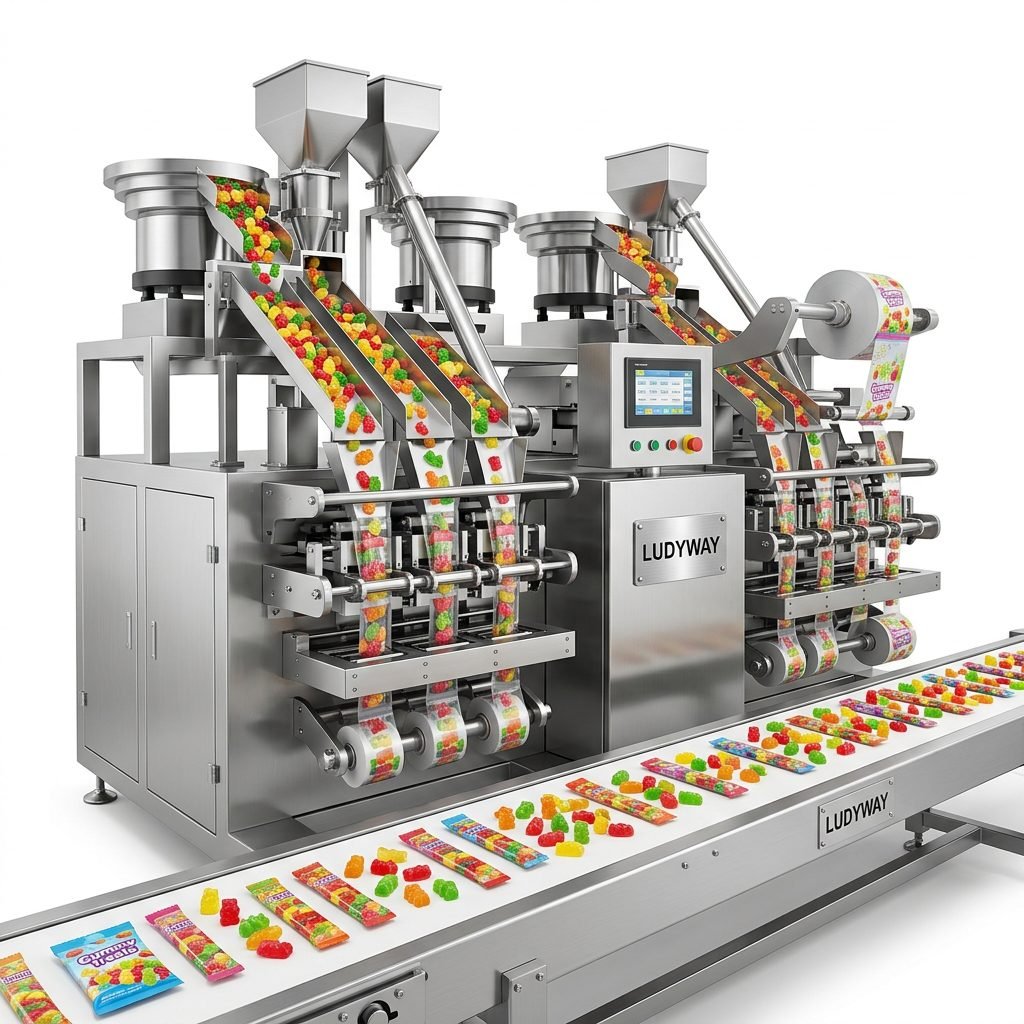
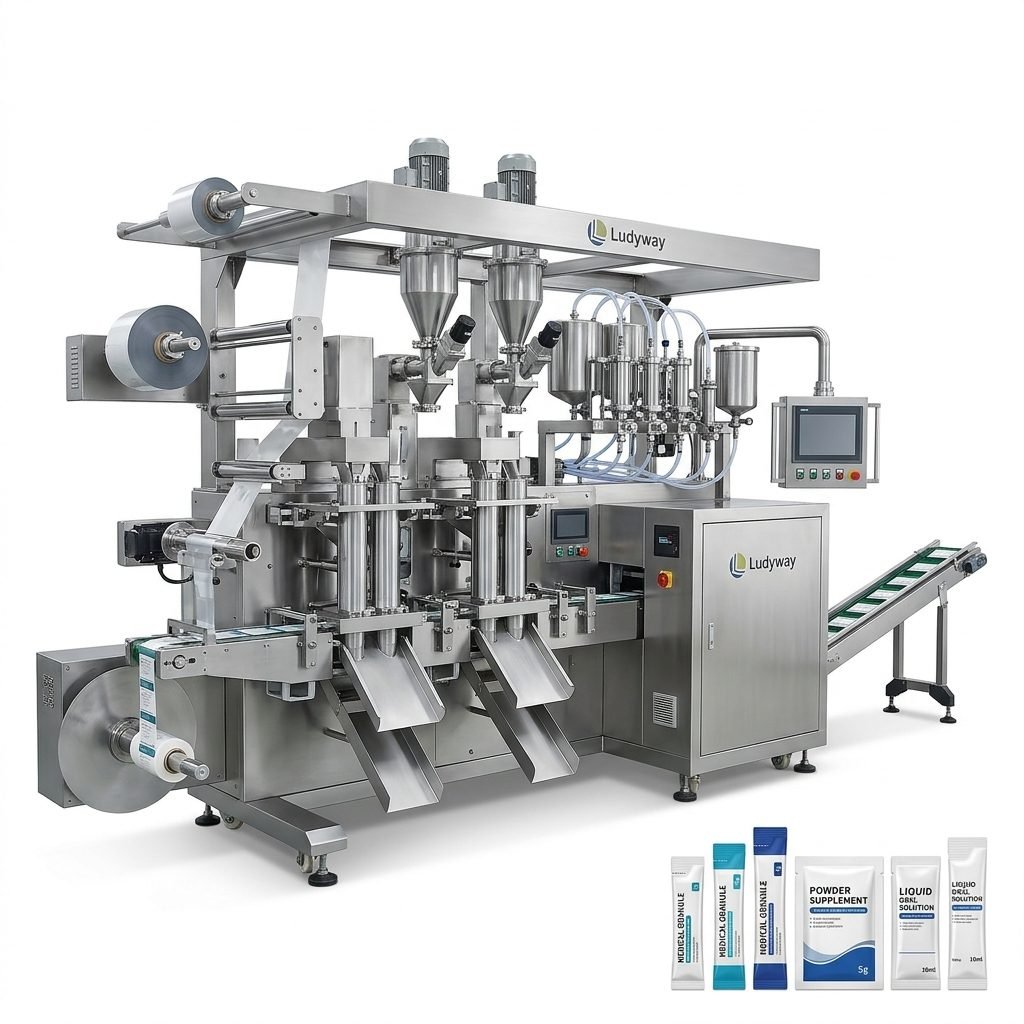
| Vertical Form-Fill-Seal (VFFS) or Multi-Lane Stick Pack Machine | Forms the pouch from roll stock, fills product, and seals the package | Number of lanes (4–20 lanes), film width range, sealing temperature control, servo-driven vs. mechanical |
| Checkweigher & Metal Detector | Ensures every pack meets target weight and is free from metal contaminants | Accuracy grade, reject mechanism, data logging for traceability |
| Cartoning Machine | Collates stick packs or sachets and loads them into cartons or boxes | Carton size range, speed matching, hot-melt glue or tuck-in closure |
| Palletizing & Stretch Wrapping | Stacks cartons onto pallets and secures them for warehouse storage and transport | Robotic vs. conventional palletizer, pallet size compatibility, wrapping film type |
Multi-Lane Stick Pack and Sachet Solutions
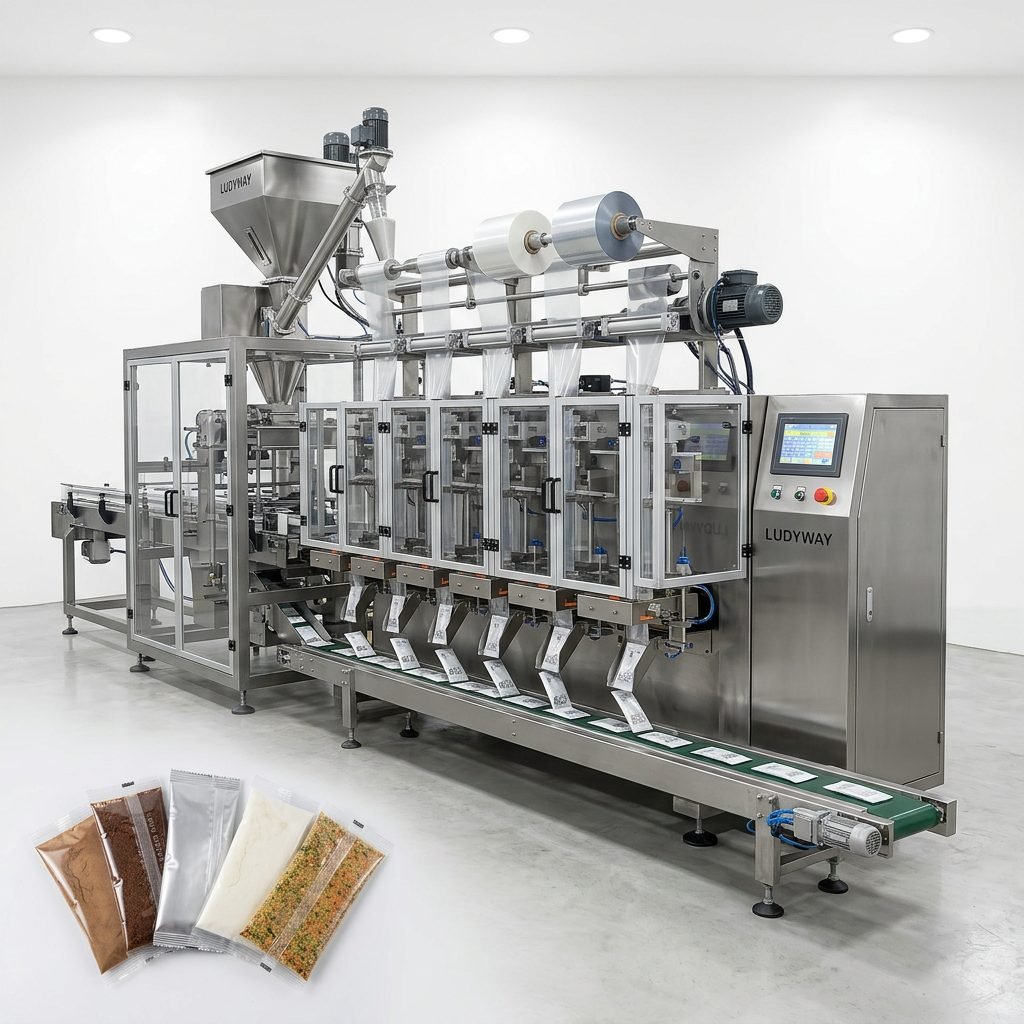
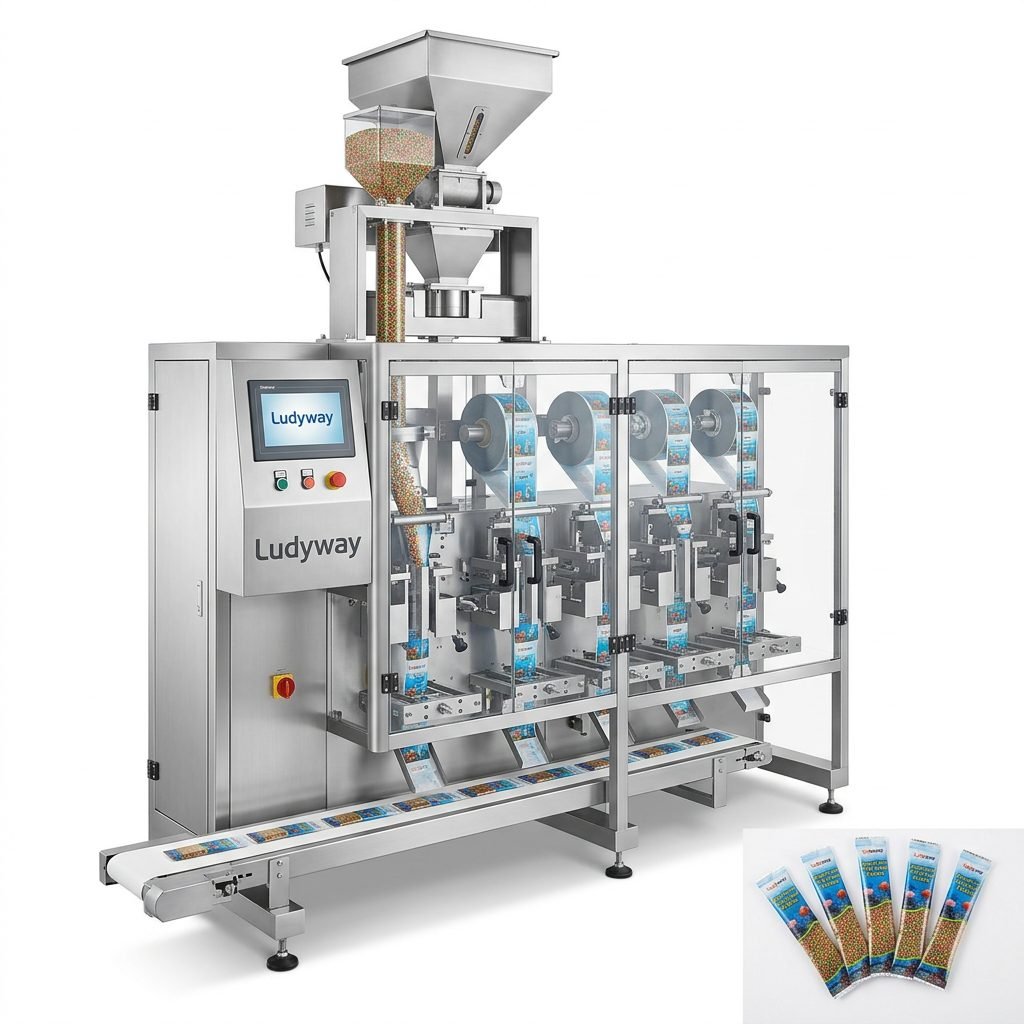
For bakeries targeting the fast-growing single-serve segment, multi-lane stick pack machines offer unmatched efficiency. These systems run multiple lanes simultaneously from a single film web, dramatically increasing output per square meter of factory floor space. A 10-lane machine running at 50 cycles per minute can produce 500 packs per minute—ideal for portion-control baking powder, sugar, instant yeast, and flavored drink powders often paired with bakery items. Look for models with independent lane control, quick changeover capabilities between different pack lengths, and servo-driven sealing jaws for precise temperature regulation.
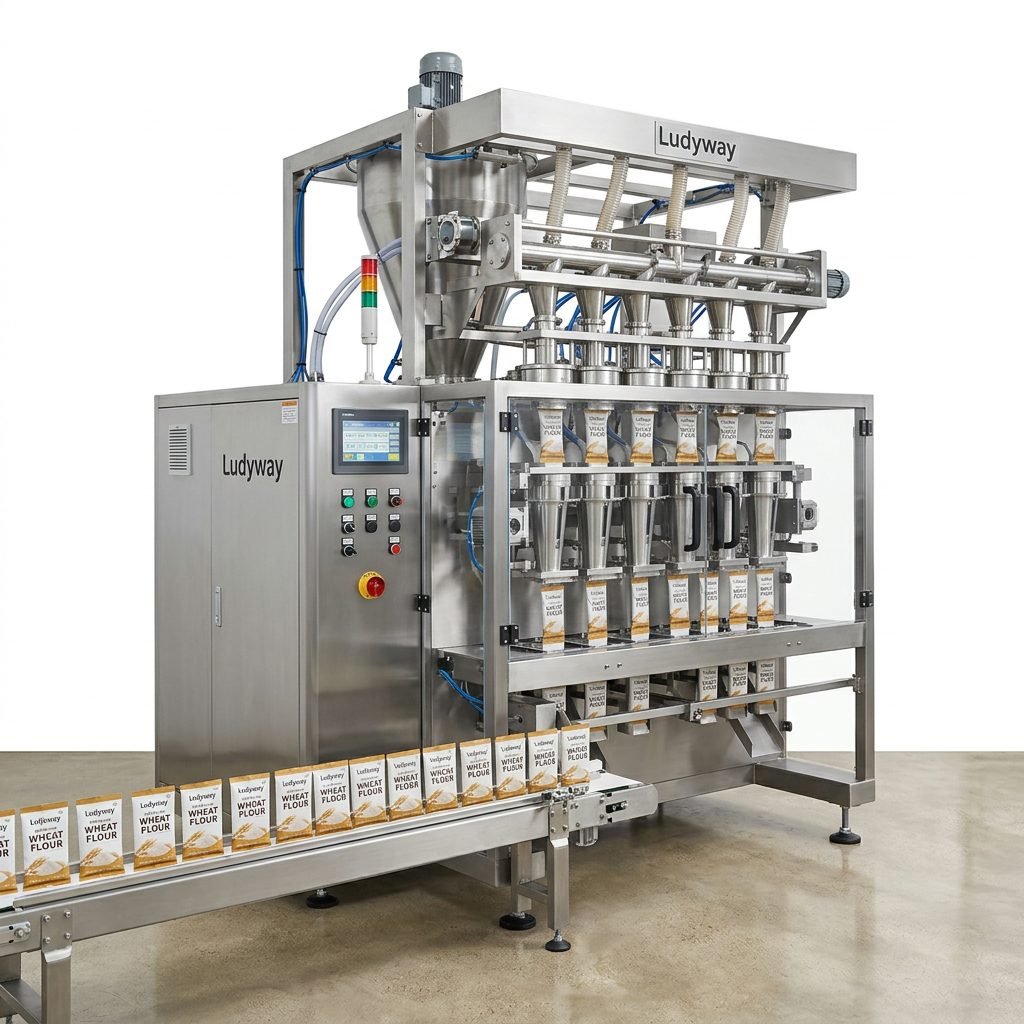
Flow Wrapping and Horizontal Packaging for Baked Goods
For finished baked products such as cookies, croissants, muffins, and snack bars that require a protective wrapper, horizontal flow wrapping machines are the standard choice. These systems wrap individual or multiple products in a tight film wrapper, often with a fin seal on the bottom and end seals on both sides. Modified atmosphere packaging (MAP) options extend shelf life for premium bakery items destined for export markets across Europe. When integrating flow wrappers into your line, ensure they are synchronized with upstream cooling conveyors and downstream cartoning equipment.
Navigating EU Regulatory Compliance and Safety Standards
Compliance with European regulations is non-negotiable for any packaging production line operating within the EU. The following standards and directives are particularly relevant to bakery packaging operations:
- CE Marking: All packaging machinery placed on the European market must carry CE marking, demonstrating conformity with the Machinery Directive (2006/42/EC) and applicable harmonized standards. Request a Declaration of Conformity from your equipment supplier.
- Food Contact Materials Regulation (EC) No 1935/2004: All packaging materials and machine parts in contact with food must not transfer constituents to the food in quantities that could endanger human health. This applies to film materials, sealing components, and lubricants used in the machine.
- EN 415 Series – Safety of Packaging Machines: This series of European standards specifies safety requirements for different types of packaging machinery, including form-fill-seal machines, palletizers, and wrapping equipment.
- Hygienic Design (EN 1672-2): Bakery packaging machines must be designed for easy cleaning and sanitization to prevent product contamination. Look for sloped surfaces, stainless steel construction in food contact zones, and sealed bearings.
- ATEX Directive (if applicable): If your bakery handles fine flours or powders that can create potentially explosive dust atmospheres, certain electrical and mechanical components must comply with ATEX requirements for explosive atmospheres.
For comprehensive guidance on packaging machinery standards, refer to the ISO packaging standards catalog, which covers international specifications for packaging equipment, materials, and testing methods.

Installation, Training, and Lifecycle Support
A successful setup extends far beyond equipment delivery. Proper installation, comprehensive operator training, and responsive after-sales support determine whether your bakery packaging production line achieves its promised performance over its operational lifetime. Key phases to plan for include:
- Pre-Installation Site Preparation: Ensure utilities (electrical, compressed air, water) are correctly sized and positioned according to the machine supplier’s layout drawings. Arrange for forklift or crane access if modules are heavy.
- Installation and Commissioning: Factory-trained technicians should supervise the mechanical assembly, electrical connections, and software configuration. Allow 1–3 weeks depending on line complexity.
- Operator and Maintenance Training: Invest in structured training sessions covering daily operation, changeover procedures, basic troubleshooting, and preventive maintenance schedules. This reduces unplanned downtime significantly.
- Spare Parts Strategy: Stock critical wear parts locally to avoid extended lead times. Common items include sealing jaws, heating elements, belts, filters, and sensors.
- Remote Support and Diagnostics: Modern packaging lines increasingly offer remote access capabilities, allowing supplier technicians to diagnose issues, adjust parameters, and guide on-site staff in real time via secure connections.
Preventive Maintenance Best Practices
Establish a structured preventive maintenance program from day one. Daily tasks include inspecting seal integrity, cleaning film dust from sensors, and checking lubricant levels. Weekly tasks cover belt tension adjustments, chain lubrication, and verification of safety interlocks. Monthly and quarterly schedules should address gearbox oil changes, thorough electrical connection inspections, and replacement of wear components before they fail. A documented maintenance log not only extends machine life but also supports food safety audits and certifications.
Technology Trends Shaping Bakery Packaging in Europe
The European packaging machinery sector is embracing several transformative technologies that forward-thinking bakery manufacturers should evaluate when setting up a new production line:
- Servo-Driven Motion Control: Replaces traditional mechanical cams and linkages with programmable servo motors. This enables infinitely adjustable machine parameters, faster changeovers between pack sizes, and reduced mechanical wear. Servo technology also improves seal quality through precise jaw movement control.
- Smart Sensors and Industry 4.0 Integration: Machines equipped with IIoT (Industrial Internet of Things) sensors can monitor vibration, temperature, energy consumption, and production counts in real time. This data feeds into manufacturing execution systems (MES) for predictive maintenance, OEE (Overall Equipment Effectiveness) tracking, and production optimization.
- Sustainable Packaging Material Compatibility: As Europe leads the global push toward sustainable packaging, new mono-material films, paper-based laminates, and compostable structures are entering the market. Your packaging machine should be capable of sealing these materials reliably, which often requires precise temperature control, modified dwell times, and optimized jaw pressure profiles.
- Vision Inspection Systems: High-resolution cameras integrated into the packaging line can detect seal defects, print misalignments, label errors, and foreign objects at full production speed. Automated reject stations remove defective packs without stopping the line.
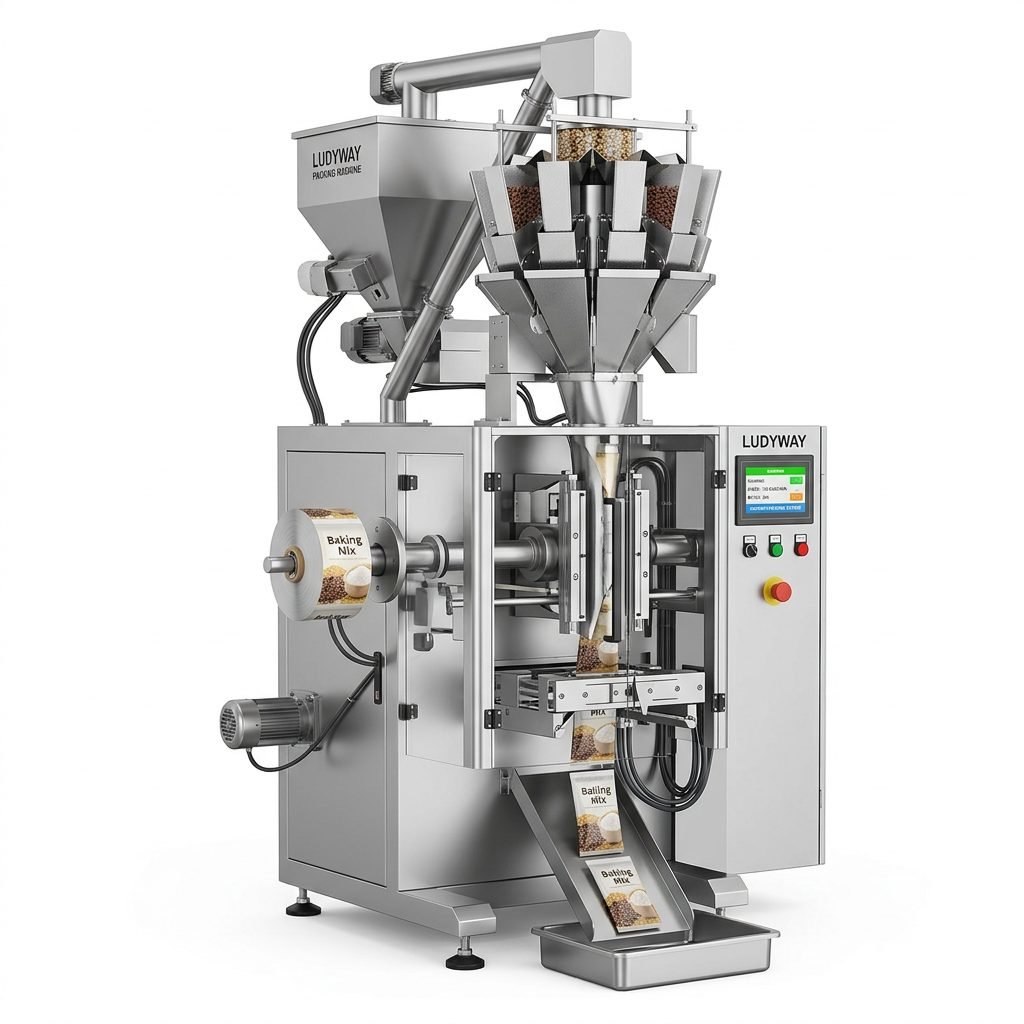
Selecting a Reliable Packaging Machinery Partner
Choosing the right equipment manufacturer is as important as the technical specifications of the machines themselves. A strong partner brings engineering expertise, regulatory knowledge, and long-term service commitment that directly impact your project’s success. Evaluate potential suppliers on these criteria:
- Industry Experience and Track Record: How many years has the company specialized in food packaging, particularly for powder, granule, and liquid products similar to bakery applications?
- European Project References: Can the supplier demonstrate successful installations in European countries with satisfied customers willing to provide references?
- Turnkey Capability: Can the partner supply and integrate the entire line—from feeding systems through to end-of-line palletizing—rather than requiring you to coordinate multiple vendors?
- Regulatory Documentation: Will the supplier provide full CE certification, safety test reports, and food-grade material certificates without delay?
- Localized Support: Does the company have service partners, spare parts distribution, or technical representatives within Europe to ensure rapid response times?
For bakeries and food manufacturers seeking a comprehensive packaging solution, Ludyway is one of the largest packaging machine manufacturers with extensive experience delivering advanced multi-lane stick pack, sachet, and turnkey packaging systems to customers in over 100 countries, including markets across Europe. With a 20,000㎡ modern manufacturing facility and a team of more than 130 professional packaging experts, the company supports projects from initial line design through installation and ongoing technical service.
Calculating ROI and Justifying Your Investment
Investing in a high-quality automated packaging line requires a compelling business case. Key financial metrics to model include:
| ROI Factor | Impact of Automation | Typical Improvement Range |
|---|---|---|
| Labor Cost Reduction | Replacing manual weighing and packing with automated multi-lane systems | 40% – 70% reduction in direct labor |
| Product Giveaway Reduction | Precision dosing systems minimize overfill of expensive ingredients like vanilla powder, cocoa, and specialty flour blends | 1% – 5% material savings |
| Throughput Increase | Multi-lane machines produce 3–10 times more packs per hour than single-lane alternatives | 200% – 900% output gain |
| Waste Reduction | Improved seal integrity and fewer rejects mean less wasted packaging film and product | 0.5% – 3% waste reduction |
| Uptime Improvement | Servo-driven machines with fewer mechanical wear points experience less unplanned downtime | 5% – 15% higher OEE |
Most bakery manufacturers recover their investment in a modern automated packaging line within 2 to 4 years, after which the ongoing cost savings and increased production capacity contribute directly to profitability. For additional industry data and market intelligence to support your business case, explore the PMMI Business Intelligence library, which publishes regular reports on packaging machinery market trends and technology adoption rates.
Common Pitfalls to Avoid When Setting Up Your Line
Even well-funded projects can encounter delays and cost overruns if common mistakes are not anticipated. Based on real-world experiences of European bakery packaging installations, watch out for these pitfalls:
- Underestimating Film Compatibility Testing: Always test your specific packaging film on the actual machine before finalizing the purchase. Temperature, dwell time, and pressure settings that work in a lab may not translate directly to production conditions. Allow at least 2–3 weeks for thorough film trials.
- Insufficient Operator Training Budget: Skimping on training leads to longer ramp-up times, more rejects, and higher employee turnover frustration. Budget for at least 40 hours of hands-on training per operator and designate a lead technician for advanced troubleshooting skills.
- Ignoring Utility Infrastructure Requirements: A high-speed multi-lane machine may require more compressed air volume, higher electrical capacity, or cleaner power than your existing infrastructure provides. Conduct a full utility audit early in the planning phase.
- Overlooking Future Flexibility Needs: Your product portfolio may expand to include new pack sizes, formats, or product types within a few years. Choose a machine platform that supports modular upgrades and can accommodate your projected 5-year product roadmap.
- Selecting a Supplier Without European Experience: Machines that perform well in other regions may not meet EU-specific safety, documentation, or material compliance requirements. Verify the supplier’s CE marking history and European installation references before committing.
The Importance of Factory Acceptance Testing (FAT)
Before your equipment leaves the manufacturer’s factory, insist on a thorough Factory Acceptance Test (FAT). This involves running the complete line with your actual products and packaging materials at specified speeds to verify performance against contractual guarantees. Document all test results, including pack weights, seal strength, production rate, and downtime events. A successful FAT significantly reduces the risk of surprises during installation and commissioning at your European facility.
Conclusion: Building a Future-Ready Bakery Packaging Line in Europe
Setting up a bakery packaging machine production line in Europe is a significant undertaking that rewards careful planning, informed equipment selection, and partnership with experienced machinery suppliers. By thoroughly evaluating your product requirements, understanding EU regulatory obligations, investing in scalable automation technology, and building a strong support infrastructure around your line, you position your bakery business for sustained growth in one of the world’s most competitive and profitable food markets.
The European bakery packaging sector continues to evolve rapidly, driven by sustainability mandates, digital transformation, and changing consumer preferences toward smaller portion sizes and cleaner labels. A well-designed packaging line not only meets today’s production demands but also provides the flexibility to adapt to tomorrow’s market requirements—protecting your investment and securing your competitive position for years to come.
For further reading on packaging industry standards and market outlook, consult the PMMI State of the Industry 2025 report for comprehensive data on packaging machinery market trends, or review the FDA Packaging and Food Contact Substances guidance if your bakery products are also destined for export markets beyond Europe.