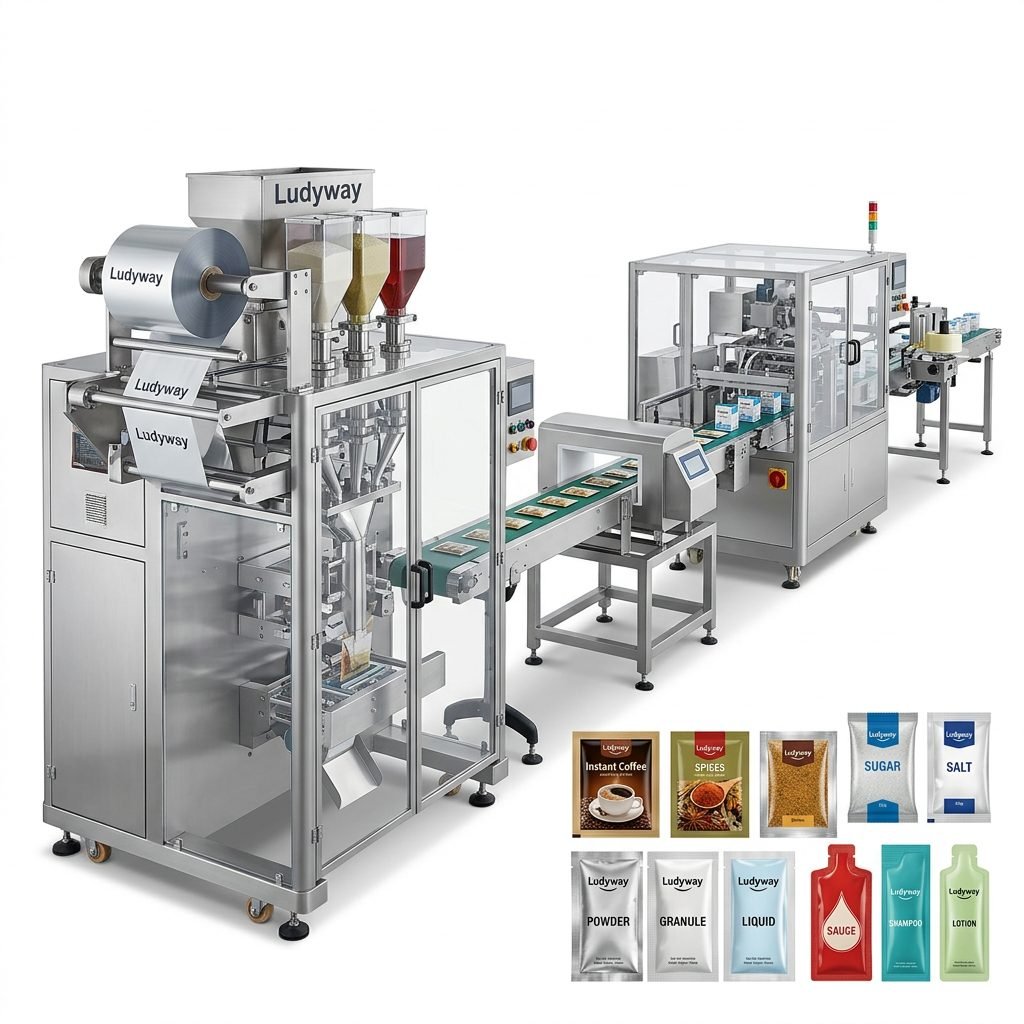
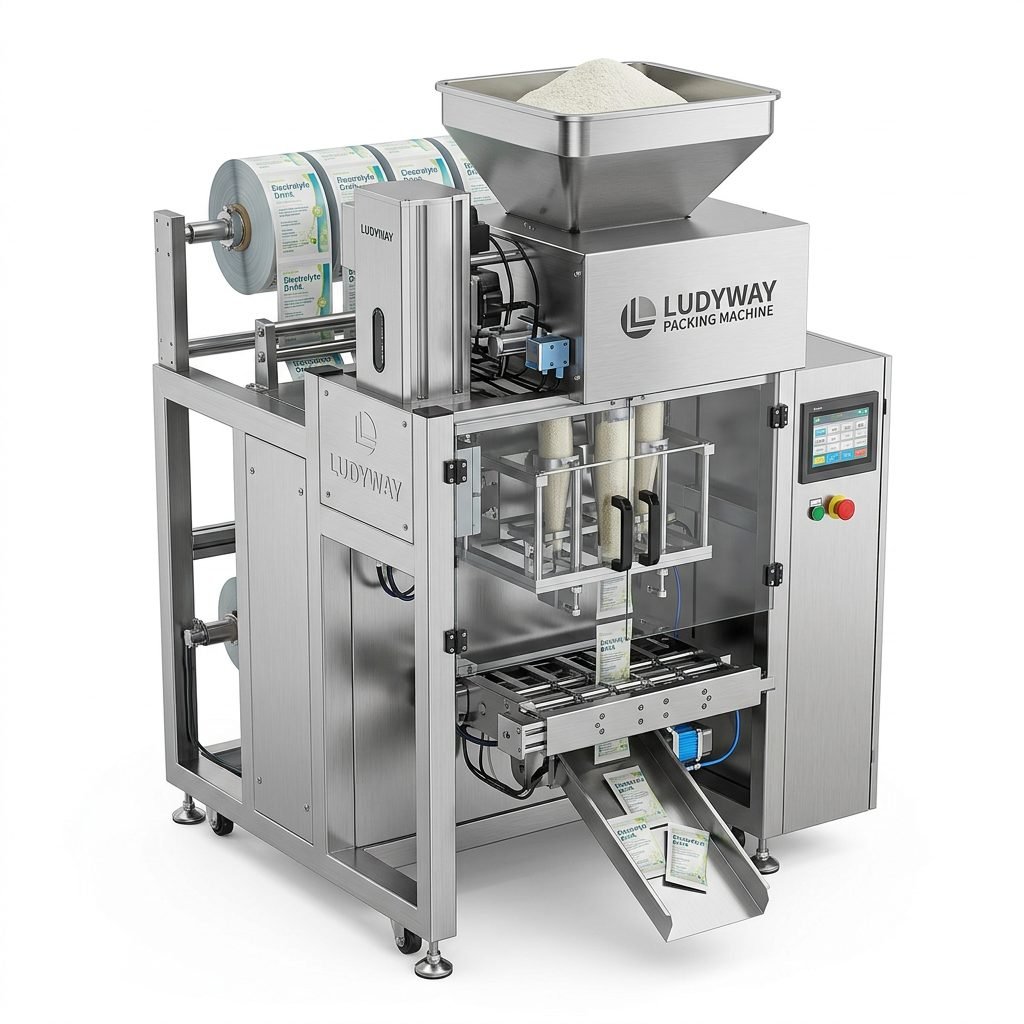
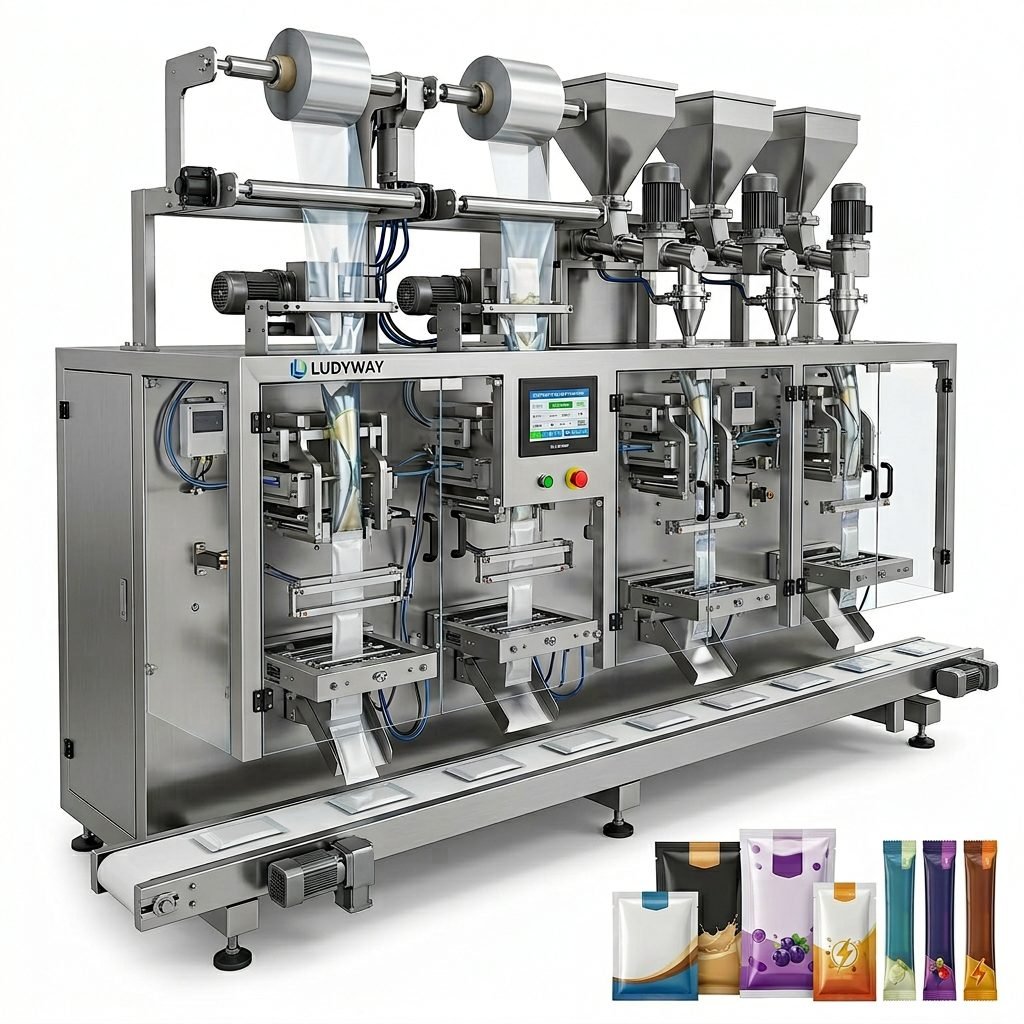
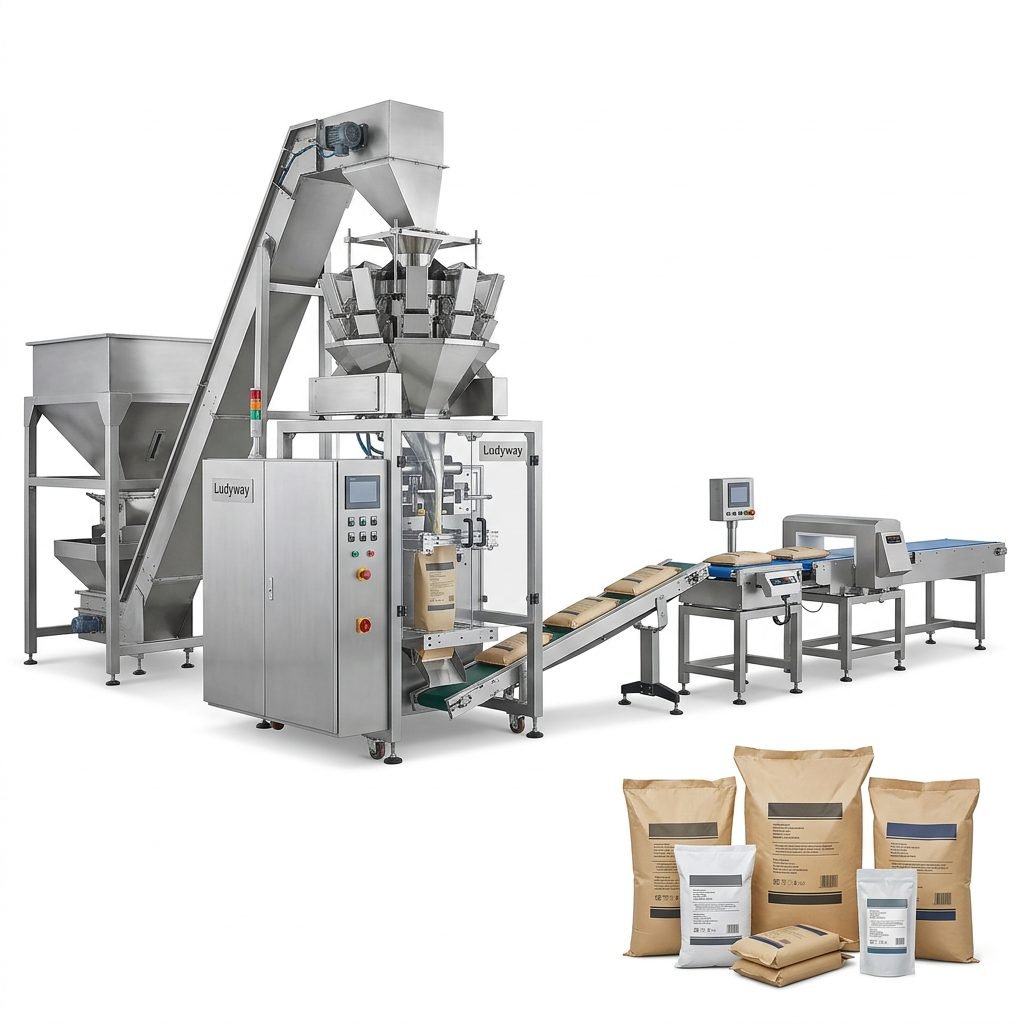
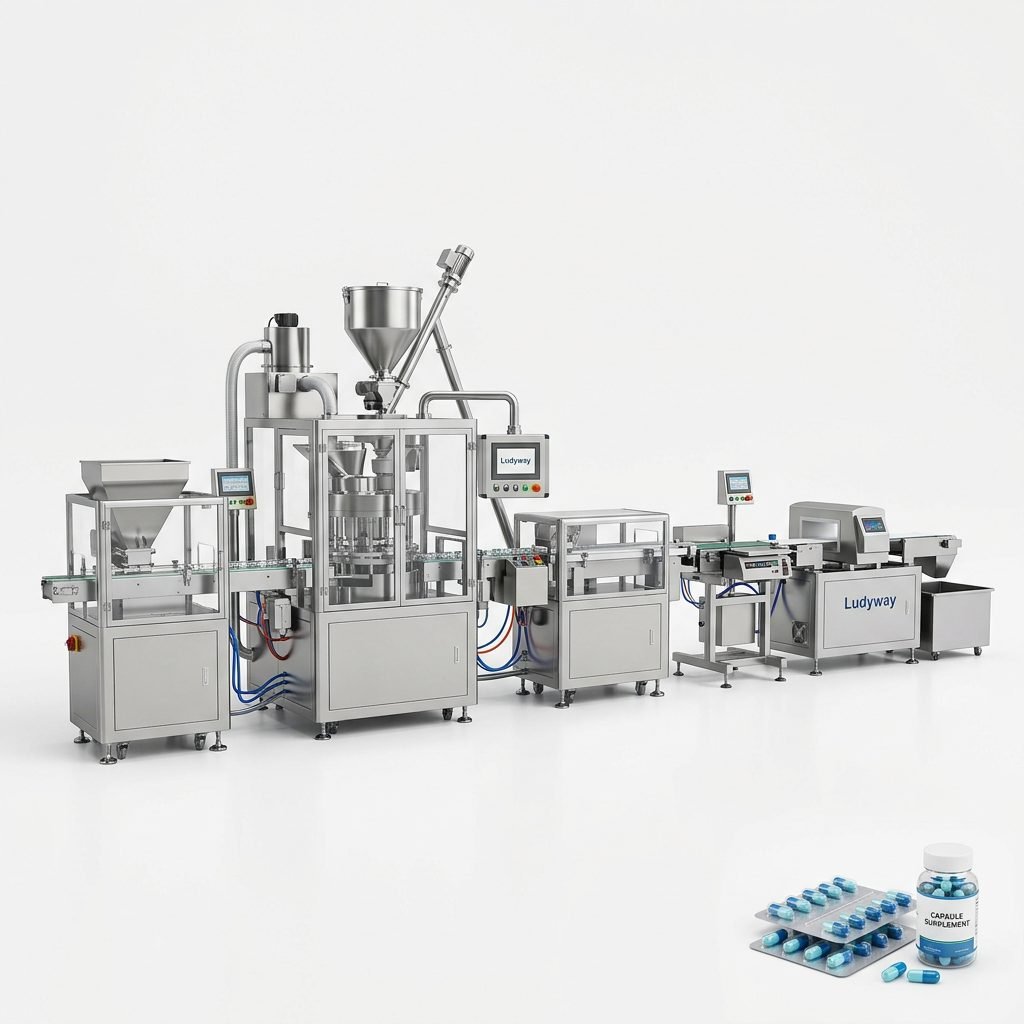
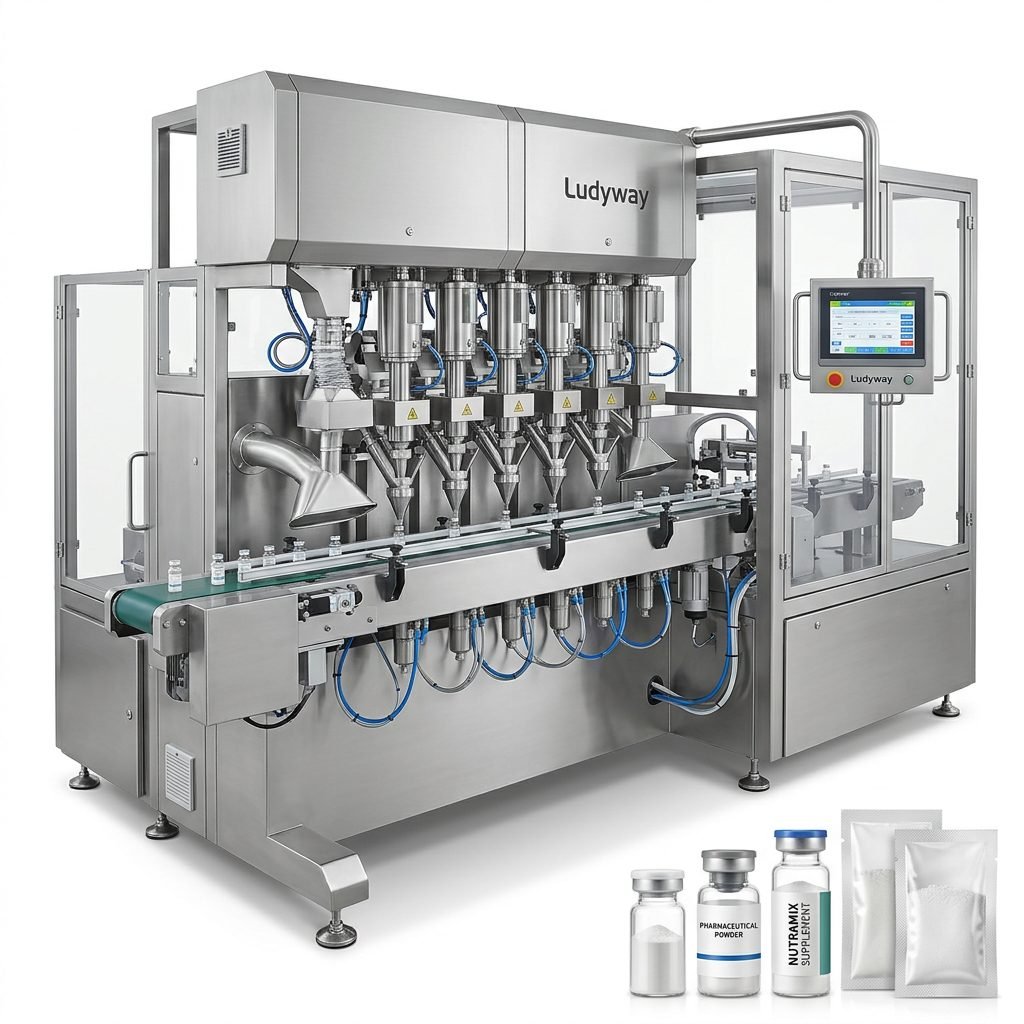
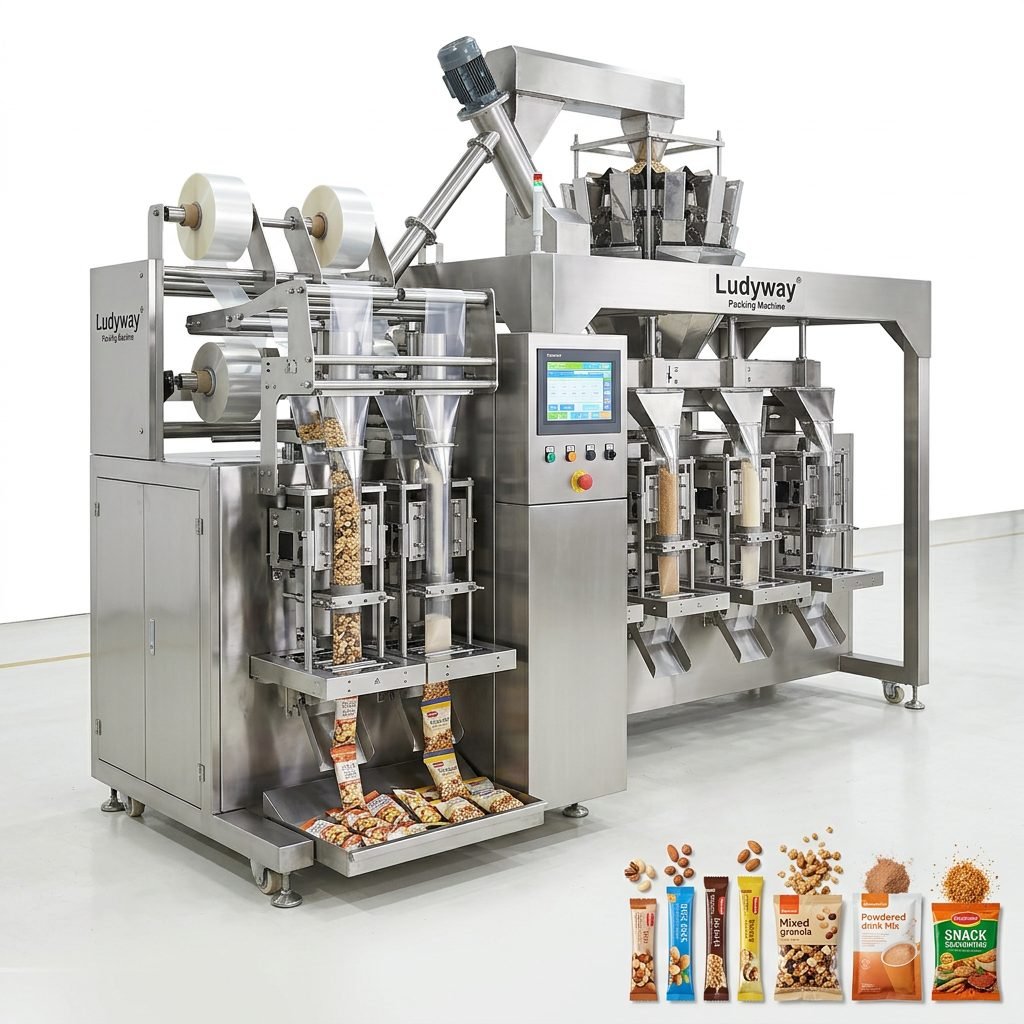
In pharmaceutical manufacturing, a sachet packaging line is a complete automated system designed to
form, fill, seal, inspect, code, and discharge single-dose or unit-dose sachets for products such as powders,
granules, liquids, gels, and oral solids. These lines are widely used for OTC medicines, prescription support products,
nutraceuticals, rehydration salts, pediatric doses, and travel-size healthcare products where convenience, dosing accuracy,
and product protection are critical.
For pharma companies, sachet packaging is not just about small flexible packs. It is about
compliance, hygiene, traceability, and dose consistency.
A well-designed line helps manufacturers reduce contamination risks, improve output, support GMP workflows, and create
packaging formats that are easy for patients to use.
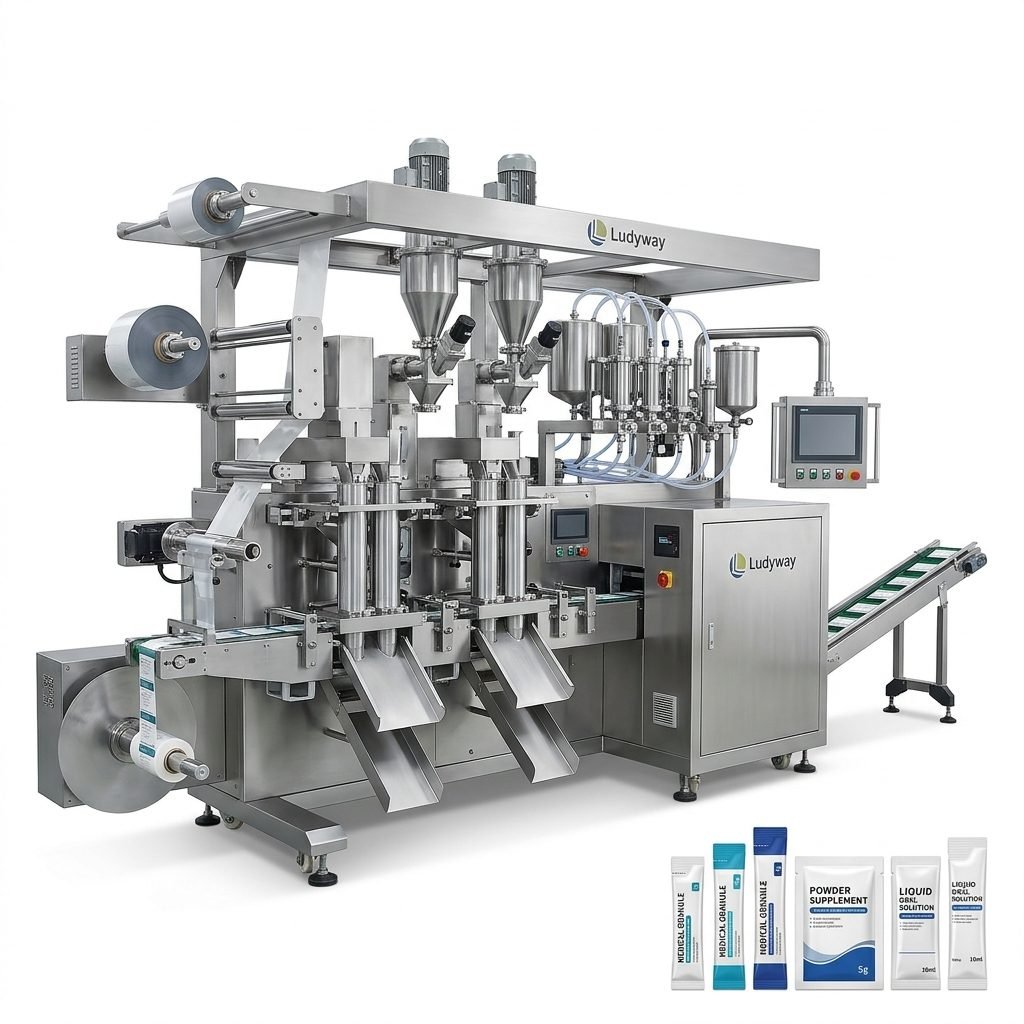
What exactly is a pharmaceutical sachet packaging line?
A pharmaceutical sachet packaging line is an integrated production system that converts packaging film into finished sachets,
fills them with a measured pharmaceutical product, seals them securely, and prepares them for secondary packaging or shipment.
Depending on the application, the line may include:
- Film unwinding and tension control
- Sachet forming modules
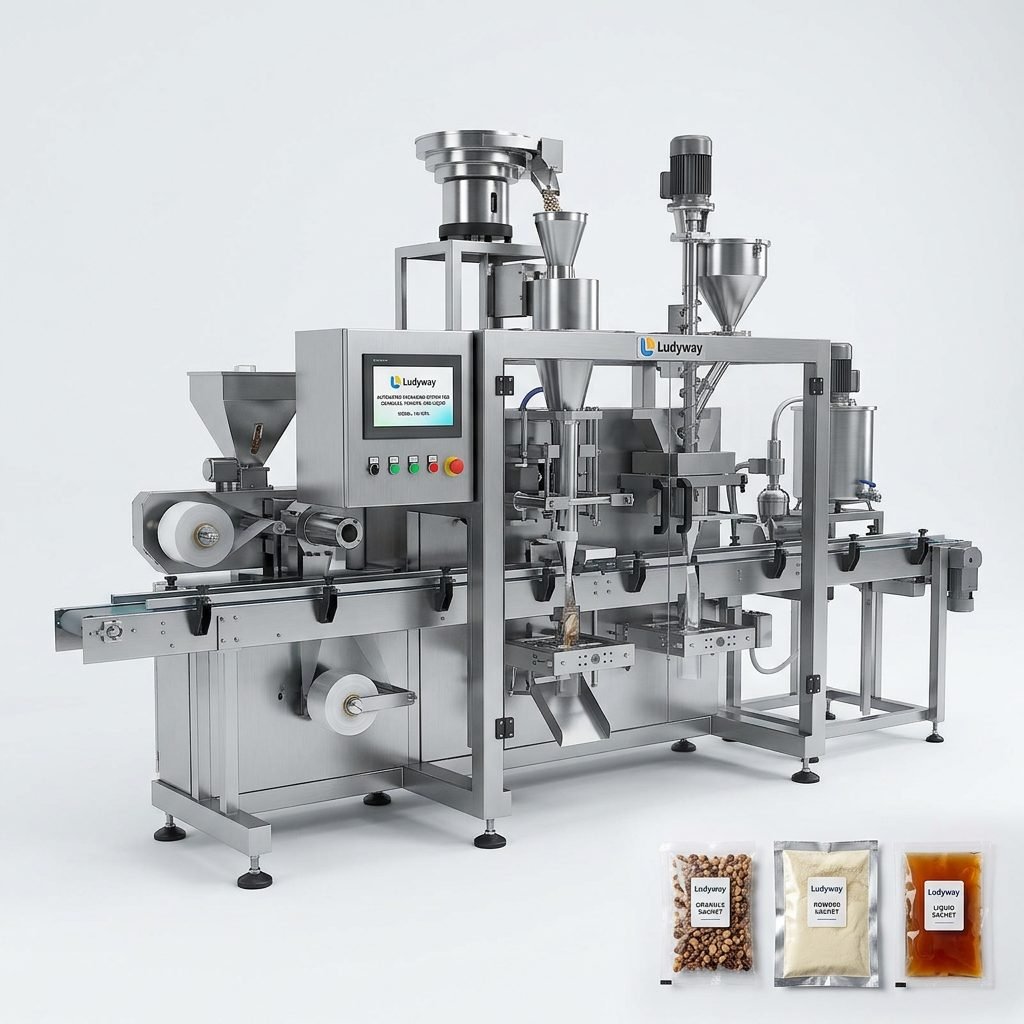
- Powder, granule, liquid, or gel dosing systems
- Heat sealing stations
- Date/batch coding units
- Vision inspection or reject systems
- Checkweighers and metal detectors
- Cartoning or case packing equipment
In simple terms, it is the equipment chain that turns bulk pharmaceutical material into
sealed, labeled, consistent, ready-to-distribute sachets.
Why sachet packaging is important in the pharmaceutical industry
Sachets are popular in pharma because they support modern patient needs and regulatory expectations at the same time.
They are especially useful when manufacturers need compact, tamper-evident, portable packaging for precise single-use dosing.
- Accurate unit dosing: ideal for powders, oral granules, and liquid single-dose products.
- Better convenience: patients can carry and use sachets easily at home, work, or while traveling.
- Reduced product waste: one-use formats help avoid repeated opening of larger containers.
- Improved product protection: barrier films help shield contents from moisture, oxygen, and light.
- Strong branding area: sachets can carry instructions, batch details, and compliance information.
- Efficient high-speed production: multi-lane systems can significantly increase output.
Common pharmaceutical products packed in sachets
Pharmaceutical sachet lines are highly versatile. They can handle different product forms when equipped with the right dosing
and sealing technology.
| Product Type | Examples | Typical Filling Method |
|---|---|---|
| Powders | Antibiotic powder, glucose powder, supplement powder | Auger filler |
| Granules | Cold medicine granules, oral rehydration salts, herbal granules | Volumetric cup or weighing system |
| Liquids | Oral liquid doses, syrups, antiseptic liquid | Piston pump or servo pump |
| Gels / Pastes | Topical gel, medical cream, treatment gel | Pump filling system |
Main components of a pharmaceutical sachet packaging line
1. Product feeding system
This section moves the bulk product from a hopper, tank, or upstream processing machine into the filling unit.
For powders and granules, this may involve screw feeders, vacuum feeders, or elevators. For liquids, sanitary tanks,
pipelines, and pumps are commonly used.
2. Forming section
The machine pulls packaging film from a roll and shapes it into sachet lanes. Depending on the machine structure,
sachets may be produced as 3-side seal, 4-side seal, or back-seal packs. In pharma, the format often depends on
product stability, filling characteristics, and downstream cartoning needs.
3. Dosing and filling system
This is one of the most important parts of the line because dose consistency directly affects compliance and product quality.
The dosing technology must match the product’s flowability, density, viscosity, and target fill weight.
4. Sealing station
Heat sealing closes the sachet and creates the package’s barrier integrity. In pharmaceutical applications,
seal quality is critical because poor seals can lead to leakage,
contamination, or reduced shelf life.
5. Coding and printing module
Sachets usually need batch numbers, manufacturing dates, expiry dates, and traceability codes.
This step helps support quality systems and regulatory documentation.
6. Inspection and rejection systems
Many modern lines include checkweighers, vision systems, seal inspection, and automatic reject devices to remove
non-conforming packs before final packing.
7. Secondary packaging integration
Finished sachets can be connected to cartoners, case packers, and palletizing systems, creating a more complete
automated pharmaceutical packaging workflow.
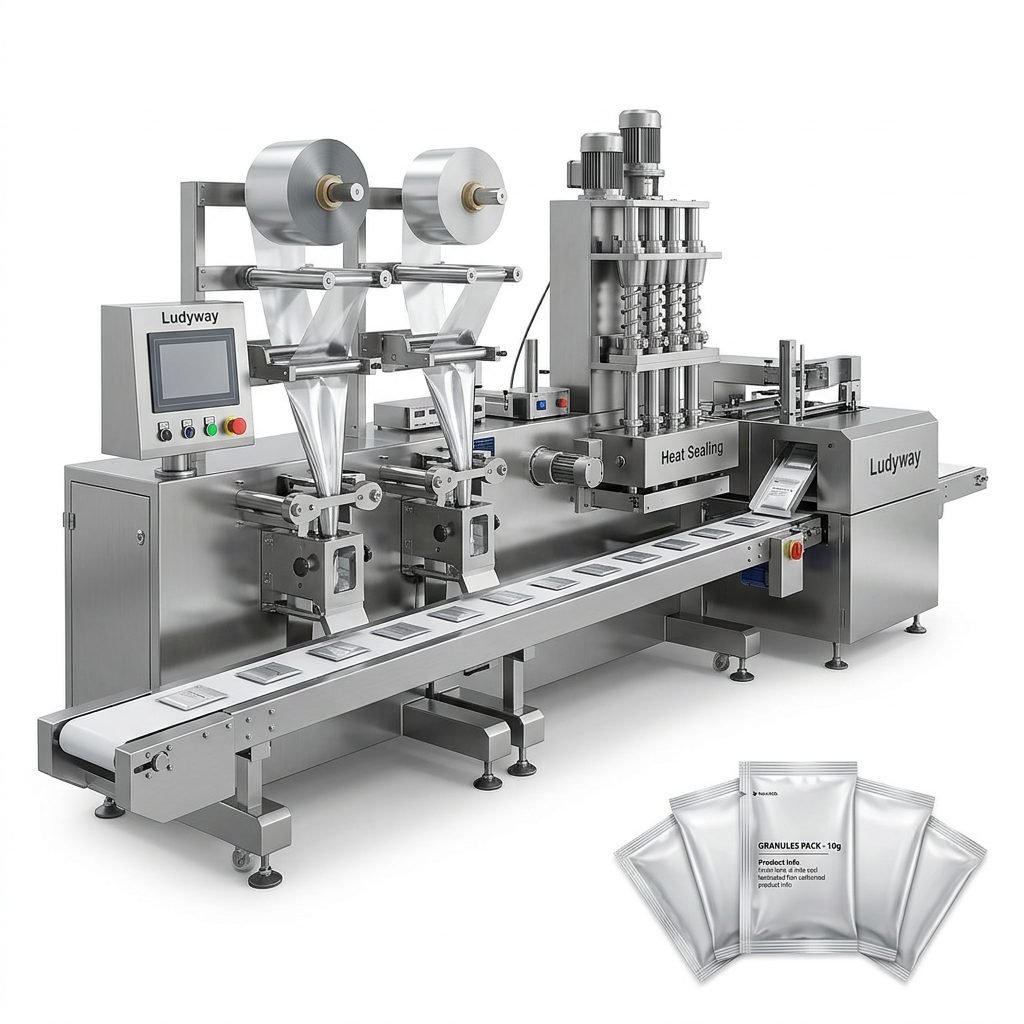
How a pharmaceutical sachet packaging line works
Although the exact sequence varies by machine design, the typical process looks like this:
- Packaging film is loaded and unwound.
- The machine forms multiple sachet lanes or individual sachet shapes.
- The product is dosed into each sachet cavity with controlled accuracy.
- The sachets are heat-sealed under controlled temperature and pressure.
- Sachets are cut, separated, and discharged.
- Codes, dates, and batch details are printed or verified.
- Inspection devices identify underweight, leaking, or defective packs.
- Qualified sachets move to cartoning, counting, bundling, or case packing.
This flow allows pharma producers to maintain speed while still meeting high requirements for
cleanliness, precision, and repeatability.
Types of sachet packaging machines used in pharma
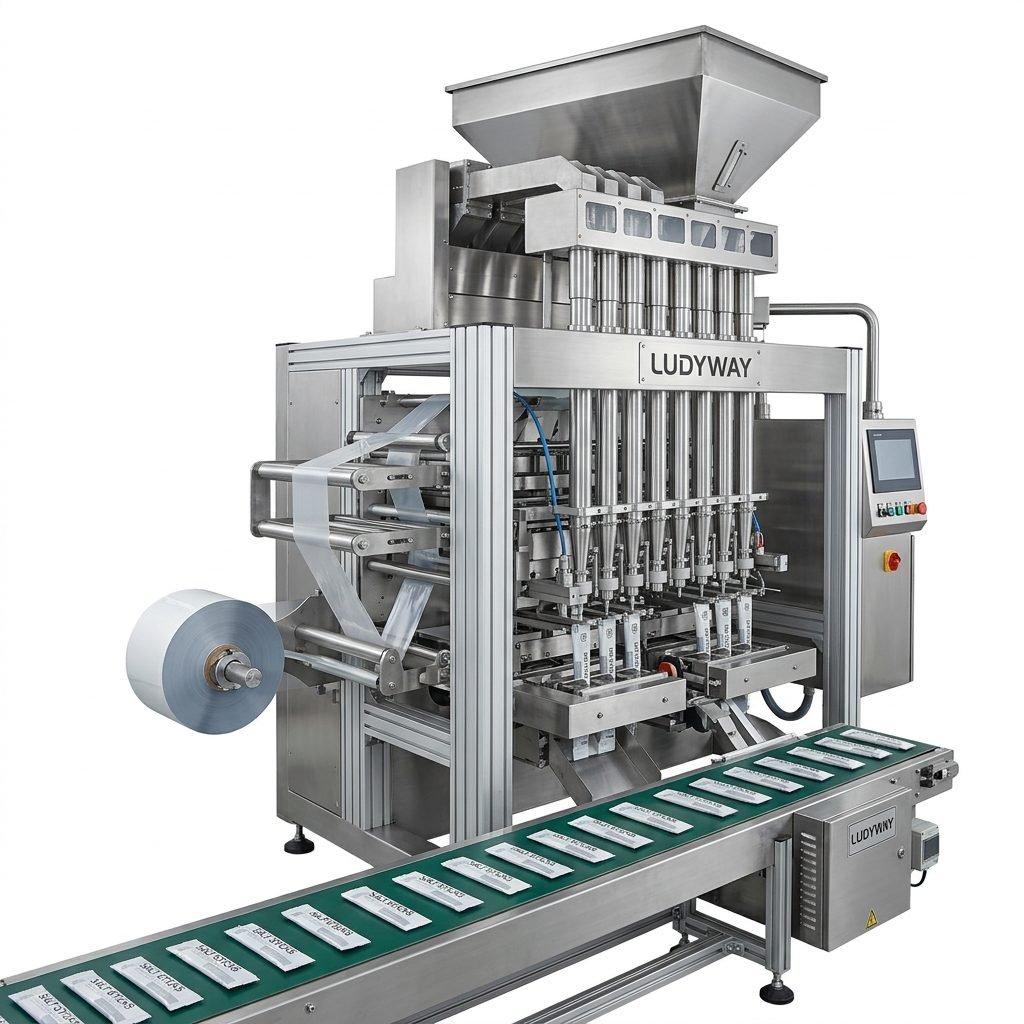
Single-lane sachet machines
Suitable for smaller production volumes, pilot runs, specialty products, or products requiring more controlled filling speeds.
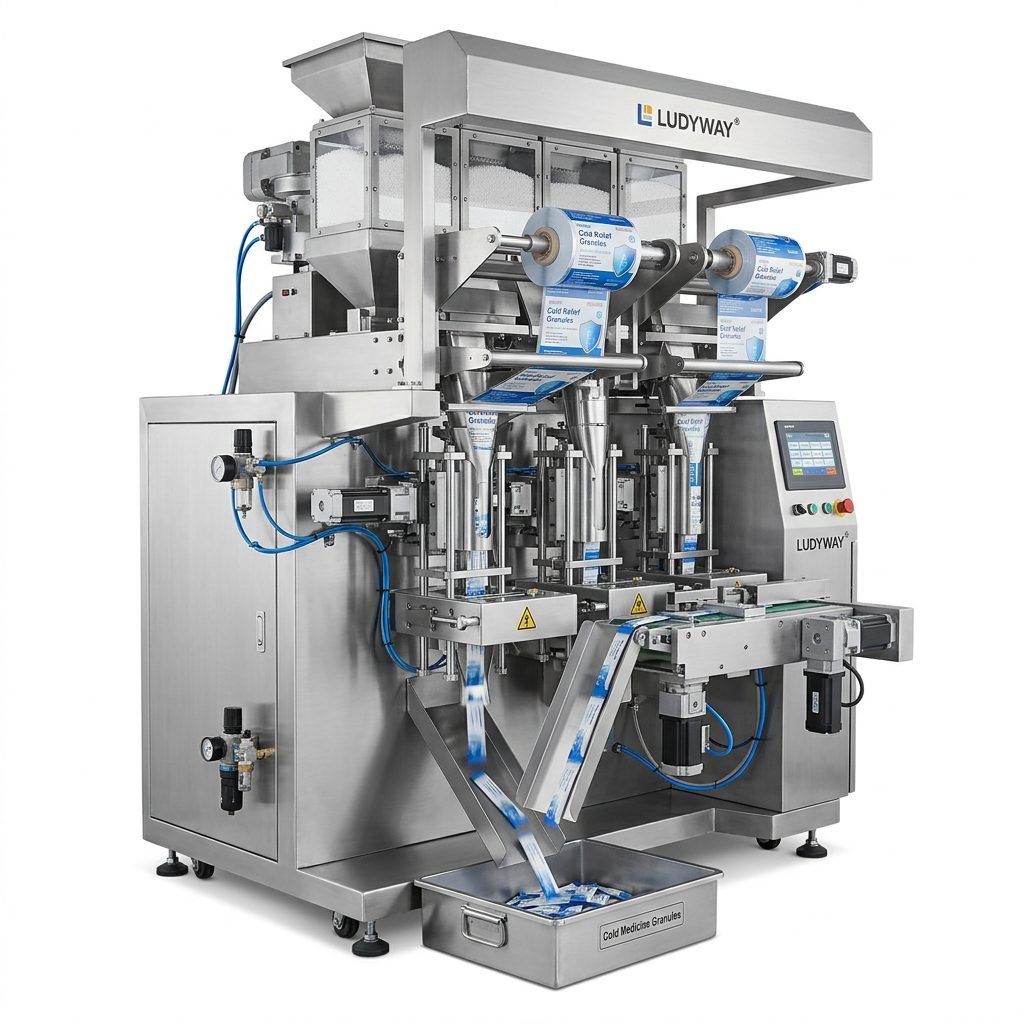
Multi-lane sachet machines
Ideal for high-volume production. These machines run several sachet lanes at once, dramatically increasing output for
powders, granules, and liquid unit-dose products.
Vertical form-fill-seal sachet systems
Often used for powders and granules. They are compact, efficient, and suitable for a wide range of pharmaceutical sachet sizes.
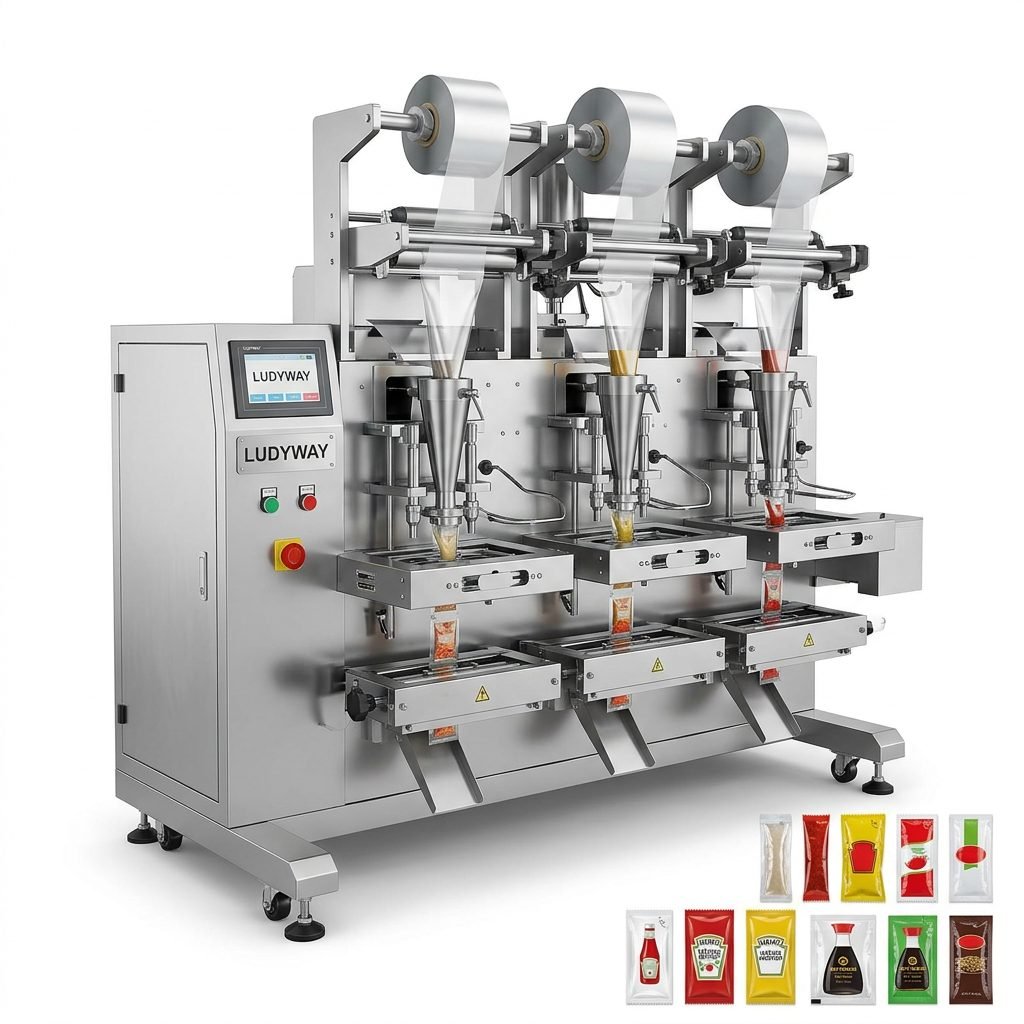
Liquid and gel sachet filling machines
Designed for products with flowable or semi-viscous properties, such as oral liquids, topical gels, and treatment creams.
Key benefits of using a sachet packaging line in pharmaceutical production
- Higher productivity through automation and continuous operation
- Consistent dosing with accurate filling systems
- Improved hygiene through enclosed product contact design
- Lower labor dependence compared with manual or semi-automatic packaging
- Better traceability via coding and integrated inspection
- Flexible format options for powders, granules, liquids, and gels
- Scalability from standalone machines to turnkey packaging lines
Important design requirements for pharmaceutical sachet lines
Not every sachet machine is suitable for pharmaceutical use. Pharma packaging environments demand more than speed.
Equipment should be designed around quality assurance and process control.
| Requirement | Why It Matters |
|---|---|
| GMP-friendly construction | Supports clean production and easier validation |
| Accurate filling control | Reduces dosing deviations and rejects |
| Seal integrity | Protects product stability and shelf life |
| Traceability features | Essential for batch tracking and audits |
| Easy cleaning and changeover | Important for multi-product production |
| Inspection integration | Improves quality assurance before shipment |
How to choose the right pharmaceutical sachet packaging line
Choosing the best line depends on both the product and the production target. A machine that works well for one powder
may not be ideal for a hygroscopic granule or a viscous gel.
Evaluate the product characteristics
- Is it powder, granule, liquid, or paste?
- Does it absorb moisture easily?
- Is it free-flowing or difficult to feed?
- Does it foam, settle, or separate?
Define output expectations
- How many sachets per minute are required?
- Do you need future capacity expansion?
- Would single-lane or multi-lane be more cost-effective?
Check packaging material compatibility
Pharmaceutical products often require specific barrier structures. The line should be compatible with laminate films
that support moisture, oxygen, and light protection.
Review compliance and validation needs
If the line will be used in regulated pharmaceutical production, make sure documentation, material contact standards,
electrical configuration, and quality verification features align with your internal and market requirements.
Consider integration level
Some buyers need only the sachet machine. Others need a full line with conveying, counting, cartoning, coding,
and end-of-line automation.
Common challenges in pharmaceutical sachet packaging
Even advanced lines can face production issues if the product, film, and machine settings are not properly matched.
- Inconsistent fill weight due to poor powder flow or unstable feeding
- Weak seals caused by incompatible film or sealing parameters
- Dust generation in powder applications
- Product sticking in liquid or gel filling systems
- Frequent changeover delays between SKUs
- Packaging waste from poor alignment or cut accuracy
These issues can usually be reduced through proper line design, stable dosing technology, environmental control,
and regular maintenance.
What industries overlap with pharmaceutical sachet packaging?
Pharmaceutical sachet technology is also closely related to packaging applications in health supplements, medical consumables,
personal care, and functional nutrition. This overlap is useful because many manufacturers operate across regulated or
semi-regulated sectors and need flexible equipment platforms.
Companies looking for integrated solutions often work with experienced manufacturers of
Ludyway pharmaceutical packaging machines
to build scalable lines for powders, granules, liquids, and sachet-based unit-dose formats.
Sachet packaging line vs. stick pack line in pharma
Sachets and stick packs are often mentioned together, but they are not exactly the same. Both serve single-dose packaging,
but the final pack shape differs.
| Feature | Sachet | Stick Pack |
|---|---|---|
| Shape | Usually wider and shorter | Long and narrow |
| Use Case | Powders, liquids, gels, broad format flexibility | Portable powders or drink mixes |
| Print Area | Generally larger | More limited |
| Patient Convenience | Very versatile | Excellent for on-the-go use |
Future trends in pharmaceutical sachet packaging
The sachet packaging market continues to evolve as manufacturers seek better efficiency and smarter quality control.
Several trends are shaping new pharma lines:
- Higher adoption of servo-driven multi-lane systems
- Greater integration of vision inspection and data logging
- Improved dust control for powder applications
- More compact line layouts for efficient factory space use
- Faster changeover for multi-SKU production
- Growing use of turnkey automation from filling to cartoning and palletizing
Final thoughts
A pharmaceutical sachet packaging line is far more than a simple sealing machine. It is a
precision packaging system built to protect product quality,
ensure dose accuracy, support compliance, and improve production efficiency. Whether the application involves oral powders,
granules, liquids, or gel-based products, the right line can help pharmaceutical manufacturers achieve reliable output and
consistent package quality at scale.
When evaluating a new line, focus on product compatibility, seal performance, dosing accuracy, cleanliness, inspection features,
and future automation needs. Those factors will have the biggest impact on long-term operating success.