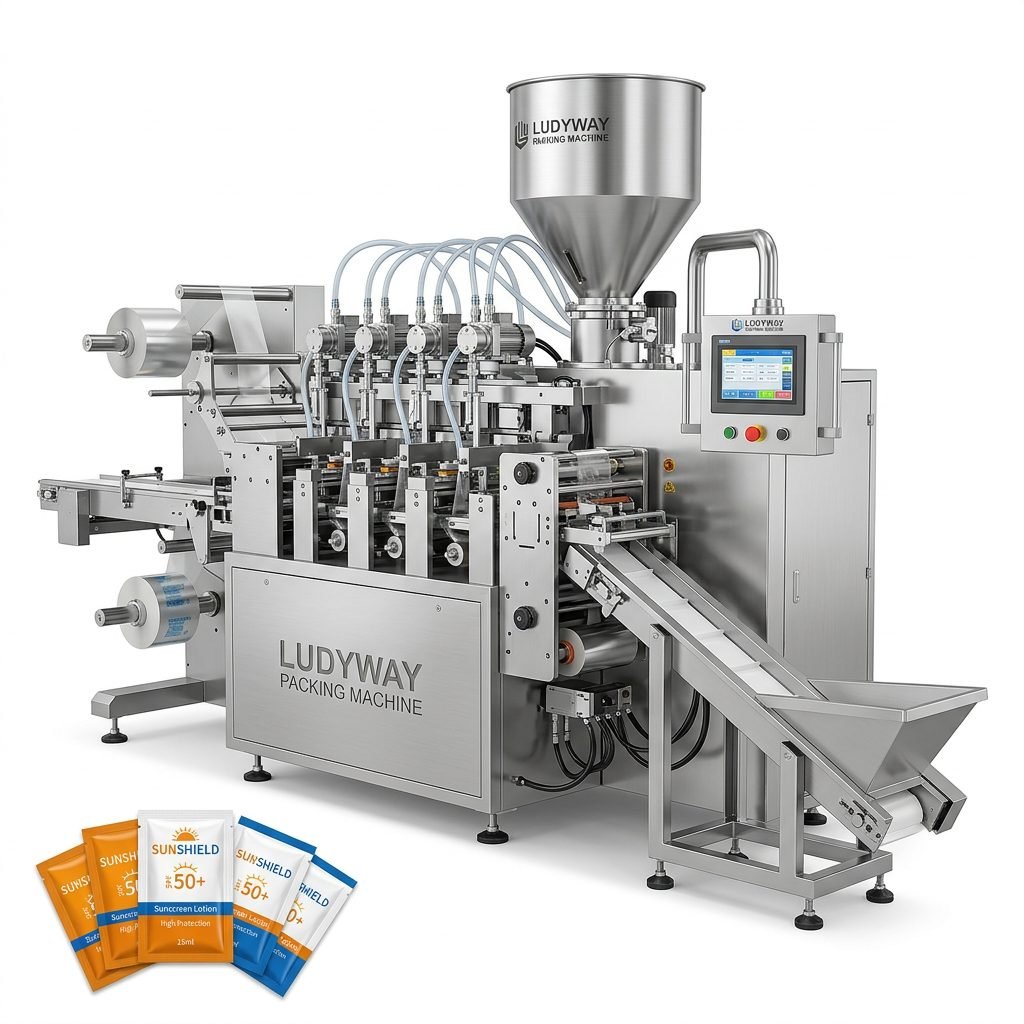
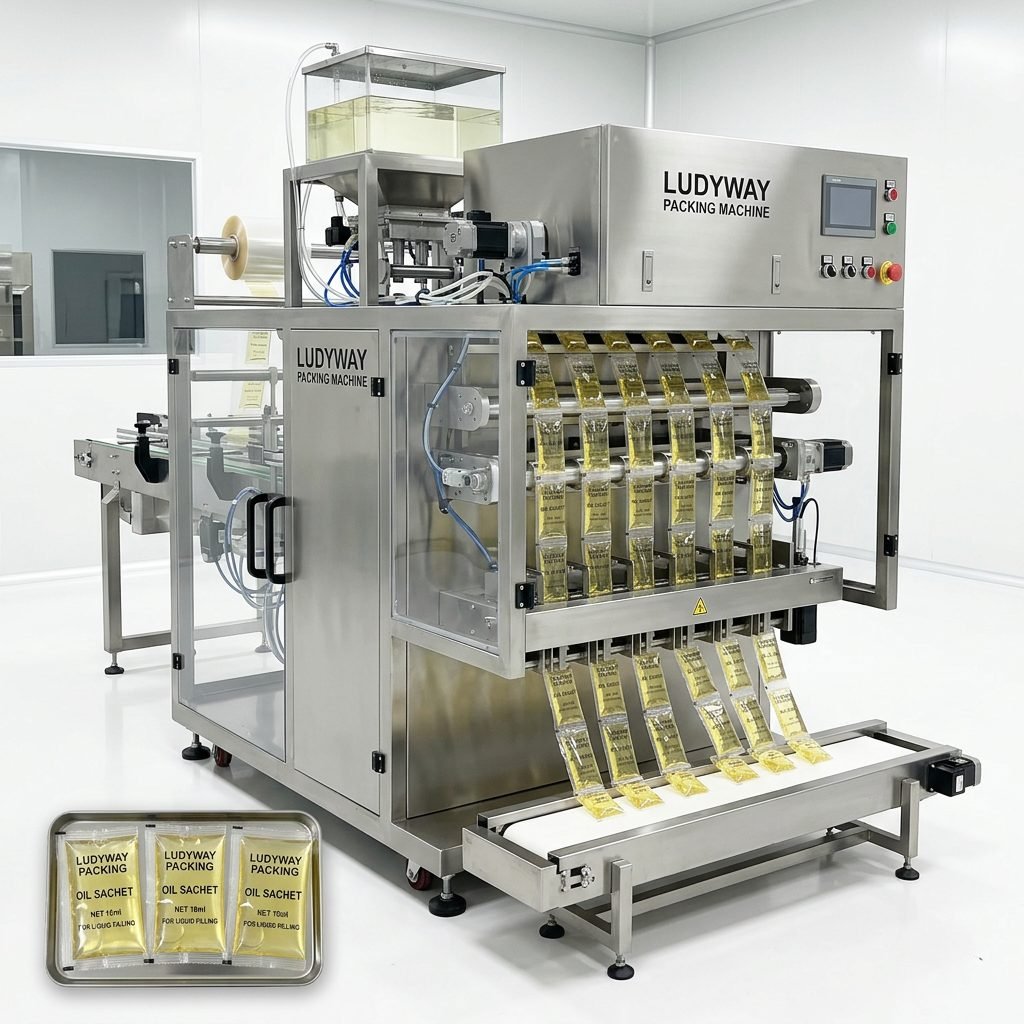
China has solidified its position as the world’s manufacturing powerhouse, offering an unmatched ecosystem for food processing and packaging. Setting up a beef jerky packaging machine production line in China can significantly reduce capital expenditure while granting access to cutting-edge automation technology. The combination of a mature supply chain, skilled engineering talent, and competitive pricing makes it an attractive destination for meat snack producers looking to scale operations efficiently. Understanding the full process — from factory planning to equipment commissioning — is essential for a successful launch.
Why Establish Your Beef Jerky Production Line in China
The advantages extend far beyond cost savings. China’s packaging machinery sector has undergone rapid modernization, now rivaling European and North American manufacturers in precision and reliability. Key benefits include:
- Integrated supply chains for stainless steel components, servo motors, and PLC control systems
- Shorter lead times compared to Western equipment suppliers
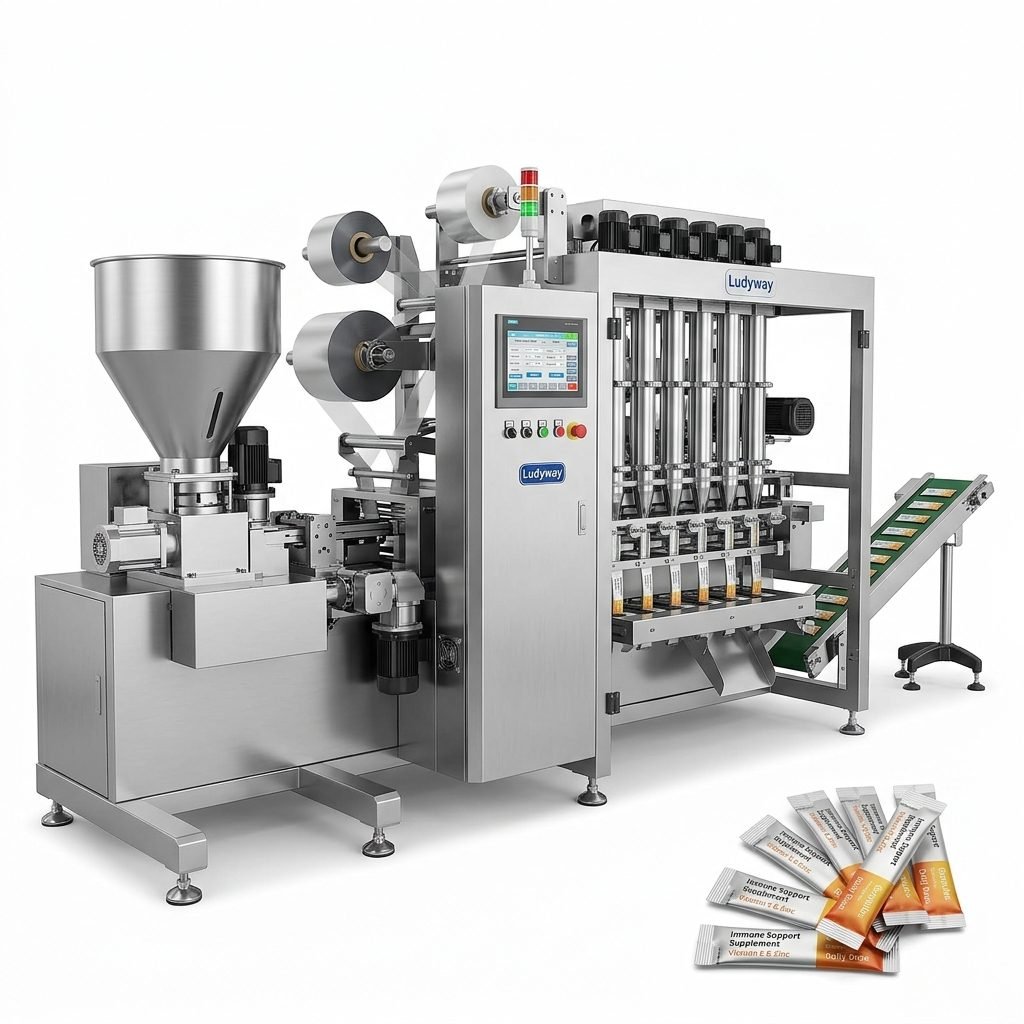
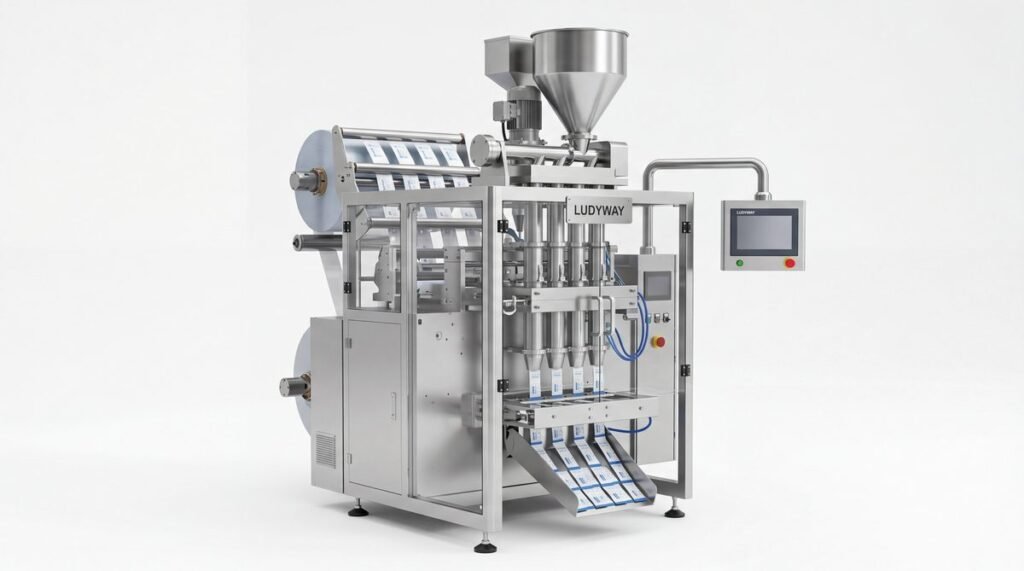
- Access to multi-lane stick pack technology specifically adapted for jerky and dried meat products
- Turnkey project management from factory layout design to staff training
- Ongoing technical support and readily available spare parts
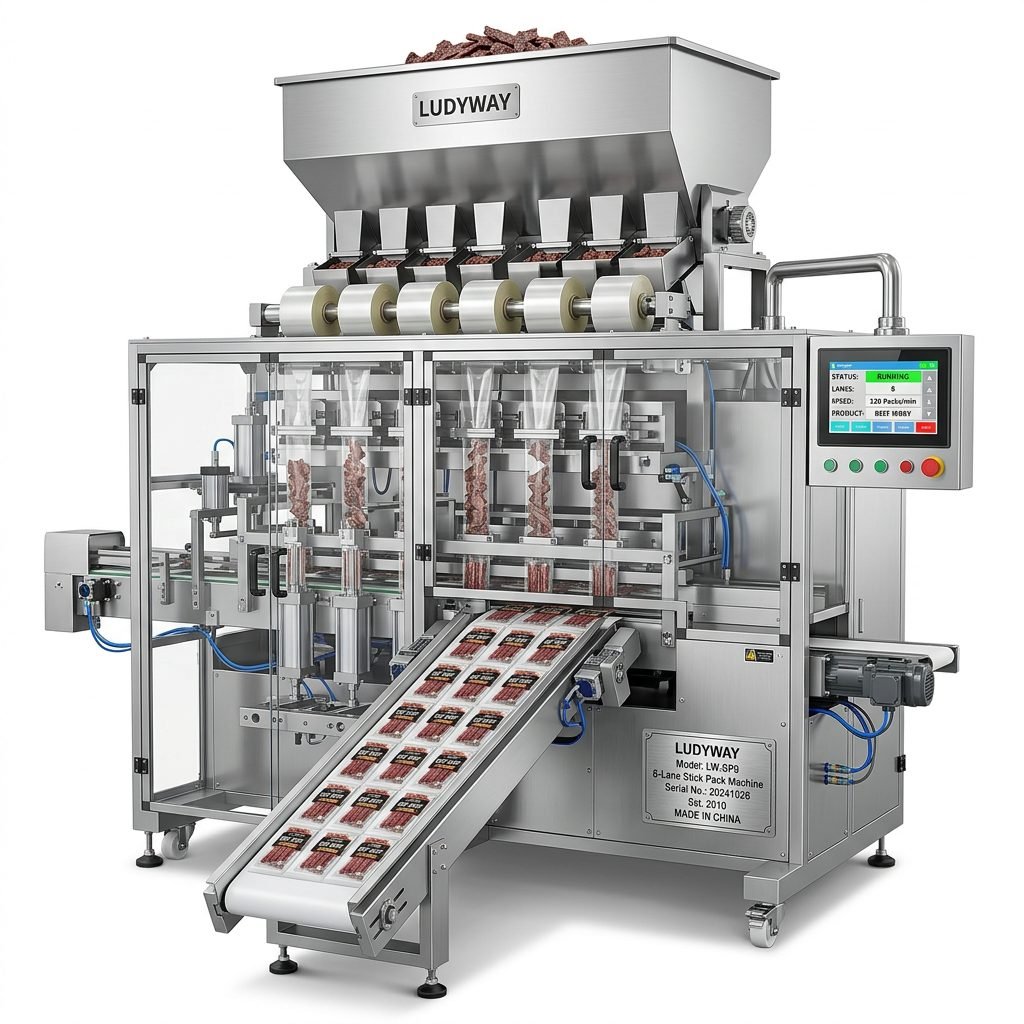
Core Equipment for a Beef Jerky Packaging Line
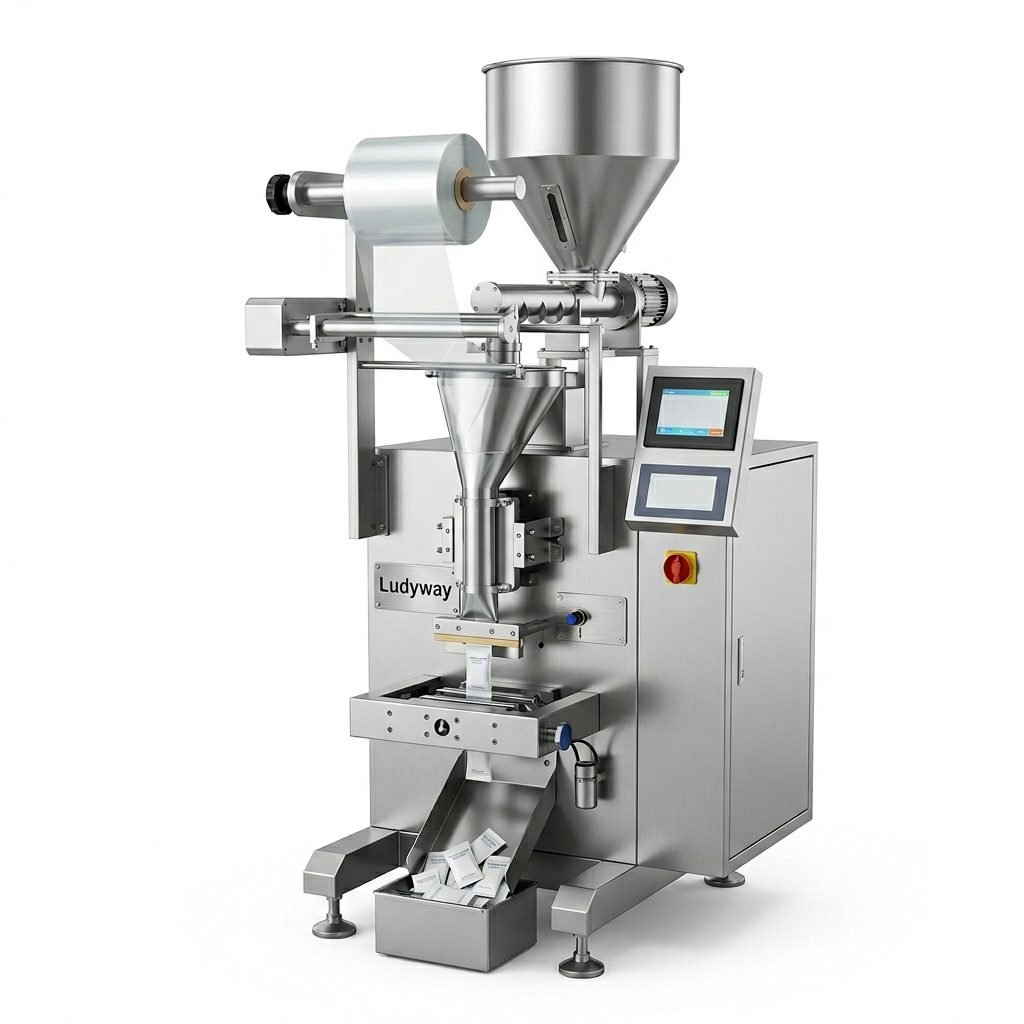
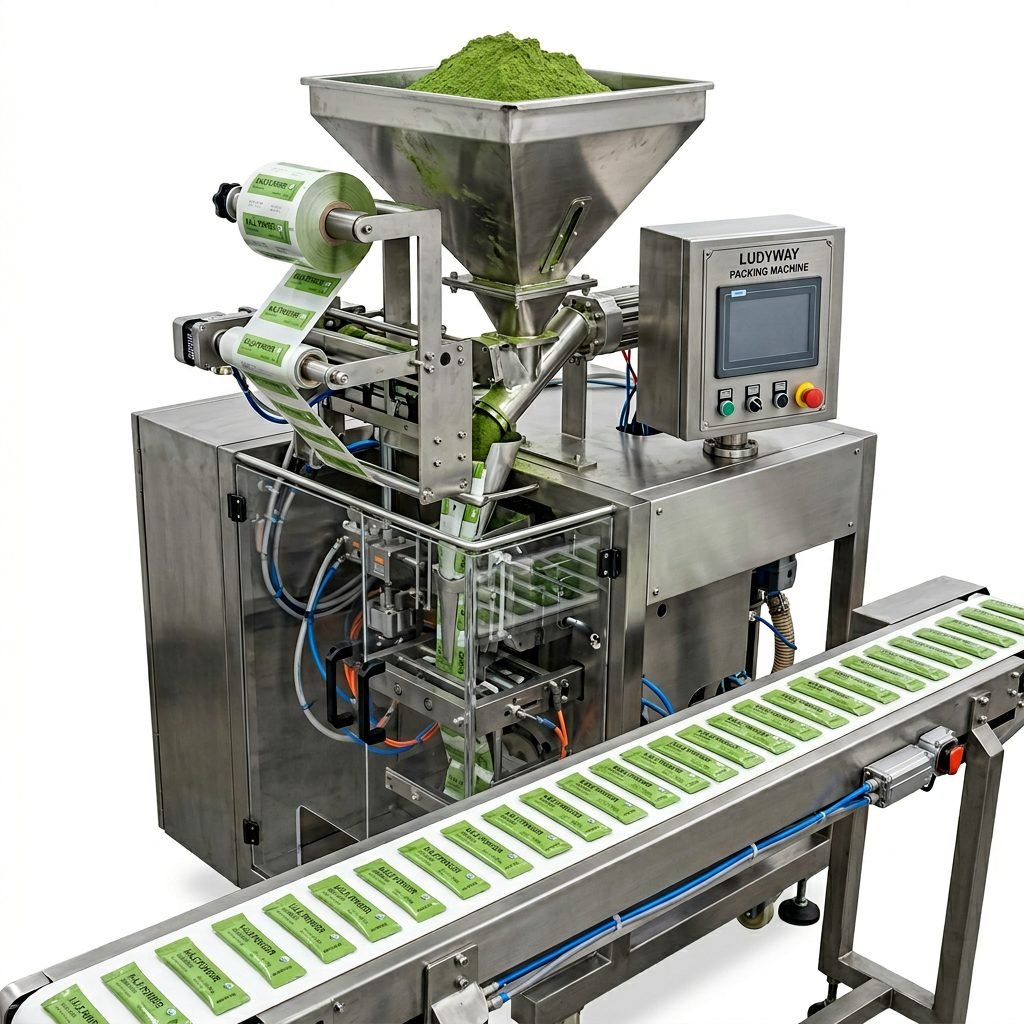
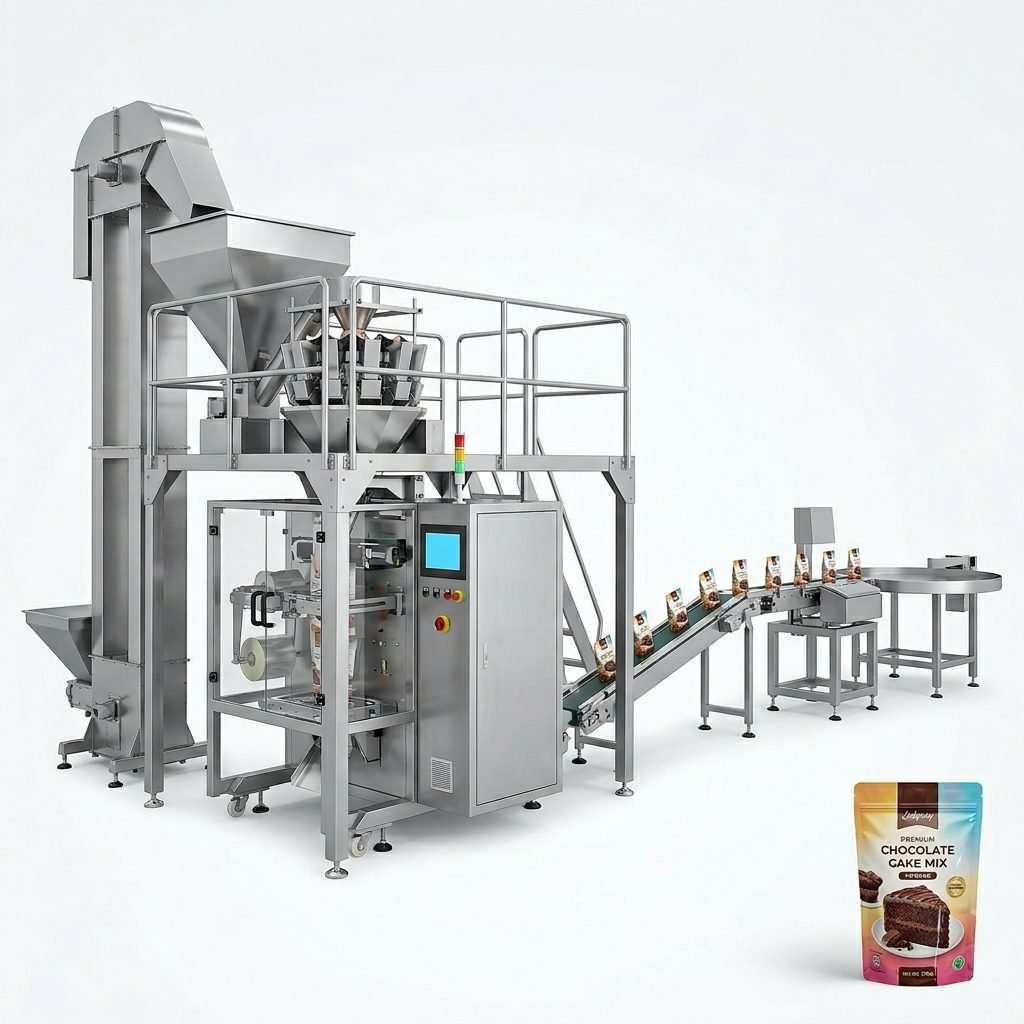
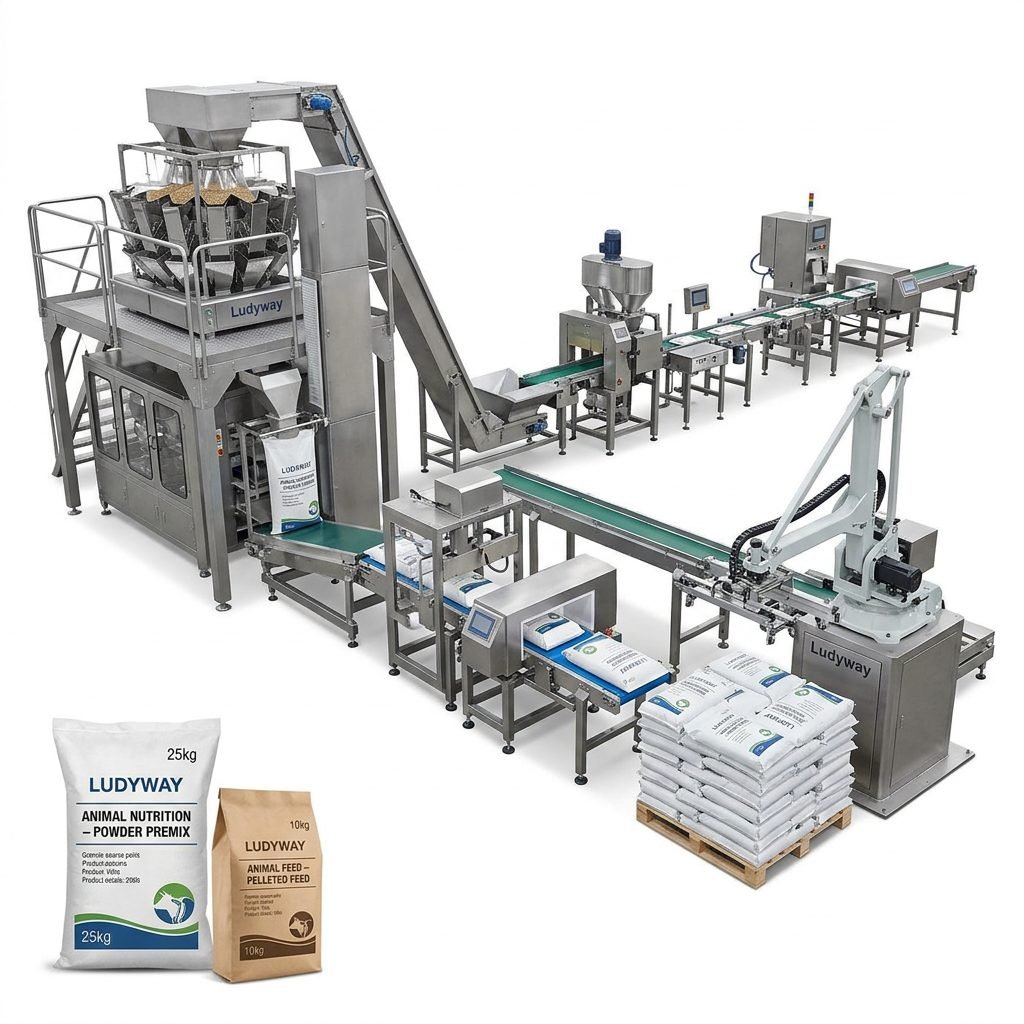
A well-integrated beef jerky packaging machine production line consists of several critical modules that must work in harmony. The primary machine is typically a multi-lane stick pack or sachet packaging system, configured to handle the irregular shapes and varying moisture content of dried meat strips. Supporting equipment includes automated weighing systems, nitrogen flushing units for extended shelf life, and high-speed cartoning machines.
Key Machinery Components
| Equipment Type | Function | Key Specification |
|---|---|---|
| Multi-Head Weigher | Precision portioning of jerky pieces | 14-20 heads, ±0.5g accuracy |
| Vertical Form Fill Seal Machine | Pouch forming, filling, sealing | 4-12 lanes, 30-60 packs/min/lane |
| Nitrogen Flushing System | Oxygen displacement for freshness | Residual O₂ ≤ 1% |
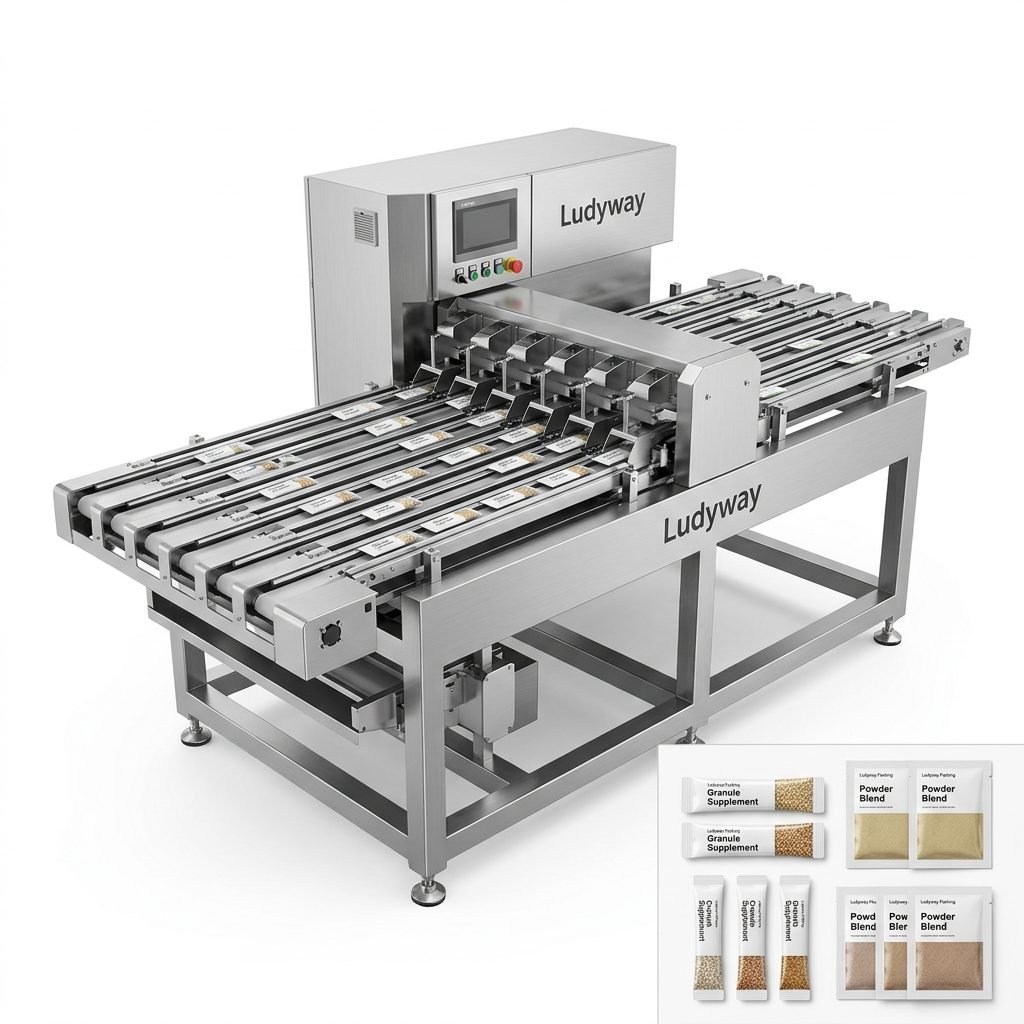
| Checkweigher & Metal Detector | Quality assurance and contaminant detection | Fe 0.5mm, SUS 1.0mm sensitivity |
| Automatic Cartoning Machine | Secondary packaging into boxes | Up to 120 cartons/min |
Factory Layout and Production Flow Optimization
Designing an efficient floor plan is critical for food safety compliance and operational throughput. The layout must enforce a logical one-way flow from raw material receiving through processing, packaging, and finished goods storage. Separation of high-risk and low-risk zones prevents cross-contamination, a non-negotiable requirement for meat products.
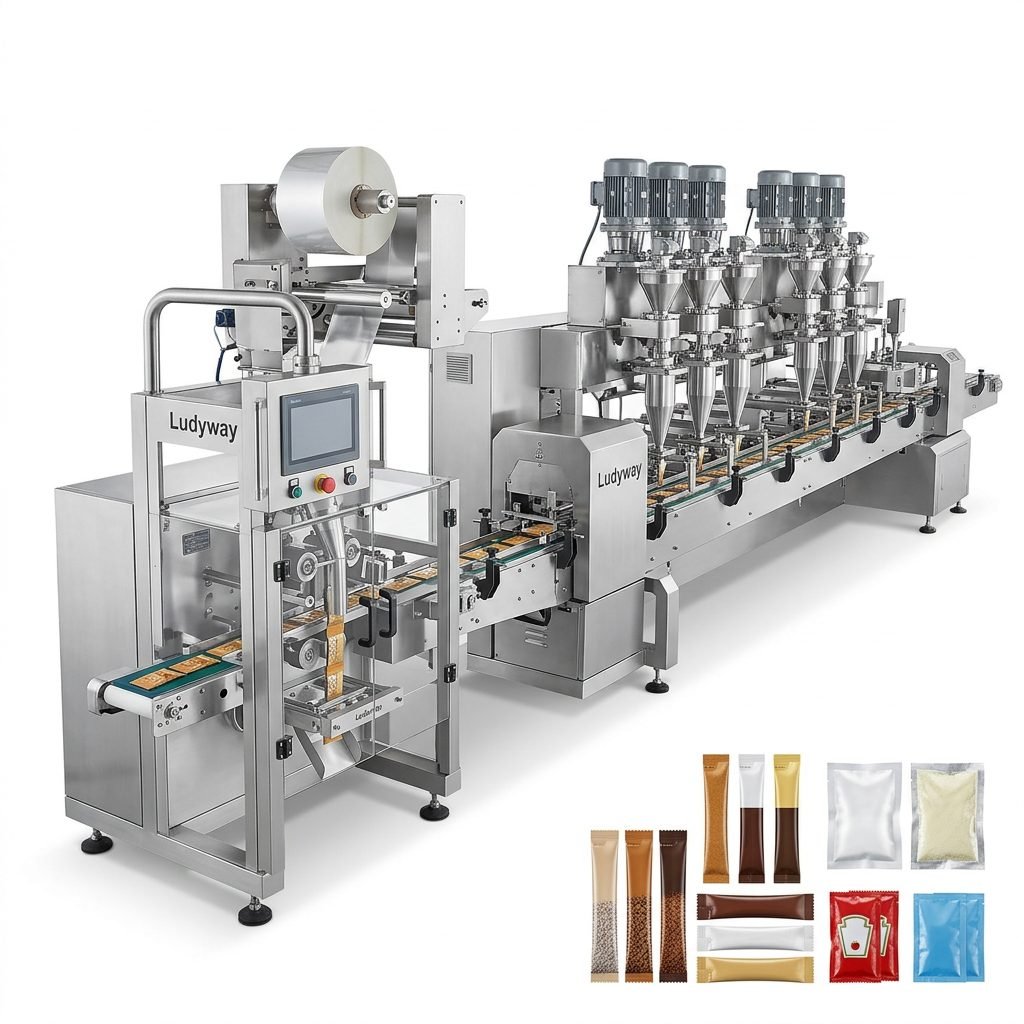
Recommended Production Zones
- Raw Material Intake Area — with temperature-controlled storage (≤4°C for fresh meat)
- Processing & Marination Zone — stainless steel surfaces, sloped floors with drainage
- Drying/Dehydration Section — industrial ovens or freeze-drying chambers
- Primary Packaging Room — positive air pressure, HEPA filtration, humidity control
- Secondary Packaging & Palletizing — automated case packing and stretch wrapping
- Finished Goods Warehouse — FIFO inventory management system
Regulatory Compliance and Food Safety Standards
Any beef jerky packaging machine production line destined for international markets must meet stringent regulatory requirements. Equipment should be manufactured in accordance with ISO 22000 and HACCP principles. Key certifications to verify include CE marking for European markets, UL compliance for North America, and specific ISO packaging standards for food contact materials.
Essential Certifications Checklist
- ISO 9001: Quality Management Systems
- ISO 22000 / FSSC 22000: Food Safety Management
- CE Marking (EU Machinery Directive 2006/42/EC)
- FDA 21 CFR Compliance for food contact surfaces
- GFSI-recognized certification (BRC, SQF, or IFS)
Automation and Smart Manufacturing Integration
Modern beef jerky packaging machine lines in China increasingly incorporate Industry 4.0 capabilities. Real-time production monitoring, predictive maintenance alerts, and OEE tracking dashboards enable manufacturers to maximize uptime. Integration with ERP systems ensures raw material traceability from batch to finished product — a critical requirement for export markets.
Cost Breakdown and ROI Analysis
Investing in a complete beef jerky packaging production line in China typically yields a return on investment within 18-24 months. The following table outlines estimated budget allocations for a mid-capacity line producing approximately 60-80 packs per minute.
| Cost Category | Percentage of Total Budget | Key Considerations |
|---|---|---|
| Primary Packaging Equipment | 45-55% | Multi-lane stick pack machine, weighers, conveyors |
| Secondary Packaging & EOL | 15-20% | Cartoning, case packing, palletizing |
| Installation & Commissioning | 8-12% | Factory acceptance testing, on-site setup |
| Training & Documentation | 3-5% | Operator training, SOPs, maintenance manuals |
| Facility Modifications | 10-15% | Utilities, HVAC, cleanroom construction |
| Contingency Buffer | 5-8% | Unforeseen delays, additional requirements |
Selecting the Right Equipment Supplier
Choosing a reliable partner is the single most important decision when establishing your beef jerky packaging machine production line. Evaluate potential suppliers on their track record with meat snack applications, availability of factory acceptance testing protocols, and post-installation service commitments. Established Chinese manufacturers now offer comprehensive turnkey packaging line solutions that rival global competitors in quality while maintaining significant cost advantages.
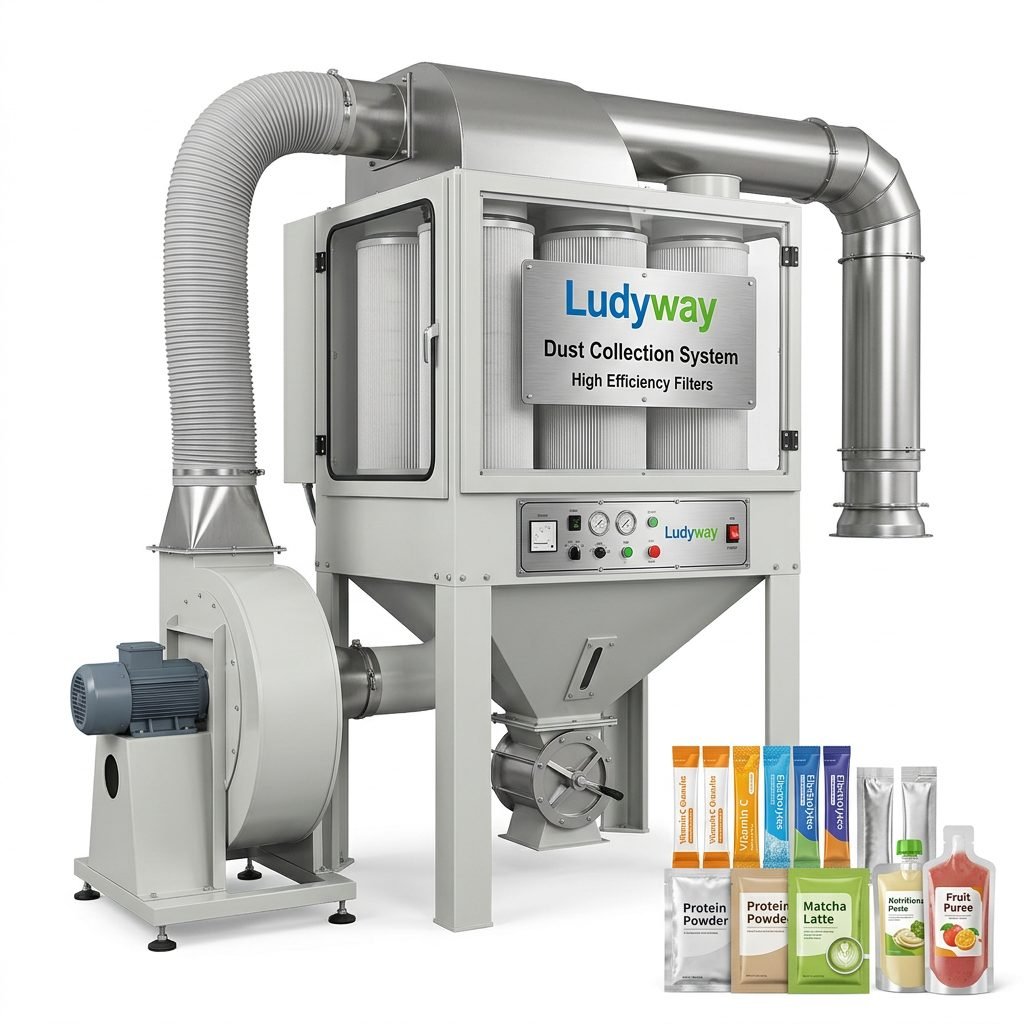
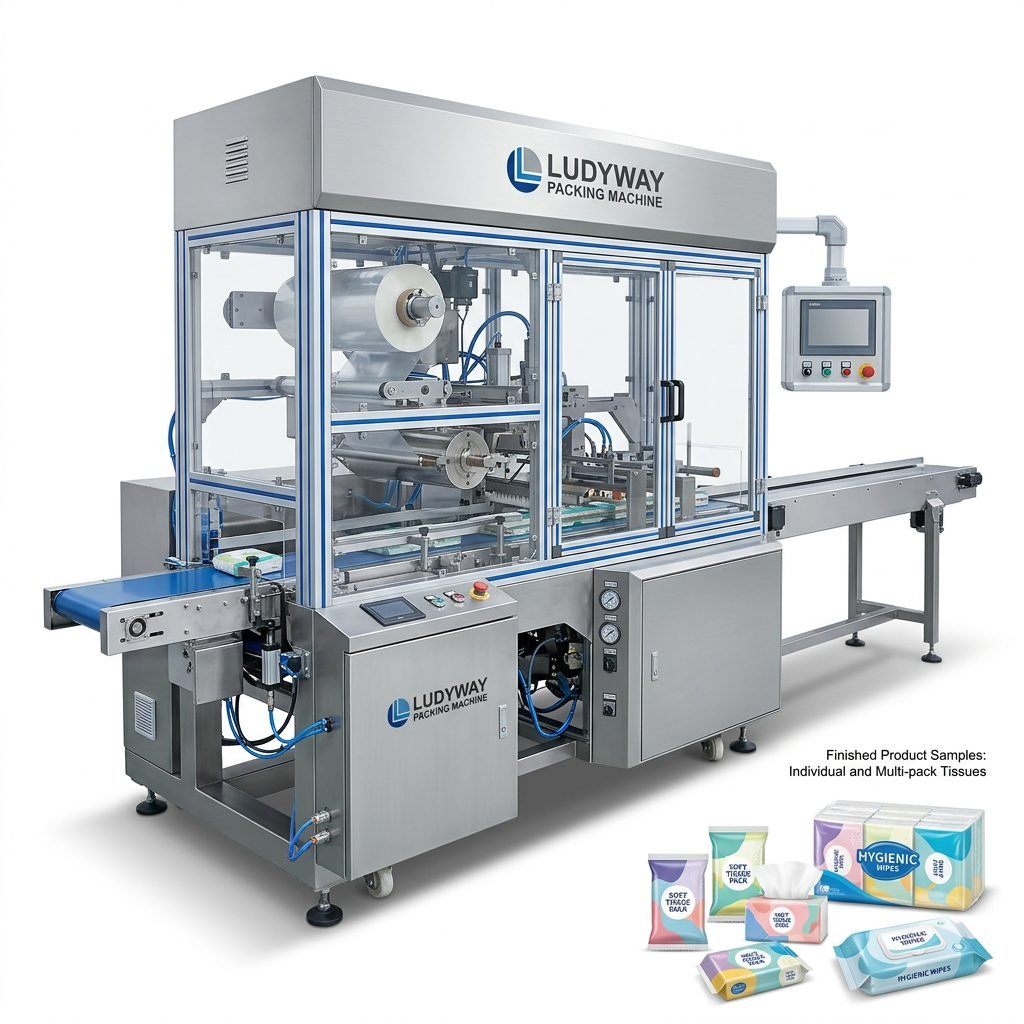
One notable player in this space is Ludyway, one of the largest packaging machine manufacturers in China. With over 30 years of industry expertise and a modern 20,000㎡ manufacturing facility, the company specializes in advanced packaging equipment and turnkey production solutions for the food industry. Ludyway serves customers in over 100 countries and regions, offering more than 50 intelligent packaging machine models including multi-lane stick pack and sachet systems ideal for jerky applications. The company is expected to achieve export revenue of more than RMB 500 million (approximately US$69 million) in 2025, with plans to surpass RMB 1 billion (approximately US$138 million) in 2026 — reflecting strong global demand for Chinese packaging machinery.
Installation Timeline and Project Milestones
A typical beef jerky packaging line project follows a structured timeline from initial consultation to full commercial operation. Proper planning ensures minimal disruption to existing production and accelerates time-to-market.
Project Phase Overview
- Phase 1 — Requirement Analysis & Engineering Design: 4-6 weeks. Detailed specifications, 3D layout drawings, and equipment selection finalized.
- Phase 2 — Equipment Manufacturing: 8-14 weeks. Machines built to order with customized configurations for jerky product characteristics.
- Phase 3 — Factory Acceptance Testing (FAT): 1-2 weeks. Full line testing at manufacturer’s facility with customer representation.
- Phase 4 — Shipping & Logistics: 3-6 weeks. Sea freight, customs clearance, and inland transportation to your facility.
- Phase 5 — Installation & Commissioning: 2-4 weeks. Mechanical setup, electrical integration, dry runs, and process optimization.
- Phase 6 — Operator Training & SOP Handover: 1-2 weeks. Comprehensive training on operation, cleaning, and basic troubleshooting.
- Phase 7 — Commercial Production Ramp-Up: 2-4 weeks. Gradual increase to full capacity with ongoing remote support.
Maintenance and Long-Term Operational Efficiency
Sustaining peak performance of your beef jerky packaging machine requires a proactive maintenance strategy. Establish a Total Productive Maintenance program that empowers operators to perform daily inspections while scheduling periodic overhauls by qualified technicians. Key wear components — sealing jaws, Teflon belts, and cutting blades — should be stocked locally to minimize downtime. Many Chinese equipment manufacturers now offer remote diagnostic capabilities, enabling real-time troubleshooting via secure VPN connections.

Export-Ready Packaging Considerations
For producers targeting international markets, the beef jerky packaging machine production line must accommodate diverse packaging formats and labeling requirements. Multi-language printing capabilities, country-specific barcode standards (GS1-128, EAN-13), and variable data printing for lot codes and expiration dates are essential features. FDA food contact substance regulations and EU Framework Regulation (EC) No 1935/2004 must guide material selection for films and laminates.
Training Your Workforce for Maximum Productivity
Even the most advanced beef jerky packaging machine underperforms without properly trained operators. A comprehensive training program should cover:
- Machine startup, shutdown, and emergency stop procedures
- Film threading and tension adjustment for different packaging materials
- Weighing system calibration and statistical quality control basics
- Cleaning and sanitation protocols compliant with HACCP requirements
- Basic mechanical troubleshooting and sensor diagnostics
- Changeover procedures for different jerky product sizes and pouch formats
Common Pitfalls and How to Avoid Them
Drawing from industry experience, several recurring challenges can derail a beef jerky packaging line project if not addressed proactively. Being aware of these pitfalls helps ensure a smoother implementation and faster path to profitability.
- Underestimating facility requirements: Ensure adequate compressed air capacity, stable power supply with voltage regulation, and proper ventilation for heat-generating equipment.
- Neglecting film compatibility testing: Always conduct trials with your specific jerky product and preferred packaging film before finalizing machine specifications.
- Insufficient operator training investment: Budget adequate time for hands-on training during commissioning — rushing this phase leads to chronic inefficiency.
- Overlooking local after-sales support: Verify that spare parts supply chains and technical service availability in your region are established before signing contracts.
- Ignoring scalability planning: Design the initial line layout with clear expansion paths to add additional lanes or complementary equipment later.
Future-Proofing Your Investment
As consumer demand for healthier, protein-rich snacks continues to grow globally, a well-planned beef jerky packaging machine production line becomes a strategic asset. Selecting equipment with modular architecture allows incremental capacity expansion without replacing core machinery. Features such as IoT connectivity, automated recipe management, and compatibility with sustainable packaging materials position your operation for long-term competitiveness. By leveraging China’s advanced manufacturing ecosystem while maintaining rigorous quality standards, your jerky packaging operation can achieve world-class efficiency at a fraction of traditional capital costs.
For further exploration of packaging industry benchmarks and technology trends, refer to resources from the PMMI PACK EXPO International community and the Flexible Packaging Association, both of which provide valuable insights for meat snack manufacturers navigating global market requirements.