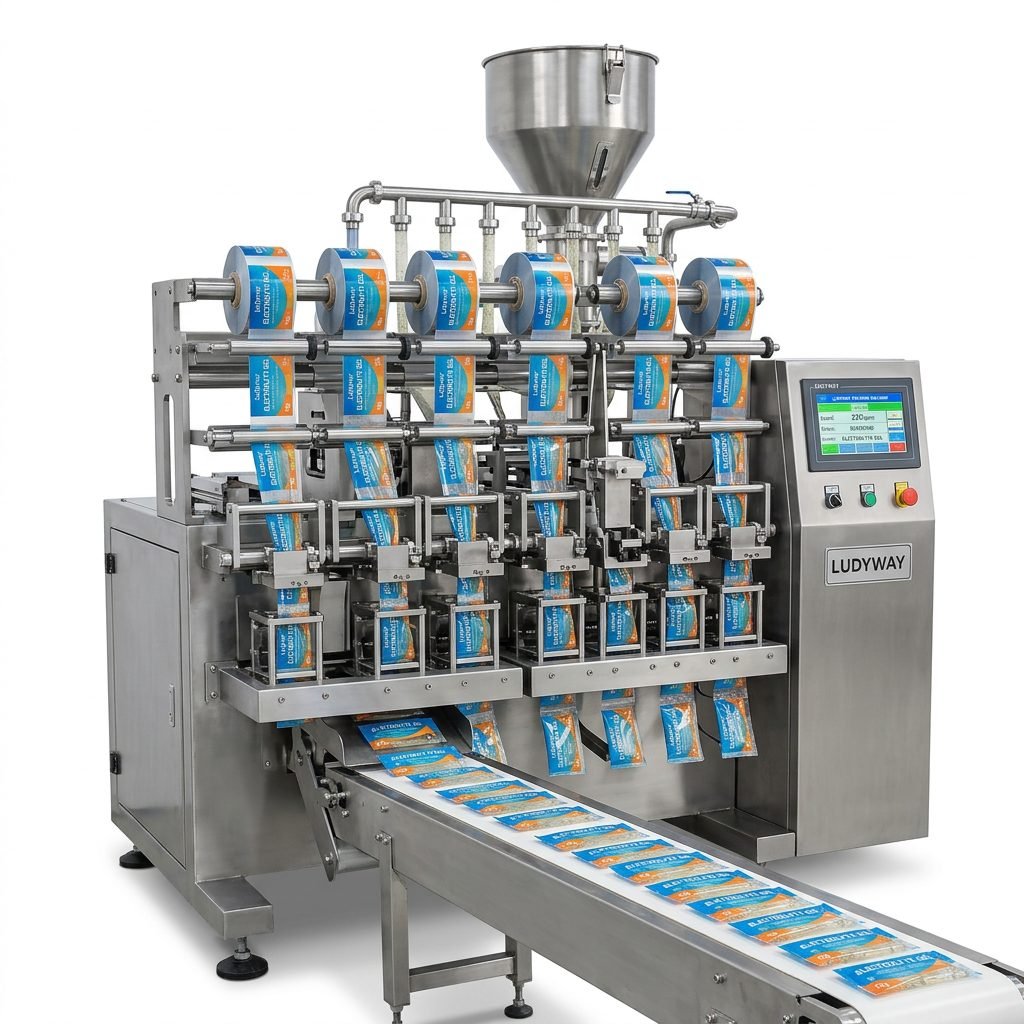
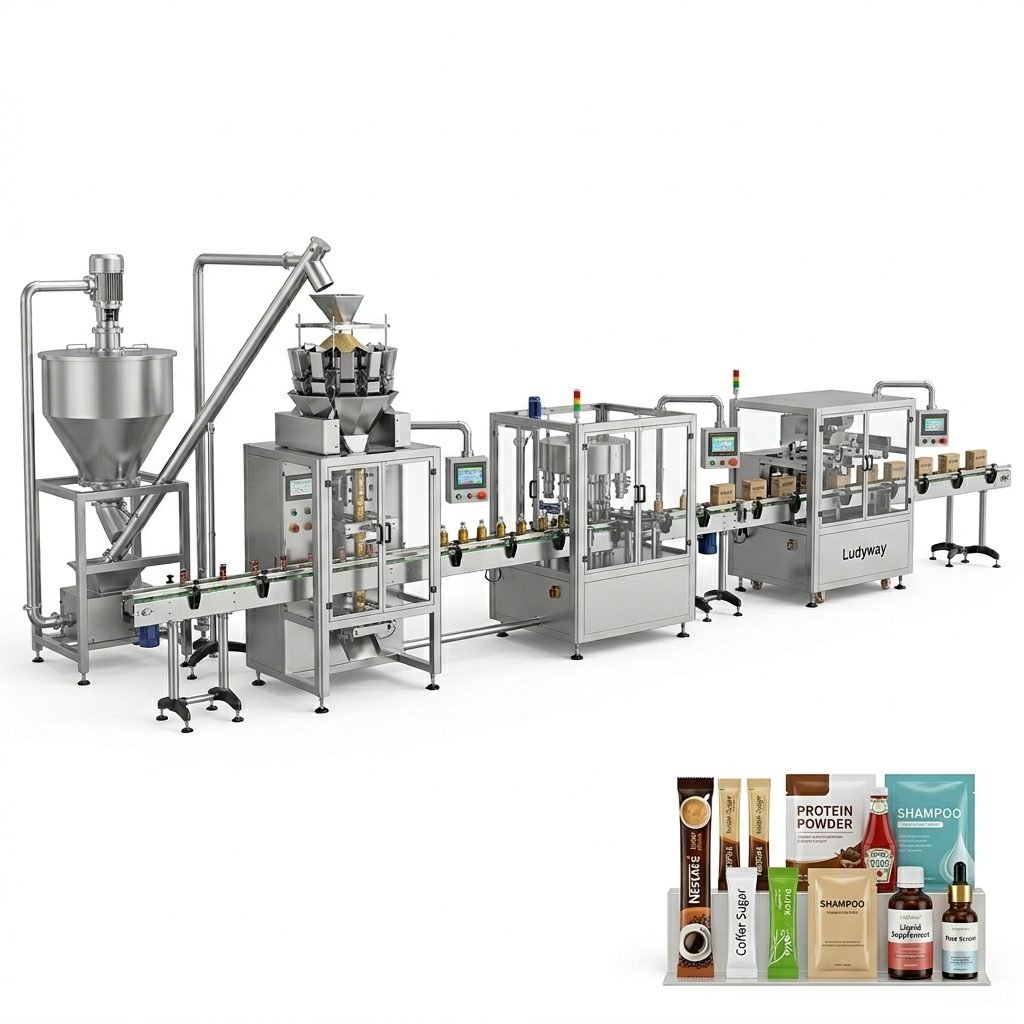
Expanding your pet food brand into global markets requires more than just a quality recipe — it demands a high-efficiency, compliant, and scalable packaging production line. For dry kibble, semi-moist, and granule-type dog food products, multi-lane stick pack and sachet packaging machines have become the preferred choice for manufacturers aiming to meet international demand. Setting up such a line involves careful planning around equipment selection, regulatory standards, automation levels, and after-sales support.
This guide walks you through the key steps and considerations for building a dog food packaging machine production line optimized for export markets, covering everything from equipment types to quality control requirements.
Understanding Global Packaging Formats for Dog Food
Different regions favor different packaging formats. In North America and Europe, flexible packaging formats such as multi-lane stick packs and sachets are gaining significant market share due to their convenience, portion control, and reduced material usage. In emerging markets across Southeast Asia, the Middle East, and Africa, smaller single-serve sachet packs remain dominant because of affordability and distribution requirements.
Understanding your target market’s packaging preferences is the first critical step. A flexible multi-lane packaging system that can switch between stick pack, sachet, and pouch formats without major retooling offers a significant competitive advantage for exporters.
Core Equipment Components of a Dog Food Packaging Line
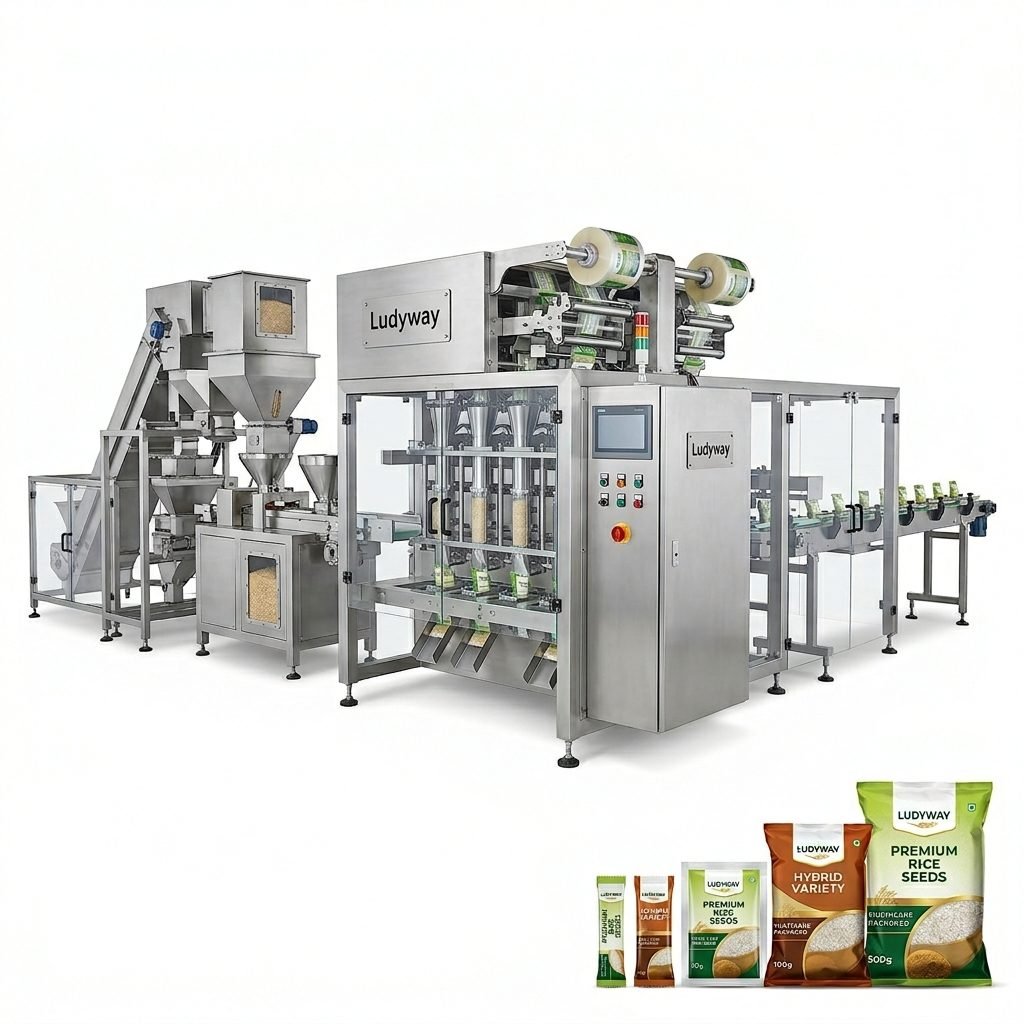
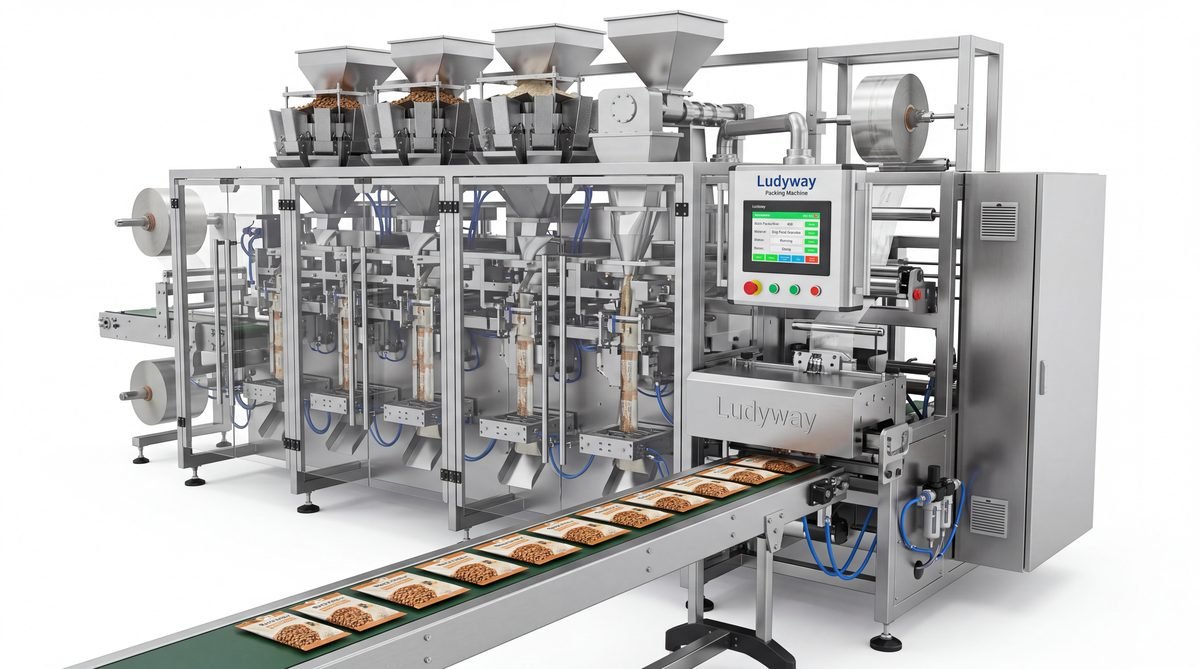
A complete dog food packaging production line typically includes several integrated modules. Below is a breakdown of the essential equipment categories:
1. Feeding and Dosing Systems
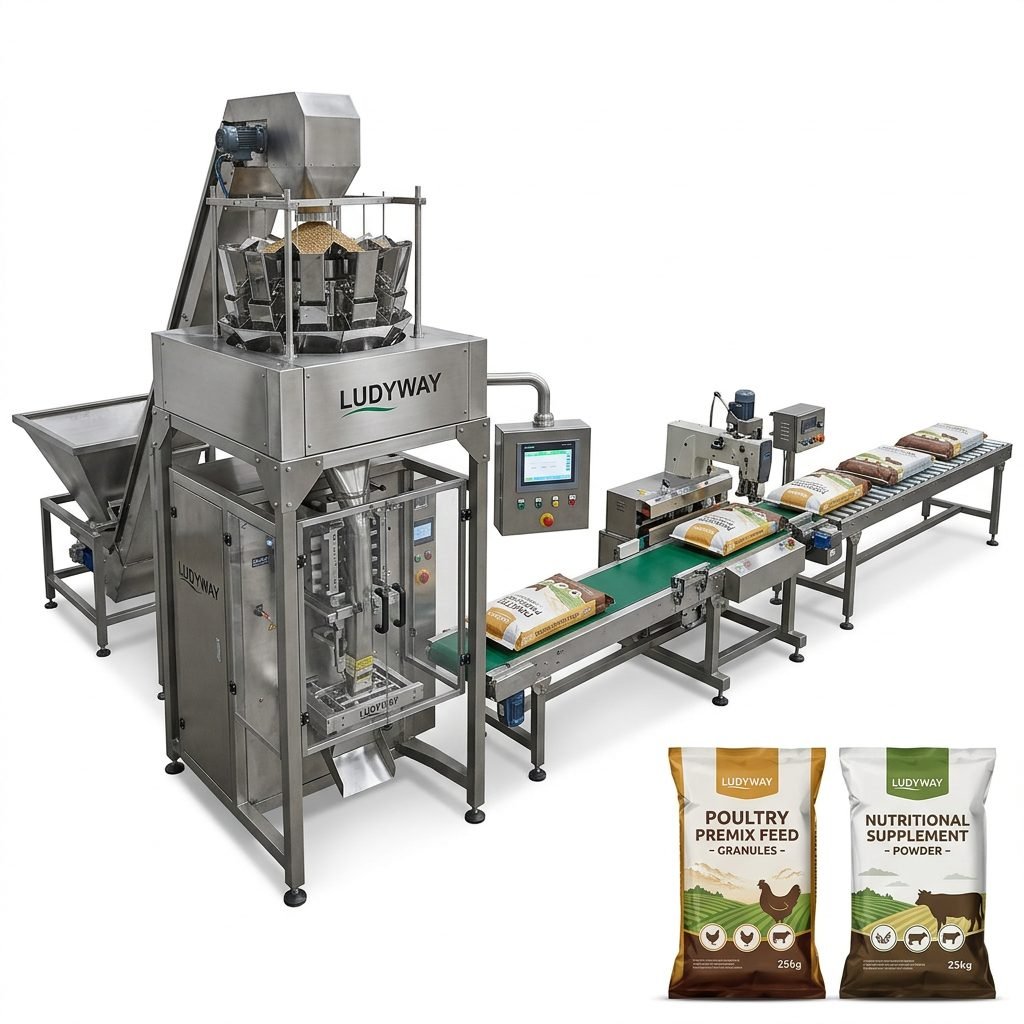
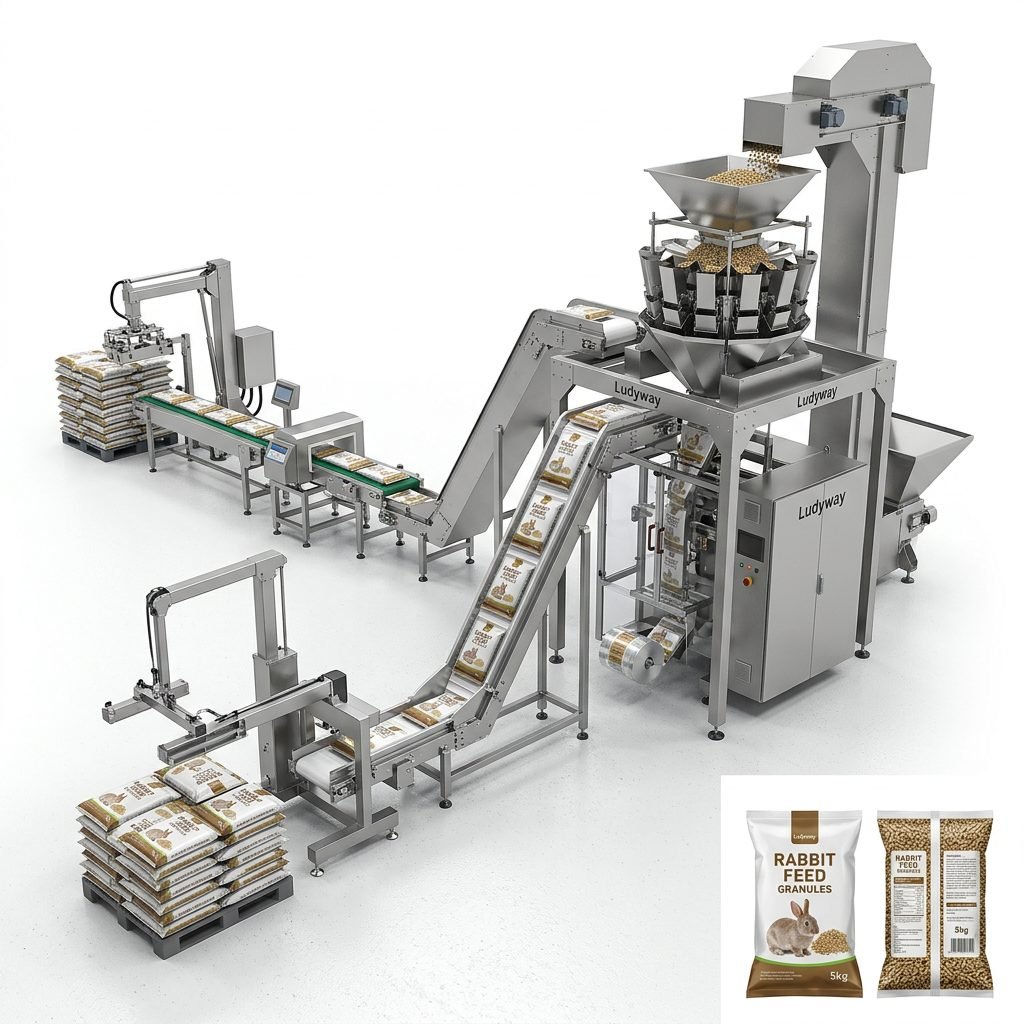
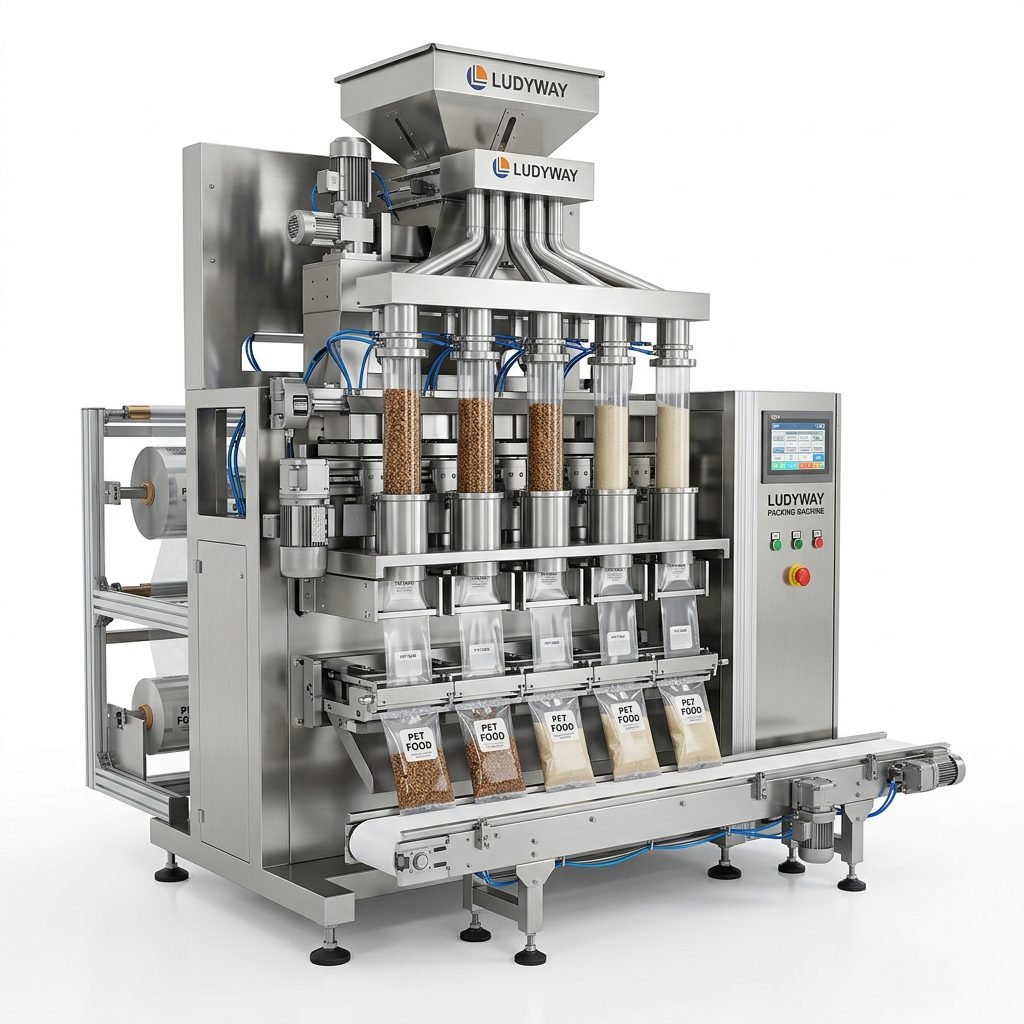
Accurate weighing is critical for product consistency and regulatory compliance. Modern lines utilize multi-head weighers or volumetric cup fillers depending on product characteristics. For dog food granules and kibble, combination weighers deliver high-speed, high-precision dosing that minimizes product giveaway.
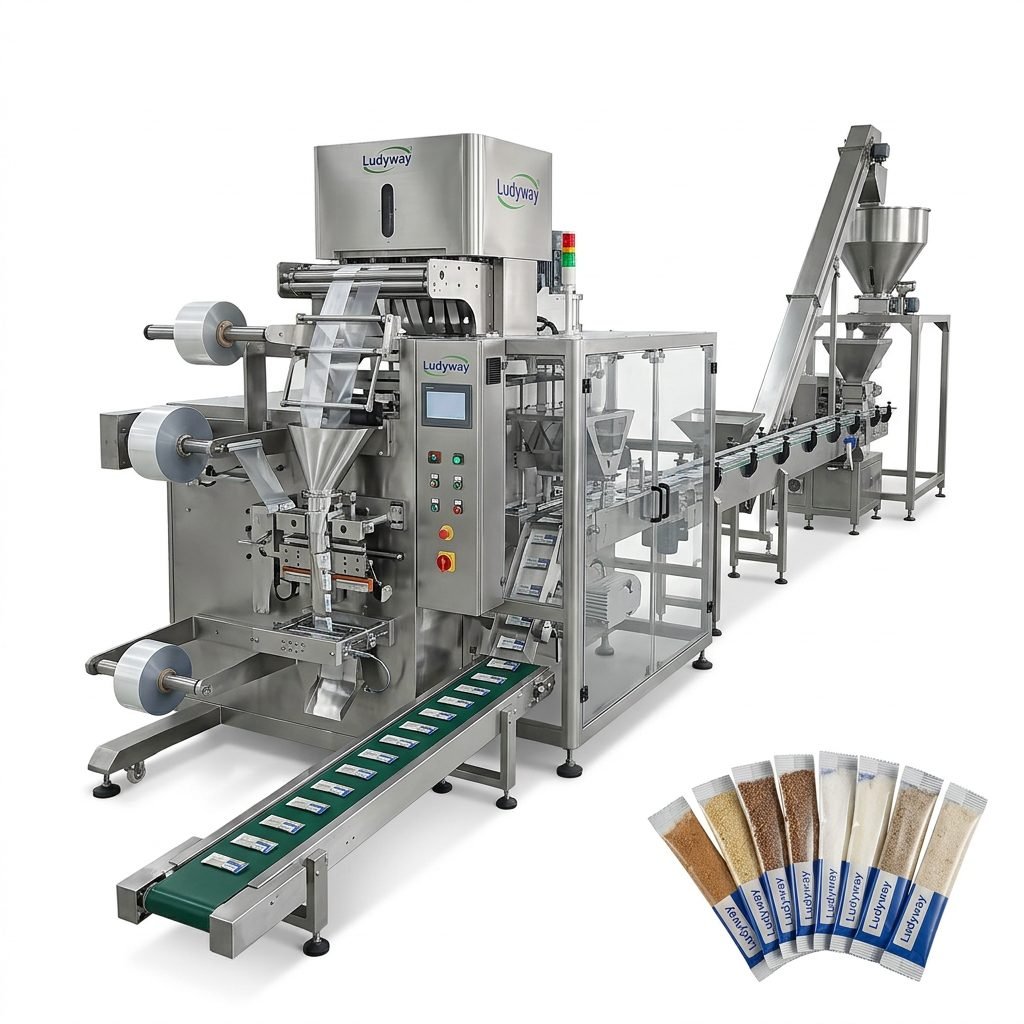
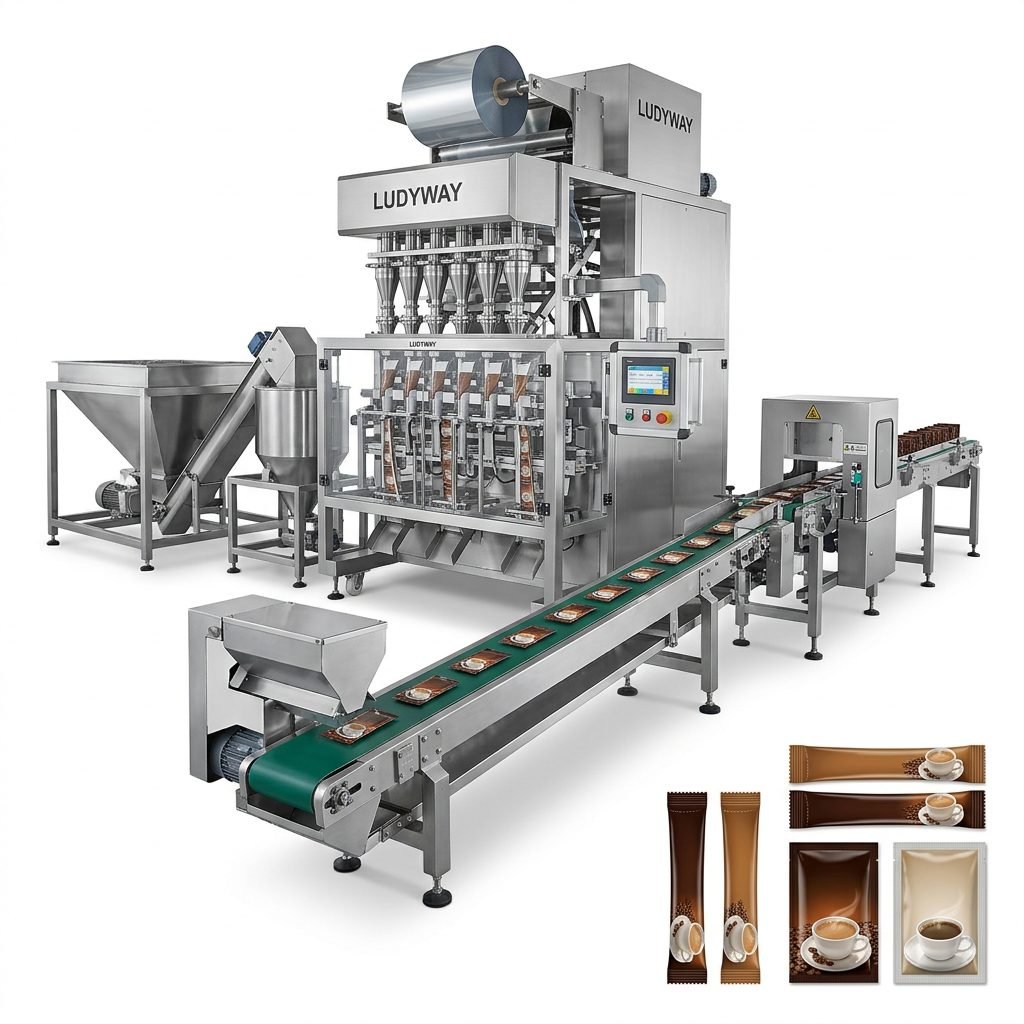
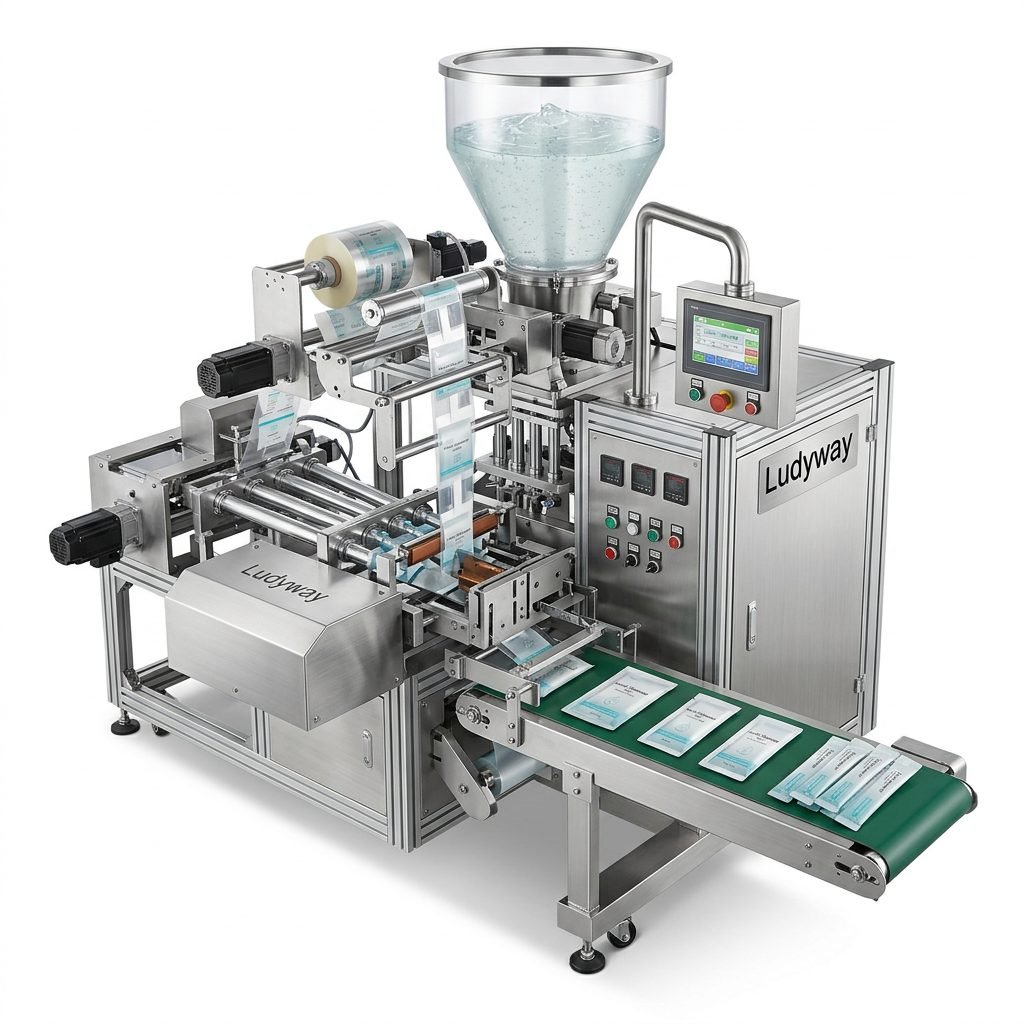
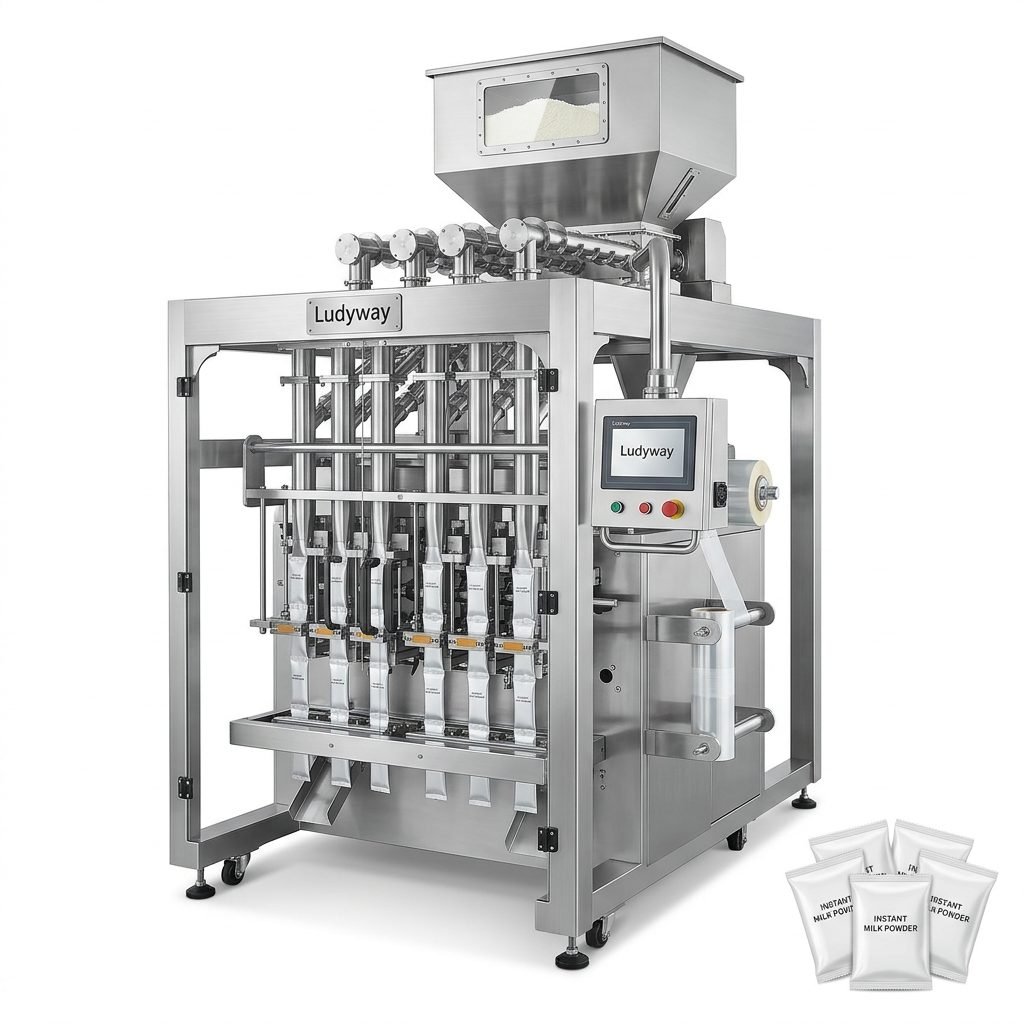
2. Multi-Lane Stick Pack and Sachet Machines
The core of the production line is the packaging machine itself. For export-oriented dog food operations, multi-lane stick pack machines running 4 to 12 lanes simultaneously offer production speeds of up to 400-600 packs per minute depending on lane configuration and fill weight.
3. Sealing and Coding Systems
Hermetic sealing technology preserves product freshness and extends shelf life — a non-negotiable requirement for international shipping. Laser or thermal inkjet coders apply batch numbers, production dates, and barcodes required by importing countries.
4. Secondary Packaging Modules
Automated cartoning, case packing, and palletizing systems streamline the transition from primary packaging to export-ready shipping units, reducing labor costs and improving throughput consistency.
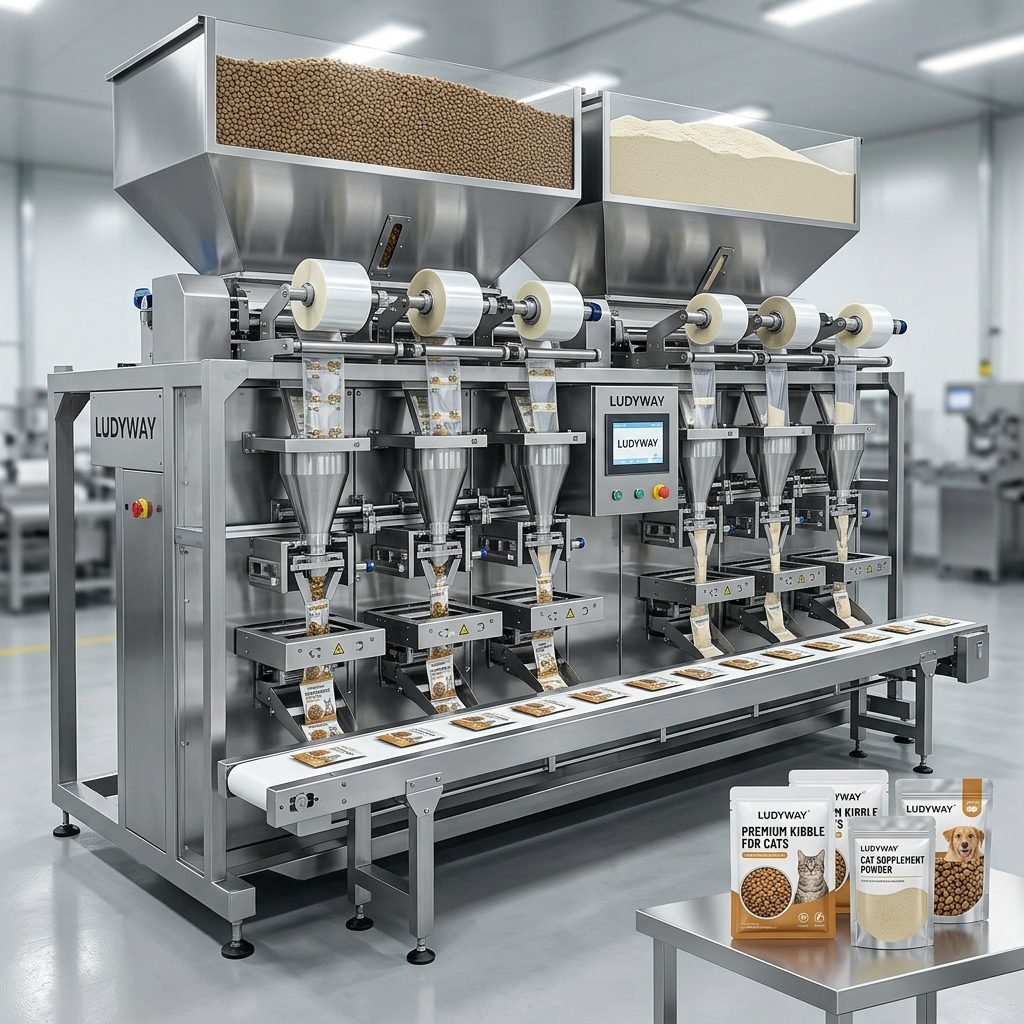
Key Considerations for Global Market Compliance
Exporting dog food packaging requires adherence to multiple regulatory frameworks. The following table summarizes critical compliance areas across major markets:
| Market Region | Key Regulatory Body | Packaging-Specific Requirements |
|---|---|---|
| North America | FDA / CFIA | Food contact substance compliance, nutrition labeling, barcode standards |
| European Union | EFSA / EU Commission | Packaging waste directive, FCM regulations, multi-language labeling |
| Middle East | GSO / ESMA | Halal certification labeling, Arabic language requirements, shelf-life marking |
| Southeast Asia | National Food Agencies | Product registration codes, local language labeling, tamper-evident packaging |
| Latin America | ANVISA / SENASA | Sanitary registration, nutritional information panels, traceability codes |
Automation Level and Production Scalability
When configuring a dog food packaging line for global markets, choosing the right automation level directly impacts your long-term competitiveness. Semi-automatic lines may suffice for startups targeting regional distribution, but fully automatic turnkey systems are strongly recommended for export volumes exceeding 50,000 units per day.
Benefits of full automation include:
- Consistent product quality across millions of units — essential for international brand reputation
- Reduced labor dependency and lower operational costs over the equipment lifecycle
- Real-time data collection for traceability and compliance documentation
- Faster format changeovers when switching between stick pack sizes, sachet styles, or pouch configurations
- Integrated quality rejection systems that automatically remove underweight or improperly sealed packs
Selecting the Right Multi-Lane Packaging Configuration
The optimal lane count and pack format depend on your product characteristics and target market. The table below provides general guidance for dog food applications:
| Product Type | Recommended Format | Typical Lane Configuration | Target Output Range |
|---|---|---|---|
| Dry Kibble (Small Breeds) | Stick Pack | 6-10 lanes | 300-500 packs/min |
| Semi-Moist Treats | Sachet / Stick Pack | 4-8 lanes | 200-350 packs/min |
| Freeze-Dried Dog Food | Sachet with Nitrogen Flush | 4-6 lanes | 150-250 packs/min |
| Powdered Supplements | Stick Pack | 8-12 lanes | 400-600 packs/min |
| Training Treats (Small Pieces) | Sachet | 6-8 lanes | 250-400 packs/min |
Quality Control and Shelf-Life Optimization
International shipping timelines demand superior barrier properties in packaging materials and impeccable seal integrity. Key quality control measures include:
- In-line checkweighing to ensure every pack meets declared net weight specifications required by FDA food packaging regulations
- Seal integrity testing using vacuum decay or visual inspection systems integrated directly into the packaging line
- Metal detection and X-ray inspection to safeguard against physical contaminants before products leave the facility
- Nitrogen flushing capability to displace oxygen and extend the shelf life of fat-containing dog food products
- Environmental monitoring of production area temperature and humidity to maintain consistent packaging conditions
Turnkey Solutions and Long-Term Technical Support
For companies entering global markets, partnering with an experienced packaging machinery manufacturer that offers turnkey project capabilities significantly reduces risk and shortens time-to-market. A turnkey approach encompasses equipment manufacturing, line integration, factory acceptance testing, on-site installation, and operator training — all coordinated by a single supplier.
Ludyway, with over 30 years of industry experience and a 20,000㎡ modern manufacturing facility, provides comprehensive turnkey dog food packaging solutions — from multi-lane stick pack machines to fully automated pouch packaging lines — serving customers in more than 100 countries and regions worldwide. When evaluating potential equipment partners, prioritize those with proven international project experience and responsive after-sales service networks in your target export regions.
Installation, Training, and Ongoing Maintenance
A well-planned installation and training program ensures your packaging line achieves optimal performance from day one. Critical elements include:
- Pre-installation site preparation covering utility requirements (compressed air, power supply, dust extraction) and floor layout optimization
- On-site mechanical and electrical installation performed by experienced technicians familiar with international safety standards
- Comprehensive operator and maintenance training covering daily operation, format changeover procedures, and troubleshooting
- Remote diagnostic support capabilities for rapid issue resolution without waiting for on-site service visits
- Spare parts planning to maintain critical component inventory and minimize production downtime
Future-Proofing Your Packaging Investment
As global pet food markets continue to evolve, your packaging line should accommodate future growth and format diversification. Modular machine designs that allow lane count expansion, quick-change forming tubes for different pack widths, and IoT-enabled remote monitoring are features that protect your capital investment over a 10-15 year equipment lifecycle.
The global pet food packaging market is projected to maintain strong growth, driven by premiumization trends, increasing pet ownership in developing economies, and the shift toward convenient single-serve formats. A strategically configured multi-lane packaging production line positions your brand to capture share across diverse international markets while maintaining the efficiency and quality standards that global buyers demand.