Understanding the French Frozen Food Market Opportunity
France represents one of Europe’s largest and most sophisticated markets for frozen food products. The demand spans from traditional frozen vegetables and ready meals to premium frozen bakery items and seafood. Setting up a frozen food packaging line in France requires careful planning around equipment selection, compliance with stringent EU regulations, and optimizing for operational efficiency in a high-cost labor market.
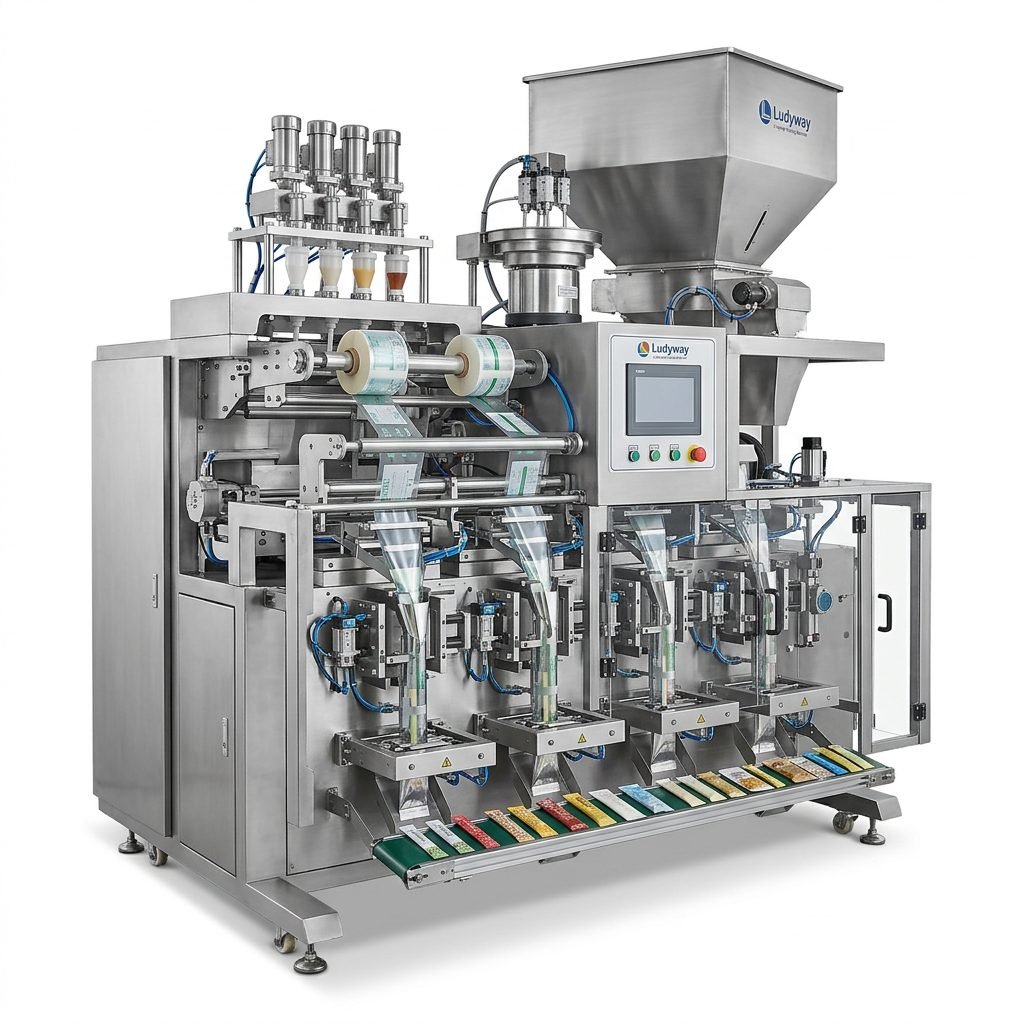
Core Equipment for a Frozen Food Packaging Line
Selecting the right machinery is critical when building a line that handles sub-zero temperatures. Moisture, condensation, and material brittleness are constant challenges. Below is a breakdown of essential equipment modules.
1. Primary Weighing and Filling Systems
For frozen granular products like peas, diced vegetables, or IQF (Individually Quick Frozen) fruits, multi-head weighers are the industry standard. These systems ensure high-speed, accurate portioning without damaging delicate frozen products. Linear weighers offer a cost-effective alternative for smaller operations. For frozen liquids or sauces, specialized positive displacement piston fillers that operate reliably in cold environments are essential.
2. Vertical Form Fill Seal (VFFS) and Horizontal Machines
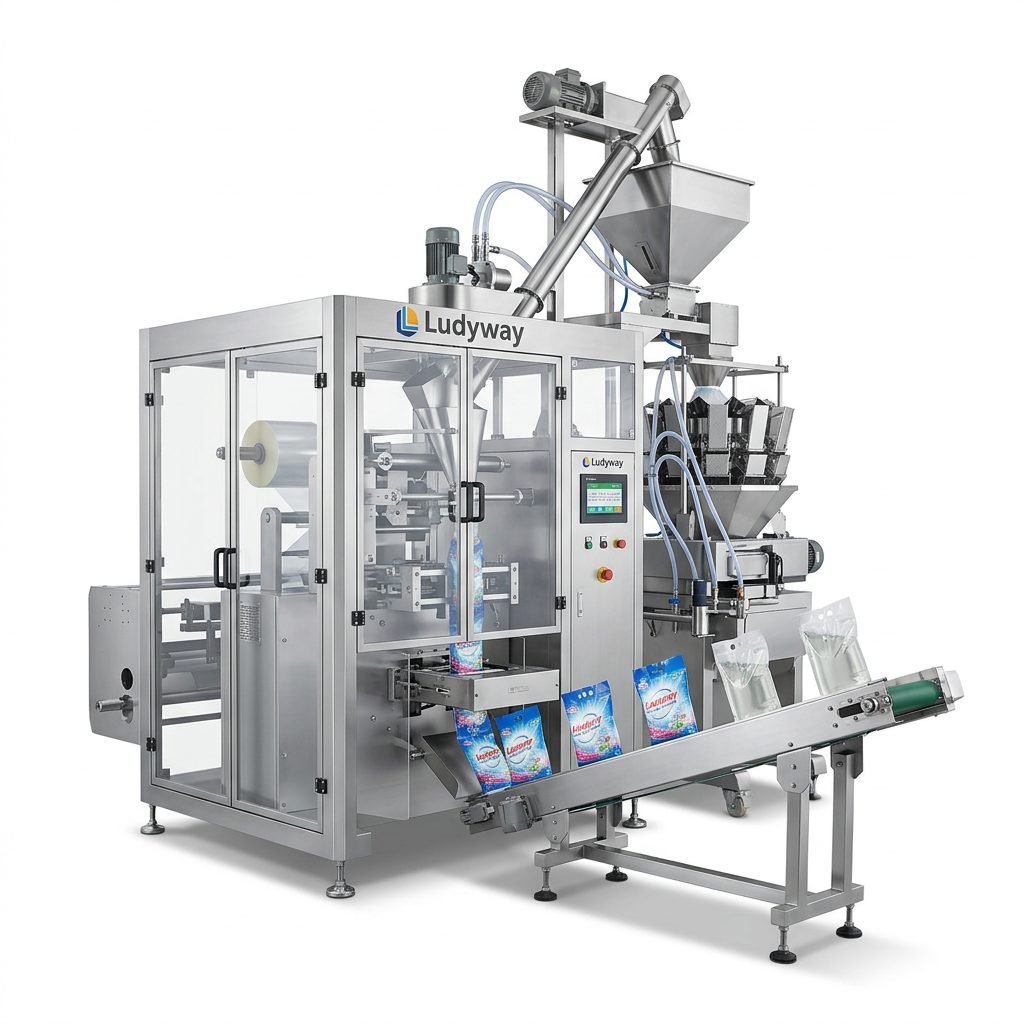
The core of the line is the packaging machine itself. Vertical form fill seal machines are commonly used for pillow bags and gusseted packs of frozen vegetables and French fries. For more delicate items like frozen ready meals, pastries, or crepes, horizontal flow wrapping or tray sealing systems provide the necessary product integrity and presentation required by French retailers. As highlighted by PMMI – The Association for Packaging and Processing Technologies, hygienic design and quick changeover capabilities are increasingly important.
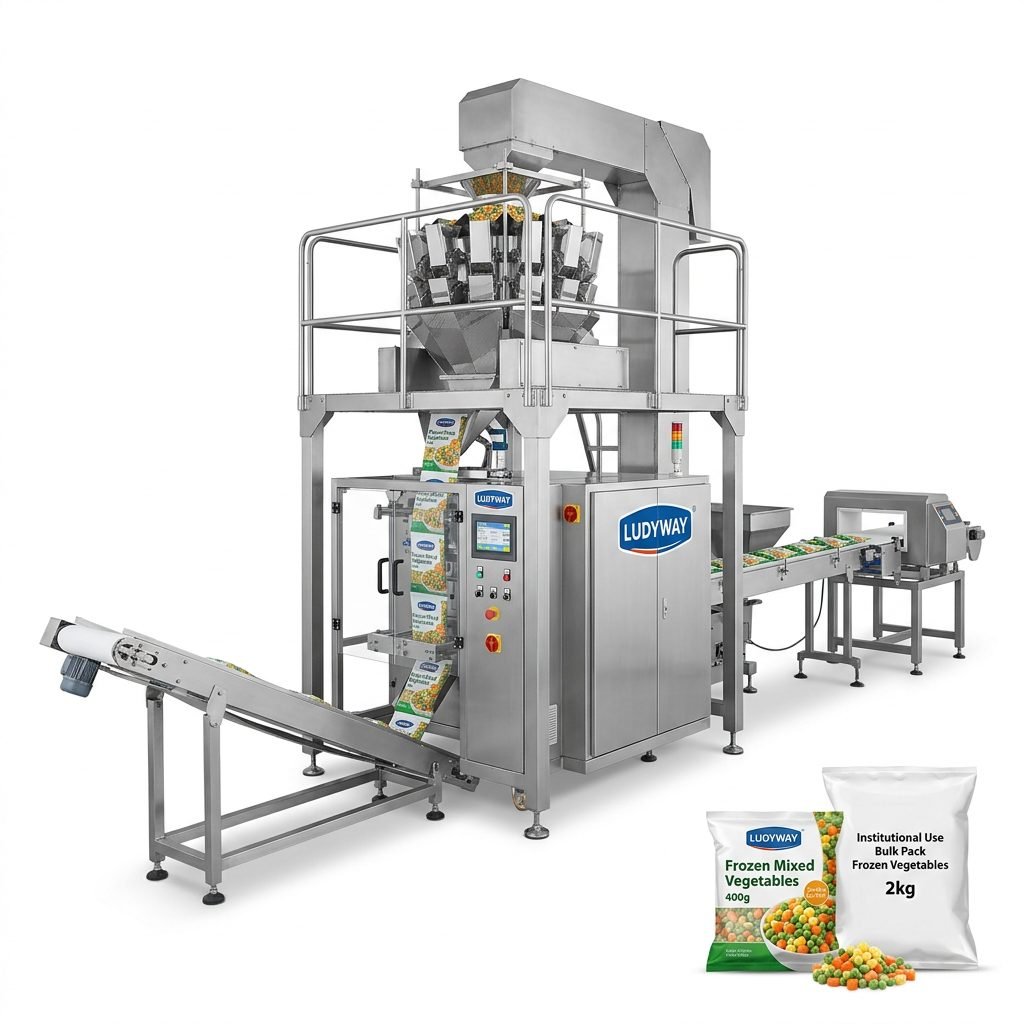
Cost Analysis for Setting Up in France
Budgeting for a frozen food facility in France involves more than just equipment procurement. You must factor in integration, facility modification, and regulatory testing. The following table provides an estimated cost breakdown for a mid-scale operation.
| Cost Category | Estimated Range (EUR) | Notes |
|---|---|---|
| Weighing & Filling Machinery | €35,000 – €120,000 | Depends on speed and number of heads |
| Packaging Machine (VFFS/HFFS) | €45,000 – €200,000 | Frozen-spec models with IP65 washing |
| Cold-Room Conveying Integration | €20,000 – €55,000 | Stainless steel, low-temp lubrication |
| Metal Detection / X-Ray | €15,000 – €45,000 | Critical for EU compliance |
| End-of-Line (Cartoning/Palletizing) | €55,000 – €150,000 | Often semi-automated for SMEs |
| Cold Facility Retrofit | €80,000 – €250,000 | Flooring, drainage, HVAC for -25°C |
French and EU Regulatory Framework
Regulatory compliance (Conformité) is often the most complex hurdle for foreign manufacturers establishing lines in France. You are not just importing machines; you are ensuring food safety for the European consumer.
- CE Marking & EU Directives: All equipment must carry the CE mark, specifically conforming to the Machinery Directive 2006/42/EC. The packaging line must also meet the Low Voltage Directive and EMC Directive requirements.
- EU Regulation No 1935/2004: Materials and articles intended to come into contact with food (plastic film, cartons) must not transfer constituents to food in quantities that endanger human health. For frozen food, this means resistance to cold cracking and migration tests are essential.
- Hygiene & Design (EN 1672-2): French labor inspectors strictly enforce hygienic design standards. Machines must be cleanable, with sloped surfaces and no stagnant water zones, which is challenging in a condensation-prone frozen environment. The FDA – Food Packaging and Food Contact Substances guidelines, while US-centric, align with the global principles of good manufacturing practices you’ll apply here.
- NOx and Refrigerant Regulations: If your line includes inline freezing tunnels, you must comply with the French “Arrêté” regarding the use of natural refrigerants like ammonia or CO₂ under the F-Gas Regulation (EU No 517/2014), phasing down HFCs.
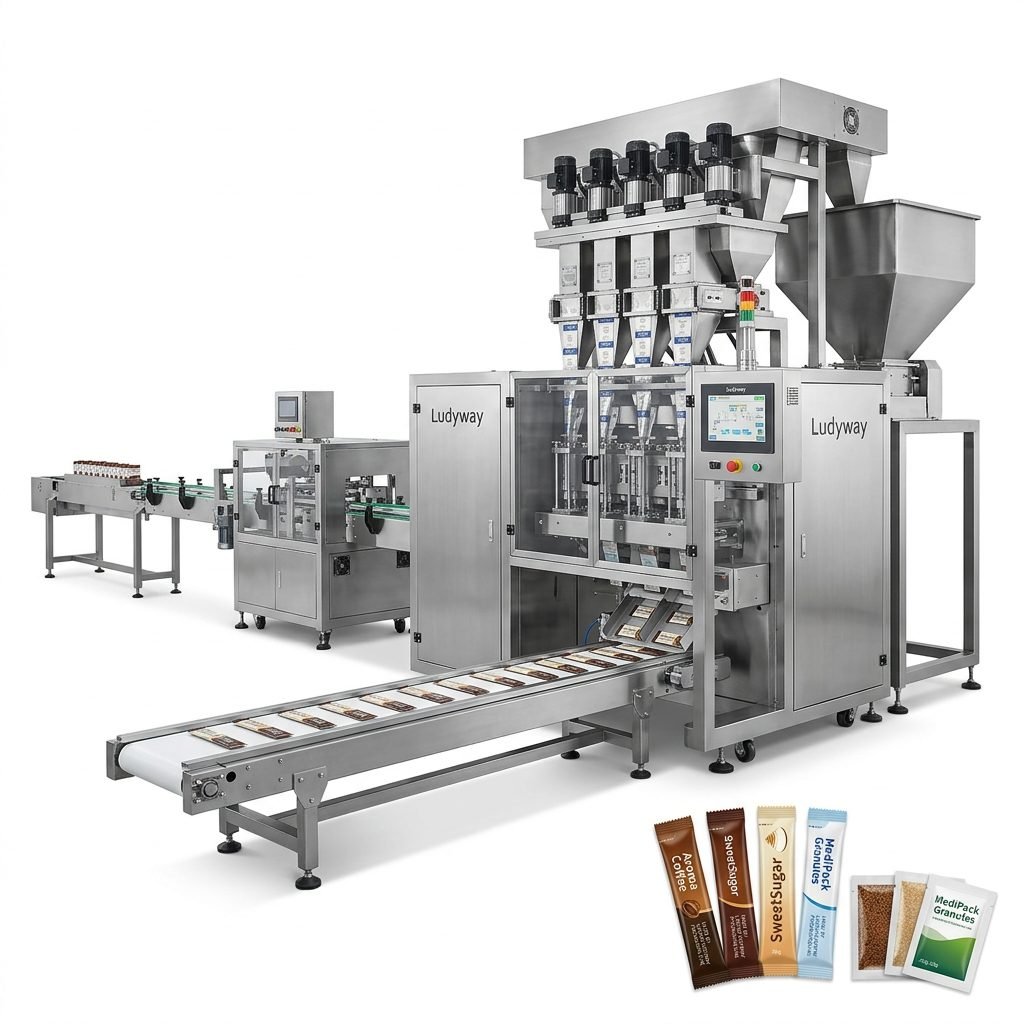
Automation and the “French Labor Equation”
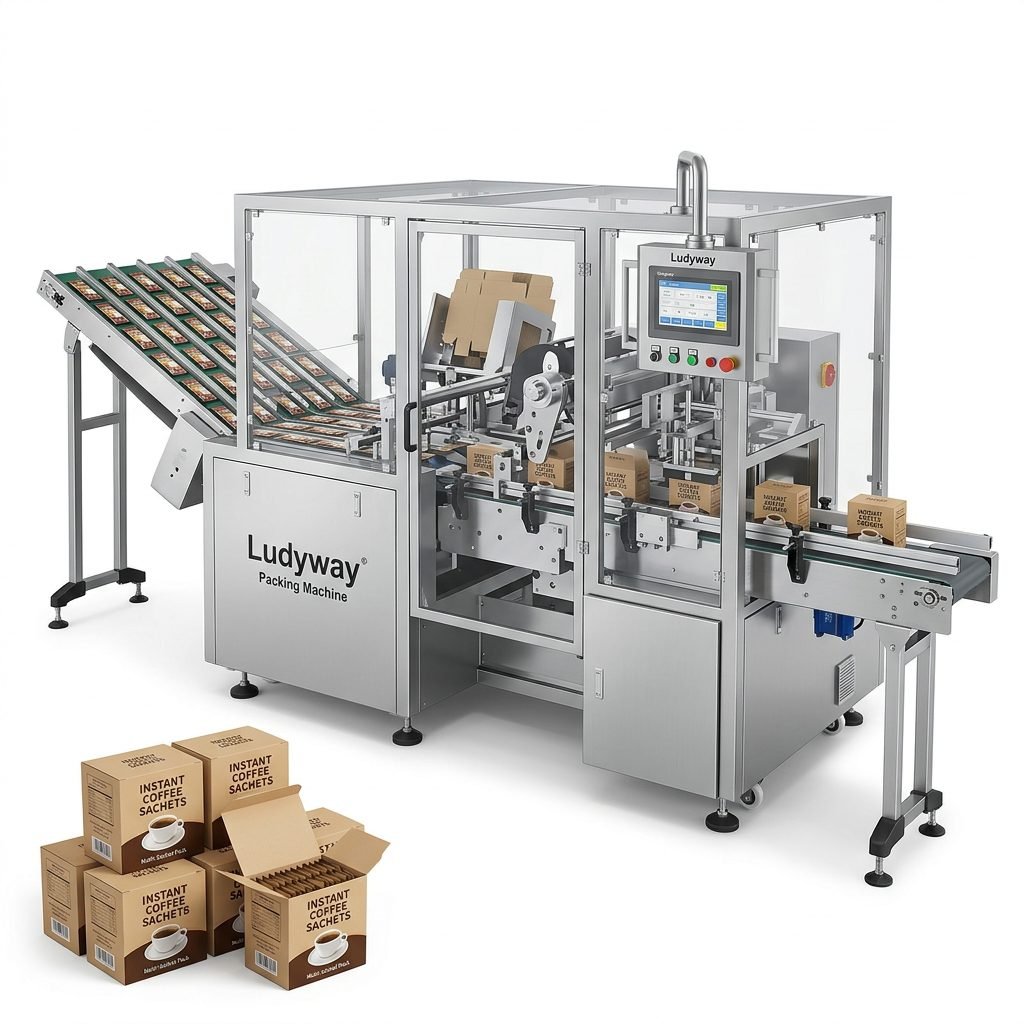
France has a highly skilled workforce but relatively high labor costs compared to other European nations. Automating the frozen food packaging line is not just about speed; it is an economic necessity for long-term viability. Integrating automated cartoning, case packing, and robotic palletizing directly at the exit of the cold room reduces manual handling of frozen goods, minimizes workplace accidents, and ensures compliance with strict French labor hour restrictions.
Smart Integration with Industry 4.0
Modern lines in France rely on digital batch records and traceability. A robust SCADA system must track time, temperature, and packaging integrity to satisfy the requirements of the French Directorate General for Food (DGAL). This digital traceability is vital for export markets, ensuring that every frozen baguette or gratin dauphinois meets the strict European Commission – Packaging and Packaging Waste standards and consumer safety protocols.
Choosing a Suitable Packaging Partner
Adapting a packaging line to the French market often requires customized engineering, especially for unique frozen product consistencies. Many French co-packers seek reliable global equipment manufacturers that offer turnkey solutions for granule, powder, and solid frozen items without requiring multiple third-party integrators.
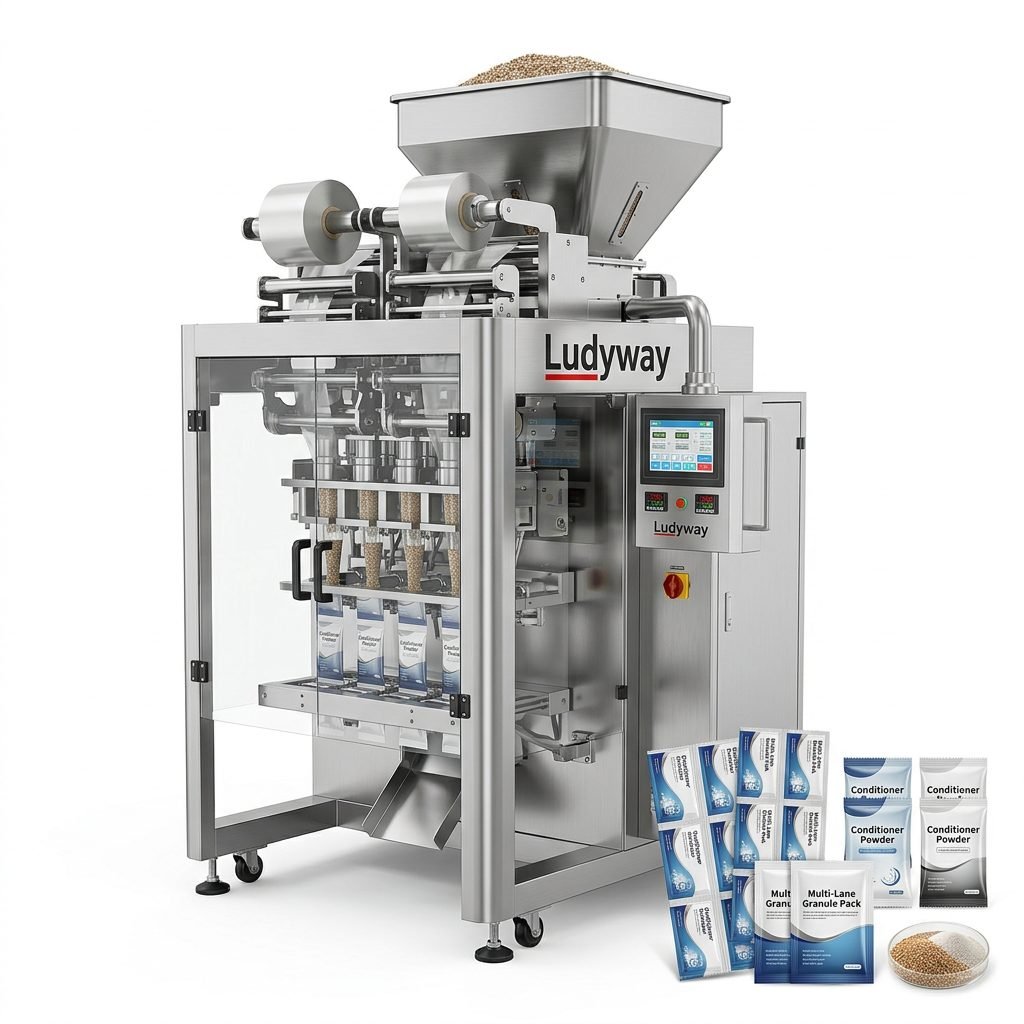
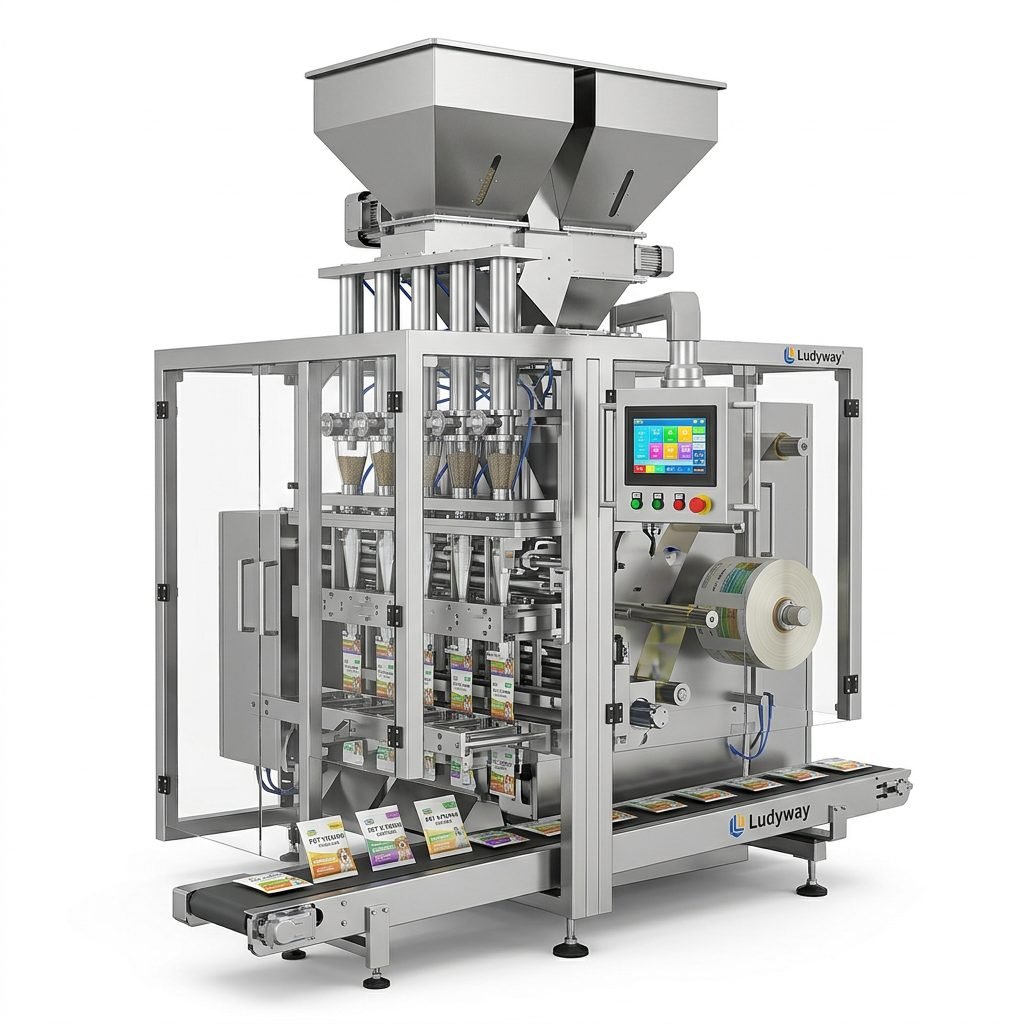
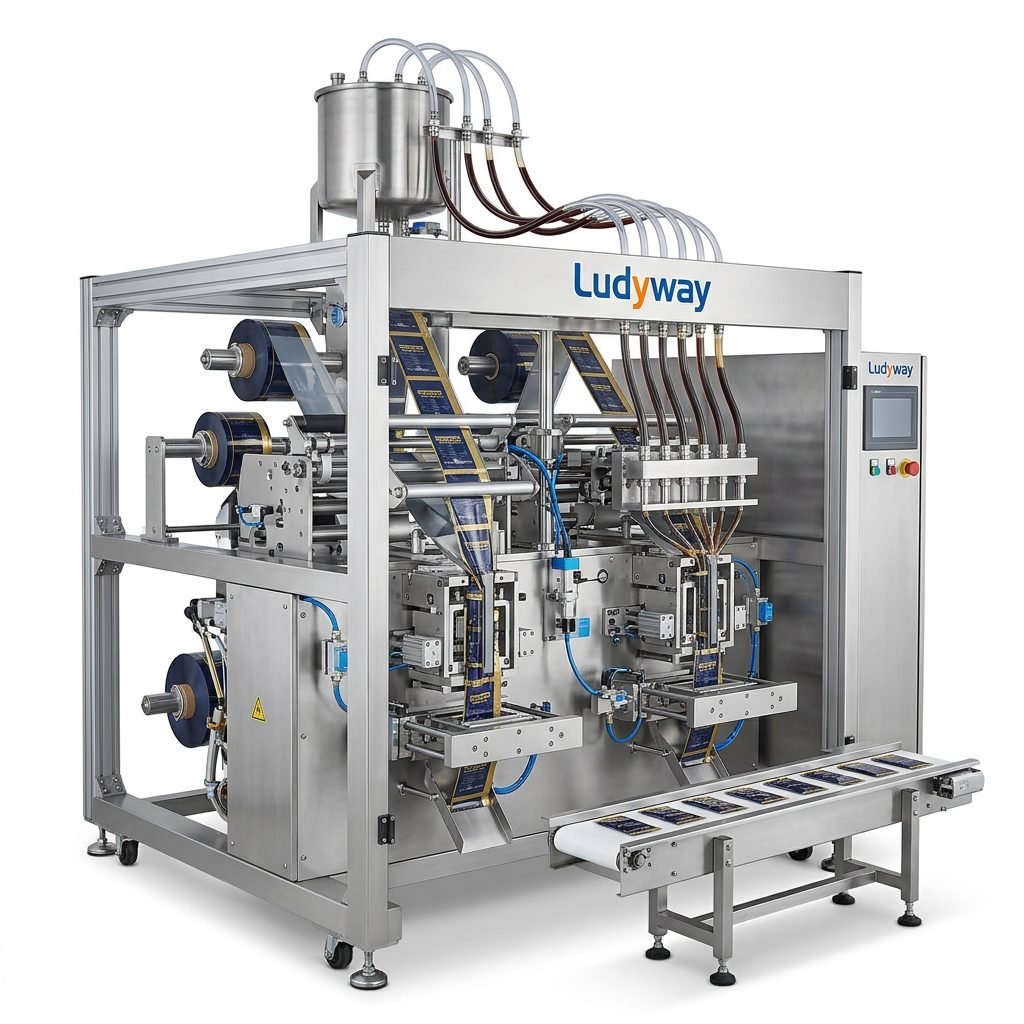
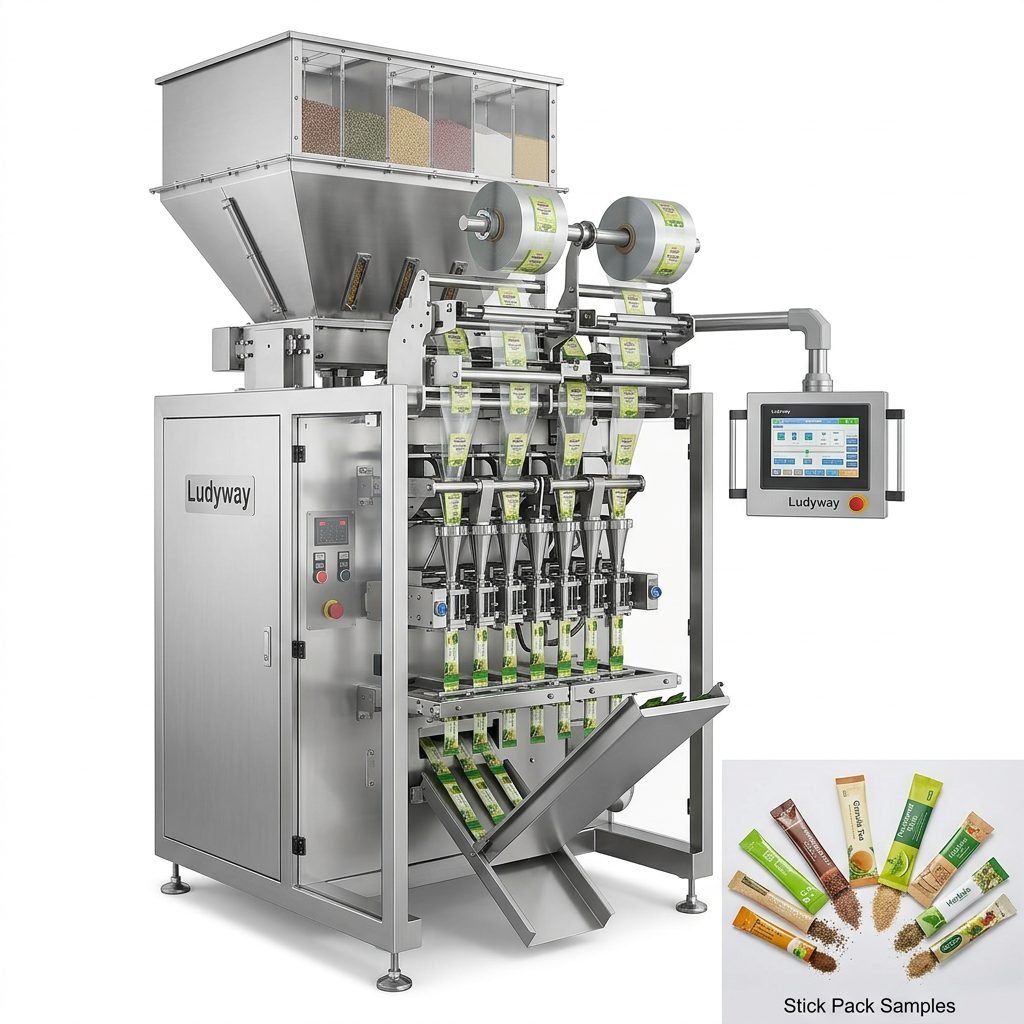
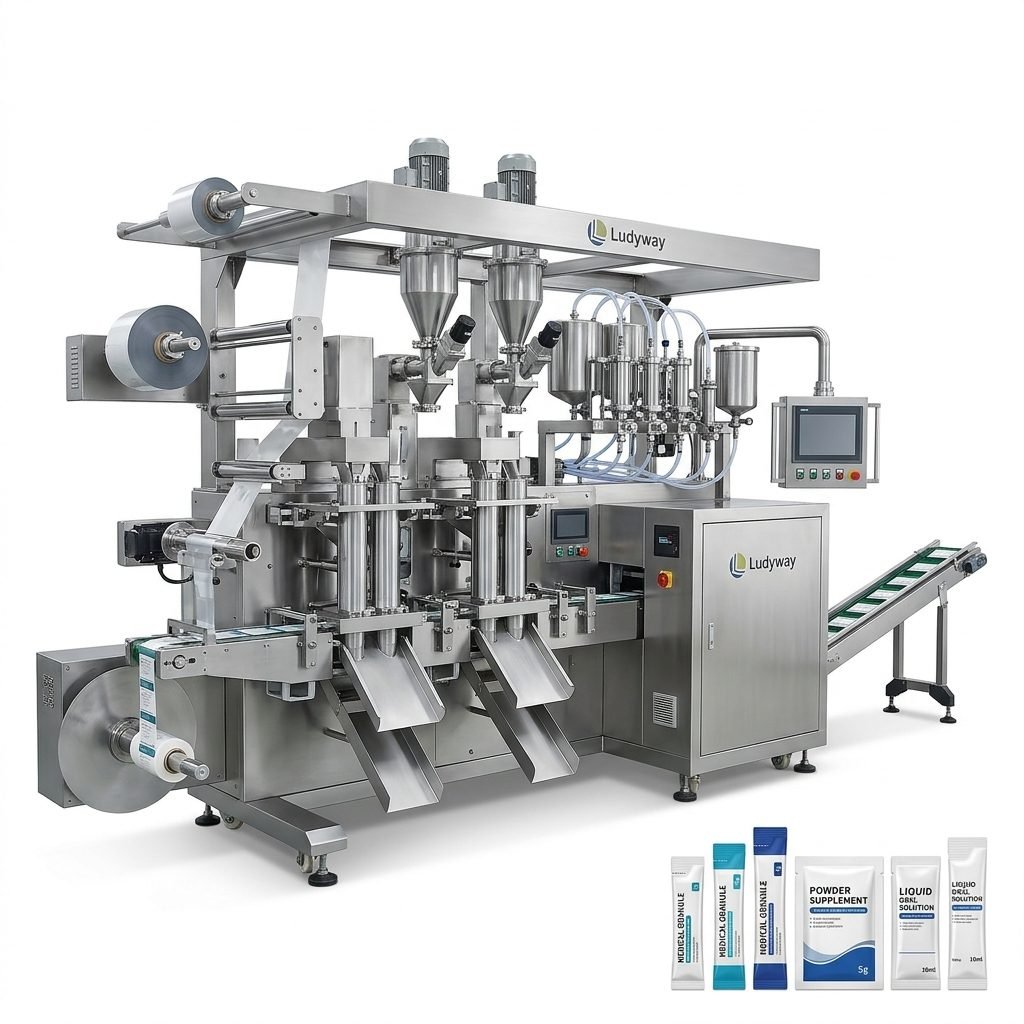
Companies like Ludyway, with expertise in multi-lane stick pack and sachet systems, illustrate the global shift towards high-efficiency frozen dosing, particularly for single-serve frozen sauces, herbs, or portion-controlled frozen ingredients commonly found in French hypermarkets. Selecting a vendor that understands both CE compliance and the specific conversion of film types for cold environments (such as MET-PET/PE laminates) is crucial.
Packaging Material Sustainability Trends in France
The French “AGEC” law (Anti-Waste for a Circular Economy) aggressively promotes recyclable packaging. For frozen foods, this places pressure on moving away from complex multi-material laminates toward mono-material PE or PP structures that can withstand low-temperature sealing. When configuring your line, you must ensure your sealing jaws and tension controls are fine-tuned for these newer, often stiffer eco-friendly films without sacrificing pack integrity at -20°C.
Shelf-Life Optimization
Frozen food relies on packaging to prevent freezer burn and dehydration. Gas flushing (MAP) with nitrogen is commonly integrated into vertical lines to extend the shelf-life of frozen pastries and premium vegetables. Vacuum skin packaging is another premium format growing in the French frozen section for fish and meat cuts.
Key Takeaways for Your French Frozen Operation
Successfully setting up a line in France is a blend of mechanical engineering and legal precision. Prioritize hygienic IP65-rated equipment, ensure your engineering team is well-versed in the French language standards for machine documentation (NF EN 60204-1), and design your line with flexibility to switch between bag formats to supply both the foodservice and retail sectors, which dominate the French frozen market.
- Prioritize stainless steel execution and sloped surfaces for condensation control.
- Budget for an automated “cold end” of line to mitigate labor costs.
- Ensure film suppliers provide Declaration of Compliance for EU 10/2011 for plastic contact.
- Integrate inspection systems not just for metals, but for density to detect frozen clumps.
For robust data on machinery standards, the ISO – Packaging Standards provide essential benchmarks, and staying current with PMMI – State of the Industry Reports can guide your investment timing. The long-term growth of the French frozen sector, driven by convenience and reduced food waste, makes this a formidable opportunity for precisely engineered packaging lines.