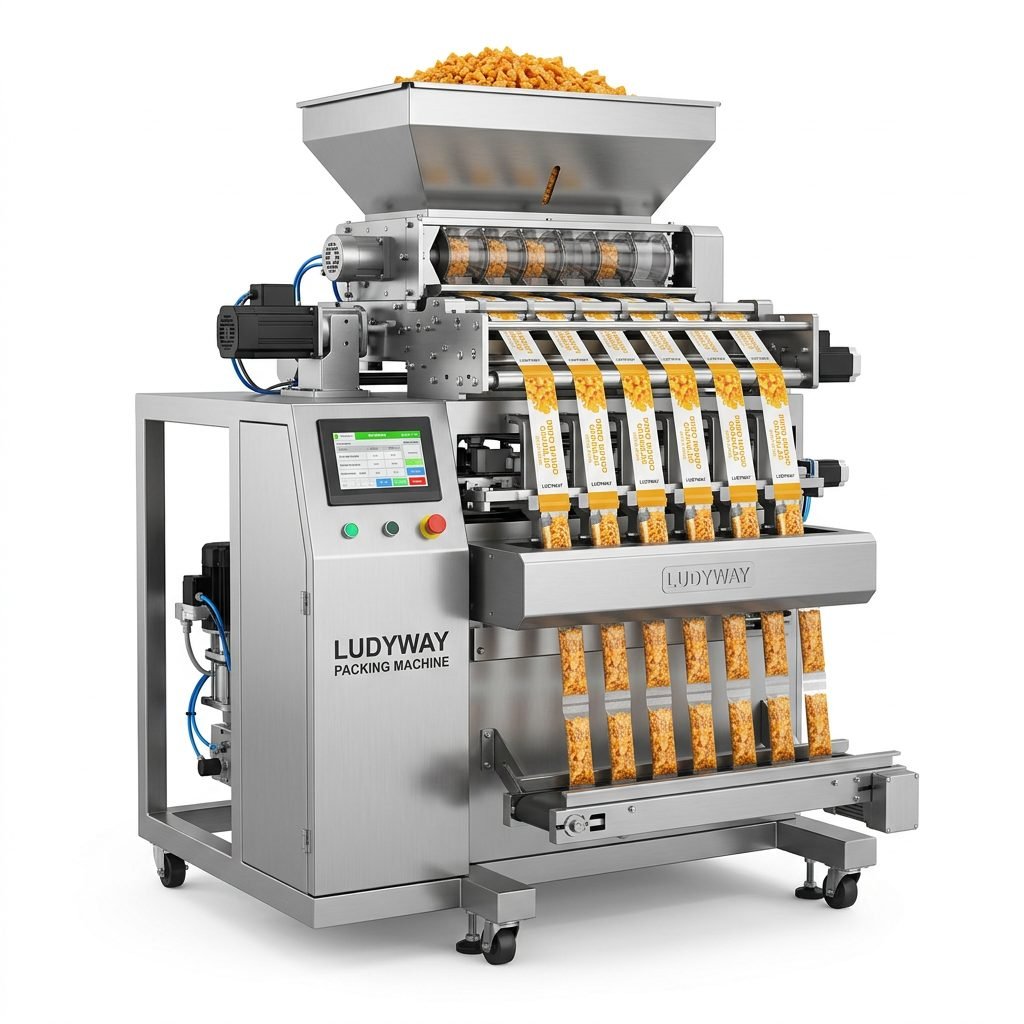
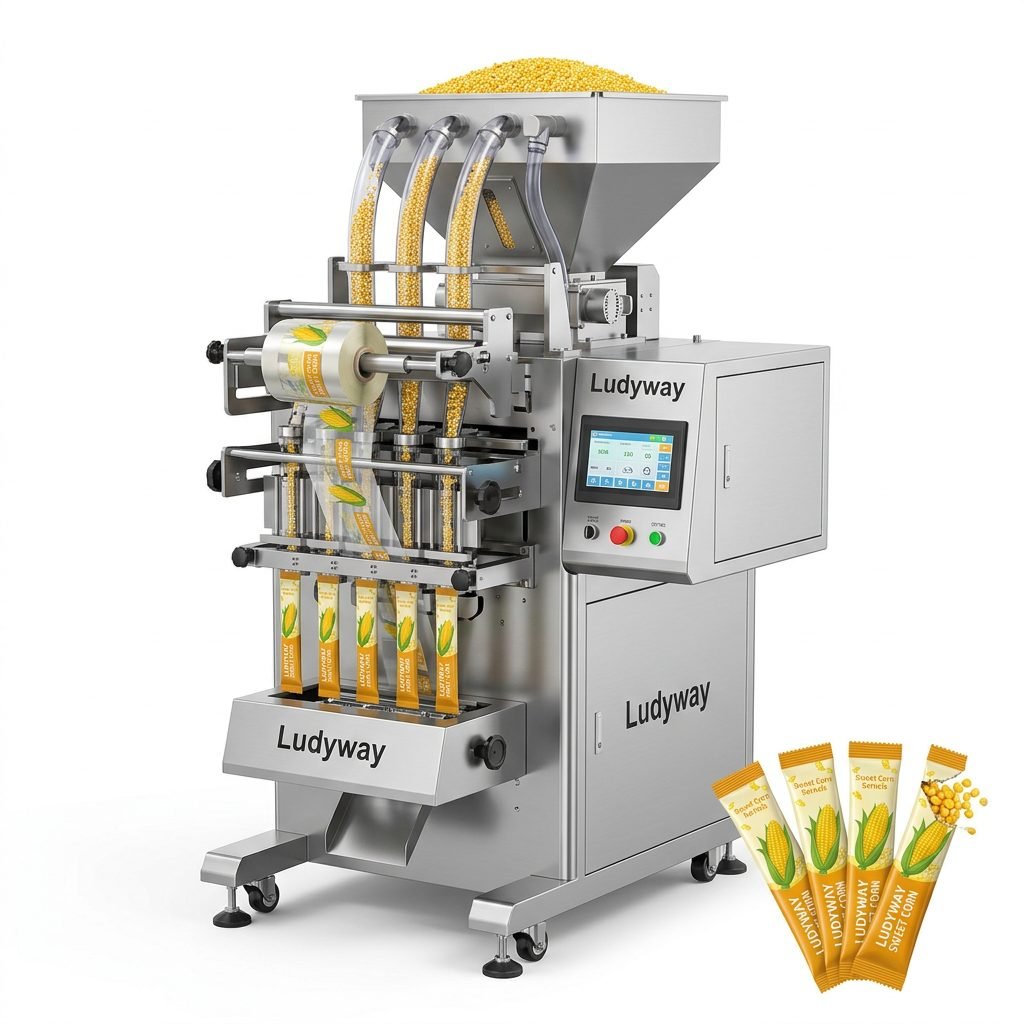
Expanding a snack brand into international markets requires more than just a great recipe. The efficiency, compliance, and flexibility of your popcorn packaging machine production line will determine how fast you can scale and how well you can adapt to different regional requirements. Whether you are packing ready-to-eat caramel popcorn for the Middle East or portion-controlled plain kernels for European retailers, your packaging system must be engineered for global standards from day one.
Understanding Regional Packaging Requirements
Before selecting equipment, map out the specific demands of each target market. Packaging regulations for food contact materials differ significantly across the United States (FDA 21 CFR), the European Union (EU Packaging and Packaging Waste Regulation), and GCC countries. Your production line must handle multiple film structures — from metallized BOPP to biodegradable laminates — without compromising seal integrity.
Key Equipment for a Turnkey Popcorn Packaging Line
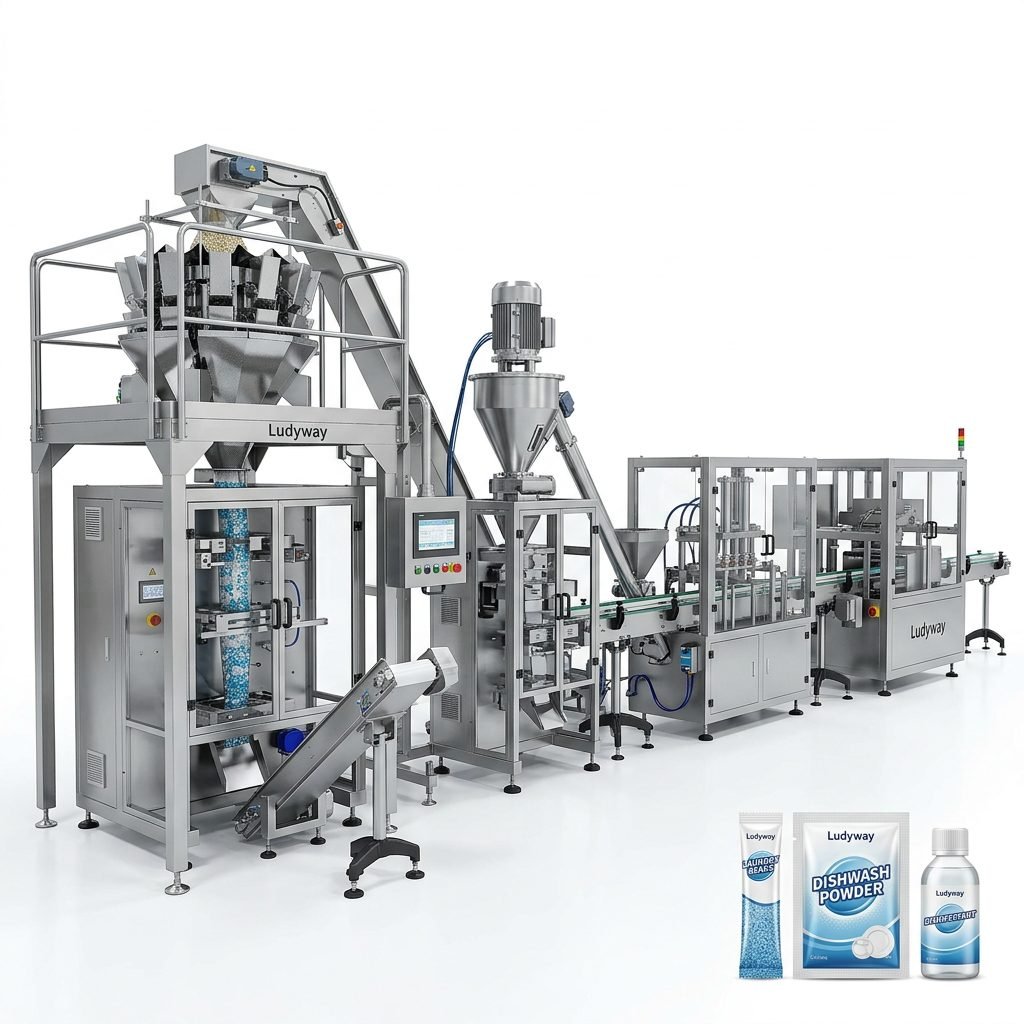
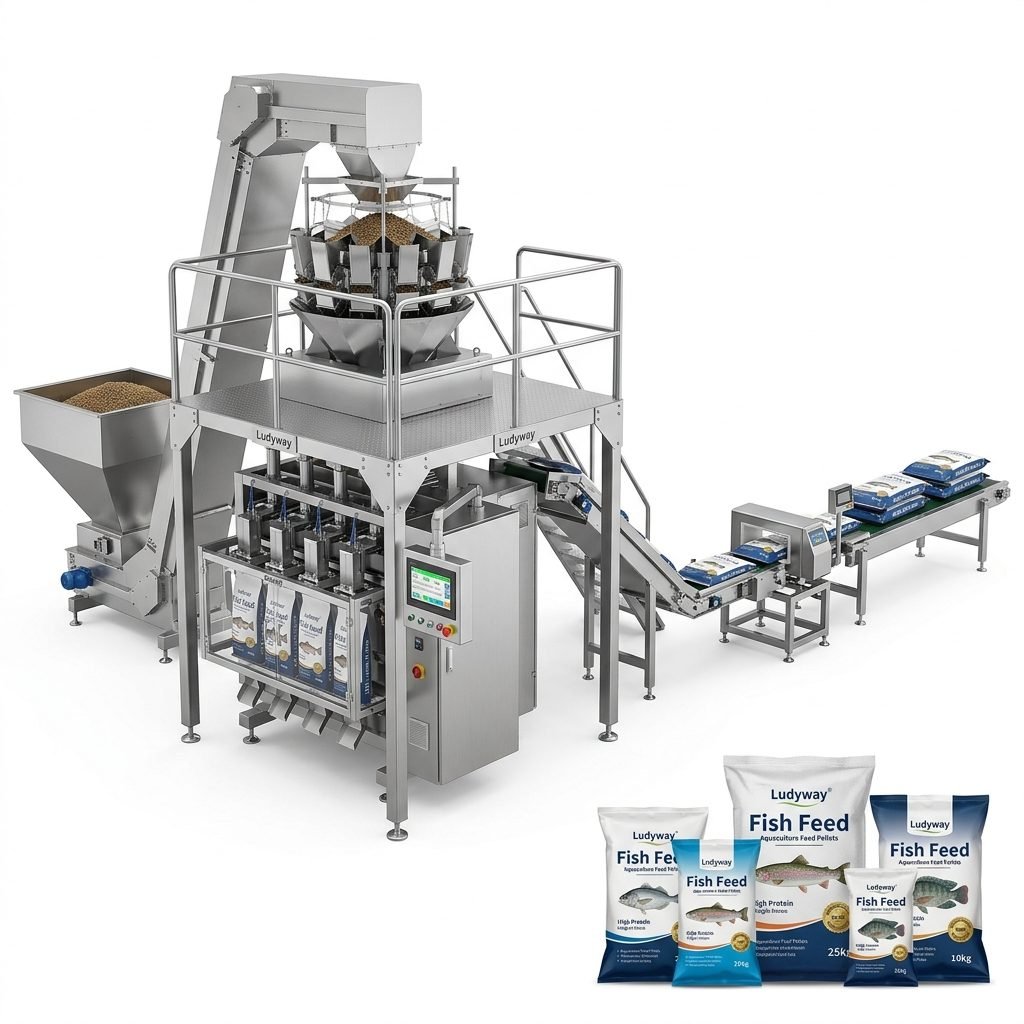
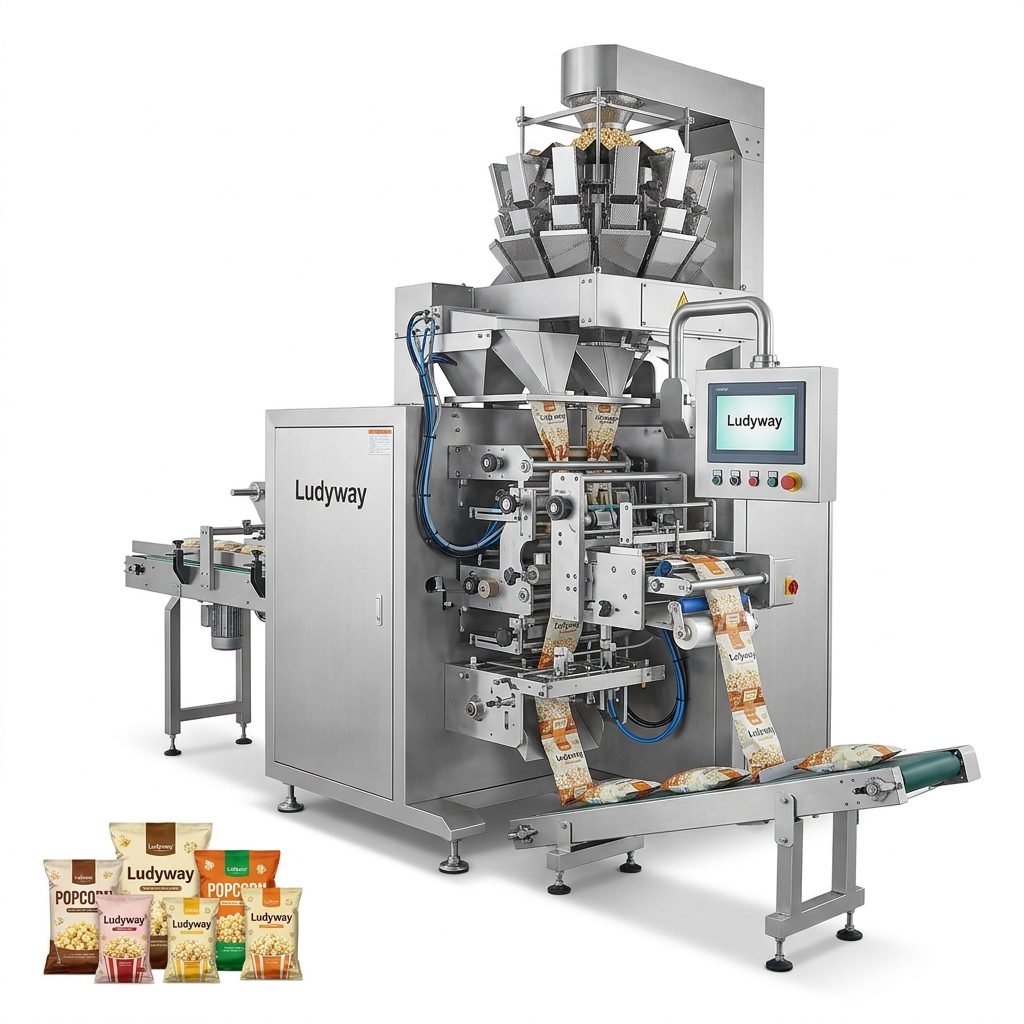
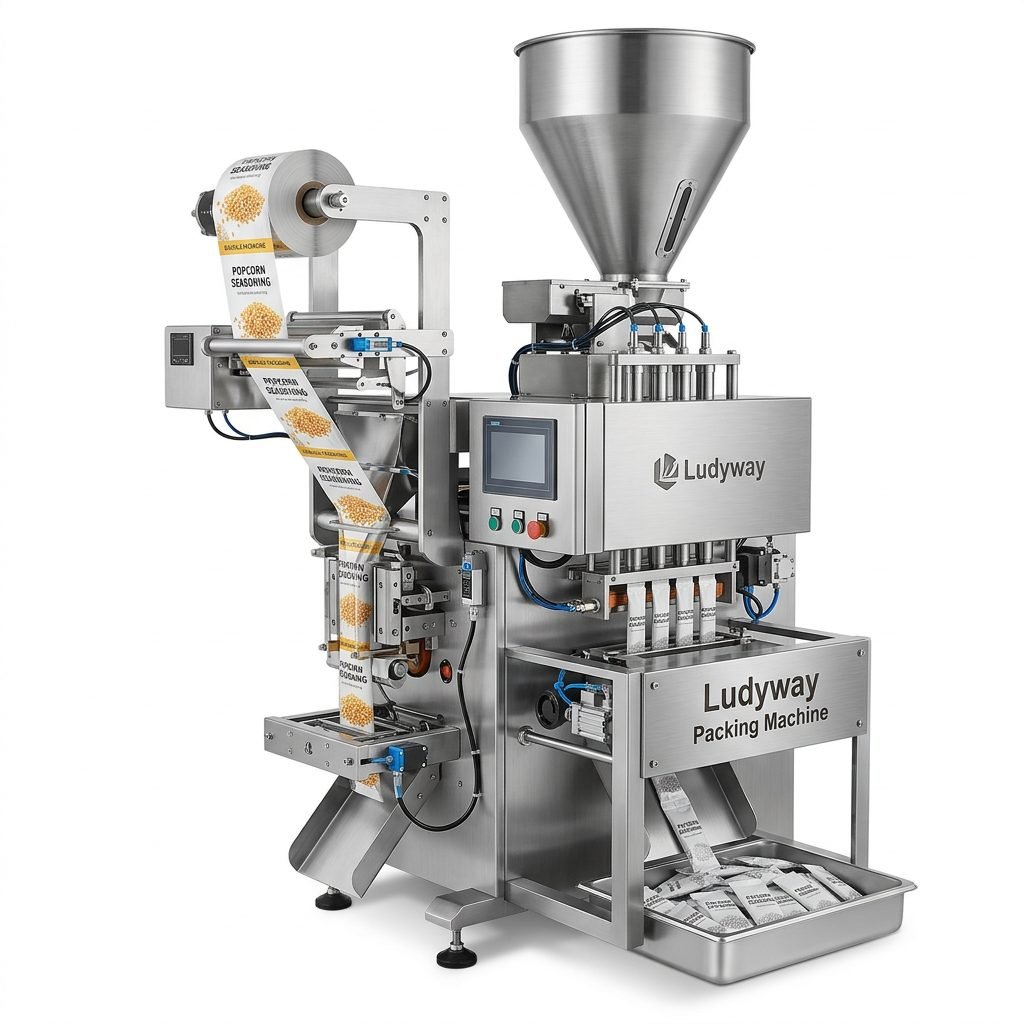
A fully integrated popcorn packaging machine production line typically includes the following modules. Selecting the right configuration depends on your target output volume and the product format — loose granules, seasoning-coated pieces, or mixed snack packs.
| Equipment Module | Primary Function | Global Market Relevance |
|---|---|---|
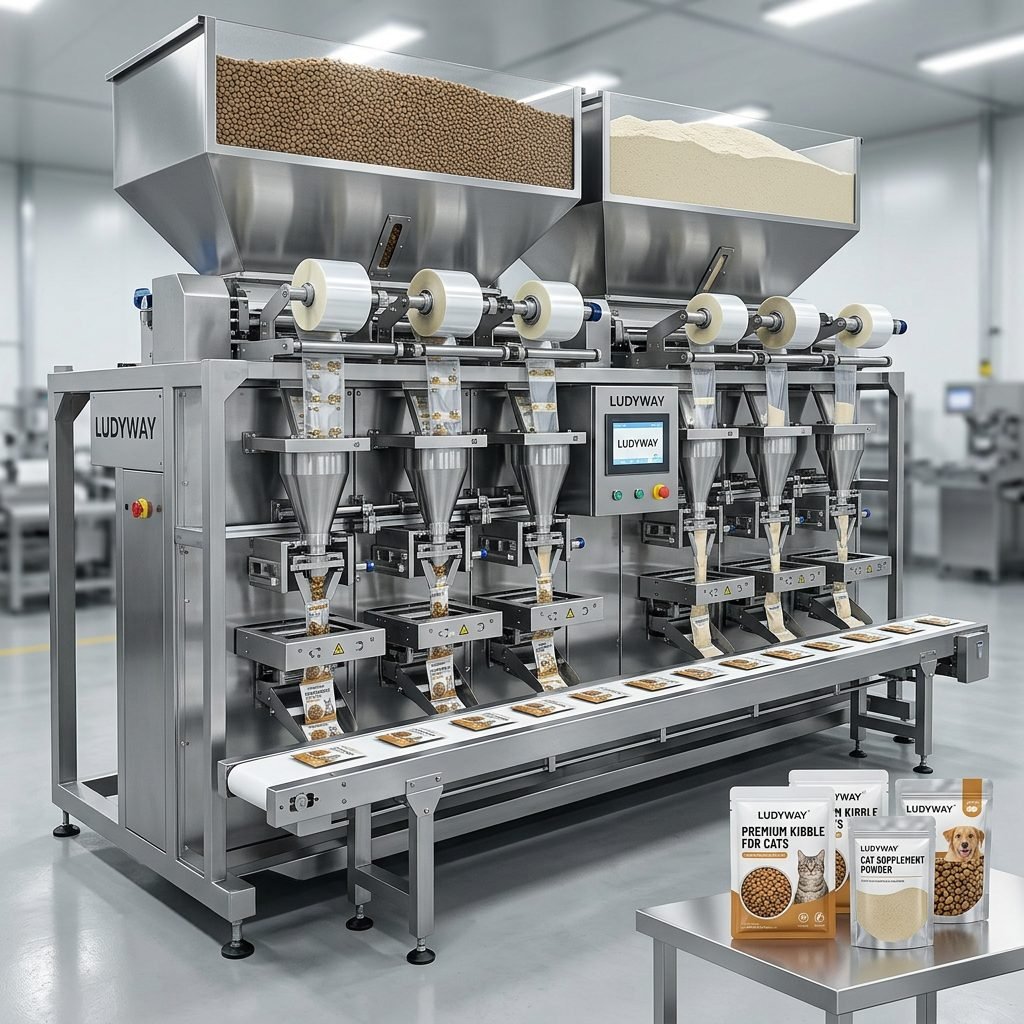
| Multi-Head Weigher | Precision portioning of popcorn kernels and seasoned pieces | Critical for markets with strict net-weight regulations (EU, Japan) |
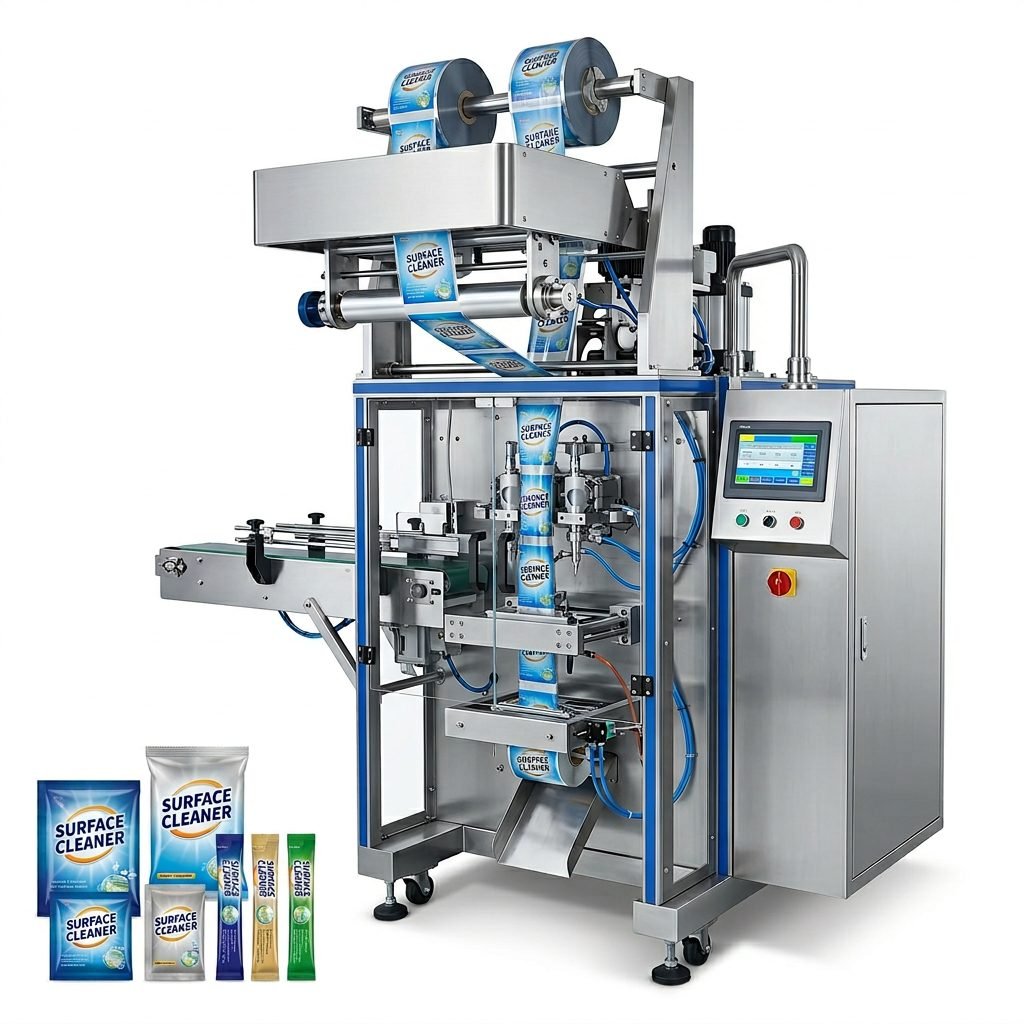
| Vertical Form-Fill-Seal (VFFS) Machine | Forms pouches from roll stock, fills product, and seals | Must support multiple film types for different climate zones |
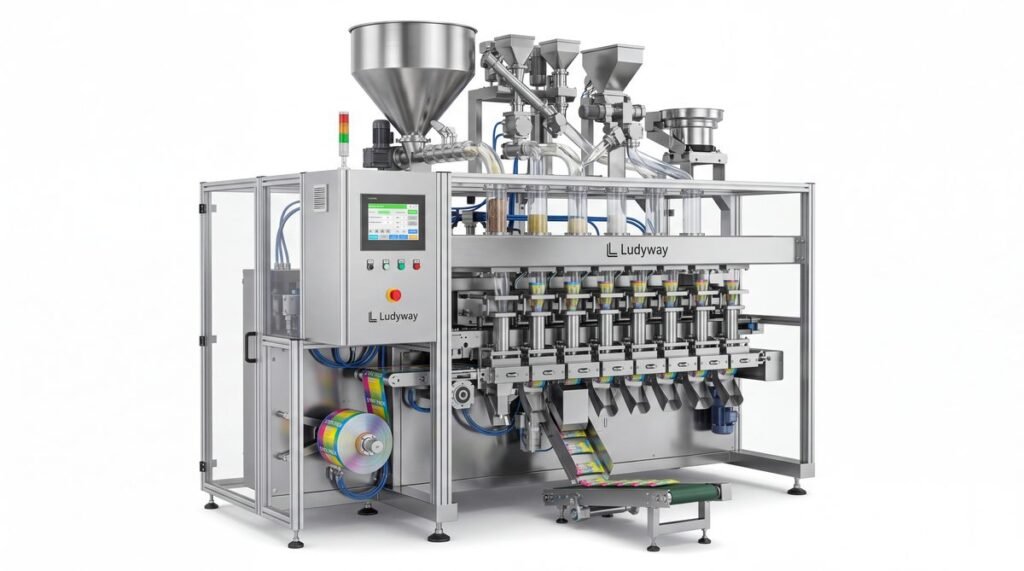
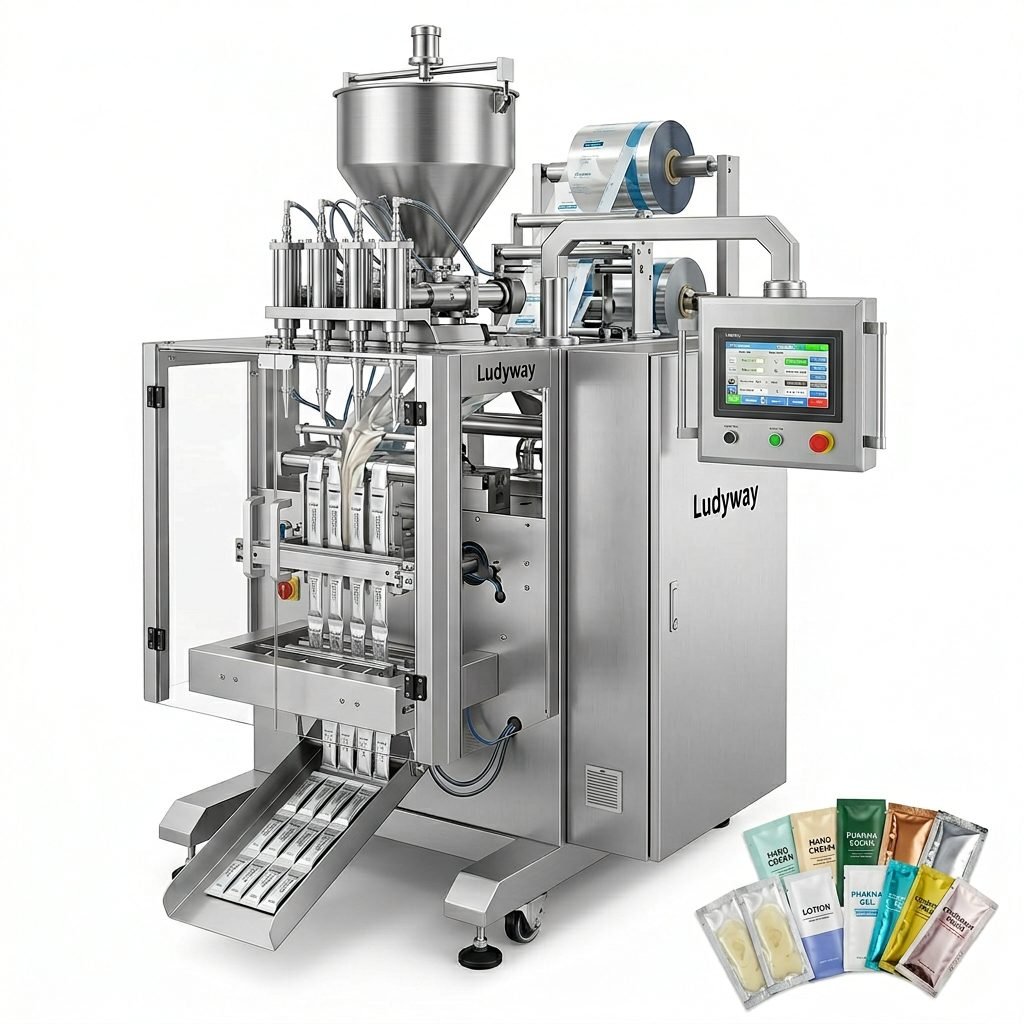
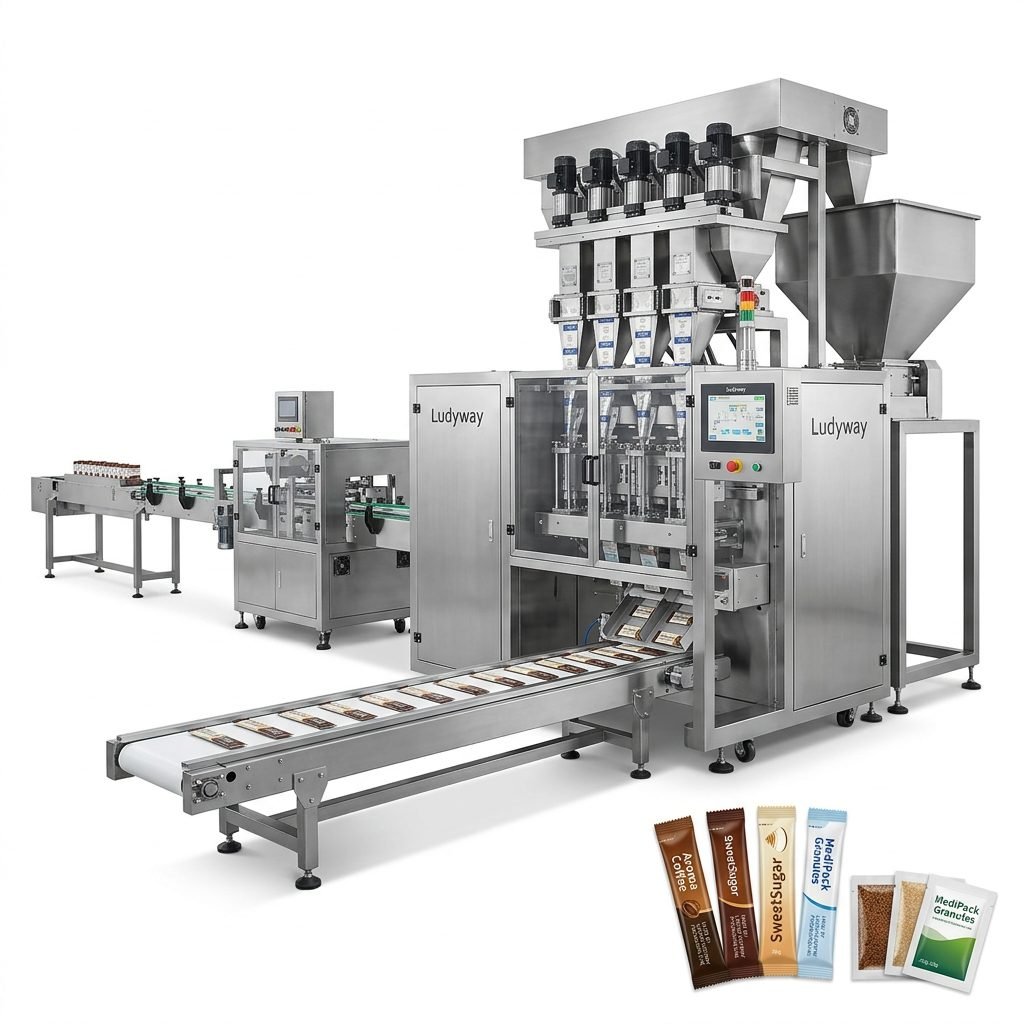
| Multi-Lane Stick Pack Machine | High-speed sachet production for single-serve portions | Popular in Southeast Asia and Latin American convenience markets |
| Nitrogen Flushing System | Oxygen displacement for extended shelf life | Essential for export shipments with long transit times |
| Checkweigher & Metal Detector | Quality assurance and contaminant detection | Required for PMMI-aligned HACCP compliance |
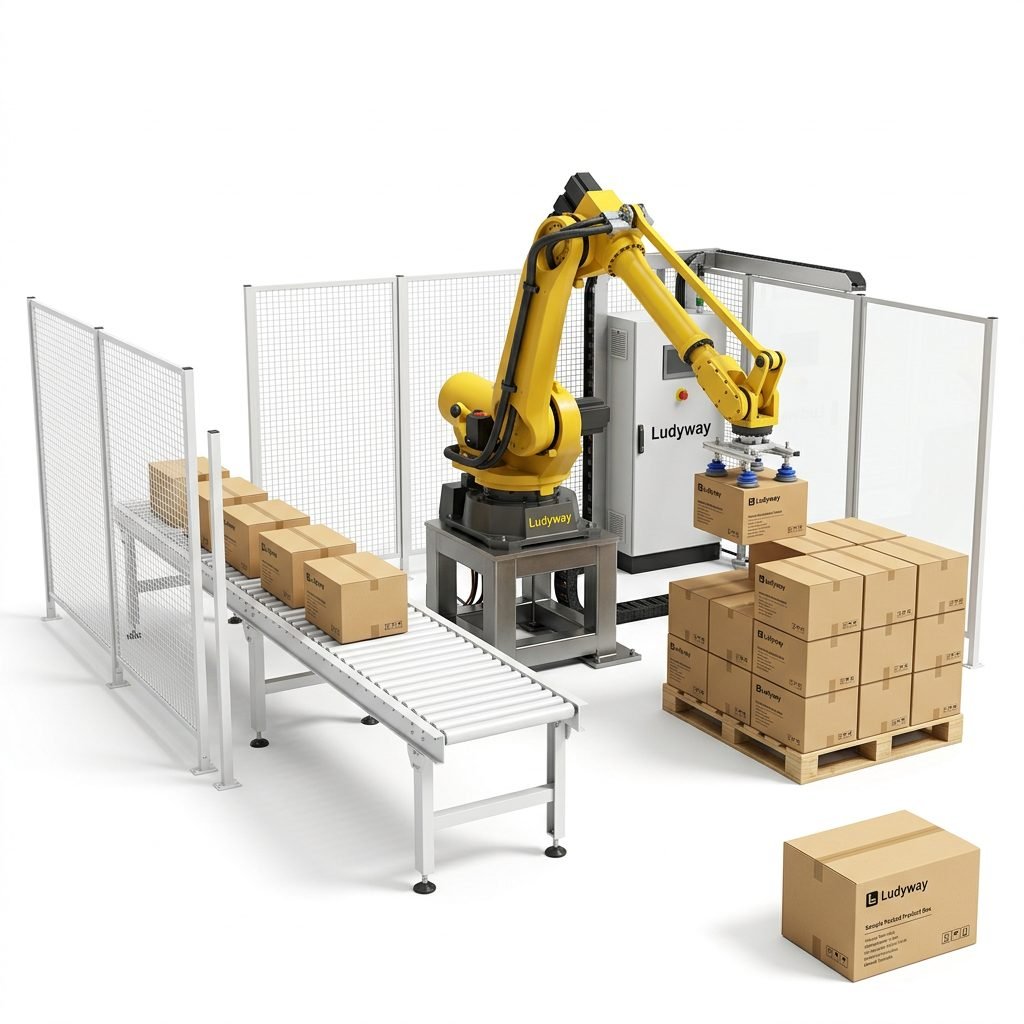
| Automated Cartoning System | Packs finished pouches into retail-ready cartons | Reduces manual labor for high-wage manufacturing regions |
Choosing Between Stick Pack and Sachet Formats
Your choice of packaging format directly impacts machine selection. Consider these factors when deciding between a multi-lane stick pack machine and a sachet packaging system:
- Portion size: Stick packs excel at 2g–50g single-serve popcorn portions, while sachets handle larger 50g–200g formats
- Shelf presence: Sachets offer larger branding surfaces preferred by Middle Eastern and African markets
- Line speed: Multi-lane stick pack systems achieve 400–600 packs per minute, ideal for high-volume export orders
- Material costs: Stick packs typically consume less film per unit, reducing per-package material expense
Designing the Production Line Layout for Flexibility
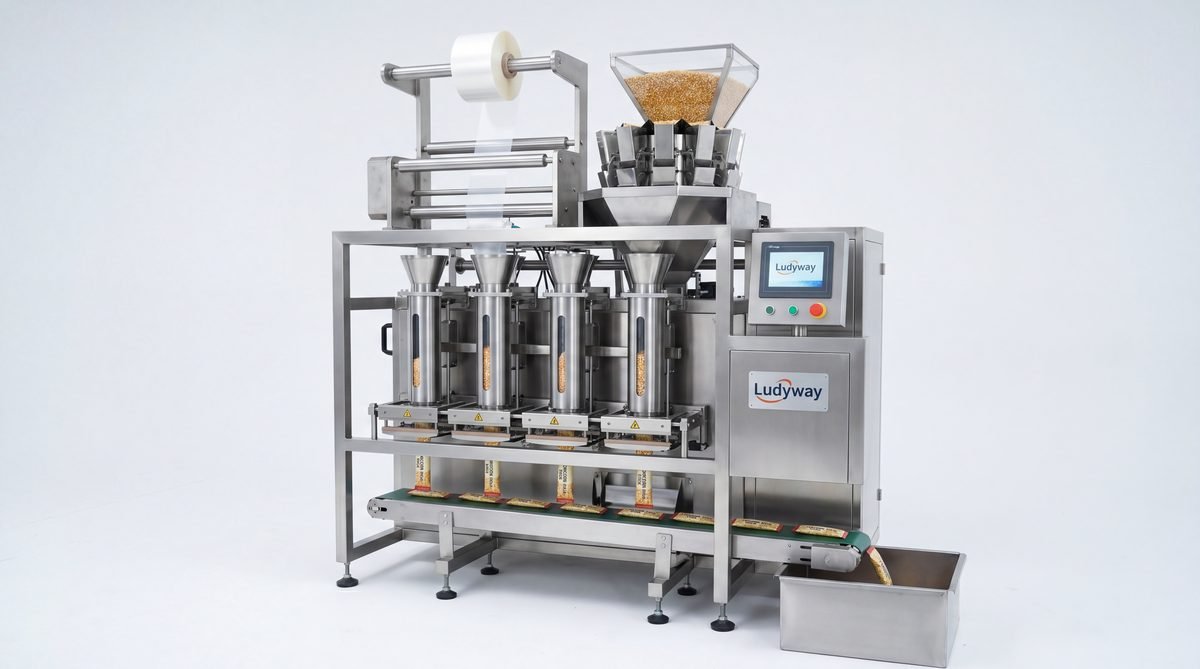
A well-designed layout minimizes changeover time and maximizes throughput. When engineering your line, prioritize modularity so you can swap between popcorn varieties — salted, buttered, caramel-coated, or cheese-flavored — without cross-contamination. The automated packaging line should follow a logical flow from raw material feeding to finished case packing.
Recommended Layout Sequence
- Inclined belt conveyor — transports popcorn from the seasoning drum to the weigher buffer hopper
- Multi-head combination weigher — achieves ±0.5g accuracy for consistent portion control
- Vertical form-fill-seal or multi-lane stick pack unit — the core popcorn packaging machine forming, filling, and sealing pouches
- Discharge conveyor with metal detection — rejects non-conforming packs automatically
- Rotary collection table or automated cartoning — groups pouches for secondary packaging
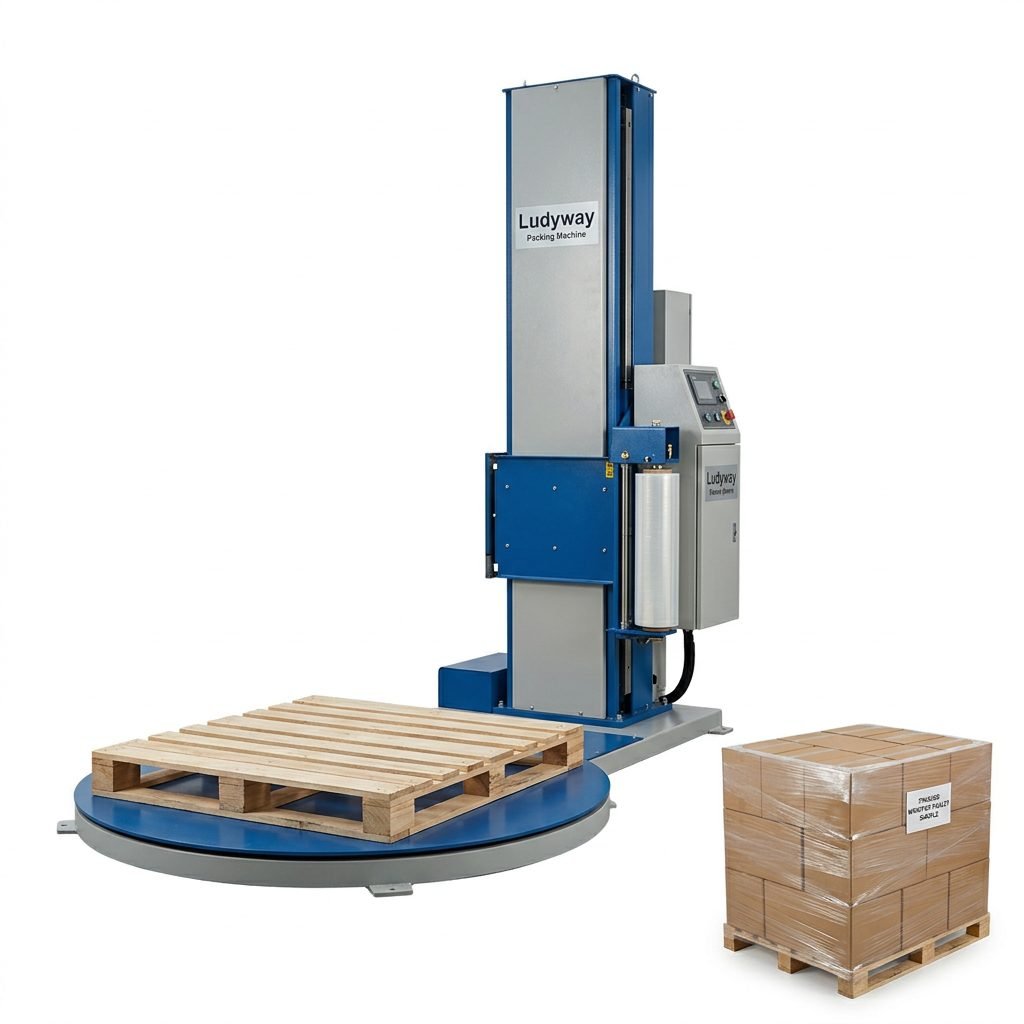
- Case packer and palletizer — prepares shipments for containerized export
Compliance with International Food Safety Standards
Global buyers expect certifications that validate your production line’s safety and quality controls. According to PMMI business intelligence, packaging machinery in food applications increasingly requires third-party validation. Key standards to address include:
- ISO 22000 — Food safety management systems applicable to packaging operations
- HACCP principles — Hazard analysis at each packaging stage
- CE marking — Required for machinery sold into the European Economic Area
- FDA 21 CFR Part 110 — Good Manufacturing Practices for US-bound products
- Halal certification compatibility — Ensuring no cross-contamination in GCC and Southeast Asian markets
Automation Level: Balancing Labor Costs and Investment
The right automation level depends on your target markets’ labor economics. For exports to North America and Western Europe where labor costs are high, a fully automated popcorn packaging line with robotic palletizing delivers the fastest ROI. For markets where you benefit from lower labor costs, semi-automatic systems with manual cartoning stations may be more appropriate.
Automation Comparison by Market Type
| Production Scenario | Recommended Automation Level | Typical Output Range |
|---|---|---|
| Entry-level export (1-2 SKUs) | Semi-automatic with manual weighing | 30–60 packs/minute |
| Mid-volume multi-region | Fully automatic VFFS with checkweigher | 80–150 packs/minute |
| High-volume global brand | Multi-lane stick pack + robotic cartoning + palletizing | 400–600 packs/minute |
Maintenance, Spare Parts, and After-Sales Support
When your production line is running for export orders with tight shipping deadlines, downtime is not an option. Partner with a packaging machine manufacturer that offers remote diagnostics and maintains regional spare parts depots. Key considerations include:
- Availability of OEM spare parts in your region or through bonded warehouses
- Remote video support capabilities for troubleshooting across time zones
- Preventive maintenance contracts aligned with your production calendar
- Training programs for operators on quick format changeovers
Ludyway, with over 30 years of industry experience and a modern 20,000㎡ manufacturing facility, provides turnkey popcorn packaging machine production lines with comprehensive after-sales support to customers in more than 100 countries. Their engineering team specializes in configuring multi-lane packaging systems that meet diverse international standards while maintaining cost-effectiveness for scaling brands.
Future-Proofing Your Investment
Global snack markets are evolving rapidly. The flexible packaging industry continues to grow, driven by convenience trends and sustainability demands, as documented by the Flexible Packaging Association. When setting up your production line, build in the ability to adapt to these shifts:
- Recyclable mono-material films — Ensure your VFFS machine can seal newer sustainable substrates
- Smart factory integration — Select machines with OPC-UA or MQTT protocols for Industry 4.0 connectivity
- Quick-change forming tubes — Enable switching between pouch widths without extensive downtime
- Digital printing compatibility — Plan for variable data printing to meet traceability regulations like EU Regulation 1169/2011
Key Takeaways for Global Popcorn Packaging Success
Setting up a popcorn packaging machine production line for global markets requires balancing throughput, compliance, and flexibility. Start by defining your primary export regions and their regulatory requirements, then select modular equipment that can scale with your brand. Invest in automation appropriate to your labor environment, and never underestimate the value of responsive technical support when your line is running 24/7 to meet an international purchase order. With the right configuration, your popcorn packaging line becomes a competitive advantage — enabling consistent quality, fast order fulfillment, and seamless entry into new markets.