Setting up a popcorn packaging machine production line in Asia requires careful planning, from understanding regional market dynamics to selecting the right equipment and navigating local regulations. This guide walks you through every critical step to ensure a smooth and successful setup.
Why Asia Is a Strategic Hub for Popcorn Packaging
Asia has emerged as a dominant force in the global snack food industry, with popcorn consumption growing rapidly across markets like India, China, Indonesia, and Vietnam. Several factors make the region particularly attractive for establishing a popcorn packaging production line:
- Rapidly expanding middle class with increasing disposable income
- Growing demand for ready-to-eat snacks in both urban and semi-urban areas
- Cost-efficient manufacturing compared to Western markets
- Strategic export opportunities to neighboring countries and beyond
- Government incentives for food processing and packaging industries
According to industry data from the PMMI Business Intelligence Library, the Asia-Pacific region continues to lead global packaging machinery growth, driven by food sector expansion and automation adoption.
Key Components of a Popcorn Packaging Production Line
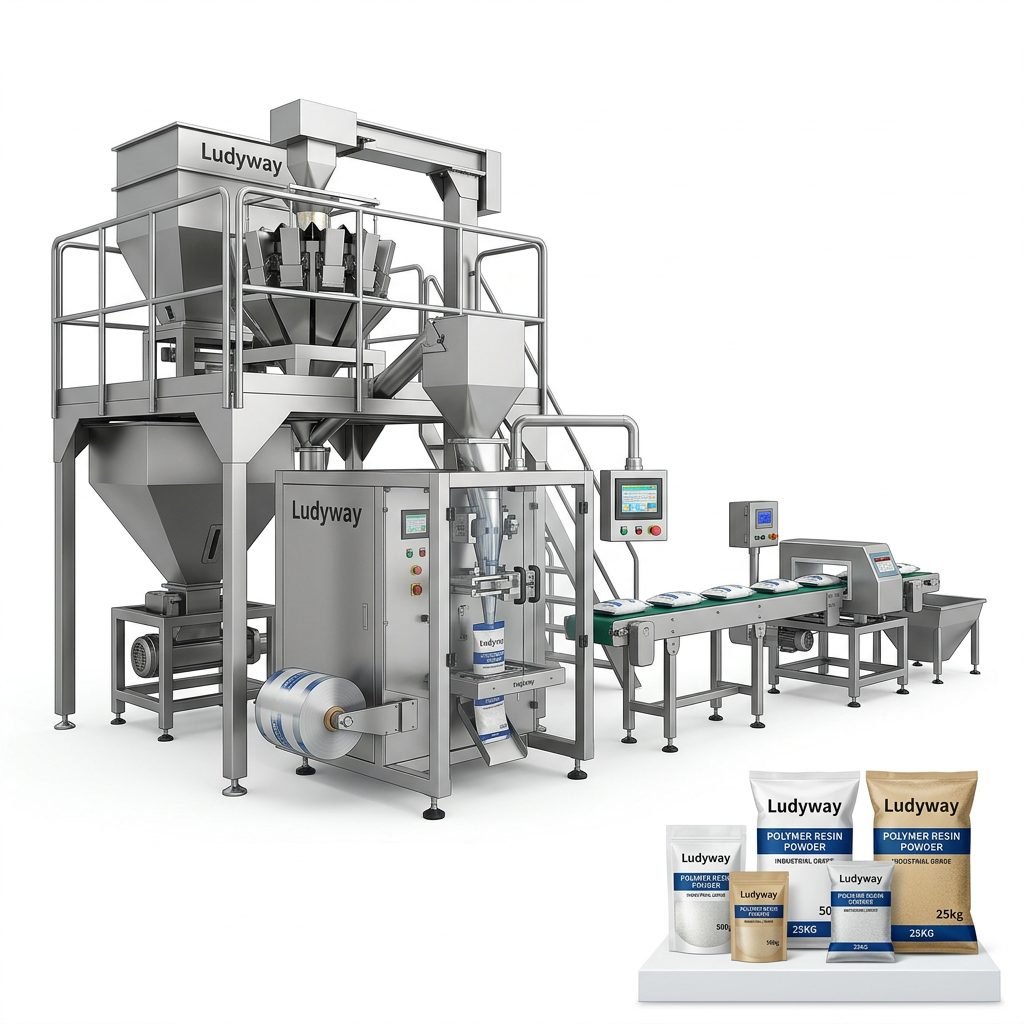
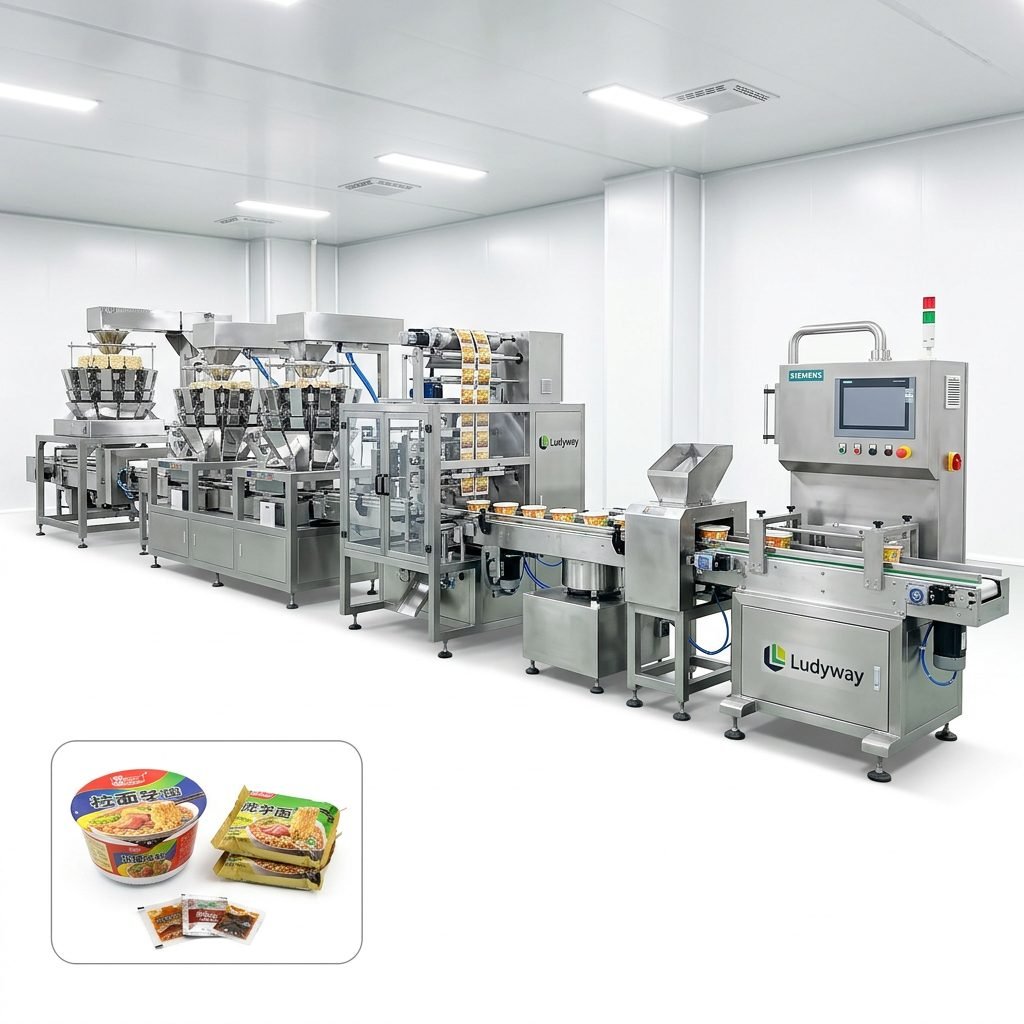
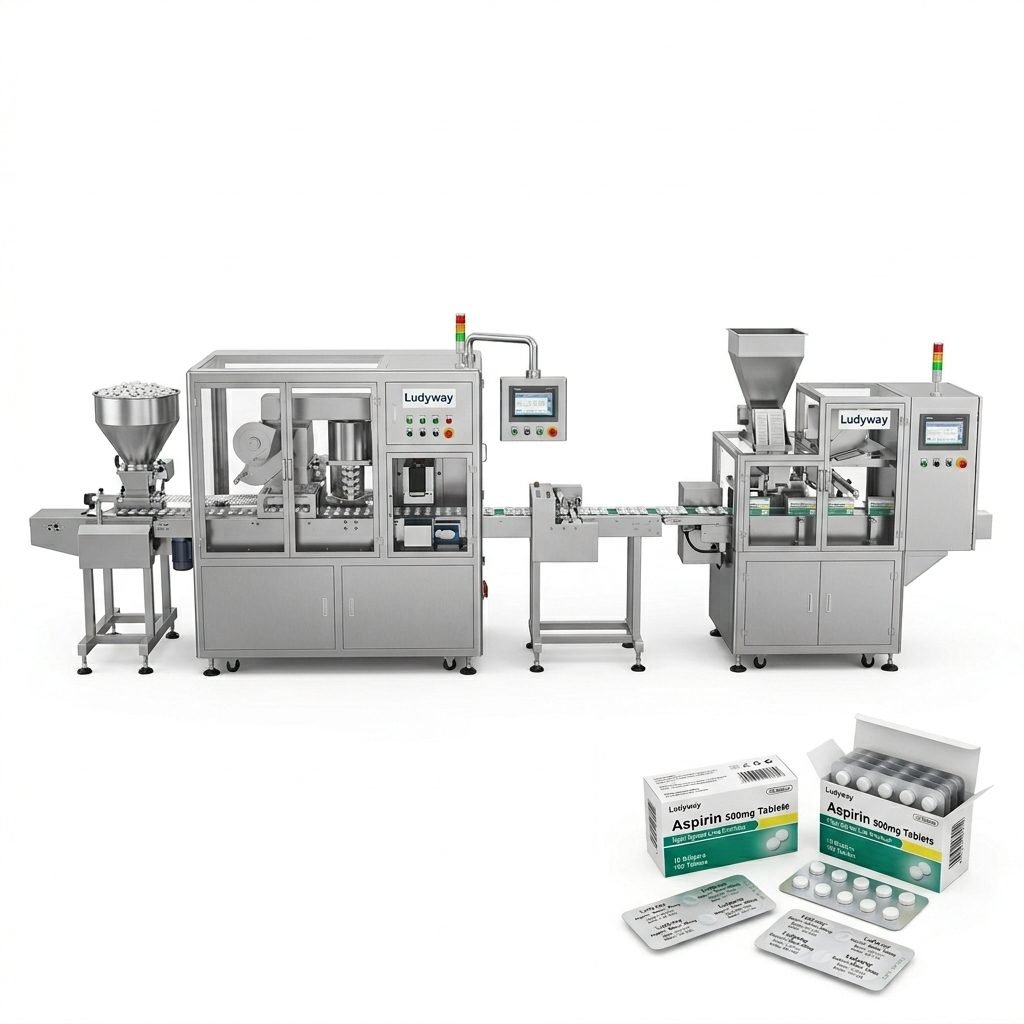
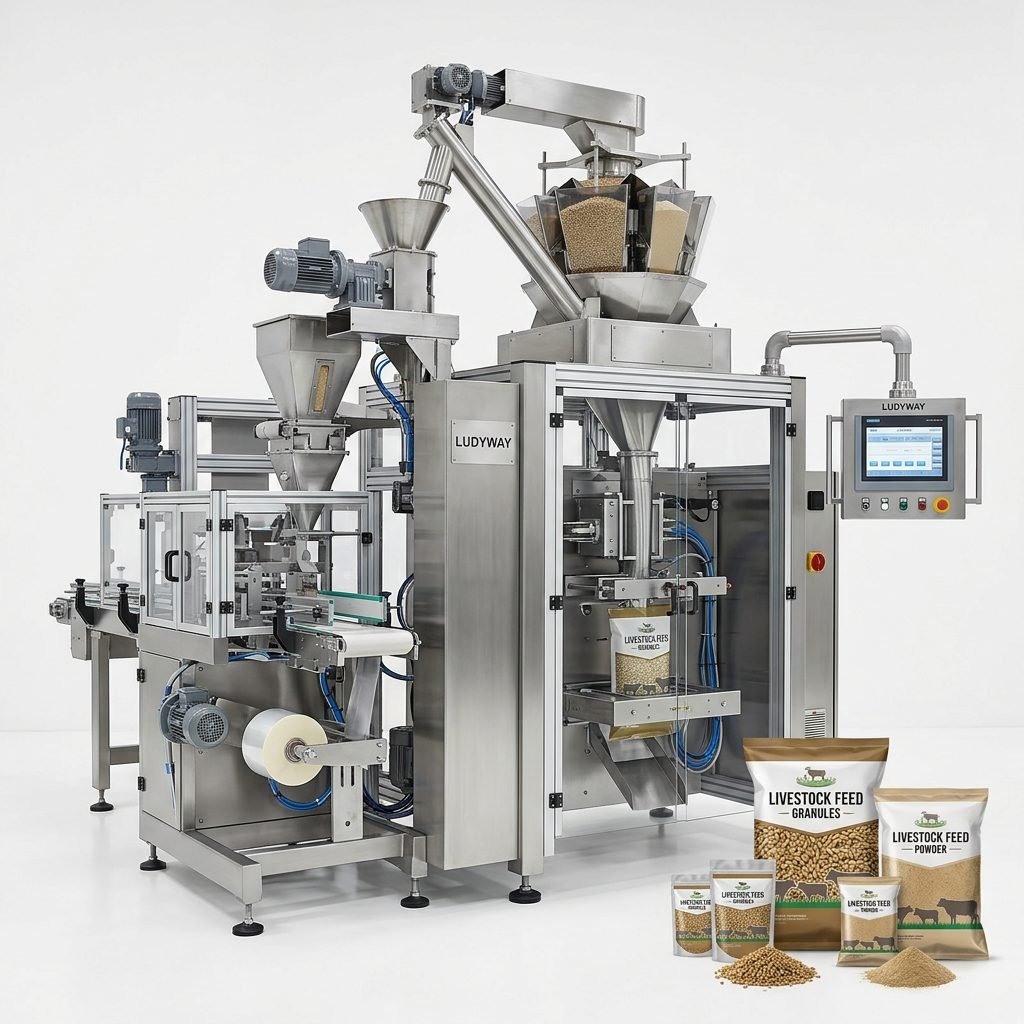
A complete popcorn packaging machine production line typically consists of several integrated systems. Understanding each component is essential for making informed purchasing decisions.
Feeding and Conveying Systems
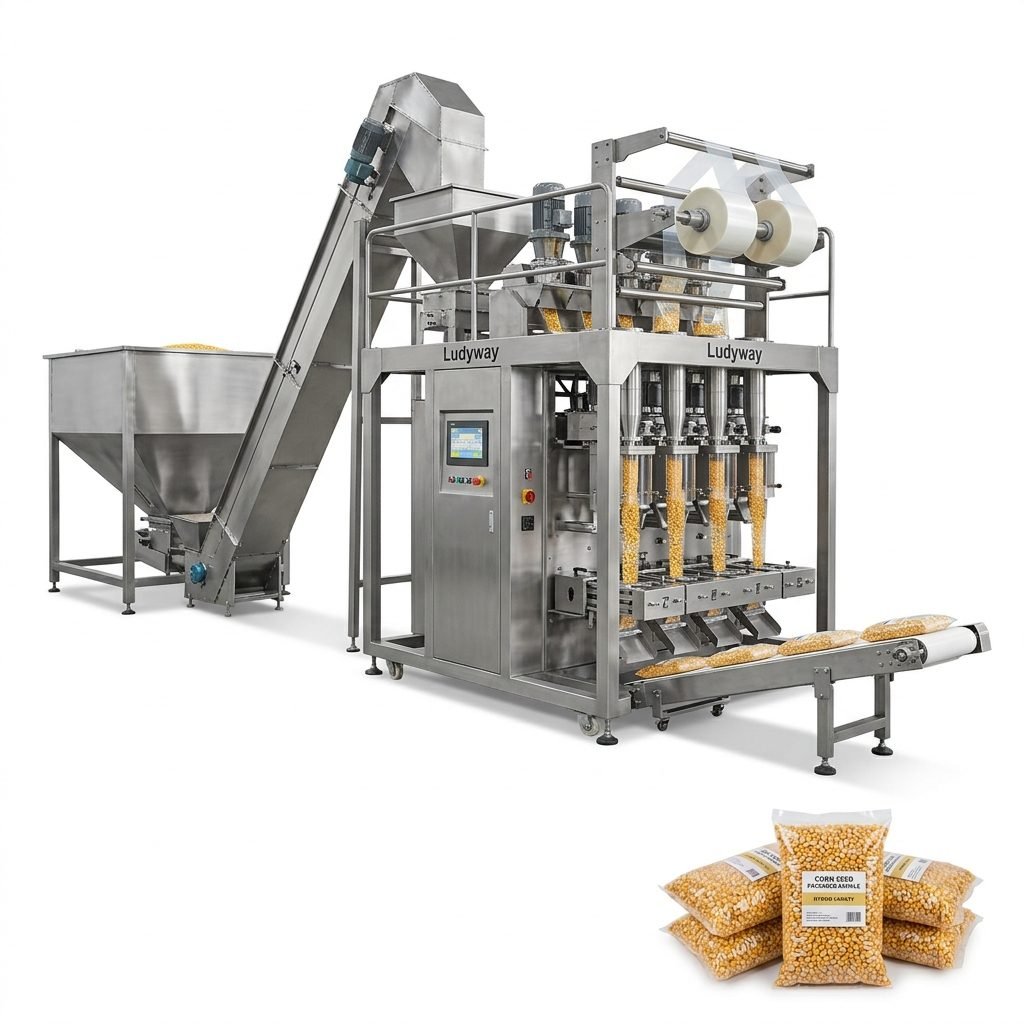
The first stage involves transferring popcorn kernels or popped popcorn into the packaging system. Bucket elevators and inclined conveyors are commonly used to maintain product integrity without crushing delicate popped kernels.
Weighing and Dosing Units
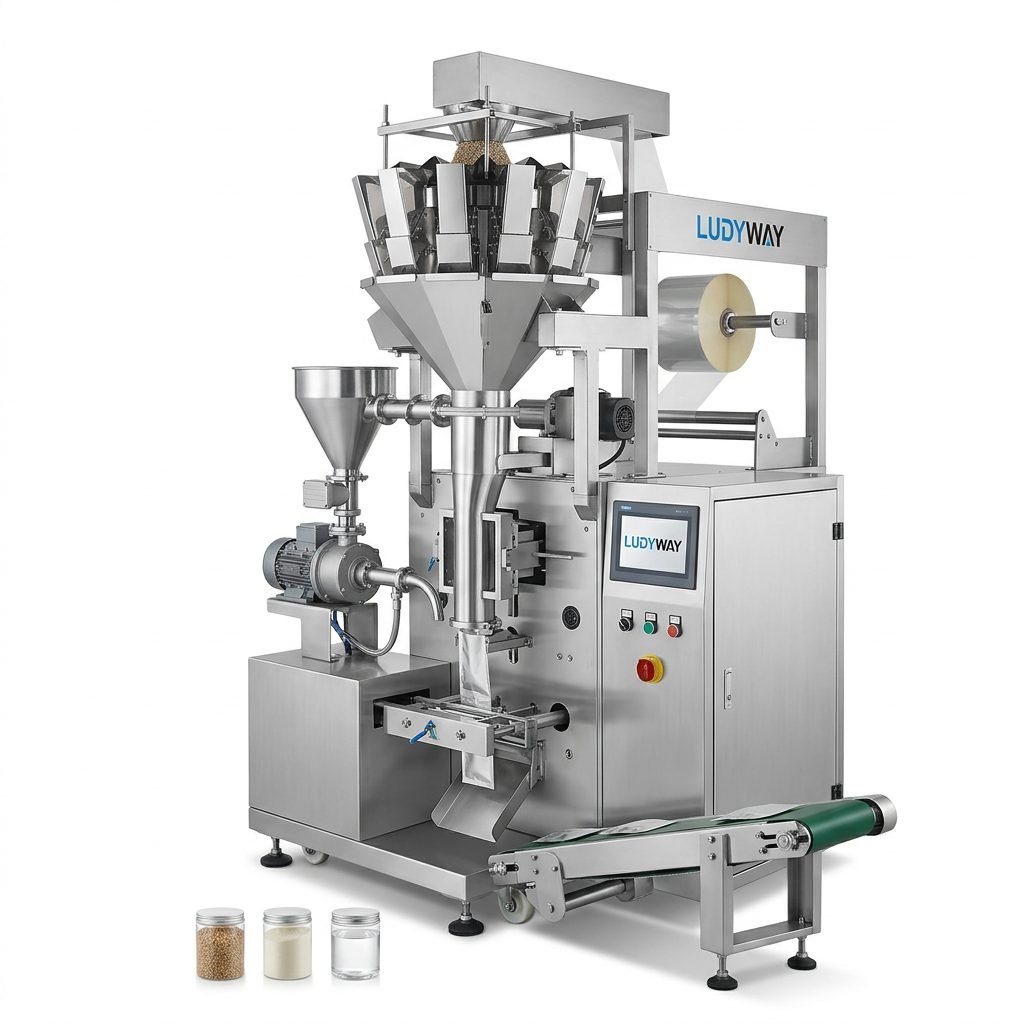
Precision multi-head weighers ensure consistent portion control. For popcorn applications, volumetric cup fillers or multi-head weighers with gentle handling features are preferred to minimize product breakage.
Packaging Machine Core
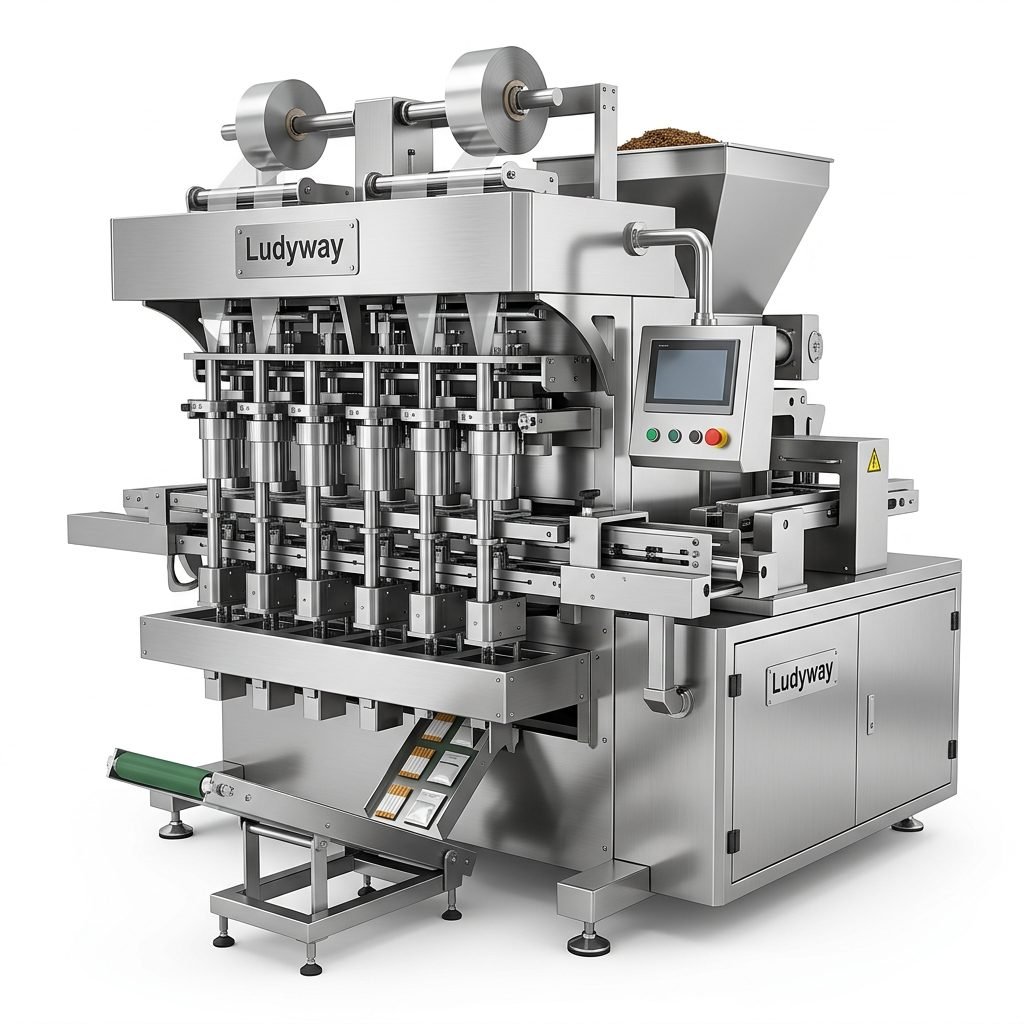
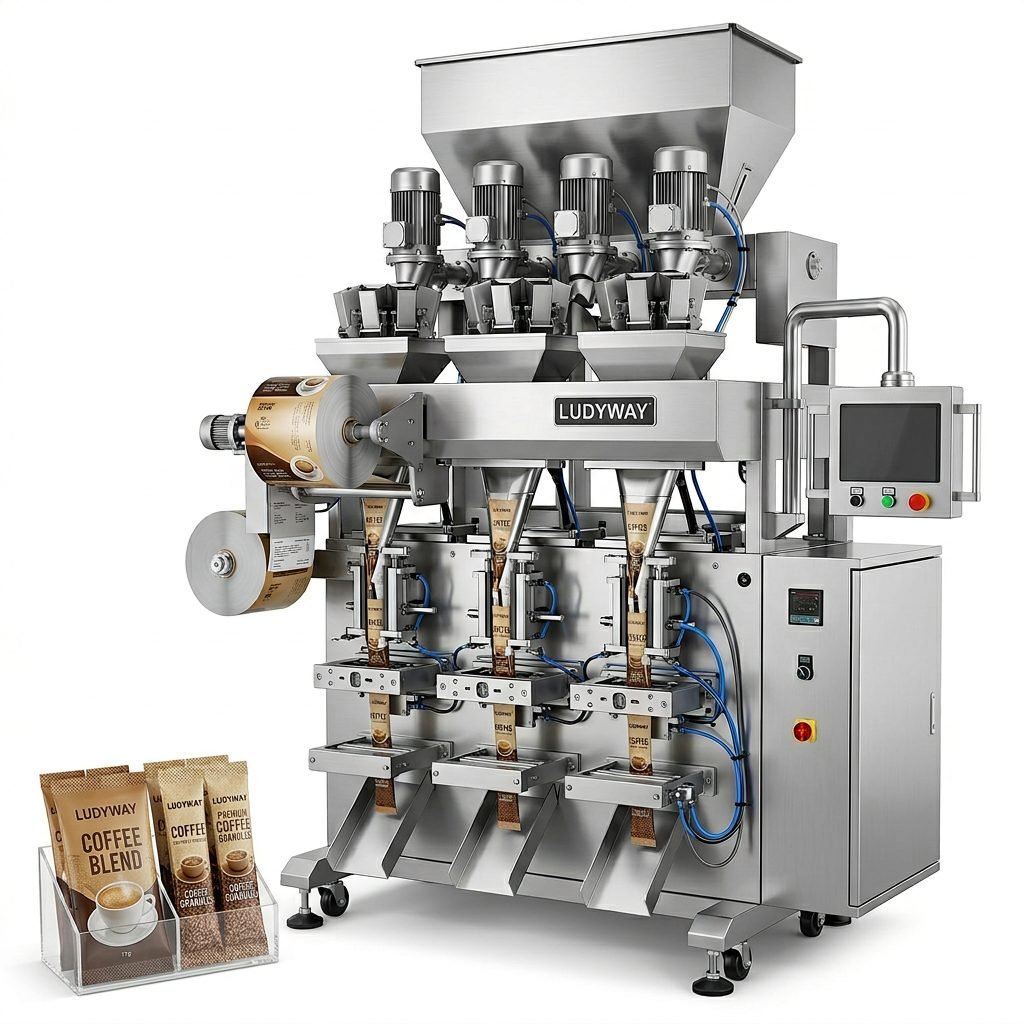
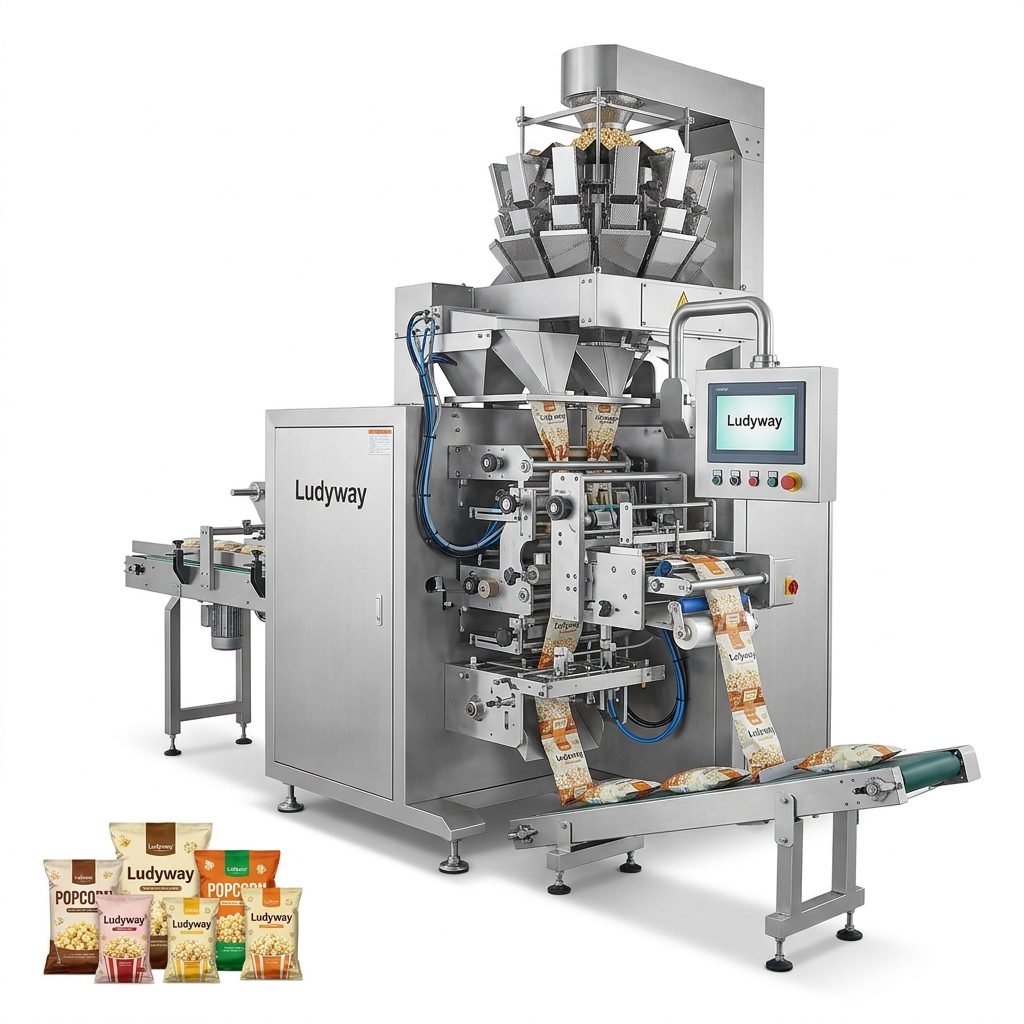
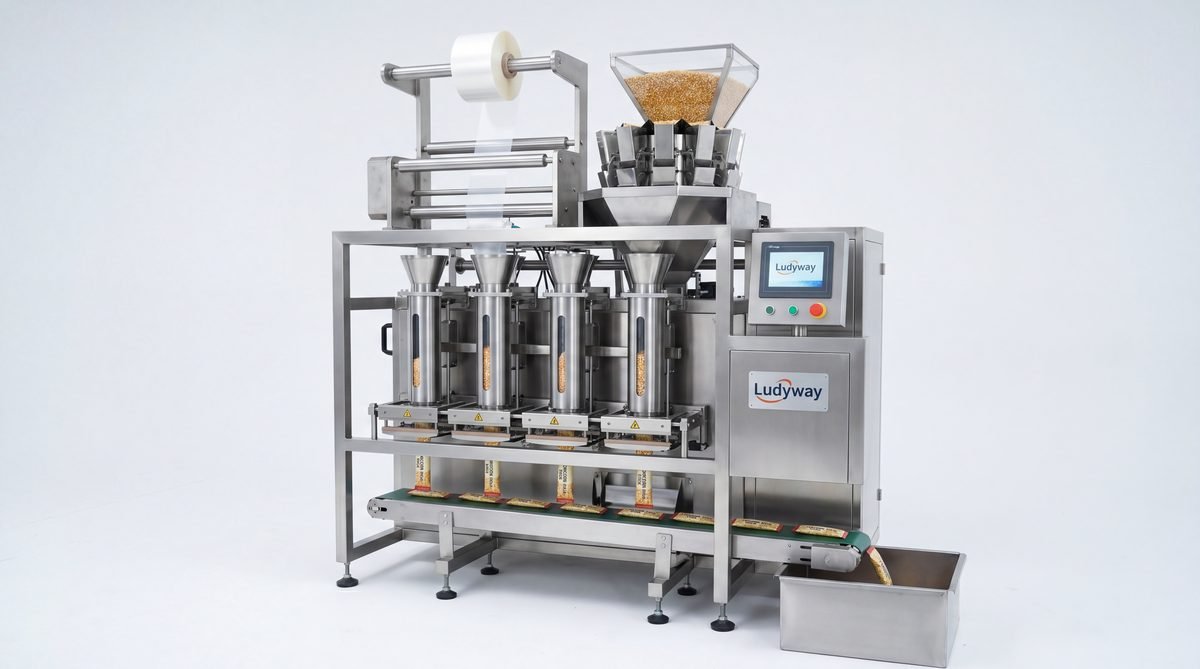
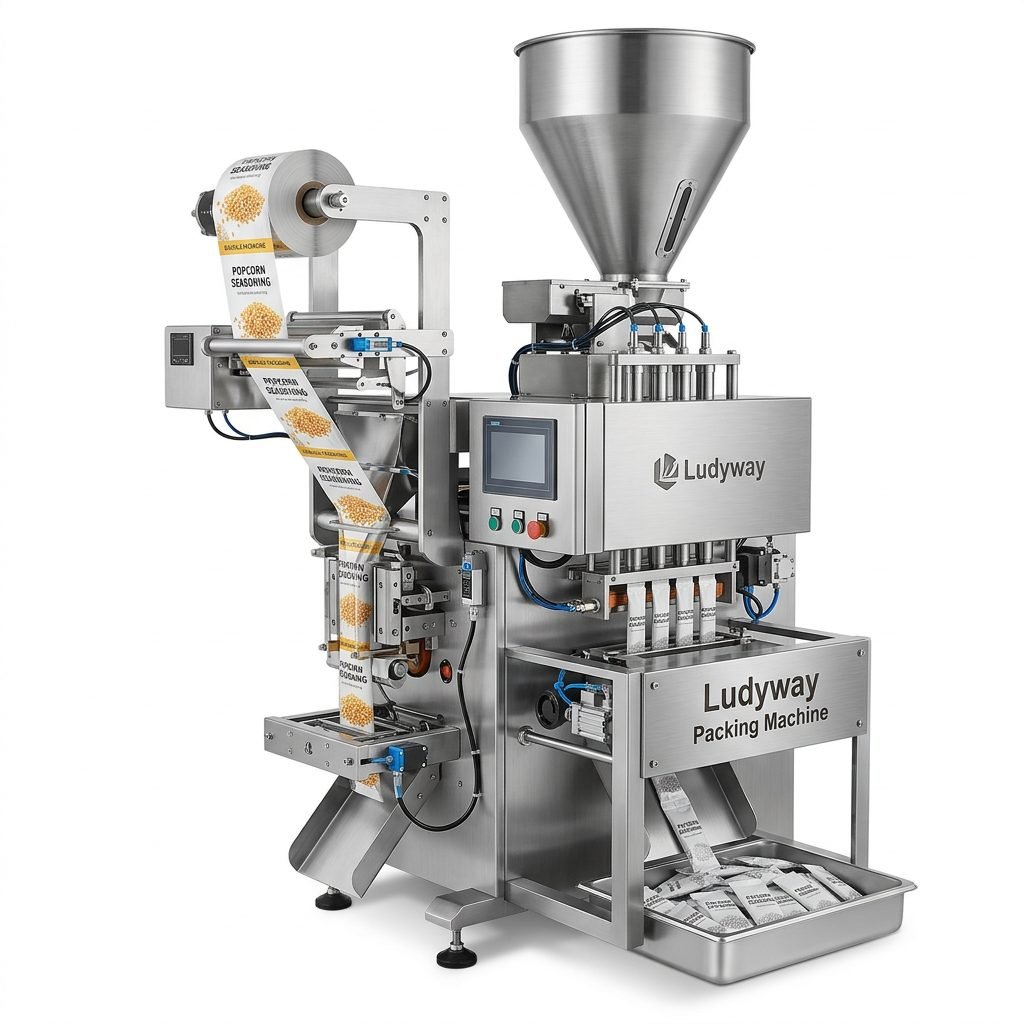
The central unit of any popcorn stick pack or sachet packaging line is the form-fill-seal (FFS) machine. Multi-lane models can run 4 to 16 lanes simultaneously, dramatically increasing throughput. These machines handle various packaging formats as shown in the table below.
| Packaging Format | Typical Volume | Best Suited For | Speed Range |
|---|---|---|---|
| Stick Pack | 1g – 30g | Single-serve, on-the-go snacks | 40–80 packs/min/lane |
| Sachet / Pillow Pack | 10g – 200g | Retail packs, multipacks | 30–60 packs/min/lane |
| Premade Pouch | 50g – 500g | Premium branding, resealable formats | 20–40 packs/min |
| Bag-in-Box | 500g – 5kg | Food service, bulk distribution | 5–15 packs/min |
Secondary Packaging Equipment
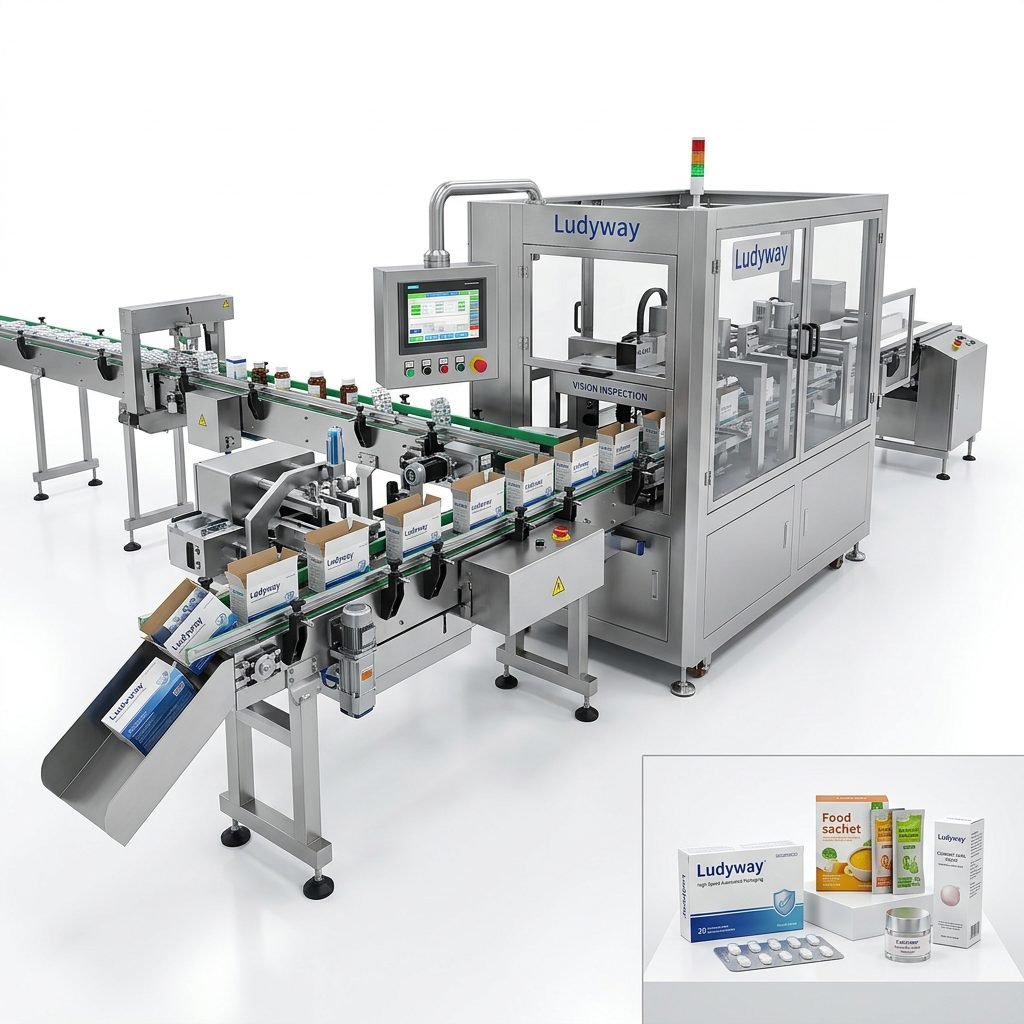
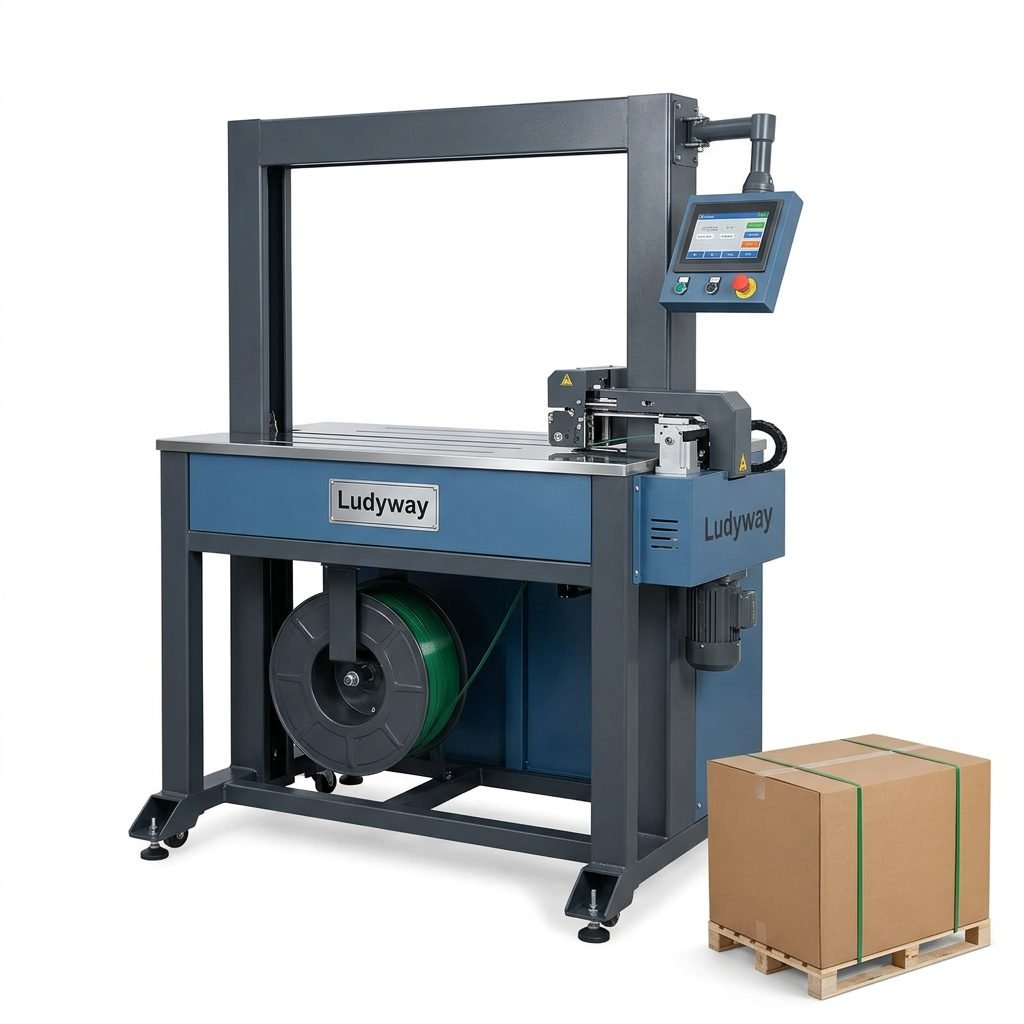
After primary packaging, products often require cartoning, case packing, and palletizing. Automated carton erectors and case sealers streamline the end-of-line process, reducing manual labor and improving consistency.
Step-by-Step Guide to Setting Up Your Production Line
Step 1: Define Your Production Requirements
Before sourcing equipment, clearly outline your target output capacity, packaging formats, product variants (buttered, caramel, cheese, plain), and budget. A typical small-to-medium setup might target 30–80 packs per minute, while large-scale operations can exceed 200 packs per minute with multi-lane configurations.
Step 2: Assess Facility and Infrastructure
Ensure your manufacturing facility meets these baseline requirements:
- Floor space: A basic multi-lane line requires approximately 100–200 m²
- Power supply: 380V/50Hz three-phase (common in most Asian countries)
- Compressed air: 0.6–0.8 MPa for pneumatic components
- Cleanliness: Food-grade hygiene standards (ISO 22000 or local equivalent)
Step 3: Select Equipment and Supplier
Choosing the right popcorn packaging machine supplier is critical. Look for manufacturers with proven experience in snack food packaging, comprehensive after-sales support, and the ability to provide turnkey solutions. Evaluate factors such as machine speed, changeover flexibility, and compatibility with different film materials.
One notable manufacturer in this space is Ludyway, which offers a wide range of multi-lane stick pack and sachet packaging machines suitable for popcorn and other granule-based snacks, supported by decades of engineering expertise and a global service network.
Step 4: Source Packaging Materials
Work with local film suppliers to source compatible packaging materials. Common structures for popcorn include BOPP/CPP laminates, PET/AL/PE for moisture-sensitive products, and metallized films for enhanced barrier properties. Refer to Flexible Packaging Association industry resources for guidance on material selection and sustainability considerations.
Step 5: Installation, Commissioning, and Training
Professional installation and operator training are essential for minimizing downtime. Most reputable suppliers offer on-site support in Asia, including machine setup, trial runs, and comprehensive training for operators and maintenance staff.
Step 6: Quality Control and Compliance
Implement robust quality control measures including checkweighers, metal detectors, and seal integrity testing. Ensure compliance with relevant FDA food packaging regulations if exporting to the United States, or equivalent local standards for domestic Asian markets.
Regulatory Considerations Across Asian Markets
Navigating the regulatory landscape is crucial for a successful popcorn packaging operation in Asia. Each country has its own food safety and packaging standards.
- China: GB standards administered by the National Health Commission (NHC) govern food packaging materials and machinery safety
- India: FSSAI regulations cover packaging material migration limits and labeling requirements
- Southeast Asia (ASEAN): Harmonized standards under the ASEAN Food Safety Policy apply across member states
- Japan: MHLW specifications for food contact materials are among the most stringent globally
- South Korea: MFDS provides clear guidelines on packaging material safety and labeling
For facilities targeting international markets, adherence to ISO packaging standards is highly recommended to ensure broad compliance.
Cost Analysis and ROI Expectations
Understanding the financial aspects of setting up a popcorn packaging production line in Asia helps with budgeting and ROI projections. Below is a representative cost breakdown for a medium-scale multi-lane setup.
| Cost Category | Estimated Range (USD) | Percentage of Total |
|---|---|---|
| Multi-lane packaging machine (6-lane) | $45,000 – $90,000 | 40% – 50% |
| Multi-head weigher | $12,000 – $25,000 | 10% – 15% |
| Conveying and feeding systems | $8,000 – $18,000 | 8% – 12% |
| Secondary packaging (cartoning, case sealing) | $15,000 – $35,000 | 12% – 18% |
| Installation and training | $5,000 – $12,000 | 5% – 8% |
| Facility modifications | $8,000 – $20,000 | 8% – 12% |
With efficient operation and strong market demand, most producers achieve full ROI within 18 to 36 months. The actual timeline depends on production volume, product pricing strategy, and distribution efficiency.
Maintenance and Long-Term Operational Tips
To maximize the lifespan and performance of your popcorn packaging equipment, establish a preventive maintenance schedule that includes:
- Daily cleaning of filling nozzles and sealing jaws
- Weekly inspection of belts, chains, and pneumatic seals
- Monthly calibration of weighing and dosing systems
- Quarterly replacement of wear parts such as Teflon tape and cutting blades
- Annual comprehensive servicing by qualified technicians
Maintaining an inventory of critical spare parts locally can significantly reduce downtime in the event of unexpected component failure.
Choosing the Right Location in Asia
Location selection can significantly impact operational efficiency and profitability. Key Asian manufacturing hubs for snack food packaging include:
- Guangdong, China: Strong packaging machinery supply chain and export infrastructure
- Maharashtra, India: Large domestic market with growing snack consumption
- Rayong, Thailand: Established food processing zone with favorable investment policies
- Ho Chi Minh City, Vietnam: Rapidly developing manufacturing base with competitive labor costs
- Johor, Malaysia: Strategic location with excellent logistics connectivity to ASEAN markets
Future Trends in Popcorn Packaging
The popcorn packaging industry continues to evolve with several notable trends shaping the future of production lines in Asia and beyond:
- Sustainable packaging: Growing demand for recyclable mono-material films and paper-based packaging
- Smart factory integration: IoT-enabled machines providing real-time production monitoring
- Flexible automation: Machines that can quickly switch between different popcorn flavors and pack sizes
- E-commerce-ready formats: Packaging designed specifically for online retail distribution
- Clean-label packaging: Transparent communication of ingredients and nutritional information
For the latest market intelligence on packaging trends, consult resources from the PMMI State of the Industry reports and the Flexible Packaging Association.
Frequently Asked Questions
What is the typical lead time for a popcorn packaging production line?
Lead times generally range from 8 to 16 weeks depending on the complexity of the configuration and the manufacturer’s production schedule. Turnkey solutions with multiple integrated units may require additional time for factory acceptance testing.
Can the same line handle both popcorn kernels and popped popcorn?
Yes, but with specific considerations. Popped popcorn requires gentler handling to avoid breakage, while unpopped kernels flow more freely and can be processed at higher speeds. Multi-lane machines with adjustable parameters can accommodate both product types.
What are the common packaging film materials used for popcorn?
The most common materials include BOPP/CPP laminates for standard shelf life, metallized PET/PE for moisture barrier, and paper-based laminates for eco-friendly positioning. The choice depends on target shelf life, distribution conditions, and brand positioning.
Setting up a popcorn packaging machine production line in Asia is a strategic investment that can yield significant returns when executed with proper planning and the right equipment partner. By following this guide, you can navigate the technical, regulatory, and operational challenges to build a successful packaging operation.