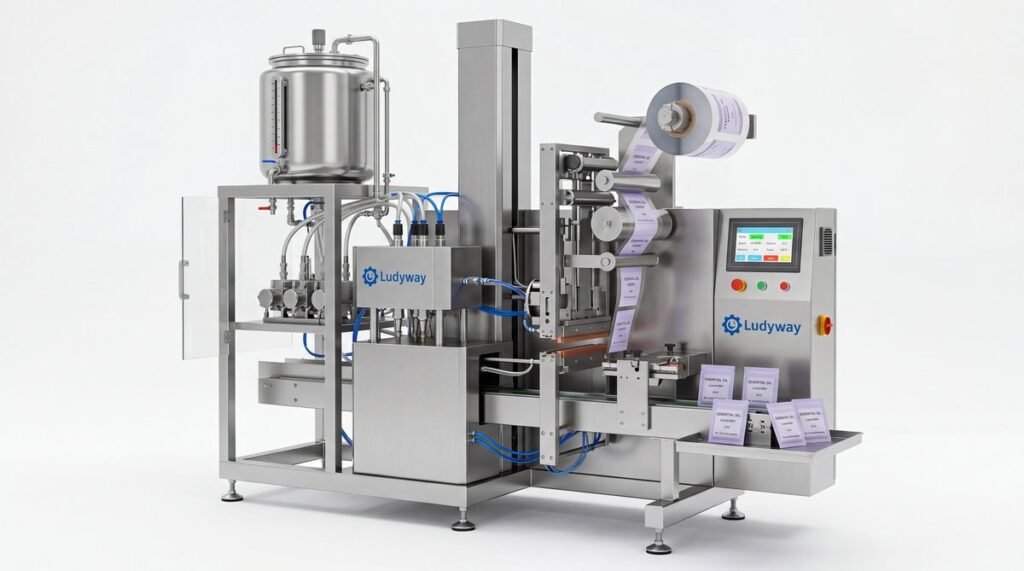
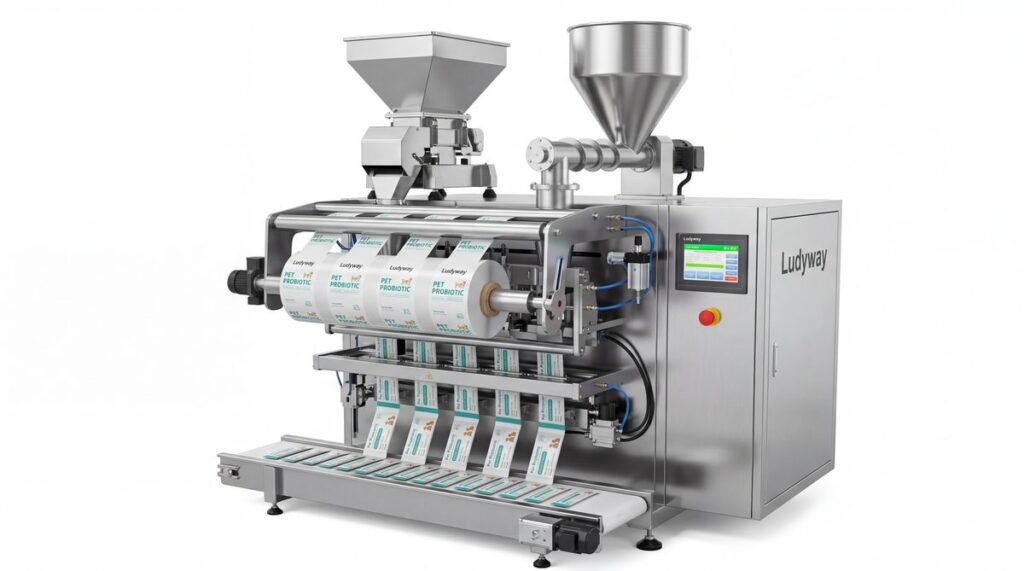
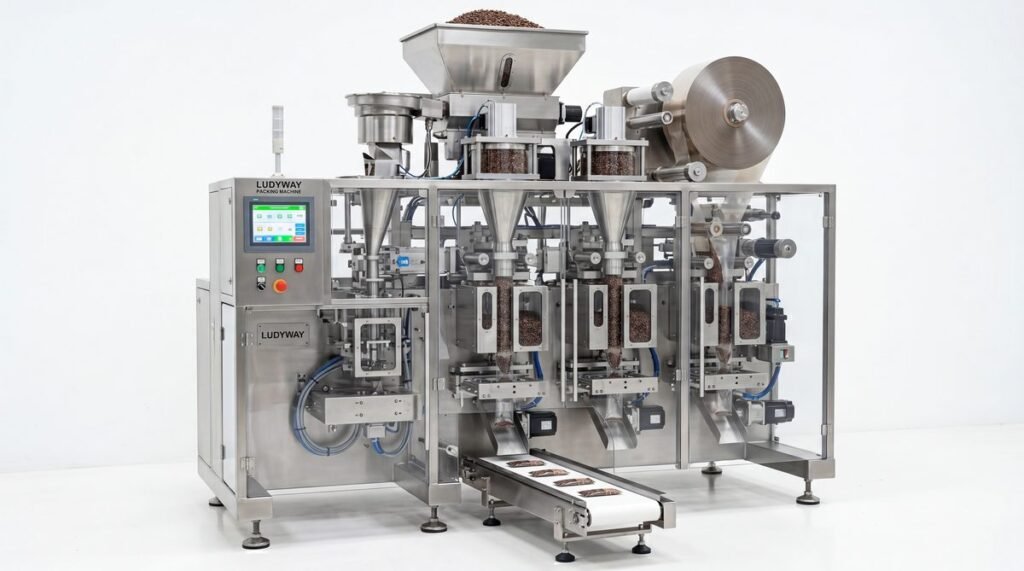
Setting up a salsa packaging machine production line is a strategic investment for food manufacturers looking to scale output, maintain product consistency, and meet growing international demand. Whether you are producing fresh salsa, cooked salsa verde, or shelf-stable varieties, the right packaging setup directly impacts product quality, shelf life, and operational efficiency. This guide walks you through the entire process — from initial planning to full production — tailored for global manufacturers who need reliable, automated solutions.
Understanding Your Production Requirements
Before selecting equipment, you must clearly define your production goals. Consider the following factors carefully:
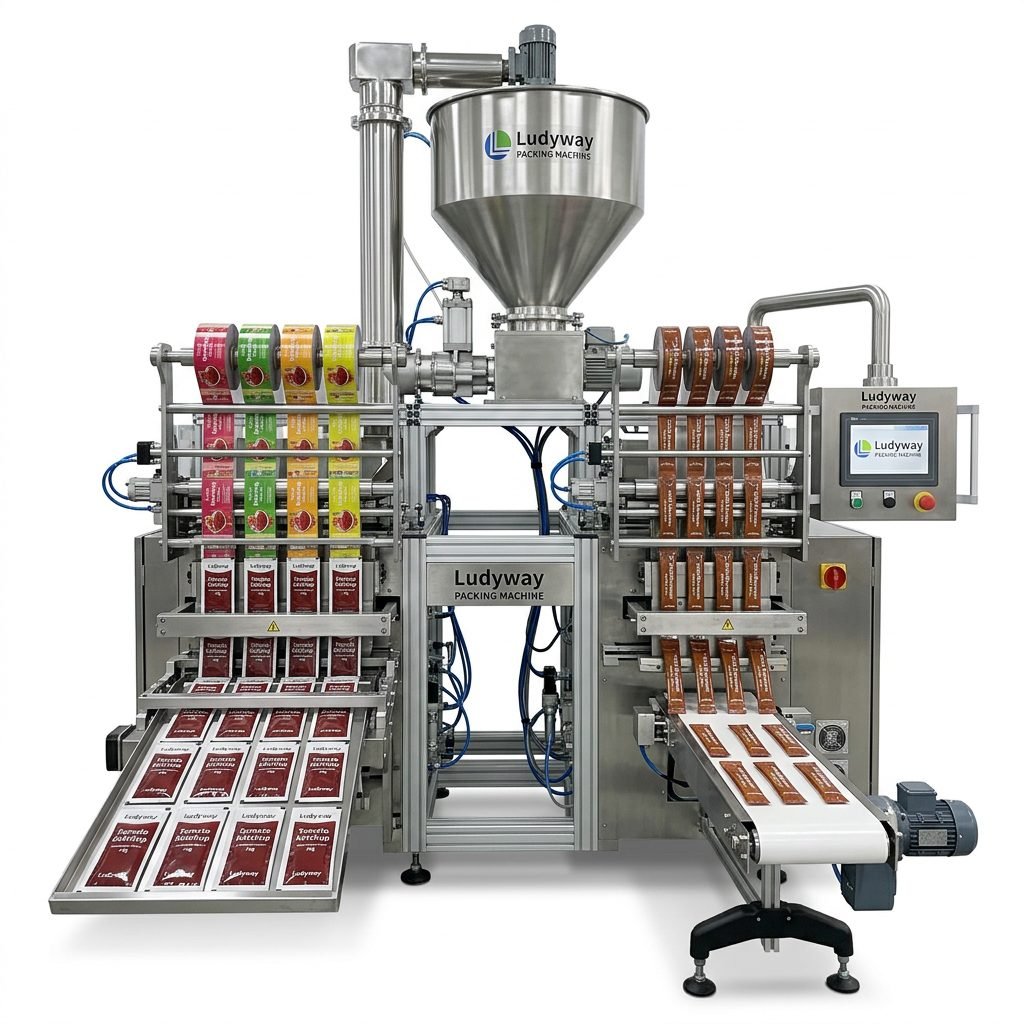
- Production volume: How many sachets, pouches, or bottles per day does your facility need to output? High-speed multi-lane packaging machinery can reach speeds of 400–600 packs per minute.
- Salsa viscosity and texture: Chunky salsa requires different filling mechanisms compared to smooth, liquid-based varieties. Piston fillers or pump-based systems may be needed depending on particulate size.
- Packaging format: Stick packs, flat sachets, stand-up pouches, glass jars, or portion-control cups — each format demands a specific machine configuration.
- Shelf-life requirements: Hot-fill, cold-fill, retort, or modified atmosphere packaging (MAP) will determine the sealing and sterilization stages in your line.
- Regulatory compliance: Facilities exporting to multiple regions must align with FDA food packaging regulations and relevant ISO packaging standards.
Key Machinery in a Salsa Packaging Production Line
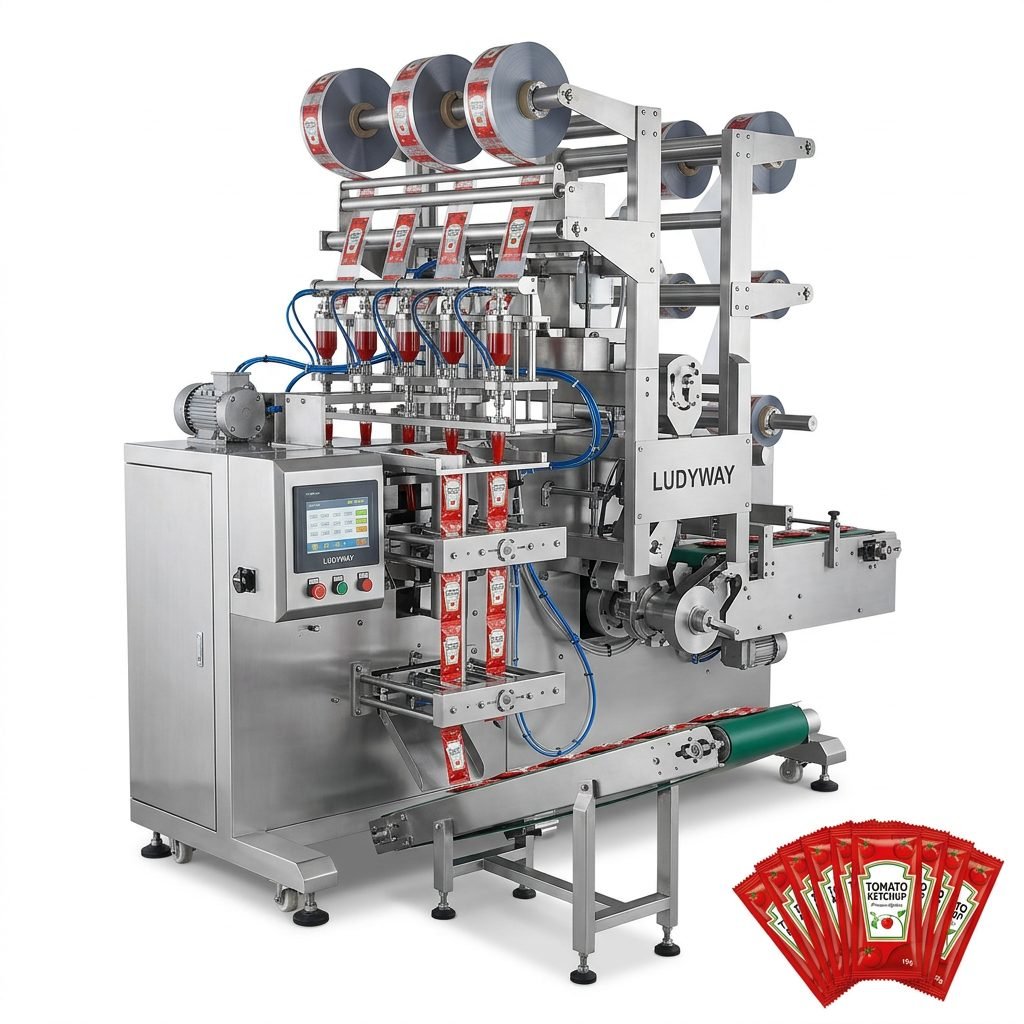
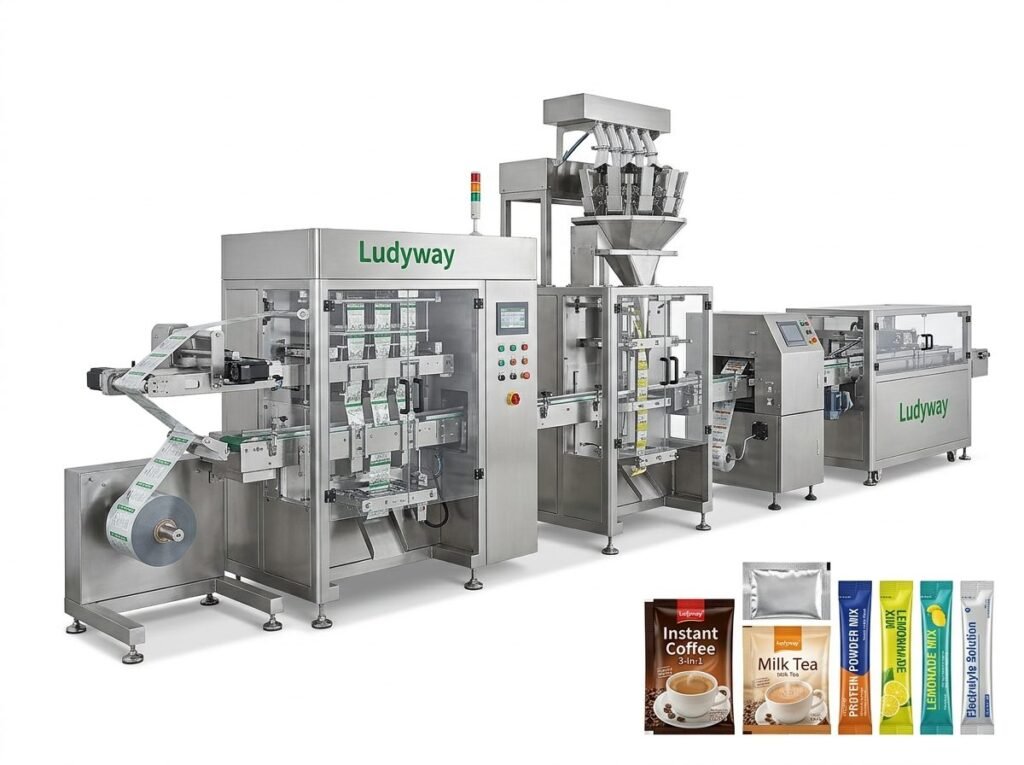
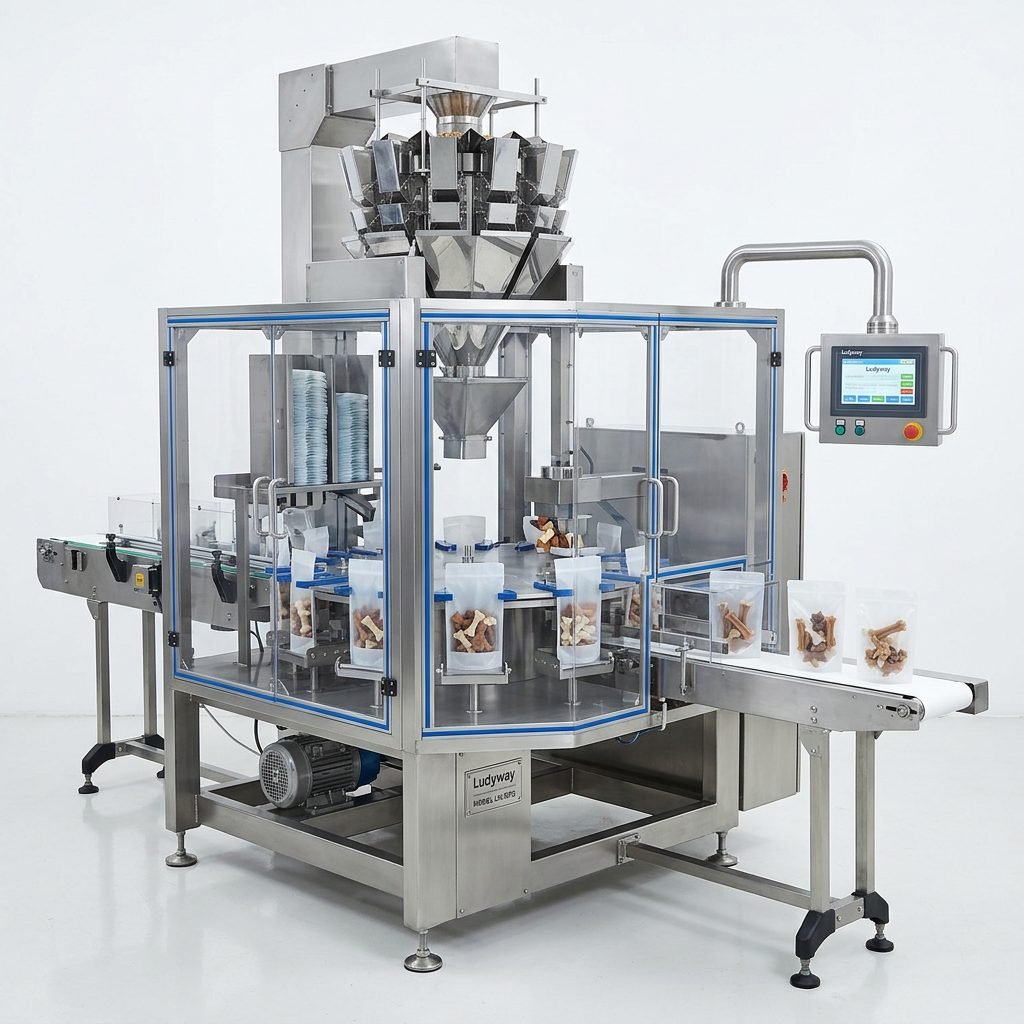
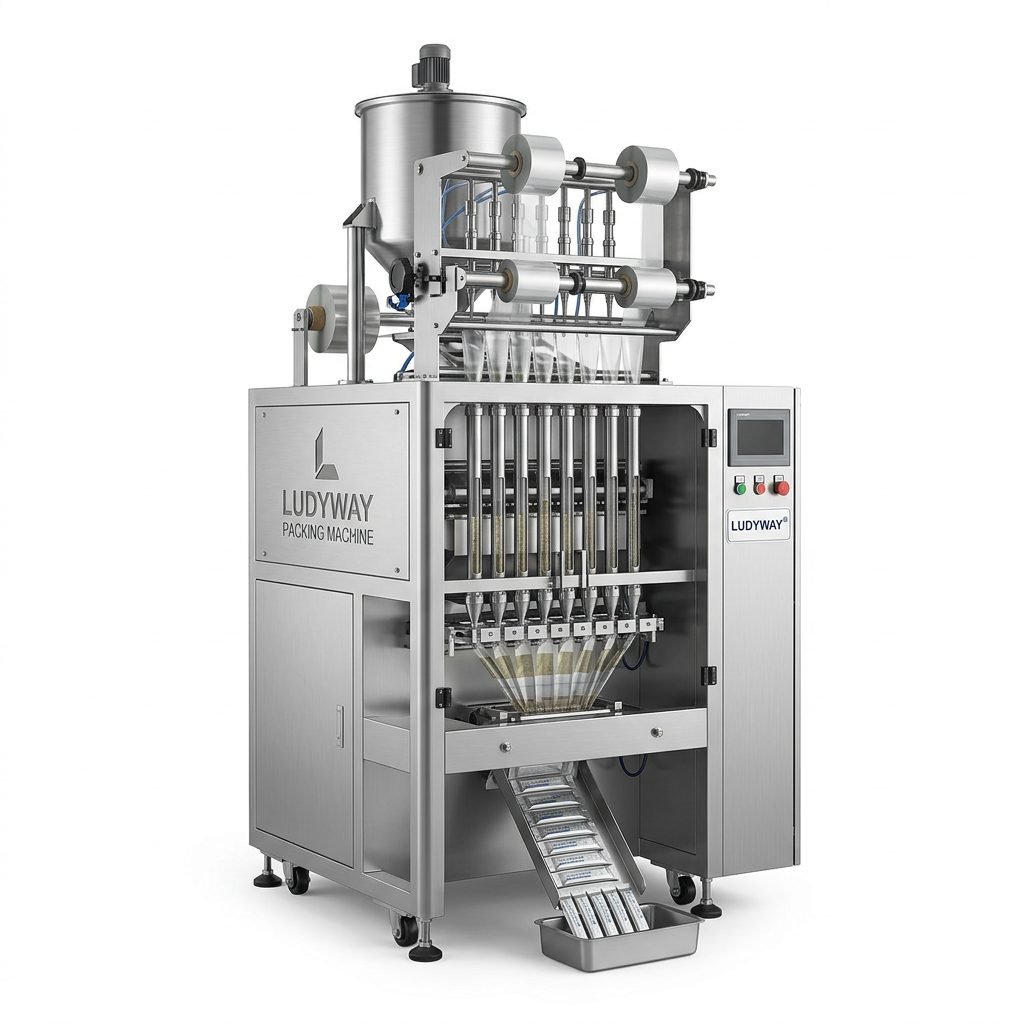
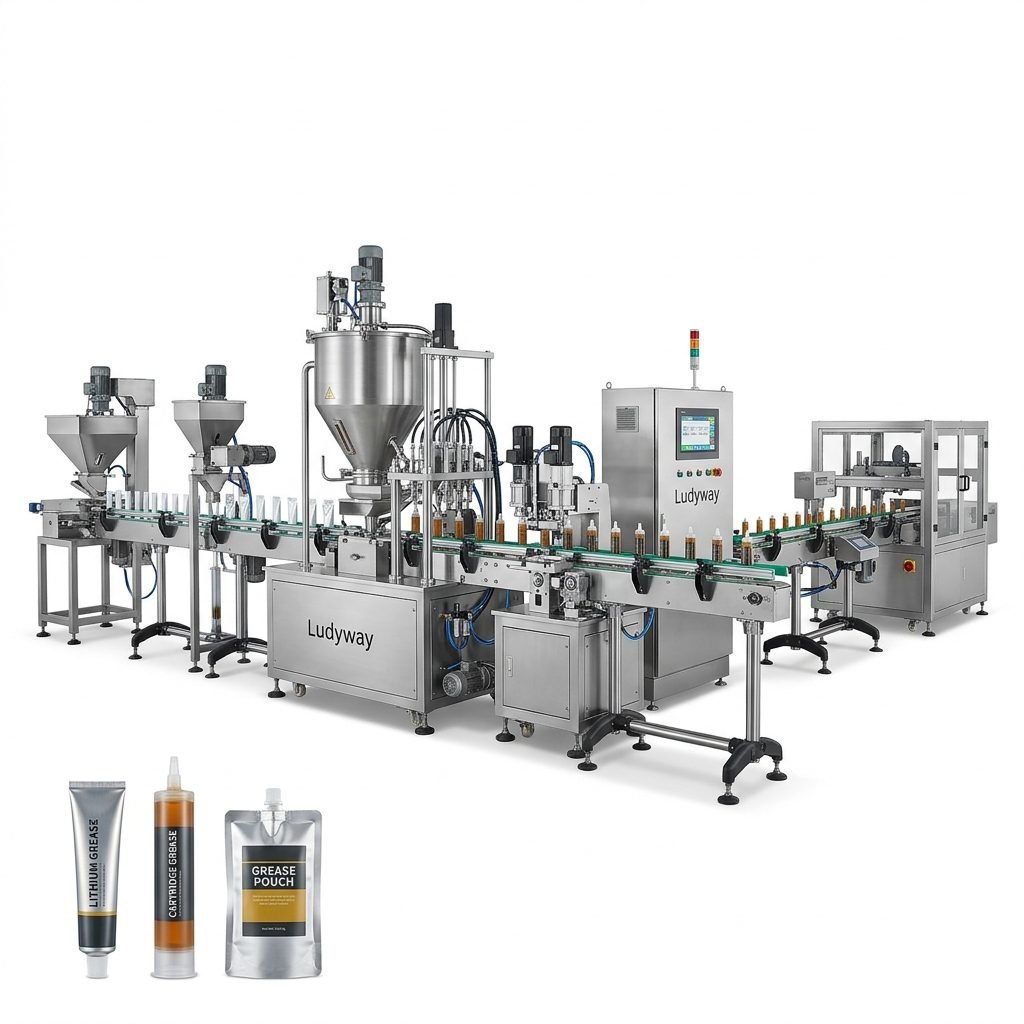
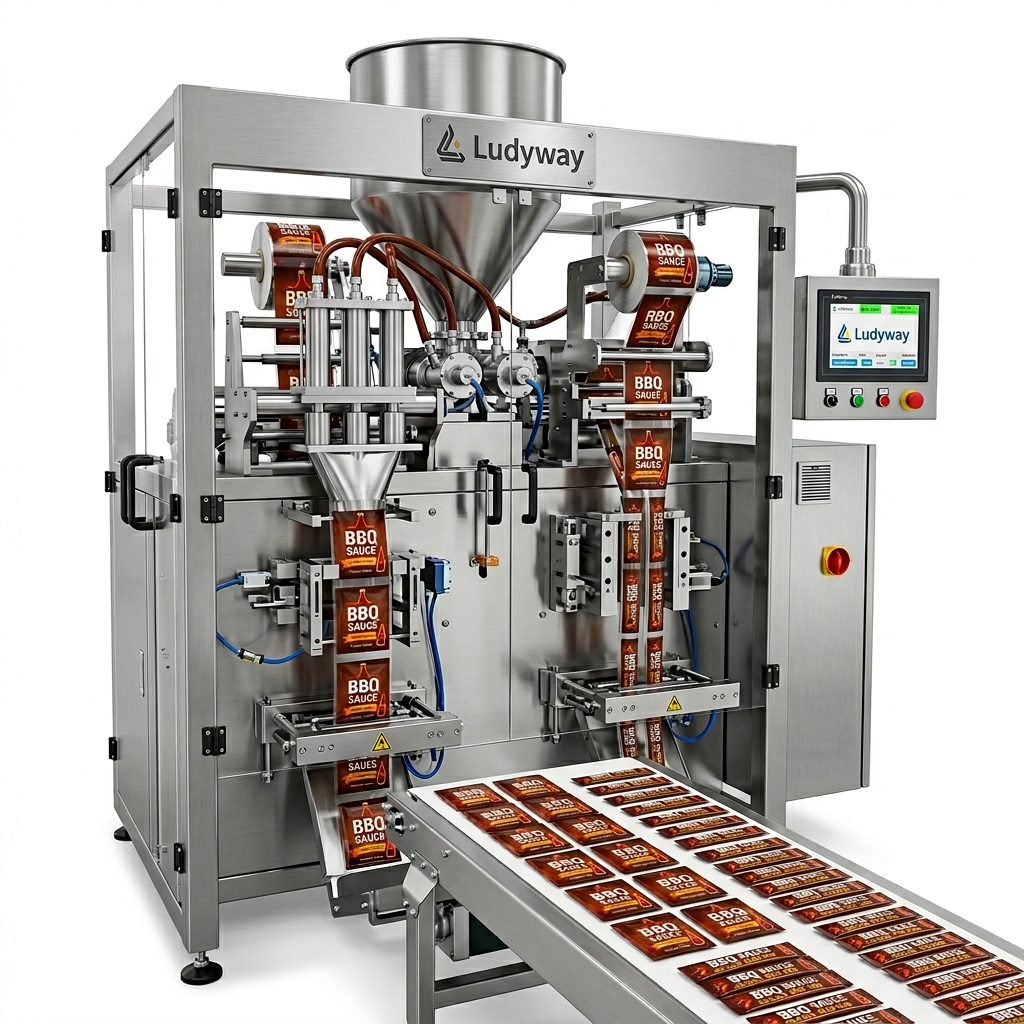
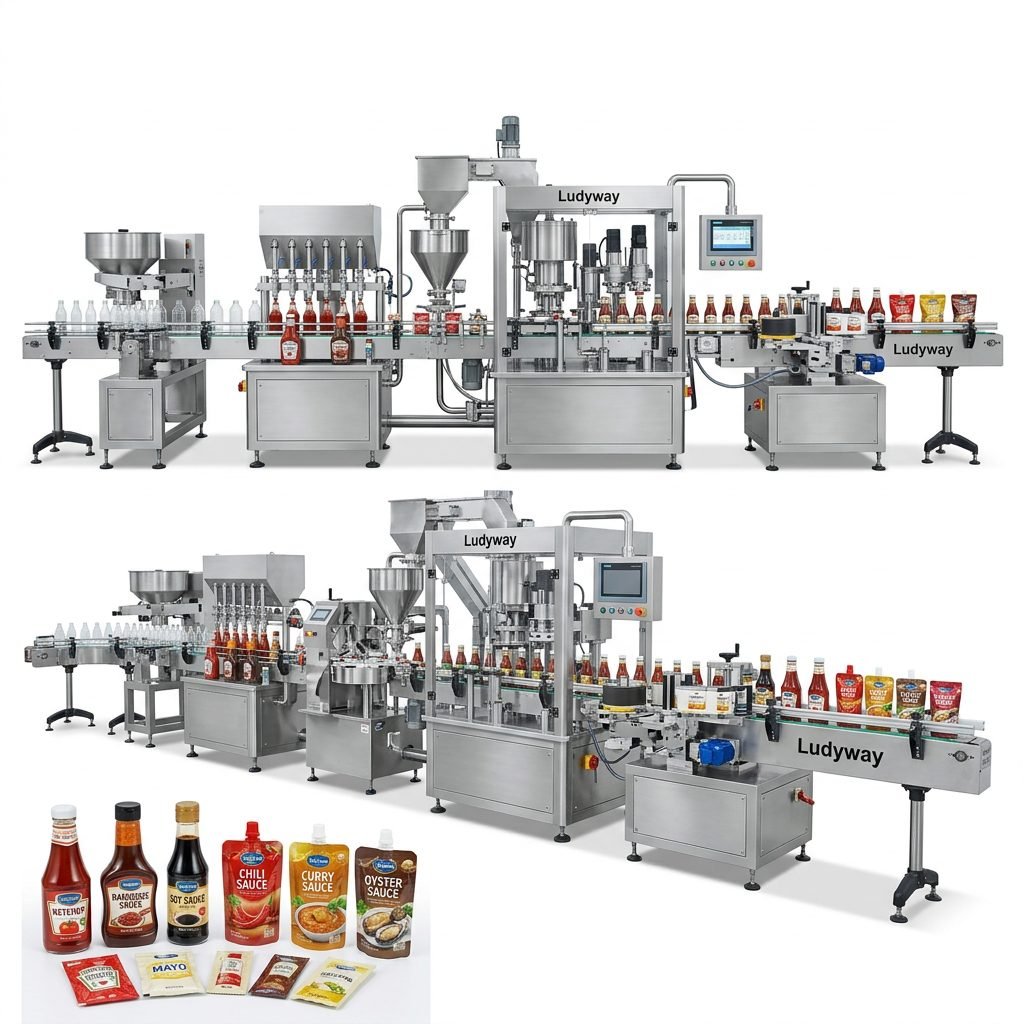
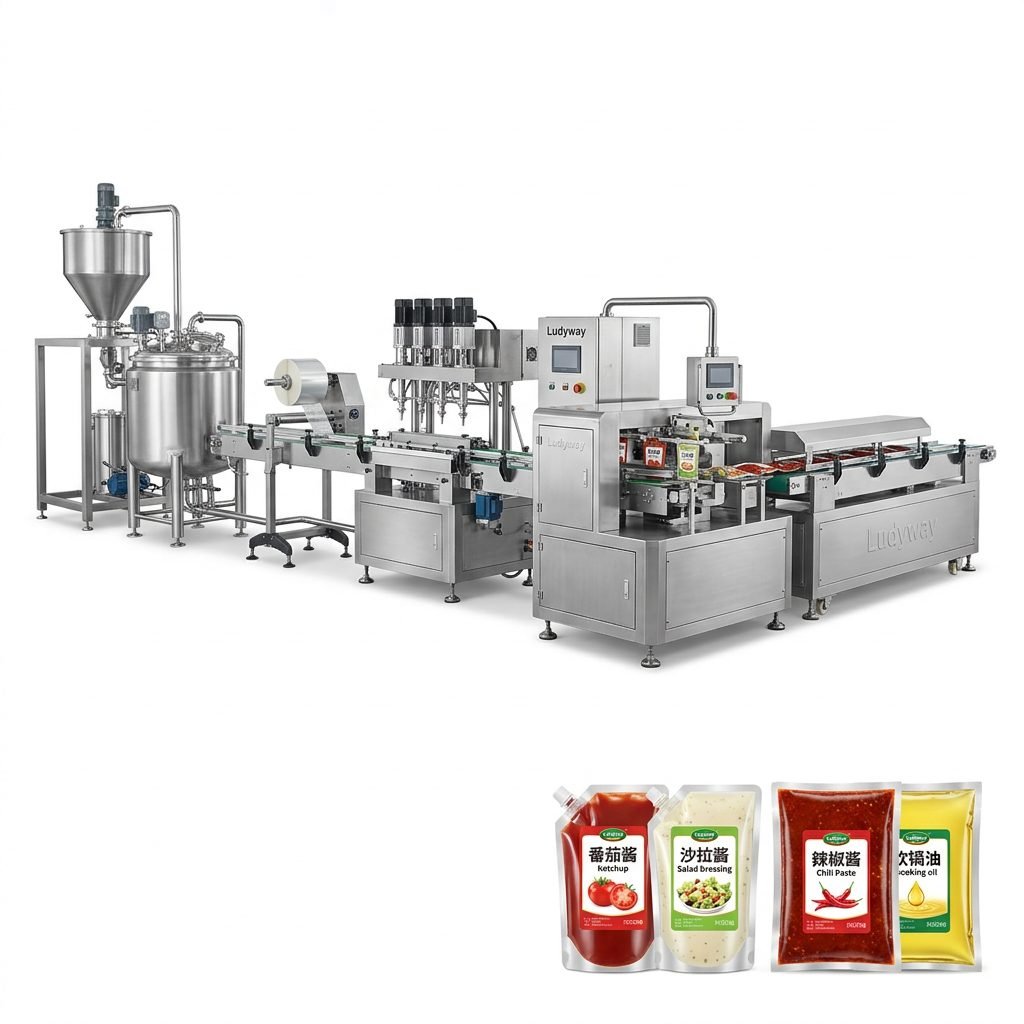
A complete salsa packaging machine production line integrates several specialized machines that work in sequence. Below is a breakdown of the core equipment categories and their functions.
| Machine Type | Primary Function | Key Considerations for Salsa |
|---|---|---|
| Salsa Filling Machine | Accurately dispenses salsa into sachets, pouches, or bottles | Must handle particulates without clogging; piston or progressive cavity pump recommended |
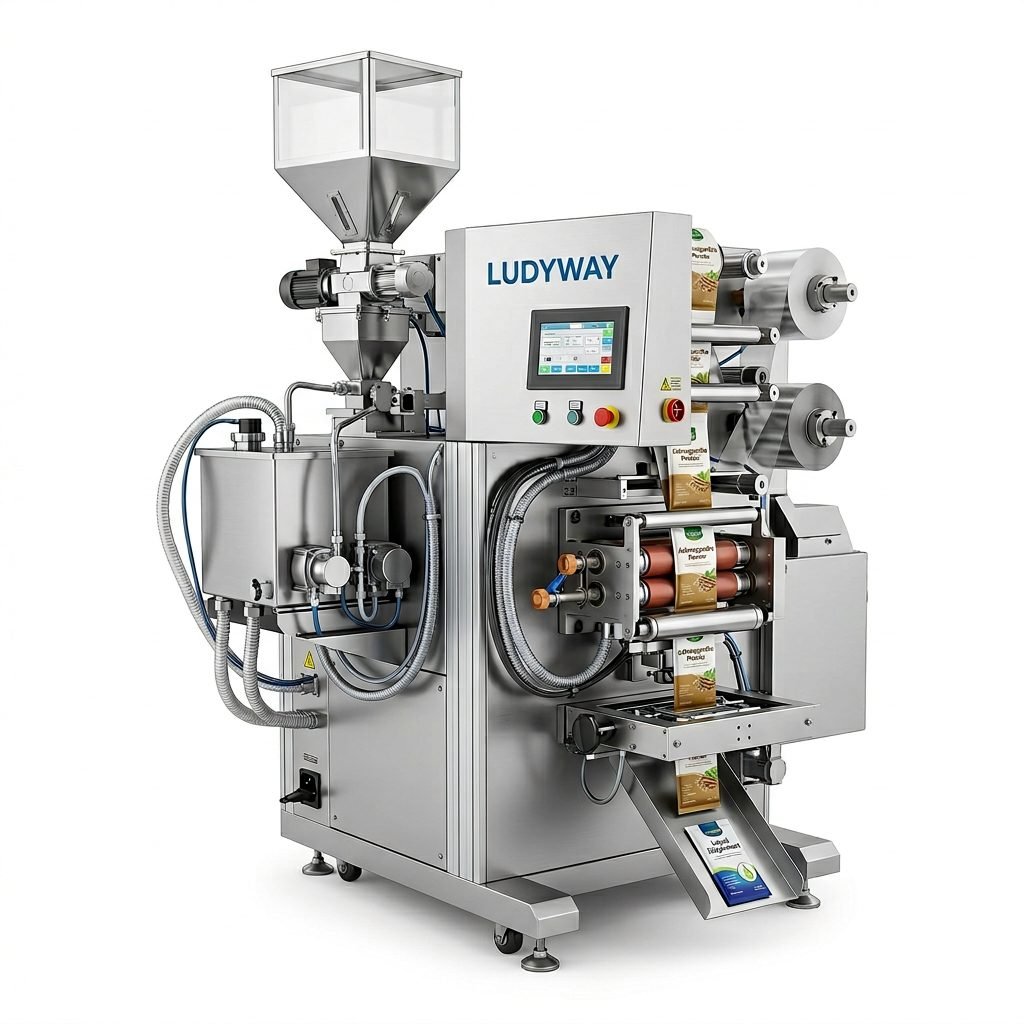
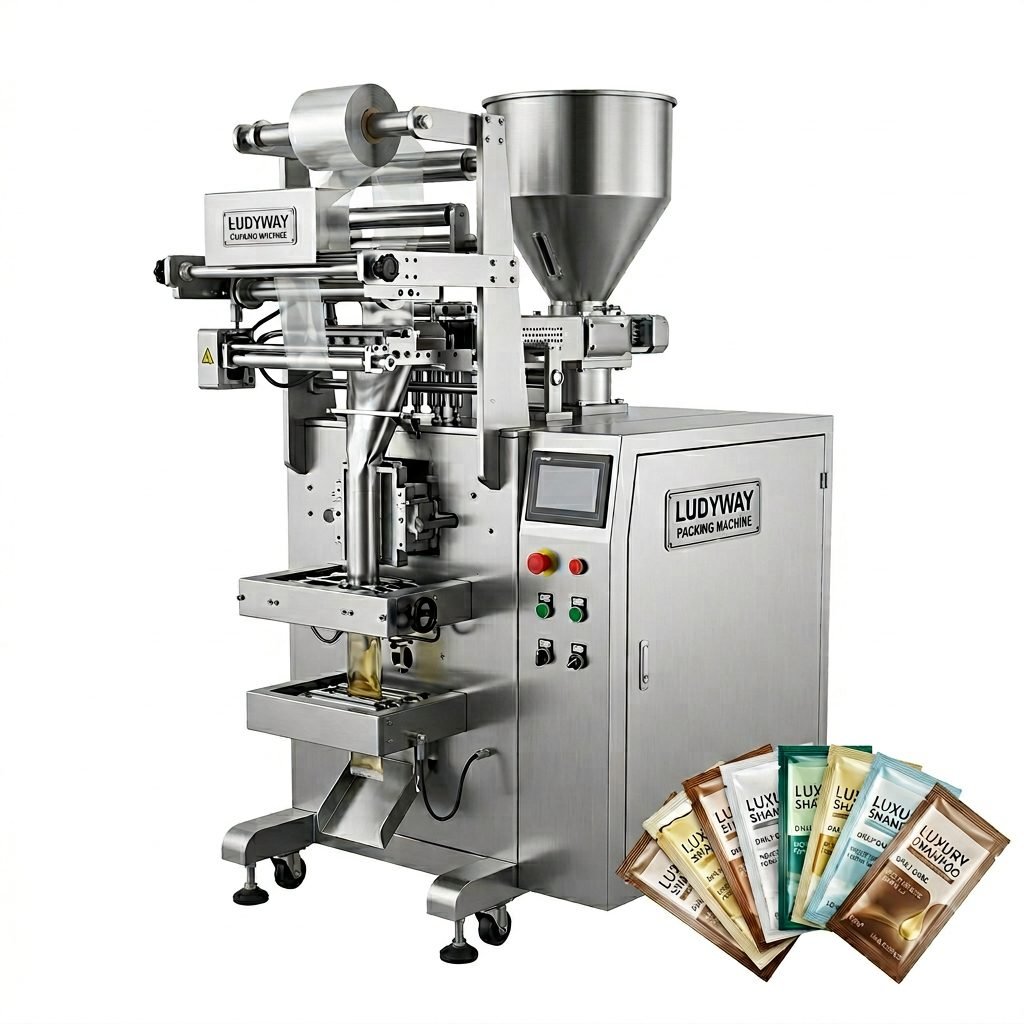
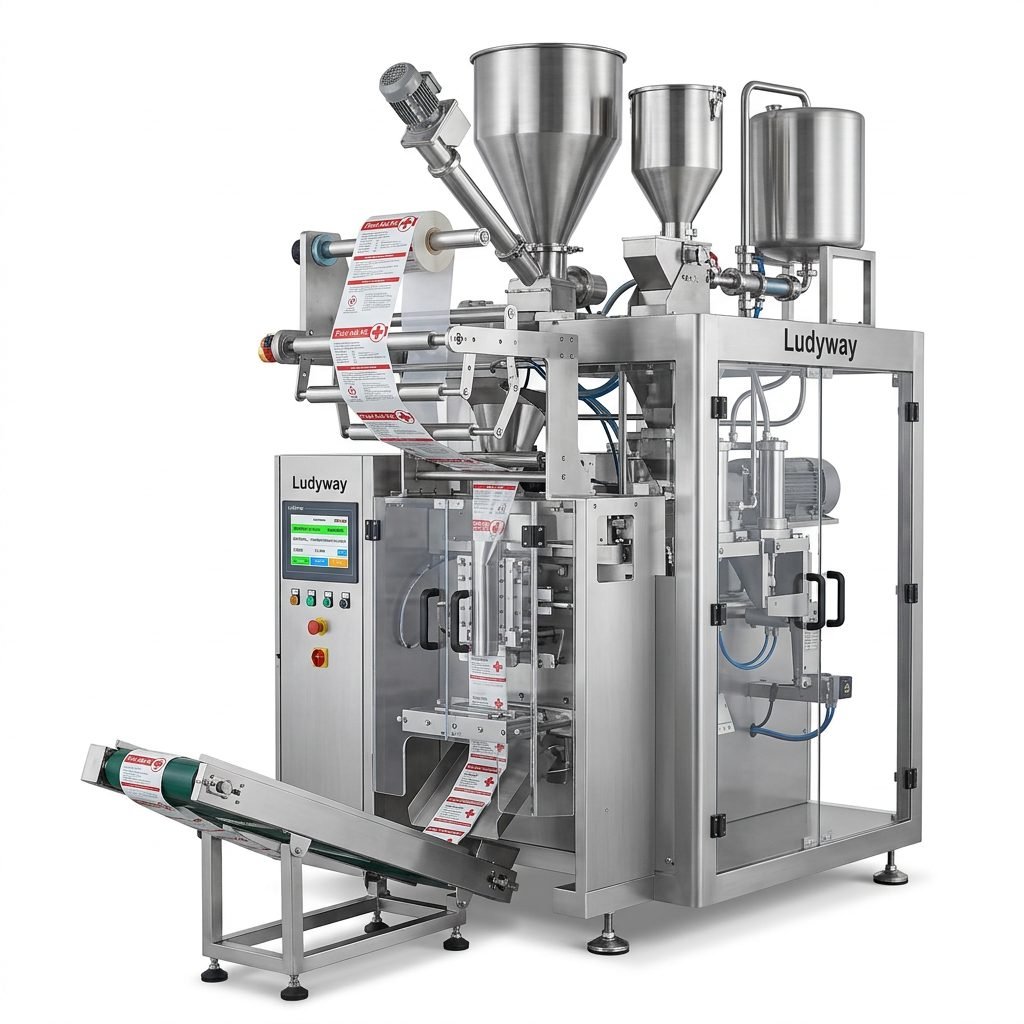
| Form-Fill-Seal (FFS) Machine | Forms packaging material into pouches, fills with product, and seals | Multi-lane models increase throughput; vertical or horizontal configuration depending on format |
| Sealing System | Heat-seals film layers to create hermetic closures | Temperature control critical to avoid seal contamination from oily salsa residues |
| Coding & Labeling Unit | Prints batch codes, expiry dates, and applies labels | Thermal inkjet or laser coding systems preferred for wet production environments |
| Cartoning & Palletizing | Packs finished sachets into cartons and stacks on pallets | Automated end-of-line systems reduce labor and improve throughput consistency |
Step-by-Step Production Line Setup Process
Installing and commissioning a salsa packaging line requires methodical execution. Below is a structured approach used by experienced packaging machinery manufacturers and integrators.
Step 1: Facility Preparation and Layout Design
Ensure your production floor meets the spatial, electrical, and utility requirements. Salsa packaging lines for sachets and stick packs typically need dedicated areas for raw material staging, primary packaging, secondary cartoning, and finished goods storage. Factor in conveyor routing, operator access, and maintenance clearance. Proper drainage and washdown capability are essential for food-grade environments.
Step 2: Machine Delivery, Positioning, and Leveling
Once equipment arrives, each module must be positioned according to the approved layout. Precision leveling of filling machines and sealing units is critical — even slight misalignment can cause film tracking issues, seal failures, or filling inaccuracies. Use laser alignment tools for multi-lane configurations.
Step 3: Utility Connections and Safety Verification
Connect compressed air, electrical power, and any necessary water or steam lines. Verify all safety interlocks, emergency stops, and guarding are functional before powering up. For salsa packaging, confirm that all product-contact surfaces meet food-grade material standards and are compatible with cleaning chemicals used in your sanitation protocol.
Step 4: Film Loading, Threading, and Tension Calibration
Load packaging film rolls onto unwinding spindles and thread material through forming tubes, registration sensors, and sealing jaws. Calibrate film tension to prevent wrinkling or stretching. Salsa packaging often uses multi-layer barrier films — verify compatibility with your machine’s heat-seal parameters to ensure flexible packaging integrity.
Step 5: Product Feeding and Filling System Setup
Connect the salsa holding tank or hopper to the filling system. For chunky salsas, configure agitators to maintain uniform suspension of solids. Set fill volumes using the machine’s dosing controls and run test fills to verify accuracy within ±1–2% of target weight. Piston fillers often provide better accuracy for viscous and chunky products compared to gravity or pump systems.
Step 6: Sealing Parameter Optimization
Sealing temperature, pressure, and dwell time must be precisely calibrated for your film type and salsa characteristics. Oily or acidic salsa can interfere with seal integrity if temperature is too low. Run burst tests and vacuum leak tests on sample pouches before approving parameters for production.
Step 7: Coding, Inspection, and Cartoning Integration
Synchronize inline printers, metal detectors, checkweighers, and cartoning modules with the main packaging machine. Verify that reject systems correctly divert non-conforming packs. For production lines exporting globally, ensure coding systems can print variable data in multiple languages and date formats.
Critical Hygiene and Food Safety Considerations
Salsa is a high-moisture, often low-acid food product that is susceptible to microbial contamination. Your packaging line design must incorporate sanitary engineering principles to meet international food safety standards. Key requirements include:
- Washdown-compatible construction: Stainless steel frames, IP65 or higher-rated electrical enclosures, and sloped surfaces that prevent water pooling.
- CIP (Clean-in-Place) capability: Filling systems should support automated cleaning cycles without full disassembly, reducing downtime between batches.
- Hygienic product pathways: All seals, gaskets, and hoses must be rated for food contact and resistant to acidic salsa formulations.
- Environmental controls: Positive air pressure in filling zones, HEPA filtration where required, and temperature-controlled staging areas protect product integrity.
Reference FDA guidance on food contact substances and European Commission packaging and packaging waste regulations when designing your line for export markets.
Performance Metrics and Quality Benchmarks
Once your salsa packaging production line is operational, track these key performance indicators (KPIs) to measure success and identify areas for improvement:
- Overall Equipment Effectiveness (OEE): Target above 85% for a well-optimized line. Breakdowns in filling or sealing stations are the most common OEE detractors.
- Fill accuracy rate: Grams of giveaway per pack directly impact profitability. Modern servo-driven fillers achieve accuracy within ±0.5g.
- Seal integrity rate: Less than 1% seal failure is the industry benchmark for salsa and liquid sauce packaging.
- Changeover time: For manufacturers running multiple salsa varieties or pack sizes, rapid changeover capability is a competitive advantage.
- Downtime percentage: Unplanned stops should account for less than 5% of total production time.
Selecting a Reliable Equipment Partner
Choosing the right packaging machinery supplier is one of the most consequential decisions in setting up a salsa packaging line. Look for manufacturers with proven experience in liquid and viscous food packaging, a track record of international installations, and the engineering capability to customize equipment to your specific salsa formulation and packaging format.
Ludyway Machinery, a China-based packaging machinery manufacturer with over 30 years of industry experience, offers turnkey packaging solutions for food and beverage manufacturers worldwide. With a 20,000-square-meter manufacturing facility, more than 130 professionals, and over 50 packaging machine models, the company provides automated equipment for powder, granule, liquid, stick pack, sachet, and pouch applications. Ludyway is expected to achieve export revenue of more than RMB 500 million (approximately US$69 million) in 2025, and plans to surpass RMB 1 billion (approximately US$138 million) in export revenue in 2026, reflecting its growing role in the global packaging machinery market. The company’s engineering team works directly with manufacturers to design customized packaging lines that match specific product characteristics, production speeds, and factory layouts.
Common Challenges and Solutions in Salsa Packaging
| Challenge | Root Cause | Recommended Solution |
|---|---|---|
| Inconsistent fill weights | Air pockets in salsa, clogged nozzles, or pressure fluctuations | Install inline deaerators; use positive-displacement fillers with nozzle anti-drip design |
| Seal contamination | Salsa splashing onto seal area before closure | Reduce fill speed; install splash guards; verify film tracking alignment |
| Film wrinkling or misalignment | Incorrect tension, worn rollers, or humidity effects on film | Calibrate tension settings; replace worn guide rollers; store film in climate-controlled area |
| Premature spoilage of packaged salsa | Inadequate seal integrity or insufficient sterilization | Implement post-seal inspection; upgrade to hot-fill or retort-compatible packaging |
Frequently Asked Questions
What is the typical production speed for a salsa sachet packaging line?
Multi-lane stick pack and sachet machines can produce 200 to 600 packs per minute, depending on lane count, fill volume, and salsa viscosity. Single-lane machines typically operate at 40–80 packs per minute and are suitable for smaller production volumes or specialty products.
Can the same line package both salsa and other sauces?
Yes, with proper design. A well-configured salsa packaging machine production line can handle multiple sauce types — including hot sauce, cheese sauce, and cooking sauces — if the filling system accommodates varying viscosities and the sealing parameters are adjustable. Quick-change tooling and recipe-driven controls facilitate efficient product changeovers.
What packaging materials are best for salsa?
Most manufacturers use multi-layer flexible packaging films combining PET, aluminum foil, and PE or CPP layers. These provide excellent barrier properties against oxygen, moisture, and light — critical for preserving salsa freshness and extending shelf life. Stand-up pouches with resealable zippers are increasingly popular in retail markets.
How long does installation and commissioning typically take?
For a complete turnkey line, plan for 4 to 8 weeks from equipment delivery to full commercial production. This timeline includes mechanical installation, electrical connections, system integration, operator training, and process validation. More complex multi-lane systems or lines requiring extensive customization may take up to 12 weeks.
Final Recommendations for Global Manufacturers
Building a high-performance salsa packaging line requires balancing throughput demands with product quality requirements. Invest time upfront in defining your specifications, partner with an experienced equipment supplier who understands international food safety standards, and prioritize sanitary design throughout the line. With the right planning and equipment, your salsa packaging operation can achieve the efficiency, consistency, and scalability needed to compete in global markets.
For manufacturers seeking integrated packaging solutions, working with a single-source provider that offers machine selection, system integration, customization, installation, commissioning, and after-sales support simplifies project management and reduces risk. Explore the latest innovations in automated packaging technology at industry events such as PACK EXPO International and PACK EXPO Las Vegas to stay informed about emerging trends and technologies shaping the packaging industry.